25 Zinnia Garden Inspiration: Colorful Designs Every Home Needs
Creating a stunning zinnia garden ranks among the most satisfying projects for both beginners and experienced gardeners. These cheerful flowers bring unmatched beauty without demanding excessive time or complicated care routines. Their sun-loving nature, rapid growth, and continuous blooming make them perfect companions for anyone wanting to add life and color to their outdoor areas.
From spacious backyards to cozy balconies, zinnias adapt beautifully to any setting. They welcome butterflies and other beneficial pollinators while filling your space with seasonal charm that lasts from late spring well into autumn. Let’s explore some creative ways to design a zinnia garden that reflects your personal style and enhances your home’s natural beauty.
Why Zinnias Make Gardening Effortless and Enjoyable
Zinnias stand out as incredibly forgiving plants that rarely disappoint. They flourish in bright sunshine and handle various soil types with ease, making them perfect for first-time gardeners. The variety available is truly impressive—you’ll find everything from petite dwarf types to towering statement flowers that reach several feet high.
Beyond their visual appeal, these flowers actively support your local ecosystem. Butterflies, bees, and hummingbirds frequently visit zinnia blooms, creating a dynamic garden that feels alive with movement and natural activity.
Define Your Space with Zinnia Borders
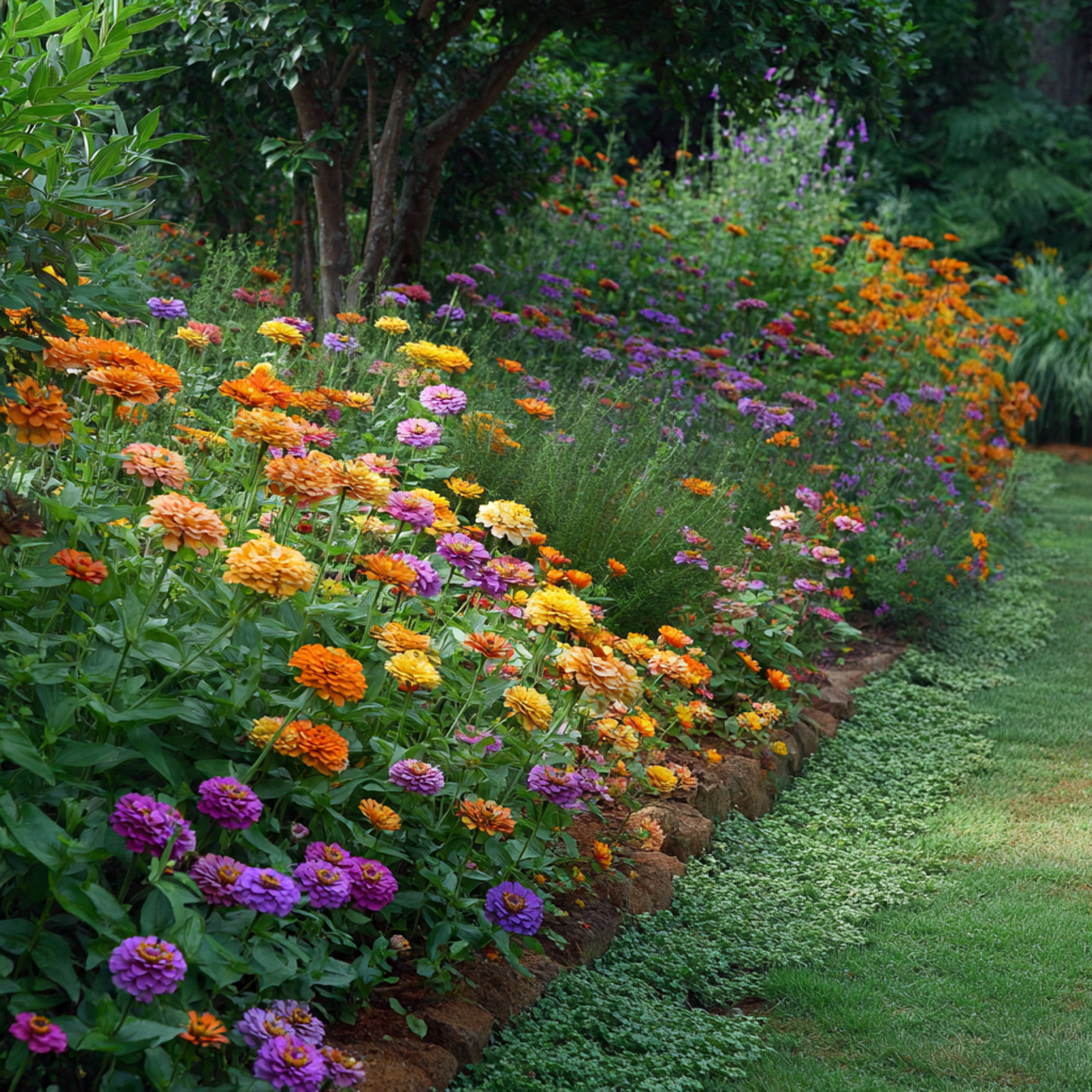
Transform ordinary garden edges into eye-catching features by lining them with zinnias. This approach brings structure to your landscape while creating natural visual guides that lead visitors through your outdoor areas.
Key tips for border planting:
- Select dwarf or medium-height varieties (12-24 inches) for manageable borders
- Space plants 6-12 inches apart for full coverage
- Plant along walkways, fence lines, or around existing garden beds
- Use consistent colors for formal looks or mix shades for cottage-style charm
- Deadhead regularly by walking the border line—maintenance becomes a simple routine
Brighten Forgotten Side Yards
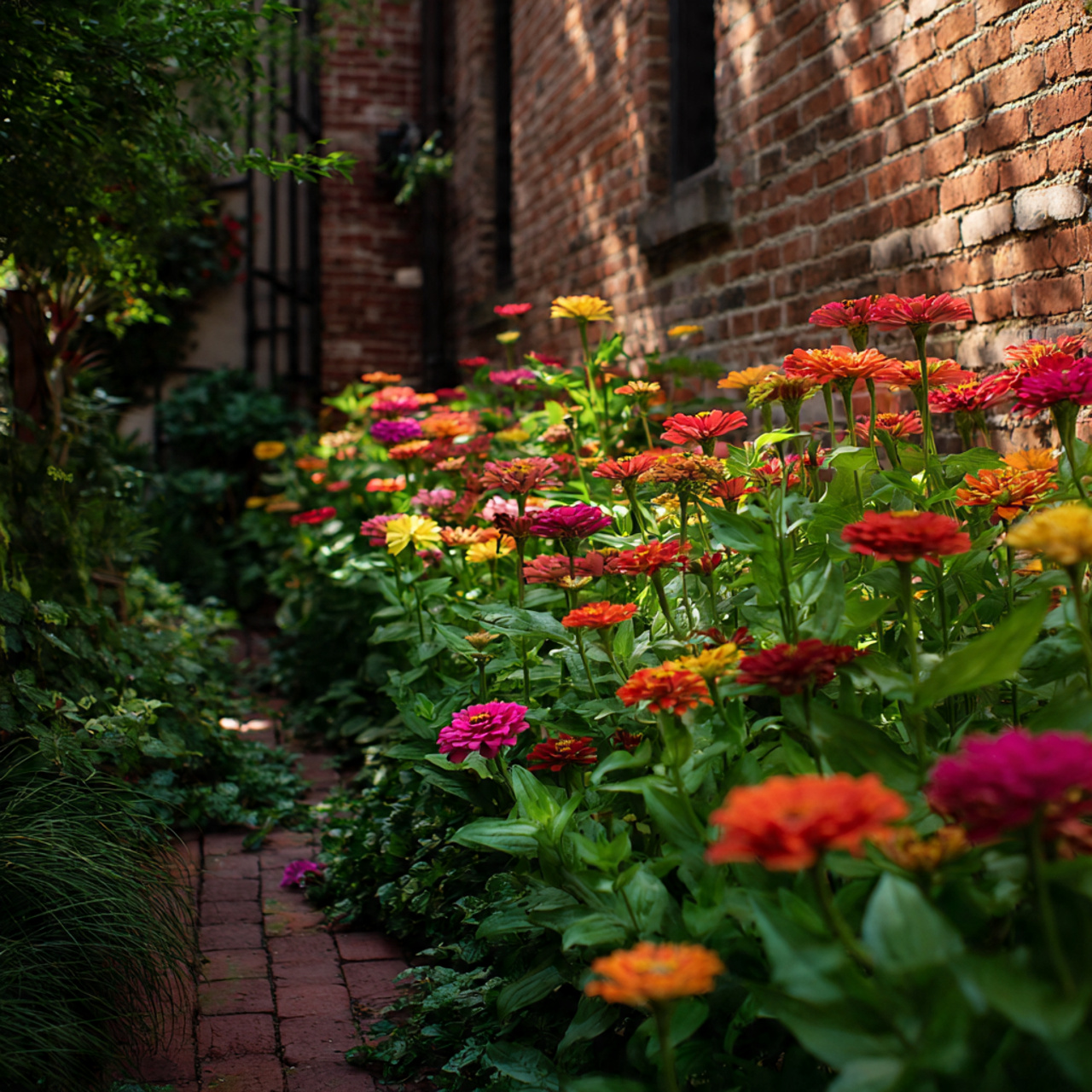
That narrow strip along your house doesn’t have to remain bare and unused. Zinnias thrive in these challenging spaces, turning them into vibrant floral hallways that surprise and delight.
Making the most of narrow spaces:
- Arrange zinnias in single or double rows for maximum impact
- Choose taller varieties (24-36 inches) to create vertical interest
- Plant in waves of alternating colors for visual rhythm
- Ensure the area receives at least 6 hours of direct sunlight
- Add a layer of mulch to retain moisture in these often-dry locations
Maximize Growth with Raised Bed Gardens
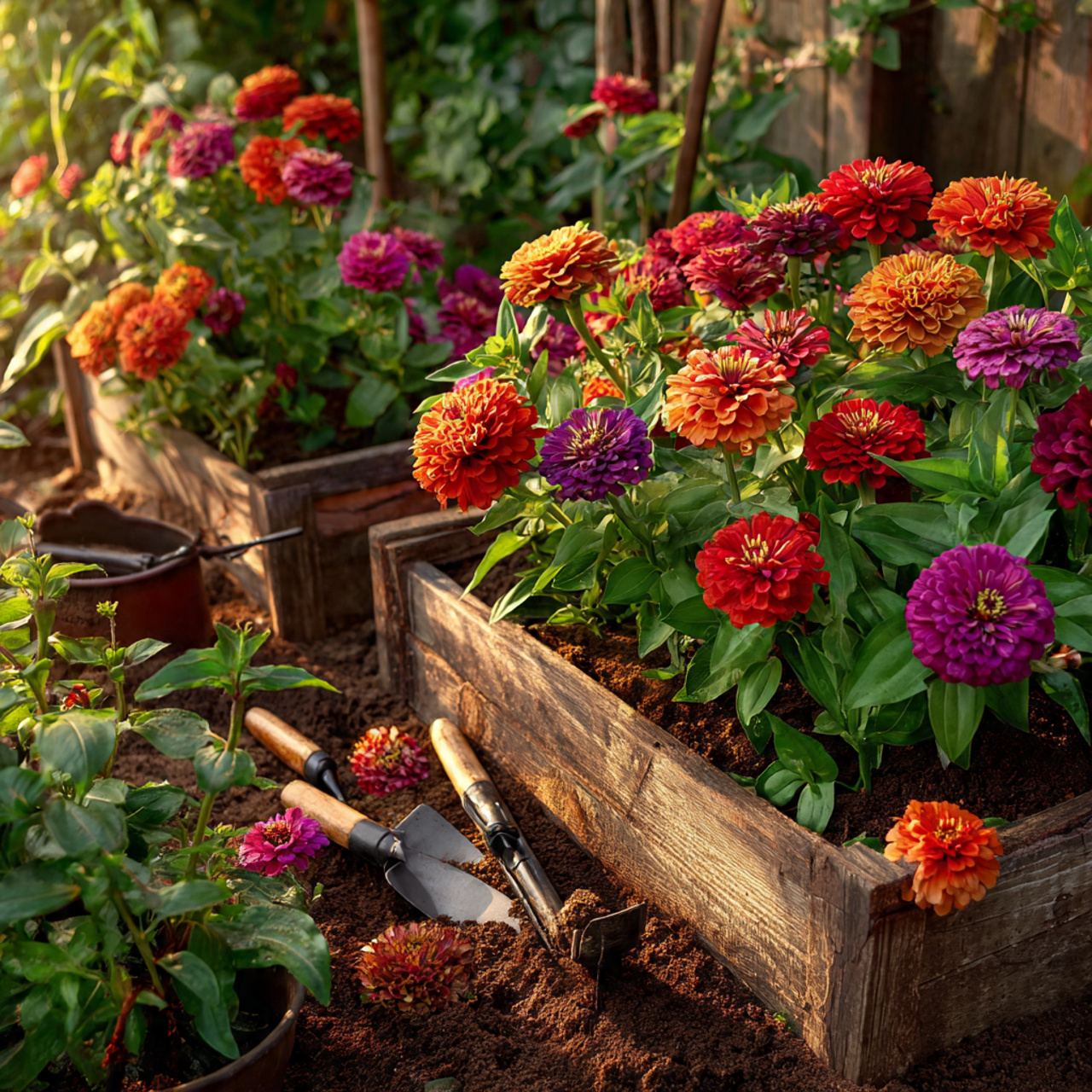
Raised beds offer superior control over soil quality and drainage—two factors that zinnias absolutely love. The elevated design also makes your garden easier to tend while adding architectural interest to your yard.
Raised bed advantages:
- Fill beds with nutrient-rich, well-draining soil mix
- Plant zinnias closer together (6-8 inches) for lush, full displays
- Soil warms faster in spring, giving you earlier blooms
- Easier access means less bending and strain during maintenance
- Extended growing season as beds stay warmer into fall
Create Cottage Garden Magic
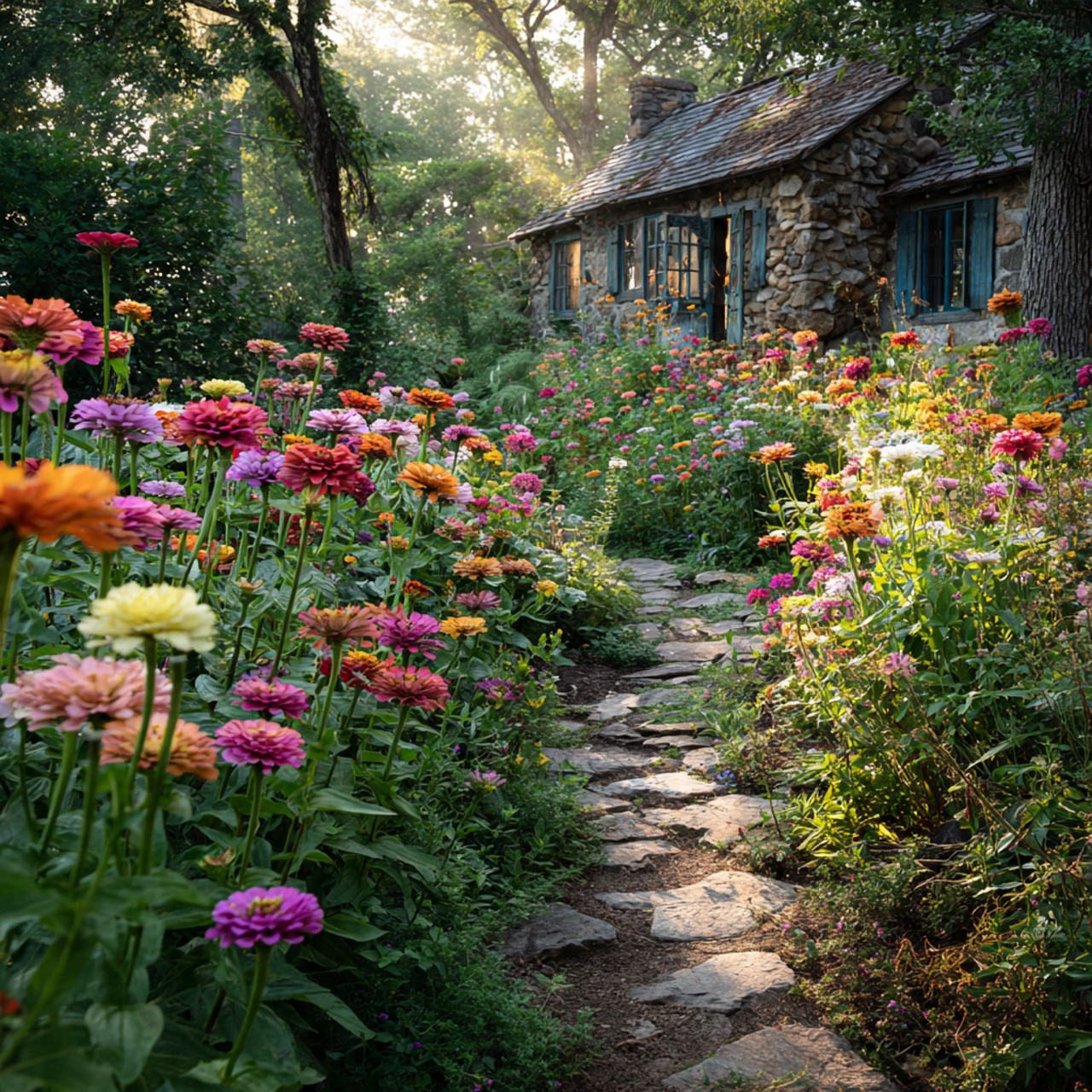
Embrace the romantic, overflowing aesthetic of cottage gardens by letting zinnias grow in delightful, natural abundance. This style celebrates color diversity and relaxed planting patterns.
Achieving cottage charm:
- Mix different zinnia heights, colors, and flower forms freely
- Allow plants to lean and intertwine naturally
- Skip rigid spacing—let happy accidents create character
- Combine with cosmos, sunflowers, or hollyhocks for layered texture
- Deadhead selectively to maintain the wild, organic feel
Go Rustic with Metal Trough Planters
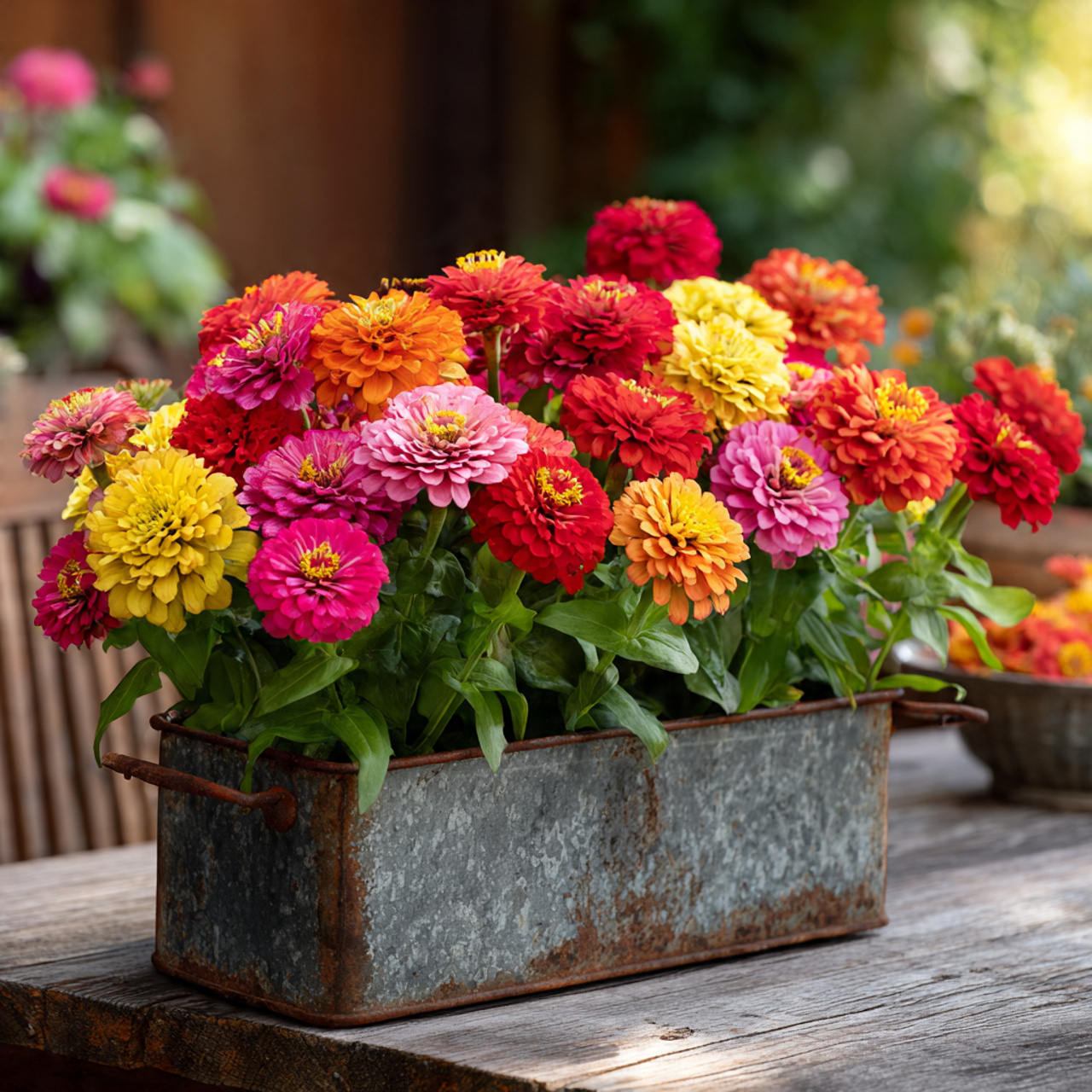
Industrial-style metal containers provide striking contrast against zinnia’s soft, colorful blooms. These durable planters work wonderfully on patios, decks, or positioned throughout larger garden spaces.
Metal planter tips:
- Drill drainage holes if not already present
- Metal heats up quickly—beneficial for root development
- Plant 3-5 zinnias per standard trough for balanced fullness
- Position in areas with morning to midday sun
- The weathered patina of galvanized metal complements all zinnia color
Enhance Curb Appeal Around Your Mailbox
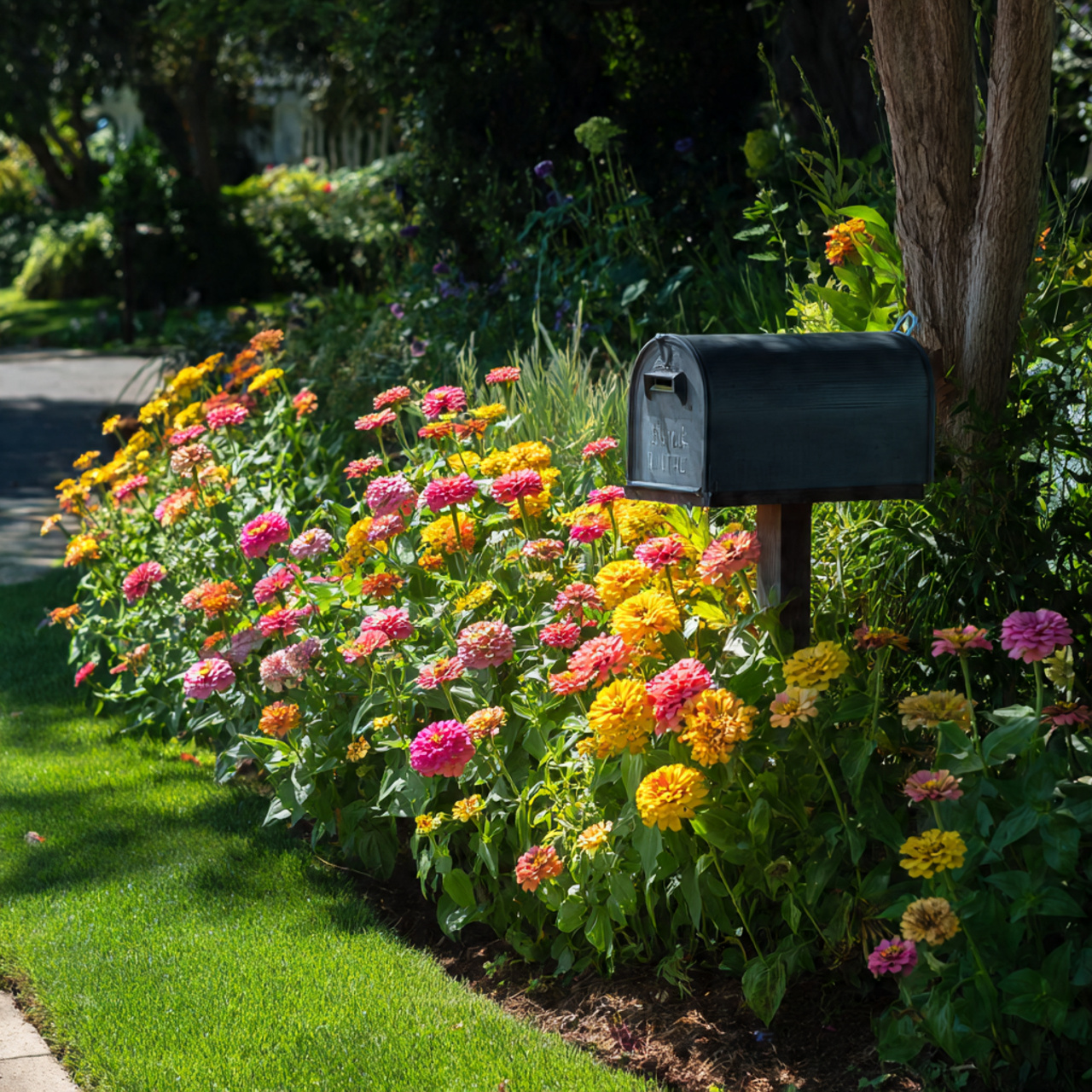
Your mailbox area gets noticed by everyone who passes by. Surrounding it with vibrant zinnias creates an instant welcome that showcases your home’s personality.
Mailbox garden design:
- Plant taller zinnias (24-30 inches) behind the mailbox
- Use shorter varieties (12-18 inches) in front for layered dimension
- Choose colors that complement your home’s exterior
- Refresh with new plantings mid-summer for continuous color
- Consider adding a small border of annual lobelia or alyssum for ground-level interest
Make a Statement with Large Ceramic Containers
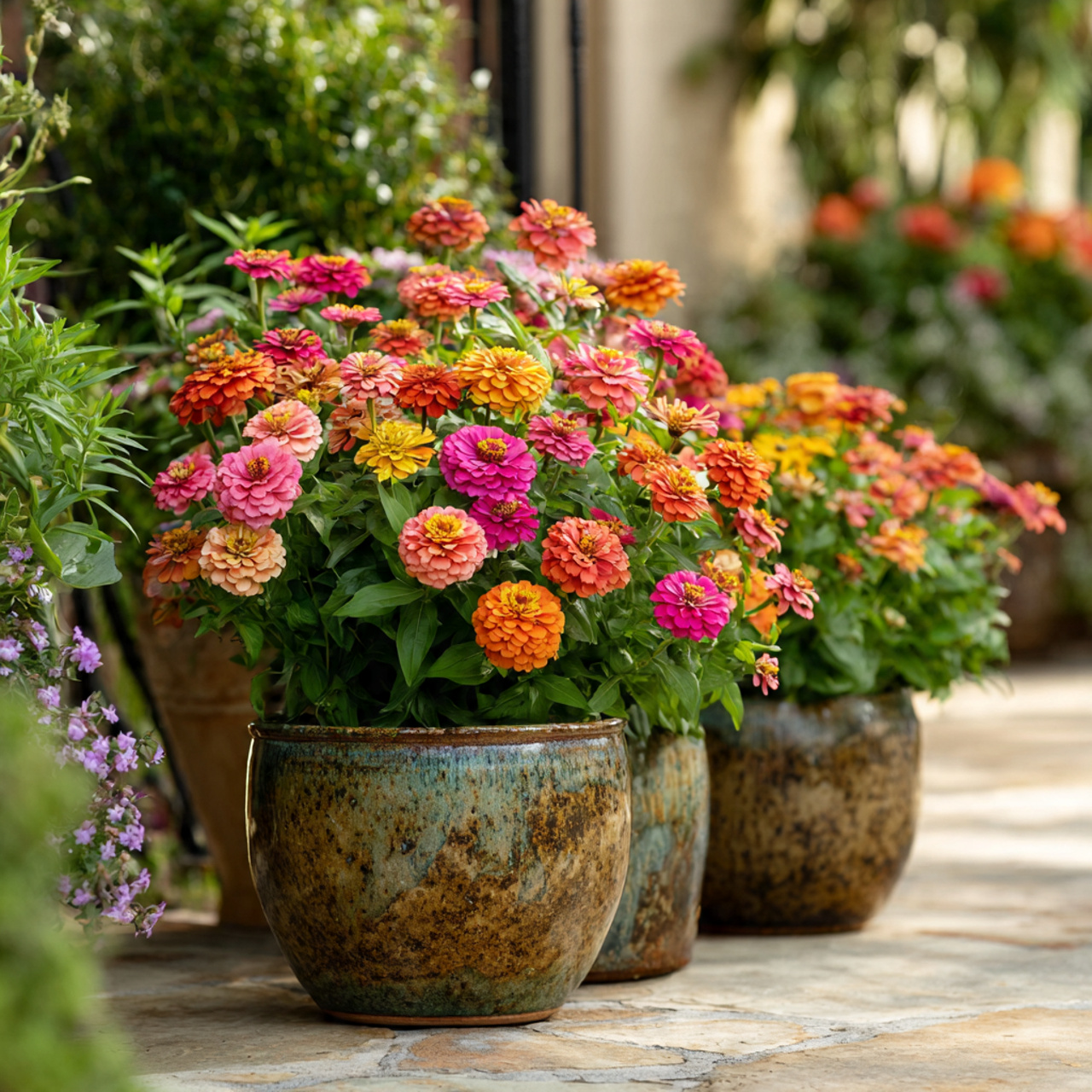
Substantial ceramic pots allow apartment dwellers and those with limited ground space to enjoy gorgeous zinnia displays. These vessels become focal points in their own right.
Container gardening success:
- Choose pots at least 12-14 inches deep for healthy root systems
- Use quality potting mix—never garden soil in containers
- Plant 3-5 compact varieties per large pot
- Water more frequently than ground-planted zinnias
- Rotate pots weekly for even sun exposure on all sides
Zinnia Garden for Butterfly Attraction
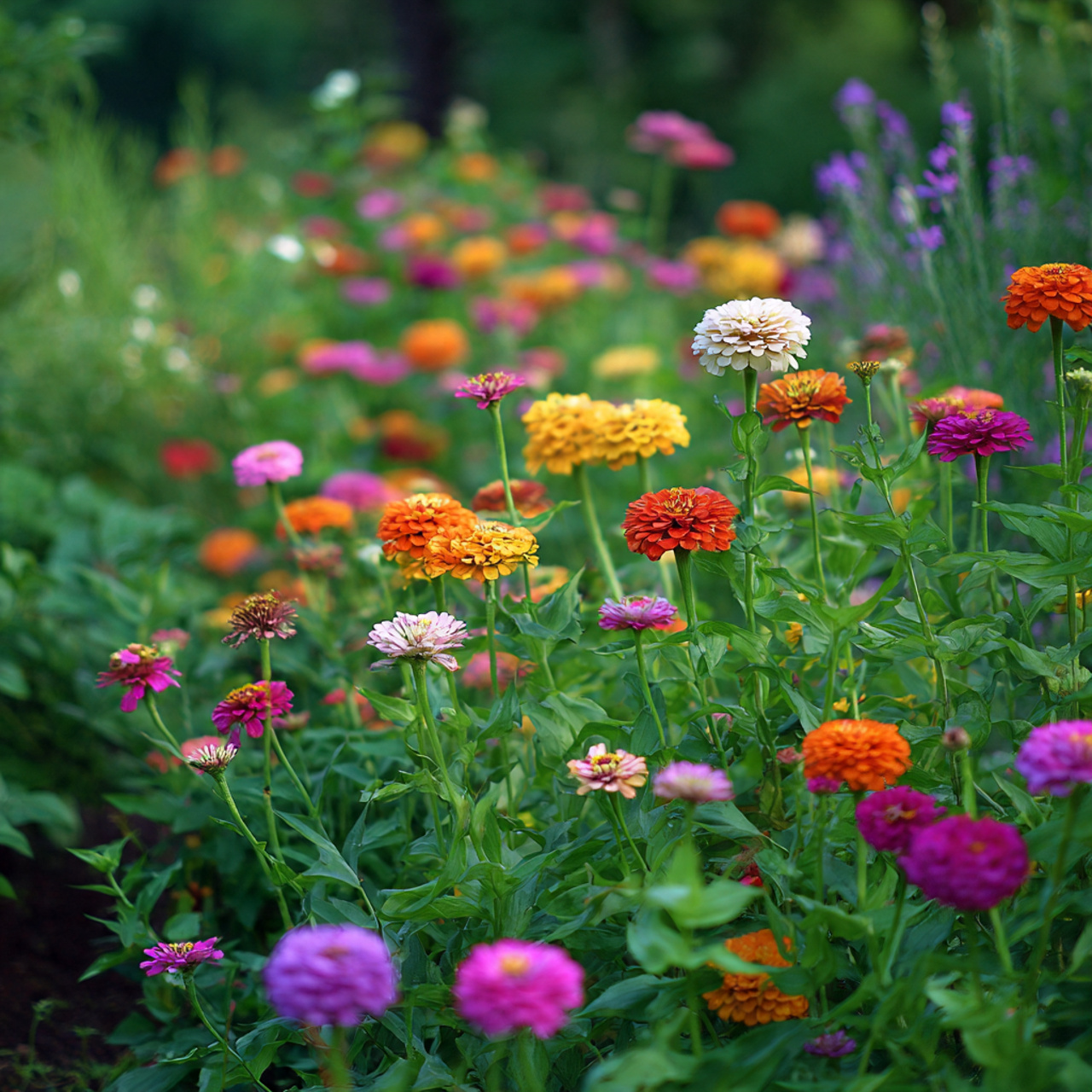
Few flowers attract butterflies as reliably as zinnias. Creating a dedicated butterfly garden brings enchanting movement and supports important pollinators throughout the growing season.
Butterfly-friendly features:
- Plant single-petal zinnia varieties—easier nectar access than doubles
- Include host plants like milkweed for monarch caterpillars
- Add flat stones for butterfly sunbathing spots
- Avoid pesticides completely in butterfly zones
- Plant in sunny, wind-protected areas where butterflies prefer to feed
Design with Intentional Color Themes
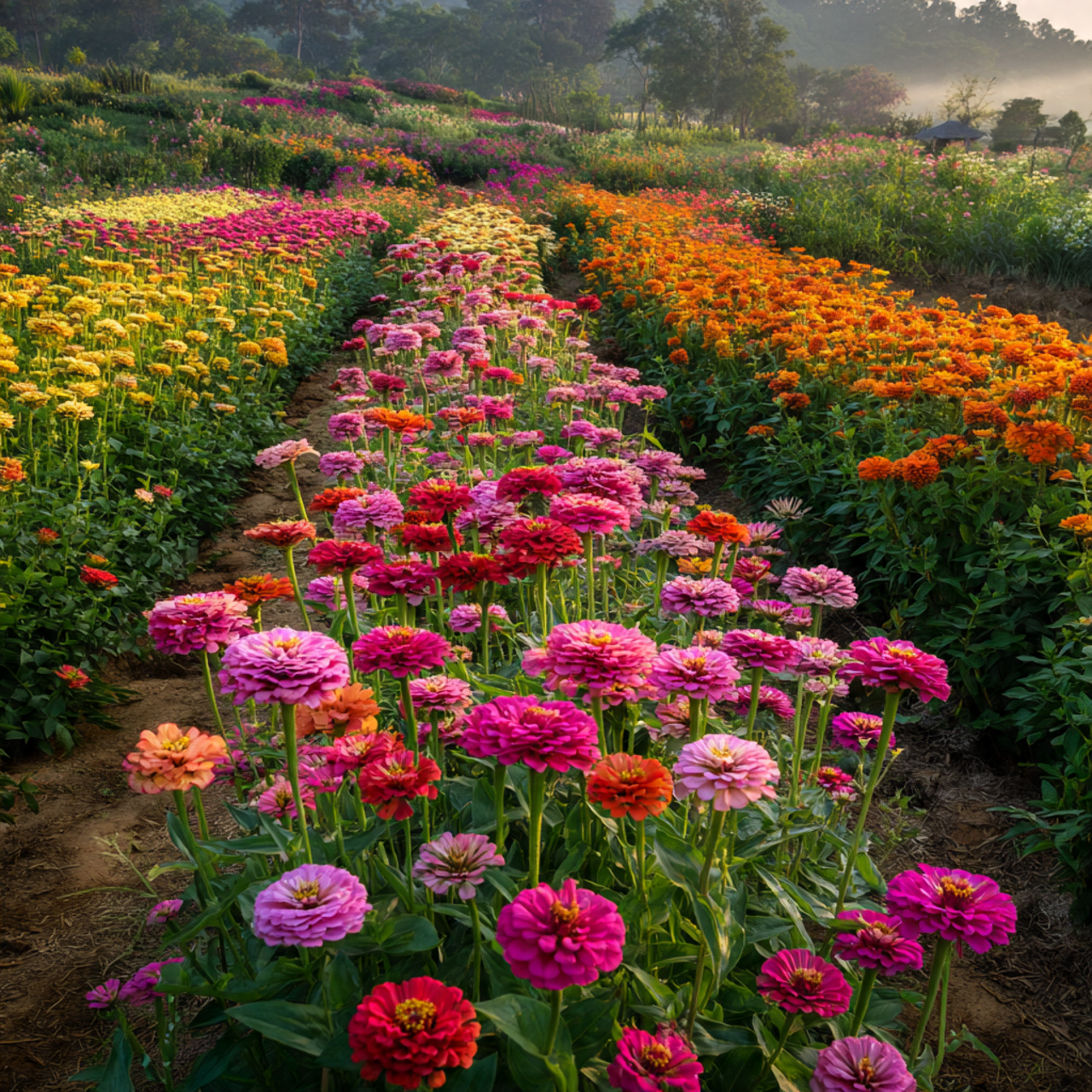
Coordinating your zinnia colors creates sophisticated visual impact. Whether you prefer harmonious blends or dramatic contrasts, thoughtful color planning elevates any garden design.
Color combination ideas:
- Warm sunset palette: oranges, reds, yellows, and corals
- Cool elegance: purples, pinks, whites, and soft lavenders
- Monochromatic drama: all shades of pink from pale to magenta
- High contrast: pair bright yellows with deep purples
- Classic cottage: mix all colors freely for cheerful abundance
Grow Your Own Fresh-Cut Flower Supply
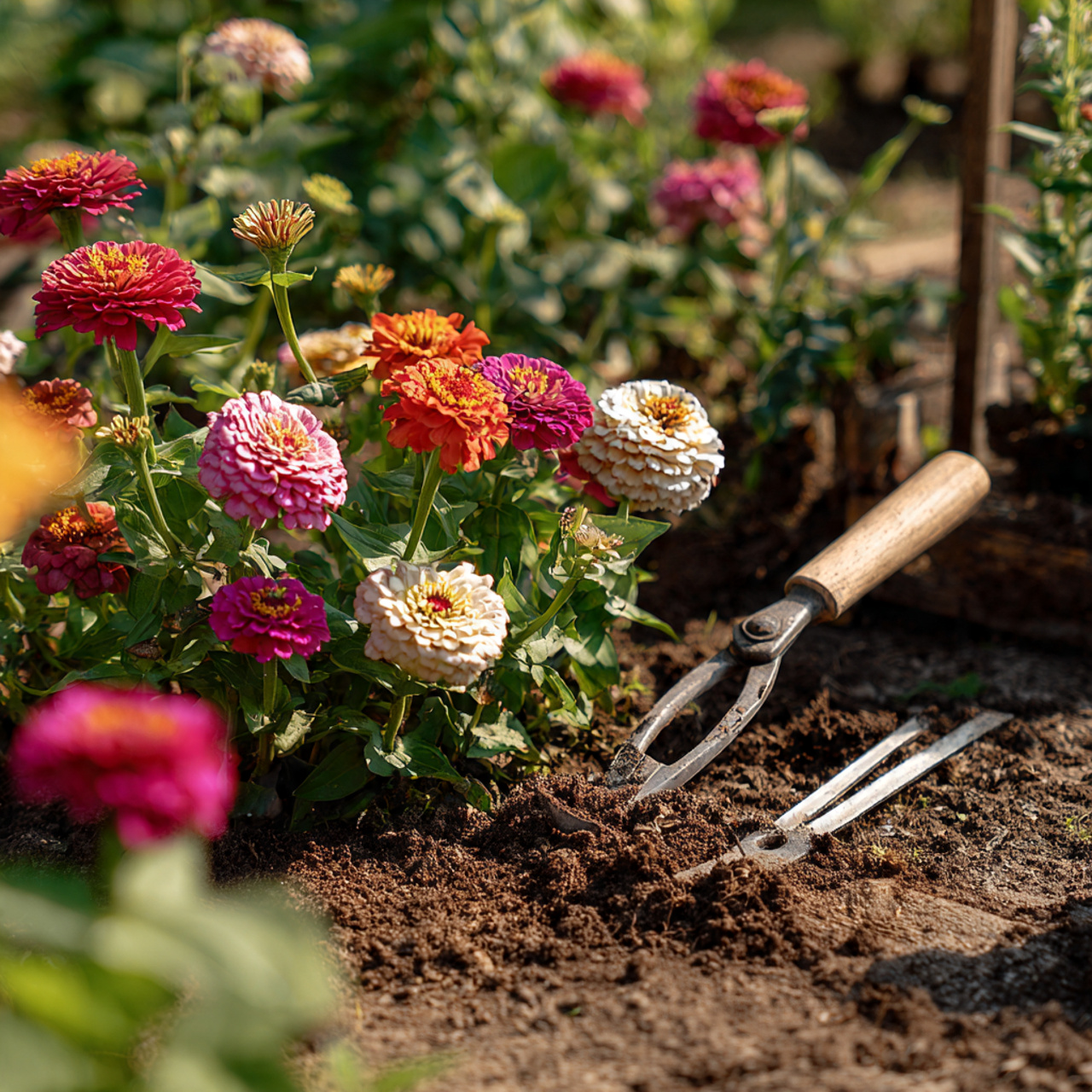
Zinnias rank among the best flowers for cutting and bringing indoors. Designing a dedicated cutting garden ensures you always have fresh bouquets without depleting your display garden.
Cutting garden essentials:
- Plant zinnias in straight rows for easy access and harvesting
- Choose long-stemmed varieties (30-36 inches tall)
- Cut flowers in early morning when stems are most hydrated
- Harvest frequently—cutting encourages more bloom production
- Leave at least two sets of leaves on stems when cutting to promote regrowth
Add Whimsy with Hanging Buckets
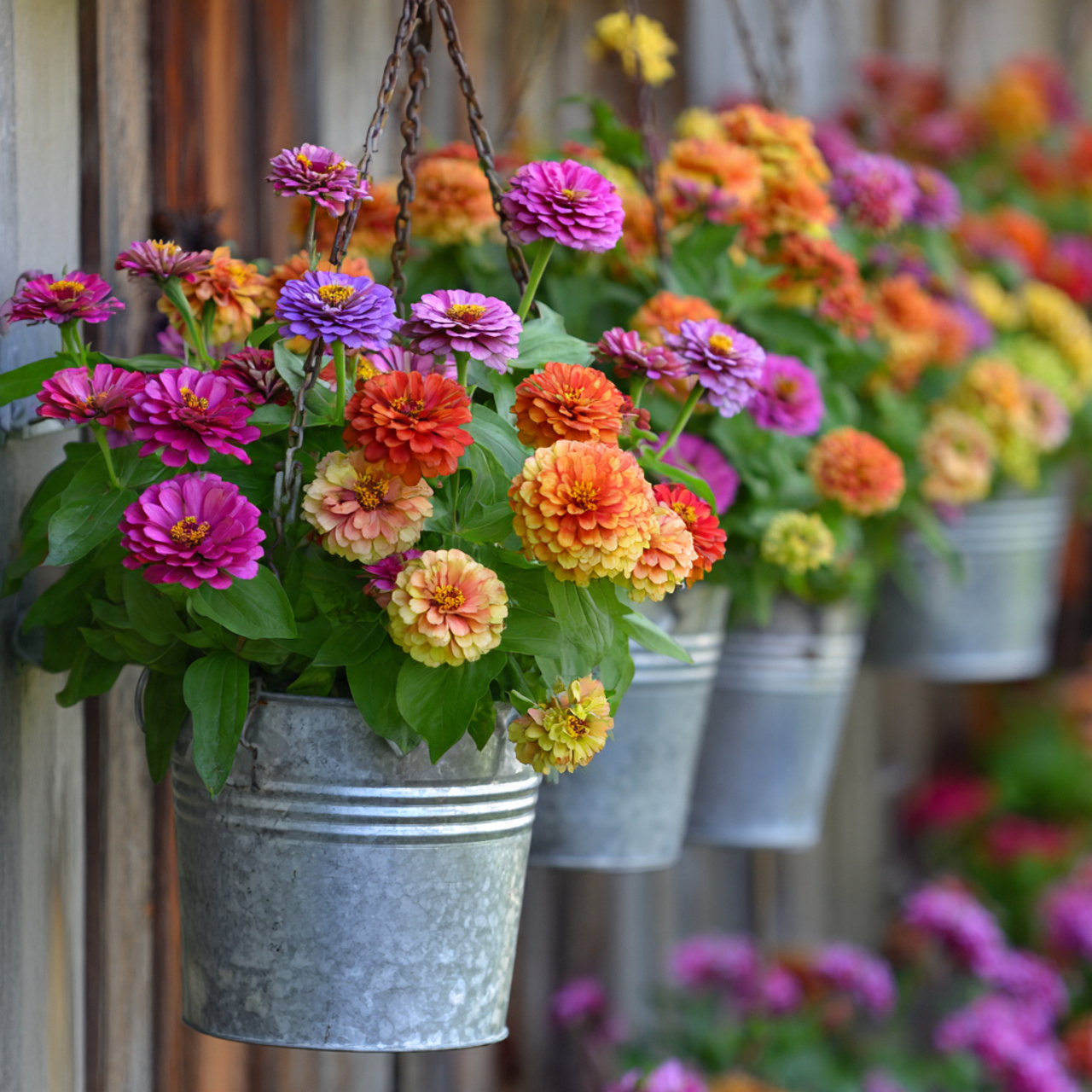
Repurpose vintage pails, buckets, or hanging planters to create unexpected vertical zinnia displays. This playful approach adds character while making use of often-overlooked vertical spaces.
Hanging container tips:
- Punch drainage holes in bucket bottoms
- Use dwarf or compact zinnia varieties (8-12 inches)
- Hang at eye level or slightly above for best viewing
- Secure firmly—zinnias become heavy when fully grown and watered
- Consider grouping multiple buckets at varying heights
Create Stunning Garden Focal Points
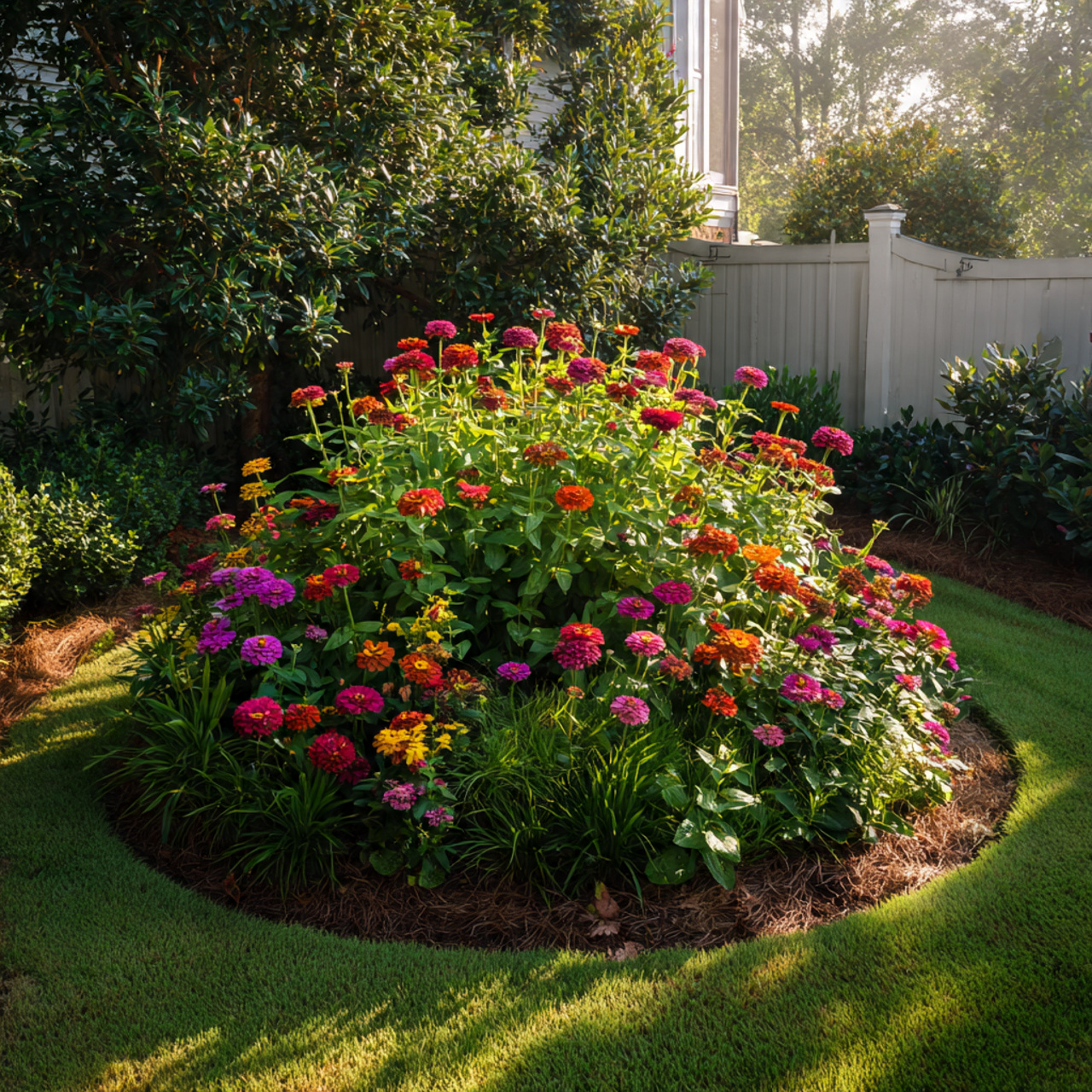
Every well-designed yard benefits from intentional focal points that draw the eye and anchor the overall landscape. Zinnias’ bold presence makes them natural centerpiece material.
Focal point strategies:
- Design circular or island beds with tallest zinnias in the center
- Create symmetrical arrangements using identical colors on opposite sides
- Position focal beds where they’re visible from indoor windows
- Surround with shorter companion plants that complement rather than compete
- Use decorative elements like garden spheres or small statuary for added interest
Complement Modern Gravel Landscapes
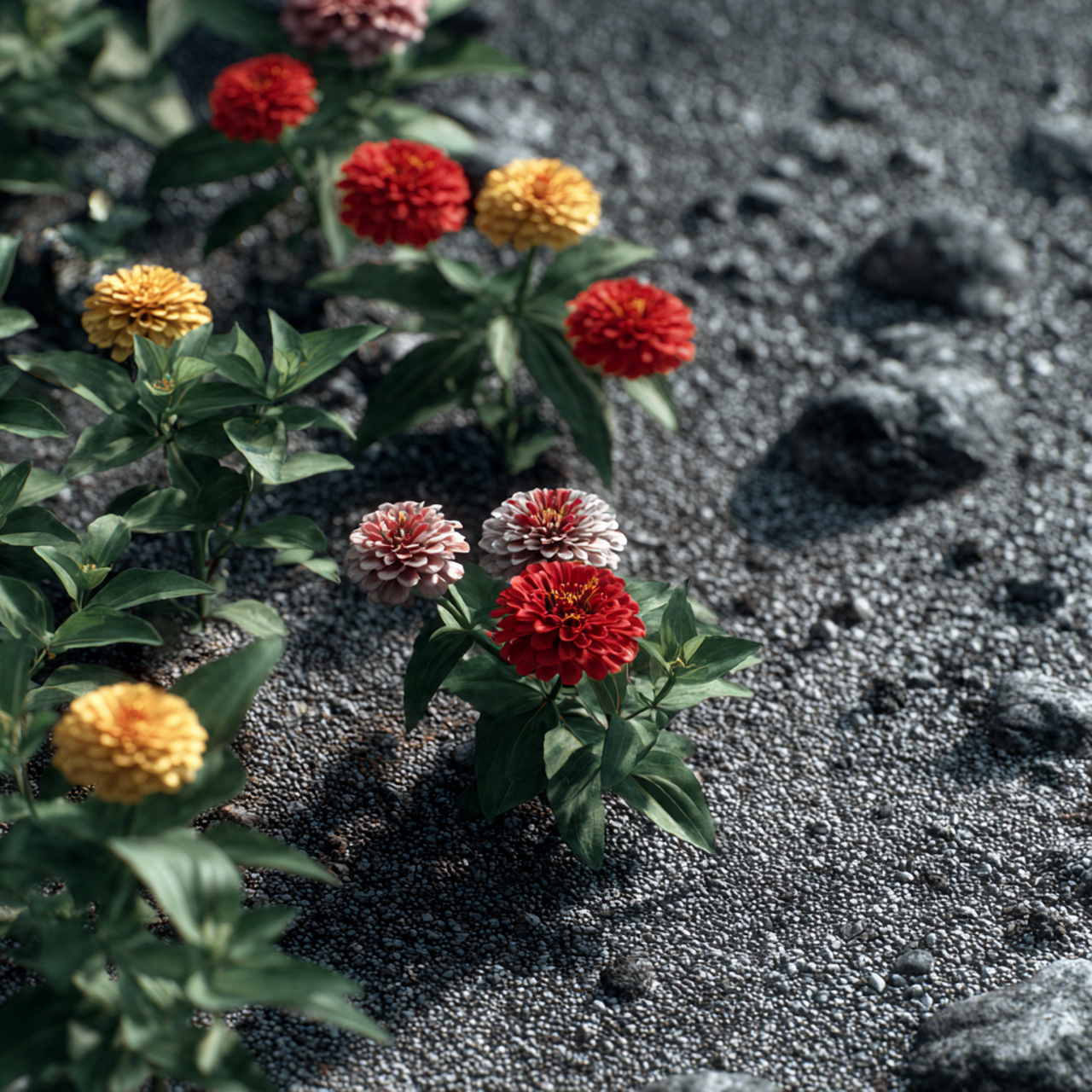
Contemporary gravel gardens benefit from strategic pops of color. Zinnias provide that vibrant contrast while maintaining the low-maintenance philosophy of gravel landscaping.
Gravel garden integration:
- Create raised planting pockets filled with enriched soil
- Keep gravel 2-3 inches away from zinnia stems to prevent moisture issues
- Use landscape fabric beneath gravel to suppress weeds
- Choose drought-tolerant zinnia varieties for water-wise gardens
- The texture contrast between fine gravel and soft petals creates striking visual appeal
Soften Hard Fence Lines
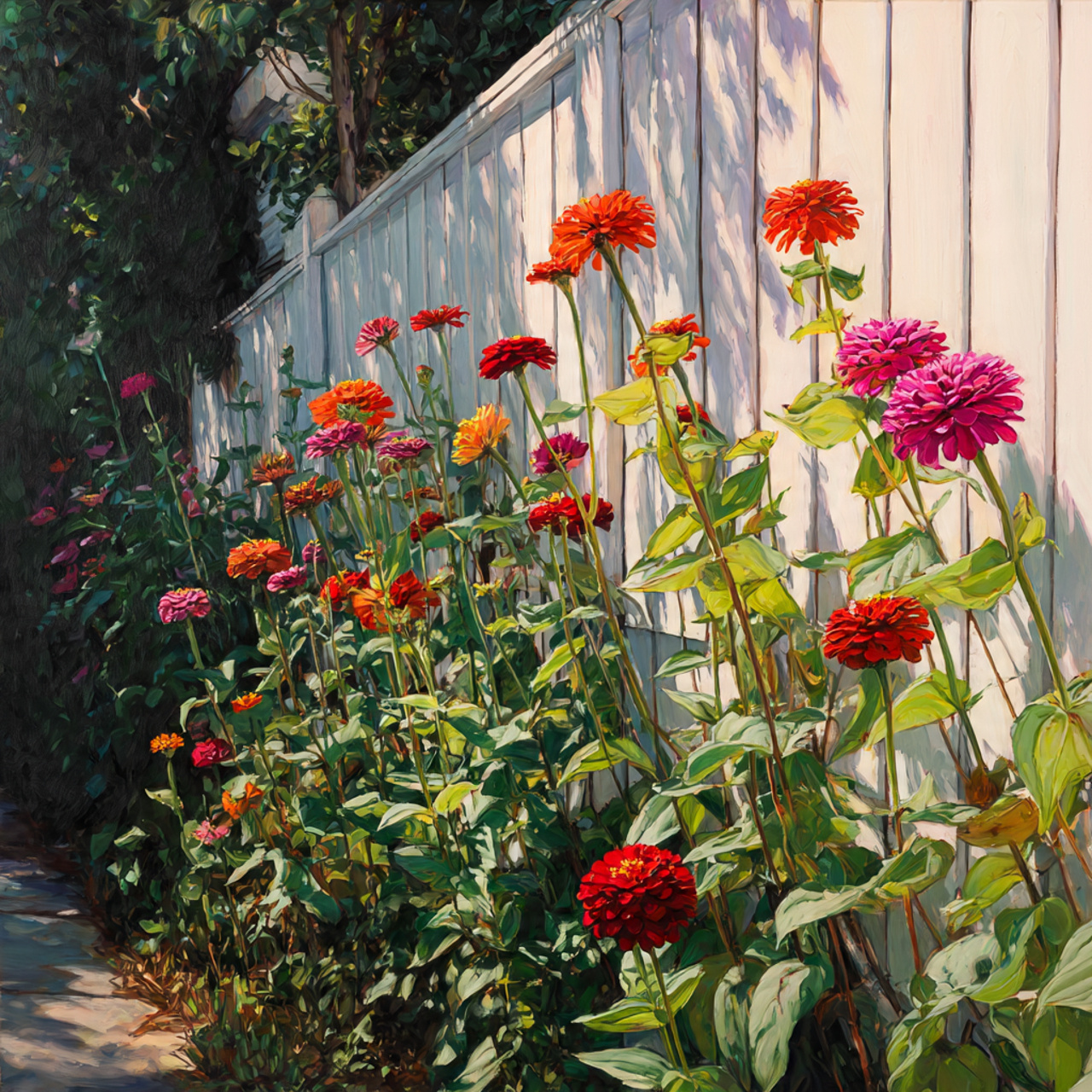
Bare fences often create harsh visual boundaries. A row of zinnias transforms these structures into living backdrops that add depth and beauty rather than simply marking property lines.
Fence planting strategies:
- Select tall varieties (36-48 inches) for maximum impact
- Plant 12-18 inches from fence base to allow air circulation
- Use lighter colors against dark fences, bolder shades against light backgrounds
- Dense planting creates a solid color wall effect
- Morning sun exposure is ideal for fence-line plantings
Pair Zinnias with Productive Herb Gardens
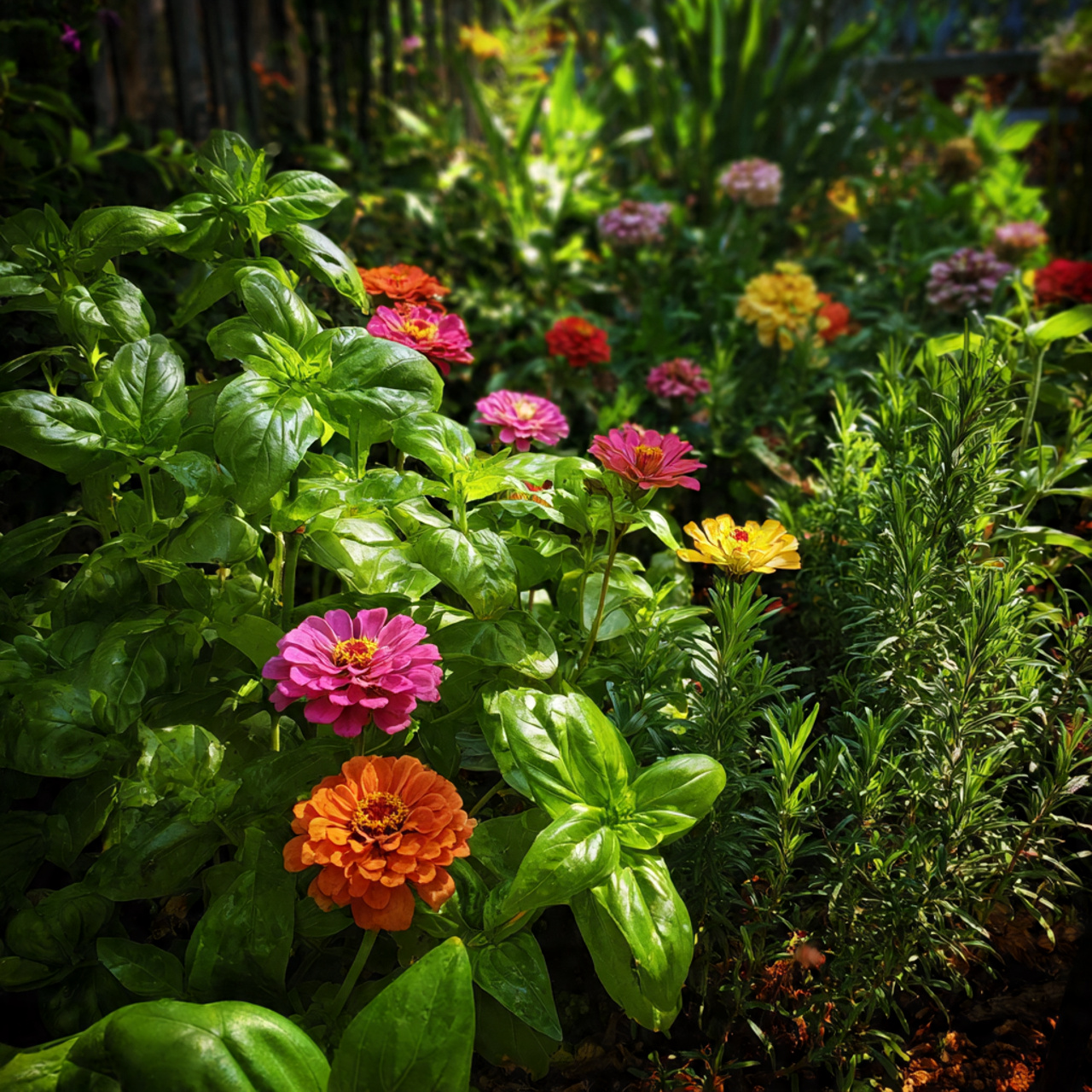
Combining ornamental zinnias with culinary herbs creates gardens that please both the eye and the palate. This pairing offers natural pest protection while maximizing garden space efficiency.
Herb and zinnia combinations:
- Plant zinnias with basil—both love heat and sun
- Rosemary’s upright form complements cascading zinnia varieties
- Oregano’s low growth makes excellent ground cover beneath taller zinnias
- Aromatic herbs help deter aphids and other pests
- Both attract beneficial pollinators that improve herb flowering
Enrich Children’s Outdoor Play Spaces
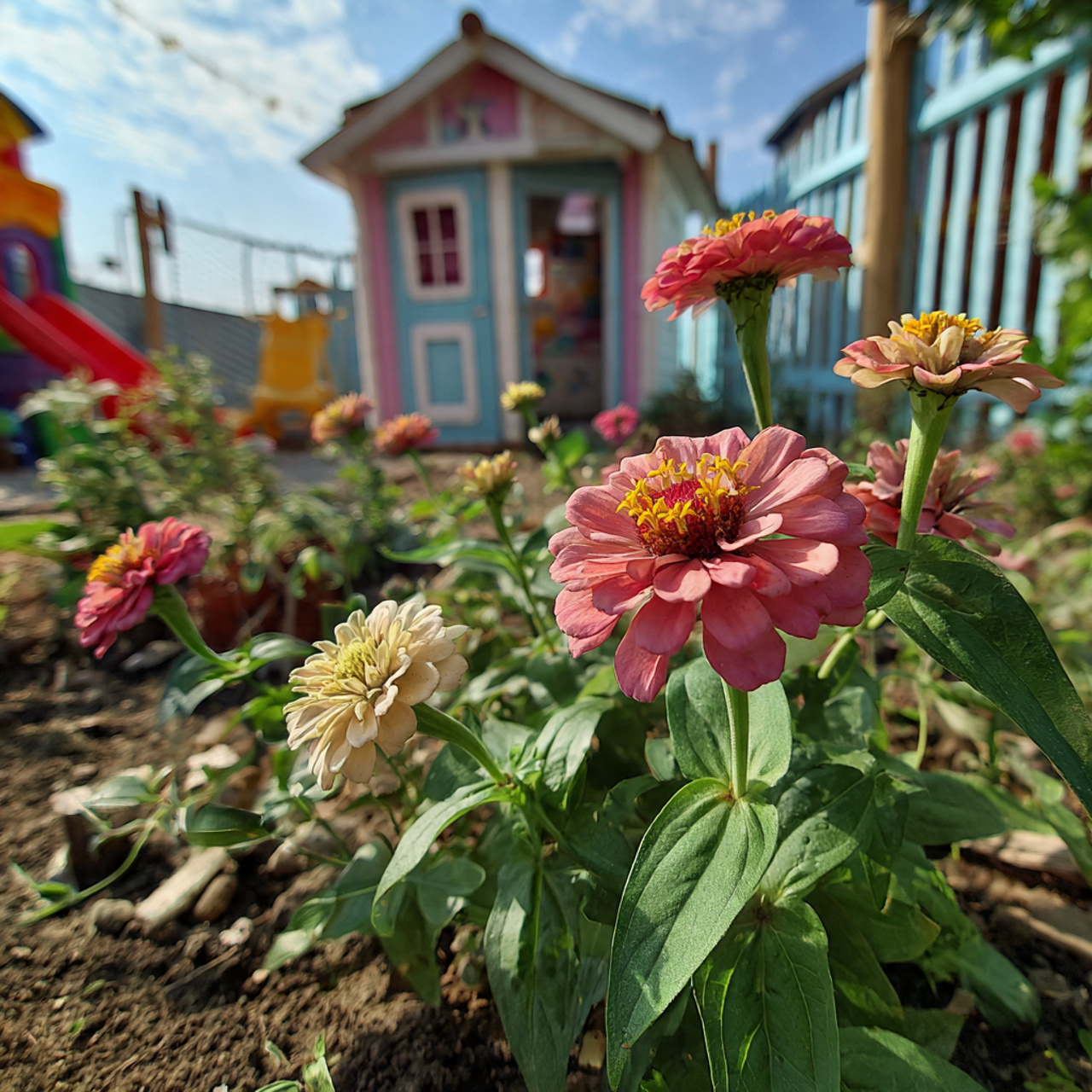
Introducing zinnias near play areas creates sensory-rich environments that spark children’s natural curiosity about nature. These safe, non-toxic flowers invite exploration and learning.
Kid-friendly garden features:
- Choose sturdy varieties that tolerate occasional bumps and brushes
- Plant in contained beds away from high-traffic play zones
- Create “butterfly watching stations” near zinnia patches
- Let children help with deadheading—they love the satisfying snap
- Use zinnias to teach basic plant life cycles and pollination
Embrace Classic Terracotta Container Style
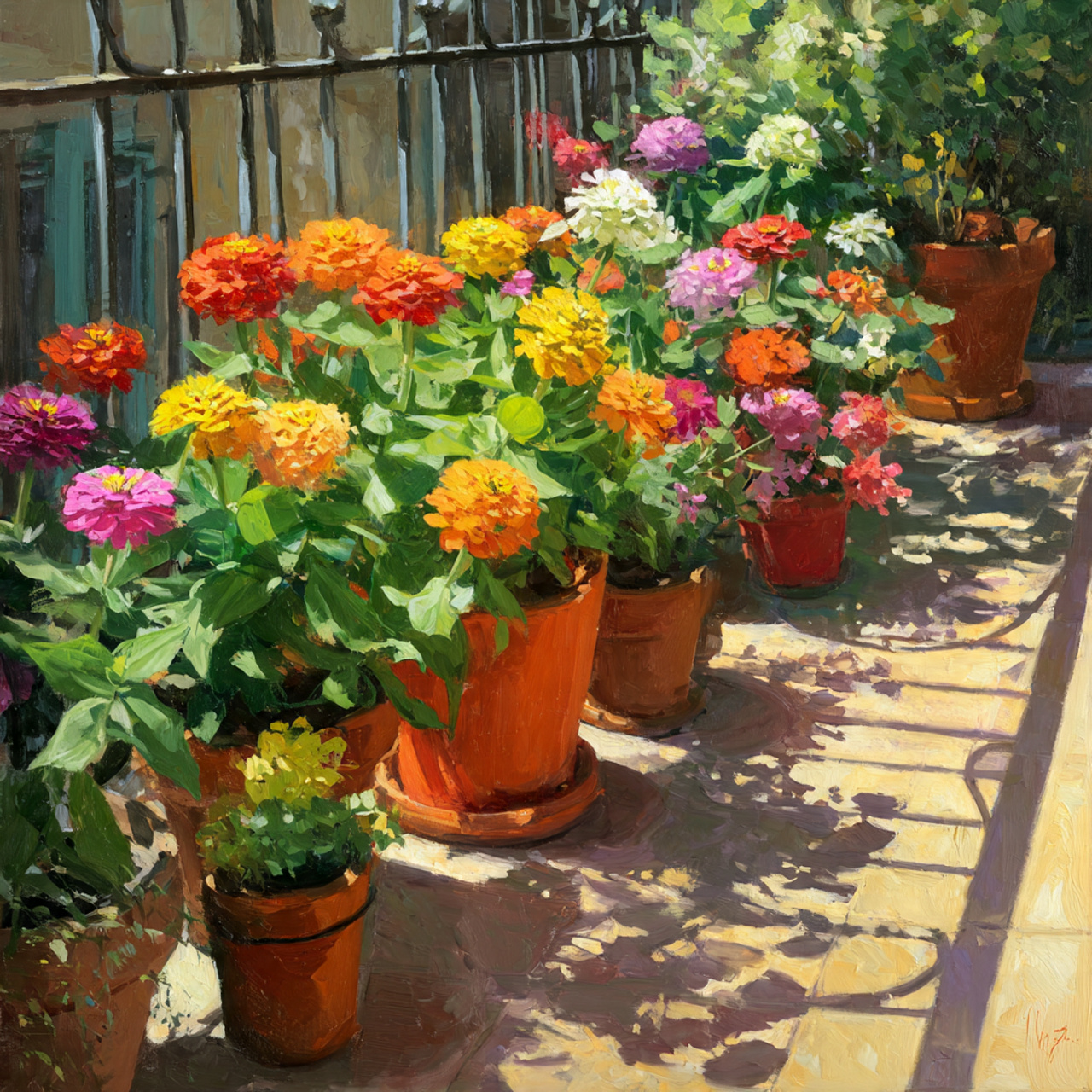
Traditional terracotta pots and zinnias form a timeless combination. The earthy clay tones beautifully complement every zinnia color while providing excellent root environment conditions.
Terracotta container care:
- Soak new pots before planting to prevent moisture-wicking
- Group pots in odd numbers (3, 5, 7) for pleasing arrangements
- Terracotta dries faster—check moisture levels frequently
- Position larger pots as anchors with smaller ones clustered around
- Weather naturally for rustic charm or paint for personalized looks
Welcome Visitors with Pathway Plantings
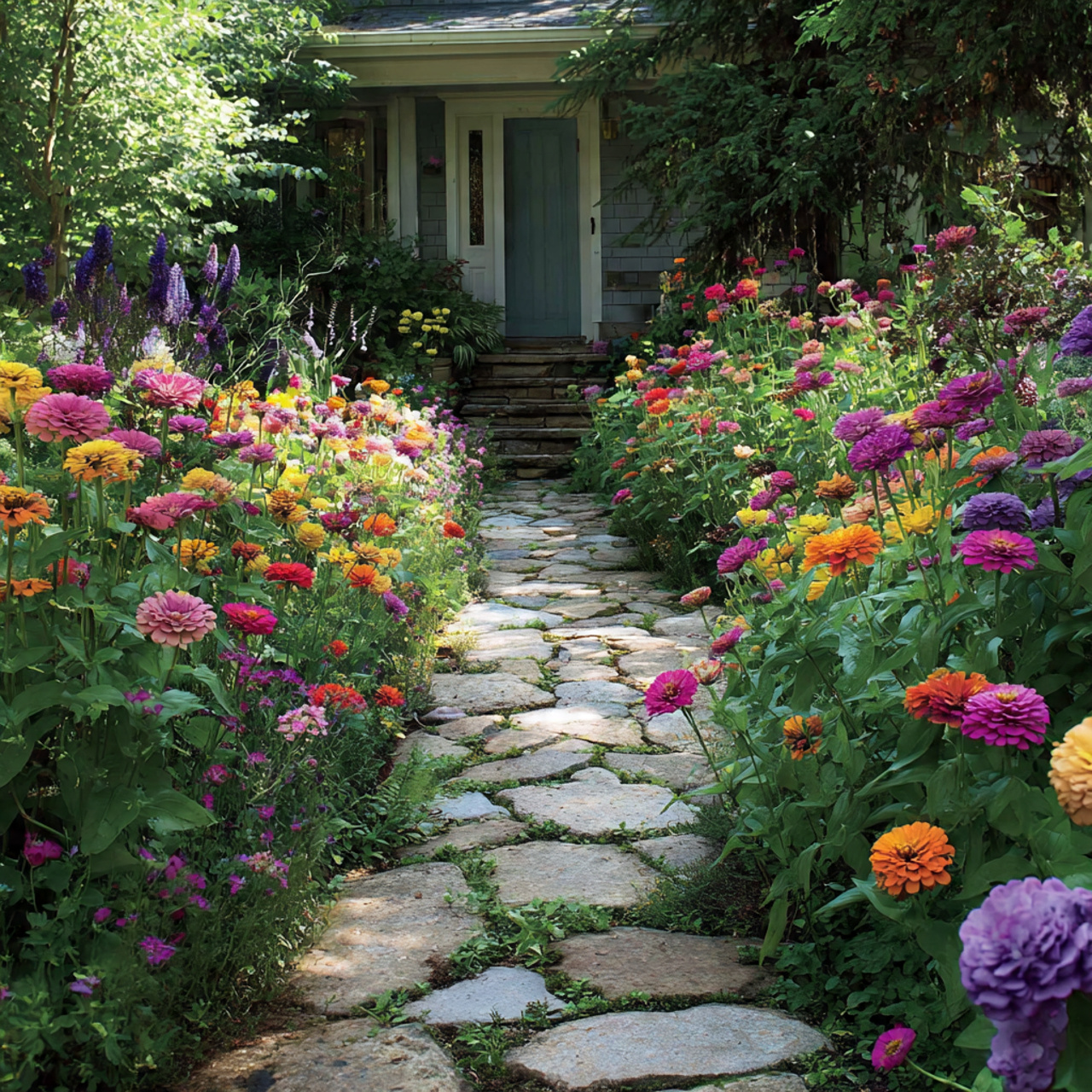
Flanking walkways with cheerful zinnias creates inviting entrances that make guests feel welcomed before they even reach your door. This classic approach never goes out of style.
Pathway design ideas:
- Alternate colors in a repeating pattern for rhythm
- Vary heights gradually—tallest in back, shortest near path edge
- Leave 18-24 inches between path edge and plantings for comfortable walking
- Use identical plantings on both sides for formal symmetry
- Mix freely for relaxed cottage-style pathways
Enhance Water Features with Color
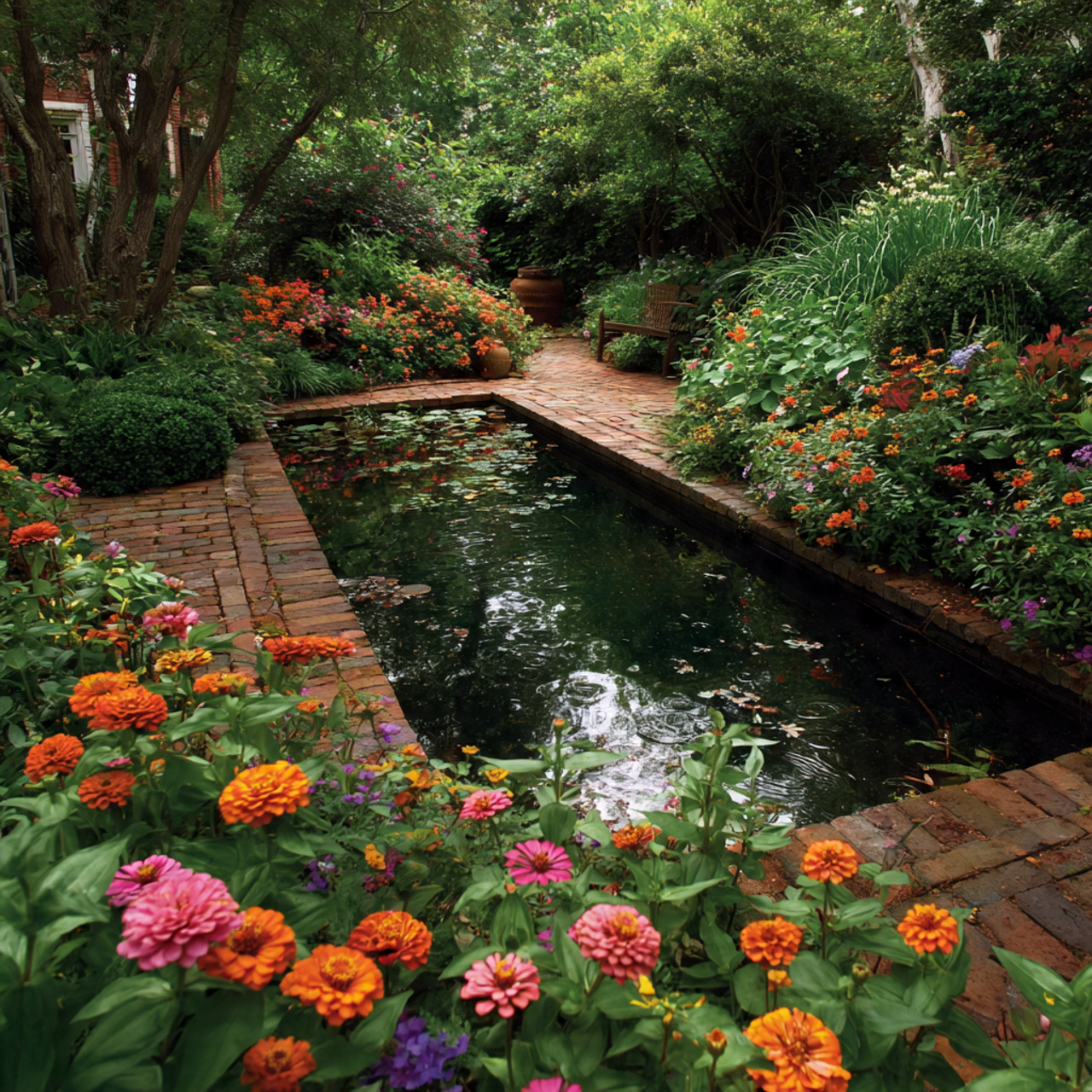
The combination of zinnias and water elements creates tranquil garden moments. Bright blooms reflected in still water or framing moving fountains add dimension and interest.
Water feature pairings:
- Plant zinnias around pond edges in well-drained soil—avoid soggy conditions
- Use height variations to prevent blocking water views
- Coordinate colors with water feature materials (stone, metal, ceramic)
- Position plantings where morning light catches both flowers and water
- Create reflective moments with strategic placement
Finish Gardens Beautifully with Mulch
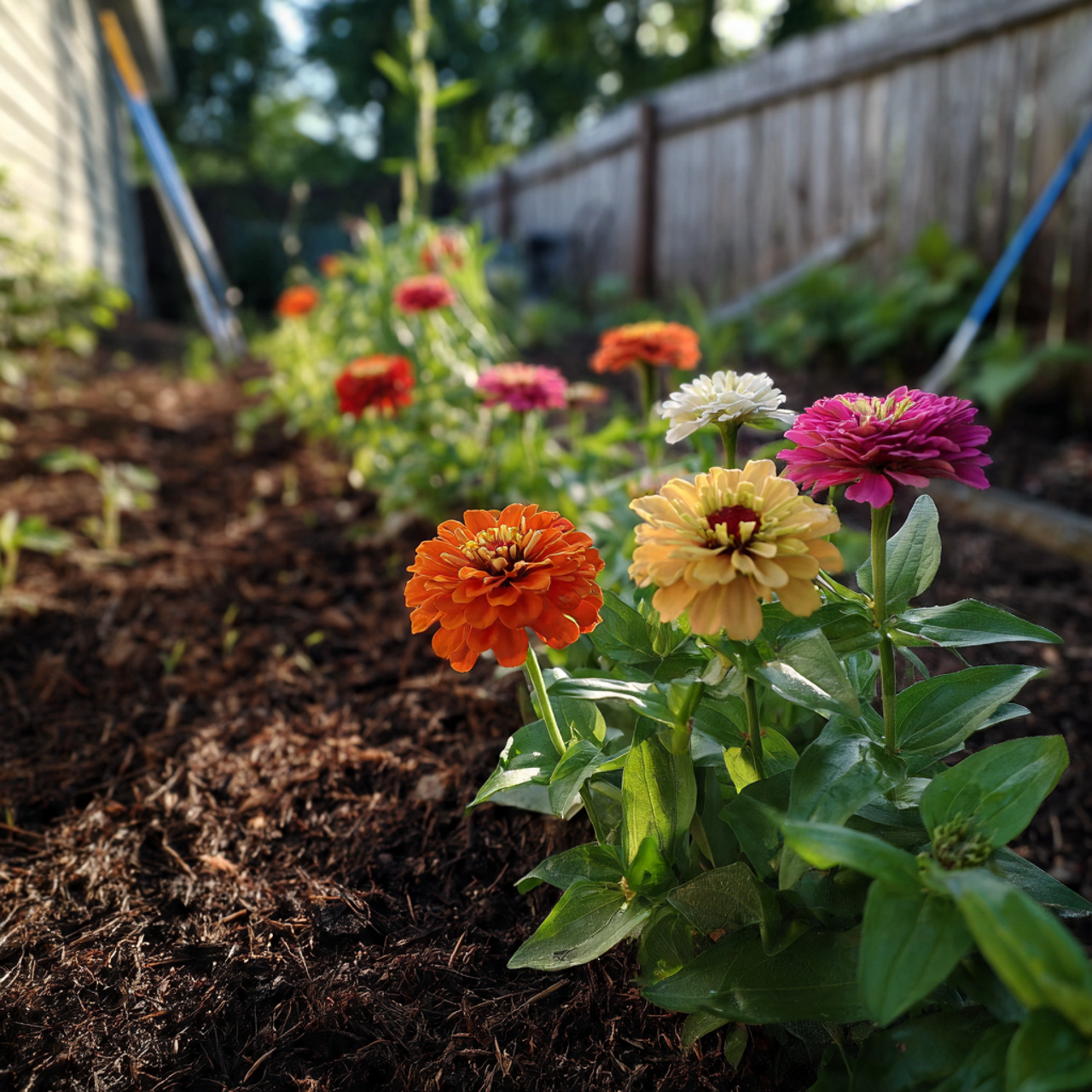
Proper mulching around your zinnias serves multiple purposes—it suppresses weeds, retains soil moisture, regulates temperature, and gives your garden a polished, intentional appearance.
Mulching best practices:
- Apply 2-3 inches of organic mulch around plants
- Keep mulch 2 inches away from zinnia stems to prevent rot
- Choose natural bark, wood chips, straw, or cocoa hulls
- Refresh mulch mid-season as it decomposes
- Dark mulch makes bright zinnia colors pop dramatically
Extend Beauty into Autumn Months
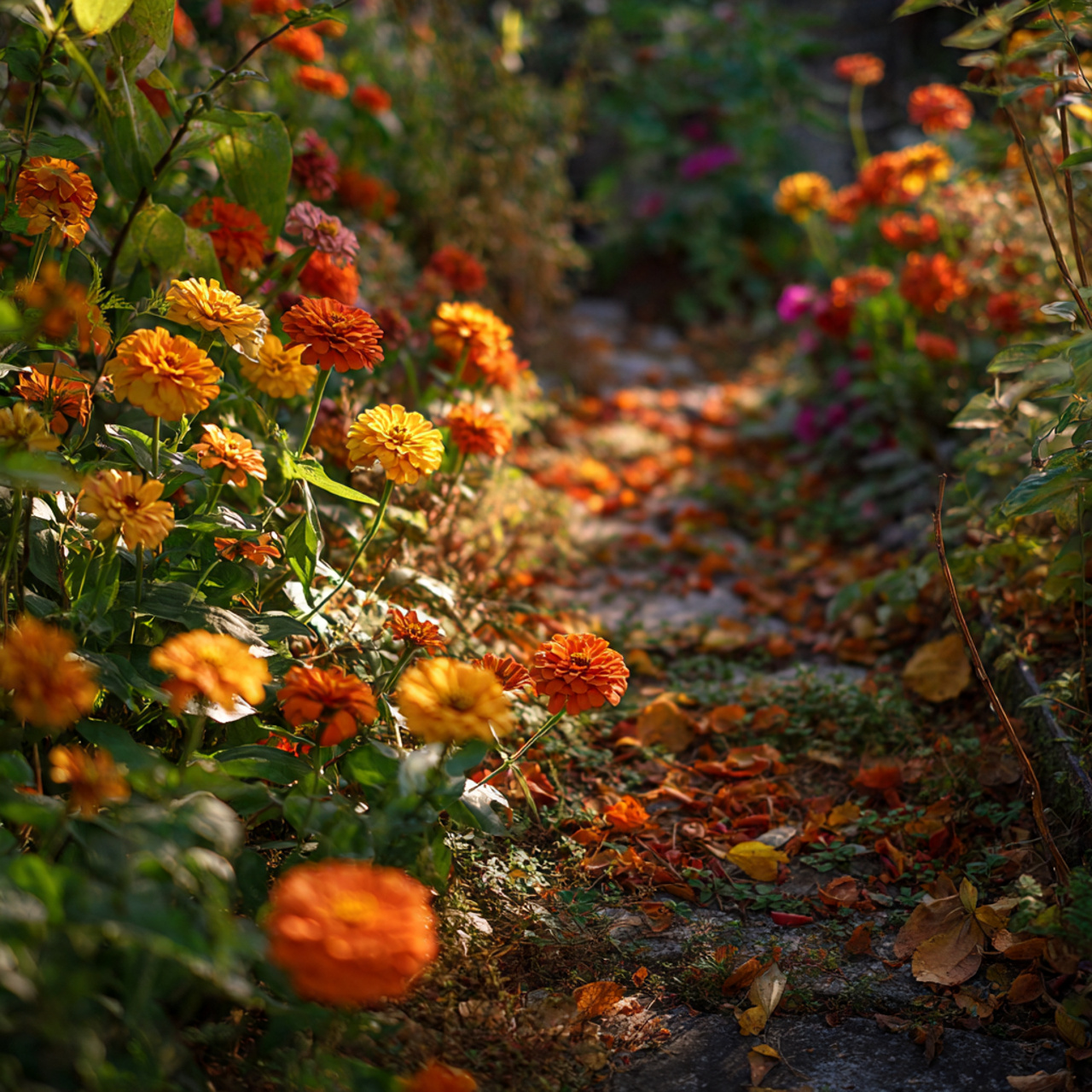
While many flowers fade as summer ends, zinnias keep performing well into fall. Planning for this extended season means your garden maintains color when neighbors’ gardens go dormant.
Fall zinnia strategies:
- Plant warm-toned varieties: burnt orange, deep red, golden yellow
- Make succession plantings in mid-summer for peak fall blooms
- Zinnias tolerate light frosts—often blooming until hard freeze
- Deadhead consistently to encourage continued flower production
- Pair with ornamental grasses for textural autumn interest
Elevate Deck Living Spaces
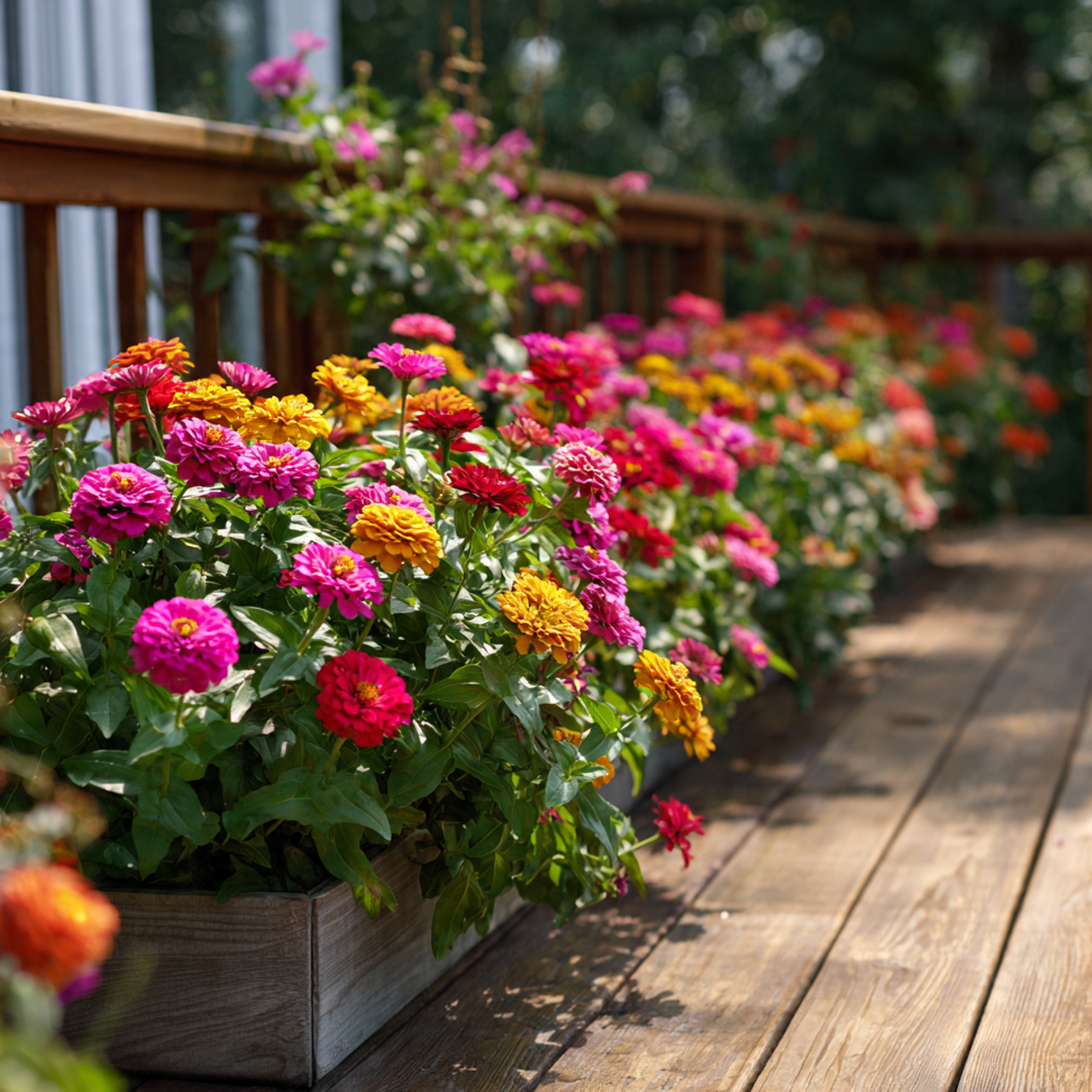
Deck rail planters bring zinnia beauty to eye level, creating intimate floral displays that enhance outdoor relaxation and entertaining areas. This placement makes flowers part of the conversation.
Deck planting considerations:
- Use secure rail brackets designed for planter weight
- Choose compact varieties that won’t obstruct views or pathways
- Water daily during hot weather—elevated planters dry quickly
- Select colors that complement deck furniture and home exterior
- Create cohesive looks by repeating colors around entire deck perimeter
Blend with Native Wildflower Meadows
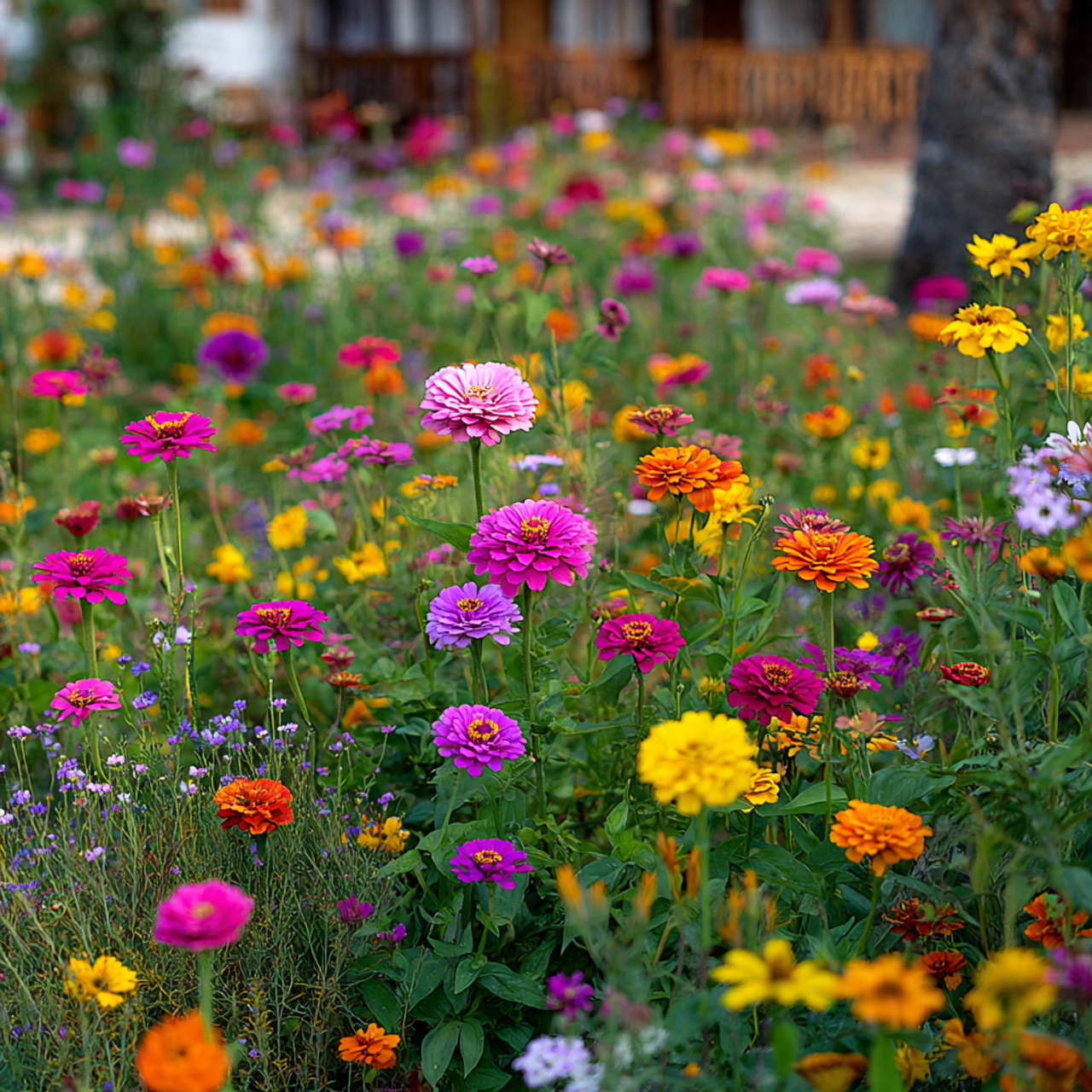
Combining zinnias with native wildflowers creates dynamic, self-sustaining gardens that support diverse wildlife. This naturalistic approach reduces maintenance while maximizing ecological benefits.
Meadow-style planting:
- Allow some zinnias to self-seed for natural renewal
- Mix with black-eyed Susans, coneflowers, and native grasses
- Reduce mowing to allow meadow establishment
- Create habitat corridors for beneficial insects and birds
- This style requires less deadheading and formal care
Zinnia Garden for Backyard Picnics
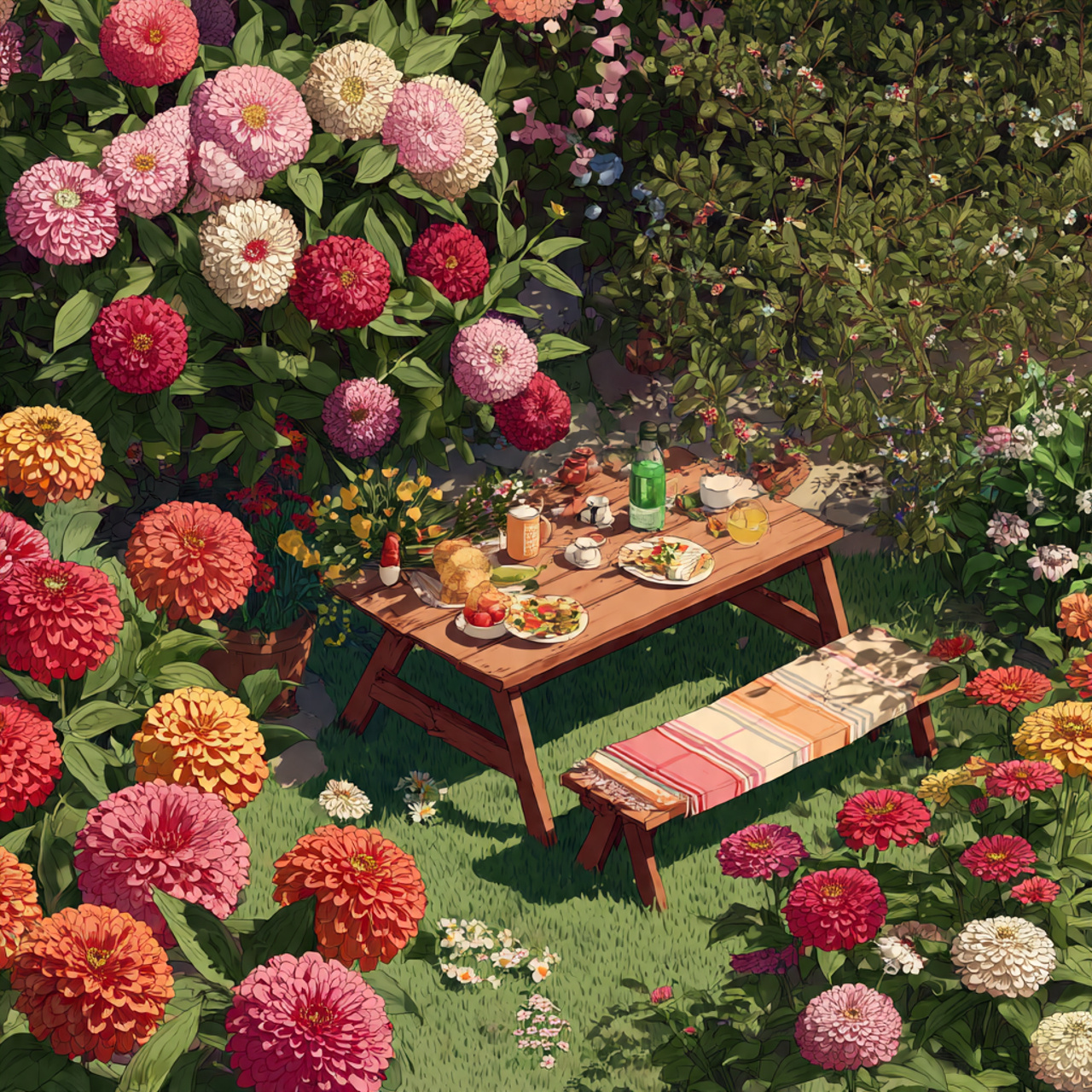
Surrounding picnic areas, patios, or outdoor dining spaces with zinnias transforms ordinary meals into special occasions. The visual beauty and gentle movement create atmosphere and ambiance.
Entertaining area enhancements:
- Plant zinnias in beds that define outdoor room boundaries
- Use container groupings that can be rearranged for events
- Choose fragrance-free varieties to avoid competing with food aromas
- Taller plantings provide natural privacy screening
- Evening colors like whites and yellows glow beautifully at sunset
Bring Joy to Window Views
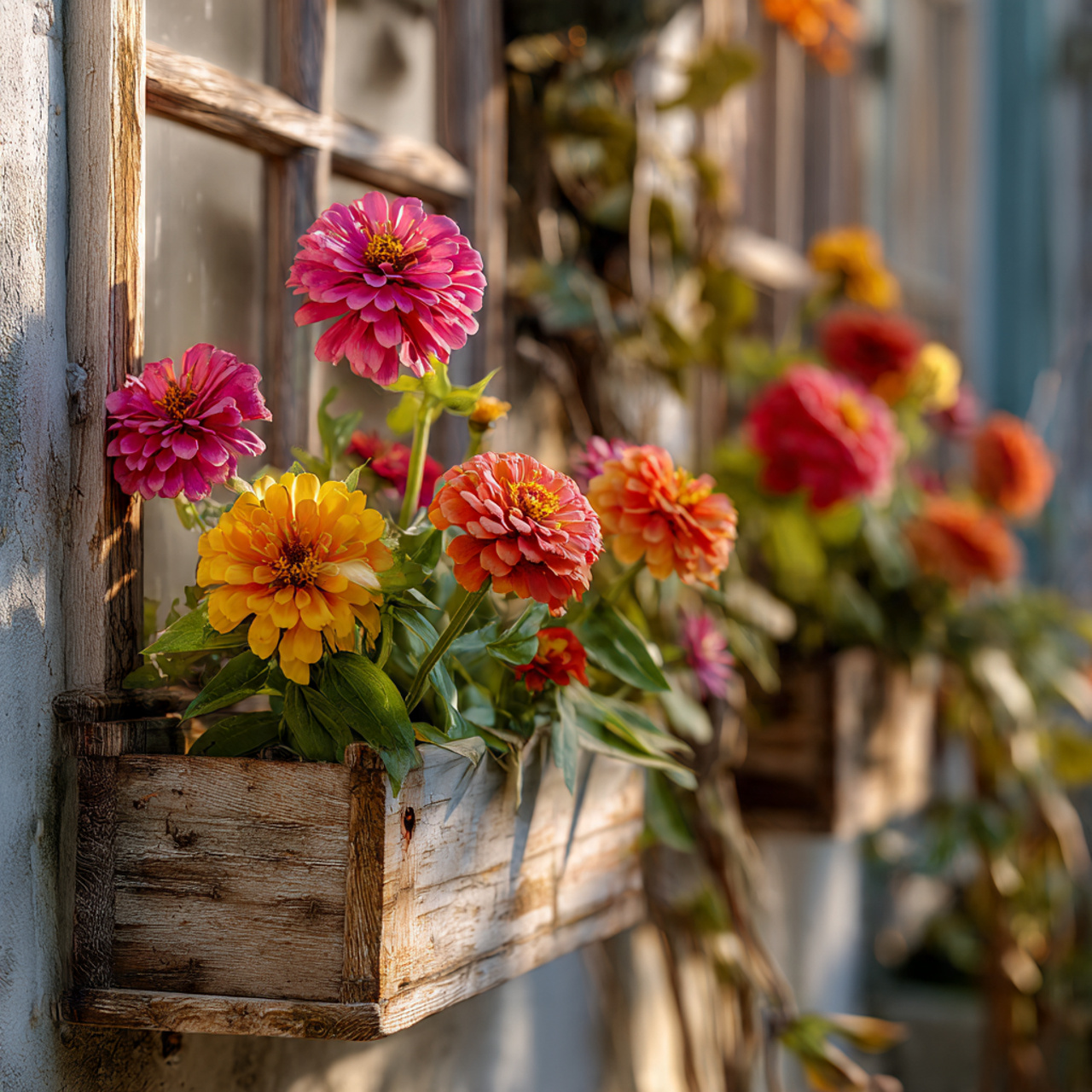
Window boxes filled with zinnias connect indoor and outdoor living spaces. Every glance outside rewards you with color, and the close proximity makes care incredibly convenient.
Window box success:
- Choose boxes with adequate drainage and depth (8-10 inches minimum)
- Select dwarf varieties (8-12 inches) that won’t block windows
- South-facing windows provide ideal full-sun conditions
- Water daily—window boxes dry out faster than ground plantings
- Coordinate colors with interior room decor for cohesive design
Visit Also: Flower Bed Ideas
FAQs About Zinnia Garden
How much daily sunlight do zinnias actually need? Zinnias perform at their absolute best when they receive 6-8 hours of direct sunlight each day. While they can tolerate some afternoon shade in extremely hot climates, insufficient sun results in leggy growth and fewer blooms.
2. Does a Zinnia Garden require special soil?
Zinnias thrive in well-draining soil. They adapt easily to most soil types but perform best when enriched with organic matter.
What type of soil works best for healthy zinnias? These adaptable flowers thrive in average, well-draining soil. They’re not particularly fussy, but mixing in compost or aged manure before planting gives them an excellent start. Avoid heavy clay that stays waterlogged.
How frequently should I water my zinnia garden? Water deeply once or twice weekly rather than giving daily shallow drinks. This encourages strong root development. Always water at soil level rather than overhead to minimize fungal disease risks like powdery mildew.
Do zinnias have serious pest or disease problems? Zinnias occasionally develop powdery mildew in humid conditions or attract spider mites during hot, dry spells. Proper spacing for air circulation, avoiding overhead watering, and choosing disease-resistant varieties prevent most issues.
What’s the typical blooming period for zinnias? With proper care and regular deadheading, zinnias bloom continuously from late spring or early summer right up until the first hard frost. In many regions, this means 4-5 months of reliable color.
Final Thoughts on Creating Your Zinnia Garden
Designing a zinnia garden opens up a world of creative possibilities without requiring advanced skills or excessive time commitments. These remarkably versatile flowers adapt to containers, borders, cutting gardens, and naturalistic plantings with equal success.
Whether you choose one of these ideas or combine several approaches, your zinnia garden will reward you with months of brilliant color, pollinator activity, and pure gardening satisfaction. Start with the ideas that excite you most, and don’t be afraid to experiment—zinnias are forgiving teachers that make every gardener look talented.