25 Creative Terrarium Ideas That Will Bring Life to Your Home
Terrariums offer a unique way to bring nature indoors—they’re miniature contained in glass containers in the shape of gardens housed that create their own little beautiful or attractive worlds. These captivating ecosystems demand minimal attention, while delivering maximum visual impact as these little glass care of themselves, that’s what these are perfect for any space of office or workspace and home.
Beyond their decorative appeal, terrariums are more than just pretty. They act as living art pieces, stress-relieving natural elements, and educational tools that demonstrate how ecosystems function. When set up correctly, these glass-enclosed gardens can flourish for years with surprisingly little effort, proving that beautiful doesn’t have to mean high-maintenance.
Why Terrariums Work: The Science Behind the Glass
Think of a terrarium as nature’s recycling system in miniature. These glass ecosystems manage their own humidity and air circulation, creating conditions where plants can thrive independently. The secret lies in understanding how three elements work together: the right plants, appropriate containers, and suitable growing conditions.
Success comes from matching these components thoughtfully. When you select plants with compatible needs, provide adequate lighting, and maintain balanced moisture levels, you’re creating an environment where nature does most of the work for you.
Key Success Factors:
- Balanced moisture managemen
- Plant compatibility (same water and light needs)
- Proper container selection (open vs. closed)
- Adequate but not excessive lighting
Closed Glass Terrarium Concepts
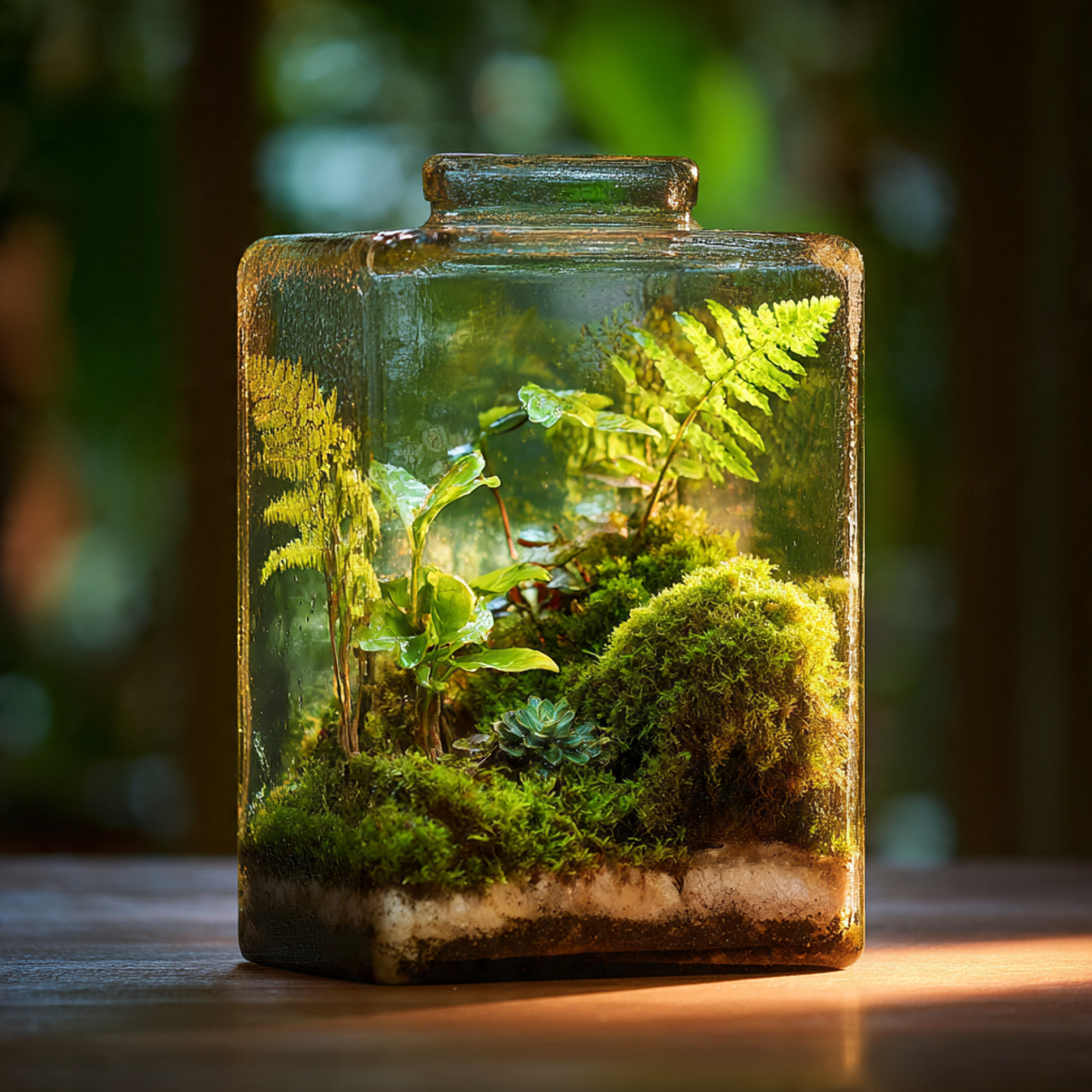
Sealed terrariums function like tiny greenhouses, recycling everything inside. Water evaporates from soil and leaves, condenses on the glass walls, then rains back down to nourish the plants again. This natural cycle creates incredibly stable conditions with minimal outside intervention.
These enclosed systems excel in indoor environments where temperature stays consistent year-round. Once you’ve established the right moisture balance, they practically care for themselves.
Tips:
- Rotate your terrarium weekly to ensure even light distribution
- Look for condensation on the glass—it should fog slightly then clear
- If water droplets constantly stream down the sides, crack the lid briefly to release excess moisture
- Wipe the inside glass monthly to maintain visibility and prevent algae buildup
Common Mistakes to Avoid:
- Using plants with different humidity preferences
- Overwatering at setup (start with less; you can always add more)
- Placing in direct sunlight (creates a greenhouse effect that’s too intense)
Open Terrarium Designs for Airflow
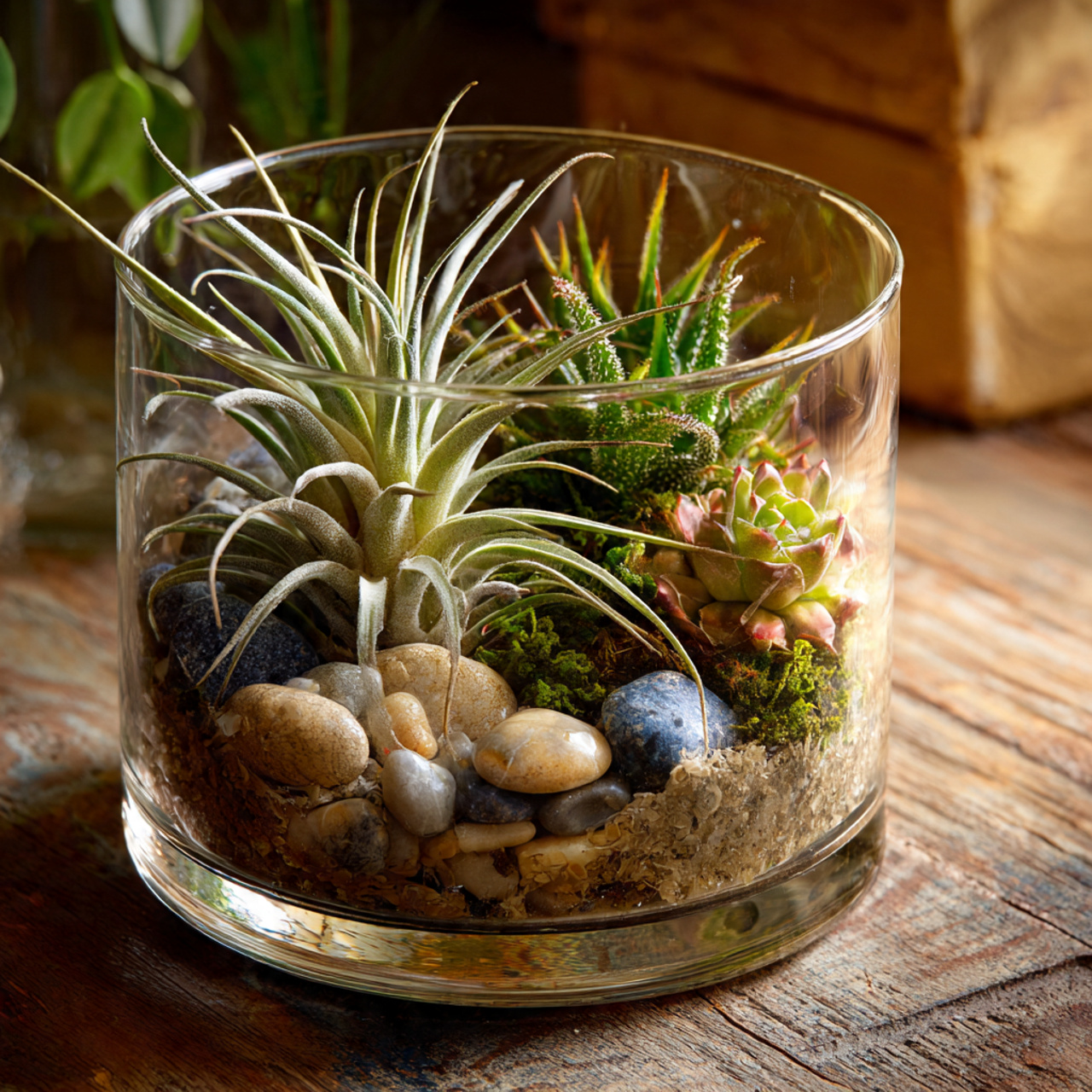
Unlike their sealed cousins, open terrariums rely on natural air movement to regulate their internal environment. Without a lid trapping moisture, water evaporates freely, creating drier conditions that suit different plant types. This design prevents the humidity buildup that can lead to mold and rot.
The accessible nature of open terrariums makes them incredibly versatile. You can easily adjust your design, trim overgrown plants, refresh the soil, or swap out elements without major disruption.
Tips:
- Group plants with matching watering schedules (typically weekly or bi-weekly)
- Use a spray bottle for controlled watering rather than pouring
- Position near windows but away from heating vents or air conditioners
- Add small decorative elements that won’t trap moisture
Safety Measures:
- Remove any yellowing leaves promptly to prevent spread of decay
- Ensure drainage by adding a layer of pebbles at the bottom
- Watch for standing water, which indicates poor drainage
Minimalist Terrarium Ideas
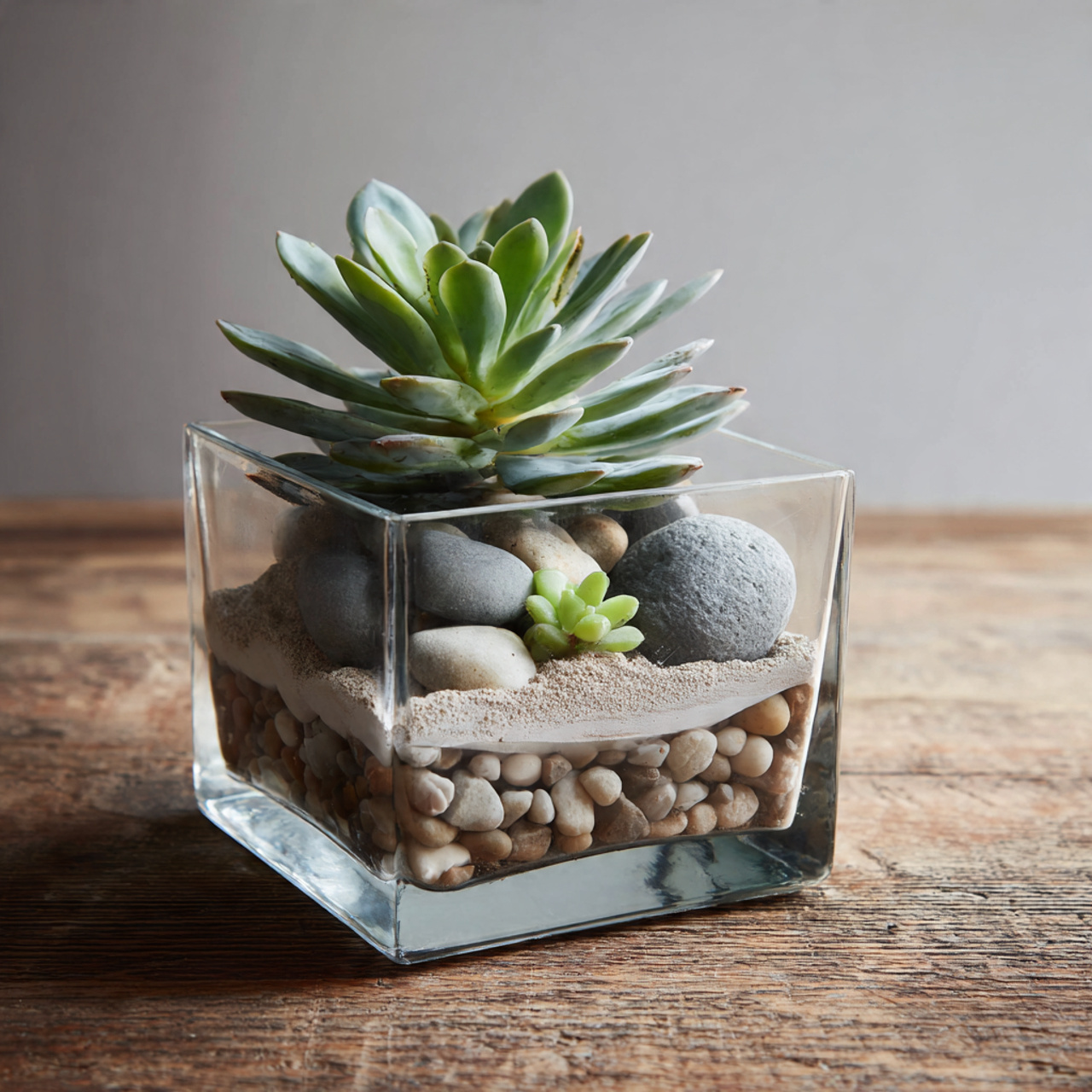
Minimalist terrariums embrace the “less is more” philosophy. Instead of cramming every inch with plants and ornaments, these designs celebrate negative space, allowing each element to breathe and make a statement. The result feels intentional, sophisticated, and timelessly elegant.
This approach works beautifully in contemporary spaces where clutter can overwhelm the senses. By limiting your palette to 2-3 plant varieties and minimal decorative pieces, you create something visually striking that’s also easier to maintain.
Design Guidelines:
- Select plants with contrasting textures (smooth vs. textured, tall vs. ground-covering)
- Leave at least 30-40% of the space open
- Choose a focal point—one standout plant or stone
- Use monochromatic or complementary color schemes
Example Setup: A geometric glass container with white sand base, single air plant, and one piece of driftwood creates maximum impact with minimal elements.
Moss-Based Terrarium Arrangements
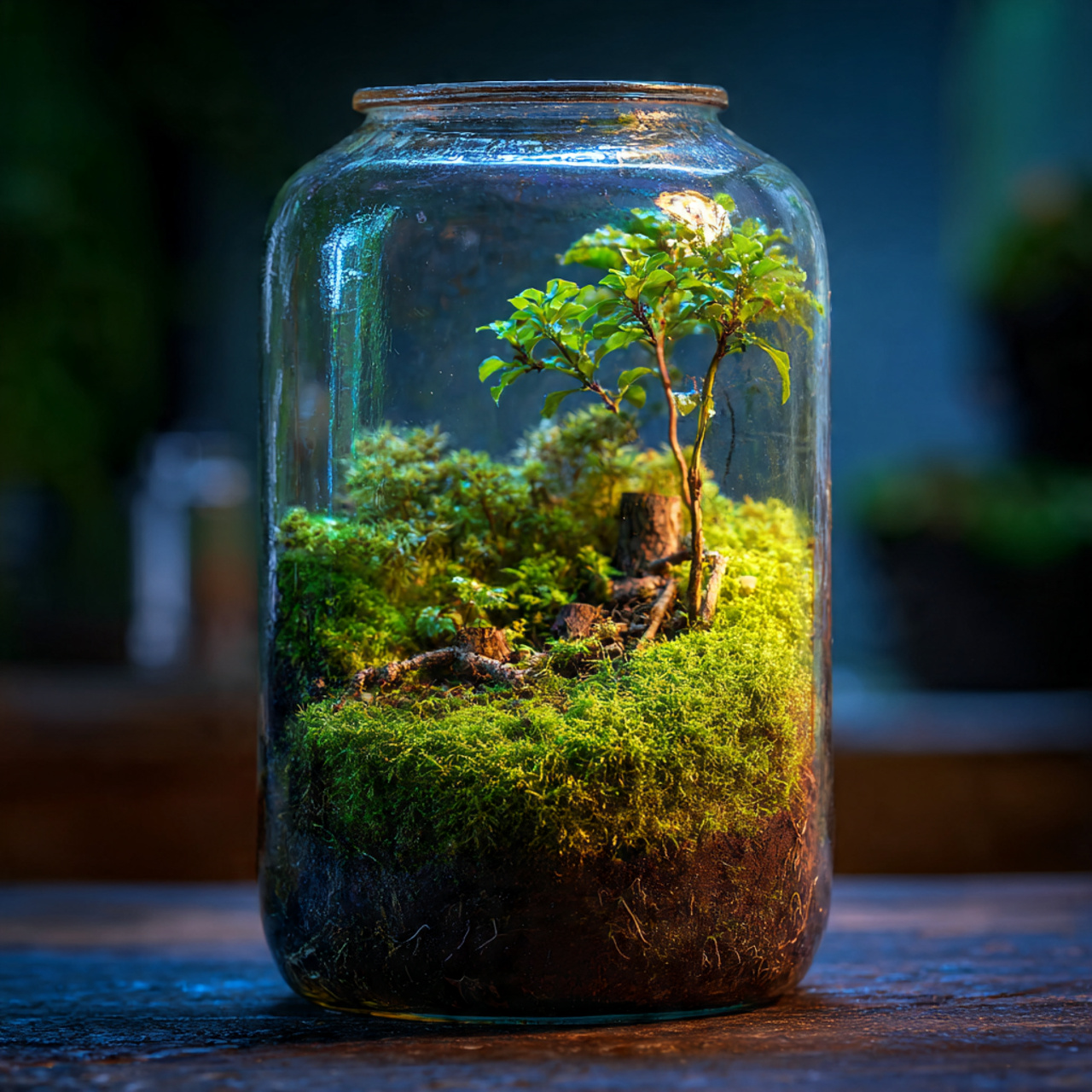
Moss terrariums recreate the enchanting carpet of green found on forest floors. Unlike rooted plants, moss absorbs moisture and nutrients directly through its leaves, making it incredibly low-maintenance and perfect for shadier locations.
These terrariums grow slowly and steadily, maintaining their appearance for months without becoming overgrown. They’re ideal if you appreciate subtle changes rather than dramatic transformations.
Care Tips:
- Mist lightly 2-3 times weekly rather than soaking
- Use distilled or rainwater to prevent mineral buildup
- Keep in indirect light—direct sun will brown the moss
- Trim brown edges with scissors to maintain appearance
Moss Varieties to Try:
- Rock cap moss (grows on stones naturally)
- Sheet moss (flat, carpet-like coverage)
- Cushion moss (rounded, pillow-like mounds)
- Mood moss (feathery, delicate appearance)
Succulent Terrarium Layouts
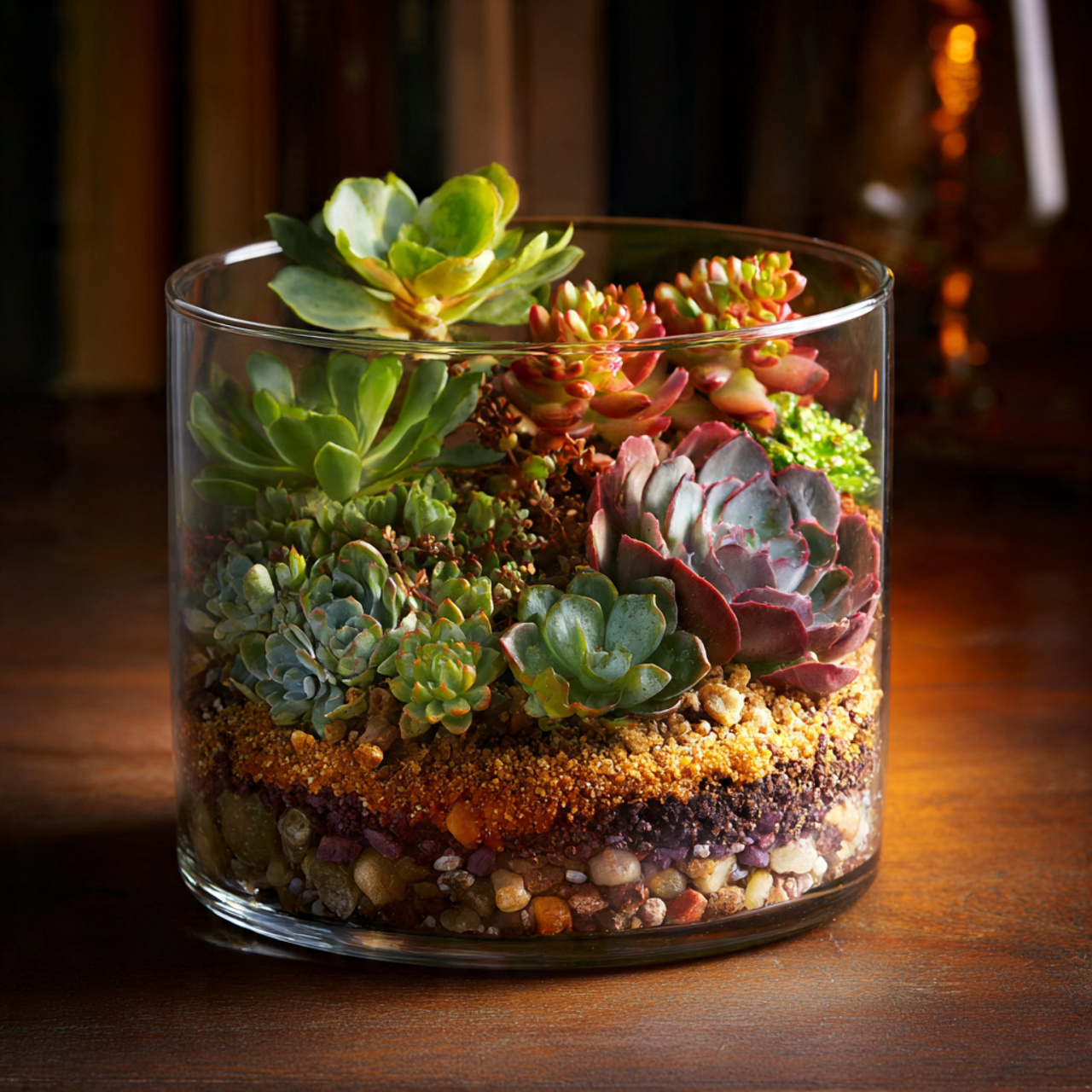
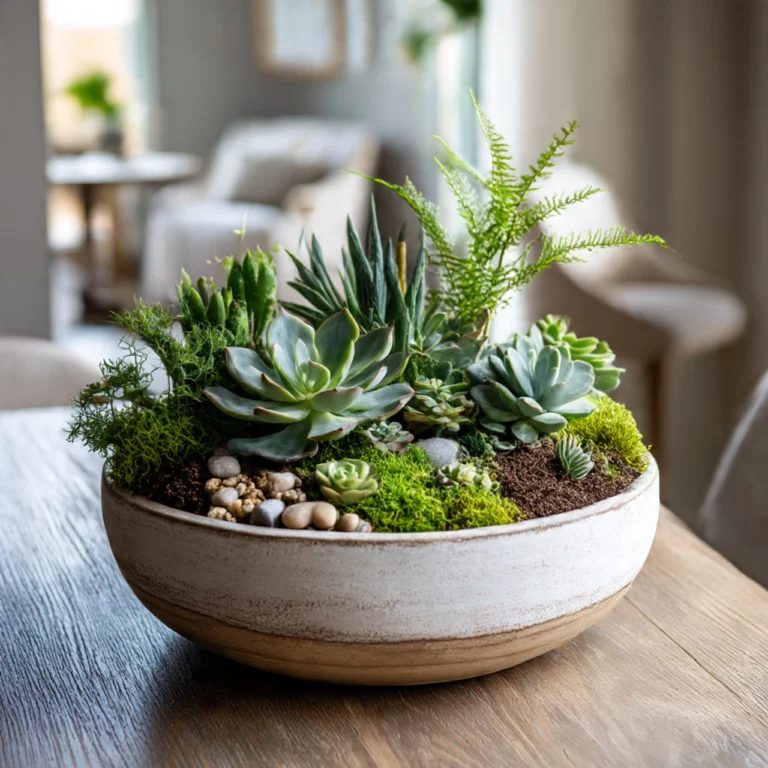
Succulents bring desert beauty to the terrarium world. Their water-storing leaves come in fascinating shapes, colors, and textures, from rosette-forming echeverias to trailing string-of-pearls. These drought-tolerant plants need completely different conditions than their moisture-loving counterparts.
Creating a successful succulent terrarium means prioritizing drainage and airflow above all else. Too much water spells disaster for these desert dwellers.
Essential Setup Requirements:
- Use open containers only (succulents hate trapped humidity)
- Create a drainage layer: activated charcoal topped with small pebbles
- Mix cactus soil with extra perlite or coarse sand (50/50 ratio)
- Position in bright, indirect light for 4-6 hours daily
Watering Schedule:
- Water only when soil is completely dry (stick your finger 2 inches down)
- Typically every 2-3 weeks, less in winter
- Pour water around plants, not on leaves
Avoid These Mistakes:
- Watering on a calendar schedule instead of checking soil
- Using closed containers (leads to rot)
- Pairing with moisture-loving plants
Tropical Plant Terrarium Ideas
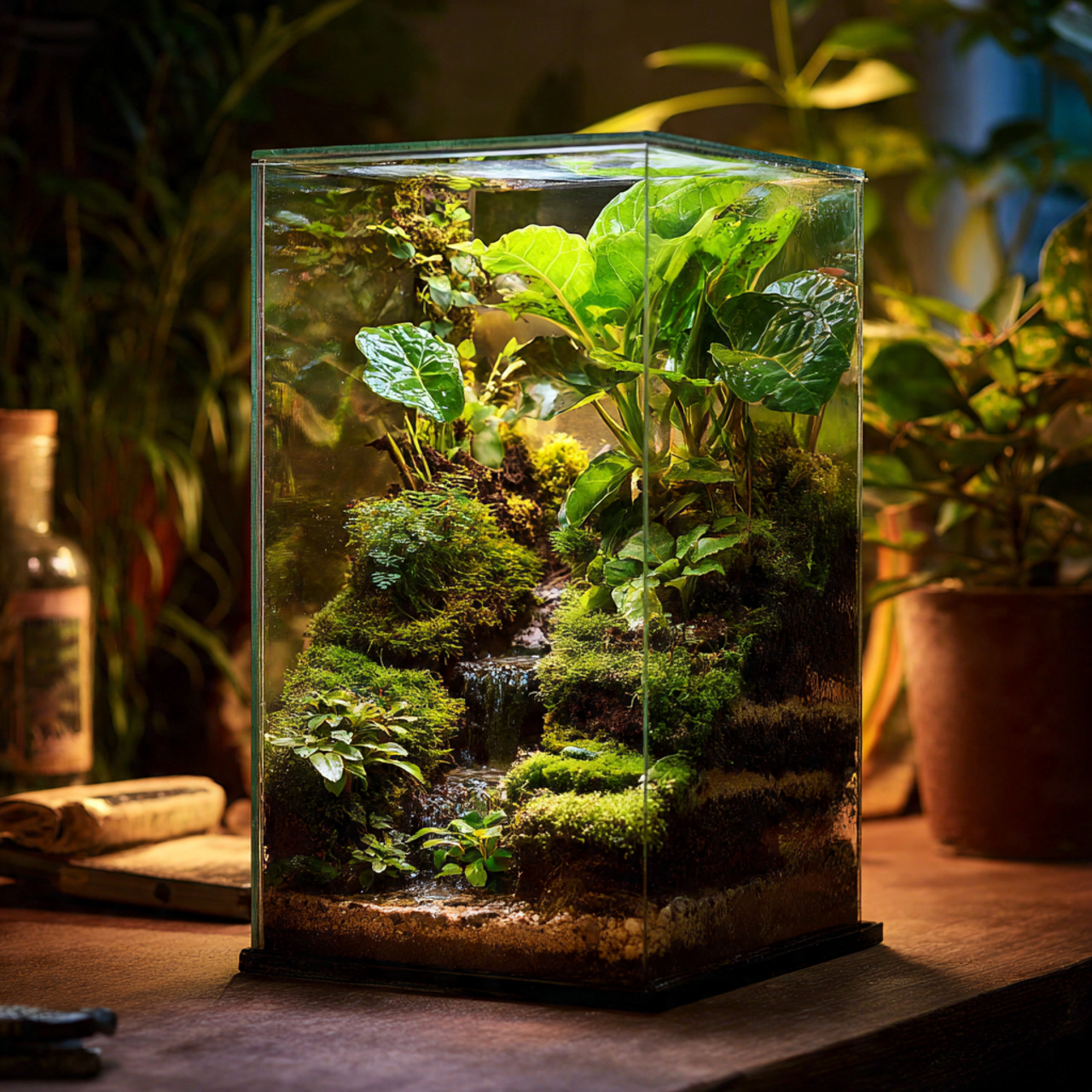
Tropical terrariums recreate the lush, humid environments of rainforests. Plants with broad, vibrant leaves thrive here, enjoying the warm, moist conditions that a closed or semi-closed terrarium provides perfectly.
Success requires understanding plant spacing—crowding leads to competition for resources and poor air circulation, which invites disease.
Ideal Plant Choices:
- Fittonia (nerve plant) – colorful veined leaves
- Peperomia – thick, waxy foliage
- Ferns – delicate, layered fronds
- Pilea – round, coin-like leaves
Design Tips:
- Layer plants by height (tall in back, short in front)
- Leave 2-3 inches between plants for growth
- Include different leaf shapes for visual interest
- Rotate container quarterly for balanced growth
Maintenance Schedule:
- Wipe leaves monthly with damp cloth to remove dust
- Monitor weekly for overcrowding
- Trim aggressive growers to maintain balance
- Check soil moisture by feeling top inch
Terrarium Ideas for Small Spaces
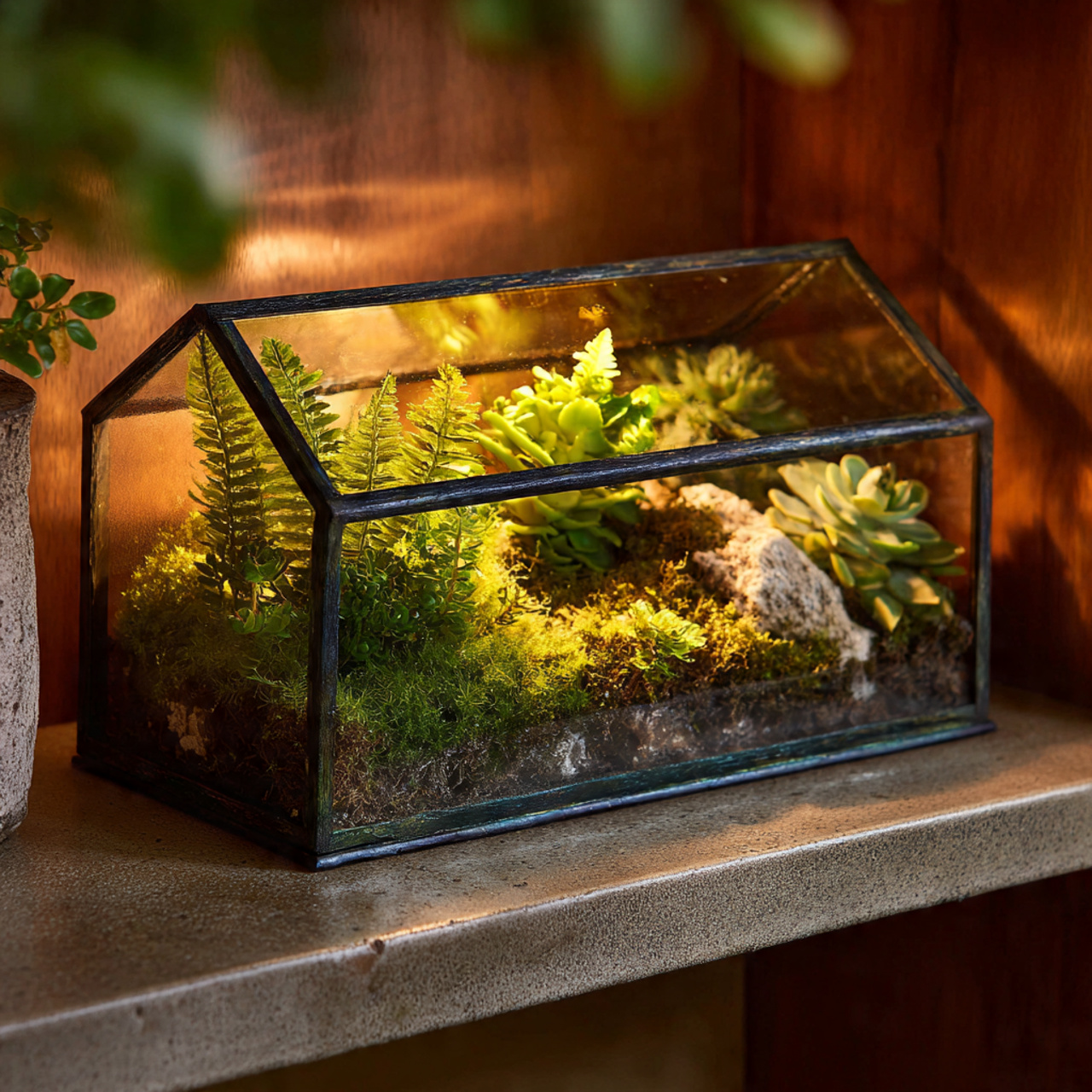
Space-saving terrariums prove you don’t need square footage to enjoy indoor gardening. These compact ecosystems fit on windowsills, shelves, desk corners, or anywhere you’d place a coffee mug. Despite their small size, they can support surprisingly diverse plant life when designed properly.
The constraint becomes an asset—small terrariums force you to be selective and intentional with every choice.
Best Containers for Tight Spaces:
- Test tubes or small lab glassware (1-2 plants)
- Tea light holders or votive candles
- Small mason jars (4-8 oz)
- Light bulb terrariums (unique and conversation-starting)
Plant Selection for Mini Terrariums:
- Baby tears (Soleirolia soleirolii) – tiny leaves, slow growth
- Miniature ferns
- Small moss varieties
- Dwarf air plants
Tips:
- Avoid fast growers like pothos that will quickly outgrow the space
- Use tweezers and chopsticks for planting in narrow openings
- Select plants that stay under 3 inches even when mature
Hanging Terrarium Concepts
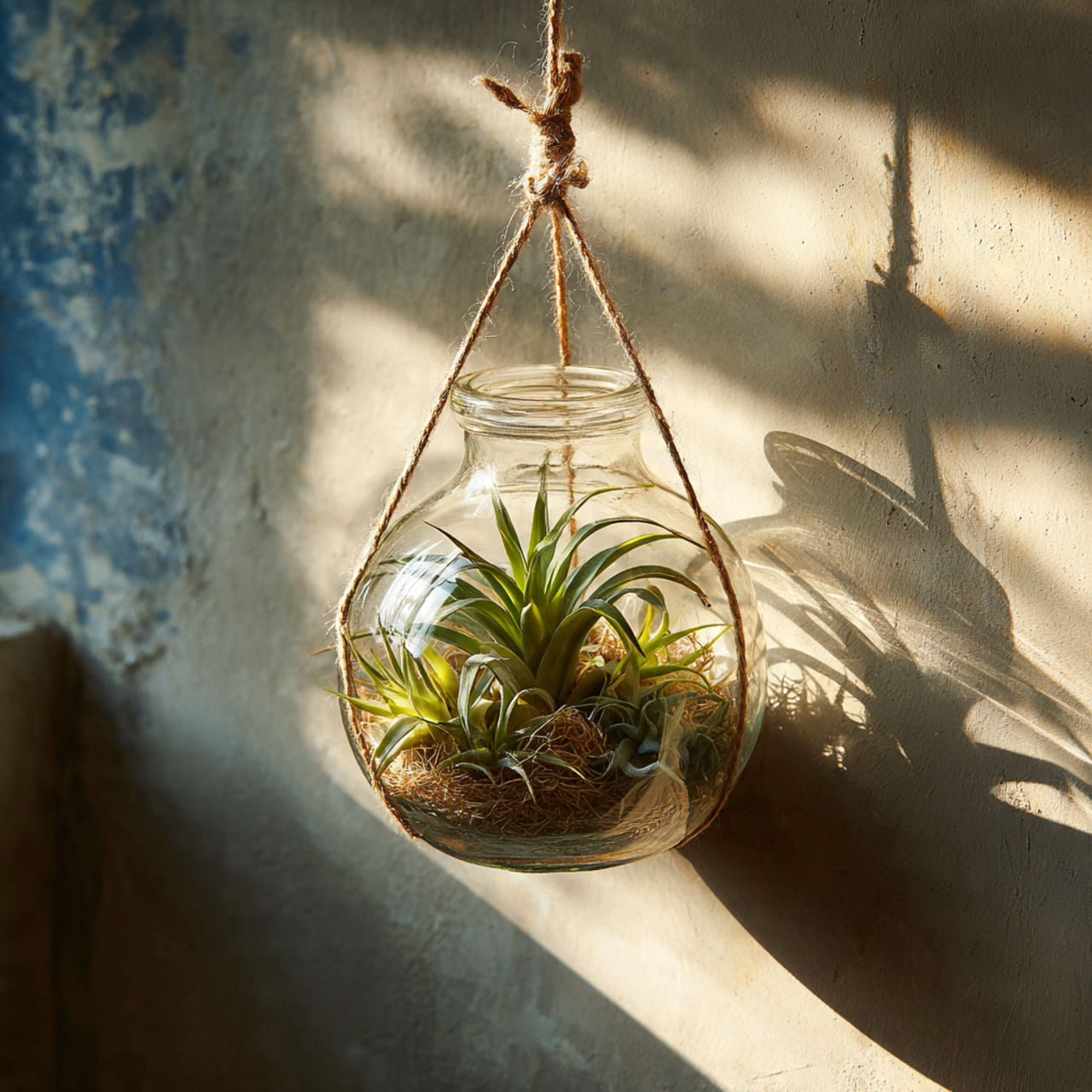
Hanging terrariums transform unused vertical space into living art installations. Suspended from ceilings, mounted on walls, or hanging in windows, these floating gardens add dimension and interest at eye level and above, drawing the gaze upward and making rooms feel larger.
The key consideration is weight distribution and secure mounting—glass containers with soil, plants, and water aren’t light.
Installation Safety:
- Use ceiling hooks rated for at least 3x your terrarium’s weight
- Install into ceiling joists or use toggle bolts for drywall
- Test security before adding plants and water
- Consider macramé hangers for even weight distribution
Design Ideas:
- Mix trailing plants (string-of-hearts) with upright varieties
- Create clusters of 3-5 terrariums at varying heights
- Use tear-drop or globe-shaped containers for visual appeal
- Add fairy lights for evening ambiance
Best Plants for Hanging Displays:
- Asparagus fern
- Air plants (no soil needed, reducing weight)
- Trailing succulents
- Small pothos or philodendron
Desk-Friendly Terrarium Ideas
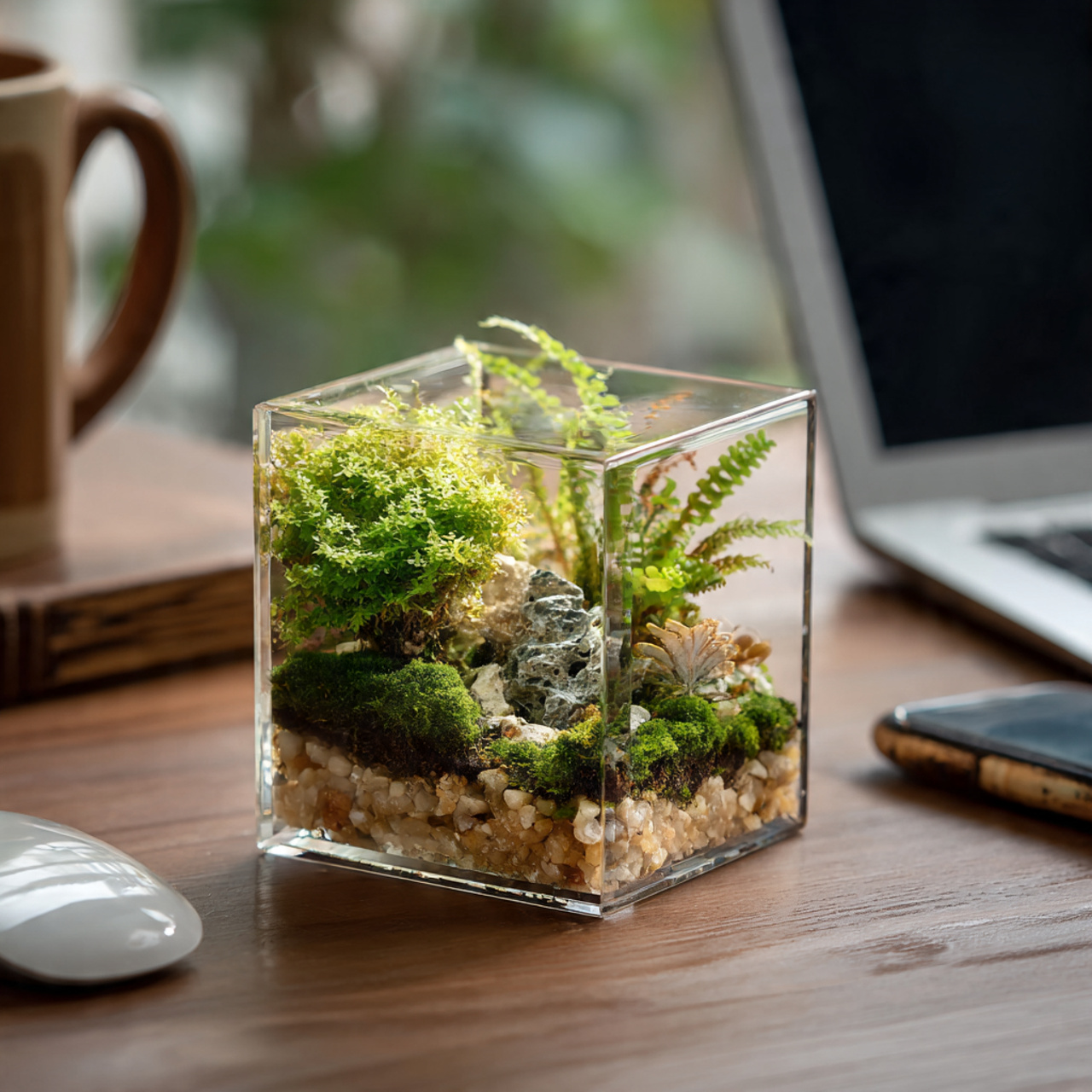
Desk terrariums bring nature to your workspace without demanding attention during busy workdays. These compact gardens tolerate artificial lighting, temperature-controlled office environments, and occasional neglect—perfect for the professional setting.
Closed or semi-closed designs work best here, maintaining humidity with minimal watering needs.
Workspace Benefits:
- Reduce stress and improve air quality
- Provide natural visual breaks from screens
- Require less maintenance than cut flowers
- Spark conversations with colleagues
Ideal Setup for Office Conditions:
- Container: 4-6 inch cube or sphere with lid
- Substrate: Drainage layer plus quality potting mix
- Plants: Hardy varieties like ferns, moss, or small snake plants
- Placement: Within 3 feet of window or under desk lamp
Maintenance for Busy Professionals:
- Clean glass quarterly to maintain visibility
- Water once monthly or less for closed terrariums
- Rotate weekly if light source is one-sided
- Check monthly for yellowing leaves or excessive condensation
Layered Substrate Terrarium Designs
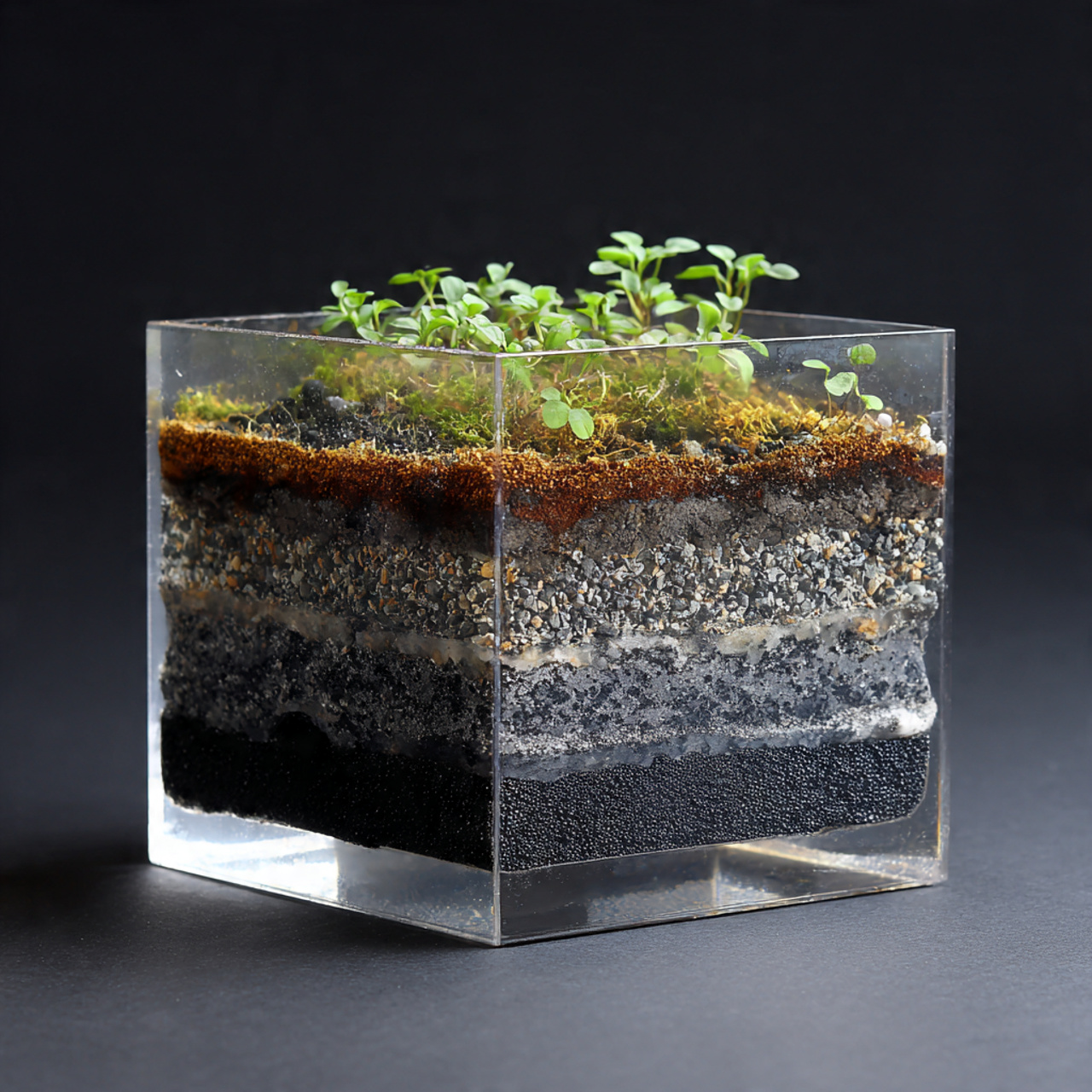
Visible substrate layers serve both functional and aesthetic purposes. Each distinct layer performs a specific role while creating a cross-section view that reveals how your ecosystem functions—it’s education and decoration combined.
This approach prevents waterlogging, provides necessary drainage, and gives you visual indicators of moisture levels.
Standard Layer Structure (Bottom to Top):
- Drainage layer (1-2 inches): Small pebbles, gravel, or LECA balls to catch excess water
- Charcoal barrier (0.5 inches): Activated charcoal to filter water and prevent odors
- Mesh separator (optional): Prevents soil from mixing into drainage
- Growing medium (2-3 inches): Potting soil appropriate for your plants
- Decorative top layer: Moss, colored sand, or small pebbles
Visual Enhancement Tips:
- Use contrasting colors (white sand against dark soil)
- Add colored aquarium gravel for a pop of color
- Include small crystals or decorative stones between layers
- Keep layers visible along the glass edges for maximum effect
Functional Benefits:
- Allows beneficial bacteria to develop in charcoal layer
- Easy moisture monitoring through clear glass
- Prevents root rot from standing water
Natural Woodland Terrarium Ideas
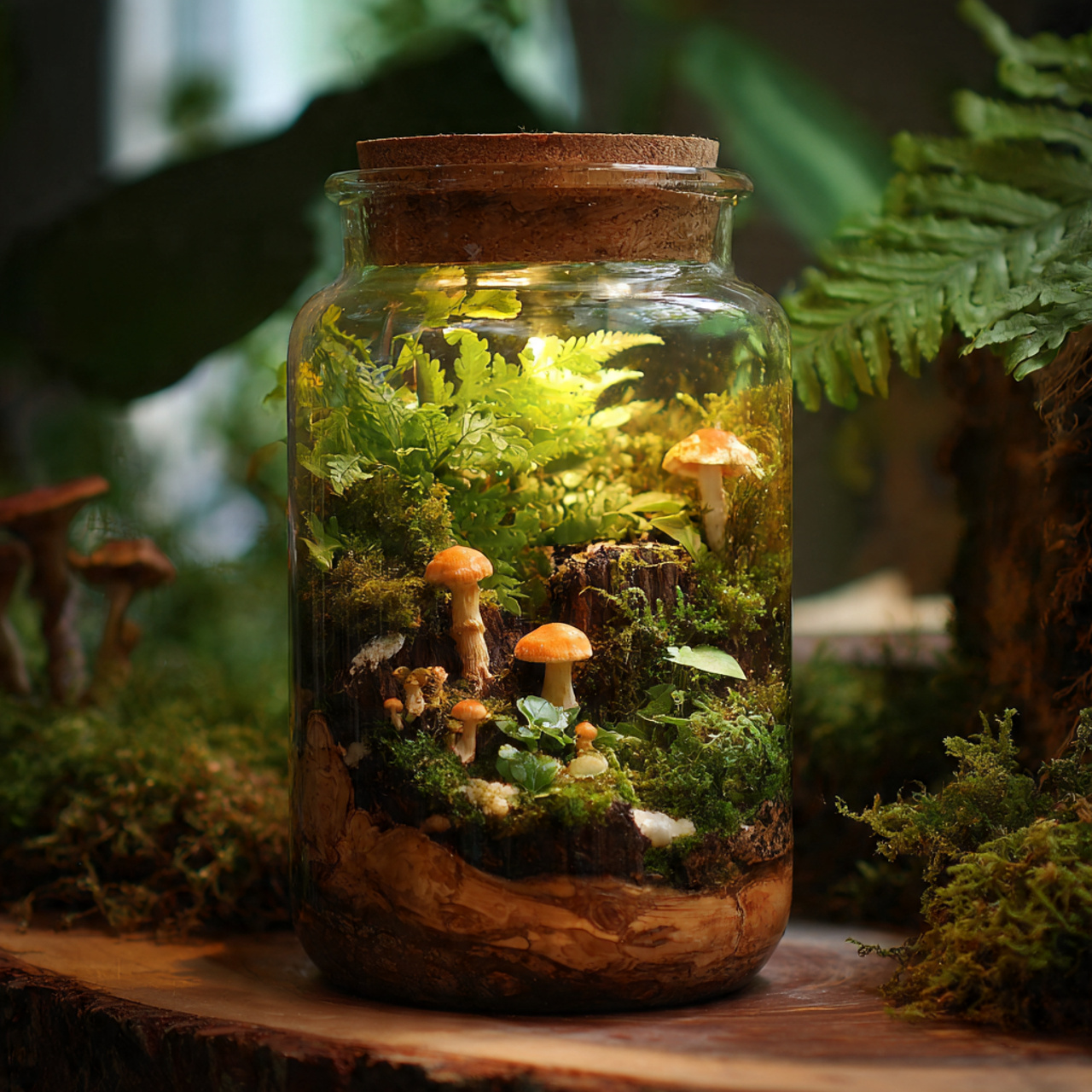
Woodland terrariums capture the wild, organic feeling of forest floors—imperfect, asymmetrical, and authentically natural. Rather than manicured perfection, these designs embrace irregularity, creating miniature landscapes that feel like you’ve captured a piece of the woods in glass.
These thrive in lower light conditions with consistent humidity, mimicking the dappled shade beneath tree canopies.
Creating Authentic Woodland Character:
- Use actual forest materials: bark, twigs, fallen branches (baked at 200°F for 30 min to sterilize)
- Plant in clusters rather than evenly spaced rows
- Vary soil heights to create natural-looking terrain
- Include decomposing wood pieces for authentic appearance
Plant Selection:
- Native ferns that tolerate shade
- Various moss species
- Small woodland plants like partridge berry
- Miniature ivy or creeping fig
Example Build: Layer moss over varying soil heights, tuck in small ferns, add pieces of bark leaning naturally, and include a tiny fallen “log” for scale and interest.
Tip for Realism: Study forest floor photographs for inspiration on natural plant spacing and material placement—nature rarely creates perfect symmetry.
Geometric Glass Terrarium Styles
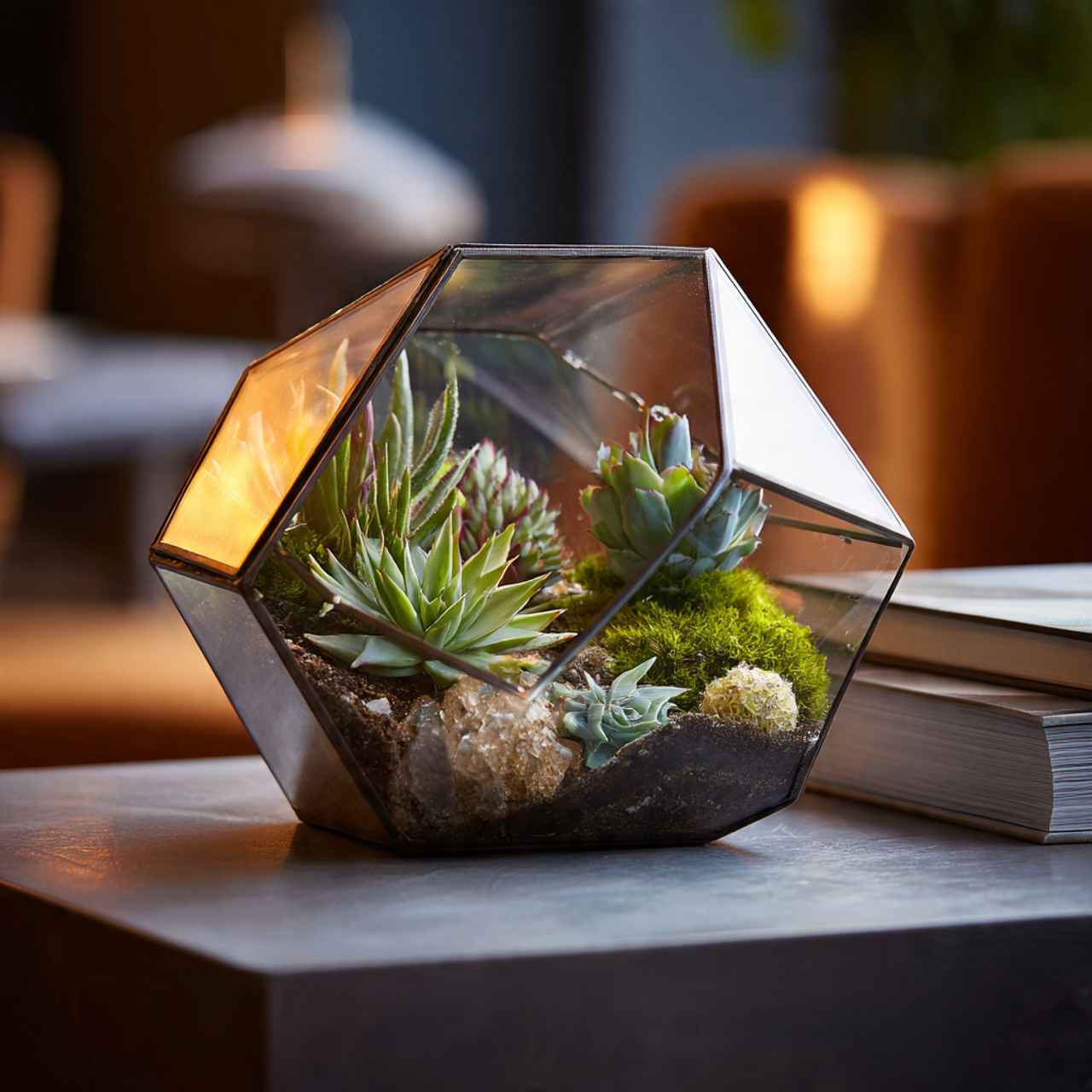
Geometric terrariums turn the container itself into a sculptural statement piece. These angular, multi-faceted glass structures—pyramids, dodecahedrons, hexagons—create striking visual interest even before you add a single plant.
The challenge lies in honoring the architectural beauty without overwhelming it with too many plants or decorations.
Design Philosophy:
- Let the container shine—plant sparingly
- Choose 1-2 plant varieties maximum
- Use negative space strategically
- Select plants with clean, simple forms that complement geometric lines
Pairing Plants with Shapes:
- Pyramids: Single air plant or small succulent rosette at the center
- Cubes: Symmetrical arrangements with plants at opposite corners
- Spheres: Cascading moss or small trailing plant for movement
Color and Texture Strategy:
- Metallic frames (gold, copper, black) pair beautifully with green plants
- Add white sand or light-colored gravel to create contrast
- Keep decorative elements minimal and modern
Common Design Mistakes:
- Ignoring the frame color when choosing substrates
- Overcrowding the space (defeats the geometric aesthetic)
- Using too many plant varieties (creates visual chaos)
Jar-Based Terrarium Ideas
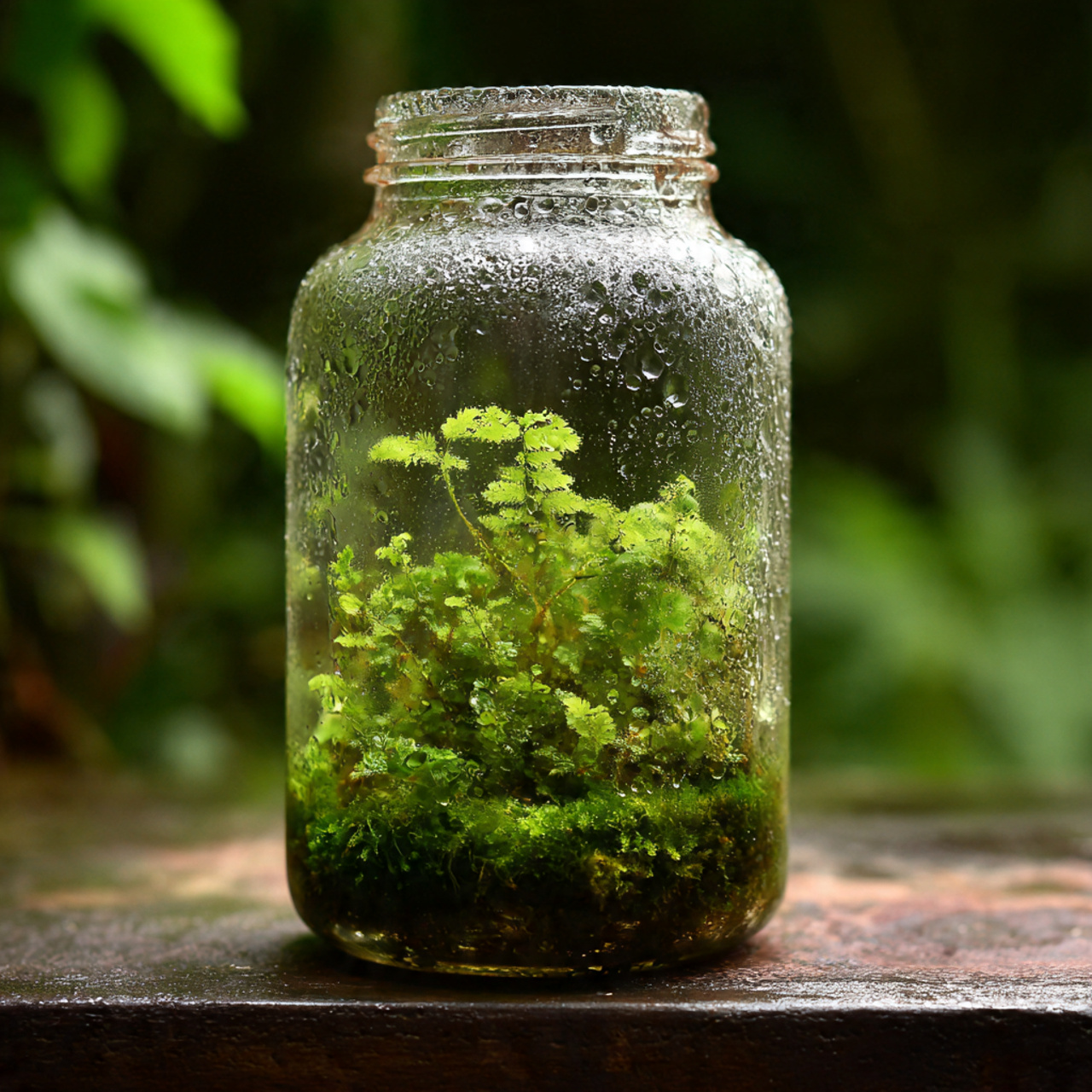
Mason jars, preserving jars, and repurposed glass containers make perfect terrarium homes. Their narrow openings naturally trap humidity, while their affordability and availability make them ideal for beginners or budget-conscious creators.
These readily available containers transform into thriving ecosystems with proper layering and plant selection.
Jar Types and Their Uses:
- Small jars (4-8 oz): Single plant or moss only
- Pint jars: 2-3 small plants with different heights
- Quart jars: Full miniature ecosystems with multiple layers
- Vintage apothecary jars: Decorative displays with cork or glass stoppers
Step-by-Step Jar Terrarium:
- Add 1 inch small stones for drainage
- Add thin layer of activated charcoal
- Add 2-3 inches potting soil
- Plant your selections using long tweezers or chopsticks
- Add decorative moss or top dressing
- Mist lightly and seal
Maintenance for Jar Terrariums:
- Check condensation weekly—should fog then clear
- Open for 2-3 hours if constantly wet inside
- Water only when soil looks dry (possibly just 2-3 times yearly)
- Remove dead leaves immediately with tweezers
Creative Jar Variations:
- Multiple small jars creating a collection display
- Layered sand art combined with air plants
- Themed terrariums (beach scene with shells, fairy garden)
Educational Terrarium Concepts
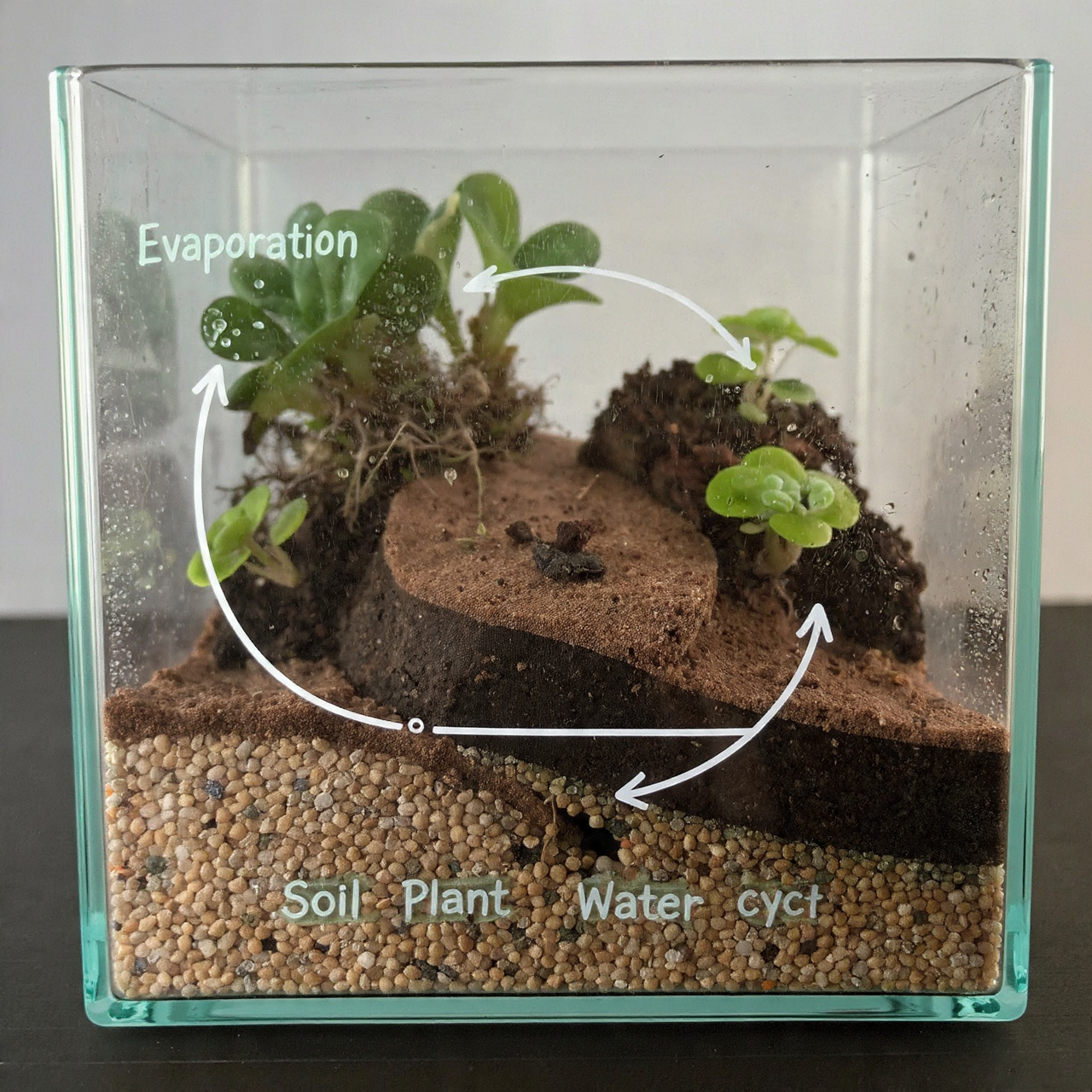
Educational terrariums prioritize learning over aesthetics, making ecosystem processes visible and understandable. These teaching tools work wonderfully in classrooms, homeschool environments, or for curious minds of any age.
Clear labeling and thoughtful design help observers understand what they’re seeing and why it matters.
Learning Objectives to Demonstrate:
- Water cycle (evaporation, condensation, precipitation)
- Photosynthesis and respiration
- Decomposition and nutrient cycling
- Ecosystem balance and interdependence
Enhanced Visibility Techniques:
- Use clear containers with multiple viewing angles
- Create labeled flags identifying each plant species
- Color-code substrate layers with markers outside the glass
- Keep a journal tracking changes over time
Interactive Elements:
- Removable lid to demonstrate open vs. closed systems
- Thermometer inside to track temperature changes
- Before/after photo documentation
- Measurement tracking (plant height, condensation levels)
Discussion Questions to Explore:
- How do plants get nutrients in this closed system?
- What happens when we add/remove water?
- Why does condensation form on the glass?
Zen-Inspired Terrarium Designs
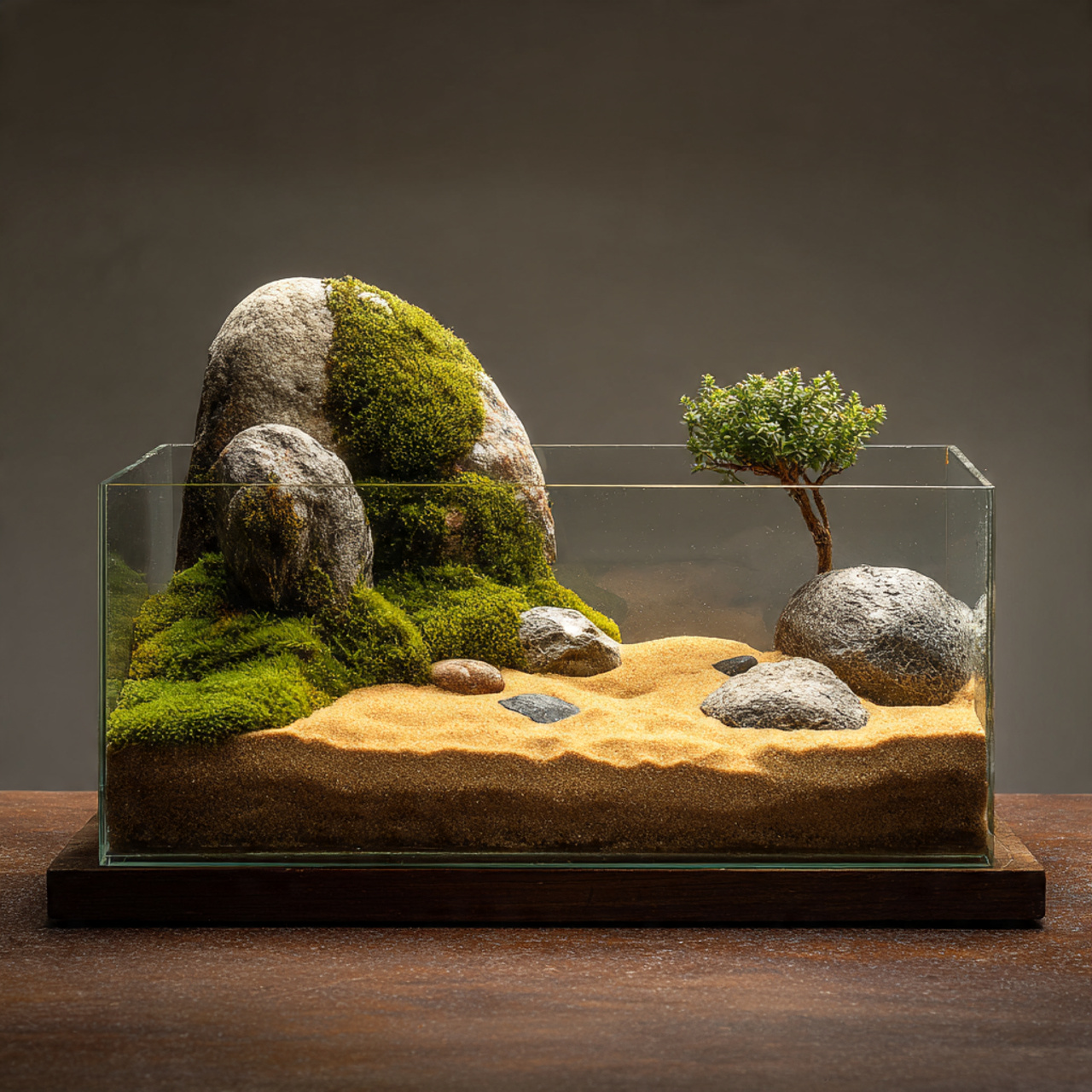
Zen terrariums embrace the Japanese philosophy of ma (negative space) and wabi-sabi (beauty in imperfection). Every element is placed with intention, and empty space is valued as much as the objects themselves. The result: peaceful compositions that calm the mind.
These designs work as meditation focal points or stress-relief tools in busy environments.
Core Zen Principles Applied:
- Simplicity: Maximum 2-3 elements total
- Asymmetry: Avoid centering or perfect balance
- Natural materials: Unprocessed stones, driftwood, simple plants
- Negative space: 50-70% of container left open
Suggested Combinations:
- Single bonsai tree, small rock, white sand base
- Three stones arranged asymmetrically with minimal moss
- One air plant, piece of driftwood, black pebbles
Placement and Contemplation:
- Position where you take breaks or meditate
- View from above for full appreciation of space
- Maintain pristine—dust or debris breaks the serenity
- Rotate occasionally as part of mindfulness practice
Color Palette: Stick to natural, muted tones—greens, browns, grays, whites. Avoid bright colors or artificial elements that disrupt tranquility.
Seasonal Terrarium Ideas
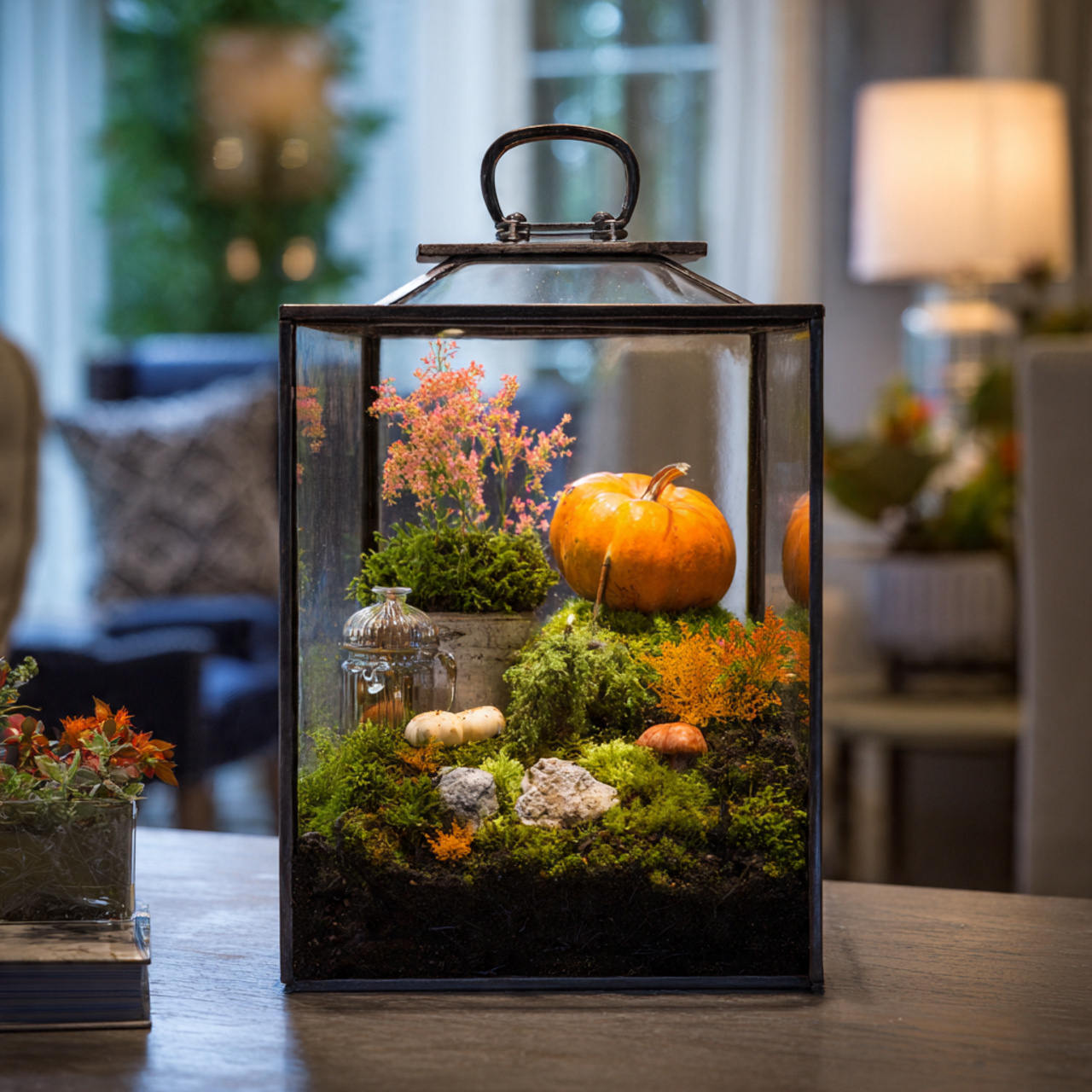
Seasonal terrariums let you celebrate changing times of year without uprooting your ecosystem. The base planting remains stable while decorative accents shift to reflect holidays, seasons, or personal milestones.
This approach maintains plant health while keeping your display fresh and relevant year-round.
Seasonal Accent Ideas:
Spring:
- Pastel-colored pebbles
- Miniature ceramic birds or butterflies
- Light green moss for fresh appearance
- Tiny artificial flowers tucked among plants
Summer:
- Small seashells or beach glass
- Miniature beach chair or umbrella
- Bright-colored sand layers
- Tiny succulent blooms
Fall:
- Mini pumpkins or gourds
- Orange/brown decorative stones
- Preserved autumn leaves
- Tiny scarecrow or harvest figures
Winter:
- White sand or fake snow
- Miniature evergreens (artificial)
- Small pinecones
- Tiny snowman or winter animals
Important Guidelines:
- Sterilize reused decorations between seasons
- Never bury decorations in wet soil (promotes mold)
- Ensure additions don’t block light to plants
- Remove seasonal items promptly to prevent decay
Terrarium Ideas with Decorative Stones
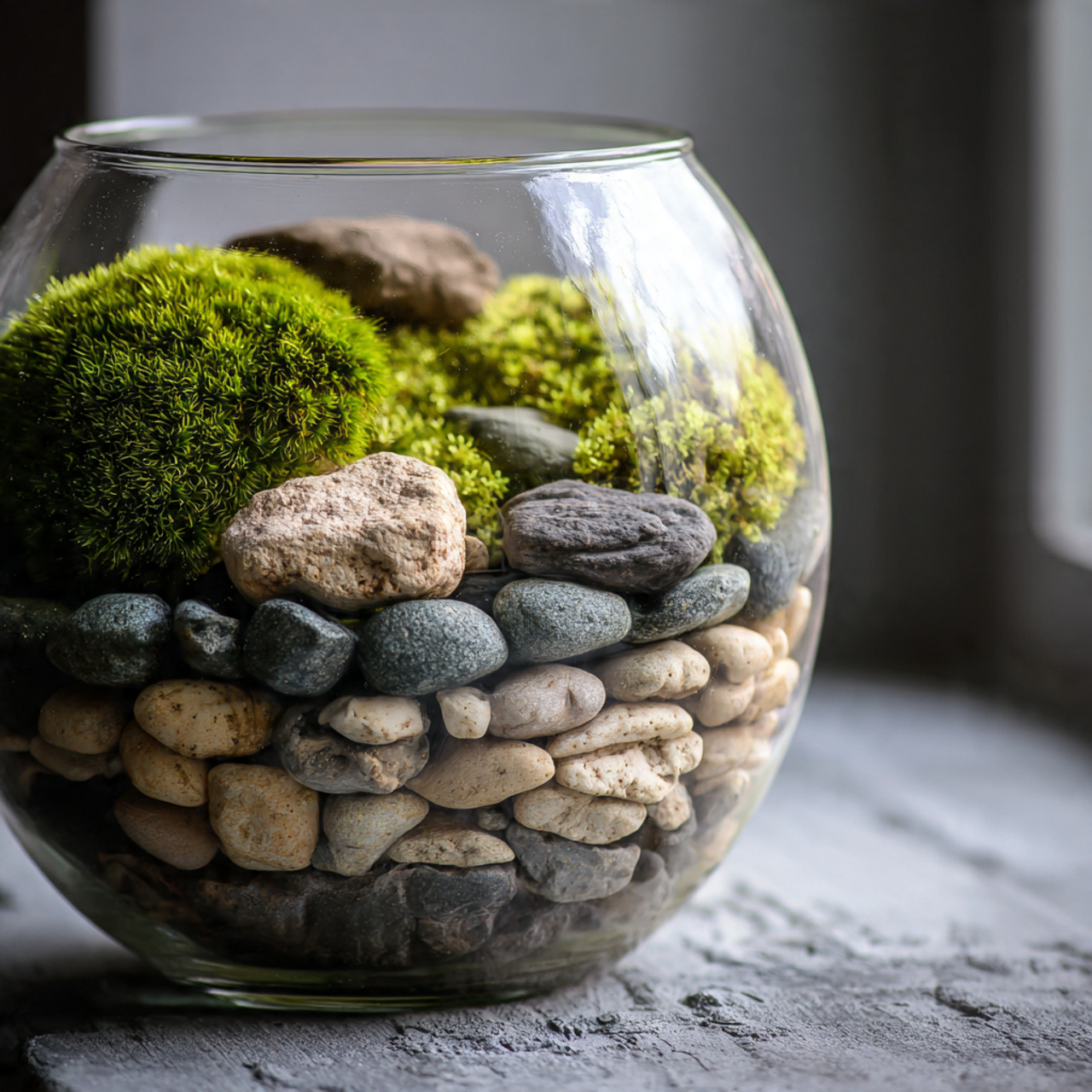
Stones bring permanence, texture, and natural beauty to terrariums. They serve multiple functions: visual anchors, structural support, drainage assistance, and design focal points. The right rocks can transform a simple planting into a miniature landscape.
Strategic stone placement creates depth, prevents soil erosion, and guides the eye through your composition.
Types of Stones and Their Uses:
- River rocks (smooth, rounded): Modern, calming aesthetic; good drainage layer
- Lava rock (porous, textured): Lightweight; retains moisture; interesting texture
- Quartz crystals: Adds sparkle; various colors available; creates focal points
- Slate pieces: Flat layers create levels and platforms; natural gray tones
- Aquarium gravel: Colorful options; small size perfect for details
Design Techniques:
- Varying sizes: Large anchor stones, medium fillers, small detail pieces
- Color coordination: Match or contrast with container and plants
- Natural placement: Partially bury larger stones for realistic appearance
- Pathways: Create visual “trails” with small pebbles
- Focal points: Position one striking stone as the main feature
Practical Benefits:
- Protects delicate moss or small plants from watering disturbance
- Heavy stones at base prevent top-heavy plants from tipping
- Stone mulch reduces water evaporation in open terrariums
- Creates defined planting zones
Low-Light Terrarium Designs
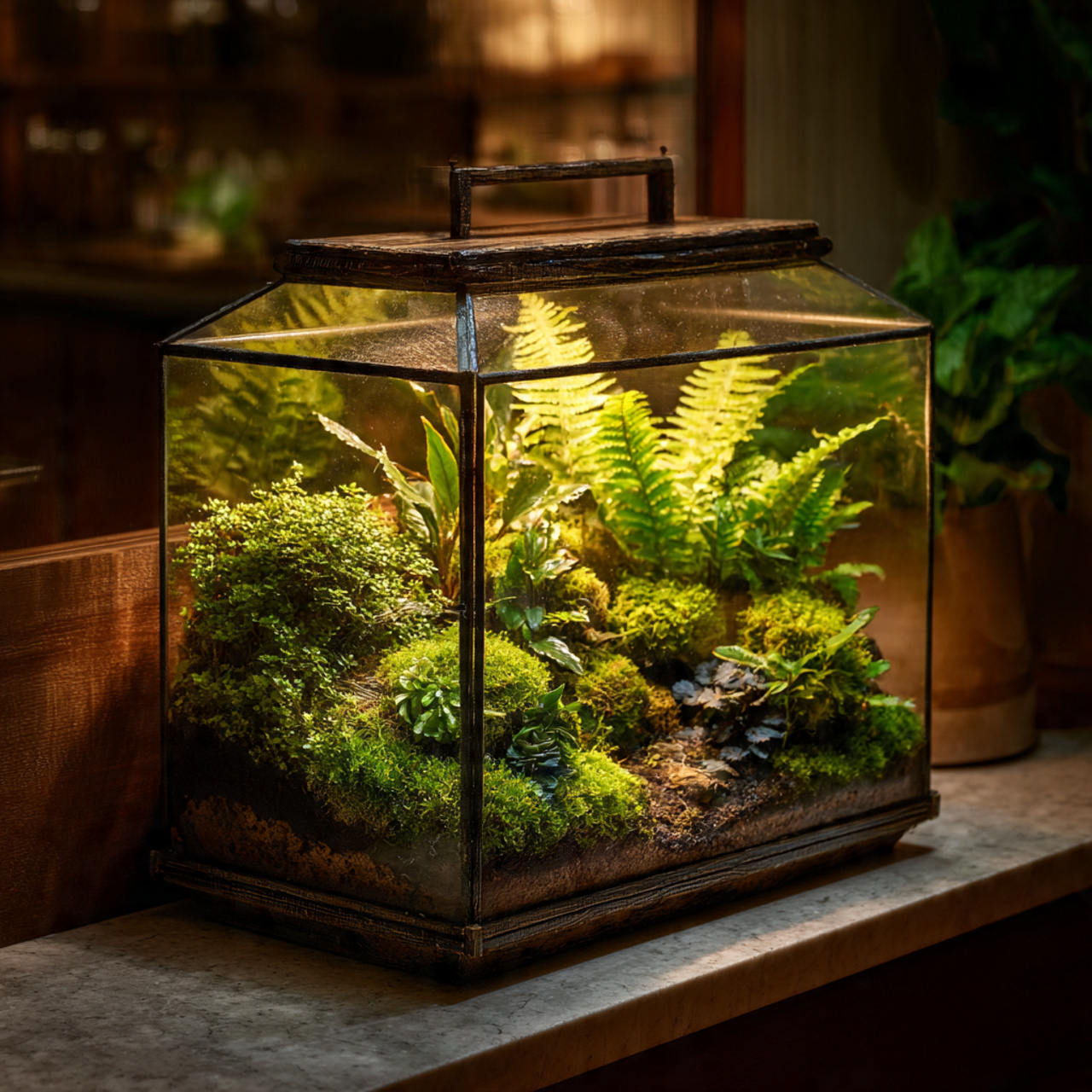
Low-light terrariums solve the challenge of bringing greenery to darker spaces—north-facing rooms, interior offices, or areas far from windows. The plant species selected for these conditions have adapted to thrive in shade, making them perfect for low-light living.
These terrariums reduce plant stress by matching conditions to natural preferences rather than fighting against limitations.
Best Plants for Shade:
- Ferns: Boston, maidenhair, bird’s nest varieties
- Pothos: Tolerates low light remarkably well
- Snake plant (dwarf varieties): Survives almost anywhere
- Peace lily (small cultivars): Adapts to shade
- Moss (all types): Actually prefers low light
Lighting Solutions:
- Natural low light: 3-5 feet from north-facing window
- Artificial options: Full-spectrum LED grow lights, 12-14 hours daily
- Combined approach: Ambient room light plus targeted grow light
- Rotation strategy: Move to brighter spot for 2-3 days weekly if possible
Care Adjustments for Low Light:
- Water less frequently (plants grow slower, use less water)
- Expect slower growth—this is normal and healthy
- Watch for stretching or pale leaves (indicates insufficient light)
- Rotate container monthly for even light exposure
Common Low-Light Mistakes:
- Using high-light plants hoping they’ll “adapt”
- Overwatering to compensate for slow growth
- Expecting rapid changes or dramatic growth
Self-Sustaining Terrarium Ideas
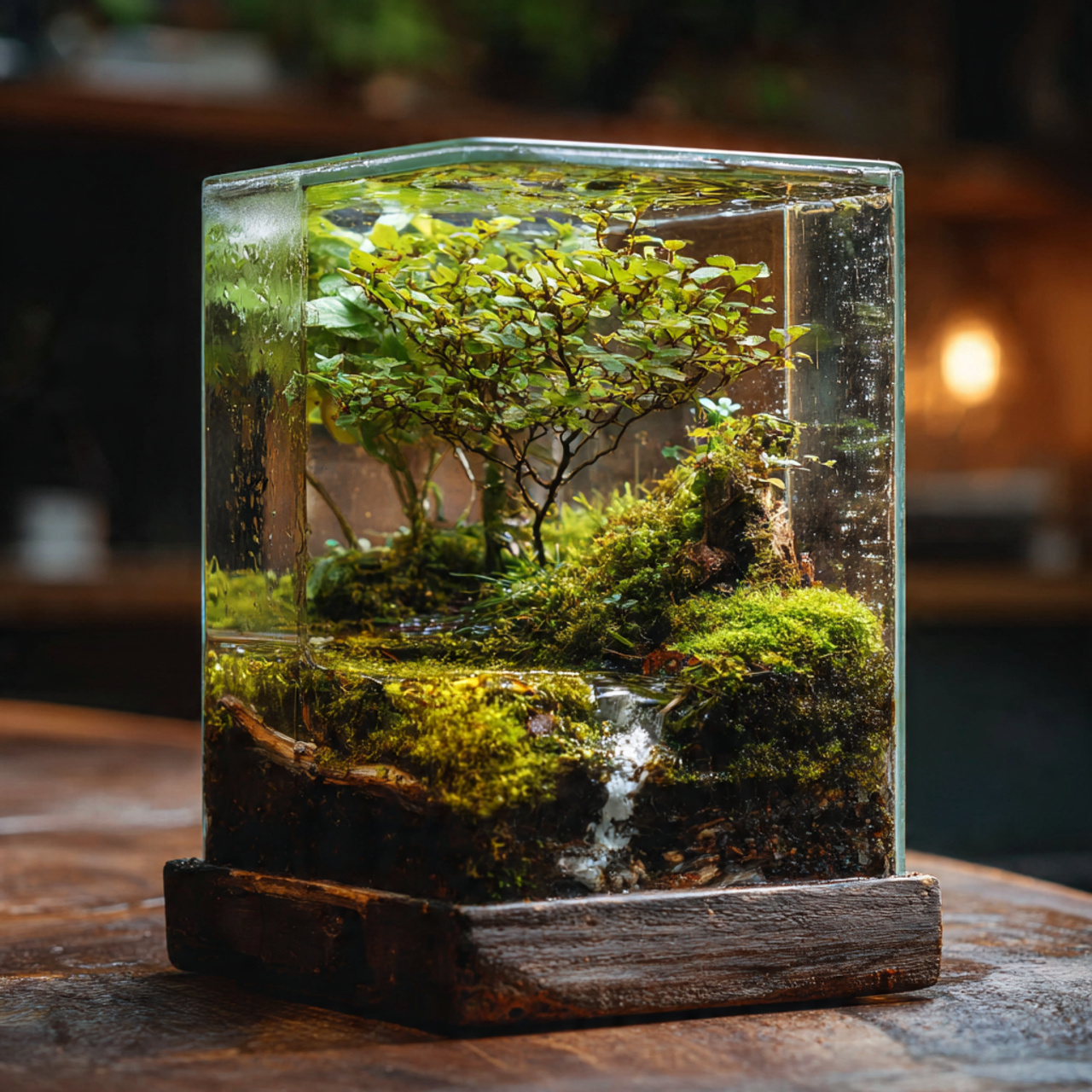
Self-sustaining terrariums represent the pinnacle of closed ecosystem design. Once balanced, these sealed environments can thrive for years—even decades—with zero watering and minimal intervention. They’re living demonstrations of nature’s recycling capabilities.
Creating this balance requires precision during setup, but the long-term payoff is remarkable.
Requirements for Self-Sustainability:
- Sealed container: Cork or glass stopper that creates airtight seal
- Perfect moisture balance: Not too wet, not too dry at closure
- Hardy plant selection: Species that grow slowly and tolerate variable conditions
- Proper substrate: Adequate drainage and nutrients for long-term growth
- Stable location: Consistent temperature and light levels
Recommended Plants:
- Small ferns (slow-growing varieties)
- Moss (multiple types create diversity)
- Fittonia (nerve plant)
- Pilea (artillery plant)
- Baby tears
Setup for Long-Term Success:
- Create perfect drainage layers
- Plant conservatively (plants will grow over time)
- Water moderately then wait 48 hours
- Check condensation pattern—should fog lightly then clear
- Adjust moisture if needed, then seal permanently
Maintenance:
- First month: Monitor closely, adjust moisture if needed
- After establishing: Open only if severe imbalance occurs
- Annual check: Wipe exterior glass, check for dead matter
- Rotation: Turn 180 degrees monthly for even light
Signs of Perfect Balance:
- No mold or algae growth
- Light condensation morning and night
- Clear glass during day
- Slow but steady plant growth
Terrarium Ideas for Offices
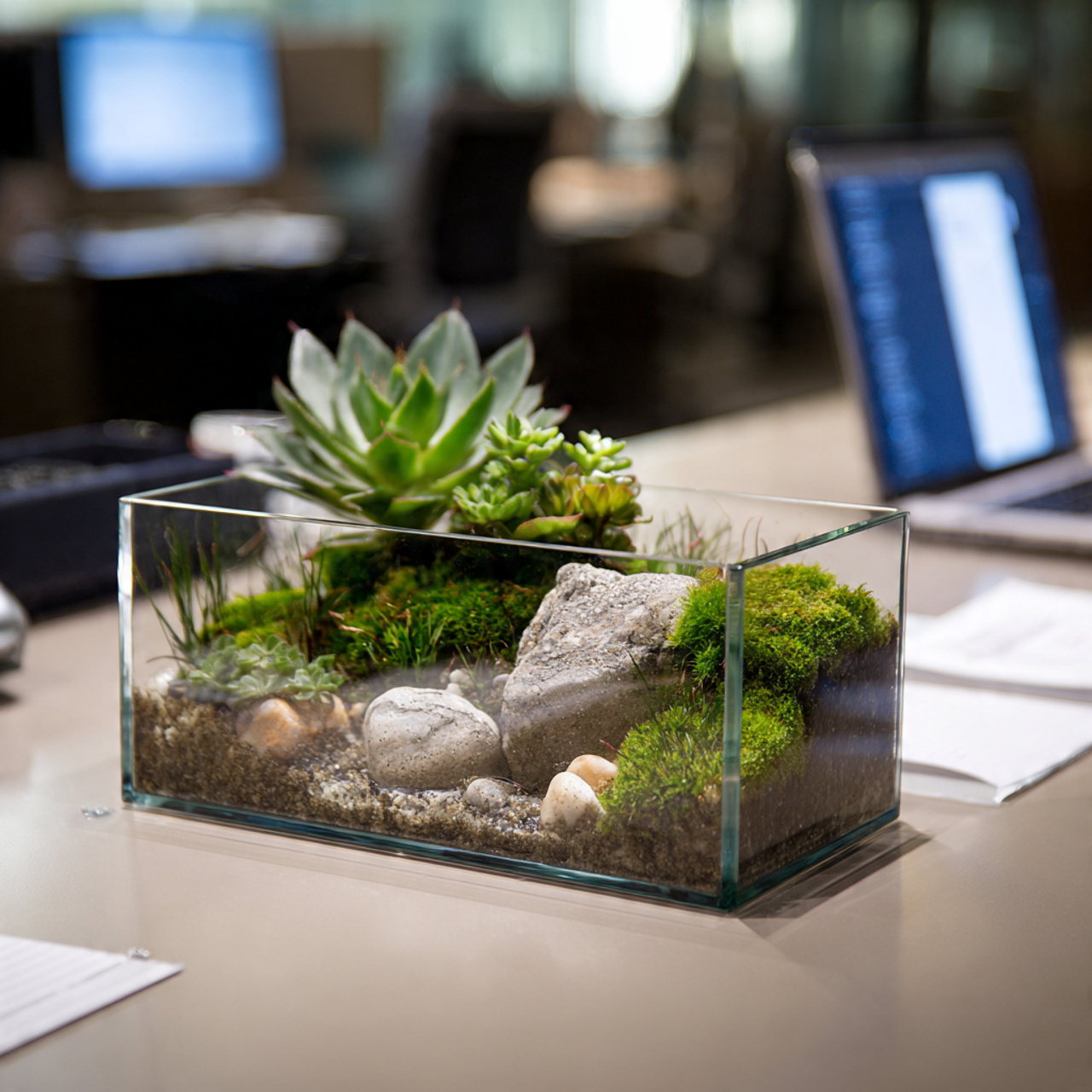
Office terrariums bring nature to professional environments without creating maintenance headaches. These workplace-friendly designs tolerate fluorescent lighting, climate-controlled temperatures, and weekend neglect—essential factors in busy office settings.
A well-chosen office terrarium improves air quality, reduces stress, and provides visual relief from screens and paperwork.
Professional Space Considerations:
- Size: Fits on desk without crowding workspace (4-8 inches ideal)
- Aesthetics: Clean, modern design that matches office décor
- Maintenance: Requires attention only during work hours
- Safety: Stable base, won’t spill, no sharp edges
Ideal Office Terrarium Types:
- Closed or semi-closed (lower watering frequency)
- Geometric containers (professional, modern look)
- Succulent arrangements (very low maintenance)
- Single-plant focus terrariums (simple, elegant)
Plant Choices for Office Conditions:
- Pothos (tolerates fluorescent light)
- Snake plant (survives serious neglect)
- ZZ plant (drought-tolerant, low-light champion)
- Air plants (no soil, minimal care)
- Moss (thrives under office lighting)
Setup for Work Success:
- Place near computer monitor for regular viewing
- Position to catch any available natural light
- Use closed container if you travel frequently
- Keep spray bottle in desk drawer for easy maintenance
Benefits Beyond Beauty:
- Increases workspace humidity (helpful in dry offices)
- Reduces stress and anxiety
- Improves focus and productivity
- Provides conversation starter with colleagues
Artistic Terrarium Arrangements
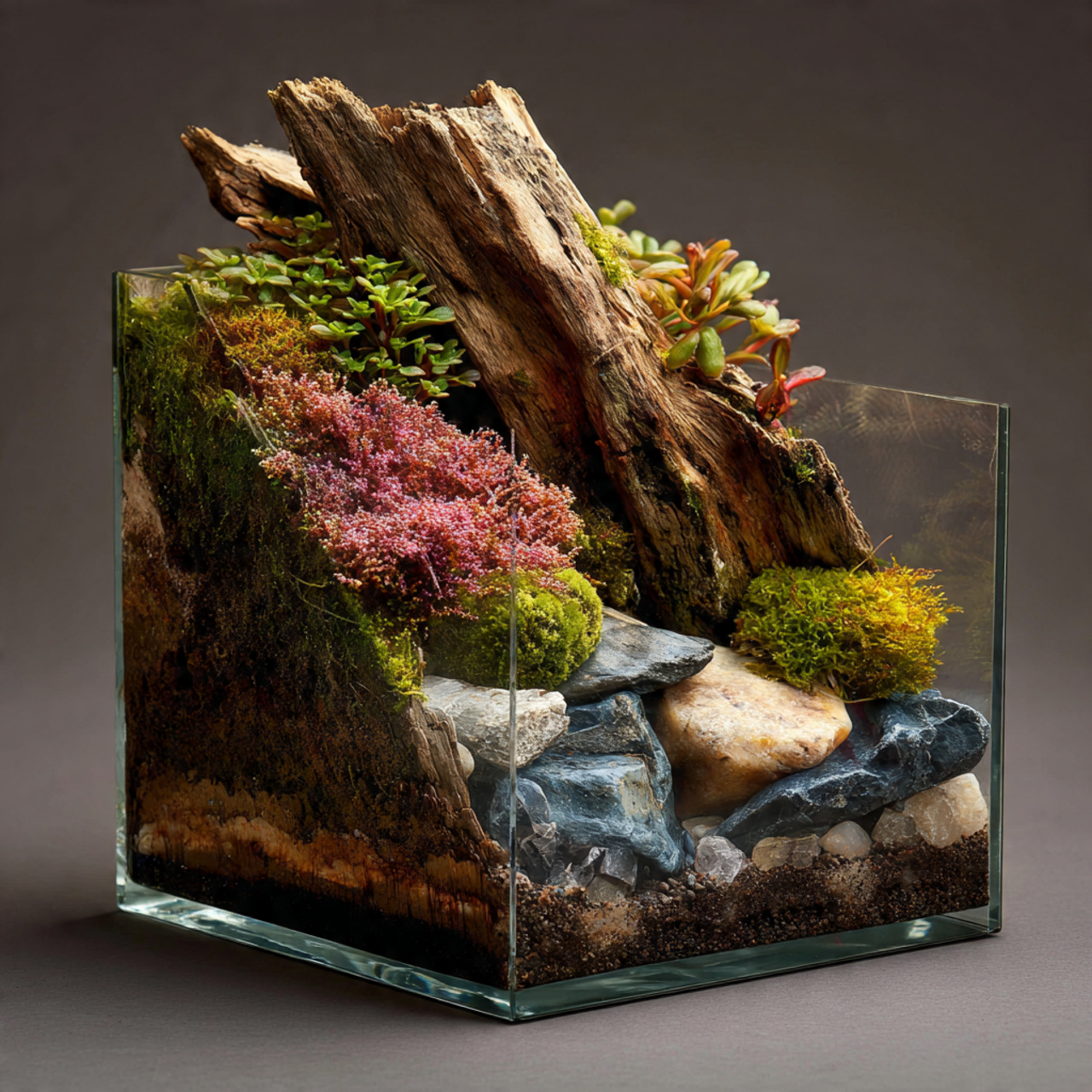
Artistic terrariums break conventional rules to create narrative-driven, expressive compositions. These designs tell stories, evoke emotions, or explore creative concepts rather than simply displaying plants. Think of them as living sculptures where plants are just one component of the larger artistic vision.
The challenge is balancing creativity with plant health—artistic expression should enhance, not endanger, the living elements.
Creative Themes to Explore:
- Miniature landscapes: Recreate favorite places or imaginary worlds
- Story scenes: Fairy gardens, dinosaur habitats, mystical forests
- Abstract designs: Focus on color, texture, and form relationships
- Cultural inspiration: Japanese gardens, desert oases, tropical jungles
- Seasonal narratives: Winter wonderlands, autumn harvest scenes
Artistic Techniques:
- Layered perspectives: Create depth using varied heights and plant sizes
- Color theory: Complementary or monochromatic palettes
- Unexpected materials: Colored sand, crystals, unique stones
- Miniature accessories: Tiny benches, pathways, figurines (used sparingly)
- Asymmetrical balance: Tension and interest through intentional imbalance
Experimentation Process:
- Start with concept sketch or mood board
- Test plant combinations in temporary setups first
- Document what works and what doesn’t
- Be prepared to adjust as plants grow and change
- Accept that artistic terrariums may need more frequent redesign
Important Balance: While pursuing artistic vision, never compromise basic plant needs—appropriate light, water, and spacing. The most successful artistic terrariums work because the design supports plant health, not despite it.
Terrarium Ideas Using Driftwood
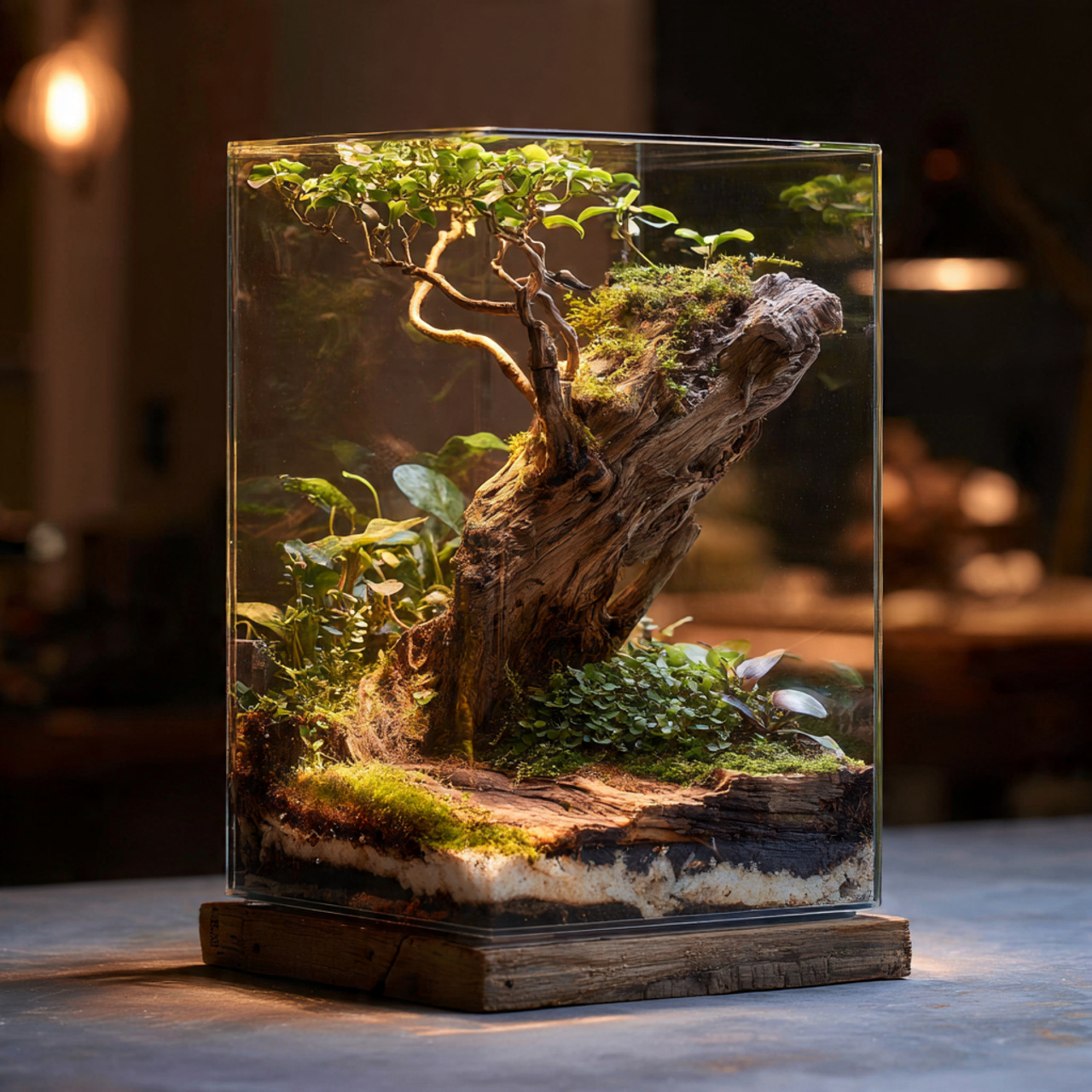
Driftwood adds organic architecture to terrariums, creating vertical interest, natural platforms, and textural contrast against smooth glass and soft plants. Its weathered appearance brings instant age and character to new terrariums, suggesting a natural ecosystem that’s been evolving for years.
Properly prepared driftwood becomes a permanent, stable element that enhances rather than competes with plants.
Selecting and Preparing Driftwood:
- Source: Beaches, rivers, lakes, or purchase from pet/aquarium stores
- Cleaning: Scrub thoroughly with stiff brush, no soap
- Sterilization: Bake at 200°F for 2-3 hours OR boil for 1-2 hours
- Drying: Allow to dry completely (1-2 weeks) before use
- Testing: Should feel dry, show no soft spots, have no unpleasant odor
Creative Uses in Terrariums:
- Vertical element: Position upright for height variation
- Plant support: Air plants or tillandsia nestle in curves and hollows
- Natural divider: Separates different planting zones
- Focal sculpture: Statement piece with minimal planting around it
- Layered landscape: Horizontal pieces create levels and platforms
Best Plant Pairings:
- Air plants: Tuck into natural cavities and branches
- Climbing moss: Grows up and around weathered wood
- Small ferns: Plant at base for forest floor effect
- Trailing succulents: Drape over edges for cascading effect
Design Tips:
- Choose pieces with interesting curves, holes, or branch structures
- Partially bury larger pieces for stability and natural appearance
- Avoid overcrowding—let the wood’s form show clearly
- Consider the wood’s color against your container and substrate
Long-Term Considerations: Even properly prepared wood will slowly decompose—this is natural and can add to the ecosystem. However, if softening becomes excessive, remove and replace the piece.
Beginner-Friendly Terrarium Ideas
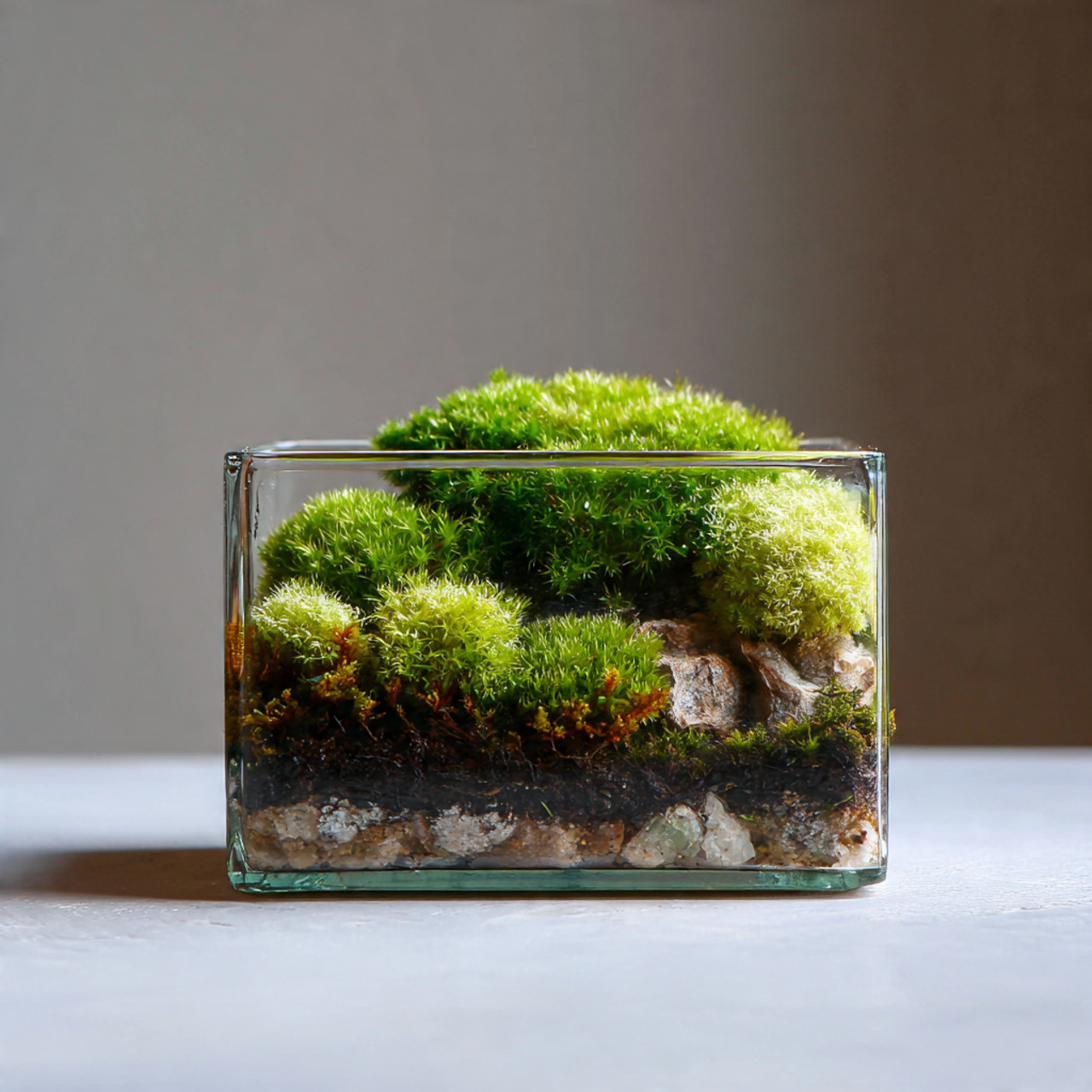
Starting your first terrarium shouldn’t feel overwhelming. Beginner-friendly designs use foolproof plant choices, simple containers, and straightforward techniques that build confidence while creating beautiful results. Success with an easy terrarium often sparks interest in more complex projects later.
These approachable projects teach fundamental skills without requiring specialized knowledge or expensive materials.
Best First Terrarium: Closed Jar with Moss Why it works: Moss is nearly impossible to kill, requires minimal care, and thrives in humidity What you need:
- Medium mason jar with lid
- Small pebbles
- Activated charcoal
- Potting soil
- Sheet moss or cushion moss
- Decorative stone (optional)
Step-by-Step for Beginners:
- Add 1 inch pebbles to jar bottom
- Sprinkle thin charcoal layer
- Add 2 inches potting soil
- Place moss sections on soil, pressing gently
- Add one decorative stone if desired
- Mist lightly until soil is damp (not soaked)
- Seal jar and place in indirect light
Foolproof Plant Choices:
- Moss (any variety): Tolerates mistakes, grows slowly
- Pothos: Forgiving, adapts to various conditions
- Snake plant (small): Survives neglect remarkably
- Succulents: Easy in open terrariums with proper drainage
- Spider plant (baby): Hardy and fast-growing
Common Beginner Mistakes (and How to Avoid Them):
- Overwatering: Start with less water, add gradually if needed
- Wrong container for plant type: Succulents need open, others prefer closed
- Too many plants: Start with 1-2 plants maximum
- Poor drainage: Always include pebble layer at bottom
- Direct sunlight: Use bright, indirect light instead
Build Your Confidence: Master one simple terrarium, then gradually increase complexity. Each success teaches you more about plant behavior, moisture balance, and design principles.
Long-Term Maintenance Terrarium Designs
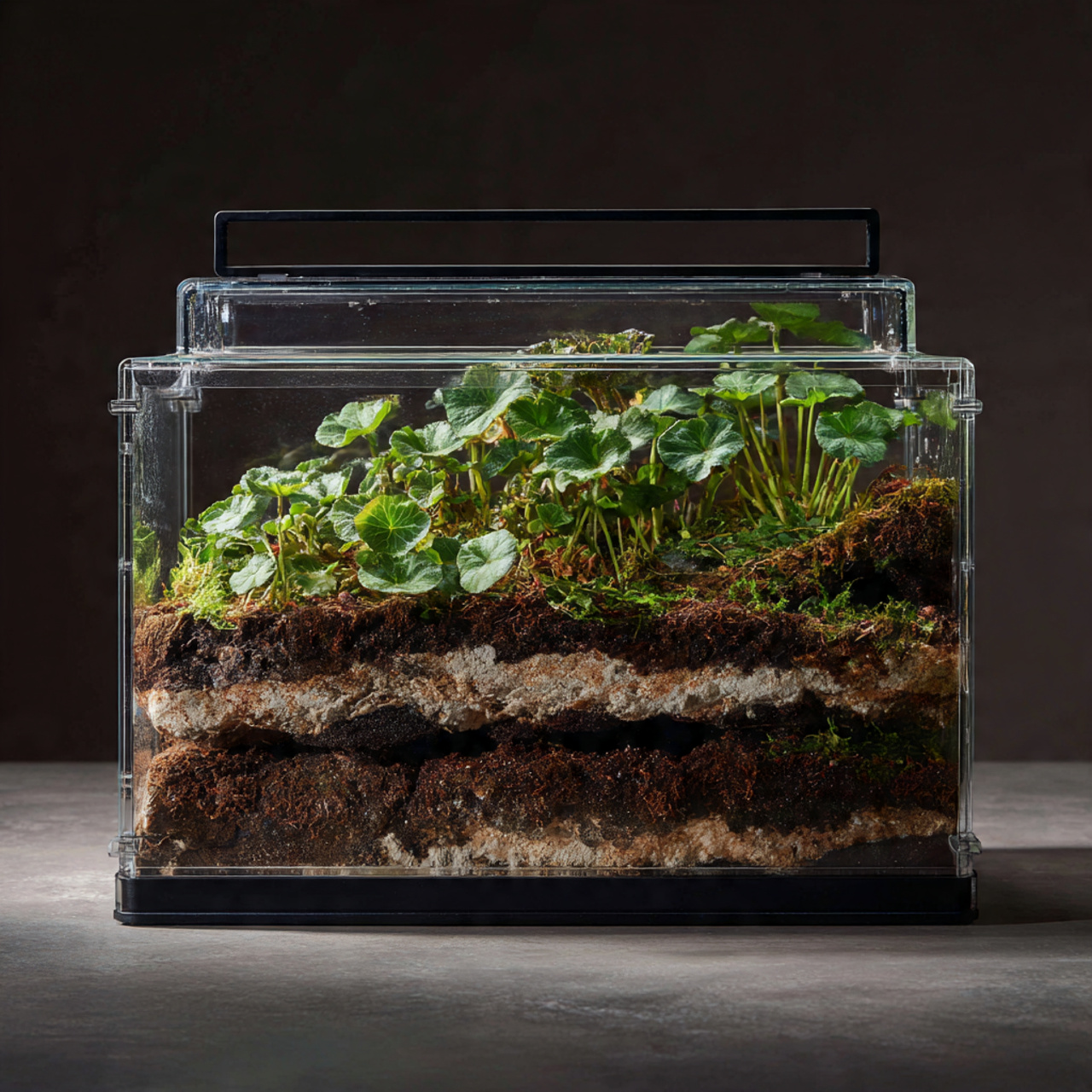
Long-term terrariums are designed with the future in mind—selecting slow-growing species and arranging them with their mature size in consideration. These low-intervention ecosystems can thrive for 5-10+ years with minimal adjustments, making them perfect for those who want living décor without constant maintenance.
The key is planning ahead rather than reacting to problems later.
Slow-Growing Plant Choices:
- Miniature ferns: Grow a few inches over several years
- Dwarf varieties: Specifically bred to stay small
- Moss: Spreads slowly and predictably
- Certain succulents: Haworthia, small aloe varieties
- Air plants: Maintain compact size with proper care
Forward-Thinking Design:
- Research mature plant sizes before purchasing
- Space plants 2-3x their current size apart
- Choose containers slightly larger than immediate needs
- Use barriers (stones, driftwood) to guide growth direction
- Plan for trimming paths when planting
Minimal Maintenance Schedule:
- Monthly: Quick visual check, wipe exterior glass
- Quarterly: Remove any dead leaves, trim excessive growth
- Annually: Top-dress soil if needed, replace charcoal layer
- As needed: Adjust moisture only if seriously imbalanced
Signs Your Long-Term Terrarium Needs Attention:
- Plants touching glass on all sides (overcrowding)
- Consistently foggy glass that never clears (too much moisture)
- Yellowing leaves throughout (nutrient depletion or lighting issue)
- Mold growth (excess moisture or poor air circulation)
Extended Life Tips:
- Plan for eventual plant replacement as part of natural lifecycle
- Document initial setup with photos for reference
- Keep notes on watering frequency and any adjustments
- Resist the urge to “tinker”—stability comes from consistency
Sustainable Terrarium Ideas
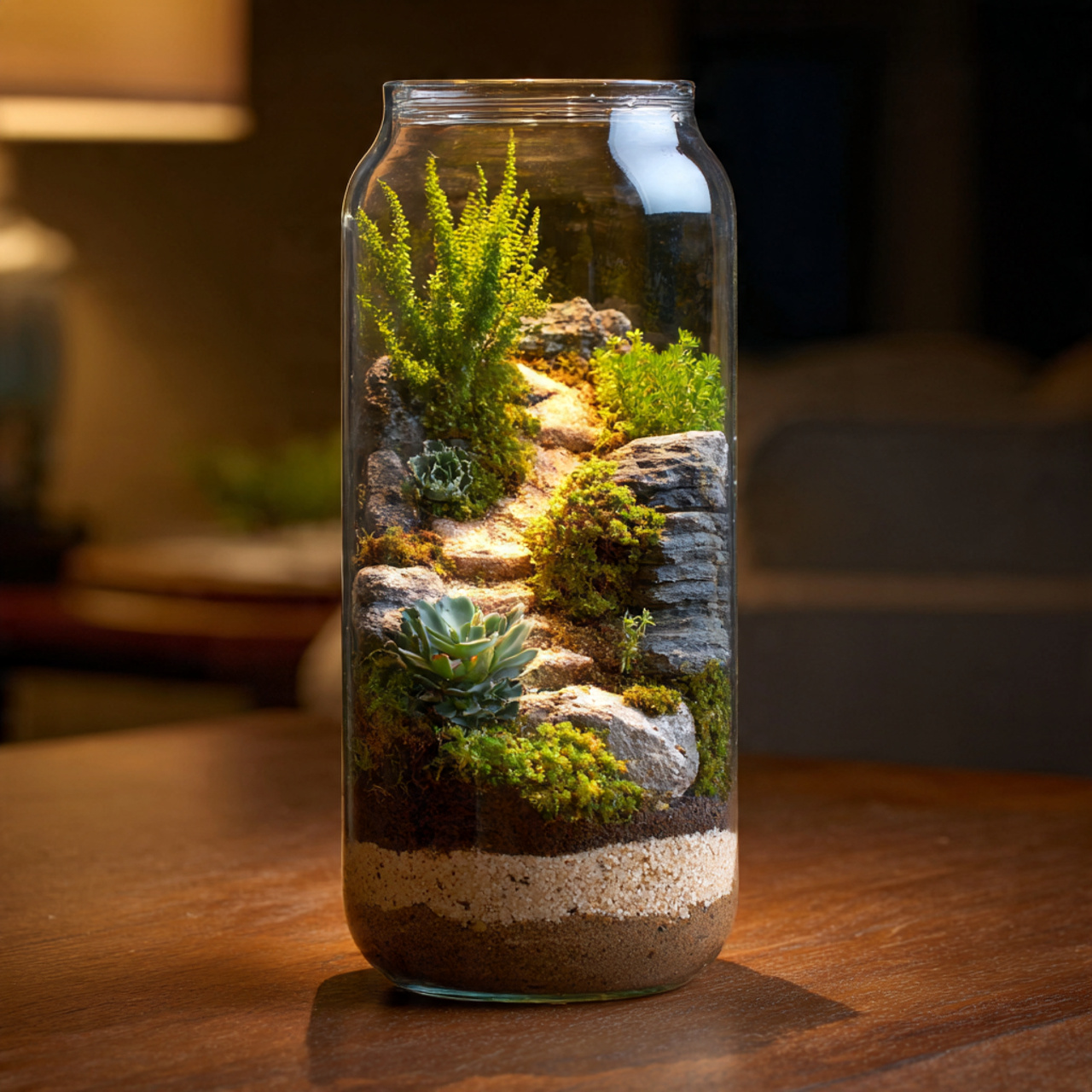
Sustainable terrariums minimize environmental impact through conscious material choices, reduced waste, and responsible sourcing. These eco-friendly designs prove that beautiful doesn’t have to mean harmful to the planet.
Creating with sustainability in mind adds meaningful value beyond aesthetics.
Eco-Friendly Material Choices:
Containers:
- Repurposed jars, bottles, or old aquariums
- Thrift store glass finds
- Upcycled food containers
- Locally made glass rather than imported
Substrate and Layers:
- Local pebbles and stones (collect responsibly from nature)
- Sustainably harvested moss (never strip entire areas)
- Homemade compost or organic potting soil
- Activated charcoal from coconut shells (renewable source)
Plants:
- Native species that support local ecosystems
- Propagated from existing plants rather than wild-harvested
- Purchase from certified sustainable growers
- Trade cuttings with local plant enthusiasts
Decorative Elements:
- Found natural items (sterilized properly)
- Recycled or vintage miniatures
- Natural dyes for colored sand
- Avoid plastic decorations
Sustainable Practices:
- Collect rainwater for misting and watering
- Use energy-efficient LED grow lights if supplemental light needed
- Compost dead plant material rather than trashing it
- Repair containers instead of replacing them
- Share knowledge and cuttings with your community
Long-Term Environmental Benefits:
- Reduces need for cut flowers (which have high water and transport costs)
- Improves indoor air quality naturally
- Creates habitats that support beneficial insects if kept outdoors seasonally
- Teaches environmental stewardship and ecosystem awareness
Local Sourcing Tips: Check farmers markets for locally grown terrarium plants, join plant swap groups in your area, collect materials from your own property or with landowner permission, and support small, local nurseries committed to sustainable practices.
Visit Also: Dish Garden
Frequently Asked Questions
Which plants are best for terrariums?
Choose plants with similar light and humidity needs. Popular options include mosses, ferns, succulents (for open terrariums), fittonias, and small pothos varieties. Always match plants with compatible care requirements.
How often should a terrarium be watered?
Closed terrariums need minimal watering—typically once every 2-6 months. Open terrariums require light watering or misting about once weekly. Check soil moisture rather than following a strict schedule.
Do terrariums need direct sunlight?
No. Most terrariums thrive in bright, indirect light. Direct sunlight can overheat the container and harm plants. Place near a window with filtered light or use LED grow lights.
Can terrariums last a long time?
Yes. With proper balance and plant selection, terrariums can thrive for years—even decades. Closed terrariums generally last longer with minimal maintenance.
Are terrariums good for beginners?
Absolutely. Closed terrariums with hardy plants like moss or pothos are particularly beginner-friendly, requiring minimal care and offering forgiving conditions for learning.
Conclusion
Terrariums offer an accessible, rewarding way to cultivate living greenery in any indoor space, regardless of size or experience level. These self-contained ecosystems demonstrate nature’s incredible ability to sustain itself when given the right conditions and thoughtful design.
Whether you’re drawn to minimalist geometric containers, lush tropical arrangements, or sustainable woodland designs, success comes from matching compatible plants with appropriate containers and environmental conditions. Take time to understand the specific needs of your chosen plants, plan for their long-term growth, and establish proper balance from the beginning.
The beauty of terrariums lies not just in their visual appeal, but in their ability to connect us with natural processes in our modern indoor lives. Each terrarium becomes a living lesson in ecosystem balance, patience, and the quiet rewards of nurturing life. Start simple, learn from each project, and watch as these miniature worlds transform your space into something truly special.