Terrace Garden Design Ideas: 25 Creative Ways to Green Your Rooftop
Living in an apartment or house with limited yard space doesn’t mean you have to abandon your gardening dreams. Your terrace or rooftop holds incredible potential—it’s a blank canvas waiting to become a lush retreat where you can grow fresh vegetables, unwind after a long day, or host memorable evenings under the stars.
The beauty of terrace gardening lies in its versatility. You can design whatever outdoor haven your lifestyle calls for, from a productive vegetable patch that slashes your grocery bills to a peaceful meditation corner where city noise fades into the background. Let’s explore some inspiring ideas that will help you make the most of every square foot.
Why Your Terrace Deserves a Garden Makeover
Your terrace isn’t just wasted space collecting dust—it’s valuable real estate with untapped potential. A well-designed terrace garden does far more than add visual appeal. It actively cools your home by reducing heat absorption through the roof, purifies the air by filtering out urban pollutants, and creates a personal sanctuary where you can escape the concrete jungle without leaving home.
Whether you’re dreaming of harvesting organic tomatoes for dinner, practicing sunrise yoga surrounded by greenery, or enjoying weekend brunches in a flower-filled oasis, a terrace garden adapts beautifully to your needs. The secret lies in balancing aesthetics with practicality—choosing what works for your space, climate, and lifestyle.
Vertical Garden Walls
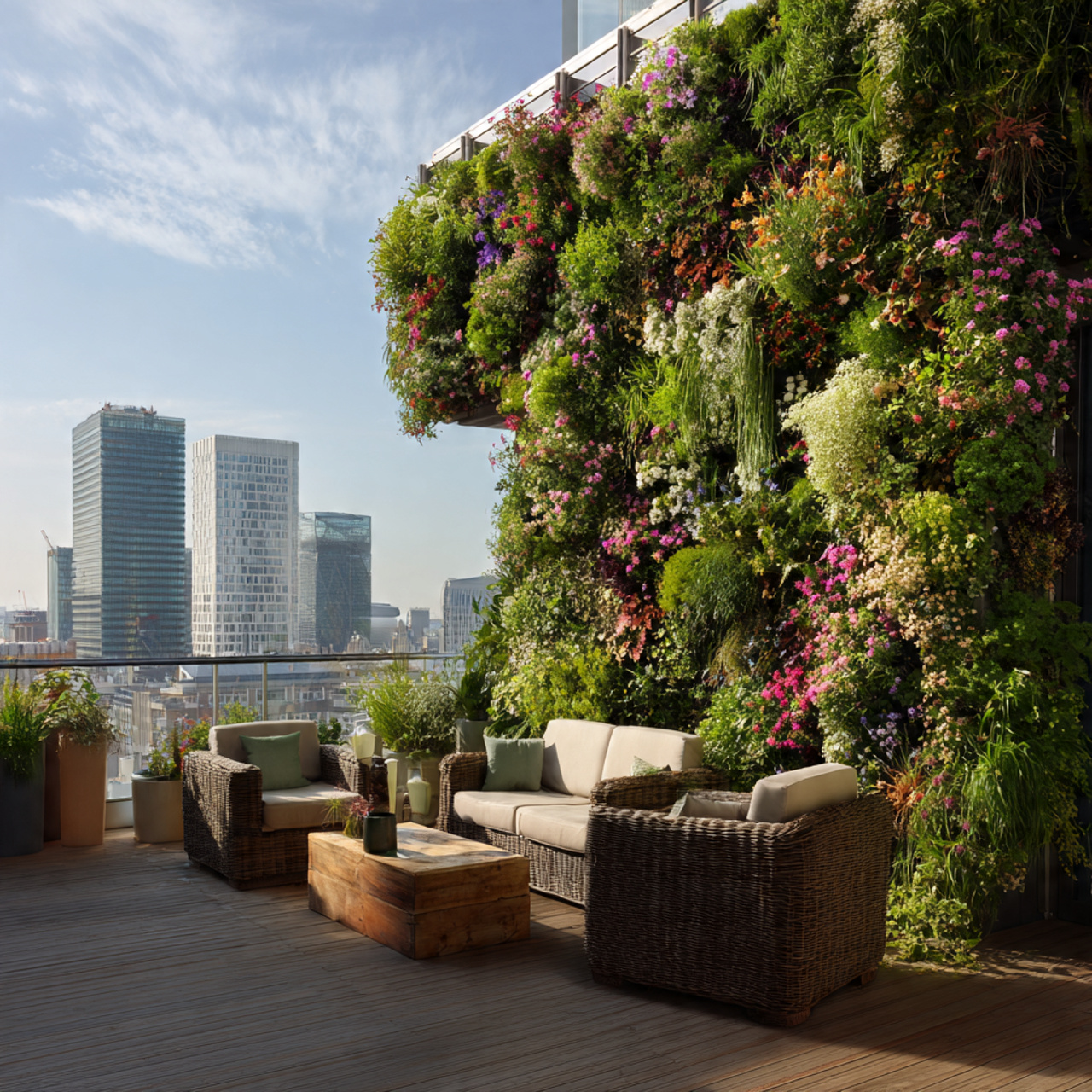
When floor space is tight, the solution is simple: grow upward. Wall-mounted planters and sturdy trellises transform bare walls into vibrant green canvases without sacrificing precious walking room.
Why vertical gardens are game-changers:
- Act as natural insulation, keeping your terrace up to 10 degrees cooler in summer
- Transform plain walls into stunning focal points that wow visitors
- Perfect for cultivating herbs, strawberries, cherry tomatoes, and cascading flowers
- Create multi-layered visual interest and maximize growing space
Smart tips for vertical garden success:
- Install drip irrigation or self-watering systems to simplify maintenance
- Mix different textures—pair feathery ferns with bold monstera or colorful coleus
- Choose lightweight potting mix designed specifically for vertical growing
- Ensure proper drainage holes to prevent root rot
Mistakes to avoid:
- Forgetting to check your wall’s weight-bearing capacity before installation
- Overcrowding plants (leave 6-8 inches between them for air circulation)
- Using wall anchors not rated for outdoor use—wet soil is surprisingly heavy
Container Gardening
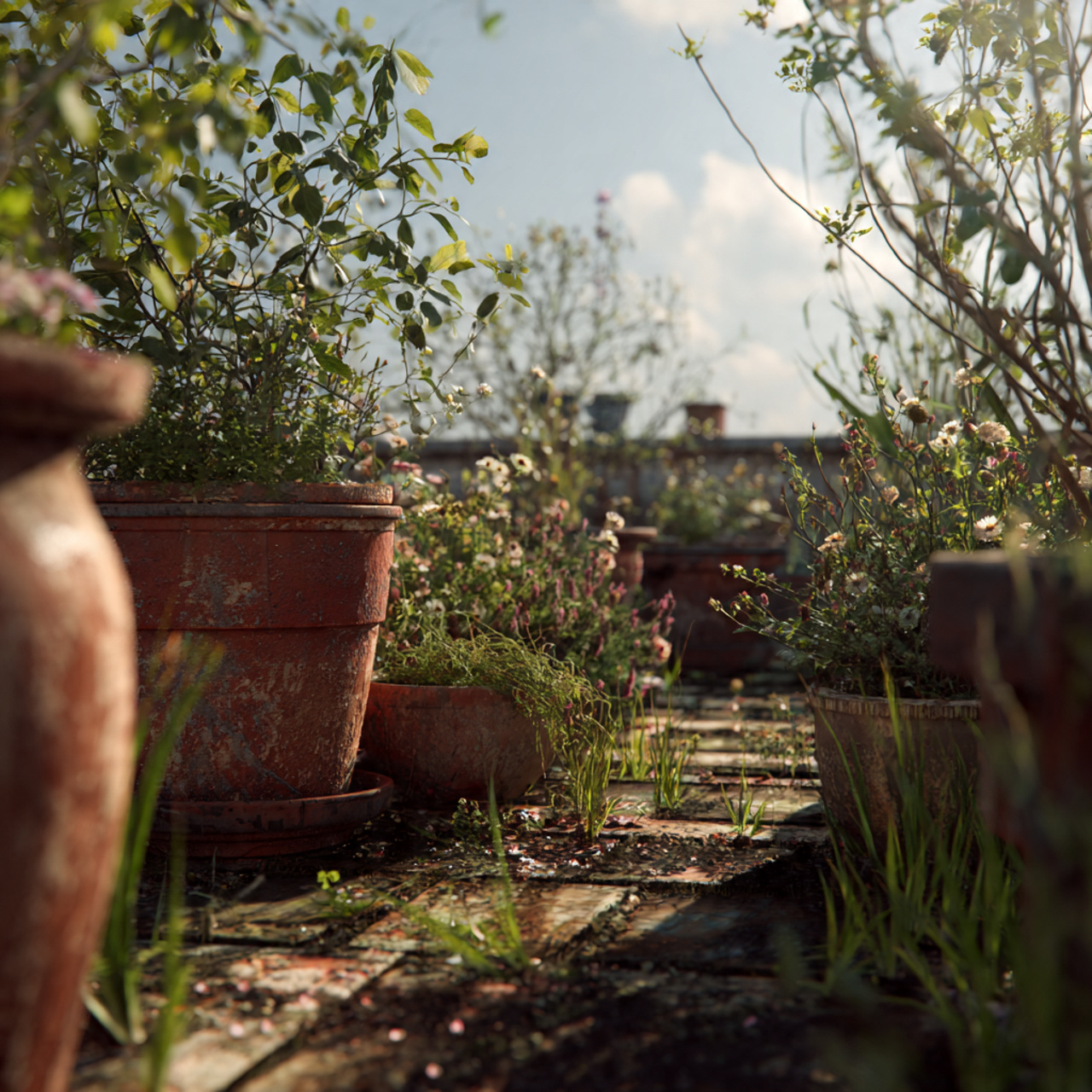
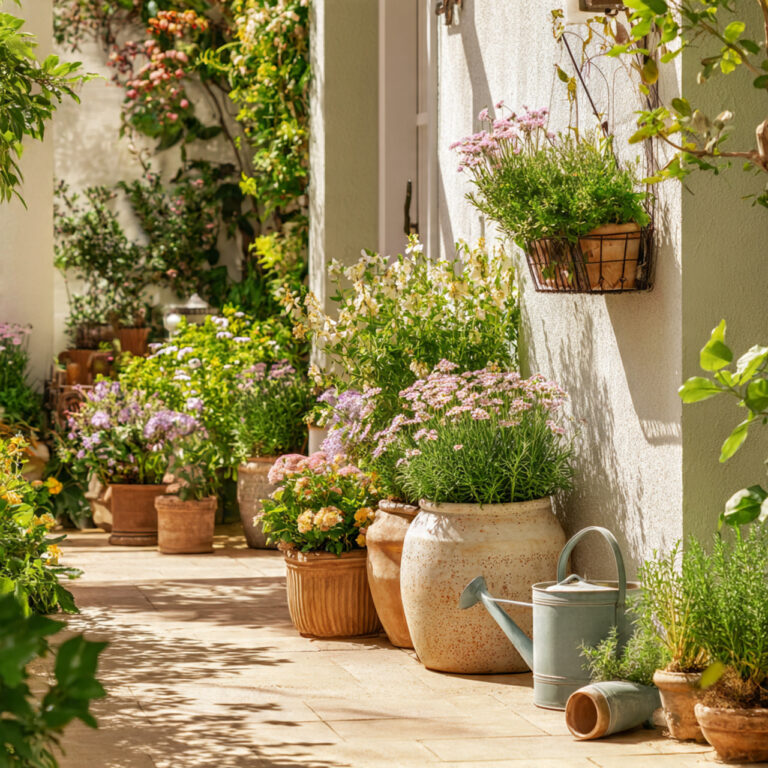
Containers are the ultimate flexible gardening solution for terraces. You can rearrange them with the seasons, move sun-loving plants to brighter spots, and easily refresh your design whenever inspiration strikes.
What makes container gardening ideal:
- Rearrange your garden layout anytime without replanting
- Move frost-sensitive plants indoors during winter
- Control soil quality perfectly for each plant’s needs
- Add instant color and style with decorative pots
Practical container gardening tips:
- Choose ceramic or terracotta for stability; plastic for mobility
- Ensure every container has drainage holes (drill them if needed)
- Group containers in odd numbers (3, 5, 7) for visual appeal
- Use pot feet or saucers to protect your terrace flooring
Material guide:
- Terracotta: Breathable, classic look, but dries out quickly
- Ceramic: Beautiful, retains moisture well, can crack in freezing weather
- Plastic: Lightweight, affordable, retains moisture longer
- Wood: Natural aesthetic, needs waterproof liner to prevent rot
Common pitfall: Choosing containers that are too small—plants become root-bound and stressed. Go at least 2-3 inches larger than the plant’s current pot.
Rooftop Herb Garden
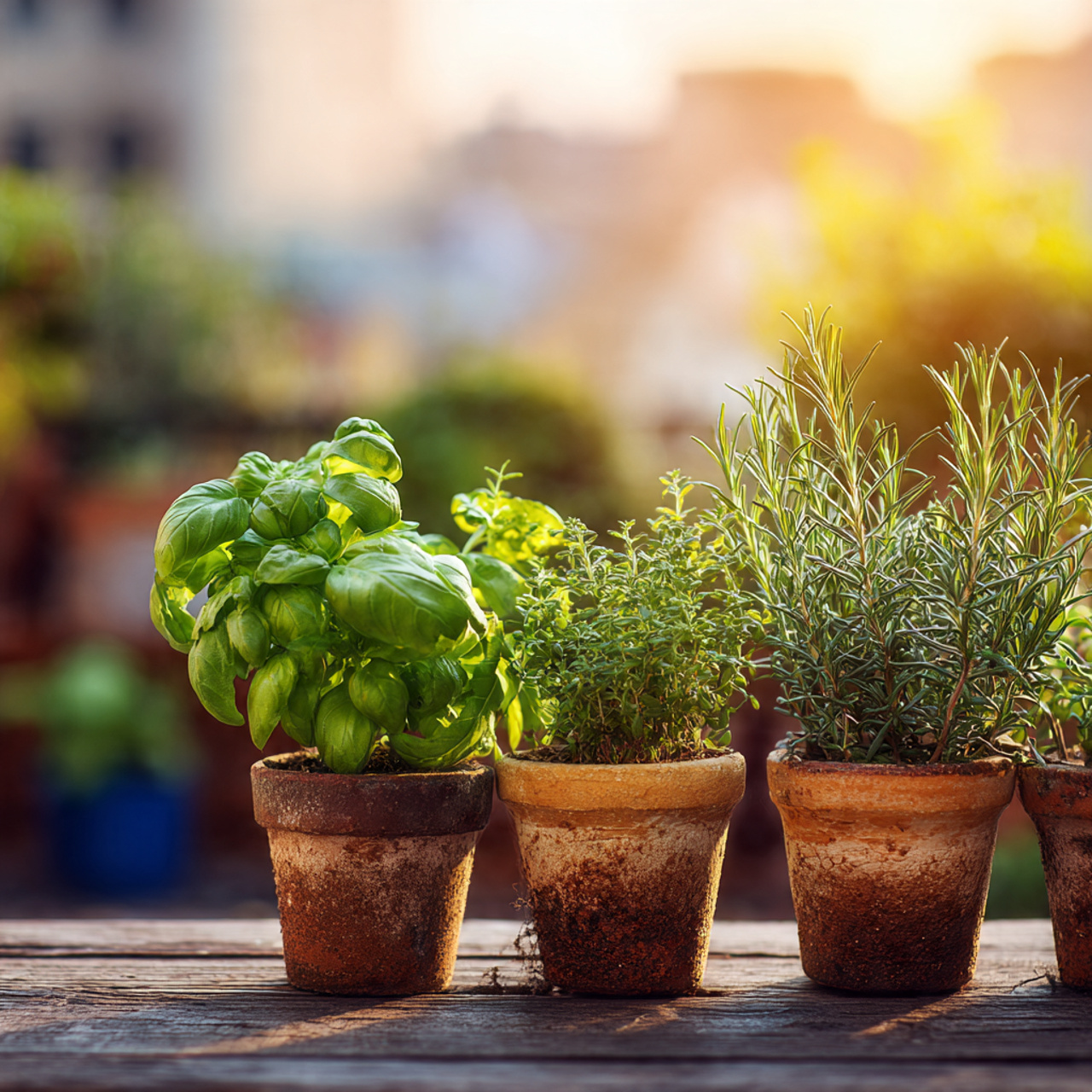
Nothing beats the taste of herbs picked fresh from your own garden moments before cooking. A terrace herb garden combines practicality with delightful fragrances that make your outdoor space feel alive.
Best herbs for terrace gardens:
- Basil (needs warmth and full sun)
- Mint (grows vigorously—keep contained)
- Rosemary (drought-tolerant, loves sun)
- Thyme (compact, perfect for small spaces)
- Cilantro (prefers cooler weather)
- Parsley (tolerates partial shade)
Quick growing tips:
- Plant herbs with similar water needs together
- Harvest regularly to encourage bushier growth
- Pinch off flower buds to extend leaf production
- Use kitchen scraps as gentle fertilizer (coffee grounds, eggshells)
Smart placement idea: Position your herb containers near your kitchen door for convenient harvesting while cooking.
Beginner’s tip: Start with hardy herbs like rosemary, thyme, and mint before experimenting with finicky varieties.
Hanging Planters
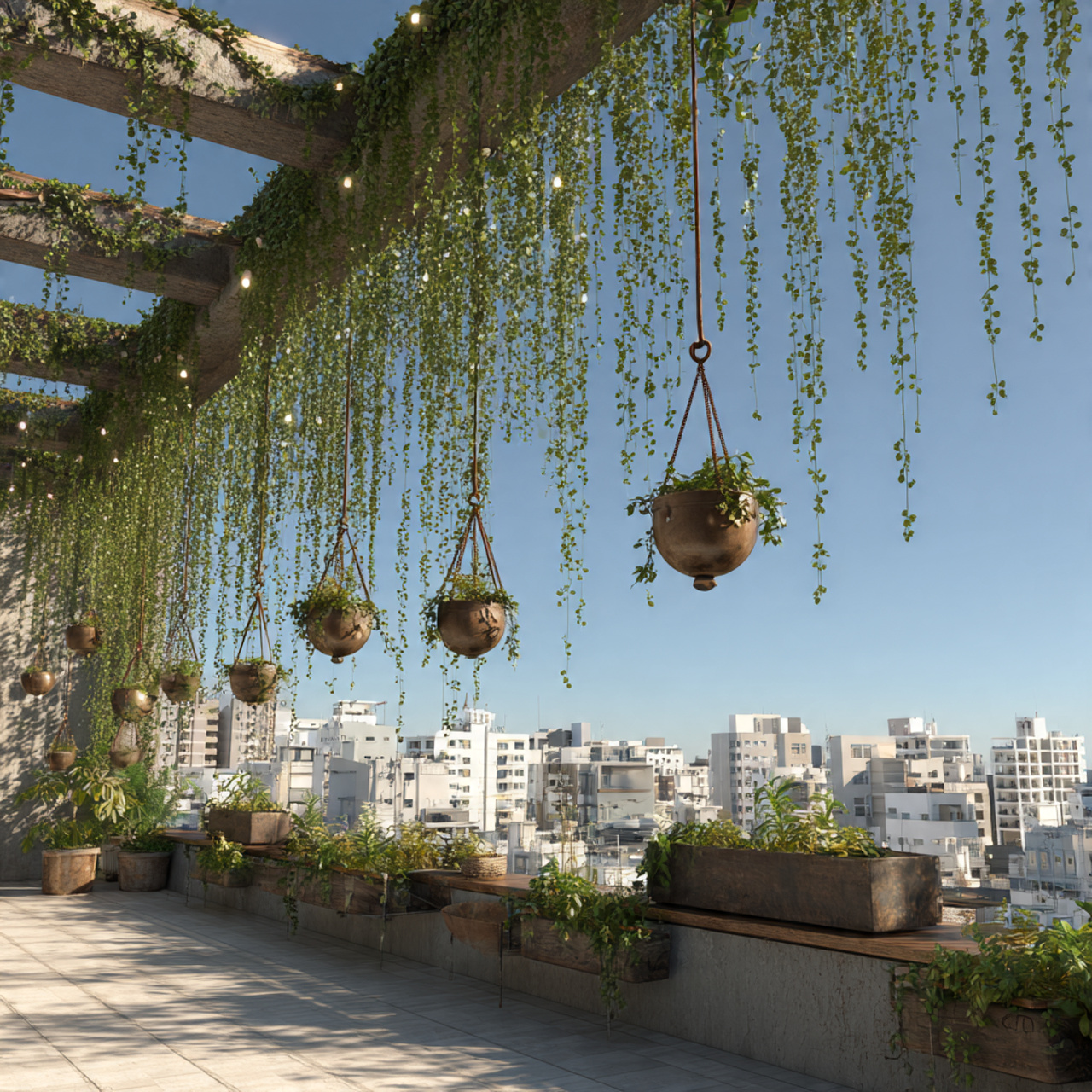
Hanging planters work magic in small terraces by utilizing vertical space while creating beautiful cascading displays that draw the eye upward.
Perfect plants for hanging baskets:
- Trailing petunias (vibrant, cascading blooms)
- Boston ferns (lush, graceful fronds)
- String of pearls (unique succulent with minimal care)
- Spider plants (hardy, produces baby plants)
- Trailing geraniums (colorful and drought-tolerant)
Installation essentials:
- Use heavy-duty hooks rated for at least 20 pounds
- Install into ceiling beams or solid wall studs
- Hang at varying heights for dynamic visual layers
- Keep them at eye level or higher for best impact
Watering wisdom:
- Hanging baskets dry out faster than ground pots
- Water early morning to reduce evaporation
- Consider self-watering hangers for convenience
- Rotate baskets monthly for even sun exposure
Safety reminder: Test your hanging hardware with extra weight before adding plants—better safe than sorry!
Visit More: Tiny Balcony Garden
Raised Garden Beds
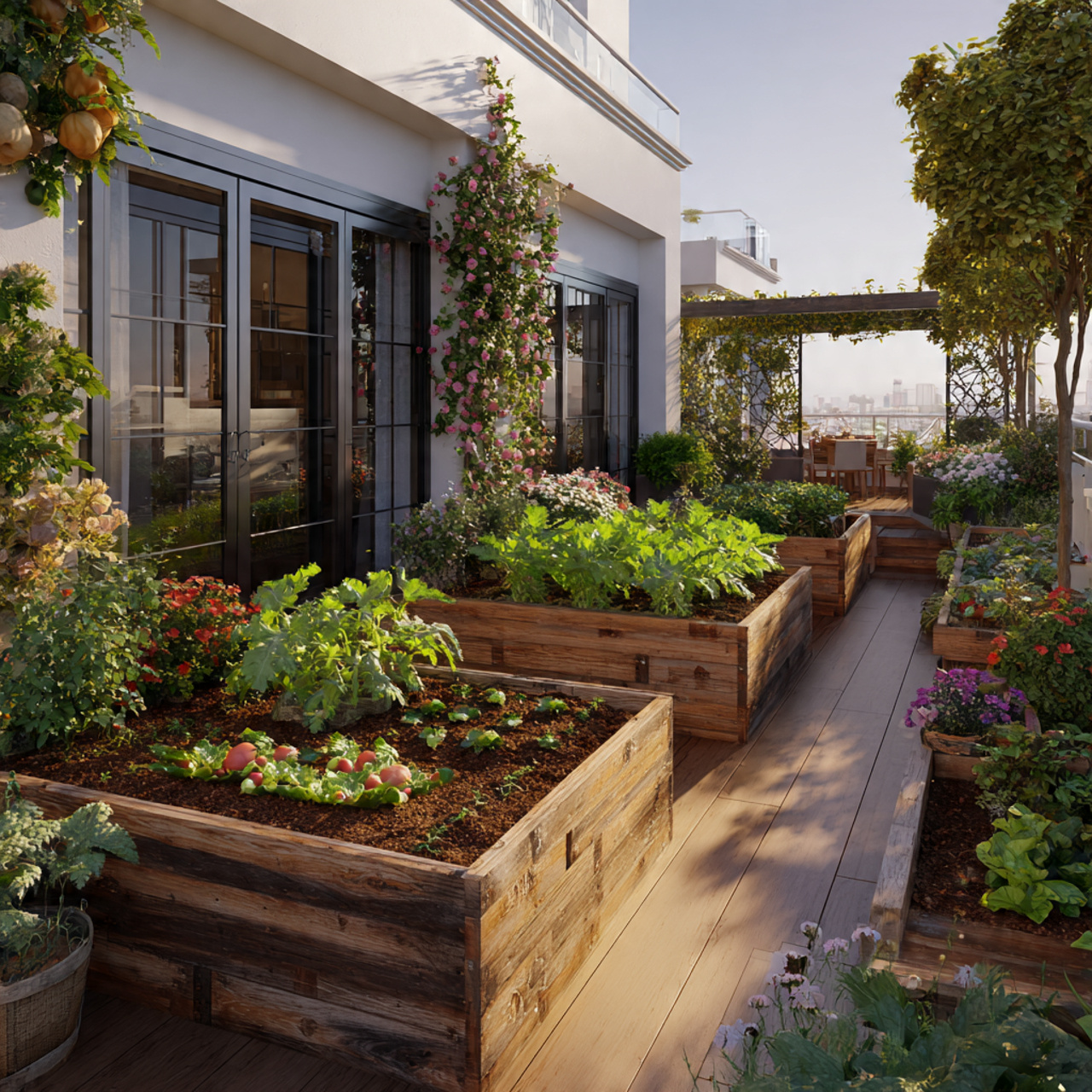
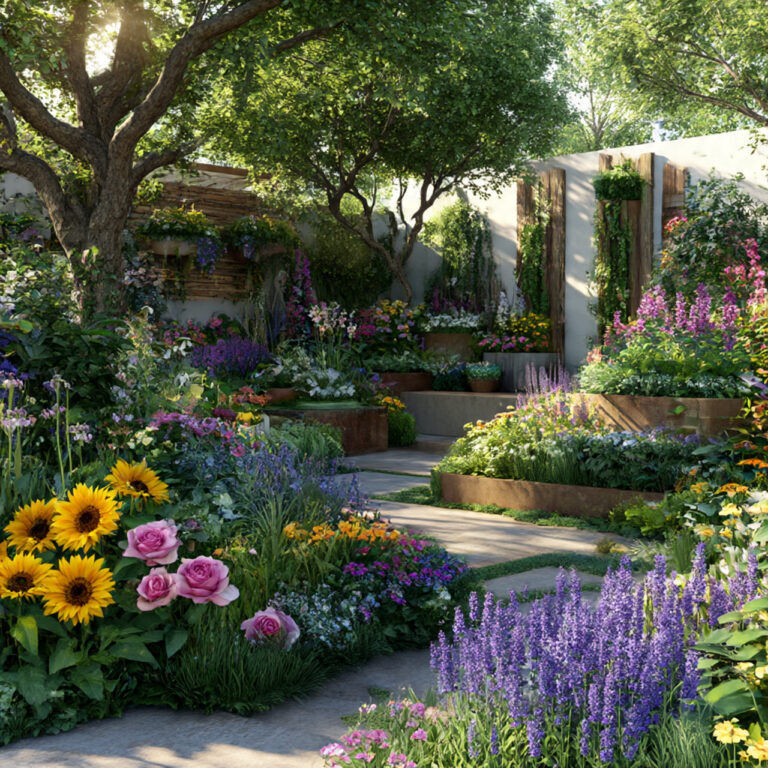
Raised beds lift your plants above the terrace floor, creating better drainage, preventing soil compaction, and making gardening easier on your back.
Why raised beds excel:
- Improved drainage prevents waterlogging
- Warmer soil means earlier spring planting
- Easier access for planting, weeding, and harvesting
- Better soil control with custom potting mixes
- Neater, more organized garden appearance
Building material options:
- Cedar or redwood (naturally rot-resistant, premium choice)
- Composite lumber (low maintenance, long-lasting)
- Galvanized metal (modern look, excellent drainage)
- Concrete blocks (durable, budget-friendly)
Depth guidelines:
- Lettuce and herbs: 6-8 inches minimum
- Tomatoes and peppers: 12-18 inches
- Root vegetables: 12-15 inches deep
Pro tip: Line the bottom with landscape fabric before adding soil to prevent weed growth and improve drainage.
Budget tip: Use untreated pallet wood for DIY raised beds—just ensure it’s marked “HT” (heat-treated) not “MB” (methyl bromide treated).
Modern Minimalist Terrace
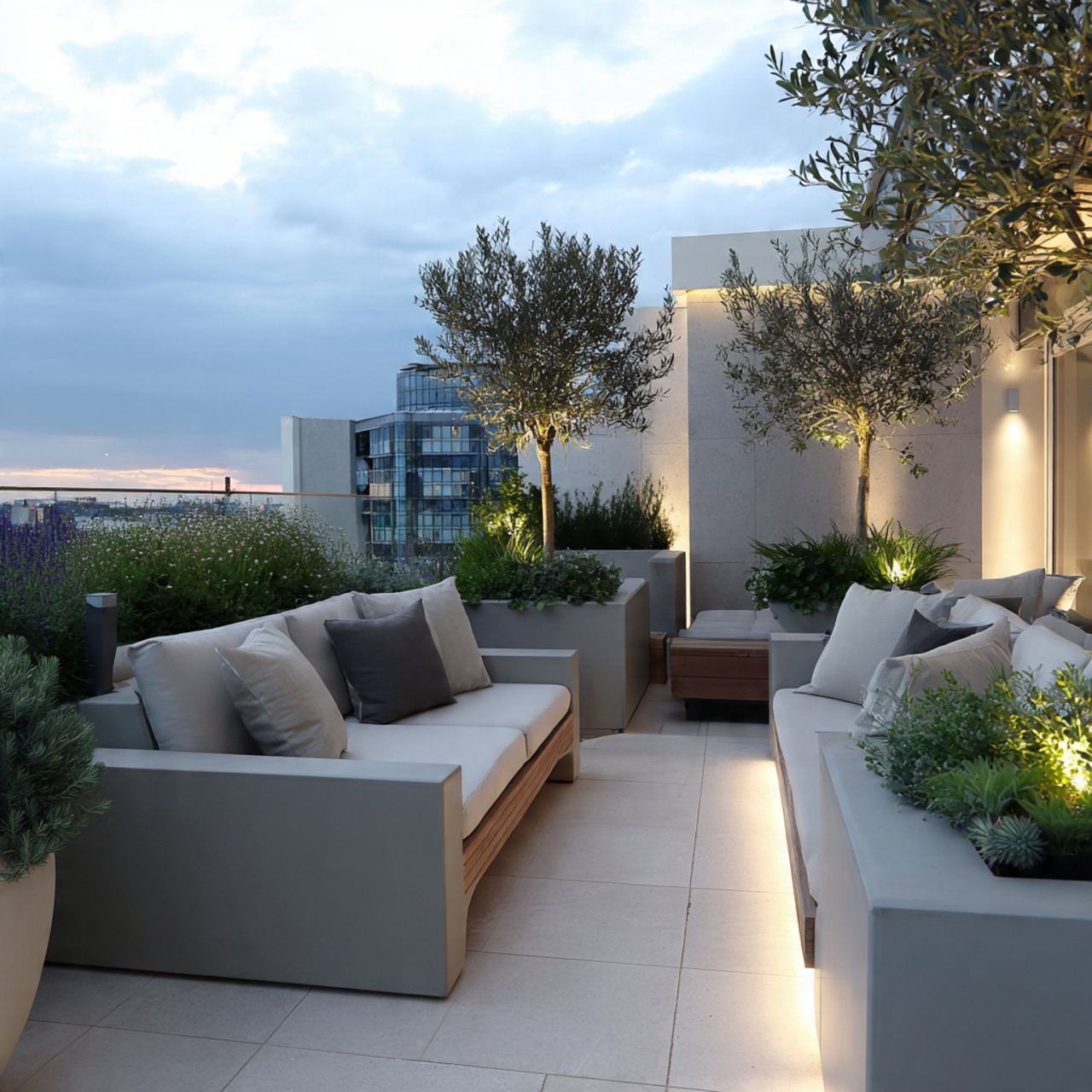
A minimalist approach creates a calming, uncluttered terrace that’s both stylish and incredibly low-maintenance—perfect for busy urban dwellers.
Minimalist design principles:
- Stick to 2-3 plant varieties in coordinating containers
- Choose neutral colors (white, grey, black, natural wood)
- Emphasize clean lines and geometric shapes
- Leave intentional empty spaces—they’re part of the design
Ideal minimalist plants:
- Snake plants (architectural, nearly indestructible)
- Single-color flower displays (all white petunias, for example)
- Ornamental grasses (modern, low-maintenance)
- Box hedges in matching planters
Furniture choices:
- Sleek metal or wood benches
- Simple concrete planters
- Subtle LED strip lighting
- One statement piece rather than many decorations
Maintenance advantage: Fewer plants mean less watering, pruning, and upkeep—ideal if you travel frequently.
Zen Garden Design
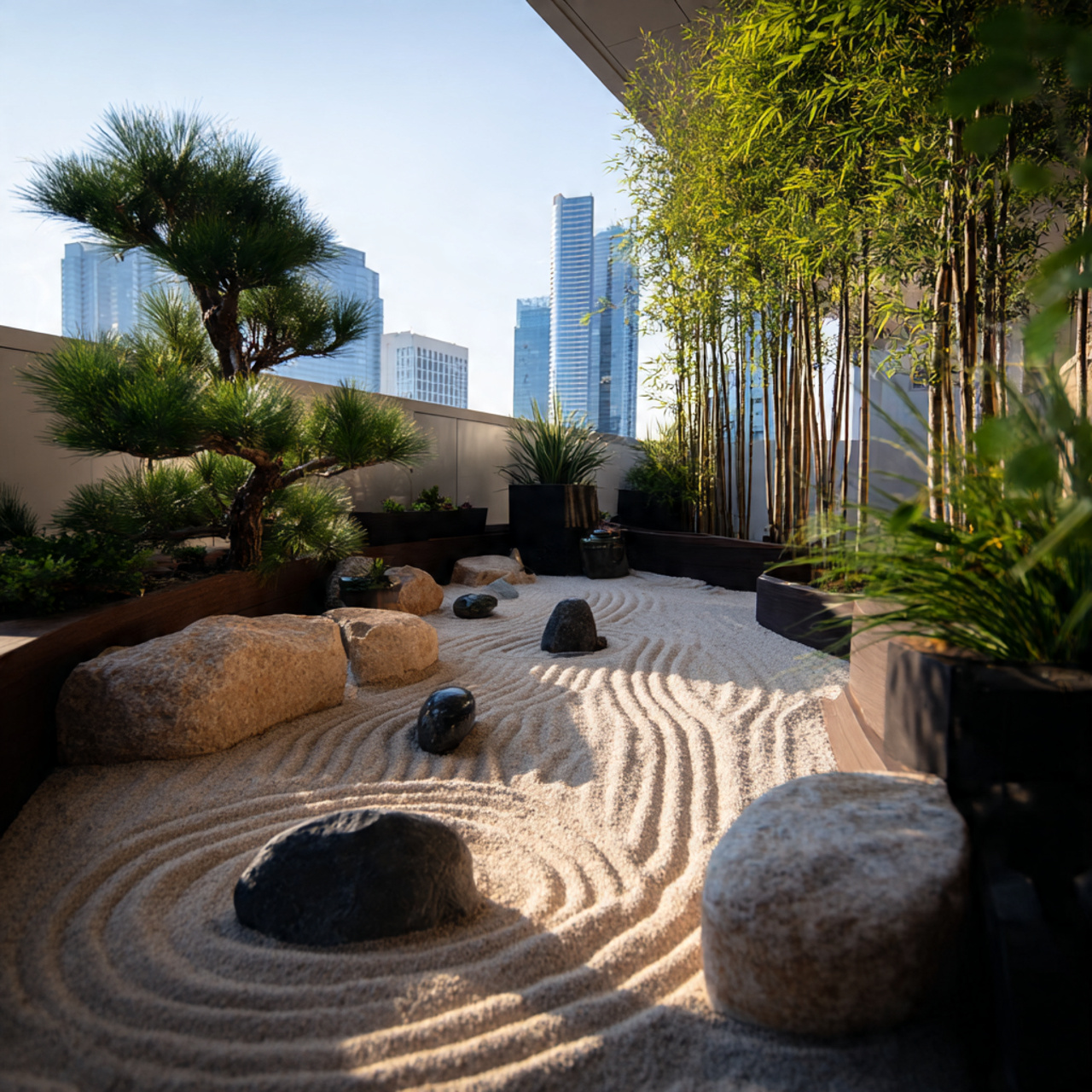
Zen-inspired gardens bring tranquility and mindfulness to your terrace through carefully chosen natural elements that encourage reflection and peace.
Essential Zen garden elements:
- Raked gravel or sand (represents water, creates patterns)
- Smooth river rocks (symbolize islands or mountains)
- Bonsai trees (living art requiring patience)
- Bamboo (gentle rustling sounds, vertical interest)
- Moss (soft, calming green texture)
Design philosophy:
- Embrace asymmetry and natural imperfection
- Use odd numbers of elements (3 rocks, 5 plants)
- Create negative space for visual breathing room
- Incorporate natural materials over synthetic
Optional additions:
- Small water fountain (adds soothing sounds)
- Stone lantern (gentle evening lighting)
- Wooden bridge element (symbolic crossing)
- Meditation cushion or simple bench
Daily ritual idea: Spend five minutes each morning raking patterns in the sand—it’s surprisingly meditative.
Balcony-Style Terrace

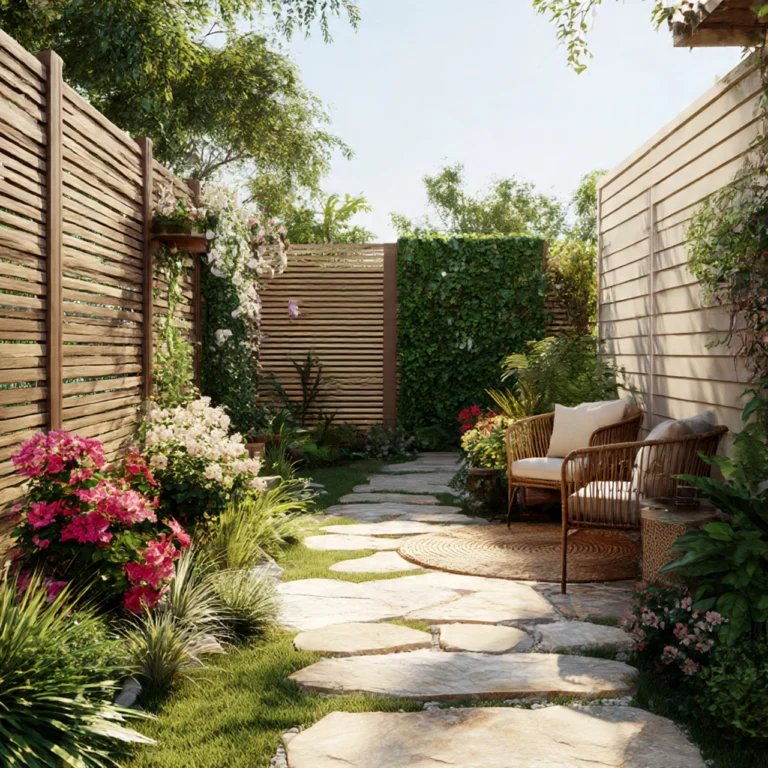
Small terrace? No problem. Balcony-style designs prove you don’t need acres to create a gorgeous green retreat.
Space-saving strategies:
- Railing planters (utilize often-wasted edge space)
- Corner shelving units (vertical growing zones)
- Folding furniture (opens up floor space when not in use)
- Wall-mounted fold-down tables
Best plants for small terraces:
- Compact varieties of vegetables (cherry tomatoes, dwarf peppers)
- Trailing plants that cascade over railings
- Upright herbs that don’t sprawl
- Colorful annuals in coordinating colors
Layout tips:
- Keep the center relatively clear for movement
- Place taller plants at the back, shorter ones forward
- Use mirrors on walls to create illusion of depth
- Choose light-colored containers to keep space feeling open
Example setup: Two railing boxes with cascading petunias, three small herb pots on a corner shelf, and a folding bistro set in the center.
Rooftop Vegetable Garden
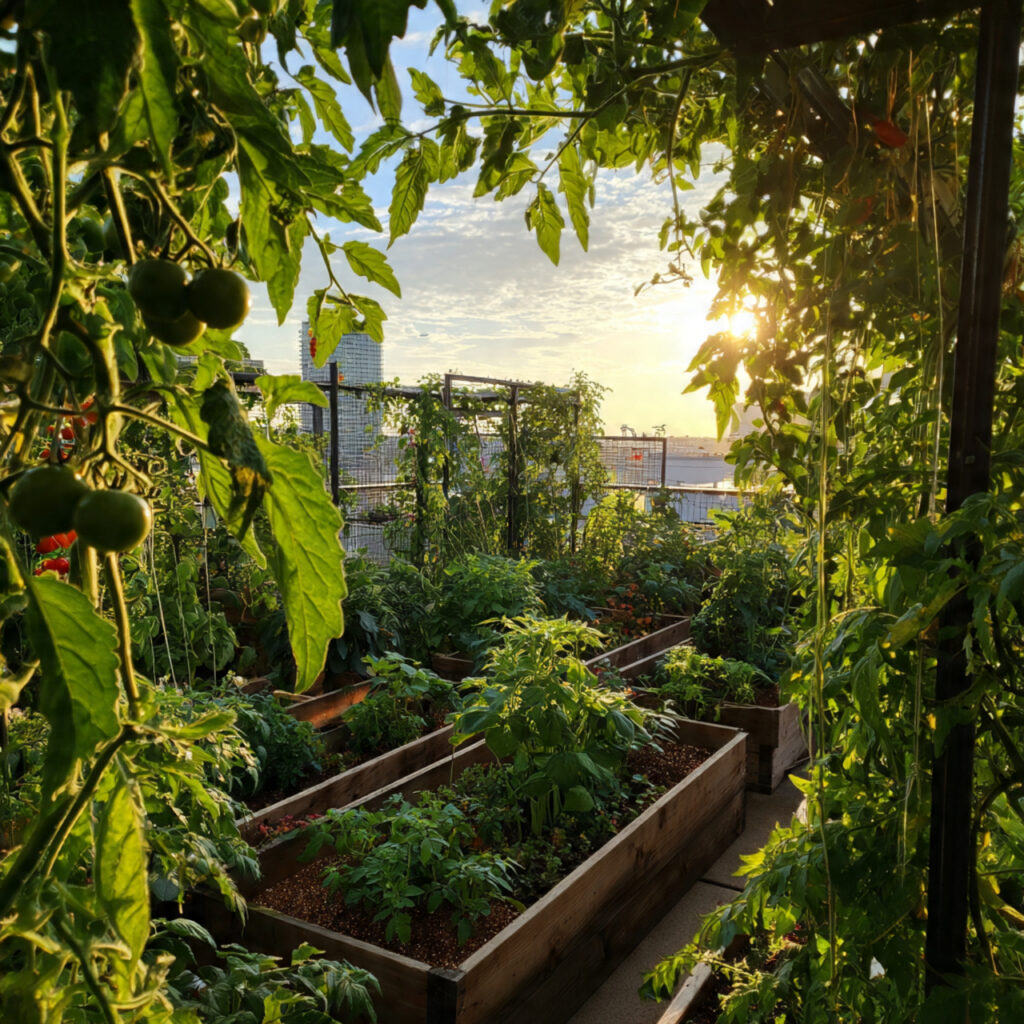
Transform your terrace into a productive food-growing space that supplies fresh, organic vegetables while cutting your grocery budget.
Easy vegetables for terrace gardens:
- Cherry tomatoes (compact, high-yielding)
- Lettuce and salad greens (quick-growing, multiple harvests)
- Peppers (both sweet and hot varieties)
- Radishes (ready in just 30 days)
- Cucumbers (choose bush varieties)
- Beans (pole varieties maximize vertical space)
Success essentials:
- Minimum 6-8 hours direct sunlight daily
- Quality potting soil enriched with compost
- Consistent watering schedule (vegetables need more water than flowers)
- Regular feeding every 2-3 weeks during growing season
Container size guide:
- Tomatoes: 5-gallon minimum per plant
- Peppers: 3-gallon containers
- Lettuce: 6-8 inches deep, can group multiple plants
- Cucumbers: 5-gallon with trellis support
Money-saving reality: A single tomato plant can produce 10-15 pounds of fruit worth $30-50 at organic grocery prices.
Avoid this mistake: Planting too early in spring—wait until nighttime temperatures consistently stay above 50°F.
Water Features
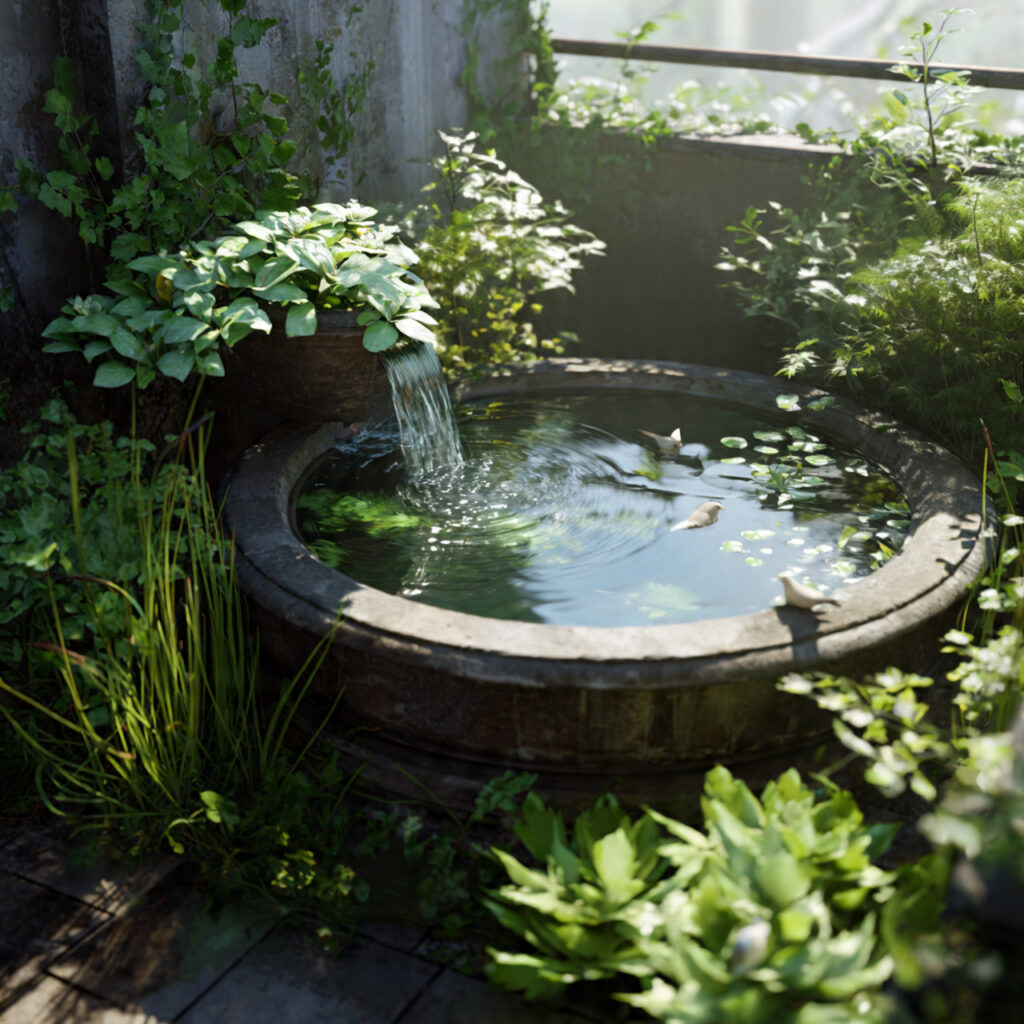
The gentle sound of trickling water transforms your terrace into a tranquil escape, masking city noise while attracting beneficial birds.
Water feature options for terraces:
- Tabletop fountains (minimal space, maximum impact)
- Wall-mounted waterfalls (dramatic focal points)
- Small pond containers (support aquatic plants)
- Bubbling rock features (modern, sculptural)
Benefits beyond beauty:
- Natural white noise drowns out traffic sounds
- Increases humidity for surrounding plants
- Attracts birds, butterflies, and beneficial insects
- Creates calming focal point for meditation areas
Maintenance must-dos:
- Change water weekly to prevent mosquito breeding
- Clean pump filters monthly
- Add mosquito dunks if you spot larvae
- Winterize fountains in freezing climates
- Use distilled water to prevent mineral buildup
Safety tip: Position water features away from electrical outlets and ensure all outdoor fountains use proper GFCI-protected power sources.
Budget option: Start with a simple ceramic pot fountain (under $100) before investing in elaborate installations.
Pergola or Canopy Garden
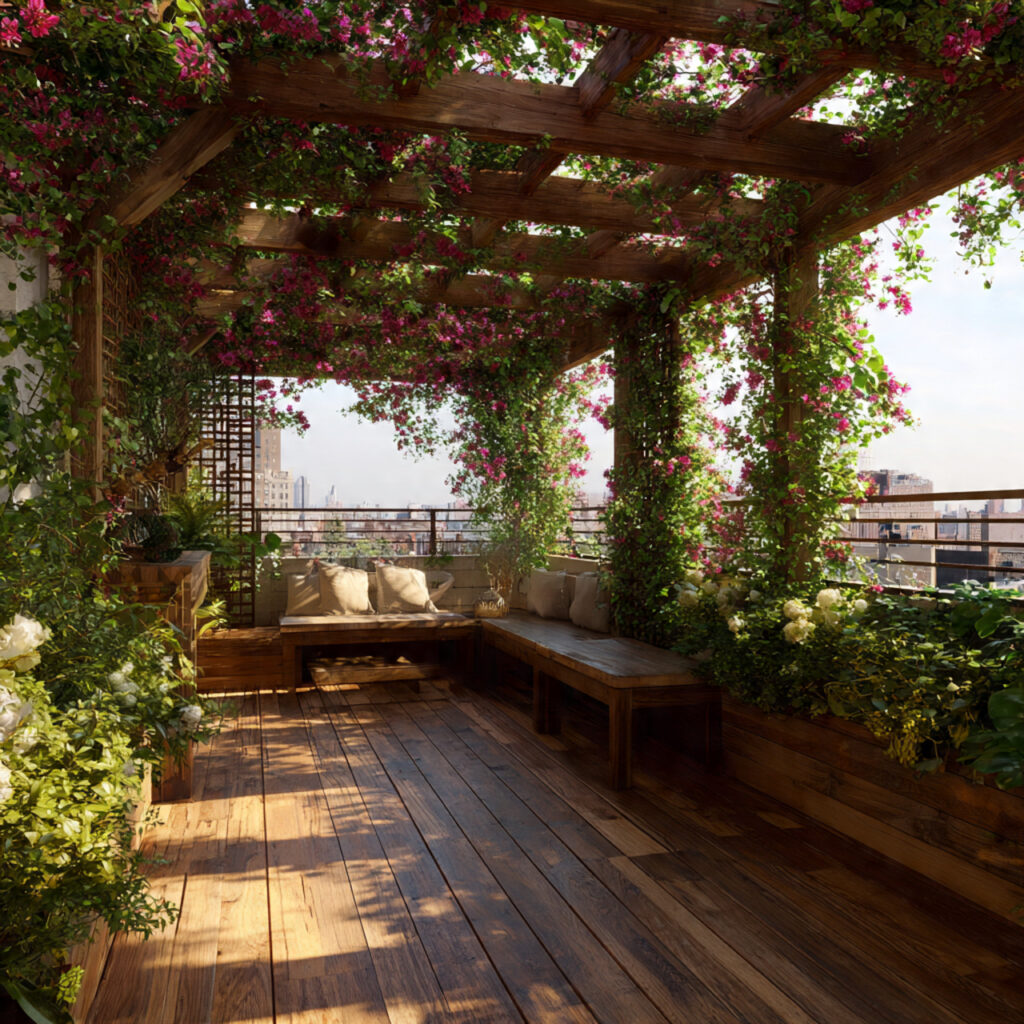
Pergolas add architectural interest while providing essential shade for both plants and people during scorching summer months.
Perfect climbing plants for pergolas:
- Jasmine (intoxicating fragrance, white flowers)
- Bougainvillea (vibrant colors, drought-tolerant once established)
- Grapevines (edible fruit, beautiful shade)
- Wisteria (stunning purple cascades, vigorous growth)
- Climbing roses (classic beauty, needs pruning)
Pergola material options:
- Cedar (naturally weather-resistant, ages beautifully)
- Powder-coated aluminum (low maintenance, modern look)
- Vinyl (never needs painting, affordable)
- Bamboo (eco-friendly, tropical aesthetic)
Design considerations:
- Orient for optimal afternoon shade
- Ensure proper weight distribution on terrace
- Leave space for plant roots to establish
- Include seating underneath for outdoor living
Tip: Install retractable shade cloth on top for additional sun protection during peak summer months.
Spacing guideline: Place support posts 6-8 feet apart for structural stability.
Succulent and Cactus Corners
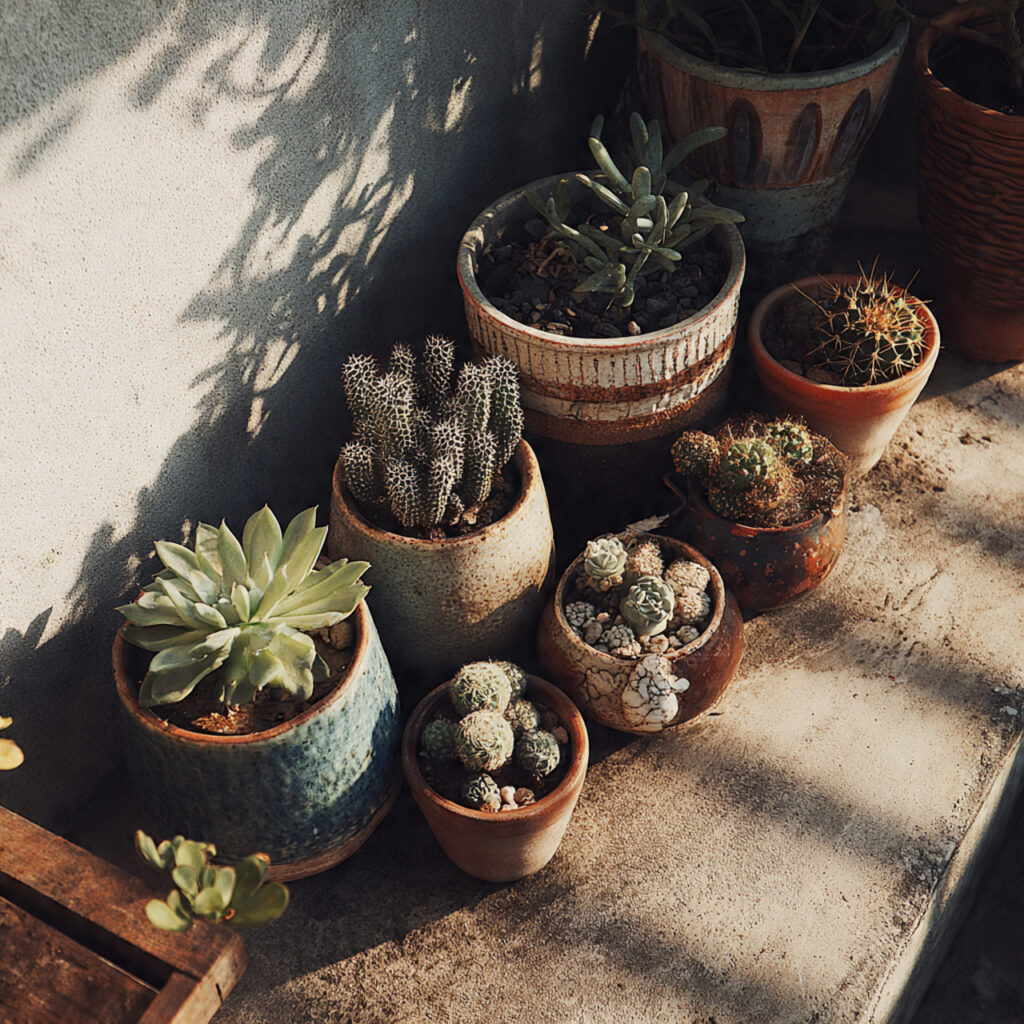
Succulents are the ultimate low-maintenance plants for busy gardeners or sunny terraces with limited water access.
Why succulents work perfectly:
- Survive with minimal watering (once every 1-2 weeks)
- Thrive in intense sunlight and heat
- Come in incredible variety of shapes, colors, and textures
- Propagate easily for free new plants
Popular succulent choices:
- Echeveria (rosette shapes, pastel colors)
- Sedum (ground-covering varieties)
- Aloe (medicinal properties, architectural form)
- Jade plant (tree-like growth, good luck symbolism)
- Hens and chicks (multiply rapidly, cold-hardy)
Creative arrangement ideas:
- Vintage crates or wooden boxes filled with mixed varieties
- Vertical succulent walls in picture frames
- Teacups or decorative containers for mini displays
- Rock garden with succulents tucked between stones
Critical care tip: The number one succulent killer is overwatering. When in doubt, wait another week before watering.
Soil recipe: Mix 50% potting soil with 50% perlite or coarse sand for perfect drainage.
Seasonal Flower Displays
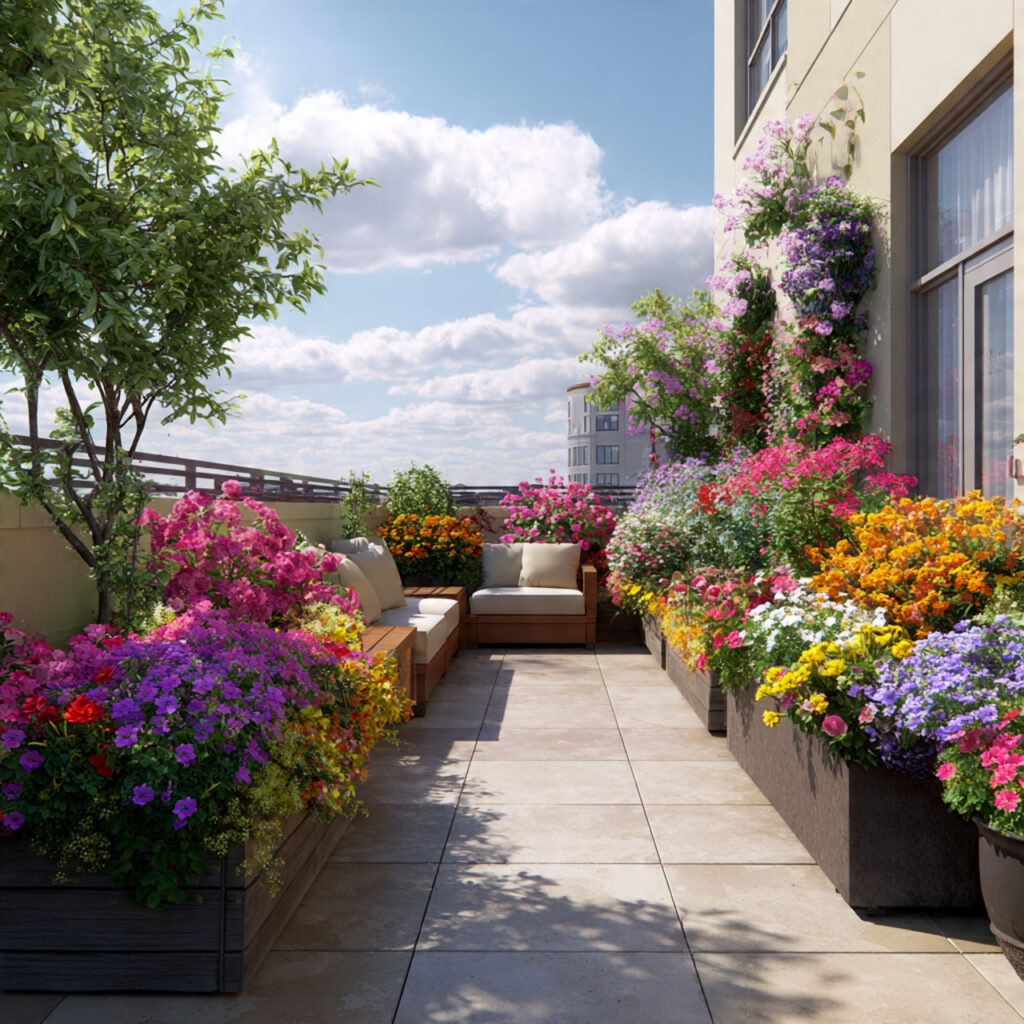
Keep your terrace looking fresh and vibrant throughout the year by rotating seasonal blooms that peak at different times.
Spring flowers:
- Pansies (cool-weather lovers, vibrant faces)
- Tulips in containers (classic spring beauty)
- Primrose (early bloomers, cheerful colors)
Summer stars:
- Petunias (heat-tolerant, continuous bloomers)
- Zinnias (cut flowers, attract butterflies)
- Marigolds (pest-repelling, low maintenance)
Fall favorites:
- Mums (classic autumn colors)
- Ornamental kale (unique texture, cold-tolerant)
- Pansies again (thrive in cool fall weather)
Winter options:
- Winter pansies (bloom even in light frost)
- Ornamental cabbage (structural interest)
- Cyclamen (delicate blooms, shade-tolerant)
Maintenance secrets:
- Deadhead spent blooms regularly for continuous flowering
- Fertilize every two weeks during active growth
- Replace seasonal displays before plants look tired
- Mix annuals with evergreen structure plants
Time-saving tip: Buy seedlings rather than starting from seed—you’ll have instant color.
Rooftop Lawn Patches
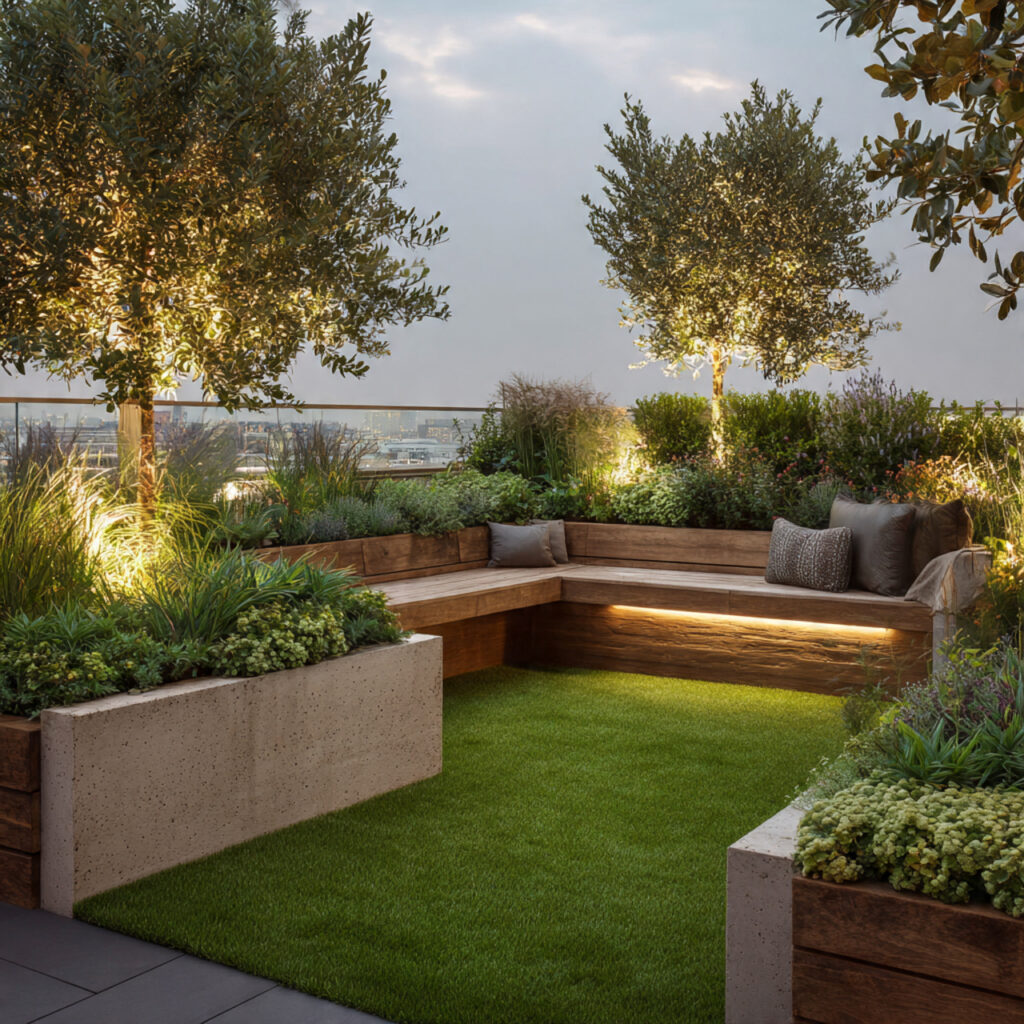
A small lawn area creates a soft, inviting space perfect for bare feet, picnic blankets, or children’s play areas.
Lawn options for terraces:
- Artificial turf (zero maintenance, always green)
- Buffalo grass (drought-tolerant natural option)
- Zoysia (handles foot traffic well)
- Clover (eco-friendly, nitrogen-fixing)
Artificial turf advantages:
- No watering, mowing, or fertilizing required
- Stays green year-round
- Soft surface for children
- Easy installation over any flat surface
Natural grass considerations:
- Requires regular watering (daily in hot weather)
- Needs occasional mowing
- Must have proper drainage layer beneath
- Heavier load on terrace structure
Installation basics:
- Lay drainage mat first
- Add 4-6 inches lightweight growing medium
- Install sod or seed
- Water deeply to establish roots
Creative use: Create a small circular lawn patch surrounded by flower borders for a park-like miniature landscape.
Eco-Friendly Terrace Garden
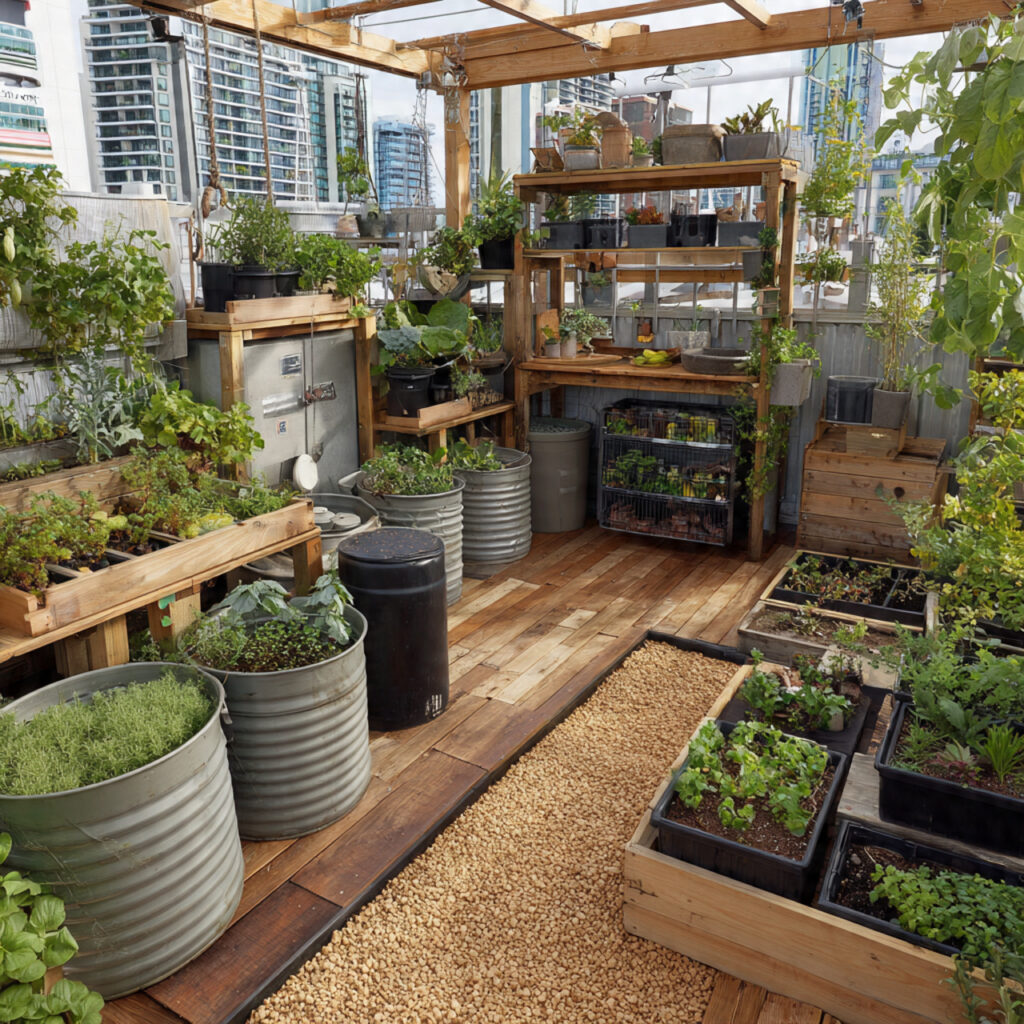
Design your terrace with environmental responsibility in mind, reducing waste while creating a thriving ecosystem.
Sustainable practices to implement:
- Rainwater harvesting system (collect roof runoff in barrels)
- Composting bin for kitchen scraps (creates free fertilizer)
- Recycled containers (old buckets, pallets, crates)
- Organic fertilizers (compost tea, worm castings)
- Native plants (support local pollinators, need less water)
DIY rainwater system:
- Install rain barrel under downspout
- Add mosquito-proof screen on top
- Use collected water for irrigation
- Can save thousands of gallons annually
Composting on terraces:
- Use compact tumbling composter or worm bin
- Add veggie scraps, coffee grounds, eggshells
- Avoid meat, dairy, or oils
- Ready compost in 2-3 months
Recycled container ideas:
- Wooden wine crates
- Old tin cans (drill drainage holes)
- Broken ceramic pots arranged artistically
- Repurposed wooden pallets as vertical gardens
Wildlife support: Include pollinator-friendly flowers like lavender, coneflowers, and salvia to support bees and butterflies.
Aromatic Plant Corners
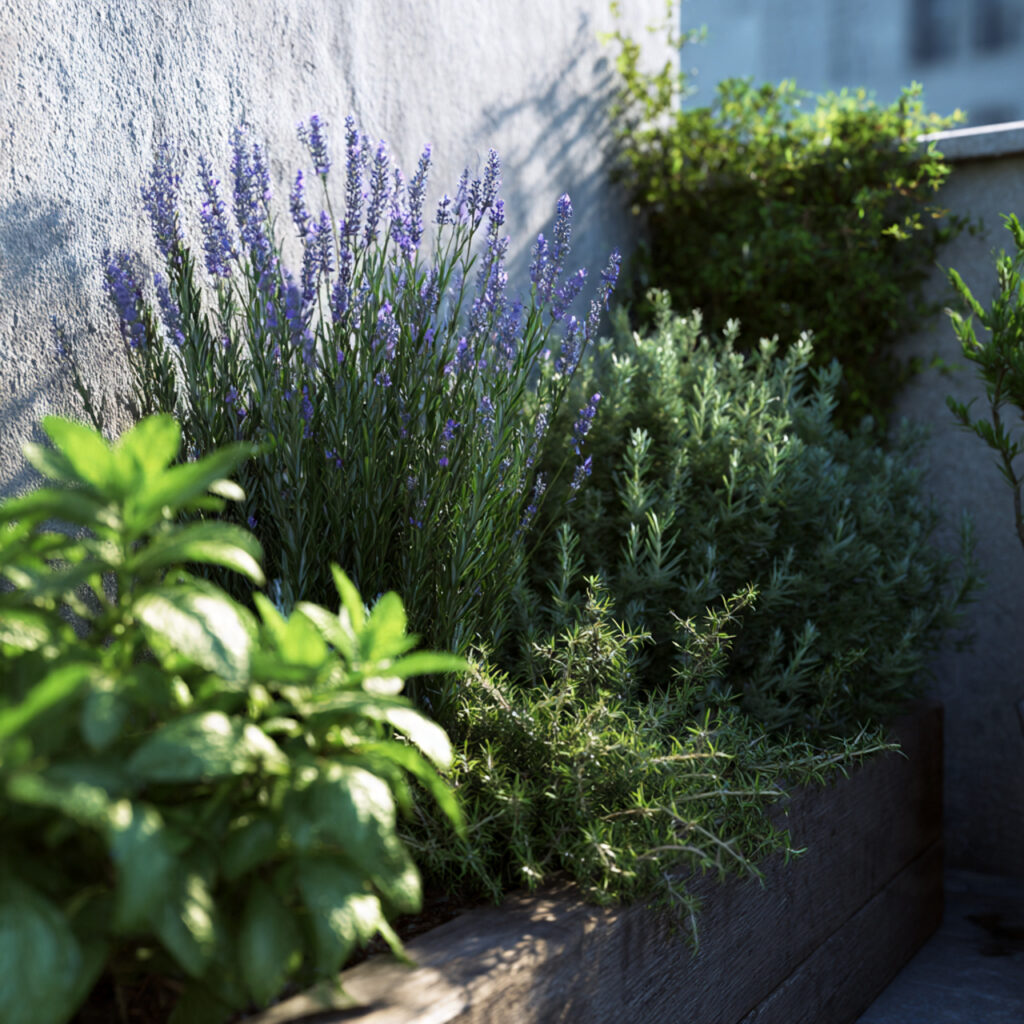
Strategic placement of fragrant plants transforms your terrace into a multi-sensory experience that soothes the mind and naturally repels pests.
Most rewarding aromatic plants:
- Lavender (calming scent, purple blooms, drought-tolerant)
- Rosemary (culinary herb, pine-like fragrance)
- Jasmine (intensely sweet, especially at night)
- Mint (refreshing, but keep contained)
- Lemon verbena (citrus scent when brushed)
- Gardenia (intoxicating floral perfume)
Strategic placement tips:
- Position along walkways where you’ll brush against them
- Near seating areas for maximum enjoyment
- Around entrance doors for welcoming fragrance
- Under bedroom windows for natural aromatherapy
Natural pest control bonus:
- Lavender repels moths and fleas
- Rosemary deters mosquitoes
- Mint keeps ants away
- Basil repels flies and mosquitoes
Pruning schedule: Trim aromatic herbs monthly to encourage bushier growth and release more essential oils.
Evening fragrance: Night-blooming jasmine and moonflower release their strongest scents after sunset—perfect near outdoor dining areas.
Rooftop Fruit Trees
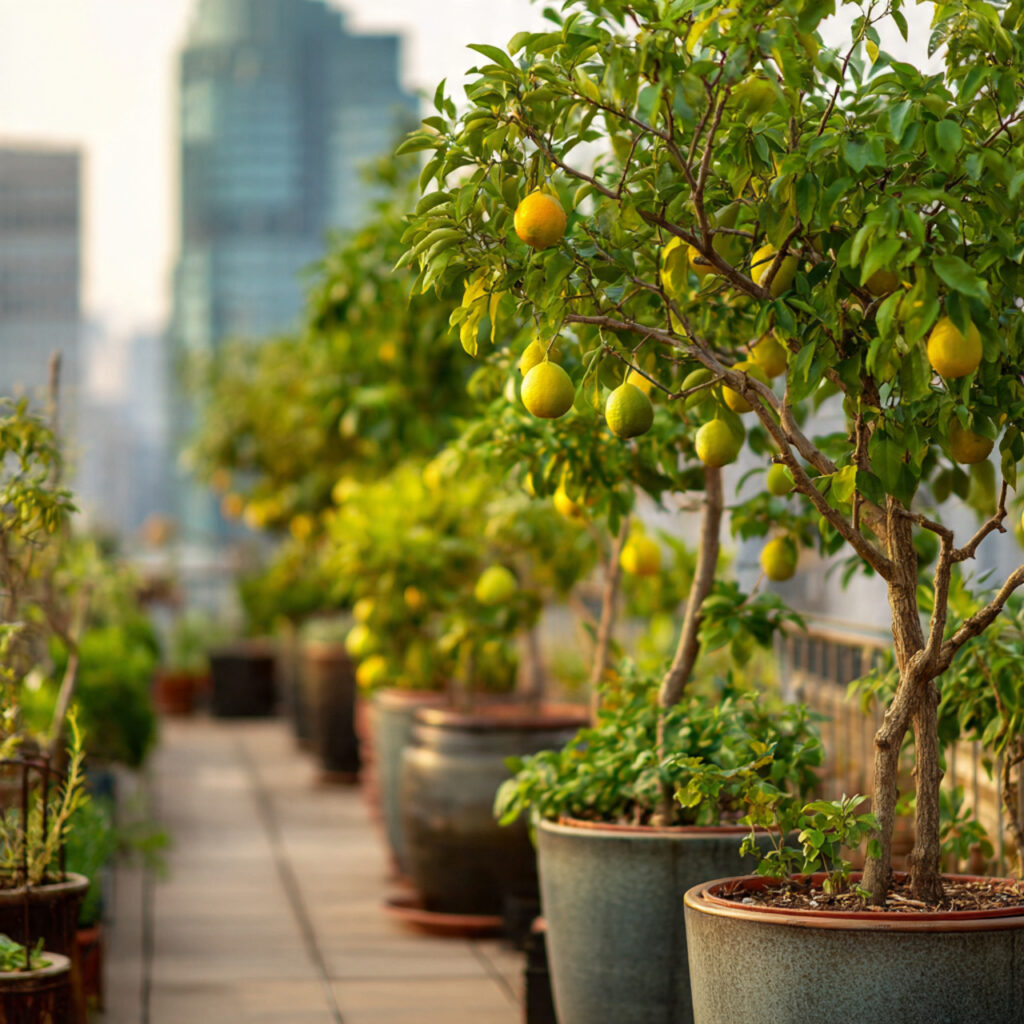
Compact dwarf fruit trees bring vertical interest, seasonal beauty, and delicious homegrown produce to terrace gardens.
Best dwarf fruit trees for containers:
- Meyer lemon (nearly year-round fruiting, fragrant blooms)
- Dwarf pomegranate (ornamental and edible)
- Fig trees (heat-loving, minimal care)
- Dwarf apple (needs pollination partner)
- Kumquat (cold-hardy citrus option)
Container requirements:
- Minimum 15-20 gallon pots for established trees
- Excellent drainage holes
- Quality fruit tree potting mix
- Wheeled plant caddy for easy movement
Care essentials:
- Full sun (6-8 hours minimum)
- Deep watering when top 2 inches of soil dry
- Monthly fertilizing during growing season
- Annual pruning to maintain size and shape
Pollination tip: Some fruit trees need a second variety nearby for pollination. Check before purchasing or choose self-fertile varieties.
Winter care: Many fruit trees need winter chill hours. Move potted citrus indoors during freezing weather.
Outdoor Seating and Lounge Areas
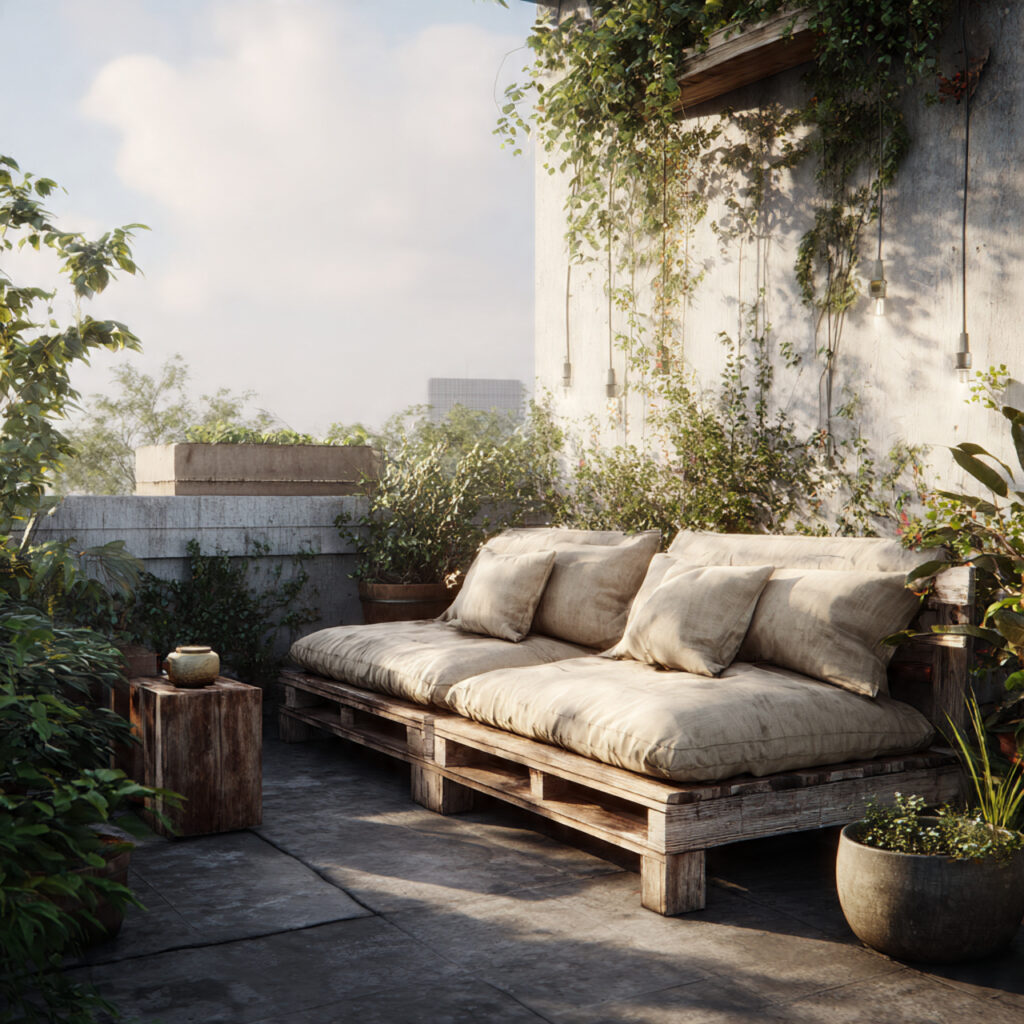
A terrace garden isn’t complete without comfortable spaces to actually enjoy it—seating transforms your garden from something you maintain to somewhere you truly live.
Seating style options:
- Built-in bench with storage underneath
- Hanging swing chair (playful, saves floor space)
- Cozy corner sectional with weatherproof cushions
- Bistro table set for intimate meals
- Floor cushions and poufs for flexible casual seating
Comfort additions:
- Outdoor rugs define seating zones
- Throw pillows add color and coziness
- Side tables for drinks and books
- Shade umbrellas for sunny spots
Weather-resistant materials:
- Teak or eucalyptus wood (naturally water-resistant)
- Powder-coated metal (rust-proof)
- All-weather wicker (synthetic rattan)
- Marine-grade fabrics for cushions
Layout principles:
- Create conversation groupings facing each other
- Leave 2-3 feet clearance for walking paths
- Position seating to face your best views or garden focal points
- Add small side tables within arm’s reach
Storage solution: Choose furniture with hidden storage for cushions, gardening tools, or outdoor dinnerware.
Rooftop Greenhouses
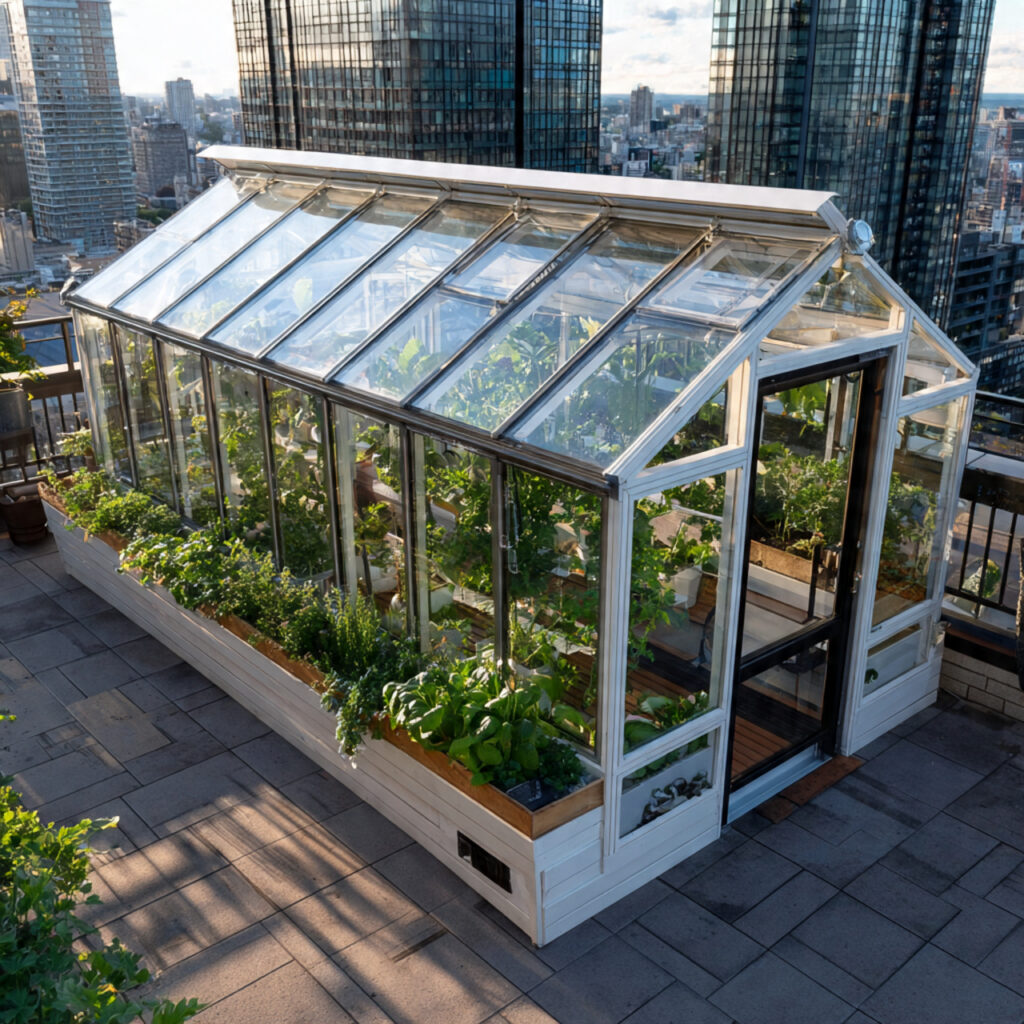
A compact greenhouse protects delicate plants from harsh weather, extends your growing season months on either end, and allows you to cultivate exotic varieties.
Greenhouse benefits:
- Start seedlings weeks earlier in spring
- Protect tender plants from unexpected frost
- Grow heat-loving tropicals year-round
- Create controlled environment for orchids, citrus, exotic vegetables
Size options:
- Mini cold frames (2×3 feet, perfect for seedlings)
- Lean-to greenhouses (attach to wall, save space)
- Freestanding polycarbonate structures (4×6 feet standard)
- Pop-up temporary greenhouses (seasonal use)
Essential features:
- Ventilation (roof vents or fans prevent overheating)
- Shelving (maximize vertical growing space)
- Automatic watering system (maintain consistent moisture)
- Thermometer (monitor temperature fluctuations)
Temperature management:
- Paint one gallon water jugs black, place inside (thermal mass regulates temperature)
- Install shade cloth for summer months
- Use bubble wrap insulation on walls for winter
- Position facing south for maximum sunlight
Beginner’s choice: Start with a small cold frame before investing in a full greenhouse structure.
Fairy Garden Elements
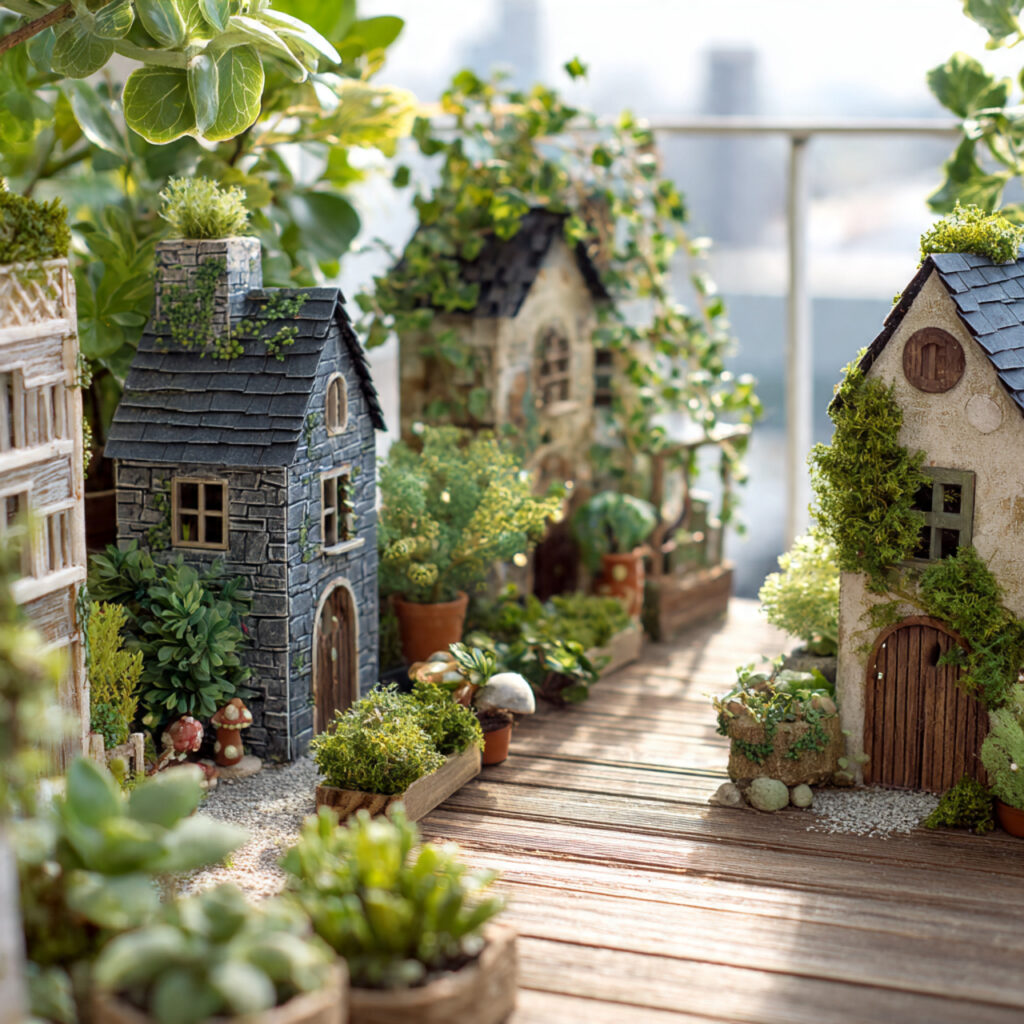
Miniature fairy gardens add playful charm and creative storytelling to your terrace, delighting children and adults alike.
Fairy garden components:
- Tiny houses or cottages (ceramic or resin)
- Miniature furniture (benches, tables, swings)
- Small pathways (pebbles, bark chips)
- Figurines (fairies, gnomes, animals)
- Miniature accessories (lanterns, signs, bridges)
Perfect plants for fairy gardens:
- Irish moss (looks like tiny lawn)
- Baby tears (delicate ground cover)
- Miniature roses (perfectly scaled blooms)
- Small succulents (tree-like proportions)
- Thyme (fragrant, tiny-leafed)
Container ideas:
- Wide shallow bowls
- Broken terra cotta pots arranged artistically
- Wooden crates or drawers
- Old wheelbarrows
Design storytelling:
- Create themed scenes (beach cottage, forest hideaway)
- Add pathways leading to tiny doors
- Include water features (small mirrors as ponds)
- Layer heights with rocks and soil mounds
Kid-friendly tip: Let children help design and maintain their fairy garden—it teaches responsibility and sparks imagination.
Rooftop Herb Spiral Garden
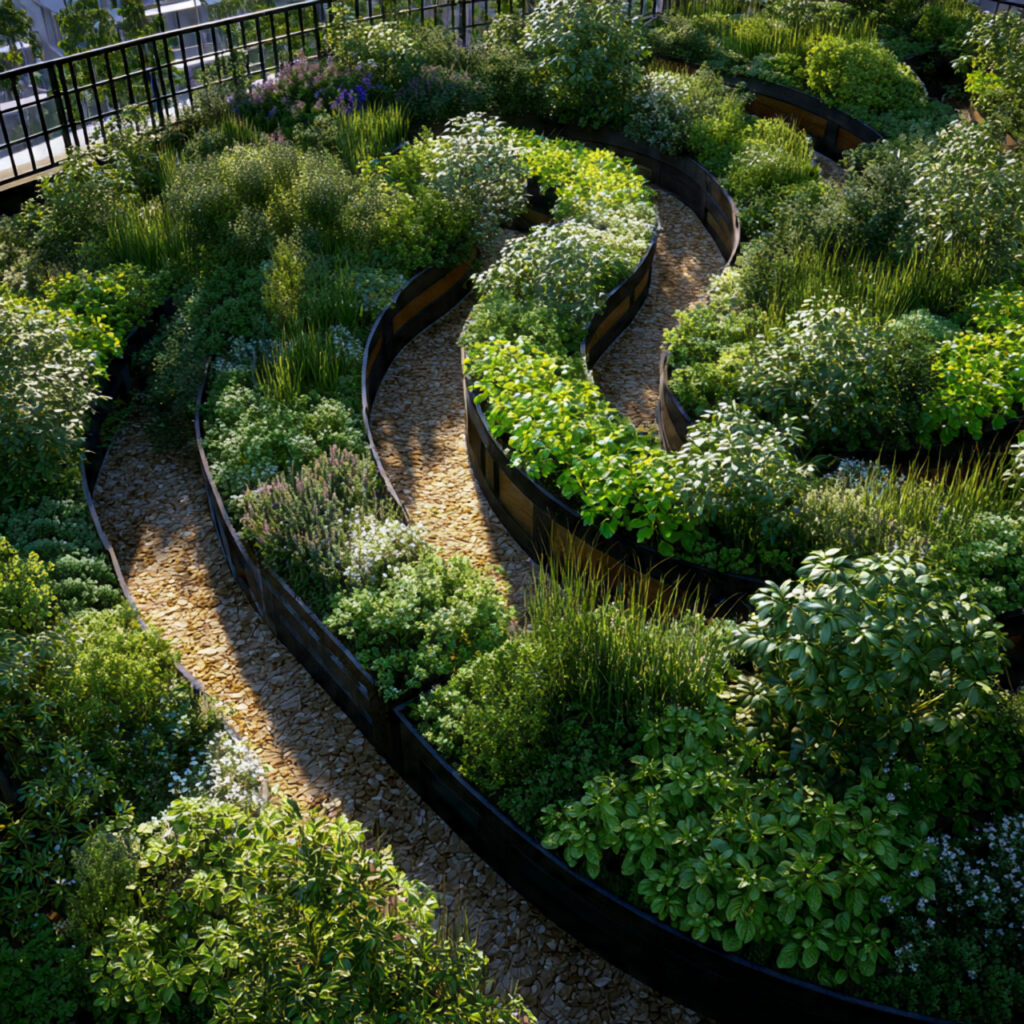
Herb spirals are stunning sculptural elements that maximize growing space while creating different microclimates for various herbs within a compact footprint.
How herb spirals work:
- Spiral shape creates south-facing sunny side and north-facing shade
- Height variation provides different moisture levels
- Top is driest (Mediterranean herbs), bottom retains moisture (water-loving herbs)
- Typically 4-5 feet in diameter, 2-3 feet tall
Ideal plant placement:
- Top tier (dry, sunny): Rosemary, thyme, oregano, sage
- Middle tier (moderate): Parsley, cilantro, chives
- Bottom tier (moist, partial shade): Mint, lemon balm, sorrel
Building materials:
- Stacked stones (natural, attractive)
- Bricks (uniform, stable)
- Concrete blocks (economical, durable)
- Recycled materials (eco-friendly option)
Construction basics:
- Create stable base layer
- Build spiral upward, leaving planting pockets
- Fill with quality potting soil
- Mulch between plants to retain moisture
Space efficiency: A 5-foot diameter spiral can hold 15-20 different herb varieties in the space of a single large container.
Terrace Garden Lighting
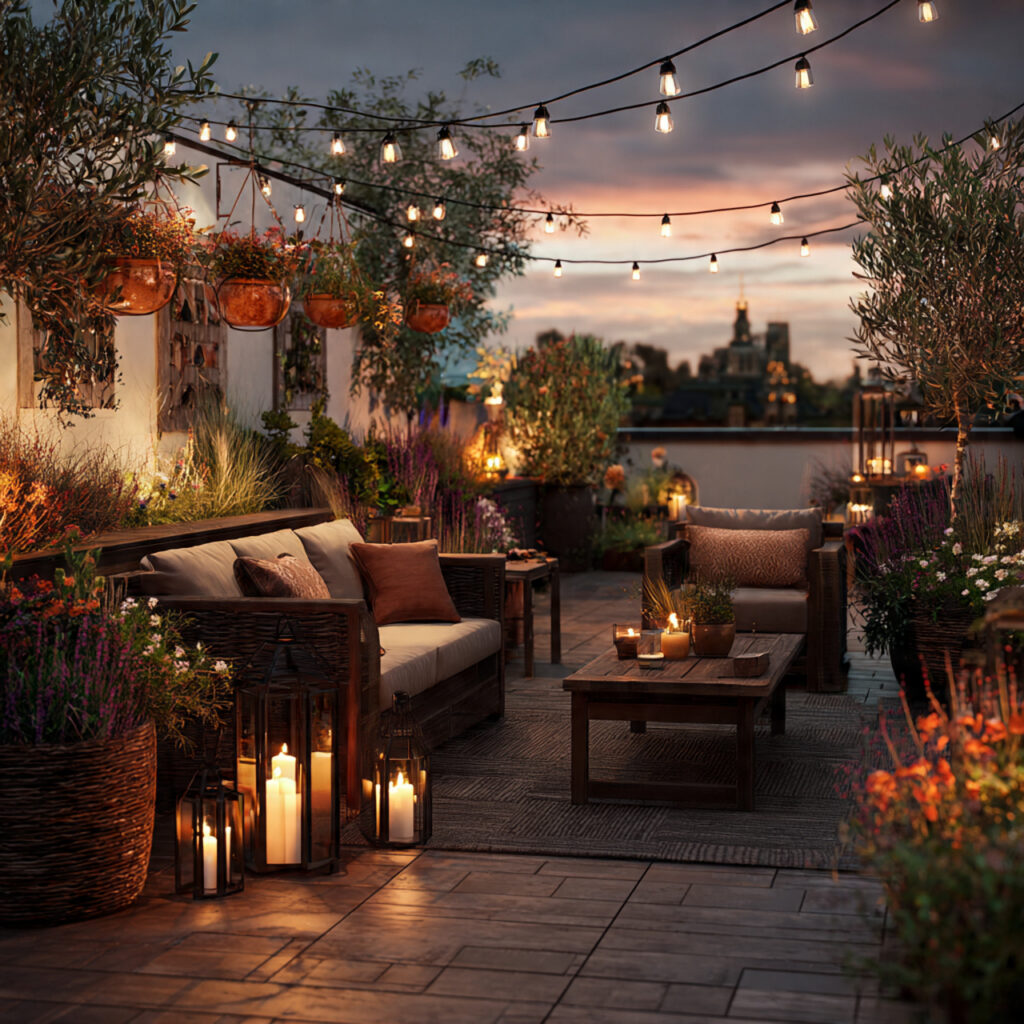
Thoughtful lighting transforms your terrace into an enchanted evening retreat while improving safety and functionality after dark.
Lighting options for terraces:
- String lights (fairy lights create magical ambiance)
- Solar pathway lights (eco-friendly, automatic)
- LED spotlights (highlight focal points)
- Lanterns (portable, decorative)
- Rope lights (outline edges, stairs)
Layered lighting approach:
- Ambient lighting (overall illumination)
- Task lighting (cooking or reading areas)
- Accent lighting (highlight plants or features)
- Safety lighting (stairs, pathways)
Creative placement ideas:
- Wrap string lights around pergola beams
- Place uplights beneath trees or large plants for dramatic shadows
- Line pathways with small solar stakes
- Hang lanterns from shepherd’s hooks among plants
Energy-efficient choices:
- Solar lights (free operation, eco-friendly)
- LED bulbs (90% more efficient than incandescent)
- Timers or motion sensors (use only when needed)
- Low-voltage systems (safer, lower energy use)
Warm vs. cool light: Choose warm white (2700-3000K) for cozy ambiance; cool white (4000-5000K) for functional task areas.
Safety first: Ensure all outdoor lighting is rated for exterior use and properly protected from weather.
Rooftop Meditation Zones
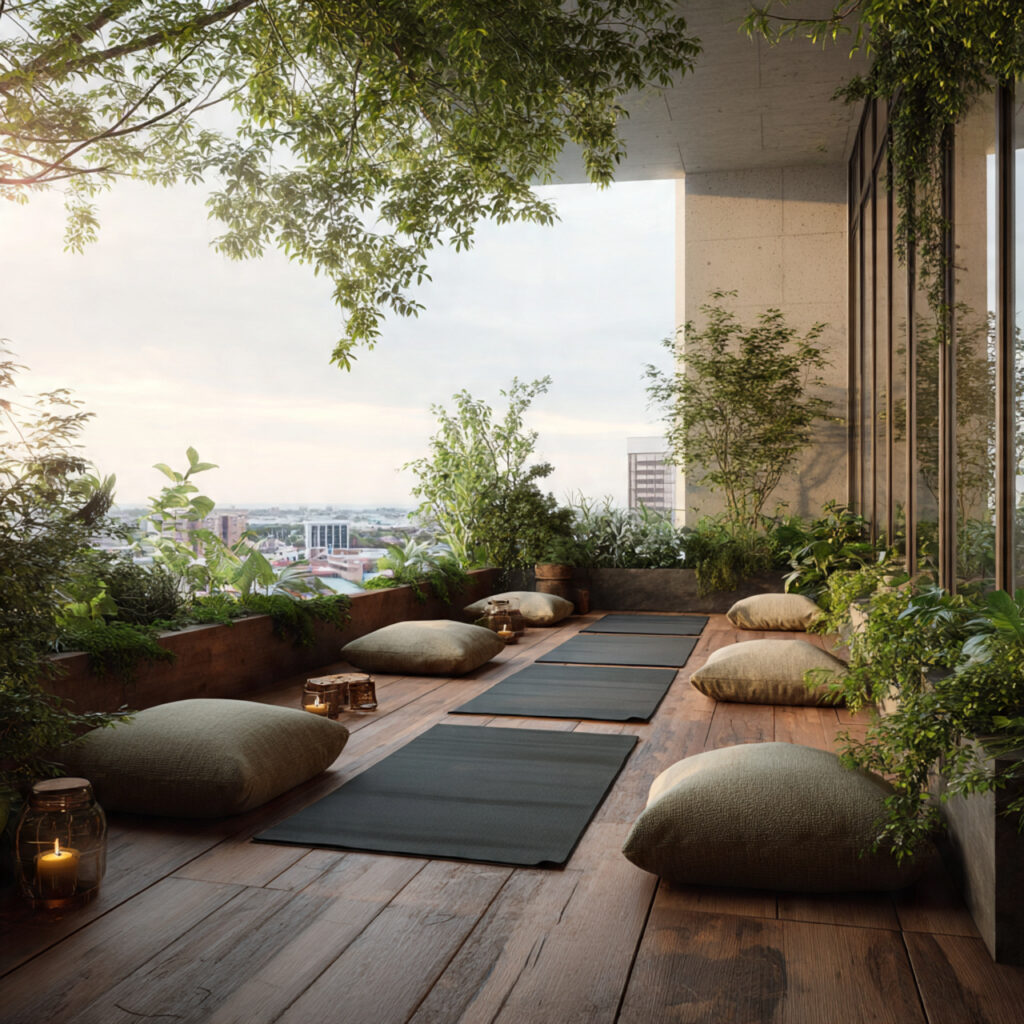
Dedicating a quiet corner for meditation, yoga, or mindful reflection creates invaluable mental health benefits amidst urban chaos.
Creating your meditation space:
- Choose quietest corner of terrace (away from street noise)
- Add comfortable cushions or yoga mat
- Include natural elements (rocks, driftwood, plants)
- Keep design minimal and uncluttered
Plants for meditation areas:
- Bamboo (gentle rustling sounds)
- Lavender (calming fragrance)
- Peace lily (air-purifying, symbolically peaceful)
- Ferns (soft, non-distracting greenery)
Sensory elements to include:
- Small water fountain (soothing background sound)
- Wind chimes (gentle melodic tones)
- Incense holder or essential oil diffuser
- Natural textures (smooth stones, soft textiles)
Privacy screening:
- Bamboo panels or reed fencing
- Tall ornamental grasses
- Climbing plants on trellis
- Fabric curtains or outdoor screens
Daily practice: Start with just 5-10 minutes each morning in your meditation space to establish the habit.
Minimal setup: All you really need is a cushion and some greenery—the space itself is what matters most.
Terrace Garden Pergola Swing

Combining a swing with your pergola creates an irresistible focal point that appeals to the child in everyone while providing the perfect reading or daydreaming spot.
Swing options:
- Traditional wooden bench swing (seats 2-3 people)
- Hanging egg chair (modern, cocooning comfort)
- Simple plank swing (minimalist, space-saving)
- Daybed swing (ultimate luxury relaxation)
Safety installation essentials:
- Secure to solid beams rated for dynamic loads
- Use heavy-duty hardware (chains, hooks, eye bolts)
- Test with extra weight before regular use
- Check hardware monthly for wear or rust
- Ensure 3-foot clearance on all sides
Enhancing the space:
- Plant climbing vines on pergola for natural shade
- Add outdoor cushions for comfort
- Position for best views or garden vistas
- Include small side table for books or drinks
Best climbing plants:
- Wisteria (dramatic blooms, strong structure needed)
- Clematis (various colors, moderate growth)
- Honeysuckle (fragrant, attracts hummingbirds)
Weatherproofing: Choose marine-grade rope or galvanized chains that won’t deteriorate in weather.
Fun fact: Gentle swinging motion has been shown to reduce stress and anxiety—science backs up why swings feel so good!
Indoor-Outdoor Hybrid Terrace
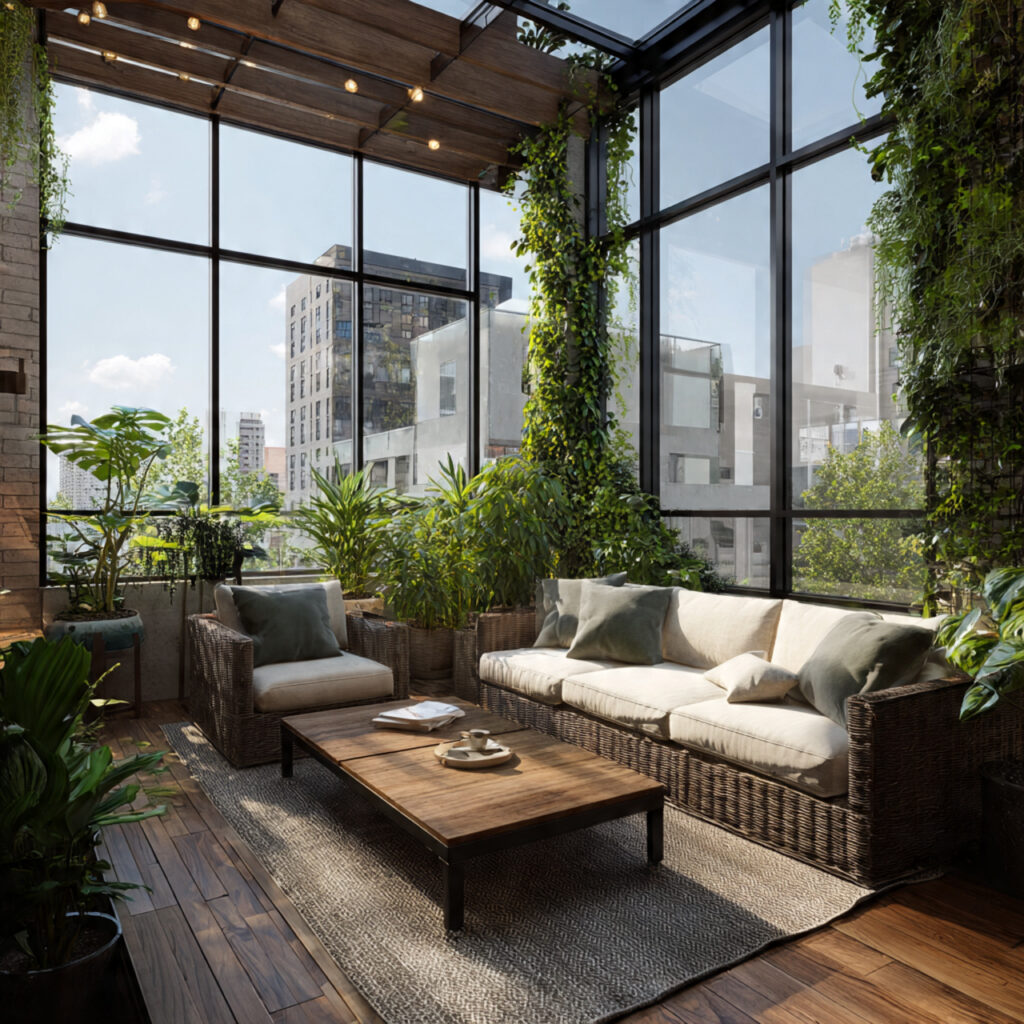
Create a seamless transition between interior and exterior spaces, allowing year-round enjoyment regardless of weather conditions.
Key design elements:
- Retractable glass panels or walls
- Weatherproof flooring (extends from inside out)
- Overhead retractable awning or shade
- All-weather furniture that looks indoor-quality
- Heating elements (fire pit, patio heater)
Transitional features:
- Same flooring material inside and out
- Coordinated color palette
- Large sliding or folding doors
- Indoor plants that mirror outdoor garden
- Continuous lighting design
Climate control options:
- Ceiling fans for air circulation
- Outdoor curtains for wind protection
- Infrared heaters for cool evenings
- Misting systems for hot climates
Furniture choices:
- Weather-resistant but stylish pieces
- Indoor rugs designed for outdoor use
- Removable cushion covers for easy cleaning
- Coffee tables with storage for weather protection
Year-round usability:
- Spring/Summer: Fully open for maximum airflow
- Fall: Partial enclosure with heating
- Winter: Enclosed greenhouse effect for protected gardening
Investment value: Indoor-outdoor spaces significantly increase home value and livable square footage.
Frequently Asked Questions (FAQs)
Q1: How much sunlight does a terrace garden need?
Most plants require at least 4-6 hours of direct sunlight daily. However, some shade-tolerant plants like ferns or certain herbs can thrive with less sunlight.
Q2: What is the best soil for terrace gardens?
Use lightweight, well-draining soil mixes to prevent waterlogging and reduce rooftop load. Organic compost enhances fertility and plant growth.
Q3: Can terrace gardens support large trees?
Large trees are generally not recommended due to rooftop weight limitations. Opt for dwarf or container-friendly fruit trees instead.
Q4: How often should terrace plants be watered?
Watering depends on plant type, container size, and climate. Generally, once or twice daily in hot climates is ideal for shallow containers.
Q5: How to prevent rooftop garden pests?
Use natural pest repellents, neem oil, companion planting, and regular monitoring to manage pests organically and safely.
Transform Your Terrace Today
Your terrace garden journey begins with a single plant, one container, or just a vision of what’s possible. Whether you’re drawn to the productivity of growing your own vegetables, the tranquility of a meditation corner, or simply want to add life to a barren space, these 25 ideas provide the inspiration and practical guidance you need.
Remember, the most successful terrace gardens evolve over time. Start with what excites you most, learn as you grow, and don’t be afraid to experiment. Some plants won’t thrive—that’s part of the process. But the joy of harvesting your first tomato, the satisfaction of watching butterflies visit your flowers, or the peace of sipping morning coffee surrounded by greenery makes every effort worthwhile.
Your rooftop oasis is waiting. All it needs is you to take that first step. Happy gardening!