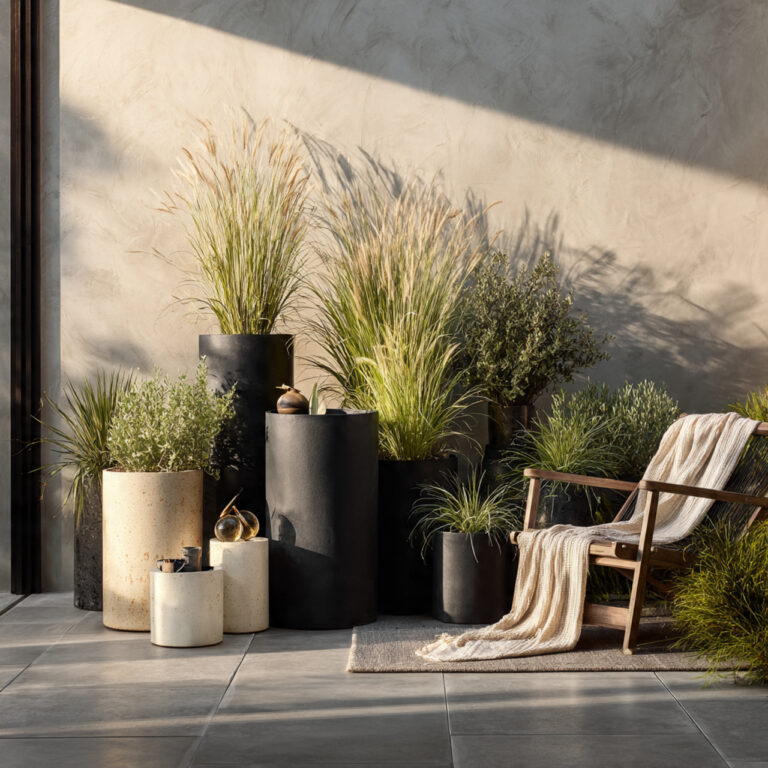
23 Shade Plants That Transform Dark Corners Into Stunning Green Spaces
You don’t need blazing sunshine to create a stunning garden. If you’ve got shady spots in your yard, you’re actually sitting on untapped potential. Those dim corners under trees, north-facing walls, or shadowy side yards can become the most captivating parts of your outdoor space with the right plants.
Shade-loving plants are tougher than you might think. They bring incredible texture, surprising pops of color, and lush greenery to areas where sun-worshipping plants would simply give up. Better yet, they’re often easier to care for and need less water than their sun-loving cousins.
In this guide, we’re exploring some creative ways to use shade plants that’ll completely change how you see those darker areas of your garden. Whether you’re working with a small urban patio or a sprawling backyard forest, there’s an idea here that’ll work for you.
Why Shade Plants Deserve a Spot in Your Garden
Think of shade plants as the unsung heroes of landscape design. They’re doing important work beyond just looking pretty.
Here’s what makes them so valuable:
- They prevent soil erosion under trees where grass struggles to grow
- They create natural cooling zones that make your yard more comfortable
- They support local wildlife and beneficial insects
- They require significantly less maintenance than traditional lawn or sun gardens
- They help conserve water in your landscape
When you choose the right shade plants, those previously neglected areas become conversation starters instead of eyesores.
Textured Shade Plants for Woodland Appeal
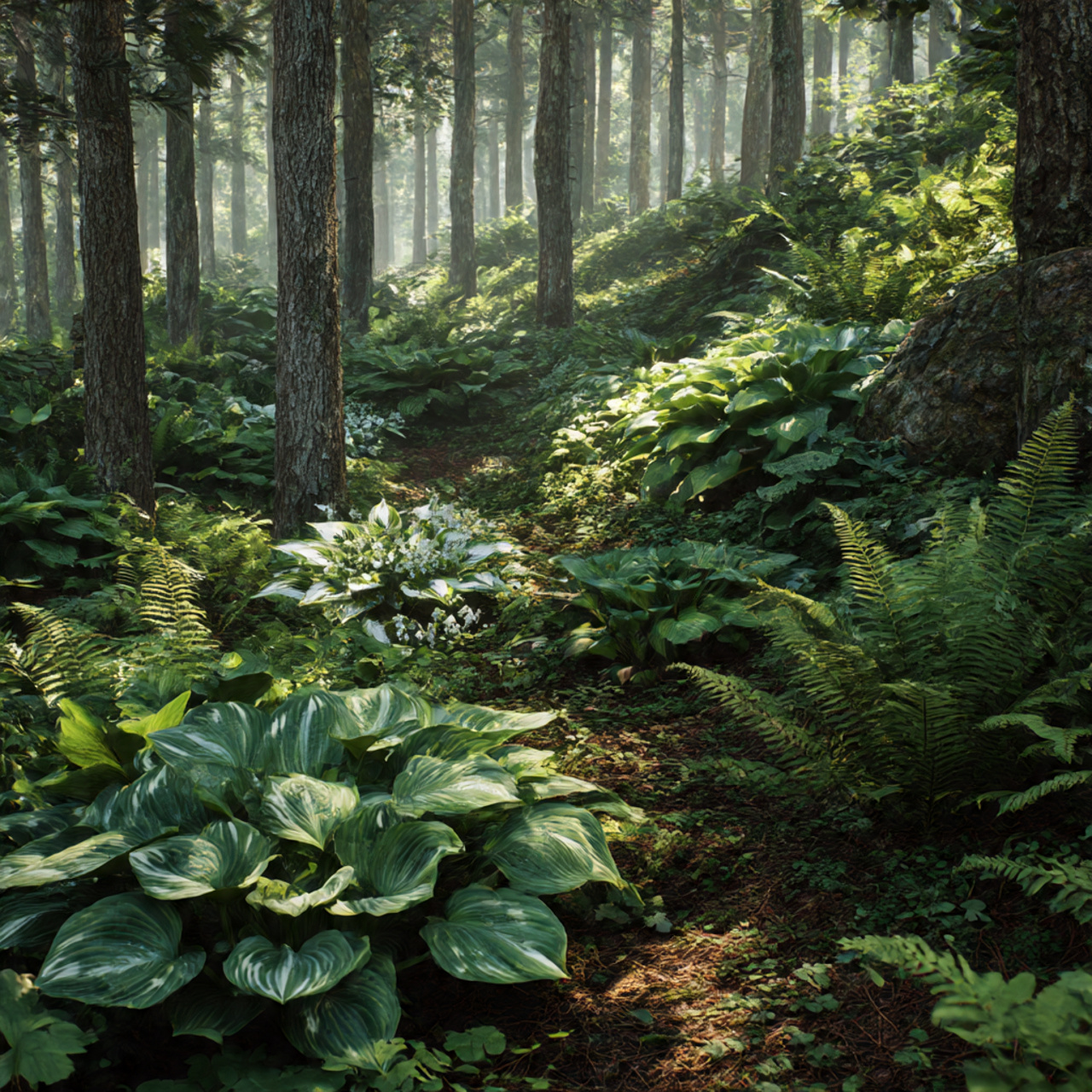
Want to create that magical forest-floor feeling? Plants with bold, distinctive textures are your secret weapon.
Hostas, ferns, and astilbes are the stars here. Their varied leaf shapes create natural layers that draw the eye and add depth. Imagine combining the broad, ribbed leaves of hostas with the delicate, feathery fronds of maidenhair ferns—it’s like nature’s own design masterclass.
Tips for textured shade gardens:
- Mix large-leafed plants with fine, delicate foliage for maximum contrast
- Place textured plants near pathways where people can appreciate the details up close
- Remember that in shade, texture does the heavy lifting that color does in sunny spots
- Group plants in odd numbers (3, 5, 7) for the most natural woodland look
Deep-Green Shade Plants for Calm Outdoor Spaces
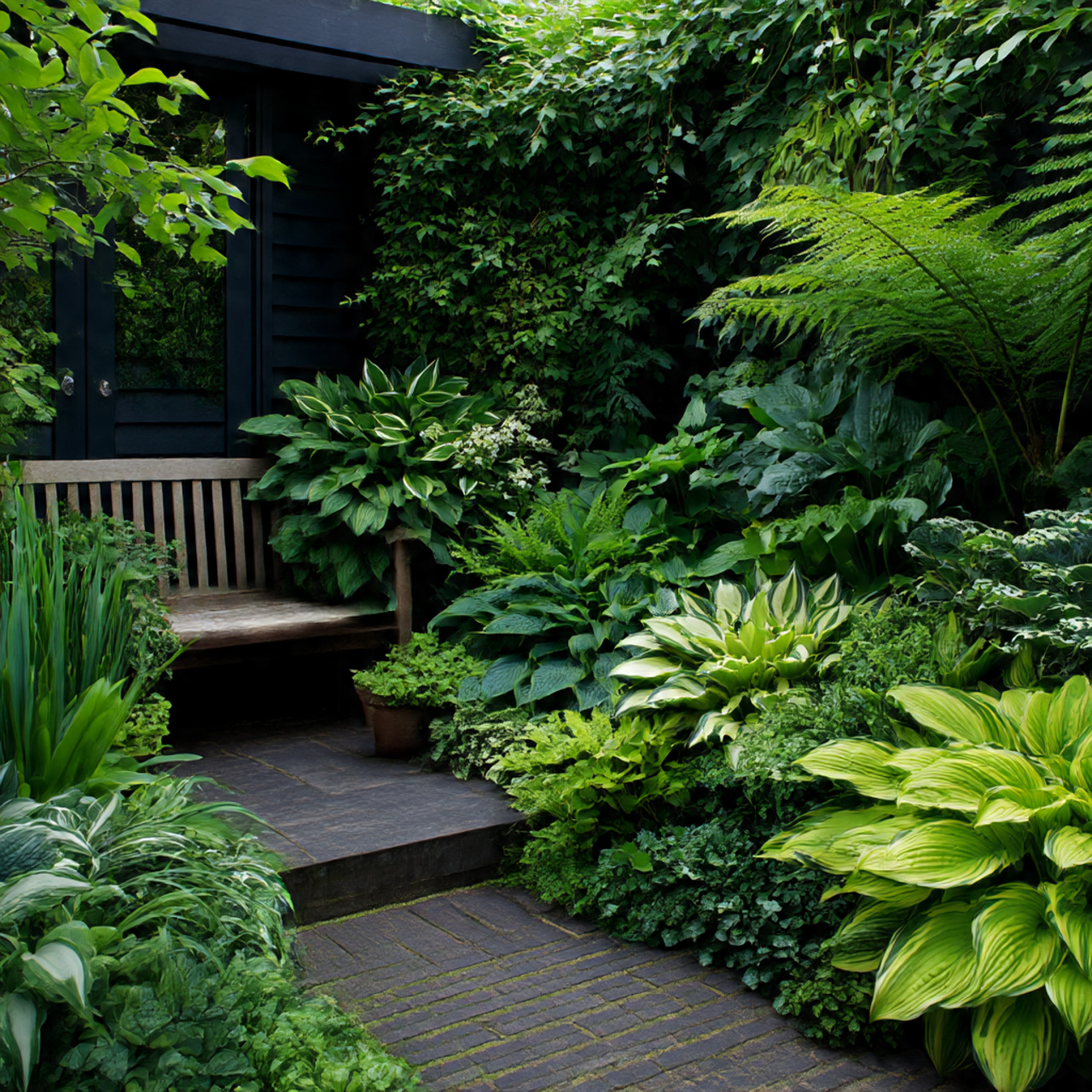
Sometimes the most powerful design choice is simplicity. Deep-green shade plants create an instant sense of calm and sophistication.
Christmas ferns and Japanese forest grass are perfect examples. They spread gently, never aggressively, and their rich emerald tones make shady areas feel like peaceful retreats rather than problem zones.
Ways to use deep-green plants effectively:
- Pair them with natural stone or weathered wood for a zen aesthetic
- Use them as a quiet backdrop that lets colorful flowers take center stage
- Plant them in masses for a cohesive, flowing look
- Combine different shades of green (forest, lime, olive) to add subtle depth without introducing other colors
Flowering Shade Plants for Natural Color
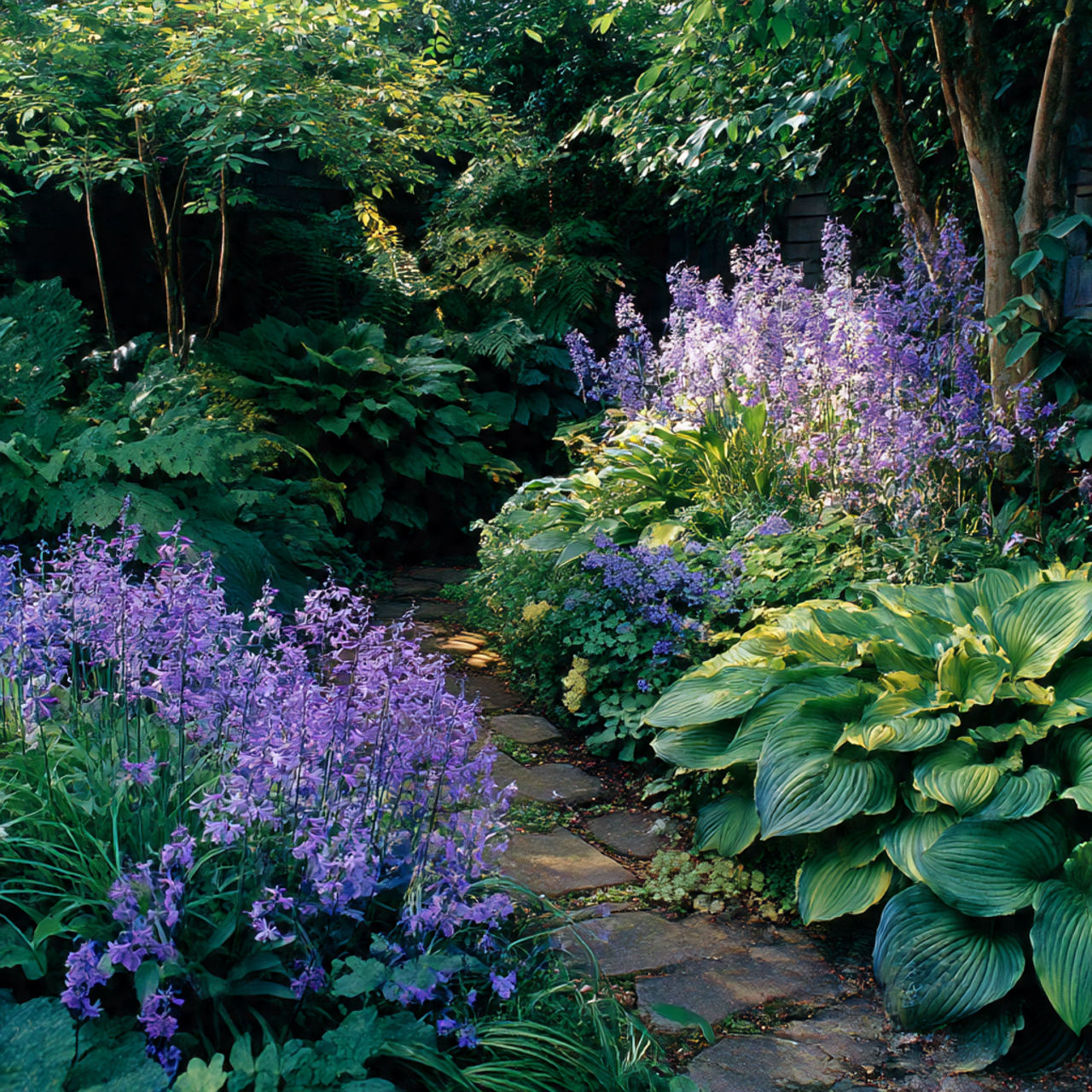
Here’s a secret: shade doesn’t mean colorless. Plenty of gorgeous flowering plants thrive with limited sunlight.
Astilbes produce fluffy plumes in pink, white, and red. Hellebores bloom when almost nothing else does—even pushing through late winter snow. Lungwort offers spotted foliage and delicate pink-to-blue flowers that change color as they age.
Getting the most from shade-blooming plants:
- Plant them where you’ll see them from windows during their bloom time
- Use them to create seasonal “waves” of color from early spring through fall
- Combine them with solid-green foliage plants to make the flowers pop even more
- Remember that shade flowers often have more subtle, sophisticated colors than sun-lovers
Low-Maintenance Shade Plants for Busy Gardeners
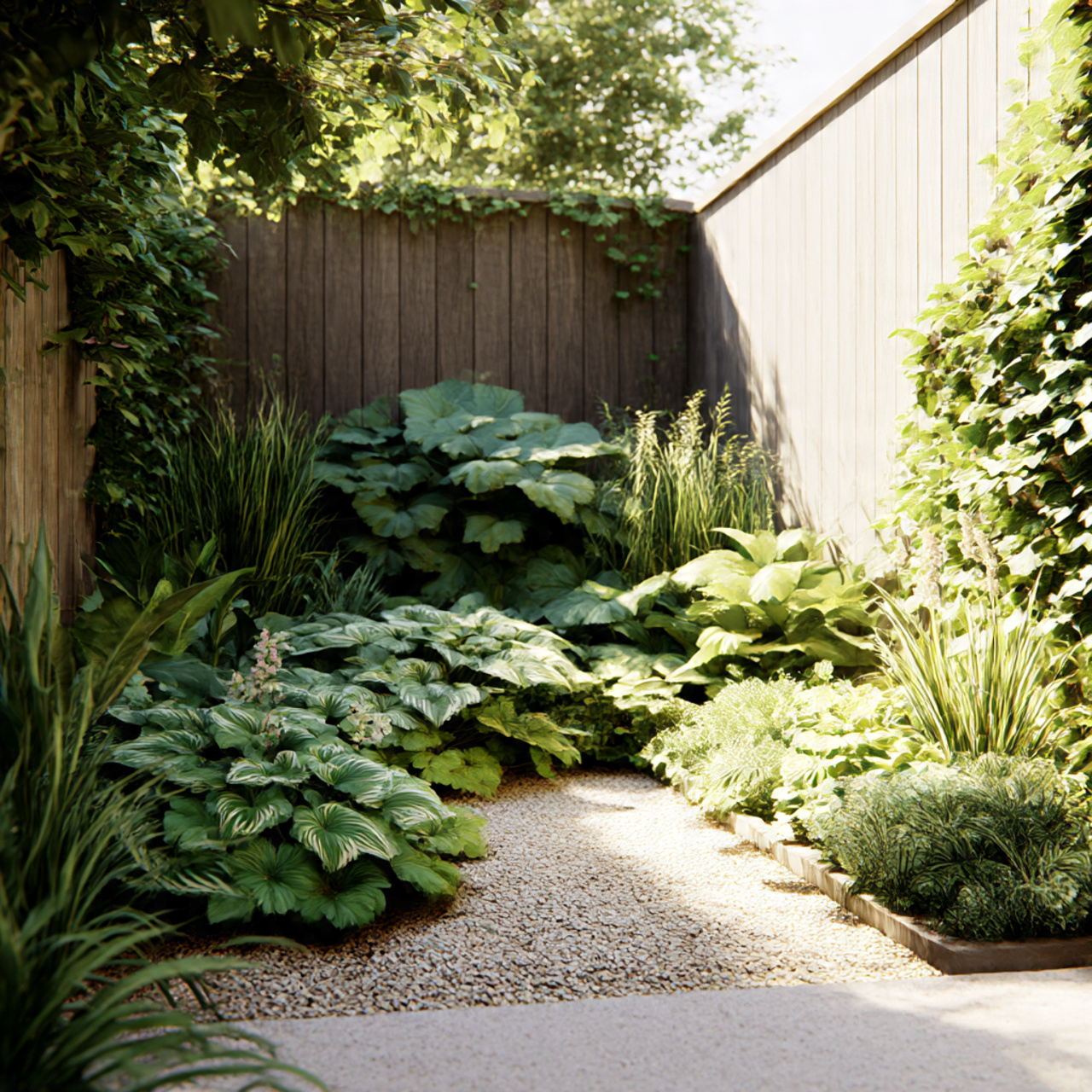
If you want a beautiful garden without becoming its full-time employee, low-maintenance shade plants are your best friends.
Bergenia, lamium, and ajuga are practically indestructible. They adapt to various soil types, don’t need constant watering, and actually look better when you mostly leave them alone.
Benefits you’ll appreciate:
- Minimal pruning required—they naturally maintain attractive shapes
- Built-in weed suppression once they’re established
- Tolerance for neglect during busy weeks
- No need for complicated fertilizing schedules
- They come back reliably year after year
Compact Shade Plants for Small Gardens
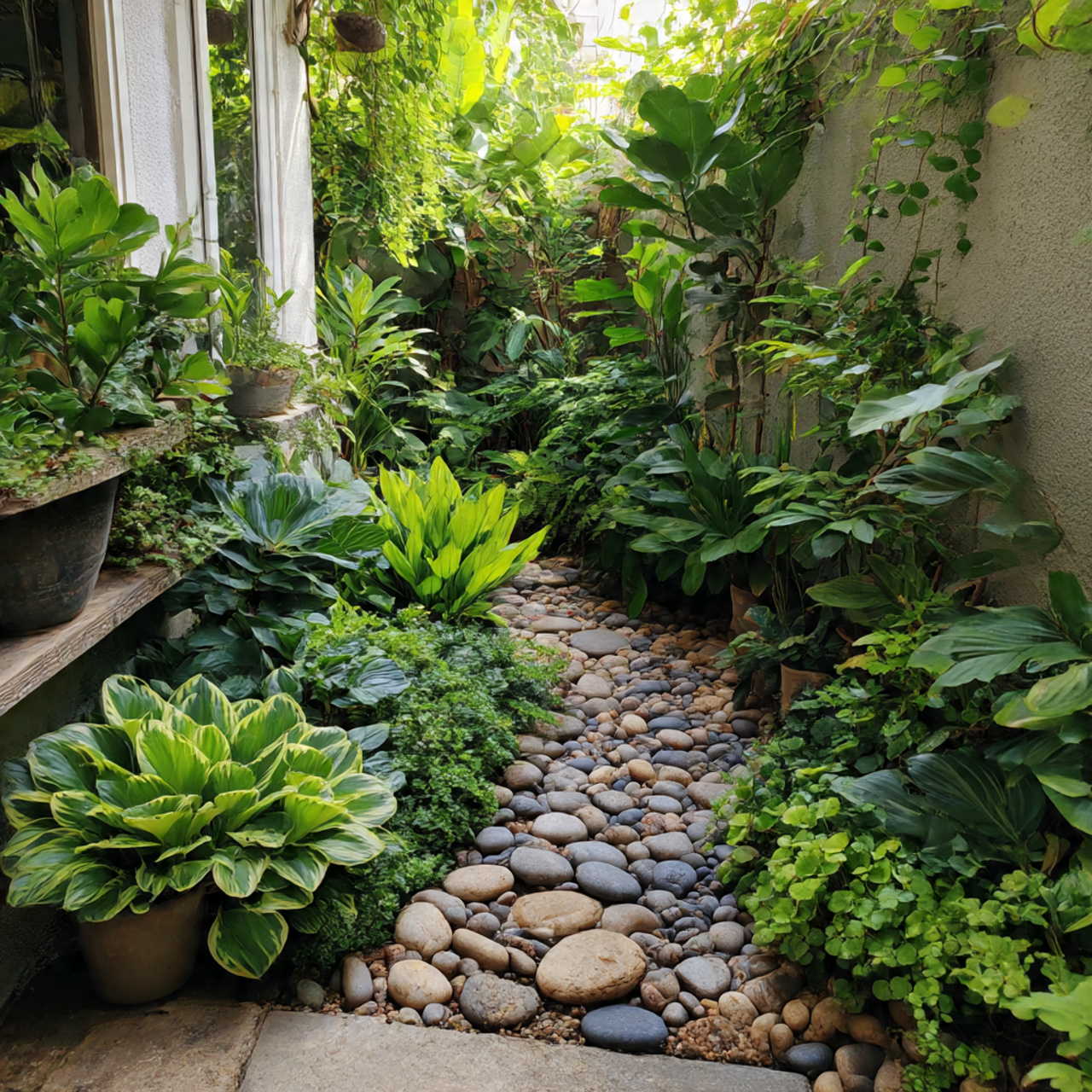
Working with limited space? Compact shade plants pack maximum impact into minimal square footage.
Small hostas, dwarf ferns, and miniature heucheras give you all the beauty of their larger relatives without the sprawl. They’re perfect for container gardens, narrow side yards, or edging tight pathways.
Smart uses for compact varieties:
- Layer different heights even in small spaces
- Mix multiple compact plants in single large containers for instant gardens
- Use them in formal arrangements where larger plants would look messy
- Fill gaps between stepping stones or pavers
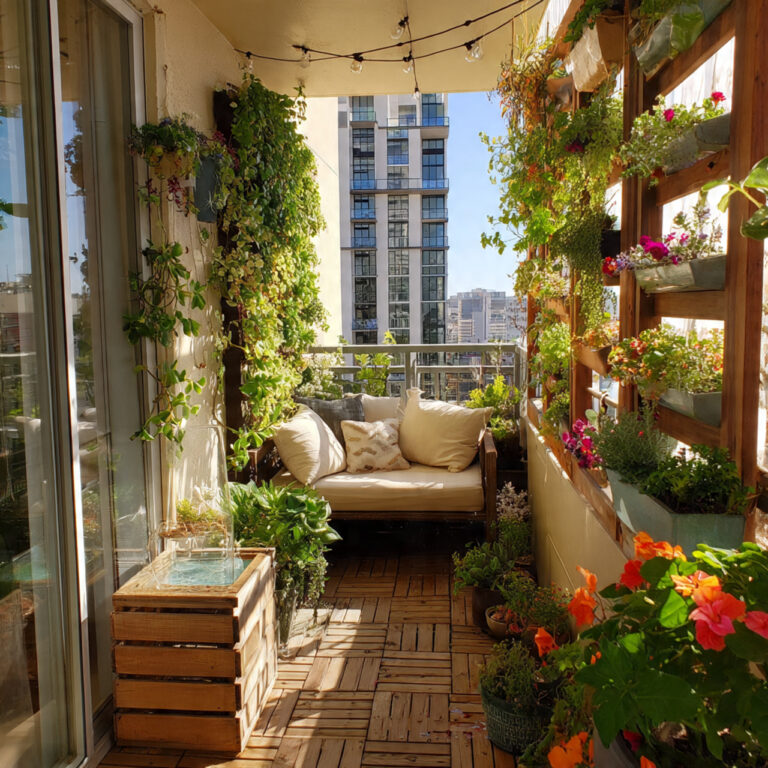
- Create miniature shade gardens on balconies or patios
Ground-Cover Shade Plants for Easy Coverage
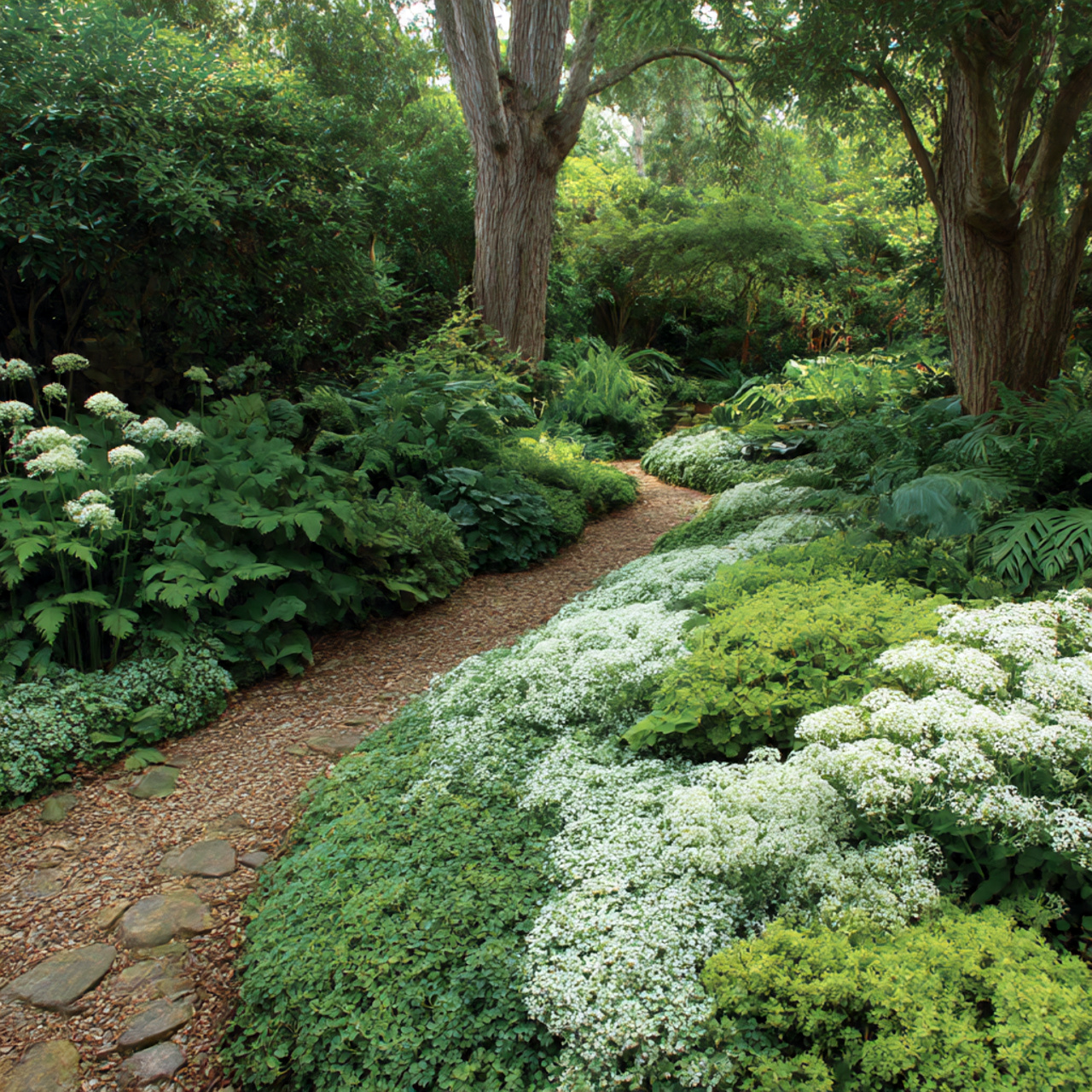
Tired of bare soil and constant weeding? Ground-cover shade plants are your solution.
Periwinkle, pachysandra, and sweet woodruff spread to form living carpets that look intentional and polished. They’re particularly brilliant under trees where grass refuses to grow, no matter how many times you reseed.
Practical advantages:
- Dramatically reduce mulching needs
- Prevent soil erosion on slopes and hillsides
- Create visual unity across larger shaded areas
- Eliminate most weeding once they’re established
- Save money on mulch and lawn maintenance
Shade Plants for Moist Soil Areas
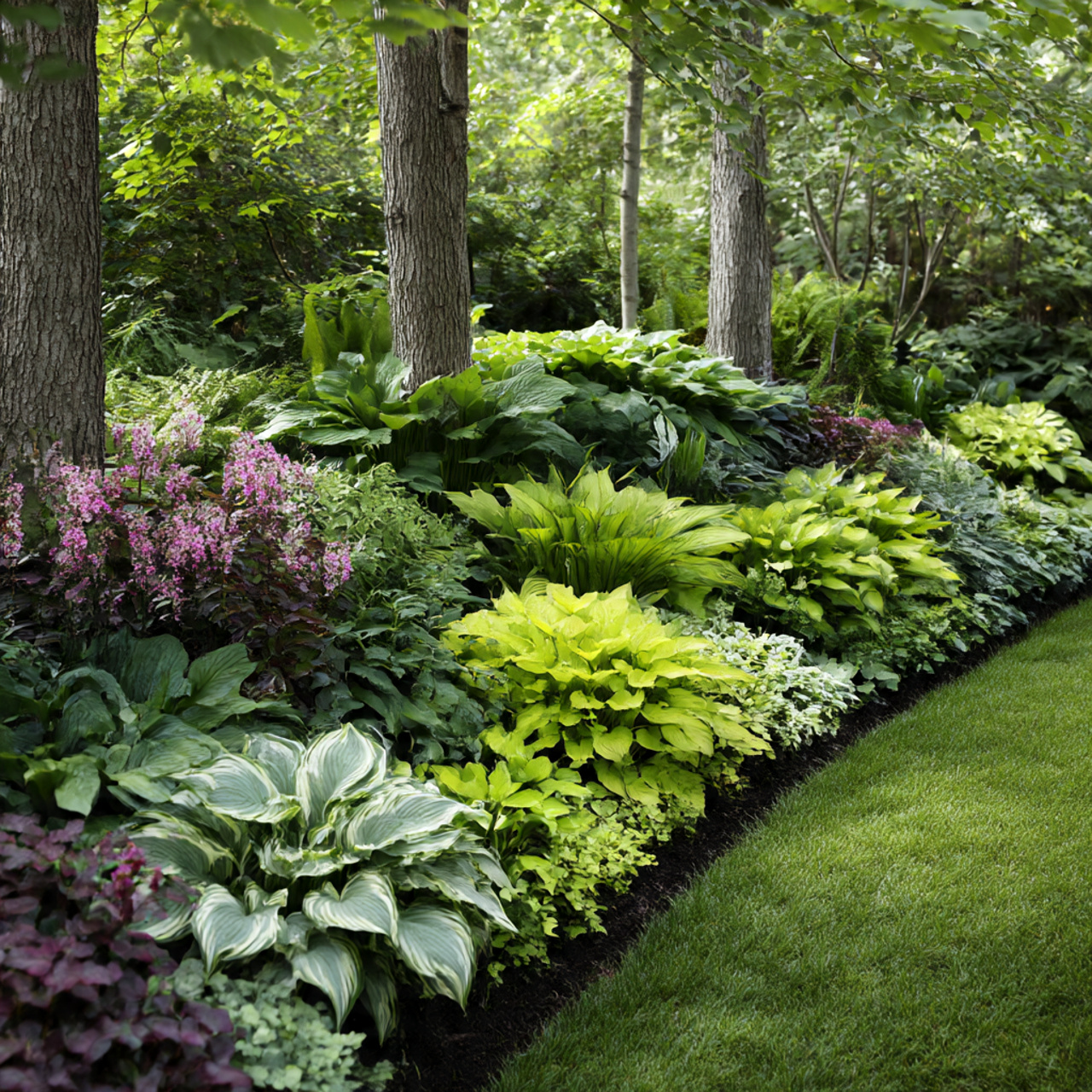
Got a perpetually damp corner? Instead of fighting it, work with moisture-loving shade plants that actually prefer wet feet.
Maidenhair ferns, ligularia, and turtlehead thrive in conditions that would rot most other plants. They bring structure and lushness to problem areas near downspouts, low-lying spots, or the edges of water features.
Best practices for wet shade:
- Embrace the natural bog-garden aesthetic
- Combine moisture lovers with decorative stones or small water features
- Use their large, dramatic leaves to create focal points
- Don’t try to “fix” the drainage—let these plants do what they do best
- Consider adding a small bench nearby to enjoy the cool, lush atmosphere
Shade Plants for Dry Soil Conditions
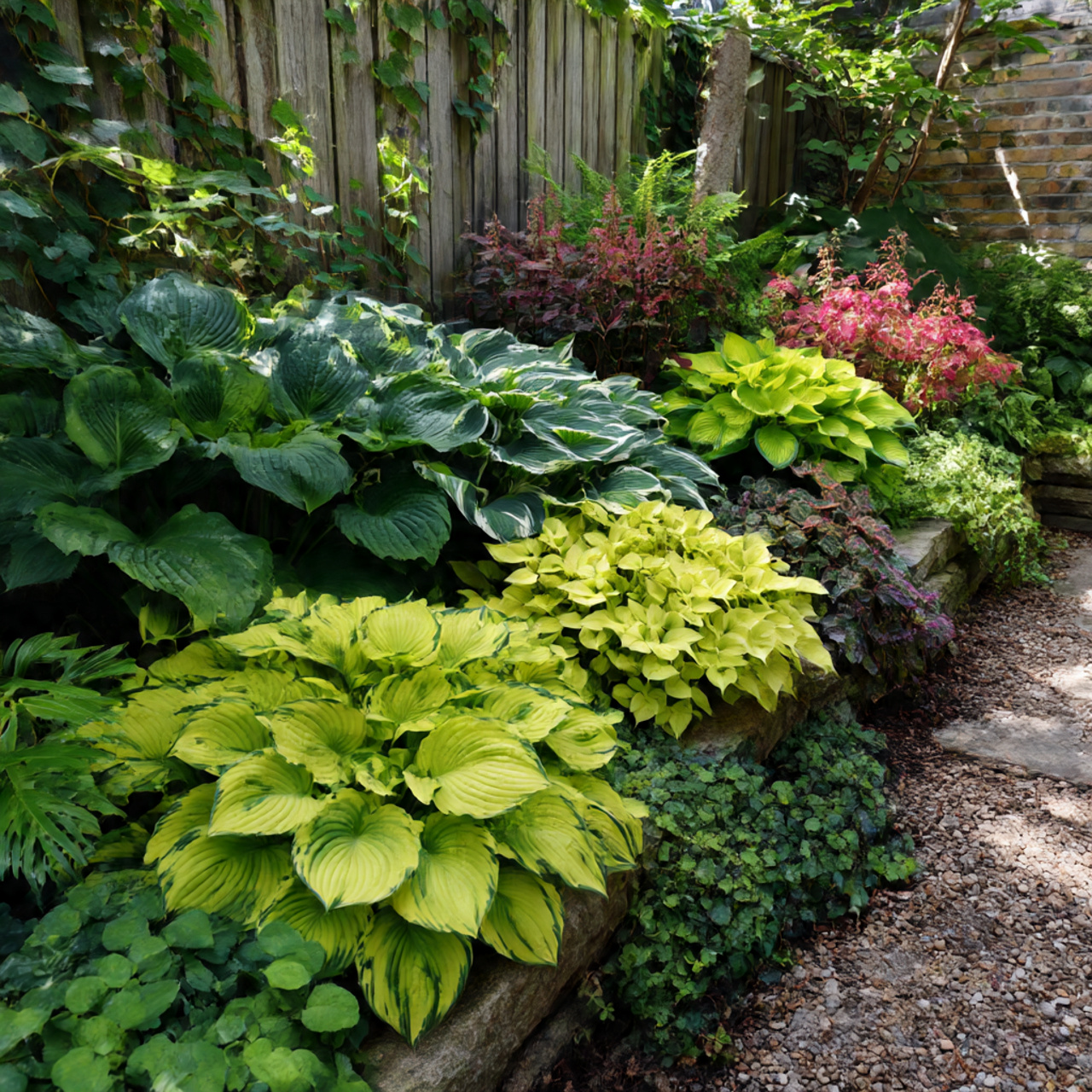
Dry shade is notoriously difficult, but certain tough plants handle it like champions.
Epimedium, Solomon’s seal, and evergreen ferns have adapted to survive under large trees where they face both shade and fierce root competition for any available moisture. Once established, they’re incredibly resilient.
Keys to success in dry shade:
- Water consistently during the first growing season to help roots establish
- Add a 2-3 inch layer of compost annually to improve soil moisture retention
- Mulch well to reduce evaporation
- Be patient—these plants invest in strong root systems before showing much top growth
- Avoid planting right up against tree trunks; leave some space for air circulation
Colorful Foliage Shade Plants for Visual Interest
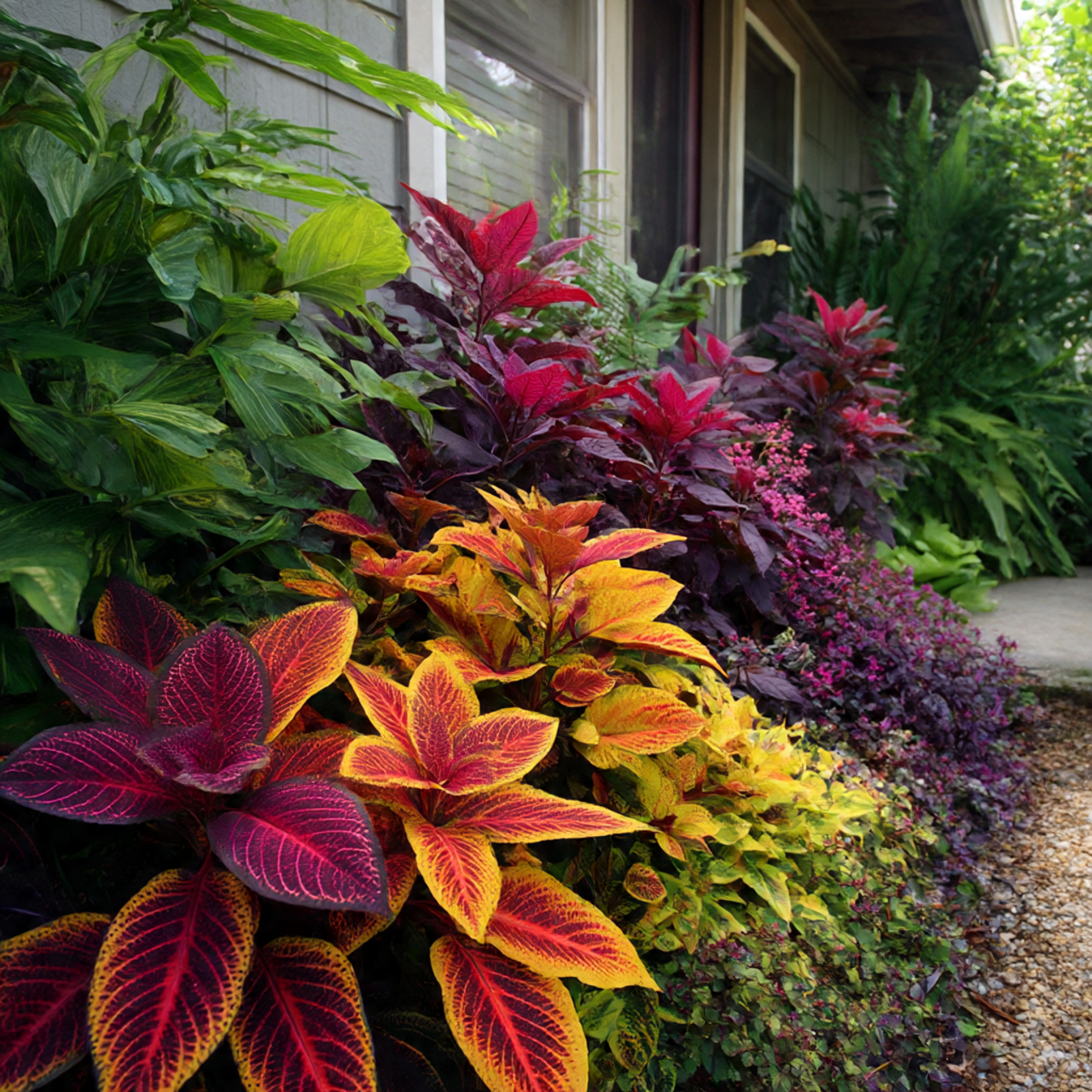
Why wait for flowers when leaves can deliver constant color? Foliage plants with variegated or colored leaves provide season-long interest.
Coleus offers jaw-dropping combinations of burgundy, chartreuse, pink, and purple. Caladiums bring tropical vibes with arrow-shaped leaves in white, pink, and red. Heucheras (coral bells) serve up year-round foliage in colors ranging from deep purple to lime green.
Design strategies for colorful foliage:
- Use them like living paint to add specific colors where needed
- Plant colorful varieties in containers that can be moved for maximum impact
- Pair contrasting foliage colors (purple with chartreuse, silver with burgundy)
- Remember that these colors stay consistent all season, unlike flowers
- Group same-color foliage plants in drifts for stronger visual impact
Shade Plants for Containers and Pots
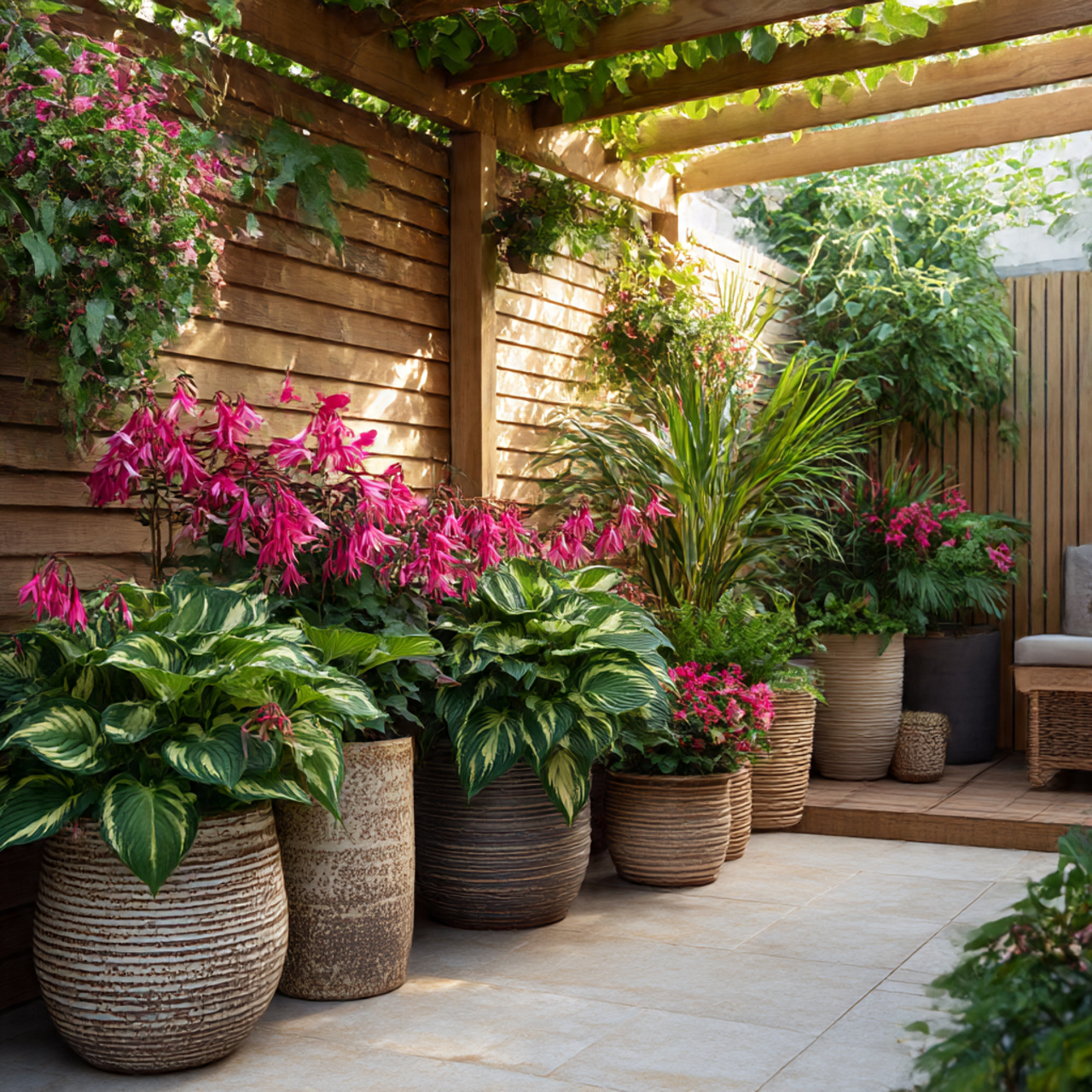
Containers unlock endless possibilities for shade gardening, especially in small spaces or rental properties.
Hostas, fuchsias, and creeping jenny adapt beautifully to pot life. You can create instant shade gardens on decks, patios, balconies, or even indoors near north-facing windows.
Container gardening tips:
- Choose pots with drainage holes to prevent root rot
- Use quality potting mix rather than garden soil
- Combine upright plants with trailing varieties for full, professional looks
- Move containers seasonally to follow changing shade patterns
- Group containers in odd numbers for the most pleasing arrangements
- Remember that potted plants need more frequent watering than in-ground plants
Tall Shade Plants for Vertical Effect
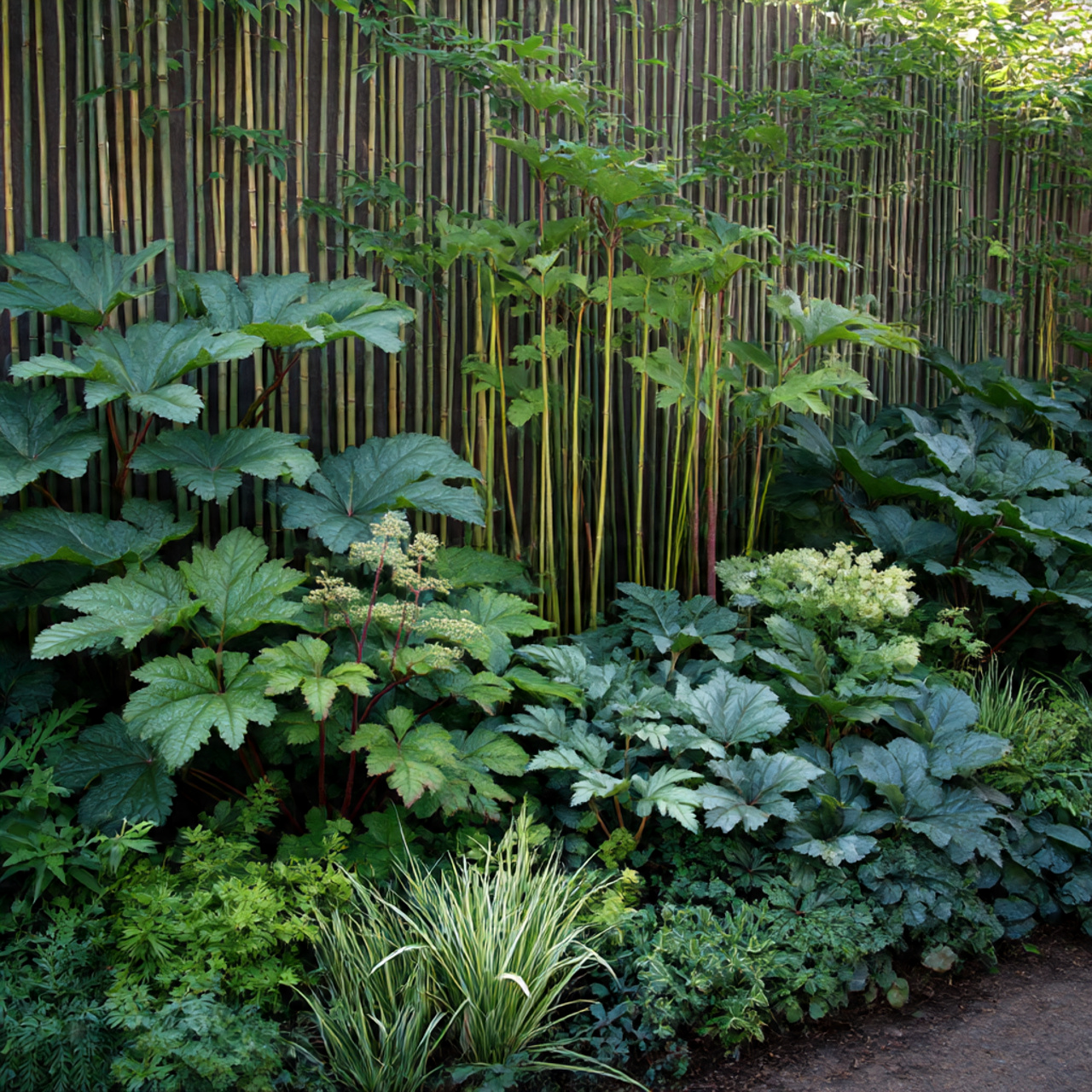
Gardens need height to feel complete, and tall shade plants deliver vertical interest without requiring full sun.
Rodgersia brings enormous, architectural leaves on tall stems. Japanese aralia offers glossy, tropical-looking foliage. Holly ferns create elegant vertical accents that draw eyes upward.
Using height effectively:
- Place tall plants at the back of borders or against walls and fences
- Use them as natural privacy screens between properties
- Create layers by positioning tall, medium, and short plants together
- Employ tall plants as focal points that anchor the entire garden design
- Consider sight lines from both outside and inside your home
Evergreen Shade Plants for Year-Round Greenery
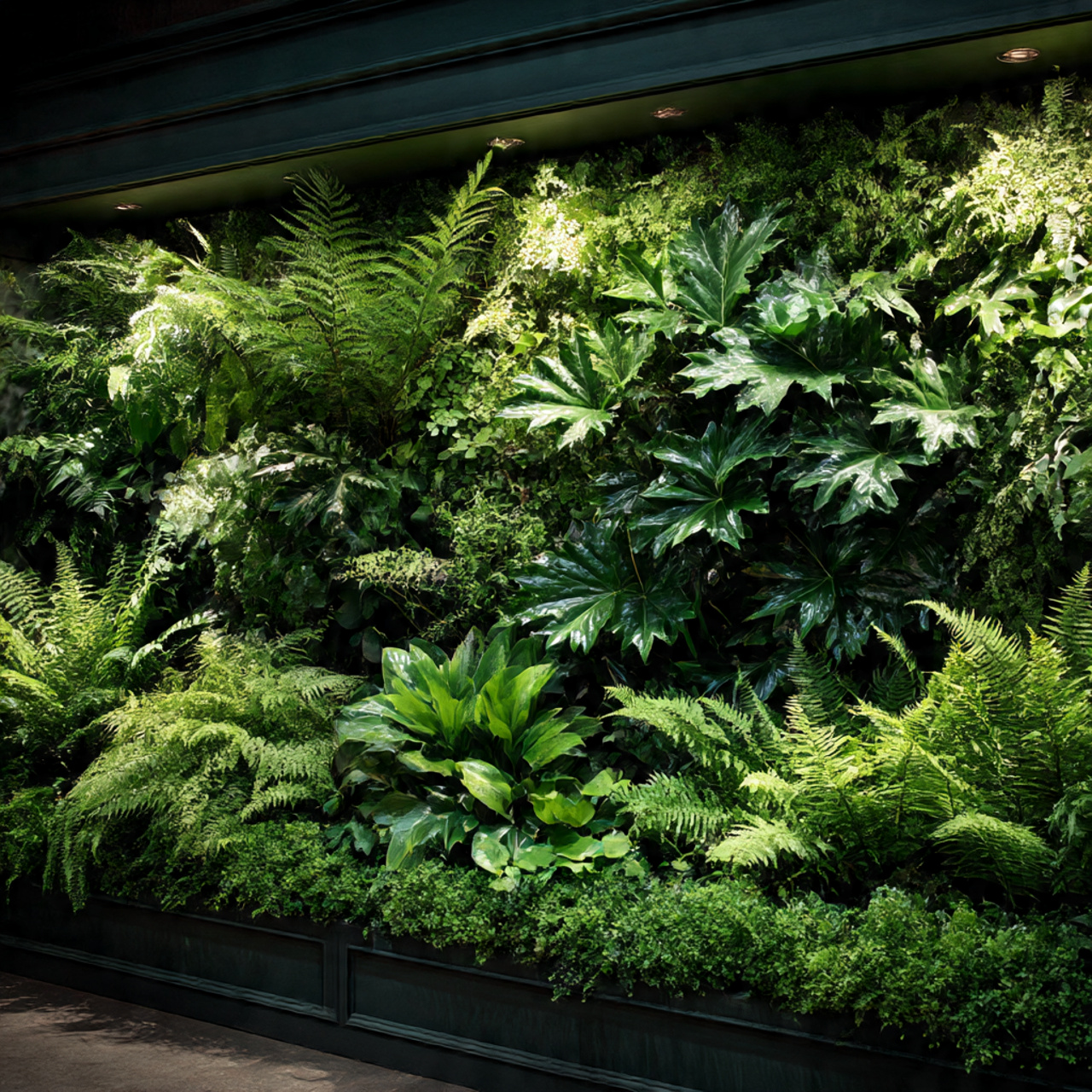
When deciduous plants drop their leaves, evergreen shade plants keep your garden from looking abandoned.
Compact yews, aucuba, and evergreen ferns maintain their foliage through winter, providing essential structure when everything else is dormant. They’re the backbone that holds your garden together through the cold months.
Year-round garden planning:
- Place evergreens strategically where you’ll see them from windows in winter
- Use them to define the “bones” or structure of your garden
- Combine evergreens with deciduous plants for seasonal variety
- Choose evergreens with interesting leaf shapes or colors for added visual interest
- Remember they’ll look the same in July and January—plan accordingly
Shade Plants for Pathways and Walkways
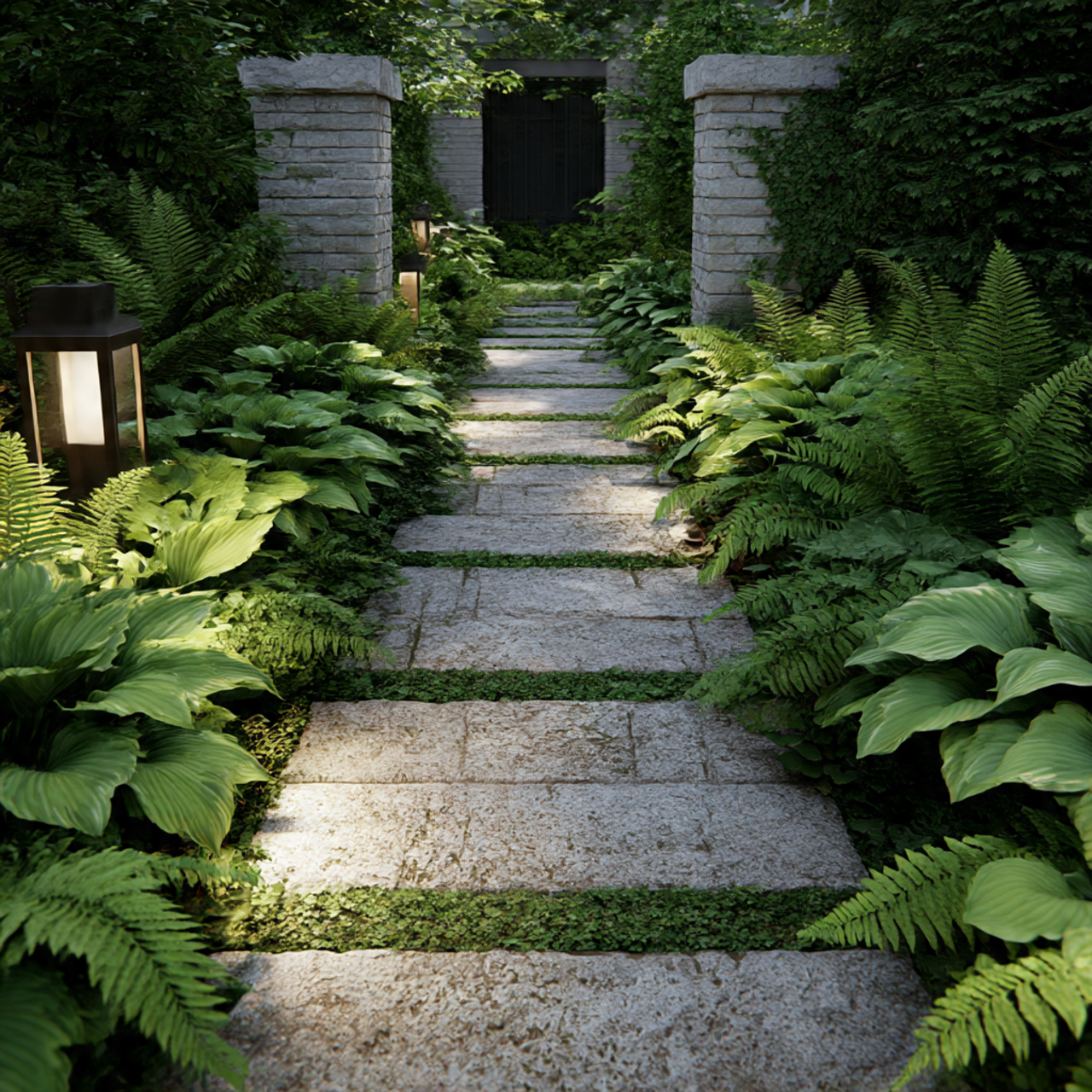
Plants along pathways transform utilitarian routes into delightful garden experiences.
Hostas, ferns, and lamium create natural guides that soften hard edges and lead visitors through your space. Their tidy growth habits keep paths clear while adding greenery and texture.
Pathway planting strategies:
- Leave adequate clearance so plants don’t obstruct walking space
- Use low, mounding plants that won’t flop over after rain
- Plant both sides of paths for a cohesive, intentional look
- Vary leaf sizes to create rhythm as people walk along
- Consider fragrant varieties near seating areas along paths
Shade Plants for Under Trees
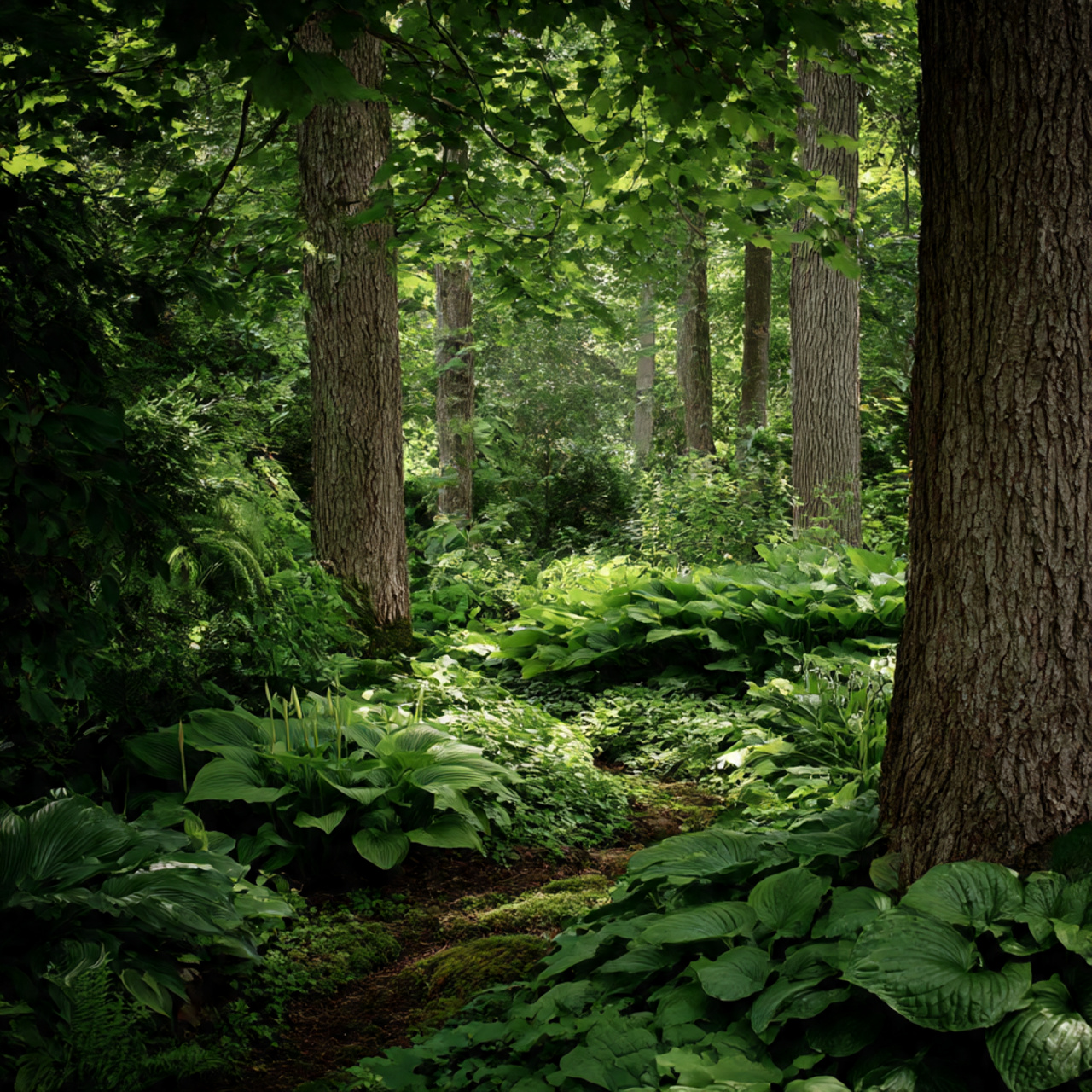
That barren circle under your mature trees doesn’t have to stay bare and mulched forever.
Wild ginger, brunnera, and foamflower are specially adapted to handle the double challenge of shade plus root competition from tree roots. They create living ground cover that looks far better than bare mulch.
Under-tree success tips:
- Don’t pile soil against tree trunks—it can cause rot
- Work carefully to avoid damaging tree roots when planting
- Water new plants well until established, as tree roots absorb most rainfall
- Choose plants that naturally stay low to avoid competing with tree branches
- Apply a thin layer of compost annually to improve soil quality
Shade Plants for Borders and Edges
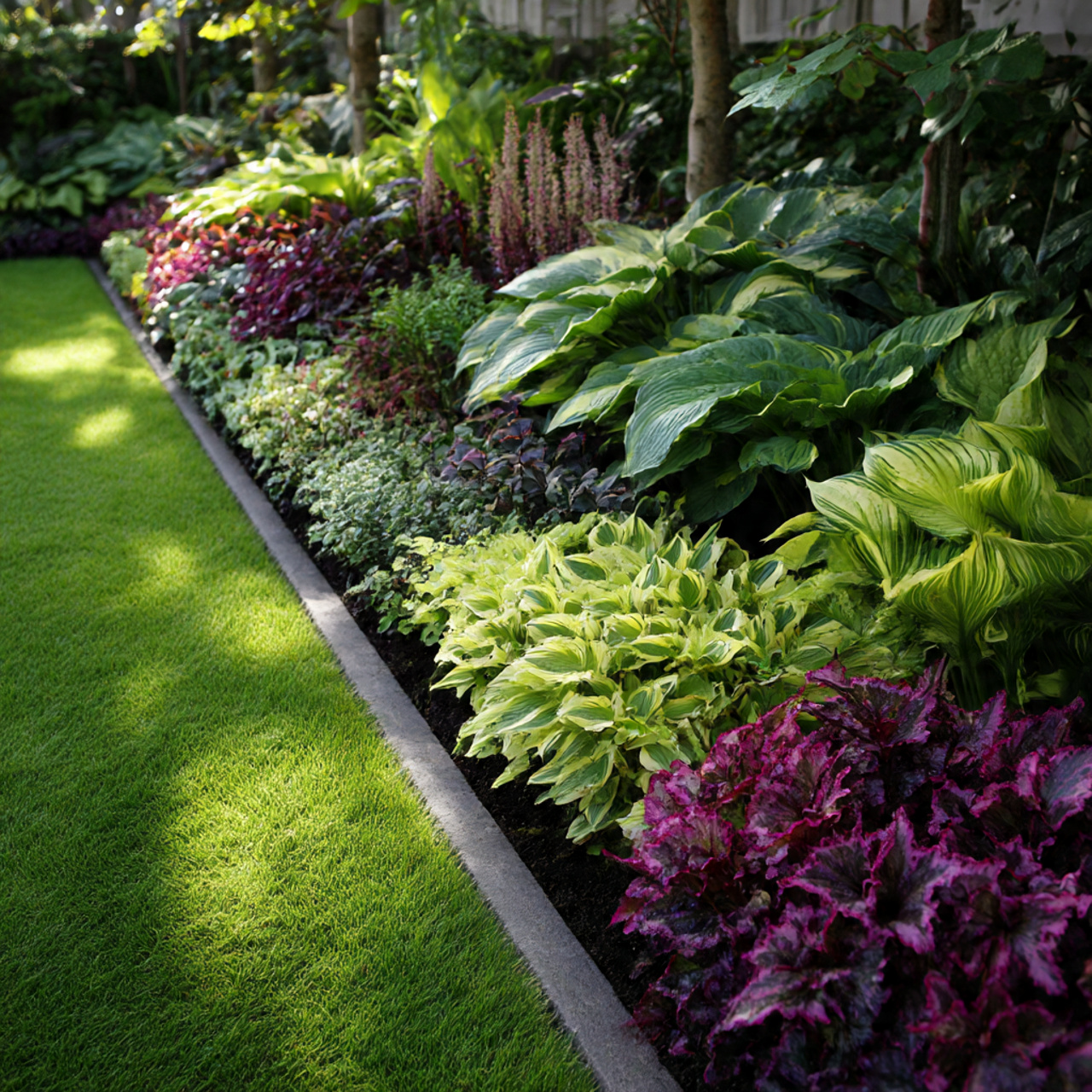
Clean, defined borders give gardens a polished look even in shady areas.
Heuchera, Japanese forest grass, and dwarf hostas excel at creating structured edges. They form neat lines that define beds without looking stiff or artificial.
Border design principles:
- Repeat the same plant along borders for continuity
- Use contrasting foliage colors to emphasize the edge
- Match border plants to your overall garden style (formal or cottage-like)
- Consider how borders will look from different viewpoints
- Ensure border plants won’t outgrow their space and blur the edges
Fast-Growing Shade Plants for Quick Results
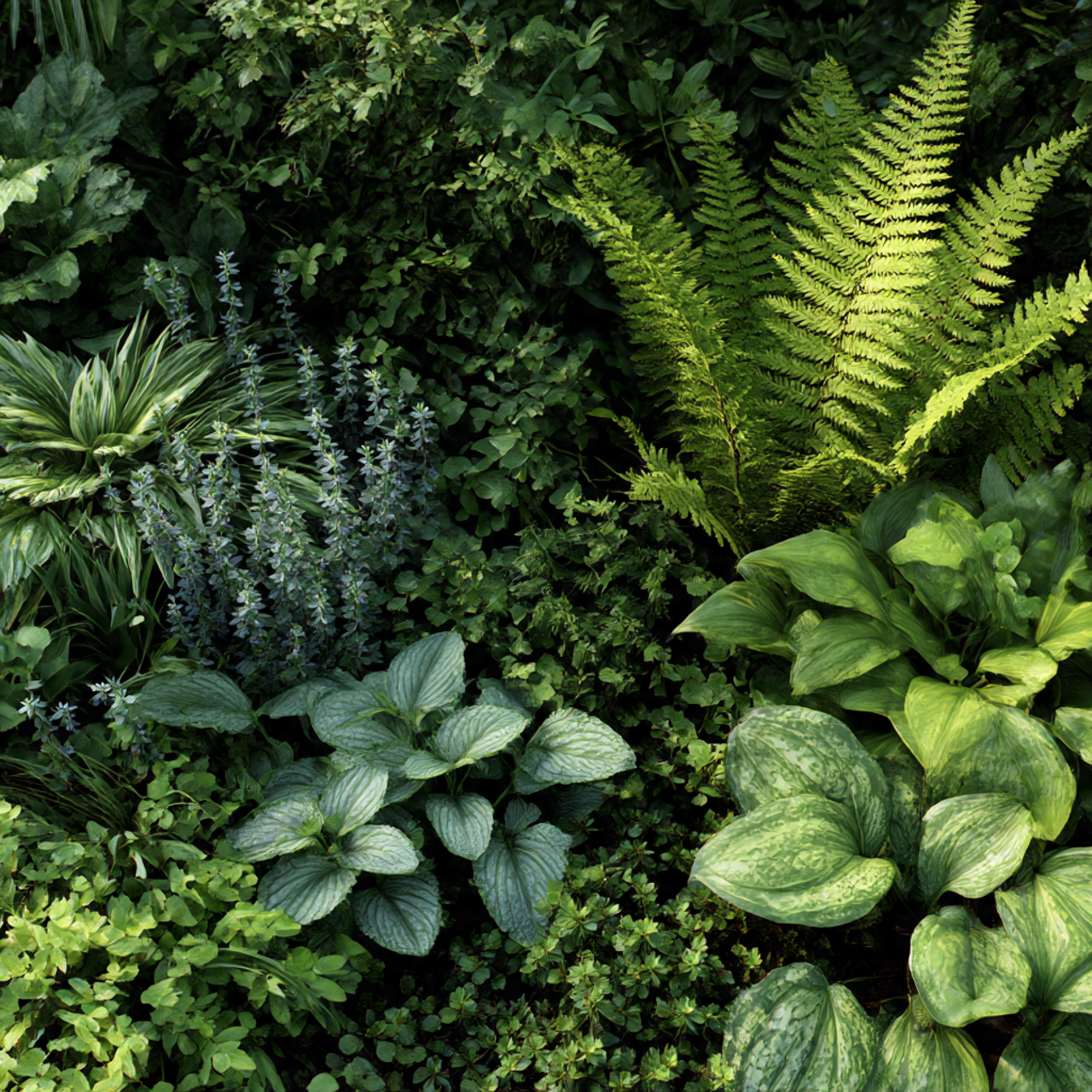
When you need results now—not three years from now—fast-growing shade plants deliver.
Ajuga, lamium, and ostrich fern fill empty spaces remarkably quickly, giving you an established look in just one or two seasons instead of five. They’re perfect for new gardens or recently cleared areas.
Quick coverage strategies:
- Plant closer together than recommended for faster fill-in (you can thin later)
- Keep newly planted fast-growers well-watered their first season
- Use them as temporary fillers while slower plants establish
- Be prepared to divide or control them if they get too enthusiastic
- Combine with slow-growing plants for both immediate and long-term interest
Fragrant Shade Plants for Sensory Appeal
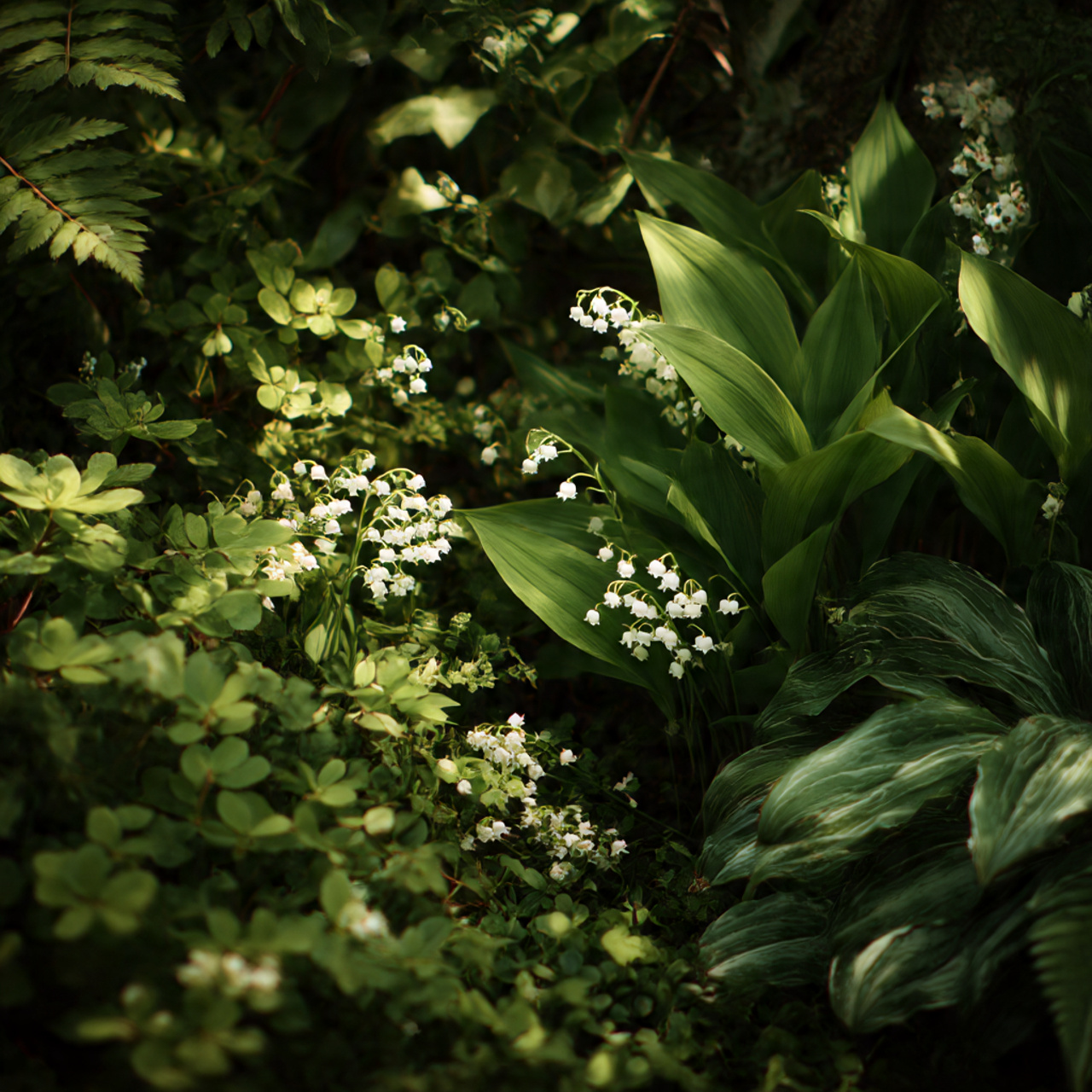
Gardens should smell as good as they look, and some shade plants offer delightful fragrances.
Sweet woodruff releases a vanilla-like scent, especially when dried. Lily of the valley produces intensely sweet-smelling flowers in spring. Certain heucheras have subtle, pleasant aromas.
Scent placement tips:
- Plant fragrant varieties near seating areas, patios, and windows
- Position them along frequently used pathways where you’ll brush against them
- Remember that shade often helps retain scents rather than dispersing them
- Consider bloom timing so you’ll be outside when they’re fragrant
- Combine with non-fragrant foliage plants to avoid overwhelming scents
Shade Plants for Rustic Garden Styles
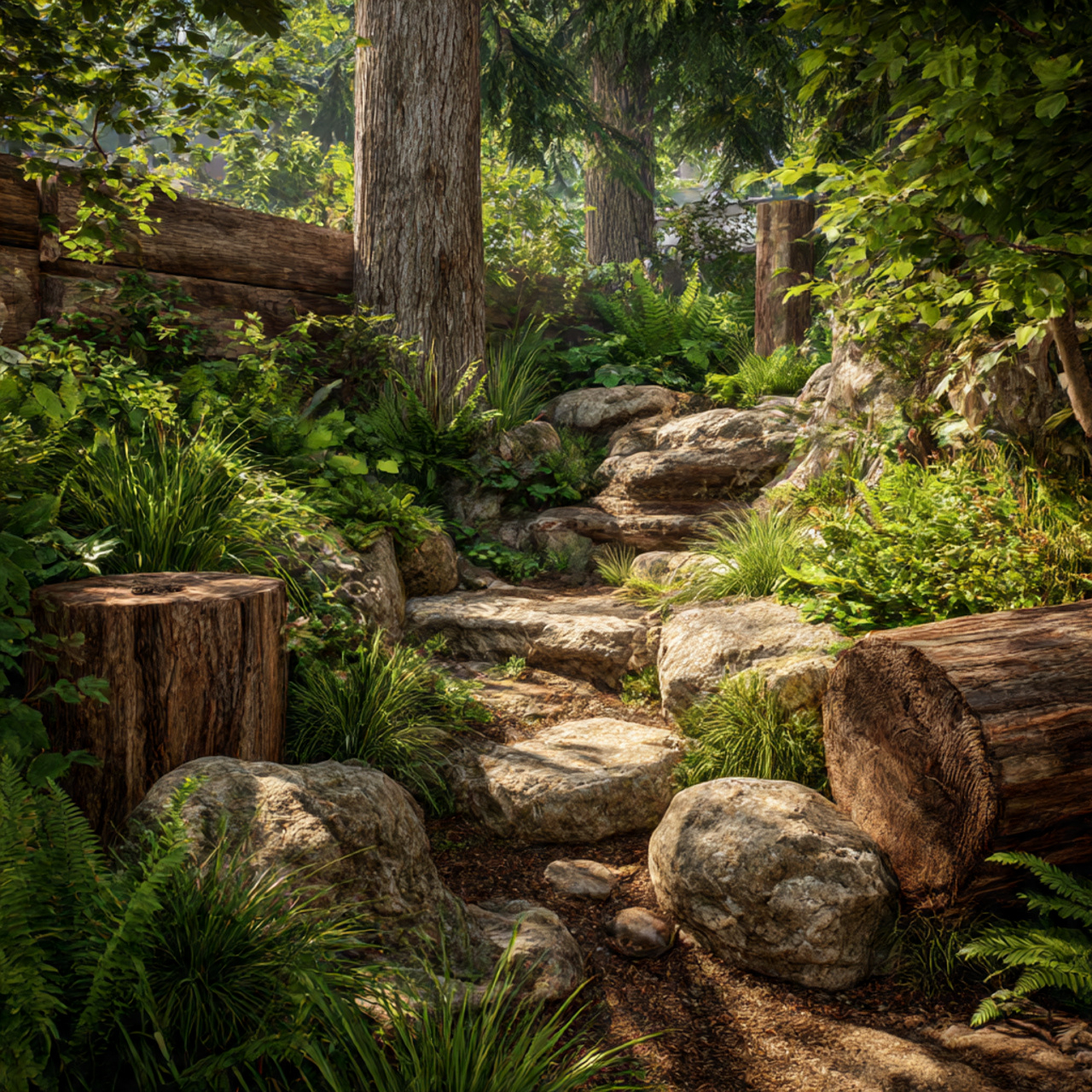
Creating a naturalistic, woodland garden? Certain shade plants nail that effortless, wild aesthetic.
Native ferns, hellebores, and woodland wildflowers blend seamlessly with logs, rocks, and natural mulch. They look like they’ve always been there, even when freshly planted.
Rustic garden elements:
- Allow plants to self-seed and naturalize in informal drifts
- Use fallen logs and branches as natural edging
- Combine with moss, which often appears on its own in shady, rustic settings
- Choose local native species when possible for authentic regional character
- Embrace a slightly “untamed” look rather than manicured perfection
Shade Plants for Tropical Themes
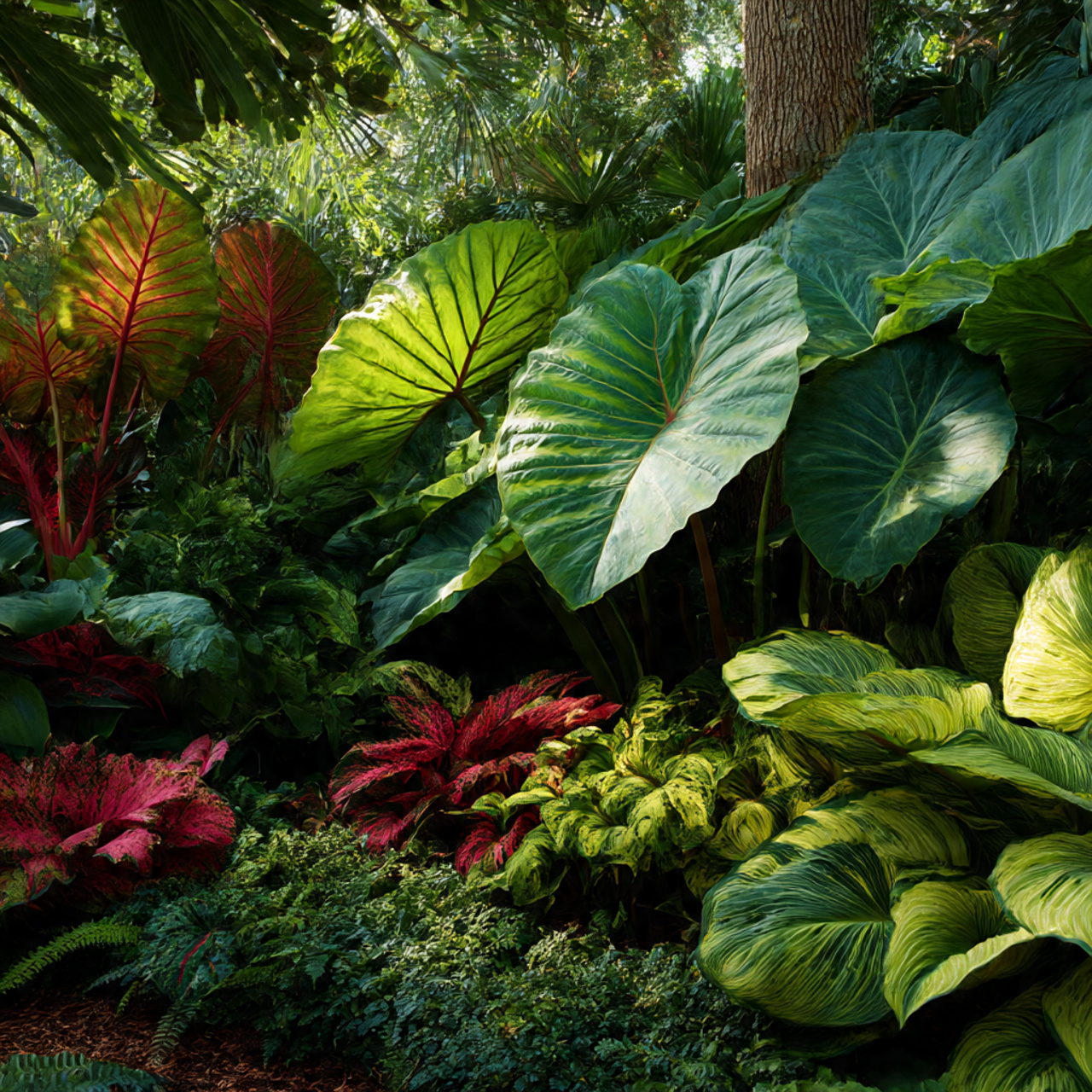
You don’t need full sun to create a lush, tropical paradise in your backyard.
Elephant ears produce enormous, dramatic leaves. Caladiums offer bold colors and exotic patterns. Giant hostas contribute substantial presence. Together, they transform shady corners into jungle-like retreats.
Tropical shade garden tips:
- Choose plants with the largest, boldest leaves available
- Add humidity-loving plants if you live in a moist climate
- Incorporate decorative elements like bamboo or tiki touches
- Layer different leaf shapes and sizes for depth
- In cold climates, treat tender tropicals as annuals or bring containers indoors
Shade Plants for Modern Minimalist Gardens
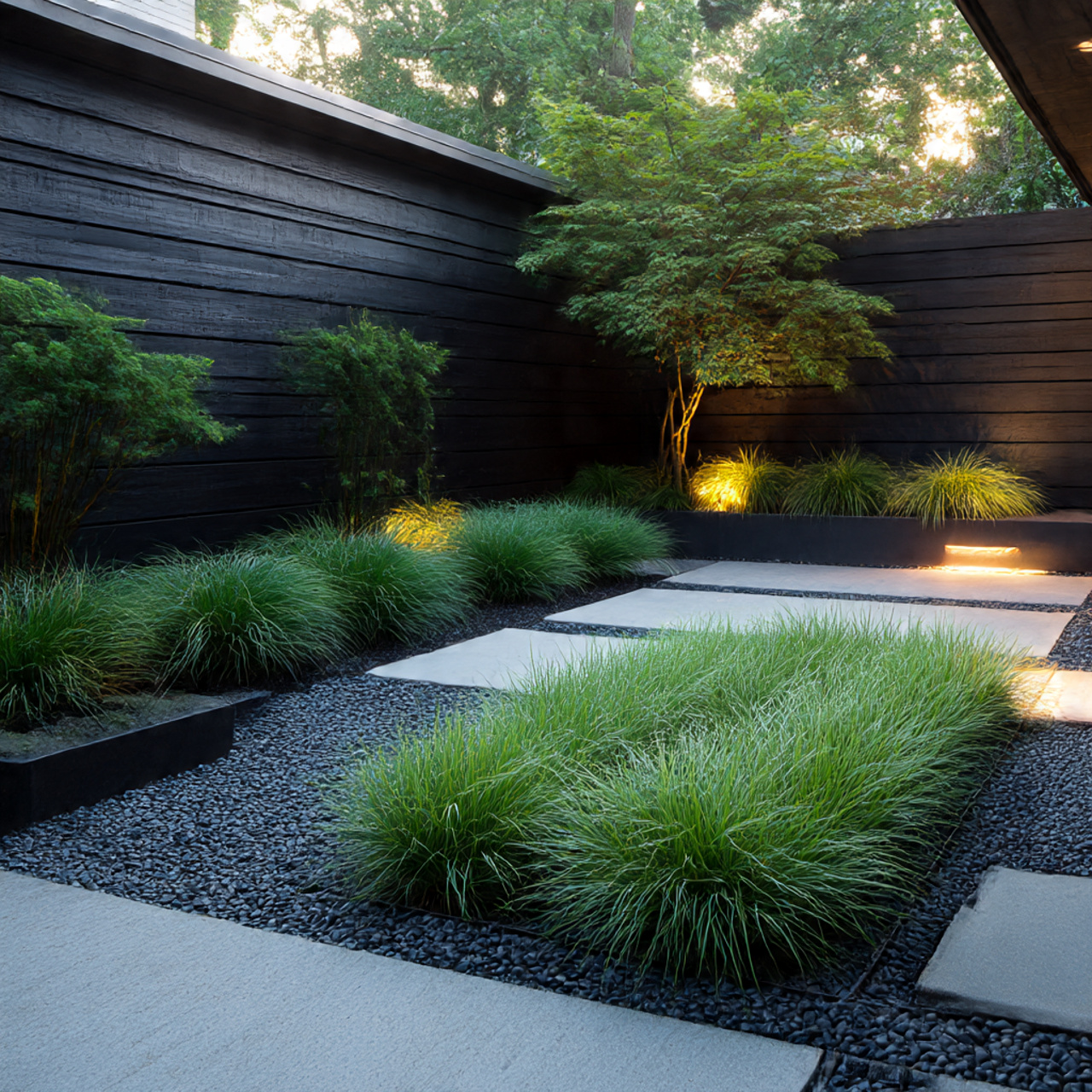
Modern design celebrates simplicity, and certain shade plants deliver clean lines and uncluttered beauty.
Black mondo grass provides architectural form with near-black foliage. Japanese forest grass offers graceful, flowing lines. Deep-green ferns contribute structure without fussiness.
Minimalist design principles:
- Limit your plant palette to 2-4 types for cohesion
- Use plants with simple, bold shapes
- Repeat the same plants in groups for impact
- Pair with concrete, dark stone, or sleek metal hardscaping
- Leave intentional empty space—not everything needs to be planted
- Choose foliage over flowers for a more consistent, restrained look
Seasonal Shade Plants for Year-Round Interest
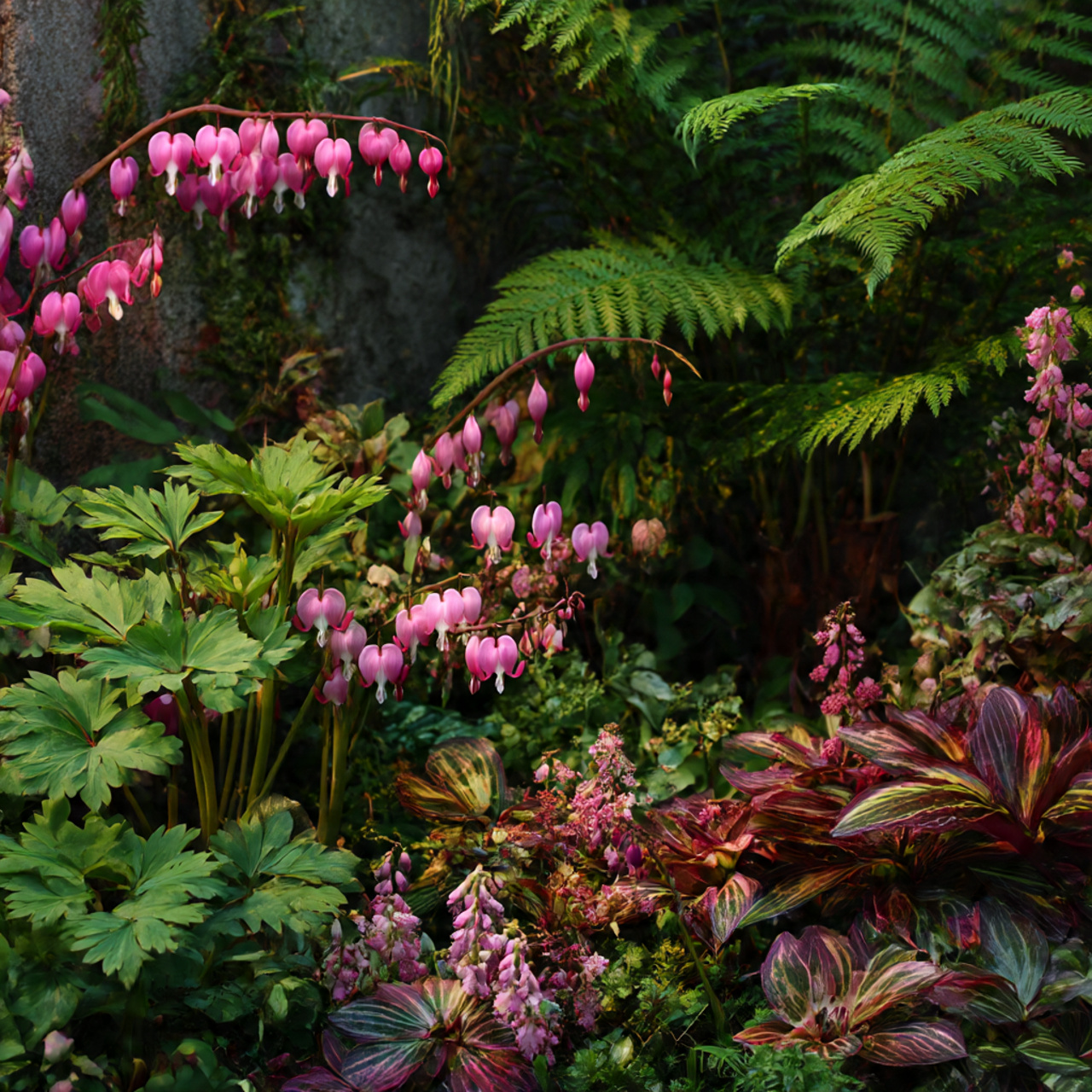
Keep your shade garden changing and interesting throughout the year with plants that offer seasonal variation.
Bleeding hearts bloom gorgeously in spring, then gracefully die back in summer. Toad lilies save their exotic flowers for fall when most gardens are winding down. Japanese painted ferns emerge with silvery new growth each spring.
Creating seasonal progression:
- Plan for at least one standout feature in each season
- Combine seasonal plants with evergreens for consistent structure
- Document bloom times and seasonal changes to improve planning
- Layer early, mid, and late-season interest plants together
- Consider fall color, interesting seed heads, and winter structure
Pollinator-Friendly Shade Plants
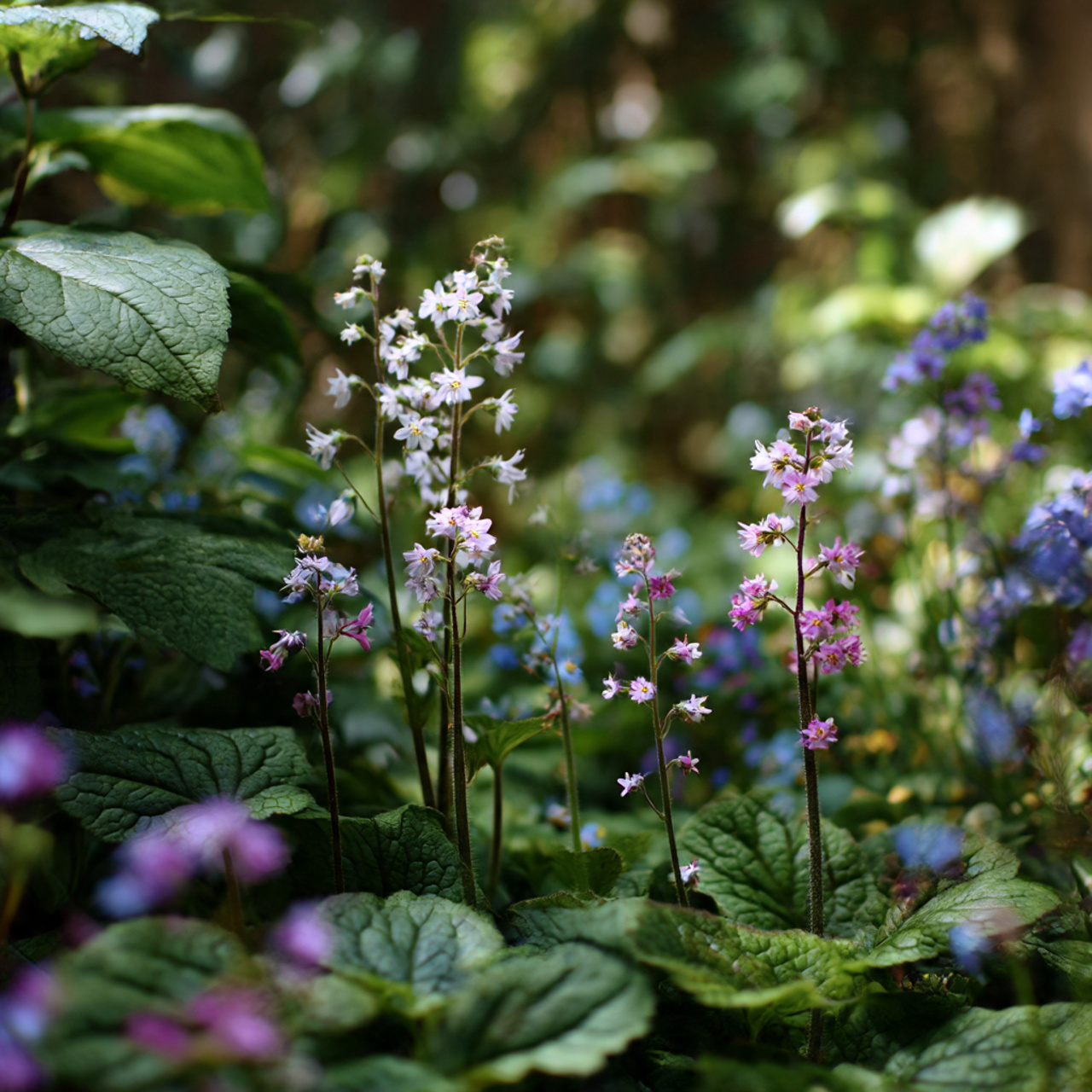
Even shady gardens can support bees, butterflies, and other beneficial insects.
Foamflower produces delicate white or pink flowers that pollinators love. Wild ginger offers unique flowers (they’re actually at ground level—look closely!). Lungwort blooms early when pollinators need food most.
Supporting pollinators in shade:
- Choose plants with accessible flower shapes
- Plant in groups so pollinators can find them easily
- Avoid double-flowered varieties, which often lack nectar
- Provide a shallow water source nearby
- Skip pesticides and let nature balance itself
- Include plants that bloom at different times for season-long support
Drought-Tolerant Shade Plants for Sustainable Gardens
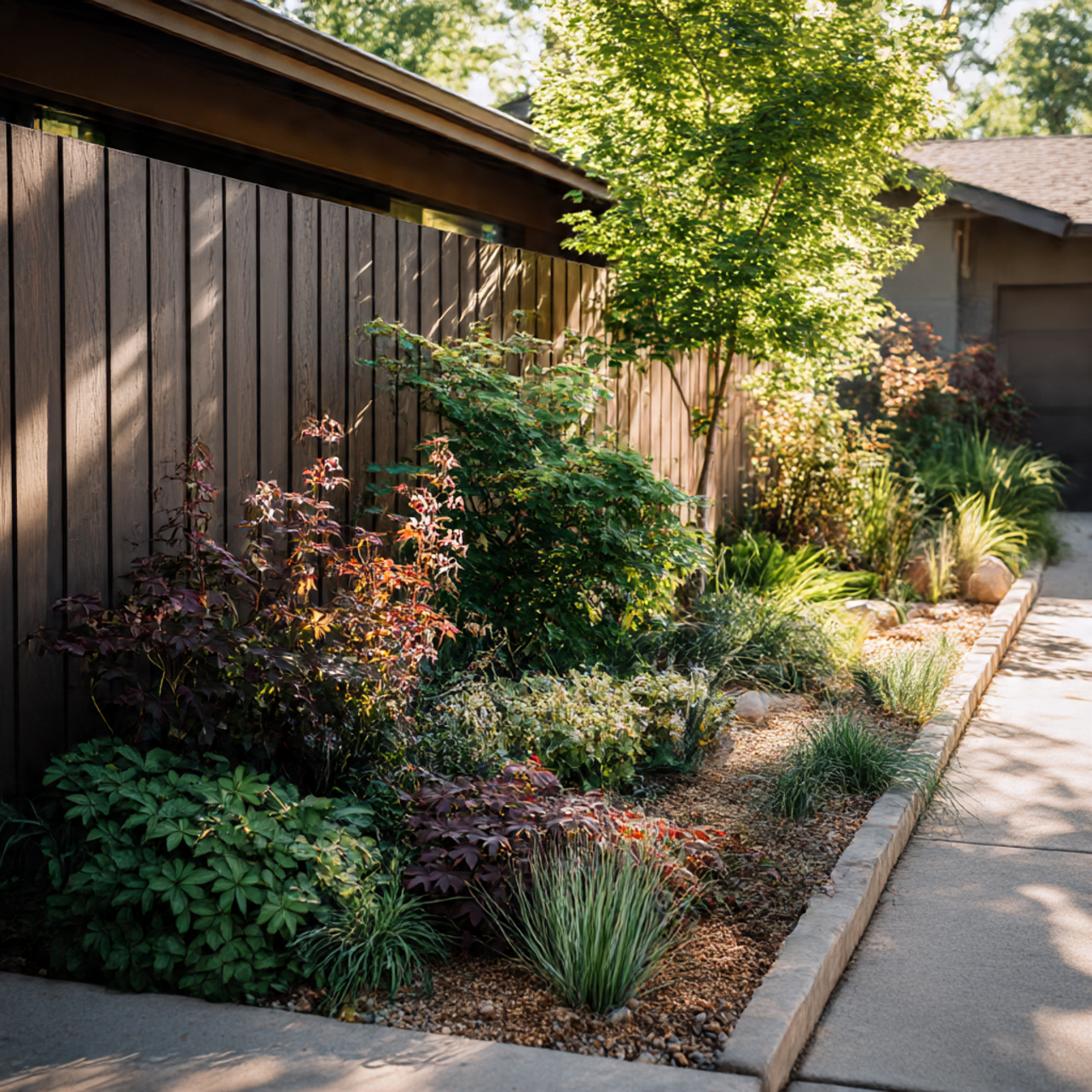
Water conservation matters, even in the shade. Some shade plants thrive on minimal moisture.
Epimedium handles dry conditions beautifully once established. Oregon grape offers evergreen foliage and drought tolerance. Certain ferns, despite their delicate appearance, are surprisingly water-wise.
Water-wise shade gardening:
- Improve soil with compost to increase water retention
- Mulch deeply (3-4 inches) to reduce evaporation
- Group plants with similar water needs together
- Water deeply but infrequently to encourage deep root growth
- Choose native plants adapted to your local rainfall patterns
- Consider drip irrigation for efficient water delivery
Visit Also: Herbal Plants
Frequently Asked Questions
1. What qualifies a plant as a shade plant?
A shade plant is any species that grows well with limited sunlight, particularly in areas receiving filtered light, dappled shade, or less than four hours of direct sun per day.
2. Can shade plants survive under large trees?
Yes. Many shade plants tolerate root competition and low moisture, making them ideal for planting under established trees.
3. Do shade plants need fertilizer?
Most shade plants thrive with modest feeding. Using organic compost once or twice a year is usually enough to maintain healthy foliage and growth.
4. Are flowering shade plants difficult to maintain?
No. Many flowering varieties, including hellebores and astilbes, require minimal care and bloom reliably in low-light conditions.
5. Can shade plants grow indoors?
Certain shade plants, like peace lilies and ZZ plants, adapt extremely well to indoor lighting and perform beautifully with minimal sunlight.
Final Thoughts
Shade doesn’t have to be a limitation—it’s actually an opportunity to create something special. The plants that thrive in low light bring unique textures, colors, and character that sun gardens simply can’t replicate.
Whether you’re dealing with a small shady corner or an entire yard beneath mature trees, there’s a shade plant solution that’ll work for you. Start with a few of these ideas that match your space and style. You’ll be amazed at how those formerly frustrating dark spots transform into your favorite parts of the garden.
The best part? Shade gardens are generally easier to maintain, need less water, and attract interesting wildlife. You’ll spend less time fighting with your garden and more time actually enjoying it. That’s a win in anyone’s book.