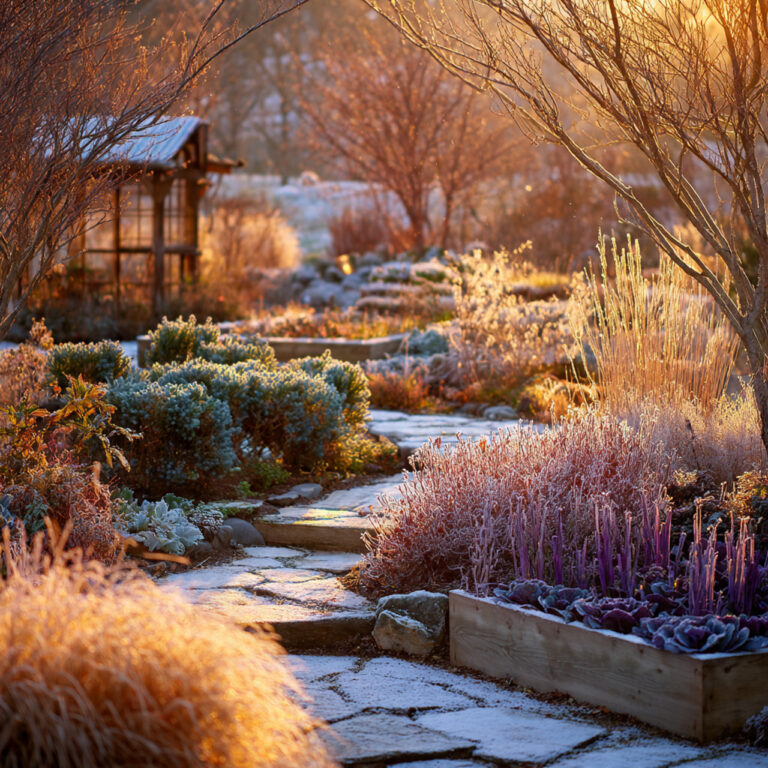
Plumeria Flowers for Garden: 17 Essential Growing Ideas
Have you ever walked past a garden and been stopped in your tracks by an intoxicating floral scent? That’s likely the magic of plumeria flowers at work. These stunning tropical beauties, also called frangipani, are becoming the go-to choice for gardeners who want to bring a slice of paradise into their own backyard.
What makes plumeria so special? Picture this: vibrant blooms ranging from pure white to deep crimson, releasing a fragrance that intensifies as the sun sets. Whether you’re a first-time gardener or have been cultivating plants for years, plumerias offer something truly remarkable. They’re surprisingly tough once settled in, handling drought better than most flowering plants thanks to their water-storing branches.
The best part? You don’t need to live in Hawaii to grow them. These versatile plants thrive in garden beds, containers, and even small urban spaces. Their thick, sculptural branches create year-round visual interest, while those glossy clusters of flowers provide months of color from late spring through fall.
Beyond just looking beautiful, plumerias work hard in your landscape. Their umbrella-shaped canopies offer gentle shade for smaller plants underneath, and their blooms make exceptional cut flowers that last nearly a week in a vase. As your plants mature, they develop into living sculptures that become the centerpiece of any garden design.
Why Plumeria Flowers Excel in Garden Settings
Let’s talk about what sets plumerias apart from your average flowering plant. First, they’re marathon bloomers, not sprinters. Once they start flowering, they keep producing those gorgeous blooms for months on end. The waxy texture of their petals acts like natural armor against rain and wind damage, so your garden stays picture-perfect even after summer storms roll through.
Here’s something most gardeners don’t realize right away: plumeria flowers actually get more fragrant as evening approaches. Imagine hosting a dinner party on your patio while waves of sweet perfume drift through the air. That’s the plumeria experience.
Key Benefits at a Glance:
- Extended bloom period lasting several months
- Weather-resistant petals that stay pristine
- Exceptional longevity as cut flowers (5-7 days)
- Evening fragrance that creates ambiance
- Architectural branching adds winter interest
Even when plumerias aren’t blooming, they earn their keep. Their sculptural branching patterns create striking silhouettes that add structure to your garden design. This is especially valuable in smaller spaces where every plant needs to pull double duty. As specimens age, they develop distinct character—gnarled trunks, dramatic curves, and spreading canopies that few other plants can match.
Design Tip: Position plumerias where you can appreciate their form from multiple angles. They’re equally beautiful against a fence, as standalone lawn specimens, or framing an entryway.
Selecting the Right Plumeria Varieties for Your Garden
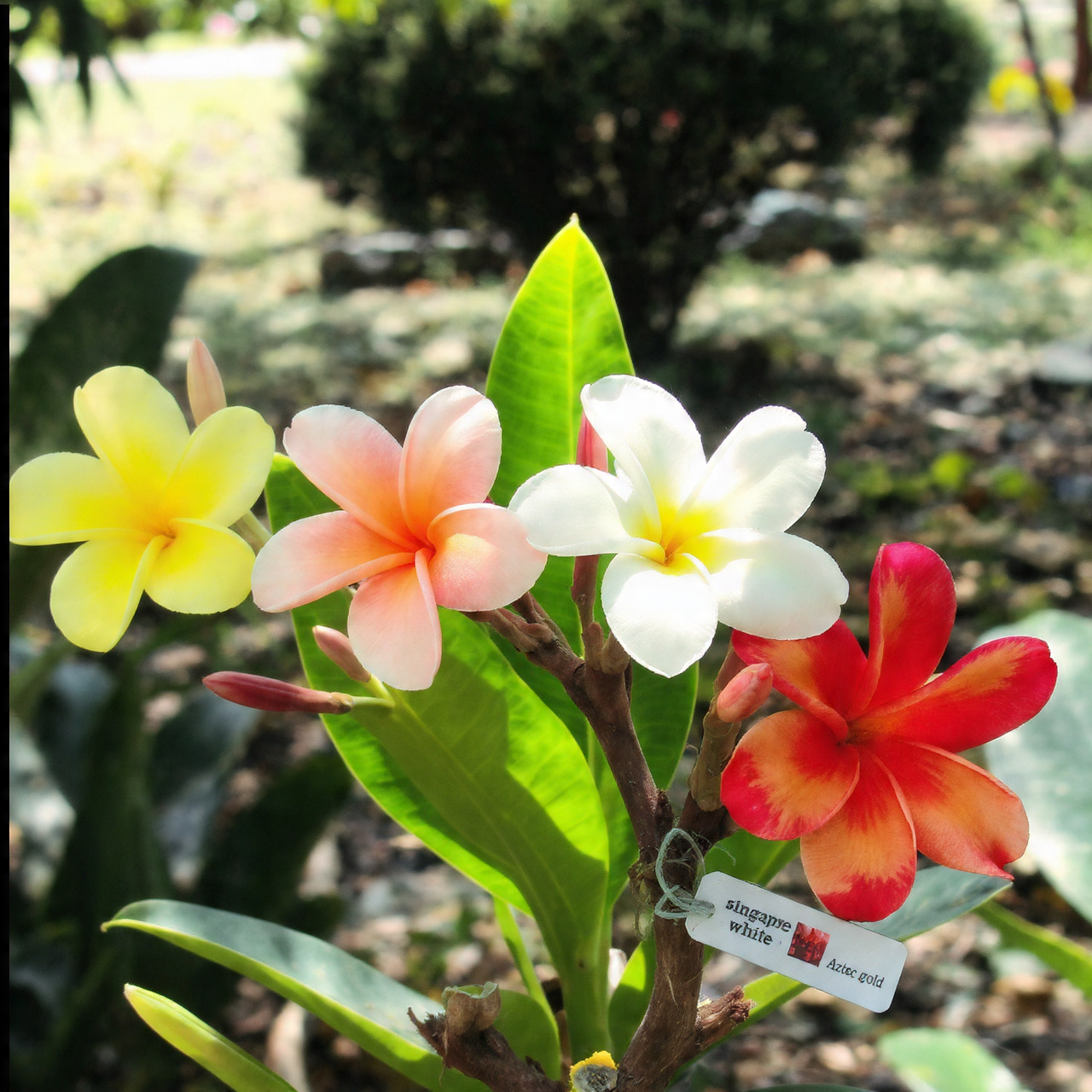
Walking into a nursery to choose your first plumeria can feel overwhelming with so many stunning options. Here’s how to narrow it down based on what matters most to you.
Love vibrant yellows? ‘Celadine’ produces bright sunshine-colored blooms with fragrance that’ll knock your socks off. Prefer something softer? ‘Penang Peach’ offers salmon-pink flowers that complement virtually any color scheme. For evening gardens that glow under moonlight, nothing beats the pure white blooms of ‘Singapore White.’
Want bold drama? Check out ‘Aztec Gold’ or ‘Candy Stripe’ for red and pink varieties that energize tropical designs. Each cultivar has its own personality—different growth speeds, cold tolerance levels, and blooming habits.
Smart Selection Tips:
- Consider mature size: dwarf varieties (4-6 feet) vs. tree forms (15+ feet)
- Match cold tolerance to your climate zone
- Research disease resistance, especially for rust-prone areas
- Choose fragrance intensity based on proximity to living spaces
- Verify variety authenticity by purchasing from reputable nurseries
Common Mistake to Avoid: Don’t impulse-buy based solely on flower color. A variety that grows too large for your space or lacks cold tolerance for your region will disappoint you down the line.
Dwarf varieties have revolutionized plumeria growing for people with limited space. These compact cultivars deliver full-sized blooms on manageable frames perfect for containers or small garden beds. If disease has been an issue in your area, seek out varieties with proven rust resistance to save yourself headaches later.
Optimal Placement for Plumeria Flowers in Garden Designs
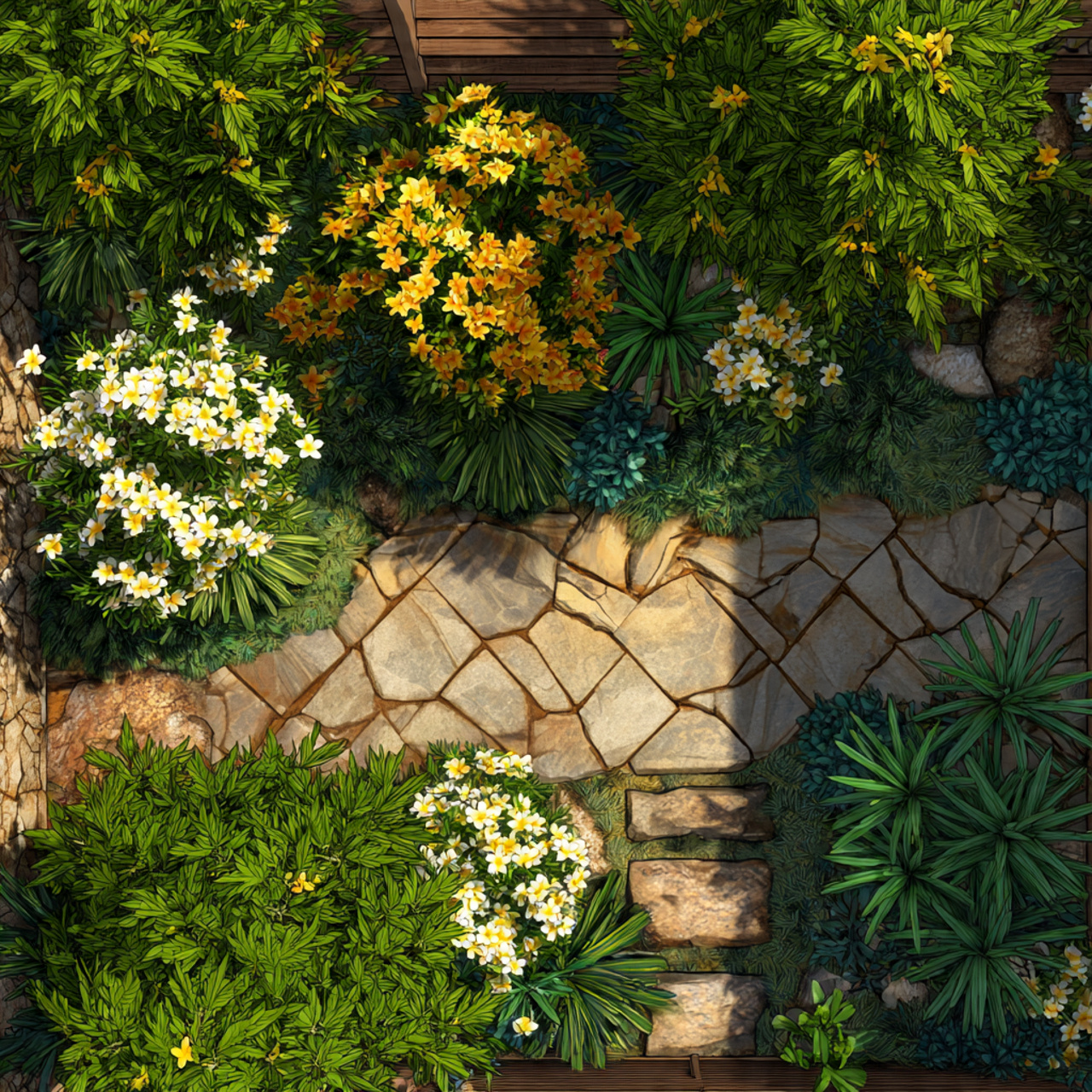
Location is everything when it comes to plumeria success. These are sun-worshippers through and through—they need at least six hours of direct sunlight daily to produce those abundant blooms you’re dreaming of.
Think strategically about where you’ll enjoy them most. Near patios, walkways, or seating areas makes perfect sense because you’ll experience their fragrance up close during peak blooming. Just avoid tucking them too close to walls or structures where reflected heat might stress them out.
Ideal Placement Zones:
- South-facing locations for maximum sun exposure
- Corner beds where they can anchor the landscape
- Near outdoor living areas for fragrance enjoyment
- Protected spots with natural windbreaks
- Positions visible from indoor living spaces
Placement Mistakes to Avoid:
- Under large trees (root competition and shade)
- In low-lying areas with poor drainage
- Too close together (they need breathing room as they mature)
- Directly against hot walls or pavement
- Areas blocked from view where you can’t enjoy them
When creating focal points, position larger specimens as standalone features in lawn areas where their form shines from every angle. For smaller varieties, group them in odd numbers—three or five plants create natural, balanced compositions that guide the eye through your garden.
Tip: Before planting, sit in your favorite outdoor spot and visualize where you’d most enjoy seeing and smelling your plumerias. That’s probably the perfect location.
Soil Requirements for Thriving Plumeria Flowers in Gardens
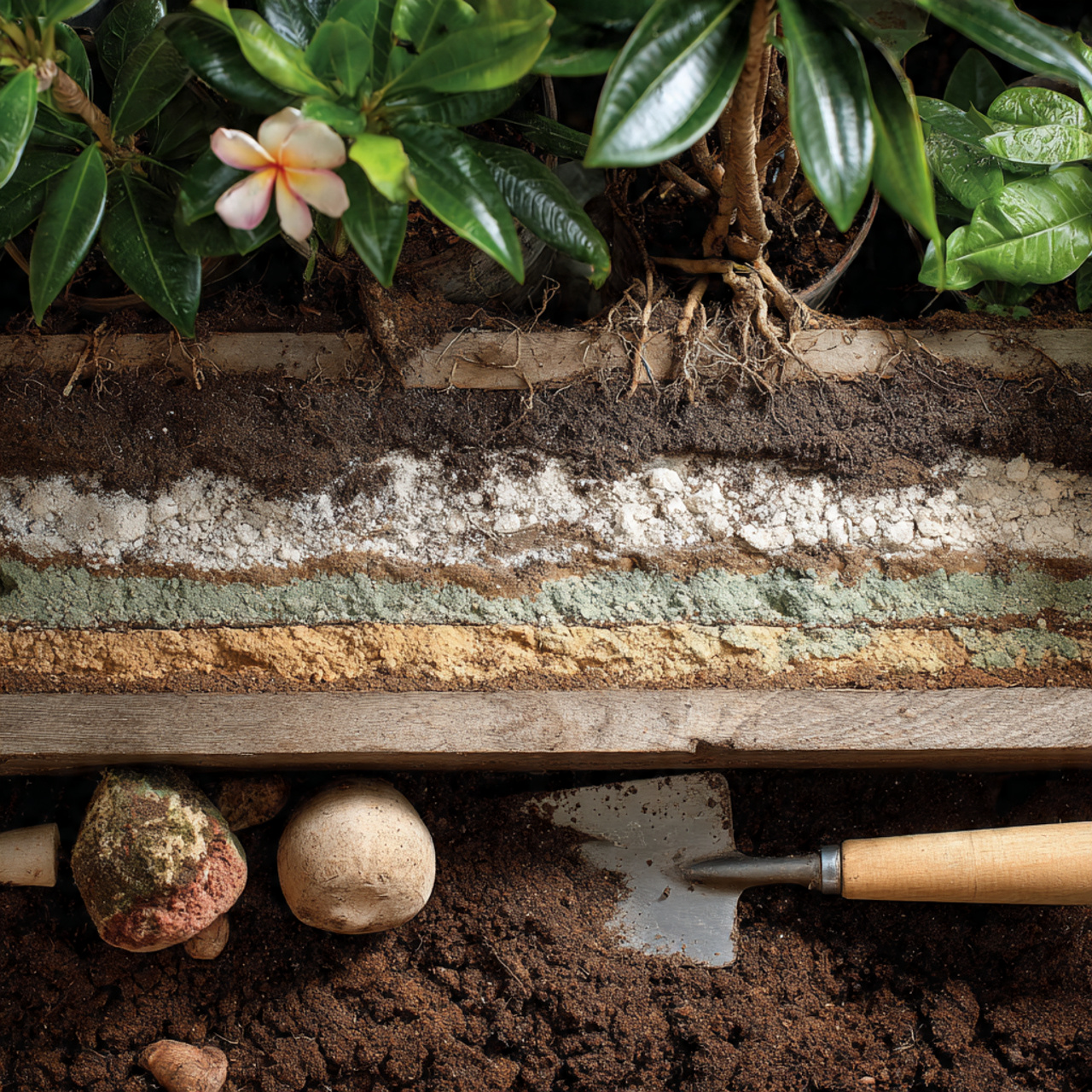
Here’s the non-negotiable truth about plumerias: they absolutely demand excellent drainage. More plumerias die from soggy roots than any other cause. If your soil holds water like a sponge, you’re setting yourself up for heartbreak.
The fix? Amend heavy clay soils generously with coarse sand, perlite, or pumice. Think one-third organic matter, one-third native soil, and one-third drainage material. This creates the fast-draining environment plumerias crave while retaining just enough moisture to keep them happy.
Ideal Soil Recipe:
- 1/3 quality organic matter or compost
- 1/3 native garden soil
- 1/3 drainage amendment (sand, perlite, or pumice)
- pH level: 6.5-7.0 (slightly acidic to neutral)
Soil Preparation Checklist:
- Test your soil pH before planting
- Dig planting holes twice as wide as root balls
- Mix amendments thoroughly with native soil
- Create a slight mound for improved drainage
- Avoid fresh manure that can burn roots
Raised beds offer a brilliant solution if you’re dealing with problematic soil. Elevating the root zone 12-18 inches above ground level ensures water drains away quickly, even during heavy downpours. Mix quality potting soil with your native soil in these beds to balance moisture retention with drainage.
Safety Measure: Never use fresh manure or uncomposted materials, as these can introduce harmful pathogens and burn tender roots. Stick with well-aged compost that’s broken down completely.
Watering Strategies for Plumeria Flowers in Garden Beds
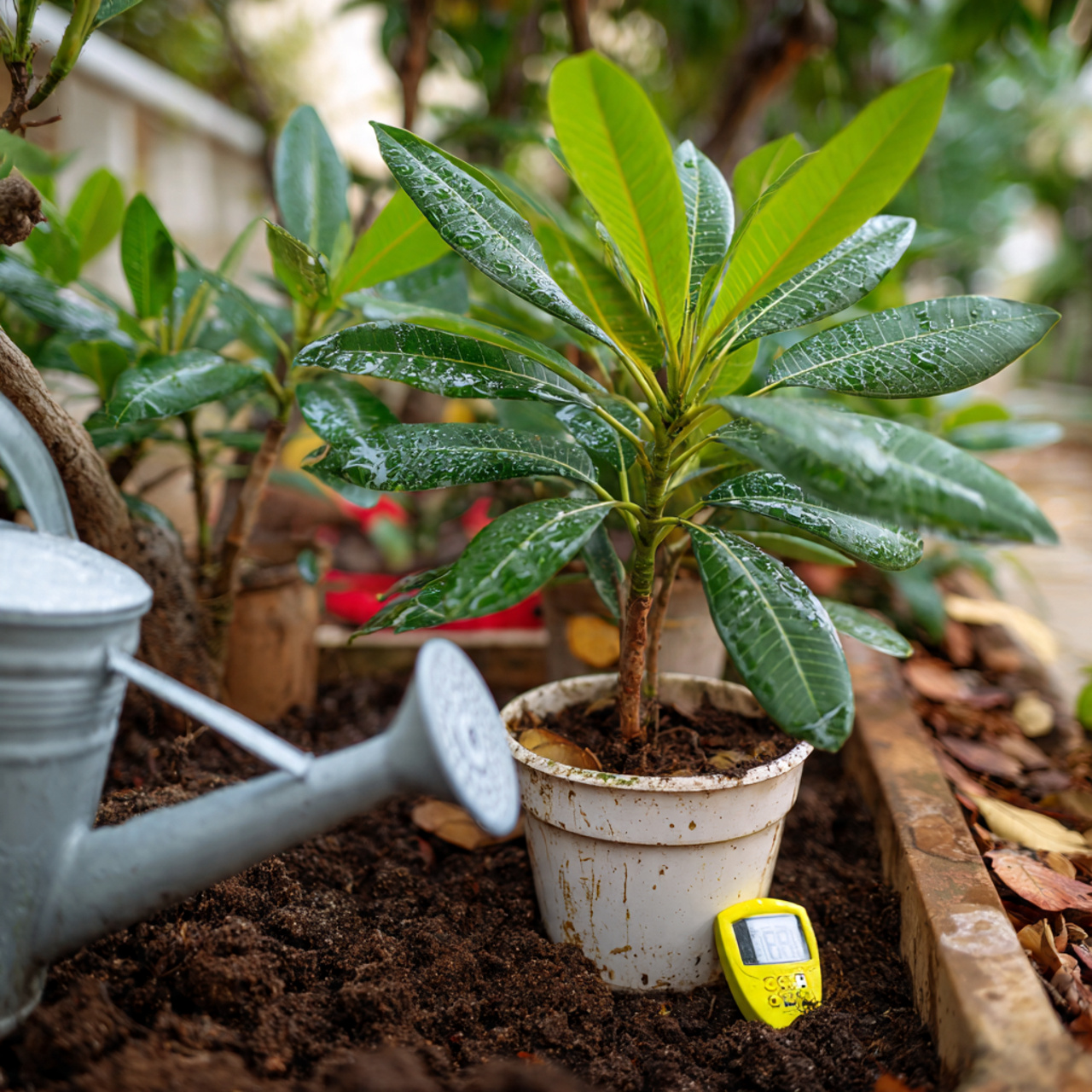
Watering plumerias properly takes a bit of finesse, but once you get the hang of it, it becomes second nature. During their active growing season, let the top two inches of soil dry out before watering deeply. This “soak and dry” approach encourages roots to grow deep and strong.
Shallow, frequent watering is your enemy here. It creates weak surface roots that can’t handle heat stress or find nutrients efficiently. Instead, think of watering as an occasional deep drink rather than constant sipping.
Watering Guidelines by Season:
- Spring/Summer (Active Growth): Deep watering every 5-7 days
- Fall (Transition): Gradually reduce frequency
- Winter (Dormancy): Minimal water, just prevent shriveling
- Container Plants: More frequent than in-ground specimens
Your plumeria will actually tell you when it needs water. Those thick branches should feel firm and plump when properly hydrated. If they start feeling soft or look wrinkled, you’ve waited a bit too long.
Visual Water Cues:
- Plump, firm branches = well-hydrated
- Softening branches = needs water soon
- Severely wrinkled branches = water stress
Critical Mistake to Avoid: Never water dormant plumerias heavily. Their metabolism slows way down, and wet soil during dormancy is a recipe for fatal root rot.
Mulching helps maintain consistent soil moisture while moderating temperature swings. Just keep it a few inches away from the trunk to prevent moisture buildup that could cause rot. During heat waves, even well-established plants appreciate supplemental watering to keep those flowers coming.
Fertilizing Plumeria Flowers for Garden Performance
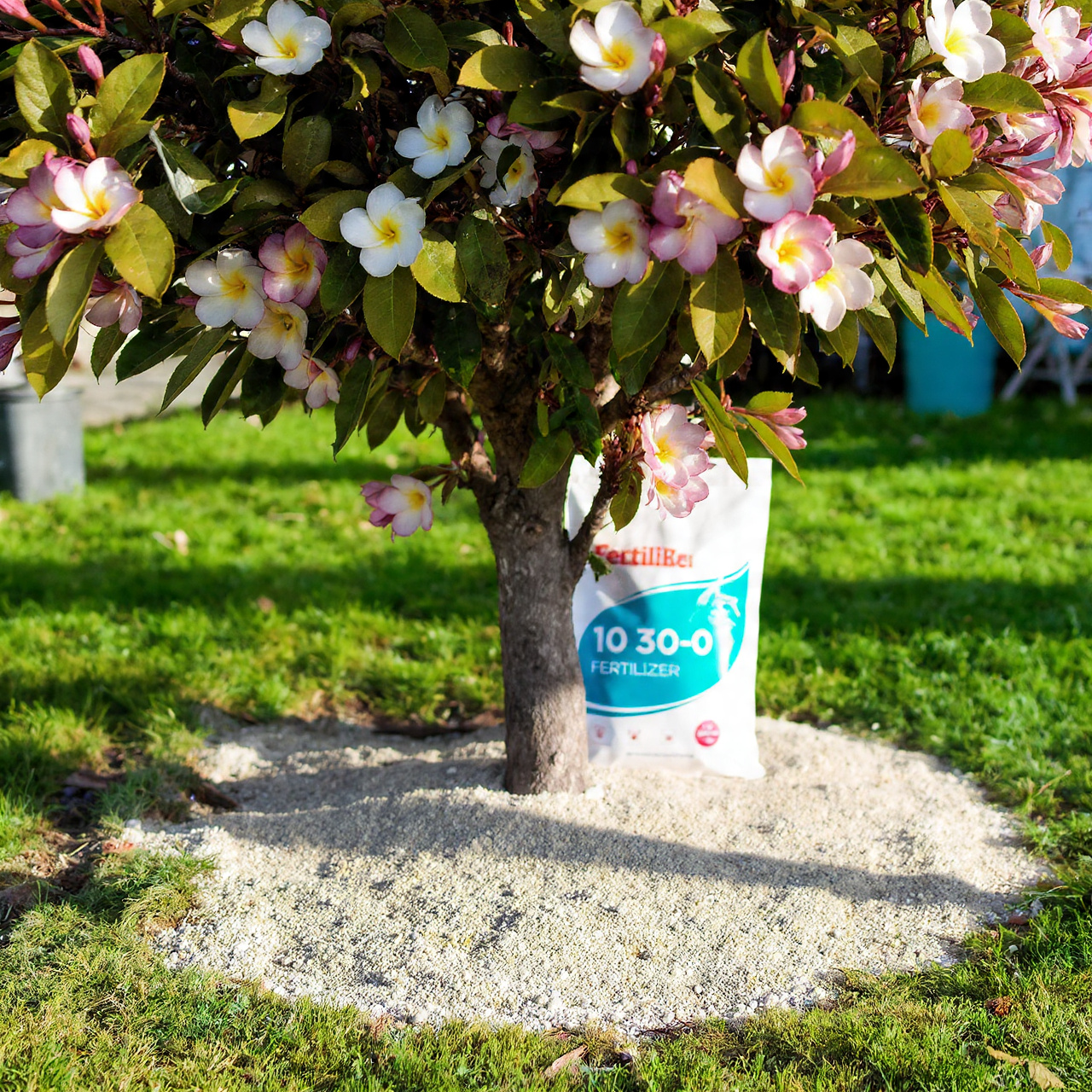
Think of plumerias as the athletes of the plant world—they need proper nutrition to perform at their peak. These are heavy feeders, especially when they’re pushing out all those gorgeous blooms.
Your best bet? High-phosphorus fertilizers designed for flowering plants. Look for ratios like 10-30-10, applying every 2-3 weeks from spring through summer. That middle number (phosphorus) is what drives flower production.
Fertilizer Application Schedule:
- Spring: Resume feeding when new growth appears
- Growing Season: Every 2-3 weeks with liquid fertilizer
- Alternative: Slow-release granules every 2-3 months
- Fall: Stop fertilizing to prepare for dormancy
Essential Fertilization Tips:
- Apply to moist soil to prevent root burn
- Water thoroughly after applying granular fertilizers
- Follow package instructions precisely (more isn’t better)
- Switch to low-nitrogen formulas during blooming
Slow-release granular fertilizers work great for busy gardeners who don’t want to remember bi-weekly feeding schedules. They provide steady nutrition over several months, though they won’t give the quick boost that liquid fertilizers deliver.
Micronutrient Supplements:
- Iron for vibrant green leaves
- Magnesium to prevent yellowing
- Manganese for healthy chlorophyll production
Foliar feeding (spraying diluted fertilizer on leaves) gives plants a quick pick-me-up during peak growing periods. Just do this early morning or late evening to avoid burning foliage in strong sunlight.
Warning: High-nitrogen fertilizers promote lush foliage at the expense of flowers. You’ll get a beautiful green plant with few blooms—not the goal here!
Pruning Techniques for Healthy Plumeria Flowers in Gardens
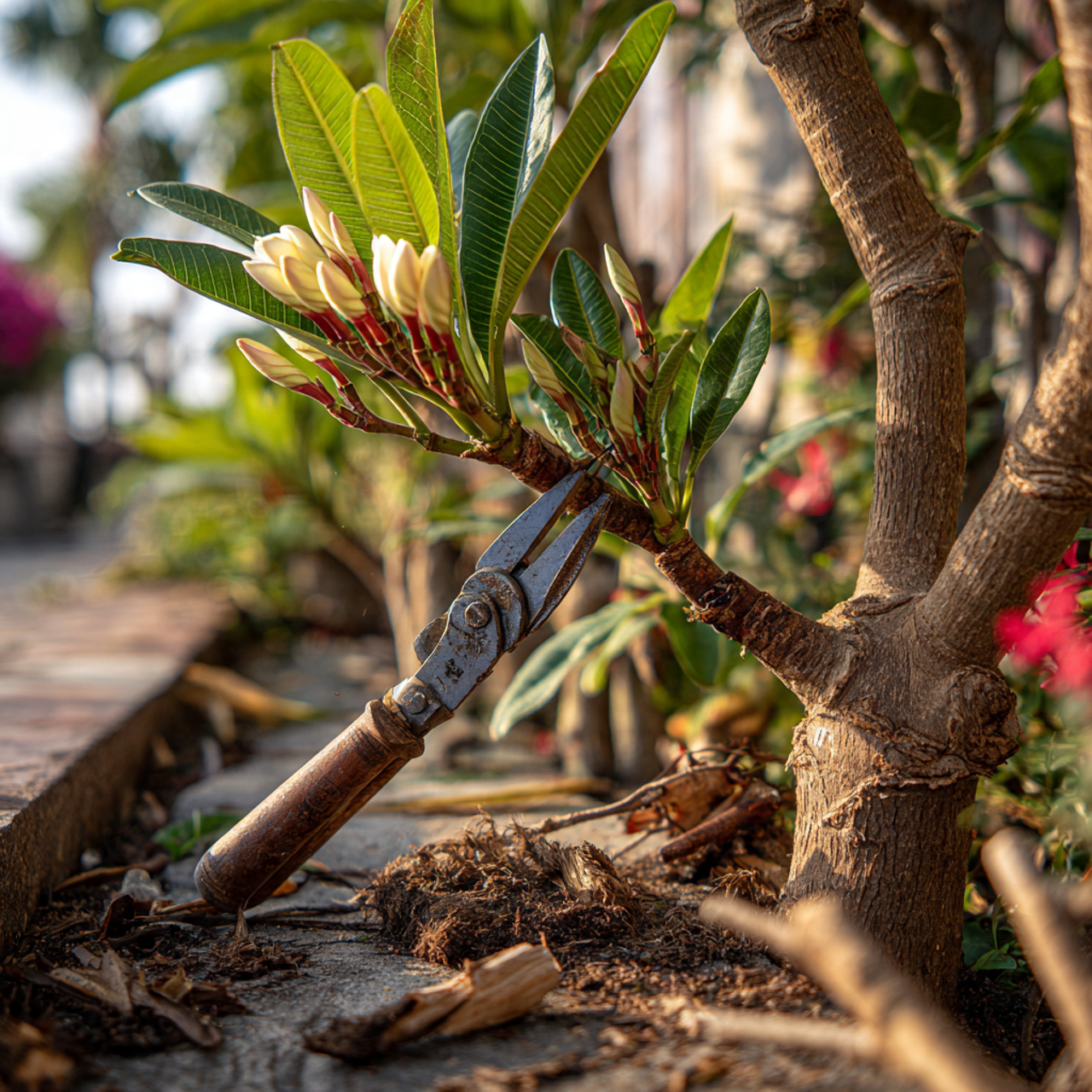
Pruning plumerias doesn’t need to be intimidating. Start simple: remove dead, damaged, or diseased branches whenever you spot them. This basic maintenance keeps plants healthy and looking their best year-round.
For shaping work, wait until dormancy before new growth emerges. You can see the branch structure clearly, making it easier to visualize your cuts. Always cut at an angle so water runs off rather than pooling on cut surfaces where disease could enter.
Pruning Best Practices:
- Use sharp, clean tools (prevents ragged cuts and disease spread)
- Sterilize tools between cuts when removing diseased material
- Cut just above nodes at 45-degree angles
- Remove no more than 1/3 of the plant in one session
- Save major pruning for dormant season
Here’s something most beginners don’t realize: each branch tip produces a flower cluster. Strategic pruning that encourages branching directly translates to more blooms next season. Cut above a node (the bump where leaves emerged), and you’ll typically get 2-3 new branches from that point.
Pruning for More Blooms:
- Tip pruning encourages multiple branches
- Each new branch creates another flowering point
- More branches = exponentially more flowers
Common Pruning Mistakes:
- Cutting during active bloom (reduces current season flowers)
- Flush cuts against the trunk (don’t heal properly)
- Using dull tools (causes crushing and tearing)
- Over-pruning in one session (stresses plants)
Selective pruning opens up the plant canopy for better air circulation and light penetration. Remove branches growing toward the center that create dense, congested growth. This open structure reduces disease pressure while allowing each branch to receive adequate light.
Tip: Those pruned branches make excellent propagation material. You’re essentially getting free plants while shaping your existing specimen!
Pest Management for Plumeria Flowers in Garden Settings
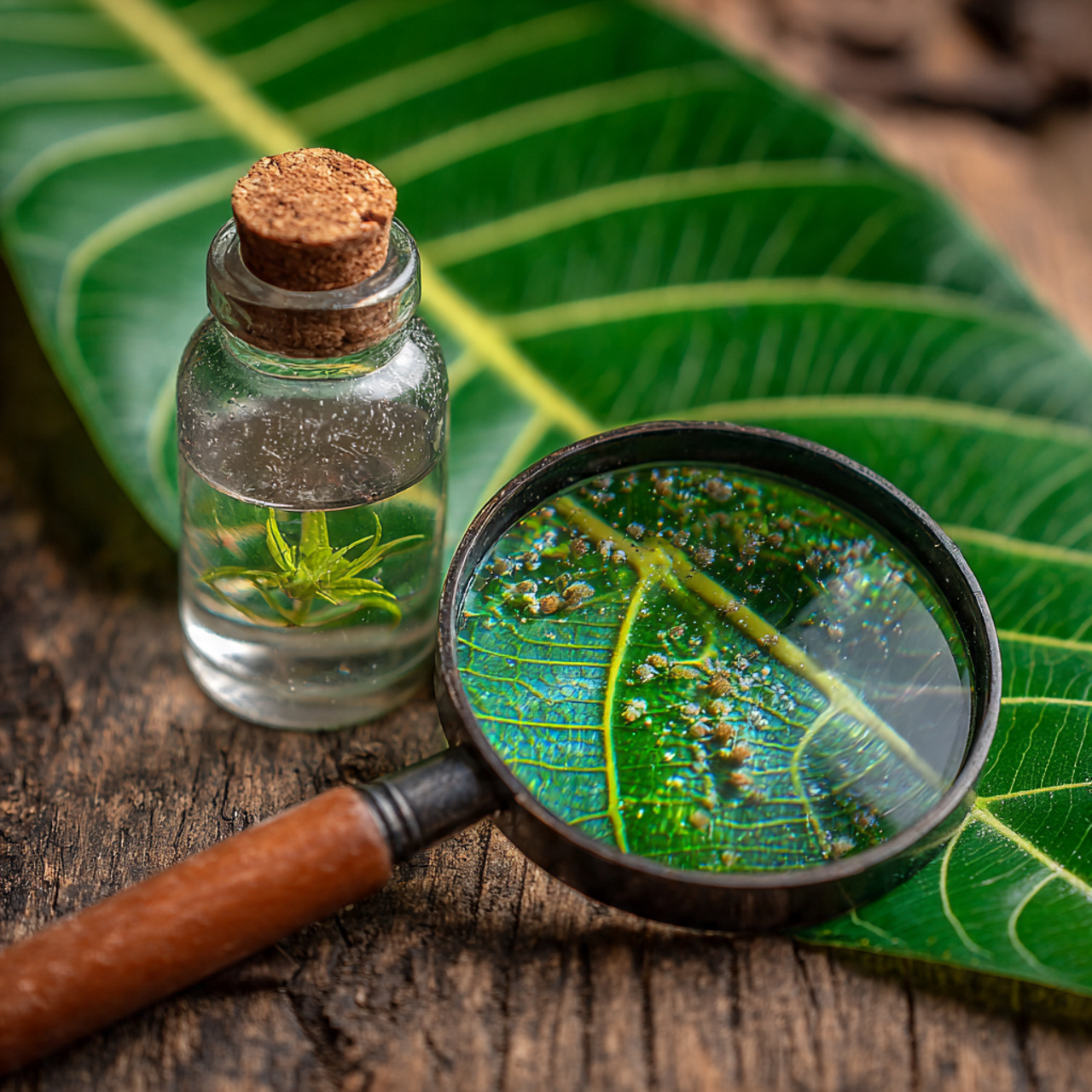
Even low-maintenance plumerias can encounter pest issues, but catching problems early makes all the difference. Spider mites top the troublemaker list, especially during hot, dry weather. You’ll notice stippled, dusty-looking leaves before you see the tiny mites themselves.
The good news? Strong water sprays from your hose often solve minor mite problems. Increase humidity around plants and the mites usually move on. Only reach for miticides when populations explode.
Common Plumeria Pests:
- Spider mites (stippled leaves, webbing)
- Mealybugs (white cottony masses)
- Scale insects (brown bumps on stems)
- Whiteflies (clouds of tiny white insects)
Pest Control Strategies:
- Weekly inspections catch problems early
- Manual removal for small infestations
- Alcohol-soaked cotton swabs for mealybugs
- Horticultural oil for scale and mealybugs
- Yellow sticky traps for whiteflies
Mealybugs love hiding in leaf axils and branch crotches where they’re protected. Check these spots carefully during your weekly plant inspections. For just a few, dabbing with rubbing alcohol on a cotton swab works perfectly. Larger infestations need horticultural oil sprays.
Natural Pest Control:
- Encourage beneficial insects (ladybugs, lacewings)
- Avoid broad-spectrum insecticides that kill helpers
- Maintain plant health (stressed plants attract pests)
- Companion plant with pest-repelling herbs
Scale insects look like small bumps stuck to branches and can multiply quickly on stressed plants. Systemic insecticides work well for heavy infestations, though scraping off by hand works for light problems.
Prevention Tip: The absolute best pest defense is a healthy, well-cared-for plant. Stressed plumerias become pest magnets, while vigorous plants resist and recover from pest damage naturally.
Disease Prevention for Plumeria Flowers
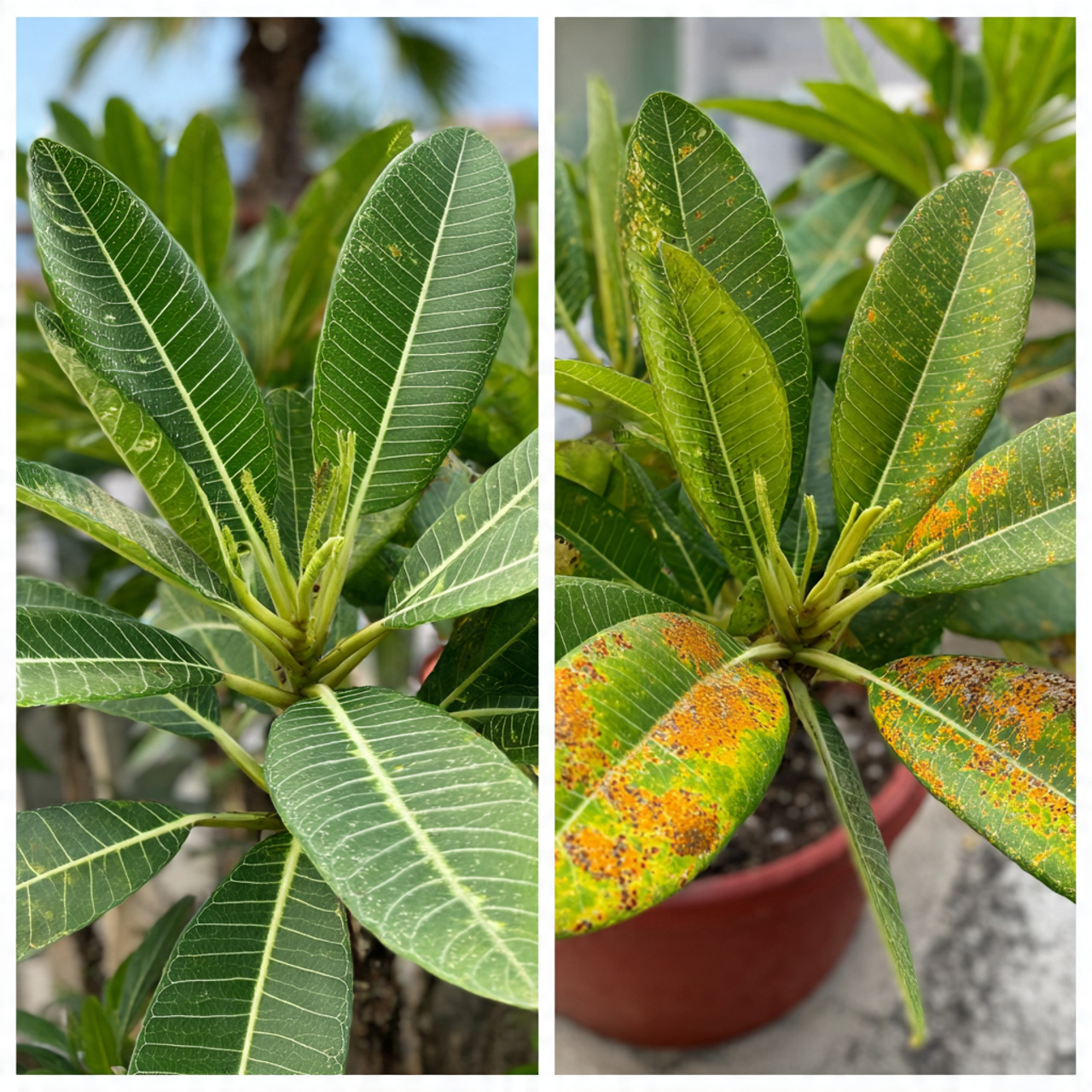
Plumeria rust—those yellow-orange pustules on leaf undersides—strikes fear in many growers’ hearts, but it’s manageable with the right approach. Catching it early is key. Remove affected leaves immediately and apply fungicides labeled for rust control.
Better air circulation prevents many disease problems before they start. Proper spacing between plants, strategic pruning to open up canopies, and avoiding overhead watering all reduce the humidity that fungal diseases love.
Common Plumeria Diseases:
- Plumeria rust (orange pustules on leaves)
- Stem rot (black, mushy branches)
- Leaf spot (brown or black spots on foliage)
- Root rot (from overwatering)
Disease Prevention Checklist:
- Water at soil level, not overhead
- Water early in the day (foliage dries quickly)
- Space plants adequately for air flow
- Remove fallen debris around plants
- Sanitize all pruning tools between plants
Stem rot develops when soil stays too wet, particularly during dormancy. Affected branches turn mushy and black—a sickening sight for any gardener. Cut back to healthy wood immediately, making sure to sterilize your tools after each cut.
Critical Prevention Measures:
- Ensure excellent drainage before planting
- Reduce watering during dormancy dramatically
- Never let water pool around the base
- Monitor soil moisture with your finger, not a schedule
Fungicide Application Tips:
- Apply preventively during humid weather
- Follow label instructions exactly
- Reapply after heavy rain
- Rotate different fungicide types to prevent resistance
Resistant varieties offer the best long-term solution where specific diseases recur yearly. Research which cultivars show natural resistance to problems common in your area.
Remember: Healthy plants resist disease better than stressed ones. Proper cultural care—good drainage, appropriate watering, adequate nutrition—is your first line of defense.
Winter Care for Plumeria Flowers in Garden Zones
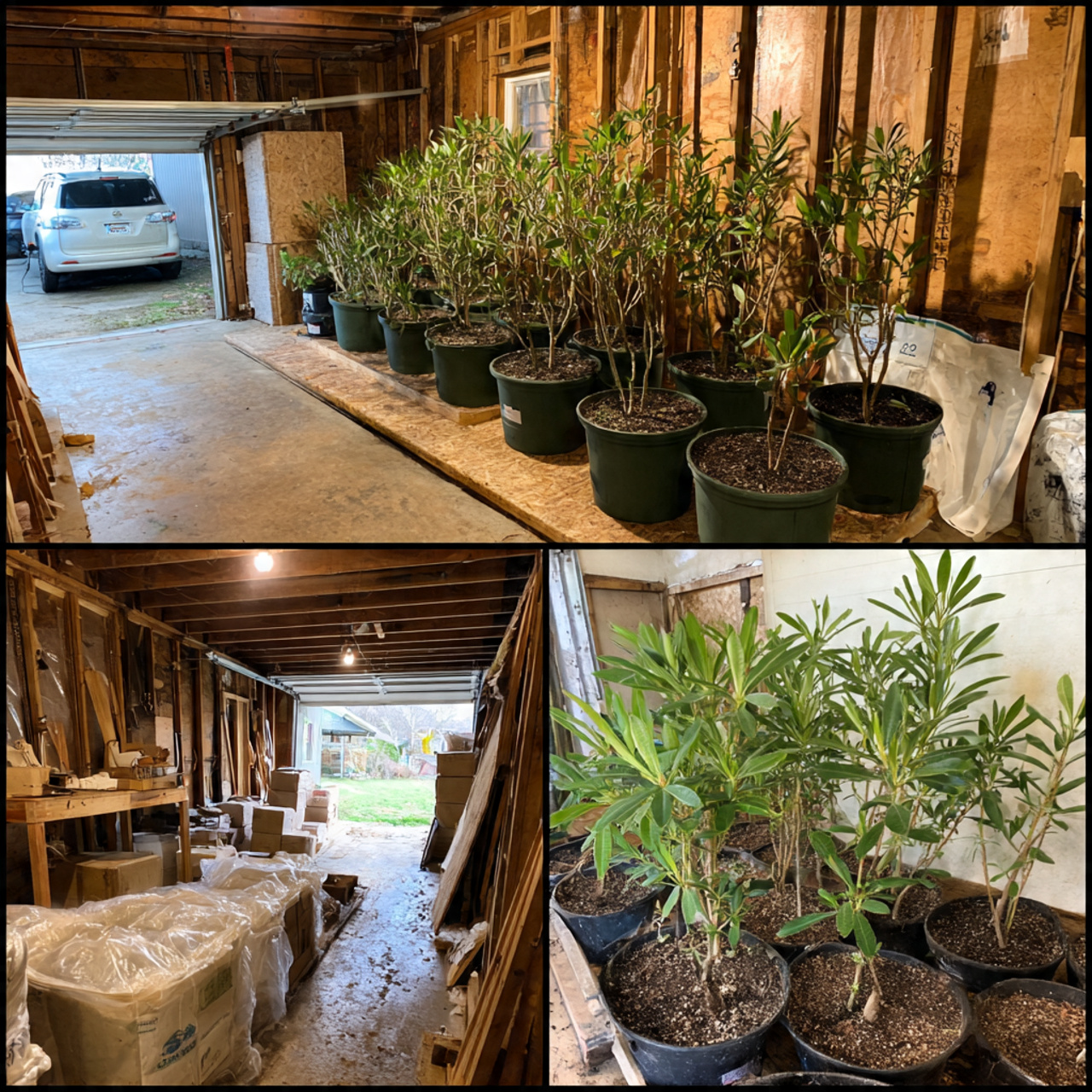
Winter preparation separates successful plumeria growers from those who replace plants each spring. In zones where temperatures regularly drop below 50°F, container plants need to come indoors before the first cold snap.
Find bright spots away from heating vents—sunny windows work great. In-ground plants in borderline zones benefit from heavy root zone mulching and frost blankets draped over branches during cold snaps.
Winter Care by Zone:
- Zone 11+: Year-round outdoor growing
- Zone 10: Mulch heavily, protect during rare freezes
- Zone 9 and below: Move containers indoors or treat as annuals
- Borderline zones: Use frost blankets for in-ground plants
Indoor Overwintering Steps:
- Stop watering as leaves naturally drop
- Move to cool (50-55°F), bright location
- Keep soil mostly dry all winter
- Don’t fertilize during dormancy
- Check monthly for excessive shriveling
Timing matters enormously. Let your plants respond naturally to shortening days and cooling temperatures rather than forcing dormancy by withholding water abruptly. This natural transition strengthens plants and improves their cold tolerance.
Winter Storage Locations:
- Heated garages with windows
- Cool basements with grow lights
- Spare bedrooms with south-facing windows
- Enclosed porches (if frost-free)
Mark the locations of in-ground plumerias in cold climates so you don’t accidentally damage dormant plants while doing winter gardening. They’re easy to forget when they lose their leaves!
Restart Care in Spring When:
- Temperatures consistently reach 60°F+
- New growth emerges from branch tips
- Danger of frost has passed in your area
Common Winter Mistake: Overwatering dormant plants kills more plumerias than cold does. When in doubt, underwater rather than overwater during dormancy.
Propagating Plumeria Flowers for Garden Expansion
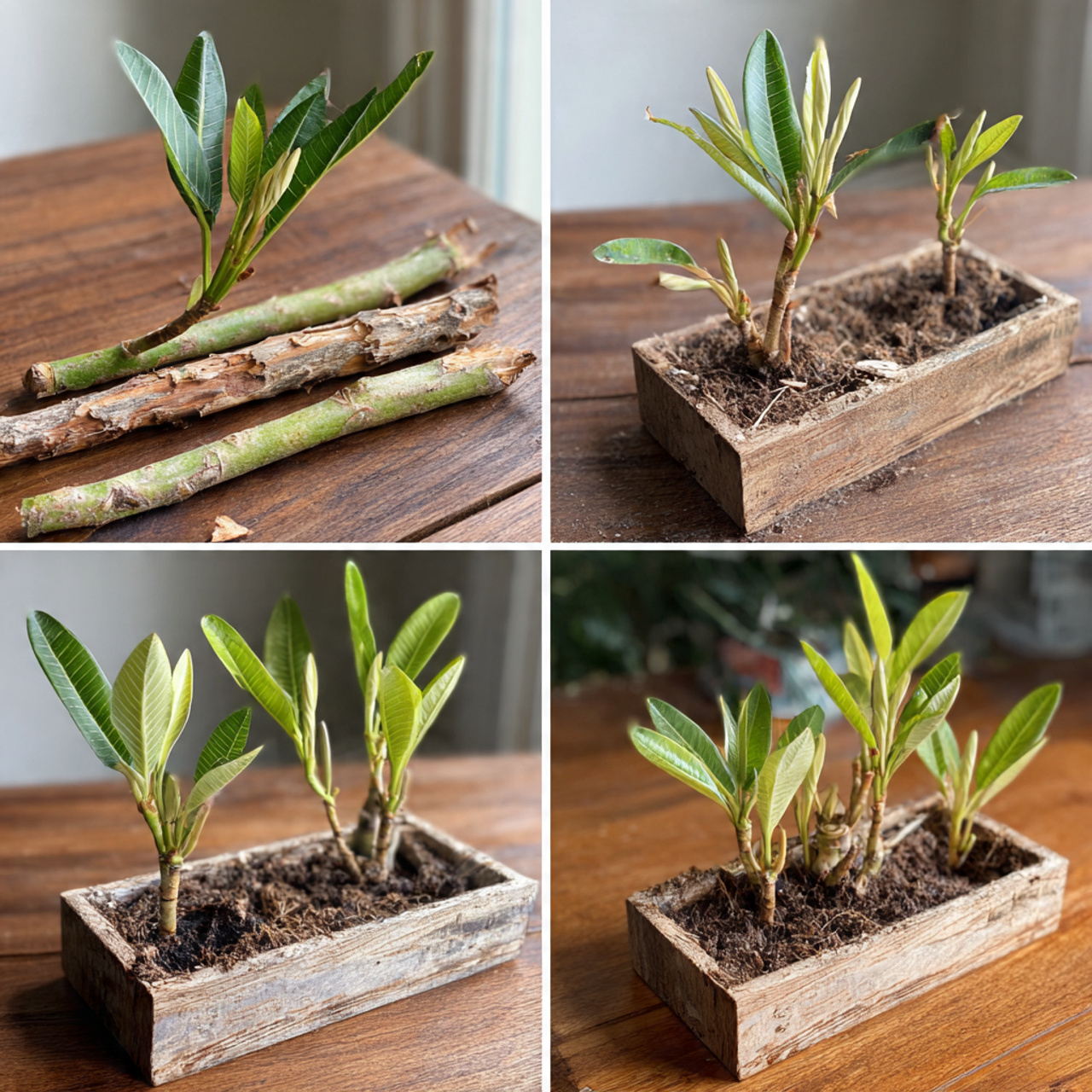
Growing new plumerias from cuttings is incredibly satisfying and surprisingly easy. Take cuttings 12-18 inches long from healthy branches during active growth. The crucial step most beginners miss? Allowing those cut ends to callus for 1-2 weeks in a shaded, dry spot before planting.
This callusing period prevents rot when you plant the cutting in soil. Skip this step and you’ll likely end up with mushy, rotted cuttings instead of new plants.
Cutting Propagation Steps:
- Take 12-18 inch cuttings from healthy branches
- Remove all leaves from the cutting
- Let cut end dry in shade for 1-2 weeks until callused
- Plant bottom 3-4 inches in well-draining mix
- Water sparingly until roots develop (6-8 weeks)
- Begin regular fertilization when new leaves appear
Propagation Success Tips:
- Take cuttings during warm weather
- Use sharp, clean cutting tools
- Don’t plant fresh cuts (they’ll rot)
- Bottom heat speeds rooting
- New leaf growth signals successful rooting
Air layering works beautifully for larger branches you can’t easily take as cuttings. This technique produces rooted plants faster while they’re still attached to the parent plant—like insurance that guarantees success.
Air Layering Process:
- Select a healthy branch
- Make a wound by removing a ring of bark
- Apply rooting hormone to exposed area
- Wrap with moist sphagnum moss
- Cover moss with plastic wrap
- Secure with twist ties or tape
- Check periodically for root development
- Sever and pot when substantial roots form
Advanced Technique: Grafting combines desirable flower characteristics with vigorous rootstocks. This requires practice but allows creating custom combinations unavailable in nurseries.
Beginner Tip: Start with simple cuttings. They’re forgiving and success rates are high if you remember to callus the cuts first!
Container Growing Plumeria Flowers for Garden Versatility
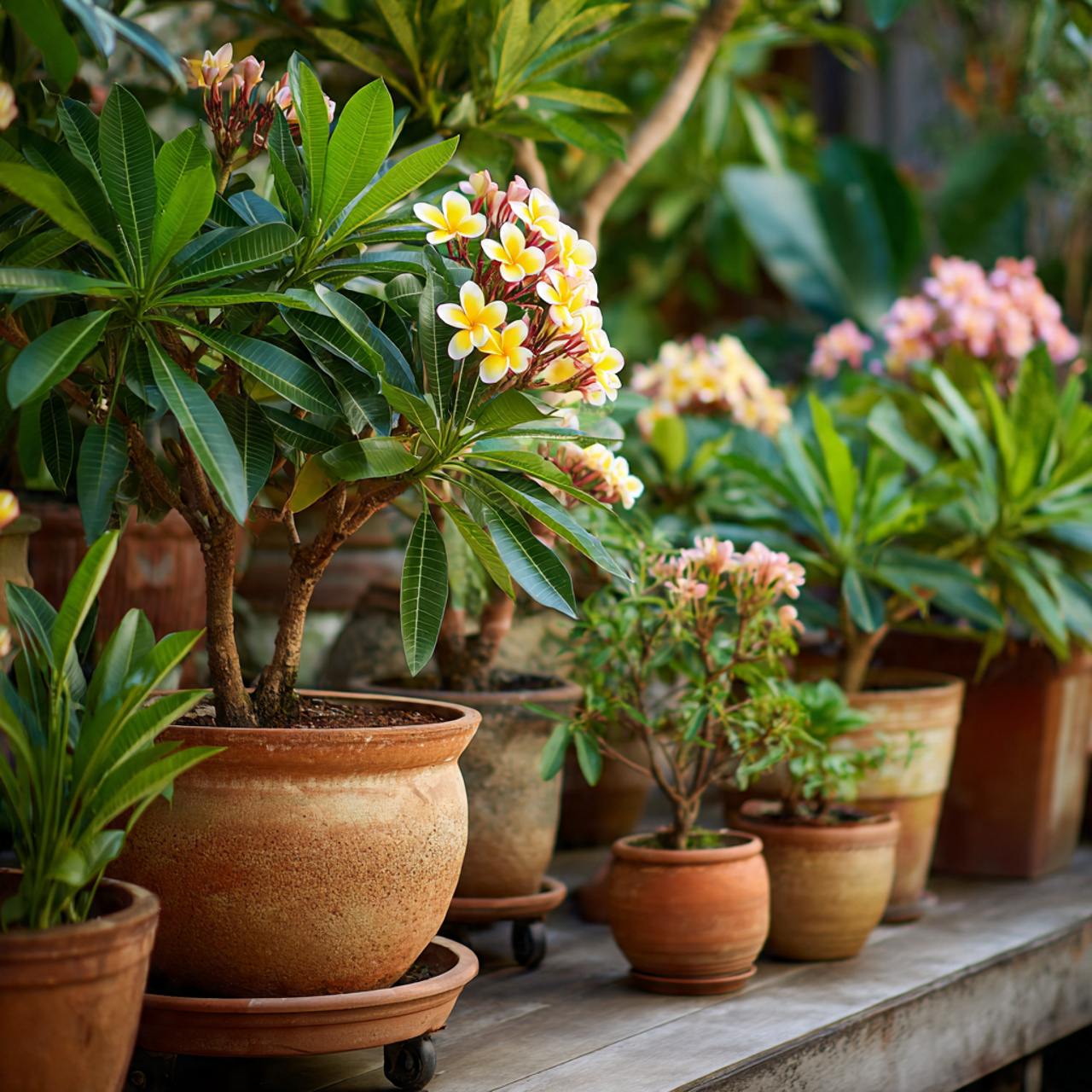
Containers unlock plumeria growing for people in cold climates who’d otherwise miss out on these tropical beauties. The ability to move plants indoors during winter expands their growing range tremendously.
Choose pots with excellent drainage—this cannot be emphasized enough. Size matters too. Generally, containers should be about one-third the height of your plant for proper proportion and stability.
Container Selection Guide:
- Terra cotta: Excellent air exchange, dries quickly, provides weight
- Plastic: Retains moisture longer, lighter weight, less expensive
- Glazed ceramic: Attractive, moderate moisture retention, can be heavy
- Size: Start with 5-gallon pots, upsize gradually
Best Container Mix:
- High-quality cactus or succulent potting mix
- Additional perlite or pumice (20-30% by volume)
- Never use garden soil in containers
Container plants need more frequent feeding than their in-ground cousins because nutrients wash out with each watering. Plan on fertilizing every 2 weeks during growing season rather than every 3-4 weeks.
Container Care Essentials:
- Water when top 2 inches of soil dry out
- Fertilize more frequently than in-ground plants
- Repot every 2-3 years or when rootbound
- Use wheeled bases for easy mobility
- Root prune during repotting to control size
Watering Container Plants:
- Check soil moisture daily during hot weather
- Water until it flows from drainage holes
- Don’t let pots sit in water-filled saucers
- Reduce dramatically during winter dormancy
Repotting every few years refreshes soil and prevents plants from becoming root-bound. Don’t jump too many pot sizes at once—moving up one size every few years works better than planting in oversized containers.
Container Advantage: Apartment dwellers and those with limited garden space can enjoy plumerias in containers on balconies, patios, or even sunny windowsills.
Companion Planting with Plumeria Flowers in Garden Beds
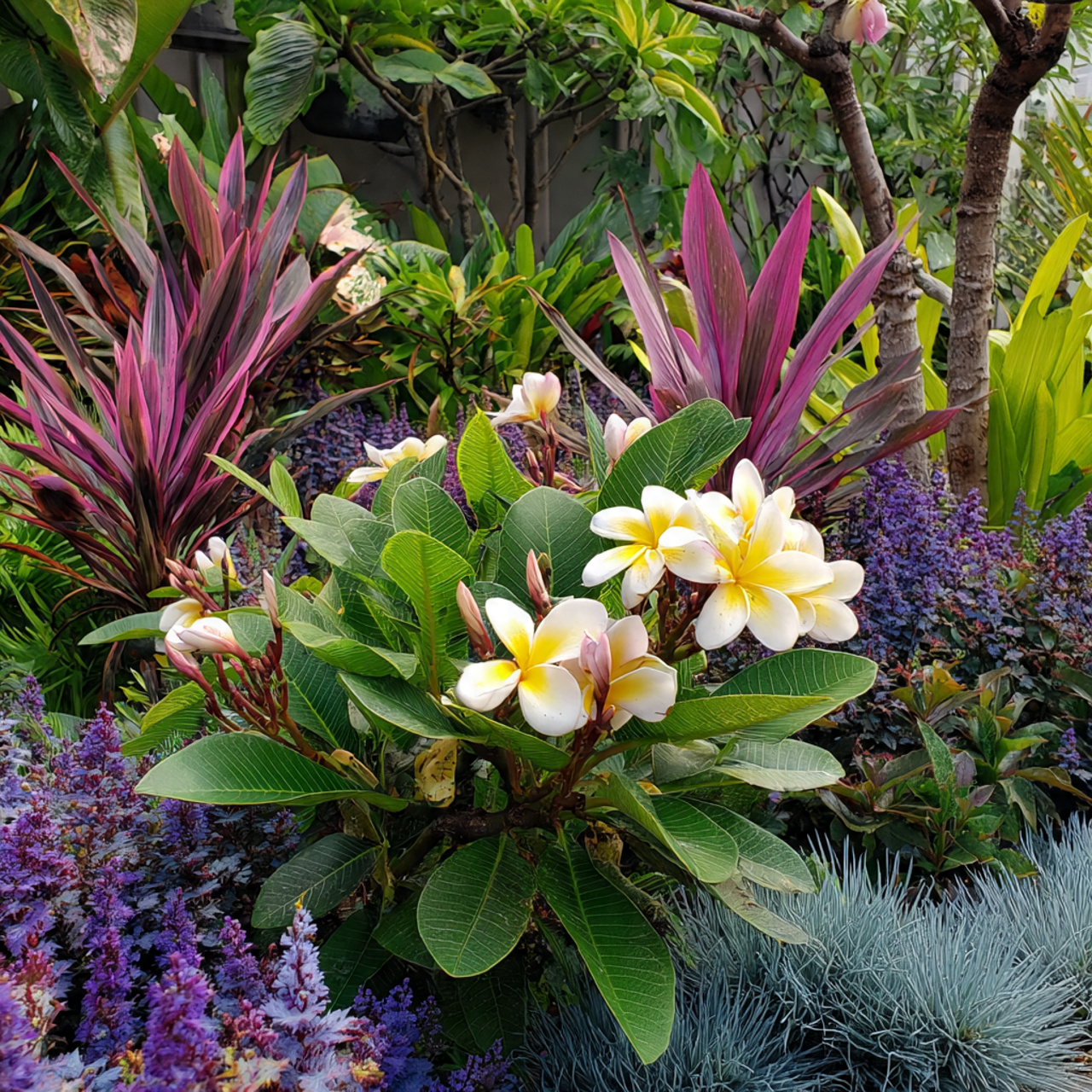
Pairing plumerias with the right companions creates cohesive, stunning landscapes rather than disjointed plant collections. Echo their tropical character with foliage plants like crotons, ti plants, and cordylines. These companions share similar cultural needs and aesthetic vibes.
Ground covers fill the space beneath plumerias beautifully. Blue daze or purslane tolerate the same well-drained conditions plumerias demand while adding low-growing color and texture.
Excellent Plumeria Companions:
- Foliage plants: Crotons, cordylines, ti plants, elephant ears
- Ground covers: Blue daze, purslane, ice plants, sedum
- Ornamental grasses: Fountain grass, purple muhly grass
- Flowering partners: Hibiscus, mandevilla, bougainvillea
- Succulents: Agaves, aloes, aeoniums
Companion Selection Principles:
- Match water requirements (avoid moisture-lovers)
- Consider mature size and spacing
- Coordinate bloom times for extended interest
- Choose complementary or contrasting colors
- Share similar soil and sun preferences
Ornamental grasses like fountain grass provide gorgeous textural contrast against plumeria’s bold leaves and flowers. The fine, flowing texture of grasses makes plumeria’s substantial blooms pop even more.
Color Coordination Ideas:
- Purple fountain grass intensifies white or yellow plumerias
- Bronze-leaved cannas complement pink varieties
- Silver foliage plants (dusty miller, artemisia) enhance all colors
- Blue-flowering partners (salvia, plumbago) create vibrant contrasts
Plants to Avoid Near Plumerias:
- Moisture-loving bog plants
- Aggressive spreaders that compete for space
- Plants requiring different pH levels
- Anything needing frequent overhead watering
Thoughtful companion selection creates layered, interesting gardens where plumeria becomes the star while supporting cast members enhance the overall composition. The goal is unity with variety—everything works together while each plant maintains its unique character.
Fragrance Considerations for Plumeria Flowers
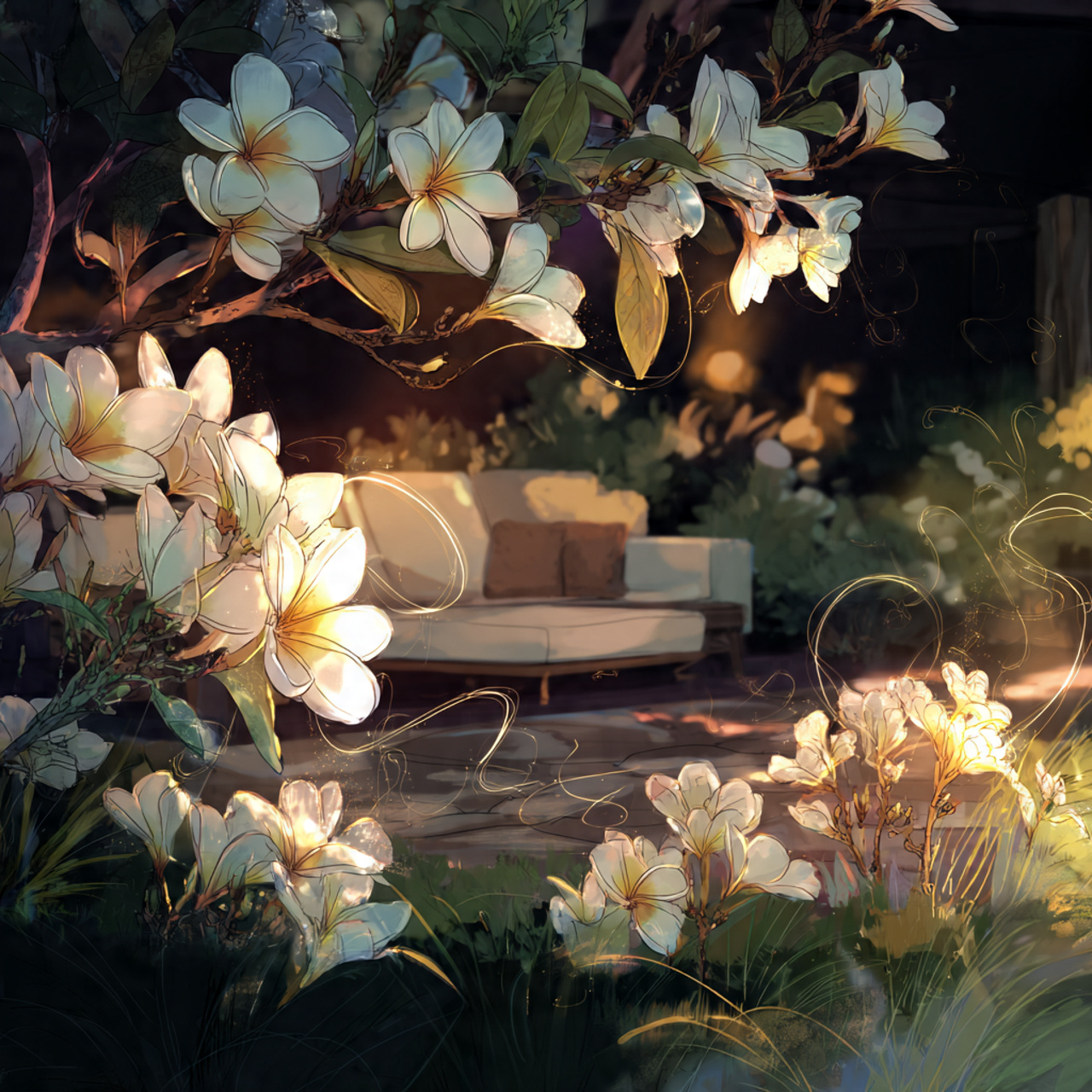
Plumeria fragrance ranks among the most enchanting in the plant kingdom, but strategic placement maximizes your enjoyment. Position strongly scented varieties near outdoor seating areas, open windows, and entryways where you’ll experience their perfume regularly.
Not all varieties smell equally strong. ‘Singapore White’ and ‘Celadine’ rank among the most intensely fragrant, while some red and pink cultivars offer lighter scents. A few varieties produce minimal fragrance, chosen primarily for visual impact.
Most Fragrant Varieties:
- ‘Singapore White’ (intense, classic plumeria scent)
- ‘Celadine’ (strong, sweet fragrance)
- ‘Donald Angus’ (powerful evening scent)
- ‘Aztec Gold’ (moderately fragrant)
Fragrance Enhancement Factors:
- Evening hours (scent intensifies)
- Warm weather (releases more fragrance)
- Mature blooms (stronger than newly opened flowers)
- Multiple plants (creates fragrance clouds)
Position fragrant varieties thoughtfully. While you might love plumeria perfume, placing heavily scented cultivars right beside outdoor dining areas could overwhelm food aromas. A few feet away lets fragrance drift through without dominating.
Strategic Fragrance Placement:
- 10-15 feet from dining areas (fragrance present but not overwhelming)
- Near bedroom windows (natural aromatherapy)
- Along walkways (pleasant surprise as you pass)
- Poolside (scent carries on water vapor)
Consideration for Neighbors:
- In urban settings, avoid heavily scented varieties near property lines
- Multiple fragrant plants amplify scent significantly
- Evening fragrance carries farther on cool air
Understanding scent variations helps when selecting plants. White and yellow varieties typically produce the strongest fragrances, following the pattern of their native pollinators’ preferences. Reds and pinks often offer lighter, sometimes nearly imperceptible scents.
Tip: Plant a variety mix with different fragrance intensities to create complex aromatic experiences throughout your garden. The subtle interplay of scents creates depth impossible with single varieties.
Seasonal Care Calendar for Plumeria Flowers in Gardens
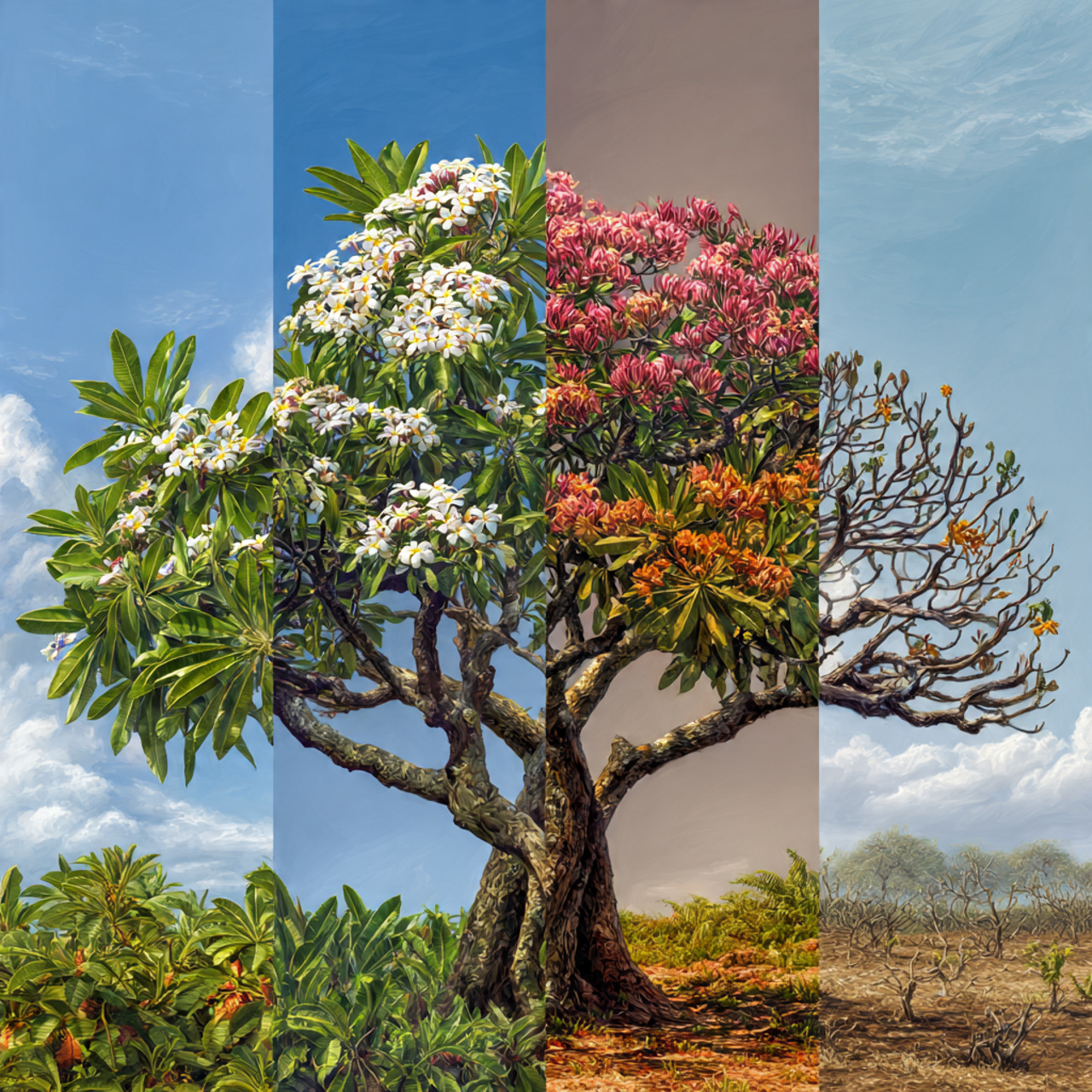
Following nature’s rhythms optimizes plumeria performance year-round. Each season brings specific tasks that set the stage for success.
Spring (March-May):
- Resume regular watering as growth begins
- Apply slow-release fertilizer when leaves emerge
- Inspect for pest or disease issues
- Begin bi-weekly liquid fertilization program
- Remove any winter-damaged branches
- Repot container plants if needed
Summer (June-August):
- Maintain consistent watering schedule
- Continue regular fertilization
- Monitor for spider mites during hot spells
- Deadhead spent blooms for appearance
- Enjoy peak flowering period
- Take cuttings for propagation
Fall (September-November):
- Gradually reduce watering frequency
- Stop fertilizing by late summer/early September
- Allow natural leaf drop and dormancy
- Clean up fallen leaves around plants
- Prepare containers for moving indoors
- Apply preventive fungicide if needed
Winter (December-February):
- Minimal watering for dormant plants
- No fertilization during dormancy
- Protect from freezing temperatures
- Monitor stored plants monthly
- Plan next season’s additions
- Order new varieties from nurseries
Task Timing Tips:
- Let plants dictate timing (watch for new growth signals)
- Regional climate affects seasonal timing
- Container plants may need year-round care in warm climates
- Don’t rush spring restart in marginal zones
This calendar provides general guidance, but observe your specific plants and local climate. Plumerias in South Florida operate on different schedules than those in Southern California or Texas.
Record-Keeping Suggestion: Keep a simple garden journal noting when your plumerias leaf out, first bloom, and enter dormancy. Patterns emerge that help you fine-tune care timing each year.
Troubleshooting Common Problems with Plumeria Flowers
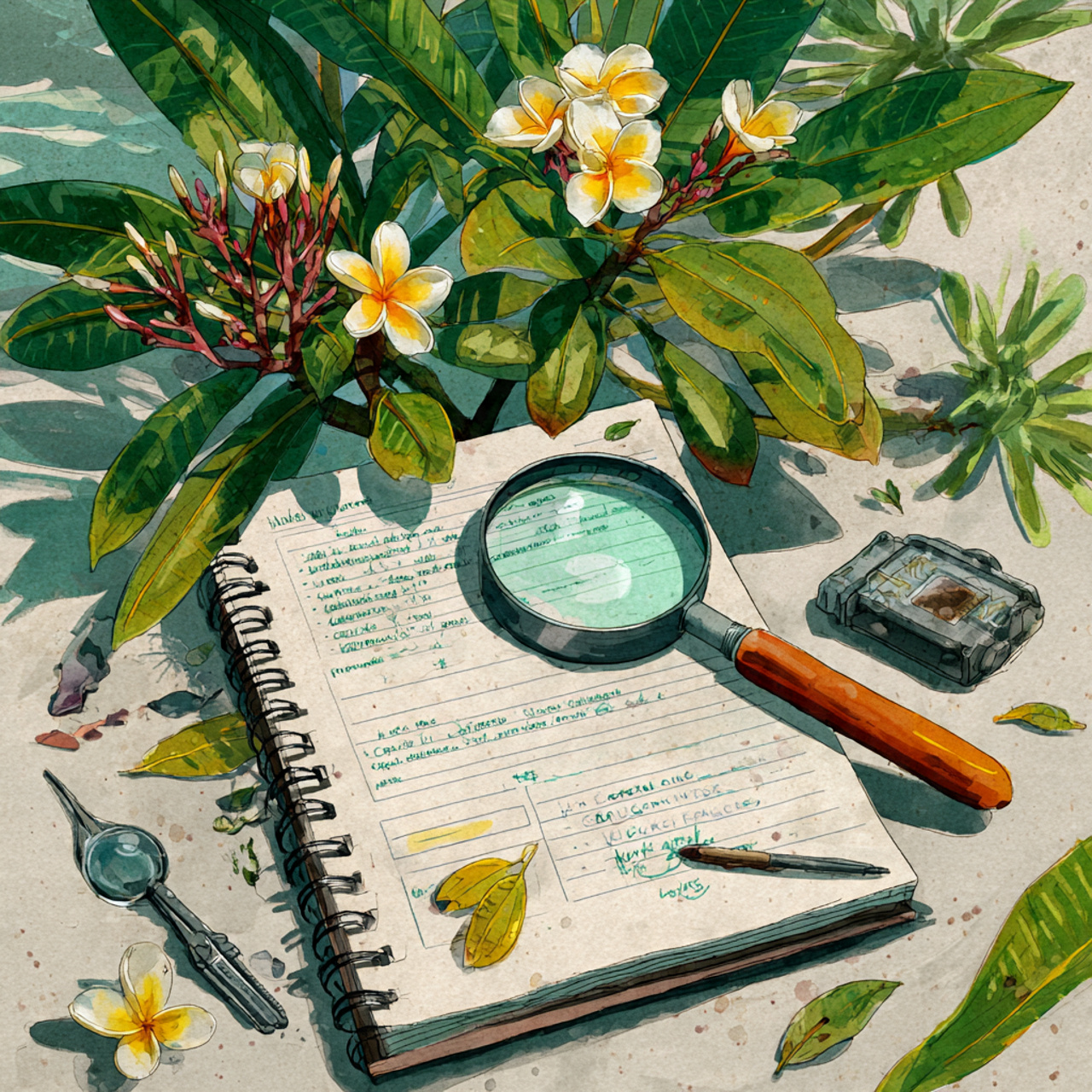
Even experienced growers encounter occasional issues. Knowing how to diagnose and address problems quickly prevents minor setbacks from becoming major disasters.
Yellow Leaves:
- Possible causes: Overwatering, underwatering, nutrient deficiency, natural senescence
- Diagnosis: Check soil moisture, review watering habits, examine overall plant health
- Solution: Adjust watering, apply balanced fertilizer, remove affected leaves
Lack of Flowering:
- Common causes: Insufficient light, excess nitrogen, plant too young, inadequate winter chill
- Solutions: Increase sun exposure, switch to bloom-promoting fertilizer, be patient with young plants
- Timeline: Plants from cuttings typically need 3-5 years to bloom
Soft, Mushy Branches:
- Cause: Stem or root rot from excessive moisture
- Immediate action: Cut back to healthy tissue, improve drainage
- Prevention: Reduce watering, ensure excellent soil drainage
Stunted Growth with Distorted Leaves:
- Likely culprit: Pest infestation (aphids, mites, thrips)
- Action: Inspect carefully, treat with appropriate pesticide
- Follow-up: Monitor weekly for recurrence
Branch Dieback:
- Possible causes: Cold damage, disease, physical injury, severe water stress
- Response: Remove affected branches, identify underlying cause
- Prevention: Proper winter protection, adequate watering
Leaf Drop During Growing Season:
- Signals: Water stress (too much or too little)
- Diagnosis: Check soil moisture levels, review recent weather
- Fix: Adjust watering frequency and amount
Failure to Break Dormancy in Spring:
- Causes: Inadequate winter chill, root damage, excessive winter water
- Wait period: Give plants extra time (sometimes late emergence is normal)
- Investigation: Gently scratch branch bark—green underneath means plant is alive
Troubleshooting Approach:
- Observe symptoms carefully
- Review recent care practices
- Consider environmental factors
- Make one change at a time
- Monitor results over weeks
- Keep notes for future reference
Prevention Philosophy: Most problems are easier to prevent than cure. Consistent, appropriate care prevents the majority of issues plumerias encounter.
Creating Themed Gardens Featuring Plumeria Flowers
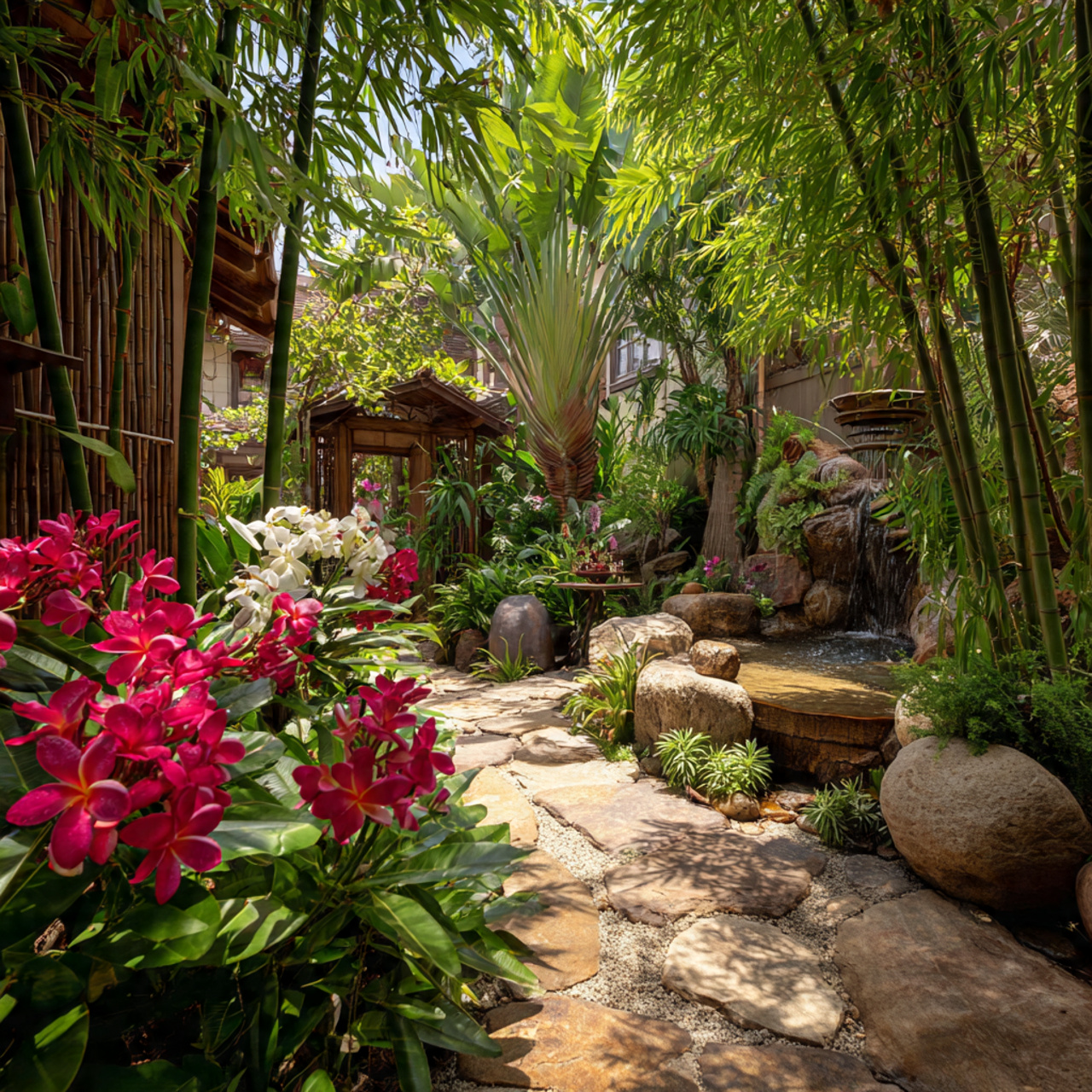
Designing specialized landscapes around plumerias creates memorable outdoor spaces with distinct character. The key is choosing companions and design elements that reinforce your chosen theme while meeting all plants’ cultural requirements.
Tropical Paradise Garden:
- Plumeria companions: Bamboo, palms, bananas, gingers, birds of paradise
- Design elements: Bold foliage, layered heights, lush appearance
- Hardscape: Natural stone, teak furniture, water features
- Color palette: Vibrant, saturated colors
Mediterranean-Style Garden:
- Companions: Lavender, rosemary, citrus, drought-tolerant perennials, olive trees
- Design approach: Water-wise, fragrant, herbs mixed with ornamentals
- Hardscape: Terra cotta, gravel paths, stucco walls
- Color scheme: Silvers, blues, purples, whites
Fragrance Garden:
- Scented companions: Jasmine, gardenias, night-blooming flowers, herbs
- Layout: Circular seating areas surrounded by fragrant plants
- Timing: Layer bloom times for continuous fragrance
- Special feature: Evening-fragrant varieties near seating
Color-Themed Garden:
- White garden: White plumerias with white hibiscus, moonflowers, white caladiums
- Sunset garden: Yellow/orange/red plumerias with coordinating blooms
- Monochromatic: Single plumeria color with foliage in varying shades
Zen/Minimalist Garden:
- Approach: Sculptural plumeria as focal point among minimal plantings
- Elements: Gravel, rocks, bamboo, clean lines
- Philosophy: Space, simplicity, contemplation
- Plumeria use: Single specimen as meditation focus
Cottage Garden (Unexpected Fusion):
- Concept: Exotic plumeria among traditional perennials
- Companions: Roses, delphiniums, foxgloves, daisies
- Effect: Surprising, delightful contrast
- Style: Casual, abundant, slightly wild
Wildlife Garden:
- Focus: Attract hummingbirds and butterflies
- Companions: Native plants, nectar sources, host plants
- Plumeria role: Pollinator attractant (though no nectar)
- Additional features: Water sources, shelter plants
Theme Development Tips:
- Start with clear vision and purpose
- Balance aesthetics with cultural requirements
- Consider maintenance level honestly
- Allow theme to evolve naturally over time
- Don’t sacrifice plant health for design
Successful themed gardens balance creative vision with practical realities. Your plumerias and companions need proper growing conditions regardless of how beautifully they fit your design concept.
Harvesting and Using Plumeria Flowers from Your Garden
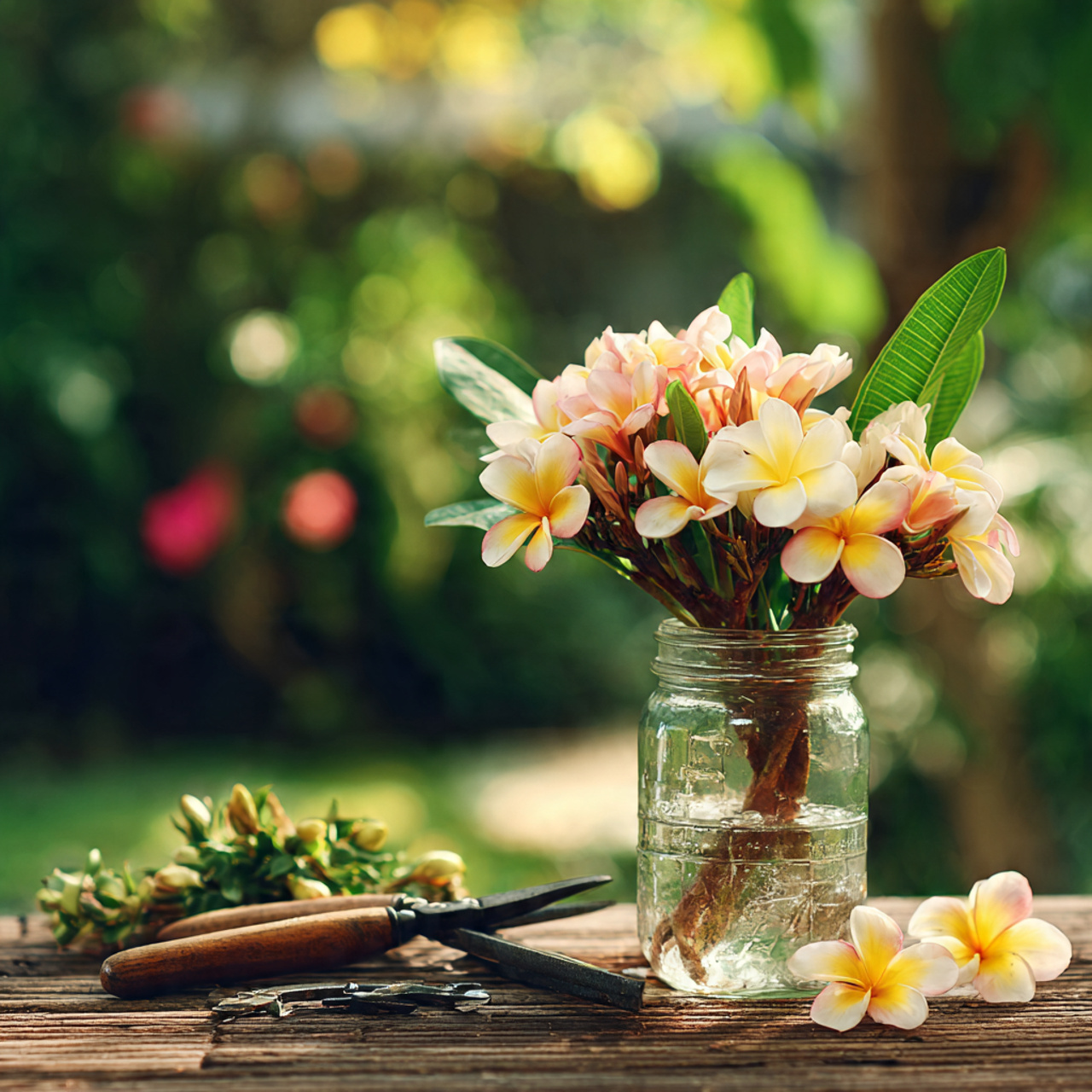
Getting the most from your plumeria blooms extends their enjoyment beyond the garden. These flowers make exceptional cut specimens when harvested and handled properly.
Harvesting Best Practices:
- Timing: Early morning when fully open but before heat stress
- Technique: Cut stems at 45-degree angles with sharp, clean tools
- Immediate care: Place directly in water
- Preparation: Remove lower leaves that would sit below water level
Extending Vase Life:
- Change water daily for maximum longevity
- Recut stems every 2-3 days
- Keep away from direct sunlight and heat
- Remove spent blooms to keep arrangements fresh
- Expected lifespan: 5-7 days with proper care
Creative Uses:
Traditional Hawaiian Leis:
- Single stem provides enough blooms for a simple lei
- Thread fresh flowers onto string or fishing line
- Perfect for special occasions and celebrations
- Flowers stay fresh for several hours when worn
Floating Displays:
- Individual blooms in decorative bowls
- Elegant table centerpieces for entertaining
- Add to birdbaths for unexpected beauty
- Float in pool or pond for tropical ambiance
Preservation Methods:
- Pressed petals: Heavy books, 2-3 weeks pressing time, use in crafts
- Silica gel drying: Maintains 3D form and color for arrangements
- Photography: Capture ephemeral beauty permanently
- Garden journaling: Document varieties and blooming patterns
Craft Projects:
- Pressed flower art and cards
- Resin jewelry and coasters
- Botanical printing on fabric
- Scrapbooking embellishments
Tips for Cut Flowers:
- Harvest more than needed (they’re generous bloomers)
- Avoid touching petals excessively (oils damage waxy surface)
- Clean vases thoroughly between uses
- Use room-temperature water, not cold
The beauty of plumerias is their generosity. Plants produce abundantly enough that you can cut liberally for indoor enjoyment without impacting garden display.
Visit More: Hibiscus Flower
Frequently Asked Questions
How long does it take for plumeria flowers to bloom in a garden after planting?
Plumerias grown from cuttings typically bloom in 3-5 years, though grafted specimens may flower in their second year. Key factors include adequate sunlight (6+ hours daily), proper fertilization, and warmth. Focus on building healthy roots first—blooms will follow naturally.
Can plumeria flowers survive winter in temperate garden climates?
Plumerias tolerate brief dips to 40°F but suffer below 33°F. Zone 10 plants survive with mulching and frost protection. Zones 9 and below need container growing for indoor overwintering. Zone 11+ supports year-round outdoor growing.
What causes plumeria flowers to have weak fragrance in the garden?
Fragrance varies by variety—’Singapore White’ is intensely fragrant while some cultivars have minimal scent. Environmental factors matter too: blooms smell strongest during warm evenings. Plant health also affects fragrance—stressed plants produce weaker scents.
How much water do plumeria flowers need in garden settings?
Water deeply when the top 2 inches of soil dry out—typically every 5-7 days during active growth. Container plants need more frequent watering. During dormancy, reduce to minimal watering (once every 3-4 weeks). Remember: overwatering causes more problems than underwatering.
Do plumeria flowers attract pollinators to the garden?
Yes! Plumerias attract bees, butterflies, and hummingbirds with their fragrance and showy blooms, despite producing no nectar. They increase overall pollinator activity in gardens, benefiting surrounding plants.
Conclusion
Plumeria flowers transform gardens into tropical paradises with minimal effort. Success requires three essentials: excellent drainage, generous sunlight, and respecting seasonal rhythms. Whether grown as specimen trees, foundation plantings, or containers, these resilient beauties deliver stunning blooms and intoxicating fragrance year after year.
Start by choosing varieties suited to your climate. Prepare well-draining soil, position plants in sunny spots where you’ll enjoy their fragrance, and follow seasonal care guidelines. As your plumerias mature, they develop impressive character with sculptural branching and abundant blooms that anchor your landscape.
The reward? A personal paradise filled with color, fragrance, and satisfaction throughout the growing season. Ready to begin your plumeria adventure? Your future self will thank you every time those gorgeous, fragrant blooms open in your garden.