25 Modern Garden Design Ideas to Create a Clean, Calm Outdoor Space
Today’s garden design is moving toward something beautifully simple: clean lines, purposeful spaces, and a deep connection with the natural world. Modern gardens don’t rely on excessive decoration or complicated arrangements. Instead, they celebrate balance, intentional design, and spaces that actually work for how you live.
What makes this approach so appealing? It’s the perfect answer for busy homeowners who want gorgeous outdoor spaces without spending every weekend on maintenance. Smart plant choices, structured arrangements, and quality materials come together to create gardens that look stunning throughout the year with minimal effort.
This guide walks you through some practical modern garden ideas that work whether you’re dealing with a compact terrace, a side yard, or a sprawling backyard. You’ll discover how to create outdoor spaces that feel cohesive, work hard, and look absolutely stunning.
Why Choose Modern Garden Design?
Modern garden design speaks to anyone who appreciates thoughtful style combined with real-world functionality. The approach strips away unnecessary complexity, focusing instead on structured layouts, deliberate plant placement, and those satisfying clean lines that make everything feel intentional and peaceful.
Here’s what makes modern gardens genuinely practical: they’re designed to reduce your workload. Plants chosen for their natural resilience, materials built to last, and layouts planned for easy care mean you spend less time maintaining and more time actually enjoying your outdoor space.
Beyond easier maintenance, modern gardens boost your home’s overall appeal and create genuine usable space. They connect beautifully with patios and decks, often blurring the line between indoor and outdoor living. When you choose modern design, you’re investing in an outdoor environment that stays timeless, functions smoothly, and looks incredible year after year.
Key Benefits:
- Reduces maintenance time and effort significantly
- Increases property value and curb appeal
- Creates functional outdoor living areas
- Works with any budget level
Clean Geometric Layouts
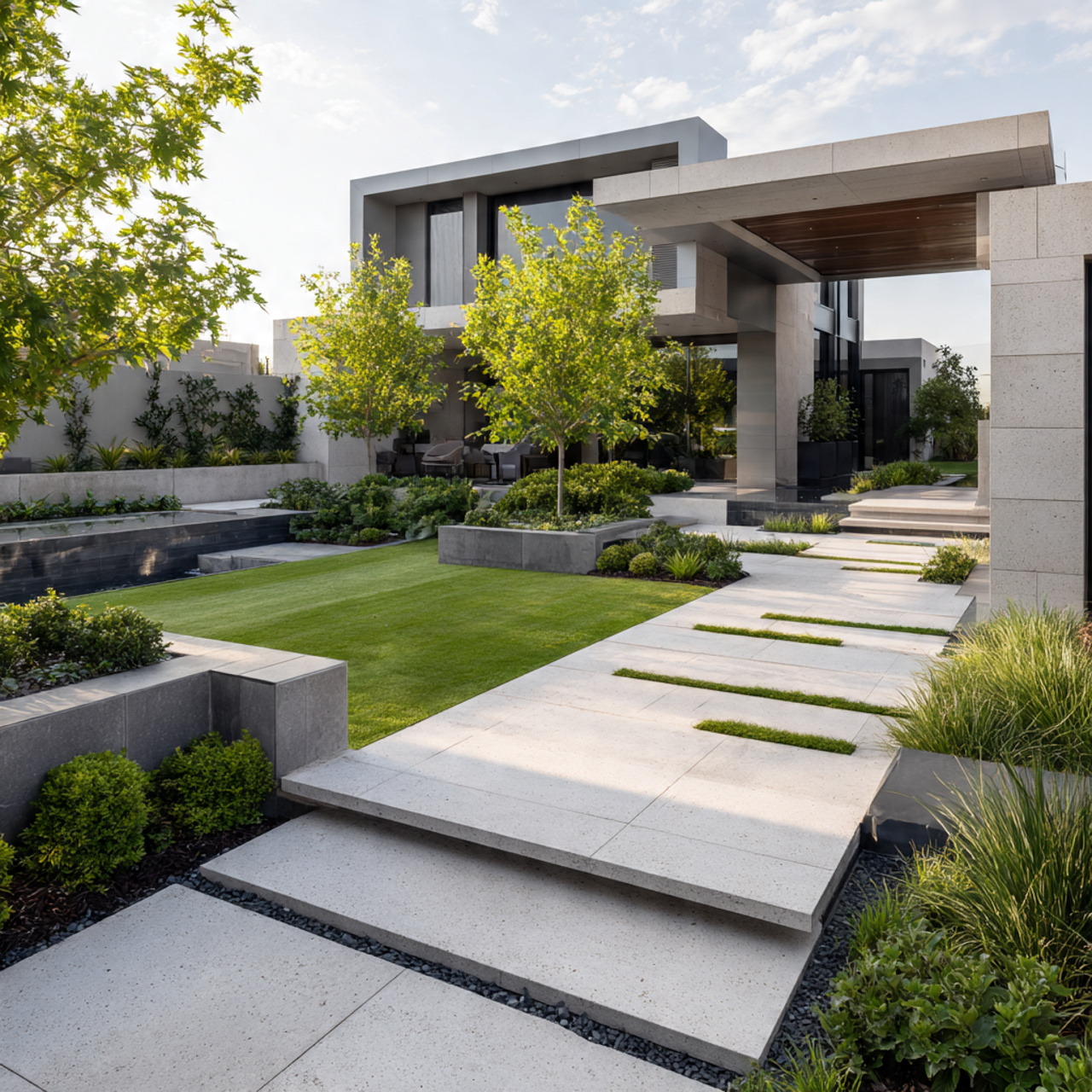
Think of geometric layouts as the skeleton of your modern garden. Sharp lines, rectangles, and balanced shapes bring immediate order to outdoor spaces. When your garden follows geometric principles, it feels purposeful rather than random—especially when matched with contemporary home architecture.
These defined edges in walkways, lawn areas, and planting zones do more than look good. They actually prevent visual chaos and help smaller spaces feel larger and more organized. Urban gardens particularly benefit from this structured approach, where every square foot counts.
Tips:
- Select one primary geometric shape and echo it throughout your design
- Use straight-edge tools for crisp lawn borders
- Consider raised rectangular beds for added dimension
- Align pathways parallel or perpendicular to your home’s architecture
Common Mistake to Avoid: Mixing too many different geometric shapes creates confusion rather than harmony. Stick with one or two complementary forms maximum.
Minimalist Plant Selection
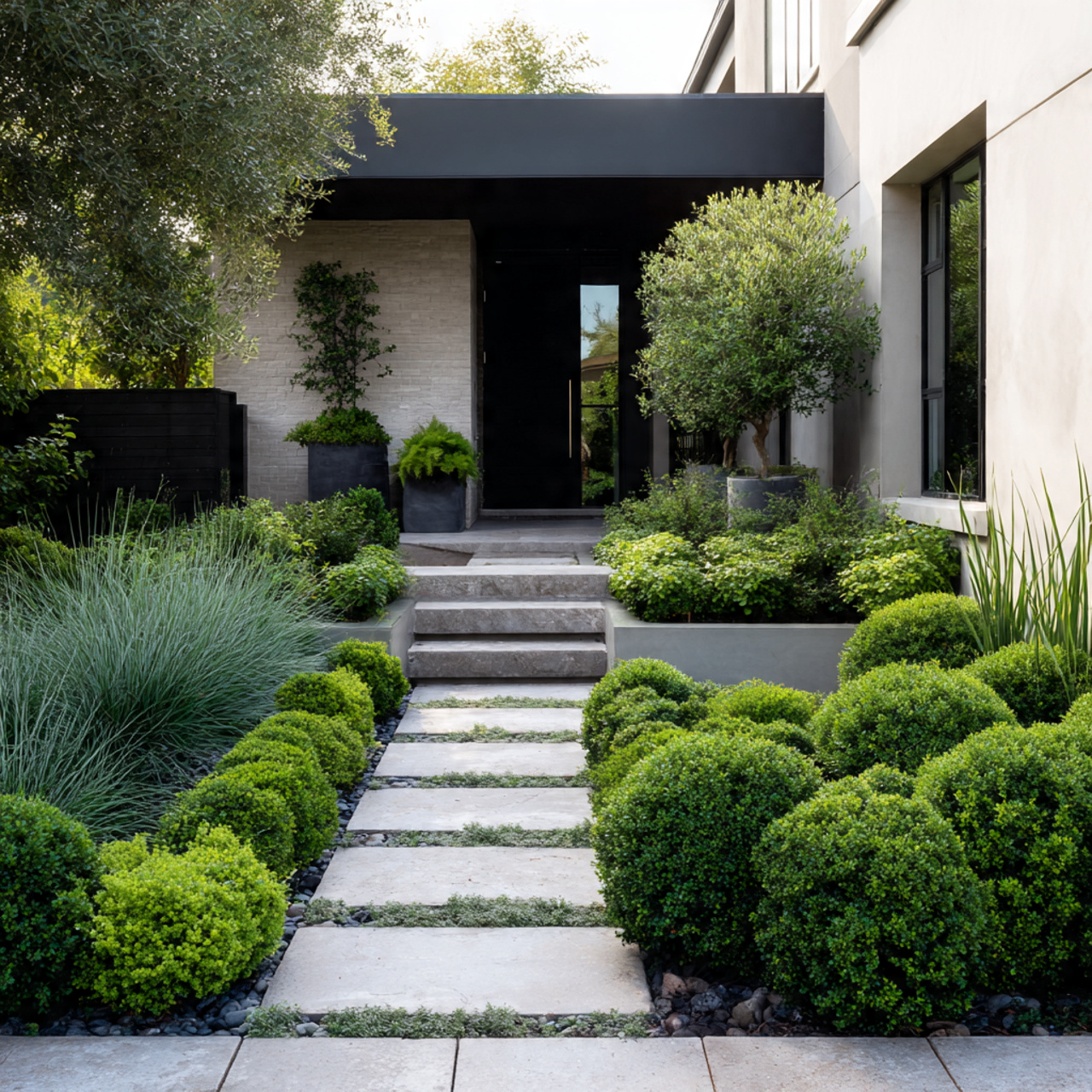
Modern gardens follow the “less is more” philosophy when selecting plants. Rather than creating a botanical collection, you’re curating a focused palette where each plant type appears multiple times. This repetition creates visual strength and makes maintenance surprisingly simple.
Look for plants with naturally architectural forms and controlled growth patterns. Ornamental grasses add movement without mess. Boxwood provides evergreen structure. Bamboo creates height and screening. Succulents offer texture with minimal water needs.
Plant Selection Strategy:
- Limit your entire garden to 3-4 plant varieties
- Group identical plants together in odd numbers (3, 5, 7)
- Choose plants with year-round interest
- Prioritize evergreens for consistent structure
Practical Example: Instead of 10 different shrub varieties, plant seven identical ornamental grasses along a border, three matching boxwood spheres near the entrance, and clusters of the same succulent throughout.
Neutral Color Palette
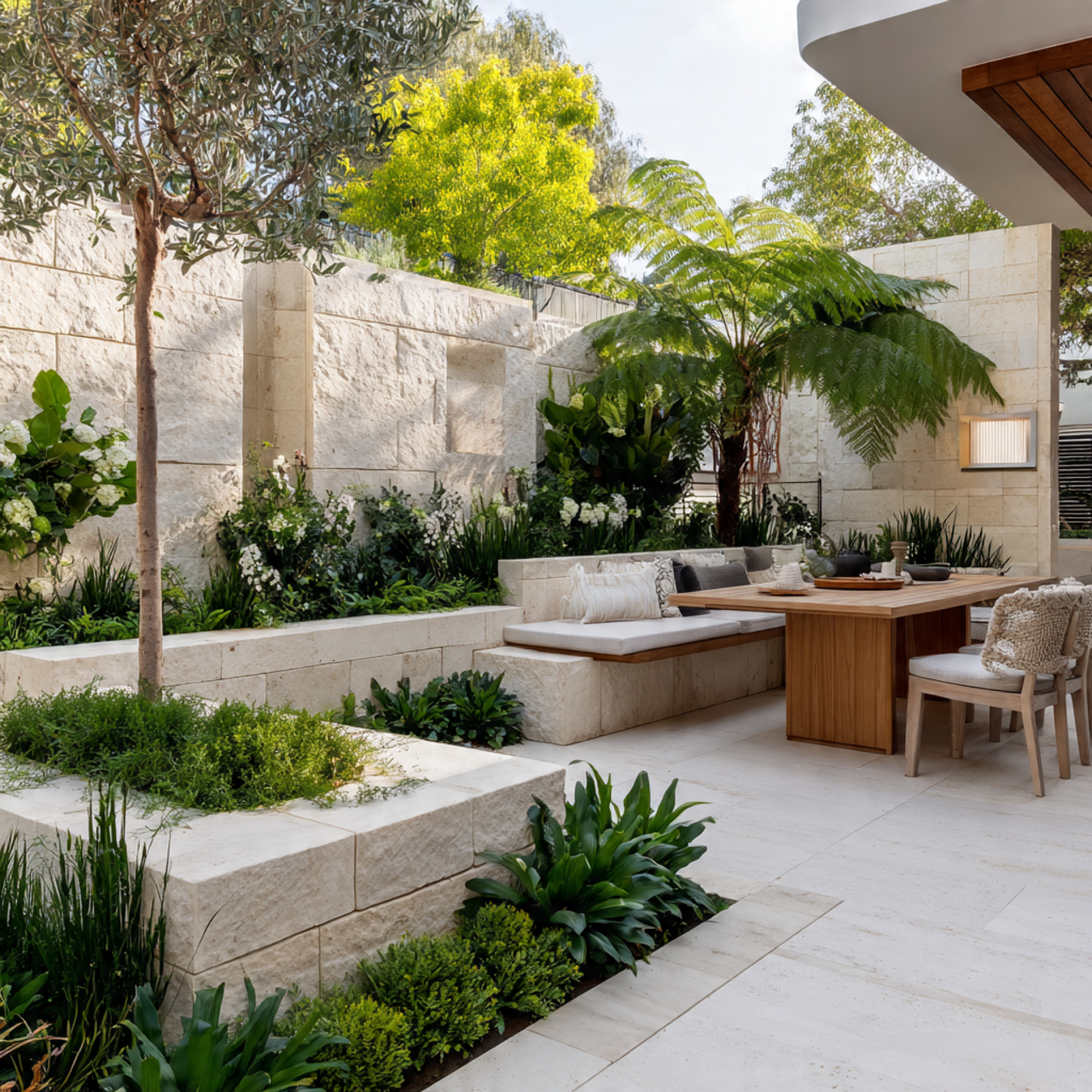
Neutrals form the foundation of sophisticated modern gardens. Grays, whites, blacks, warm beiges, and natural wood tones create spaces that feel inherently calming. These understated colors let your greenery become the star rather than competing with bright materials.
When your hardscaping uses neutral tones, the garden gains a timeless quality that won’t feel dated in five years. Concrete pavers, natural stone, and subtle gravel all contribute to this refined backdrop.
Color Strategy:
- Use gray or charcoal for modern pavers and edging
- Choose natural wood tones for fencing and furniture
- Select white or cream for planters and decorative elements
- Add one muted accent color if desired (soft blue, sage green, or rust)
Design Tip: Test material samples together in your actual outdoor lighting before purchasing—colors look different in natural light than in stores.
Raised Garden Beds
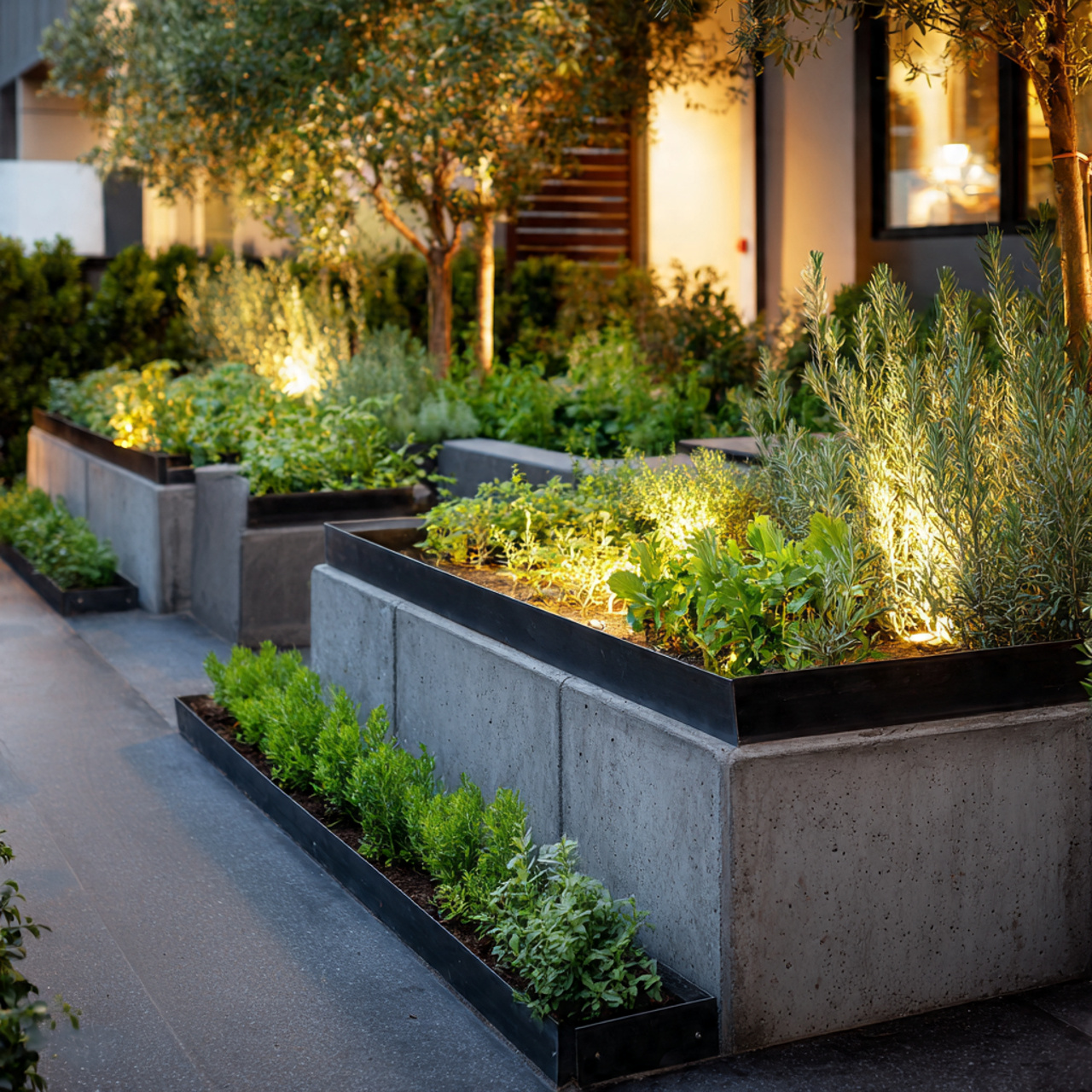
Raised beds serve double duty in modern gardens. They organize planting areas while adding architectural interest and vertical dimension. The clean, defined edges align perfectly with modern design principles while offering practical benefits like better drainage and easier soil management.
Contemporary raised beds use materials that enhance rather than distract. Poured concrete creates sleek monolithic forms. Corten steel adds industrial warmth. Composite materials offer durability with minimal upkeep.
Installation Tips:
- Keep all beds at matching heights for visual cohesion
- Use interior dimensions that allow easy reach (4 feet wide maximum)
- Install landscape fabric at the bottom to prevent weeds
- Fill with quality soil mix suited to your plants
Safety Consideration: Avoid treated lumber if growing edibles, as chemicals can leach into soil. Use naturally rot-resistant cedar or composite alternatives.
Low-Maintenance Plant Choices
25 Modern Garden Design Ideas: Transform Your Outdoor Space
Today’s garden design is moving toward something beautifully simple: clean lines, purposeful spaces, and a deep connection with the natural world. Modern gardens don’t rely on excessive decoration or complicated arrangements. Instead, they celebrate balance, intentional design, and spaces that actually work for how you live.
What makes this approach so appealing? It’s the perfect answer for busy homeowners who want gorgeous outdoor spaces without spending every weekend on maintenance. Smart plant choices, structured arrangements, and quality materials come together to create gardens that look stunning throughout the year with minimal effort.
This guide walks you through 25 practical modern garden ideas that work whether you’re dealing with a compact terrace, a side yard, or a sprawling backyard. You’ll discover how to create outdoor spaces that feel cohesive, work hard, and look absolutely stunning.
Why Modern Garden Design Makes Sense for Your Home
Modern garden design speaks to anyone who appreciates thoughtful style combined with real-world functionality. The approach strips away unnecessary complexity, focusing instead on structured layouts, deliberate plant placement, and those satisfying clean lines that make everything feel intentional and peaceful.
Here’s what makes modern gardens genuinely practical: they’re designed to reduce your workload. Plants chosen for their natural resilience, materials built to last, and layouts planned for easy care mean you spend less time maintaining and more time actually enjoying your outdoor space.
Beyond easier maintenance, modern gardens boost your home’s overall appeal and create genuine usable space. They connect beautifully with patios and decks, often blurring the line between indoor and outdoor living. When you choose modern design, you’re investing in an outdoor environment that stays timeless, functions smoothly, and looks incredible year after year.
Key Benefits:
- Reduces maintenance time and effort significantly
- Increases property value and curb appeal
- Creates functional outdoor living areas
- Works with any budget level
Clean Geometric Layouts
Think of geometric layouts as the skeleton of your modern garden. Sharp lines, rectangles, and balanced shapes bring immediate order to outdoor spaces. When your garden follows geometric principles, it feels purposeful rather than random—especially when matched with contemporary home architecture.
These defined edges in walkways, lawn areas, and planting zones do more than look good. They actually prevent visual chaos and help smaller spaces feel larger and more organized. Urban gardens particularly benefit from this structured approach, where every square foot counts.
Pro Tips:
- Select one primary geometric shape and echo it throughout your design
- Use straight-edge tools for crisp lawn borders
- Consider raised rectangular beds for added dimension
- Align pathways parallel or perpendicular to your home’s architecture
Common Mistake to Avoid: Mixing too many different geometric shapes creates confusion rather than harmony. Stick with one or two complementary forms maximum.
Minimalist Plant Selection
Modern gardens follow the “less is more” philosophy when selecting plants. Rather than creating a botanical collection, you’re curating a focused palette where each plant type appears multiple times. This repetition creates visual strength and makes maintenance surprisingly simple.
Look for plants with naturally architectural forms and controlled growth patterns. Ornamental grasses add movement without mess. Boxwood provides evergreen structure. Bamboo creates height and screening. Succulents offer texture with minimal water needs.
Plant Selection Strategy:
- Limit your entire garden to 3-4 plant varieties
- Group identical plants together in odd numbers (3, 5, 7)
- Choose plants with year-round interest
- Prioritize evergreens for consistent structure
Practical Example: Instead of 10 different shrub varieties, plant seven identical ornamental grasses along a border, three matching boxwood spheres near the entrance, and clusters of the same succulent throughout.
Neutral Color Palette
Neutrals form the foundation of sophisticated modern gardens. Grays, whites, blacks, warm beiges, and natural wood tones create spaces that feel inherently calming. These understated colors let your greenery become the star rather than competing with bright materials.
When your hardscaping uses neutral tones, the garden gains a timeless quality that won’t feel dated in five years. Concrete pavers, natural stone, and subtle gravel all contribute to this refined backdrop.
Color Strategy:
- Use gray or charcoal for modern pavers and edging
- Choose natural wood tones for fencing and furniture
- Select white or cream for planters and decorative elements
- Add one muted accent color if desired (soft blue, sage green, or rust)
Design Tip: Test material samples together in your actual outdoor lighting before purchasing—colors look different in natural light than in stores.
Raised Garden Beds
Raised beds serve double duty in modern gardens. They organize planting areas while adding architectural interest and vertical dimension. The clean, defined edges align perfectly with modern design principles while offering practical benefits like better drainage and easier soil management.
Contemporary raised beds use materials that enhance rather than distract. Poured concrete creates sleek monolithic forms. Corten steel adds industrial warmth. Composite materials offer durability with minimal upkeep.
Installation Tips:
- Keep all beds at matching heights for visual cohesion
- Use interior dimensions that allow easy reach (4 feet wide maximum)
- Install landscape fabric at the bottom to prevent weeds
- Fill with quality soil mix suited to your plants
Safety Consideration: Avoid treated lumber if growing edibles, as chemicals can leach into soil. Use naturally rot-resistant cedar or composite alternatives.
Low-Maintenance Plant Choices
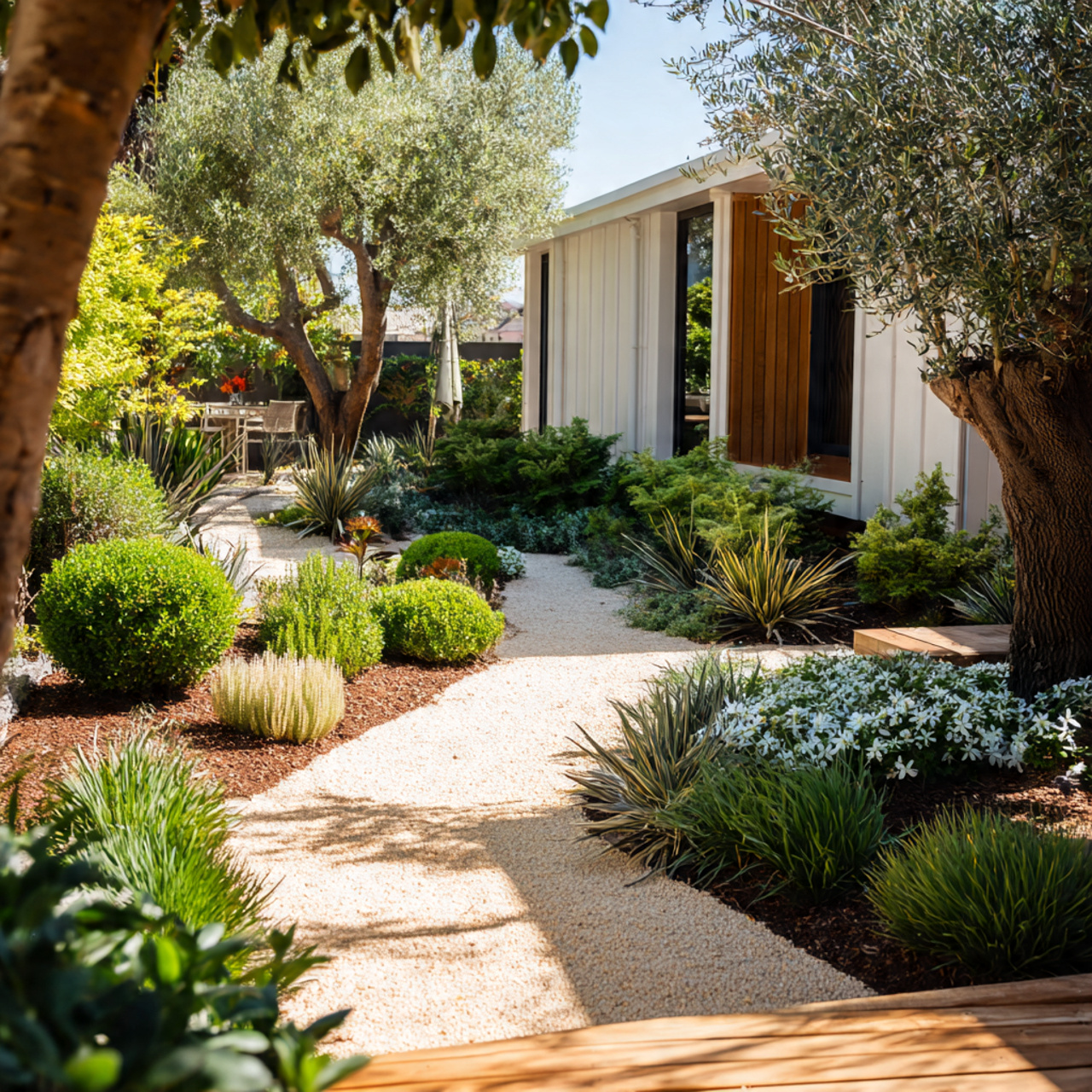
The genius of modern garden design shows in plant selection that looks polished with minimal intervention. Drought-tolerant varieties, native species adapted to your climate, and evergreen shrubs that hold their shape reduce the constant cycle of watering, pruning, and replacing.
These smart plant choices mean your garden maintains its crisp appearance through changing seasons without demanding your weekends.
Recommended Low-Maintenance Plants:
- Evergreen shrubs: boxwood, yew, holly
- Ornamental grasses: fountain grass, blue fescue, feather reed grass
- Drought-tolerant perennials: sedum, lavender, Russian sage
- Native plants suited to your specific region
Water-Saving Tip: Group plants by water needs into hydrozones. Place thirsty plants together in one area with irrigation, while drought-tolerant plants occupy drier zones.
Structured Lawn Areas
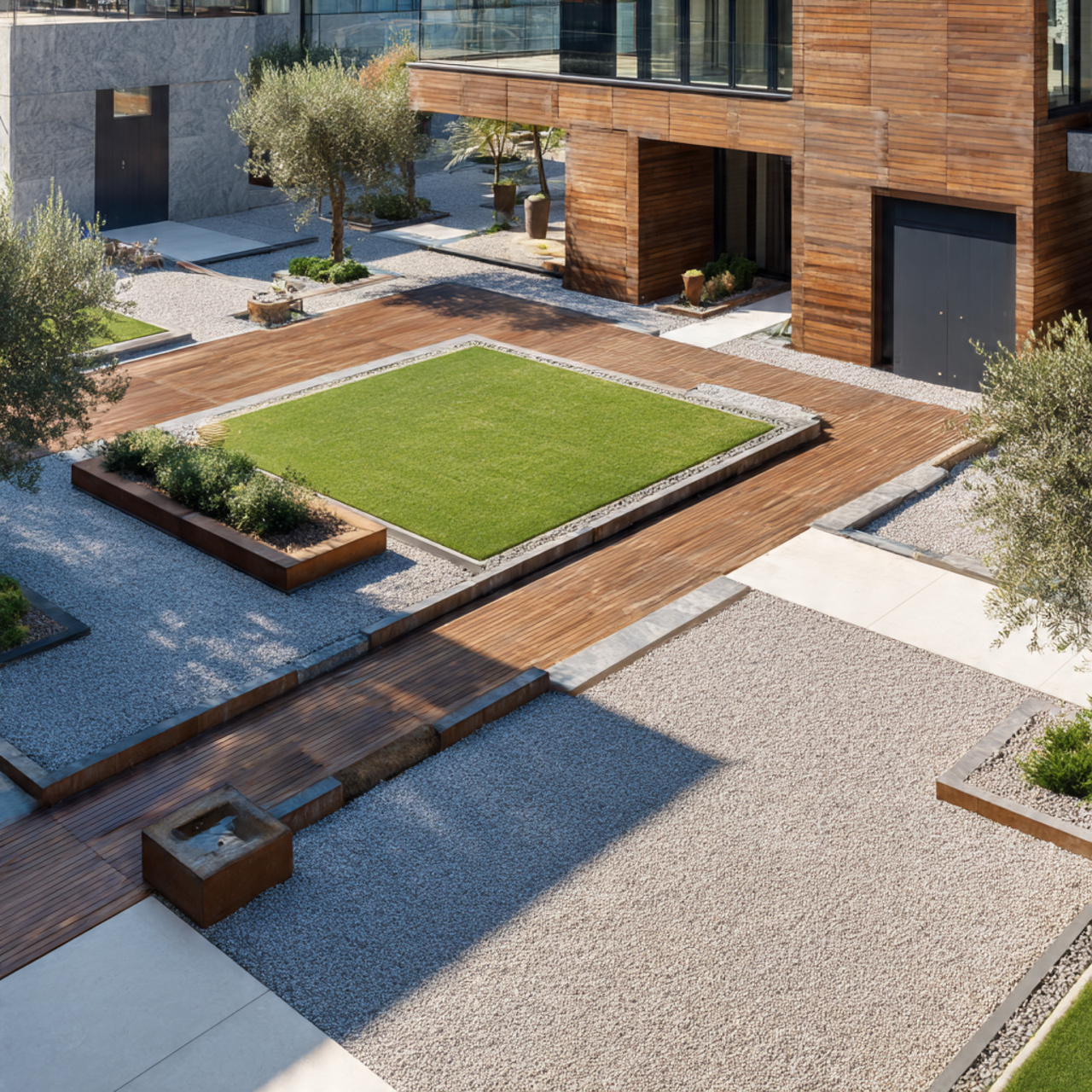
Modern gardens treat lawns as design features rather than default ground cover. Smaller, precisely defined lawn sections framed by paving or gravel create striking contrast and visual impact. This approach actually makes lawns look more intentional and luxurious.
Sharp, maintained edges are non-negotiable for achieving that crisp modern aesthetic. These clean lines elevate the entire garden’s appearance.
Lawn Design Approach:
- Define exact boundaries with permanent edging
- Consider geometric shapes: rectangles, squares, or circles
- Keep lawn areas proportional to overall garden size
- Use metal or stone edging that won’t shift over time
Maintenance Tip: Install permanent edging 1 inch below lawn level so you can mow right over it, eliminating trimming time.
Concrete and Stone Hardscaping
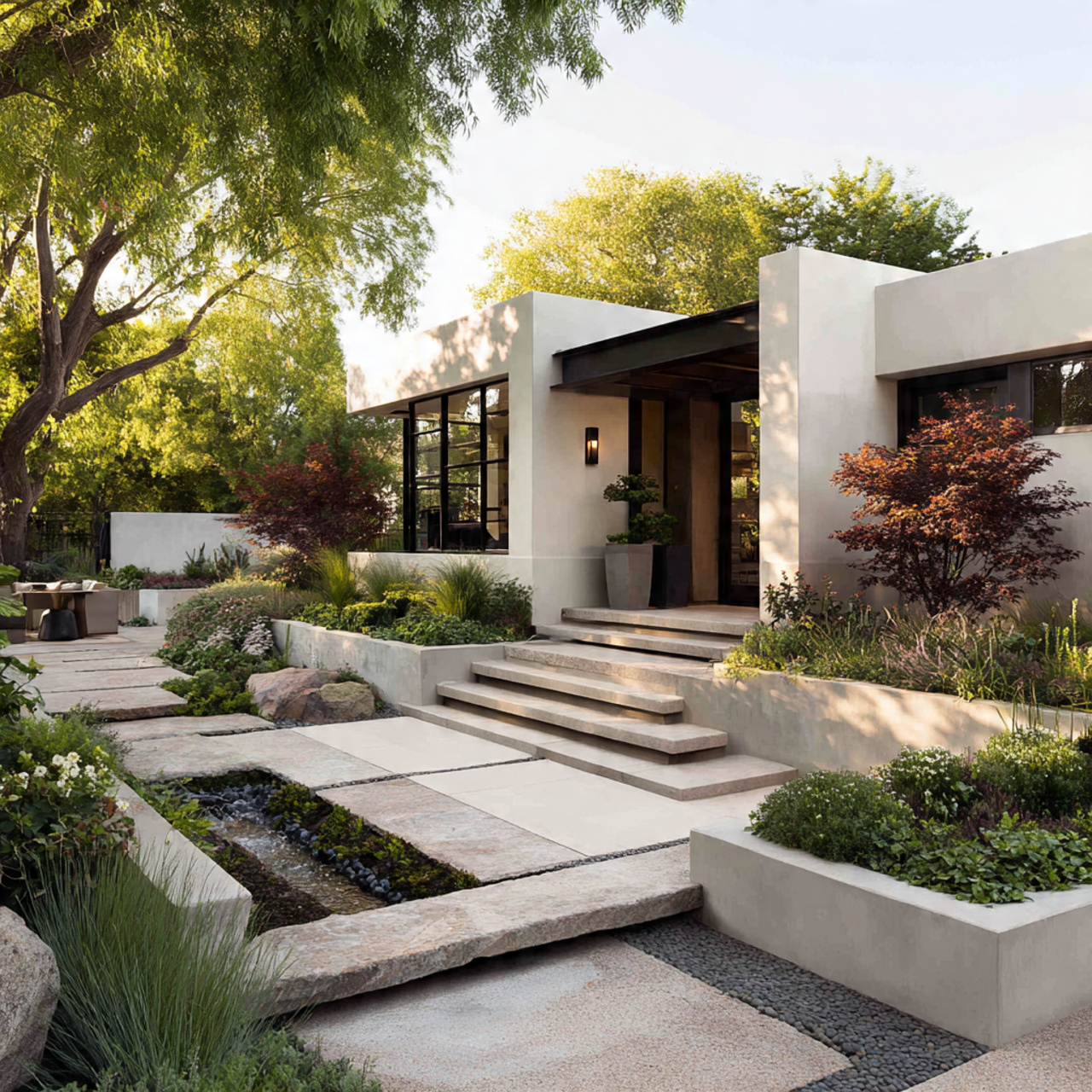
Concrete and stone create the bones of exceptional modern gardens. Their durability means your design stays intact for decades, while their clean appearance provides the perfect contemporary canvas. Concrete offers smooth, minimalist surfaces with industrial appeal. Natural stone adds warmth and subtle texture variation.
These materials work beautifully for patios, walkways, retaining walls, and garden borders—anywhere you need permanent structure.
Material Selection Guide:
- Smooth concrete: ultra-modern, works well in contemporary settings
- Lightly textured stone: adds warmth while maintaining clean lines
- Large format pavers: fewer grout lines create seamless appearance
- Matching materials: use the same stone for multiple applications
Budget Tip: Combine affordable concrete with accent areas of premium stone to balance cost without sacrificing style.
Integrated Outdoor Seating
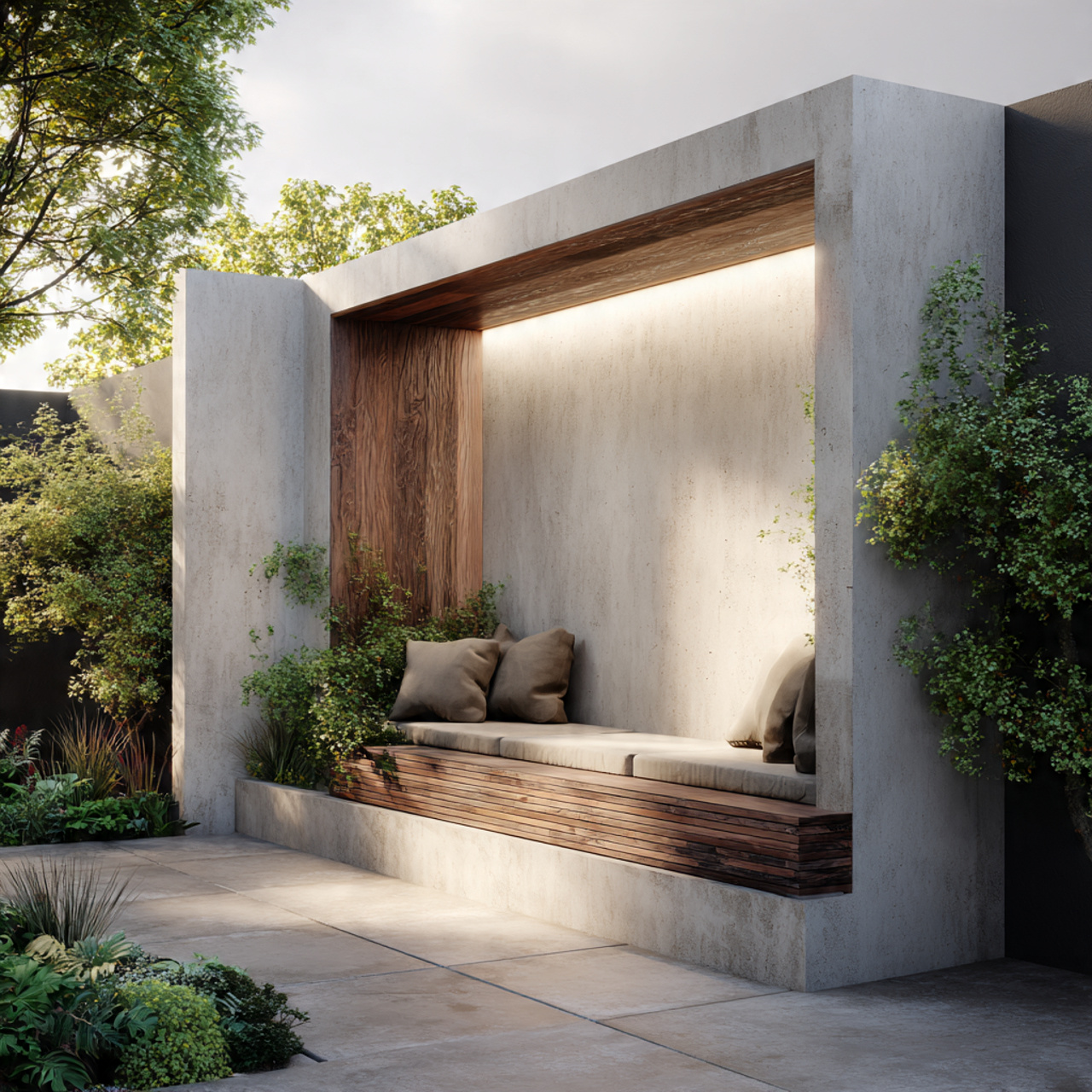
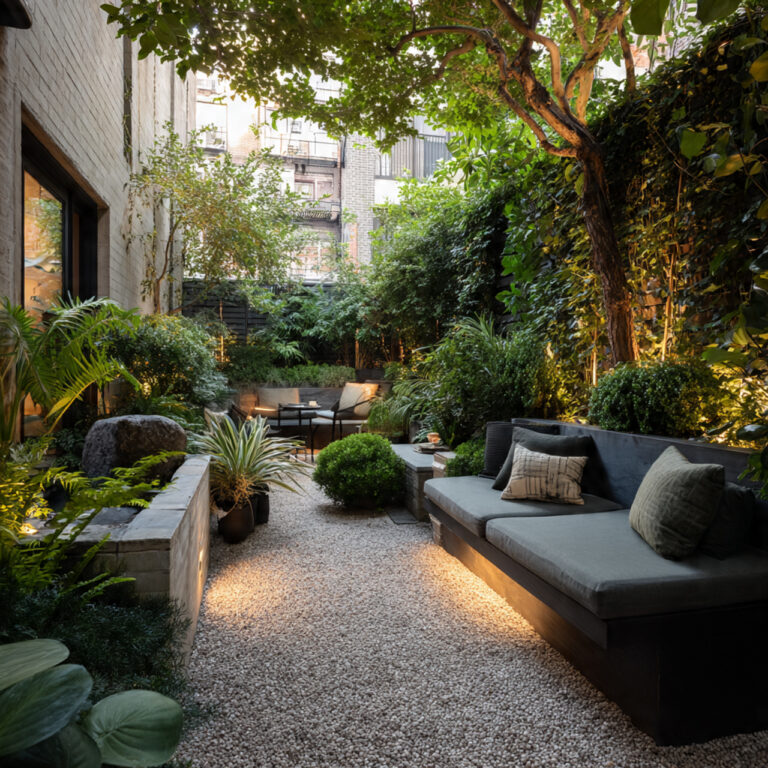
Built-in seating eliminates furniture clutter while creating seamless transitions between garden zones. These permanent fixtures blend naturally with surrounding hardscaping, appearing as intentional design elements rather than afterthoughts.
Materials like concrete, wood, or stone handle outdoor conditions year-round without the need for winter storage.
Design Considerations:
- Build seating at standard height (16-18 inches)
- Include back support for comfort
- Position near focal points or views
- Add storage underneath for cushions or garden tools
Comfort Addition: Top with removable cushions in weather-resistant fabric (neutral colors) that you can bring indoors during harsh weather.
Water Features with Simple Forms

Modern water features embrace geometric simplicity. Linear fountains, rectangular reflecting pools, or wall-mounted water elements add soothing sound and movement without overwhelming the space. The gentle sound of water creates natural tranquility while maintaining visual restraint.
These features work as focal points that enhance rather than dominate.
Feature Ideas:
- Linear rill running along a pathway
- Rectangular raised pond with clean edges
- Wall-mounted fountain with single spout
- Minimalist bubbling boulder
Installation Tip: Align water features with existing architectural lines (pathway edges, wall planes, or bed borders) for visual continuity.
Maintenance Note: Include easy access to pumps and filters for routine cleaning—hidden access panels maintain clean aesthetics.
Vertical Garden Elements
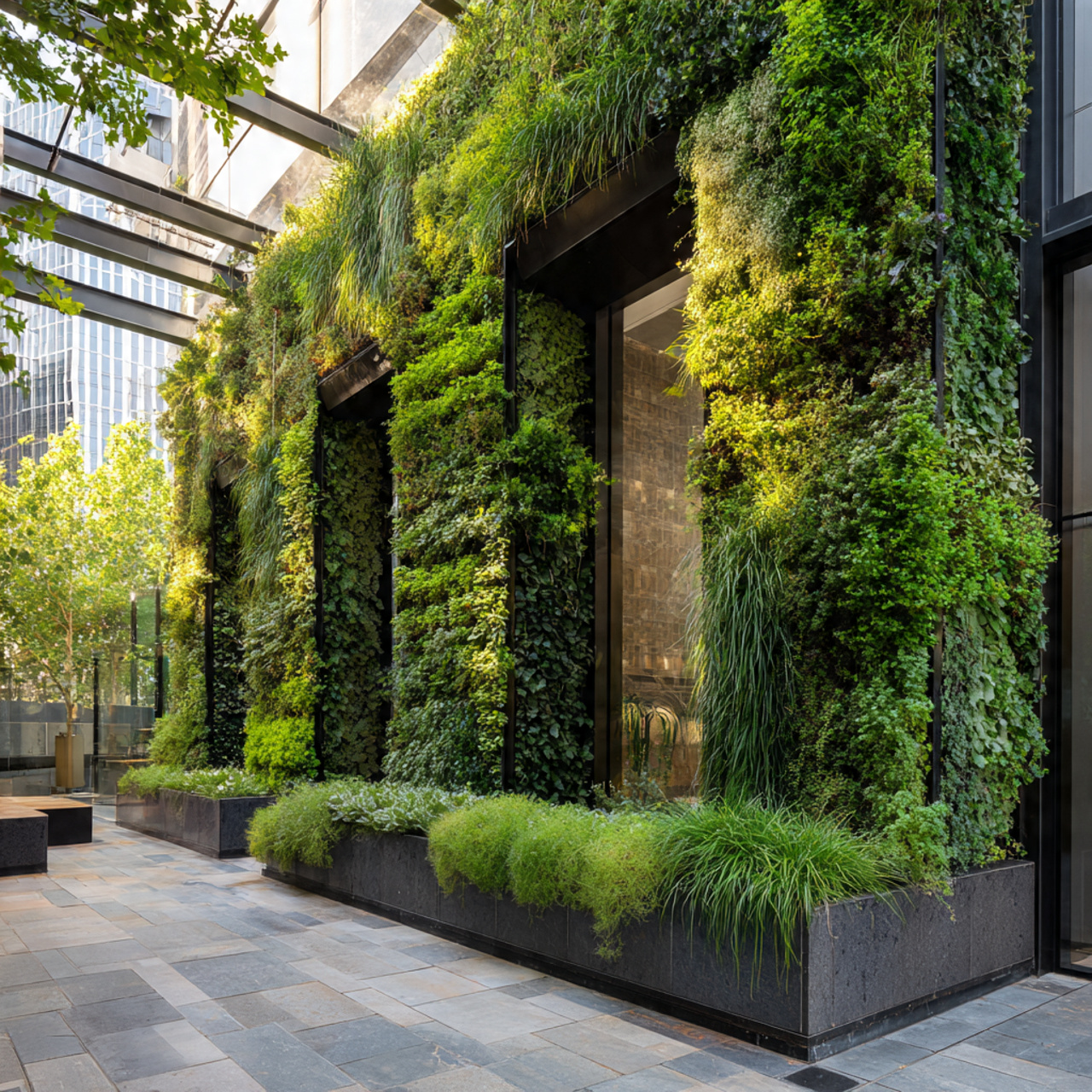
When horizontal space is limited, modern gardens grow upward. Vertical elements—green walls, sleek trellises, and climbing plants—add height and visual interest while keeping ground areas uncluttered. They’re particularly valuable in narrow urban gardens or along boundary walls.
Vertical gardens maximize every dimension of your space.
Vertical Solutions:
- Modular living wall systems with built-in irrigation
- Cable wire systems for climbing vines
- Slatted trellis panels matching fence materials
- Wall-mounted planters in geometric arrangements
Plant Recommendations: Choose plants with uniform growth patterns like star jasmine, creeping fig, or Boston ivy to maintain tidy appearance.
Avoid This Mistake: Planting vigorous climbers without adequate support structure—they’ll quickly become messy rather than architectural.
Smart Outdoor Lighting
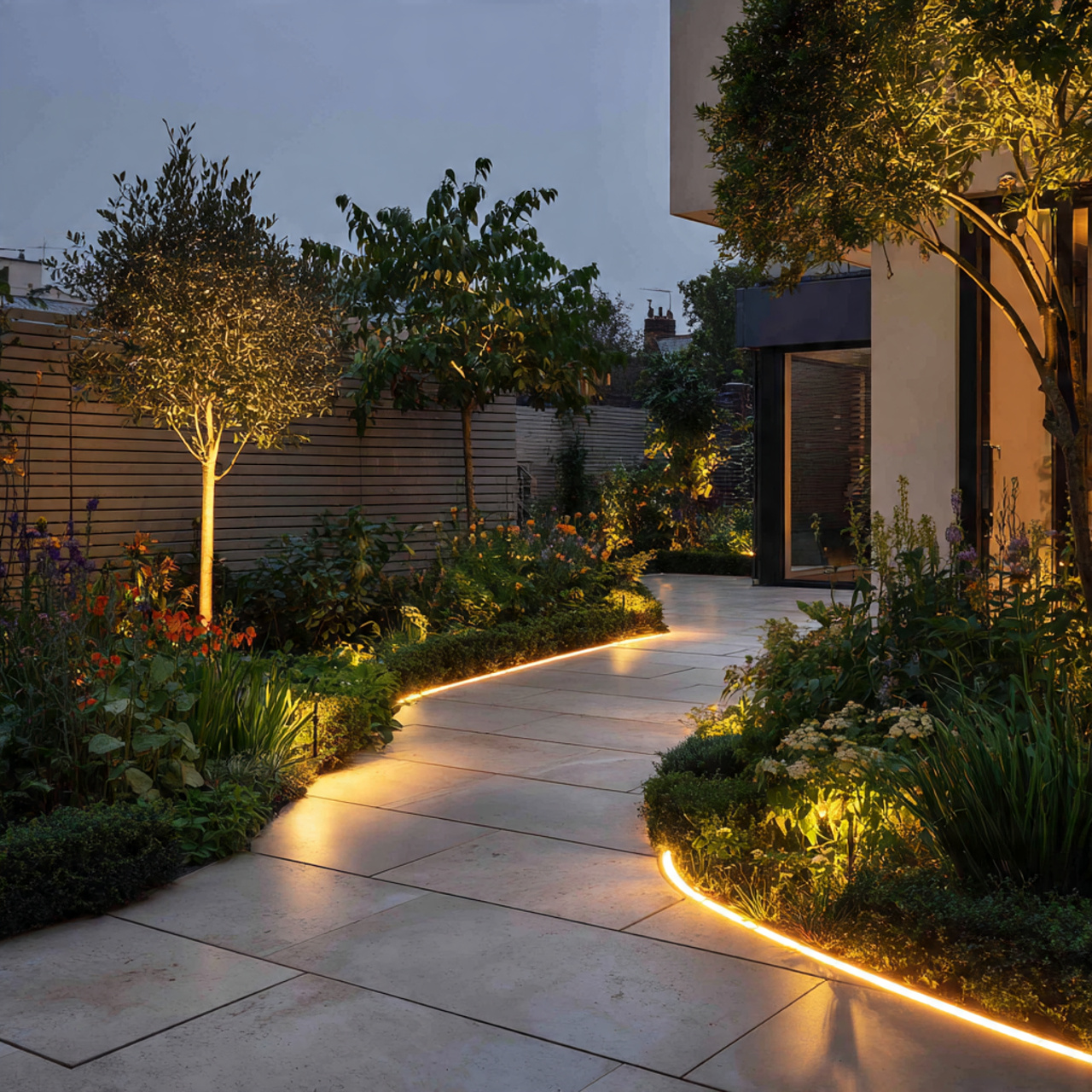
Strategic lighting transforms modern gardens after sunset, highlighting key features while improving safety and extending usable hours. Subtle lighting creates depth and atmosphere without feeling over-designed.
Quality outdoor lighting turns your garden into a 24-hour asset.
Lighting Strategy:
- Path lights: low-profile fixtures along walkways
- Uplighting: dramatic illumination for trees or architectural features
- Recessed lights: built into steps, walls, or deck edges
- LED strips: under benches or along borders
Technical Specifications:
- Use warm white (2700K-3000K) for inviting atmosphere
- Install dimmers for adjustable ambiance
- Choose LED fixtures for energy efficiency
- Ensure all fixtures are rated for outdoor use
Tip: Layer lighting types at different heights to create depth and avoid flat, one-dimensional illumination.
Minimalist Garden Furniture
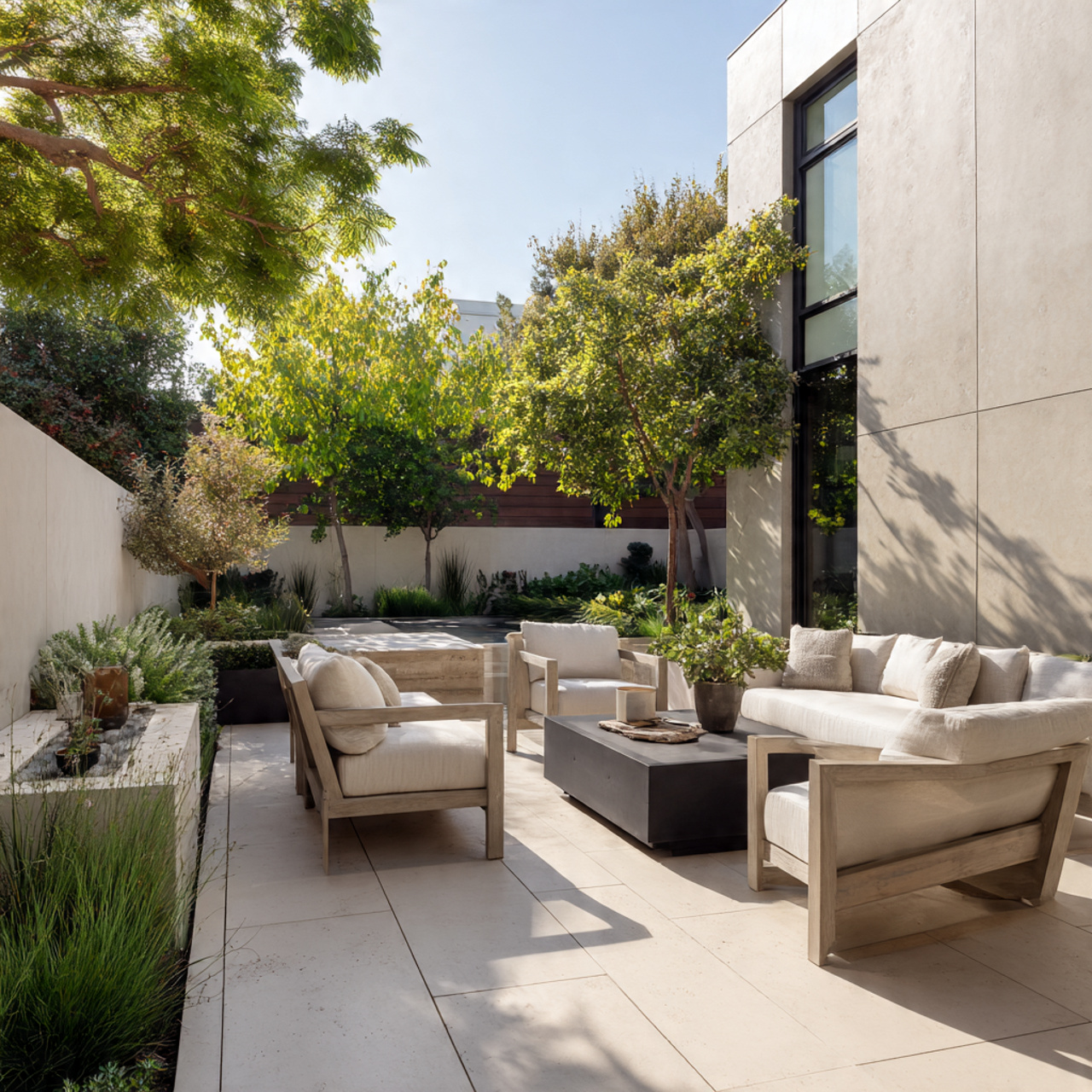
Furniture in modern gardens follows the same principles as the landscape: form meets function with zero excess. Clean-lined pieces in metal, wood, or weather-resistant materials complement the overall design without competing for attention.
Less furniture, chosen carefully, creates more impact.
Selection Criteria:
- Match furniture color to hardscaping palette
- Choose weather-resistant materials requiring minimal maintenance
- Prioritize comfort alongside aesthetics
- Limit pieces to what you’ll actually use
Material Guide:
- Powder-coated aluminum: lightweight, rust-proof, modern
- Teak: naturally weather-resistant, warm tones
- Concrete: ultra-modern, extremely durable
- Weather-resistant wicker: softer look with contemporary frames
Common Error: Overcrowding seating areas—modern design requires breathing room between pieces.
Gravel and Pebble Accents
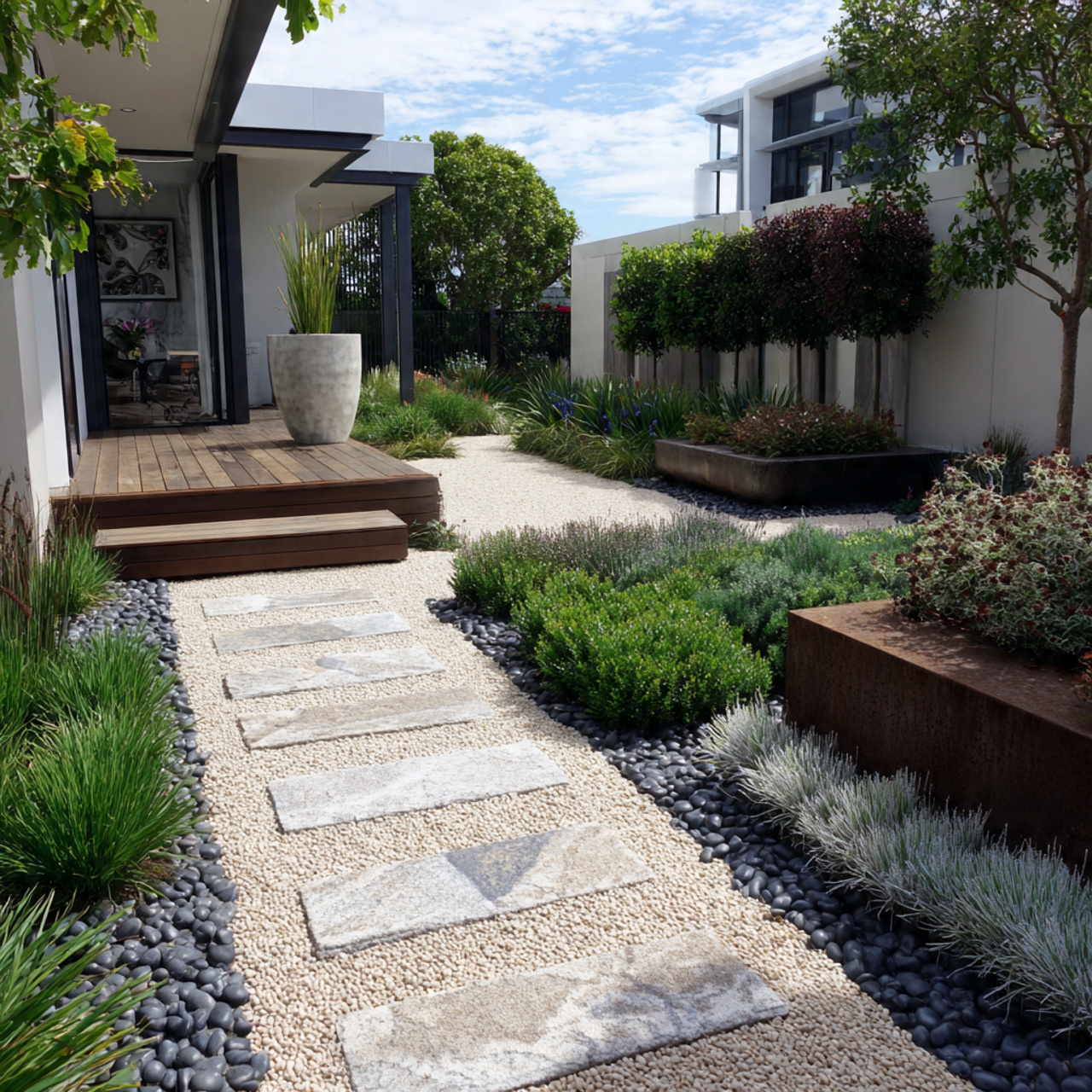
Gravel and pebbles deliver texture with minimal maintenance requirements. They excel in pathways, borders, and areas where grass struggles to grow. Their neutral tones align perfectly with modern aesthetics while offering practical drainage benefits.
These materials create visual interest without ongoing care.
Application Ideas:
- Pathways through planting beds
- Mulch alternative around specimen plants
- Large areas contrasting with lawn sections
- Drainage zones around structures
Installation Steps:
- Remove existing vegetation and debris
- Install landscape fabric to suppress weeds
- Add 2-3 inches of gravel or pebbles
- Rake smooth and level
Size Guide: Use 3/8-inch to 3/4-inch gravel for pathways; larger 1-2 inch pebbles for decorative areas.
Strong Focal Points
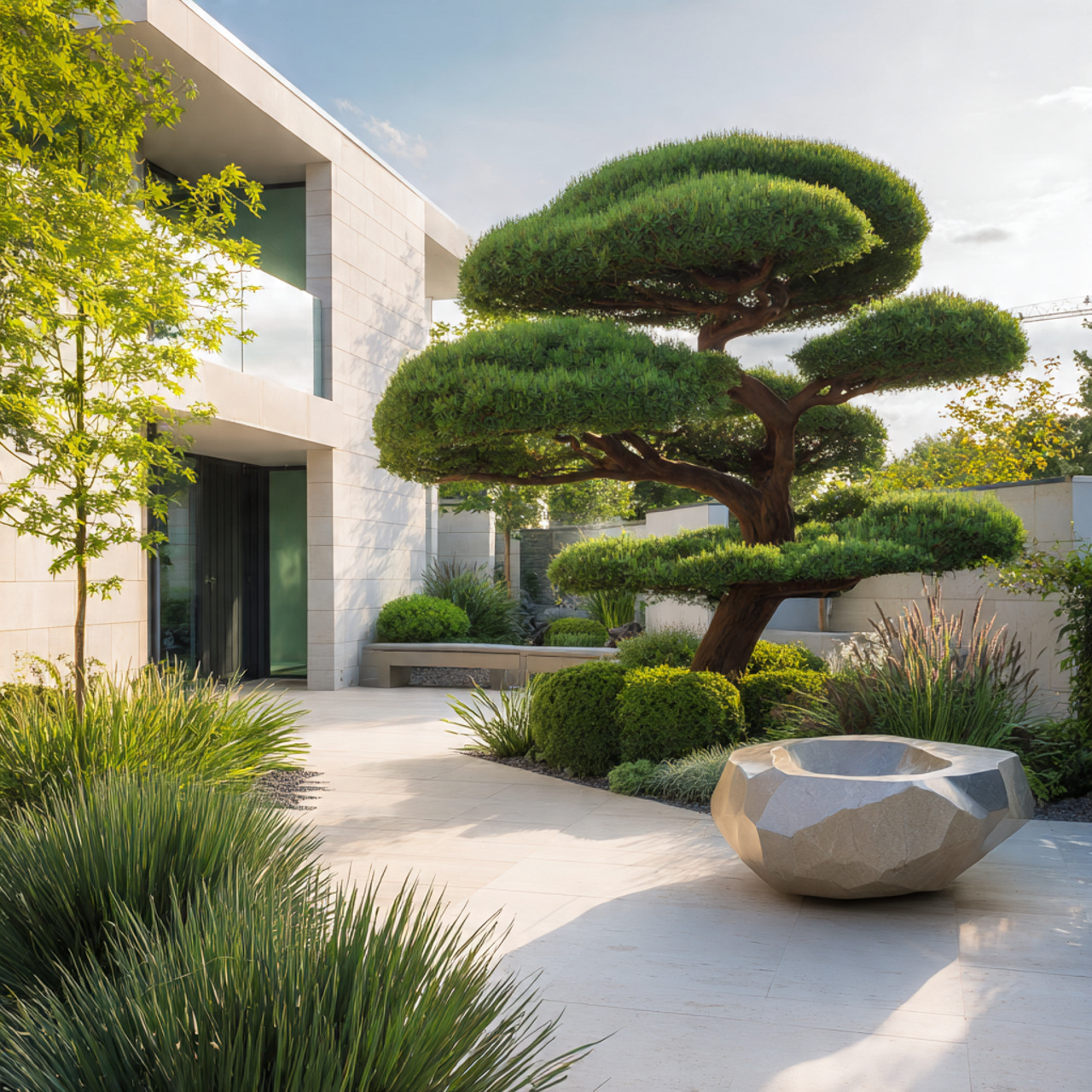
Successful modern gardens typically feature one commanding focal point rather than competing elements. This might be a sculptural tree, contemporary art piece, or striking fire feature. A singular focus creates balance and naturally directs attention.
Everything else in the garden supports this central feature.
Focal Point Options:
- Architectural tree with distinctive form (Japanese maple, olive tree)
- Modern sculpture or art installation
- Statement fire pit or fireplace
- Water feature with geometric form
- Bold specimen plant
Placement Strategy: Position your focal point where sightlines naturally land—often visible from main windows or at pathway intersections.
Design Rule: Keep surrounding elements intentionally simple so your focal point maintains visual dominance.
Fire Features for Warmth
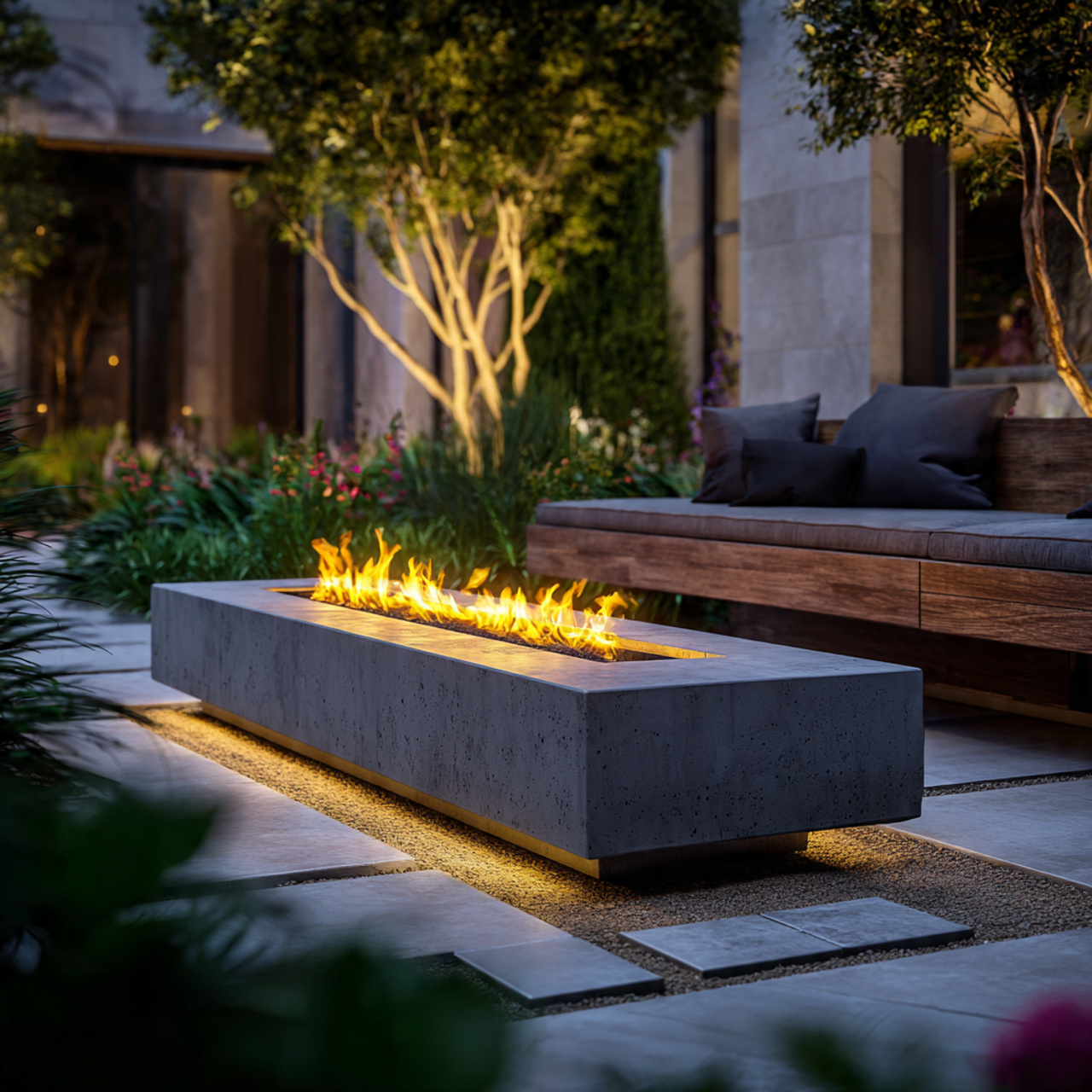
Fire features add functional warmth while serving as magnetic gathering spots. Linear fire pits or sleek fire bowls enhance contemporary aesthetics while extending your garden’s usability into cooler seasons. They create natural social focal points.
Modern fire features balance form with function beautifully.
Feature Types:
- Linear gas fire pits built into seating walls
- Freestanding fire bowls in concrete or steel
- Outdoor fireplaces with clean geometric forms
- Fire tables combining seating and warmth
Safety Measures:
- Maintain 10-foot clearance from structures
- Keep away from overhanging branches
- Install on non-combustible surfaces
- Include easy fuel shutoff access
- Never leave fires unattended
Practical Tip: Gas-fueled options offer instant on/off control and eliminate wood storage and ash cleanup.
Defined Garden Zones
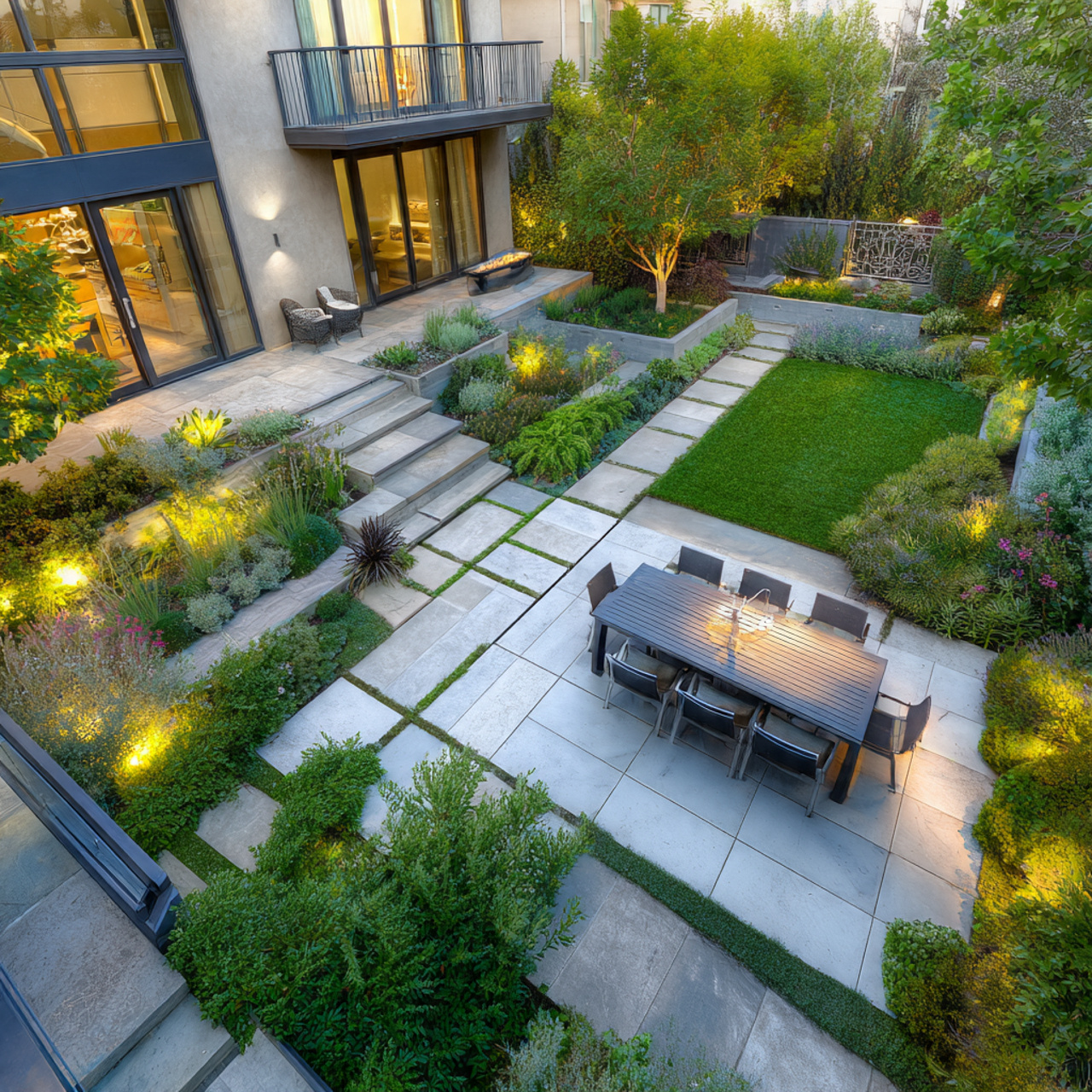
Clear zoning makes modern gardens feel organized and highly functional. Distinct areas for dining, relaxing, and planting improve both flow and usability. Hardscaping changes, planting borders, and material transitions define these zones without physical barriers.
Thoughtful zoning creates purposeful spaces.
Common Zones:
- Dining area with weather-resistant table and seating
- Lounge zone with comfortable seating
- Planting beds providing visual interest
- Pathway circulation connecting zones
Transition Techniques:
- Change paving materials between zones
- Use planting beds as natural dividers
- Install low walls or raised beds
- Vary ground levels slightly
Design Principle: Maintain visual consistency across zones through repeated materials, colors, or plant types to avoid a disjointed appearance.
Native and Climate-Smart Plants
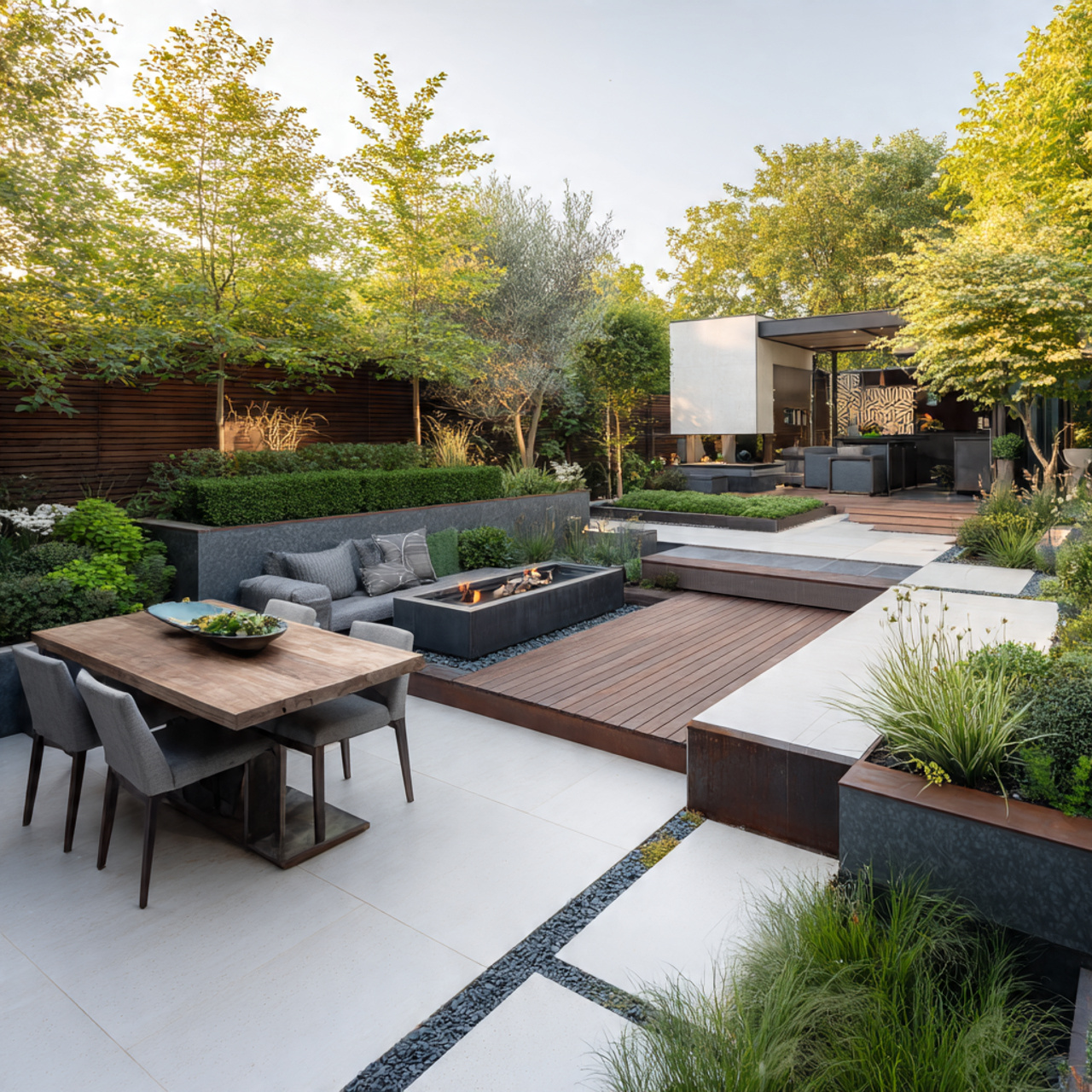
Native and climate-adapted plants form the backbone of sustainable modern gardens. These species thrive naturally in your local conditions, requiring significantly less water, fertilizer, and intervention. They also support local wildlife and beneficial insects.
Smart plant selection reduces environmental impact while simplifying maintenance.
Benefits of Native Plants:
- Deep root systems improve soil health
- Natural pest and disease resistance
- Lower water requirements once established
- Provide habitat for beneficial wildlife
- Adapted to local climate extremes
Selection Process:
- Research plants native to your specific region
- Choose varieties offering year-round interest
- Consider mature size to avoid overgrowth
- Mix evergreen and deciduous for seasonal variation
Resource Tip: Contact your local university extension office for native plant recommendations specific to your area.
Symmetry and Balance
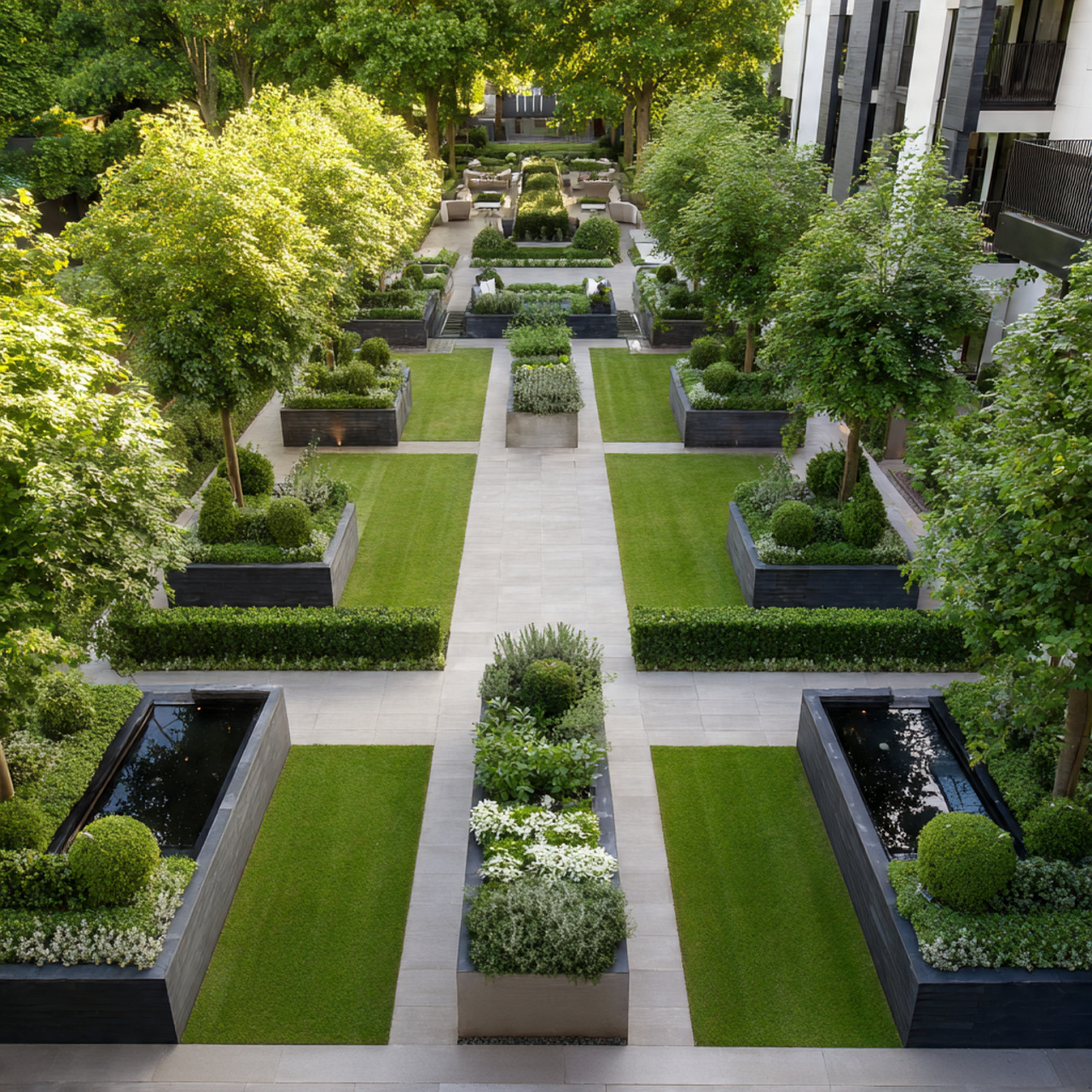
Symmetry brings immediate calm and order to modern gardens. Balanced layouts feel deliberate and visually satisfying. Even spacing, matching planters, and aligned pathways reinforce this harmonious effect.
Perfect symmetry isn’t required—subtle balance works equally well.
Symmetrical Applications:
- Identical planters flanking an entrance
- Matched trees on either side of a pathway
- Centered water feature with balanced planting
- Mirrored seating arrangements
Balance Without Symmetry:
- Visual weight distributed evenly (large element on one side balanced by grouping on other)
- Repeated materials in asymmetric arrangements
- Color balance across the space
Design Note: Symmetry works particularly well near architectural elements like doors, windows, or patios where it enhances the structure.
Privacy Screens with Style
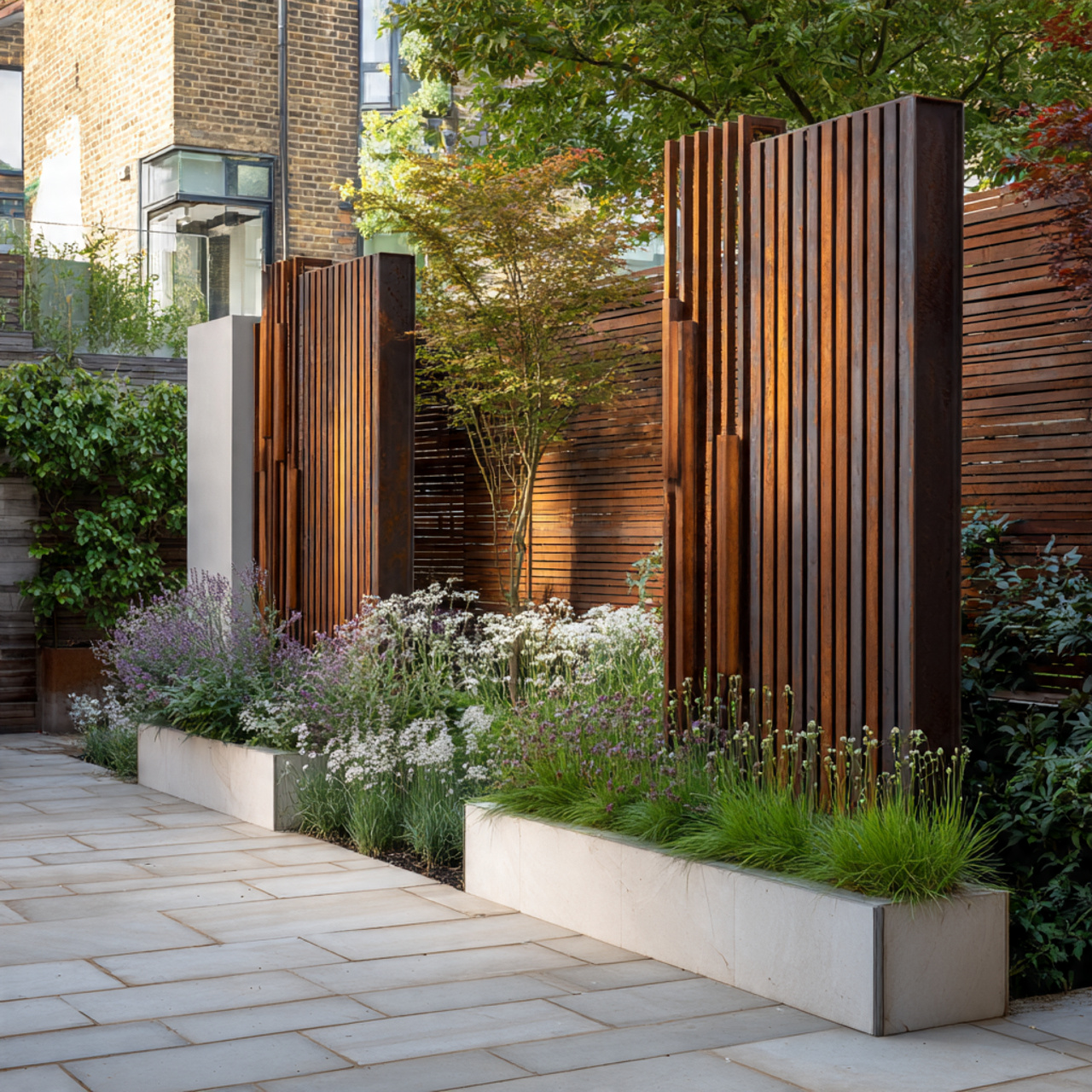
Modern privacy screens serve dual purposes—they block unwanted views while functioning as design features themselves. Wooden slats, metal panels, or minimalist hedges provide seclusion without feeling heavy or closed-in.
Contemporary screening solutions enhance rather than detract from garden aesthetics.
Screen Options:
- Horizontal wooden slats with spacing for light
- Corten steel panels with geometric cutouts
- Bamboo or tall grasses for natural screening
- Living walls with evergreen plants
Installation Considerations:
- Match screen materials to existing fencing or home finishes
- Consider maintenance access behind screens
- Ensure adequate structural support for wind loads
- Check local regulations for height restrictions
Spacing Tip: Leave 1-2 inch gaps between wooden slats for airflow and filtered light while maintaining privacy.
Seamless Indoor-Outdoor Flow

Modern gardens often erase boundaries between indoor and outdoor living spaces. Matching materials, consistent color palettes, and aligned layouts create visual continuity. This approach makes gardens feel like natural extensions of interior rooms.
Seamless flow increases your perceived living space significantly.
Continuity Techniques:
- Extend interior flooring material onto adjacent patio
- Match outdoor furniture style to indoor pieces
- Use consistent color schemes inside and out
- Align outdoor zones with interior room functions
- Install large glass doors or folding wall systems
Material Matching:
- Continue wood tones from interior floors to decking
- Echo interior tile on outdoor patios
- Match metal finishes on hardware and fixtures
Lighting Connection: Use similar lighting styles indoors and out to maintain cohesive ambiance.
Sculptural Trees and Plants
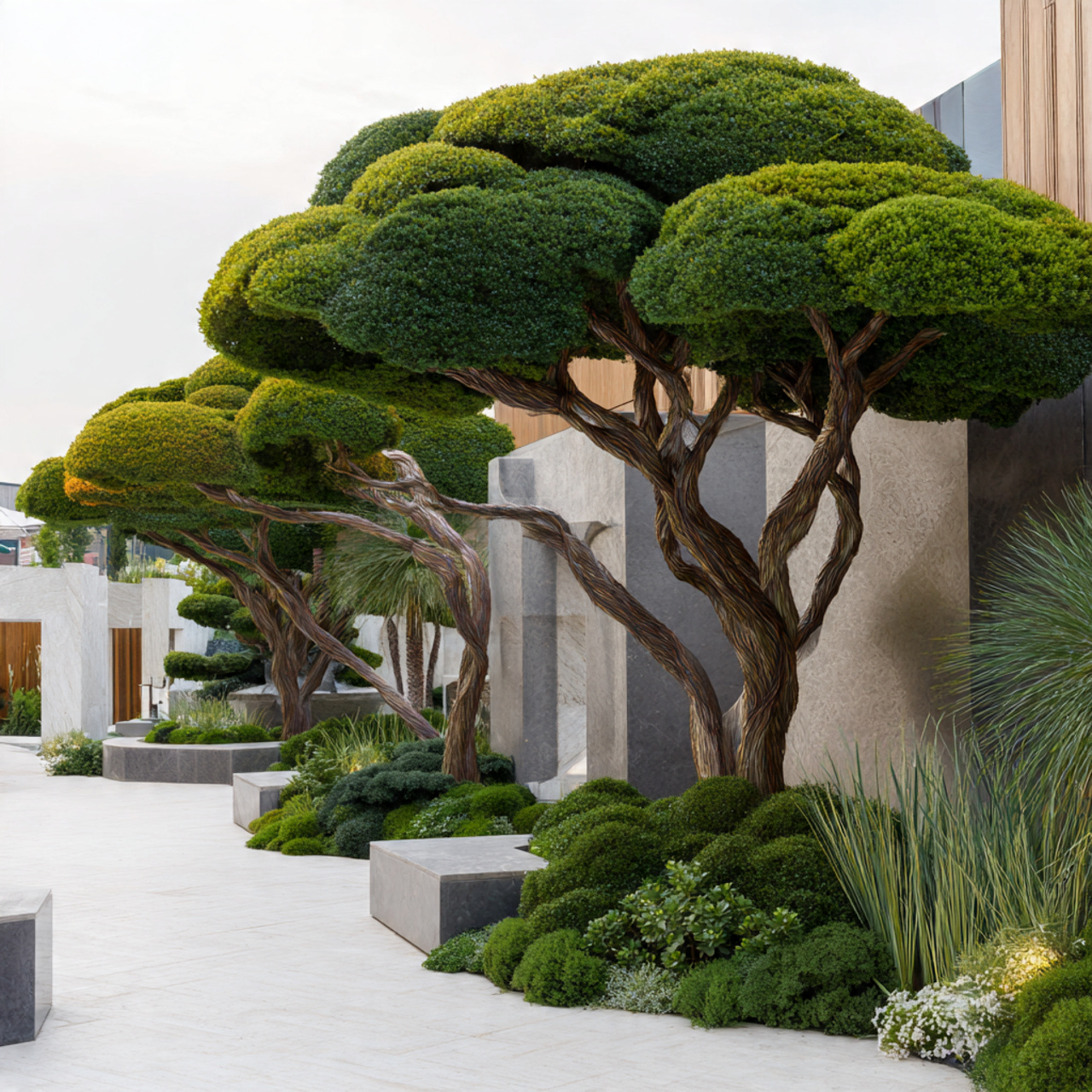
Architectural plants function as living sculptures in modern gardens. Trees with distinctive forms provide height, elegance, and year-round structure without requiring extensive planting. Their strong shapes create impact even in minimal designs.
These specimens become garden focal points naturally.
Sculptural Plant Options:
- Japanese maple with layered branching
- Olive trees with gnarled trunks
- Multi-stem birch with white bark
- Agave or yucca for dramatic form
- Topiary boxwood in geometric shapes
Placement Strategy:
- Allow adequate space for mature size
- Position where form can be appreciated from multiple angles
- Avoid crowding with other plants
- Consider winter silhouette appearance
Maintenance Tip: Prune selectively to enhance natural form rather than forcing unnatural shapes.
Matte Finishes Over Glossy
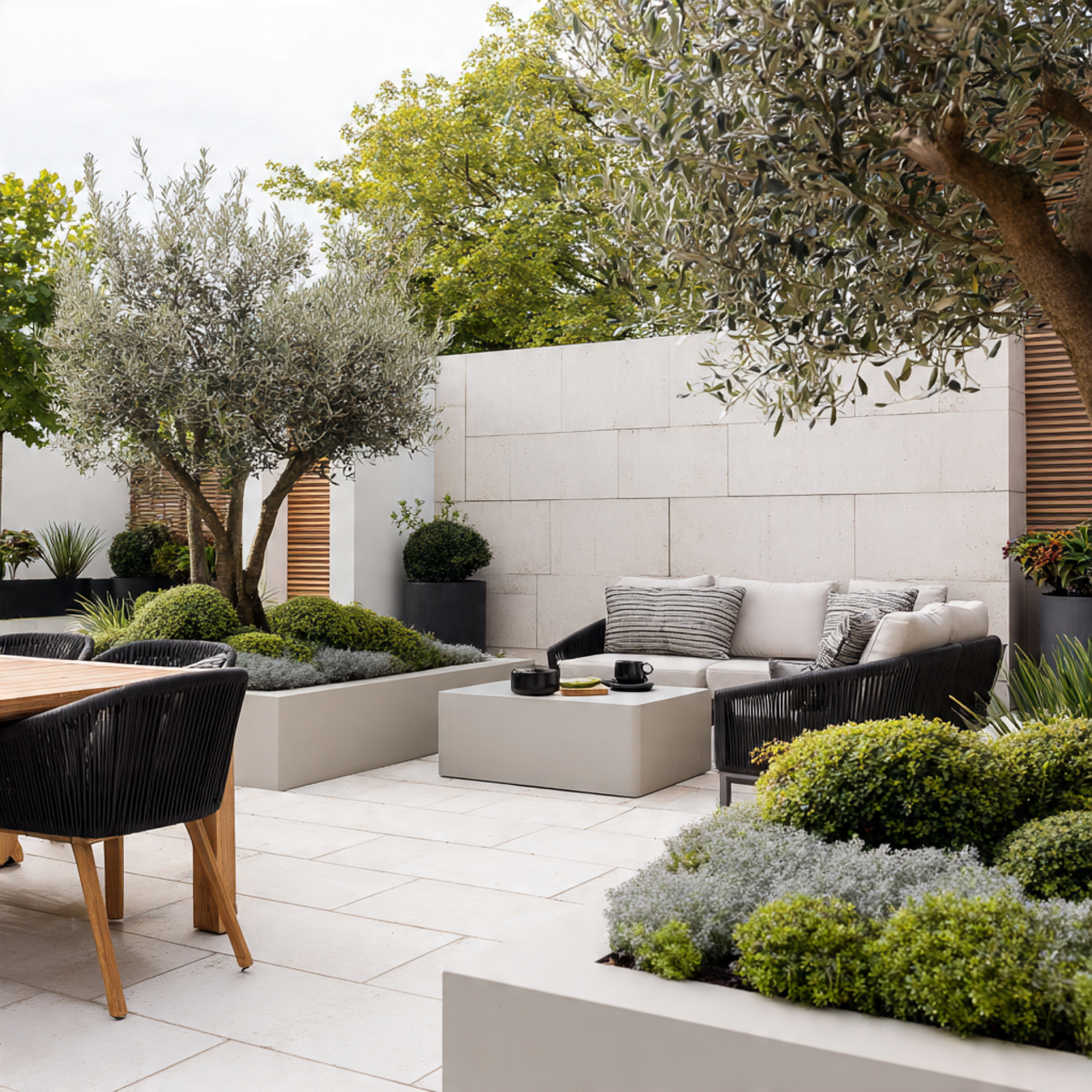
Matte finishes embody the refined restraint central to modern design. They reduce glare, create softer visual appeal, and feel more natural than glossy alternatives. This subtle choice significantly impacts overall sophistication.
Matte surfaces enhance rather than demand attention.
Where to Use Matte Finishes:
- Planters and containers
- Outdoor furniture frames
- Metal railings and hardware
- Paint on structures or walls
- Concrete sealers
Material Combinations:
- Matte black planters with natural wood furniture
- Matte concrete pavers with textured stone accents
- Powder-coated matte metal with warm wood tones
Practical Note: Matte finishes often hide fingerprints and water spots better than glossy surfaces, reducing apparent maintenance.
Sustainable Materials
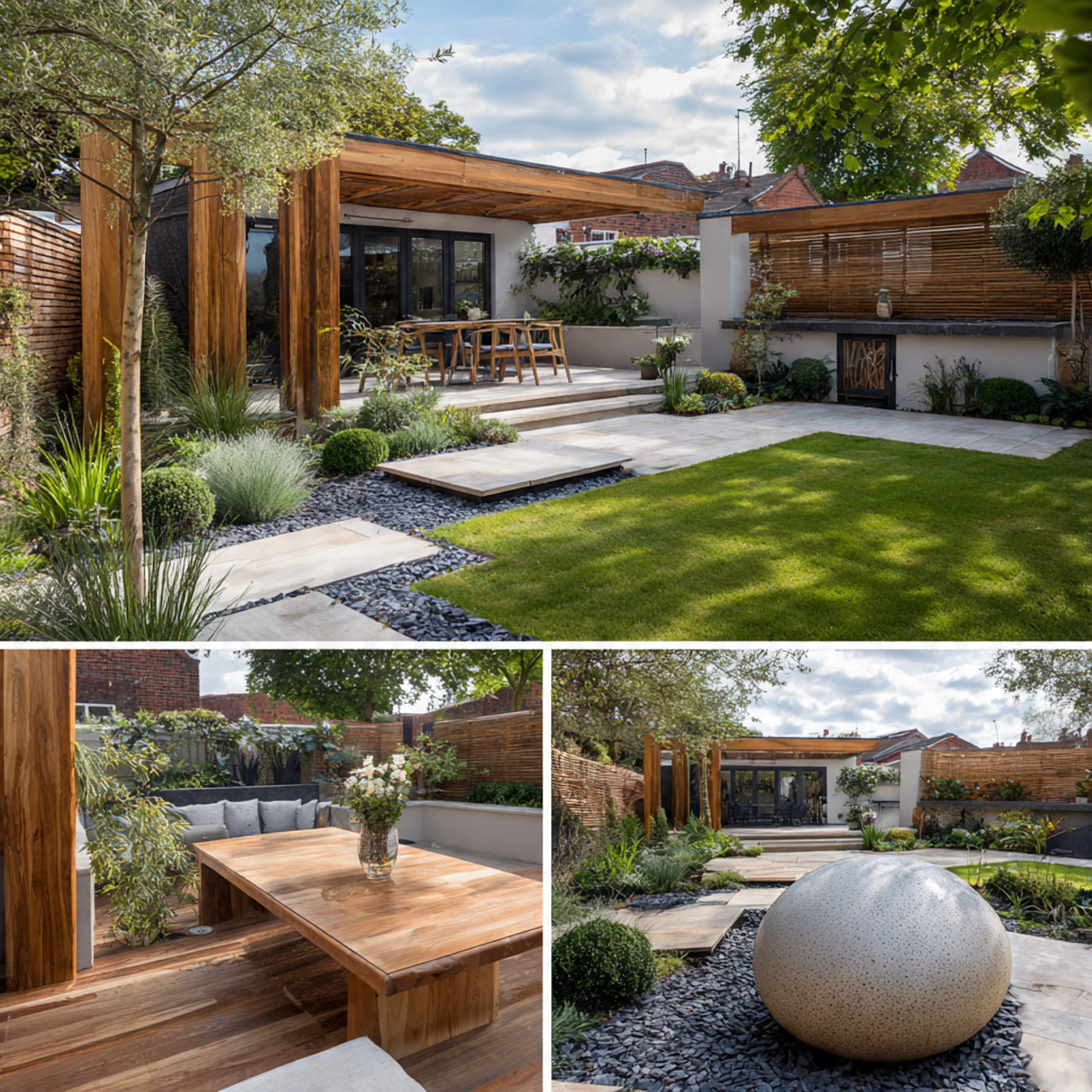
Sustainability increasingly influences modern garden design decisions. Recycled materials, permeable paving, and water-efficient systems reduce environmental impact while often improving long-term durability. Eco-conscious choices align perfectly with modern design values.
Sustainable gardens benefit both environment and budget over time.
Sustainable Material Options:
- Recycled composite decking
- Reclaimed wood for furniture or structures
- Permeable pavers allowing water infiltration
- Locally sourced stone reducing transportation impact
- Recycled glass or rubber mulch alternatives
Water Conservation:
- Drip irrigation systems
- Rain barrels or cisterns
- Native plant selection
- Mulching to retain soil moisture
Investment Perspective: Quality sustainable materials often cost more initially but last longer and require less replacement.
Subtle Use of Color
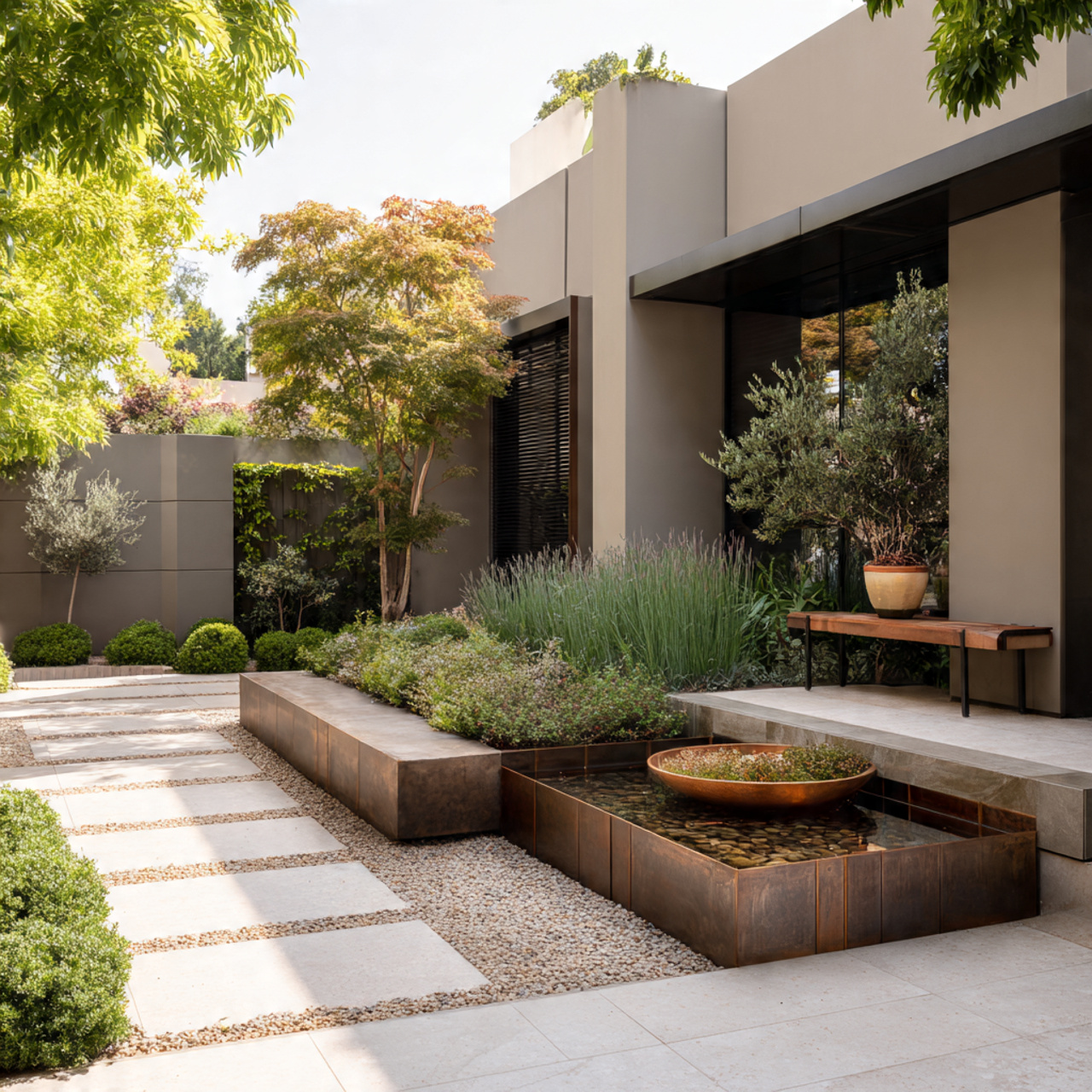
While neutrals dominate modern gardens, subtle color adds personality without overwhelming the minimalist aesthetic. Soft greens, muted blues, warm terracotta, and earthy browns complement rather than compete with the design. Color should enhance, never overpower.
Strategic color brings warmth to neutral palettes.
Color Introduction Methods:
- Foliage plants with blue-gray or burgundy tones
- Single accent wall in muted terracotta or charcoal
- Cushions or textiles in soft sage or slate blue
- Planters in one consistent accent color
- Seasonal blooms in restrained color palette
Color Principle: Introduce color through changeable elements (plants, cushions) rather than permanent hardscaping for flexibility.
Avoid: Bright primary colors, competing color schemes, or too many different accent colors.
Clutter-Free Design Approach
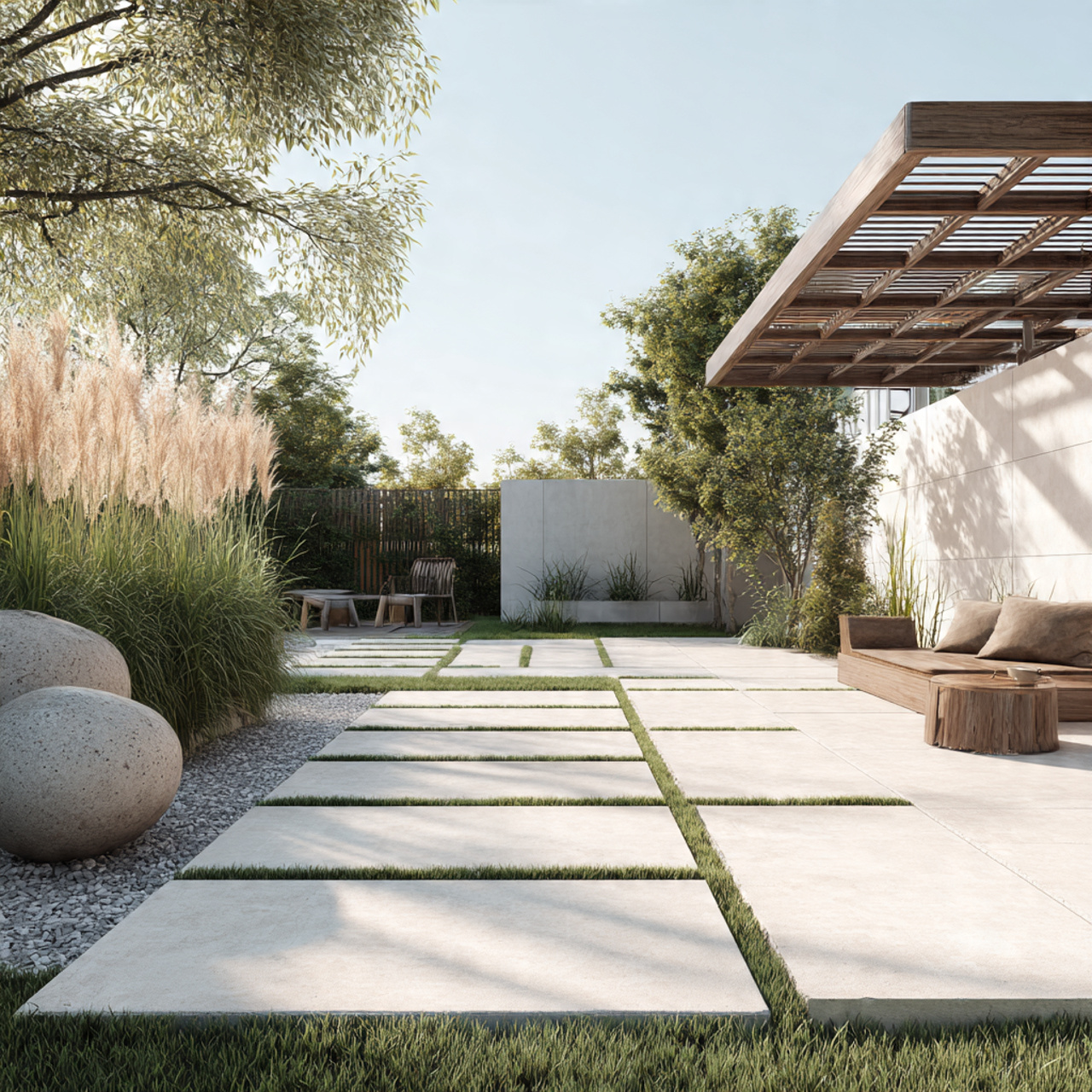
The heart of modern garden design beats with simplicity. Clutter-free spaces enhance calmness and visual clarity. Every element serves a clear purpose—decoration alone isn’t sufficient justification. This discipline creates the serene atmosphere modern gardens are known for.
Less truly is more in modern outdoor spaces.
Decluttering Strategy:
- Question every decorative element: does it enhance or distract?
- Remove or store items not currently in use
- Choose furniture with hidden storage
- Limit accessories to one or two statement pieces
- Edit plant collection to most impactful varieties
Regular Maintenance:
- Monthly review to identify clutter accumulation
- Seasonal removal of dead plants or broken items
- Immediate disposal of packaging or temporary items
- Designated storage for garden tools and equipment
Mindset Shift: View empty space as a design feature, not something requiring filling.
Visit Also: Flagstone Patio
How to Choose the Right Elements for Your Modern Garden?
Creating a successful modern garden starts with understanding your specific space and needs. Begin by thoroughly assessing your outdoor area—measure dimensions, note sun exposure throughout the day, observe drainage patterns, and identify existing features worth preserving or removing.
Your lifestyle directly impacts design decisions. Busy professionals might prioritize ultra-low-maintenance solutions with automated irrigation and evergreen plants. Families need durable materials and perhaps lawn areas for activities. Entertainers benefit from expanded seating zones and ambient lighting.
Material quality matters significantly in modern design. Invest in fewer, higher-quality pieces rather than filling space with budget options. Well-chosen concrete, natural stone, and weather-resistant woods maintain their appearance for decades with minimal care.
Decision Framework:
- Space assessment: size, shape, sun, drainage, existing conditions
- Lifestyle needs: maintenance time available, intended uses, entertaining frequency
- Budget allocation: quality over quantity, phased implementation if needed
- Climate considerations: plant hardiness, material weather resistance
- Maintenance capacity: realistic time commitment, irrigation needs
Consistency Rule: Repeat materials, shapes, and plant types throughout the garden. This repetition creates the visual harmony essential to modern design.
Common Mistakes to Avoid in Modern Garden Design
Even with the best intentions, certain missteps can undermine modern garden design. Awareness of these common errors helps you create and maintain the clean, cohesive aesthetic you’re aiming for.
1. Overusing Plant Varieties
Problem: Adding too many different plant types creates visual chaos and contradicts minimalist principles.
Solution: Limit your palette to 3-4 plant types maximum. Repeat these in groups throughout the garden.
2. Mixing Conflicting Design Styles
Problem: Combining traditional ornaments, rustic elements, or decorative accessories with modern features breaks visual unity.
Solution: Commit fully to modern aesthetics—clean lines, contemporary materials, minimal decoration.
3. Ignoring Layout and Structure
Problem: Lack of defined zones, unclear pathways, and random placement make gardens feel unintentional.
Solution: Create clear zones with purpose. Use hardscaping and planting to define circulation and activity areas.
4. Neglecting Outdoor Lighting
Problem: Gardens lose all impact after sunset without proper lighting. Safety also suffers.
Solution: Install layered lighting including path lights, accent lighting, and ambient fixtures on dimmers.
5. Overcrowding Plants and Features
Problem: Placing elements too close restricts growth, ruins clean lines, and prevents proper air circulation.
Solution: Research mature plant sizes. Allow generous spacing. Remember that empty space is a design feature.
6. Choosing High-Maintenance Plants
Problem: Plants requiring constant pruning, deadheading, or special care defeat the low-maintenance goal.
Solution: Select plants naturally suited to your climate with minimal intervention requirements.
7. Using Inconsistent Materials and Colors
Problem: Too many different finishes, textures, or color tones create disjointed, chaotic appearance.
Solution: Establish a material palette (2-3 materials maximum) and neutral color scheme. Repeat consistently.
8. Overdecorating the Space
Problem: Excessive accessories, multiple sculptures, or decorative items distract from overall design.
Solution: Choose one strong focal point. Keep everything else understated and purposeful.
FAQs about Modern Garden Design
Q1: What is modern garden design?
Modern garden design is an approach emphasizing clean lines, geometric layouts, minimal plant varieties, neutral color palettes, and functional organization. It prioritizes simplicity, intentional design, and low-maintenance beauty over decorative complexity.
Q2: Can modern gardens work in small spaces?
Absolutely. Modern design actually excels in small spaces. Structured layouts, vertical growing elements, clear zoning, and minimalist planting make compact areas feel larger and more organized. The approach maximizes every square foot through thoughtful planning.
Q3: Which plants are best for modern gardens?
Plants with architectural form and controlled growth patterns work best. Top choices include ornamental grasses (fountain grass, blue fescue), evergreen shrubs (boxwood, yew), bamboo for screening, succulents for texture, and native plants suited to your specific region. Choose varieties offering year-round interest.
Q4: Is modern garden design expensive?
Modern gardens accommodate any budget. The minimalist approach often costs less than traditional gardens since you’re buying fewer plant varieties and focusing on quality over quantity. Low-maintenance plants and durable materials also reduce long-term costs. You can implement modern design in phases, starting with foundational elements.
Q5: How do I maintain a modern garden?
Modern gardens require less maintenance than traditional gardens when designed correctly. Regular tasks include trimming plants to maintain shape, keeping pathways and edges clean, running simple irrigation systems, and removing any items that don’t serve a purpose. The key is choosing low-maintenance plants from the start and staying disciplined about visual simplicity.
Conclusion
Modern garden design offers something genuinely valuable: outdoor spaces that are simultaneously beautiful, functional, and remarkably easy to maintain. By embracing clean lines, thoughtful plant selection, quality materials, and intentional layouts, you create gardens that work as hard as they look good.
Whether you’re transforming a small urban courtyard or redesigning a spacious backyard, these principles adapt to your specific situation. Start with strong structure, limit your plant palette, maintain visual consistency, and remember that simplicity creates impact.
Your modern garden isn’t just about following trends—it’s about creating a timeless outdoor environment that genuinely enhances how you live. With these ideas as your foundation, you’re ready to design a space that stays stunning season after season, year after year.