How to Grow Lotus Flower: 28 Home Gardening Ideas for a Tranquil Garden
Have you ever dreamed of bringing the peaceful elegance of a lotus flower into your own backyard? These stunning aquatic plants aren’t just symbols of serenity and purity—they’re surprisingly achievable additions to any home garden. Whether you have a sprawling pond or just a sunny balcony, lotus flowers can transform your outdoor space into a tranquil oasis that soothes the soul and delights the eyes.
In this guide, I’ll walk you through some creative and practical ways to cultivate these magnificent blooms right at home. From choosing the perfect container to creating Instagram-worthy water displays, you’ll discover everything you need to know about making lotus gardening a rewarding reality.
Getting Started: Understanding Lotus Flower Basics
Before diving into the creative ideas, let’s cover the fundamentals. Lotus plants are aquatic wonders that love basking in sunshine and floating in calm waters. While they might seem exotic and intimidating at first, growing lotus flowers is actually quite manageable—even if you’re just starting your gardening journey.
Essential Requirements:
- Full sunlight exposure for most of the day
- Still or very gently moving water
- Proper container or pond setup
- Quality aquatic soil
- Regular but simple maintenance
The beauty of lotus gardening is its flexibility. You don’t need expensive equipment or a massive backyard pond to get started. With the right approach and a bit of patience, anyone can successfully grow these breathtaking flowers.
Choosing the Right Container for your Lotus
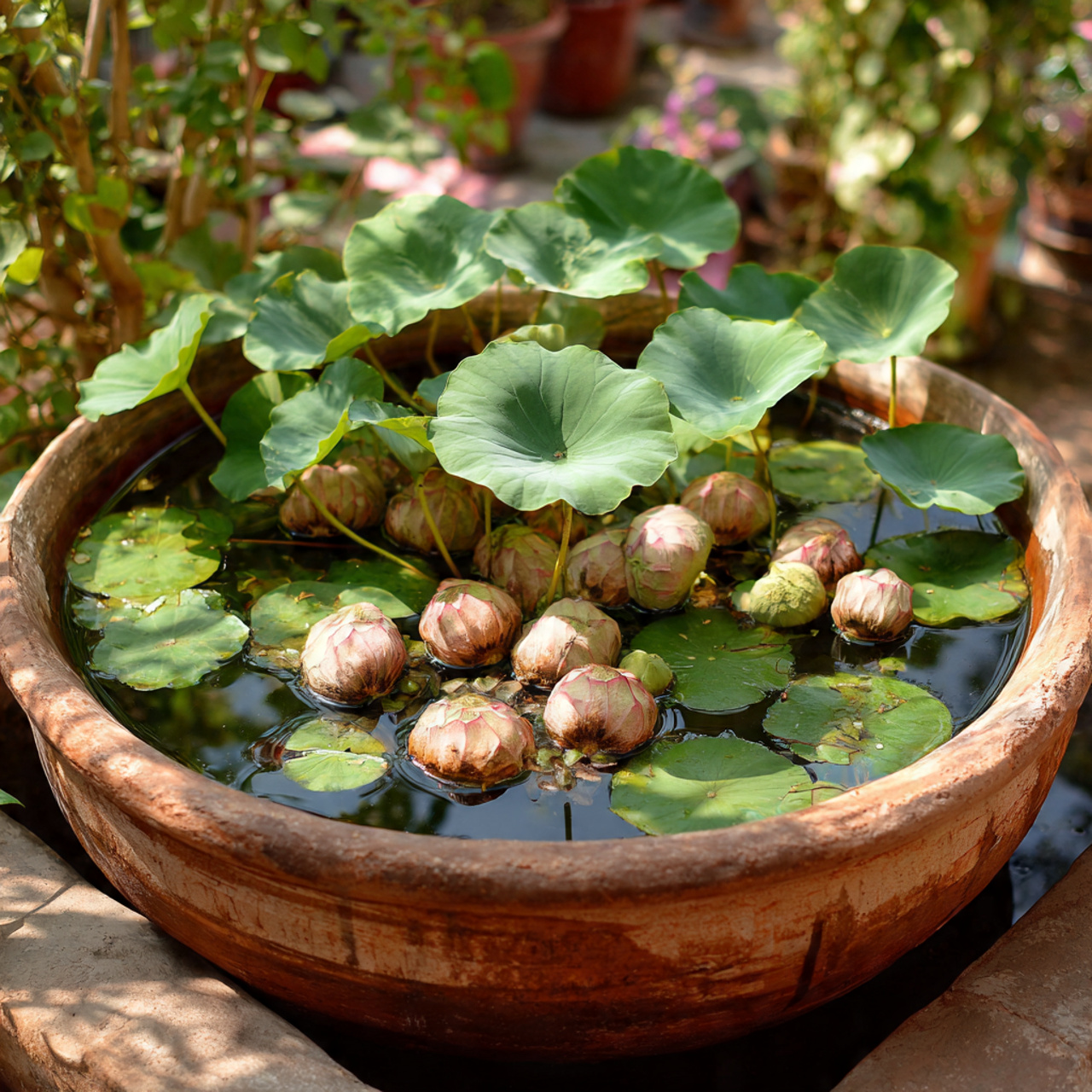
Don’t have a pond? No problem! Containers are your best friend when growing lotus flowers at home. The key is thinking wide and shallow rather than deep and narrow—lotus tubers love to spread out horizontally, just like they would in their natural habitat.
Container Selection Tips:
- Aim for at least 18 inches in diameter (wider is even better)
- Choose clay pots or sturdy plastic containers with no drainage holes
- Shallow depth (12-16 inches) works perfectly
- Avoid dark-colored containers that absorb too much heat
Setup Method: Fill your container with heavy aquatic soil (about 6-8 inches), place your tuber gently on top, then add a thin layer of sand or small pebbles. This prevents the soil from clouding your water and keeps everything stable.
Common Mistake to Avoid: Don’t use regular potting soil—it’s too light and will float everywhere, creating a murky mess.
Selecting the Ideal Lotus Variety
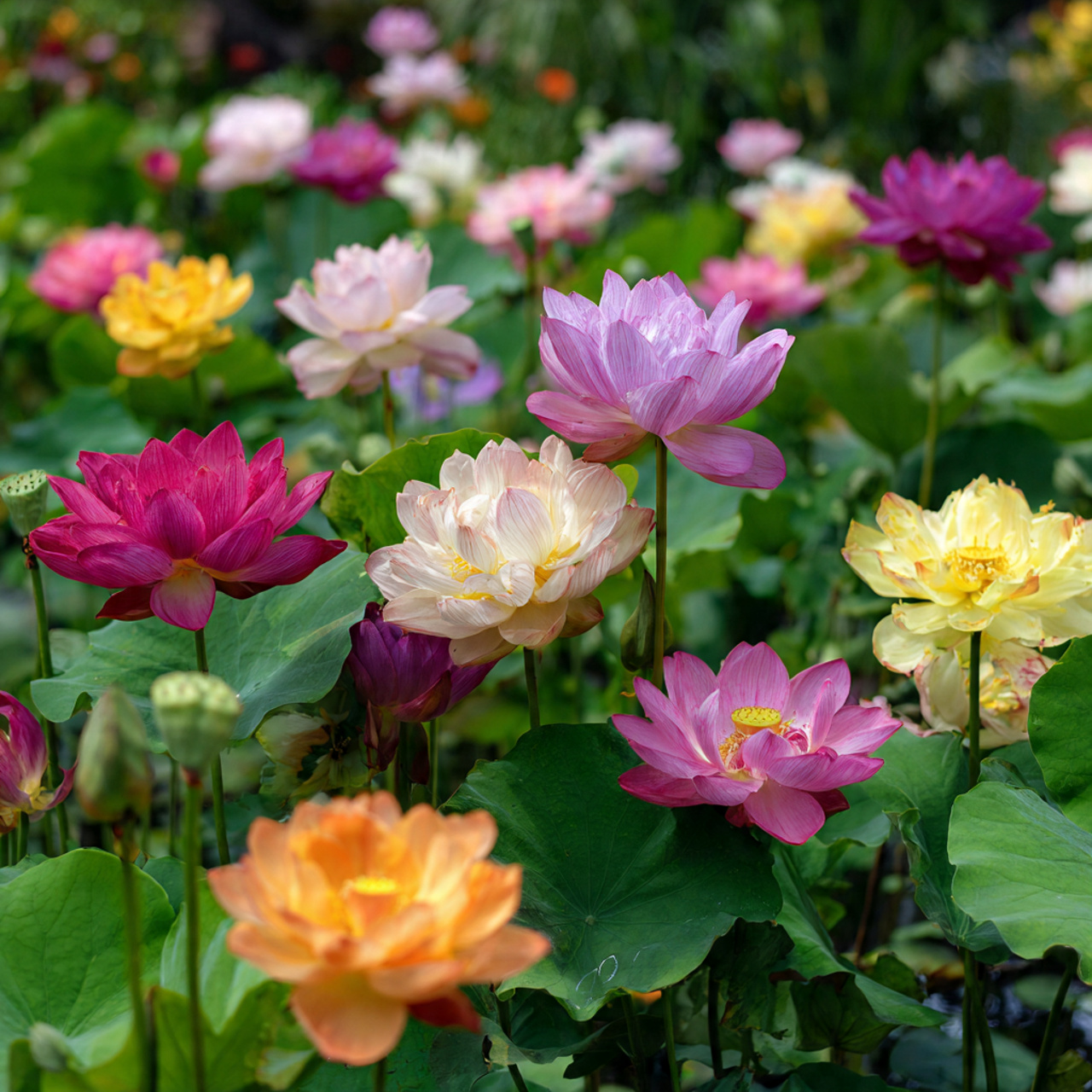
Not all lotus flowers are created equal, and picking the right variety for your space can make or break your success. The lotus family is surprisingly diverse, ranging from tiny miniatures perfect for tabletop displays to massive varieties that need serious pond space.
Best Varieties for Beginners:
- ‘Momo Botan’: Adorable dwarf variety with pink double blooms
- ‘Little Beauty’: Compact with stunning white flowers
- ‘Crystal Beauty’: Pure white petals, container-friendly
- ‘Perry’s Giant Sunburst’: For those with larger spaces
Selection Checklist:
- Match the variety to your available space
- Consider your climate zone (tropical vs. temperate)
- Think about bloom color and how it fits your garden palette
- Check mature size before purchasing
Helpful Tip: Dwarf varieties are forgiving for beginners and bloom more reliably in containers, making them ideal first lotus plants.
Creating a Mini Water Garden
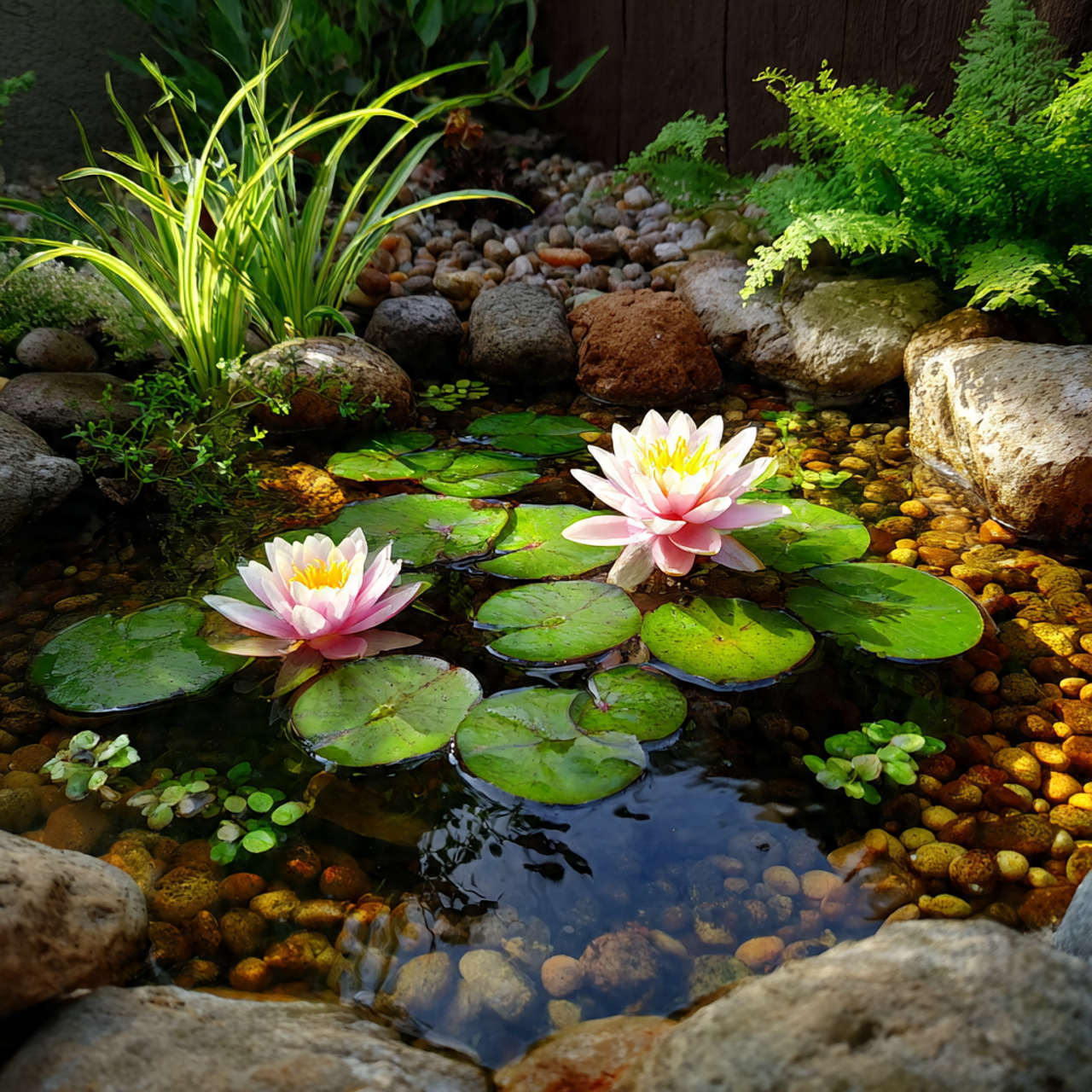
Mini water gardens are absolutely magical, and lotus flowers make perfect centerpieces for these compact aquatic ecosystems. Think of it as creating a tiny pond world on your patio, balcony, or even your front steps.
What You’ll Need:
- Large decorative bowl or half-barrel (20-24 inches wide)
- Lotus plant in its own container
- Complementary aquatic plants (water lettuce, dwarf papyrus)
- Smooth river rocks or pebbles
- Optional: small fountain pump for gentle movement
Design Approach: Layer your plants at different heights—lotus in the center, floating plants around the edges, and perhaps some tall marginal plants for vertical interest. The contrast in textures creates visual depth even in small spaces.
Safety Note: Keep water levels consistent and place your mini garden on a stable, level surface that can support the weight of water.
Visit Also: Spring Flowers
Fertilizing Lotus Plants
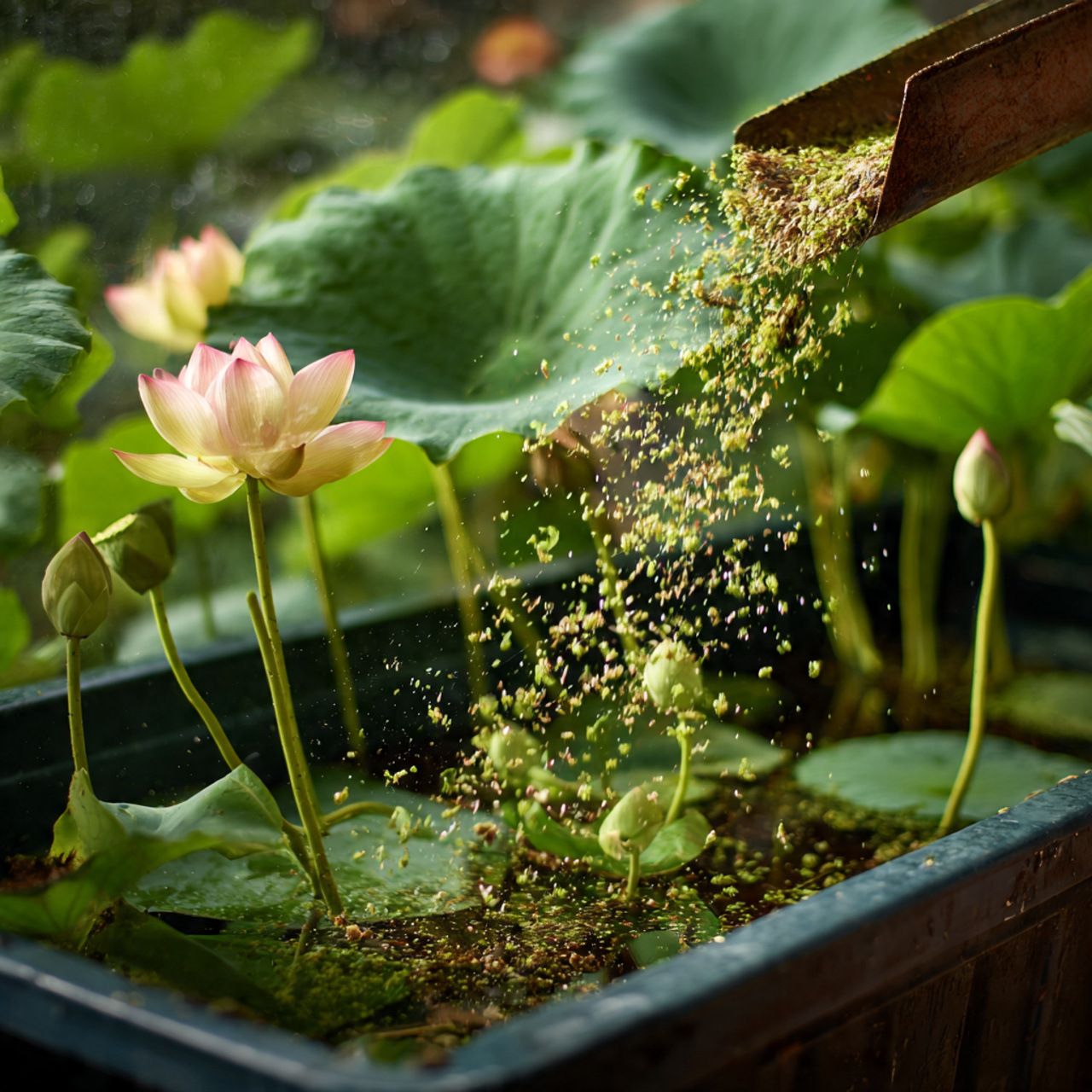
Lotus plants are hungry growers, but that doesn’t mean you need harsh chemicals. Natural fertilization keeps your water safe, your plants healthy, and beneficial wildlife happy.
Best Organic Options:
- Well-aged compost or composted cow manure
- Specialized aquatic plant tablets
- Fish emulsion (diluted properly)
- Bone meal for phosphorus boost
Fertilizing Schedule:
- Begin in spring when growth starts
- Feed every 3-4 weeks during growing season
- Stop completely in fall when plants go dormant
- Use less than you think—over-feeding causes more leaves, fewer flowers
Warning: Avoid standard garden fertilizers—they can spike nitrogen levels, promoting algae blooms and excessive foliage at the expense of beautiful blooms.
Sunlight Requirements for Healthy Lotus Blooms
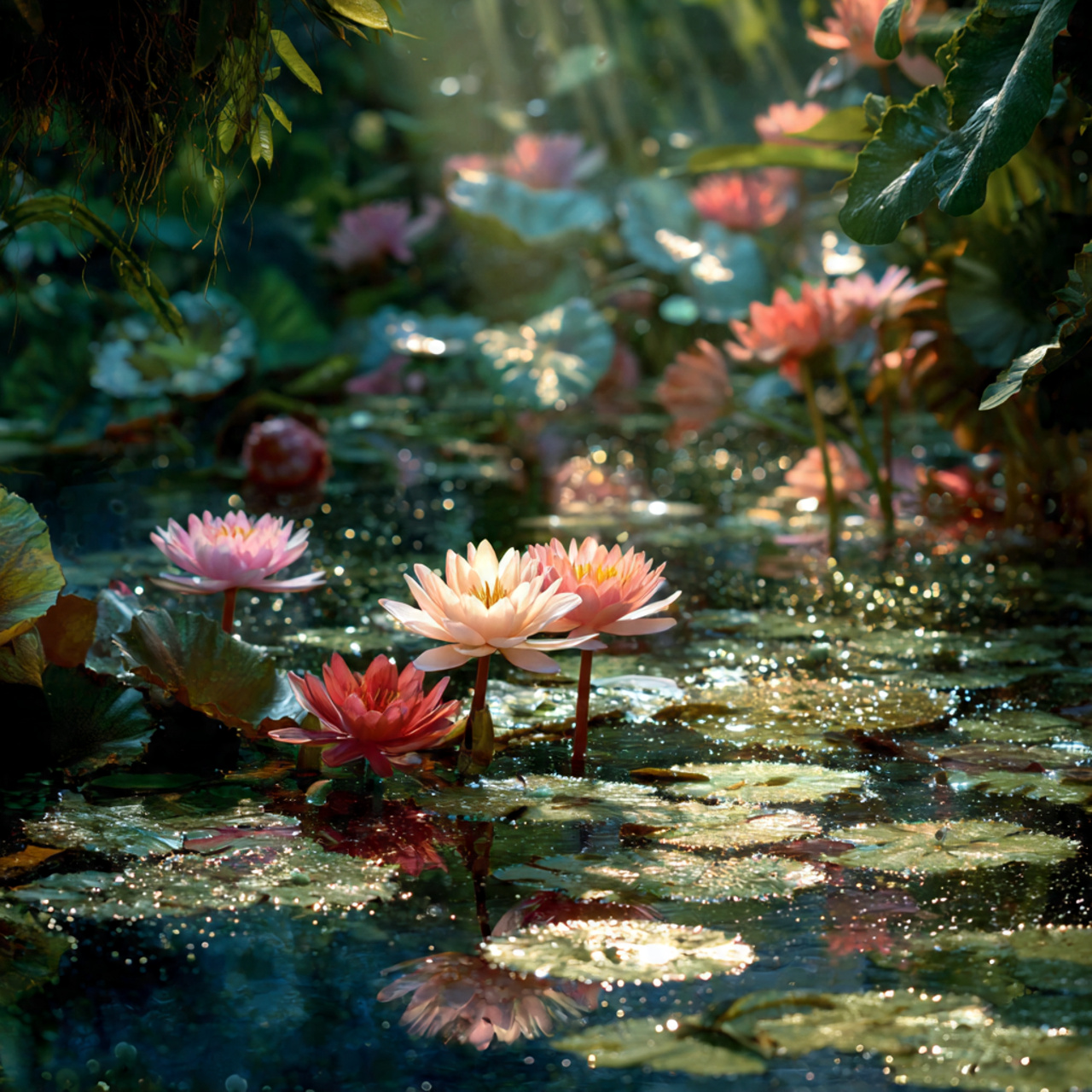
Here’s the golden rule: lotus flowers are sun worshippers. Give them 6-8 hours of direct sunlight daily, and they’ll reward you with abundant, vibrant blooms. Skimp on sun, and you’ll get lots of leaves but disappointing flowers.
Placement Strategies:
- South-facing locations get maximum sun exposure
- Morning sun is gentler; afternoon sun is more intense
- Avoid spots shaded by trees or buildings
- Consider sun patterns through different seasons
For Limited Sun Situations:
- Use reflective surfaces (white walls, mirrors) to bounce light
- Choose the sunniest spot available, even if not perfect
- Opt for more shade-tolerant water plants as companions
- Accept that blooming may be reduced
Quick Tip: Track sun exposure for a full day before committing to a location—shadows shift more than you’d expect!
Seasonal Care Tips
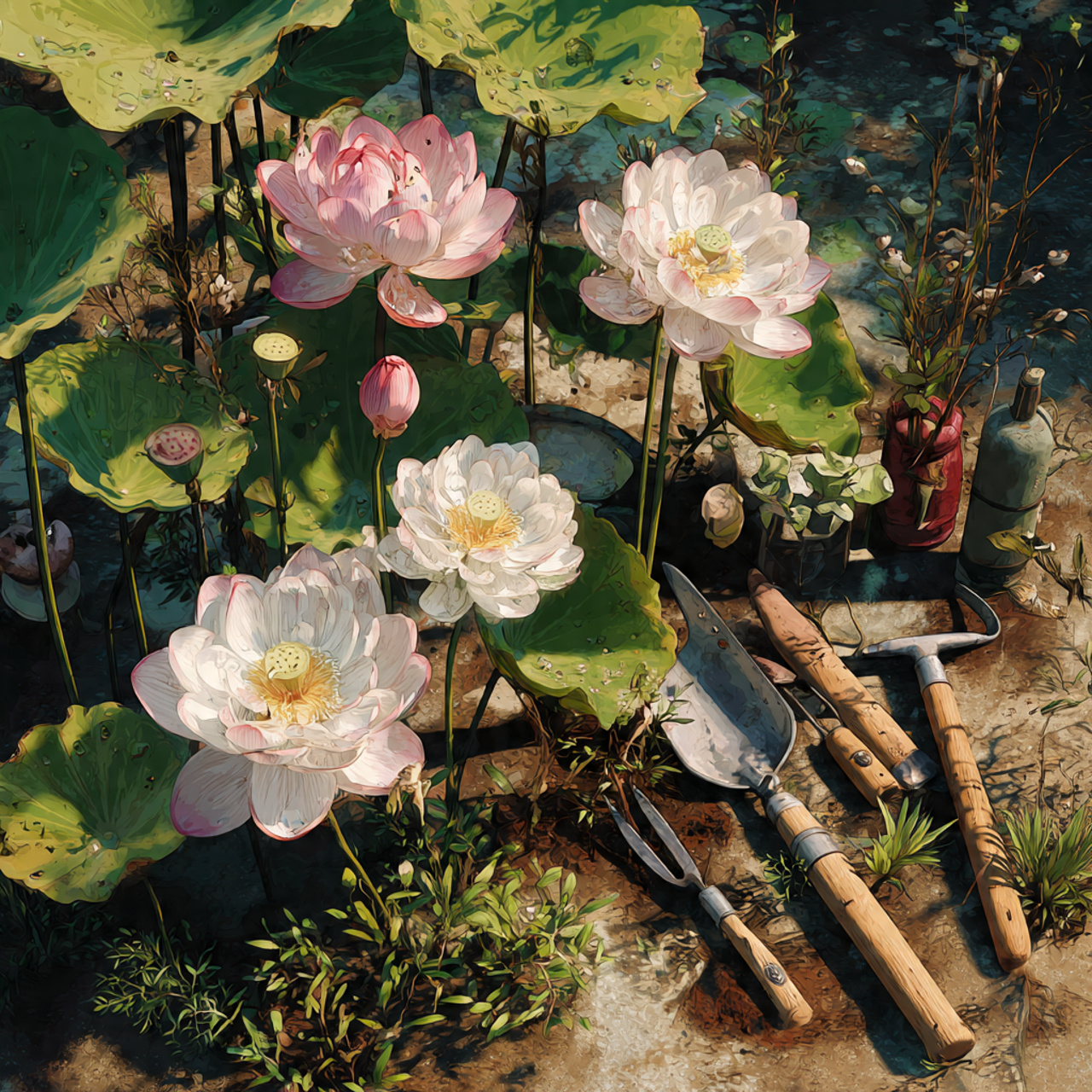
Lotus plants live by the seasons, and understanding their annual cycle is crucial for long-term success. Think of it as helping your plant rest in winter so it can explode with energy come spring.
Spring Care:
- Plant or divide tubers when water temperatures reach 60°F
- Resume fertilization as new growth emerges
- Gradually increase water levels as plants grow
Summer Care:
- Maintain consistent water levels (top off regularly)
- Fertilize every 3-4 weeks
- Enjoy peak blooming season
- Remove spent flowers to encourage more blooms
Fall Preparation:
- Stop fertilizing in late summer
- Allow plants to naturally die back
- Reduce water levels slightly
Winter Protection:
- In mild climates, leave tubers in place underwater
- Cold climates: move containers to garage or cover with thick mulch
- Keep tubers from freezing solid
Beginner’s Mistake: Don’t panic when your lotus dies back in fall—it’s completely normal! The tuber is alive and resting.
Controlling Pests and Diseases
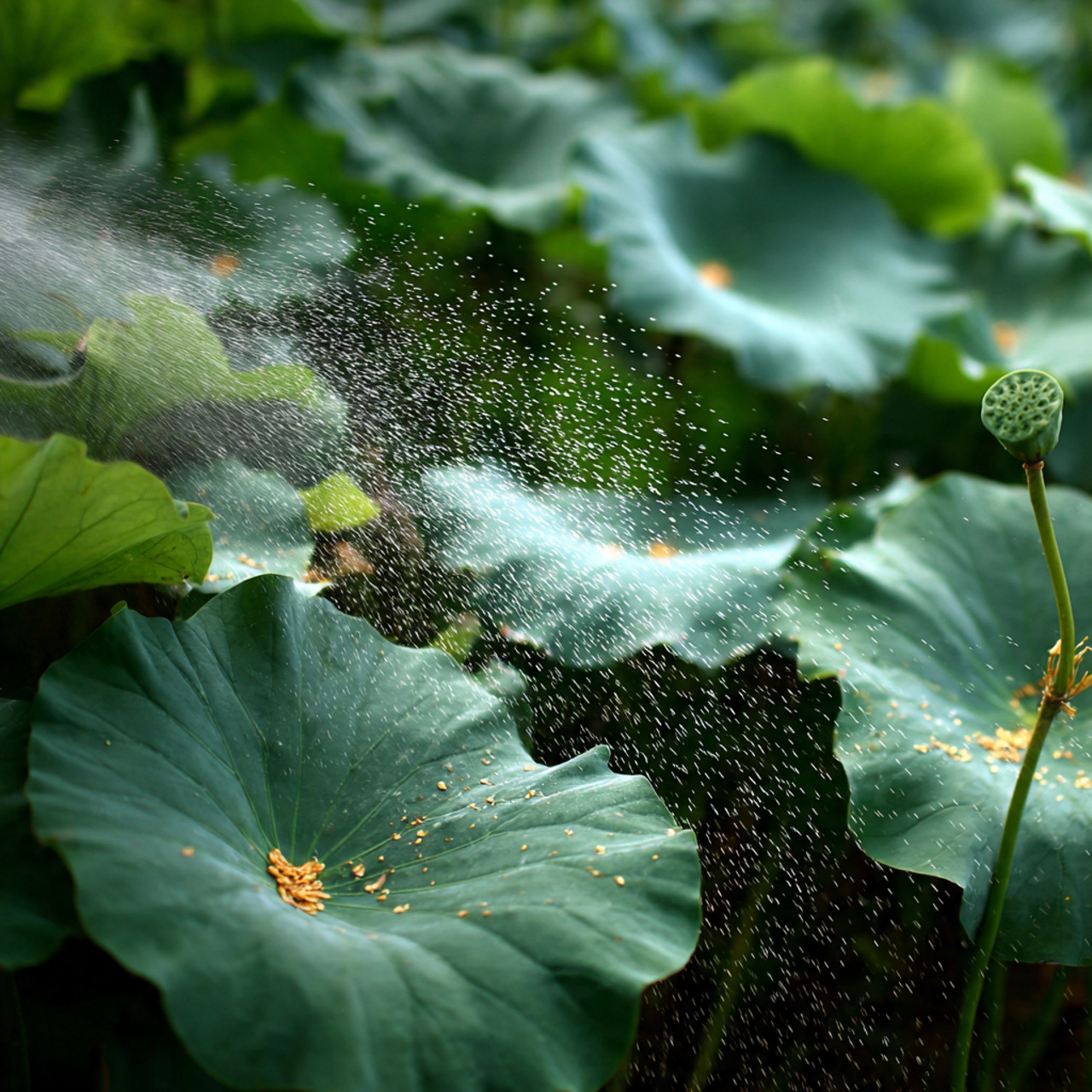
Good news: lotus flowers are relatively pest-resistant compared to many garden plants. However, they’re not immune to problems, and catching issues early makes all the difference.
Common Pests:
- Aphids (cluster on leaves and buds)
- Caterpillars (chew leaf edges)
- Snails (visible trails and holes)
Organic Control Methods:
- Strong water spray to dislodge aphids
- Neem oil solution (spray in early morning)
- Hand-picking larger pests
- Beneficial insects like ladybugs
- Diatomaceous earth around container edges
Disease Prevention:
- Remove dead or yellowing leaves promptly
- Maintain clean water (change partially if cloudy)
- Ensure good air circulation
- Avoid overcrowding plants
Important Note: Never use systemic pesticides in water gardens—they harm fish, frogs, and beneficial insects.
Propagating Lotus from Seeds
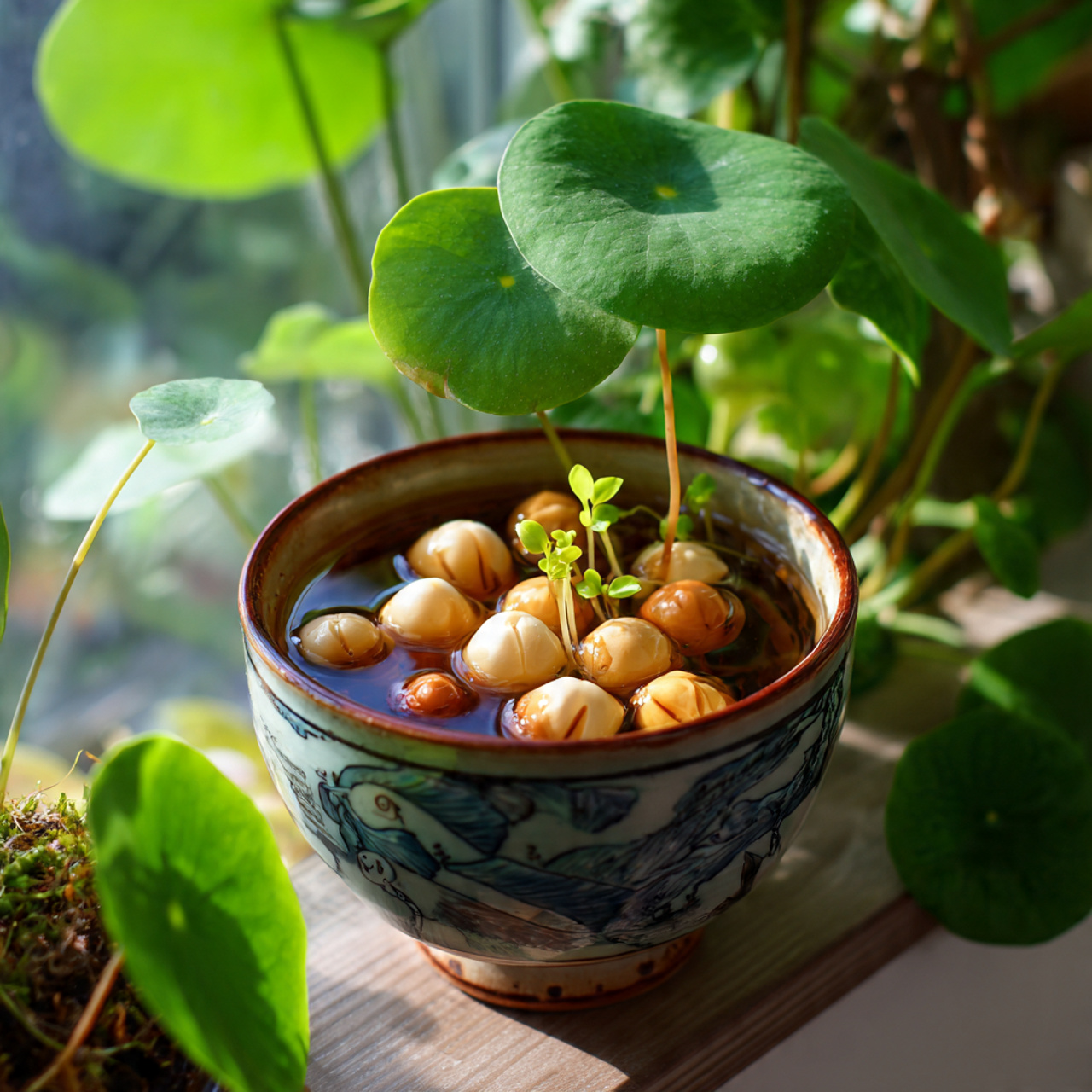
Starting lotus from seeds is like watching magic unfold in slow motion. It takes longer than tubers, but the process is incredibly rewarding and lets you experiment with different varieties affordably.
Seed Preparation Steps:
- Scarify the seed: Use sandpaper or nail clippers to nick the hard outer shell (avoid the pointed end)
- Soak in warm water: Place seeds in a cup of warm water (75-85°F)
- Change water daily: Fresh water prevents bacterial growth
- Watch for sprouting: Roots appear in 3-7 days, leaves follow in 1-2 weeks
- Plant when ready: Once leaves develop, transfer to soil in shallow water
Success Tips:
- Keep water temperature consistent (use a heat mat if needed)
- Don’t plant too deep—seeds need light to germinate
- Be patient—some seeds take weeks to wake up
- Start multiple seeds as not all will germinate
Avoid This Mistake: Don’t skip scarification! The seed coat is incredibly hard, and intact seeds rarely germinate.
Propagating Lotus from Tubers
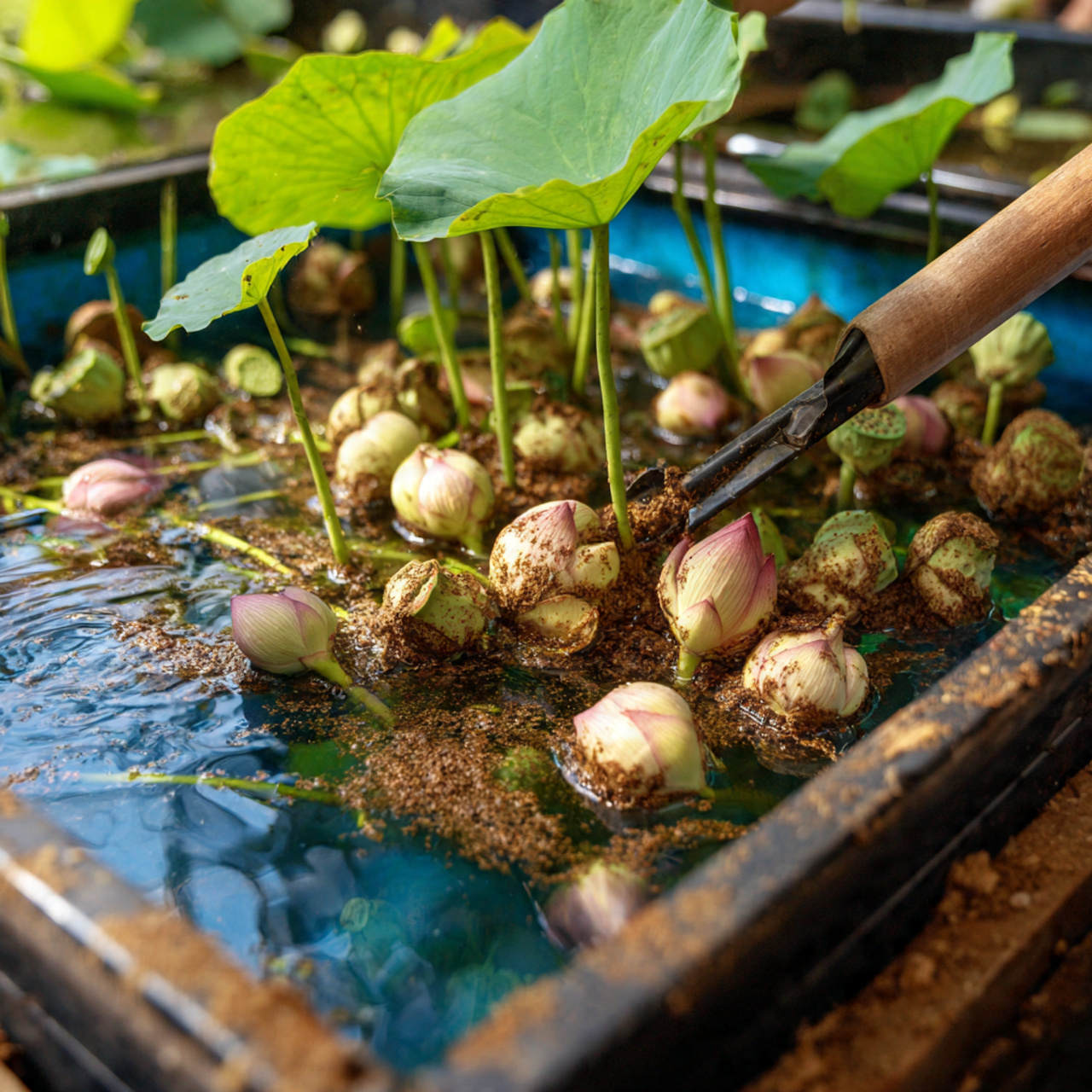
Tuber propagation is the express lane to lotus flowers. You’ll get blooms much faster, and the new plants will be identical to the parent—perfect if you’ve found a variety you absolutely love.
Step-by-Step Tuber Division:
- Timing: Early spring, just as growth begins
- Carefully remove: Lift tuber from container without breaking growing tips
- Clean gently: Rinse off excess soil
- Identify sections: Look for pieces with growth nodes (small bumps)
- Cut or separate: Use clean, sharp knife between sections
- Plant immediately: Place in aquatic soil with tips exposed
Handling Guidelines:
- Treat tubers like fragile eggs—they break easily
- Each division needs at least one growing tip
- Plant horizontally, never vertically
- Cover with 2-4 inches of water initially
Safety Measure: Wear gloves if you have sensitive skin—lotus sap can cause minor irritation.
Using Lotus in Indoor Water Features
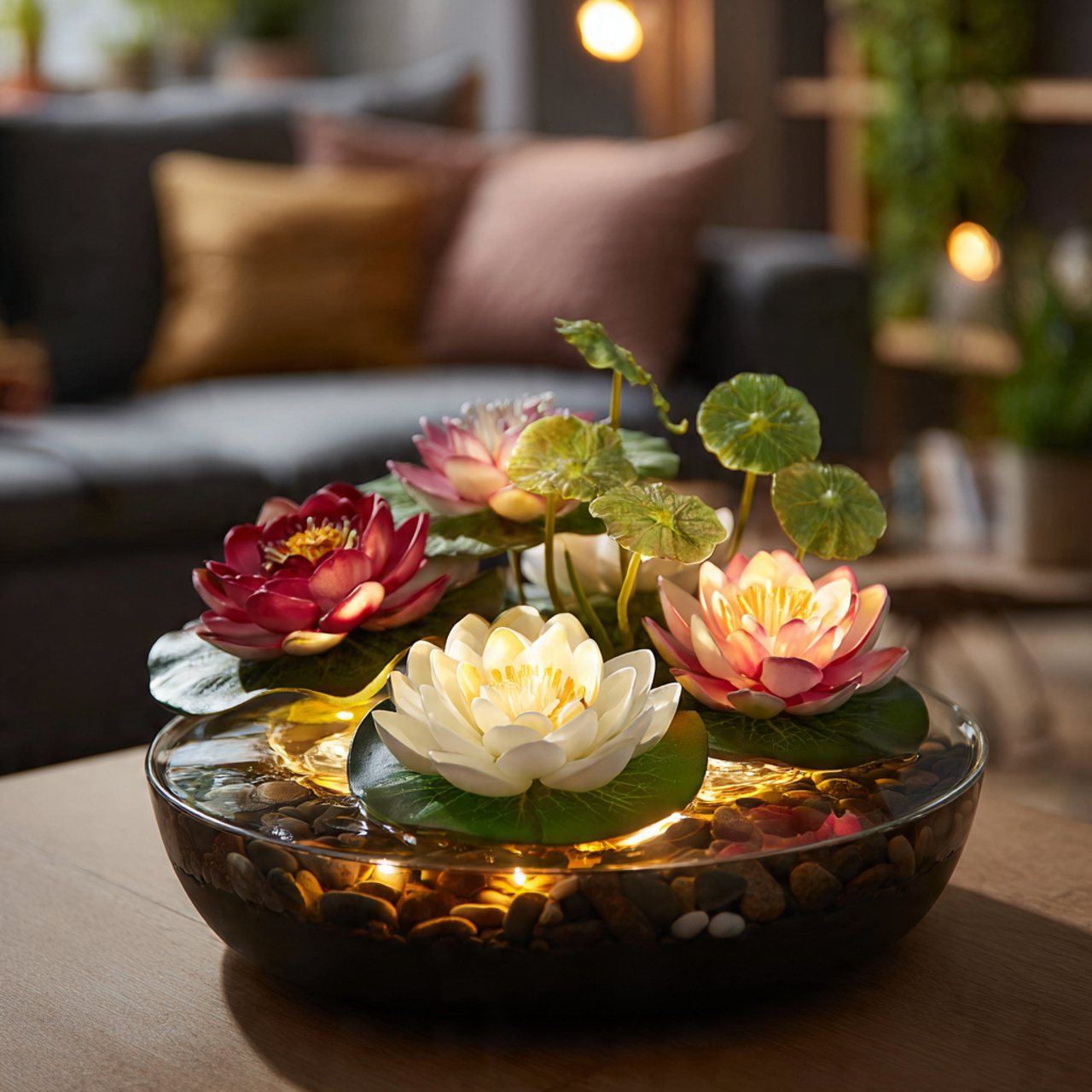
Who says lotus flowers are only for outdoor spaces? With adequate lighting, you can bring these serene beauties indoors, creating a living focal point that purifies air and calms the mind.
Indoor Setup Essentials:
- Large decorative bowl or glass vessel
- Dwarf lotus variety only
- Strong grow lights (if natural light is insufficient)
- Stable, waterproof surface
- Temperature control (60-75°F ideal)
Design Ideas:
- Minimalist glass bowl with white stones on an entryway table
- Half-barrel planter in a sunroom with complementary ferns
- Modern concrete container in a bright bathroom
- Traditional ceramic bowl in a meditation space
Lighting Solution: If you lack natural sunlight, use full-spectrum LED grow lights positioned 12-18 inches above the plant for 6-8 hours daily.
Tip: Indoor lotus works best in rooms with high humidity—kitchens, bathrooms, and sunrooms are ideal locations.
Combining Lotus with Other Aquatic Plants
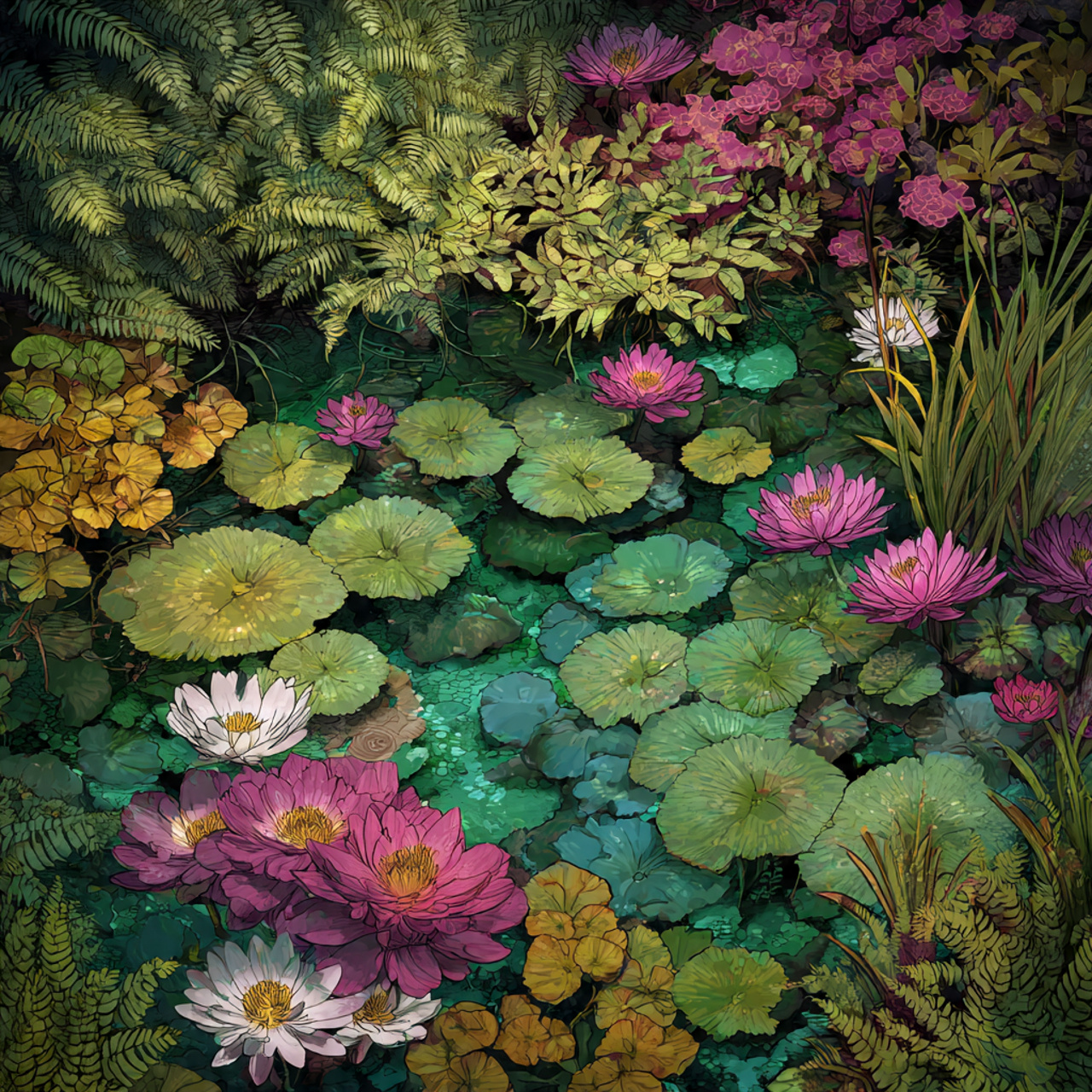
Creating a diverse water garden isn’t just beautiful—it’s beneficial. Companion planting with lotus creates a balanced mini-ecosystem that naturally manages algae, supports wildlife, and multiplies visual interest.
Perfect Lotus Companions:
- Water lilies (similar needs, different bloom heights)
- Water lettuce (floating foliage contrast)
- Dwarf cattails (vertical drama)
- Pickerelweed (purple flower spikes)
- Water hyacinth (lush floating greenery)
Planting Strategy:
- Lotus in the center (star of the show)
- Marginal plants around edges (frame the view)
- Floating plants scattered (soften the water surface)
- Submerged oxygenators (invisible water cleaners)
Benefit Example: Water lettuce absorbs excess nutrients that would otherwise feed algae, keeping your water clearer naturally.
Avoid Overcrowding: Leave lotus plenty of space to spread—aim for companions to cover no more than 40% of your water surface.
Designing a Lotus-Themed Patio
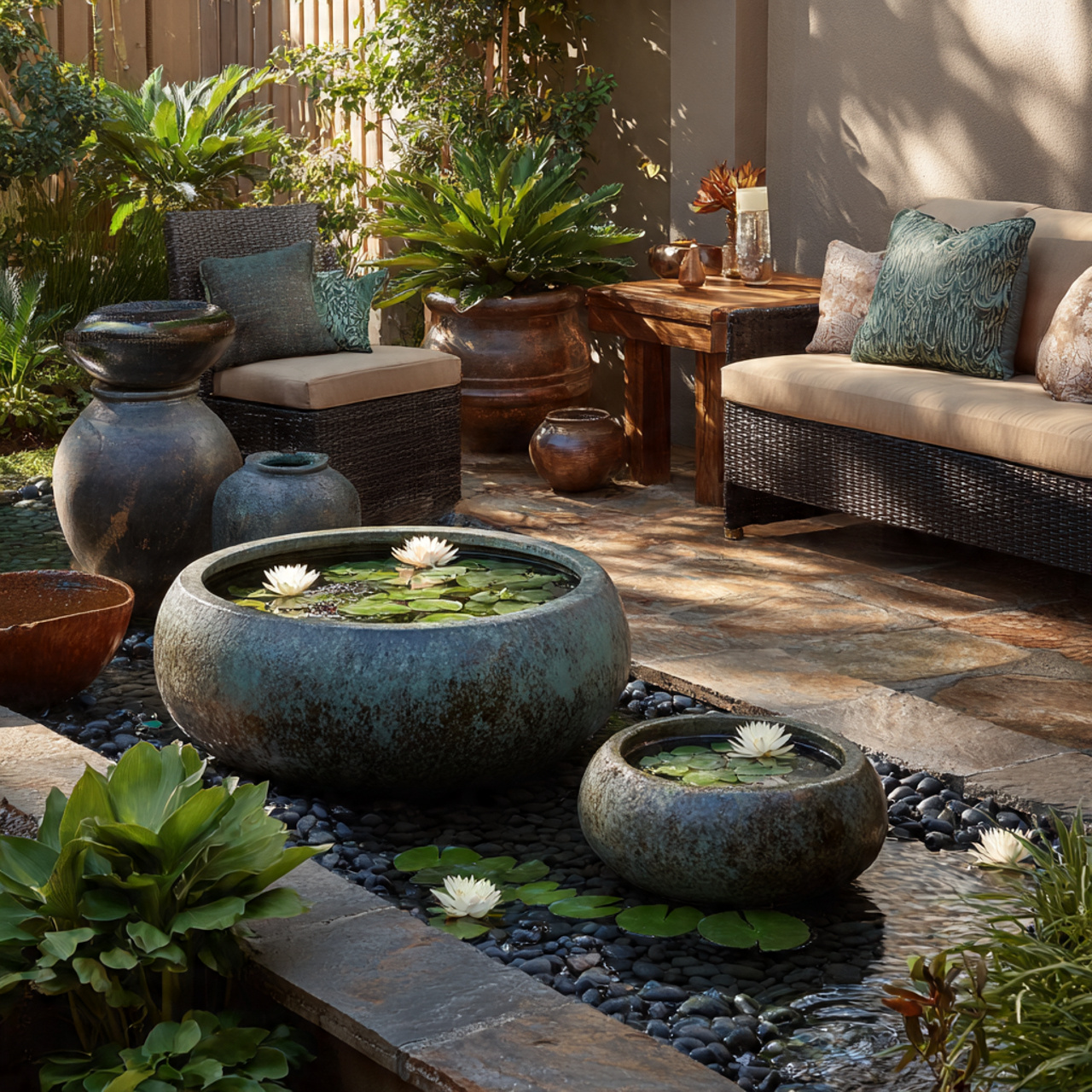
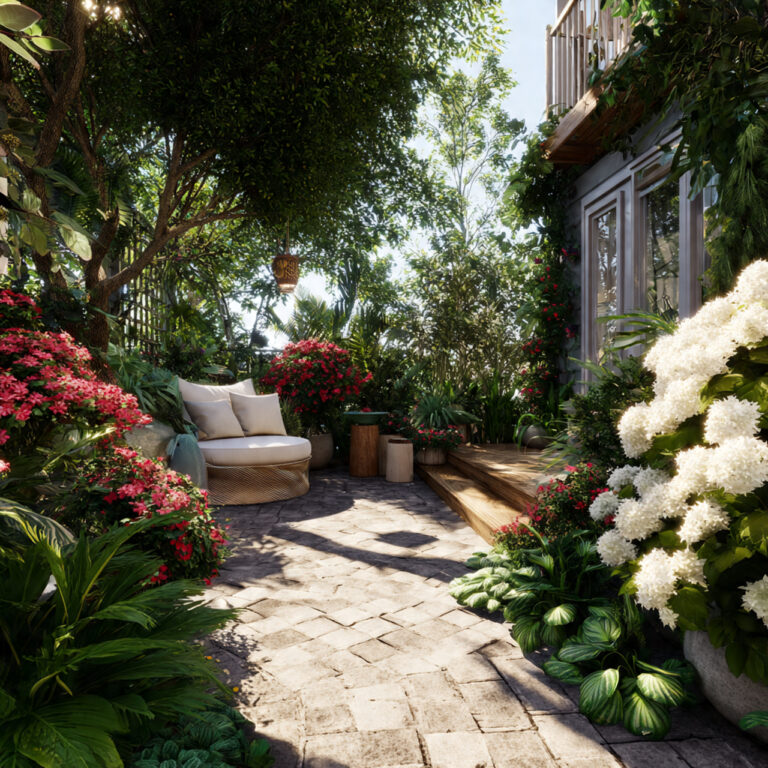
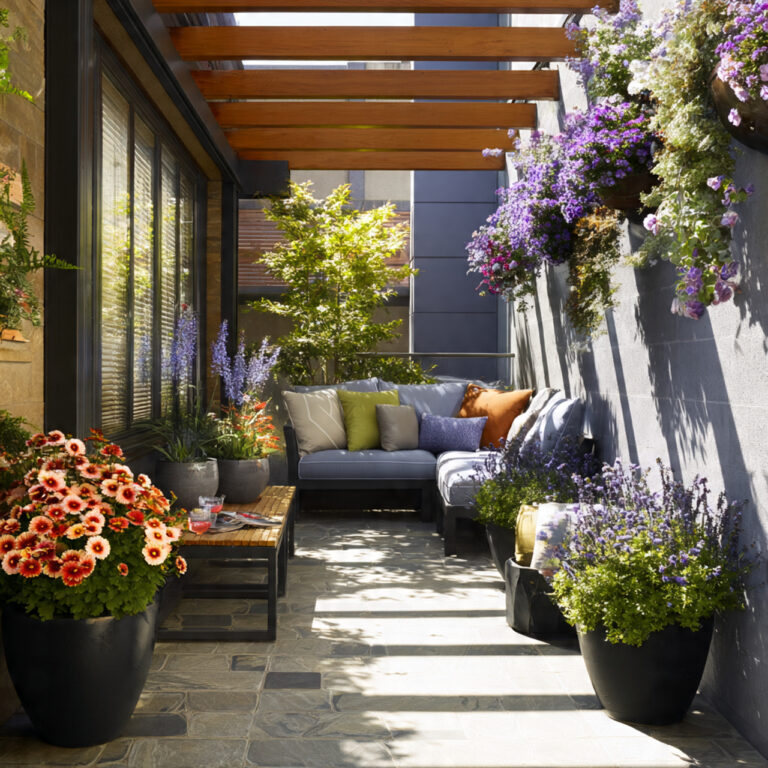
Transform your patio into a peaceful sanctuary by making lotus flowers the star attraction. This approach combines water features, strategic seating, and thoughtful design to create an outdoor room you’ll never want to leave.
Design Elements:
- Central water feature with blooming lotus
- Comfortable seating positioned for optimal viewing
- Pathway or stepping stones leading to the water
- Ambient lighting for evening enjoyment
- Natural materials (stone, wood, bamboo)
Layout Tips:
- Place seating 4-6 feet from the water feature (close enough to appreciate, far enough to avoid splashes)
- Add smaller water bowls with floating lotus blooms as table centerpieces
- Use matching containers for visual cohesion
- Include shade elements for comfort
Lighting Magic: Solar-powered lights tucked among lotus leaves create an enchanting glow at dusk without running electrical wires.
Lotus as a Feng Shui Element
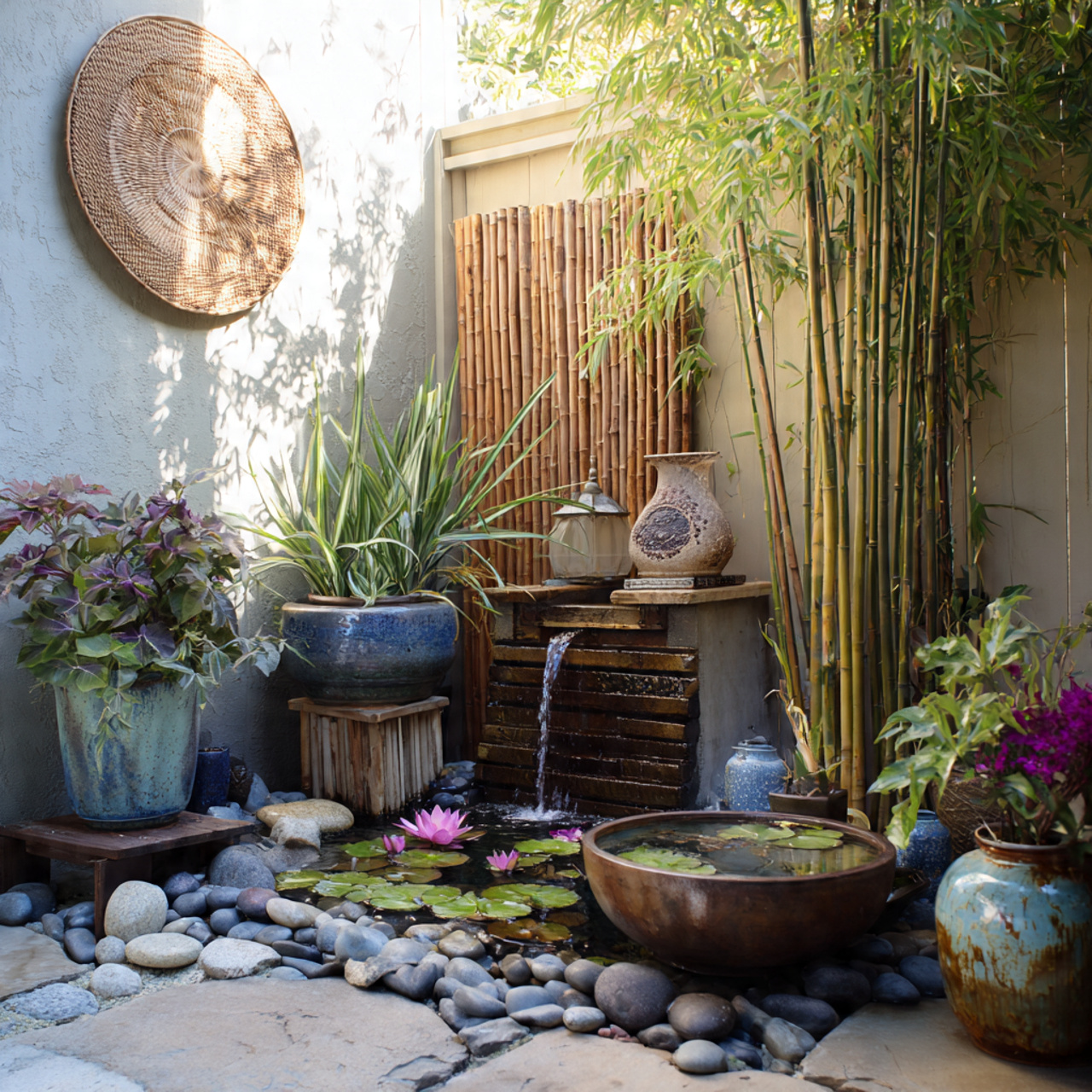
In Feng Shui philosophy, lotus flowers carry powerful symbolism representing purity rising from muddy waters—a beautiful metaphor for personal growth and spiritual awakening.
Feng Shui Placement Guide:
- East sector: Family harmony and health
- Southeast: Wealth and abundance
- North: Career advancement and life path
- Center: Overall balance and grounding
Enhancing the Energy:
- Use pairs of lotus plants for relationship areas
- White lotus for spiritual spaces
- Pink lotus for romance and love
- Flowing water features amplify positive chi
Practical Application: Position a lotus-filled water feature in your home’s relationship corner (far right from the entrance) to nurture partnership energy.
Tip: Keep the water fresh and clean—stagnant water creates negative energy in Feng Shui practice.
Encouraging Pollinators
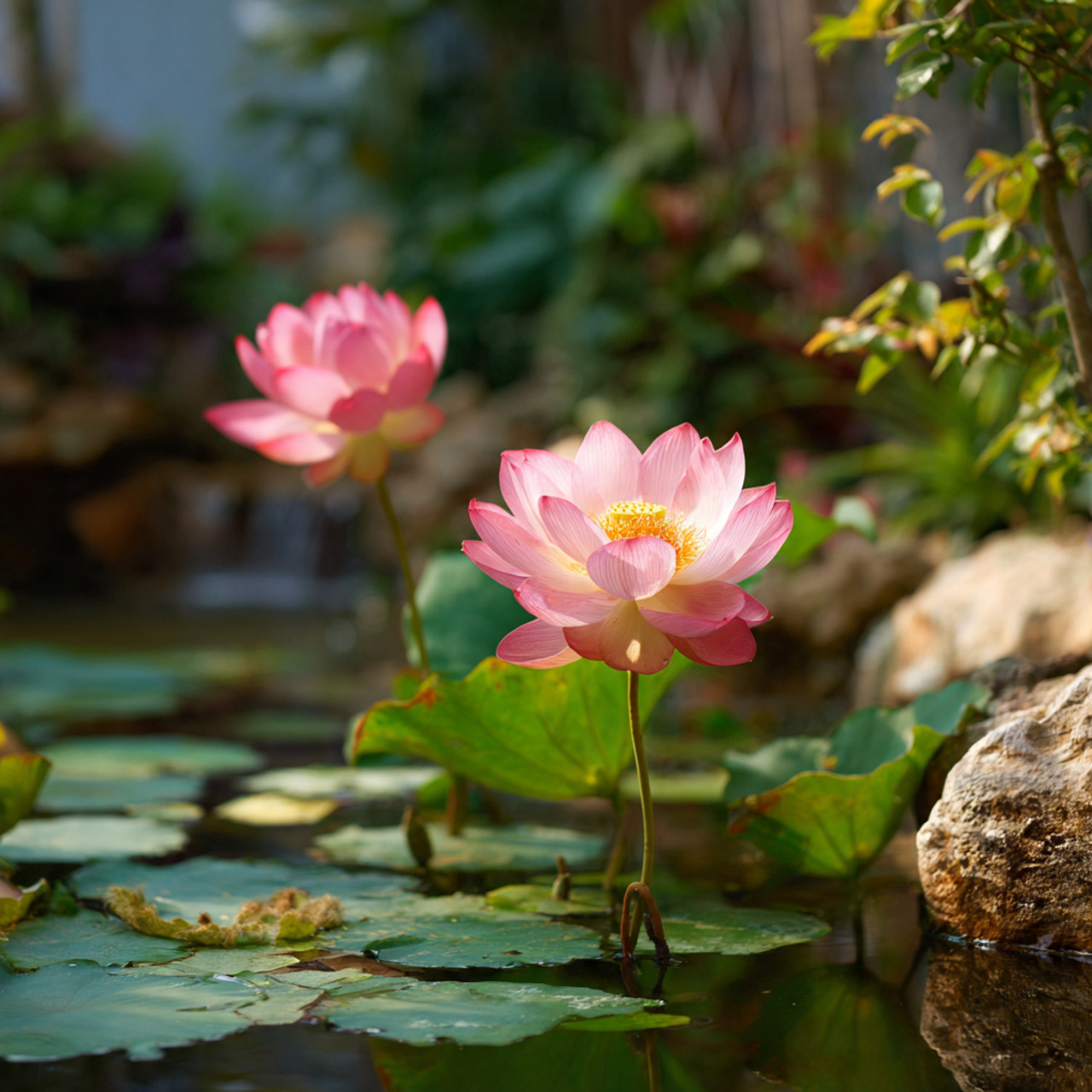
Lotus flowers are pollinator magnets, attracting bees, butterflies, and other beneficial insects that bring life and movement to your garden. Supporting these creatures helps your entire garden ecosystem thrive.
How Lotus Supports Pollinators:
- Large blooms provide abundant pollen and nectar
- Blooms open for multiple days
- Accessible flower structure
- Bloom throughout summer
Maximizing Pollinator Benefits:
- Plant multiple lotus in groups rather than single specimens
- Choose varieties with different bloom times
- Add pollinator-friendly companion plants
- Provide shallow water access points (rocks for insect landings)
Chemical-Free Commitment:
- Never use pesticides near blooming lotus
- Opt for organic pest control methods
- Accept minor leaf damage as part of a healthy ecosystem
- Welcome predatory insects as natural pest controllers
Bonus Benefit: Increased pollinator activity improves fruiting and vegetable production in your entire garden.
Container Water Depth Management
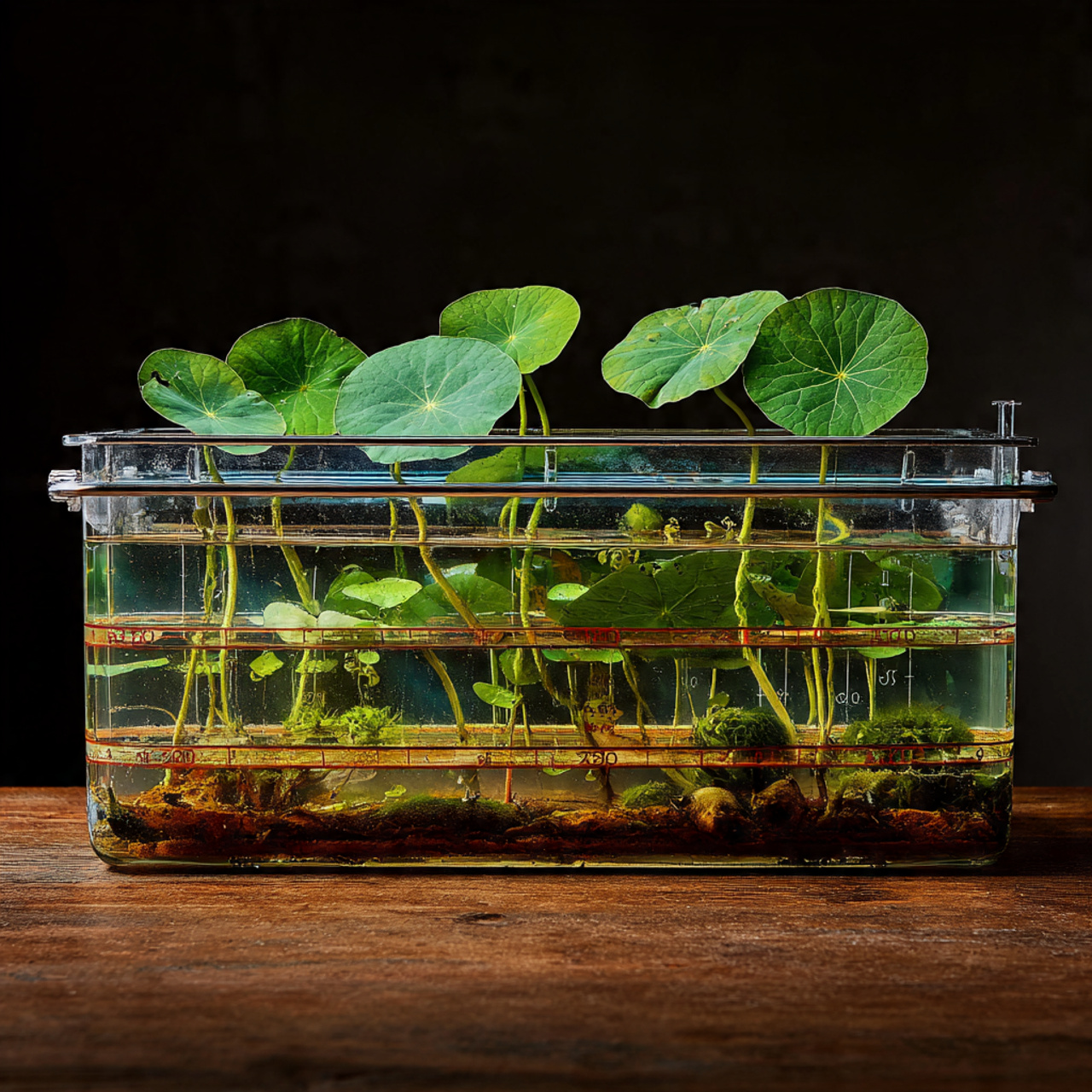
Water depth is the Goldilocks factor in lotus cultivation—too shallow and tubers dry out, too deep and plants struggle to reach the surface. Getting it just right makes all the difference.
Ideal Water Depths:
- Starting out: 2-4 inches above soil surface
- Established plants: 4-6 inches for dwarf varieties
- Standard varieties: 6-12 inches above soil
- Large pond varieties: 12-18 inches maximum
Adjustment Schedule:
- Begin shallow when planting tubers
- Gradually increase depth as leaves emerge and grow
- Maintain consistent depth during growing season
- Monitor and top off weekly (more often in hot weather)
Container Management:
- Mark your ideal water level with a discreet line
- Check every 3-4 days (daily in extreme heat)
- Add dechlorinated water when topping off
- Consider adding a small overflow hole near the top
Warning Sign: If leaves start yellowing despite adequate sunlight, check your water depth—it might be too deep for your variety.
Creating a Floating Lotus Display
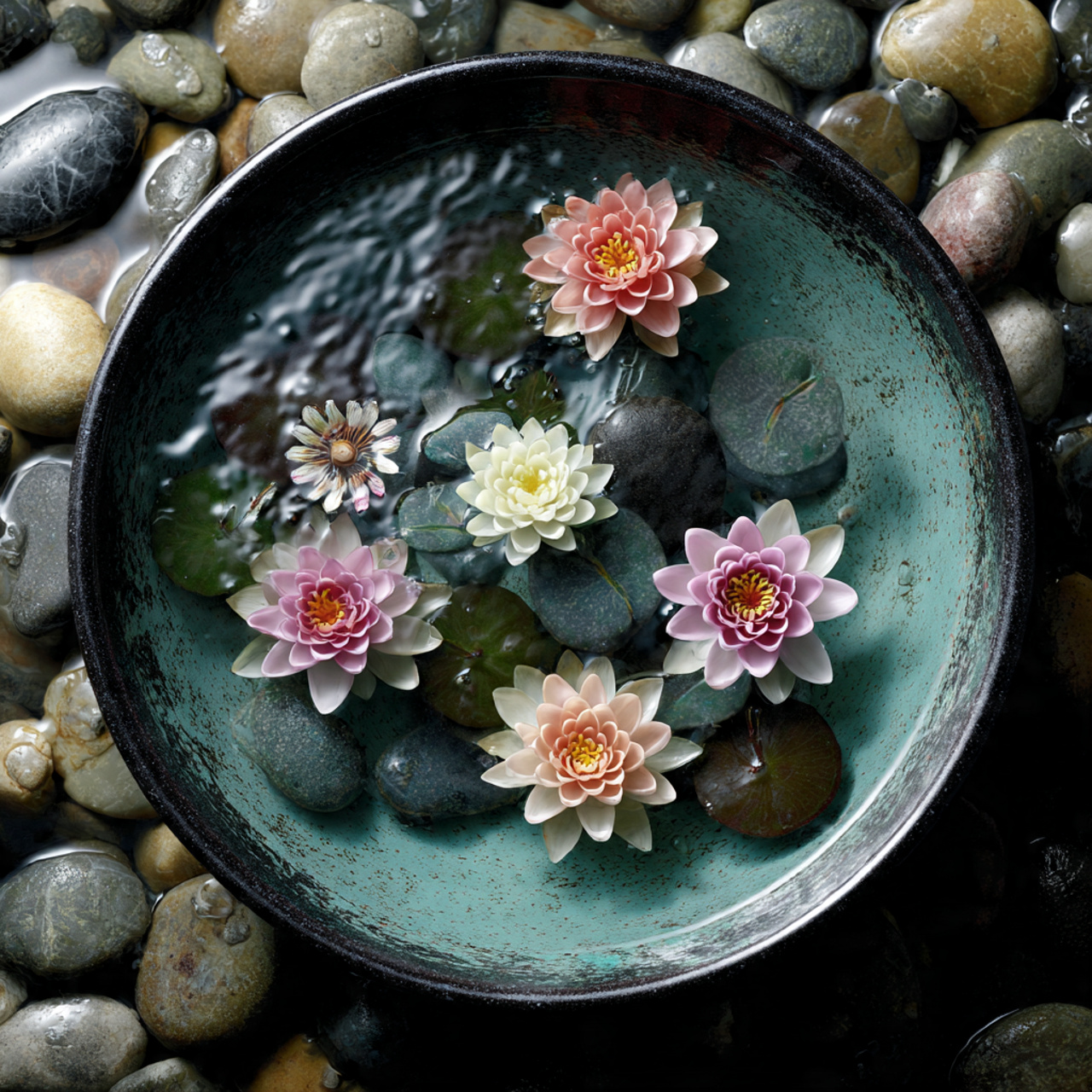
For instant wow-factor with minimal commitment, floating lotus displays offer flexibility and visual drama. These moveable installations work beautifully for special occasions or seasonal rearrangements.
Creating Floating Displays:
- Cut lotus blooms with 12-inch stems
- Float in shallow decorative bowls
- Add lily pads or lotus leaves for contrast
- Surround with smooth river stones
- Change water daily to maintain freshness
Living Floating Gardens:
- Use dwarf lotus in special floating planters
- Position in ponds or large water features
- Combine with water lettuce for fuller look
- Easy to move indoors during cold snaps
Event Applications:
- Wedding table centerpieces
- Outdoor party décor
- Meditation space focal points
- Photography backdrops
Practical Tip: Cut lotus blooms last 3-5 days in fresh water—they’re surprisingly long-lasting compared to many flowers.
Incorporating Lotus in Zen Gardens
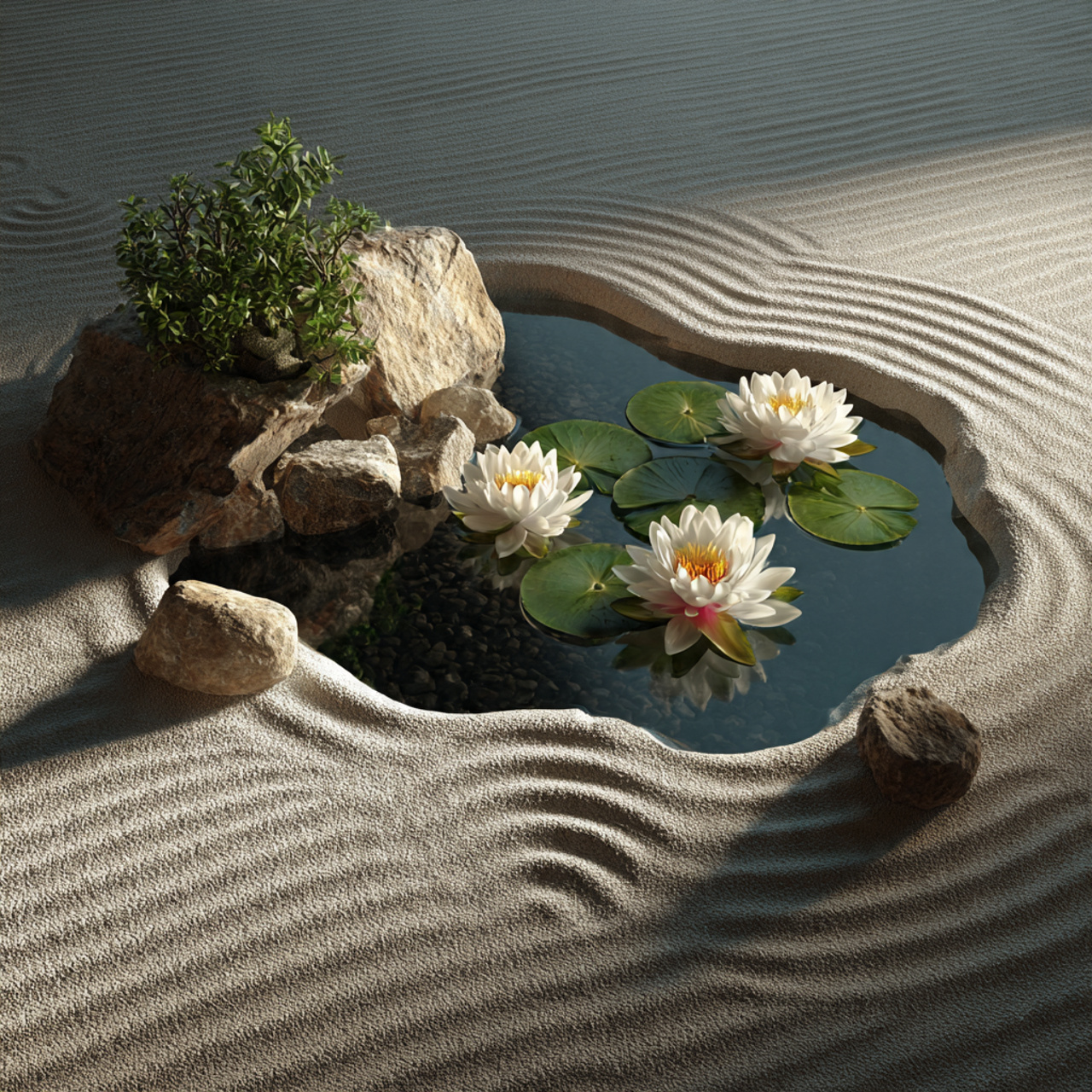
Lotus and Zen gardens are natural partners, both emphasizing simplicity, mindfulness, and the beauty of nature’s cycles. Combining these elements creates deeply calming outdoor meditation spaces.
Zen Garden Elements with Lotus:
- Raked gravel or sand representing water
- Large rocks symbolizing mountains or islands
- Bamboo features for sound and movement
- Minimalist planting palette
- Lotus pond as the living centerpiece
Design Principles:
- Asymmetry and odd numbers
- Negative space is as important as filled space
- Natural, weathered materials
- Subtle color palette
- Emphasis on horizontal lines
Creating Your Space:
- Start with a water feature containing lotus
- Add a single boulder or rock grouping
- Include one complementary plant (bamboo or Japanese iris)
- Define edges with natural stone or gravel
- Add a simple bench for contemplation
Meditation Benefit: The daily ritual of tending your lotus becomes a mindfulness practice itself.
Companion Planting with Lotus
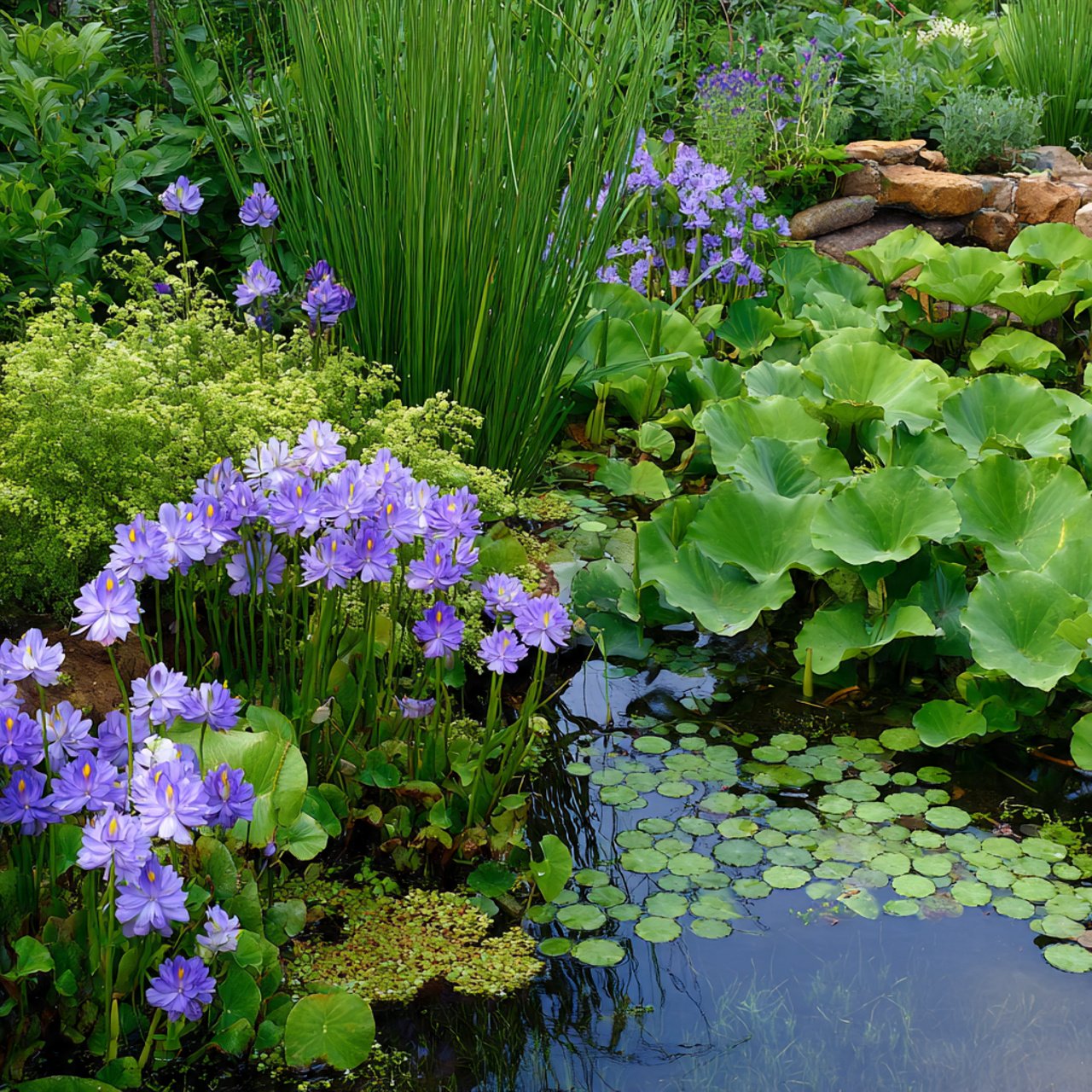
Strategic companion planting turns your lotus container or pond into a self-sustaining ecosystem that naturally manages problems while creating stunning visual layers.
Water Quality Improvers:
- Water hyacinth: nutrient absorber extraordinaire
- Submerged hornwort: oxygen producer and algae competitor
- Water lettuce: shade provider and nutrient consumer
Visual Companions:
- Taller marginals behind lotus (cattails, iris)
- Medium-height plants alongside (pickerelweed)
- Floating plants interspersed (water poppy)
- Cascading edges (creeping jenny, parrot’s feather)
Functional Benefits:
- Reduces algae by competing for nutrients
- Provides habitat for beneficial creatures
- Creates shade to moderate water temperature
- Adds textural and color variety
Spacing Formula: Lotus should occupy 30-40% of your water surface, companions another 20-30%, leaving 30-40% open water.
Mistake to Avoid: Don’t plant aggressive spreaders like duckweed—they’ll quickly overtake everything.
Seasonal Bloom Scheduling
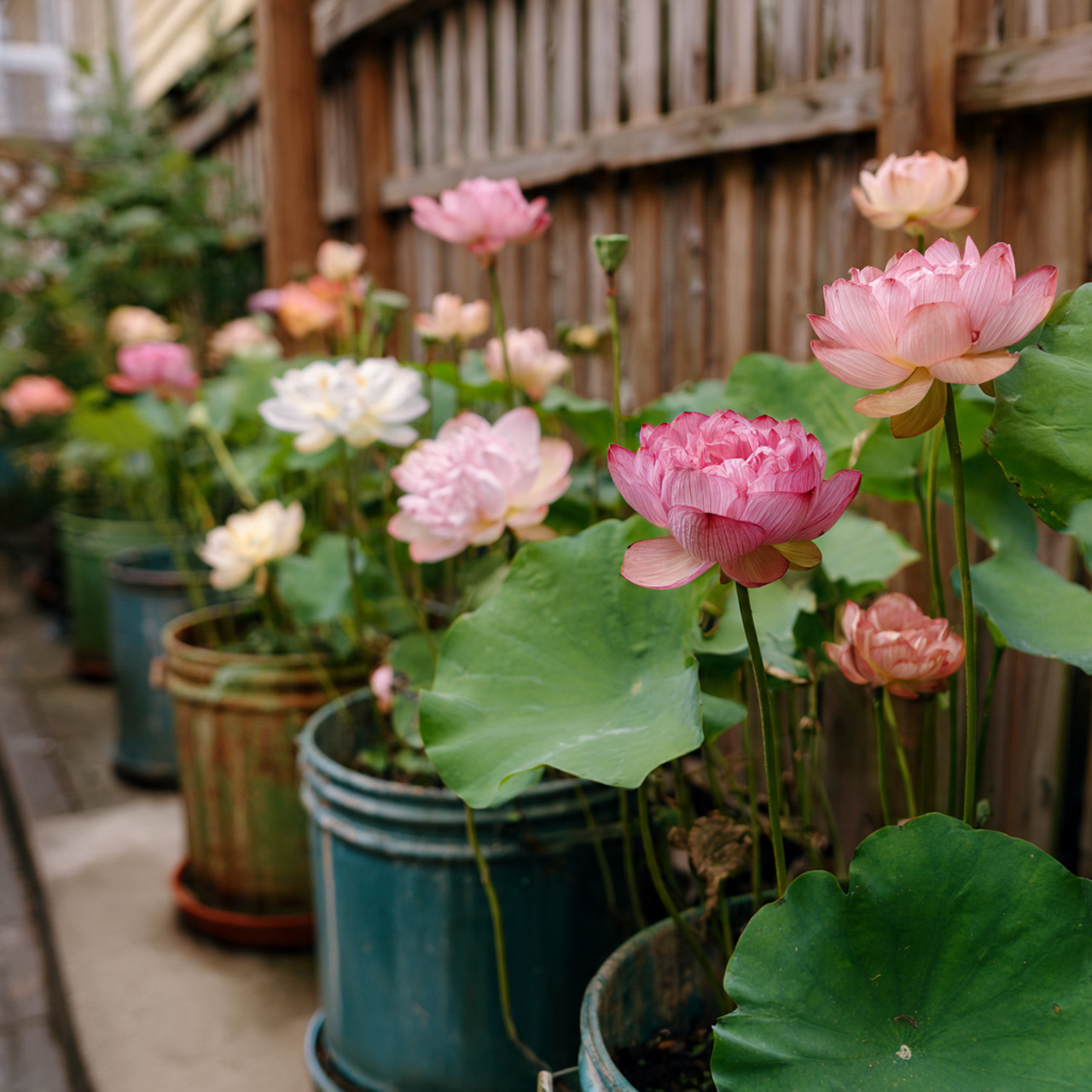
Why settle for a brief flowering period when you can enjoy lotus blooms from late spring through early fall? Strategic variety selection creates a succession of flowers throughout the entire growing season.
Bloom Time Categories:
- Early season (late May-June): ‘Alba Grandiflora’
- Mid-season (July-August): Most standard varieties
- Late season (August-September): ‘Carolina Queen’
Planning Strategy:
- Plant at least one variety from each bloom time
- Stagger tuber planting by 2-3 weeks
- Mix dwarf and standard sizes for extended interest
- Include varieties with different colored blooms
Record-Keeping Tip: Note when each variety blooms in your specific climate—patterns repeat year after year, helping you plan future gardens.
Bonus Effect: Continuous blooming means constant pollinator activity, creating a living, buzzing focal point all summer long.
DIY Lotus Planters
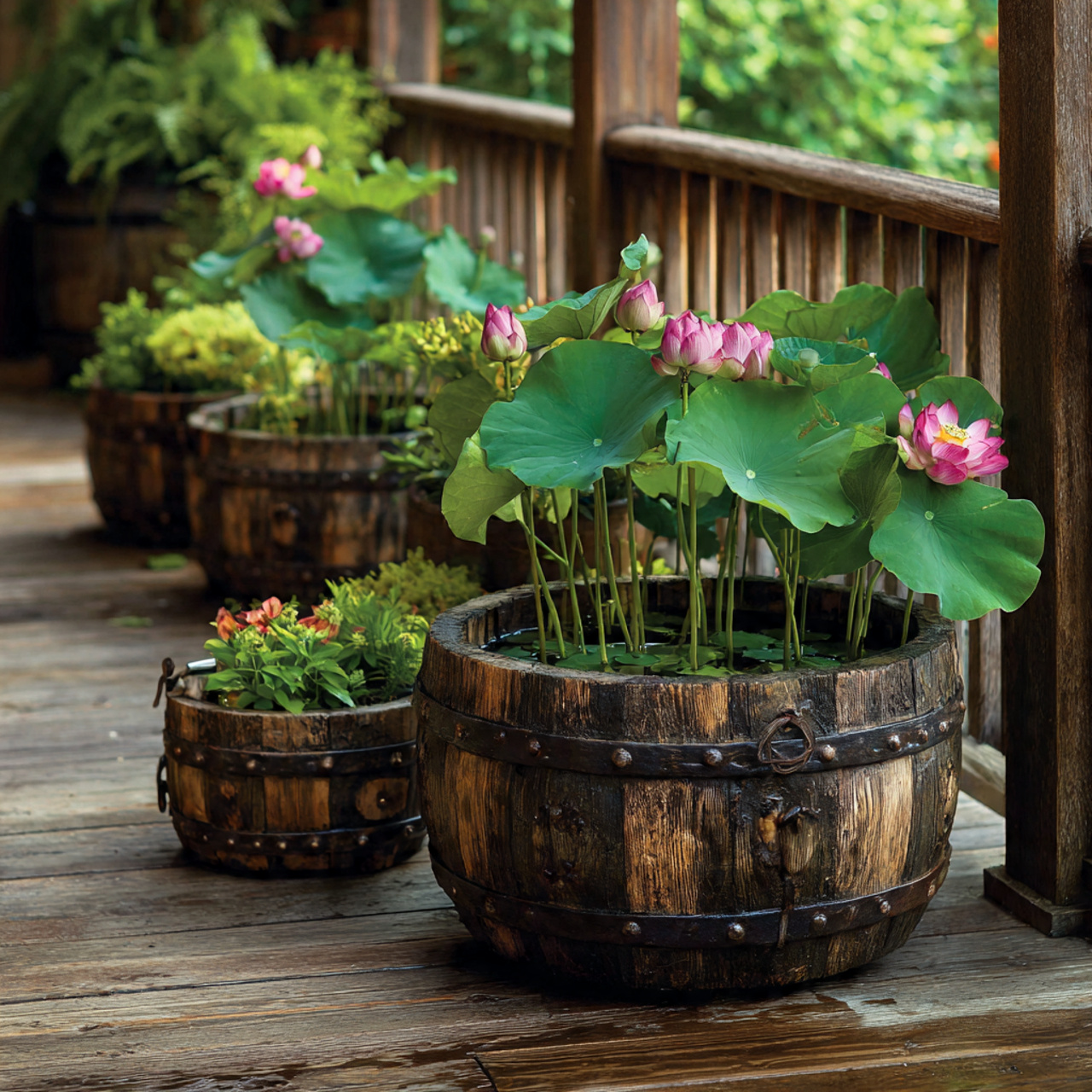
Why buy expensive specialty containers when you can create unique, personalized lotus planters that perfectly match your style and space? DIY projects add character while saving money.
Container Ideas:
- Whiskey or wine half-barrels (classic and spacious)
- Large galvanized metal tubs (modern farmhouse style)
- Recycled rubber livestock tanks (budget-friendly and durable)
- Concrete mixing tubs (industrial chic)
- Upcycled bathtubs (quirky and conversation-starting)
Waterproofing Methods:
- Line wooden containers with pond liner
- Seal inside seams with aquarium-safe silicone
- Apply waterproof sealant to porous materials
- Test for 48 hours before adding soil and plants
Decorative Enhancements:
- Paint exterior with weather-resistant colors
- Add river stone edging around the rim
- Install small fountain pumps for gentle water movement
- Create miniature bridges or stepping stones
Safety Checklist:
- Ensure no toxic materials contact water
- Verify structural stability (water is heavy!)
- Sand rough edges to prevent injuries
- Position on level, solid ground
Lotus Flower Care Checklist
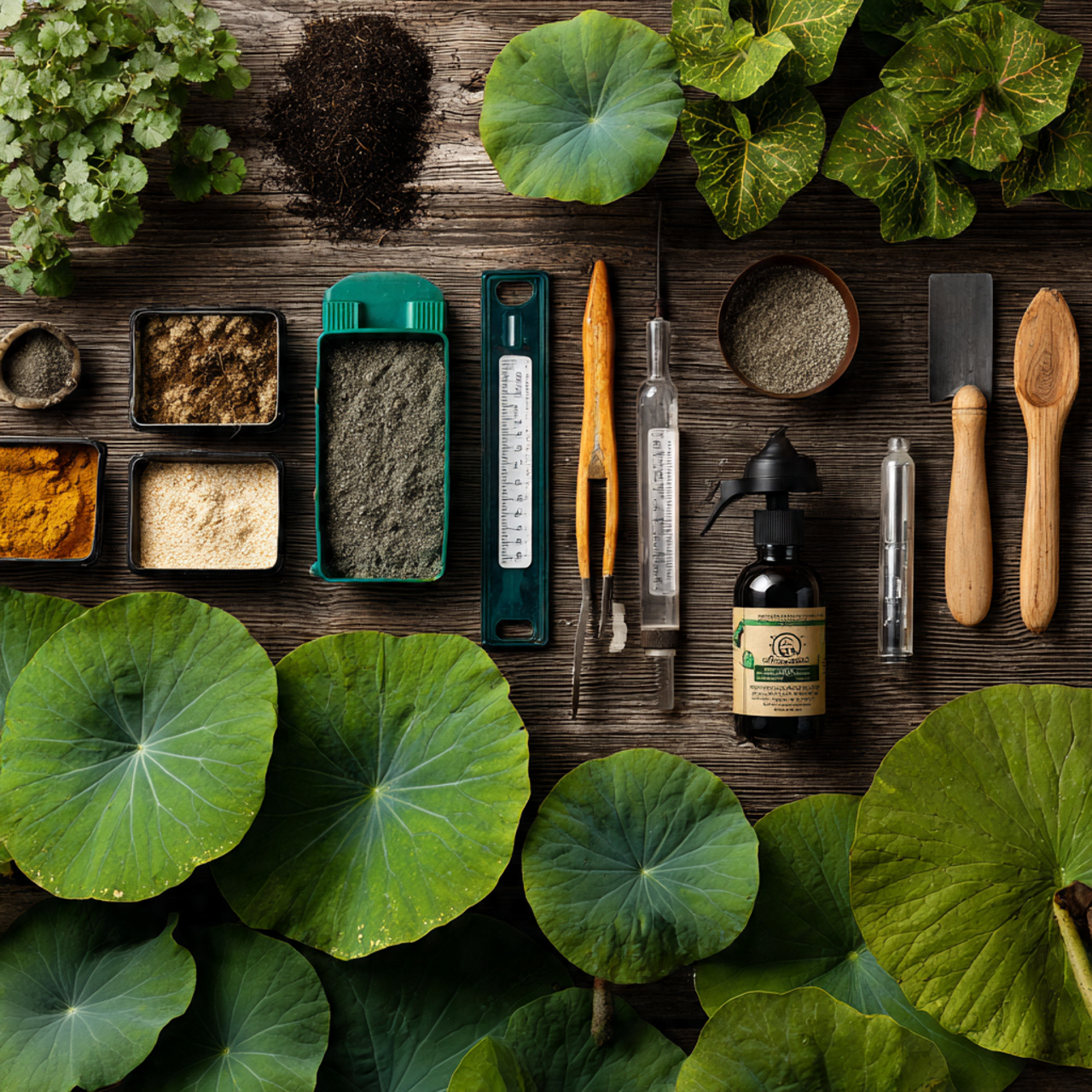
Consistency is the secret to lotus success, and a simple routine prevents problems before they start. Here’s your weekly wellness check for happy, healthy lotus plants.
Weekly Care Routine:
- ☐ Check and adjust water level
- ☐ Remove dead or yellowing leaves
- ☐ Inspect for pests on leaves and buds
- ☐ Remove spent blooms (deadheading)
- ☐ Clear debris from water surface
Monthly Tasks:
- ☐ Fertilize during growing season
- ☐ Test water quality (pH should be 6.5-7.5)
- ☐ Trim back excessive growth
- ☐ Check for signs of overcrowding
- ☐ Photograph growth progress
Seasonal Checkpoints:
- Spring: divide and replant, resume feeding
- Summer: maintain consistent water, enjoy blooms
- Fall: stop fertilizing, allow natural die-back
- Winter: protect from freezing, minimal intervention
Time Commitment: Most lotus care takes just 10-15 minutes weekly—less demanding than many traditional garden plants.
Beginner’s Success Tip: Set phone reminders for the first month until the routine becomes automatic.
Educational Garden Projects with Lotus

Lotus plants offer incredible teaching opportunities, making abstract concepts tangible for children and adults alike. The dramatic growth and unique life cycle create unforgettable learning experiences.
Educational Topics:
- Aquatic plant adaptation
- Seed germination and scarification
- Pollination and insect relationships
- Cultural symbolism across civilizations
- Life cycles and seasonal dormancy
Hands-On Activities:
- Germinate seeds in clear containers (watch roots develop)
- Measure daily leaf growth (can be several inches!)
- Sketch bloom progression from bud to seed pod
- Create a journal documenting the growing season
- Build a miniature ecosystem with lotus as centerpiece
Science Fair Project Ideas:
- Compare germination rates with different scarification methods
- Test growth under varying light conditions
- Document pollinator visits and behaviors
- Measure water quality changes with and without companion plants
Learning Benefit: Caring for living things teaches responsibility, patience, and the rewards of consistent effort.
Lotus for Aromatic Gardens
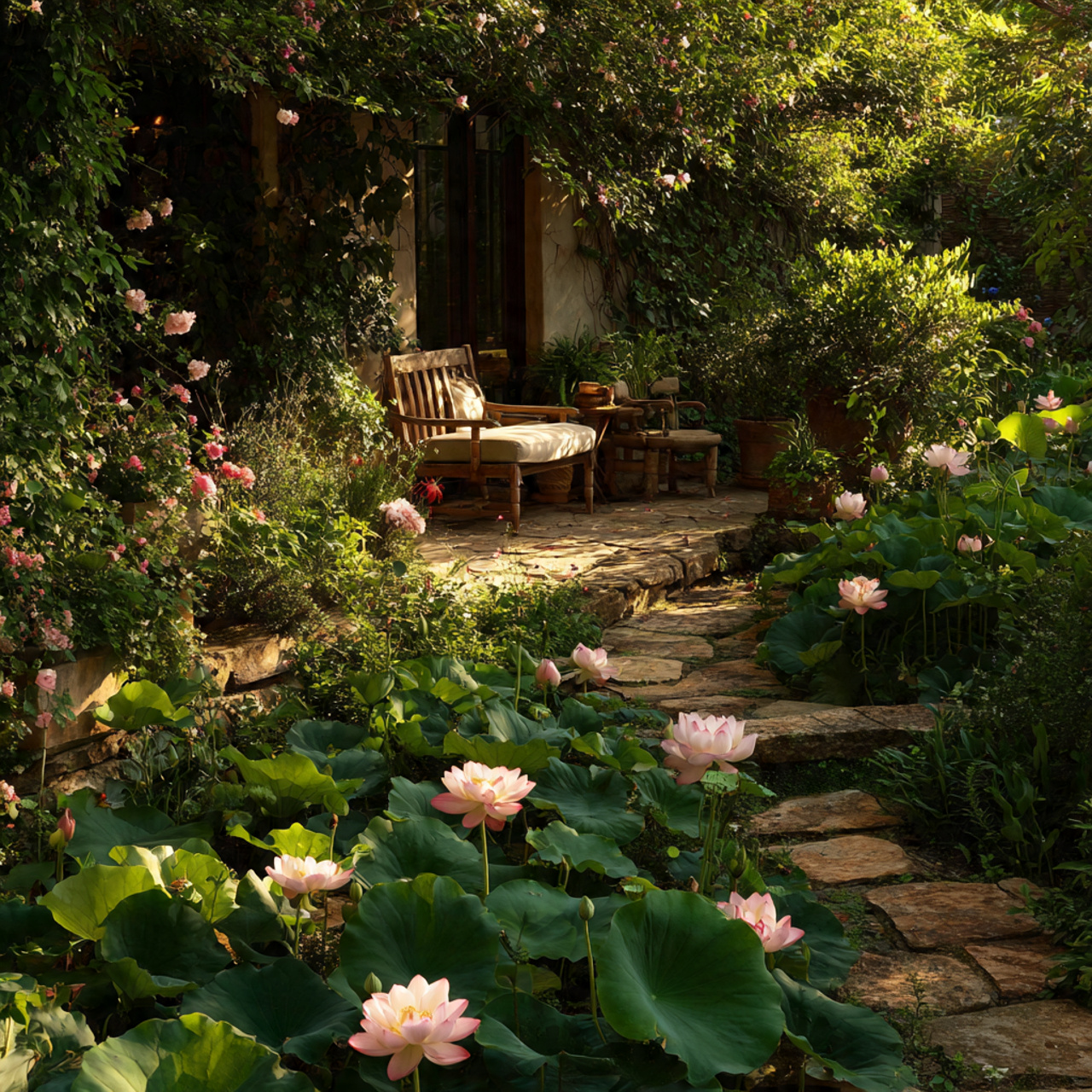
Not all lotus flowers are created equal in the fragrance department, but certain varieties offer delightful scents that add another sensory dimension to your water garden.
Fragrant Varieties to Try:
- ‘Angel Wings’: Sweet, delicate scent
- ‘Mrs. Perry D. Slocum’: Light, pleasant fragrance
- ‘Maggie Belle Slocum’: Subtle perfume
- Many pink varieties have natural fragrance
Maximizing Fragrance Experience:
- Plant near seating areas or walkways
- Position where breezes carry scent toward living spaces
- Bloom fragrance is strongest during peak sun hours
- Multiple plants intensify the aromatic effect
Garden Design Tip: Create a sensory garden corner with fragrant lotus, aromatic herbs in containers nearby, and wind chimes for sound—a multi-sensory retreat.
Note: Lotus fragrance is typically subtle and fresh, not overpowering, making it perfect for those sensitive to strong floral scents.
Water Circulation Techniques
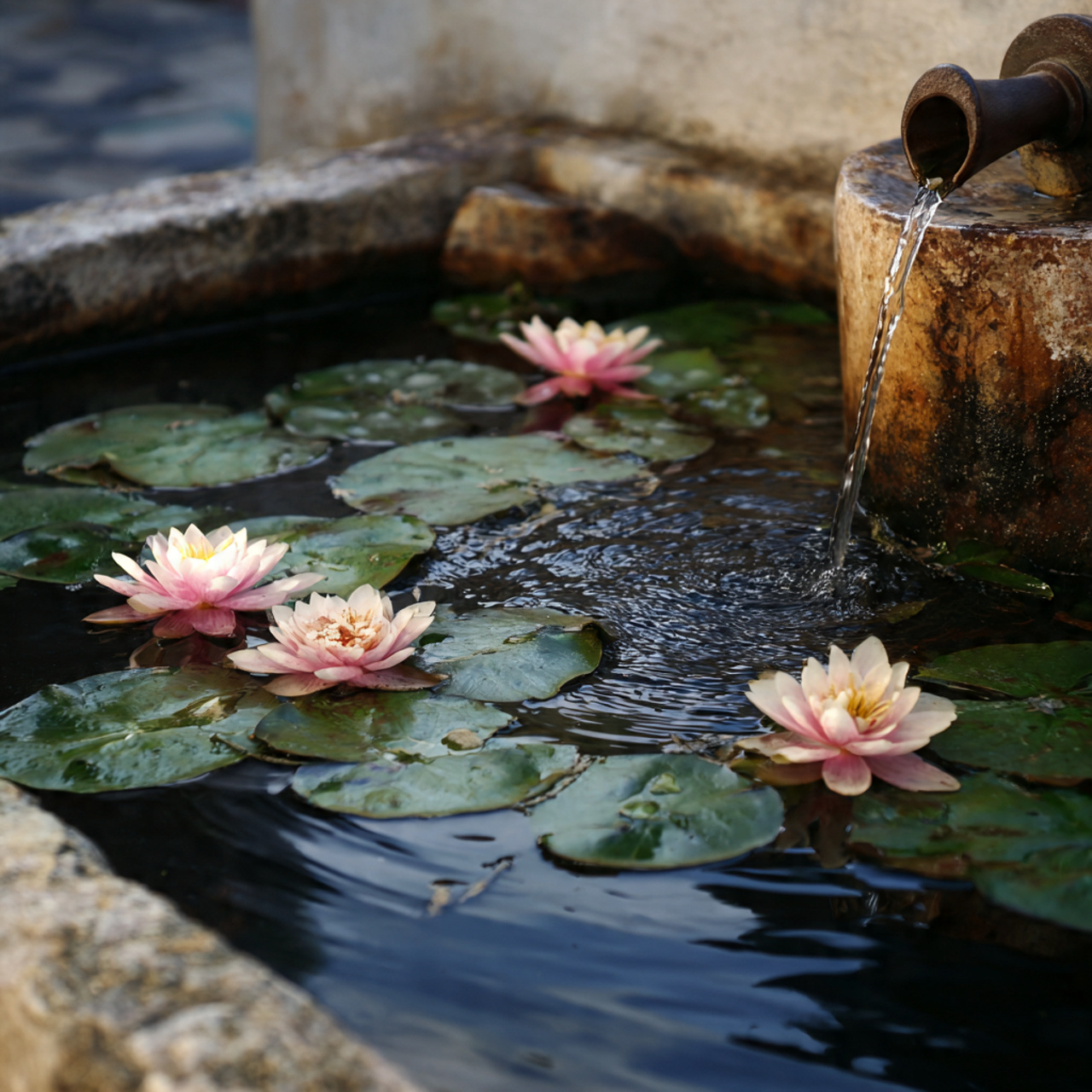
While lotus prefer calm water, gentle circulation provides significant benefits without disturbing plant growth. Finding the right balance keeps your water feature healthy and algae-free.
Benefits of Gentle Circulation:
- Prevents mosquito breeding
- Distributes oxygen evenly
- Reduces algae formation
- Maintains consistent temperature
- Prevents water stratification
Equipment Options:
- Small submersible pumps (rated for pond size)
- Solar-powered fountain pumps (eco-friendly)
- Air stones connected to aquarium pumps (gentle bubbles)
- Small waterfall features (aesthetic plus functional)
Setup Guidelines:
- Keep flow rate minimal (think gentle ripples, not waves)
- Position pump away from lotus stems
- Direct flow across water surface, not deep
- Run circulation 6-8 hours daily during summer
Avoid This Mistake: Too much water movement prevents lotus leaves from floating properly and can damage developing buds.
Lotus Flower Photography Tips
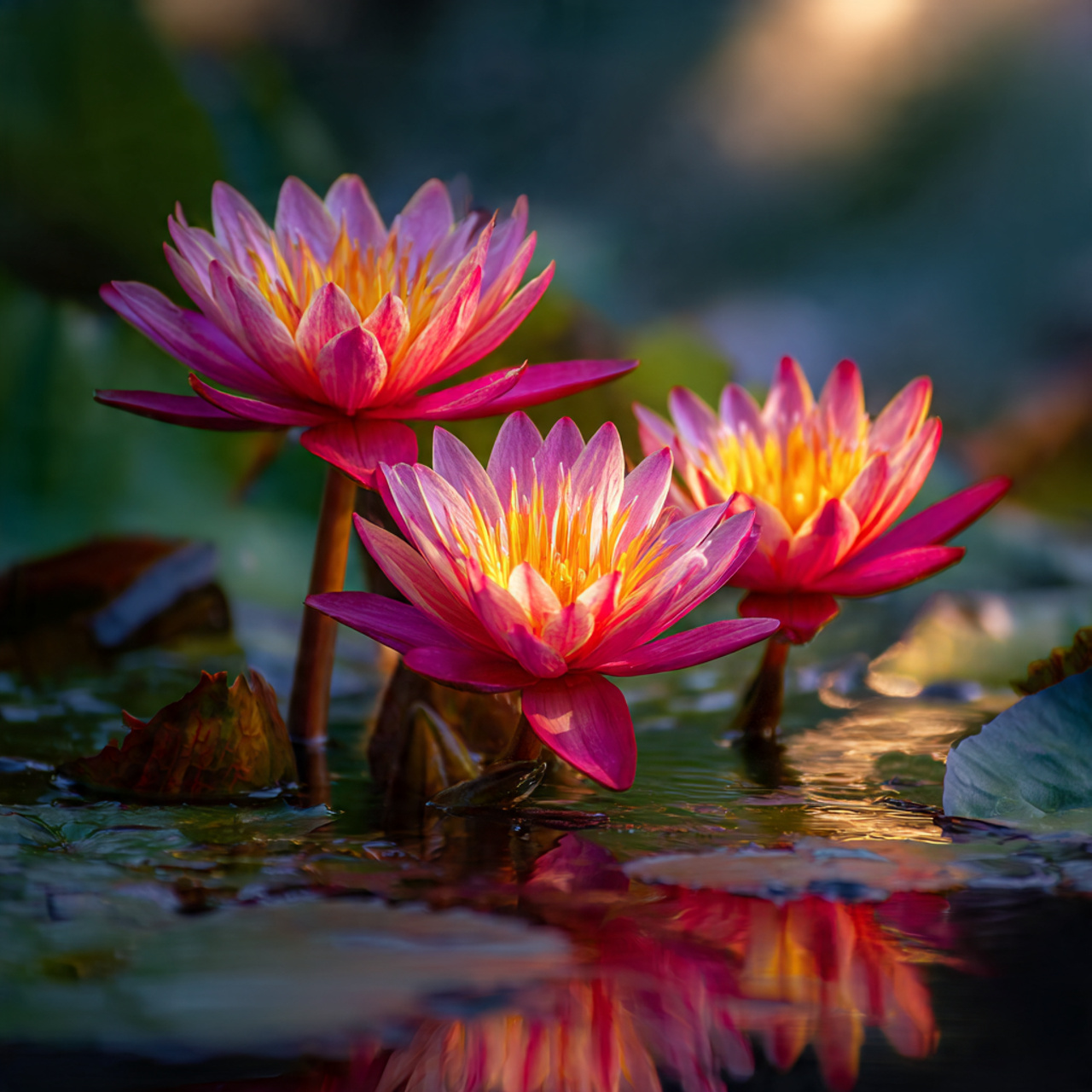
Lotus flowers are photographer’s dreams—dramatic, symmetrical, and constantly changing throughout the day. Capturing their beauty preserves memories and helps you appreciate details you might otherwise miss.
Best Times for Photos:
- Early morning (6-9 AM): Flowers fully open, perfect light, morning dew
- Golden hour (hour before sunset): Warm, soft lighting
- Overcast days: Even light without harsh shadows
- After rain: Droplets on lotus leaves create water-repellent magic
Photography Tips:
- Get low—shoot at water level for dramatic perspectives
- Focus on flower center details
- Capture water droplets on leaves (lotus leaves repel water beautifully)
- Include reflections in your composition
- Document the entire bloom cycle from bud to seed pod
Creative Angles:
- Directly overhead (showcasing symmetry)
- Side profile with backlight
- Close-up of water droplets rolling off leaves
- Wide shots showing entire water garden context
Equipment Note: Smartphones work wonderfully—no fancy camera needed for stunning lotus photos!
Lotus Flower Gifting Ideas
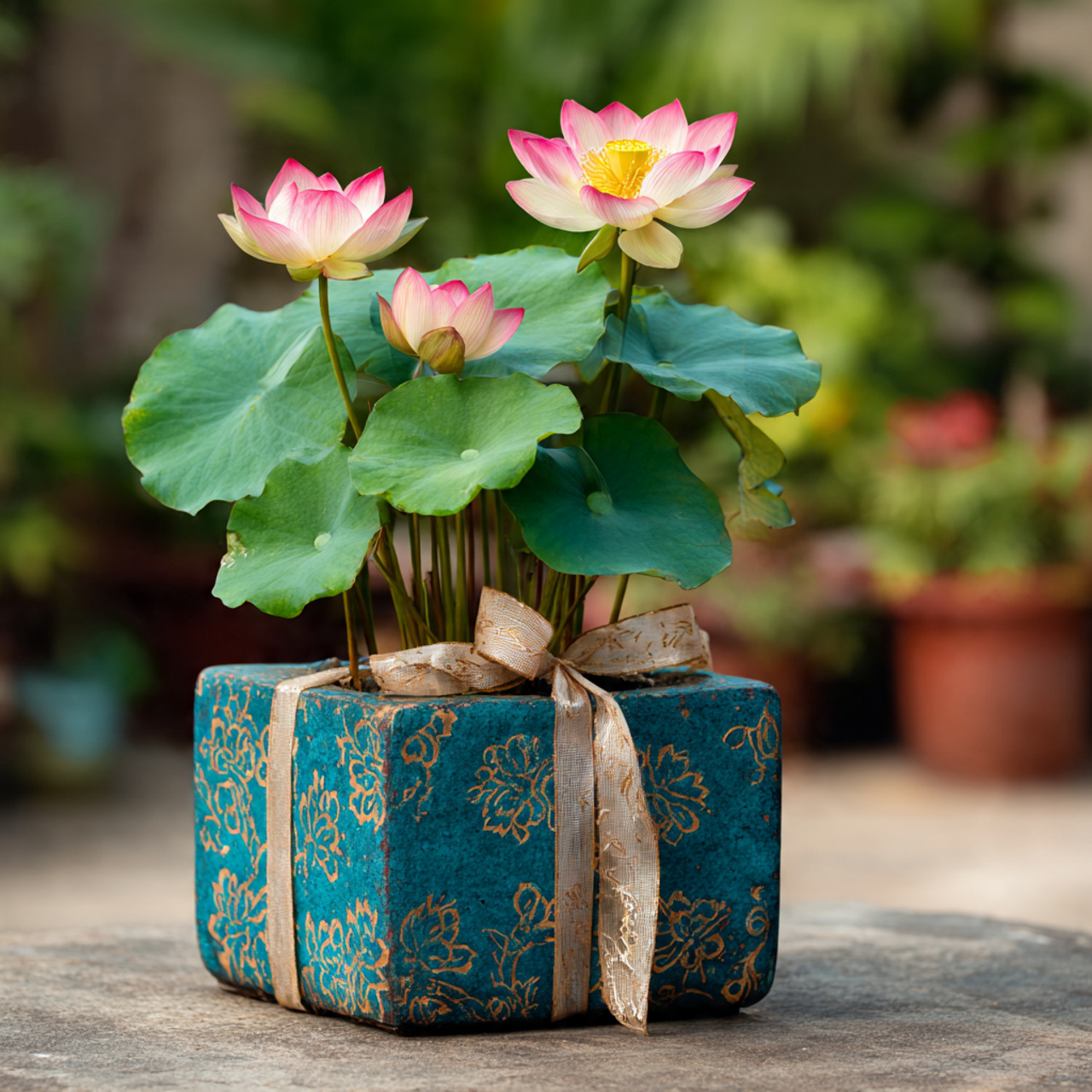
A living lotus plant makes an extraordinarily meaningful gift, combining beauty, symbolism, and the joy of nurturing something alive. It’s a gift that grows and blooms long after the occasion passes.
Gift Presentation Ideas:
- Dwarf lotus in a decorative ceramic bowl
- Lotus growing kit with seeds, instructions, and container
- Established plant with custom care guide
- Water garden starter set with lotus and companions
Perfect Occasions:
- Housewarming gifts (new beginnings)
- Sympathy offerings (spiritual growth through hardship)
- Retirement presents (time for peaceful pursuits)
- Wedding gifts (beauty emerging from life’s muddy waters)
Packaging Tips:
- Include printed care instructions
- Add information about lotus symbolism
- Suggest container placement ideas
- Include your contact info for questions
Symbolic Message: Explain that like the lotus rising from mud to bloom beautifully, the recipient can find beauty and growth through life’s challenges.
Maintenance of Lotus Soil
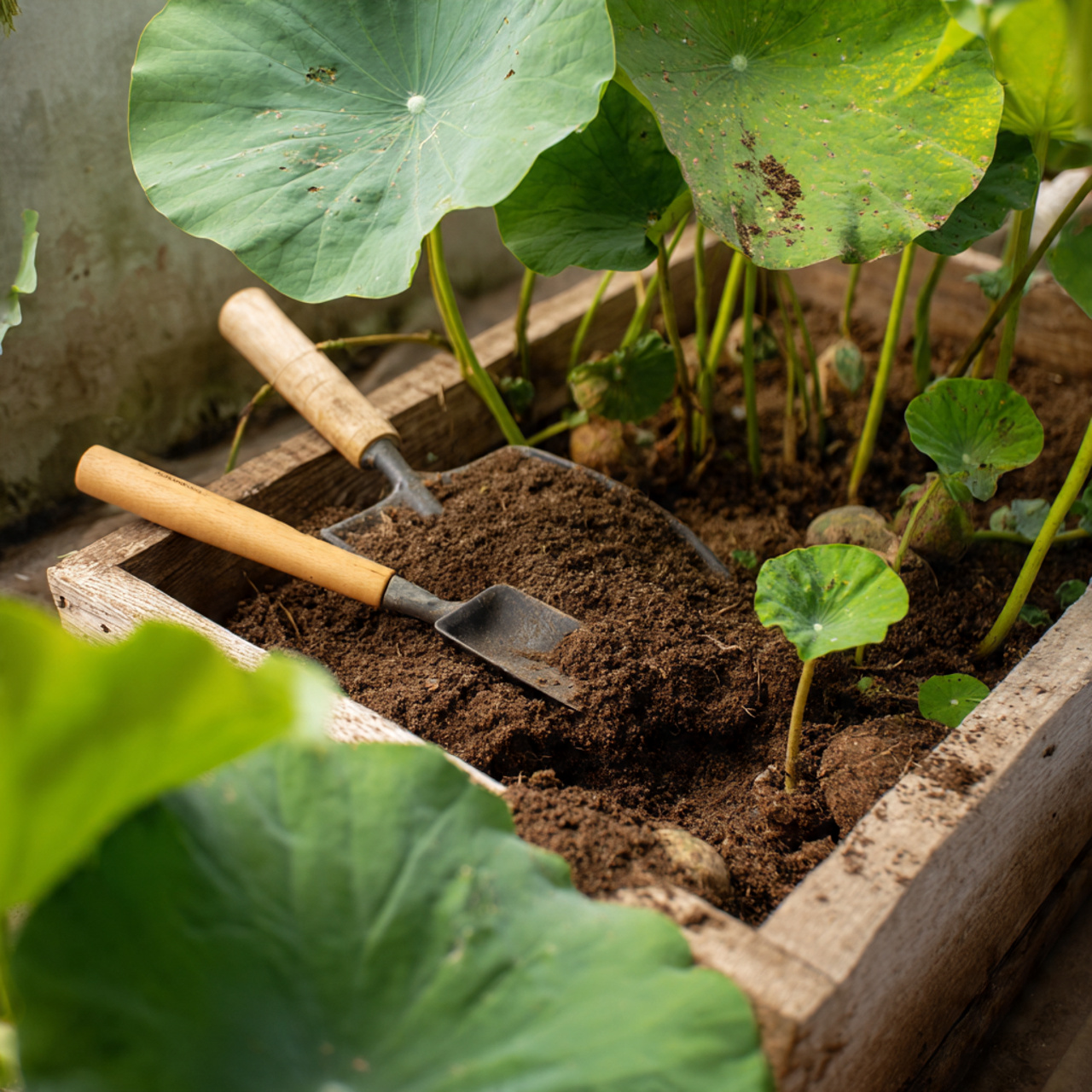
Soil might seem like an afterthought in water gardening, but it’s literally the foundation of lotus success. The right soil mixture provides anchoring, nutrients, and stability without clouding your water.
Best Soil Types:
- Heavy clay soil (garden clay, not kitty litter)
- Commercial aquatic planting soil
- Topsoil mixed with clay (60/40 ratio)
- Avoid: potting mix, peat moss, vermiculite, perlite
Soil Preparation:
- Remove debris, sticks, and large chunks
- Break up clumps but don’t pulverize
- Add slow-release organic fertilizer before planting
- Top with sand or pea gravel (prevents floating and cloudiness)
Replenishing Nutrients:
- Top-dress with compost annually in spring
- Use aquatic fertilizer tablets during growing season
- Replace soil completely every 2-3 years
- Watch for nutrient deficiency signs (pale leaves, weak stems)
Depth Guide: Use 6-8 inches of soil for containers, more for larger pond situations.
Tip: If your water stays cloudy after planting, you likely used soil that’s too light—top with more sand to settle particles.
Integrating Lotus in Outdoor Seating Areas
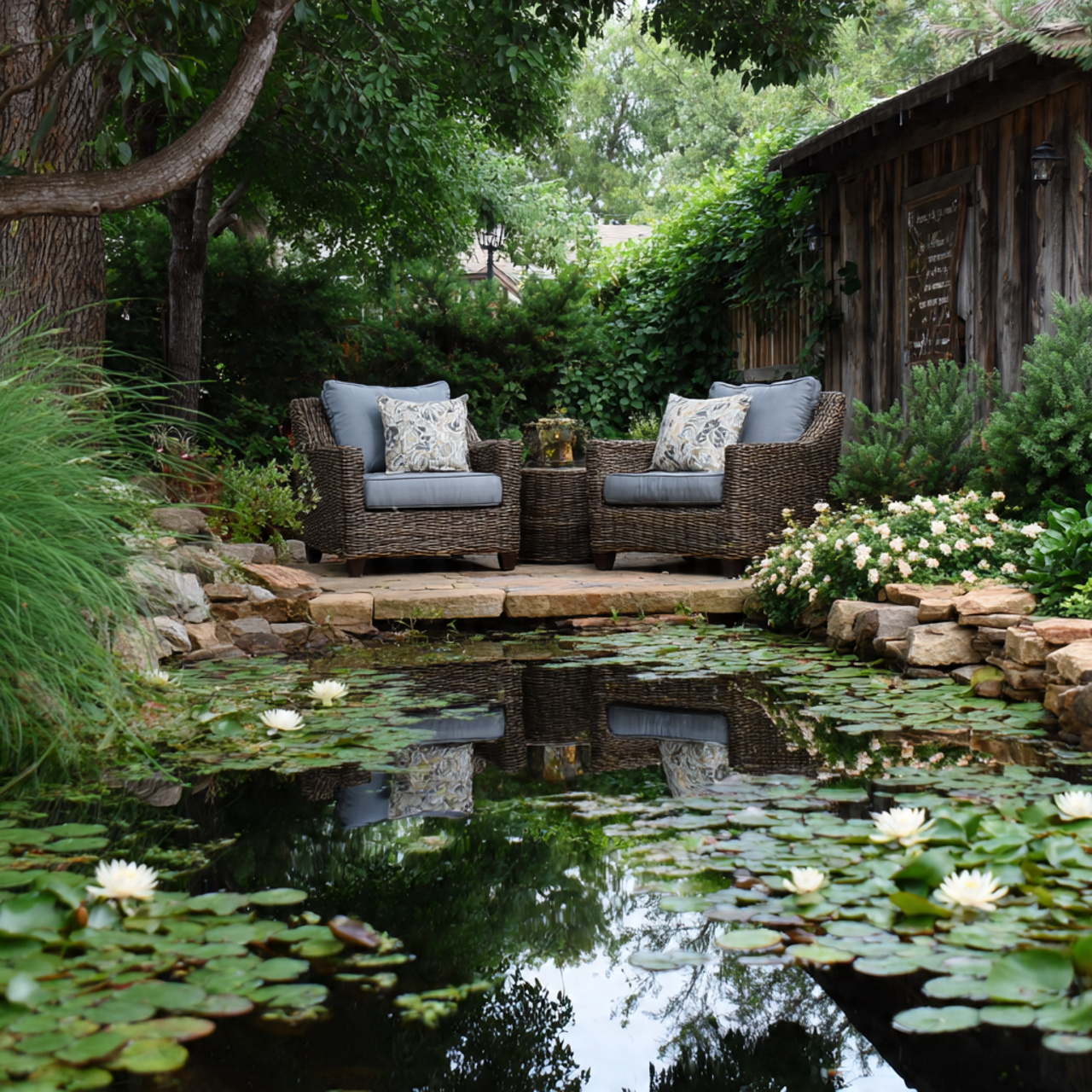
The final and perhaps most important idea: position your lotus where you’ll actually see and enjoy them daily. Thoughtful placement transforms lotus from garden accessory to lifestyle enhancement.
Strategic Placement Zones:
- Adjacent to deck or patio (visible from seating)
- Near bedroom windows (morning bloom viewing)
- Along garden paths (discovered while walking)
- Visible from indoor living spaces (year-round appreciation)
- Near outdoor dining areas (creates ambiance)
Distance Considerations:
- Close enough to appreciate (4-8 feet from seating)
- Far enough to avoid accidental contact
- Accessible for easy maintenance
- Protected from heavy foot traffic
Enhancing the Experience:
- Install low-voltage lighting to highlight evening beauty
- Position seating to face lotus during peak bloom times
- Add comfortable cushions to encourage lingering
- Include side tables for beverages while relaxing
Lifestyle Integration: When lotus become part of your daily view, tending them feels less like a chore and more like spending time with a beautiful friend.
Final Thought: The best lotus garden design isn’t the most elaborate—it’s the one you’ll use and enjoy every single day.
Frequently Asked Questions (FAQs)
How long does it take for a lotus flower to bloom?
Most lotus varieties bloom within 3-4 months after planting tubers in optimal conditions. Dwarf varieties sometimes bloom slightly faster, while seeds can take 5-6 months or longer for first blooms. Established plants bloom more reliably in subsequent years.
Can lotus grow indoors without natural sunlight?
Lotus plants need 6-8 hours of bright light daily. While natural sunlight is ideal, you can successfully grow lotus indoors using strong full-spectrum LED grow lights positioned 12-18 inches above the plant. Dwarf varieties adapt better to indoor conditions than standard-sized lotus.
Do lotus flowers require fertilization?
Yes, regular fertilization during the growing season (spring through summer) promotes healthy growth and abundant blooms. Use organic aquatic fertilizers or composted manure, avoiding chemical fertilizers that can harm aquatic ecosystems and alter water chemistry.
Can lotus survive in cold climates?
Lotus tubers are quite hardy and can survive winter temperatures if they don’t freeze solid. In regions with harsh winters, move containers to unheated garages, insulate heavily with mulch, or place tubers in slightly deeper water that won’t freeze completely.
Are lotus flowers safe for fish in a pond?
Absolutely! Lotus flowers are completely safe for fish and actually benefit pond ecology by providing shade, shelter, and oxygen. The plants don’t release toxic substances, and fish often enjoy resting beneath the large floating leaves. Just ensure adequate open water surface for proper oxygen exchange.
Final Thoughts: Your Lotus Journey Begins Now
Growing lotus flowers at home is more than gardening—it’s creating a living sanctuary that nourishes your soul while beautifying your space. These remarkable plants teach patience, reward consistency, and offer daily reminders that extraordinary beauty can emerge from humble beginnings.
Whether you’re starting with a single seed in a bowl or planning an elaborate water garden, the key is simply to begin. Start small if you’re nervous, dream big if you’re inspired, but most importantly, take that first step. Your future self, relaxing beside blooming lotus flowers while sipping morning coffee, will thank you.
Remember: every expert lotus gardener started exactly where you are now—curious, excited, and ready to try something new. The lotus flower’s journey from muddy water to pristine bloom mirrors your own gardening journey. Embrace the learning process, celebrate small victories, and soon you’ll be sharing your own lotus wisdom with others.
Here’s to your beautiful lotus garden adventure—may your blooms be abundant, your water clear, and your garden a place of peace and wonder!