17 Indoor Greenhouse Ideas for Year-Round Growing
Have you ever wished you could grow fresh basil in the middle of winter or nurture delicate seedlings while snow blankets everything outside? Indoor greenhouses make this possible, turning any corner of your home into a flourishing garden that works every single day of the year.
Whether you’re living in a compact apartment or have extra rooms to spare, setting up an indoor greenhouse lets you grow everything from crisp salad greens to fragrant herbs and beautiful ornamental plants. The best part? You control everything—temperature, humidity, light—which means your plants stay protected from unpredictable weather, pesky bugs, and those sudden temperature swings that can devastate outdoor gardens.
What makes indoor greenhouses truly special is their flexibility. You might start with something as simple as a small kit on your kitchen counter, or you could go all-in and convert an entire room into your personal growing paradise. Today’s setups often include smart shelving, energy-efficient LED lights, and climate control systems that make gardening accessible whether you’re a complete beginner or have been growing plants for decades. The return on investment shows up in fresh produce on your table, cleaner air in your home, and the pure joy of watching something grow under your care.
Why You’ll Love Having an Indoor Greenhouse
Indoor greenhouses deliver benefits that outdoor gardens simply can’t compete with. When you control the environment, you eliminate all the guesswork. Temperature stays consistent, humidity levels remain ideal, and your plants get exactly the light they need. The result? Faster growth, healthier plants, and fewer headaches from weather-related stress.
But the advantages go beyond just better tomatoes. Your indoor greenhouse actually improves your living space. Plants naturally scrub toxins from the air, pump out oxygen, and balance humidity levels in your home. Then there’s the mental health boost—tending to plants reduces stress, gives you a creative outlet, and keeps you connected to nature even when you’re stuck inside. For city dwellers or anyone dealing with harsh climates, an indoor greenhouse might be your only realistic option for growing year-round.
Key Benefits at a Glance:
- Complete control over growing conditions
- Protection from pests and extreme weather
- Improved indoor air quality
- Stress relief and mental wellness
- Year-round harvest regardless of climate
- Perfect for urban or apartment living
Cabinet Indoor Greenhouse Conversion
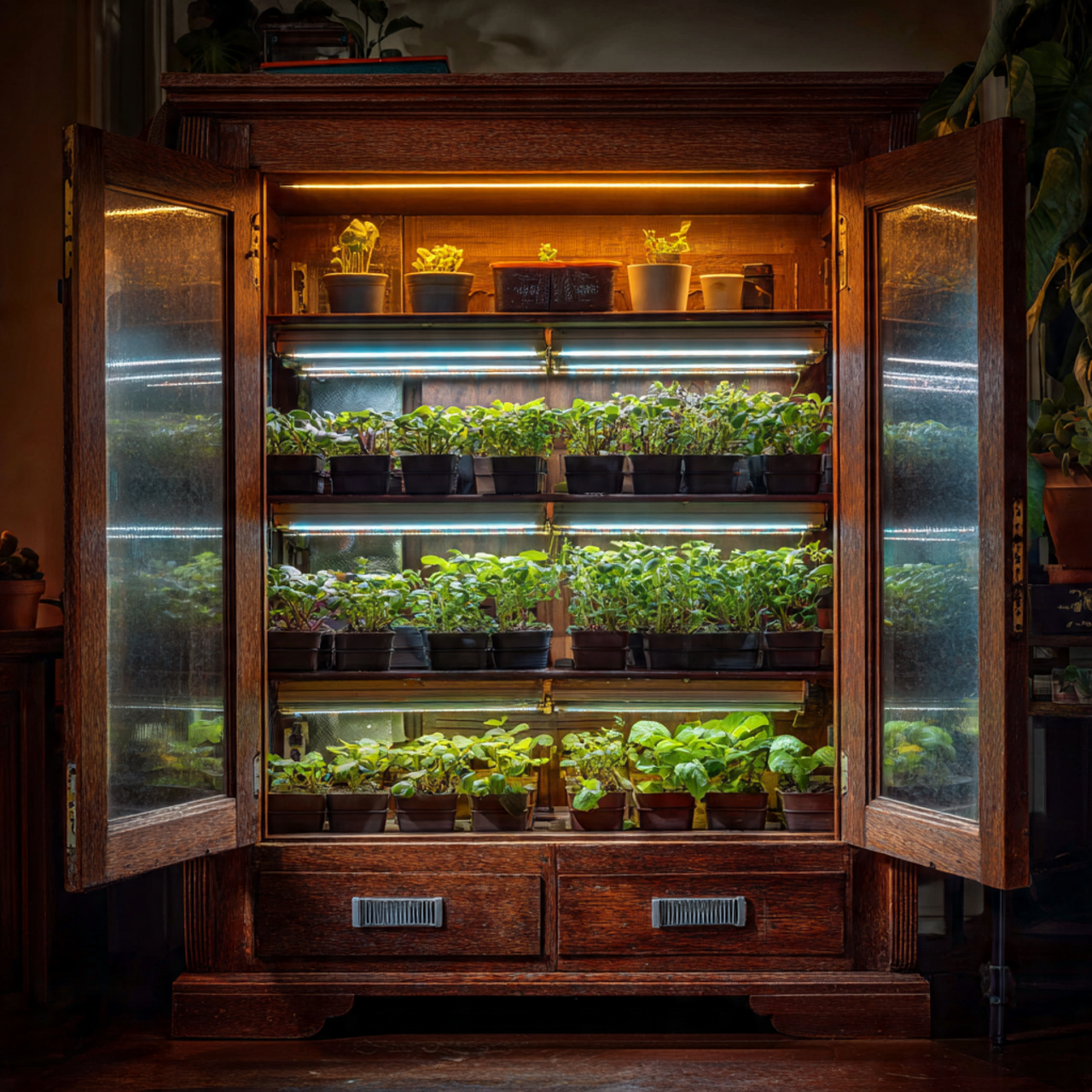
Got an old cabinet collecting dust? Transform it into a thriving greenhouse with surprisingly little effort and expense. Start by removing the back panel and replacing it with reflective material—this bounces light around to every corner of your growing space. Add LED grow light strips along the top and sides so every shelf gets adequate coverage. The enclosed design naturally creates a humid microclimate that tropical plants and seedlings absolutely love.
Tips for Cabinet Conversions:
- Ventilation is critical—stagnant air invites mold and disease
- Drill small ventilation holes in the sides or install tiny computer fans
- Keep cabinet doors closed to maintain stable temperatures
- Perfect for propagating cuttings and starting seeds
Common Mistakes to Avoid:
- Don’t skip ventilation—humidity without airflow = problems
- Avoid overwatering in the humid environment
- Don’t overcrowd shelves—plants need breathing room
This setup works beautifully for getting cuttings to root or giving seeds a head start before moving them to larger pots.
Window-Mounted Indoor Greenhouse Shelving
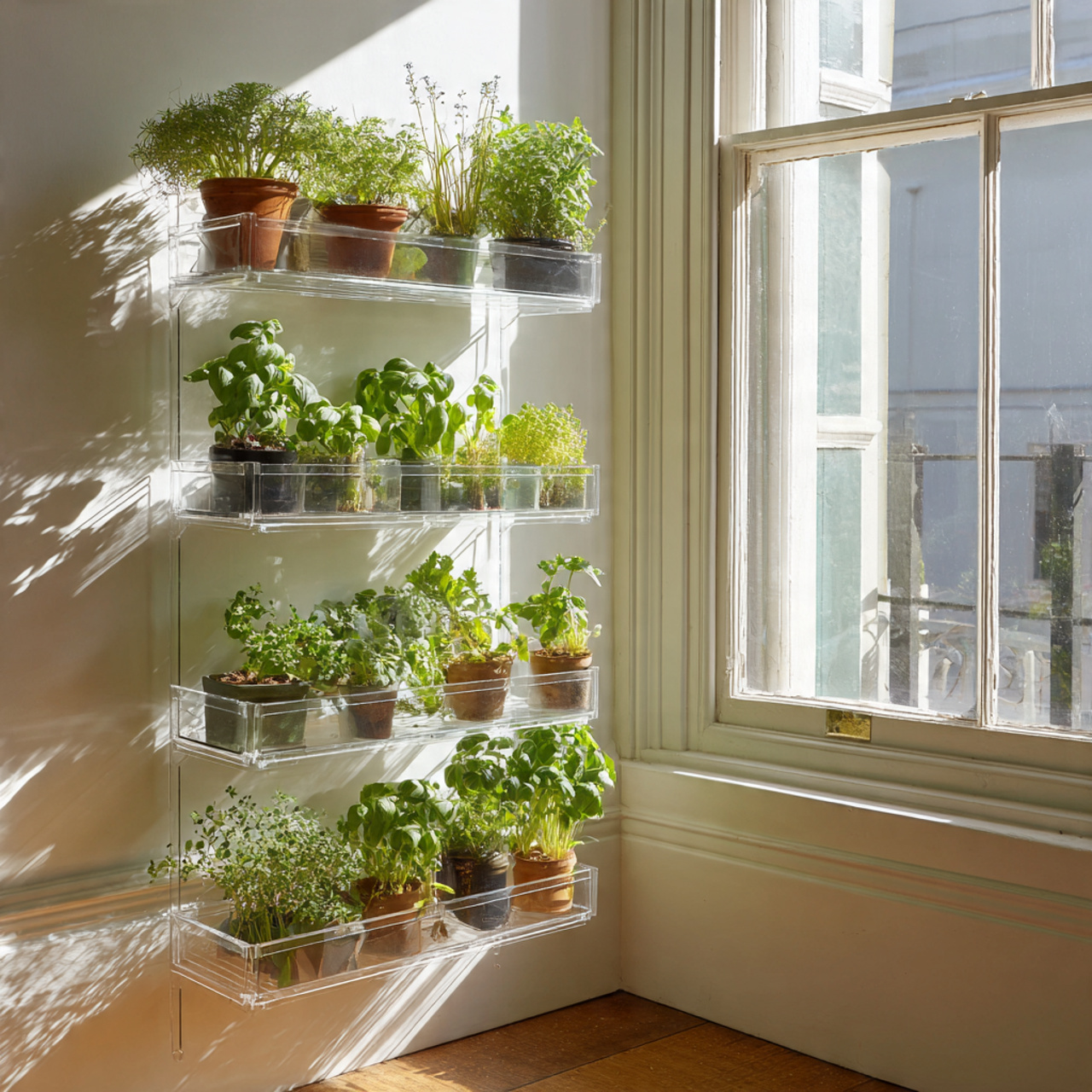
Why let all that window space go to waste? Window-mounted shelves turn overlooked areas into productive growing zones that capitalize on free natural sunlight. These units attach directly to your window frame using tension rods or mounting brackets, creating multi-level platforms that catch every ray of sun. South-facing windows deliver the most intense light, making them perfect for sun-hungry vegetables and herbs.
Installation Tips:
- Choose south-facing windows for maximum light (northern hemisphere)
- Use tension rods for damage-free installation in rentals
- Rotate plants weekly for even growth
- Position sun-lovers closest to the glass
Temperature Management:
- Summer: Use sheer curtains to diffuse intense afternoon heat
- Winter: Pull plants slightly back from cold glass at night
- Monitor leaves for heat stress (curling, browning edges)
- Consider insulating window film for extreme climates
The vertical design is a game-changer for apartments where floor space costs a premium. Just remember to rotate your plants regularly since the ones nearest the glass get significantly more light than those positioned further back.
Wardian Case Indoor Greenhouse
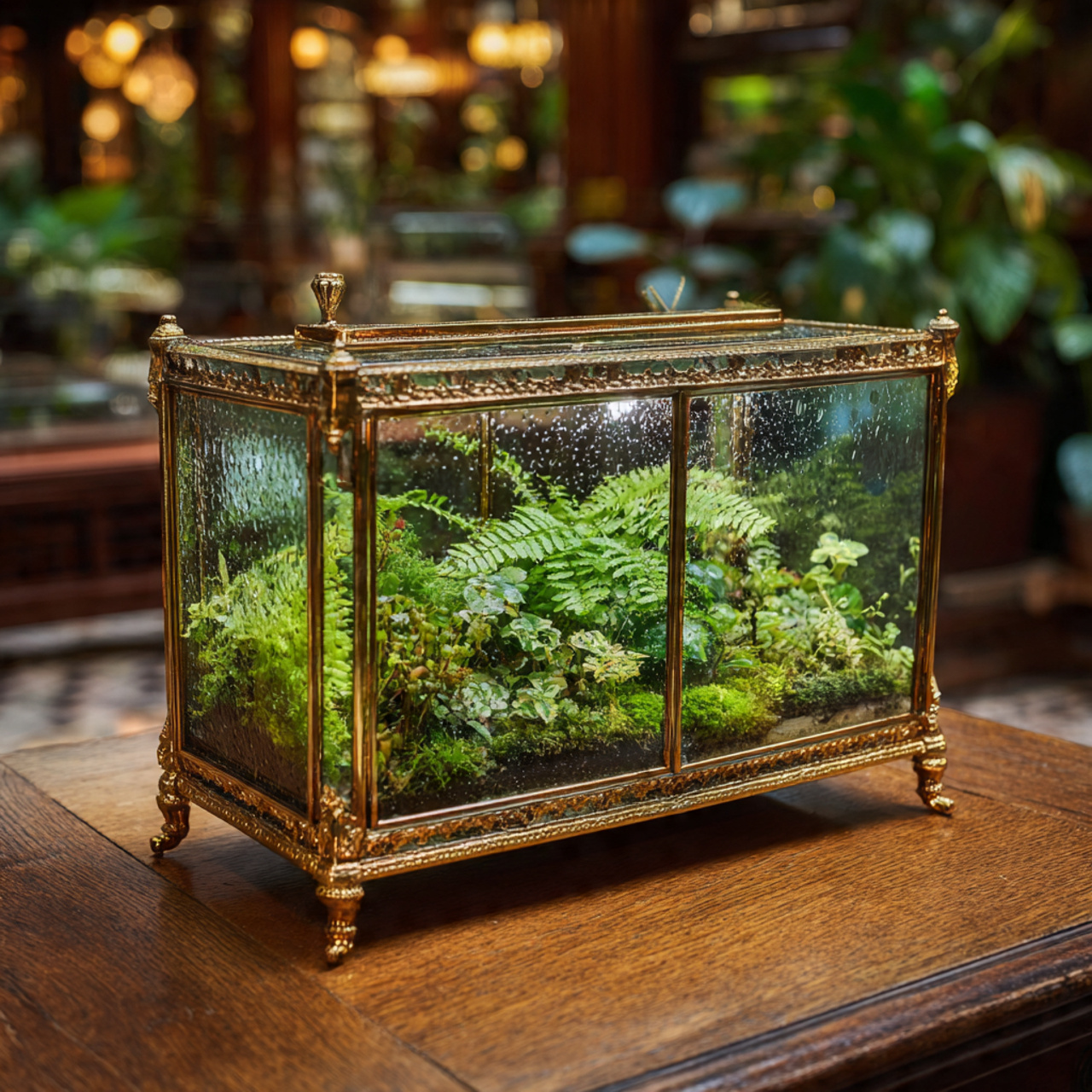
Step back in time with a Wardian case—this Victorian-era design creates a stunning self-contained ecosystem. Moisture evaporates from the soil, condenses on the glass walls, and drips back down to the plants in an endless cycle. Modern versions range from cute tabletop terrariums to impressive furniture-sized pieces. The transparent design turns your plants into living décor while keeping conditions absolutely perfect.
Best Plants for Wardian Cases:
- Ferns (maidenhair, bird’s nest, rabbit’s foot)
- Mosses (sheet moss, mood moss, cushion moss)
- Tropical species (fittonias, peperomias, small orchids)
- Carnivorous plants (sundews, butterworts)
Avoid These Plants:
- Succulents and cacti (too much humidity)
- Fast-growing vines (they’ll outgrow the space quickly)
- Plants requiring different moisture levels in the same case
Maintenance Schedule:
- Open the case for 2-3 hours weekly for air exchange
- Wipe condensation if it completely obscures the glass
- Trim dead leaves immediately to prevent mold
- Water only when soil feels dry an inch down
Once balanced, these gorgeous containers practically run themselves—perfect for busy people who want the greenery without constant fussing.
Bookshelf Indoor Greenhouse Transformation
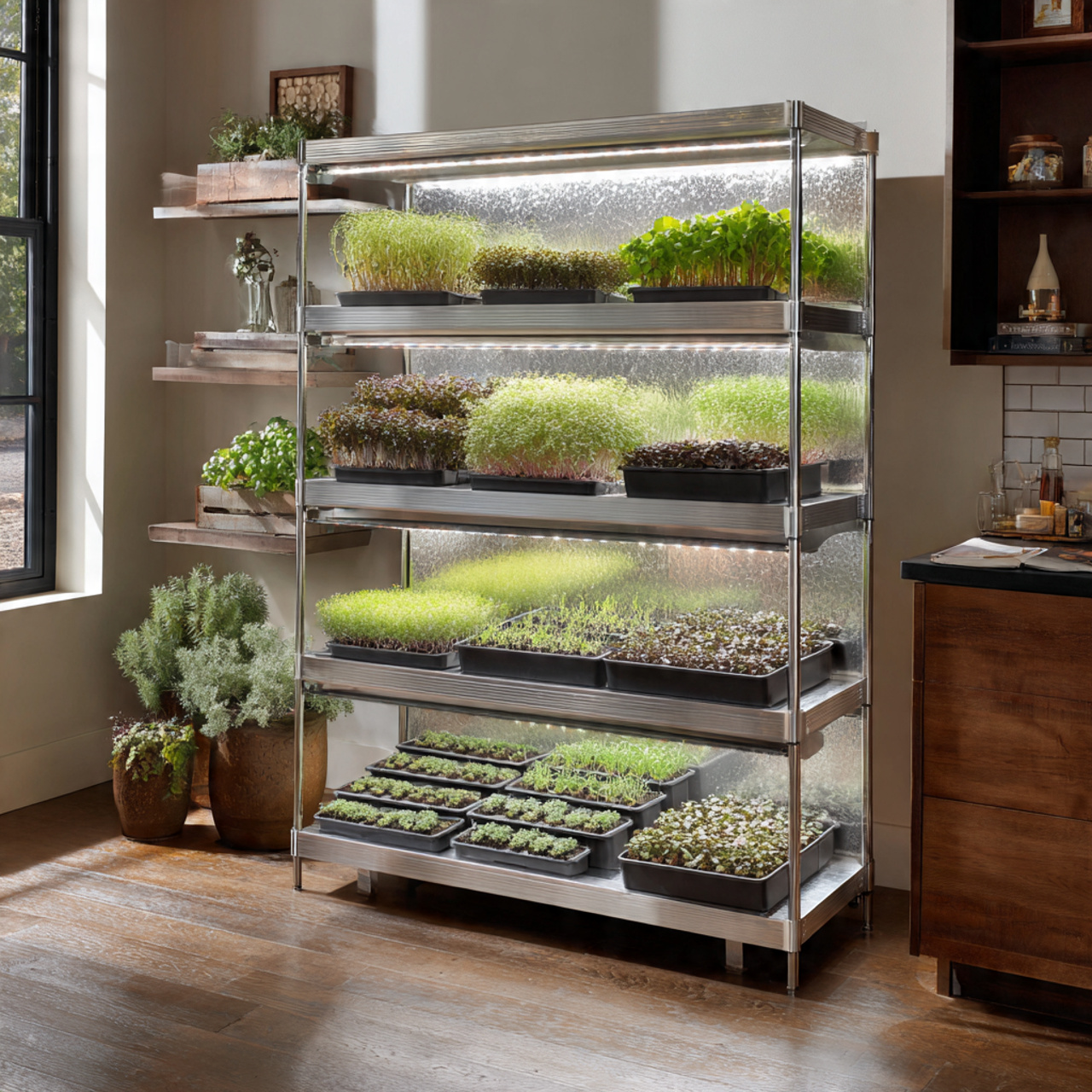
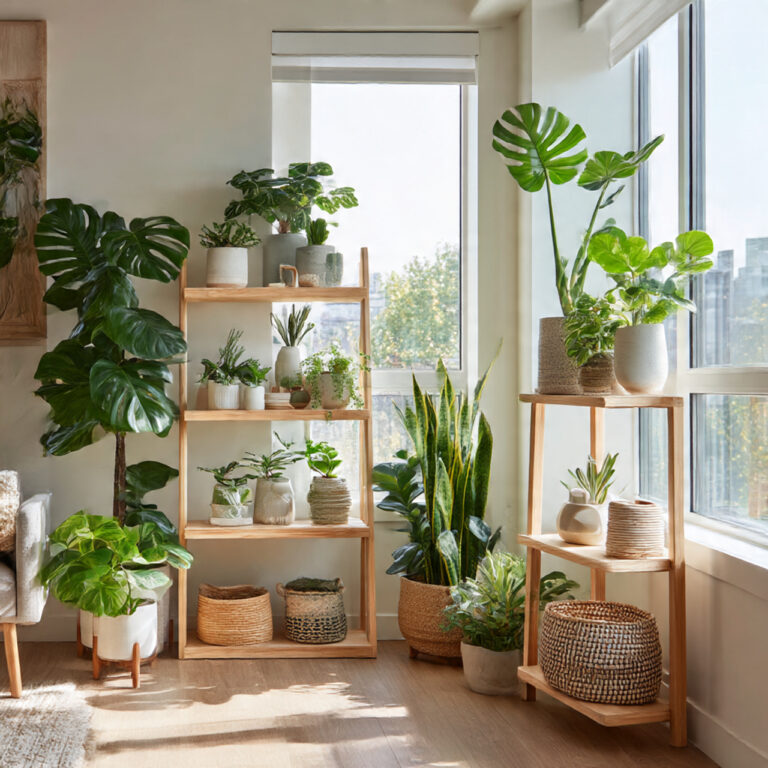
That ordinary bookshelf in your living room? It’s actually a multi-level greenhouse waiting to happen. Line each shelf’s back with reflective aluminum foil to maximize light distribution. Clip grow lights underneath each shelf to illuminate the level below. Suddenly, you’ve got multiple growing zones in a single piece of furniture, with room for dozens of plants in a compact footprint.
Setup Essentials:
- Waterproof trays or liners on every shelf (protect your furniture!)
- Group plants by water and light needs on the same level
- Use clip-on LED lights for easy installation
- Position lights 6-12 inches above plant tops
Organization Strategy:
- Top shelf: Highest light lovers (basil, cherry tomatoes)
- Middle shelves: Moderate light plants (lettuce, herbs)
- Bottom shelf: Low light tolerant (some leafy greens, microgreens)
Waterproofing Must-Dos:
- Never skip the drainage trays
- Check weekly for leaks
- Keep floor towels nearby during watering
- Consider a small shop vacuum for spills
The open design provides excellent air circulation compared to enclosed cabinets, which reduces disease risk and helps plants grow sturdy and strong. This works particularly well for herbs, microgreens, and compact vegetable varieties.
Tabletop Indoor Greenhouse Kits
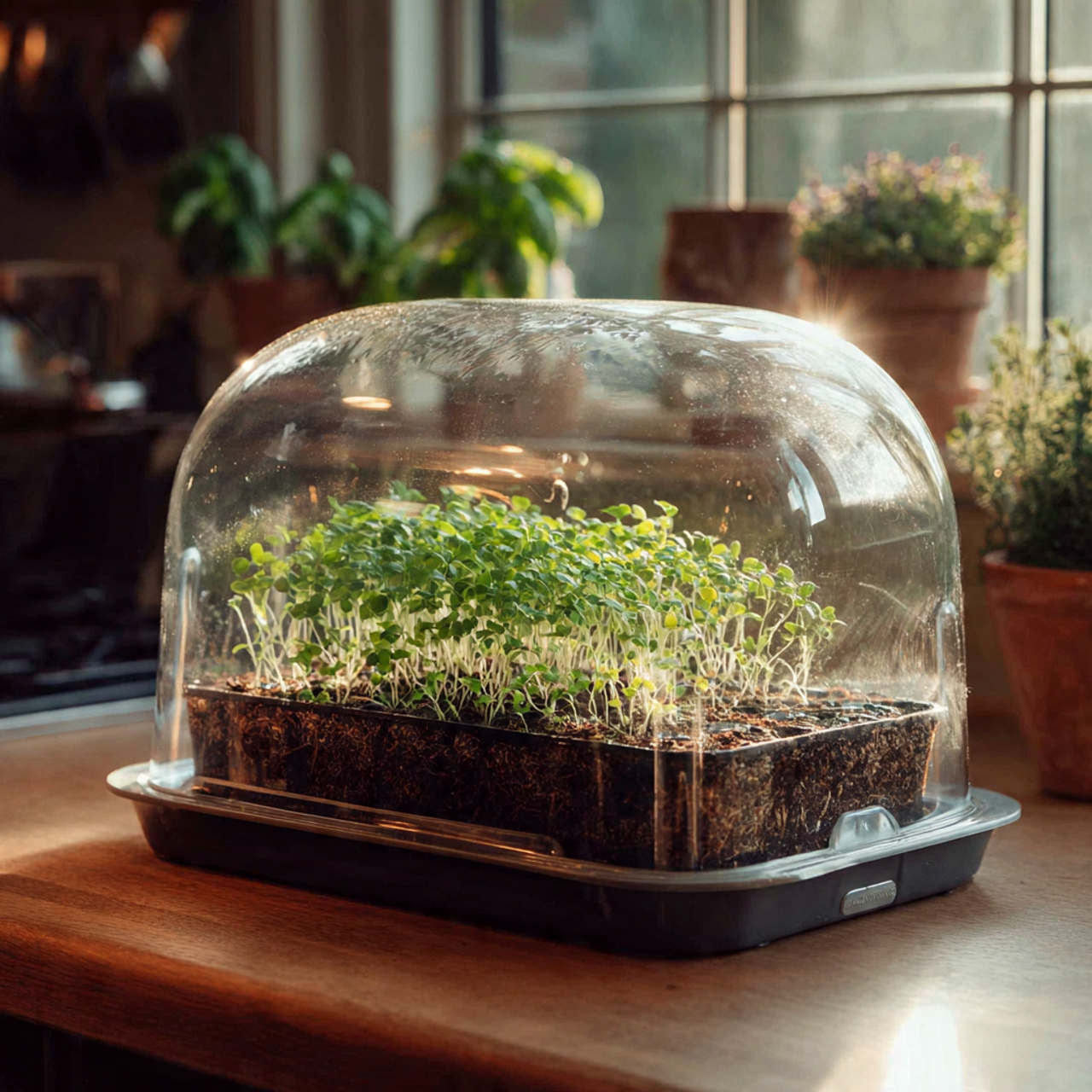
Want to start growing today? Tabletop kits are your fastest ticket to indoor gardening success. These complete packages include everything you need: clear domes, growing trays, seed starting mix, and foolproof instructions. The compact size makes them perfect for kitchen counters, desks, or side tables—anywhere space is tight. Most don’t even need special heating since your home’s normal temperature works just fine.
What Makes Them Great for Beginners:
- Everything included—no guessing about what to buy
- Small investment ($15-50 typically)
- Quick results (see sprouts in days!)
- Perfect learning tool with low stakes
Best Crops for Tabletop Greenhouses:
- Herbs: basil, cilantro, parsley, chives
- Microgreens: radish, sunflower, pea shoots
- Lettuce varieties: butterhead, romaine, mesclun mix
- Green onions and small peppers
Success Tips:
- Keep the dome on until seedlings touch it
- Remove dome gradually to acclimate plants
- Water from the bottom to prevent damping off
- Provide 12-16 hours of light daily
Don’t underestimate these little setups—they can produce serious amounts of herbs, lettuce, and microgreens. Many gardeners use them as propagation stations for cuttings or nurseries for seedlings that’ll eventually move to bigger pots.
Closet Indoor Greenhouse Conversion
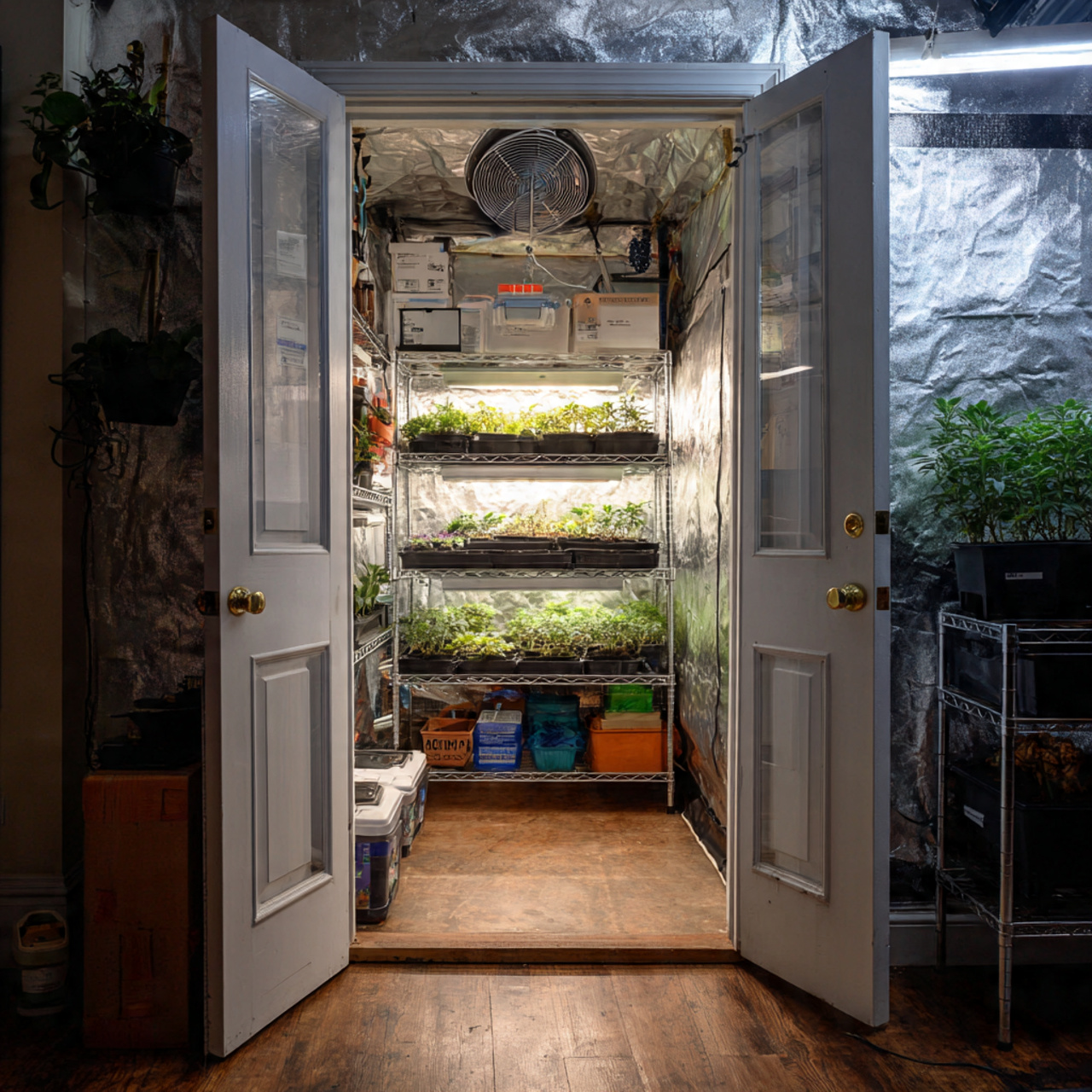
That closet you never use? It’s actually prime real estate for an indoor greenhouse. The enclosed space gives you total control over lighting schedules using simple timers. Install shelving to stack plants vertically, hang grow lights from the rod or ceiling, and you’ve got a dedicated growing room. The walls naturally reflect and contain light, making every watt count.
Conversion Checklist:
- ✓ Remove unnecessary items and clean thoroughly
- ✓ Install reflective mylar sheeting on walls (boosts efficiency by 30%+)
- ✓ Add sturdy shelving units rated for plant weight
- ✓ Mount grow lights 6-18 inches above plants
- ✓ Install exhaust fan near ceiling
- ✓ Add intake vent near floor for fresh air
Climate Control Requirements:
- Exhaust fan: Removes hot air and prevents humidity buildup
- Circulation fan: Strengthens plant stems and prevents mold
- Timer: Automates light schedules (12-16 hours for most plants)
- Thermometer/hygrometer: Monitor conditions
Safety Considerations:
- Never overload electrical circuits
- Use GFCI outlets near water sources
- Ensure lights can’t contact flammable materials
- Keep fire extinguisher accessible
- Check wiring regularly for damage
This setup is perfect if you want complete environmental control and don’t mind the utilitarian look. Closets also offer privacy—great for shared living situations or when growing valuable ornamental species.
Portable Indoor Greenhouse Units
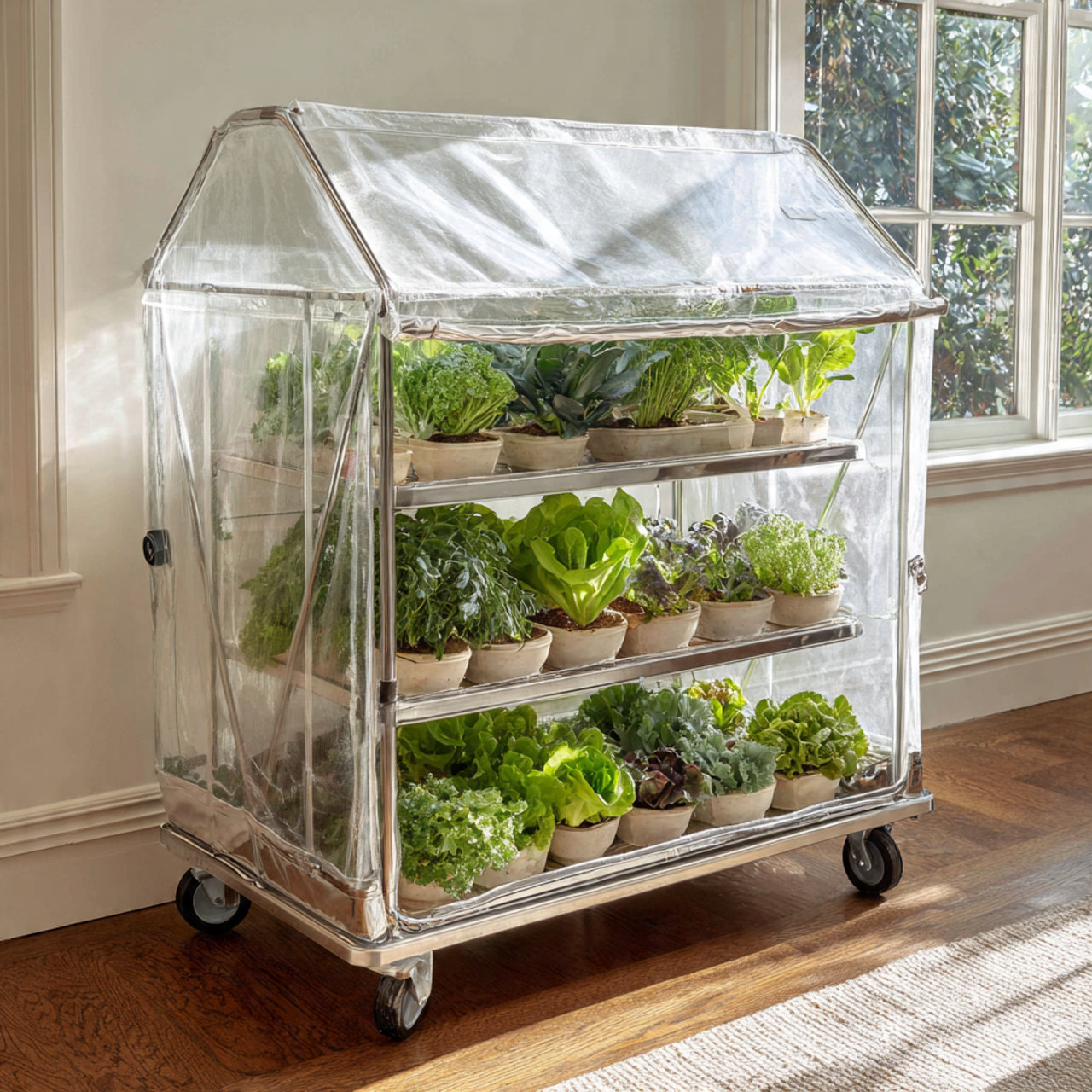
Flexibility is the name of the game with portable greenhouses on wheels. These mobile units let you follow the sun throughout the day, rolling from window to window as light shifts. Need to deep clean? Just roll the whole setup outside or to a utility room. Most portable designs feature multiple shelves with zip-up clear plastic covers that lock in humidity and warmth.
Advantages of Portable Units:
- Chase sunlight through different windows
- Easy to relocate for parties or cleaning
- Simple storage when not in use
- No permanent installation required
- Perfect for renters
Stability Tips:
- Anchor against walls or in corners when loaded
- Don’t overfill top shelves (top-heavy = tipping hazard)
- Lock wheels when unit is in place
- Keep on level surfaces only
- Use zip ties or clips to secure cover in windy areas
Cover Care:
- Zip covers completely to maintain environment
- Clean plastic quarterly to maintain light transmission
- Replace covers every 1-2 years as they yellow
- Vent daily for 15-30 minutes to prevent mold
The lightweight construction means they’re less stable than permanent setups, so always secure them properly when fully loaded with plants and water. The plastic covers don’t insulate as well as glass but cost far less and weigh significantly lighter—a worthwhile trade-off for most growers.
Built-In Indoor Greenhouse Rooms
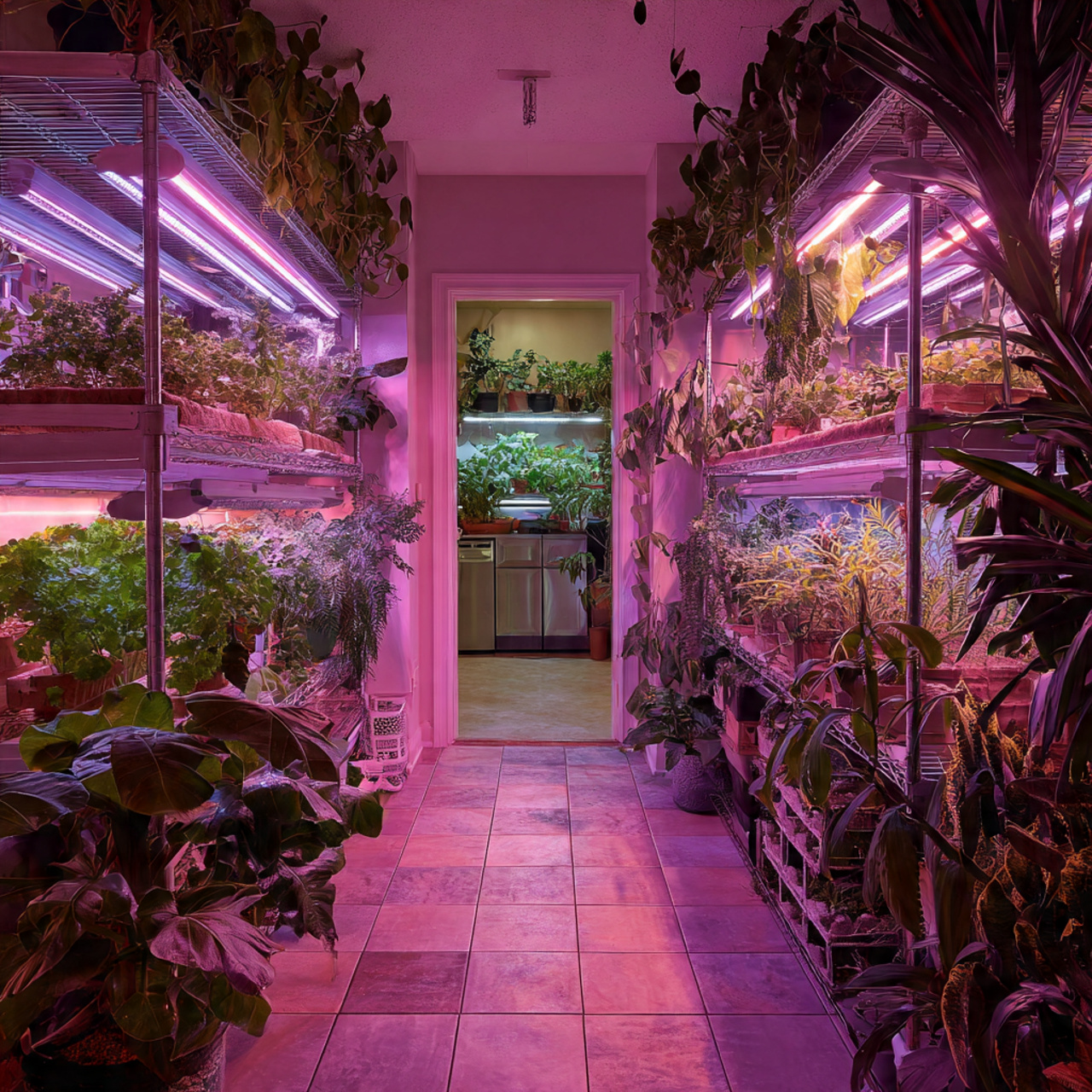
Ready to go all-in? Converting an entire room into a greenhouse represents the ultimate commitment to indoor growing. A spare bedroom, forgotten office, or basement space becomes a climate-controlled paradise where hundreds of plants flourish simultaneously. This scale allows for sophisticated systems—integrated HVAC, automated watering, computerized monitoring. The investment is substantial, but the production capacity and possibilities become nearly limitless.
Room Selection Criteria:
- Access to water and drainage
- Adequate electrical capacity (30-50 amps minimum)
- Windows for natural light (optional but helpful)
- Appropriate for humidity without affecting adjacent rooms
- Climate control access or ability to add systems
Essential Infrastructure:
- Waterproof flooring (tile, sealed concrete, vinyl)
- Water-resistant wall treatments (cement board, waterproof paint)
- Floor drain or collection system
- Dedicated electrical circuits
- Dehumidifier to protect rest of house
- Separate HVAC zone if possible
Zoning Your Space:
- Humid tropical zone: orchids, ferns, aroids
- Moderate zone: herbs, vegetables, houseplants
- Dry zone: succulents, cacti, Mediterranean herbs
- Propagation area: seedlings and cuttings
Investment Reality Check:
- Budget $3,000-15,000+ depending on sophistication
- DIY can cut costs by 40-60%
- Consider resale value impact on your home
- Start with basics, upgrade gradually
This approach suits serious hobbyists, plant collectors, or anyone pursuing genuine food self-sufficiency. The diversity you can grow simultaneously—from tropical orchids to Mediterranean herbs—makes it endlessly rewarding.
Hydroponic Indoor Greenhouse Systems
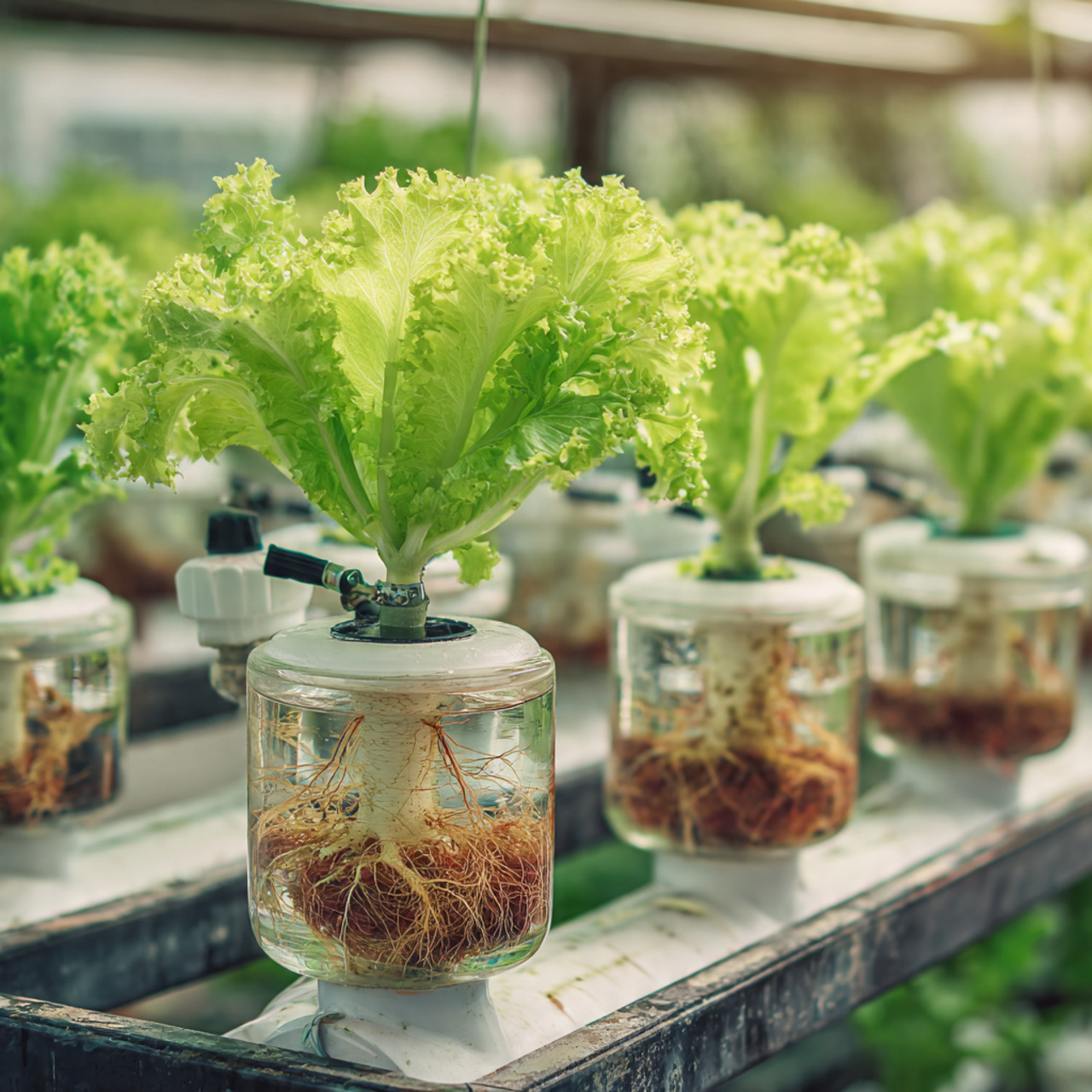
Hydroponics represents growing without soil—nutrients flow directly to plant roots through water solutions. This accelerates growth dramatically and boosts yields compared to traditional methods. Hydroponic setups range from simple Mason jar systems (Kratky method) to sophisticated automated operations with pumps and timers. Without soil, you sidestep many pest and disease issues while maintaining precise nutrient control.
Hydroponic System Types:
- Kratky (passive): Simplest, no pumps, great for beginners
- Deep Water Culture: Roots suspended in oxygenated water
- Ebb and Flow: Floods and drains on timer cycles
- Nutrient Film Technique: Thin film of nutrients flows constantly
- Drip Systems: Slow, controlled nutrient delivery
Essential Knowledge:
- pH levels (5.5-6.5 for most plants)
- EC/PPM measurements (nutrient concentration)
- Nutrient ratios (N-P-K for different growth stages)
- Water temperature (65-75°F ideal)
- Dissolved oxygen importance
Common Beginner Mistakes:
- Neglecting pH testing (test daily initially)
- Overfeeding nutrients (start at 50% recommended strength)
- Forgetting to change water (weekly for small systems)
- Ignoring water temperature (too warm = root rot)
- Not cleaning between grows (disease prevention)
Best Plants for Hydroponic Beginners:
- Lettuce (fastest, most forgiving)
- Basil and other herbs
- Cherry tomatoes
- Peppers
- Spinach and kale
The learning curve is steeper than soil growing, but the rewards—faster growth, bigger harvests, cleaner conditions—make it worthwhile for dedicated growers.
Vertical Indoor Greenhouse Structures
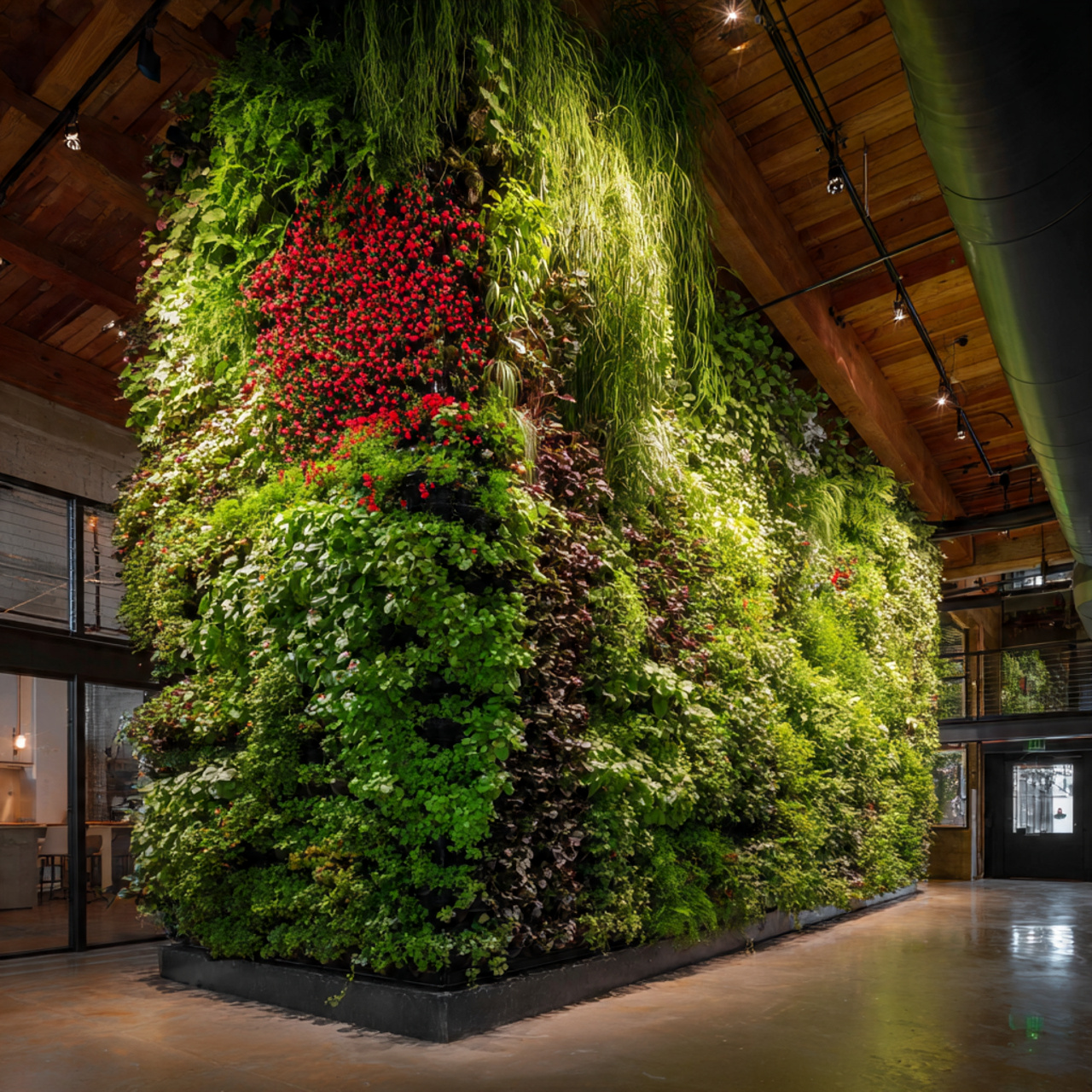
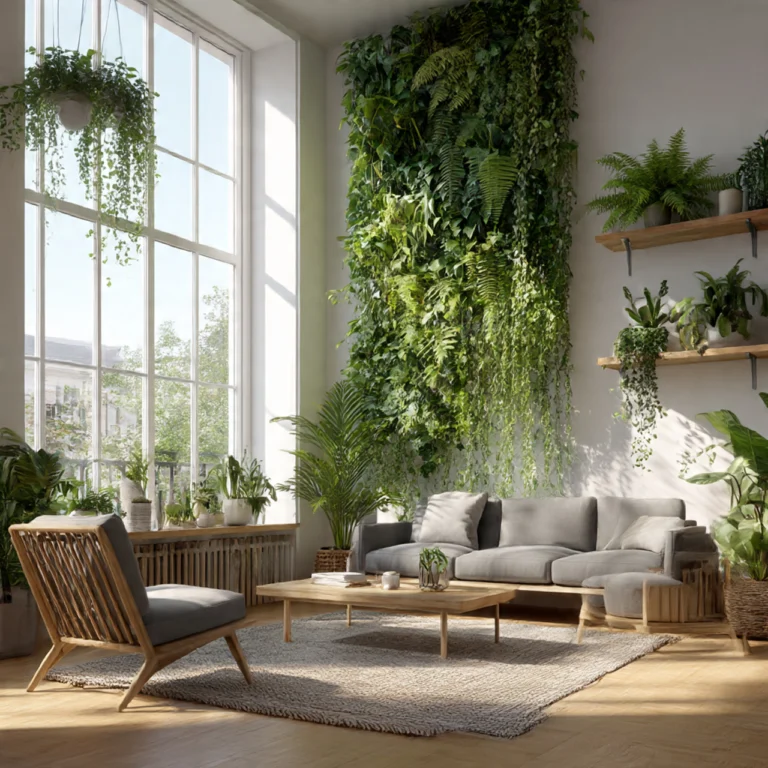
Think up, not out. Vertical systems maximize production per square foot by stacking plants skyward. Tower gardens and wall-mounted planters create stunning living walls that serve both aesthetic and productive purposes. These work brilliantly for strawberries, herbs, and leafy greens with compact root systems. Bonus: a plant-covered wall adds incredible visual drama to any space.
Vertical System Options:
- Tower gardens (freestanding columns)
- Wall-mounted pocket planters
- Stacked pot systems
- Hydroponic towers
- Trellis-based vertical gardens
Water Management Solutions:
- Recirculating systems: Pump water to top, gravity feeds downward
- Drip irrigation: Controlled delivery to each level
- Collection trays: Catch runoff from each tier
- Self-watering designs: Built-in reservoirs
Lighting Challenges & Solutions:
- Problem: Uneven light distribution at different heights
- Solution: Position brightest lights at middle height
- Add supplemental lights at top and bottom
- Use reflective backing to bounce light forward
- Rotate plants between positions weekly
Structural Considerations:
- Wall anchors must support significant weight (water + plants + soil)
- Consider floor weight limits (especially apartments)
- Ensure drainage doesn’t damage walls or floors
- Plan access for maintenance and harvesting
The dramatic visual impact makes vertical gardens conversation starters while producing impressive quantities of food in minimal floor space.
Grow Tent Indoor Greenhouse Solutions
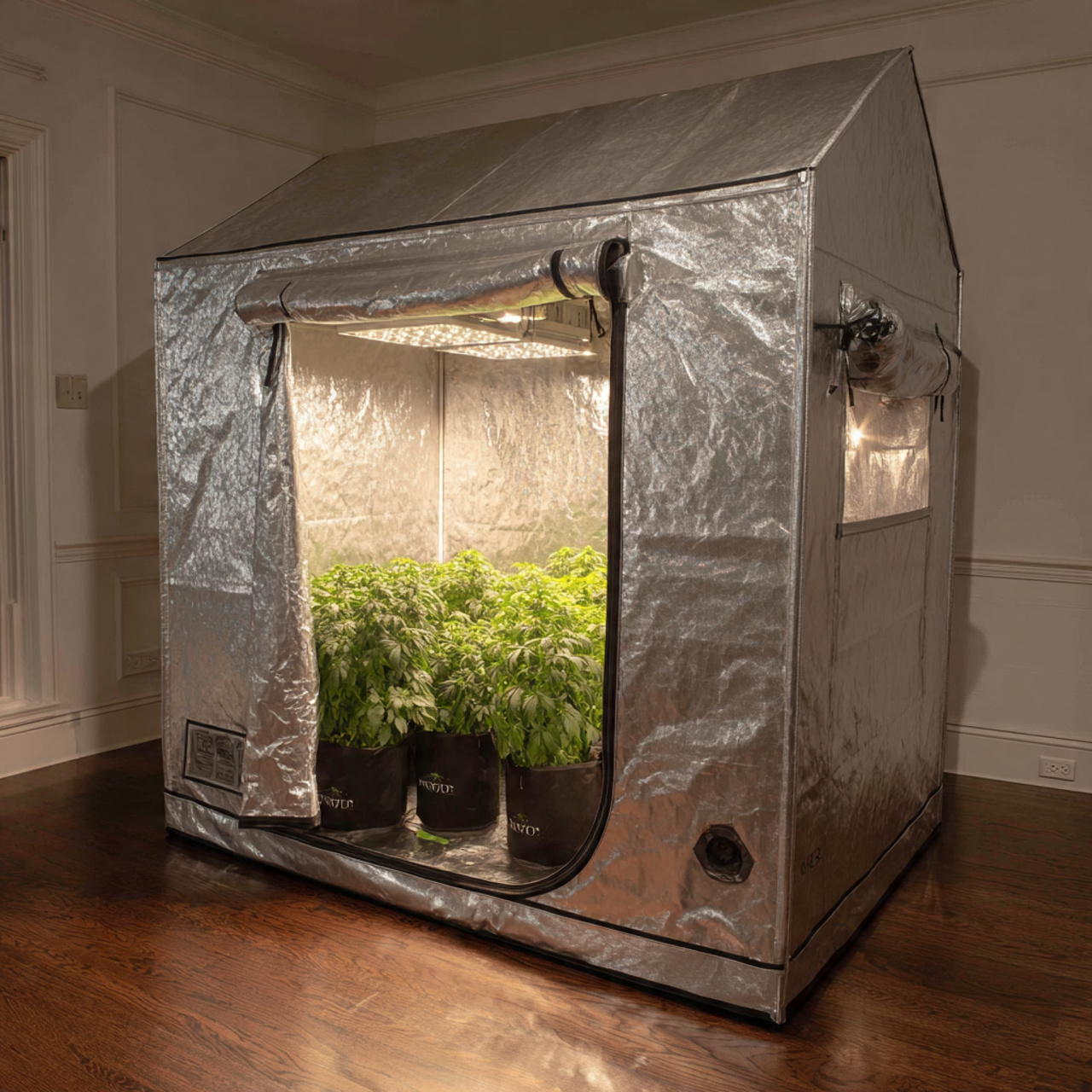
Grow tents deliver professional-grade performance in a package you can set up in an hour and take down just as quickly. These fabric structures feature reflective interiors that maximize light efficiency and maintain separate climate zones from the rest of your home. Zippered access points make maintenance easy while keeping conditions dialed in. Sizes range from compact 2×2-foot cubes to room-sized installations.
Why Growers Love Tents:
- Setup in under an hour, no tools required
- Reflective interior (90-95% light reflection)
- Built-in ventilation ports and cable access
- Completely light-proof when zipped
- Easy to move or store
- No permanent home modifications
Size Selection Guide:
- 2’x2′: 1-2 small plants, herbs
- 3’x3′: 2-4 medium plants
- 4’x4′: 4-6 large plants, most popular size
- 5’x5′ and up: Serious production space
Essential Accessories:
- Inline exhaust fan (duct to window or outside)
- Carbon filter (odor control for aromatic plants)
- Oscillating fan (air circulation)
- Grow lights appropriate for tent size
- Timer for automated light cycles
- Thermometer/hygrometer combo
Setup Best Practices:
- Position on level, waterproof surface
- Place catch trays under all containers
- Run exhaust to prevent humidity in room
- Maintain slight negative pressure (tent walls slightly bowed in)
- Keep zippers clean for proper seal
Tents are ideal for renters or anyone wanting serious growing capability without permanent modifications. The contained environment also simplifies odor management for particularly fragrant herbs.
Repurposed Aquarium Indoor Greenhouse
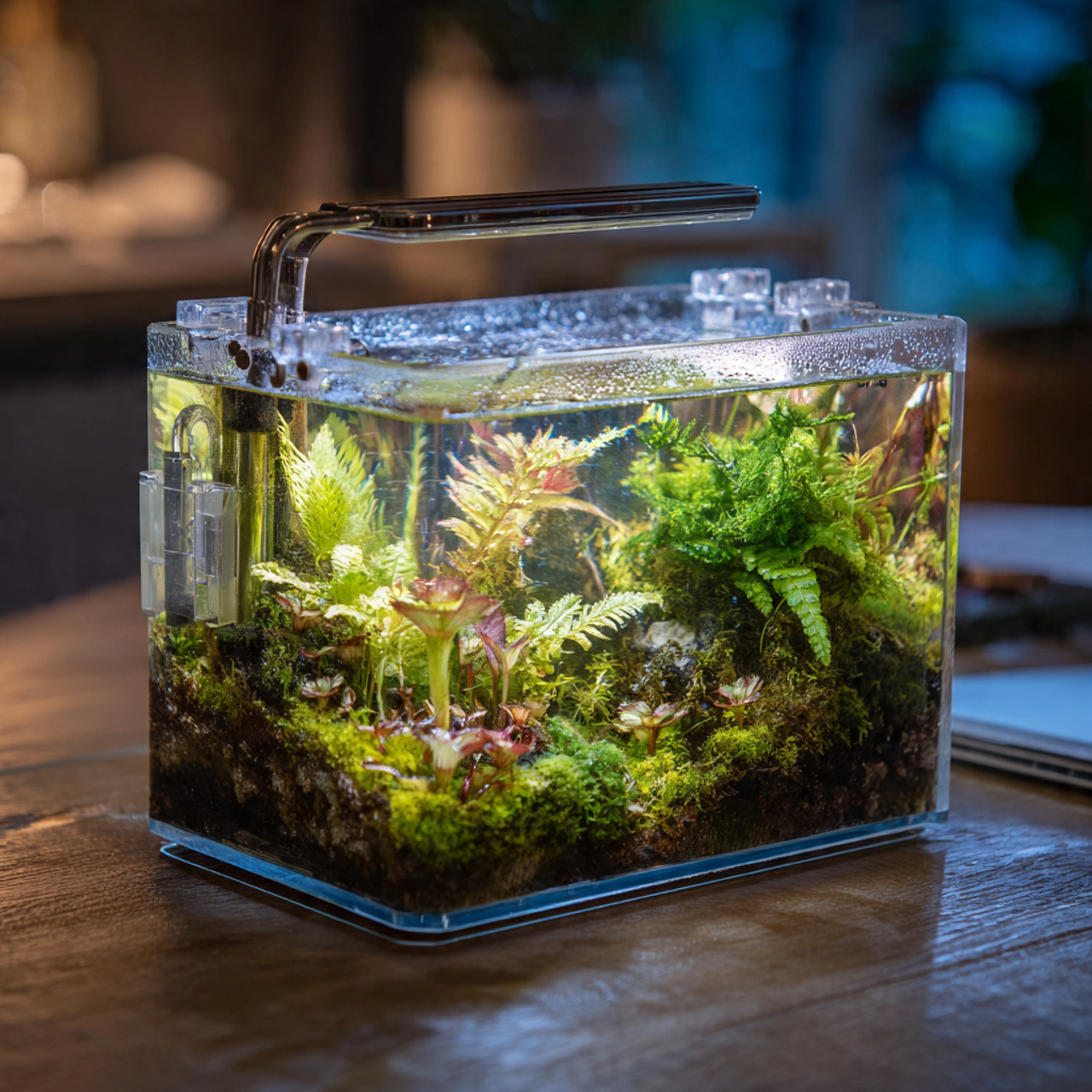
That unused fish tank in your garage? It’s about to become a stunning miniature greenhouse for humidity-loving plants. The glass walls create a beautiful display while maintaining consistent moisture—perfect for carnivorous plants, tropical species, and orchids that struggle with typical household dryness. You can create a dramatically different microclimate than the rest of your home.
Perfect Plants for Aquarium Greenhouses:
- Venus flytraps and sundews
- Small orchids (Phalaenopsis, mini varieties)
- Tropical ferns
- Mosses and liverworts
- African violets
- Begonias
Drainage Solutions:
- Option 1: Layer 2-3 inches of gravel at bottom before adding soil
- Option 2: Drill drainage hole in bottom (requires glass drill bit)
- Option 3: Treat as terrarium with careful watering (no standing water)
Lighting Setup:
- Position LED lights 8-12 inches above tank opening
- Avoid high-heat bulbs that overheat enclosed space
- Use clip-on lights for easy adjustment
- Timer for consistent 12-14 hour light cycle
Humidity Management:
- Leave top partially open for air exchange
- Fully close for ultra-high humidity lovers
- Wipe condensation if it completely obscures view
- Add small fan for air circulation if needed
Common Pitfalls:
- Overwatering (no drainage means careful watering)
- Overstocking (plants grow and need space)
- Ignoring algae growth (reduce light or water)
- Using wrong plant types (no succulents!)
The transparent display showcases your plants beautifully while the contained environment handles the heavy lifting of climate control.
Indoor Greenhouse Propagation Stations
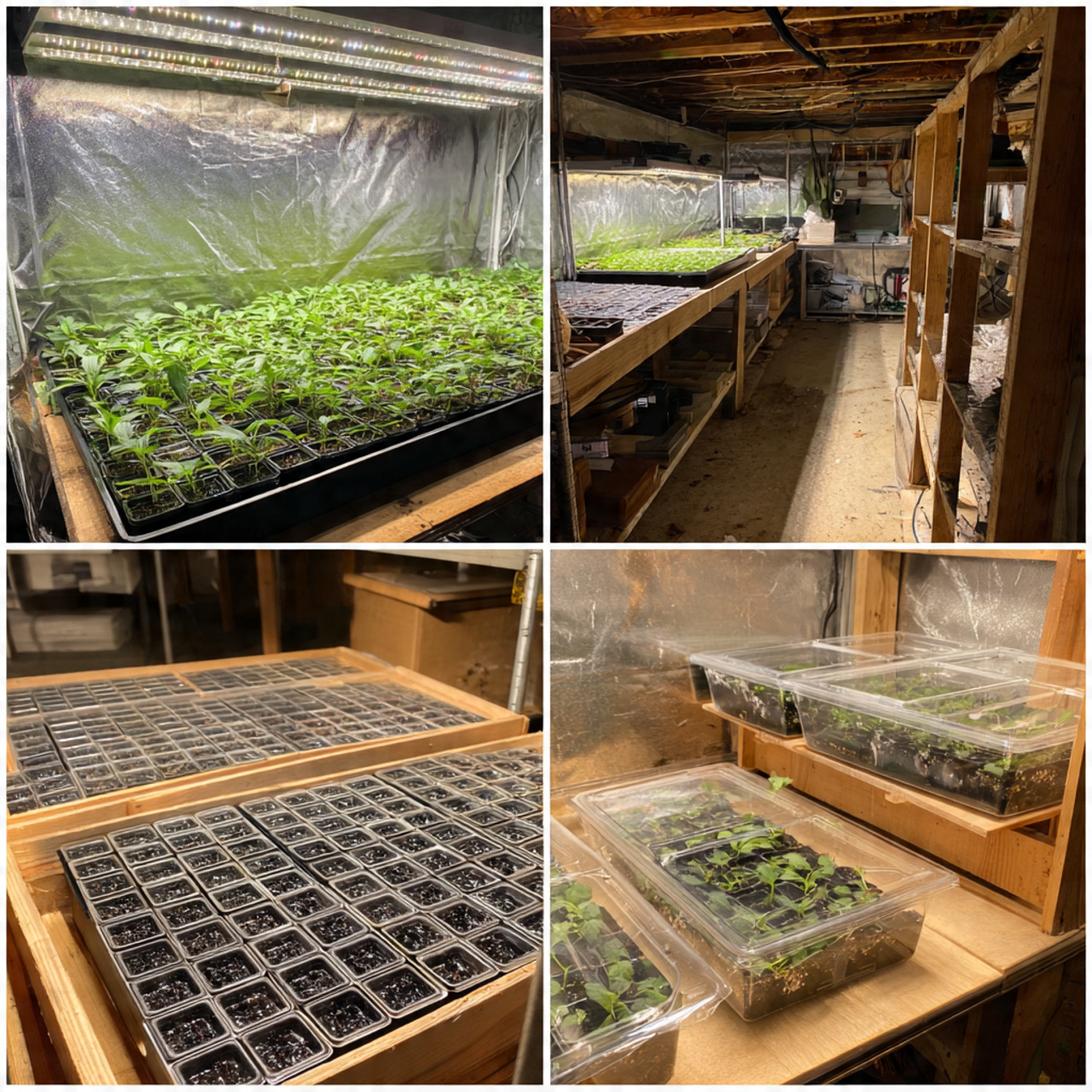
Think of propagation stations as the nursery ward of your indoor greenhouse—dedicated space for rooting cuttings and germinating seeds. These areas feature higher humidity, gentle warmth, and softer lighting than your main growing space. A well-organized propagation zone lets you expand your plant collection exponentially without constantly buying new specimens.
Propagation Station Essentials:
- Clear plastic boxes with vented lids
- Heat mat (maintains 70-75°F soil temperature)
- Humidity dome or misting system
- Gentle grow lights (lower intensity than mature plants)
- Rooting hormone powder or gel
- Sterile propagation medium
Success Rates Improve With:
- Consistent bottom heat (heat mats boost success by 50%+)
- Humidity maintenance (keep at 60-80%)
- Proper lighting (bright but indirect)
- Sterile tools and medium (prevent disease)
- Patient observation (don’t disturb too early)
Propagation Timeline:
- Seeds: 3-21 days for germination (varies by species)
- Soft cuttings: 2-4 weeks for root development
- Semi-hard cuttings: 4-8 weeks
- Hard cuttings: 8-12+ weeks
Acclimation Process:
- Week 1: Remove humidity dome for 1 hour daily
- Week 2: Increase to 4 hours daily
- Week 3: Remove dome, monitor closely
- Week 4: Transplant to regular growing area
Common Mistakes:
- Checking roots too frequently (damages tender growth)
- Overwatering (roots need oxygen)
- Too much light too soon (stresses cuttings)
- Skipping acclimation (sudden change causes shock)
This dedicated nursery approach keeps your main greenhouse productive while providing the specialized care that new plants need to establish successfully.
Aesthetic Indoor Greenhouse Displays
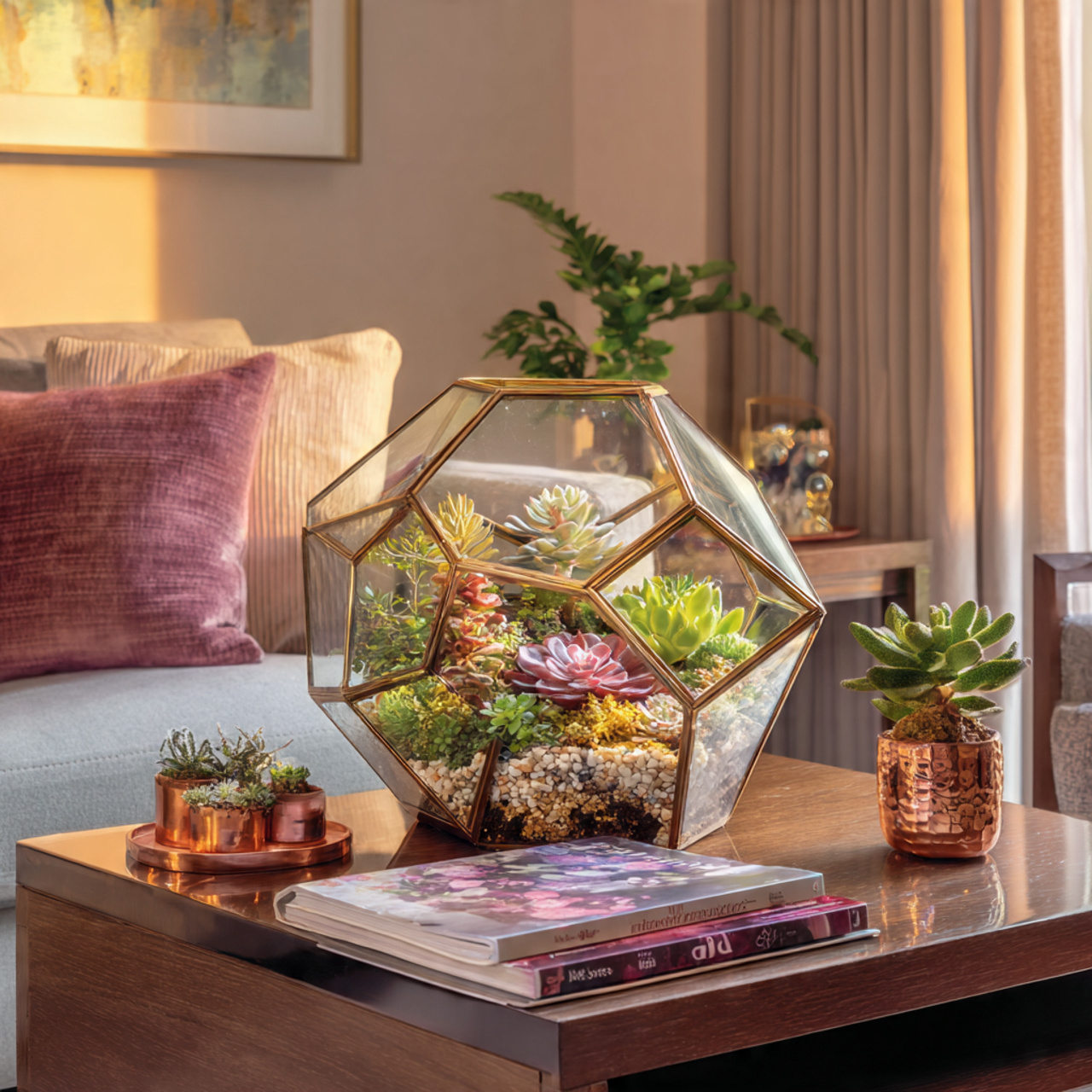
Your indoor greenhouse doesn’t have to look like a science experiment. Aesthetic displays blend plant cultivation with interior design, creating stunning focal points that enhance your space while growing food and flowers. Geometric glass terrariums, vintage-style conservatory cabinets, and custom living walls make design statements while functioning as productive growing environments.
Design Styles to Consider:
- Modern minimalist: Clean lines, monochromatic pots, simple structures
- Vintage botanical: Brass fixtures, antique cabinets, Victorian-era inspired
- Industrial chic: Metal frames, Edison bulbs, exposed mechanics
- Bohemian: Macramé hangers, colorful ceramics, layered textures
- Scandinavian: Light woods, white containers, functional beauty
Material Selection:
- Traditional spaces: Brass, copper, wood, ceramic
- Modern interiors: Acrylic, chrome, concrete, glass
- Transitional designs: Mixed metals, natural/manufactured combinations
Display Principles:
- Thriller: Tall focal point plant
- Filler: Medium plants that fill space
- Spiller: Trailing plants that cascade down
- Vary heights for visual interest
- Group odd numbers (3, 5, 7) for pleasing arrangements
Lighting as Design Element:
- Edison bulb fixtures for vintage appeal
- Sleek LED panels for modern spaces
- Hidden strip lighting for subtle glow
- Statement pendant lights as art pieces
Functional Beauty Tips:
- Choose containers that complement your décor
- Hide utilitarian elements (pumps, timers) in baskets or behind plants
- Use plants themselves as texture and color elements
- Maintain meticulously—wilted plants ruin aesthetic
An attractive indoor greenhouse becomes a conversation piece that showcases both your design sense and your gardening skills, proving that productivity and beauty aren’t mutually exclusive.
Smart Technology Indoor Greenhouse Integration
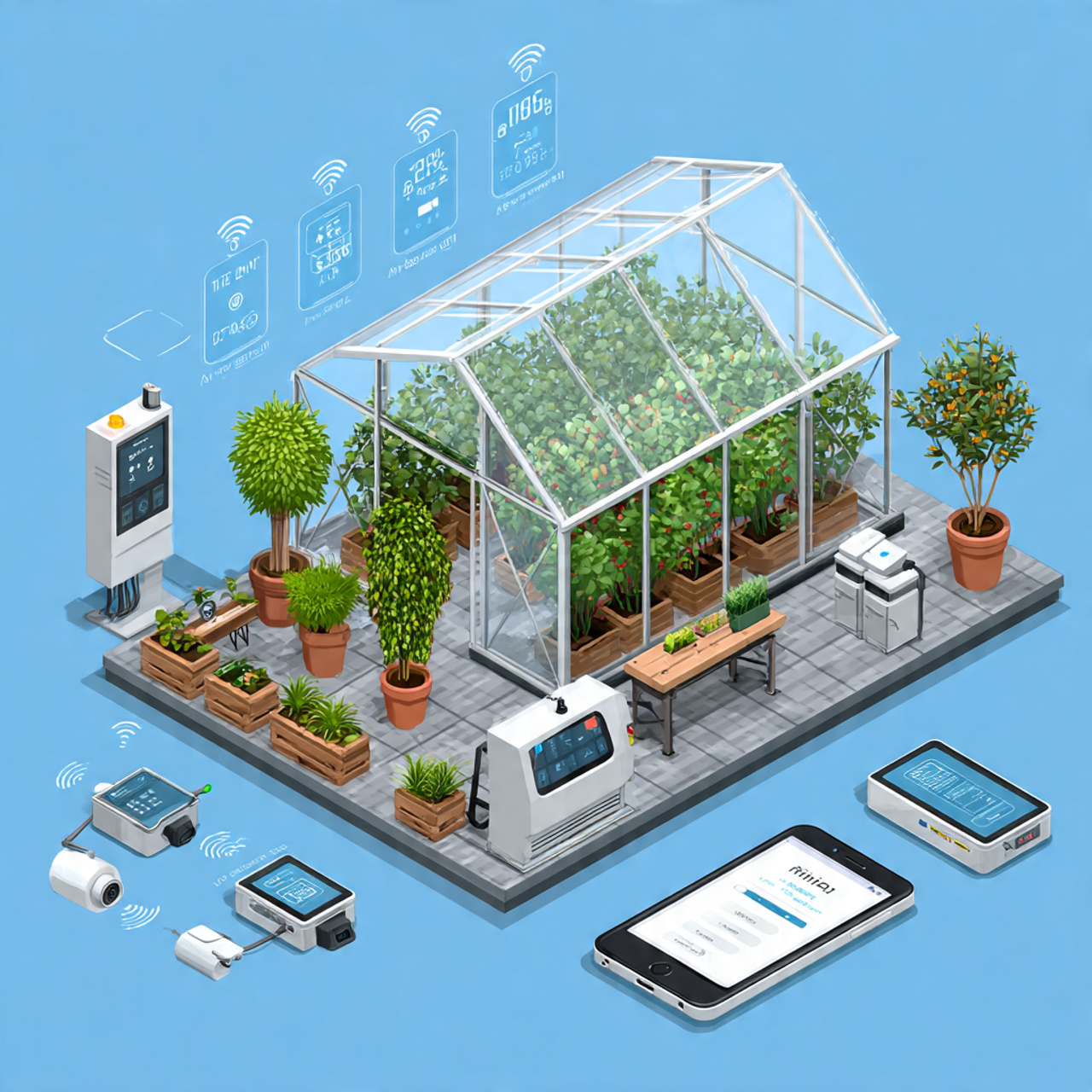
Welcome to the future of indoor gardening. Smart technology transforms greenhouse management from a daily hands-on commitment to a semi-automated system you monitor from your phone. Sensors track temperature, humidity, and soil moisture continuously, alerting you when conditions drift from optimal ranges. Automated systems handle watering, lighting, and climate control while you’re at work or on vacation.
Smart Devices Worth Considering:
- Environmental sensors: Monitor temp, humidity, light levels
- Smart plugs: Remote light control, scheduling
- Automated watering systems: Moisture-based or timed delivery
- WiFi cameras: Visual monitoring from anywhere
- Smart ventilation: Temp-triggered fans
- App-controlled grow lights: Spectrum and timing adjustments
Popular Smart Greenhouse Apps:
- Track growth progress with photos
- Receive alerts for out-of-range conditions
- Log watering and feeding schedules
- Access plant care databases
- Connect with other growers
Data You Can Track:
- Temperature fluctuations over time
- Humidity patterns throughout day
- Soil moisture trends
- Light intensity and duration
- pH and nutrient levels (advanced systems)
Benefits Beyond Convenience:
- Peace of mind during travel
- Reduce beginner learning curve with data
- Catch problems before they become catastrophic
- Optimize conditions based on trends, not guesses
- Document successful growing parameters for repeatability
Realistic Expectations:
- Technology assists but doesn’t replace attention
- Initial setup requires time and learning
- Systems need maintenance and calibration
- Not all plants need this level of monitoring
- Start simple, add complexity gradually
While smart technology costs more upfront, the improved plant health, reduced guesswork, and time savings make it worthwhile for many modern growers.
Minimalist Indoor Greenhouse Approaches
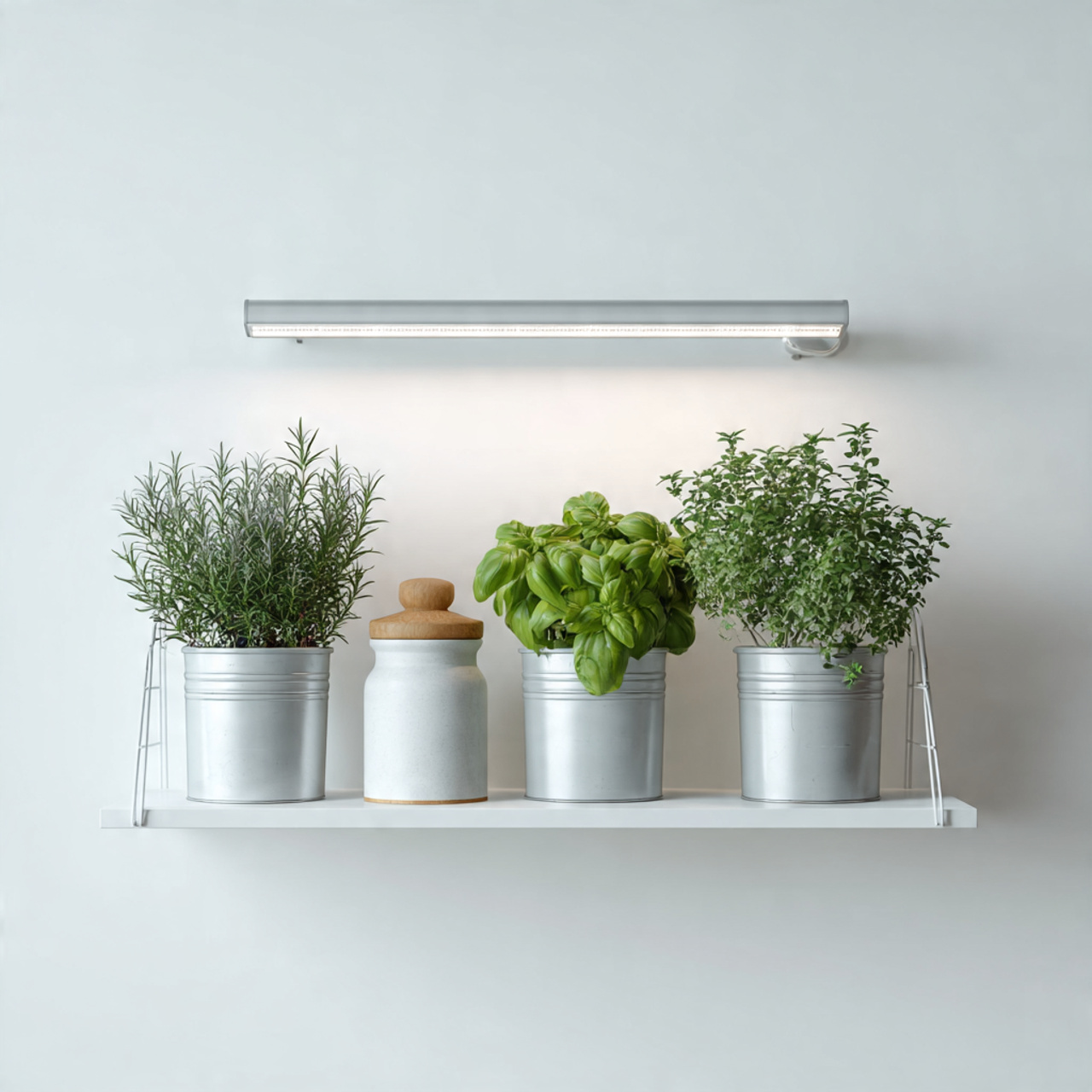
Sometimes less really is more. Minimalist greenhouse growing focuses on maximum results with minimum equipment and space. A simple shelf plus grow light can produce abundant herbs and microgreens. A single well-chosen glazed container creates a self-sustaining ecosystem needing water just monthly. This approach suits both space-limited living and philosophical preferences for simplicity.
Minimalist Philosophy:
- Quality over quantity
- Master basics before adding complexity
- Choose multi-purpose items
- Focus attention rather than spreading thin
- Embrace constraints as creative challenges
Starter Minimalist Setup ($50-100):
- One wire shelf unit
- Single LED grow light
- 3-5 identical containers
- Basic potting mix
- 2-3 easy plant varieties
Best Plants for Minimalists:
- Herbs: Basil, mint, parsley (high value, easy care)
- Microgreens: Radish, sunflower (fast results)
- Lettuce: Buttercrunch, romaine (continuous harvest)
- Green onions: Regrow from kitchen scraps
Simplification Strategies:
- Grow only what you’ll actually use
- Choose forgiving varieties
- Stick to one growing method
- Create routines (water Sundays, feed first of month)
- Accept imperfection
Common Minimalist Mistakes:
- Under-investing in essential quality (cheap light = poor results)
- Choosing difficult plants to prove capability
- Expanding too quickly
- Neglecting due to assumed low maintenance
- Comparison with elaborate setups (different goals!)
Success Metrics:
- Consistent small harvests over time
- Low stress maintenance
- High usage of what you grow
- Genuine enjoyment of process
- Sustainable long-term practice
Minimalist greenhouses prove that successful cultivation depends more on consistent attention than expensive equipment or complicated setups. Start small, learn deeply, grow confidently.
Seasonal Indoor Greenhouse Adjustments
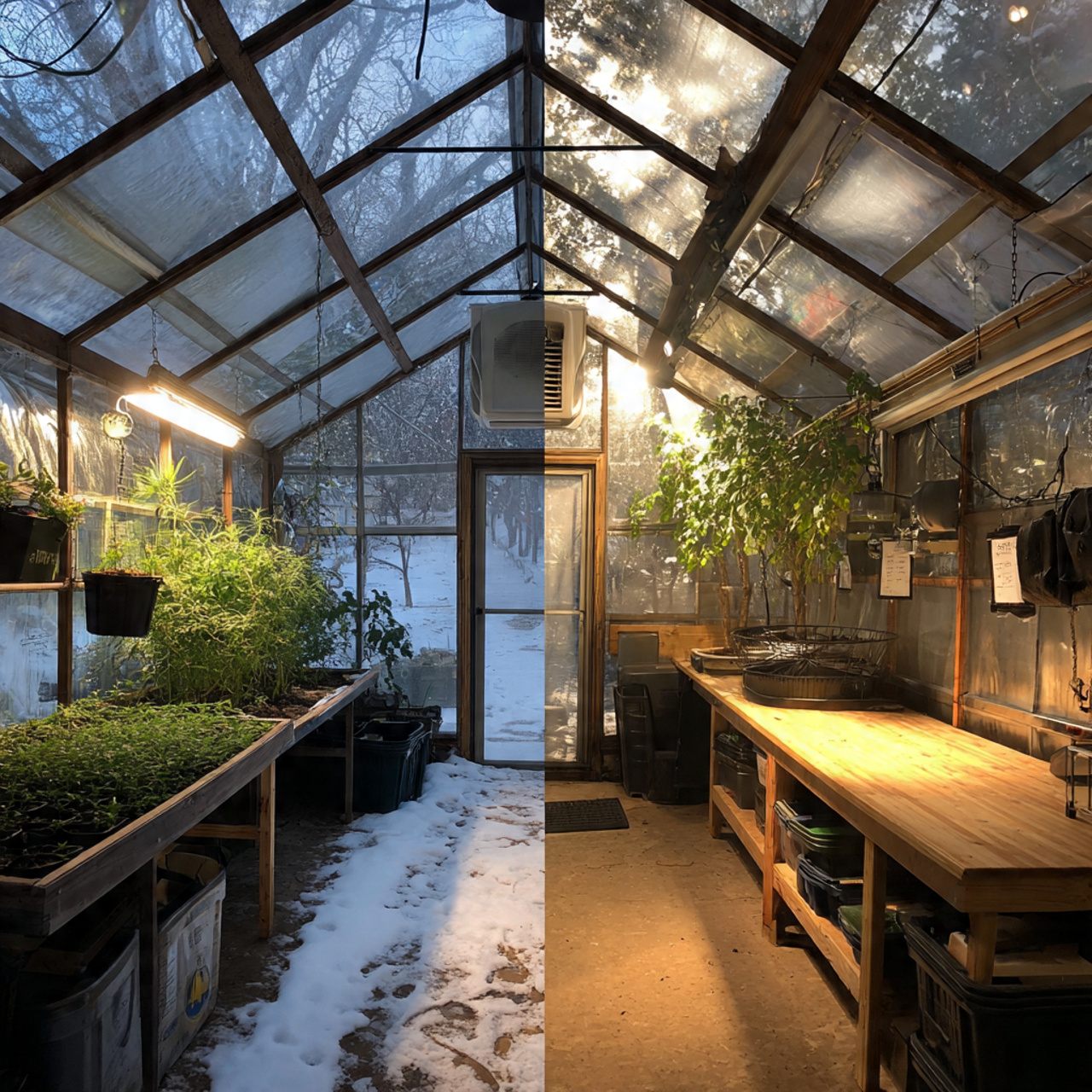
Your indoor greenhouse isn’t a “set it and forget it” situation—seasonal changes outside affect conditions inside, even in controlled environments. Winter brings shorter days and cooler homes requiring more supplemental light and heating attention. Summer challenges include excess heat and intense window sun. Adapting seasonally keeps plants thriving year-round.
Winter Adjustments (November-February):
- Move setups away from cold windows and exterior walls
- Increase grow light duration by 2-4 hours
- Reduce watering frequency (slower growth = less water uptake)
- Add humidity trays or humidifiers (heating dries indoor air)
- Insulate against cold drafts
- Monitor for leggy growth (increase light intensity)
Spring Transition (March-April):
- Gradually reduce supplemental lighting as days lengthen
- Start seeds for summer varieties
- Increase watering as growth accelerates
- Begin fertilizing more frequently
- Check for pests awakening with warmer temps
- Clean and refresh growing areas
Summer Management (May-August):
- Focus on ventilation and air movement
- Add shade cloth to south-facing windows
- Water more frequently (heat increases evaporation)
- Watch for heat stress (wilting, leaf curl)
- Move heat-sensitive plants away from hot windows
- Consider growing heat-lovers (basil, tomatoes, peppers)
Fall Preparation (September-October):
- Bring outdoor plants inside (quarantine first!)
- Gradually increase supplemental lighting
- Reduce feeding as growth slows
- Harvest and preserve abundance
- Clean systems thoroughly before winter
- Plan winter growing strategy
Year-Round Monitoring:
- Weekly temperature min/max checks
- Humidity levels (adjust seasonally)
- Light duration (photoperiod sensitive plants)
- Plant growth rates (indicates condition suitability)
- Pest pressure (changes with seasons)
Dual-Season Strategy:
- Winter: Light-dependent interior growing
- Summer: Window-based natural light growing
- Transition plants between setups seasonally
- Maintain backup lighting for cloudy periods
- Adjust expectations per season
Understanding how seasons impact your indoor environment allows proactive management instead of reactive problem-solving. Your plants will thank you with consistent healthy growth.
Visit Also: Indoor Garden Ideas
Frequently Asked Questions
What plants grow best in an indoor greenhouse?
Herbs like basil, mint, and cilantro are perfect choices with their compact growth and moderate light needs. Leafy greens including lettuce, spinach, and kale thrive under artificial lighting. Cherry tomatoes and peppers succeed in larger setups with intense light. Tropical houseplants love the controlled humidity indoor greenhouses provide.
How much does it cost to set up an indoor greenhouse?
Basic tabletop setups start around $30-75. Mid-range systems with quality LED lights and shelving run $200-500. Professional room-scale conversions or advanced hydroponic systems can range from $1,000 to $5,000+ depending on size and features.
Do indoor greenhouses increase electric bills significantly?
Not dramatically. A small 50-watt LED setup running 16 hours daily adds only $5-8 monthly to your electric bill. Larger installations with multiple lights and climate control may add $30-60 monthly—still less than buying equivalent organic produce from stores.
Can you grow vegetables year-round in an indoor greenhouse?
Yes! Indoor greenhouses enable continuous production regardless of outdoor weather. Leafy greens, herbs, and compact fruiting vegetables like cherry tomatoes grow successfully year-round. Focus on compact varieties bred for container growing to maximize harvests from limited space.
Conclusion
Indoor greenhouses make year-round growing possible regardless of your climate, living space, or budget. From simple $30 tabletop kits to elaborate room conversions, there’s an option for everyone. You get complete control over growing conditions, protection from pests and weather, and the joy of harvesting fresh food any month of the year.
Start small with forgiving plants like herbs or lettuce. Learn as you grow, and expand when you’re ready. Yes, you’ll make mistakes—overwatering, uneven lighting, maybe a pest or two—but that’s how you learn. The rewards are worth it: fresh produce, cleaner air, stress relief, and the genuine satisfaction of nurturing life in your own home.
Your indoor greenhouse journey begins with a single plant. Take that first step today and enjoy growing through every season.