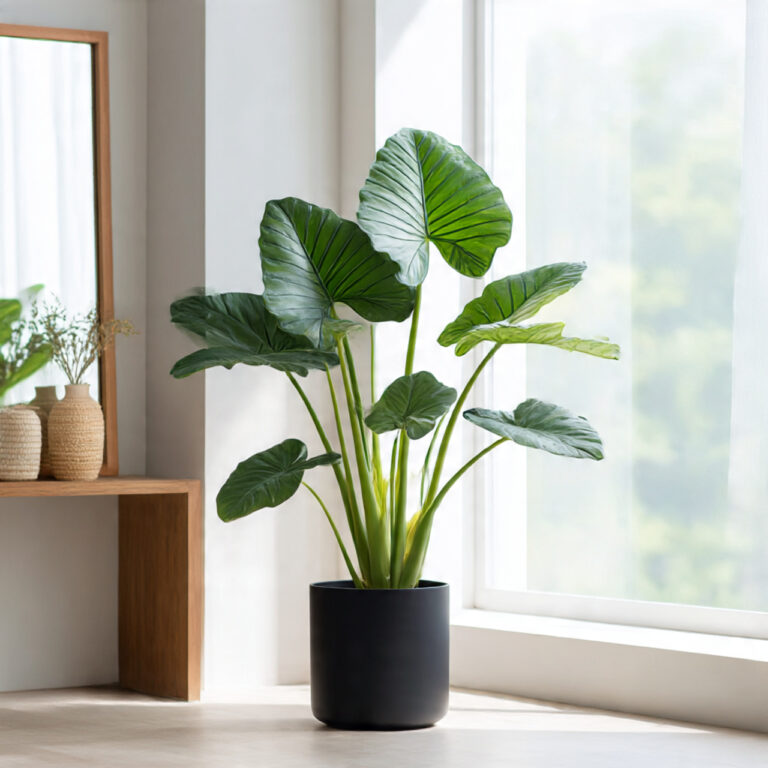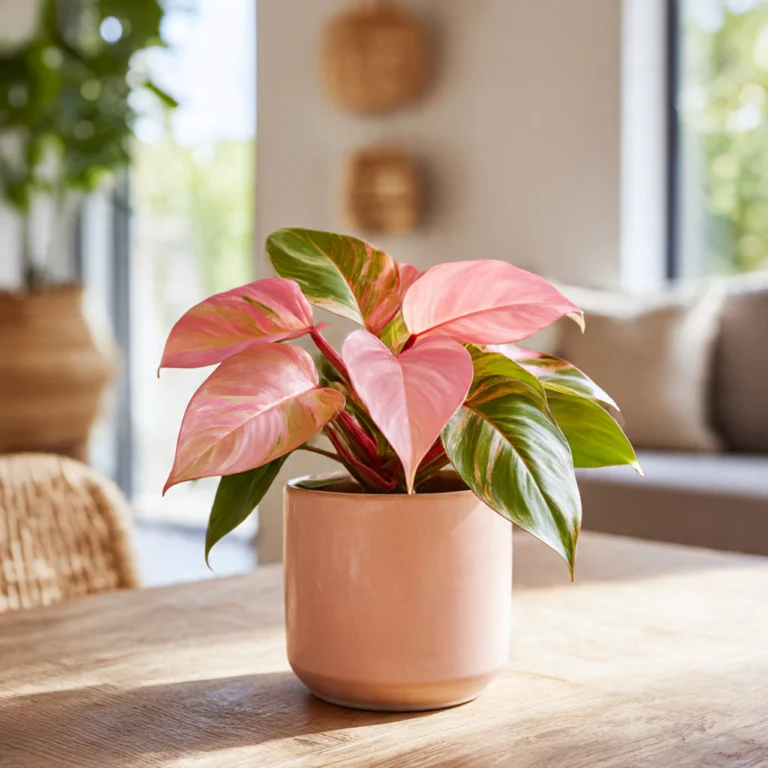
25 Top Hanging Plants for Indoor Style and Air Purification
There’s something magical about watching greenery cascade from above. Hanging plants have this incredible ability to transform any room—whether you’re working with a cozy studio apartment or a sprawling home. They don’t just sit there looking pretty; they bring movement, texture, and life to spaces we often forget about: that empty corner near the ceiling, the bare wall above your desk, or that awkward spot between windows.
What makes hanging plants truly special goes beyond their good looks. These vertical beauties actually clean the air you breathe, help you feel calmer, and create that peaceful vibe we all crave when we walk through the door after a long day. Their flowing leaves soften hard edges and turn even the simplest room into something that feels alive and welcoming.
Whether you’re just starting your plant journey or you’ve got a whole jungle going, hanging plants open up a world of creative possibilities. Let’s explore how you can use them to create your own green sanctuary.
Why Hanging Plants Are Perfect for Modern Homes
Modern living often means making the most of every inch, and that’s exactly where hanging plants shine. They’ve become a go-to solution in contemporary interior design because they work smarter, not harder.
Space-Saving Benefits:
- Free up valuable floor space while adding maximum greenery
- Make small rooms feel more spacious by drawing the eye upward
- Add architectural interest to high ceilings in larger homes
- Create visual layers that give rooms more depth and dimension
Wellness Advantages:
- Caring for plants becomes a mindful daily ritual that melts away stress
- Watching them grow gives you a genuine sense of accomplishment
- Their presence creates natural focal points that make spaces feel more harmonious
Design Versatility:
- Complement minimalist modern aesthetics with clean, trailing lines
- Enhance boho-chic vibes with macrame and mixed textures
- Bring tropical paradise indoors with lush, dramatic foliage
- Adapt to literally any style you can imagine
Trailing Vines for Hanging Plants
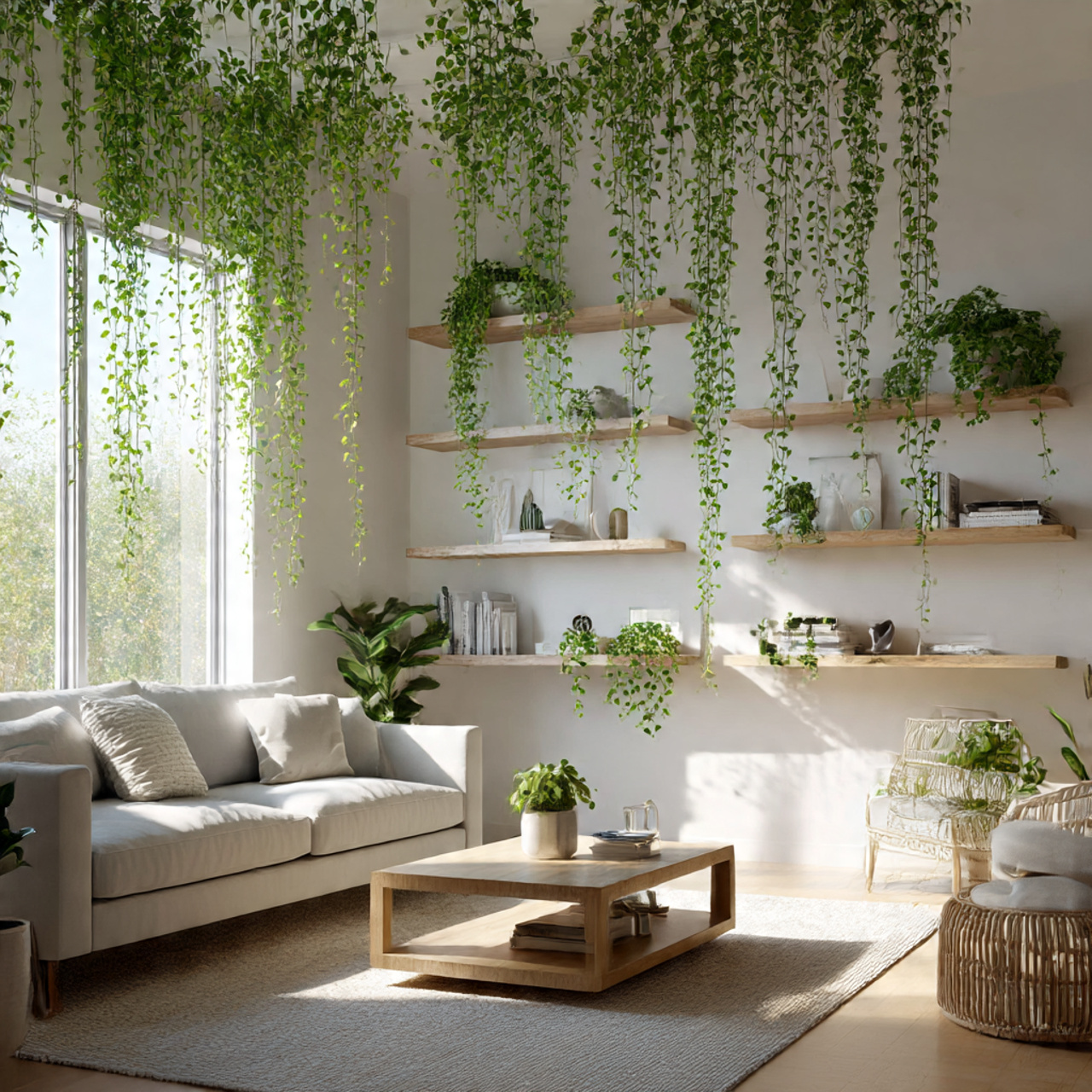
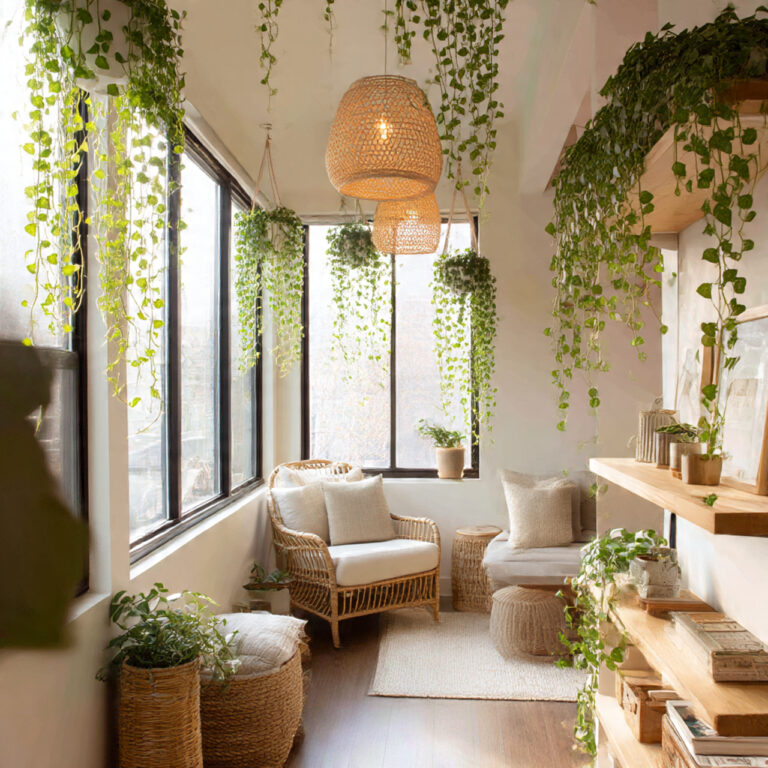
If you want drama, trailing vines deliver. Pothos, philodendrons, and the delicate string of pearls create those gorgeous cascading effects that everyone loves. Their long stems drape elegantly from ceiling hooks or shelves, softening corners and adding that perfect touch of organic flow.
Why Trailing Vines Work So Well:
- They grow surprisingly fast, giving you that lush look sooner than you’d think
- Incredibly forgiving—they adapt to different light conditions and bounce back from mistakes
- Perfect for filling vertical spaces near windows, on bookshelves, or as natural room dividers
Creative Display Ideas:
- Train vines along trellises to create living wall art
- Use macrame hangers for a boho-luxe look
- Layer multiple vines at different heights for a jungle-canopy effect
- Let them create natural “green curtains” that add privacy while staying open and airy
The secret to making trailing vines look amazing? Don’t be afraid to layer them. Hang three or four at different heights, and suddenly that blank wall becomes an organic, flowing masterpiece.
Hanging Succulents
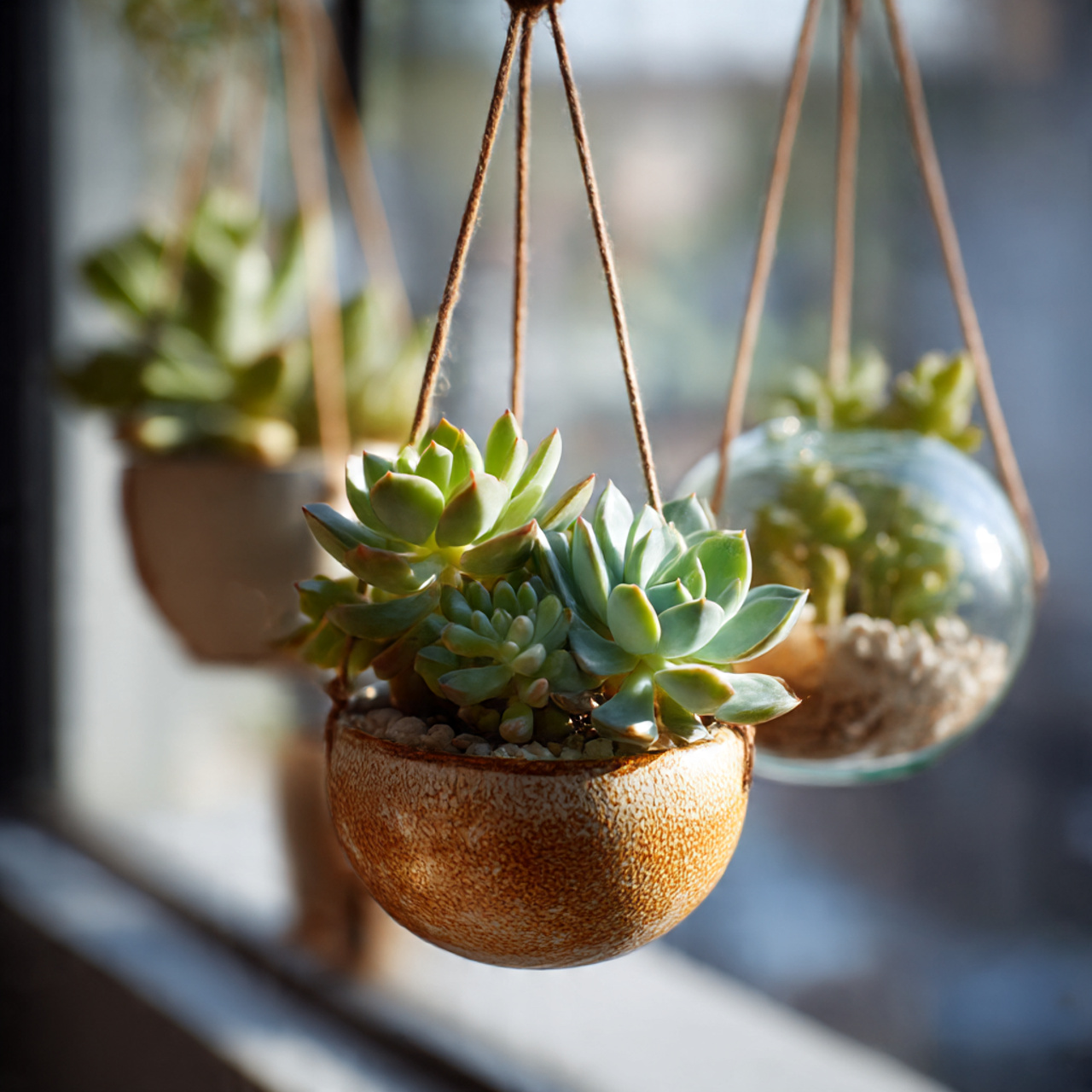
For those of us who love plants but don’t always remember to water them, succulents are absolute lifesavers. Varieties like echeveria, sedum, and the whimsical burro’s tail store water in their thick, sculptural leaves—which means they’re practically drought-proof.
What Makes Hanging Succulents Special:
- Require minimal watering (perfect for busy schedules or forgetful moments)
- Geometric shapes and unique textures create modern, artistic displays
- Thrive in bright, sunny spots where other plants might struggle
- Their architectural forms look like living sculptures
Styling Tips:
- Mix multiple succulent varieties in one basket for an eye-catching arrangement
- Use ceramic pots for a contemporary feel or glass terrariums for modern elegance
- Pair with macrame hangers to soften their structured shapes
- Place near south-facing windows where they’ll soak up all that glorious sunshine
Think of hanging succulents as functional art. They elevate your décor while asking for very little in return—the ultimate low-maintenance luxury.
Macrame-Hanging Plant Ideas
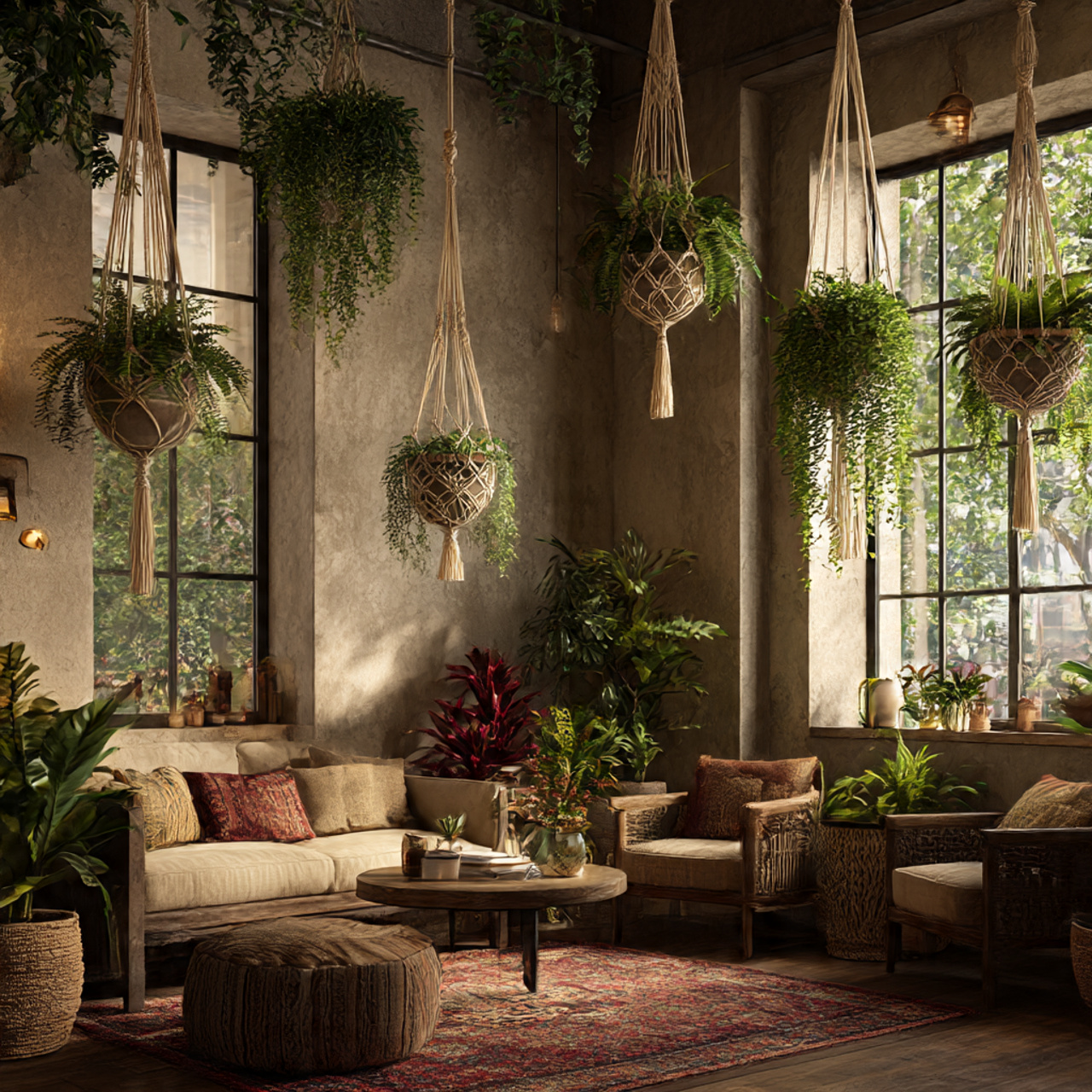
Macrame isn’t just a trend—it’s a timeless way to display your plants with personality. These hand-knotted holders add instant texture and artistry, turning simple plants into statement pieces.
The Macrame Magic:
- Creates the illusion that plants are floating in mid-air
- Adds handcrafted warmth that mass-produced planters can’t match
- Works beautifully in boho, rustic, farmhouse, or eclectic spaces
- Available in endless styles from simple to incredibly intricate
Design Approaches:
- Hang multiple macrame planters at staggered heights for a layered, abundant look
- Choose neutral tones (cream, beige, gray) for a natural, calming vibe
- Go bold with colored ropes to inject personality and flair
- Mix different knotting patterns for visual interest
Plant Pairings:
- Trailing vines that spill through the woven design
- Compact succulents that nestle perfectly in smaller holders
- Delicate ferns for a soft, romantic feel
- Flowering plants for pops of color against the neutral backdrop
The beauty of macrame is that it works with virtually any plant—it’s all about finding the right scale and style for your space.
Herb Hanging Plants
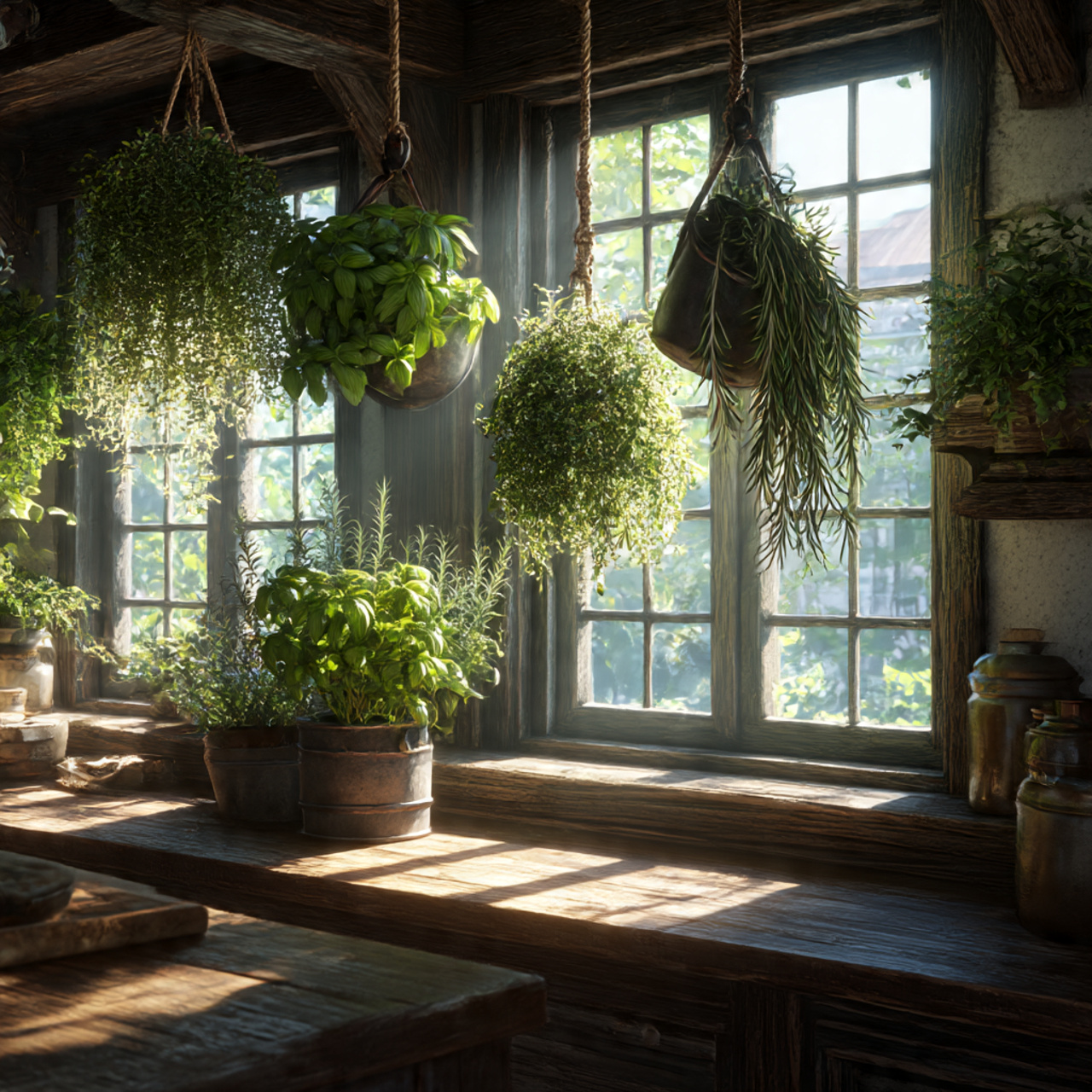
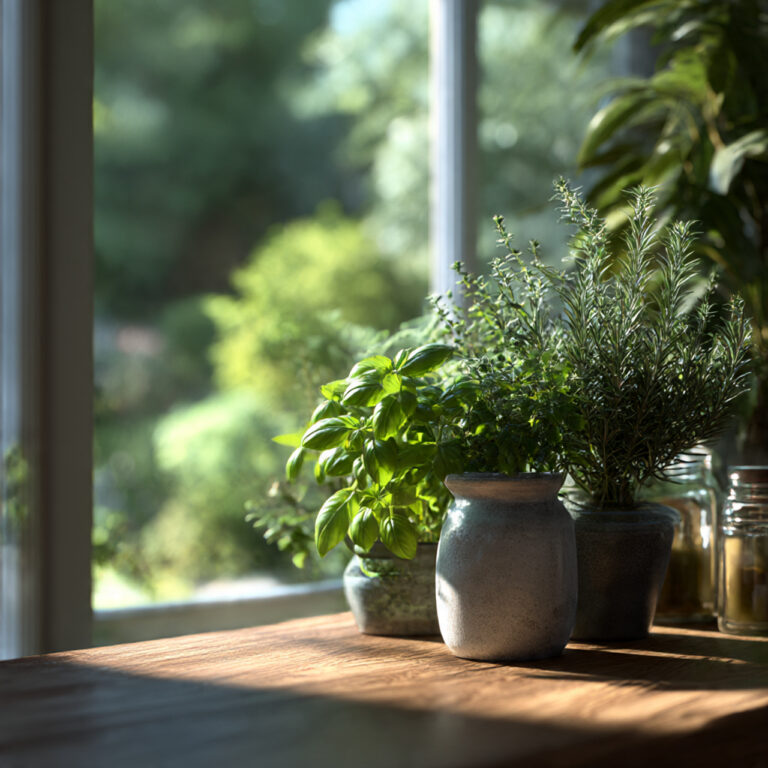
Why trek to the grocery store for fresh herbs when you can literally reach up and snip what you need? Hanging herb gardens in the kitchen combine beauty with serious practicality.
Kitchen Herbs That Thrive When Hanging:
- Basil—for fresh caprese salads and pasta perfection
- Rosemary—woody, fragrant, and gorgeous when cascading
- Mint—vigorous grower that actually benefits from being contained
- Thyme—delicate trails that look beautiful and taste amazing
Practical Benefits:
- Save precious counter space in smaller kitchens
- Year-round access to fresh flavors (no more sad, wilted store-bought herbs)
- Natural fragrance that makes your kitchen smell incredible
- Living décor that’s actually useful
Setup Success:
- Hang near sunny windows (south-facing is ideal)
- Use self-watering containers to make maintenance easier
- Repurpose mason jars or vintage containers for a charming, sustainable look
- Group multiple herbs together for a mini hanging garden effect
There’s something deeply satisfying about cooking with herbs you’ve grown yourself—even if “growing” just means watering them occasionally while they hang in your kitchen.
Low-Light Hanging Plants
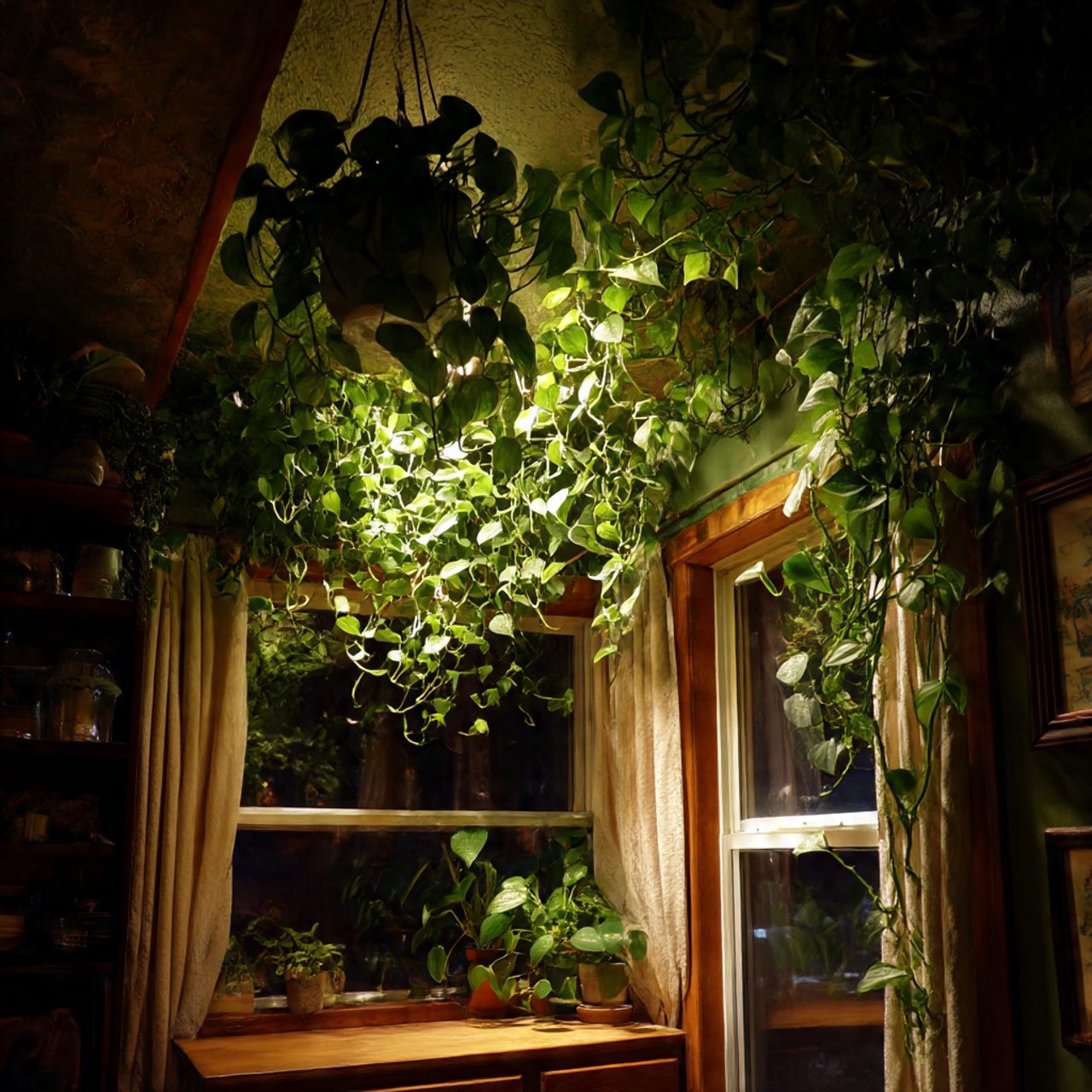
Not every room is blessed with abundant sunshine, but that doesn’t mean you can’t have thriving hanging plants. Some varieties actually prefer shadier spots and will happily green up those darker corners.
Champions of Low-Light Spaces:
- Philodendrons—trail beautifully even in dim conditions
- Heartleaf hoyas—glossy leaves that catch whatever light is available
- Pothos—the ultimate survivor that adapts to almost anything
- Snake plants (in hanging varieties)—nearly indestructible
Ideal Locations:
- Home offices with limited natural light
- Interior bathrooms without windows
- Hallways and entryways
- North-facing rooms that get indirect light
Care Tips:
- Rotate plants every few weeks so all sides get equal light exposure
- Use light-colored walls or mirrors to reflect and amplify available light
- Don’t overwater—low light means slower growth and less water consumption
- Be patient—they’ll grow more slowly than their sun-loving cousins, but they will grow
These plants are incredibly forgiving, making them perfect for beginners or anyone who wants greenery without the fuss.
Air-Purifying Hanging Plants
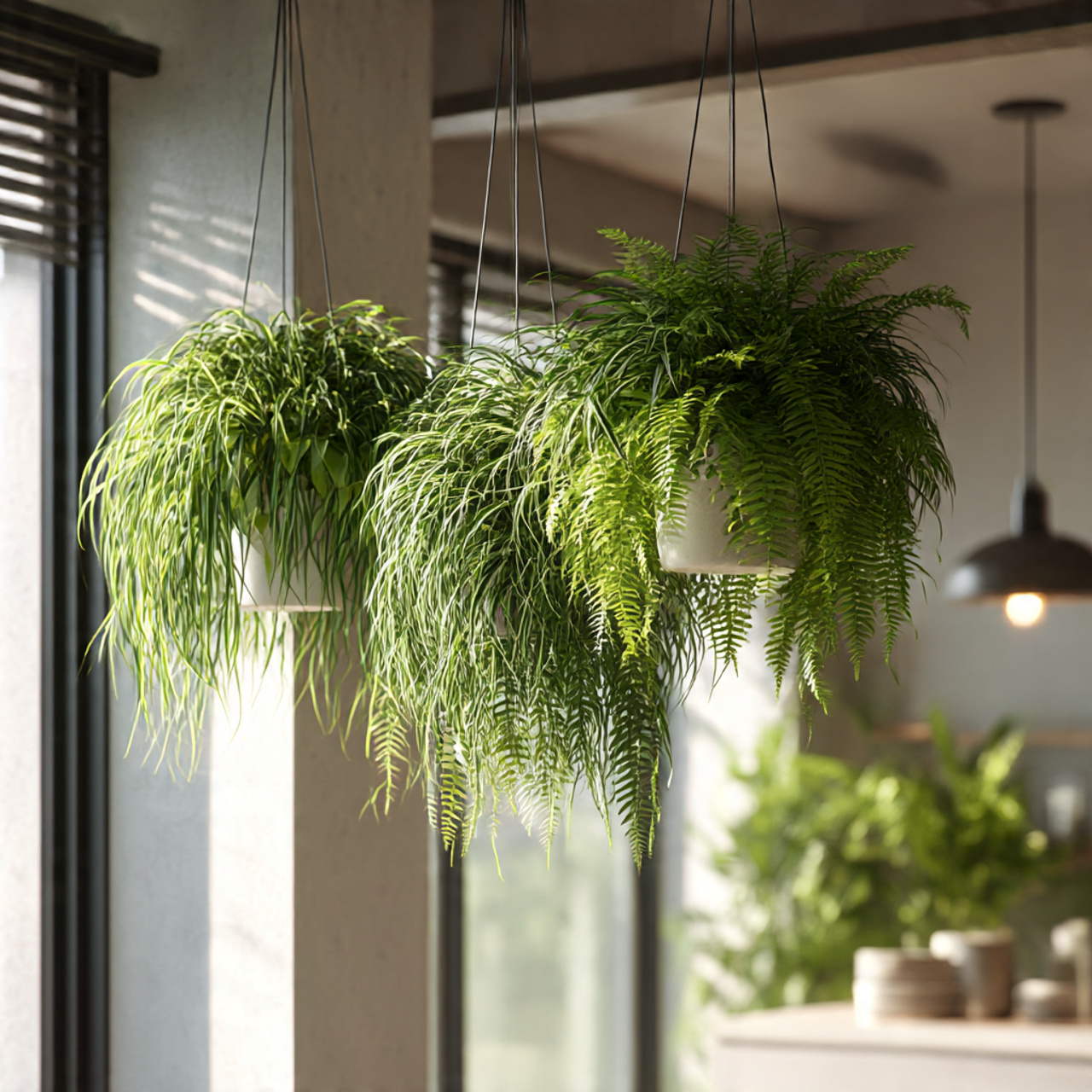
Want cleaner air and beautiful décor? Air-purifying hanging plants give you both. They work quietly in the background, filtering out toxins and pumping out oxygen while looking absolutely stunning.
Top Air-Purifying Performers:
- Spider plants—remove formaldehyde and xylene
- Boston ferns—excellent humidity regulators and air filters
- Peace lilies (when hung)—tackle ammonia, benzene, and formaldehyde
- English ivy—particularly effective against airborne mold
Strategic Placement for Maximum Effect:
- Position in areas with good airflow (near vents or open doorways)
- Distribute throughout your home rather than clustering in one room
- Place in bedrooms for better sleep quality
- Hang near areas where you spend the most time
Added Benefits:
- Regulate indoor humidity naturally (especially helpful in dry climates)
- Create healthier micro-environments in each room
- Reduce dust and allergens in the air
- Look beautiful while doing all this important work
The more air-purifying plants you have, the better—think of them as your silent, green wellness team.
Pet-Friendly Hanging Plants
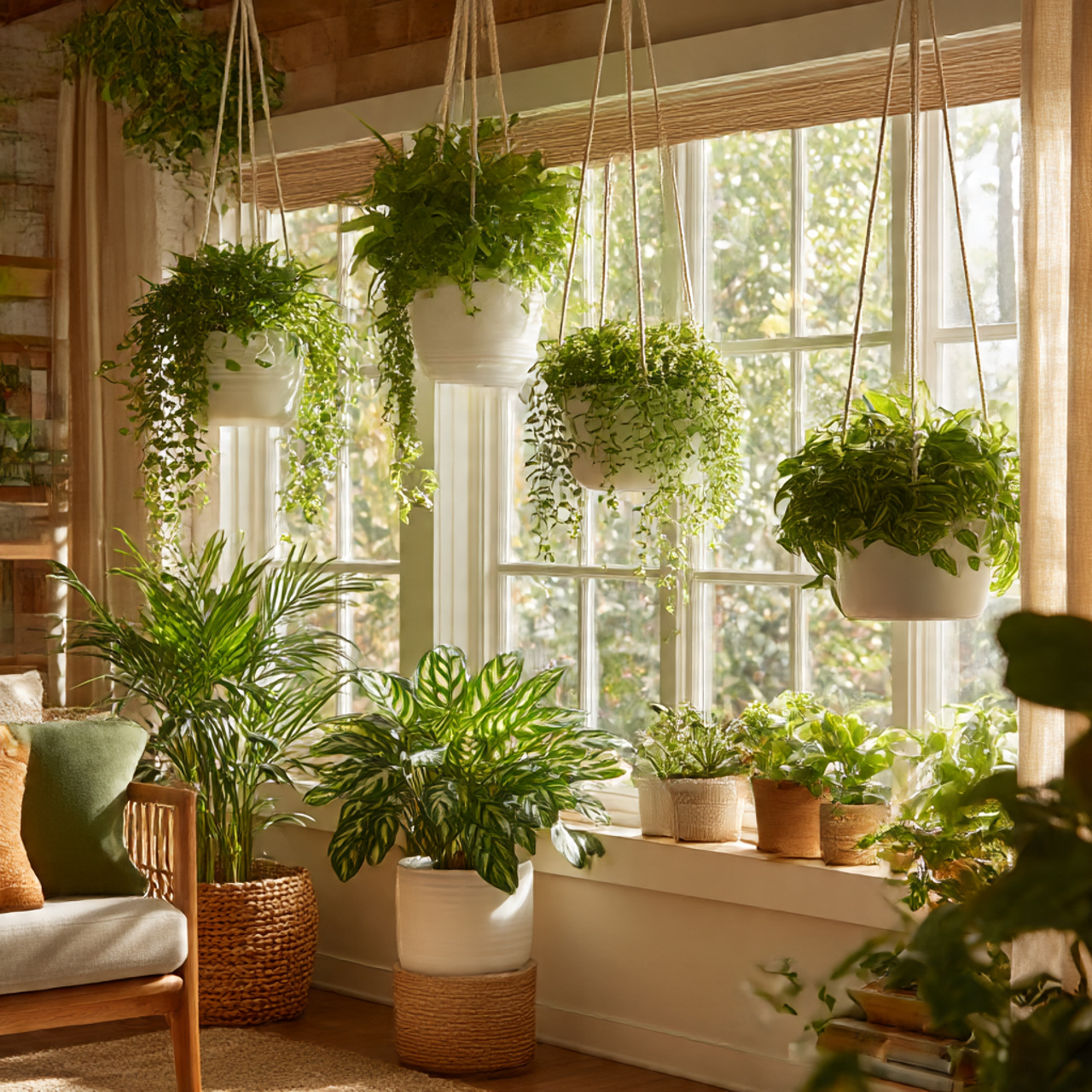
Love plants but worry about your curious cats or adventurous dogs? You can absolutely have both. Plenty of gorgeous hanging plants are completely non-toxic to pets.
Safe and Beautiful Options:
- Spider plants—safe and cats sometimes like nibbling them (it’s harmless)
- Areca palms—elegant, tropical, and totally pet-safe
- Calathea varieties—stunning patterns, zero toxicity
- Boston ferns—lush and forgiving if pets bat at them
Smart Safety Strategies:
- Hang high enough that pets can’t reach from furniture
- Choose sturdy hooks that won’t come down if a cat tries to climb
- Monitor new plants to see if pets show unusual interest
- Keep plants well-watered so leaves stay healthy and less tempting to chew
Bonus Tips:
- Many pet-safe plants are also resilient to occasional disturbances
- Hanging keeps soil out of reach (preventing messy digging)
- You get peace of mind knowing everyone in your household is safe
- No need to choose between your love of plants and your furry friends
Creating a pet-friendly hanging garden means everyone can coexist happily—plants, pets, and people alike.
Hanging Plants for Small Apartments
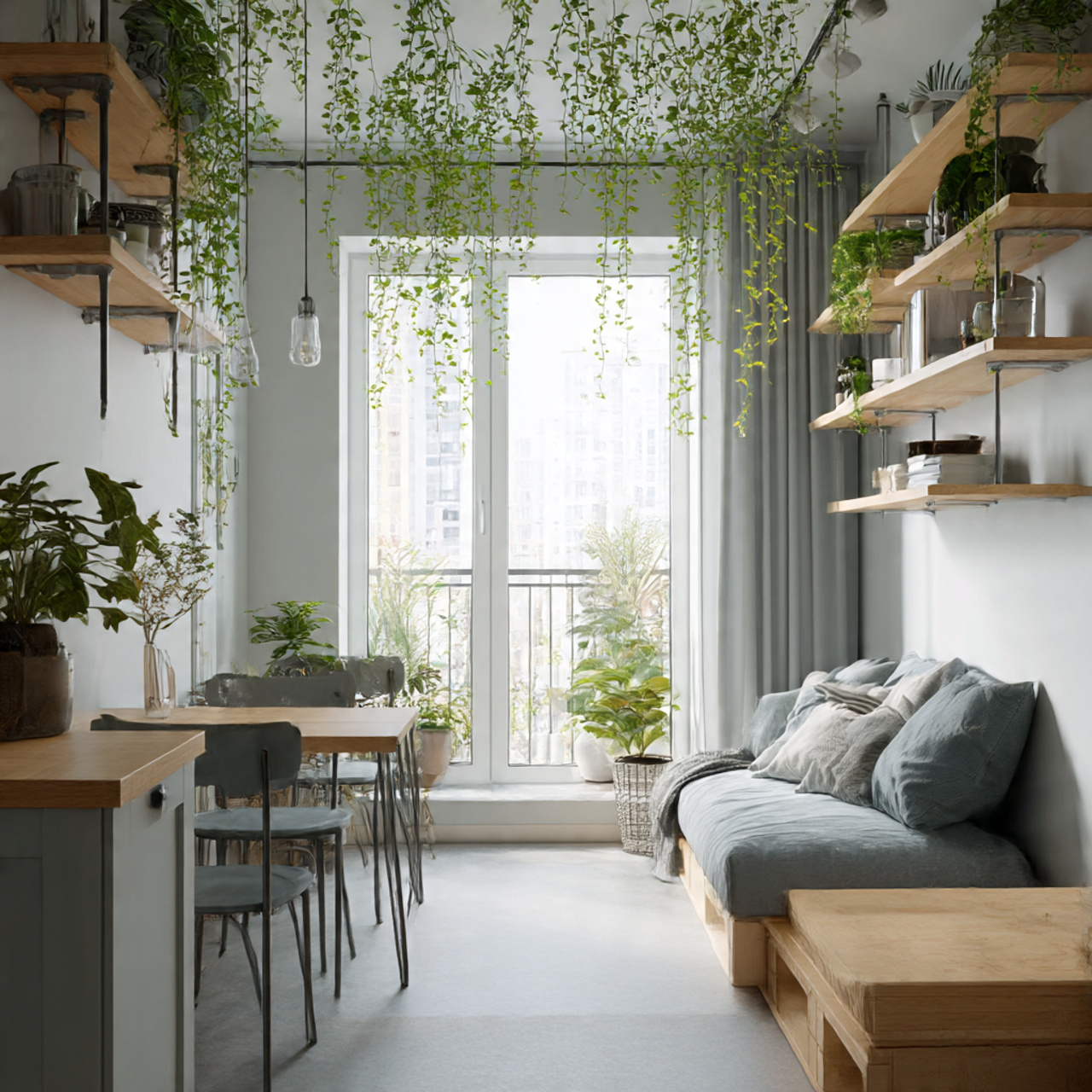
Small spaces actually benefit most from hanging plants. When you can’t expand outward, go upward. Vertical greenery completely transforms how spacious and alive a compact apartment feels.
Space-Maximizing Strategies:
- Utilize corners near ceilings that would otherwise stay empty
- Hang above furniture to add greenery without losing surface area
- Use adjustable hooks to create multi-level displays
- Choose compact varieties like small ferns, trailing succulents, or petite vines
Best Plants for Tight Spaces:
- String of pearls—delicate and doesn’t need much room
- Small pothos cuttings that will grow slowly
- Compact succulents in lightweight containers
- Air plants that need zero floor or counter space
Design Tricks:
- Hang near windows to maximize light without blocking it
- Use corner spaces where floor plants wouldn’t fit
- Create vertical interest that makes ceilings feel higher
- Choose light-colored pots to keep things feeling airy
Even a 400-square-foot studio can host six or seven hanging plants without feeling crowded. The key is thinking vertically and choosing the right scale.
Flowering Hanging Plants
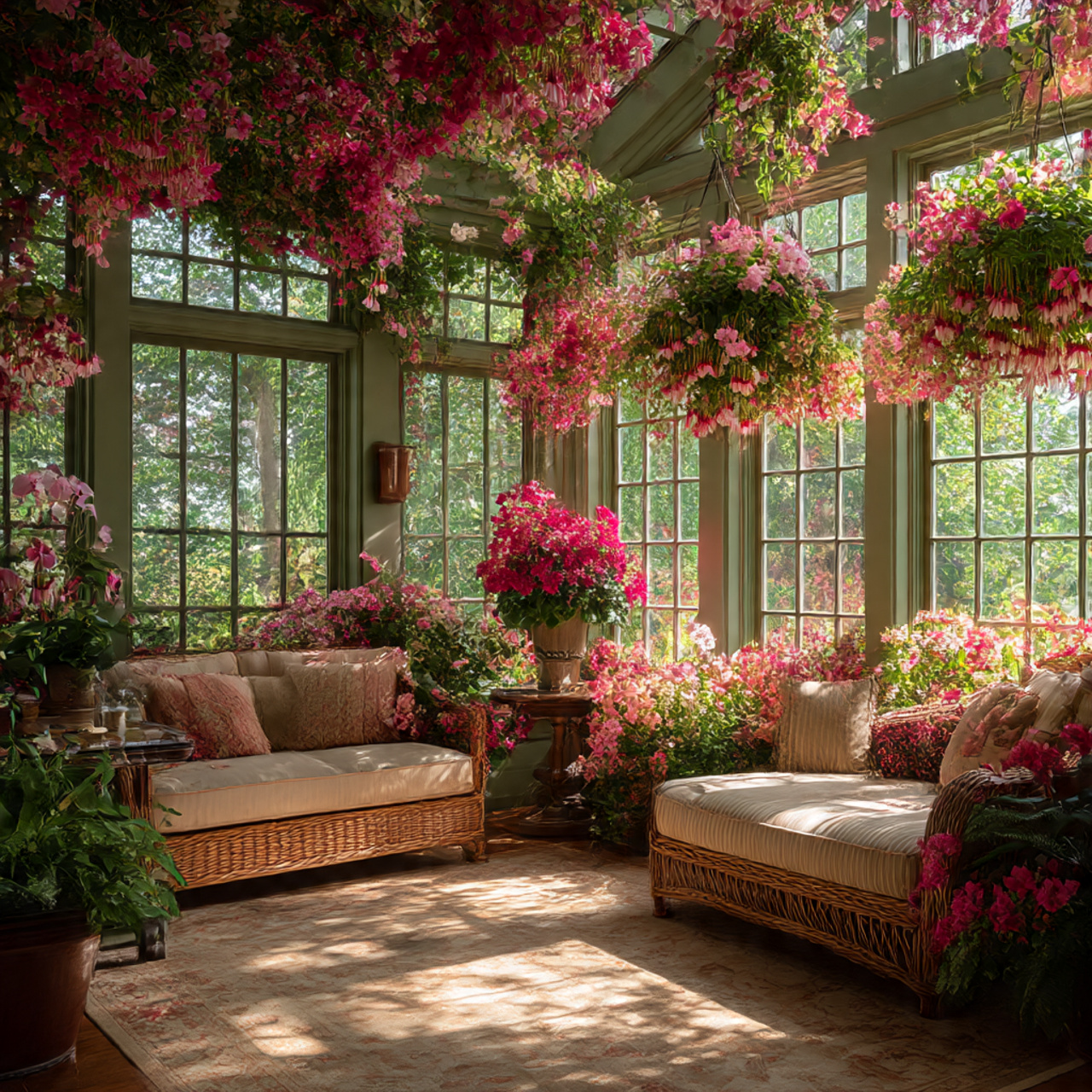
Why settle for green when you can have color bursting from above? Flowering hanging plants bring vibrant hues and subtle fragrances that transform any space into something special.
Stunning Flowering Varieties:
- Fuchsias—dramatic, pendulous blooms in bold colors
- Begonias—continuous blooms in reds, pinks, oranges, and whites
- Orchids—elegant and surprisingly adaptable to hanging displays
- Petunias—cheerful, prolific bloomers with amazing color range
Where They Shine:
- Sunrooms where they get plenty of bright, indirect light
- Covered balconies and porches with good airflow
- Near large windows that provide the light they crave
- As focal points in rooms that need a pop of color
Care Considerations:
- Choose long-blooming varieties for extended color displays
- Mix flowering plants with green foliage for contrast and balance
- Deadhead spent blooms regularly to encourage more flowers
- Provide adequate light—most flowering plants need more than foliage-only varieties
Flowering hanging plants don’t just beautify spaces—they lift moods with their colors and scents, creating little moments of joy every time you glance up.
Tropical Hanging Plants
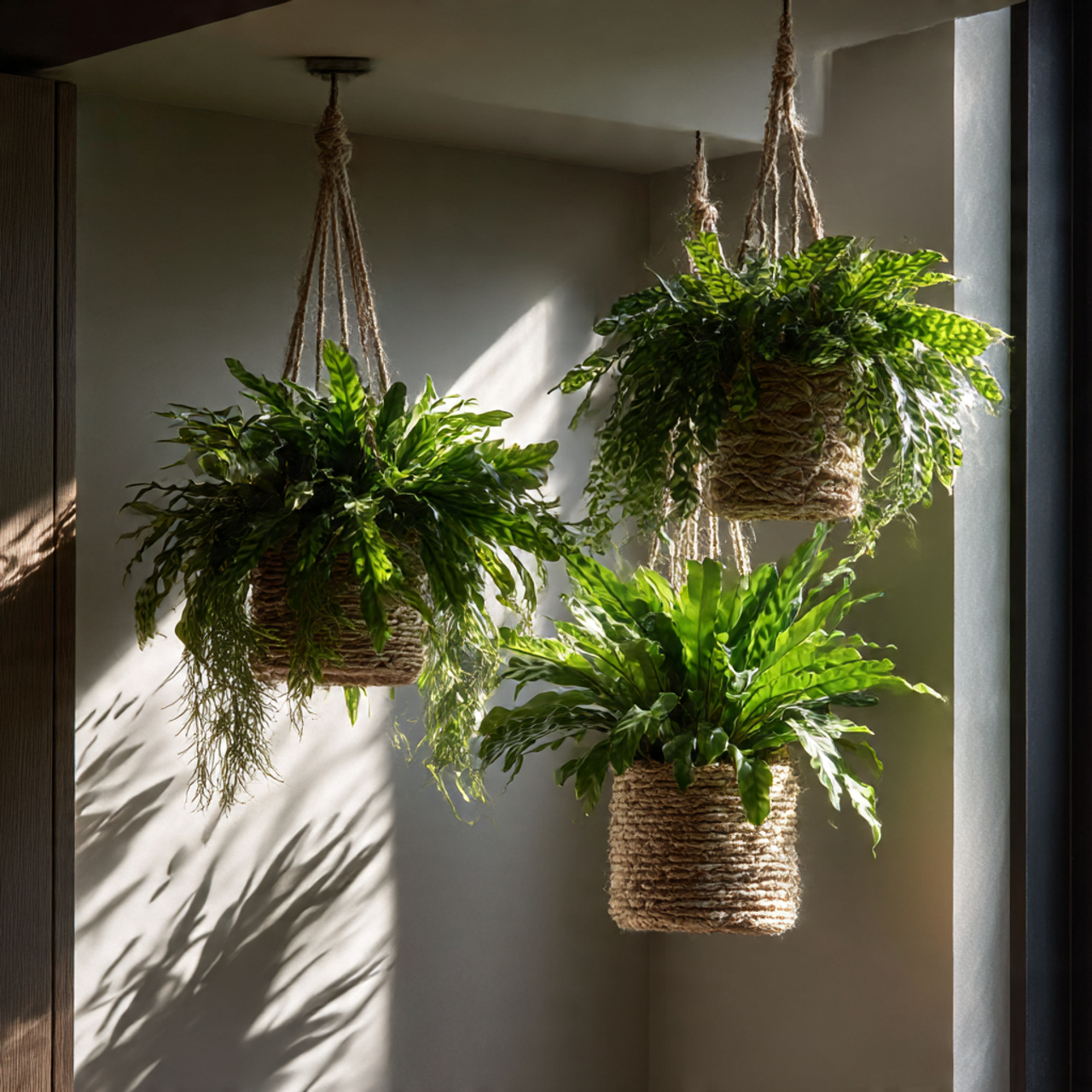
Want to feel like you’re on vacation every day? Tropical hanging plants bring that lush, exotic rainforest vibe straight into your home.
Exotic Beauties to Try:
- Staghorn ferns—dramatic, architectural statement pieces
- Calatheas—stunning leaf patterns that look hand-painted
- Bird’s nest ferns—broad, rippled leaves with serious visual impact
- String of hearts—delicate but distinctly tropical
Creating the Tropical Look:
- Layer plants at different heights for a canopy effect
- Choose varieties with large, bold leaves for maximum drama
- Pair with natural materials like bamboo, rattan, or wood
- Group several together to create that dense, jungle feeling
Ideal Locations:
- Bathrooms where humidity naturally runs higher
- Kitchens near sinks where steam provides moisture
- Any room where you can maintain humidity levels
- Spaces with bright, indirect light (like their native habitats)
Styling Tips:
- Mix different leaf sizes and textures for visual interest
- Use decorative pots that enhance the tropical aesthetic
- Add a small humidifier nearby if your climate is dry
- Mist regularly to recreate their natural environment
Tropical hanging plants transform ordinary rooms into exotic retreats where you can almost hear the sound of distant waterfalls.
Hanging Plants for Feng Shui
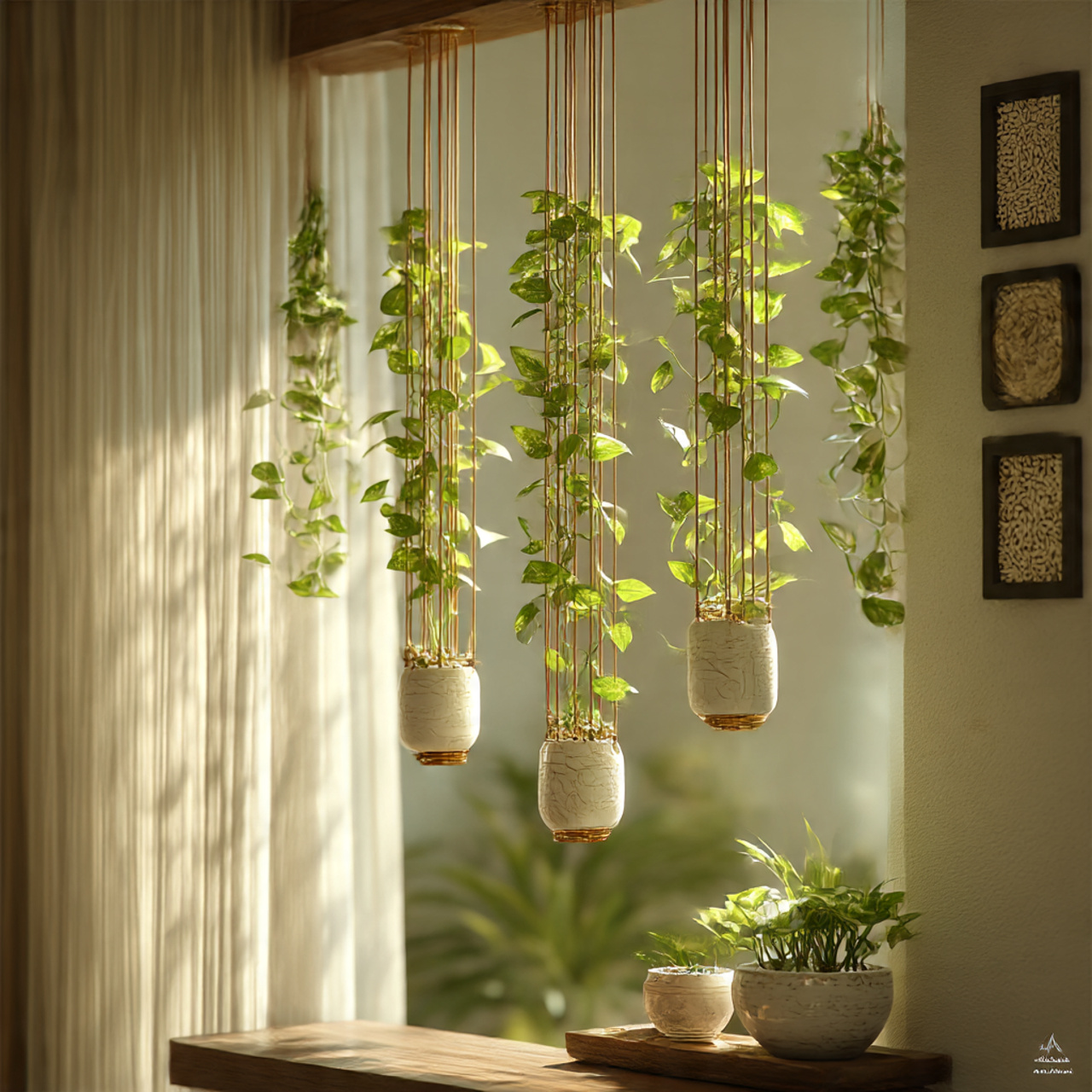
In Feng Shui practice, hanging plants aren’t just decorative—they’re powerful tools for creating positive energy flow throughout your space.
Feng Shui Favorites:
- Money plants—symbolize abundance and prosperity
- Lucky bamboo—represents strength and growth
- Trailing vines—flowing growth encourages energy movement
- Round-leafed plants—soften sharp corners and harsh energy
Strategic Placement Principles:
- Near windows or entryways to guide beneficial energy (chi) inside
- In corners to soften sharp angles and prevent stagnant energy
- At different heights to create balanced energy flow
- In areas where you want to encourage growth or abundance
Energy Benefits:
- Cascading growth symbolizes the flow of abundance
- Living plants bring vital energy into spaces
- Greenery creates harmony and balance
- Natural elements ground and calm busy environments
Mindful Considerations:
- Avoid spiky or aggressive plants in areas meant for relaxation
- Keep plants healthy—dead leaves represent stagnant energy
- Choose odd numbers of plants (3, 5, 7) for better balance
- Position thoughtfully rather than randomly
Combining beautiful aesthetics with mindful placement makes hanging plants both decorative and spiritually enriching additions to your home.
Rare Hanging Plants
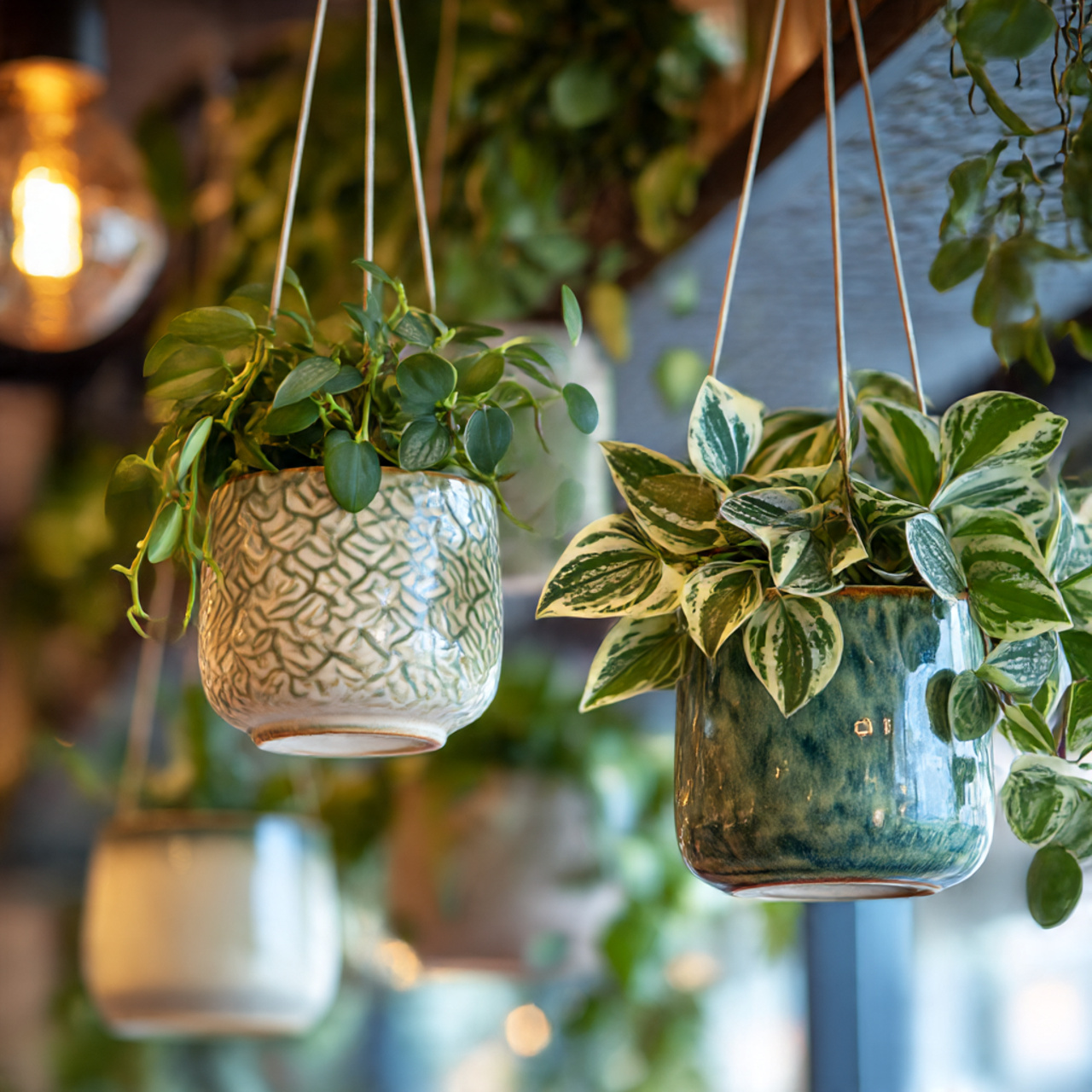
For collectors and enthusiasts, rare hanging plants offer that special something—the thrill of owning something unusual while creating jaw-dropping focal points.
Coveted Rare Varieties:
- String of dolphins—adorable dolphin-shaped leaves that make everyone smile
- Variegated hoyas—stunning cream and green patterns
- Exotic ferns with unusual frond shapes
- Rare trailing philodendron varieties
What Makes Them Special:
- Unique shapes and patterns you won’t see everywhere
- Conversation starters that guests always ask about
- Sophisticated additions to serious plant collections
- Investment pieces that often appreciate in value
Display Considerations:
- Use elegant pots or baskets that match their special status
- Give them prominent placement where they’ll be noticed and appreciated
- Provide optimal care since they’re often more particular than common varieties
- Document their growth—rare plants deserve the attention
Where to Find Them:
- Specialty plant nurseries and collectors
- Online plant communities and trading groups
- Botanical sales and plant shows
- Reputable online retailers specializing in rare specimens
Rare hanging plants elevate your collection from nice to extraordinary, adding diversity and sophistication that true plant lovers appreciate.
Trailing Flowering Hanging Plants
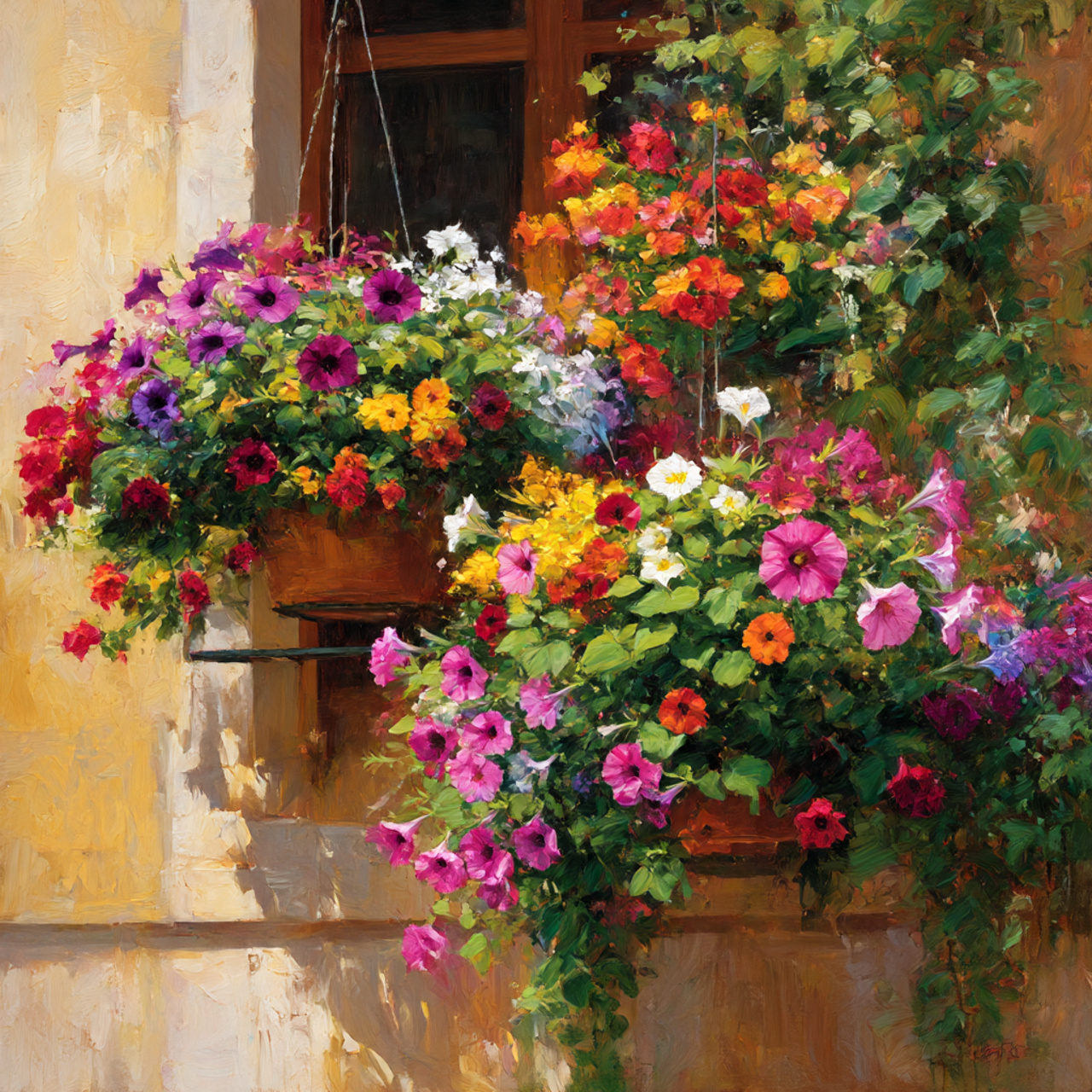
Combine the drama of trailing vines with the joy of colorful blooms, and you get trailing flowering plants—the showstoppers of the hanging plant world.
Vibrant Options:
- Petunias—waves of color in seemingly endless varieties
- Fuchsias—distinctive, pendulous blooms that dangle gracefully
- Nasturtiums—edible flowers with peppery leaves (double duty!)
- Trailing verbena—clusters of tiny flowers creating cascading clouds of color
Perfect Locations:
- Covered porches where they get protection from harsh elements
- Sunny balconies with good airflow
- Sunrooms that provide abundant light
- Anywhere you want to create a focal point of flowing color
Creative Combinations:
- Mix complementary colors for harmonious displays
- Contrast bold blooms with delicate foliage
- Layer different bloom times for season-long color
- Combine with green trailing vines for textural interest
Seasonal Refresh:
- Rotate varieties with the seasons for ever-changing displays
- Replace spent plants with new bloomers to keep things fresh
- Experiment with different color schemes each season
- Use seasonal blooms to reflect holidays or celebrations
These plants encourage creativity and give you living, evolving displays that change and grow throughout the year.
Hanging Cacti
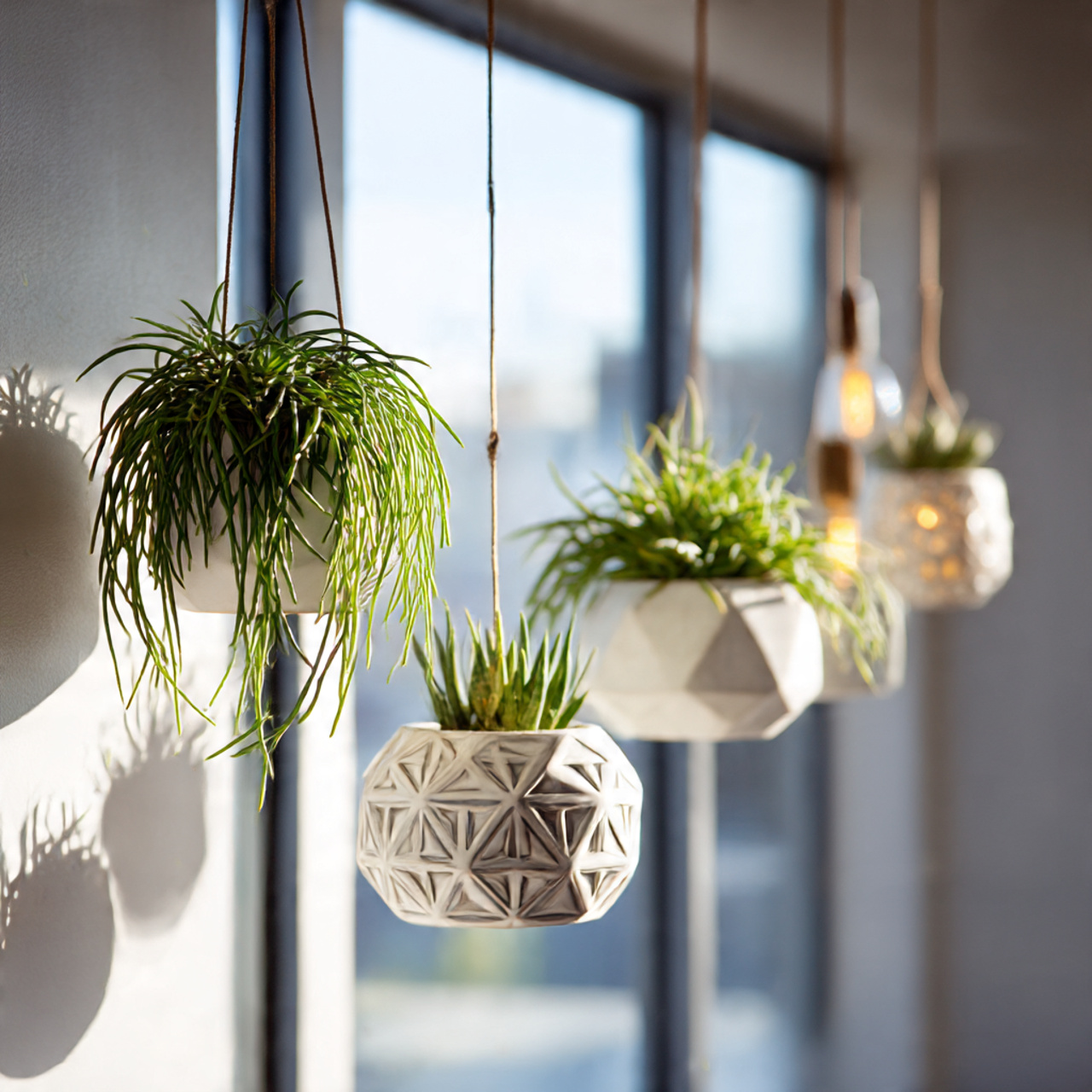
Who says cacti belong only in pots on windowsills? Hanging cacti bring desert-inspired sculptural beauty to vertical spaces with a distinctly modern edge.
Unusual Hanging Varieties:
- Rhipsalis—cascading stems that look almost like sea coral
- Epiphytic cacti—naturally grow hanging from trees in the wild
- Rat tail cactus—long, trailing stems covered in soft spines
- Christmas cactus—technically a cactus, blooms spectacularly
Why They’re Wonderful:
- Extremely low-maintenance and drought-tolerant
- Architectural forms add modern, minimalist appeal
- Thrive in bright light where other plants might burn
- Unique textures that stand out from typical hanging plants
Design Ideas:
- Pair with trailing vines for desert-meets-jungle contrast
- Use in minimalist spaces where their structure makes a statement
- Mix with succulents for a cohesive drought-tolerant display
- Display in geometric holders that complement their angular forms
Care Basics:
- Water sparingly—these prefer to dry out completely between waterings
- Provide bright, direct light when possible
- Use well-draining soil or cactus mix
- Enjoy months of neglect-proof beauty
Hanging cacti prove that desert plants can be just as dramatic and design-worthy as their tropical cousins.
Hanging Air Plants
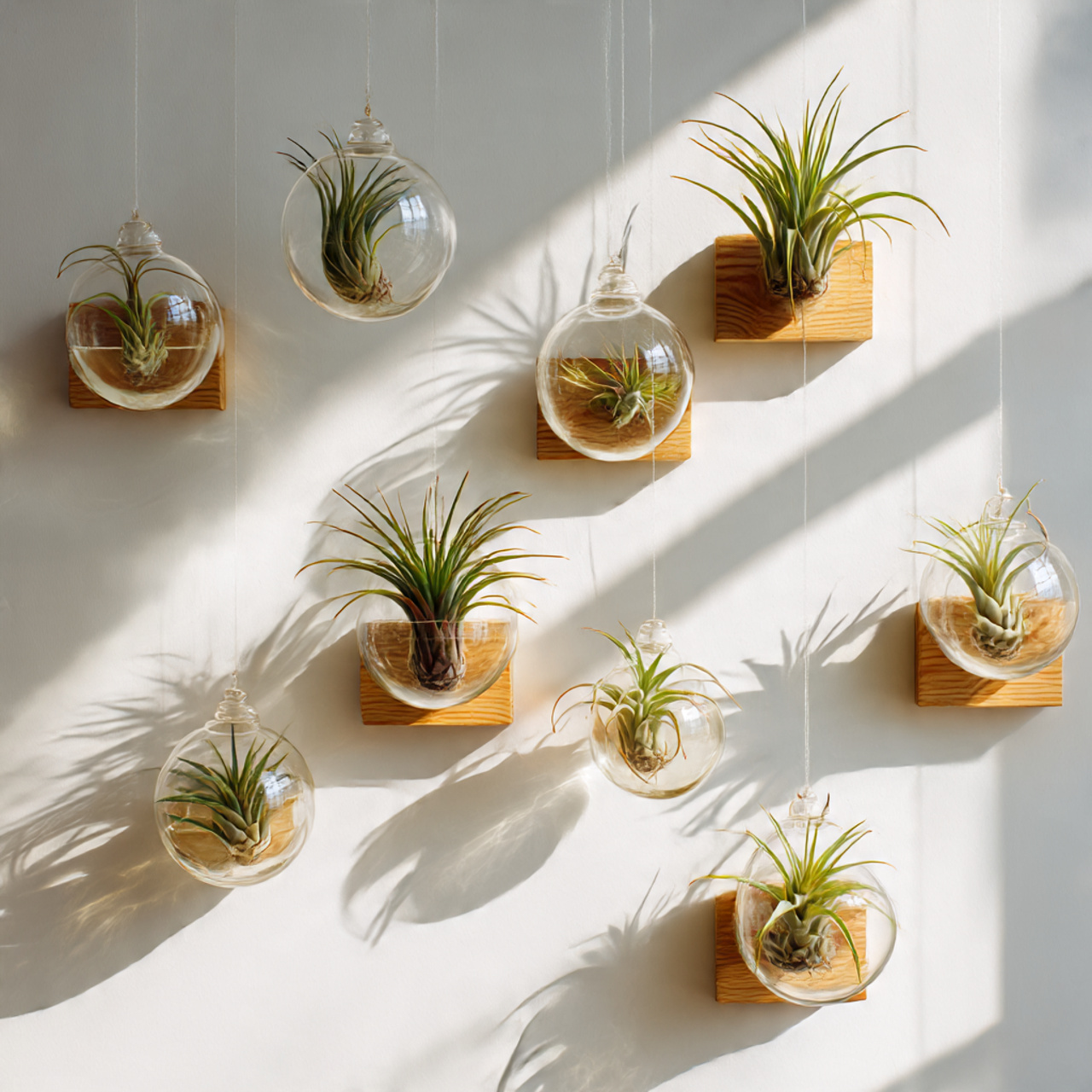
Air plants (tillandsias) are the rebels of the plant world—no soil needed, just air and occasional misting. This freedom opens up incredible creative possibilities.
What Makes Air Plants Unique:
- Zero soil requirements mean endless display options
- Survive by absorbing moisture and nutrients from the air
- Available in dozens of varieties with different colors and forms
- Perfect for artistic, unconventional displays
Creative Display Ideas:
- Suspend in glass globes or terrariums for floating effects
- Mount on driftwood or cork bark for natural looks
- Arrange in geometric metal frames for modern appeal
- Tuck into shells or stones for beachy vibes
Care Made Simple:
- Mist 2-3 times weekly or soak for 20 minutes weekly
- Provide bright, indirect light
- Ensure good air circulation (they’re called air plants for a reason!)
- Shake excess water off after soaking to prevent rot
Style Applications:
- Add whimsical touches to minimalist spaces
- Create science-fiction-inspired displays
- Bring nature into ultra-modern interiors where soil feels out of place
- Build living chandeliers or mobile art installations
Air plants give you permission to get wildly creative with your hanging displays in ways traditional plants never could.
Hanging Ferns
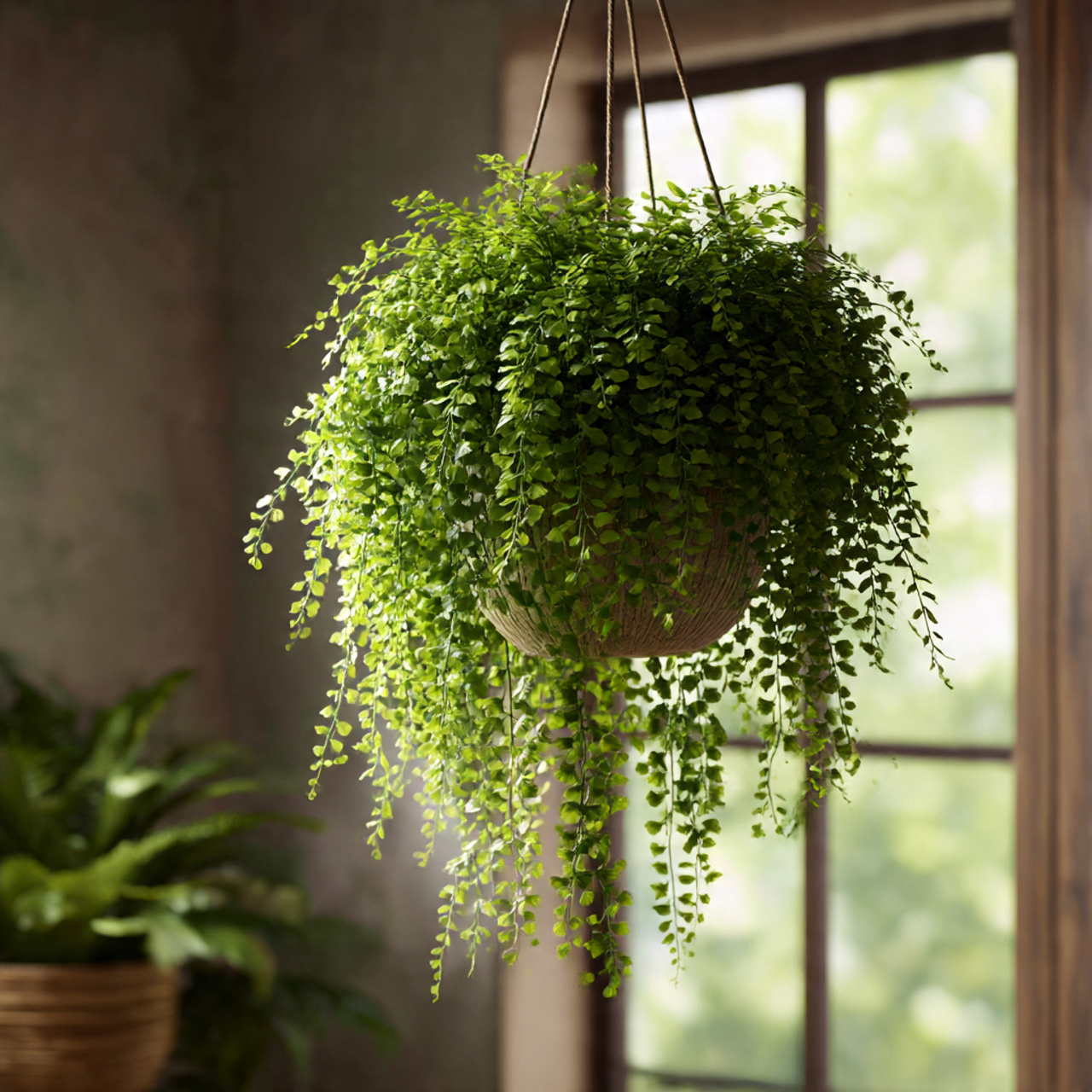
Few plants bring that lush, classical elegance quite like ferns. Their delicate fronds have been gracing homes for generations, and for good reason.
Beautiful Fern Varieties:
- Boston fern—the classic choice with gracefully arching fronds
- Maidenhair fern—delicate, fairy-like leaves on thin black stems
- Rabbit’s foot fern—fuzzy rhizomes that spill over pot edges
- Staghorn fern—dramatic, architectural statement piece
Why Ferns Work So Well:
- Soften hard edges and modern interiors
- Add movement as fronds sway in gentle breezes
- Thrive in humidity, making them bathroom champions
- Create that coveted rainforest atmosphere
Ideal Conditions:
- Indirect light (direct sun burns delicate fronds)
- High humidity environments
- Consistent moisture—they don’t like drying out completely
- Cool to moderate temperatures
Styling Strategies:
- Layer multiple ferns at different heights for cascading effects
- Pair with tropical plants for jungle vibes
- Use in vintage or antique-style containers for classical appeal
- Hang in bathrooms where they’ll thrive in steam and humidity
Ferns bring timeless beauty that works in both traditional and contemporary spaces, proving some classics never go out of style.
Multi-Level Hanging Plant Displays
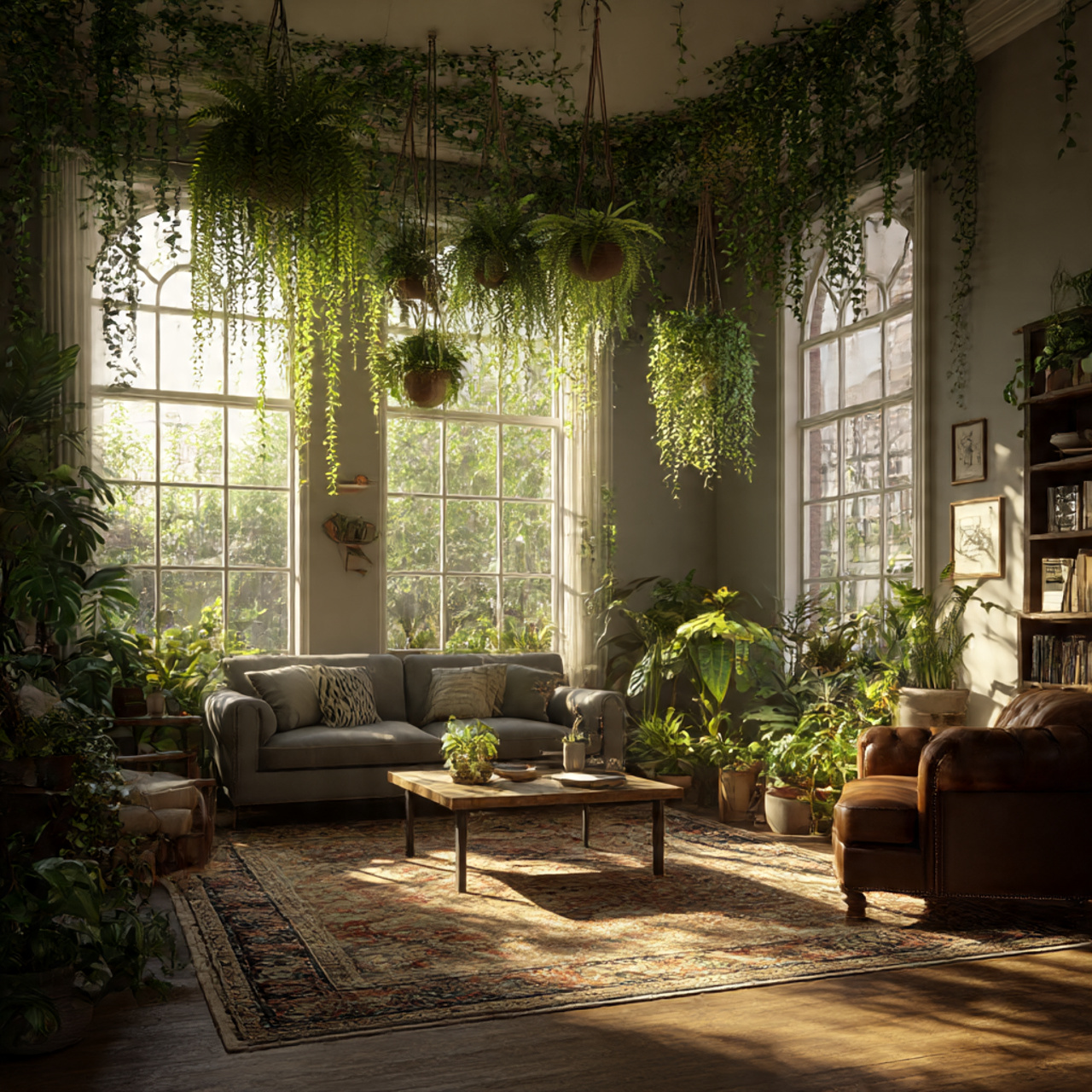
Why have one hanging plant when you can create an entire vertical garden? Multi-level displays maximize your space while creating dramatic visual impact.
Creating Layers:
- Install hooks at varying heights along walls or from ceilings
- Stagger plants so each gets adequate light and visibility
- Mix tall and short varieties for dynamic composition
- Use different pot sizes and styles for visual interest
Design Benefits:
- Transform blank walls into living artwork
- Make high ceilings feel purposeful and less cavernous
- Create natural room dividers without blocking light
- Maximize greenery in minimal floor space
Plant Combinations:
- Top level: Light-loving, trailing vines
- Middle level: Medium-light plants with interesting foliage
- Lower level: Shade-tolerant varieties that don’t mind less light
- Mix textures, colors, and growth patterns for complexity
Best Locations:
- Open living areas with high ceilings
- Hallways that need vertical interest
- Sunrooms with abundant natural light
- Entryways that make bold first impressions
Multi-level displays turn hanging plants from simple accents into major design statements that completely transform how a room feels.
Indoor Hanging Palm Plants
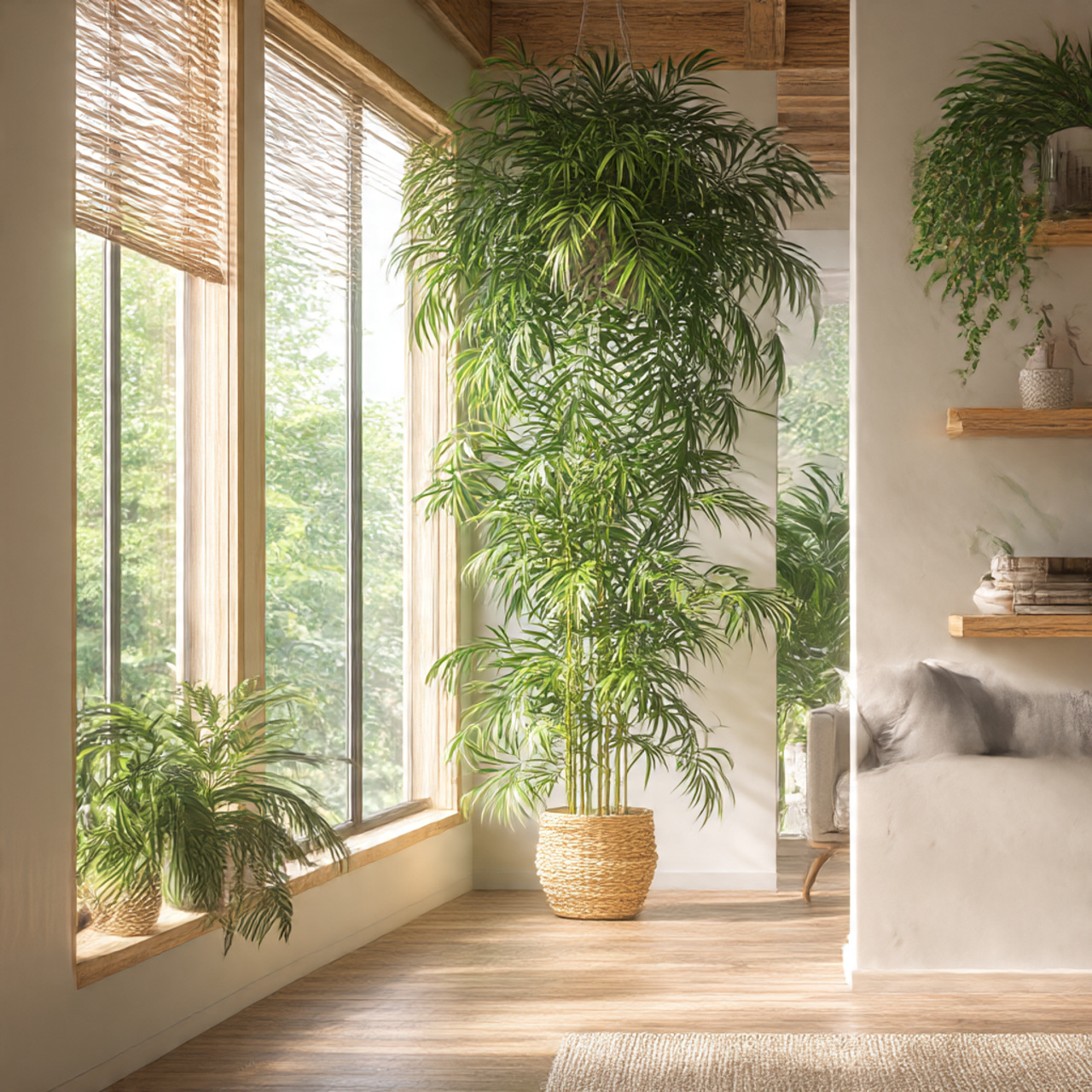
Palms bring instant tropical elegance and that resort-like feeling we all crave. When hung, they create graceful movement and sophisticated height.
Beautiful Hanging Palm Options:
- Parlor palm—compact, elegant, and low-maintenance
- Bamboo palm—delicate fronds that sway beautifully
- Ponytail palm—actually not a true palm, but stunning when hanging
- Areca palm (young plants)—feathery, arching fronds
Design Impact:
- Create movement as fronds sway with air currents
- Add architectural interest to modern spaces
- Soften hard lines of contemporary furniture
- Improve air quality while looking sophisticated
Styling Tips:
- Pair with trailing vines for layered tropical effects
- Use in minimalist spaces where their structure makes a statement
- Choose sleek, modern containers to complement their elegance
- Position where their silhouettes can be appreciated
Ideal Spaces:
- Modern living rooms with high ceilings
- Entryways that need welcoming greenery
- Lofts and open-plan areas
- Home offices for a calming, professional atmosphere
Indoor hanging palms bring understated luxury that elevates any space from ordinary to extraordinary.
Hanging Ivy Plants
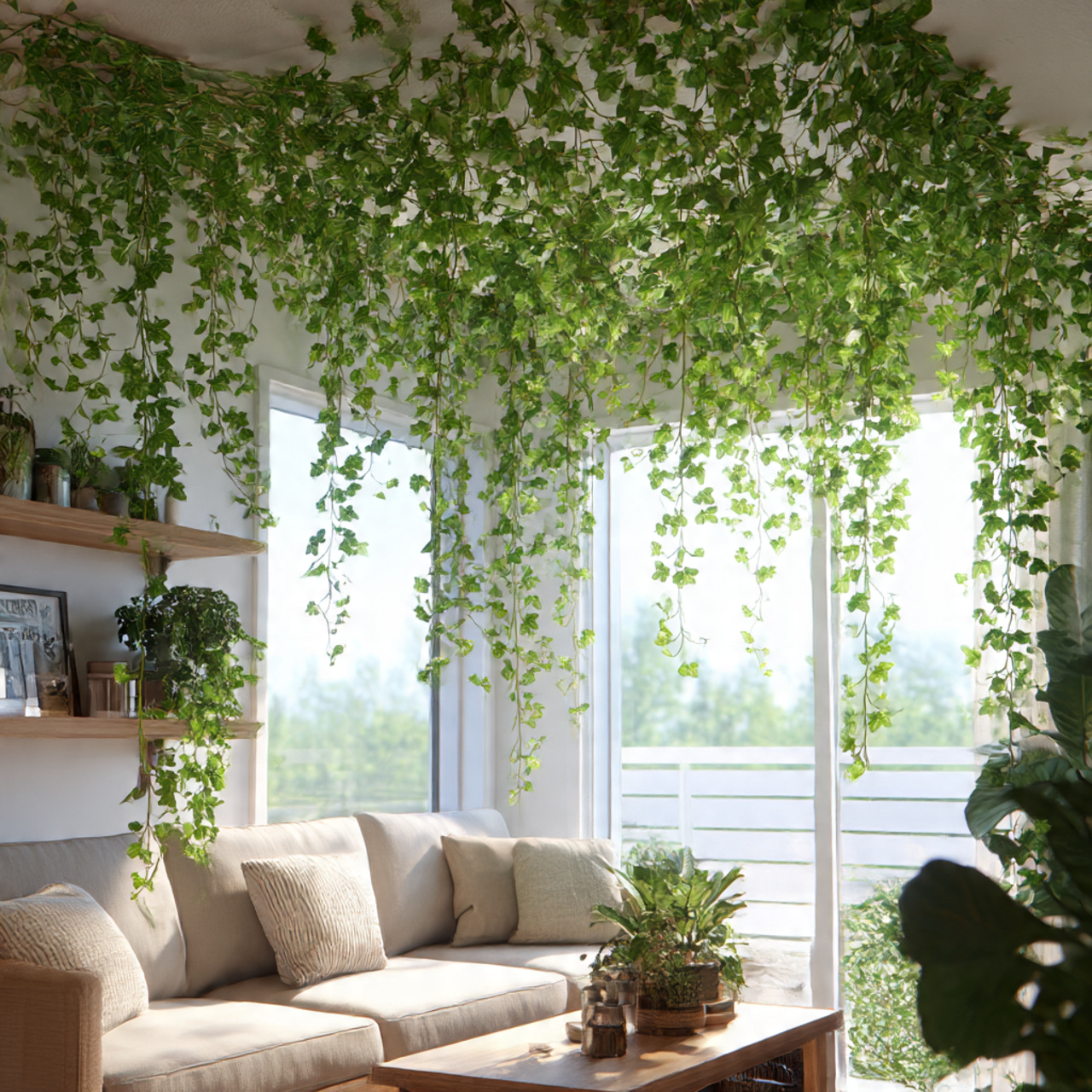
Ivy creates those romantic, flowing cascades that feel both classical and fresh. English ivy and Algerian ivy varieties bring timeless beauty indoors.
What Makes Ivy Special:
- Fast-growing vines that create lush displays quickly
- Adapts to various light conditions
- Traditional beauty that never goes out of style
- Versatile enough for any décor style
Perfect Placements:
- Window areas where tendrils can frame the view
- Bookshelves where they can trail down among books
- Balconies and covered outdoor spaces
- Anywhere you want soft, romantic greenery
Pairing Possibilities:
- Combine with flowering plants for color contrast
- Mix with ferns for varied textures
- Layer with succulents for eclectic interest
- Use solo for clean, classical simplicity
Care Considerations:
- Prefers moderate to bright indirect light
- Keep soil evenly moist but not waterlogged
- Trim regularly to encourage bushier growth
- Watch for pests (ivy can attract spider mites)
Ivy brings that English garden romance indoors, softening spaces with cascading greenery that feels both fresh and timeless.
Hanging Plants in Bathrooms
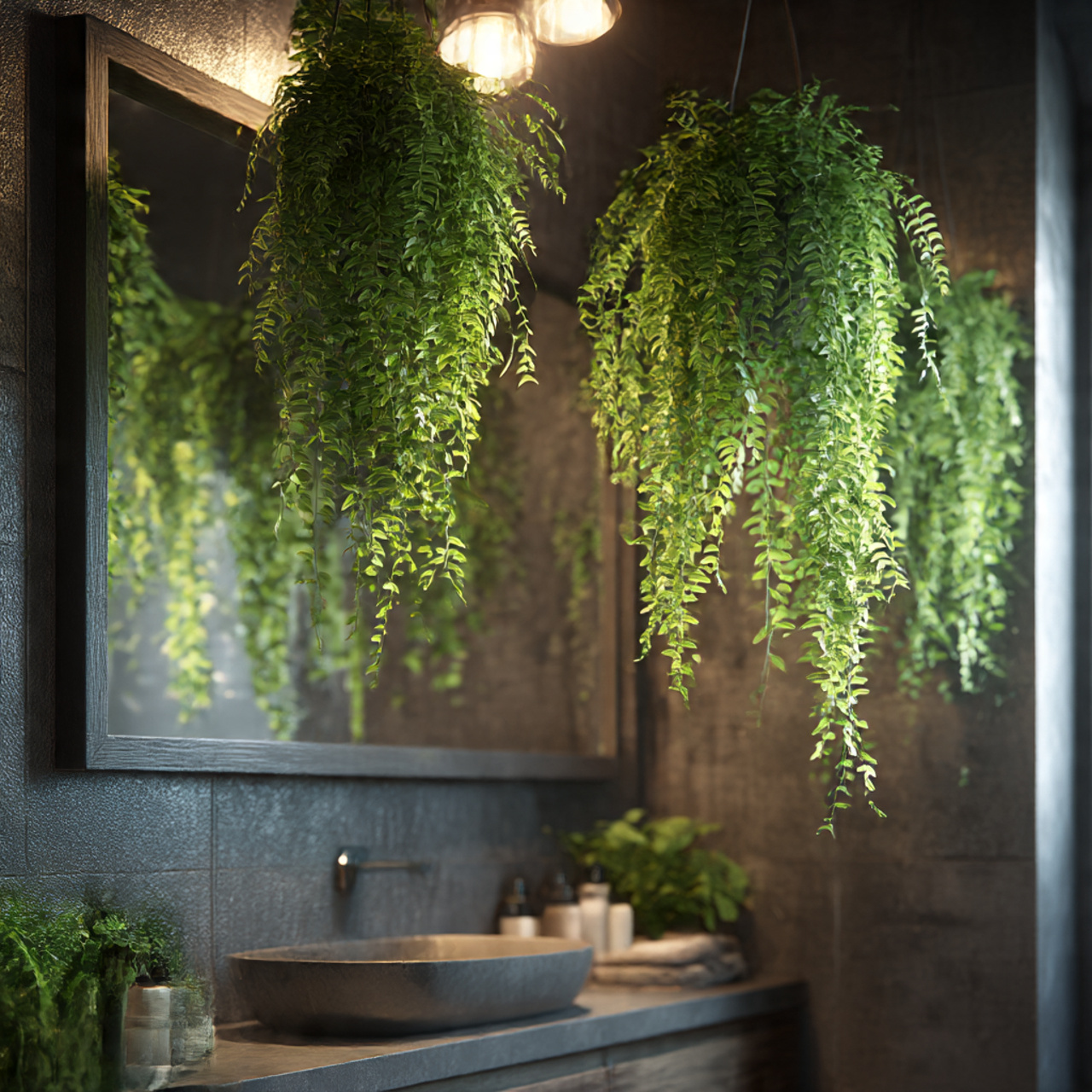
Your bathroom might just be the perfect environment for certain hanging plants—the humidity from showers creates a mini tropical paradise.
Bathroom-Loving Plants:
- Ferns—absolutely thrive in steamy conditions
- Pothos—tolerant and nearly indestructible
- Spider plants—love humidity and purify air
- Orchids—appreciate bathroom humidity for blooming
Why Bathrooms Work:
- Natural humidity from showers and baths
- Often have bright, indirect light from windows
- Vertical space is usually underutilized
- Plants create instant spa-like atmosphere
Strategic Placement:
- Near (but not directly in) shower spray
- Hanging from windows for light and humidity balance
- Above mirrors to soften reflections
- From ceiling corners to maximize space
Added Benefits:
- Reduce mold by absorbing excess moisture
- Purify air in an often-overlooked space
- Transform functional rooms into relaxing retreats
- Add organic softness to hard tile and fixtures
Bathroom hanging plants turn your daily routine into a mini spa experience while thriving in conditions that work perfectly for them.
Hanging Plants for Outdoor Patios
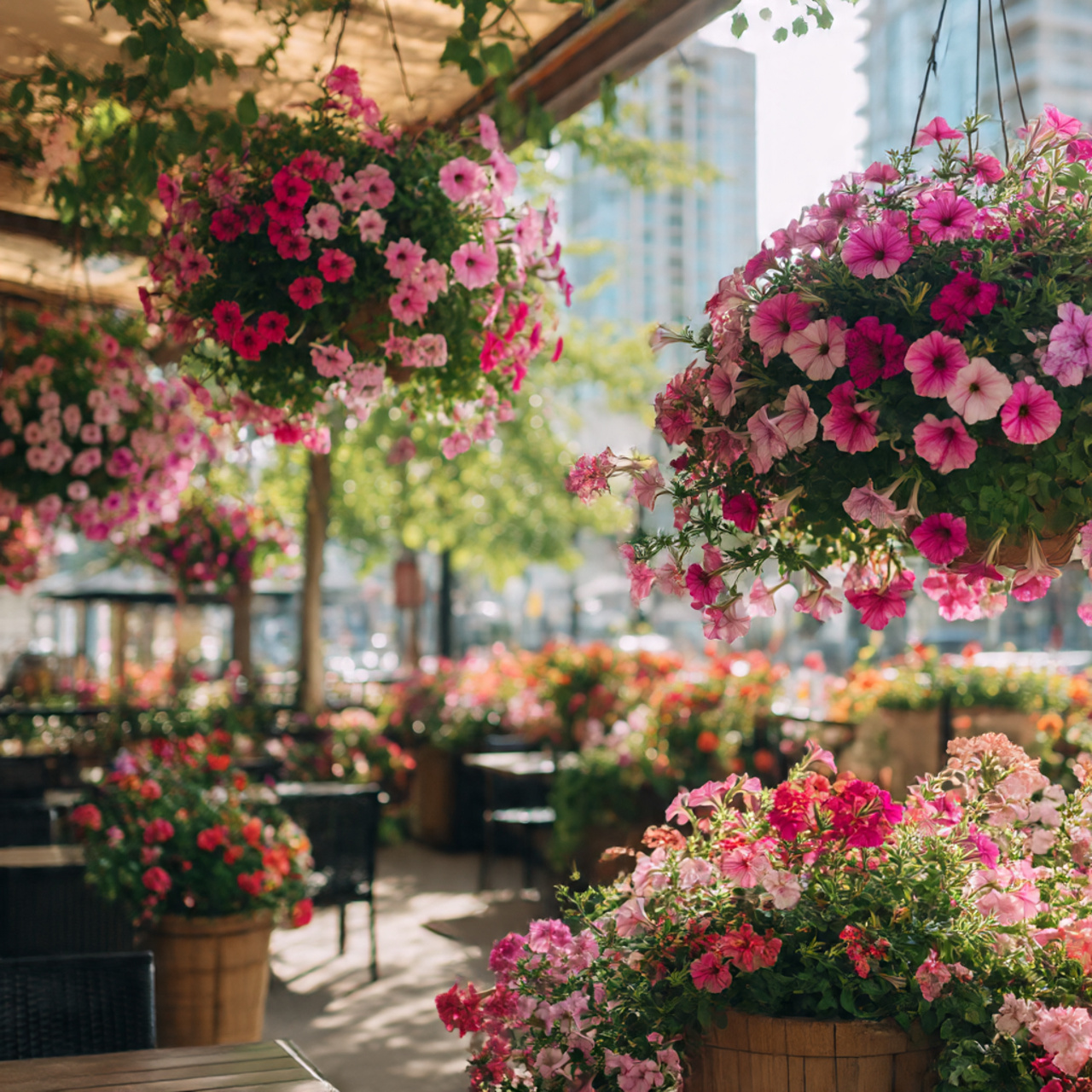
Take your hanging plant game outside, and suddenly your patio or balcony becomes an outdoor oasis wrapped in color and texture.
Outdoor Champions:
- Petunias—endless color options and prolific blooming
- Fuchsias—dramatic flowers that love partial shade
- Geraniums—classic, bold, and weather-resistant
- Trailing ivy—creates lush green waterfalls
Outdoor Advantages:
- Natural rainfall helps with watering
- Abundant sunlight encourages flowering and growth
- Air circulation prevents many common indoor plant problems
- Seasonal changes create evolving displays
Design Ideas:
- Hang multiple baskets at varying heights for dimension
- Mix flowering and foliage plants for texture
- Use along railings to create privacy screens
- Frame outdoor seating areas with flowing greenery
Seasonal Considerations:
- Rotate plants seasonally for year-round interest
- Bring tender varieties indoors before frost
- Choose weather-appropriate containers (drainage is crucial)
- Consider wind exposure when selecting locations
Outdoor hanging plants create living borders that define spaces while connecting your home to the natural world beyond.
Hanging Plants with Decorative Pots
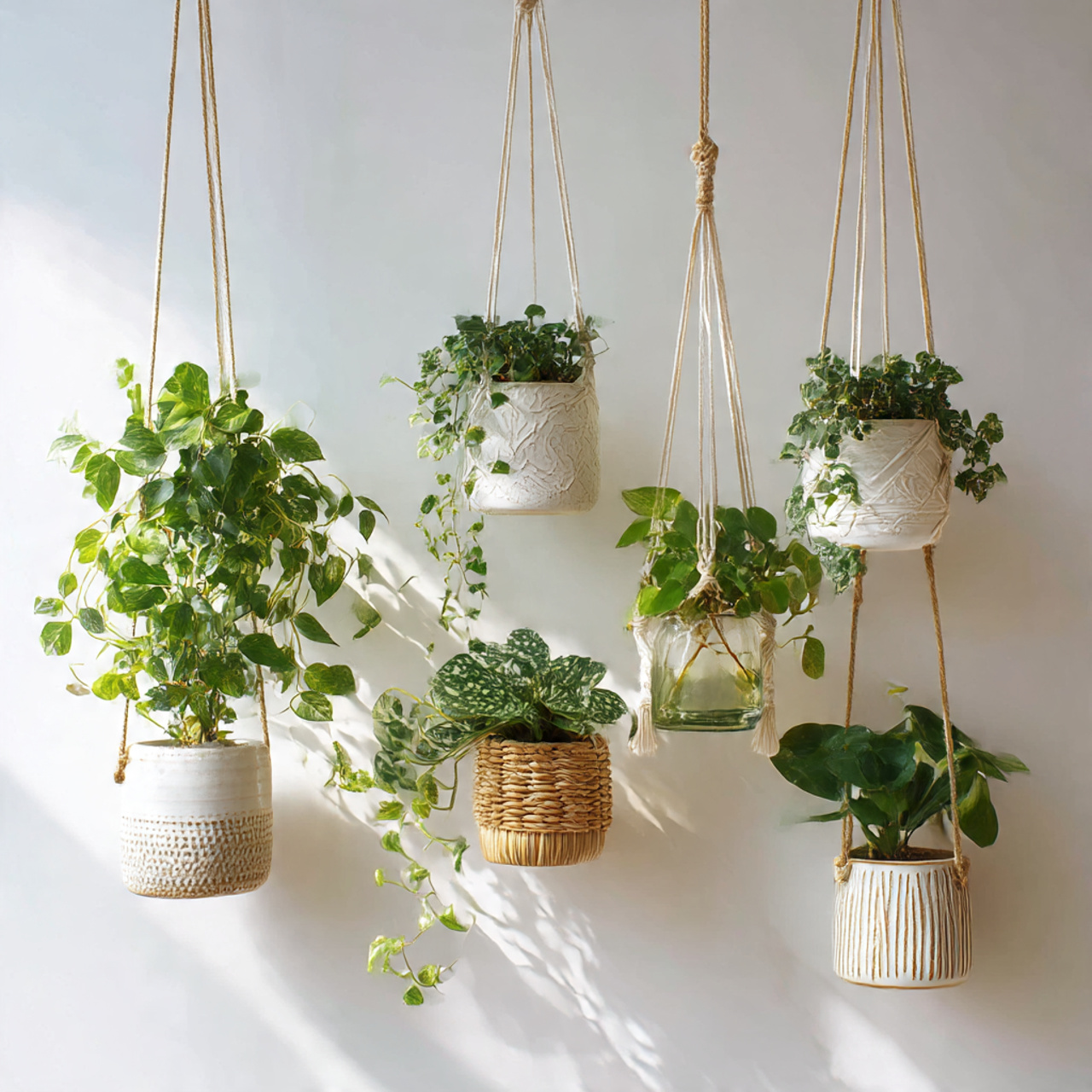
The container matters as much as the plant. The right pot transforms hanging greenery from nice to absolutely stunning.
Material Options:
- Ceramic—elegant, available in endless glazes and colors
- Wicker and rattan—natural, textural, bohemian appeal
- Glass terrariums—modern, showcase air plants beautifully
- Metal—industrial chic or vintage charm depending on finish
Style Approaches:
- Minimalist: Clean white or black ceramics with simple forms
- Boho: Macrame, woven baskets, natural fibers
- Industrial: Metal containers with matte or aged finishes
- Traditional: Classic terracotta or decorative ceramics
Design Strategy:
- Match pot style to your overall décor
- Contrast plant texture with pot texture (delicate plant, bold pot or vice versa)
- Use pots as statement pieces, not afterthoughts
- Consider weight—heavy pots need stronger hanging systems
Creative Ideas:
- Repurpose vintage finds like colanders or tea kettles
- Paint or customize plain pots for personalized style
- Group similar containers for cohesive looks
- Mix materials intentionally for eclectic sophistication
The right decorative pot elevates hanging plants from background greenery to central design elements that anchor and define your space.
Hanging Plants for Living Rooms
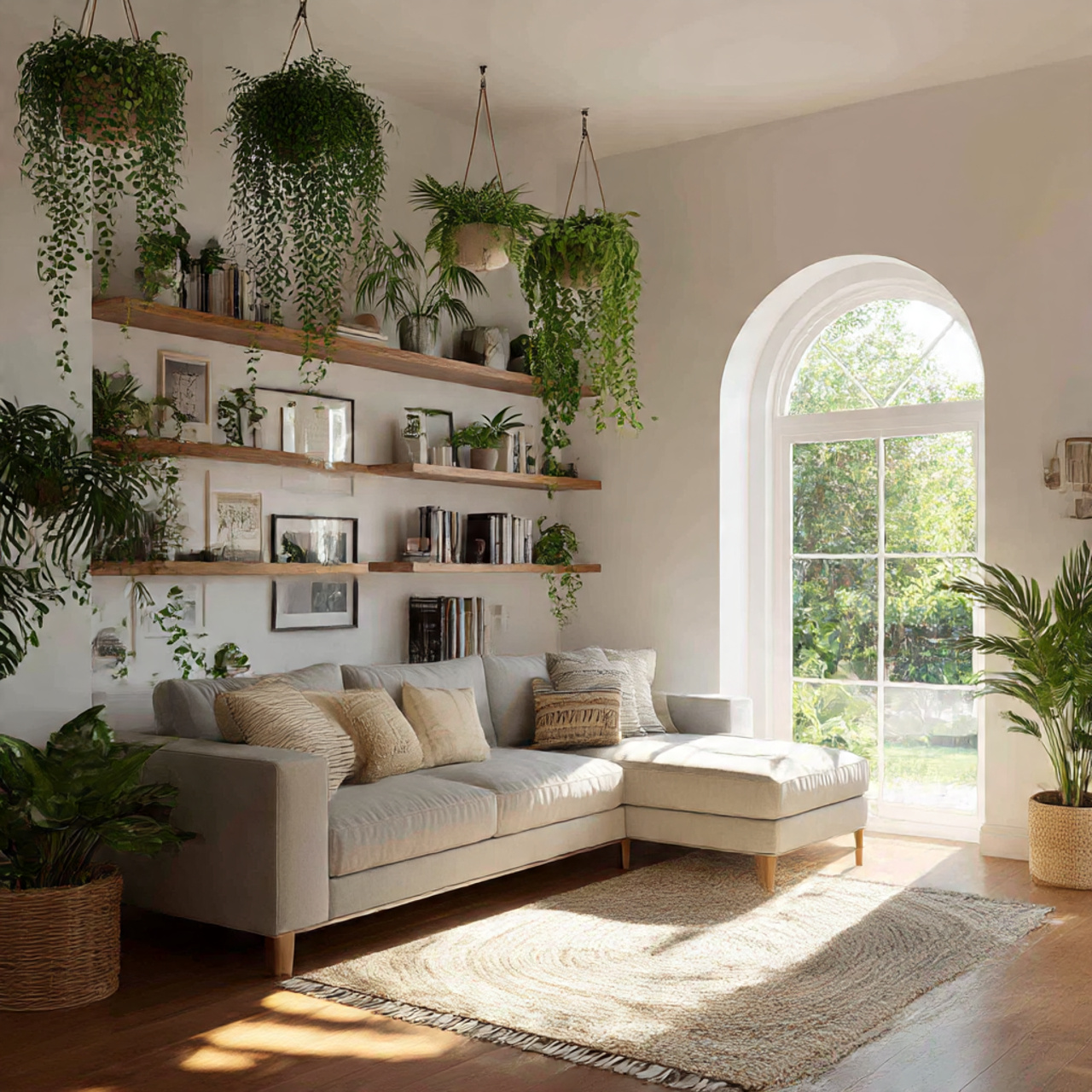
Your living room is where you gather, relax, and entertain—hanging plants make it feel more alive and welcoming while improving the air you breathe.
Living Room Stars:
- Trailing pothos—easy care and elegant draping
- Tropical palms—architectural interest and height
- Ferns—soft, lush texture
- String plants (pearls, hearts)—delicate, interesting focal points
Strategic Placement:
- Near windows to maximize light without blocking views
- Above seating areas to create cozy, defined spaces
- In corners to soften and fill empty vertical space
- Flanking entertainment centers for balanced symmetry
Design Benefits:
- Create natural focal points that draw the eye upward
- Soften hard furniture lines and angles
- Improve air quality in your most-used room
- Add life and movement to static décor
Styling Tips:
- Mix heights and textures for layered interest
- Coordinate pot styles with existing décor
- Use plants to echo or complement your color scheme
- Balance plant placement throughout the room, not clustered in one area
Living room hanging plants transform your main gathering space into a serene, lush environment that feels both sophisticated and inviting.
Hanging Plants for Kitchens
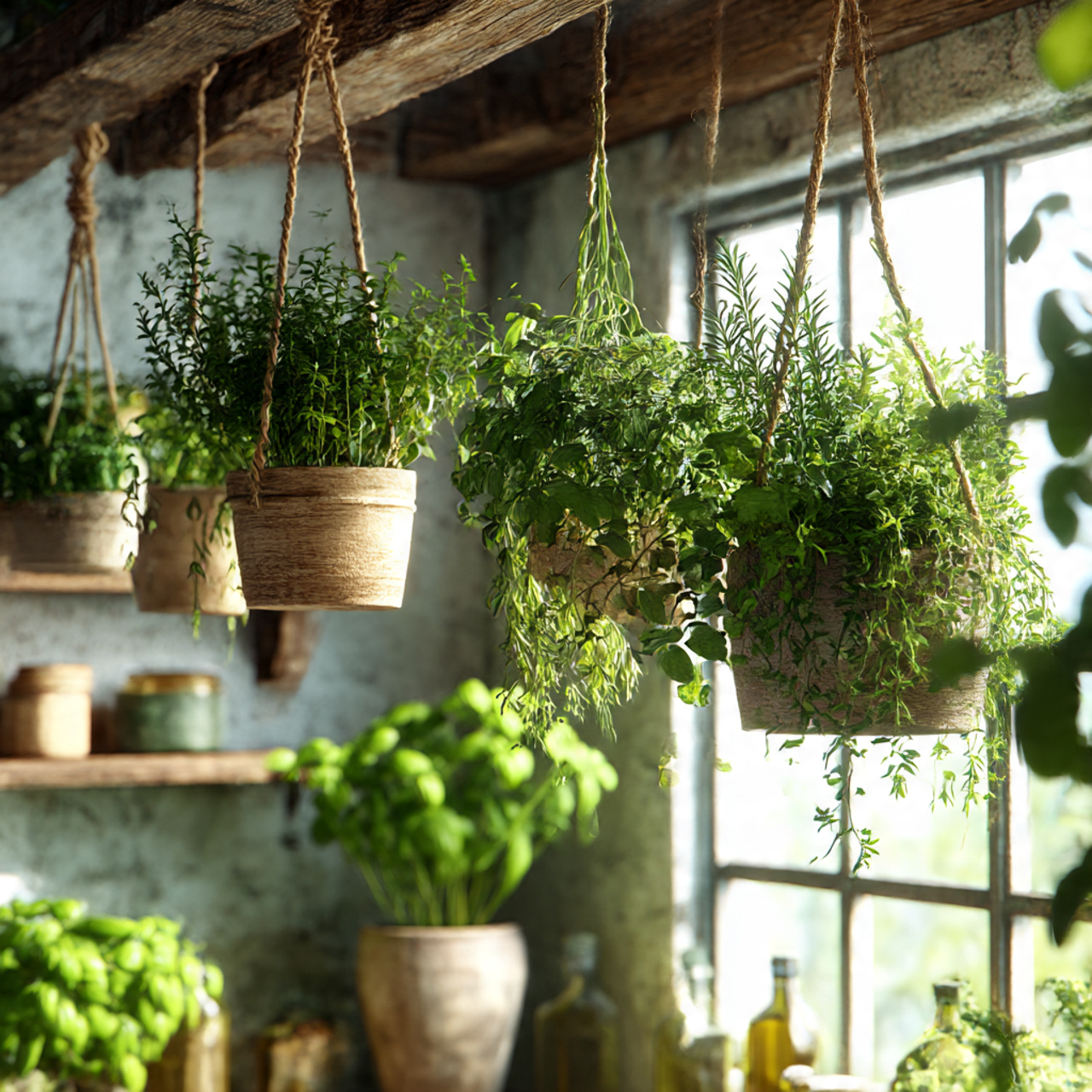
Kitchens aren’t just for cooking—they’re gathering spots that deserve the life and freshness that hanging plants provide.
Kitchen-Perfect Plants:
- Culinary herbs—basil, thyme, mint, rosemary
- Pothos—tolerates varying temperatures and light
- Spider plants—purify air and tolerate neglect
- Trailing succulents—low-maintenance and decorative
Functional Benefits:
- Fresh herbs literally at your fingertips
- Maximize vertical space above counters
- Purify cooking odors and improve air quality
- Add natural beauty to functional spaces
Smart Placement:
- Above sinks where they get light and easy watering access
- Near windows for herbs that need bright light
- Away from stove heat and grease buildup
- Using decorative hooks that complement kitchen style
Combined Approach:
- Mix functional herbs with ornamental trailing plants
- Use matching containers for cohesive appearance
- Rotate herbs as you harvest to keep displays full
- Combine with other kitchen décor for integrated design
Kitchen hanging plants merge beauty with utility, giving you gorgeous greenery that actually enhances your cooking and makes your kitchen more enjoyable.
Seasonal Hanging Plants
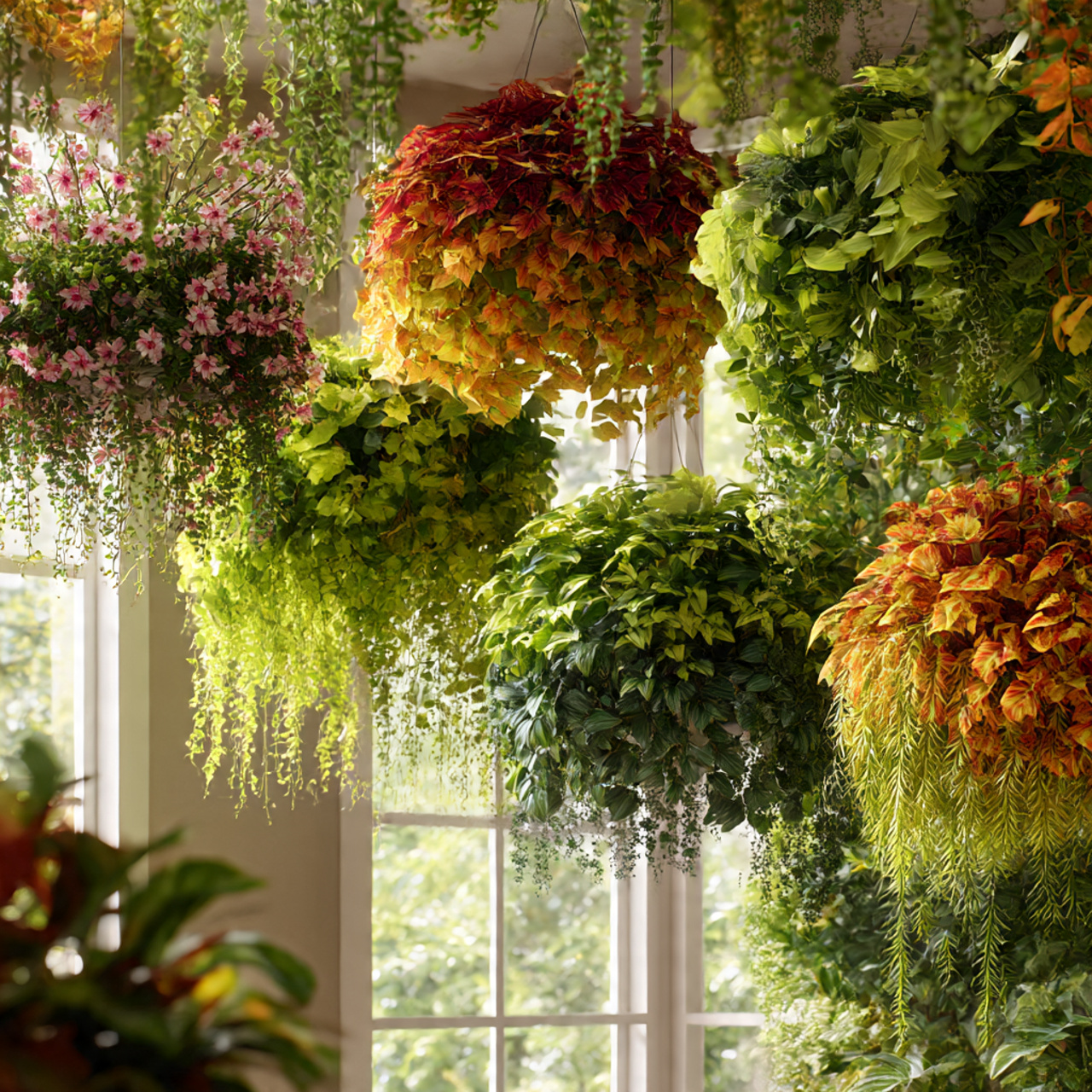
Why have the same look year-round when you can embrace the changing seasons with rotating hanging plant displays?
Spring Displays:
- Flowering bulbs in hanging containers
- Fresh green ferns emerging from dormancy
- Pastel blooms like pansies and primroses
- Awakening vines putting out new growth
Summer Abundance:
- Vibrant petunias and geraniums
- Lush tropical varieties at peak growth
- Cascading flowering vines
- Sun-loving succulents showing their best colors
Autumn Transitions:
- Plants with changing foliage colors
- Late-season bloomers like chrysanthemums
- Ornamental grasses (yes, some hang!)
- Richer, deeper tones replacing bright summer hues
Winter Greenery:
- Evergreen ferns maintaining color
- Hardy ivy providing structure
- Seasonal touches with winter berries
- Minimalist displays with architectural plants
Benefits of Seasonal Rotation:
- Keeps your space feeling fresh and current
- Allows you to experiment with different varieties
- Creates anticipation and seasonal rituals
- Ensures plants get conditions they prefer during optimal seasons
Seasonal hanging plants turn your home into a living calendar that celebrates nature’s rhythms and keeps your décor dynamic and engaging.
Frequently Asked Questions (FAQs) About Hanging Plants
1. How do I hang plants safely indoors?
Safety first! Use ceiling hooks rated for at least 3 times the weight of your plant (soil + water gets heavy). Screw hooks directly into ceiling joists or use toggle bolts for drywall. Check chains, ropes, or hangers every few months for wear. If you’re renting, adhesive hooks work for lighter plants, but always test with something heavy first before trusting them with your beloved greenery.
2. Which hanging plants require the least maintenance?
Busy life? No problem. Pothos tops the list—it tolerates neglect like a champ. Spider plants bounce back from almost anything. ZZ plants need watering maybe twice a month. Most succulents (string of pearls, burro’s tail) store water so you can forget them for weeks. These plants forgive forgotten waterings and adapt to less-than-perfect conditions, making them ideal for beginners or anyone with a packed schedule.
3. Can hanging plants improve indoor air quality?
Absolutely! Spider plants filter formaldehyde and xylene. Boston ferns are humidity-regulating powerhouses. Pothos removes toxins while looking gorgeous. Peace lilies tackle ammonia and benzene. NASA actually studied this—plants do purify air, though you’d need several to make a significant impact. The more, the merrier for both air quality and aesthetics. Even a few hanging plants contribute to fresher, cleaner indoor air.
4. How often should hanging plants be watered?
It depends entirely on the plant. Succulents: every 2-3 weeks, maybe longer in winter. Ferns and tropical plants: weekly or when the top inch of soil feels dry. Herbs: keep soil consistently moist but not soggy. The trick? Stick your finger into the soil before watering—if it’s dry an inch down, water. If it’s still moist, wait. Overwatering kills more plants than underwatering, so when in doubt, hold off a day or two.
5. Can pets be around hanging plants safely?
Yes, with the right plants! Spider plants, Boston ferns, parlor palms, and calatheas are all pet-safe. Even if your cat nibbles, these won’t harm them. Hang high enough that curious paws can’t reach, and choose sturdy hooks. Avoid pothos, philodendrons, and ivy around pets—these are toxic. When shopping, always ask if plants are pet-safe, or check the ASPCA’s database. You can absolutely.
Conclusion
Hanging plants are one of the easiest ways to add life and personality to your home. They make use of empty wall and ceiling space, help purify the air you breathe, and create a calming, green atmosphere that just feels good.
Whether you love cascading pothos, lush ferns, or even flowering varieties, hanging plants work beautifully indoors and out on patios or balconies. When you mix different heights, pick plants that speak to you, and add touches like woven hangers or colorful pots, you end up with a space that feels alive and keeps changing throughout the year. Beyond just looking great, these plants genuinely boost your mood and make your home healthier—they’re a simple addition that makes a real difference.