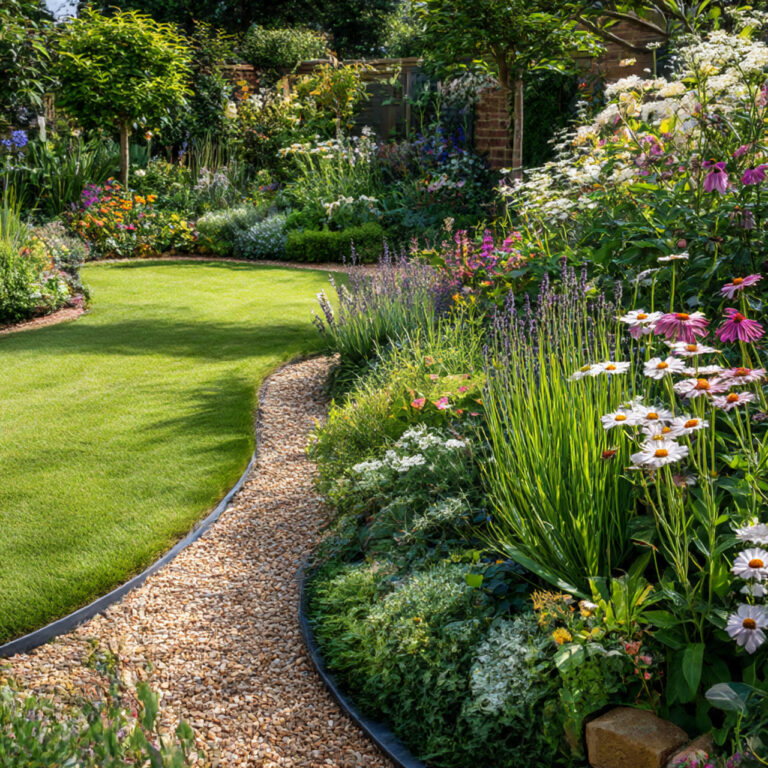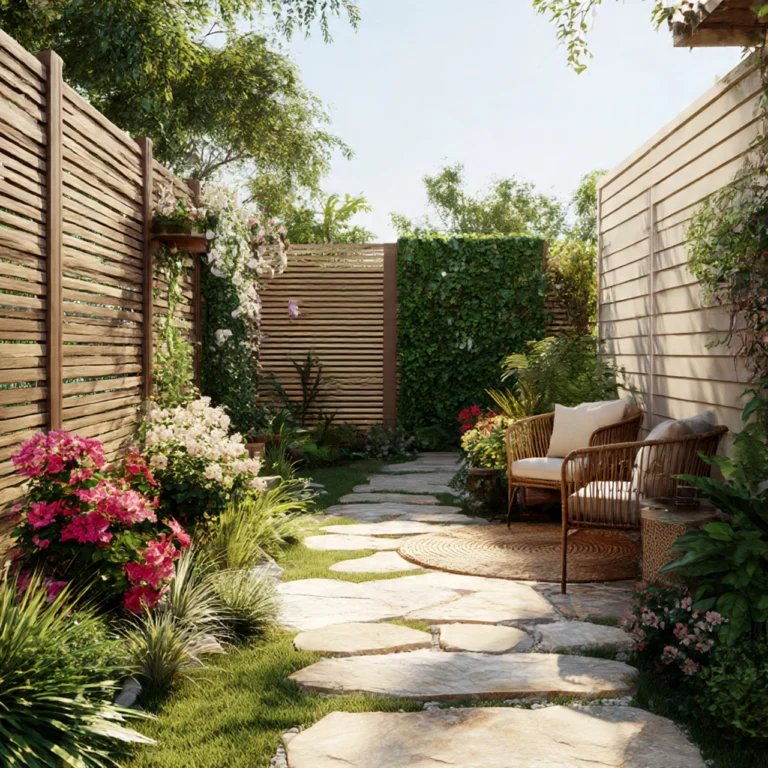
25 Flower Bed Ideas You’ll Love: Easy, Stylish & Perfect for Any Yard
Your garden is waiting to tell a story, and flower beds are where that story begins. They’re the foundation that turns a patch of grass into something memorable—a place that makes neighbors slow down, makes you smile every time you walk outside, and gives your home a personality all its own.
Here’s the thing about flower beds: they’re not just about throwing some pretty plants in the ground. The best ones work like well-composed art, balancing colors that complement each other, heights that create visual rhythm, and textures that keep your eyes moving. They frame your walkways, highlight your home’s best features, and give structure to spaces that might otherwise feel empty or neglected.
Whether you’re working with a sprawling backyard or a narrow strip along your driveway, smart flower bed design makes every square foot count. The right approach means plants that actually thrive together, maintenance that doesn’t consume your weekends, and a garden that looks intentional rather than random.
This guide breaks down some flower bed ideas that work in real gardens for real people. Each one offers a distinct style and practical benefits, whether you’re chasing low maintenance, maximum color impact, or something that’ll make your property stand out. Let’s dig into designs that’ll transform how you think about your outdoor space.
Why Creative Flower Bed Ideas Matter
A thoughtfully planned flower bed does serious work in your landscape. It creates clear pathways through your yard, defines outdoor living areas, and adds visual weight to areas that need it. When done right, flower beds become architectural elements that give your entire property a sense of intention and polish.
Beyond aesthetics, smart flower bed design directly impacts how much time you’ll spend maintaining your garden. Plants grouped by similar water and sunlight needs thrive with less fussing. Proper spacing means better air circulation and fewer disease problems. Strategic layout means you’re not constantly battling nature—you’re working with it.
Core Design Elements to Consider:
- Color harmony (complementary vs. monochromatic schemes)
- Height variation (creates depth and visual interest)
- Texture contrast (smooth leaves against feathery blooms)
- Bloom timing (ensuring color across seasons)
- Plant compatibility (similar water and sun requirements)
Build Depth with Layered Border Beds
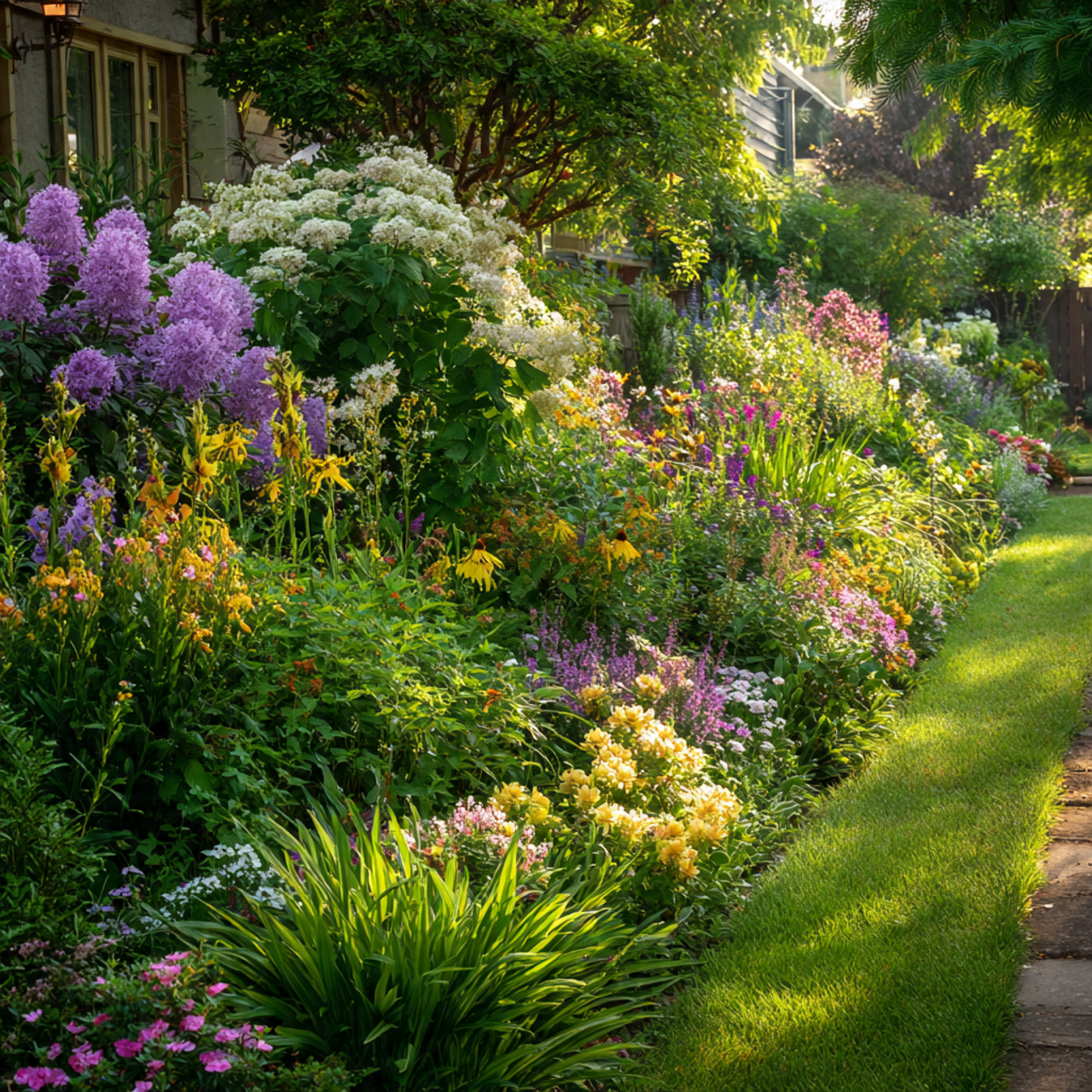
Layered borders use the classic “thriller, filler, spiller” approach on a larger scale. Your tallest plants create a backdrop, medium-height varieties fill the middle zone, and low-growing plants cascade along the front edge.
This arrangement tricks the eye into seeing more depth than actually exists. Along fences, walkways, or property lines, layered beds create that professional, magazine-worthy look that seems complex but follows a simple formula.
Layering Strategy:
- Back row: Plants 3-5 feet tall (delphiniums, hollyhocks, tall grasses)
- Middle row: Plants 1-3 feet tall (coneflowers, daylilies, salvia)
- Front row: Plants under 1 foot tall (creeping phlox, alyssum, sweet potato vine)
Tip: Leave 18-24 inches between rows so you can actually reach plants for deadheading and maintenance without trampling everything in front.
Gain Control with Raised Wooden Beds
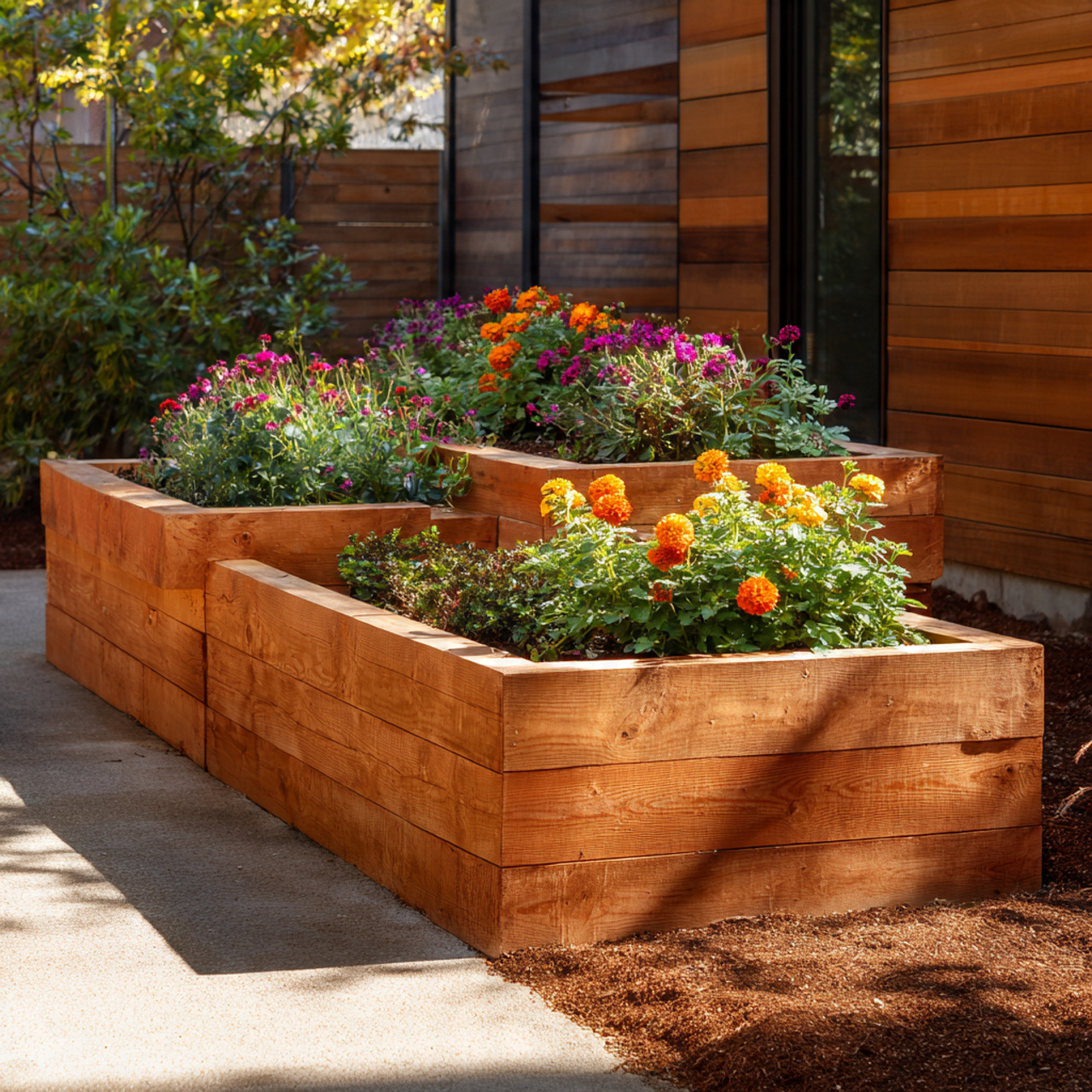
Raised beds solve multiple problems at once. They give you perfect soil regardless of what’s underneath, warm up faster in spring for earlier planting, and put everything at a more comfortable working height.
Wood adds warmth and versatility—cedar and redwood naturally resist rot, while pressure-treated lumber offers affordability. The defined boundaries create clean lines that work equally well in cottage gardens or modern landscapes.
Raised Bed Benefits:
- Superior drainage (critical for many flowering plants)
- Fewer weeds (you’re starting with fresh soil)
- Better accessibility (easier on backs and knees)
- Longer growing season (soil warms faster)
Design Note: Heights of 12-18 inches work for most flowers. Go higher (24-30 inches) if accessibility is a priority.
Add Permanence with Stone Edging
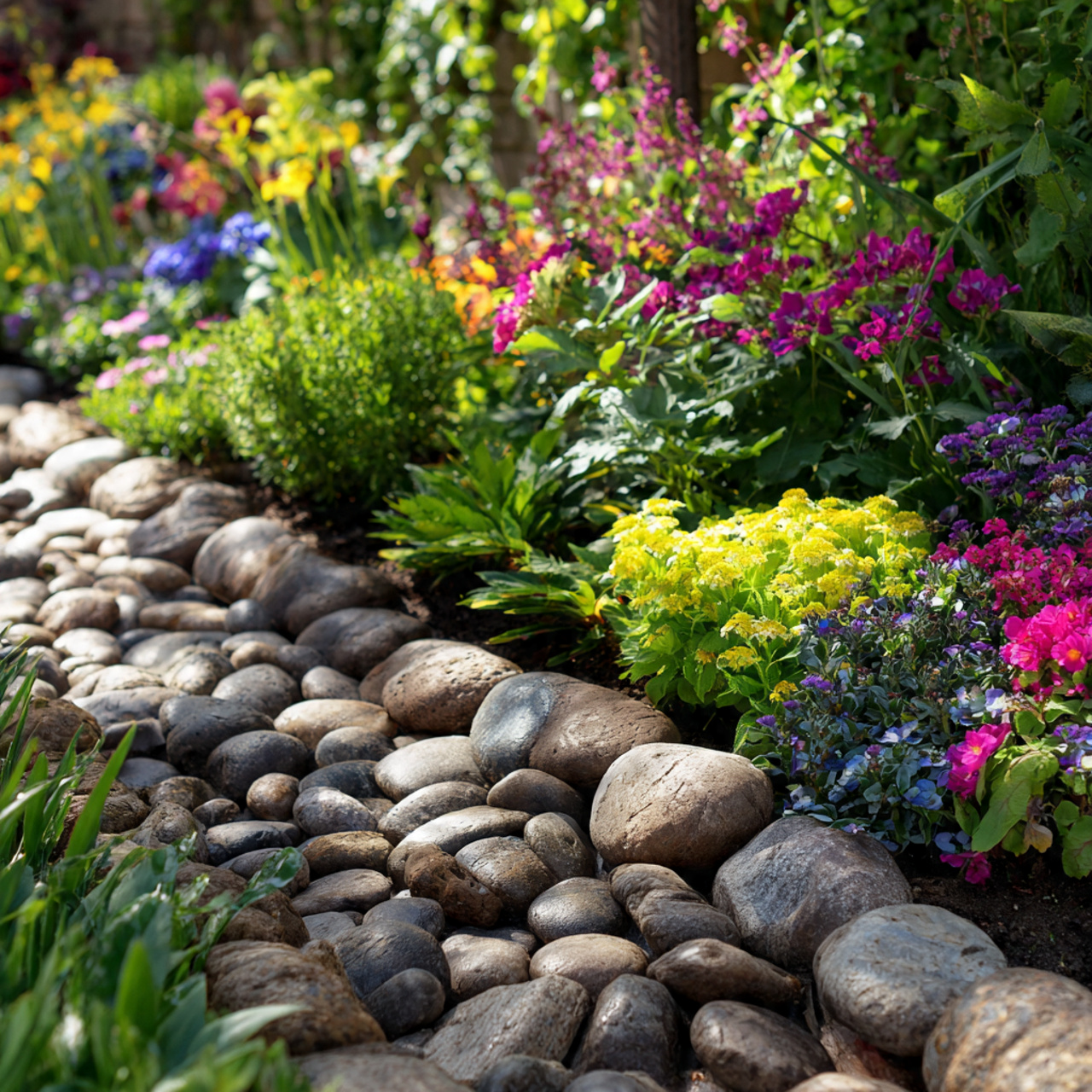
Stone borders bring instant maturity to flower beds. Natural fieldstone creates a relaxed, settled look, while cut stone pavers deliver crisp, formal definition. Both keep mulch contained and create a mowing strip that saves trimming time.
The weight of stone also provides practical benefits—it won’t shift like plastic edging, holds up to weather indefinitely, and actually looks better as it ages and develops patina.
Stone Edging Options:
- Flagstone: Irregular shapes, natural appearance
- Cut pavers: Uniform, clean lines
- River rock: Smooth, rounded edges
- Stacked stone: Creates height and dimension
Installation Tip: Dig a shallow trench (3-4 inches) and set stones on compacted sand for stability. This prevents shifting and maintains clean lines.
Embrace Abundance with Cottage Style
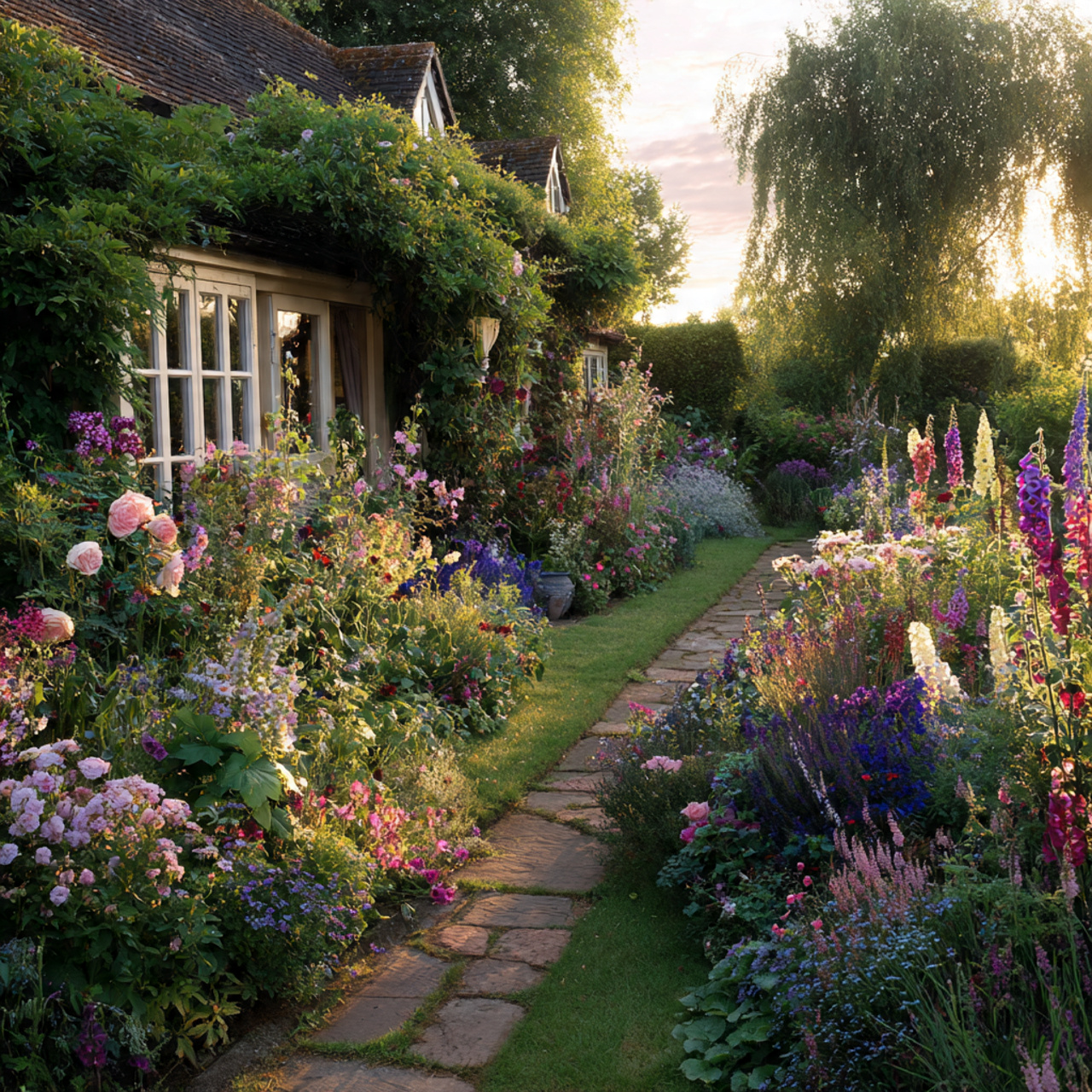
Cottage gardens celebrate “organized chaos”—the look is lush, overflowing, and delightfully unstructured. Plants mingle freely, self-seed into happy accidents, and create that romantic, lived-in charm.
Despite appearing spontaneous, successful cottage beds require planning. You’re aiming for fullness without actual overcrowding, mixing heights without blocking smaller plants, and ensuring bloomers stagger throughout the season.
Classic Cottage Plants:
- Roses (climbing and shrub varieties)
- Foxgloves (vertical accents)
- Lavender (fragrance and structure)
- Daisies and black-eyed Susans (cheerful fillers)
- Sweet peas (climbing color)
Key to Success: Plant in odd-numbered groups (3s, 5s, 7s) rather than singles for impact without looking rigid.
Create Impact with Monochrome Color Schemes
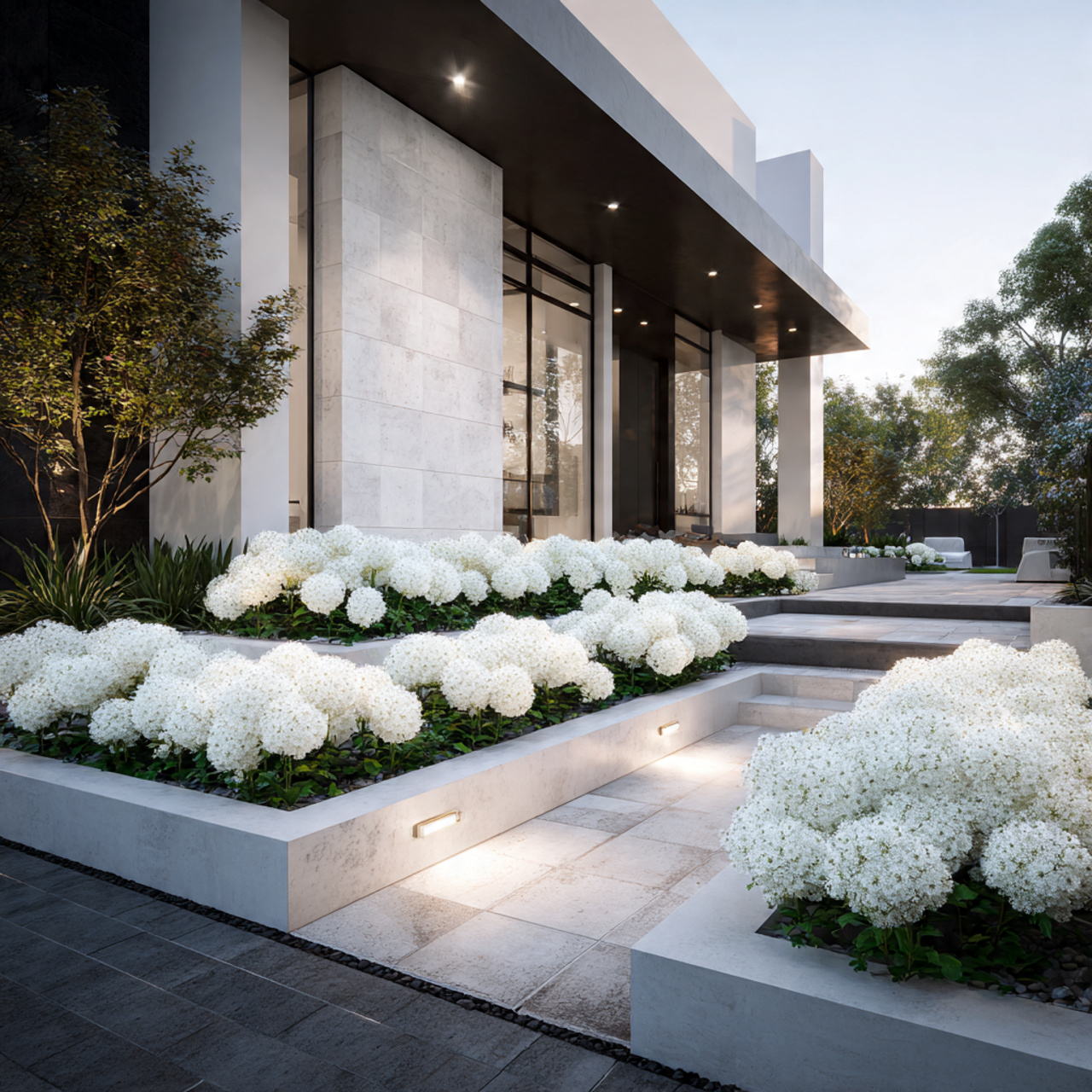
Single-color flower beds deliver sophisticated drama. All-white gardens glow at dusk, purple schemes feel regal and calming, while yellow beds radiate cheerfulness. The unified palette creates instant cohesion.
Monochrome doesn’t mean boring—you’re working with countless shades, textures, and plant forms within your chosen color family. The restriction actually makes design easier by eliminating color-clash worries.
Popular Monochrome Themes:
- White gardens: Peaceful, luminous, perfect for evening enjoyment
- Purple/lavender: Sophisticated, calming, attracts pollinators
- Yellow/gold: Energizing, cheerful, brightens shady spots
- Pink: Romantic, soft, universally appealing
Design Trick: Include plants with interesting foliage in your color family (like silver artemisia in white gardens) to maintain interest between bloom times.
Frame Trees with Circular Beds
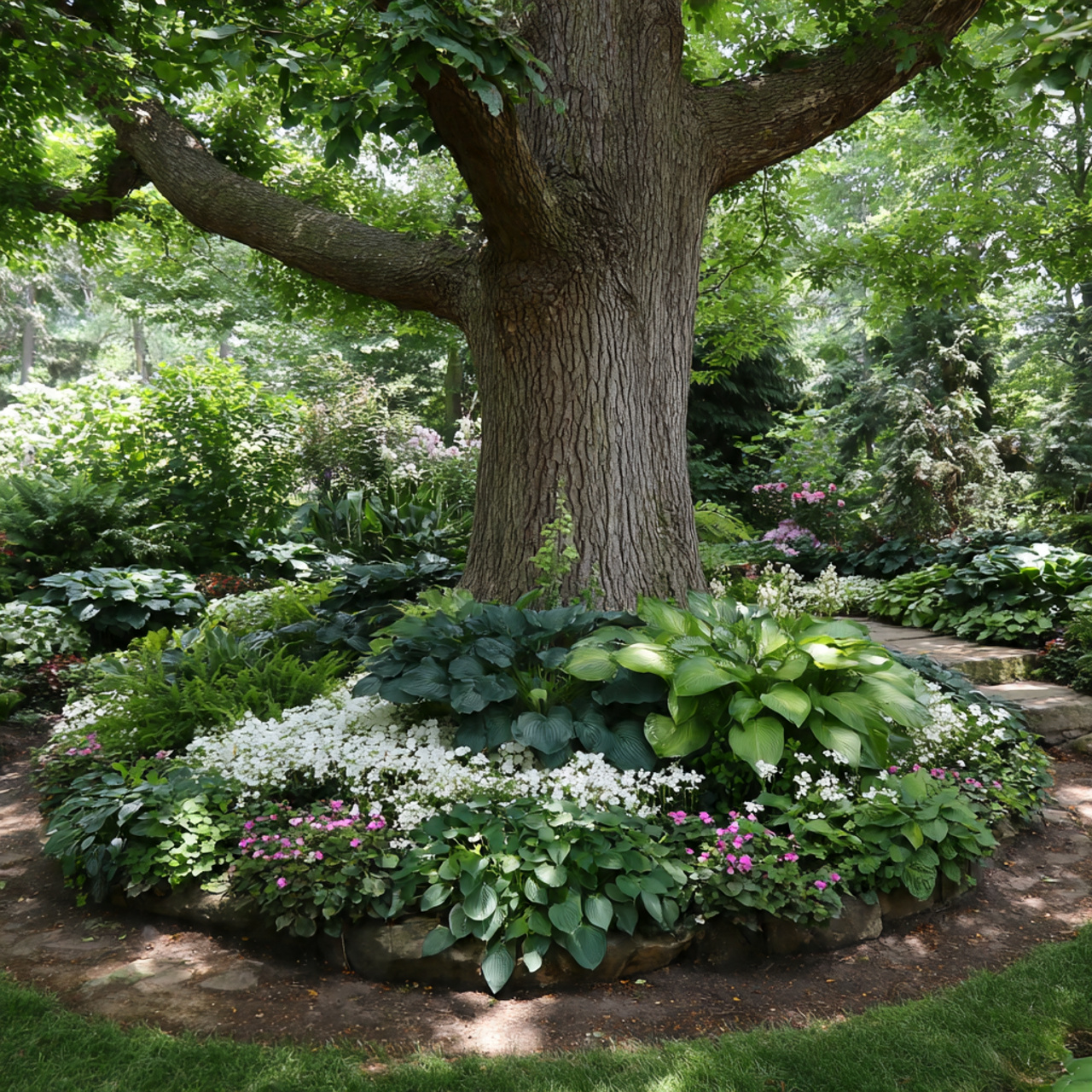
That lonely tree in your lawn deserves better than a ring of bare mulch. Circular beds around tree bases add instant visual interest and soften the transition from trunk to grass.
The key is choosing plants that tolerate the specific conditions under your tree—often shade and root competition. Shallow-rooted flowers work best to avoid damaging tree roots.
Shade-Tolerant Options:
- Hostas (endless variety, reliable performers)
- Impatiens (continuous color all summer)
- Begonias (thrives in dappled shade)
- Ferns (textural interest, zero-maintenance)
Important: Keep mulch and soil away from the tree trunk (leave 3-4 inches clear) to prevent rot and pest issues.
Support Pollinators with Wildflower Meadows
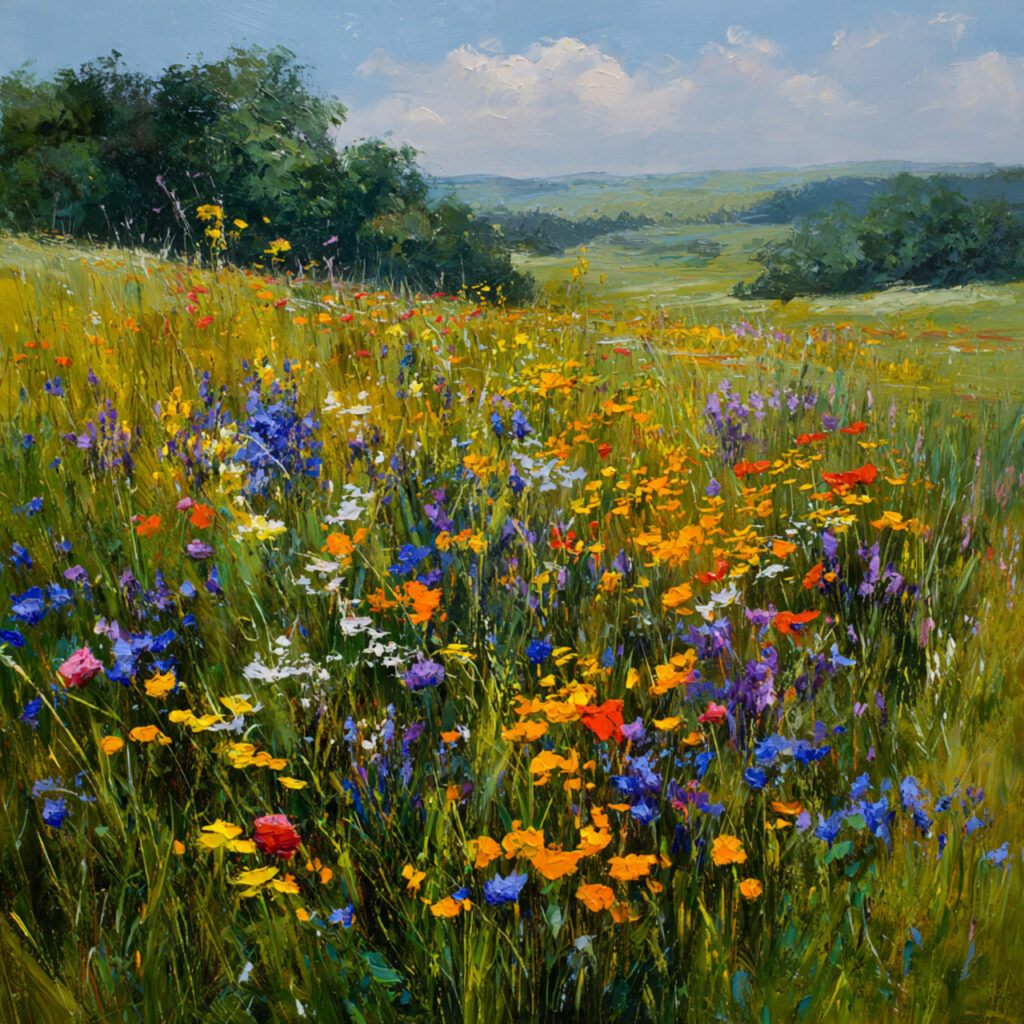
Wildflower beds bring low-maintenance beauty while supporting local ecosystems. Native wildflowers have evolved to thrive in your specific climate, requiring minimal water, fertilizer, or pest control once established.
These beds attract butterflies, bees, and beneficial insects that support your entire garden. The natural, meadow-like appearance works beautifully in larger spaces or along property edges.
Getting Started:
- Choose native wildflower mixes suited to your region
- Prepare soil by removing existing vegetation
- Sow seeds in fall or early spring
- Keep mowed short the first year to reduce weed competition
Maintenance Reality: After establishment, mow once yearly (late fall or early spring) to reset for the next season. That’s it.
Command Attention with Circular Statement Beds
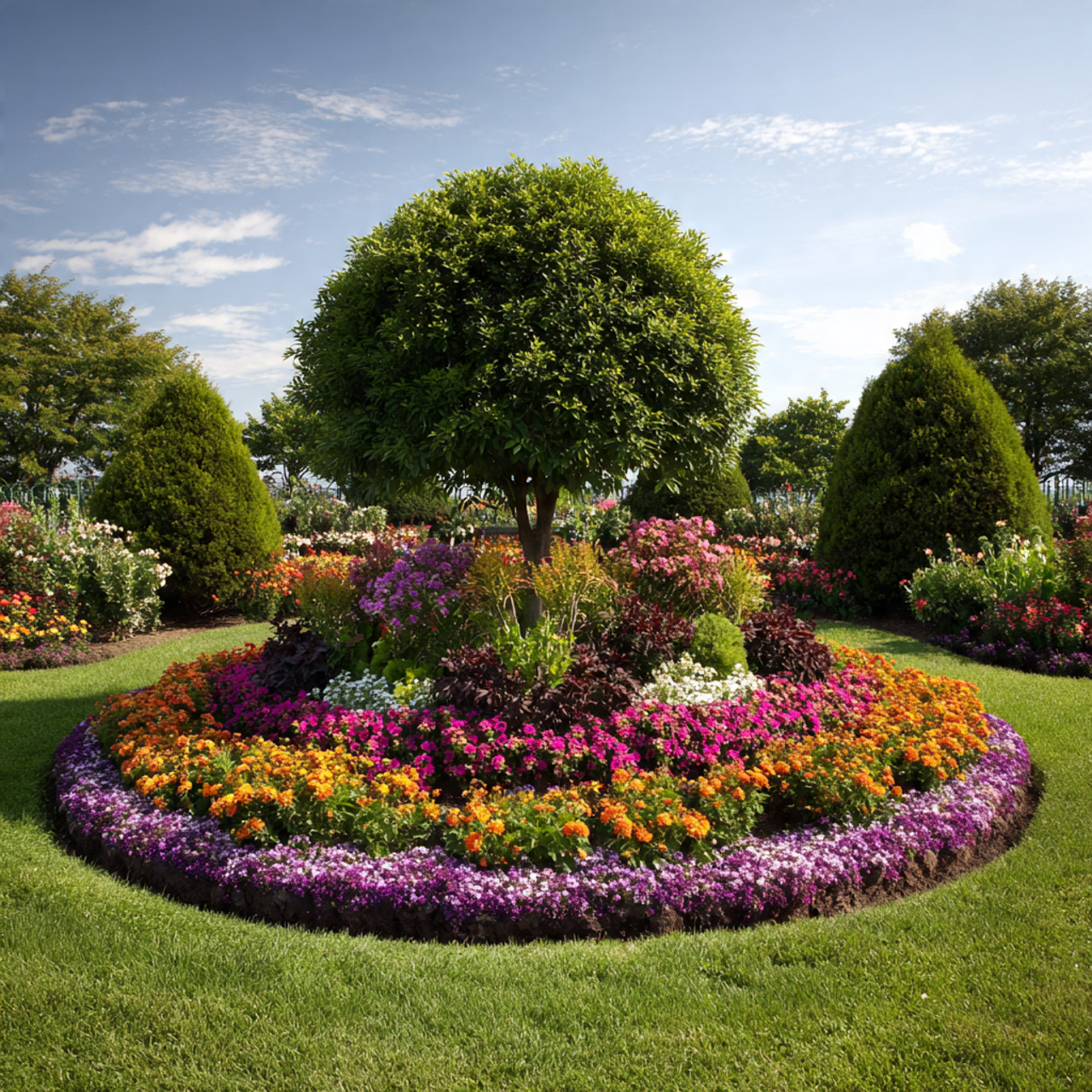
Circular beds placed strategically in open lawn areas create natural focal points. They draw the eye, add dimension to flat spaces, and provide opportunities for dramatic plant combinations.
The symmetrical shape works particularly well in formal landscapes, though you can make them casual by using relaxed plant selections and soft edges.
Creating Visual Impact:
- Center anchor: Tall ornamental grass, small tree, or sculpture
- Middle ring: Medium flowers in complementary colors
- Outer ring: Low-growing edge plants that define the circle
Sizing Guideline: In proportion to your lawn—too small looks lost, too large overwhelms. Aim for 6-8 feet diameter in average yards.
Achieve Balance Through Symmetry
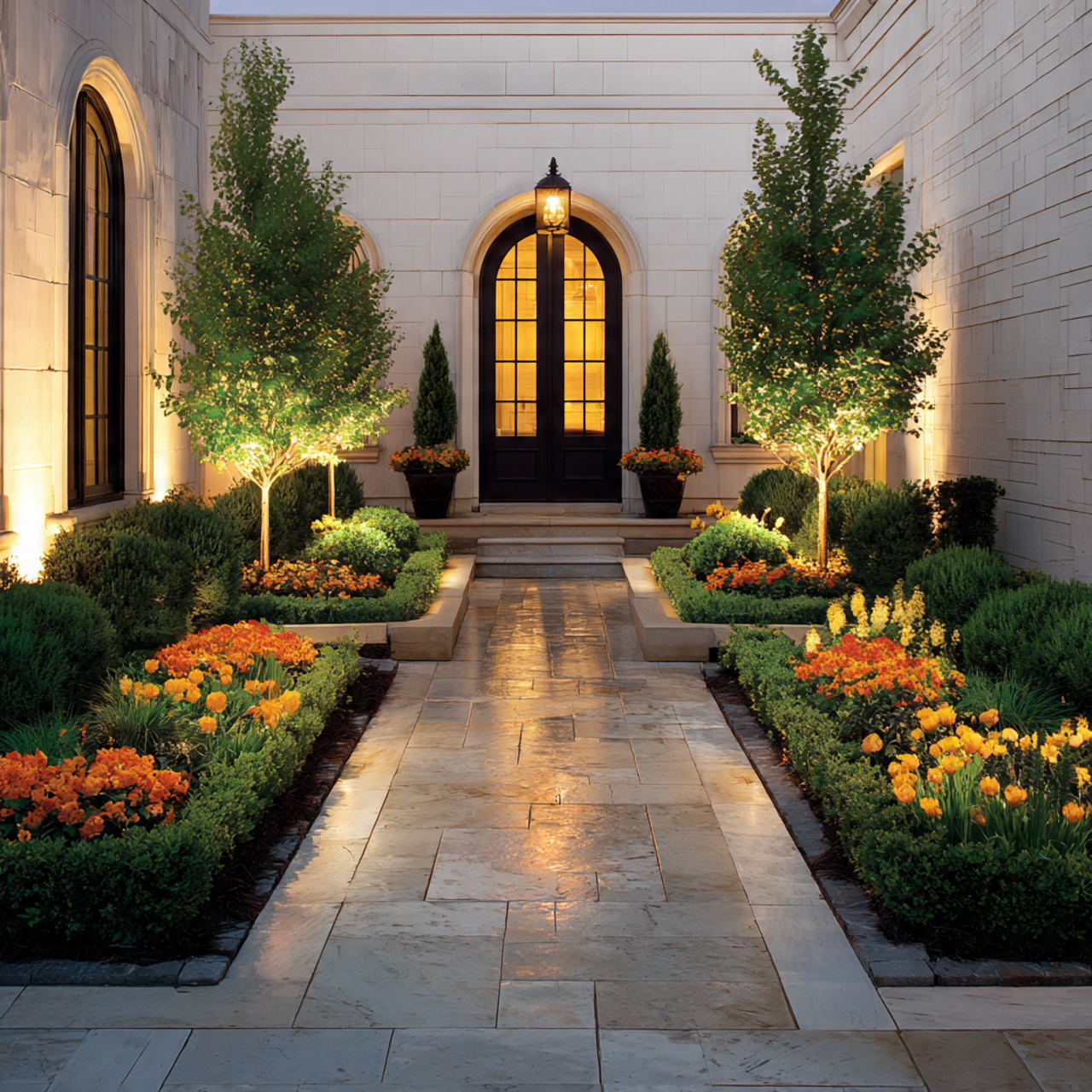
Symmetrical beds on both sides of entryways, pathways, or driveways create formal elegance. Mirror-image planting produces that organized, intentional look that screams “professional landscaping.”
This approach works especially well with traditional or colonial architecture where symmetry echoes the home’s formal structure.
Symmetrical Layouts:
- Matching rectangular beds flanking front steps
- Identical curved beds on both sides of a walkway
- Paired urns or containers with matching plantings
- Repeated color patterns in corresponding spaces
Execution Tip: Take photos of one side while planting to ensure the other side truly mirrors it—it’s harder than you think to remember exact placement!
Enhance Your Home with Foundation Plantings
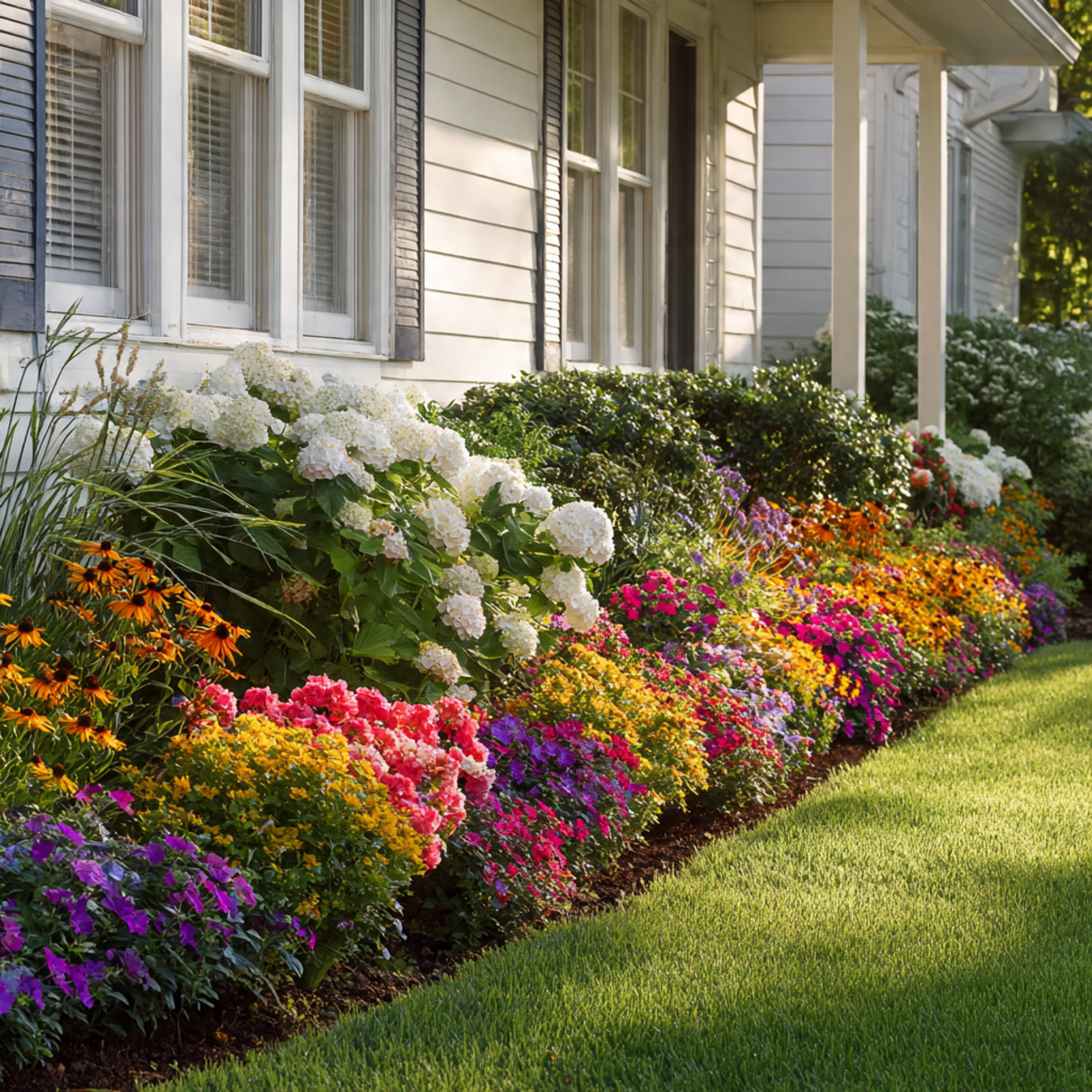
Foundation beds are your home’s welcome committee. They soften the harsh line where house meets ground, add color near windows and doors, and frame your home’s architecture.
Proper scaling matters here—plants should complement your home’s size, not overwhelm it or disappear against it. Leave space for growth to avoid constant pruning battles.
Foundation Bed Strategy:
- Tall background: Shrubs or tall perennials near walls
- Colorful middle: Seasonal blooms at eye level
- Low edging: Define the bed’s outer boundary
Plant Spacing Rule: Position plants where they’ll be at mature size, not current nursery size. It looks sparse initially but saves years of frustration.
Add Warmth with Rustic Log Borders
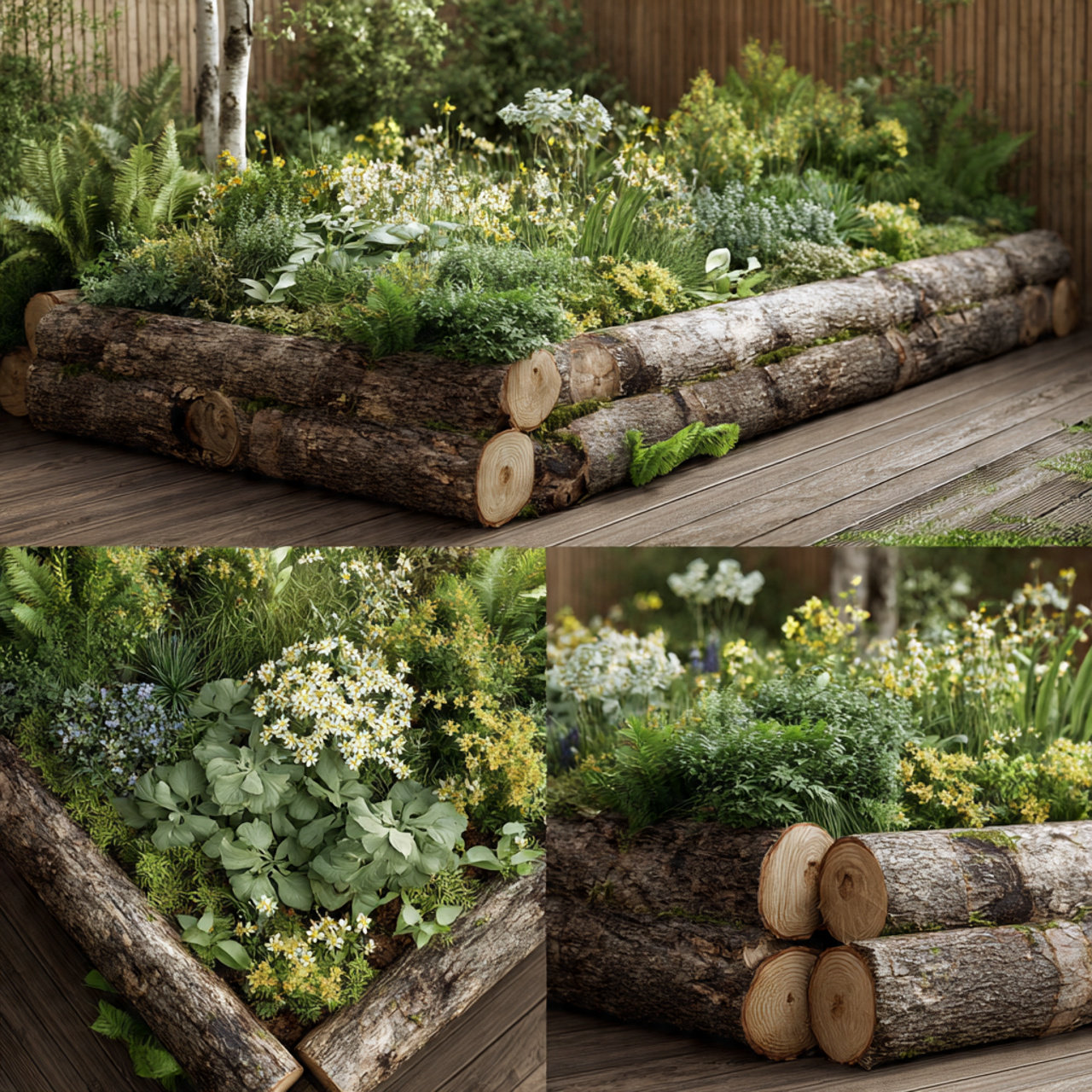
Natural logs as edging bring woodland charm and organic texture to flower beds. They work beautifully in casual, naturalistic landscapes and around cabins or country homes.
As logs slowly decompose, they actually enrich the soil while maintaining their structural purpose for years. This approach costs nothing if you have access to fallen trees or branches.
Log Bed Benefits:
- Free or cheap materials (often available from tree trimming)
- Natural appearance (blends seamlessly with surroundings)
- Wildlife habitat (beneficial insects colonize decomposing wood)
- Flexible shapes (logs bend to create curves easily)
Best Wood Choices: Hardwoods like oak last longer; avoid treated lumber near edibles.
Create Flow with Curved Designs
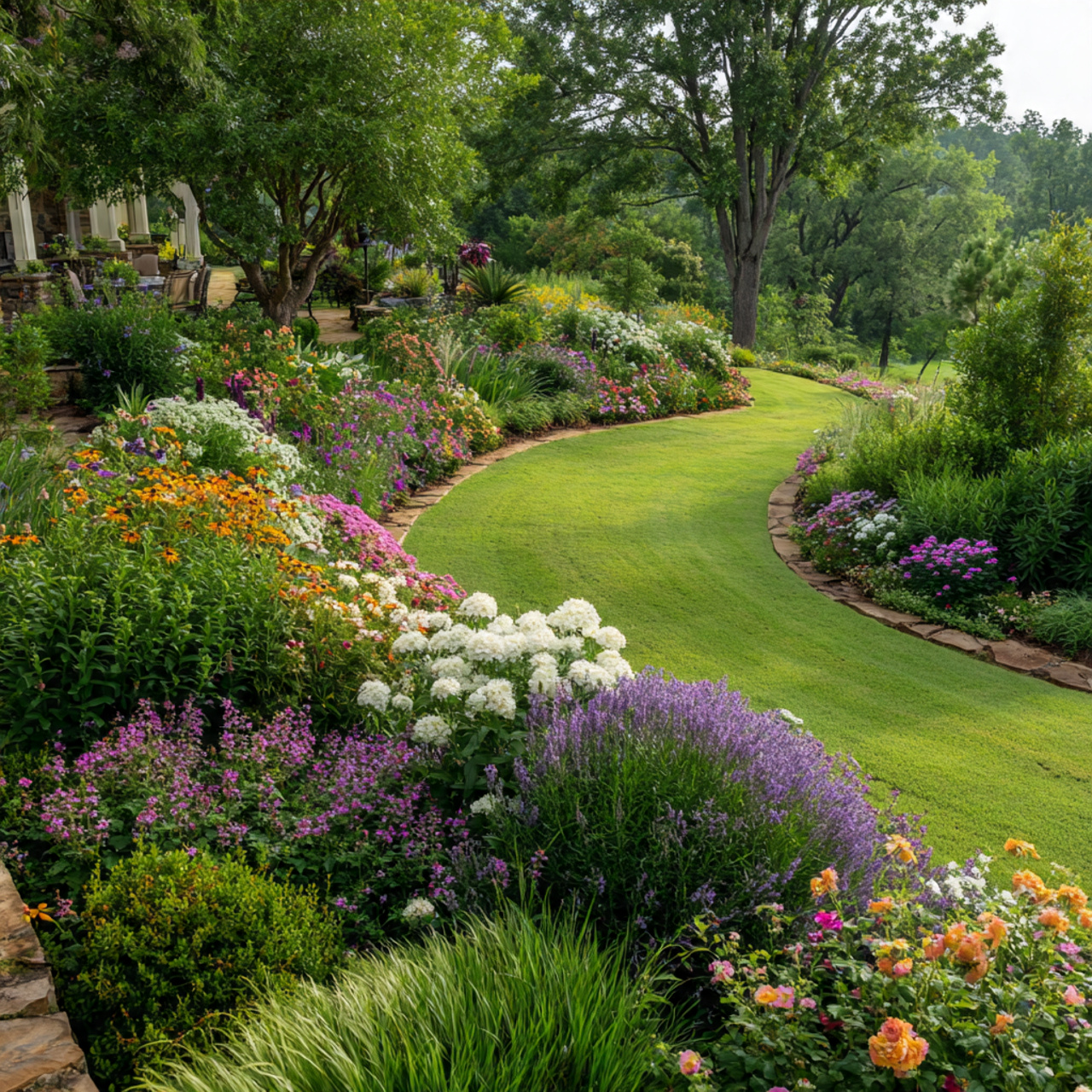
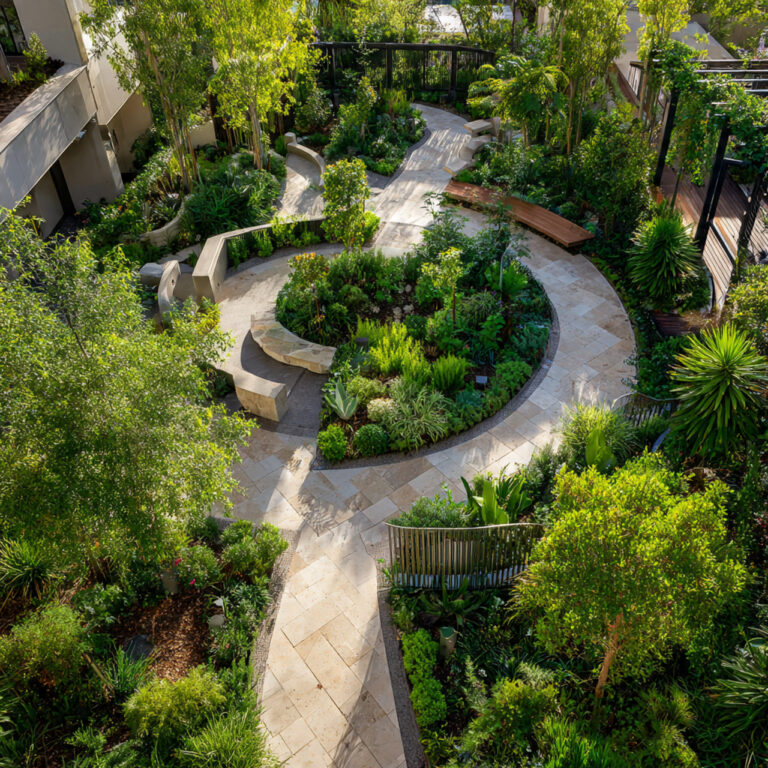
Curved beds feel more natural and inviting than rigid straight lines. They guide movement through your garden, create the illusion of more space, and soften the geometric angles of buildings and property lines.
Even in smaller yards, gentle curves add sophistication. They’re especially effective when echoing other curved elements like patios or pathways.
Designing Curves:
- Use a garden hose to map out shapes before digging
- Aim for gentle, sweeping curves rather than tight wiggles
- Make curves functional—they should direct foot traffic or frame views
- Keep curves simple (fewer is more elegant)
Common Mistake: Too many small curves look busy and chaotic. One or two generous sweeps create better visual impact.
Add Movement with Ornamental Grasses
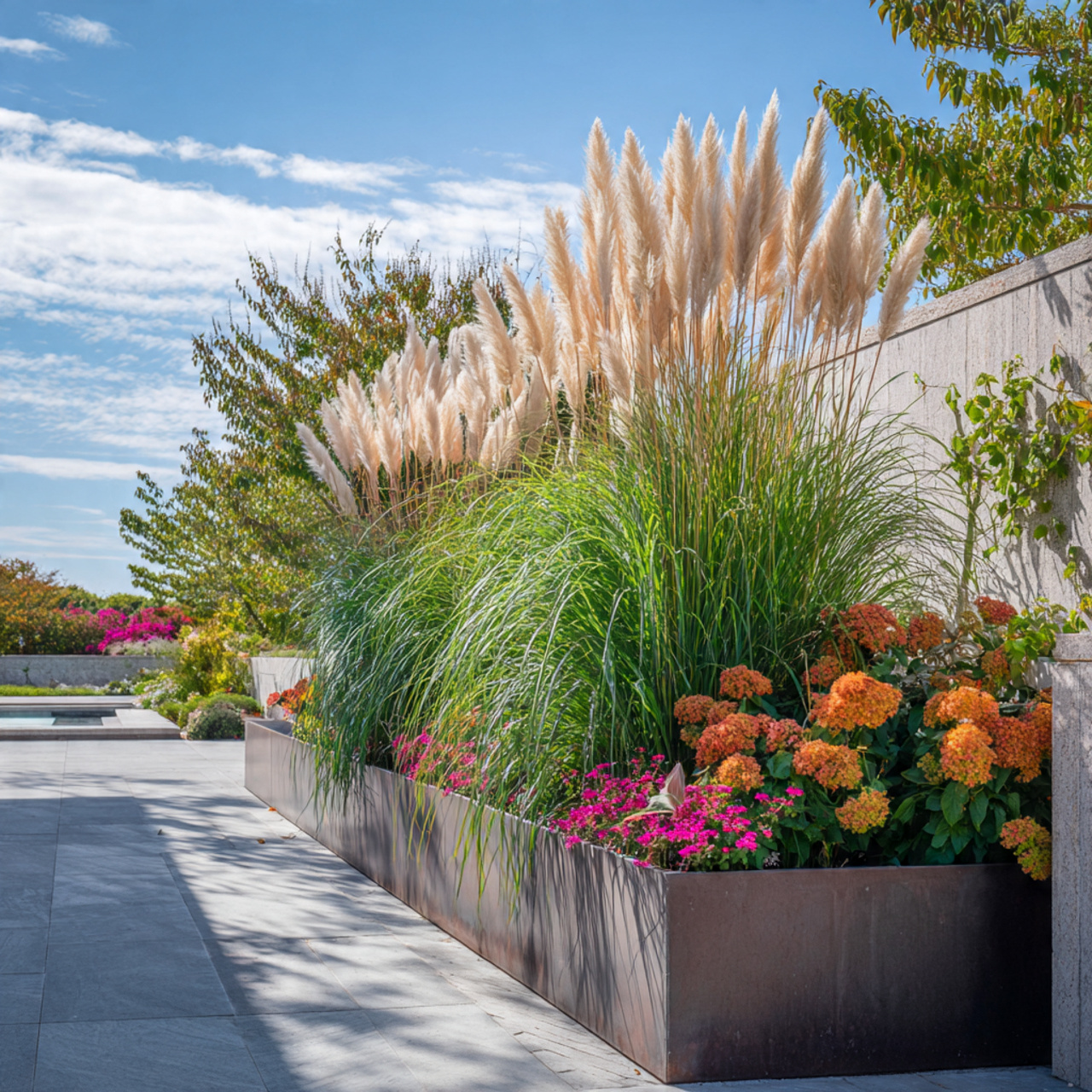
Ornamental grasses bring texture, height variation, and literal movement to flower beds. They sway with breezes, catch light beautifully, and provide structure from spring through winter.
Mixing grasses with flowering perennials creates dynamic, modern combinations that require minimal maintenance. Most grasses thrive in tough conditions other plants struggle with.
Versatile Grass Varieties:
- Maiden grass (Miscanthus): 4-6 feet, graceful plumes
- Fountain grass: 2-3 feet, soft texture, burgundy options
- Blue fescue: 8-12 inches, steel-blue color, neat clumps
- Feather reed grass: Upright, formal appearance
Companion Combinations: Grasses pair beautifully with black-eyed Susans, coneflowers, sedums, and Russian sage.
Add Flexibility with Container-Integrated Beds
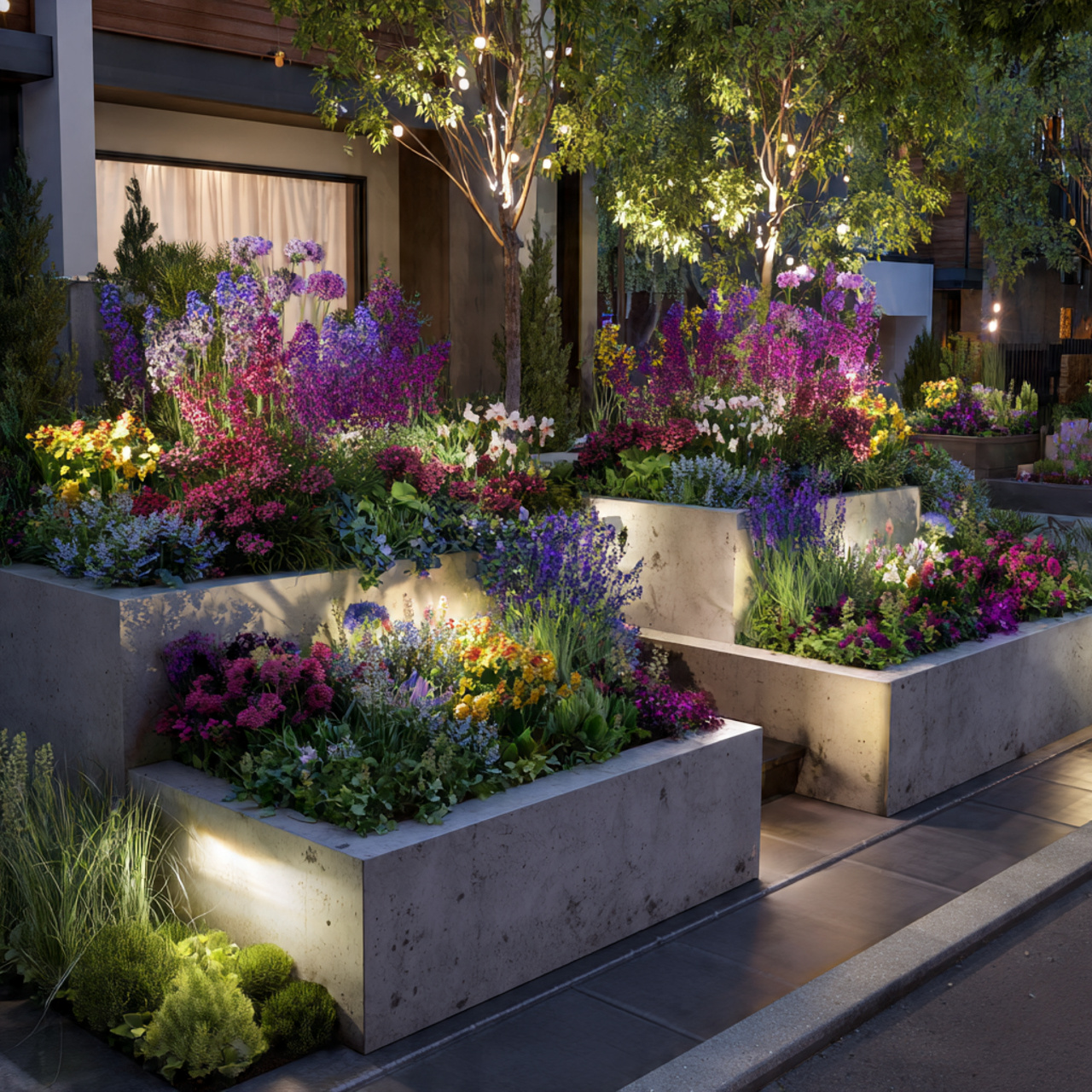
Mixing containers directly into in-ground beds gives you the best of both worlds. Pots add instant height, allow seasonal changes without replanting entire beds, and create focal points within larger designs.
This approach works brilliantly for annuals you want to swap out or plants with specific soil requirements different from your bed.
Strategic Container Placement:
- Vertical accents: Tall urns break up horizontal plantings
- Color pops: Bright containers draw attention to key areas
- Seasonal flexibility: Swap containers for holiday or seasonal themes
- Problem solvers: Use containers where soil or drainage is poor
Design Consistency: Choose container styles that complement each other and your overall garden aesthetic.
Support Butterflies with Nectar-Rich Plantings
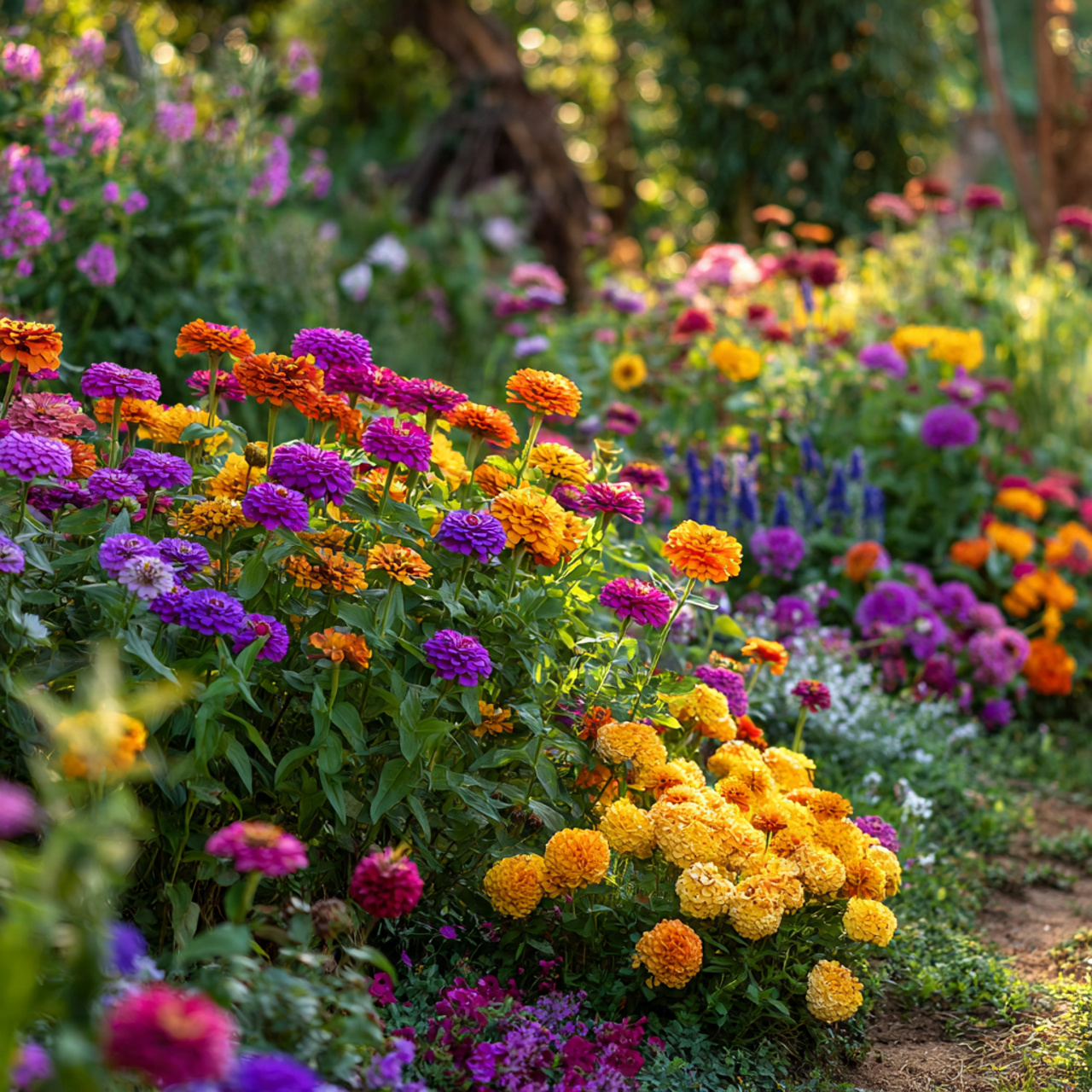
Butterfly gardens aren’t just beautiful—they’re functional ecosystems. Specific plants attract butterflies for feeding while others provide spots for egg-laying and caterpillar development.
These beds add movement, color, and the simple joy of watching butterflies visit. They’re especially rewarding for families with children who love observing nature.
Essential Butterfly Plants:
- Nectar sources: Zinnias, asters, coneflowers, butterfly bush
- Host plants: Milkweed (monarchs), parsley (swallowtails), passionflower
- Season-long blooms: Ensure flowers from spring through fall
Creating Habitat: Include shallow water sources, sunny basking spots on rocks, and avoid pesticides completely.
Blend Beauty and Utility with Herb-Flower Combos
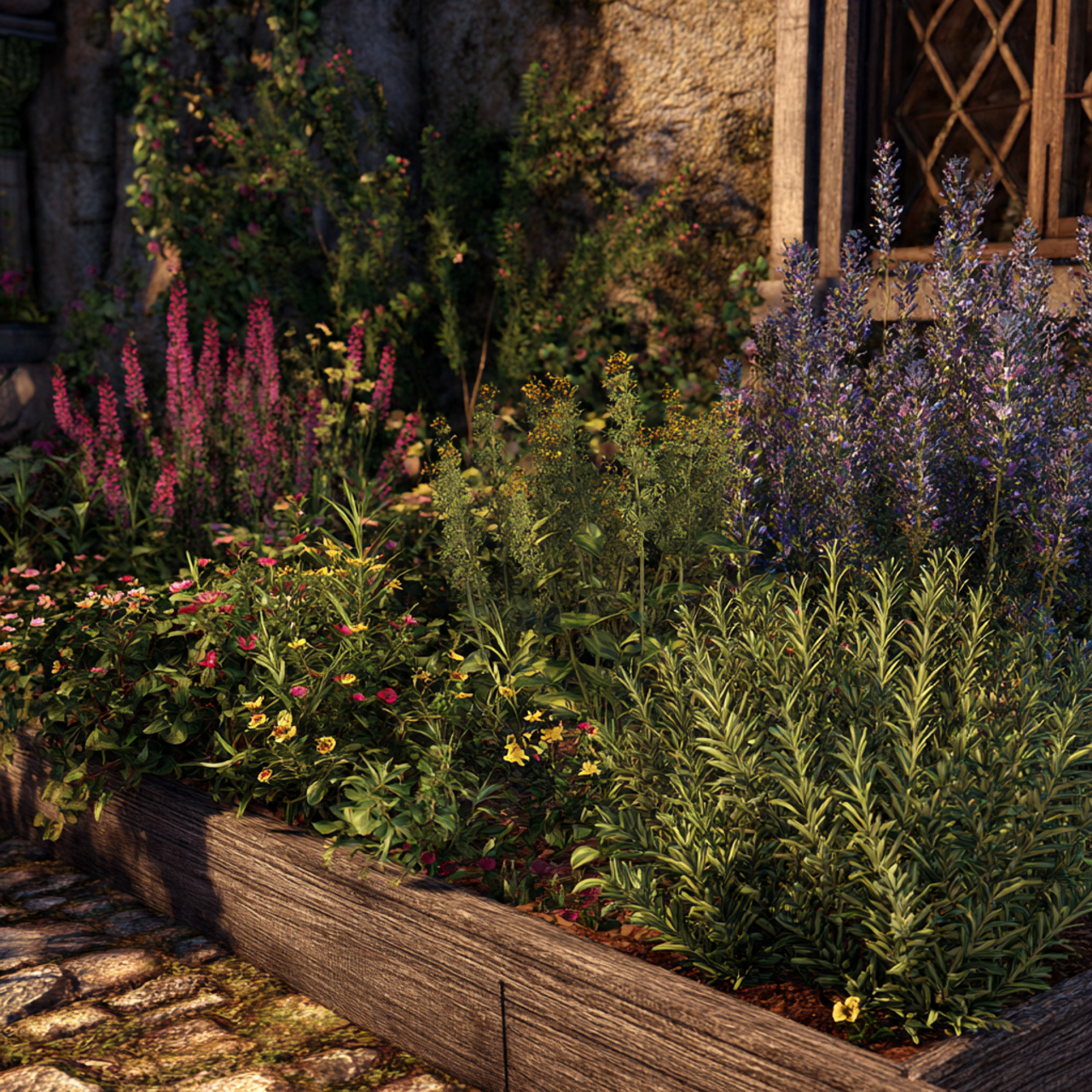
Why separate your herbs and flowers? Combining them creates beds that look gorgeous, smell amazing, and provide ingredients for your kitchen.
Many herbs are natural pest deterrents and pollinator magnets, making them excellent companion plants. The varied textures and forms add visual interest while serving multiple purposes.
Ornamental Herbs for Flower Beds:
- Rosemary: Upright structure, blue blooms, evergreen
- Lavender: Purple spikes, incredible fragrance
- Thyme: Low-growing groundcover, tiny flowers
- Sage: Silver foliage, purple or pink flowers
Bonus Benefits: Harvest for cooking, attract beneficial insects, many are drought-tolerant once established.
Brighten Shade with Specialized Plantings
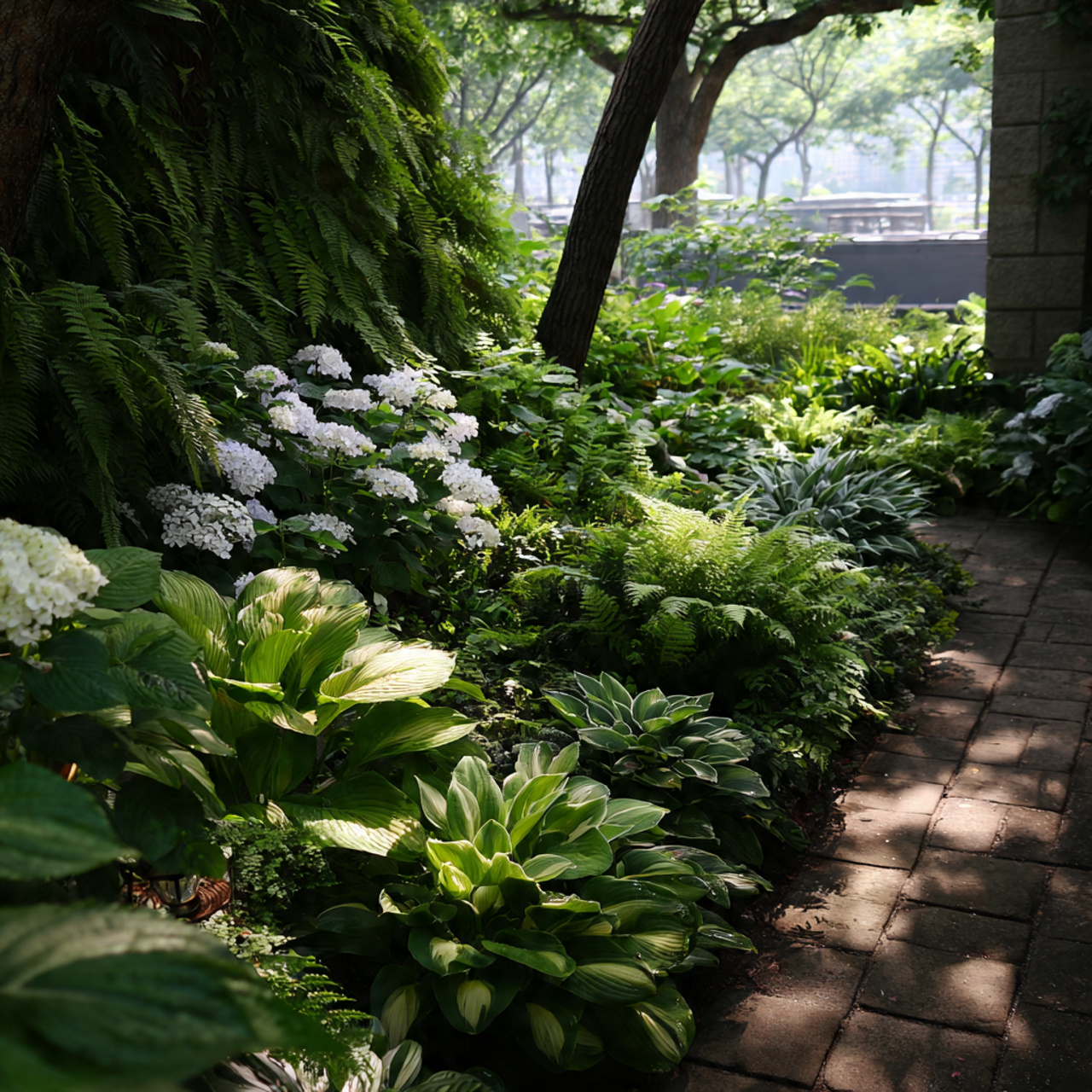
Shady spots aren’t problem areas—they’re opportunities for lush, peaceful gardens. Shade-loving plants often feature stunning foliage that provides season-long interest beyond brief bloom times.
These beds feel like tranquil retreats, perfect for seating areas where you want cooling, soothing greenery.
Shade Garden Stars:
- Hostas: Endless varieties, foliage in every shade
- Ferns: Delicate texture, zero-fuss care
- Astilbe: Feathery plumes in pink, white, red
- Hydrangeas: Massive blooms, long-lasting color
Design Approach: Focus on foliage colors, textures, and shapes rather than relying solely on flowers for interest.
Embrace Drama with Rock Gardens
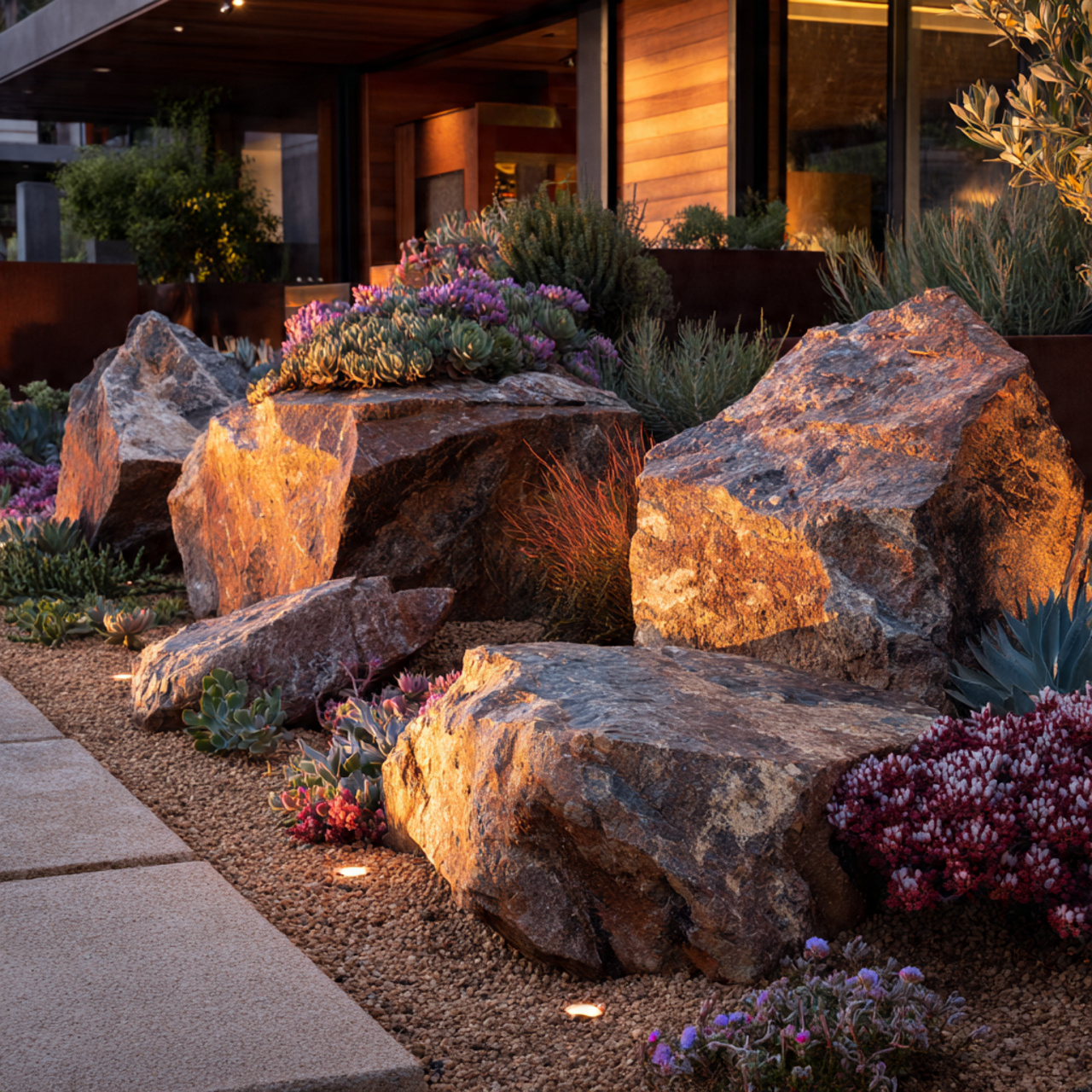
Rock gardens combine the permanence of stone with the softness of plants. They’re ideal for slopes, drainage problem areas, or creating focal points with natural elements.
This style suits drought-tolerant plants perfectly, making it ideal for dry climates or water-conscious gardeners.
Rock Garden Plants:
- Sedums: Succulent foliage, star-shaped flowers
- Creeping thyme: Fragrant groundcover
- Hens and chicks: Rosette shapes, incredibly tough
- Alpine plants: Naturally adapted to rocky conditions
Layout Strategy: Arrange rocks in natural-looking clusters, bury bottom thirds for stability, and plant in crevices and pockets.
Boost Curb Appeal with Front Yard Focus
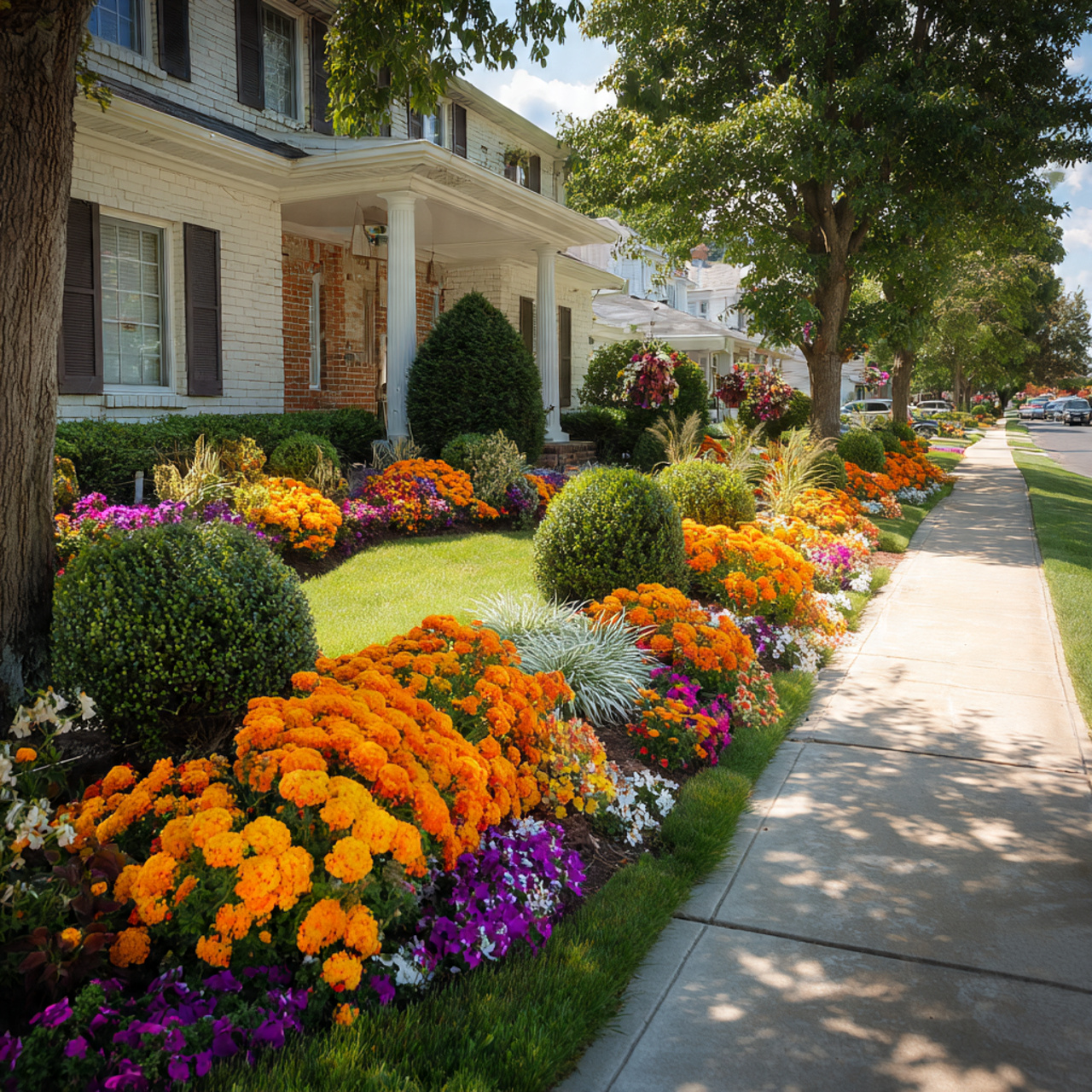
Your front yard makes first impressions on everyone who approaches your home. Strategic flower beds here communicate that you care about your property and welcome visitors.
Front beds should be bold enough to register from the street while complementing your home’s style and color.
Front Yard Bed Locations:
- Flanking the entrance (immediate welcome)
- Along the driveway (guides visitors)
- Under mailboxes (transforms utilitarian into decorative)
- Bordering front walkways (defines the path)
Color Strategy: Echo or complement your home’s exterior colors—warm tones for brick, cool colors for gray or blue siding.
Maximize Space with Vertical Growing
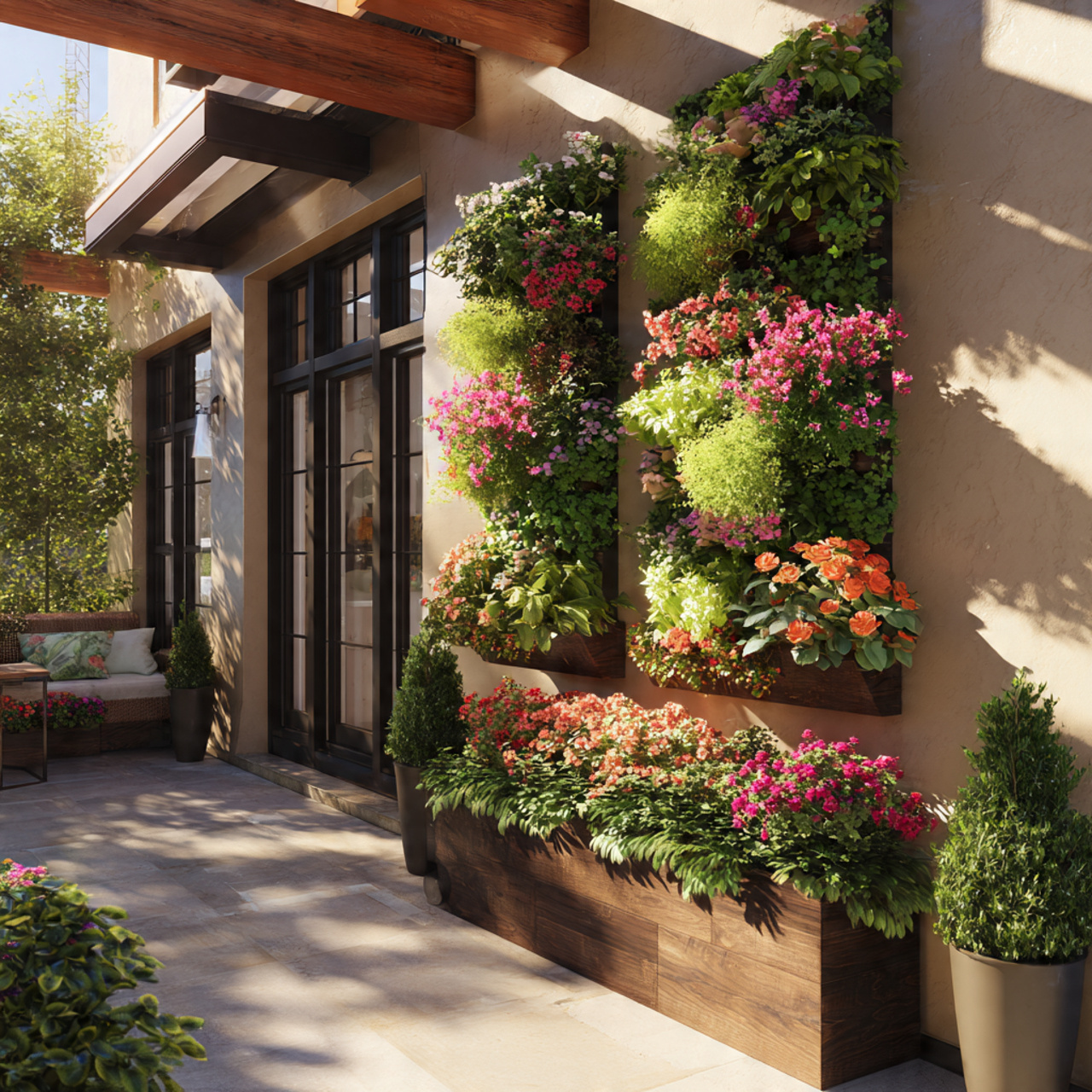
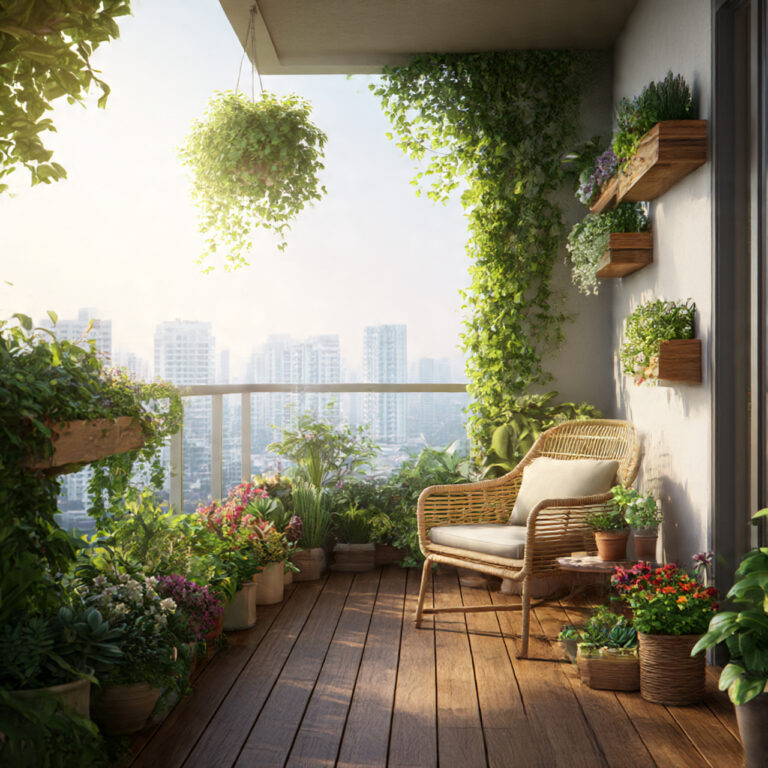
When ground space is limited, build upward. Vertical beds use trellises, wall-mounted planters, or tower structures to create lush gardens in minimal square footage.
This approach transforms blank walls, fences, and small patios into productive, beautiful spaces.
Vertical Solutions:
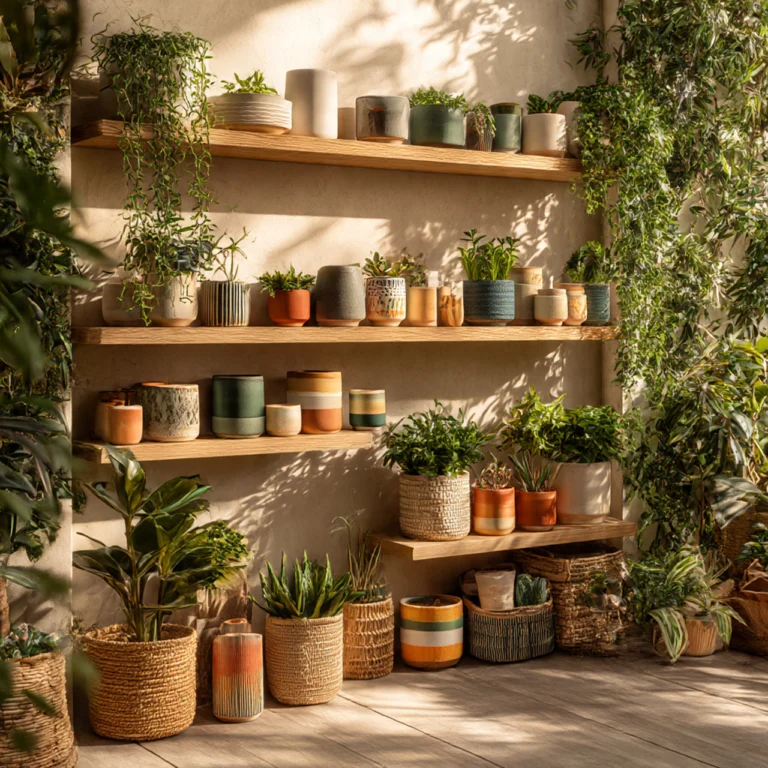
- Wall-mounted pocket planters: Perfect for herbs and small flowers
- Trellis systems: Support climbing roses, clematis, morning glories
- Tower planters: Stackable containers for multiple plants
- Espalier frames: Train plants flat against surfaces
Urban Advantage: Ideal for balconies, small courtyards, or maximizing city lots.
Simplify with Perennial-Only Beds
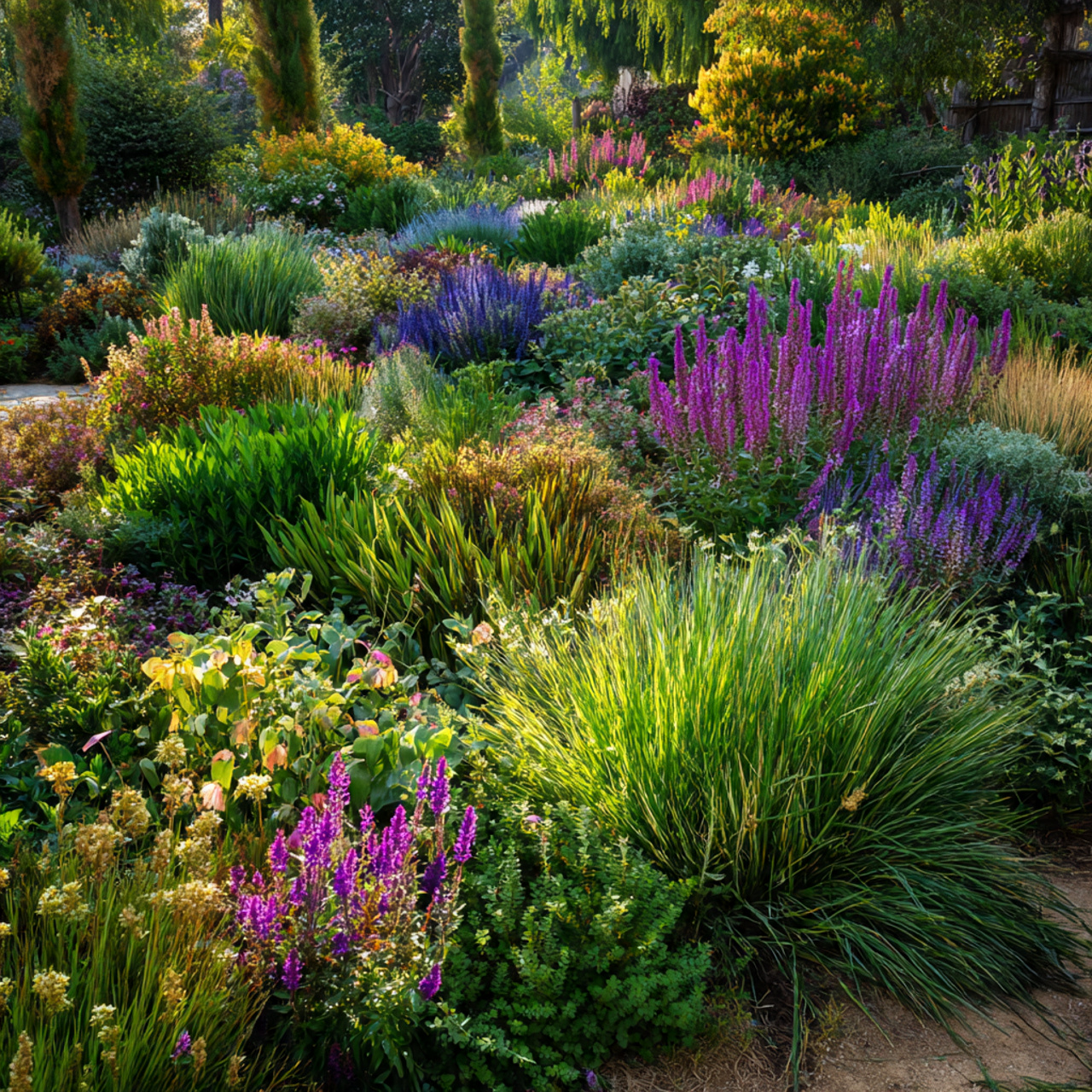
Perennial beds are the ultimate low-maintenance approach. Plant once, and they return year after year with minimal fussing.
The key is selecting varieties that bloom at different times, ensuring your bed looks alive from early spring through fall.
Season-Long Perennial Sequence:
- Spring: Tulips, daffodils, bleeding hearts
- Early summer: Peonies, iris, columbine
- Mid-summer: Daylilies, coneflowers, black-eyed Susans
- Late summer/fall: Sedums, asters, ornamental grasses
First-Year Reality: Perennials often need a season to establish. “First year sleep, second year creep, third year leap.”
Stay Fresh with Seasonal Rotations
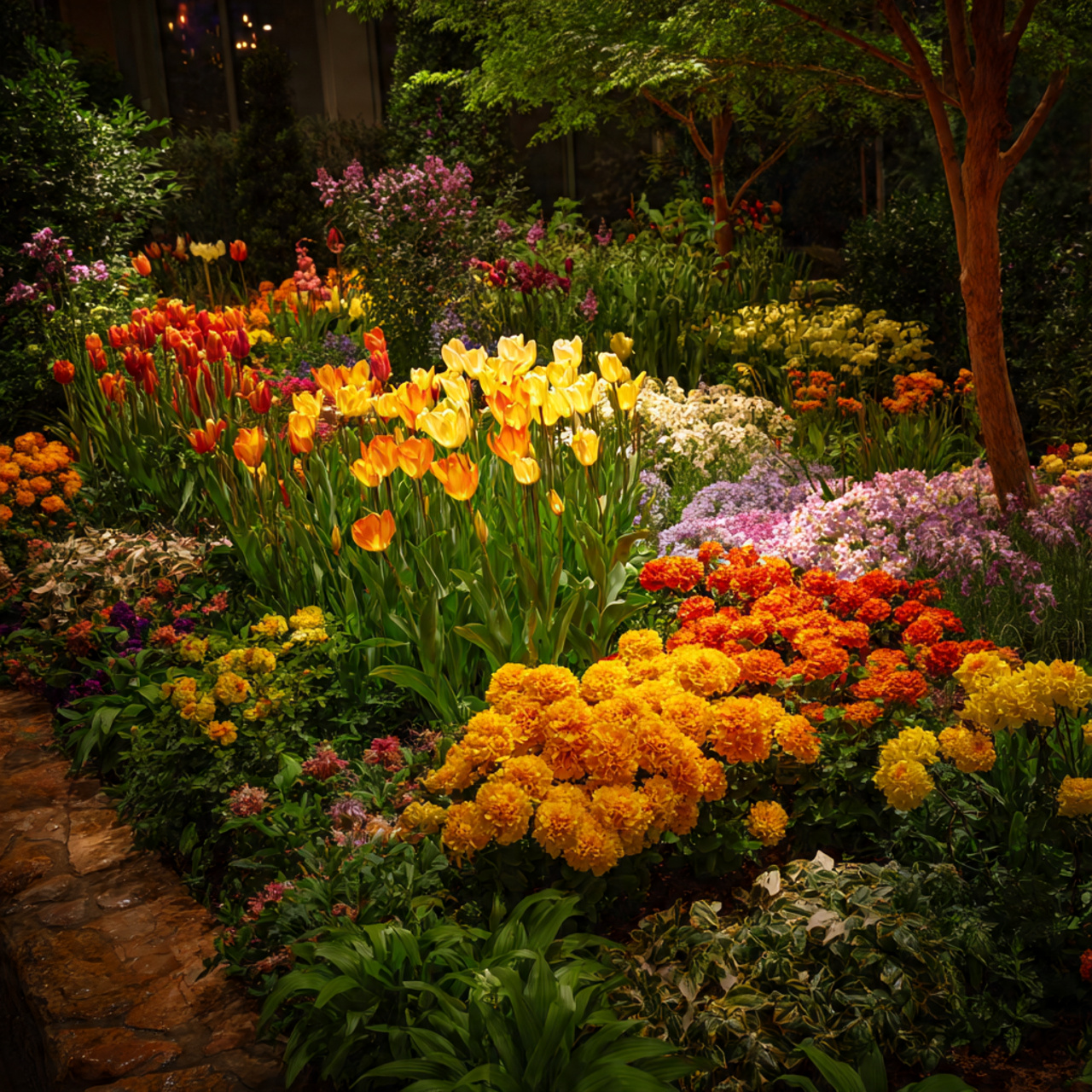
Seasonal beds allow creative expression throughout the year. Swap plantings to celebrate holidays, showcase specific color schemes, or simply keep things interesting.
This approach requires more work but delivers constantly changing displays that never feel stale.
Seasonal Rotation Ideas:
- Spring: Pansies, primrose, tulips
- Summer: Petunias, marigolds, zinnias
- Fall: Mums, ornamental kale, asters
- Winter: Evergreens, winter pansies (in mild climates)
Practical Approach: Use containers within beds for easiest seasonal swaps without disturbing permanent plantings.
Create Tranquility with Water Feature Beds
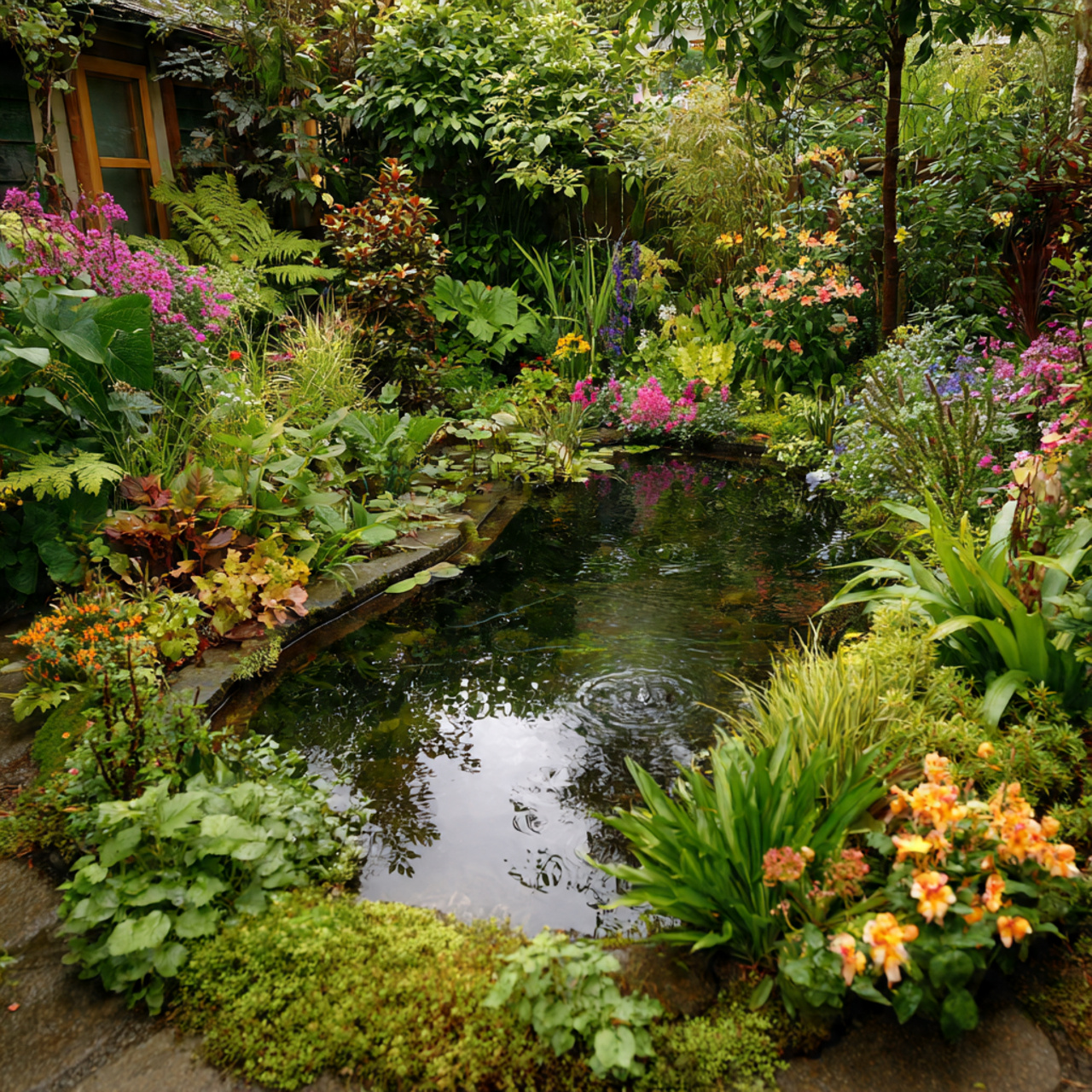
Flower beds surrounding ponds, fountains, or water features enhance the peaceful atmosphere. Moisture-loving plants thrive in these locations while softening hardscape elements.
The combination of blooms reflected in water creates magical visual effects, especially during golden hour.
Water-Loving Plants:
- Cardinal flower: Brilliant red spikes
- Japanese iris: Elegant blooms, tolerates wet feet
- Ligularia: Bold foliage, yellow flowers
- Marsh marigold: Bright yellow, early bloomer
Placement Tip: Position taller plants behind water features to avoid blocking views of the water itself.
Go Modern with Gravel-Based Beds
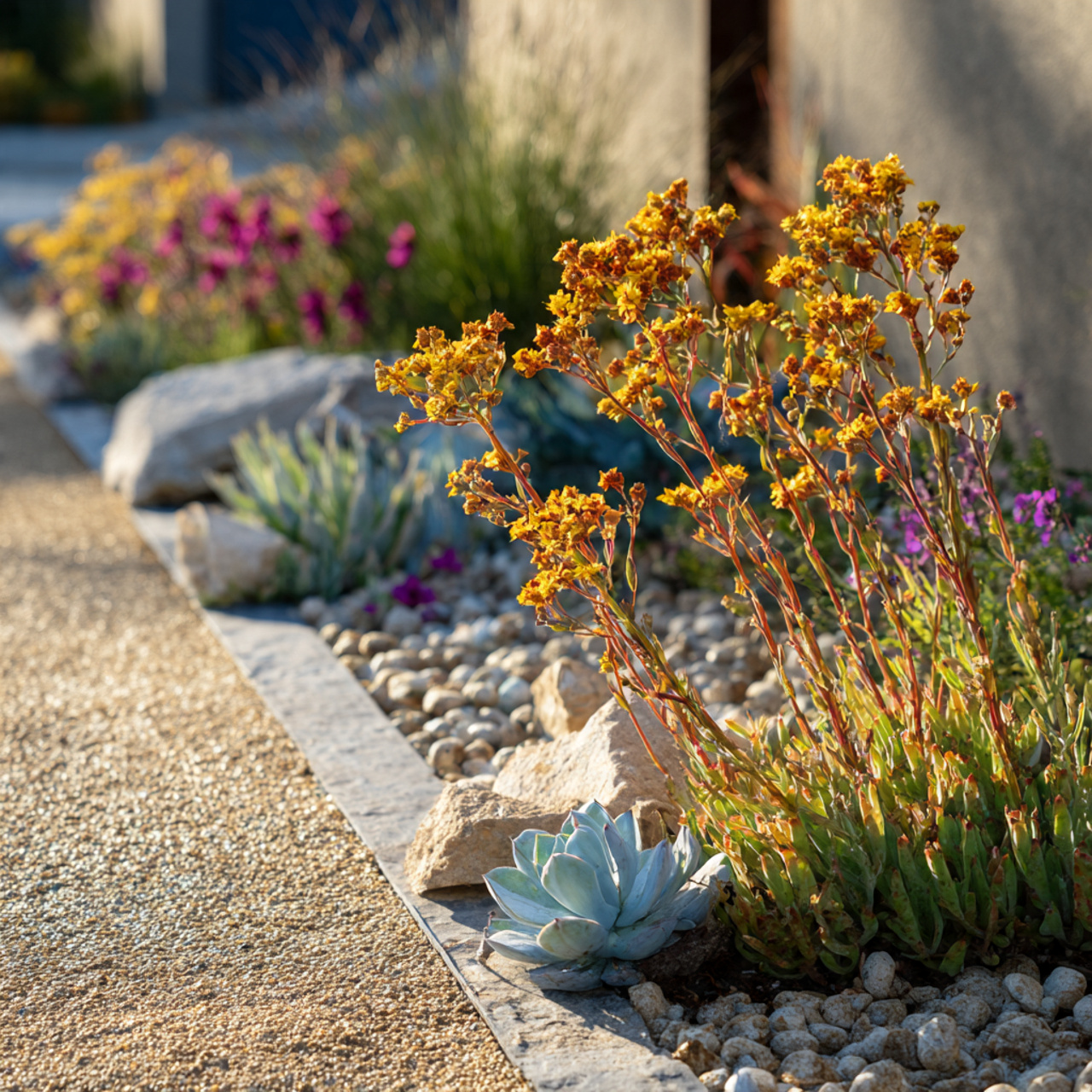
Gravel beds deliver contemporary minimalism with practical benefits. They improve drainage dramatically, suppress weeds effectively, and create clean, architectural looks.
This style pairs perfectly with drought-tolerant plants and modern home designs.
Gravel Bed Advantages:
- Superior drainage: Perfect for plants that hate wet feet
- Weed suppression: Gravel makes weeding easier
- Low maintenance: No mulch replenishment needed
- Contemporary aesthetic: Clean, crisp appearance
Plant Selections: Mediterranean herbs, ornamental grasses, succulents, and xeric perennials thrive in gravel settings.
Combine Beauty and Function with Edible Flowers
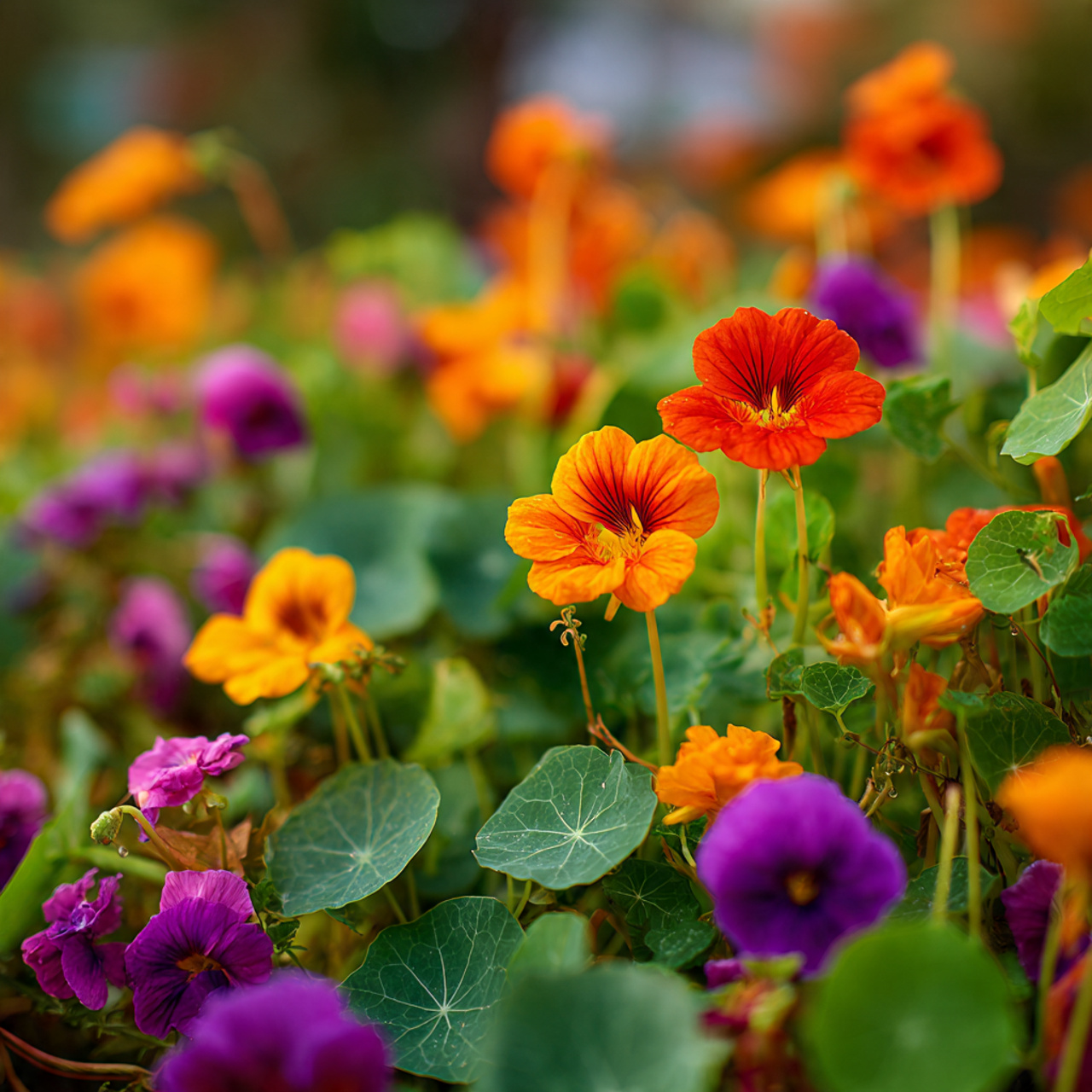
Edible flower beds serve double duty—stunning to look at and useful in the kitchen. Many edible flowers are surprisingly ornamental and easy to grow.
This approach appeals to gardeners who love blending aesthetics with practicality.
Beautiful Edible Flowers:
- Nasturtiums: Peppery flavor, bright colors, climbing or trailing
- Calendula: Cheerful orange/yellow, medicinal properties
- Pansies: Delicate flavor, perfect for garnishes
- Chives: Purple pom-pom blooms, mild onion flavor
Culinary Uses: Add to salads, freeze in ice cubes, crystallize for cake decorations, or garnish dishes for special occasions.
FAQs About Flower Bed Ideas
What’s the best flower bed design for someone just starting out?
Beginners thrive with raised beds or simple border designs along existing structures. These layouts require minimal planning and provide controlled growing environments where you can learn the basics without feeling overwhelmed. Start with easy-care perennials and add complexity as your confidence grows.
How do I select plants that’ll actually work together?
Focus on three factors: similar growing requirements (sun, water, soil), complementary bloom times for extended color, and height variation for visual interest. Group plants that need the same care—don’t mix water-lovers with drought-tolerant varieties. Research mature sizes to avoid crowding disasters.
How much time should I budget for flower bed maintenance?
Most flower beds need 30-60 minutes weekly during growing season for watering (if no irrigation system), deadheading spent blooms, light weeding, and monitoring plant health. Perennial-heavy beds require less time than annual rotations. Gravel and rock gardens demand the least maintenance overall.
Can I create impressive flower beds in limited space?
Absolutely! Vertical designs, container-integrated approaches, and carefully chosen compact varieties make small spaces incredibly productive. Focus on one stunning bed rather than multiple mediocre spots. Curved edges and layered heights create the illusion of more space than you actually have.
What soil should I use for optimal results?
Quality flower bed soil combines good drainage with nutrient availability. Mix equal parts existing soil (if decent), compost, and peat moss or coconut coir. For raised beds, use a specialized raised bed mix or create your own with 60% topsoil, 30% compost, and 10% drainage material like perlite.
Bringing Your Flower Bed Vision to Life
The difference between a garden and an exceptional outdoor space often comes down to thoughtful flower bed design. These aren’t just decorative afterthoughts—they’re the foundation that gives structure, color, and personality to your entire landscape.
Whether you’re drawn to formal symmetry, relaxed cottage abundance, modern minimalism, or practical edible gardens, the right flower bed approach transforms how you experience your outdoor space. Start with designs that match your maintenance preferences and aesthetic sensibilities, then let your garden evolve as your skills and confidence grow.
Remember that the most successful flower beds balance visual appeal with practical growing conditions. Choose plants suited to your specific site, group them thoughtfully by needs and heights, and give them room to reach their potential. The result is a garden that not only looks intentional and beautiful but actually thrives with the care you’re realistically able to provide.
Your outdoor space has potential waiting to be unlocked. Pick one idea that speaks to you, start small, and watch as that first successful bed inspires the next. Before you know it, you’ll have transformed your property into something that makes you genuinely excited to step outside—and that’s what great garden design is all about.