27 Chinese Money Plant Care Guide: Tips for Healthy Pilea Peperomioides
If you’ve been scrolling through plant Instagram lately, you’ve probably noticed those adorable round-leafed beauties popping up everywhere. The Chinese Money Plant (Pilea peperomioides) has become the sweetheart of indoor gardening, and honestly, it’s not hard to see why. With leaves that look like tiny green pancakes and a reputation for being super generous with baby plants, this little stunner deserves a spot in your home.
What makes this plant even more special? It’s believed to bring good luck and prosperity—a lovely tradition inspired by those coin-shaped leaves. Plus, it’s pretty forgiving for beginners, as long as you understand what makes it happy.
The best part? This plant loves to share the love by producing “pups” (baby plants) that you can pass along to friends. That’s actually why some folks call it the Friendship Plant. Let’s dive into everything you need to know to keep your Chinese Money Plant thriving and multiplying.
Getting to Know Your Chinese Money Plant
Originally from the mountain regions of southern China, the Pilea peperomioides has adapted to life on shady forest floors. This means it’s perfectly suited for indoor life—even if your apartment doesn’t have massive windows everywhere.
Here’s the cool thing about these plants: they’re excellent communicators. Those glossy, vibrant green leaves will tell you exactly what they need. When everything’s going well, you’ll see shiny leaves reaching confidently toward the light. When something’s off, you might notice curling, drooping, or color changes that signal it’s time to adjust your care routine.
Finding the Perfect Light for Your Pilea
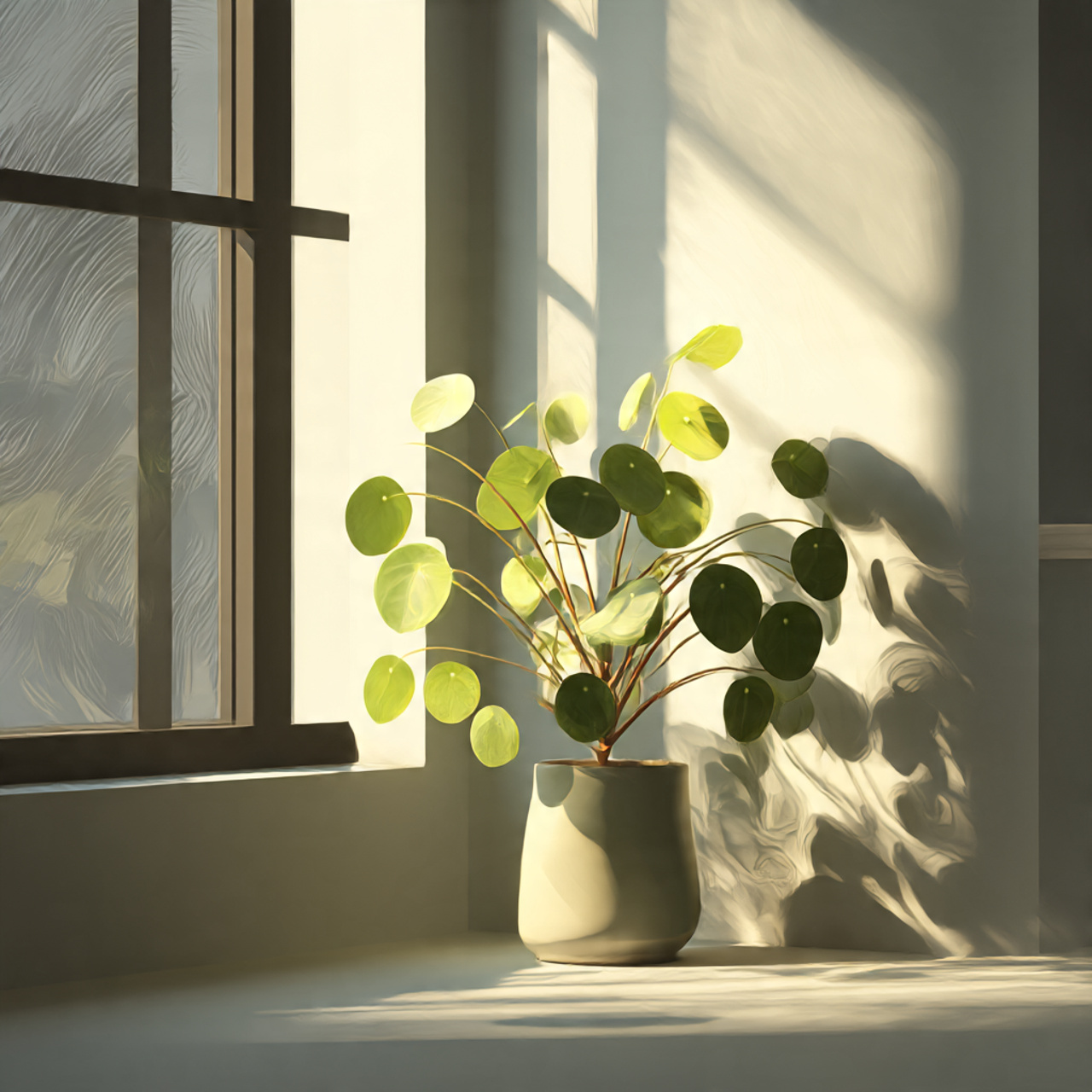
Light is absolutely crucial for keeping your Chinese Money Plant looking its best. Think of it this way: these plants want the goldilocks treatment—not too much, not too little, but just right.
Your Pilea thrives in bright, indirect sunlight. Picture placing it near a window where it gets plenty of ambient light without harsh rays beating down on those delicate leaves. Direct afternoon sun? That’s a recipe for crispy, bleached spots that won’t heal.
On the flip side, if your plant isn’t getting enough light, it’ll start stretching toward the nearest source, becoming tall and “leggy” with leaves spaced far apart instead of that cute, compact look we all love.
The sweet spot: An east-facing window is perfect, or set it a few feet back from south or west-facing windows. And here’s a game-changer—rotate your plant regularly (we’ll talk more about this later) to keep growth even on all sides.
Mastering the Watering Schedule
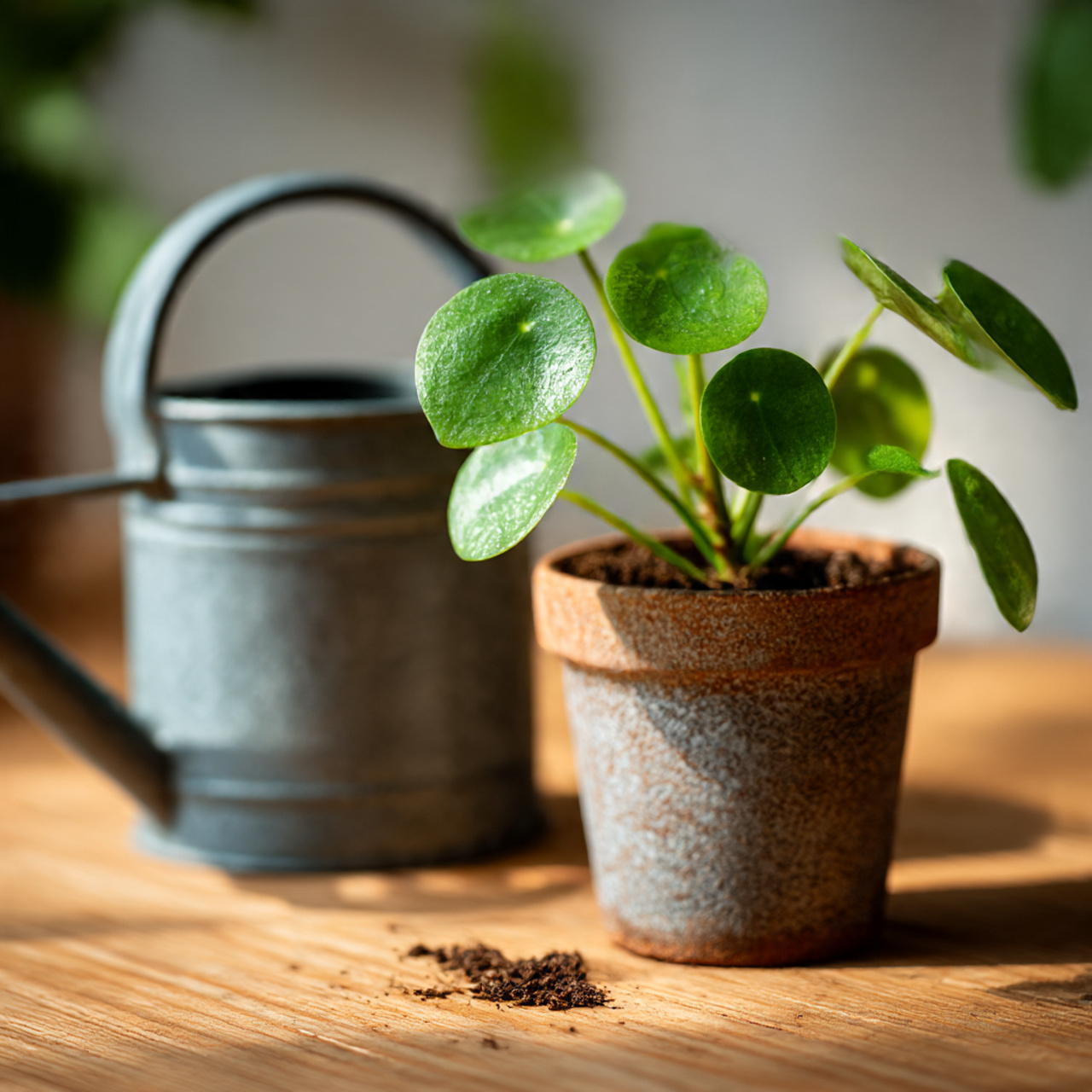
Let’s be real: most Chinese Money Plants meet their end because of overwatering, not neglect. These plants hate sitting in soggy soil, so getting your watering routine right is essential.
The golden rule? Water thoroughly when the top two inches of soil feel dry. For most homes, this works out to about once a week or every ten days, though it varies with the season and humidity. Always make sure water drains completely from the pot’s bottom.
When winter rolls around and growth slows down, you’ll need to cut back significantly on watering. Your plant simply isn’t drinking as much during those darker, cooler months.
Quick check method: Stick your finger about two inches into the soil. Dry? Time to water. Still moist? Wait a few more days. When in doubt, it’s better to underwater than overwater.
Creating the Perfect Soil Mix
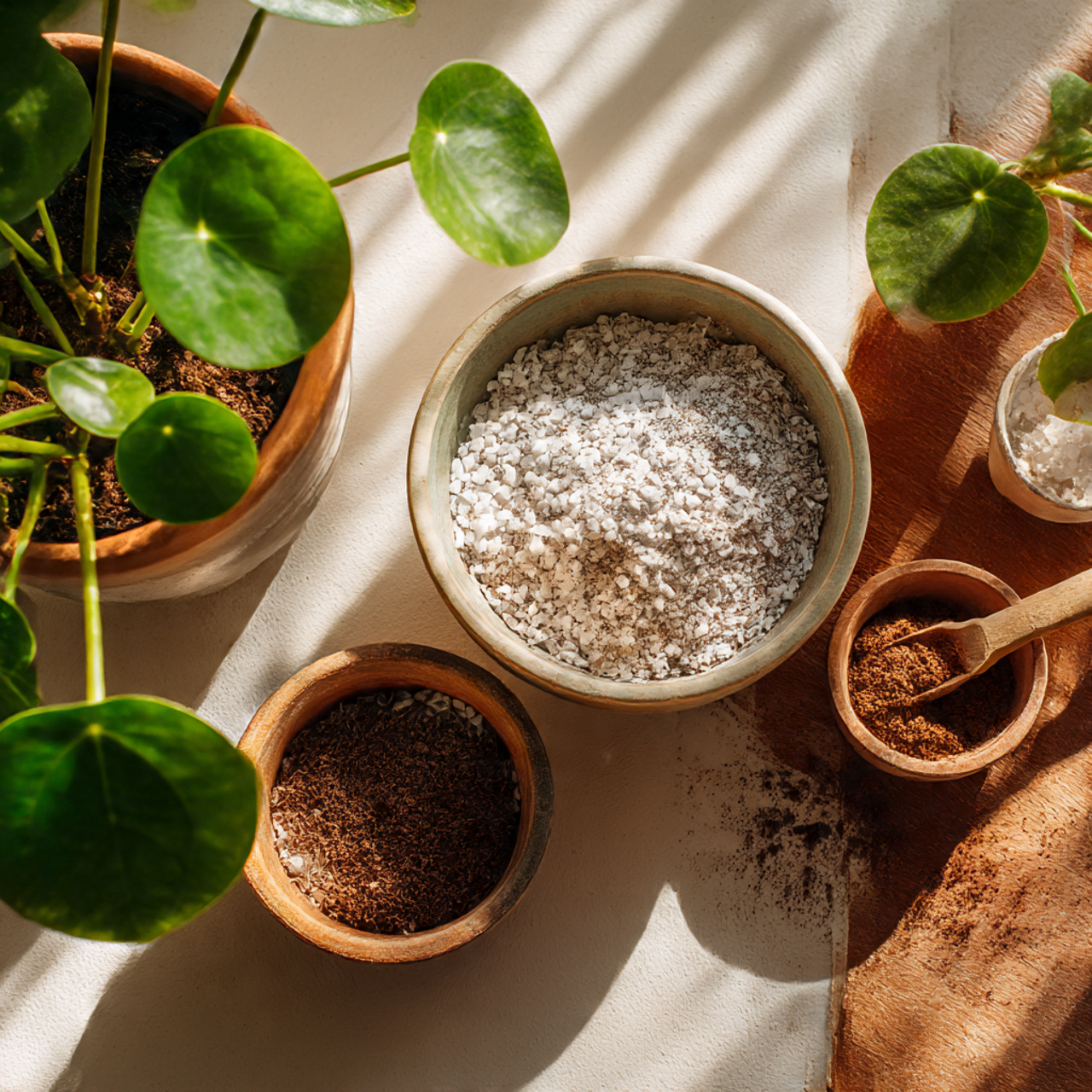
Since overwatering is such a common problem, your soil choice becomes incredibly important. Standard potting soil straight from the bag? That’s usually too dense and moisture-retentive for our Pilea friend.
What you need is a mix that drains quickly while still holding just enough moisture for the roots. Think fluffy, airy, and fast-draining.
The winning recipe: Mix two parts quality potting soil with one part perlite and one part peat moss or coco coir. The perlite is non-negotiable here—it creates those crucial air pockets that prevent compaction and keep water from pooling around the roots.
This combination gives your plant’s roots room to breathe while ensuring they don’t sit in water, which is exactly what we’re aiming for.
Feeding Your Plant for Healthy Growth
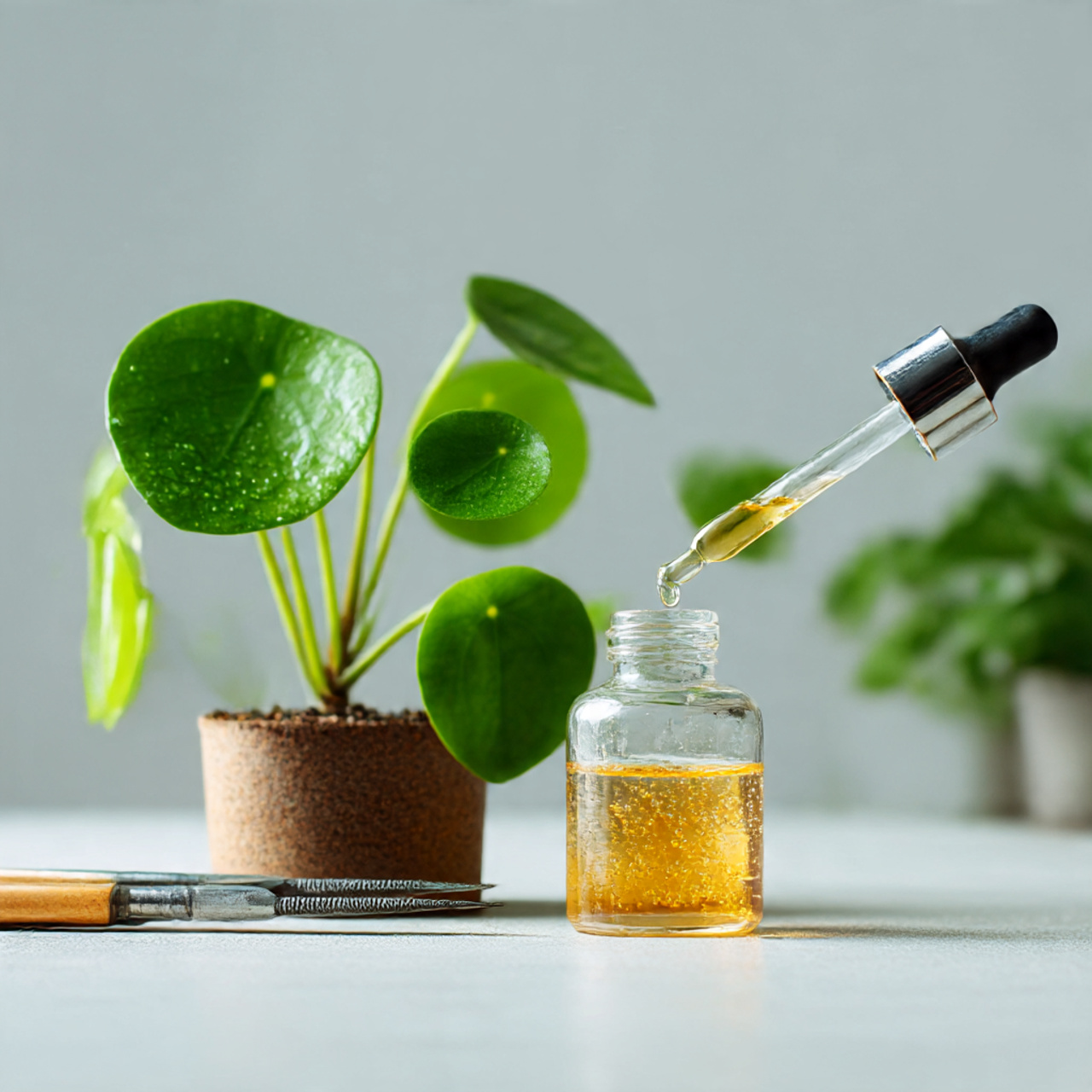
While the Chinese Money Plant isn’t exactly a speed demon in the growth department, a little nutritional boost during spring and summer goes a long way. This is when your plant is actively growing and can actually use those nutrients.
Feed your Pilea every two to four weeks during the growing season with a balanced liquid houseplant fertilizer. Here’s the trick: dilute it to half or even quarter strength to avoid overwhelming those delicate roots.
Winter pause: Stop fertilizing completely when fall arrives. Your plant goes into a rest period and won’t use the nutrients anyway. Over-fertilizing can lead to mineral buildup in the soil, which causes more harm than good.
Look for a balanced fertilizer with an NPK ratio close to 10-10-10, and occasionally flush the soil with plain water to wash away any accumulated salts.
How to Propagate Chinese Money Plant Pups
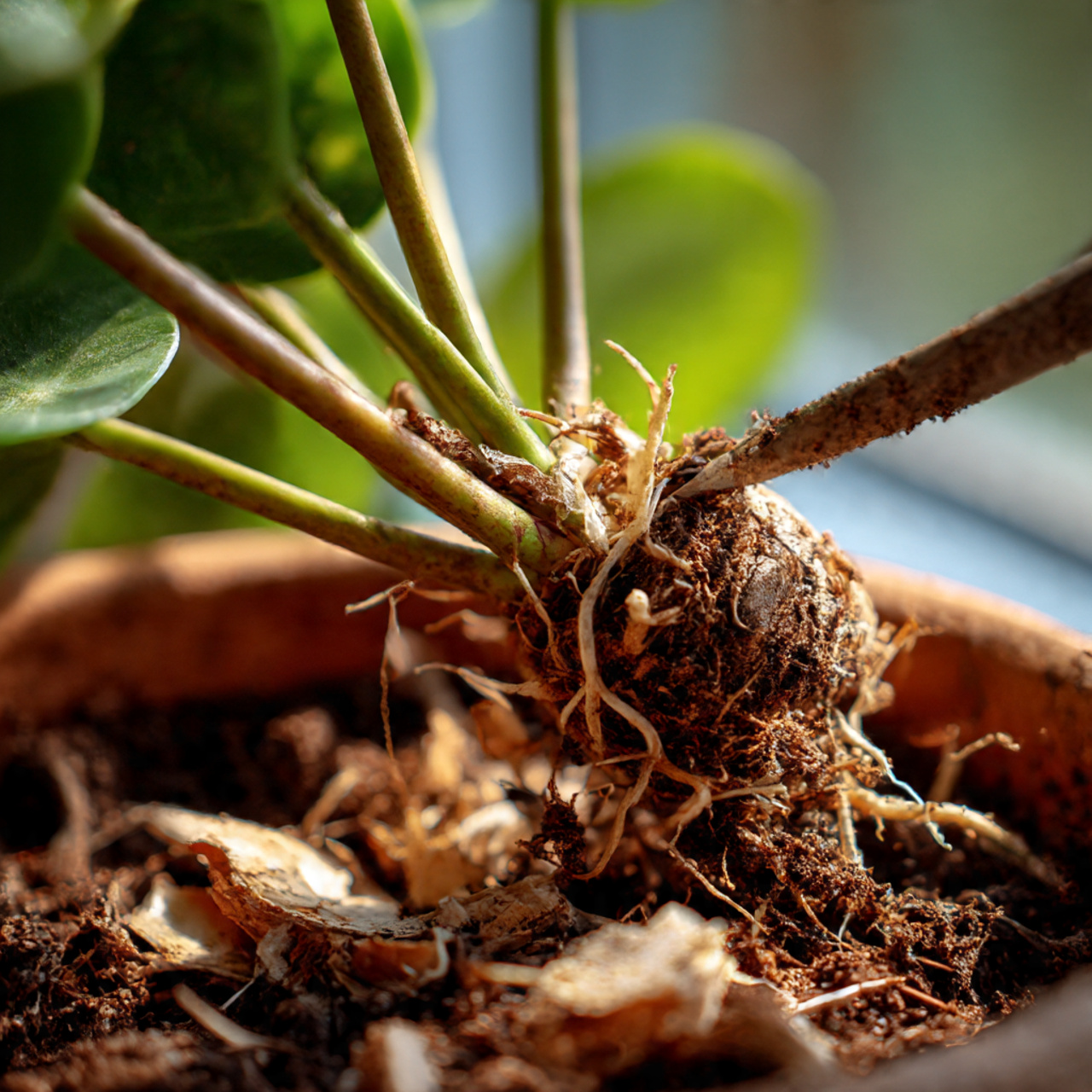
This is where the Chinese Money Plant really shines and earns its Friendship Plant nickname. Mature plants regularly produce “pups”—tiny baby plants that pop up from the root system, often appearing in the soil around the mother plant.
Propagating these little guys is incredibly easy and satisfying. Wait until a pup reaches at least two inches tall with several small leaves. This ensures it’s strong enough to survive on its own.
Step-by-step separation:
- Use clean, sterilized scissors or a knife
- Gently dig down around the pup
- Cut it away from the mother plant’s root system
- Try to keep as much of the pup’s own roots as possible
- Plant immediately in a small pot with fresh, well-draining soil
These babies adapt quickly and grow into full plants you can enjoy or share with friends.
Taking Stem Cuttings for Propagation
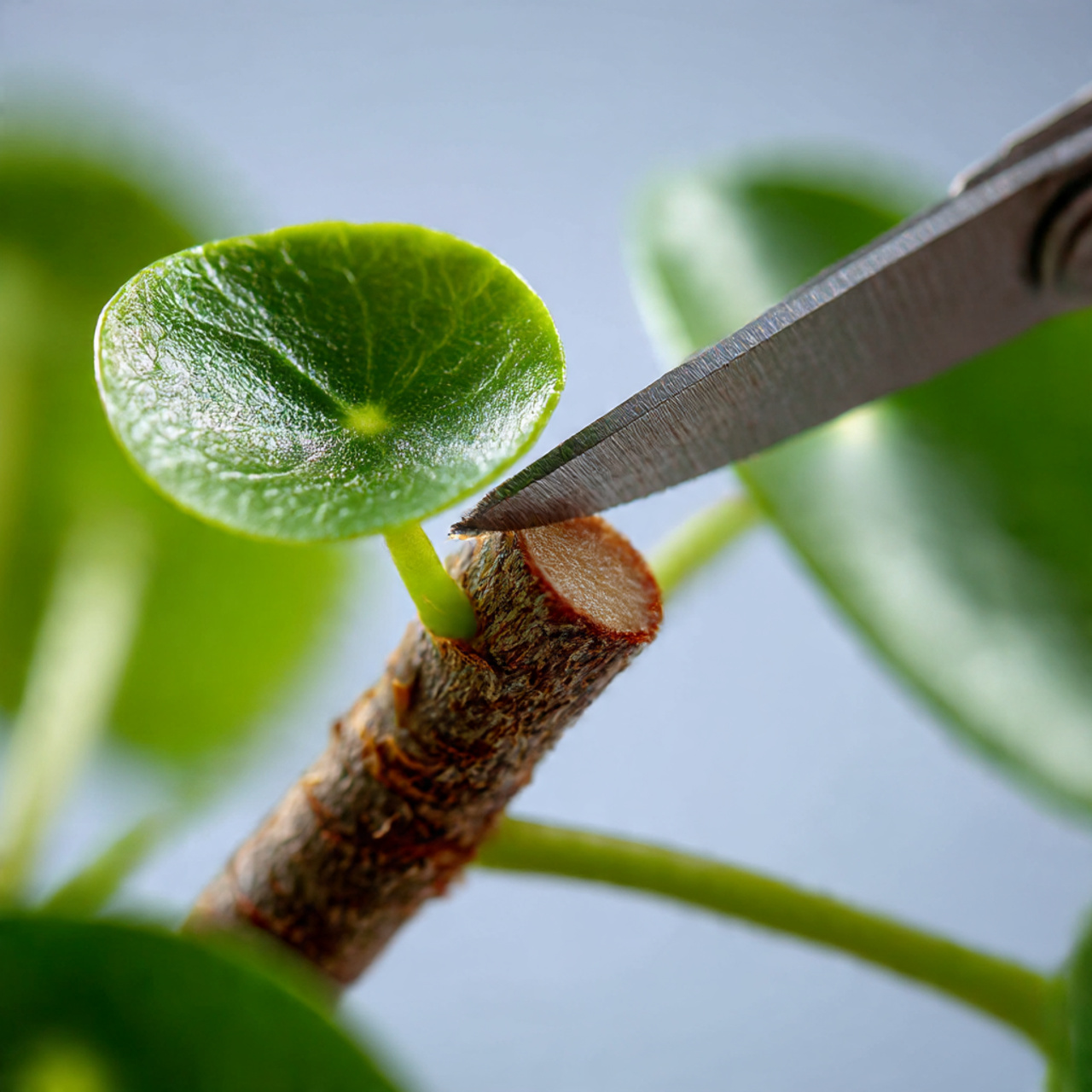
If your plant has gotten tall and leggy, stem cuttings offer another propagation method that also helps reshape your plant. Yes, it sounds dramatic to “behead” your plant, but it’s actually a great way to start fresh and encourage new growth.
Make a clean cut just below a node (where a leaf meets the stem), ensuring your cutting is a few inches long with at least two or three healthy leaves attached.
Two rooting options:
- Water method: Place the cutting in a glass of water, changing it every few days. Wait for substantial white roots before planting in soil.
- Direct soil method: Plant the cutting in moist, well-draining soil and keep it consistently damp until roots establish.
Both methods work well, so choose whichever you prefer.
When and How to Repot Your Pilea
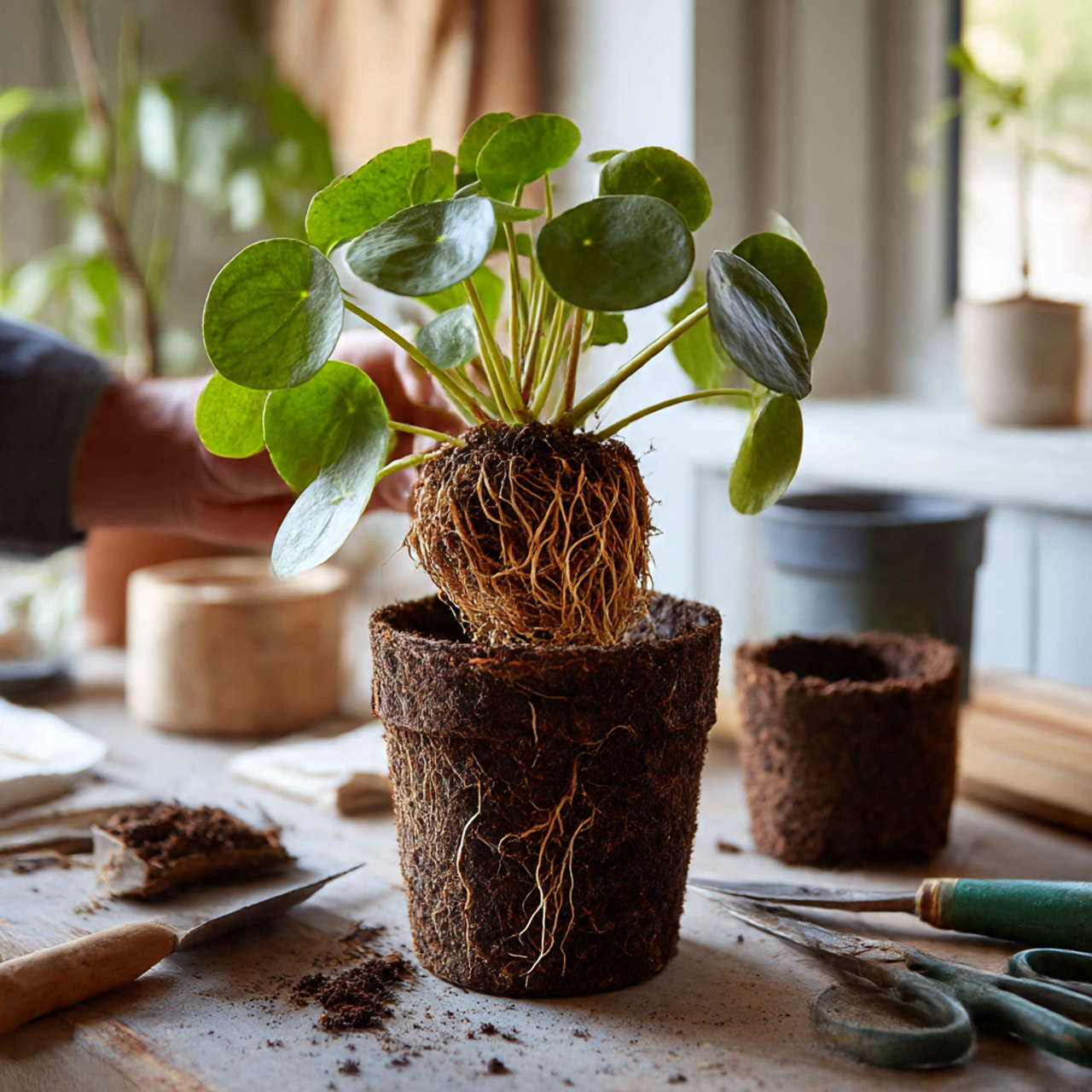
Your Chinese Money Plant doesn’t mind being slightly snug in its pot, but eventually, those growing roots and multiplying pups will need more space. Plan on repotting every one to two years, ideally in spring when the plant is ready to grow actively.
Watch for these signs it’s time: roots circling the drainage holes, roots popping up through the topsoil, or water running straight through without being absorbed.
Repotting tips:
- Choose a pot only one size larger (about two inches wider)
- Don’t go too big too fast—excess soil holds too much moisture
- Gently loosen compacted roots before replanting
- Use fresh, fast-draining potting mix
A properly sized pot helps prevent overwatering issues and keeps your plant healthy.
Pruning for Shape and Health
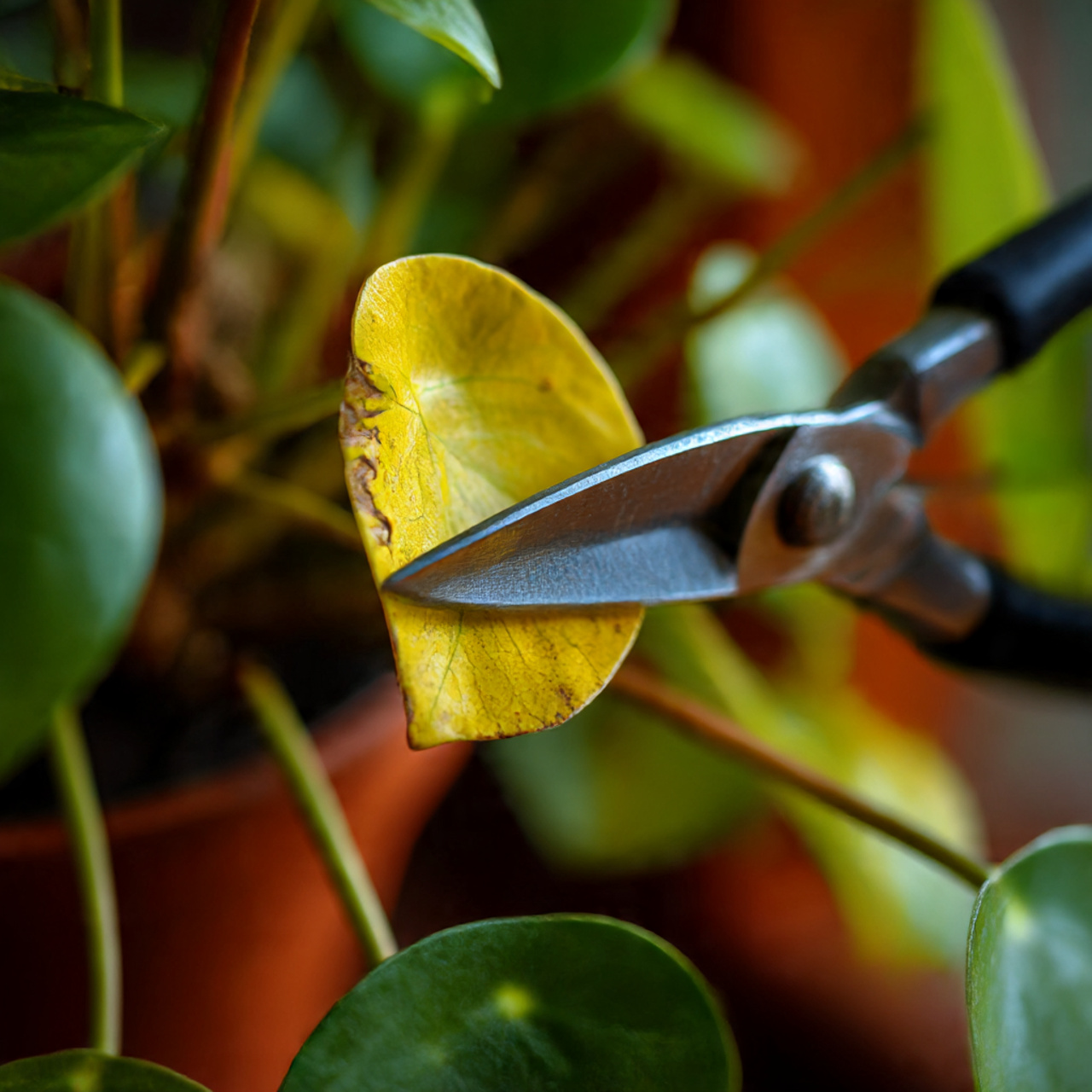
Pruning isn’t just about aesthetics—it’s about keeping your plant healthy and encouraging fuller growth. Since Chinese Money Plants naturally grow upward, strategic pruning creates a more attractive, rounded appearance.
Start by removing any dead, yellowing, or damaged leaves. Follow the leaf stem back to the main trunk and make a clean cut with sterilized scissors.
The “chop and prop” technique: If your plant is getting too tall or top-heavy, cut the top section off. This creates a cutting for propagation and forces the original stem to produce new growth points lower down, resulting in a bushier plant.
Regular maintenance keeps your Pilea looking its best and opens up propagation opportunities.
Dealing with Yellow Leaves
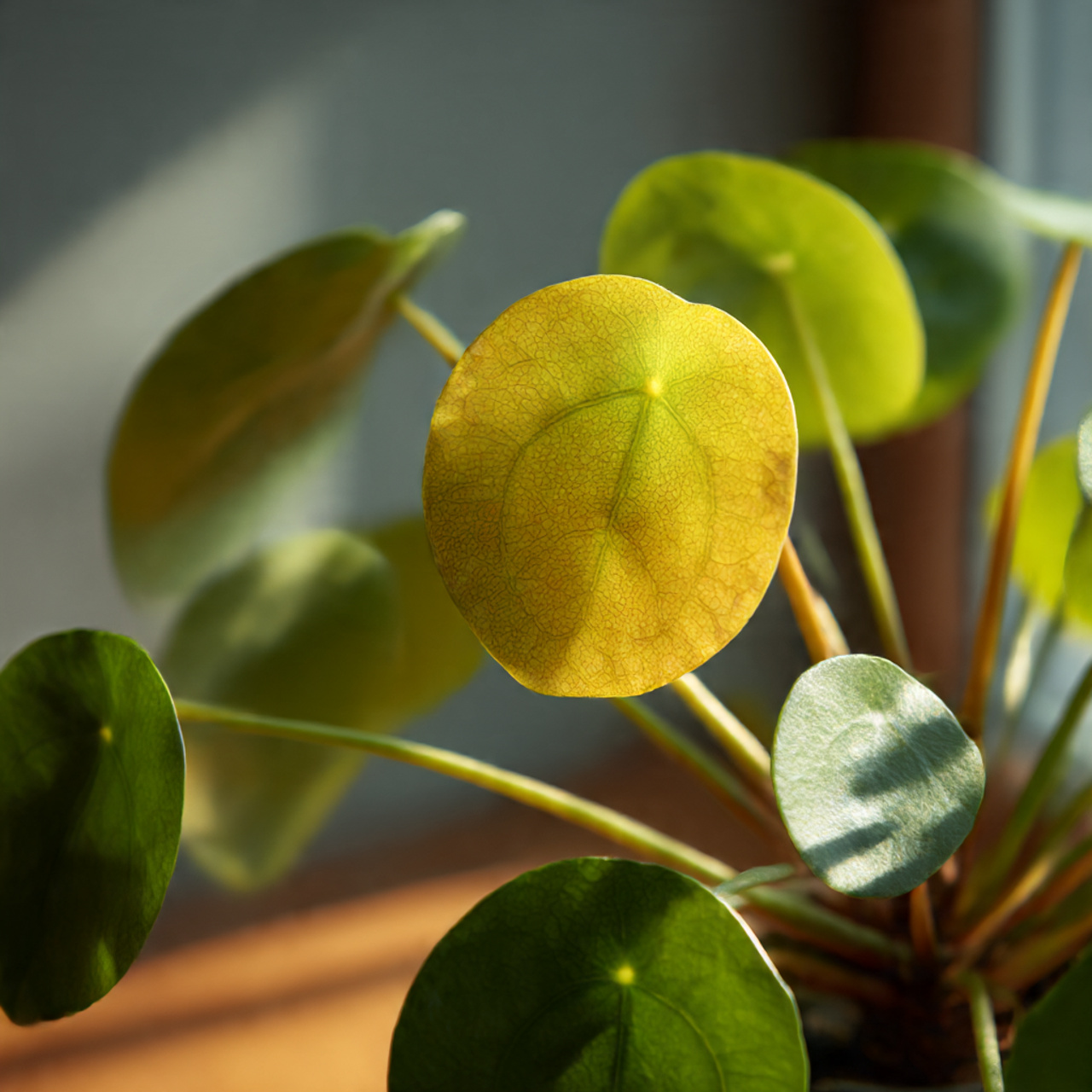
Yellow leaves are your plant’s way of waving a red flag that something needs adjusting. The tricky part? Several different issues can cause yellowing, so you need to play detective.
Overwatering: Soft, mushy yellow leaves with damp soil. Solution: Let the soil dry out and reduce watering frequency.
Underwatering: Uniformly yellow, crispy leaves starting from the bottom with bone-dry soil. Solution: Water thoroughly and maintain a more consistent schedule.
Nutrient deficiency: Overall yellowing across the plant. Solution: Resume fertilizing during the growing season.
Check soil moisture first—this will usually point you toward the right solution.
Fixing Droopy Leaves
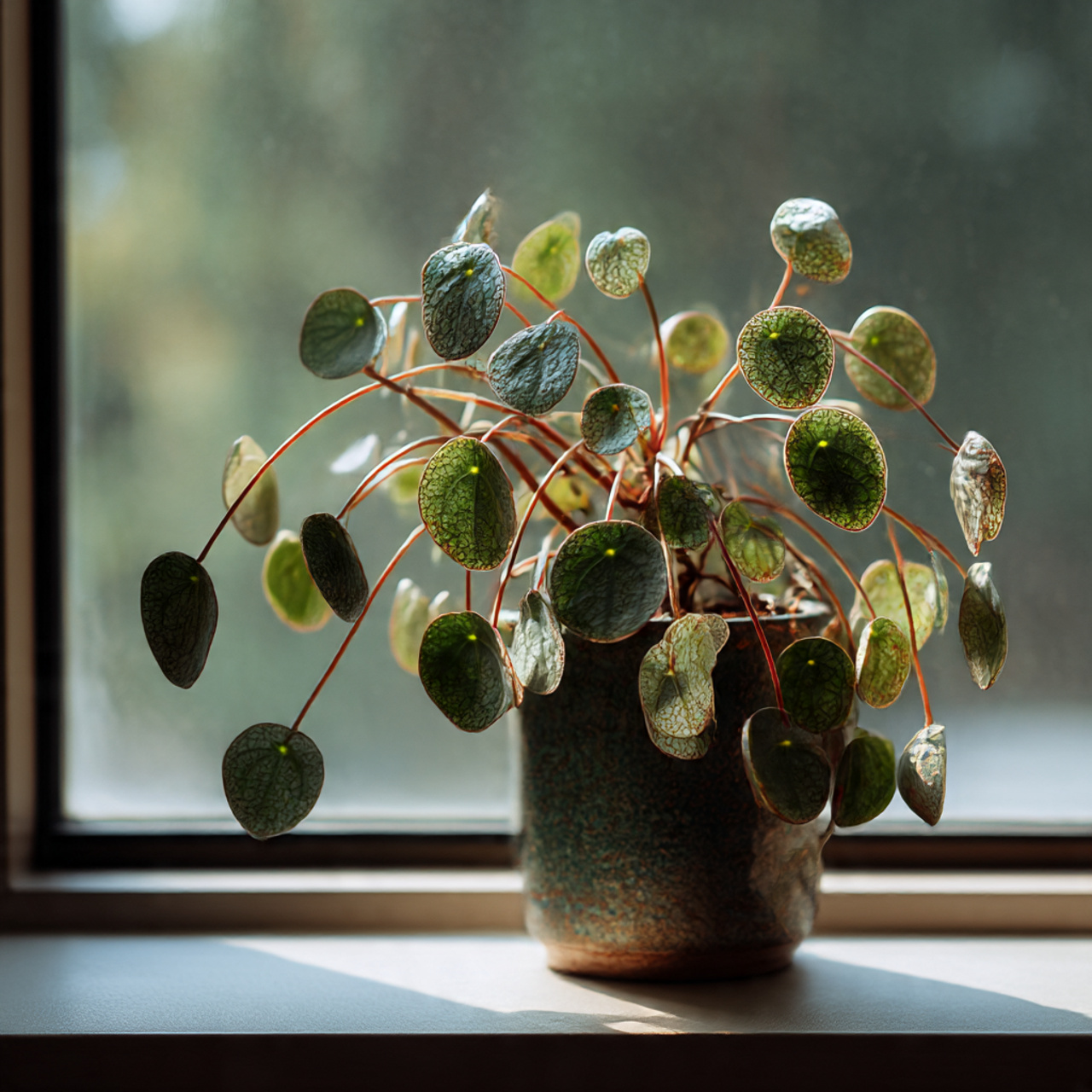
When those usually perky, coin-shaped leaves start looking deflated and drooping, your plant is typically crying out for water. Without adequate moisture, the leaves lose their internal pressure and the stiff leaf stems go limp.
Underwatering fix: Give the plant a deep, thorough soak until water flows freely from the drainage holes. Let it sit for 20 minutes to absorb moisture, then discard any excess water.
Plot twist: If drooping comes with yellowing and wet soil, you’re actually dealing with root rot from overwatering. In this case, you’ll need to repot into fresh, dry soil and cut back damaged roots.
The soil condition tells you which problem you’re facing.
Keeping Pests at Bay
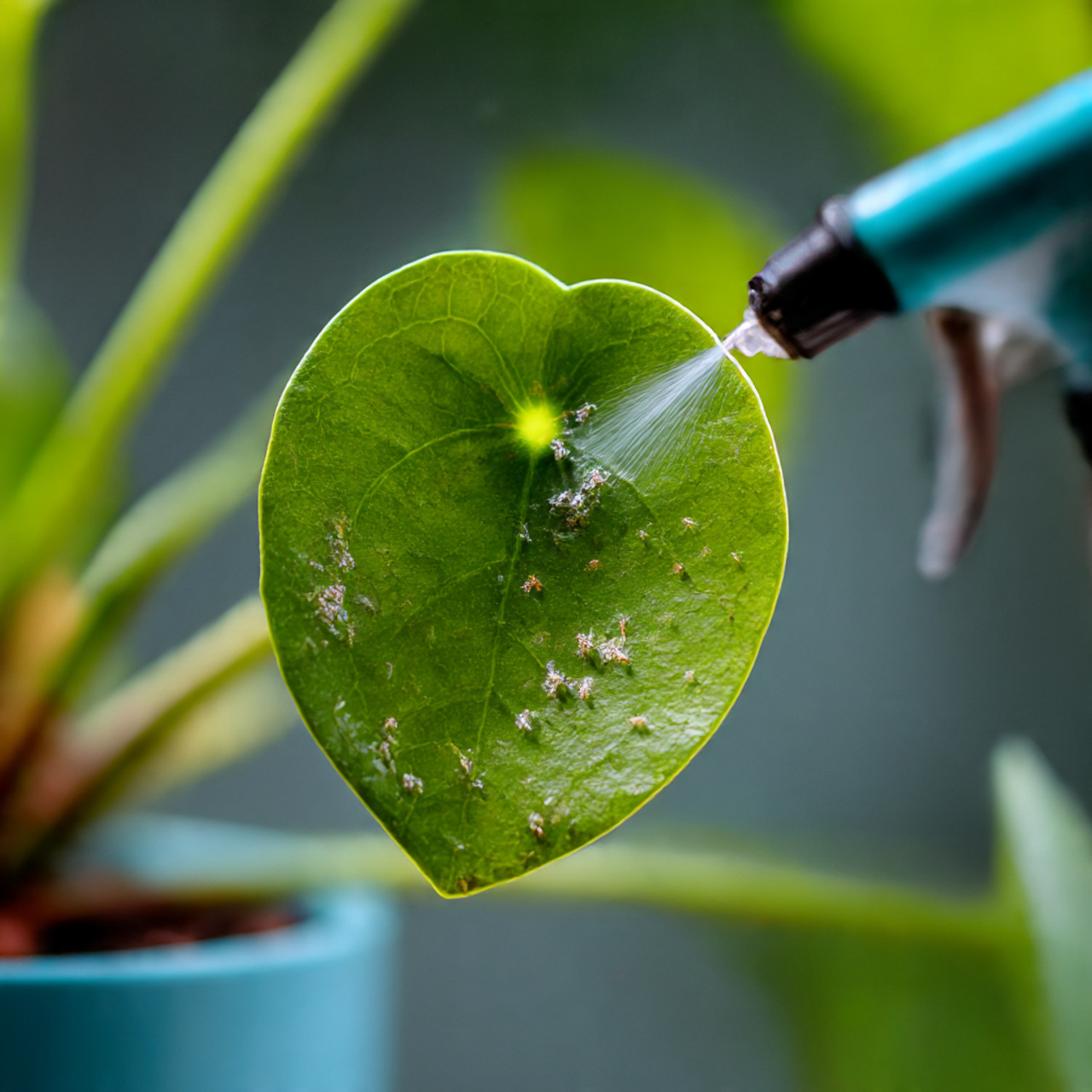
The good news? Chinese Money Plants are generally hardy and don’t attract pests easily. The bad news? When pests do show up, they can spread quickly if not addressed.
Common culprits:
- Mealybugs: Tiny white cottony spots on stems and leaves
- Spider mites: Fine webbing and stippled leaves
- Fungus gnats: Small flying insects around the soil surface
Prevention is key: Good air circulation and avoiding overwatering (especially for fungus gnats) keeps most pests away.
Treatment plan: If you spot pests, immediately isolate the plant. Wipe down every leaf—top and bottom—with a neem oil solution or insecticidal soap. Repeat treatments until the infestation is completely gone.
Understanding Brown Spots
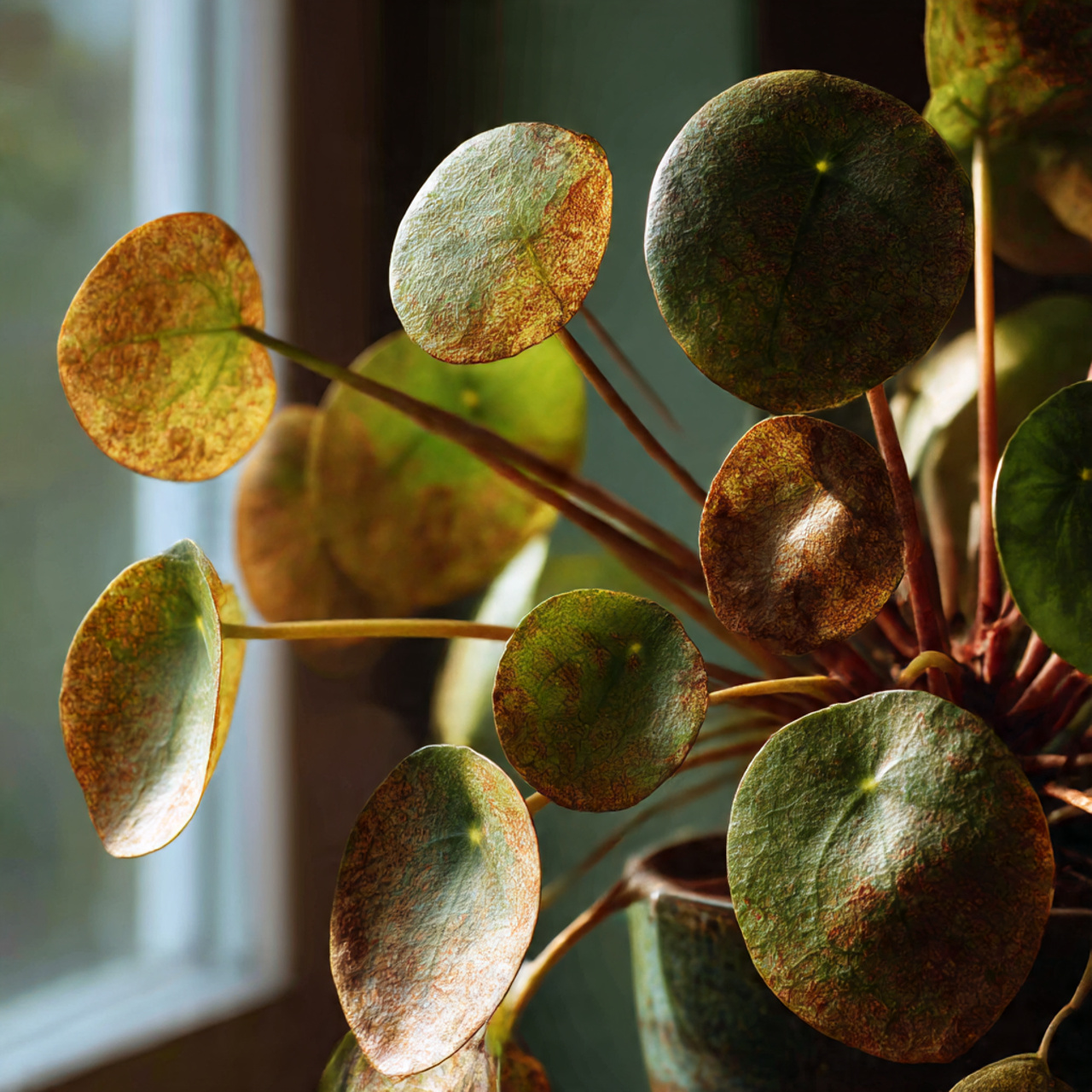
Brown spots can range from minor cosmetic issues to serious problems, and the appearance of the spots tells you what’s going on.
Crispy, dry brown edges: Usually caused by low humidity, scorching direct sunlight, or underwatering. Move the plant away from intense light and consider increasing humidity.
Soft, mushy, dark brown spots: A clear sign of overwatering or fungal infection. The tissue is literally breaking down. Cut back on watering immediately, ensure proper drainage, and remove affected leaves to prevent spread.
Chemical burn: Sharp, defined brown spots can indicate over-fertilization. Flush the soil with clean water to remove excess mineral salts.
Quick identification and correction prevent these issues from worsening.
Getting Temperature and Humidity Right
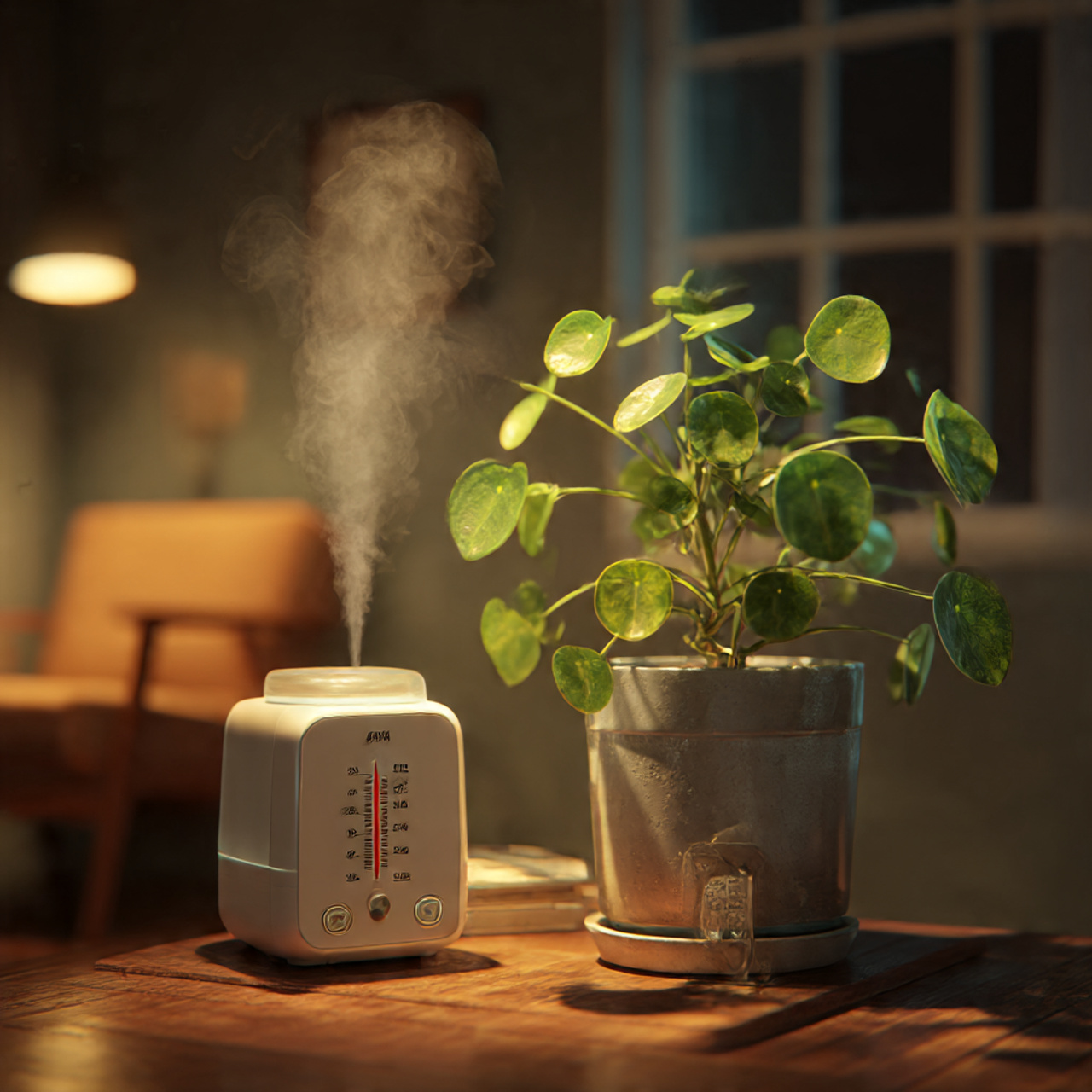
Coming from subtropical mountain regions, the Pilea adapts well to typical indoor conditions but has some preferences worth noting.
Ideal temperature range: 65°F to 75°F (18°C to 24°C) year-round. Avoid cold drafts from windows, doors, or air conditioning vents, which can cause leaf drop and shock.
Humidity sweet spot: While average indoor humidity works, higher moisture levels encourage bigger, more vigorous leaves.
Boosting humidity:
- Place a humidifier nearby
- Group plants together (they create their own microclimate)
- Use a pebble tray with water under the pot (don’t let the pot sit in water directly)
These adjustments help your plant reach its full potential.
Styling Your Chinese Money Plant
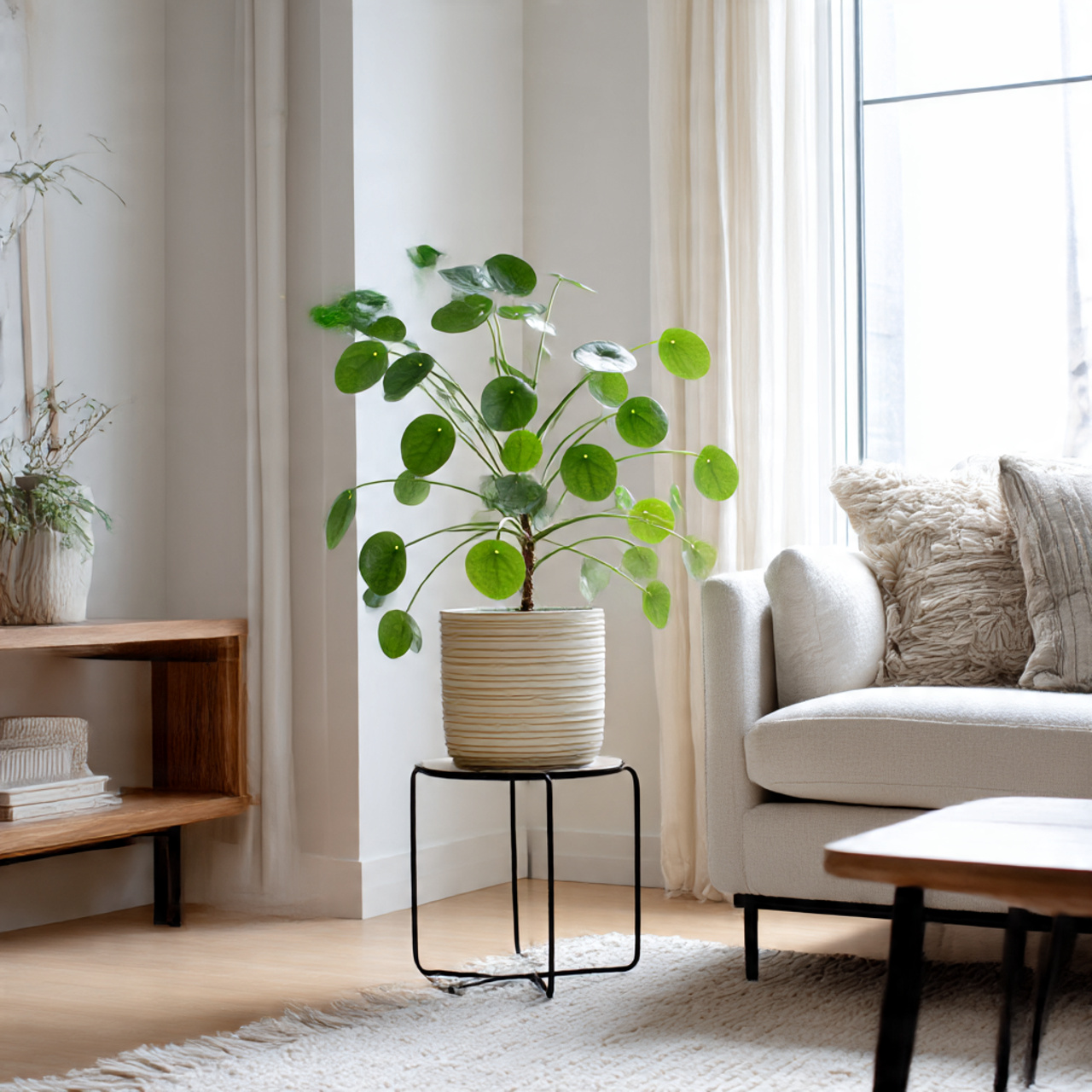
With its architectural form and clean lines, the Chinese Money Plant fits beautifully into modern, minimalist, and Scandinavian design aesthetics. Those round leaves create instant visual interest.
Display ideas:
- Showcase on floating shelves or bookcases
- Elevate on mid-century modern plant stands
- Choose simple white ceramic or textured terracotta pots
- Use rotating plant stands for even growth and 360-degree appeal
Design tip: Since the plant leans toward light, a rotating stand not only helps growth but also lets you effortlessly display its symmetrical beauty from every angle.
The distinctive coin-shaped leaves naturally draw the eye, making this plant a perfect focal point.
Is Pilea Peperomioides Toxic to Pets?
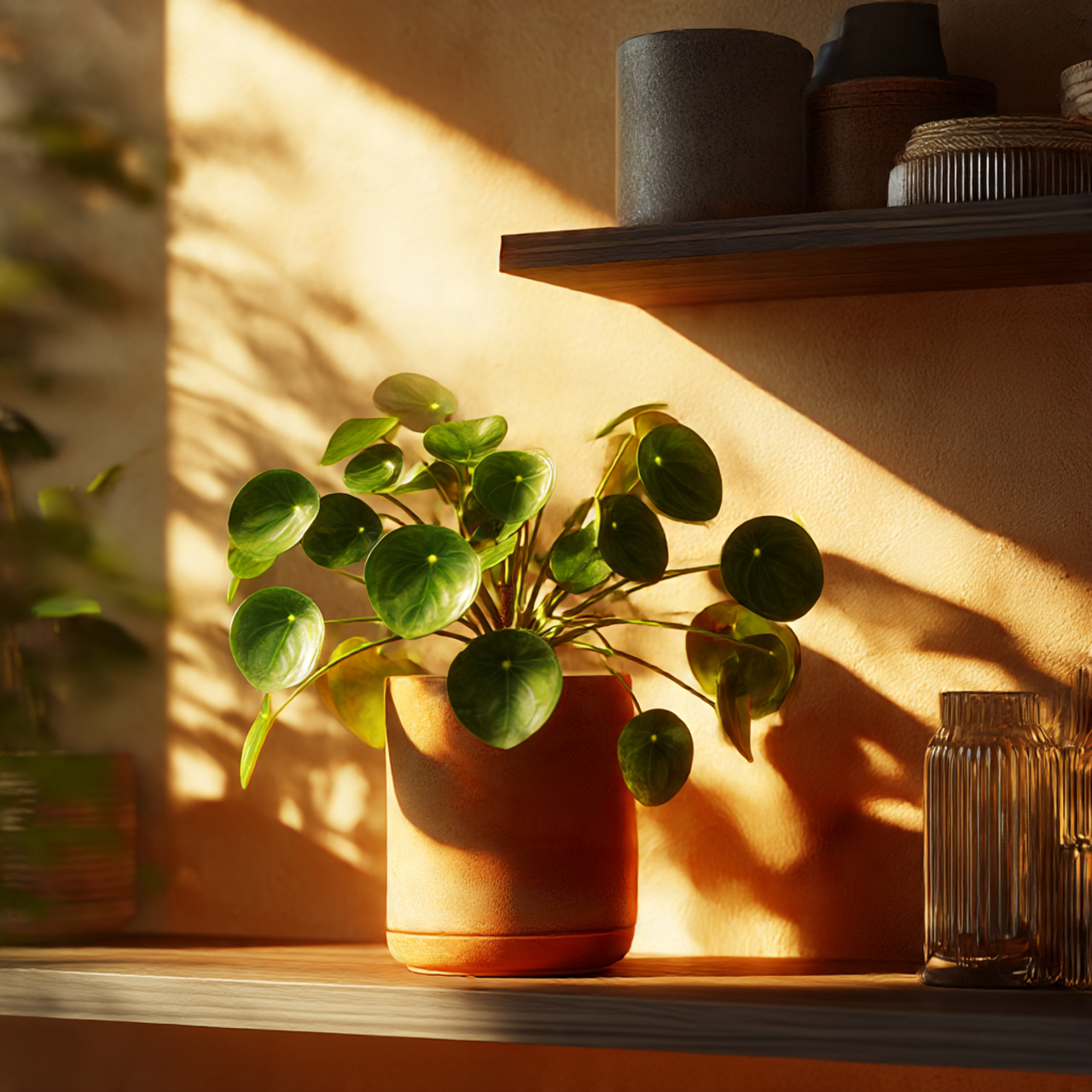
Here’s some excellent news for pet parents: the Pilea peperomioides is generally considered non-toxic to both cats and dogs. If your curious furball takes a small nibble, you don’t need to rush to the emergency vet like you would with many other houseplants.
Important caveat: While non-toxic, it’s still best to discourage your pets from munching on the leaves. Eating large amounts of any plant material can cause mild stomach upset or vomiting.
Keep everyone safe: Place your Chinese Money Plant on high shelves or cluster it with other plants in an area that’s harder for pets to access. This protects both your plant and your furry friends.
The Fascinating Story Behind the Name
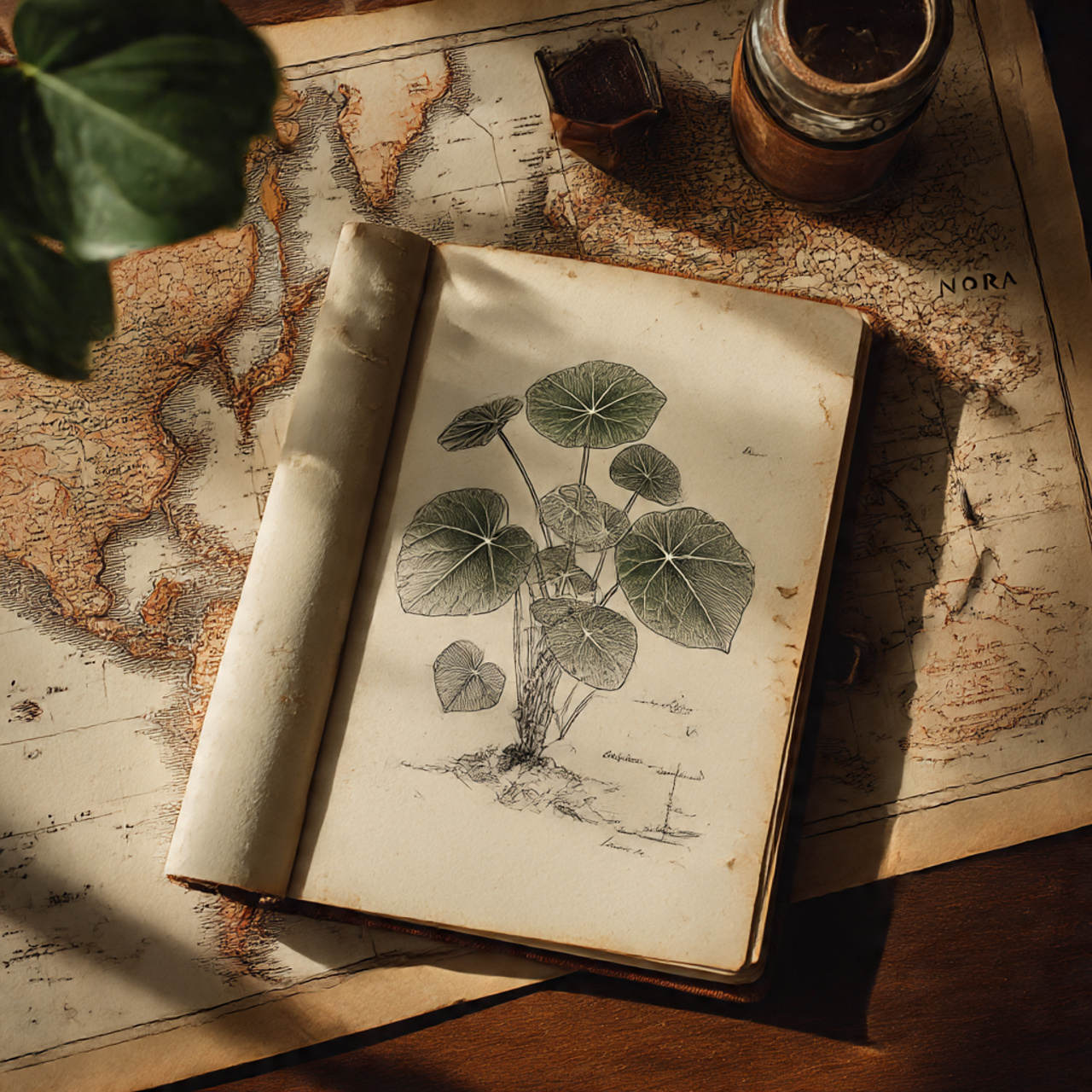
The Chinese Money Plant has a surprisingly interesting journey to Western homes, earning it the nickname “Missionary Plant” along the way.
While a Scottish botanist first documented the species in 1906, it remained relatively unknown until the 1940s. That’s when Norwegian missionary Agnar Espegren brought cuttings back from China to Norway.
From there, something magical happened. Espegren shared pups with friends and family, who shared with their friends, who shared with theirs. The plant spread throughout Scandinavia and Europe almost entirely through this network of plant lovers—long before it ever appeared in garden centers.
Why this matters: This beautiful story of sharing perfectly embodies the Friendship Plant nickname and reminds us that plant communities have always been about generosity and connection.
Common Mistakes to Avoid
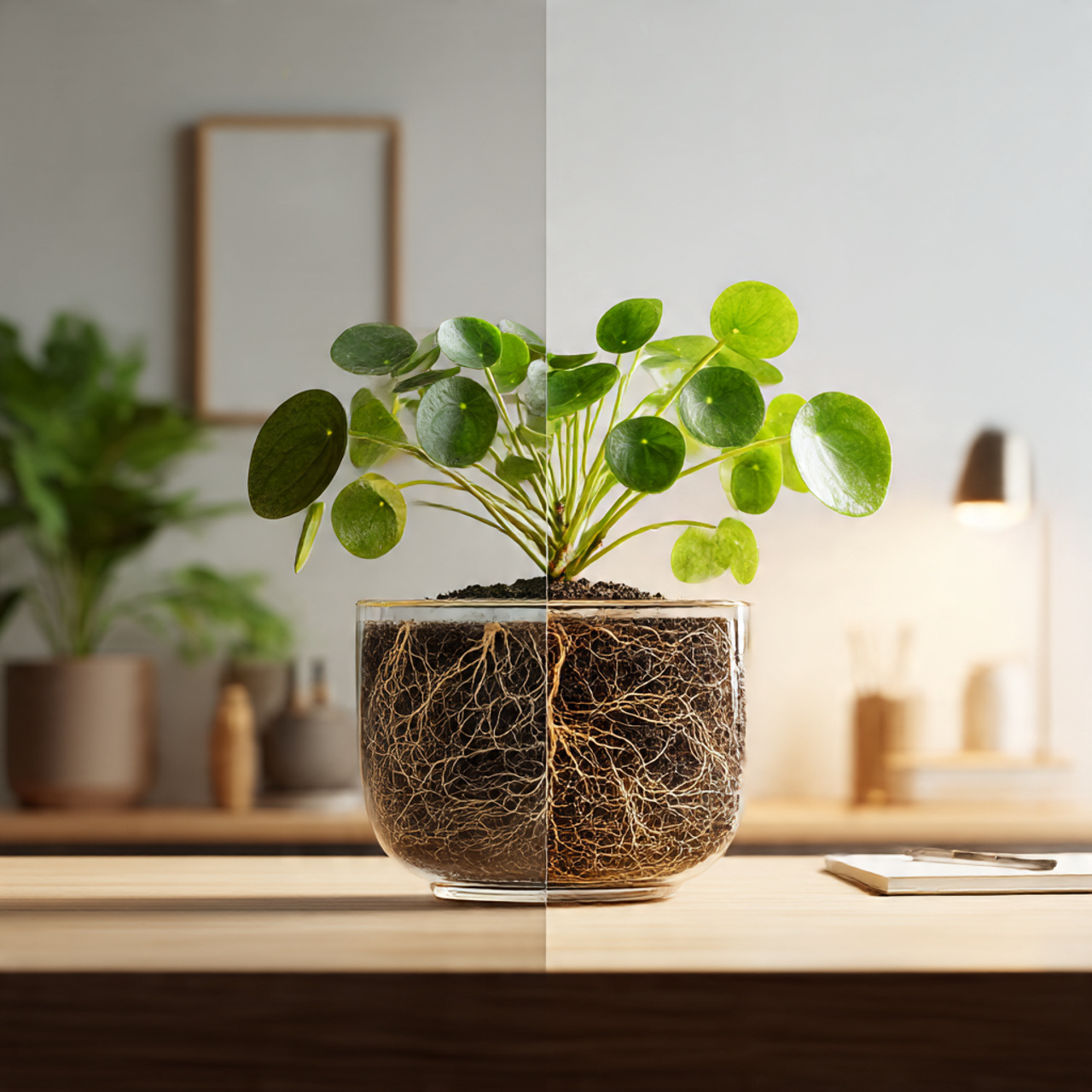
Let’s talk about the pitfalls that trip up most new Pilea owners so you can skip them entirely.
Mistake #1: Overwatering. This is the number one killer of Chinese Money Plants. Always check soil dryness with your finger before watering.
Mistake #2: Too much direct sun. Those delicate leaves burn quickly in harsh afternoon light, leaving permanent scars. Bright, indirect light is the way to go.
Mistake #3: Forgetting to rotate. These plants are strongly phototropic (they grow toward light), so they’ll become lopsided fast. Rotate 90 degrees every week for balanced growth.
Mistake #4: Using heavy soil. Standard potting soil retains too much moisture. Always add perlite for drainage.
Avoiding these common errors sets you up for success from day one.
Special Winter Care Needs
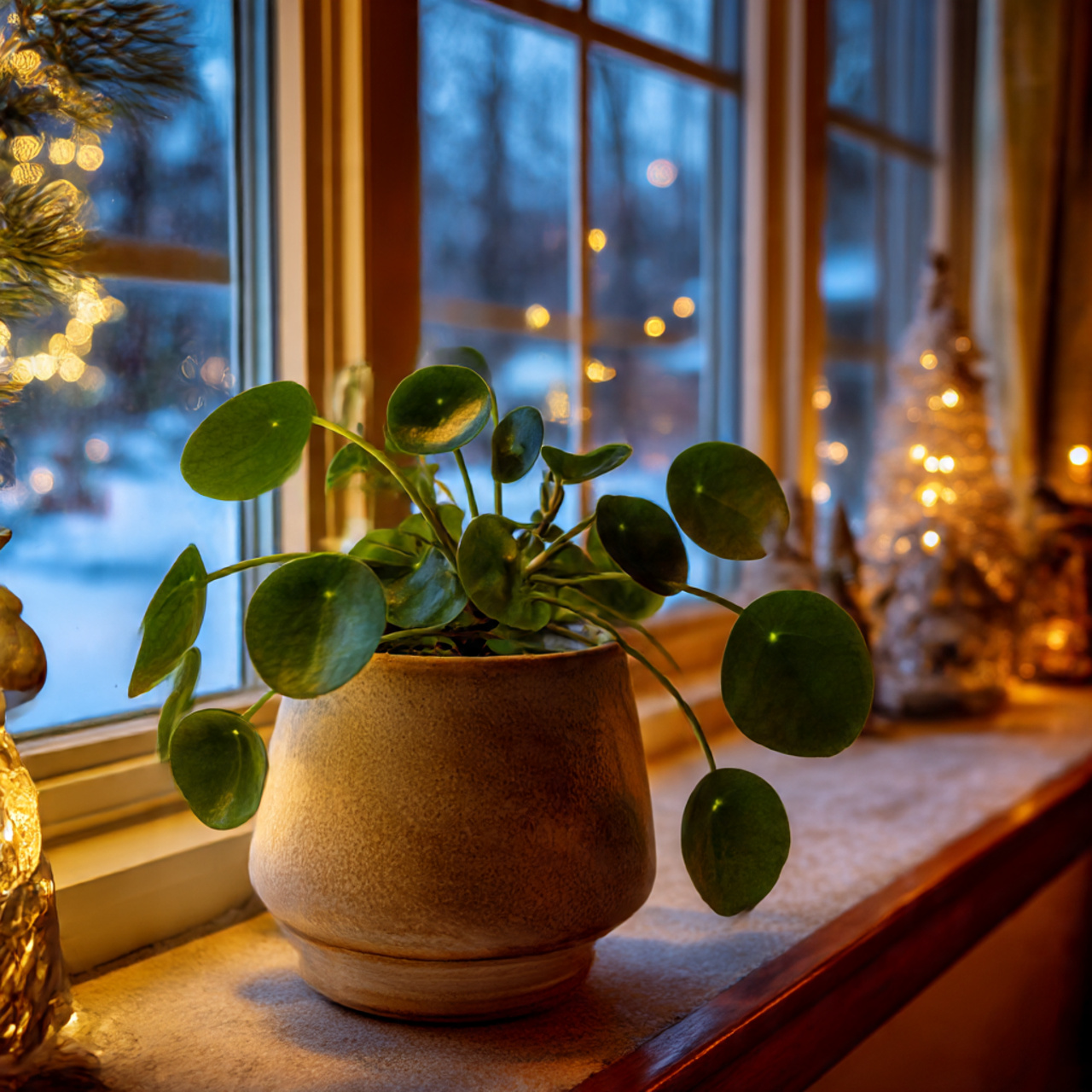
Winter changes everything for your Chinese Money Plant. As light levels drop and temperatures cool, the plant enters semi-dormancy and requires a completely different care approach.
Critical winter adjustments:
Drastically reduce watering. You might only need to water every two to three weeks since the plant isn’t actively growing or drinking much.
Skip fertilizer completely. Don’t feed until you see active new growth resume in spring.
Protect from temperature swings. Keep away from cold windowpanes and heating vents that create sudden temperature changes.
Don’t panic about slower growth. It’s completely normal for the plant to pause during winter months.
These adjustments help your plant rest properly and come back strong when spring arrives.
Encouraging a Fuller, Bushier Shape
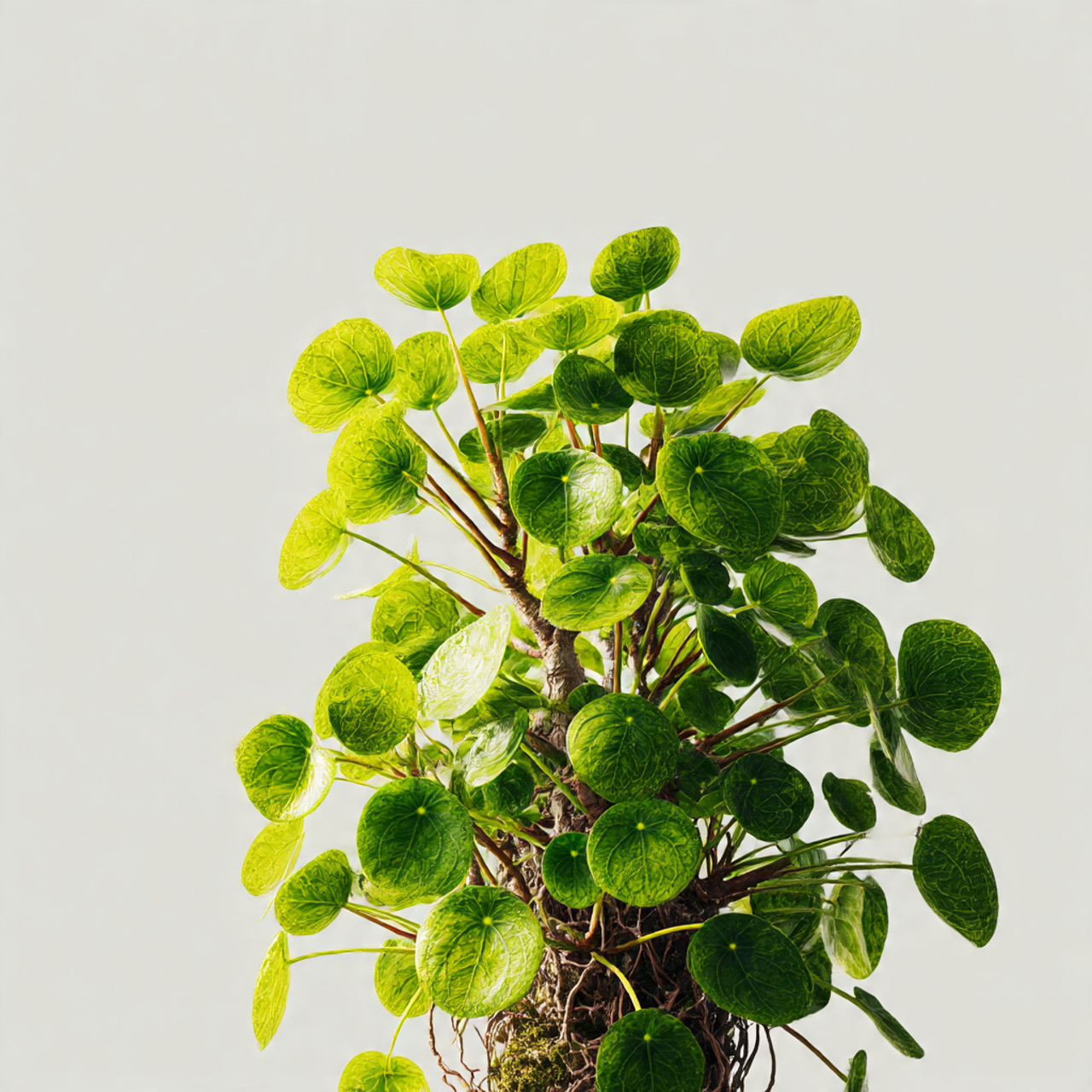
The natural growth pattern of the Chinese Money Plant is a single upright stem, which can sometimes look sparse or leggy. If you want that lush, full appearance, you need to encourage lateral branching.
The topping technique: Pinch or prune the main growing tip at the top of the plant. This removes the apical meristem and forces the plant to redirect energy into producing side shoots along the existing stem.
The result? Multiple growth points create a much denser, more rounded appearance instead of one tall, sparse stem.
Timing tip: Do this during the active growing season (spring or summer) when the plant can respond quickly and heal properly.
This simple technique transforms the plant’s entire appearance.
Choosing the Right Pot
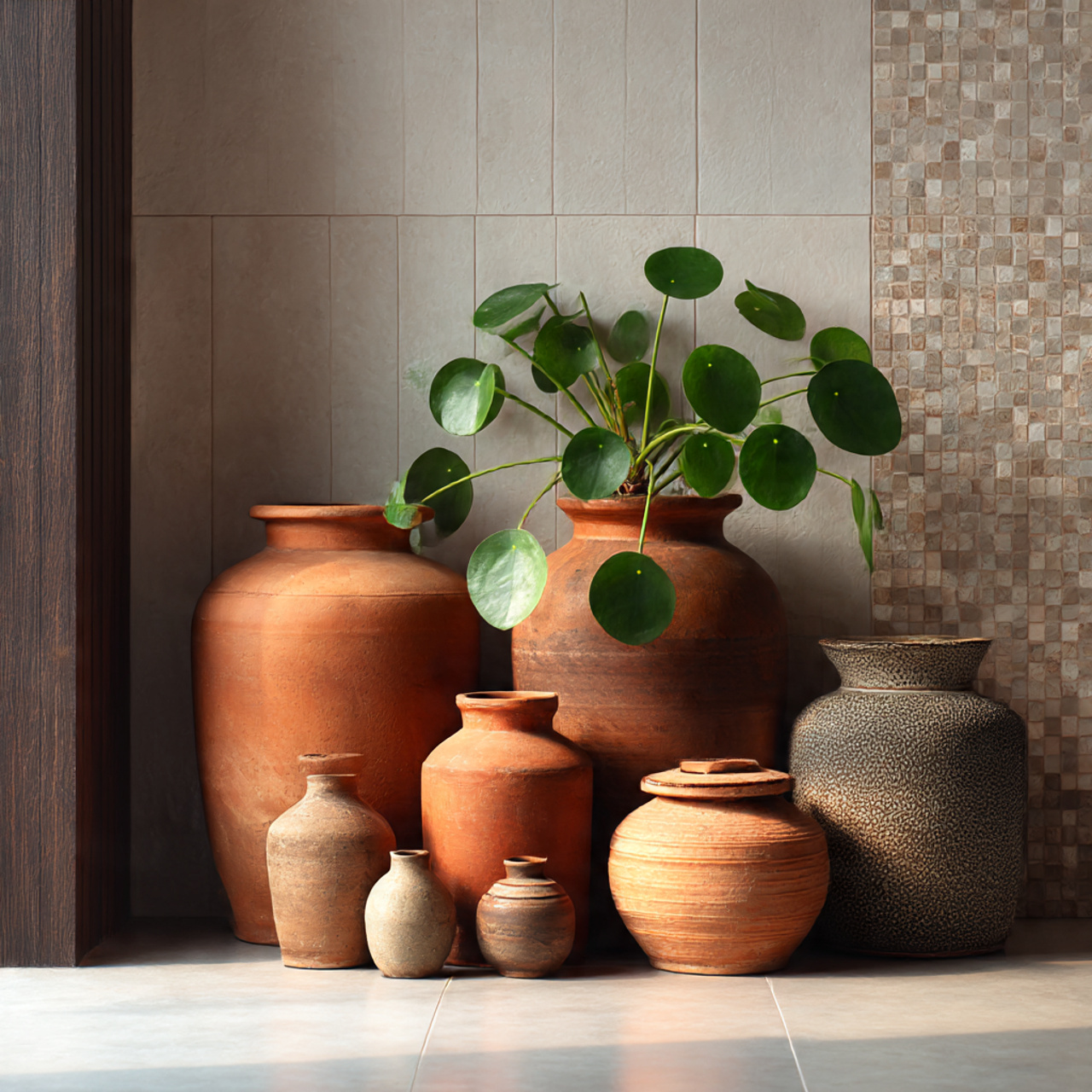
Your pot choice directly impacts your plant’s health, so it deserves some thought beyond just aesthetics.
Must-have feature: At least one large drainage hole at the bottom. Non-negotiable. Without proper drainage, you’re fighting an uphill battle against root rot.
Best materials:
- Unglazed terracotta: The porous material allows water to evaporate through the pot walls, helping soil dry faster
- Ceramic with drainage: Works great if you’re careful about not overwatering
- Plastic: Lightweight and fine, but requires extra attention to drainage
Size matters: Don’t go too big too fast. A pot that’s slightly snug is better than one that’s oversized, which holds too much moisture.
Always empty saucers or cachepots after watering to keep roots from sitting in water.
Rescuing a Tall, Leggy Plant
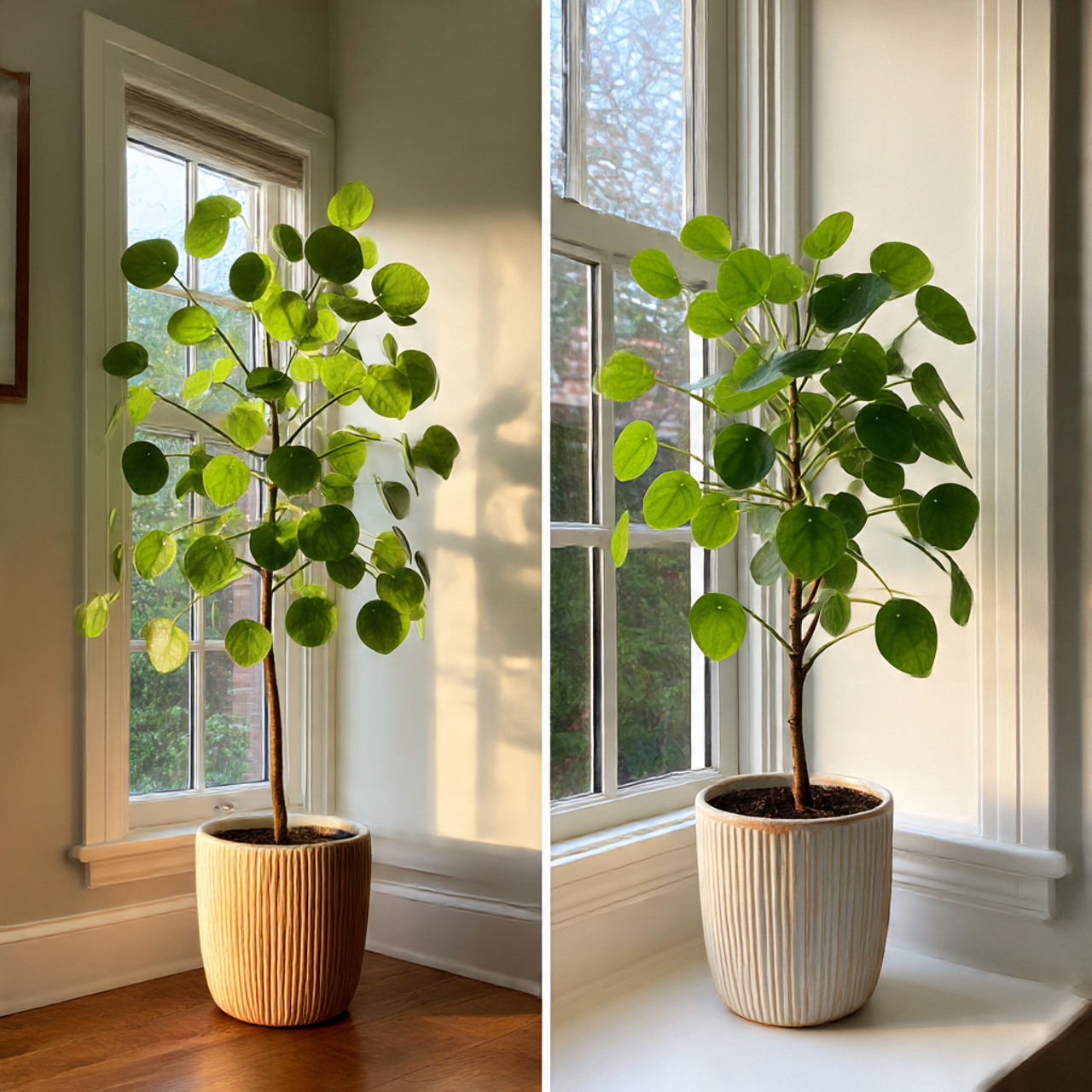
If your Chinese Money Plant has become tall with sparse leaves spread far apart, it’s telling you it’s been stretching for more light. This condition, called etiolation, creates that unfortunate “leggy” look.
The rescue plan:
Step 1: Move the plant to a brighter location with more indirect light.
Step 2: Use the “chop and prop” technique—cut the top section to your desired height and root it as a new plant.
Step 3: Keep the remaining stump in its new, brighter spot.
Step 4: Wait for new growth to sprout from the original stem. The improved lighting will encourage compact, healthy growth.
This gives you two plants and solves the legginess problem simultaneously.
Troubleshooting Curling or Cupping Leaves
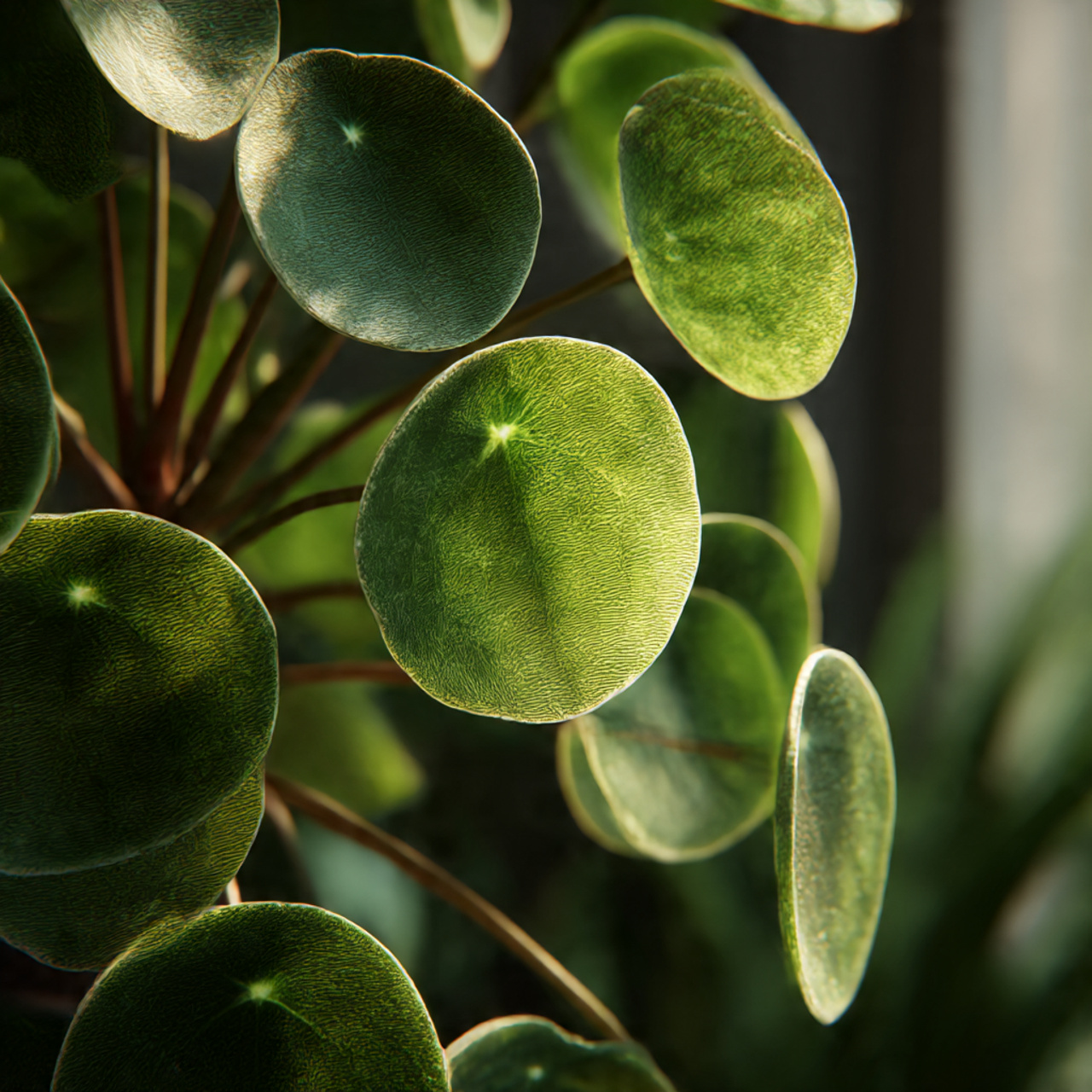
Flat, round leaves are the Chinese Money Plant’s signature look, so when they start curling or cupping, something’s definitely off.
Inward curling edges: Usually caused by excessive heat, intense direct sunlight, or dehydration. The plant minimizes surface area to conserve moisture.
Solution: Move away from hot windows, ensure adequate watering, and check that temperatures aren’t too high.
Upward or downward cupping: Often points to temperature fluctuations or mineral buildup from over-fertilization.
Solution: Maintain stable temperatures and flush the soil with clean water to remove accumulated salts.
These leaf movements are your plant’s way of protecting itself, so addressing the underlying stress helps everything return to normal.
Dividing and Sharing Offsets from the Mother Plant
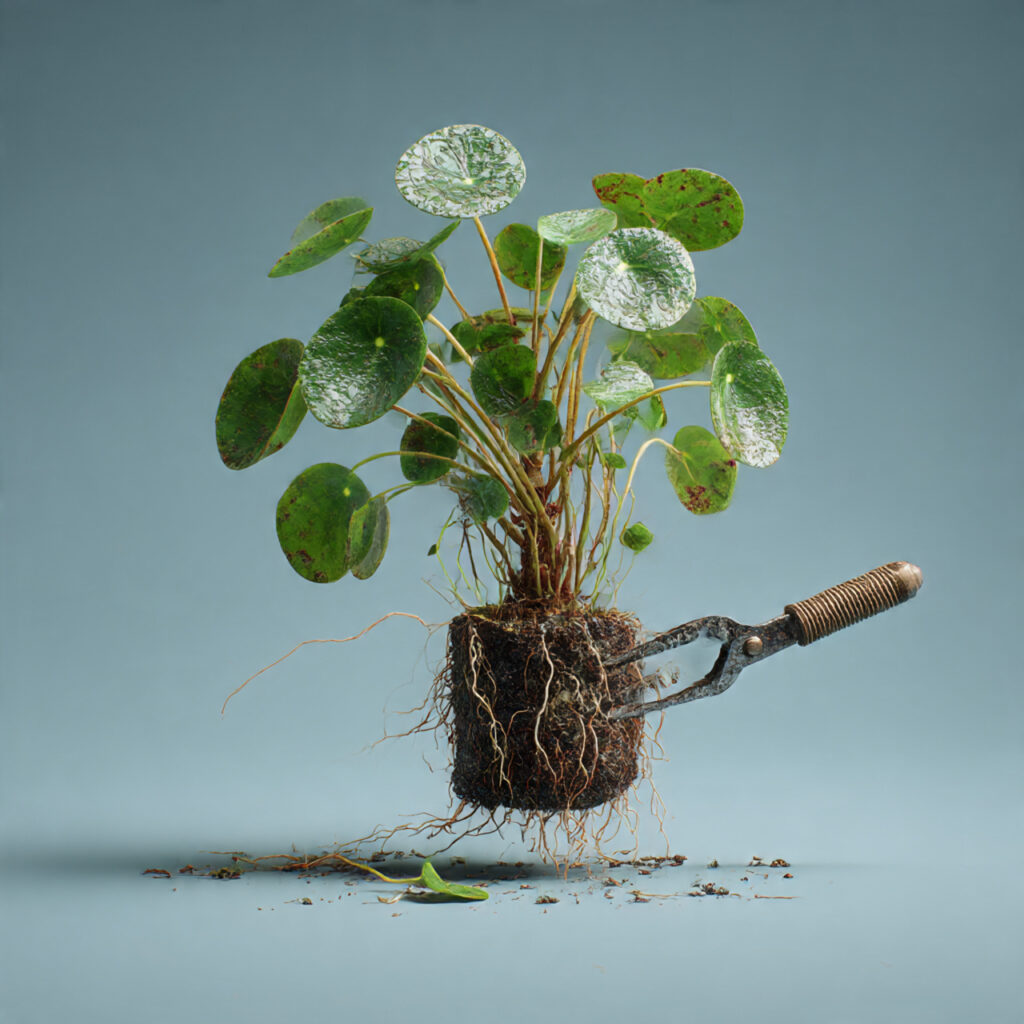
Dividing and sharing offsets is one of the greatest joys of Chinese Money Plant ownership. Those little pups that pop up around the mother plant are perfect clones ready to become their own thriving specimens.
When to divide: Wait until the pup is at least two inches tall with several small leaves and its own developing root system. Patience here ensures success.
Division process:
- Use a sterilized knife or small trowel
- Gently dig around the pup
- Cut cleanly away from the mother plant’s roots
- Include as much of the pup’s root system as possible
- Immediately pot in fresh, well-draining soil
These resilient babies establish quickly and make wonderful gifts for plant-loving friends.
How Often Should You Rotate Your Chinese Money Plant?
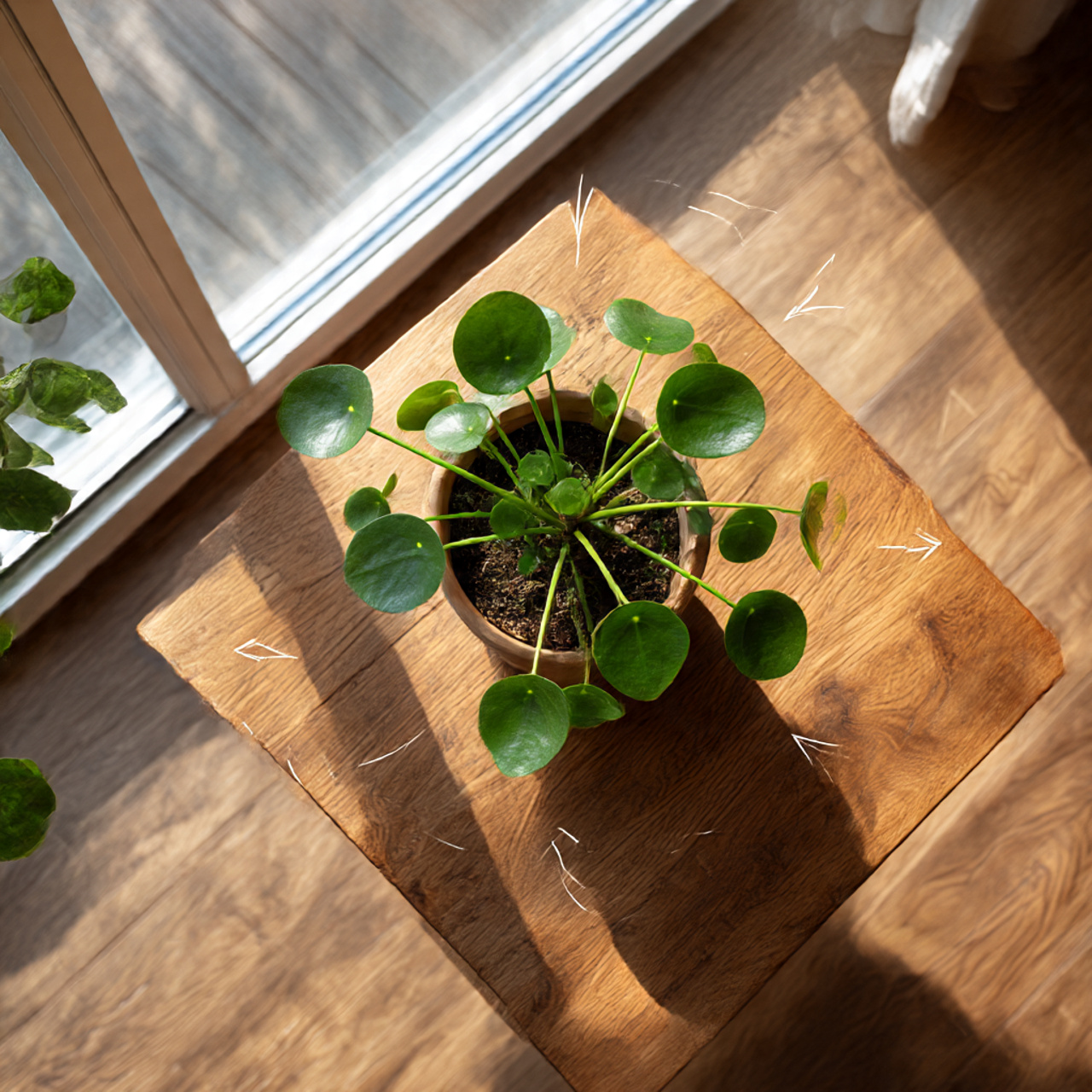
Here’s a simple habit that makes a huge difference: rotating your plant. The Pilea peperomioides is famously phototropic, meaning it bends and grows toward the strongest light source.
Without rotation, all the leaves end up facing one direction, creating a lopsided plant that only looks good from certain angles. Plus, the back side doesn’t get adequate light exposure.
The rotation routine: Turn the pot 90 degrees every time you water (typically weekly or bi-weekly). This ensures all sides receive equal light exposure.
The payoff: Perfectly balanced, symmetrical growth with those gorgeous round leaves distributed evenly around the stem.
Set a reminder if needed—this small action maintains your plant’s aesthetic appeal effortlessly.
Managing Algae Growth on Pilea Soil
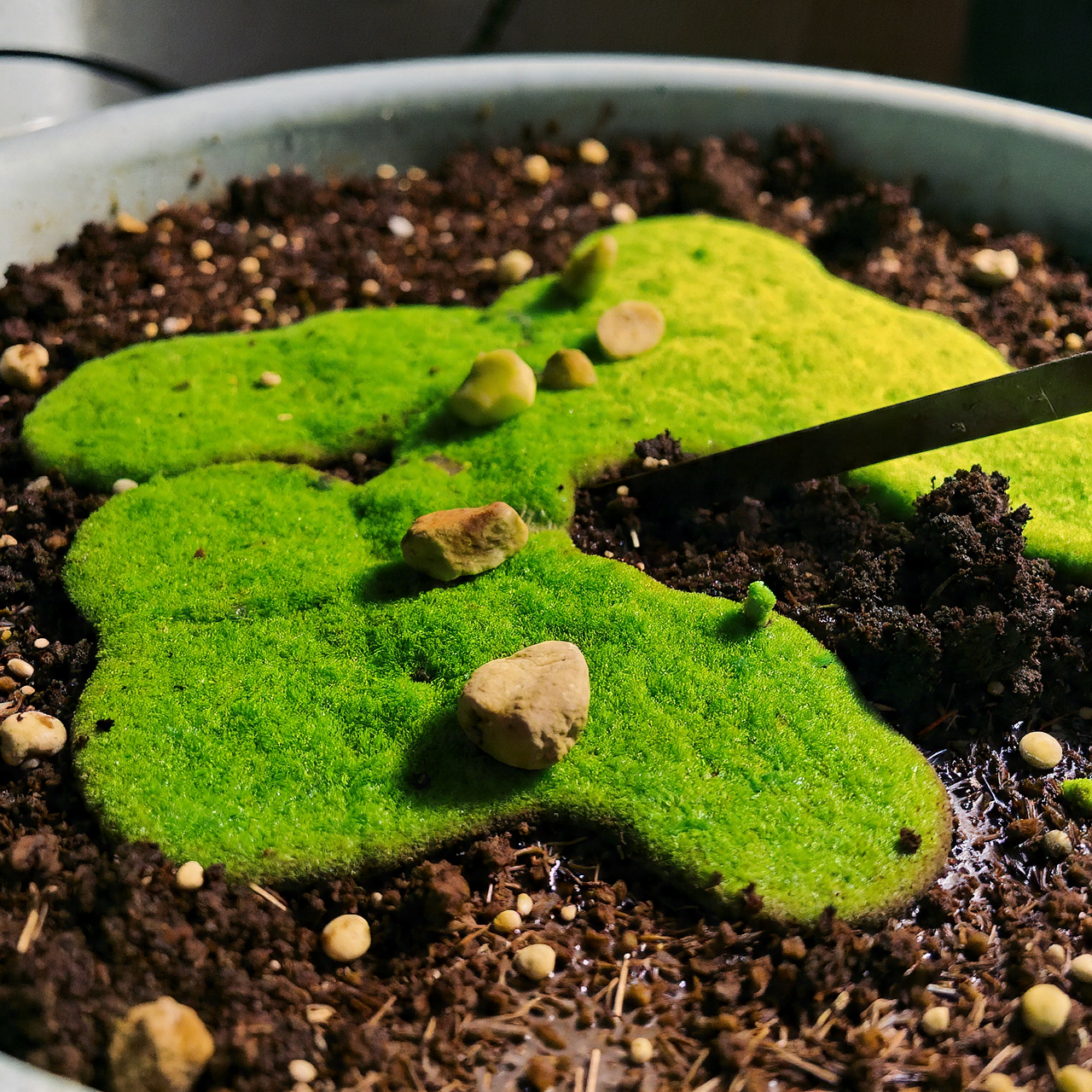
Notice a green or brownish film developing on your soil surface? That’s algae or moss growth. While not directly harmful to your plant, it signals two problems: consistently high moisture levels and too much light hitting the soil.
Quick fixes:
Let soil dry completely between waterings, maybe even an extra day or two past your normal schedule.
Scrape off visible algae gently with a fork or spoon.
Top dress with sand or small pebbles to create a physical barrier that blocks light from the soil surface.
Adjust watering habits to keep the top layer drier.
This growth is your plant’s way of telling you to modify your care routine.
Distinguishing Pilea Species
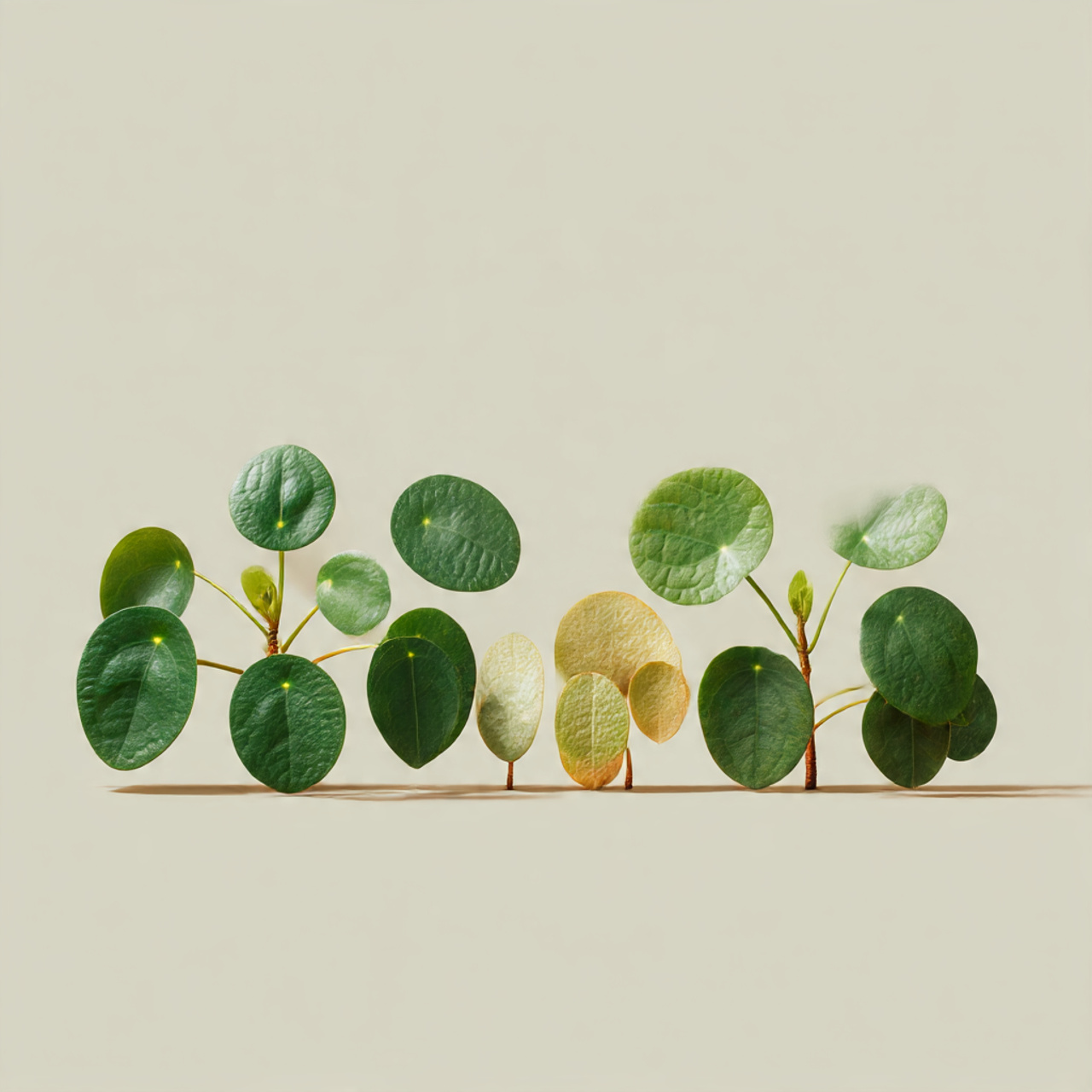
The Pilea genus contains over 600 species, but the Chinese Money Plant stands distinctly apart from its cousins. Those perfectly round, flat, coin-shaped leaves make it instantly recognizable.
Other common Pileas look completely different:
- Pilea cadierei (Aluminum Plant): Textured, silvery-striped leaves
- Pilea microphylla (Artillery Plant): Tiny, delicate leaves
What sets P. peperomioides apart: The singular, umbrella-like foliage attached to long, delicate leaf stems that radiate from a central trunk. No other Pilea has quite this distinctive look.
This unique appearance explains why it’s become the most sought-after species in the entire genus for indoor growing.
Essential Care Tools
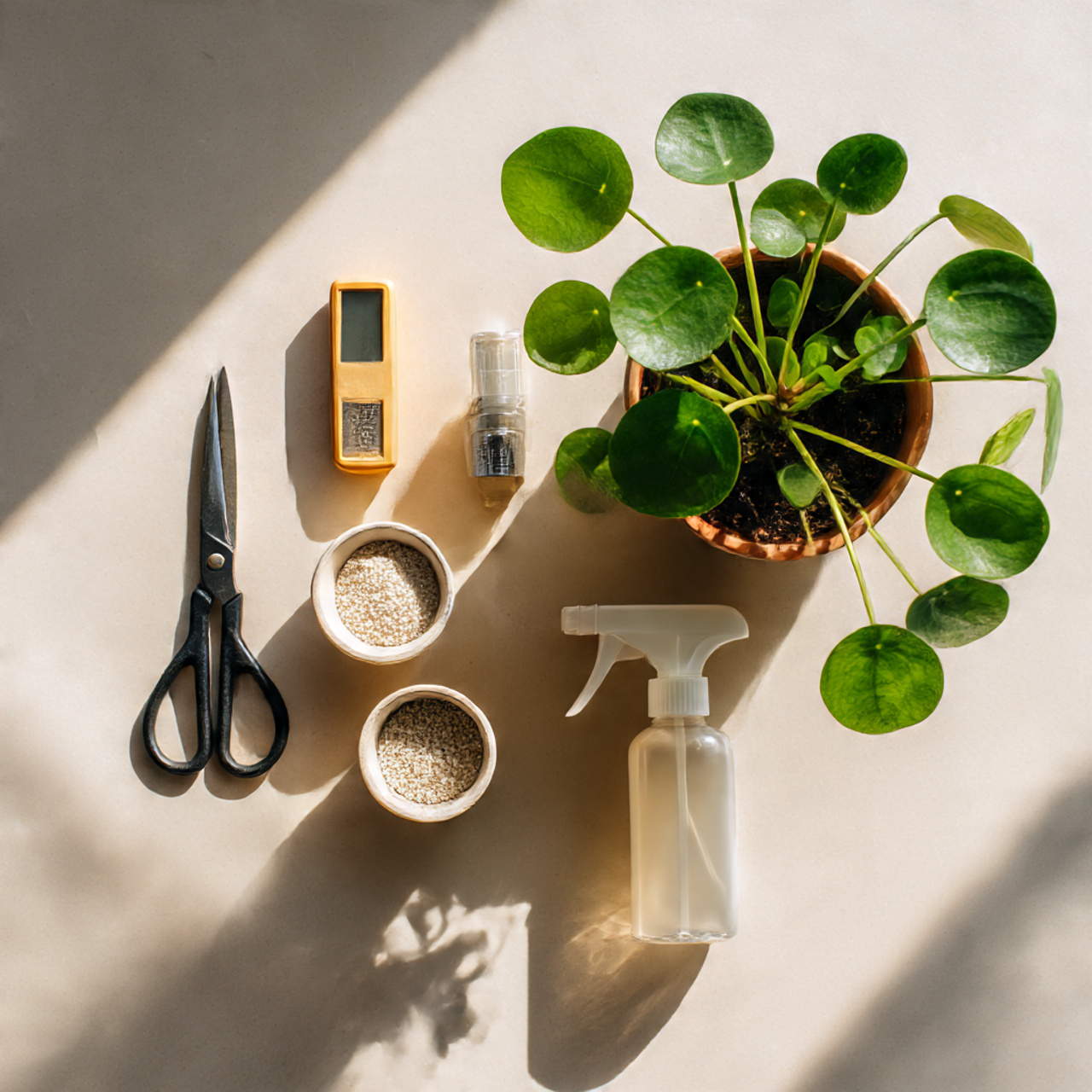
You don’t need a garage full of equipment to care for a Chinese Money Plant, but a few key tools make everything easier and help prevent disease spread.
The essential toolkit:
Moisture meter: Takes the guesswork out of when to water. Stick it in the soil and get an accurate reading of moisture levels.
Sharp, clean scissors or pruning shears: Dedicated plant tools prevent disease transmission. Essential for clean cuts when pruning leaves, taking cuttings, or separating pups.
Perlite and quality potting mix: Keep these on hand for repotting and creating ideal soil blends. Having them ready means you won’t delay important repotting.
Spray bottle or watering can with narrow spout: Makes watering precise and prevents splashing.
These simple tools set you up for confident, successful plant care.
Visit Also: Summer Plants
FAQs About Chinese Money Plant
How long does it take for a Chinese Money Plant to produce pups?
A healthy, mature Chinese Money Plant typically begins producing pups after about one to two years of consistent care, especially during the active spring and summer growing season. The speed of offset production depends heavily on adequate light, proper fertilization, and whether the mother plant is slightly root-bound in its pot, which can encourage new growth.
Why is my Chinese Money Plant losing its lower leaves?
Losing a few lower leaves is a completely normal process, as the Pilea sheds older foliage to focus energy on new growth at the top. However, excessive lower leaf drop can signal underwatering or shock from sudden temperature changes. Ensure you are watering consistently when the topsoil is dry and protecting the plant from cold drafts near windows.
Can a Chinese Money Plant thrive in low light conditions?
While the Chinese Money Plant can survive in low light, it will not thrive. Insufficient light causes the plant to become “leggy” with sparse, small leaves and a tall, weak stem as it stretches for light (etiolation). For best health and the classic compact, round shape, it requires bright, indirect light near a window.
What is the ideal soil pH level for Pilea peperomioides?
The Pilea peperomioides prefers a slightly acidic to neutral soil, with an ideal pH range between 6.0 and 7.0. Most commercial potting mixes fall within this range naturally. Ensuring your soil mix contains peat moss or coco coir will help maintain this slight acidity, which is optimal for nutrient uptake and root health in this species.
How do I know if I am overwatering my Chinese Money Plant?
The clearest signs of overwatering are yellowing, soft, and mushy leaves, often starting from the bottom of the plant, and a consistently wet, heavy soil texture. If you gently feel the trunk near the soil line and it feels soft or blackened, root rot is likely, requiring immediate action like repotting into fresh, dry soil.
Final Thoughts
The Chinese Money Plant has earned its place as a beloved houseplant classic, and it’s easy to see why. Beyond those adorable pancake-shaped leaves, it’s forgiving, easy to propagate, and genuinely rewarding to grow. The tradition of sharing pups with friends creates connections and spreads joy—living up to that Friendship Plant nickname perfectly.
Once you nail the basics—bright indirect light, well-draining soil, and a measured watering routine—your Pilea will thrive for years. Whether you call it the UFO Plant, Pancake Plant, or Friendship Plant, this charming specimen brings both beauty and meaning into your home.
Start with one plant, share the pups as they arrive, and before you know it, you’ll have created your own little network of Chinese Money Plant lovers. That’s the magic of this special plant—it grows community just as easily as it grows leaves.