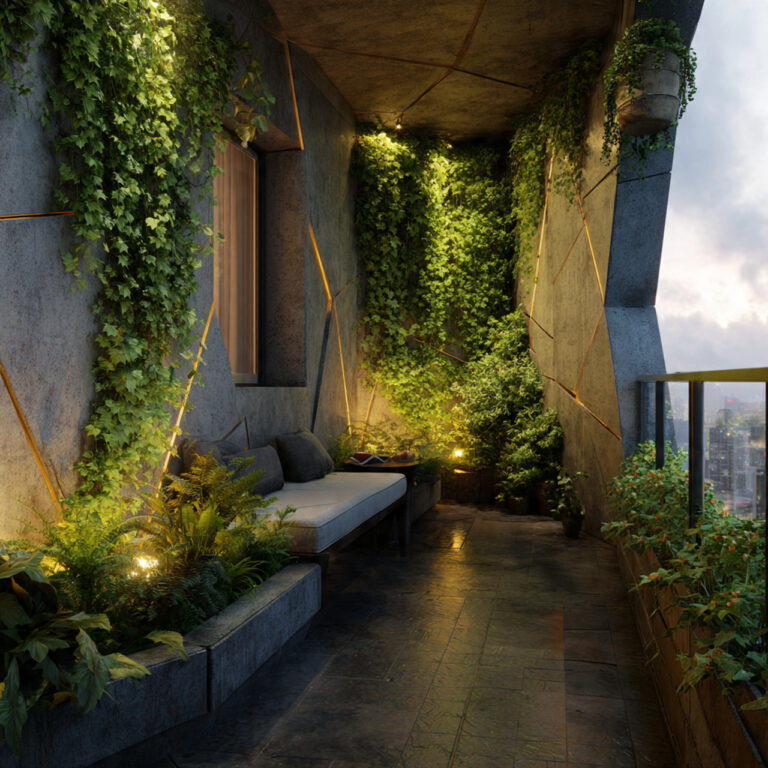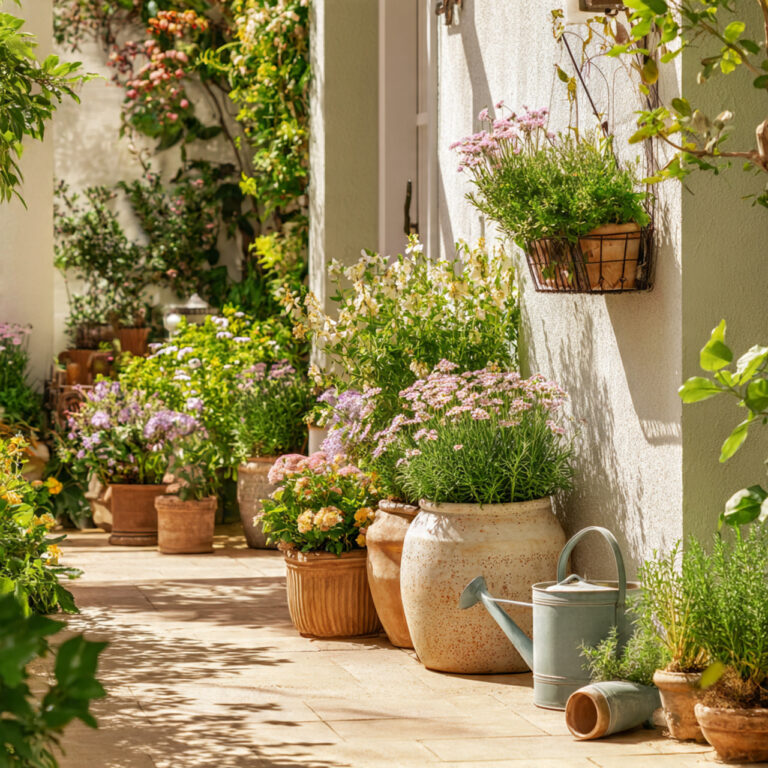
25 Stunning Balcony Garden Ideas to Transform Your Outdoor Space
Living in an apartment doesn’t mean you have to miss out on the joys of gardening. Whether you’re working with a spacious terrace or a compact ledge barely wide enough for two chairs, your balcony has the potential to become your favorite spot at home. Imagine stepping outside with your morning coffee to a space filled with fresh herbs, colorful blooms, or even homegrown vegetables—all within arm’s reach.
The beauty of balcony gardening lies in its flexibility. You don’t need a green thumb or a big budget to get started. What you do need is a bit of planning and creativity. Think about how much sunlight your balcony receives throughout the day, measure your available space, and consider how much time you can realistically dedicate to maintenance. These simple considerations will help you create a garden that not only survives but thrives.
Why Your Balcony Deserves a Garden
There’s something deeply satisfying about having your own green space, no matter how small. A balcony garden does more than just look pretty—it transforms how you experience your home. You’ll find yourself spending more time outdoors, breathing fresher air, and feeling more connected to the natural world, even in the heart of the city.
Here’s what a balcony garden brings to your life:
- A personal sanctuary where you can unwind after stressful days
- Improved air quality around your living space
- Fresh herbs or vegetables right outside your door
- A creative outlet that changes with the seasons
- Increased privacy from neighbors
- A beautiful view every time you look outside
The best part? You can customize your balcony garden to match your lifestyle perfectly. Morning person who loves fresh smoothies? Grow berries and mint. Passionate about cooking? Create an herb station. Just want somewhere peaceful to read? Focus on low-maintenance greenery with comfortable seating. Your balcony, your rules.
Vertical Garden Walls
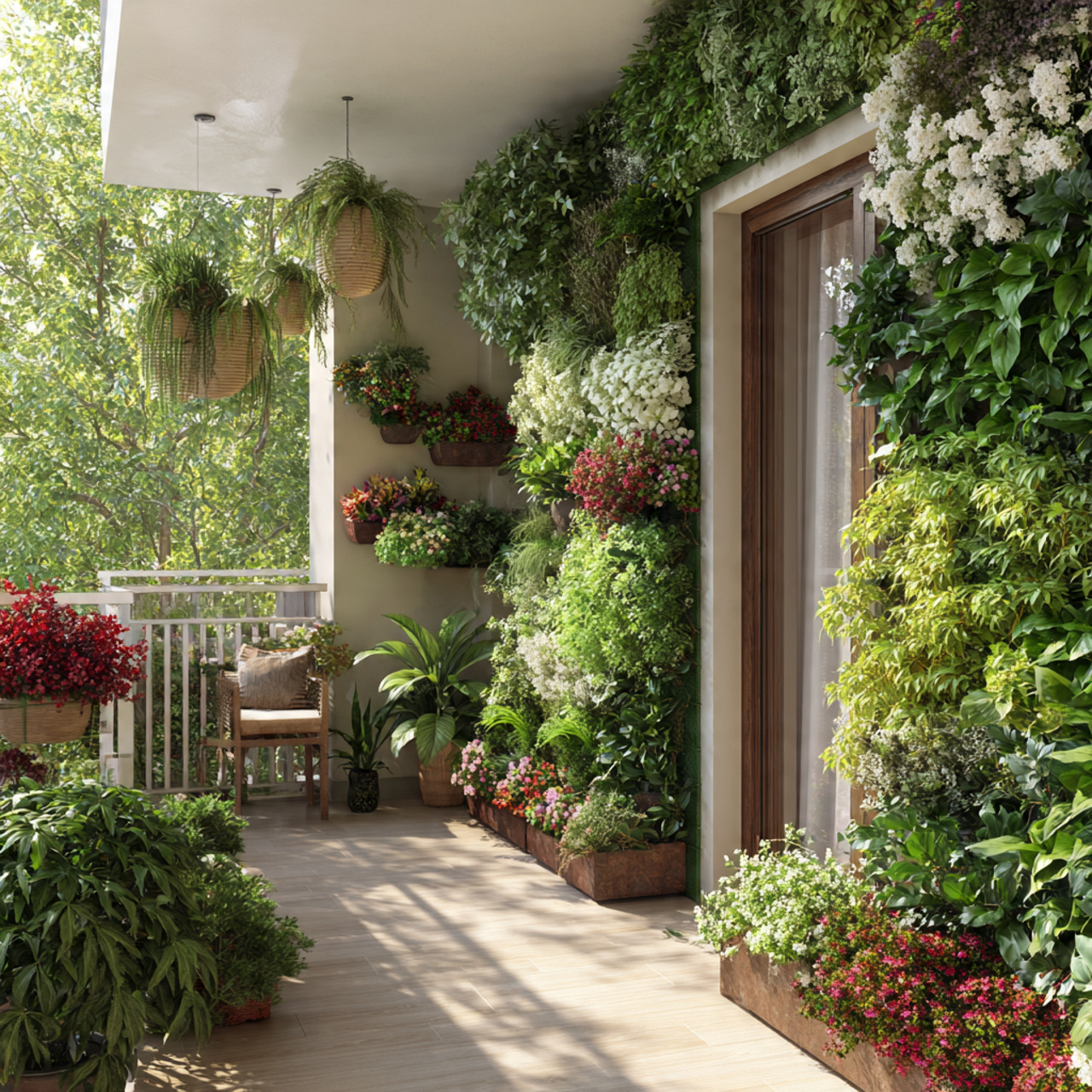
When floor space is precious, think upward. Vertical gardens are game-changers for small balconies, turning bare walls into living tapestries of green.
Why vertical gardens work:
- They free up valuable floor space for furniture or walking room
- Create instant privacy from neighboring balconies
- Can hold dozens of plants in just a few square feet
- Add dramatic visual impact that makes your balcony feel larger
Quick tip: Start with a modular wall planter system. These snap-together units let you start small and expand as you gain confidence. Fill them with herbs like basil and parsley at eye level for easy cooking access, and add trailing plants like pothos or string of pearls near the top for a cascading effect.
Hanging Planters
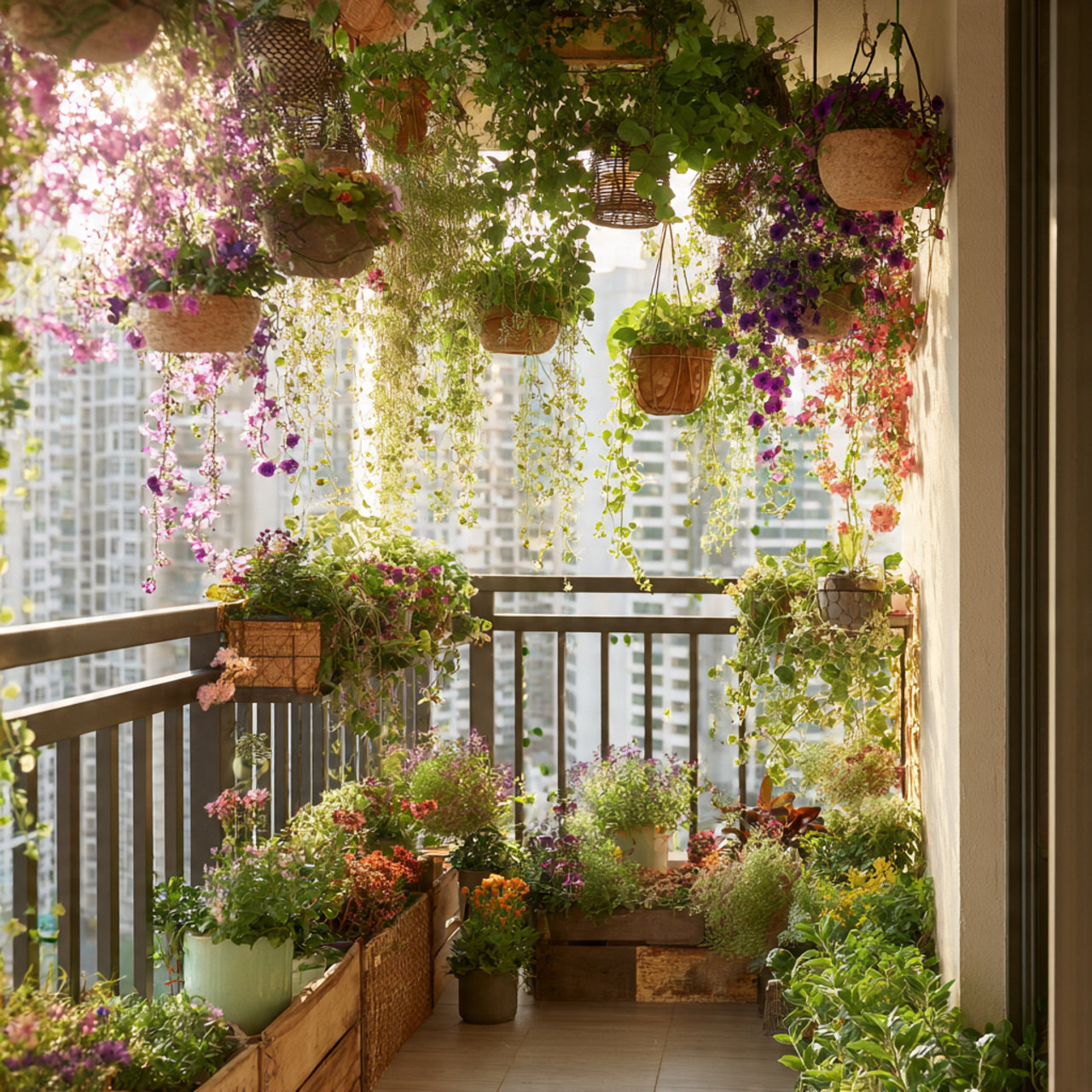
There’s something magical about plants suspended in mid-air, swaying gently in the breeze. Hanging planters add dimension and movement to your balcony without taking up an inch of floor space.
Perfect plants for hanging:
- Petunias for colorful, cascading blooms
- Spider plants for easy-care greenery
- Cherry tomatoes for edible beauty
- String of hearts for a romantic trailing effect
Tip: Hang planters at different heights to create visual layers. Use the ceiling for sun-loving plants and lower hooks near railings for shade-tolerant varieties. Just make sure your hooks and hardware can support the weight of wet soil—it’s heavier than you think!
Rail Planters
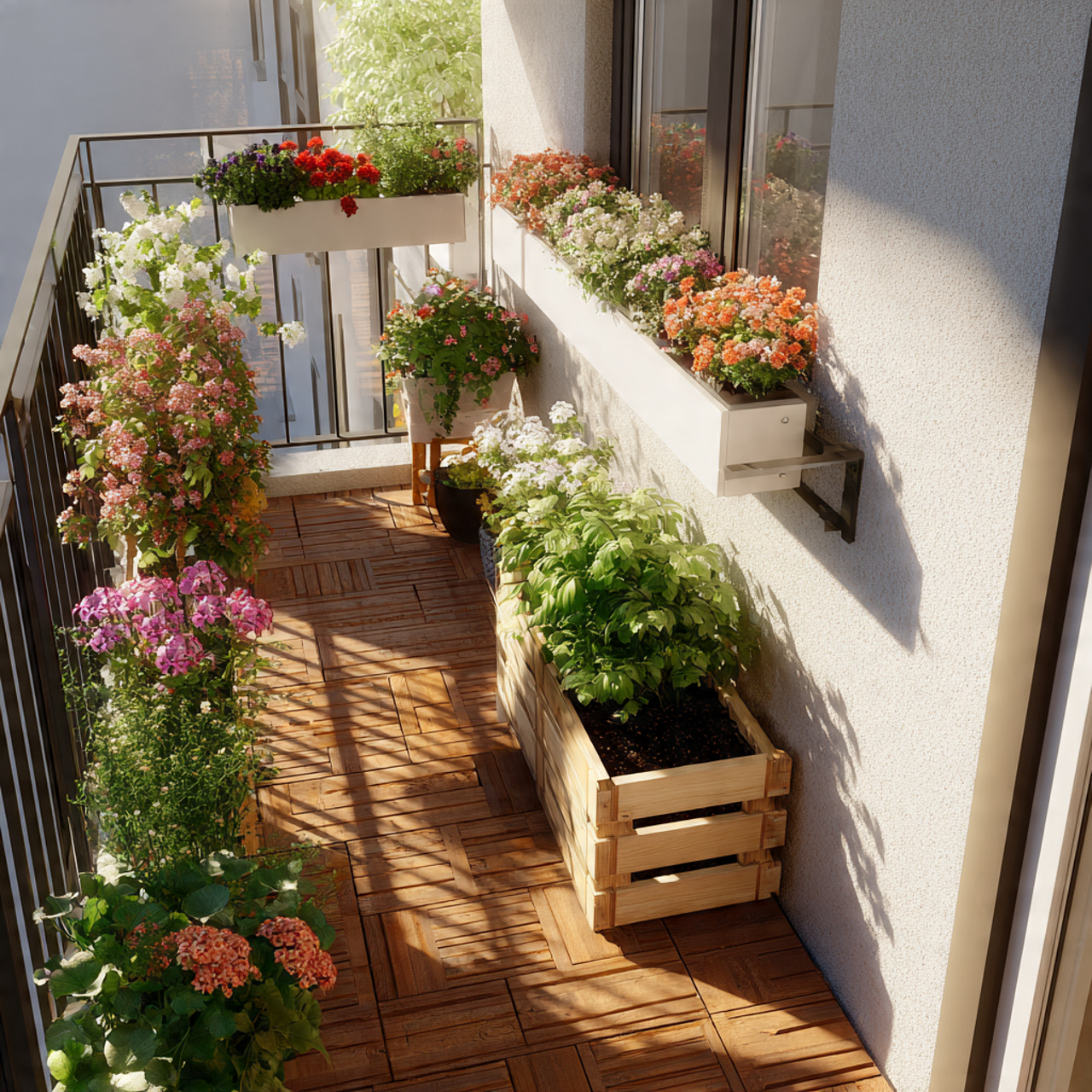
Your balcony railing is prime real estate that often goes unused. Rail planters clip directly onto the railing, creating a green border that doesn’t eat into your limited space.
Benefits you’ll love:
- No floor space required
- Easy to install and remove
- Perfect for renters who can’t drill into walls
- Creates a living privacy screen from street view
Style suggestion: Mix flowers with herbs for both beauty and function. Plant marigolds (which naturally repel mosquitoes) alongside cilantro and chives for a border that’s both gorgeous and useful.
Container Gardening
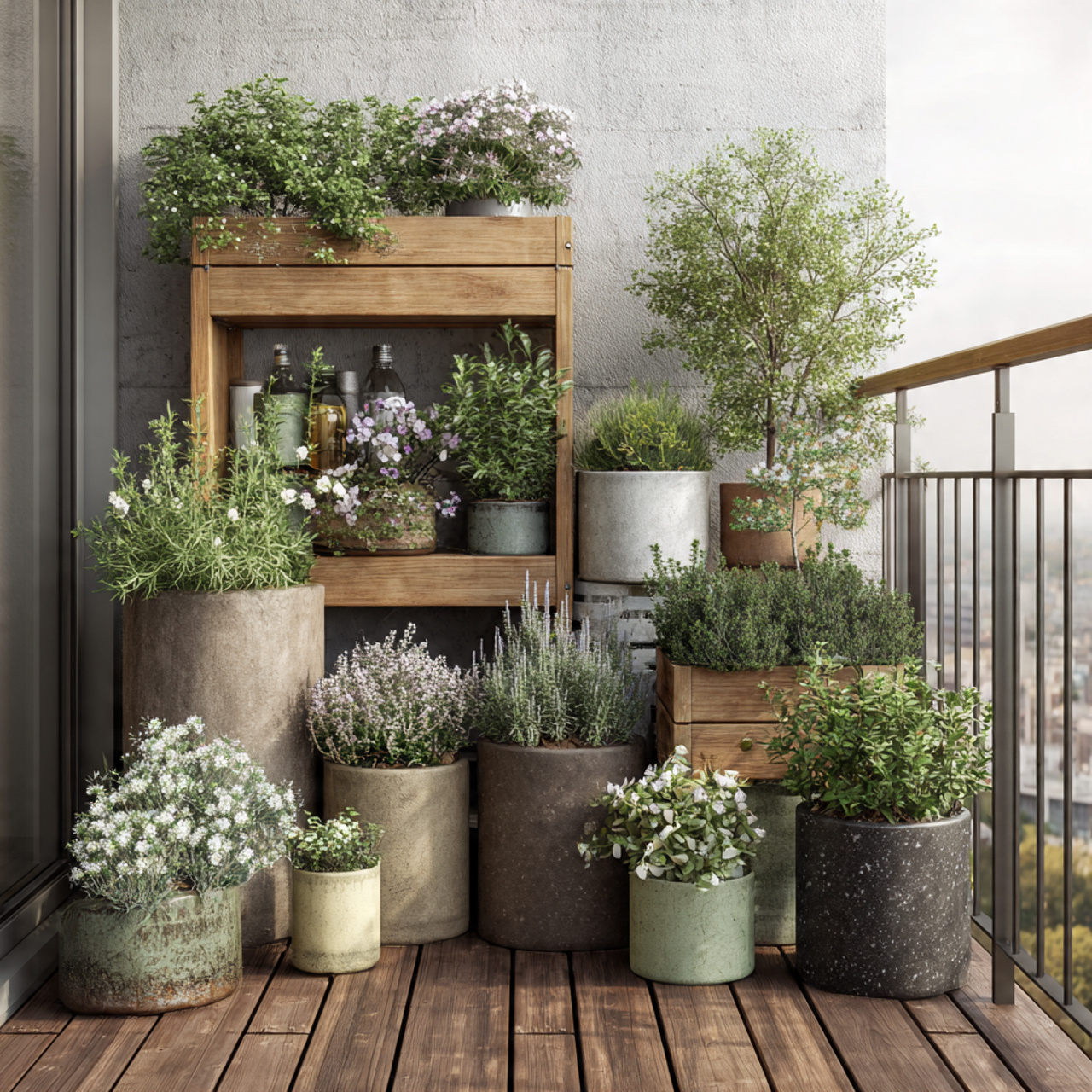
Think of containers as your garden’s building blocks. This classic approach gives you complete control over your balcony’s layout and lets you move things around until everything feels just right.
Container gardening advantages:
- Rearrange anytime to refresh your space
- Easy to rotate plants based on sunlight needs
- Perfect for trying different plant combinations
- Protects plants from soil-borne diseases
Smart move: Invest in containers with drainage holes and use pot feet to improve airflow. Group containers in odd numbers (3, 5, or 7) for a more natural, visually pleasing arrangement. Mix sizes and heights to add interest.
Balcony Herb Garden
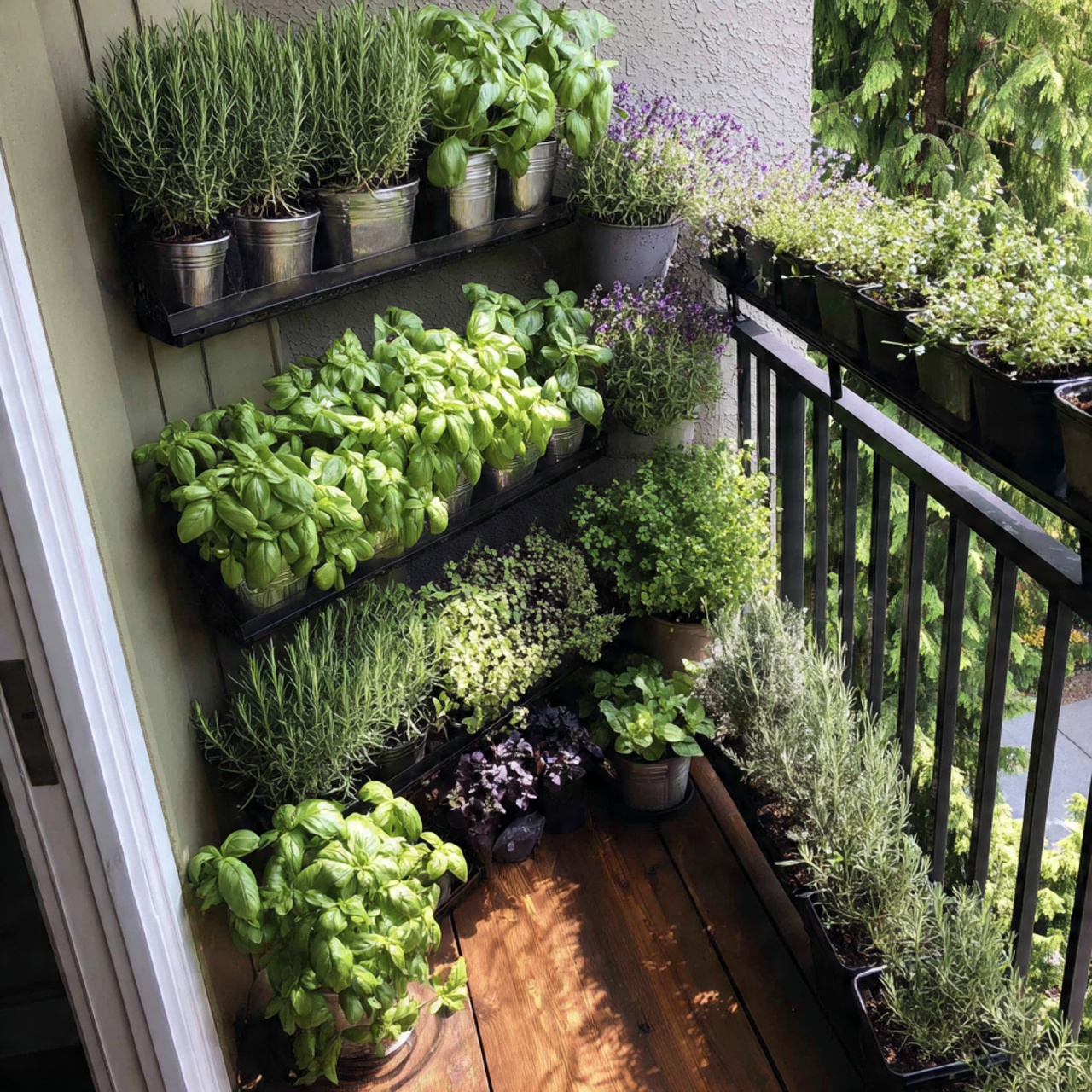
Nothing elevates home cooking like fresh herbs snipped straight from your balcony. A dedicated herb garden is probably the most rewarding project you can start, offering daily benefits with minimal effort.
Best herbs for beginners:
- Basil—grows fast and loves warm weather
- Mint—practically indestructible (but keep it contained!)
- Rosemary—drought-tolerant and fragrant
- Thyme—compact and perfect for small spaces
- Parsley—produces abundantly in partial shade
Kitchen garden tip: Position your herbs near your kitchen door if possible. You’re much more likely to use them regularly when they’re convenient. Start with 4-5 varieties you actually cook with—there’s no point growing cilantro if you hate it!
Mini Vegetable Garden
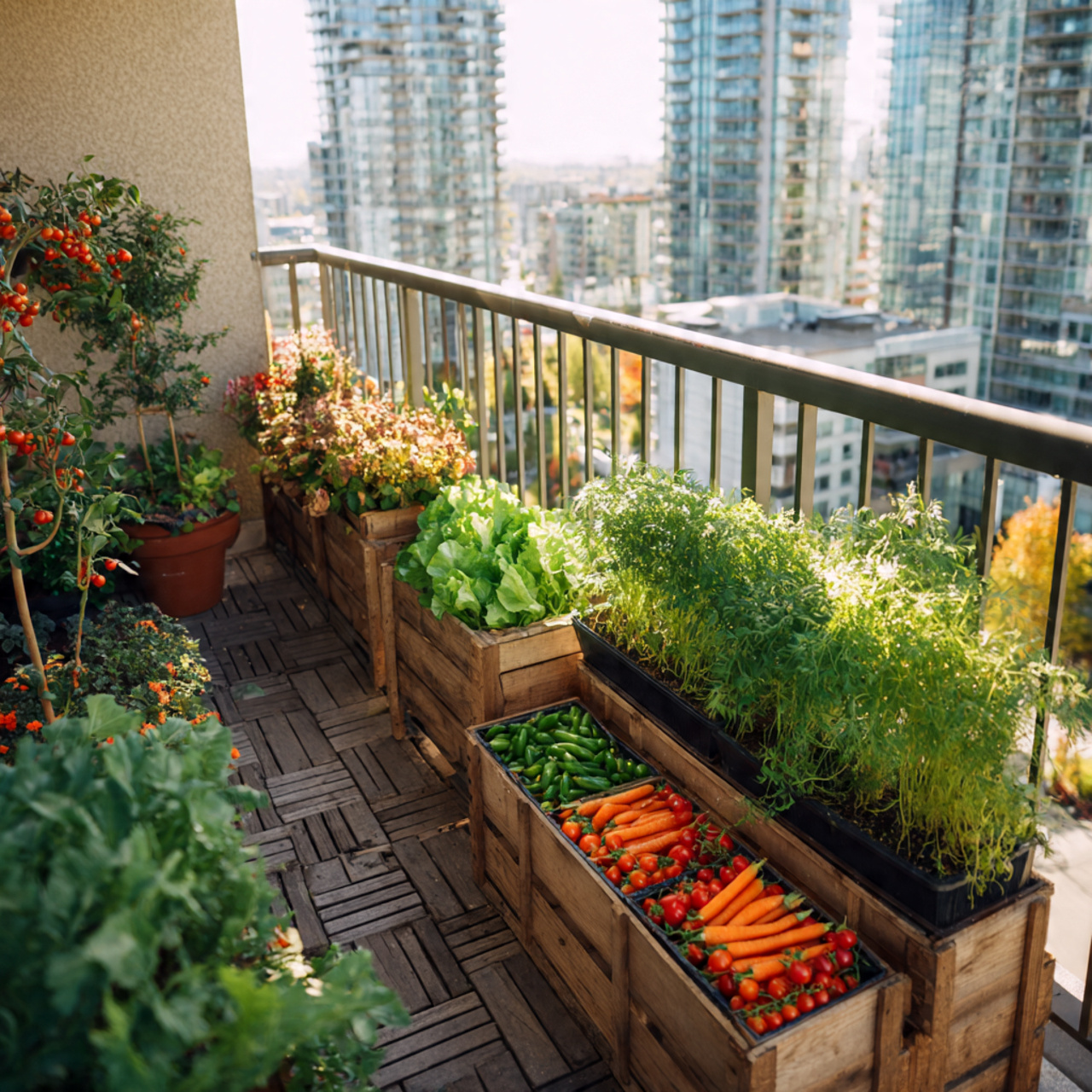
Yes, you can grow real food on your balcony! While you won’t replace your grocery bills entirely, there’s incredible satisfaction in eating vegetables you’ve grown yourself.
Best vegetables for balconies:
- Cherry or grape tomatoes—choose determinate varieties for containers
- Lettuce and salad greens—perfect for shallow pots
- Radishes—ready to harvest in just 30 days
- Peppers—compact plants with generous yields
- Green onions—regrow from kitchen scraps
Success secret: Use containers at least 12 inches deep for most vegetables, and choose a high-quality potting mix designed for vegetables. Feed regularly with liquid fertilizer since container plants can’t draw nutrients from the ground.
Succulent Garden
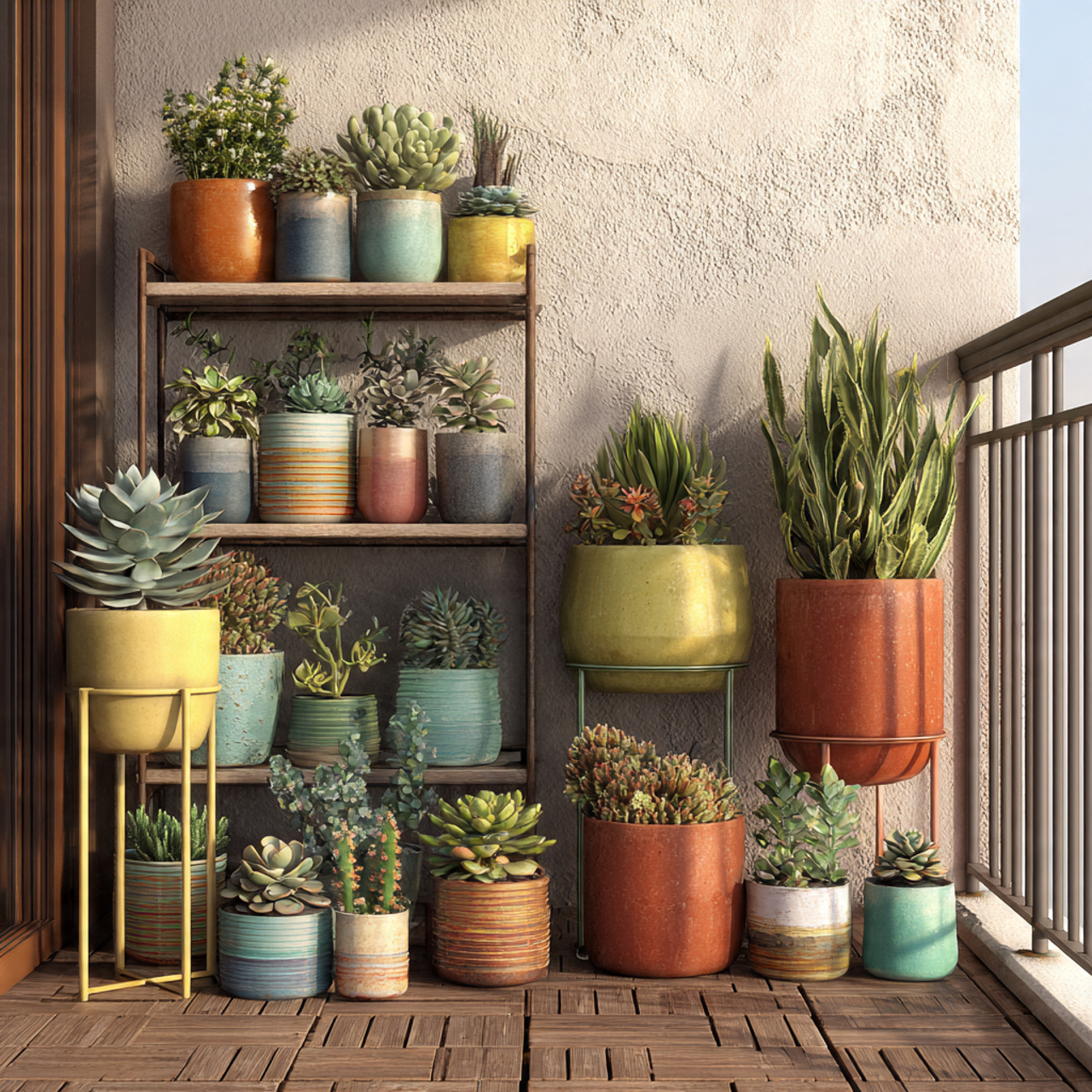
If you travel frequently or simply forget to water (no judgment!), succulents are your new best friends. These sculptural plants store water in their leaves, surviving weeks of neglect while looking absolutely stunning.
Why succulents are perfect:
- Require minimal watering—ideal for busy lifestyles
- Tolerate intense sun and heat
- Come in incredible variety—colors, shapes, textures
- Grow slowly, so arrangements stay neat
- Nearly impossible to kill
Design idea: Create a succulent bowl by combining different varieties in a wide, shallow container. Mix tall echeverias with trailing string of pearls and compact haworthias for a living sculpture that looks professionally designed.
Flower-Filled Balcony
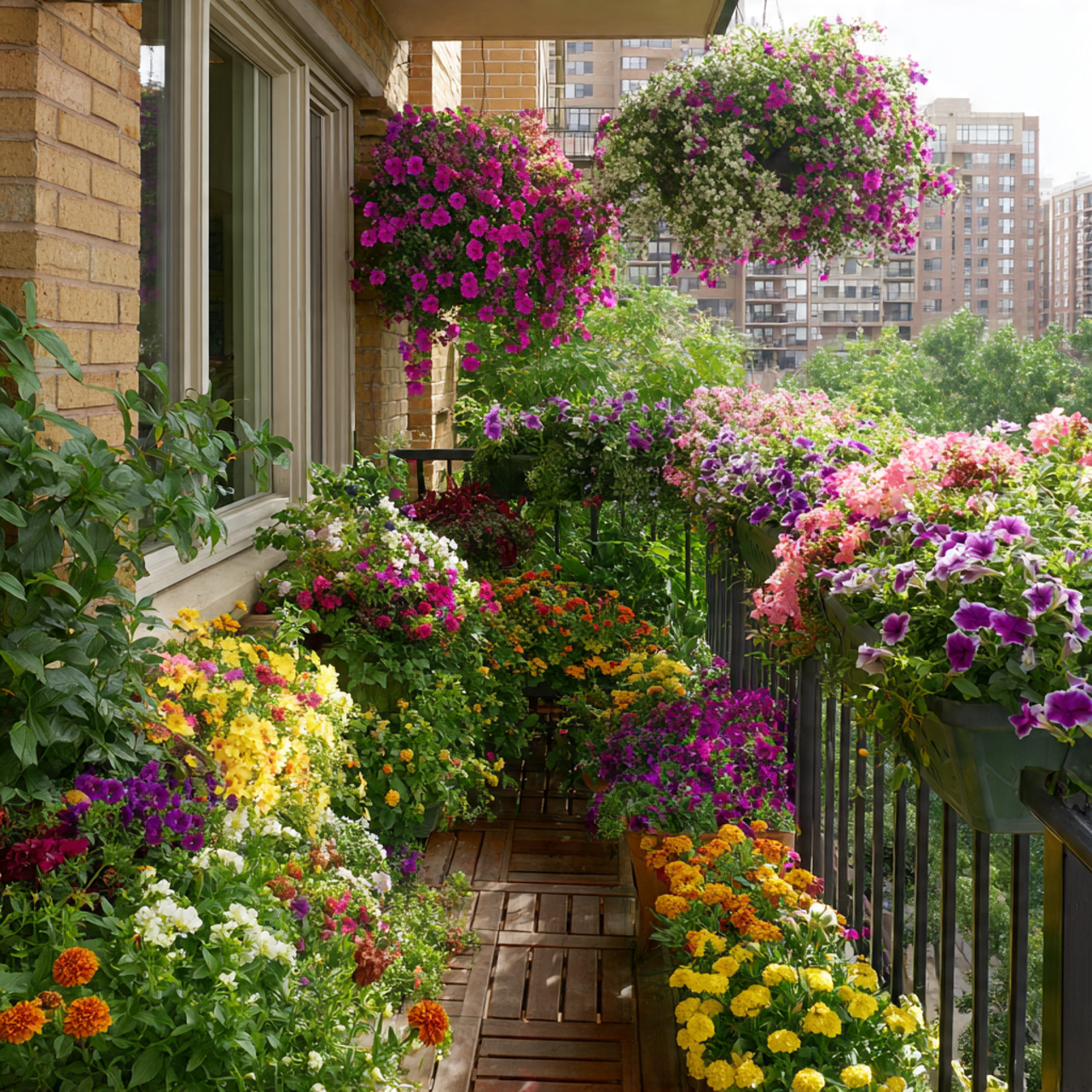
Want maximum color and joy? Go all-in with flowers. A balcony bursting with blooms feels like a constant celebration and transforms even the dreariest building into something special.
Flower power combinations:
- Petunias + geraniums + sweet alyssum for traditional charm
- Zinnias + marigolds + cosmos for cottage garden vibes
- Impatiens + begonias + coleus for shade
- Lavender + salvia + verbena for pollinators
Blooming strategy: Mix annuals that flower all season with perennials for long-term value. Deadhead spent blooms weekly to encourage more flowers. Add a slow-release fertilizer at planting time for months of continuous color.
Small Balcony Oasis
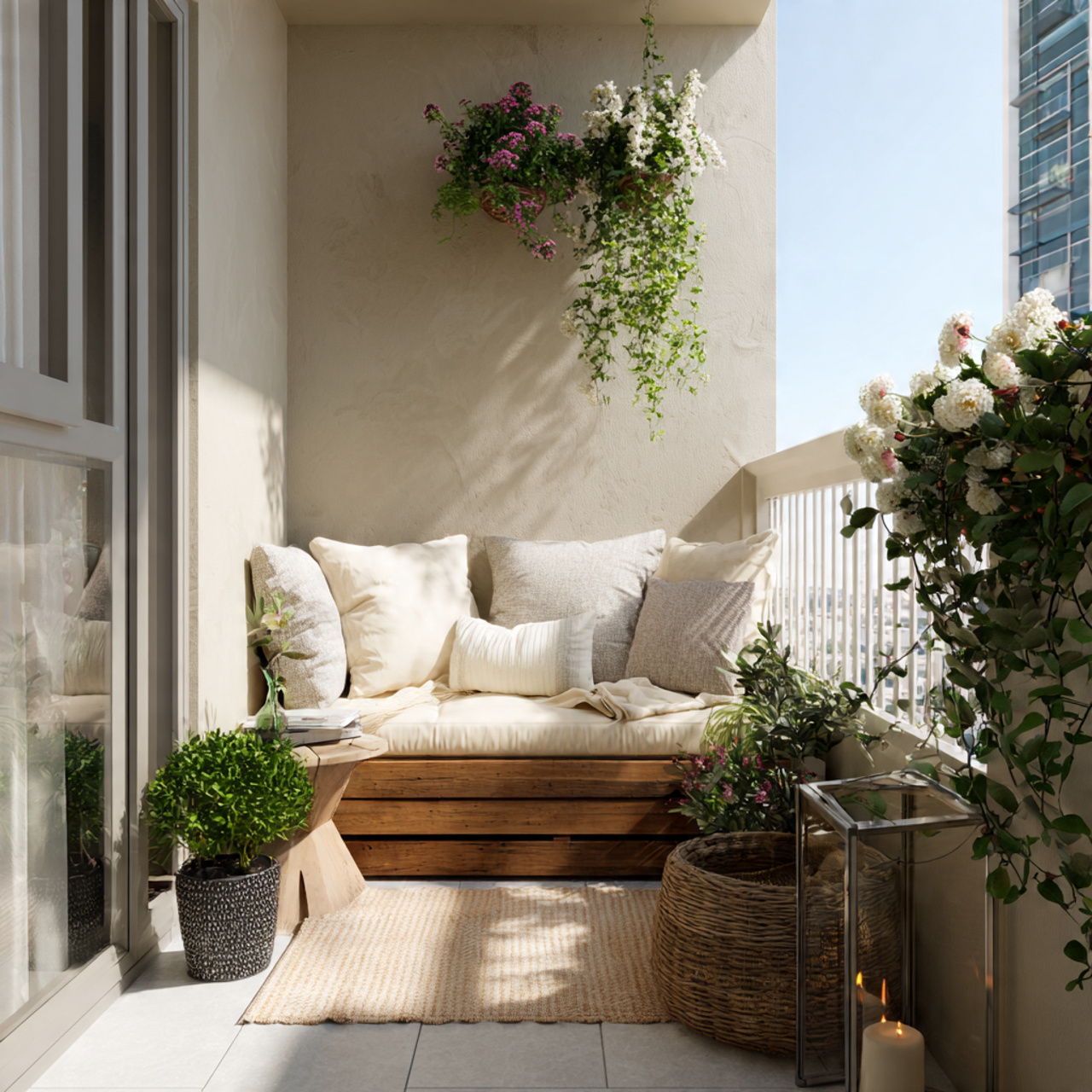
Even the tiniest balcony can become your personal retreat. The key is intentional design that balances plants with comfort.
Creating your oasis:
- Choose one comfortable chair or floor cushions
- Add 3-5 plants maximum to avoid overcrowding
- Include one fragrant plant (jasmine, gardenia, or herbs)
- Use a small side table for your coffee or book
- String cafe lights overhead for evening ambiance
Space-saving tip: Use a folding bistro chair that tucks away when not in use. Choose plants that serve double duty—like a dwarf lemon tree that provides fragrance, beauty, and fruit.
Modern Minimalist Balcony Garden
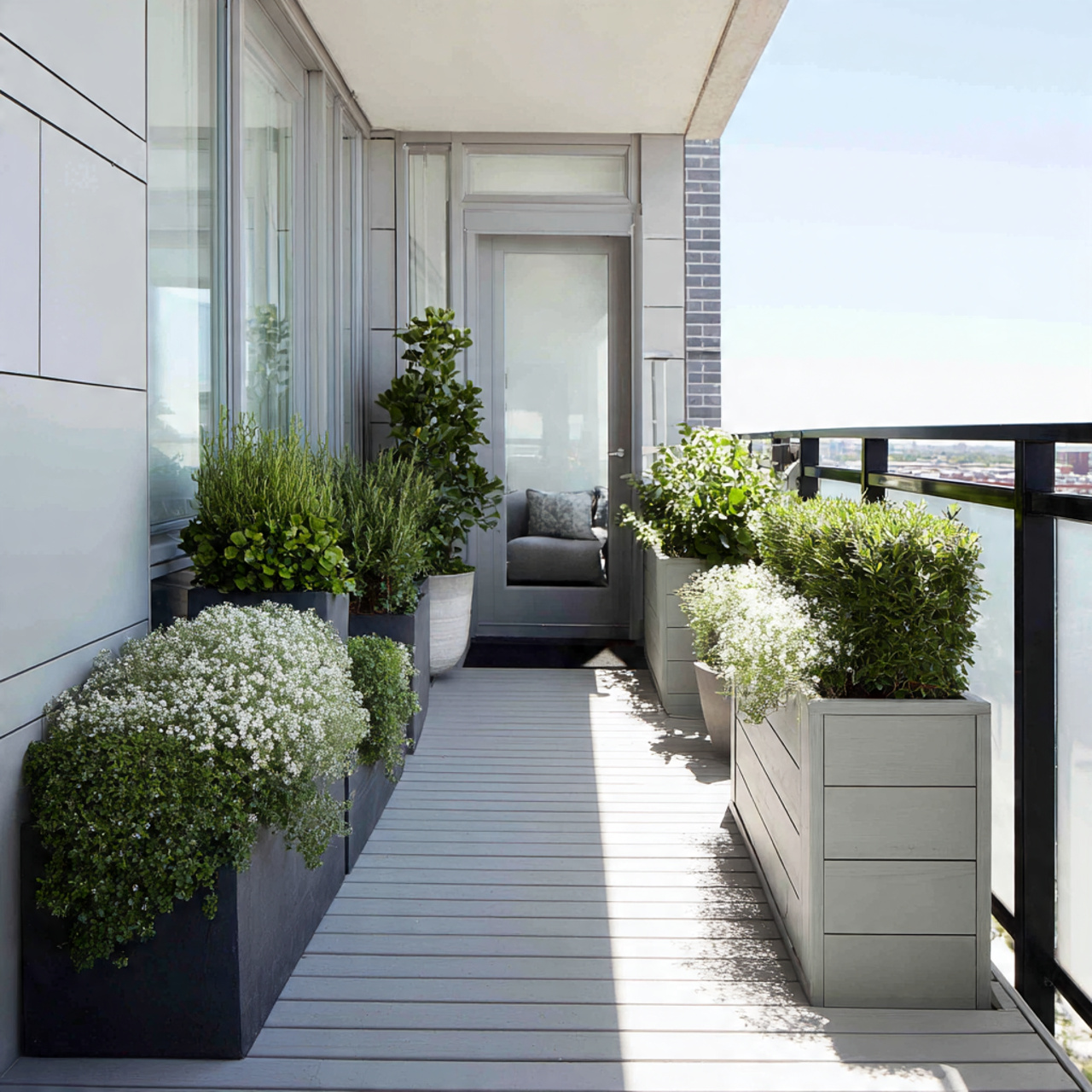
Less really can be more. Minimalist gardens focus on quality over quantity, creating calm, uncluttered spaces perfect for modern apartments.
Minimalist principles:
- Stick to 1-3 plant varieties
- Use matching or coordinating containers
- Choose architectural plants (snake plants, birds of paradise, ornamental grasses)
- Embrace negative space—emptiness is part of the design
- Select a neutral color palette with one accent color
Clean aesthetic tip: Use identical black or white planters in graduating sizes. Add a single sculptural plant like a fiddle leaf fig or large monstera as your focal point. Keep surfaces clear and clutter-free.
Trellis with Climbing Plants
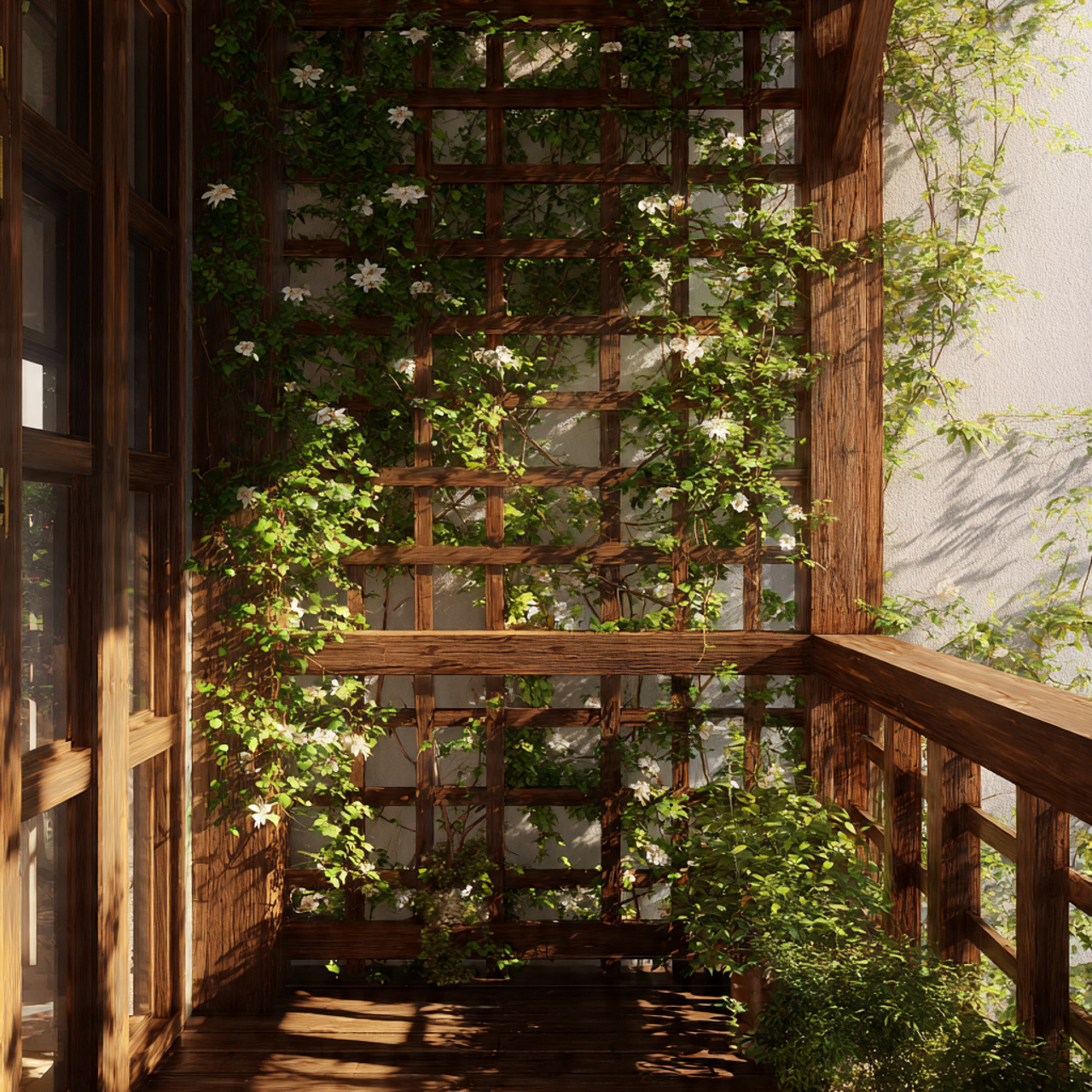
Vertical growing space doesn’t have to mean wall-mounted planters. Trellises let climbing plants reach for the sky while creating natural screens and shade.
Best climbers for balconies:
- Morning glories—fast-growing annual flowers
- Jasmine—intoxicating fragrance in evening
- Climbing roses—romantic and classic
- Clematis—stunning large blooms
- Passion fruit or cucumber—edible options
Support system: Install a sturdy trellis against a wall or railing. Use zip ties or soft plant ties to guide young plants upward. Once established, most climbers will grab on and climb independently.
Balcony Water Feature
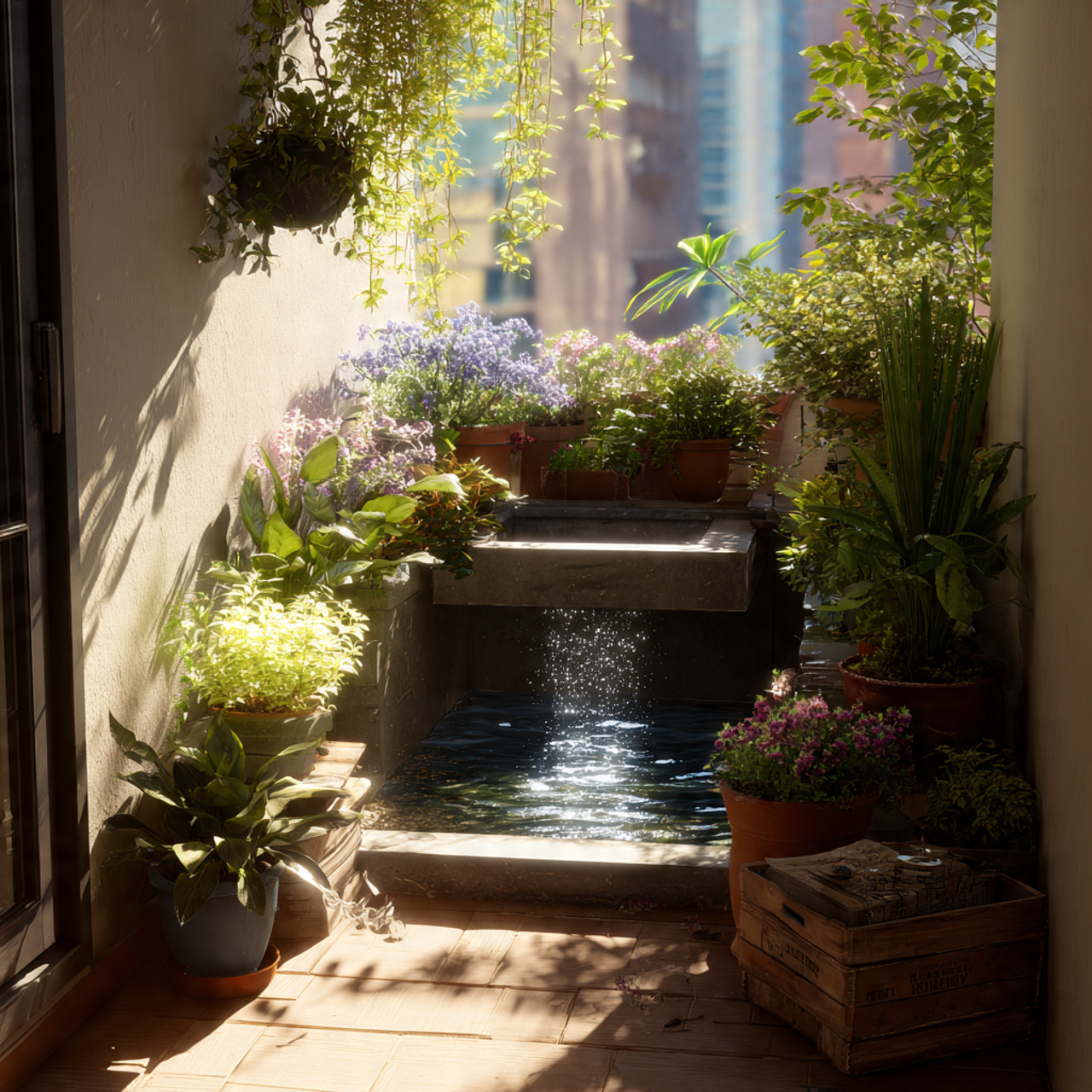
The sound of trickling water instantly creates a zen atmosphere. Even a small fountain can transform your balcony from ordinary to spa-like.
Water feature benefits:
- Masks city noise with natural sounds
- Creates humidity for tropical plants
- Attracts birds and butterflies
- Provides a meditation focal point
- Cools the air on hot days
Easy option: Start with a self-contained tabletop fountain that needs no plumbing. Position it on a small table surrounded by ferns and peace lilies that love the extra humidity.
Balcony Terrarium Garden
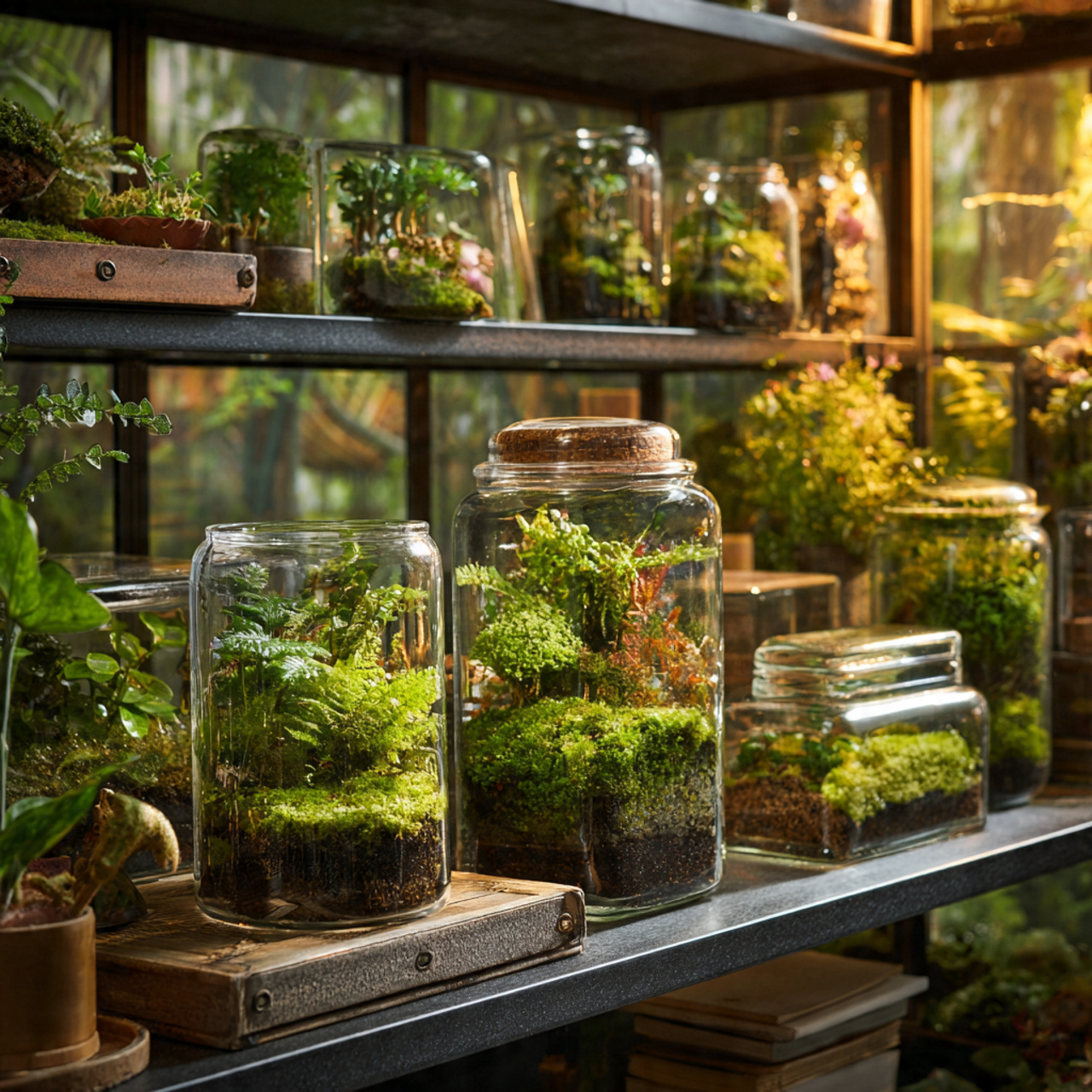
Terrariums bring the magic of miniature worlds to your balcony. These glass gardens require almost no maintenance once established and add whimsy to any corner.
Terrarium advantages:
- Protected from wind and weather
- Create their own micro-ecosystem
- Perfect for people who over-water
- Beautiful on tables, shelves, or hanging
- Great conversation starters
DIY approach: Use glass jars, fishbowls, or geometric terrariums. Layer pebbles, activated charcoal, and potting soil. Add small ferns, moss, and miniature plants. Water sparingly—the glass retains moisture naturally.
Multi-Tier Plant Stands
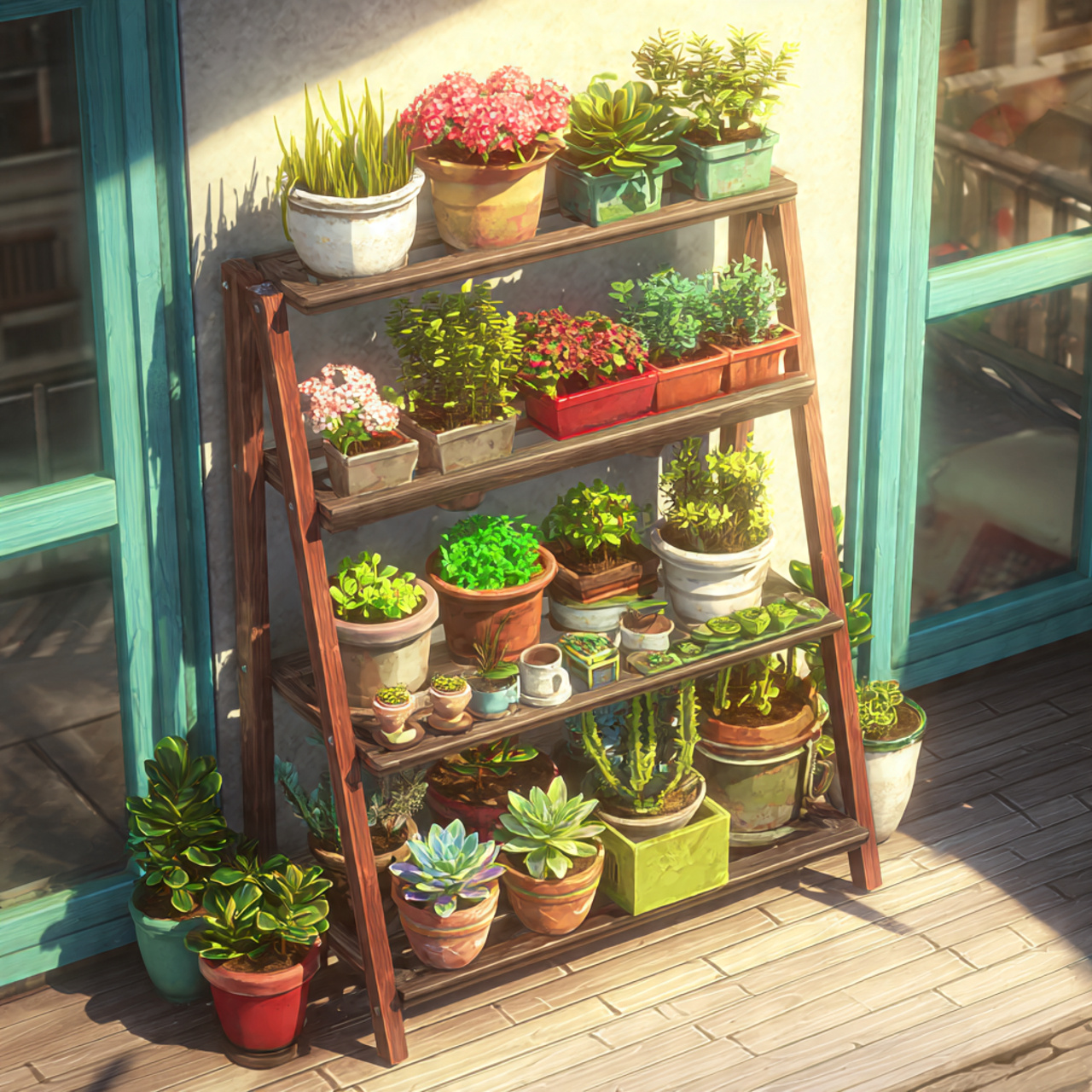
Plant stands are like apartment buildings for your garden—they let you grow upward instead of outward. These tiered structures maximize every inch of vertical space.
Tiered stand benefits:
- Showcase multiple plants in one footprint
- Easy to move for cleaning or rearranging
- Creates visual interest at different eye levels
- Improves air circulation around plants
- Makes watering and maintenance simple
Arrangement tip: Place tall plants on the back tier, medium plants in the middle, and trailing plants on the front. This creates depth and ensures every plant gets noticed.
Hanging Herb Basket Garden
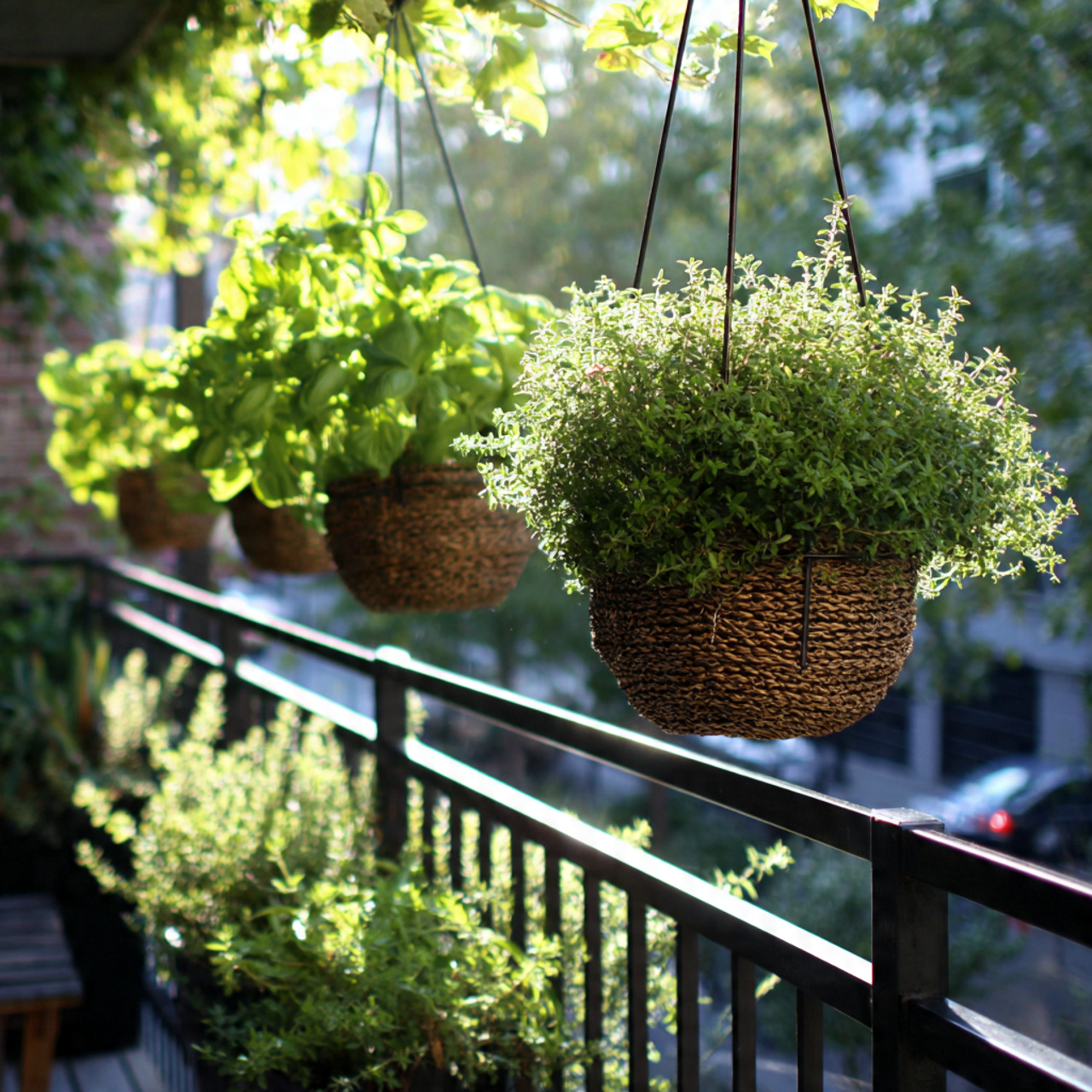
Take your herb garden vertical with hanging baskets positioned at convenient heights. This setup is especially brilliant for small balconies where every surface counts.
Hanging basket advantages:
- Herbs stay at easy-to-reach heights
- No bending required for harvesting
- Excellent drainage prevents root rot
- Mobile—bring baskets inside during bad weather
- Eye-level plants are less likely to be forgotten
Chef’s setup: Hang three baskets in a row—one with Italian herbs (basil, oregano), one with Asian herbs (cilantro, Thai basil), and one with tea herbs (mint, lemon balm). Label each basket for easy identification.
Compact Fruit Plants
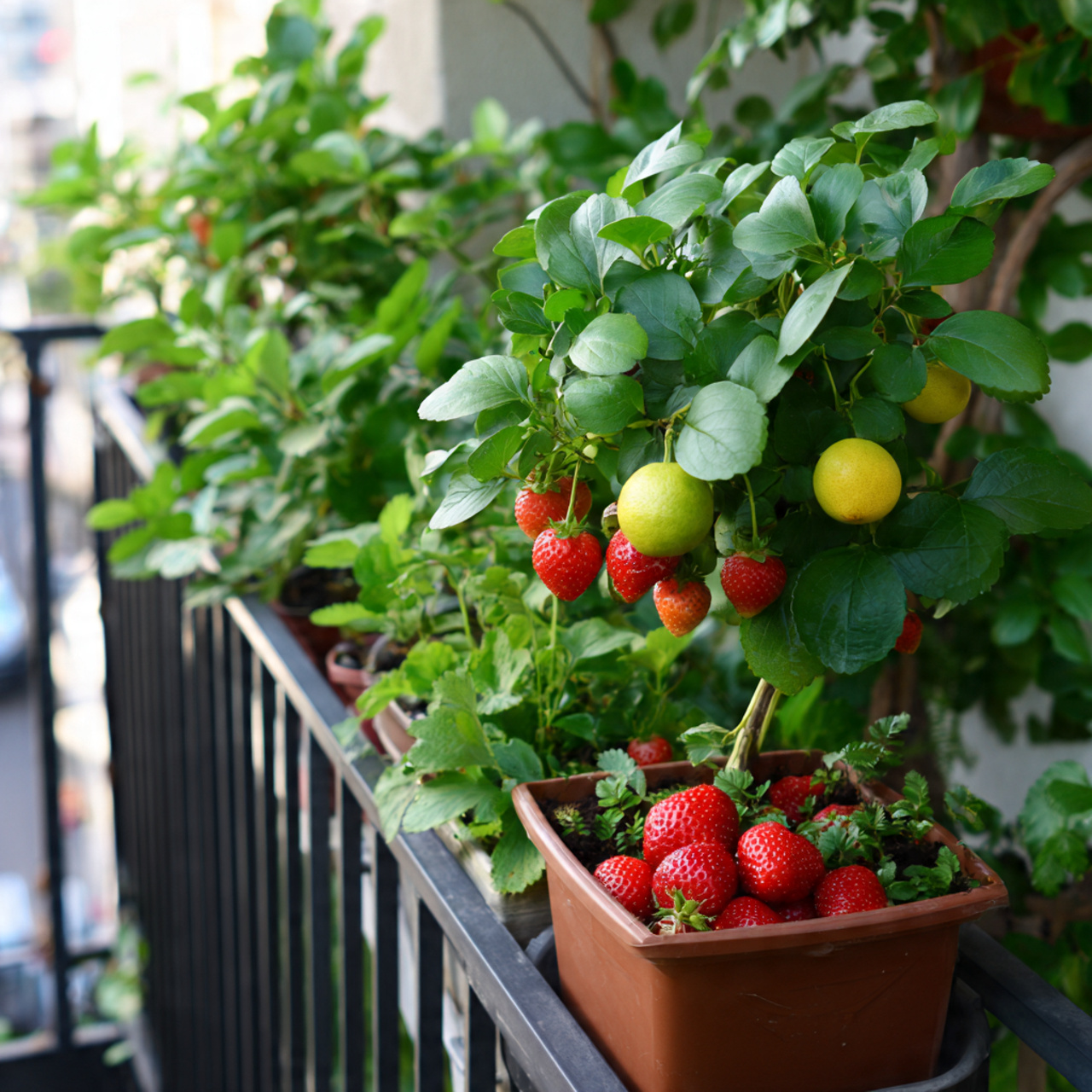
Growing your own fruit sounds ambitious, but dwarf varieties are specifically bred for container life. Fresh berries or citrus from your balcony? Absolutely possible.
Container-friendly fruits:
- Strawberries—produce heavily in hanging baskets
- Dwarf Meyer lemons—beautiful and productive
- Blueberries—stunning fall color plus fruit
- Raspberries—compact varieties available
- Dwarf apple or peach trees—full-size fruit on small trees
Fruiting success: Most fruiting plants need at least 6-8 hours of sun and larger containers (15-20 gallons for trees). Feed with fruit-specific fertilizer and be patient—many take 2-3 years to produce heavily.
Balcony Green Wall
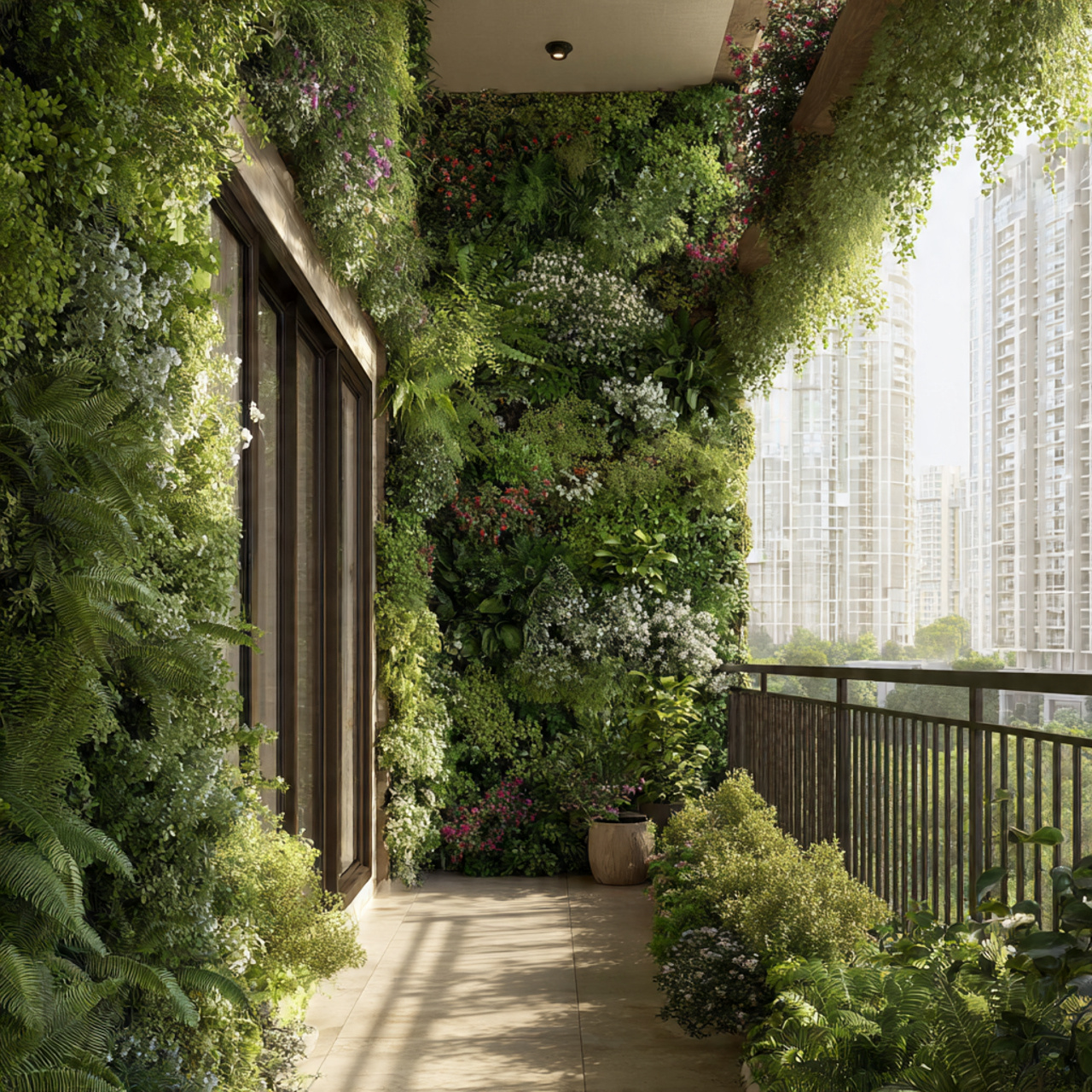
A full green wall makes the ultimate statement. These living walls turn an entire surface into dense foliage, creating the feeling of a secret garden even in the middle of the city.
Green wall impact:
- Maximum plants in minimum space
- Significant noise reduction from street sounds
- Improved air quality and insulation
- Total privacy from neighbors
- Instagram-worthy backdrop for everything
Installation path: Use modular pocket planters or buy a complete living wall system. Include a mix of ferns, pothos, philodendrons, and other foliage plants. Add an automatic drip irrigation system if your budget allows—it makes maintenance much easier.
Rustic Wooden Planters
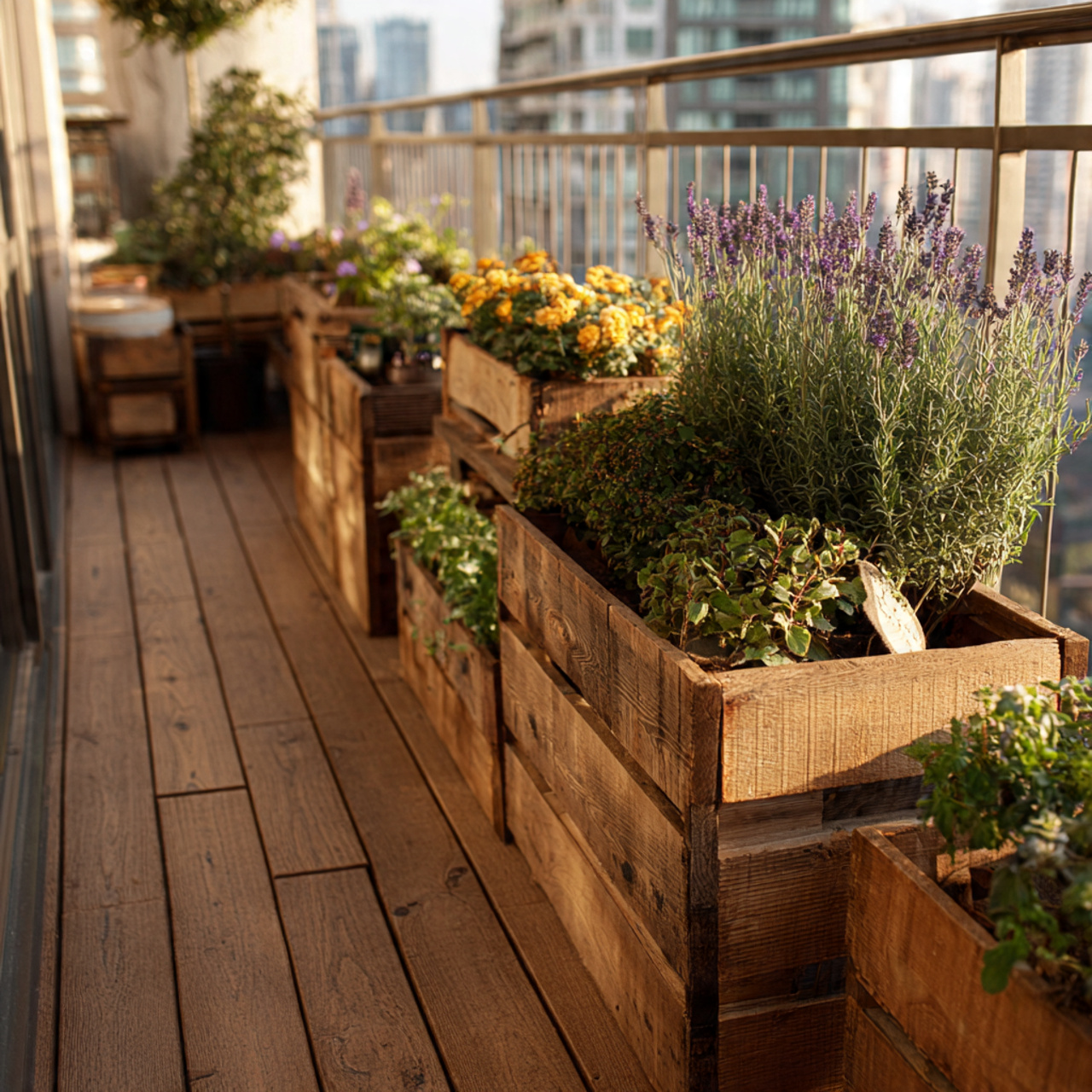
Wooden planters bring warmth and natural texture that plastic and ceramic can’t match. They age beautifully, developing character over time.
Wooden planter appeal:
- Natural aesthetic fits any decor style
- Insulates plant roots from temperature extremes
- Can be customized with paint or stain
- Lightweight compared to ceramic
- Eco-friendly and biodegradable
Maintenance note: Choose cedar or teak for natural rot resistance, or line planters with plastic to extend their life. Treat annually with wood sealer to prevent weathering.
Balcony Zen Garden
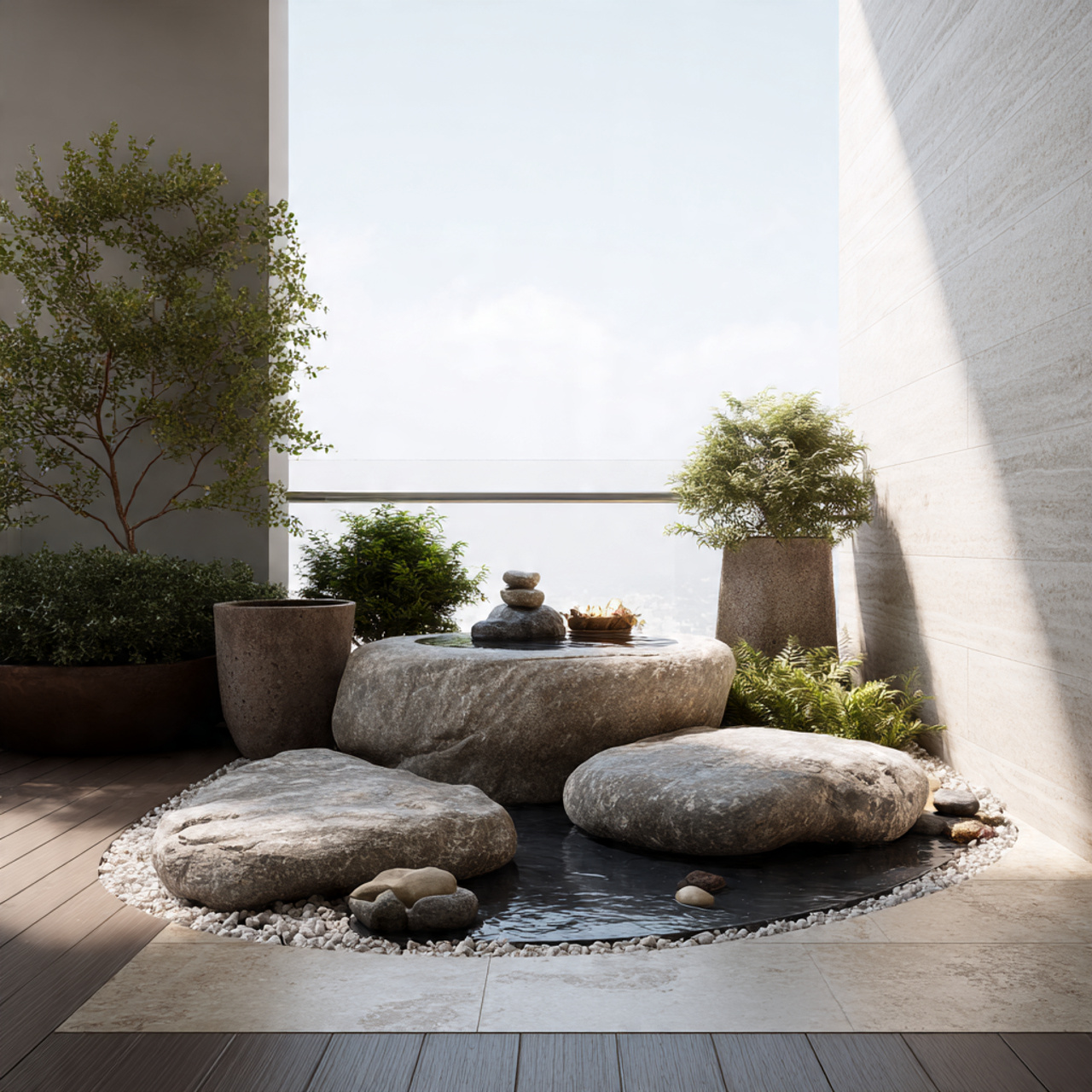
Channel Japanese garden principles to create a peaceful meditation space. Zen gardens focus on simplicity, natural materials, and purposeful arrangement.
Zen garden elements:
- Smooth river rocks or white gravel
- Bamboo in simple containers
- One or two sculptural plants (Japanese maple, bonsai)
- Minimalist water feature
- Clean lines and uncluttered surfaces
Mindful design: Less is more in zen gardens. Include a small area where you can rake patterns in gravel or sand—this mindful activity is surprisingly meditative. Add a simple bench for contemplation.
Succulent Wall Art
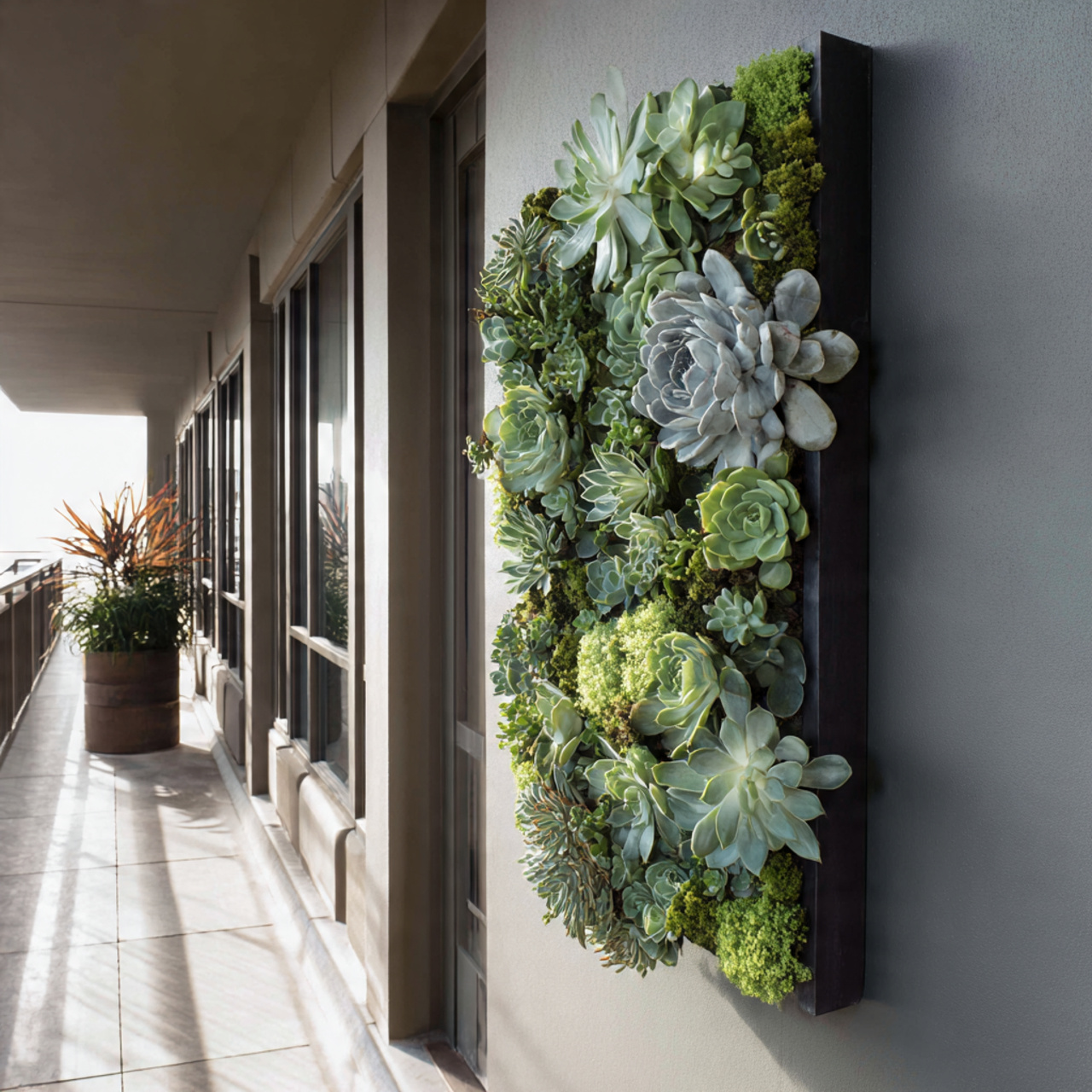
Why should wall art be limited to paintings? Create a living masterpiece using succulents arranged in vertical frames.
Living art benefits:
- Unique focal point for your balcony
- Low-maintenance compared to other plants
- Changes slowly as succulents grow
- Can be customized to any color scheme
- Doubles as functional garden space
Creative project: Buy or build a shallow vertical frame with mesh backing. Fill with succulent soil and plant small rosettes in patterns or gradients. Water by removing from wall and spraying, then rehang.
Balcony Fairy Garden
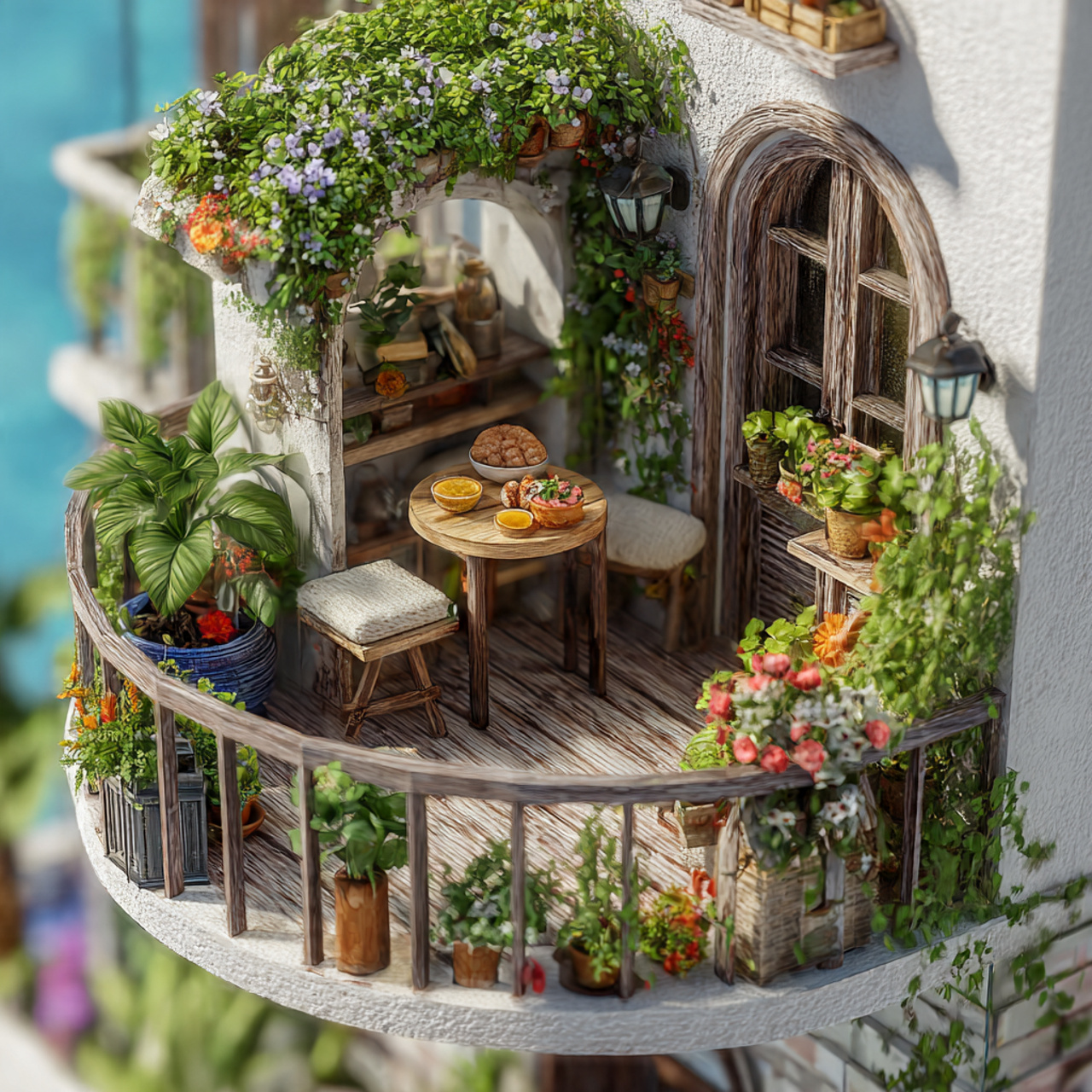
Embrace whimsy with a miniature fairy garden. These enchanting displays blend tiny plants with miniature accessories for pure delight.
Fairy garden magic:
- Sparks creativity and imagination
- Perfect project with kids
- Can be created in any container
- Easily changed and updated
- Brings smiles to everyone who sees it
Building your fairy world: Start with a wide, shallow container. Add miniature houses, tiny furniture, pebble paths, and small plants like baby tears, miniature ivy, or moss. Create little scenes—a fairy having tea, a gnome guarding a bridge.
Outdoor Seating with Plants
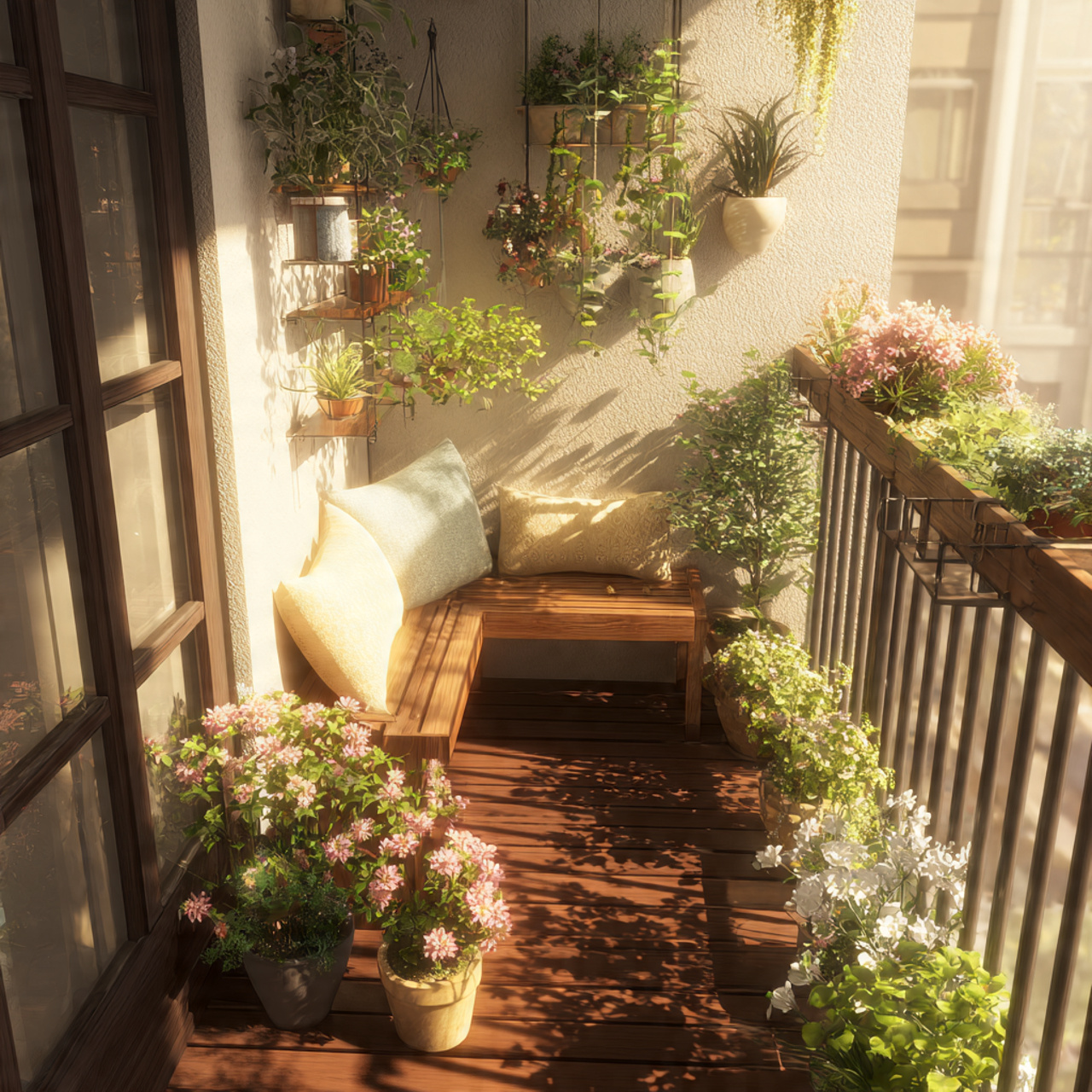
The best balcony gardens are ones you actually use. Integrate comfortable seating surrounded by plants to create a functional outdoor room.
Seating garden ideas:
- Built-in bench with planters on each side
- Hammock chair surrounded by hanging plants
- Floor cushions with container gardens around edges
- Folding chairs with plant stands creating privacy
Comfort priority: Choose weather-resistant cushions and outdoor fabrics. Position seating to face your best view—whether that’s your garden, the sunset, or just away from neighboring windows.
Balcony Plant Ladder
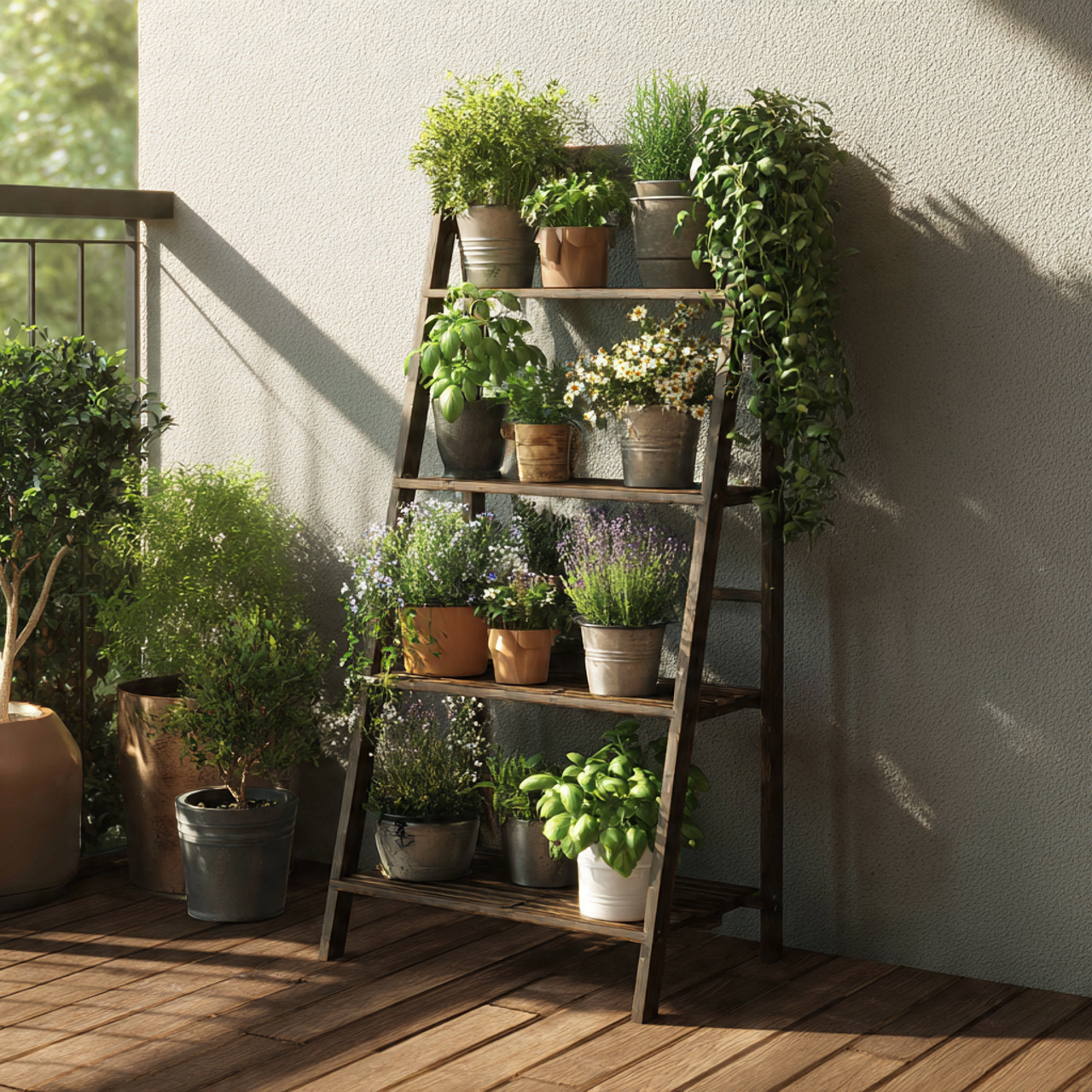
A leaning ladder or stepladder offers rustic charm while displaying plants at varying heights. This farmhouse-chic option works beautifully in any style balcony.
Ladder garden advantages:
- Inexpensive and easy to find
- No installation required
- Portable for rearranging
- Holds many plants in small footprint
- Can be painted to match decor
Styling tip: Mix plant sizes and types on each rung. Use trailing plants on upper rungs to cascade down, and larger statement plants at the base. Add small lanterns or decorative objects between plants.
Balcony Garden Lighting
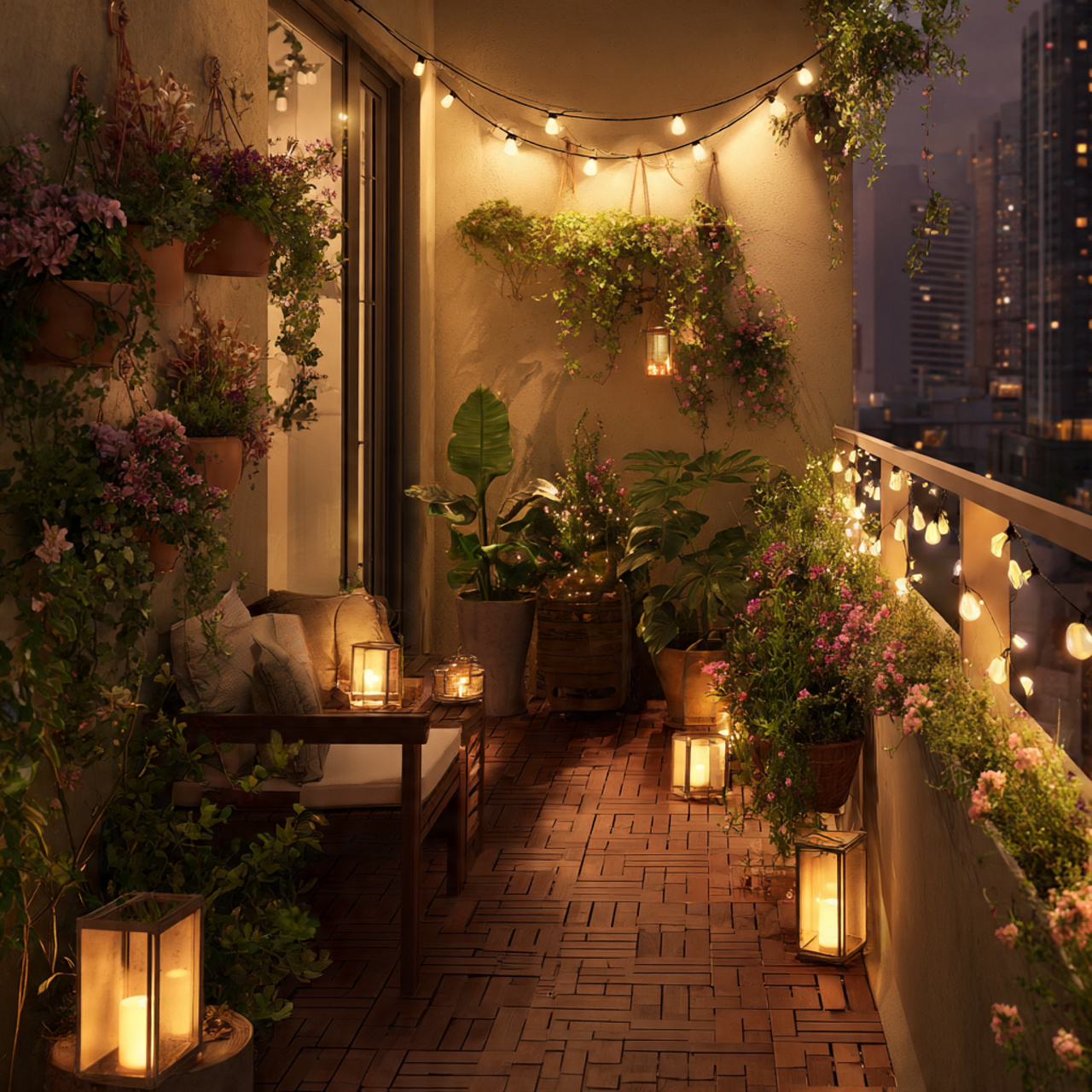
Your garden shouldn’t disappear when the sun sets. Thoughtful lighting extends your balcony’s usability into the evening while creating magical ambiance.
Lighting options:
- String lights overhead for starry effect
- Solar stake lights among plants
- LED strips under railings
- Lanterns on tables or hanging from hooks
- Uplights to highlight favorite plants
Lighting layers: Combine different light sources at different heights. Warm white creates a cozy glow, while cool white has a modern feel. Use timers or smart plugs so lights turn on automatically at dusk.
Seasonal Flower Rotation
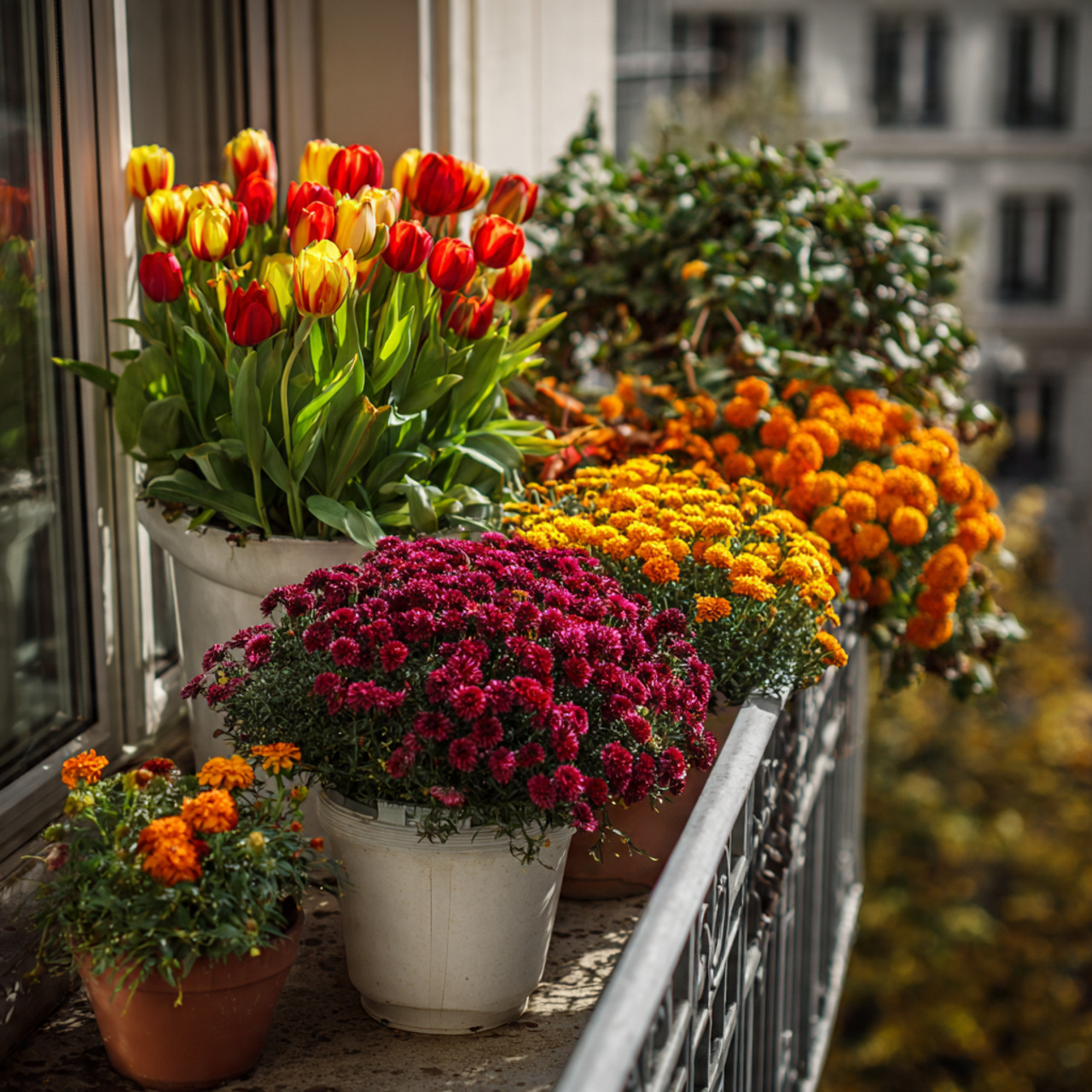
Keep your balcony looking fresh year-round by swapping plants seasonally. This approach ensures you always have something blooming and lets you experiment with different looks.
Seasonal planting guide:
- Spring: Tulips, daffodils, pansies, snapdragons
- Summer: Petunias, zinnias, marigolds, sunflowers
- Fall: Mums, ornamental kale, asters, ornamental peppers
- Winter: Evergreens, winter jasmine, pansies (in mild climates)
Rotation strategy: Keep a few permanent plants (evergreen shrubs, perennials) as your foundation, then swap out 30-40% of containers seasonally. Buy plants on sale at season’s end to save money.
Visit More: Balcony Garden
FAQs About Balcony Garden Ideas
1. How do I start a balcony garden with limited space?
Begin with vertical gardening, rail planters, or multi-tier plant stands. Start small and gradually expand based on available space.
2. Which plants are best for balcony gardens?
Herbs, succulents, flowering annuals, dwarf fruit plants, and shade-tolerant plants depending on sunlight conditions. Choose based on climate and maintenance ability.
3. How do I maintain a balcony garden easily?
Use self-watering containers, proper soil, and seasonal rotations. Group plants with similar light and water needs for efficient care.
4. Can I grow vegetables on a balcony?
Yes. Compact vegetables like cherry tomatoes, peppers, lettuce, and herbs grow well in containers or raised beds.
5. How can I create privacy on a balcony garden?
Use trellises, vertical green walls, hanging plants, or tall potted plants to block views and create a secluded, cozy space.
Final Thoughts
Your balcony has enormous potential, no matter its size or current condition. The ideas shared here prove that you don’t need a backyard to enjoy the rewards of gardening. Whether you’re drawn to the practicality of growing fresh herbs, the beauty of colorful flowers, or the tranquility of a zen-inspired retreat, there’s a balcony garden style waiting for you.
Start small and build gradually. Pick one or two ideas that excite you most, gather your supplies, and dive in. Gardening is forgiving—plants are remarkably resilient, and even experienced gardeners lose plants sometimes. What matters is creating a space that brings you joy and makes you want to step outside.
The best balcony gardens aren’t necessarily the most elaborate or expensive. They’re the ones that fit seamlessly into your life, require maintenance you can actually sustain, and reflect your personality. So grab a few pots, some soil, and plants that spark your interest. Your balcony oasis is waiting to bloom.