26 Balcony Garden Design Ideas That Bring Fresh Air, Color & Calm to Your Home
Living in an apartment doesn’t mean you have to give up on your gardening dreams. Your balcony—no matter how small—can become a thriving green sanctuary that brings joy to your everyday life. I’ve seen countless tiny balconies transformed into gorgeous garden spaces, and trust me, the magic is in the planning, not the square footage.
Why Balcony Gardens Matter
Let’s talk about why creating a balcony garden is worth your time and effort. Beyond the obvious aesthetic appeal, there are real, tangible benefits that impact your daily life.
Studies show that being around plants can lower stress levels and improve your mood. Your balcony garden becomes more than just a pretty view—it’s your personal wellness retreat. Imagine starting your morning with a cup of coffee surrounded by greenery instead of staring at concrete walls. That’s the difference a balcony garden makes.
Urban living often disconnects us from nature, but a well-designed balcony garden bridges that gap. Plus, you’re improving air quality right where you live. Plants naturally filter pollutants and produce oxygen, creating a healthier breathing environment for you and your neighbors.
The best part? You don’t need to be an experienced gardener to get started. Balcony gardens are incredibly forgiving and flexible. Start with just three or four pots, learn as you go, and expand when you’re ready.
Tip: Take a photo of your balcony from different angles and note where the sun hits throughout the day. This simple step will save you from buying the wrong plants later.
Vertical Balcony Garden
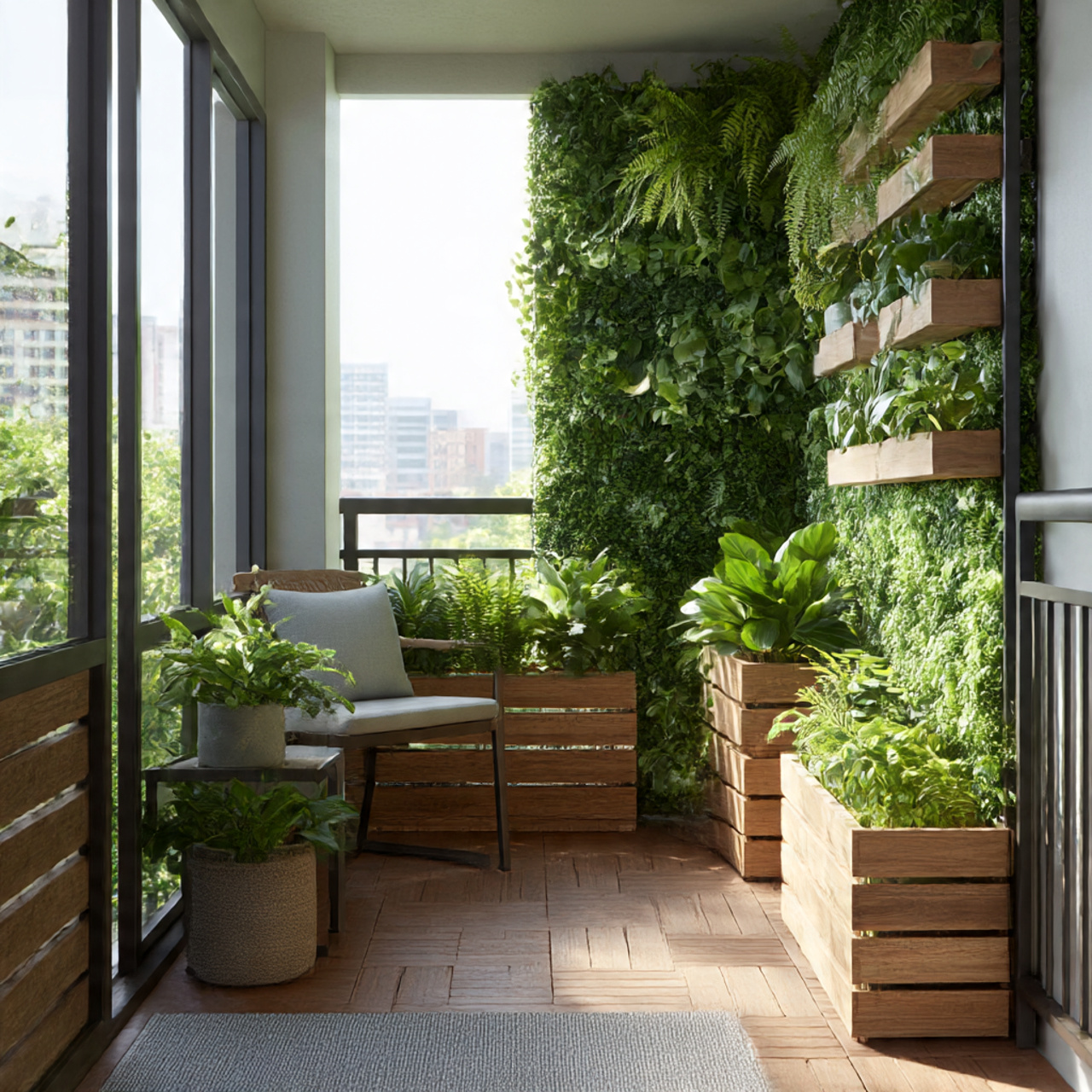
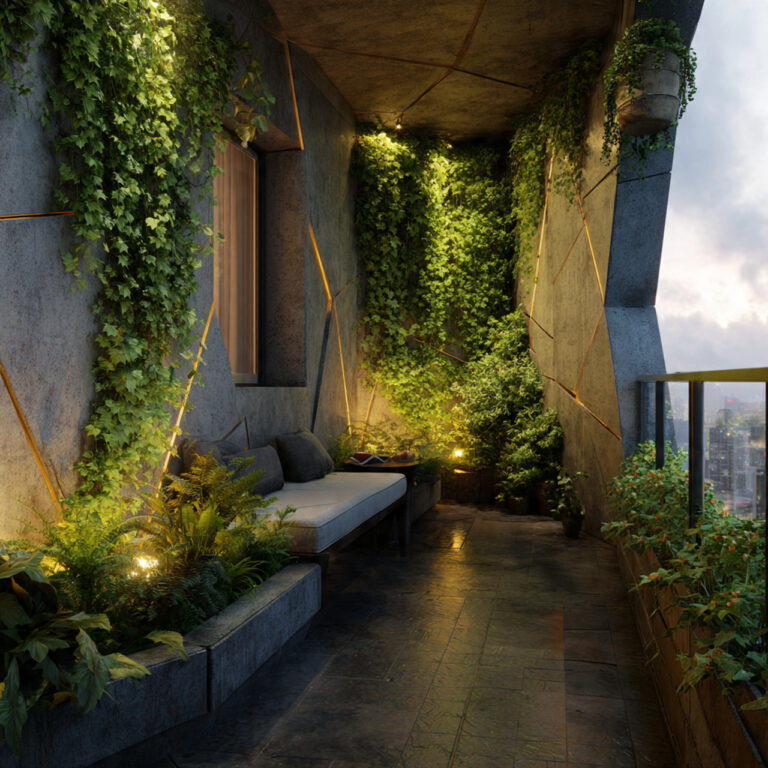
When floor space is limited, think upward. Vertical gardening is your secret weapon for maximizing every inch of your balcony without making it feel cramped.
Wall-mounted planters, tiered shelving units, and pocket planters transform bare walls into living art. The beauty of this approach is that it creates visual interest while keeping your floor area open for furniture or movement.
Choose plants that naturally thrive in vertical arrangements. Ferns bring that lush, jungle-like feel. Money plants and philodendrons are virtually indestructible and grow beautifully downward, creating natural green curtains. Pothos is another winner—it grows fast and tolerates various light conditions.
Beyond aesthetics, vertical gardens actually help regulate temperature. The plant layer acts as natural insulation, keeping your balcony slightly cooler during hot days.
Tip: Install a drip irrigation system for vertical gardens. It’s easier than hand-watering each tier and ensures every plant gets consistent moisture.
Hanging Planters for Dynamic Layers
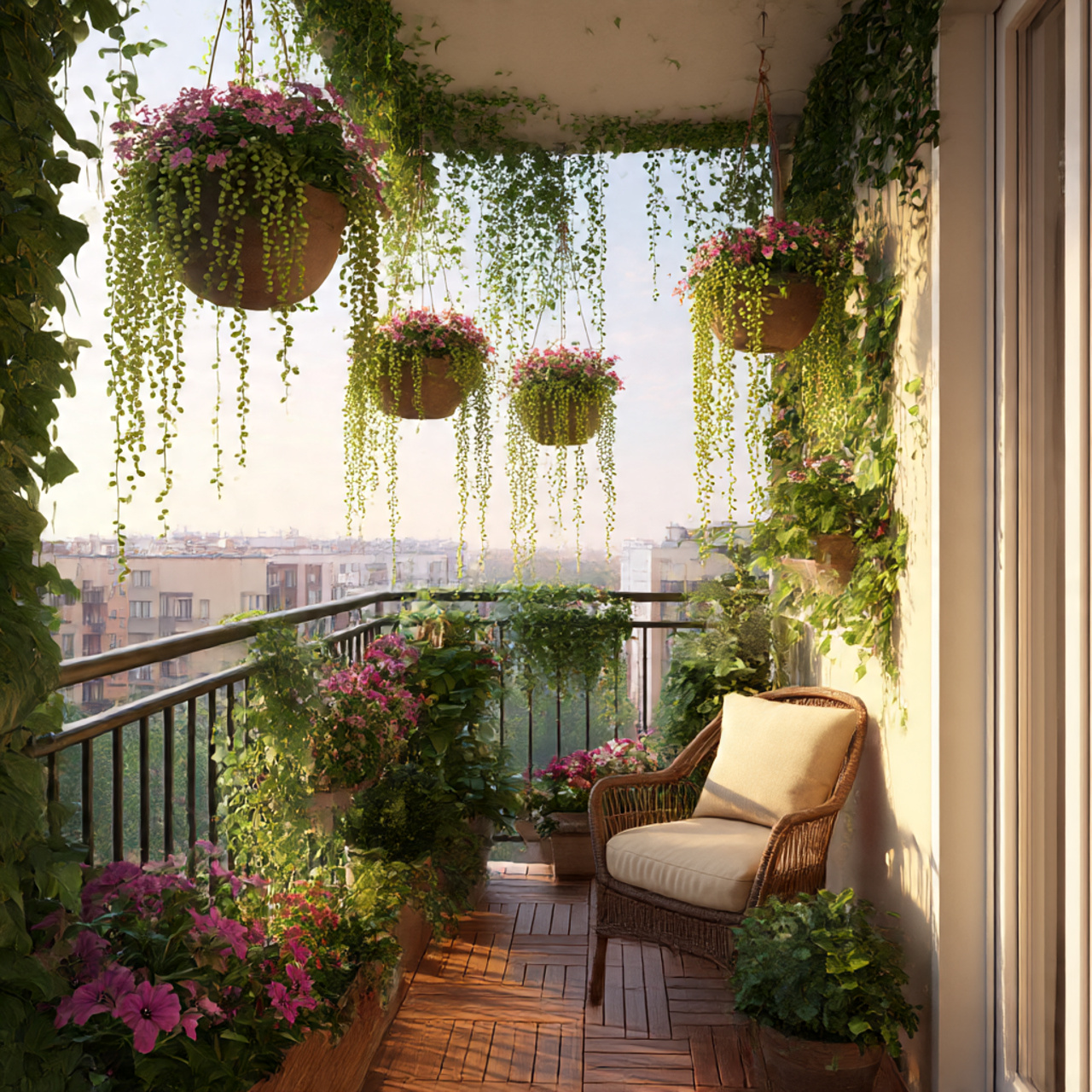
Hanging planters add dimension to your balcony garden that ground-level pots simply can’t achieve. They draw the eye upward and create the feeling of being surrounded by nature.
The key is choosing the right materials. Metal hanging baskets are durable and weather-resistant, while coconut coir planters have a natural aesthetic and excellent drainage. Make sure your hooks can support the weight—wet soil is heavier than you’d think.
String of pearls creates a stunning cascading effect that looks almost otherworldly. Pothos and trailing ivy soften hard edges and grow enthusiastically with minimal care. For functionality, hang herbs like mint or basil in spots that get good sunlight—you’ll have fresh seasoning literally within arm’s reach.
The real magic happens when you mix heights and plant types. Combine flowering plants with trailing greenery to create a layered canopy effect above your seating area.
Tip: Use adjustable-height hangers so you can lower plants for watering and maintenance, then raise them back up. Your back will thank you.
Fresh Herb Garden on Your Balcony
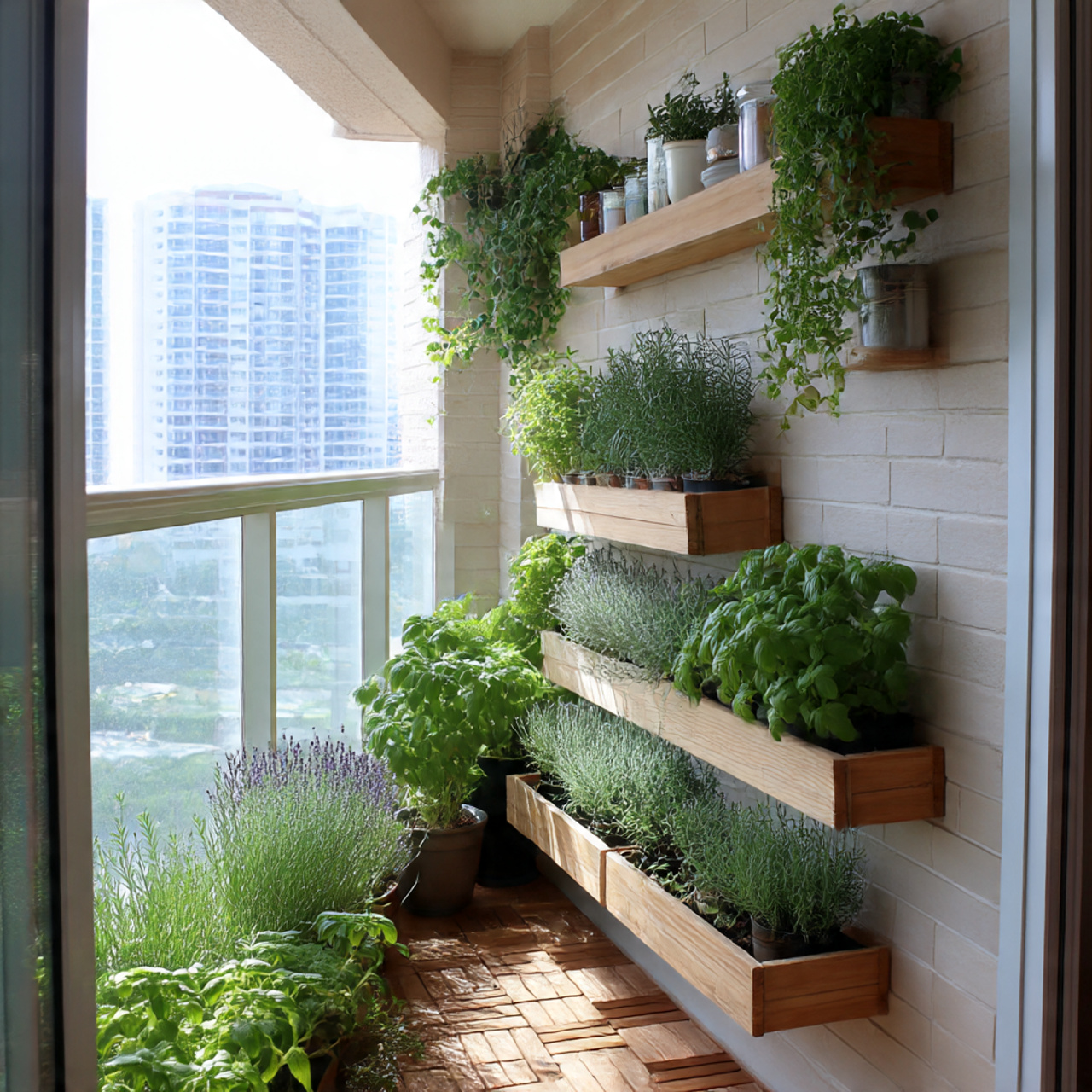
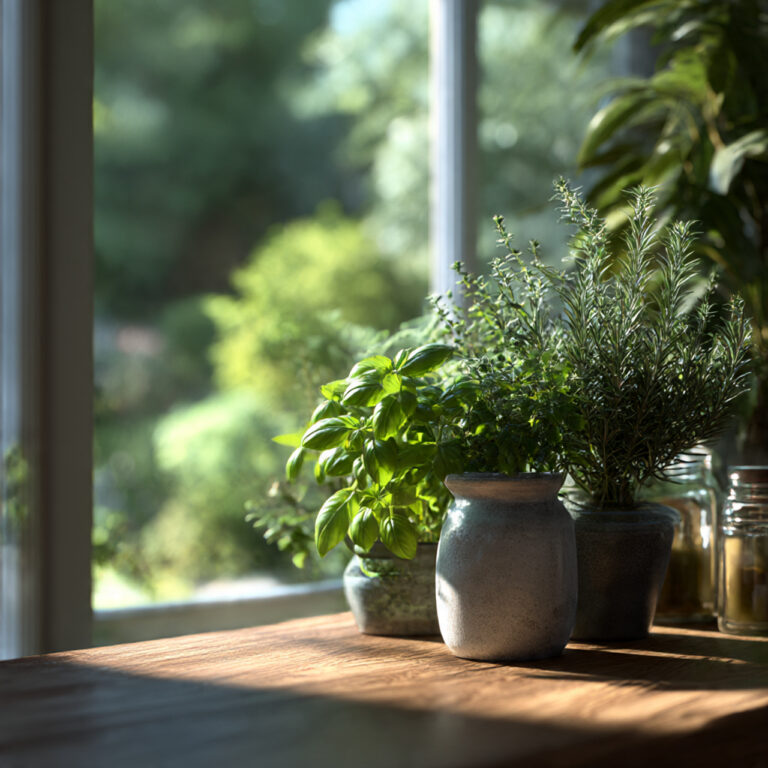
A balcony herb garden combines beauty and practicality in the best possible way. There’s something deeply satisfying about snipping fresh basil for your pasta or mint for your tea from your own balcony.
Start with the classics: basil, rosemary, mint, and thyme. These herbs are forgiving, grow relatively fast, and deliver incredible flavor. Plant them in containers along your railing or group them together in a dedicated corner.
Herbs need about 5-6 hours of sunlight daily, so choose your placement carefully. Most herbs prefer their soil to dry out slightly between waterings—they’re more tolerant of underwatering than overwatering.
Regular trimming isn’t just for harvesting—it encourages bushier, healthier growth. Pinch off the top leaves and stems frequently, and your herbs will reward you with continuous production throughout the growing season.
Tip: Plant mint in its own container. It’s an aggressive grower that will take over and crowd out other herbs if given the chance.
Low-Maintenance Succulent Display
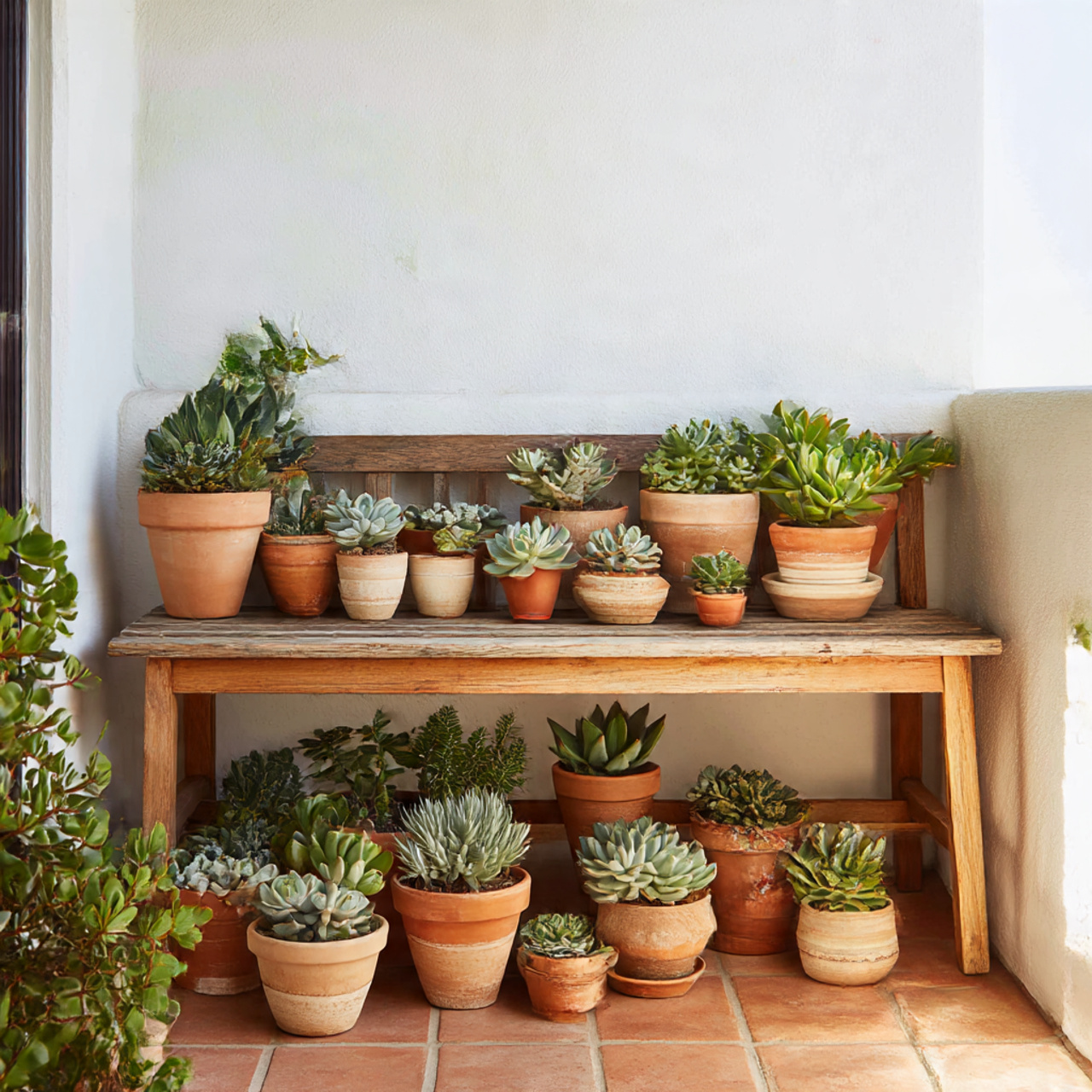
If you travel frequently or simply don’t have time for daily plant care, succulents are your perfect match. These sculptural plants thrive on neglect and bring a modern, minimalist aesthetic to your balcony.
Terracotta pots are ideal for succulents because they’re porous and allow soil to dry out between waterings. This prevents the root rot that kills more succulents than any other problem.
Create visual interest by mixing different varieties. Echeveria offers beautiful rosette shapes, haworthia adds striking vertical patterns, and aloe vera provides both beauty and practical benefits (that gel is great for minor burns and skin irritation).
Arrange them in clusters with varying heights and colors. The contrast between blue-green jade plants, purple-tinged echeverias, and spiky aloe creates a desert-inspired landscape that feels intentional and artistic.
Tip: Water succulents deeply but infrequently. When you do water, soak the soil completely, then let it dry out entirely before watering again. This mimics their natural desert environment.
Edible Balcony Garden
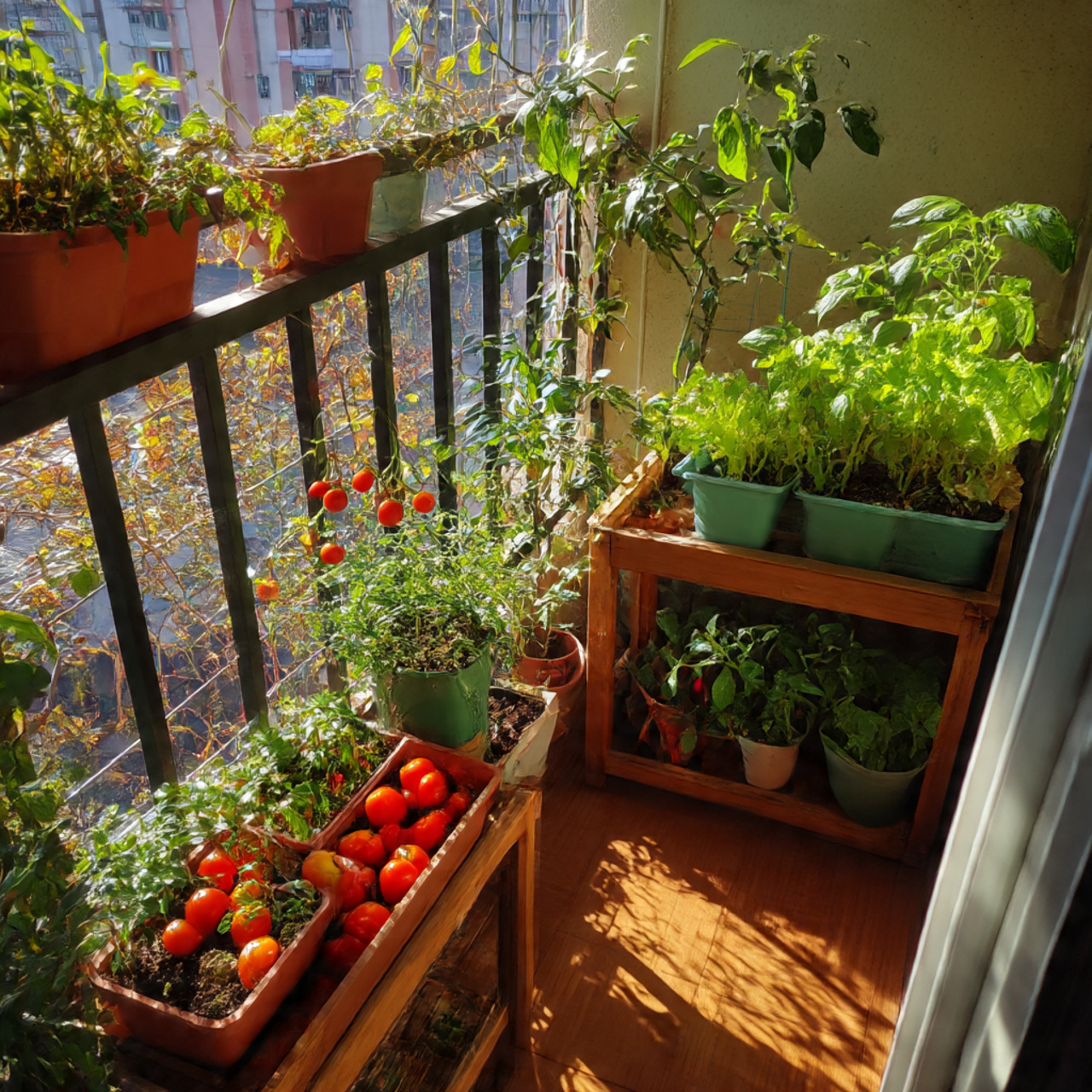
Why not grow your own food? An edible balcony garden transforms your space into a mini farm that provides fresh, organic produce right outside your door.
Cherry tomatoes are balcony superstars—they grow well in containers and produce abundantly. Add chili peppers for spice, lettuce for quick-growing salads, and spinach for nutritious greens. The key is choosing compact or dwarf varieties specifically bred for container growing.
Use deep containers (at least 12 inches) with good drainage holes. Quality potting soil mixed with compost gives your vegetables the nutrients they need. Consistent watering is crucial—vegetables are thirstier than ornamental plants.
The satisfaction of eating something you grew yourself is indescribable. Plus, you know exactly what’s gone into your food—no pesticides or chemicals, just sunshine, water, and care.
Tip: Start with easy, fast-growing vegetables like lettuce, radishes, or green onions to build confidence before tackling tomatoes or peppers.
Privacy-Creating Climbing Plants
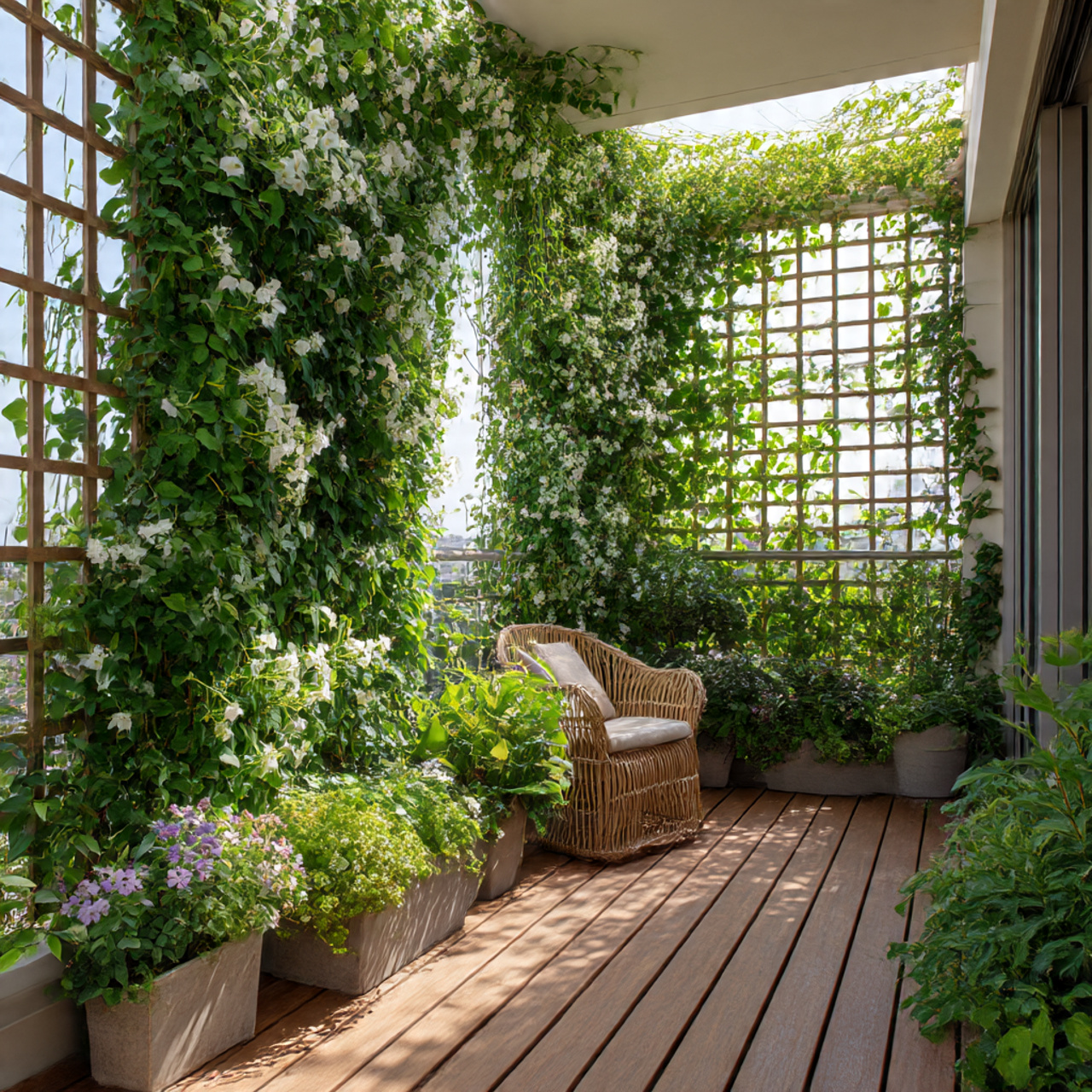
Climbing plants serve double duty—they’re gorgeous and functional. They create natural privacy screens while adding vertical greenery that makes your balcony feel like a secret garden.
Install trellises, wire frames, or tensioned cables as support structures. Morning glory offers stunning blooms and fast growth. Jasmine provides heavenly fragrance that makes evening relaxation even more special. Sweet peas deliver delicate flowers and a cottage-garden charm.
Beyond privacy, these living curtains filter dust, reduce noise pollution, and provide shade on hot afternoons. They transform your balcony from an exposed concrete platform into a cozy, secluded retreat.
Choose plants suited to your climate and sunlight conditions. Some climbers need full sun, while others tolerate partial shade.
Tip: Train young climbers early by gently guiding new growth through your trellis. Once established, they’ll fill in naturally and create a dense screen.
Visit More: Balcony Garden Ideas
Clean and Simple Minimalist Design
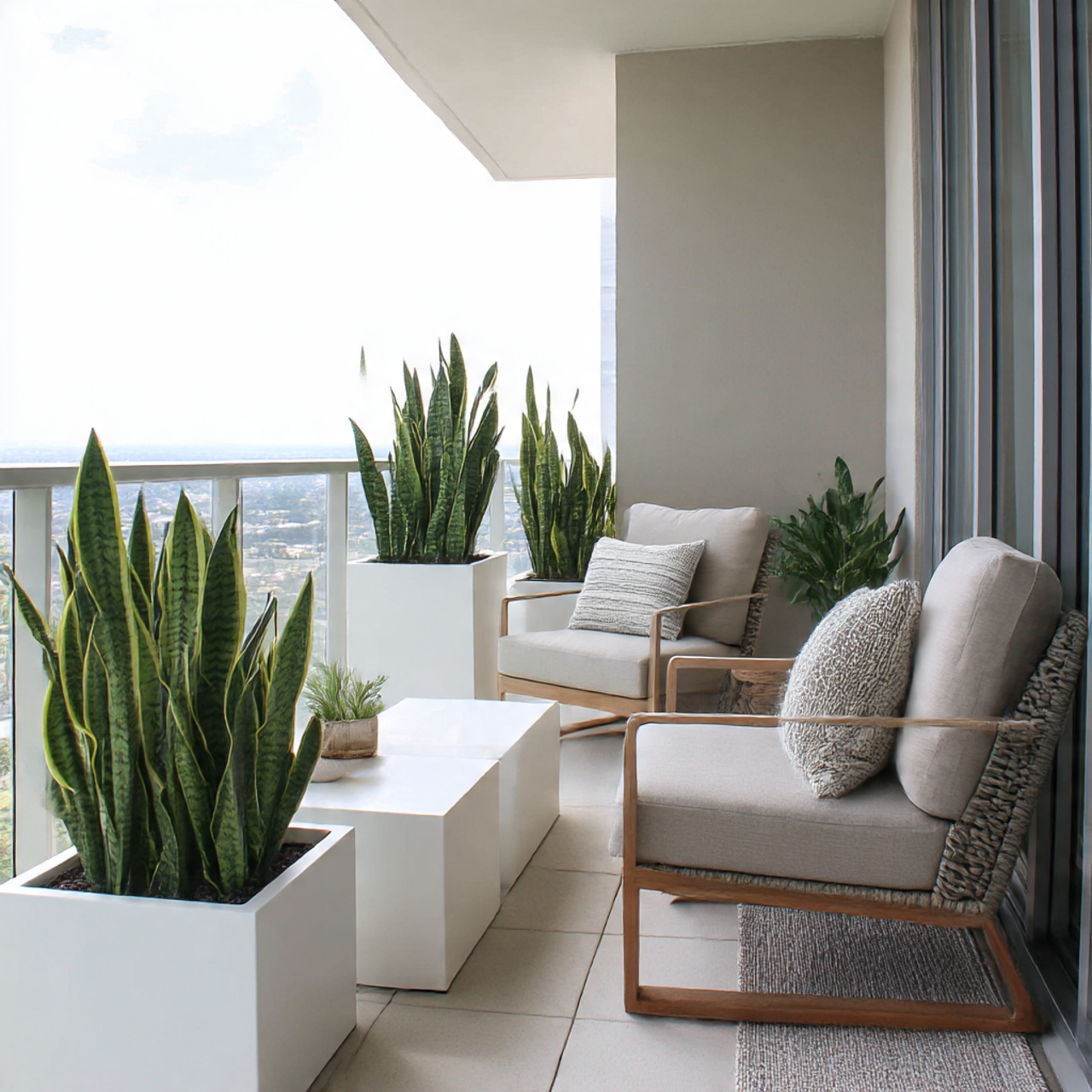
Minimalism in gardening is about intentional choices and mindful arrangement. A minimalist balcony garden feels calm, uncluttered, and sophisticated.
Select sleek, uniform pots in neutral colors—white, black, gray, or natural terracotta. Choose structured plants with clean lines like snake plants, ZZ plants, or bamboo palms. Avoid busy patterns or too many varieties.
Symmetry is your friend here. Place matching plants on either side of your seating area or arrange identical pots in a neat row. The goal is visual calm—every element should have a purpose and place.
This approach works especially well for small balconies where too many elements can feel chaotic. With minimalism, less truly is more.
Tip: Use odd numbers when grouping plants (3, 5, 7). It creates visual balance while avoiding the stiffness of perfectly symmetrical pairs.
Tropical Balcony Garden
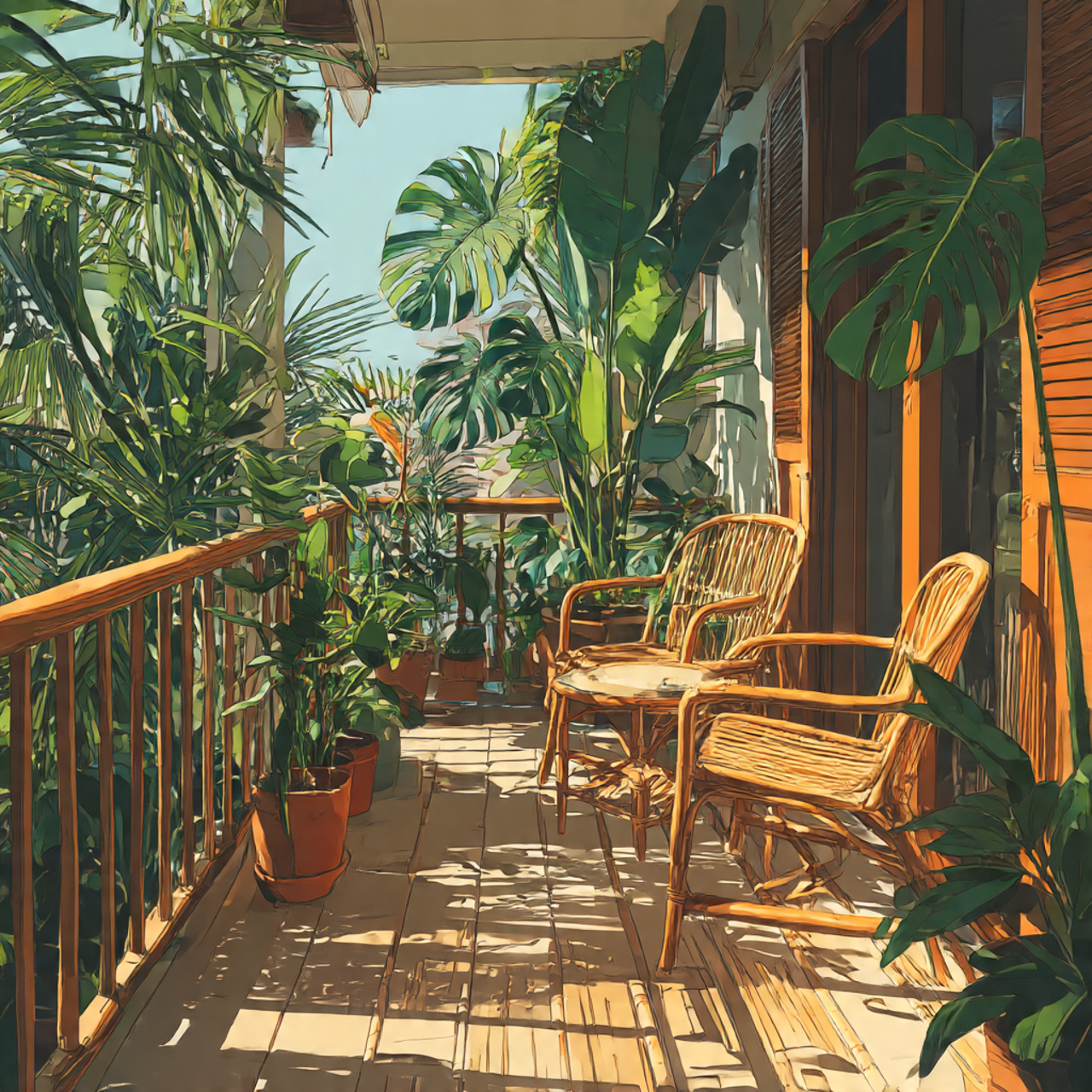
Want to feel like you’re on vacation every day? A tropical balcony garden brings exotic vibes and bold greenery to your urban space.
Large-leaved plants like monstera create instant drama. Add a few palm varieties for that classic tropical silhouette, and consider bird of paradise for its striking orange and blue flowers. Layer in bamboo furniture or woven seating to complete the look.
Tropical plants generally prefer bright, indirect light and high humidity. Regular misting helps recreate their native environment, especially during dry seasons. Group plants together to create a microclimate with higher humidity.
The layered, dense planting style of tropical gardens creates a sense of abundance and escape. It’s like having your own mini rainforest in the sky.
Tip: Place a small humidifier or grouping of water-filled saucers nearby to increase ambient humidity naturally.
Cozy Seating Nook Among the Greenery
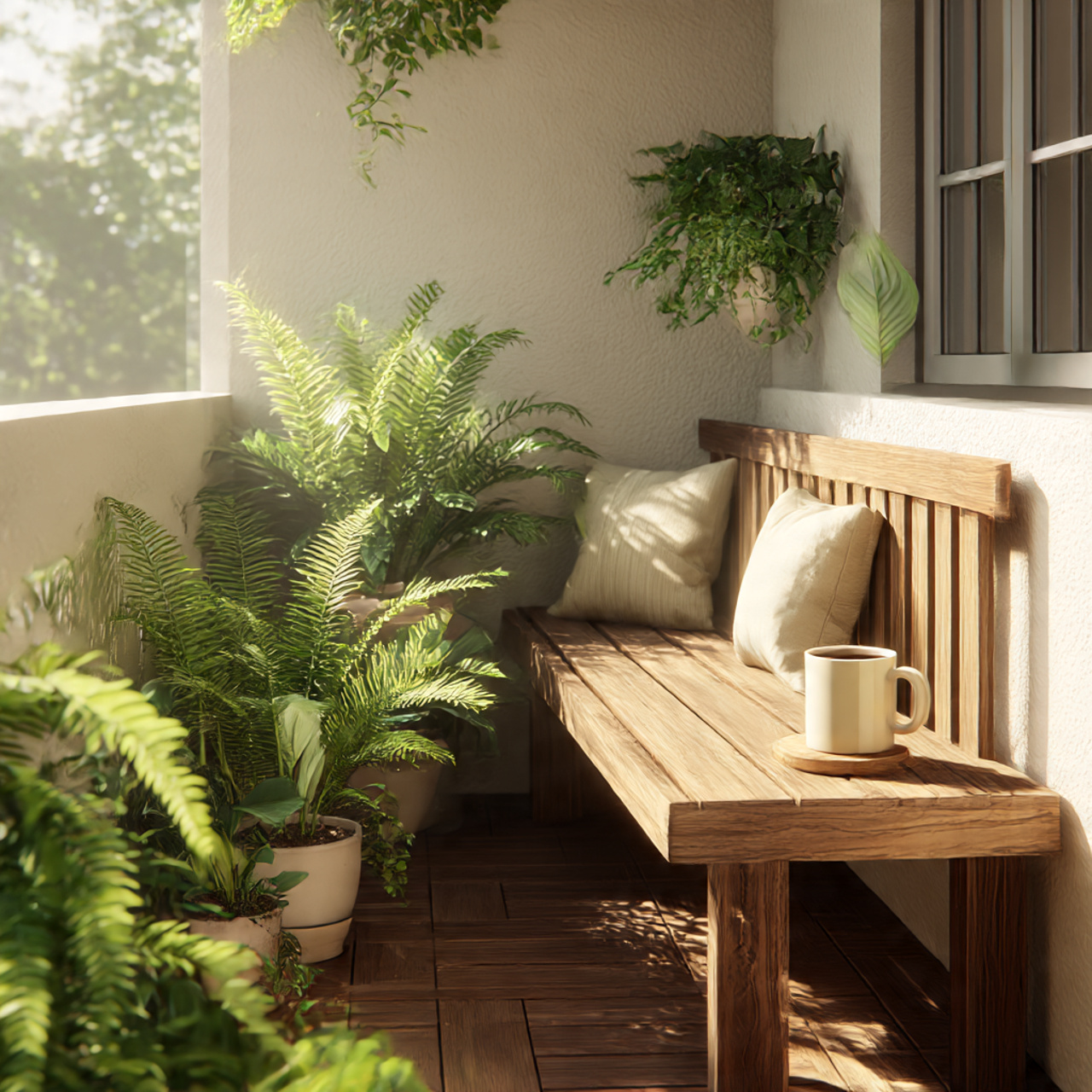
Your balcony garden shouldn’t just be pretty—it should be a space you actually use and enjoy. Integrating comfortable seating turns your garden into a functional outdoor room.
Choose a wooden bench, rattan chair, or even a compact outdoor sofa as your anchor piece. Surround it with ferns, peace lilies, and trailing plants to create an enclosed, cozy feeling.
This setup becomes your morning coffee spot, your evening wind-down area, or your weekend reading nook. The combination of comfortable furniture and living plants creates a restorative environment that genuinely improves your quality of life.
Add outdoor cushions in weather-resistant fabrics for extra comfort. A small side table holds your drink while you relax among the greenery.
Tip: Position seating to face your best view or create a sense of enclosure by facing it toward your most lush plant arrangement.
Magical Fairy Light Ambiance
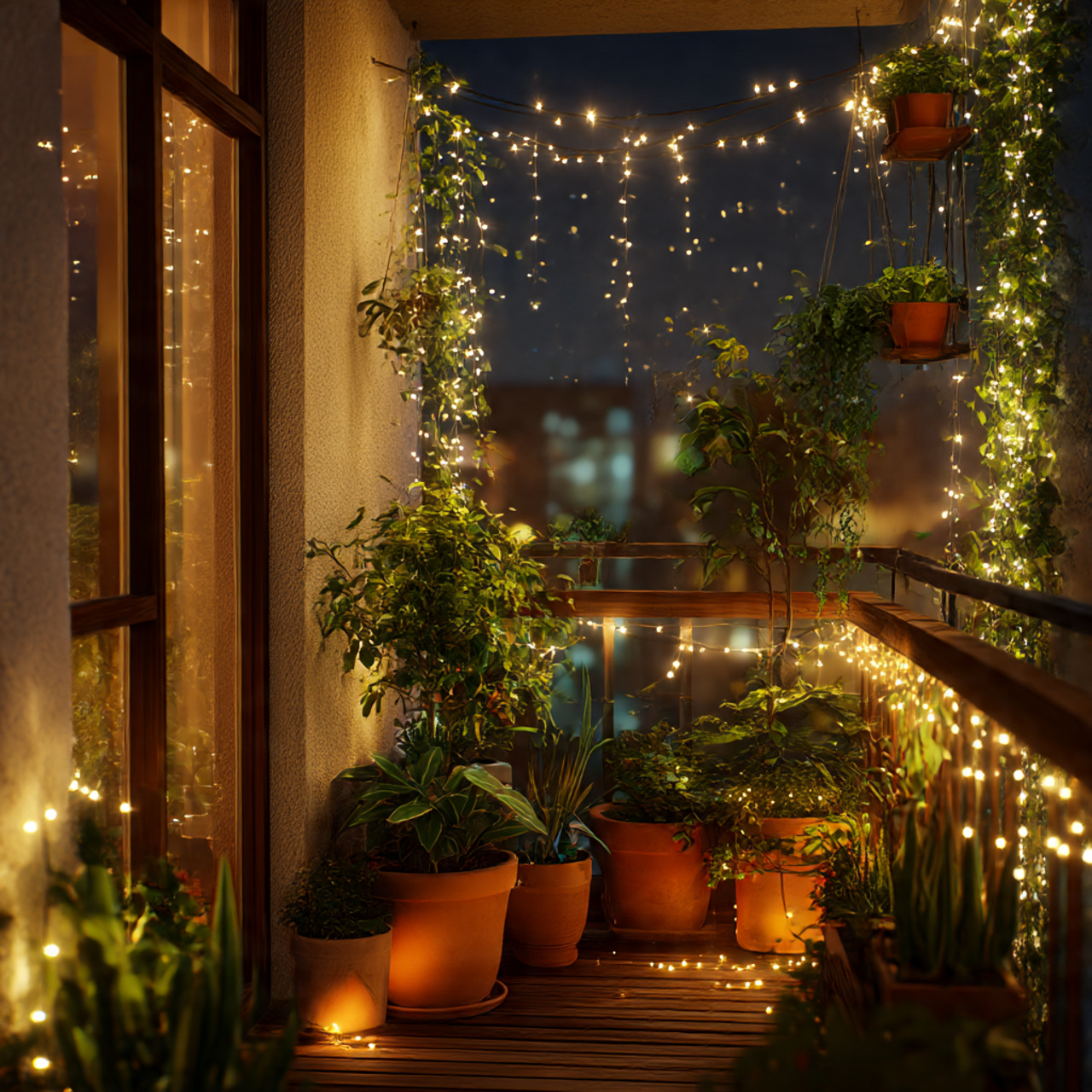
Lighting completely transforms your balcony garden once the sun sets. Fairy lights create a warm, enchanting atmosphere that extends your garden’s usability into the evening hours.
String lights along railings, weave them through climbing plants, or drape them overhead to create a starlit canopy. The warm glow highlights plant textures and creates shadows that add depth and mystery.
Solar-powered options are energy-efficient and turn on automatically at dusk—no switches or timers needed. They’re perfect for creating ambiance during evening gatherings or quiet solo moments with a glass of wine.
The soft lighting makes your balcony feel like an extension of your living space rather than an outdoor afterthought.
Tip: Choose warm white lights (2700-3000K) rather than cool white. They create a more inviting, natural atmosphere.
Charming Hanging Baskets
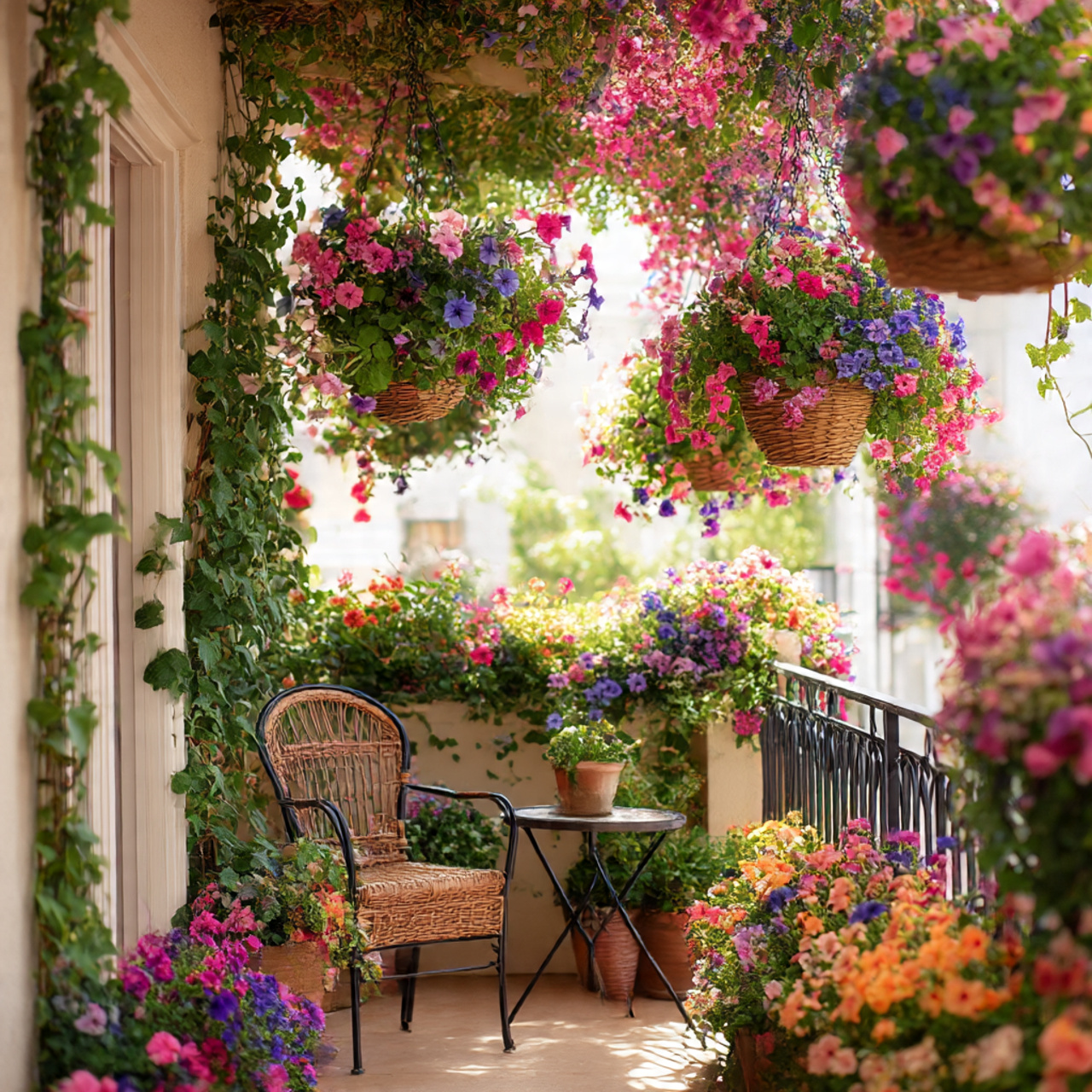
Hanging baskets maximize your growing space by utilizing the often-forgotten overhead area. They add visual interest at eye level and above, creating a more immersive garden experience.
Mix flowering plants with trailing varieties for a dynamic, layered appearance. Petunias provide continuous color, fuchsias offer elegant drooping flowers, and ivy adds lush greenery that softens edges.
These baskets are perfect for creating a living ceiling effect, especially when hung at varying heights. They make your balcony feel larger by drawing attention upward and creating vertical layers of interest.
Regular watering is essential—hanging baskets dry out faster than ground-level pots due to air exposure on all sides.
Tip: Line wire baskets with coconut coir before adding soil. It helps retain moisture while still providing the drainage hanging plants need.
Natural Warmth with Wooden Planters
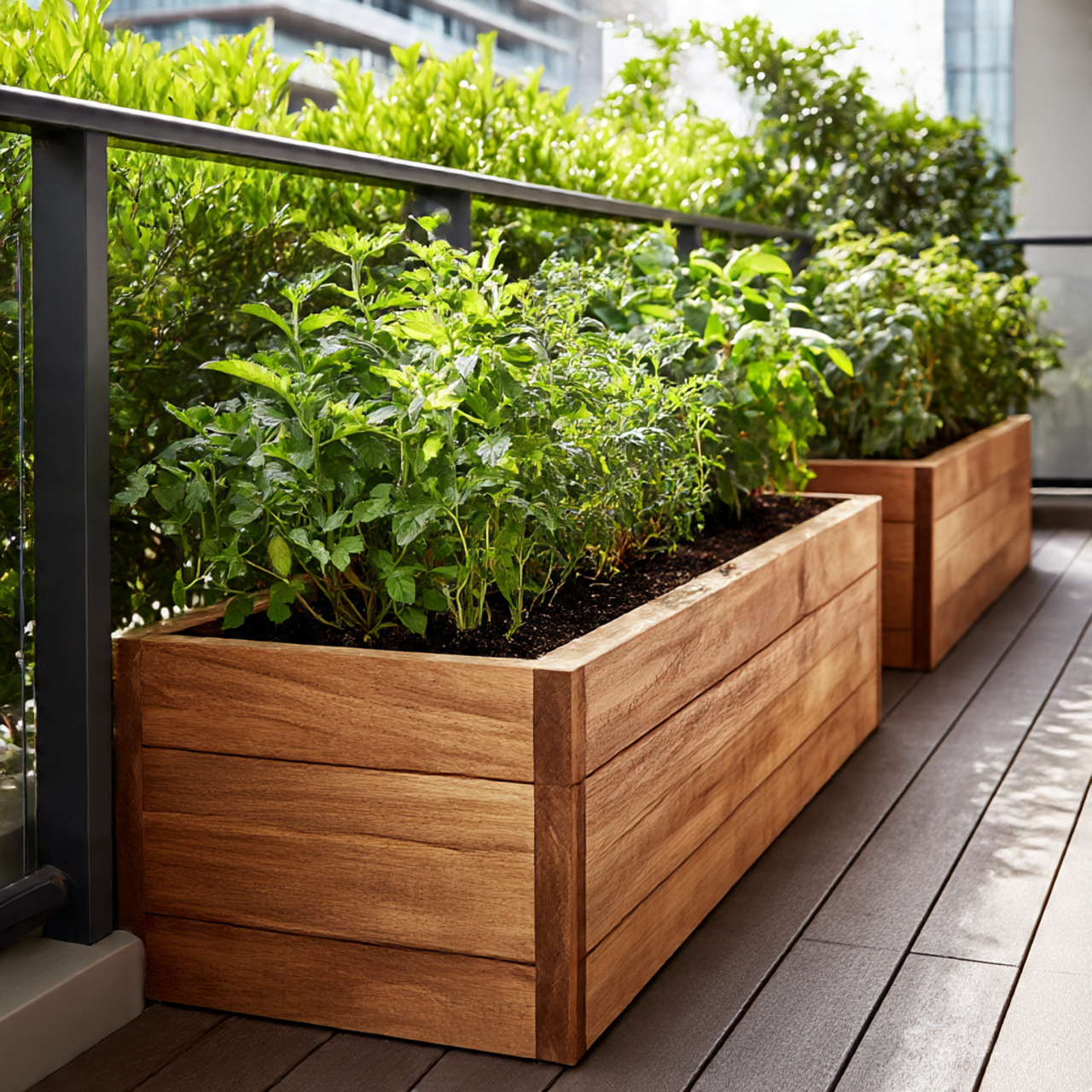
Wooden planters bring organic texture and warmth that plastic or ceramic just can’t match. They create an instant connection to nature and complement virtually any plant style.
Choose naturally weather-resistant woods like teak, cedar, or redwood. These resist rot and last for years outdoors. The natural grain and warm tones provide a beautiful contrast to green foliage and colorful blooms.
Wooden planters work in any design style—rustic, modern, traditional, or eclectic. Their neutral appearance lets your plants be the stars while providing a cohesive, grounded look.
You can even DIY wooden crates or boxes for a personalized, budget-friendly option. Just make sure to drill adequate drainage holes.
Tip: Line wooden planters with landscape fabric before adding soil. This prevents direct soil contact that accelerates wood decay while still allowing drainage.
Secluded Privacy Screens
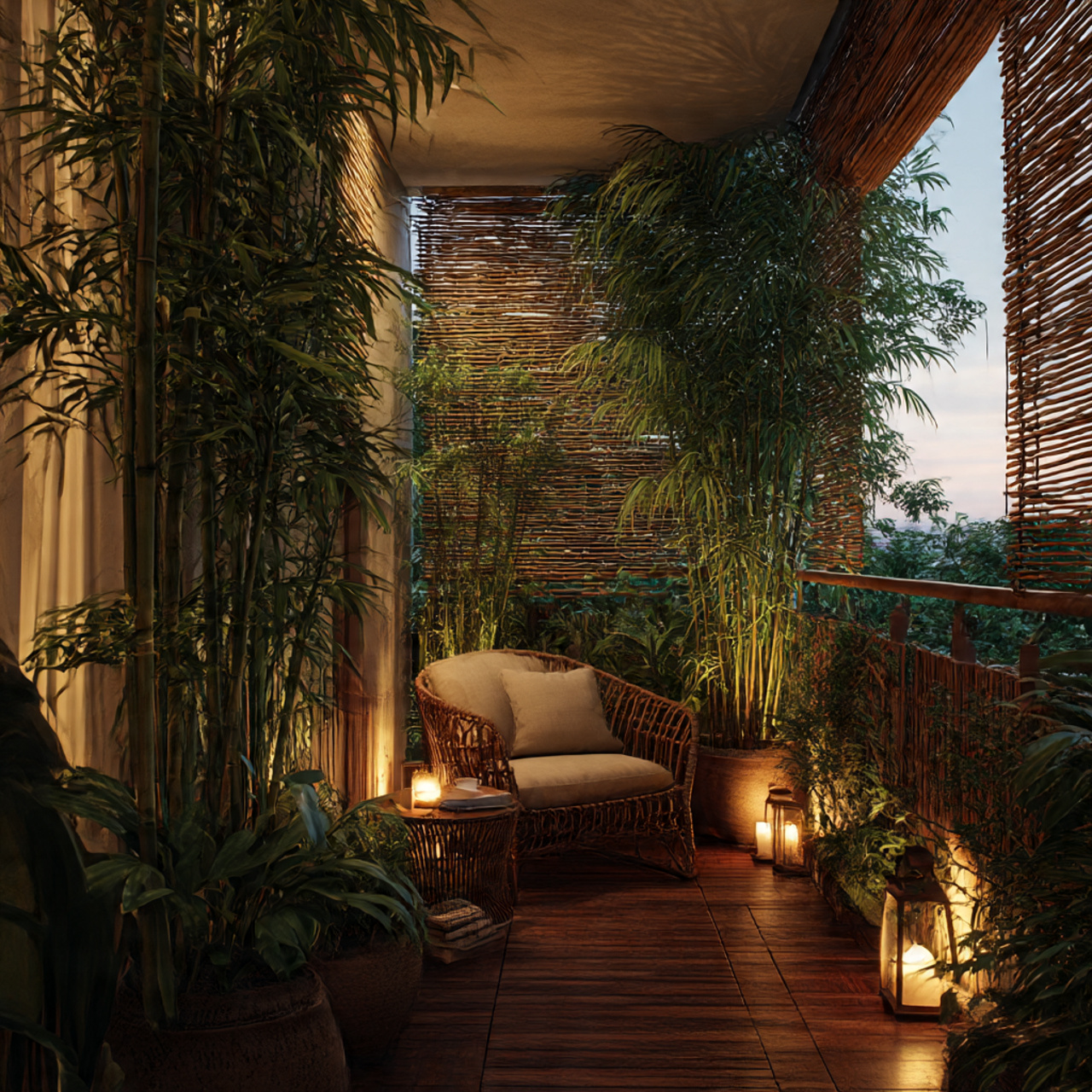
Creating privacy on your balcony makes it feel like truly yours—a personal retreat rather than a space exposed to neighbors or street views.
Bamboo panels offer natural texture and excellent coverage. Lattice frames provide structure for climbing plants while allowing airflow. For a living solution, potted areca palms or tall grasses create moving, organic privacy screens.
Privacy doesn’t have to mean complete enclosure. Strategic placement of screens or tall plants can block specific sight lines while keeping your space feeling open and airy.
The psychological difference is enormous. With privacy, your balcony becomes a space you’ll actually use regularly rather than somewhere you feel observed and self-conscious.
Tip: Check your building regulations before installing permanent structures. Many apartments allow freestanding screens but prohibit anything attached directly to railings.
Eco-Friendly Recycled Container Gardens
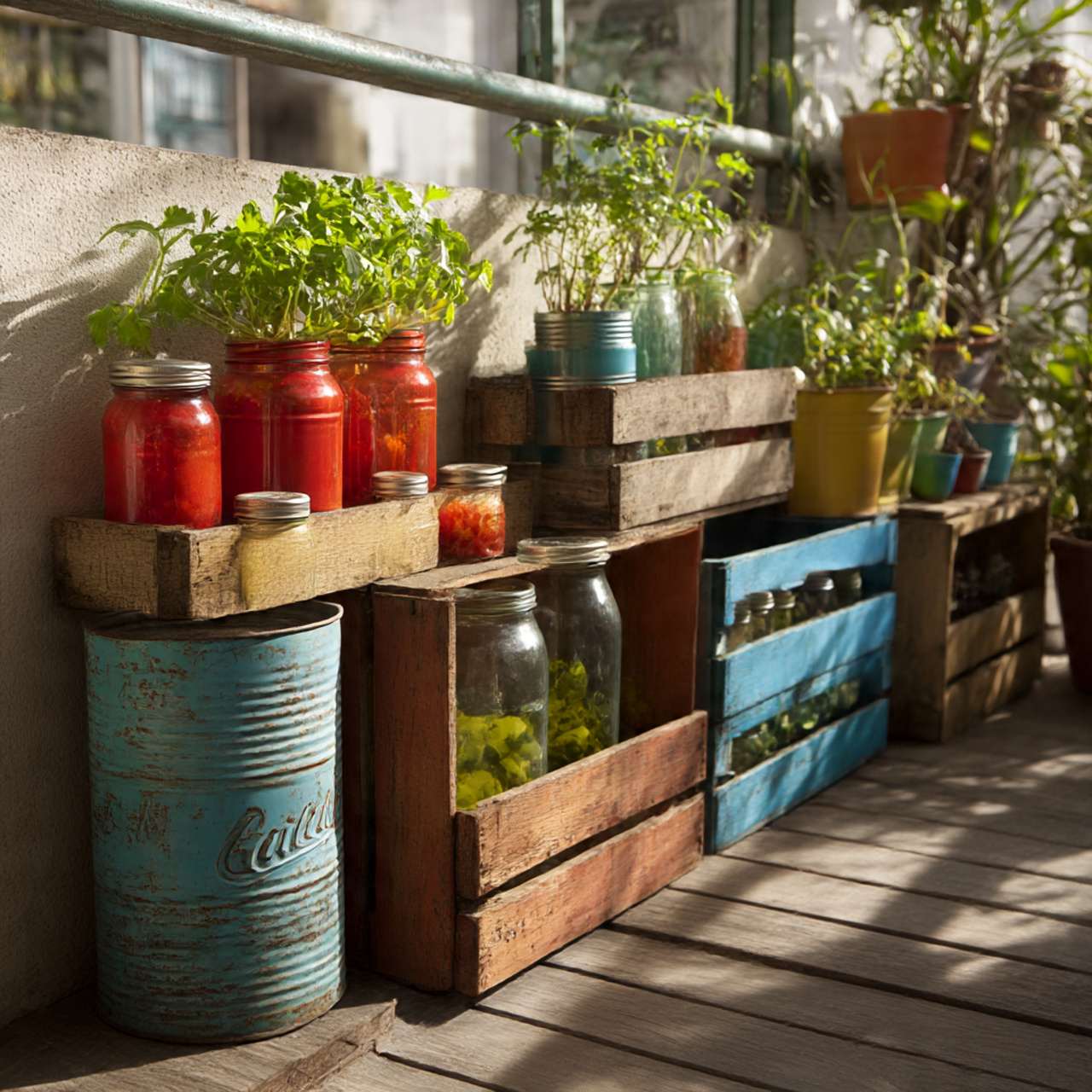
Sustainability and creativity go hand-in-hand with recycled container gardening. Old items gain new life as planters while reducing waste.
Tin cans, glass jars, wooden crates, old buckets—almost anything can become a planter with proper drainage holes. Paint them in coordinating colors for a cohesive look, or leave them rustic for authentic character.
This approach is incredibly budget-friendly. Instead of buying expensive planters, you’re repurposing items you already have or can find inexpensively. Each recycled container tells a story and adds personality to your space.
Plus, there’s genuine satisfaction in creating something beautiful from items that would otherwise be discarded.
Tip: Always drill or punch drainage holes in recycled containers. Even plants that like moisture need excess water to escape, or roots will rot.
Tranquil Water Feature
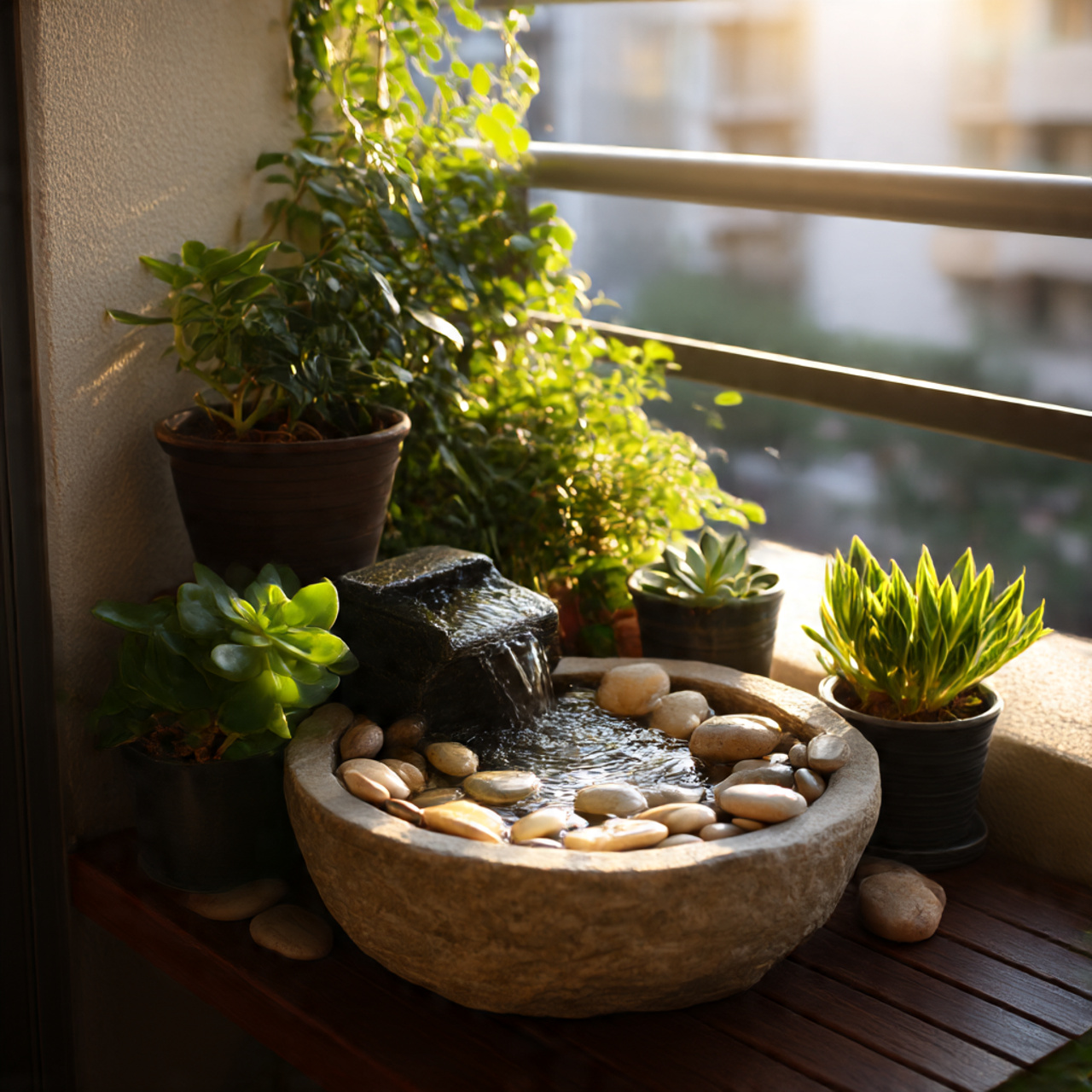
The sound of flowing water has an immediate calming effect. A small fountain or tabletop water bowl adds a sensory dimension that elevates your entire balcony experience.
Water features mask urban noise—traffic, construction, voices—with gentle, natural sounds. Even a simple ceramic bowl with floating candles or a small tabletop fountain creates this effect.
Add smooth pebbles or aquatic plants for visual interest. The reflection of light on water adds movement and life to your space without requiring any additional plants or maintenance.
Water features work especially well in meditation corners or near seating areas where you want to create maximum relaxation.
Tip: For tabletop fountains, use distilled water to prevent mineral buildup. Clean the pump monthly to keep water flowing smoothly.
Shade-Loving Plant Collection
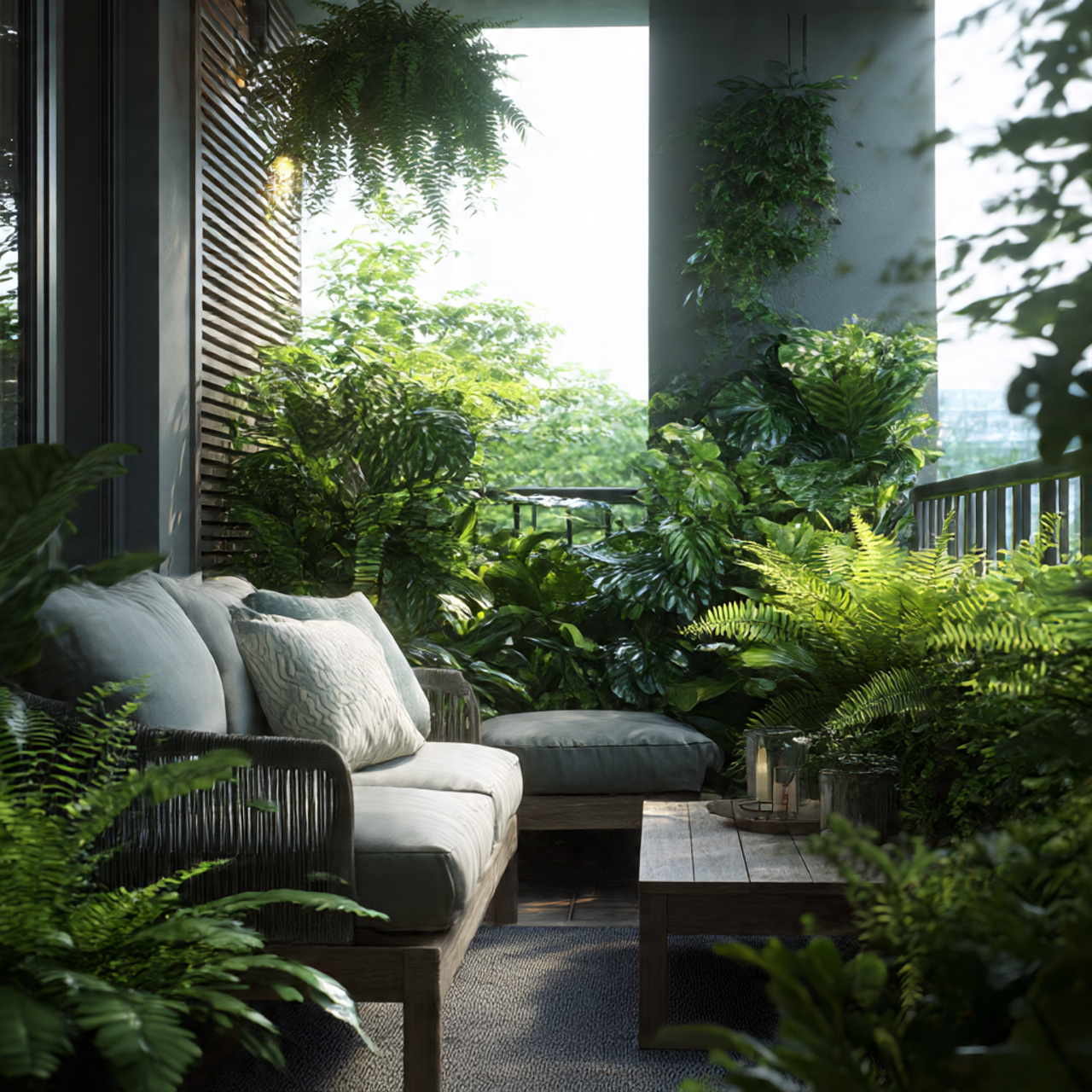
Not all balconies get abundant sunshine, but that doesn’t limit your gardening options. Shade-loving plants thrive in low-light conditions and keep your balcony lush and green.
Calatheas offer stunning leaf patterns with intricate designs. Ferns provide classic greenery that thrives in shade. Philodendrons grow enthusiastically and tolerate various light levels. Peace lilies even produce white flowers in low light.
Pair shade plants with light-colored pots and decor to brighten your space visually. Mirrors strategically placed can also reflect available light and make the area feel more open.
Shade gardens often have a woodland, tranquil quality that feels cool and peaceful—perfect for escaping heat during summer months.
Tip: Shade plants typically need less water than sun-loving varieties. Check soil moisture before watering to avoid the most common mistake of over-watering shade plants.
Mood-Boosting Colorful Flowers
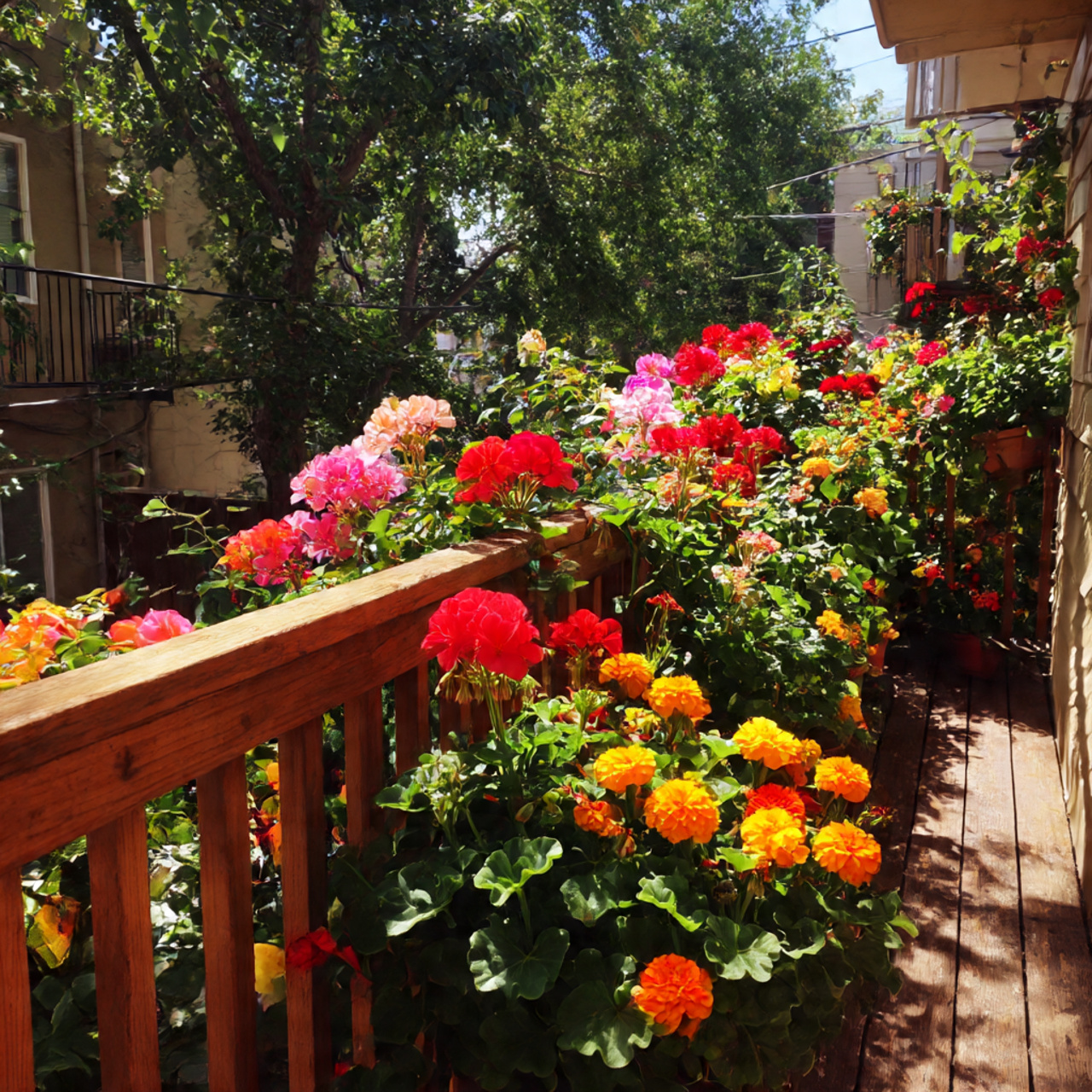
Flowers bring immediate joy and vitality to any space. A balcony filled with blooms becomes a daily mood booster that lifts your spirits every time you see it.
Geraniums offer classic appeal with long-lasting flowers. Marigolds provide vibrant oranges and yellows that catch the eye. Begonias bloom reliably with minimal fuss. Petunias deliver continuous color throughout the growing season.
Mix complementary colors for harmony or choose contrasting shades for dramatic impact. Vary heights by using trailing flowers in hanging baskets, medium plants in pots, and taller varieties as focal points.
Regular deadheading (removing spent blooms) encourages more flowers and keeps plants looking fresh. A little liquid fertilizer every two weeks supports continuous blooming.
Tip: Plant flowers with different bloom times so you have continuous color throughout the season rather than everything peaking simultaneously.
Sensory Aromatic Plant Garden
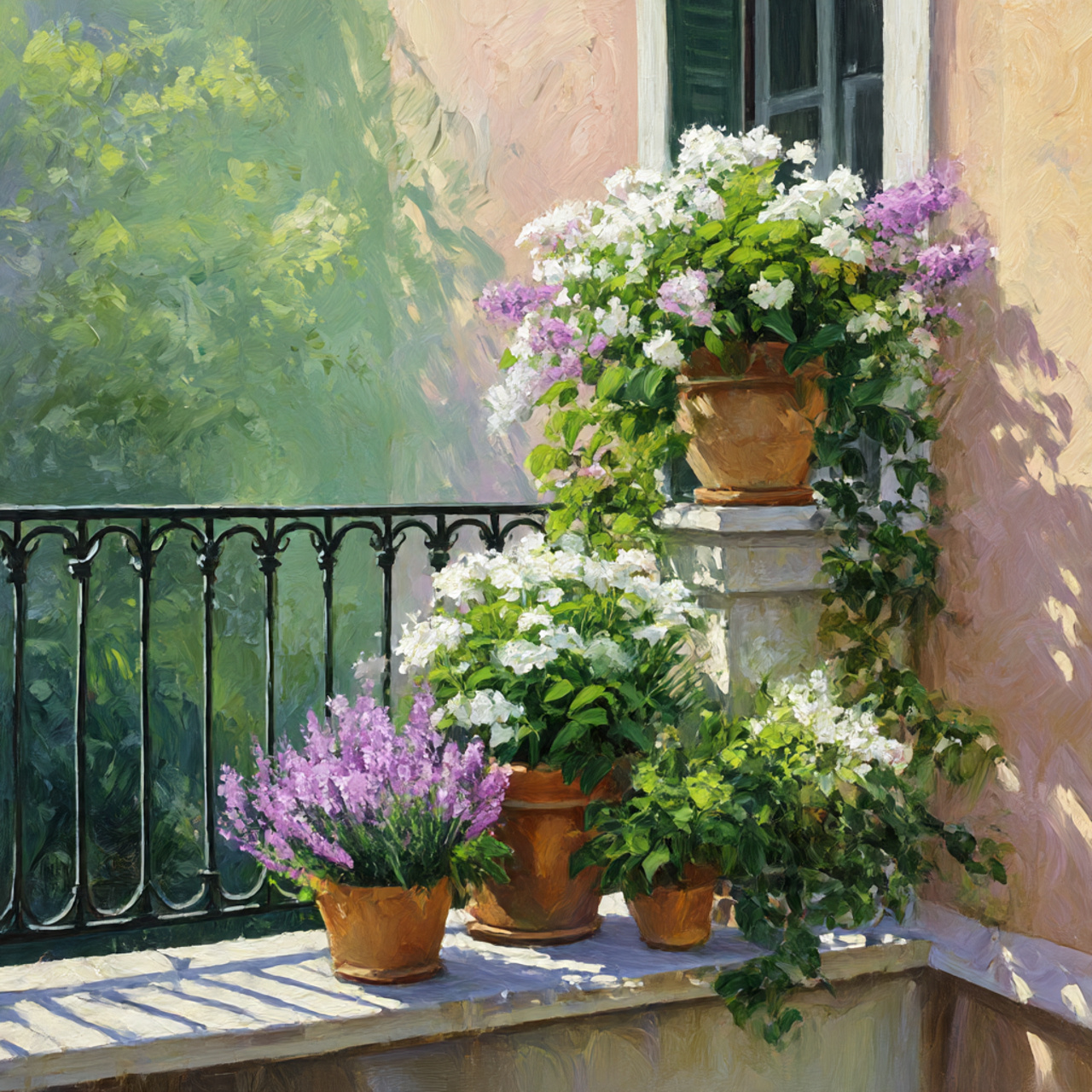
Scent adds a powerful dimension to your balcony garden. Aromatic plants engage your senses and create a more immersive, memorable experience.
Lavender releases calming fragrance and attracts beneficial pollinators. Jasmine’s sweet evening scent is intoxicating and romantic. Gardenia offers rich, heady perfume that fills the entire space. Even herbs like rosemary and mint provide pleasant aromas when brushed against.
Position aromatic plants near seating areas or along pathways where you’ll naturally encounter their scent. The fragrance becomes part of your daily routine—arriving home to jasmine-scented air or sipping morning coffee surrounded by lavender.
Aromatic plants combine visual beauty with sensory pleasure, making your balcony garden a truly multi-dimensional experience.
Tip: Plant aromatic varieties in pots that warm in the sun. Heat releases essential oils and intensifies fragrance naturally throughout the day.
Creative DIY Planter Projects
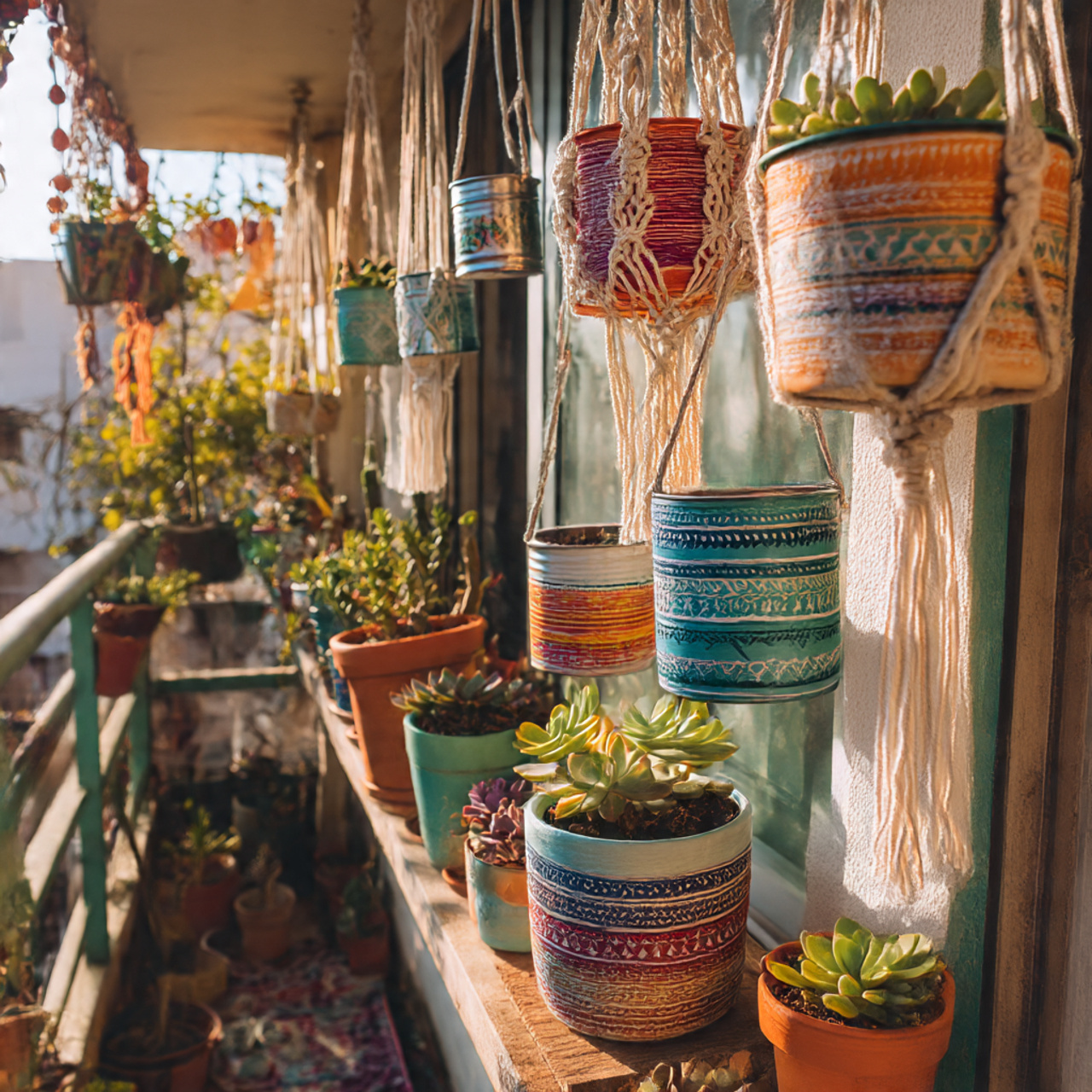
Handmade planters add personal character that mass-produced containers can’t replicate. DIY projects let you express creativity while staying within budget.
Paint simple clay pots with geometric patterns or ombre gradients. Create macramé hangers for bohemian charm. Transform old boots, teapots, or colanders into quirky planters. The possibilities are limited only by imagination.
DIY planters make your garden feel like a true reflection of your personality rather than a catalog recreation. Each piece tells a story and creates conversation.
These projects are also wonderfully therapeutic. The process of creating something with your hands provides the same meditative benefits as gardening itself.
Tip: Seal painted pots with clear weatherproof varnish to protect your artwork from rain and UV fading.
Ever-Changing Seasonal Rotation
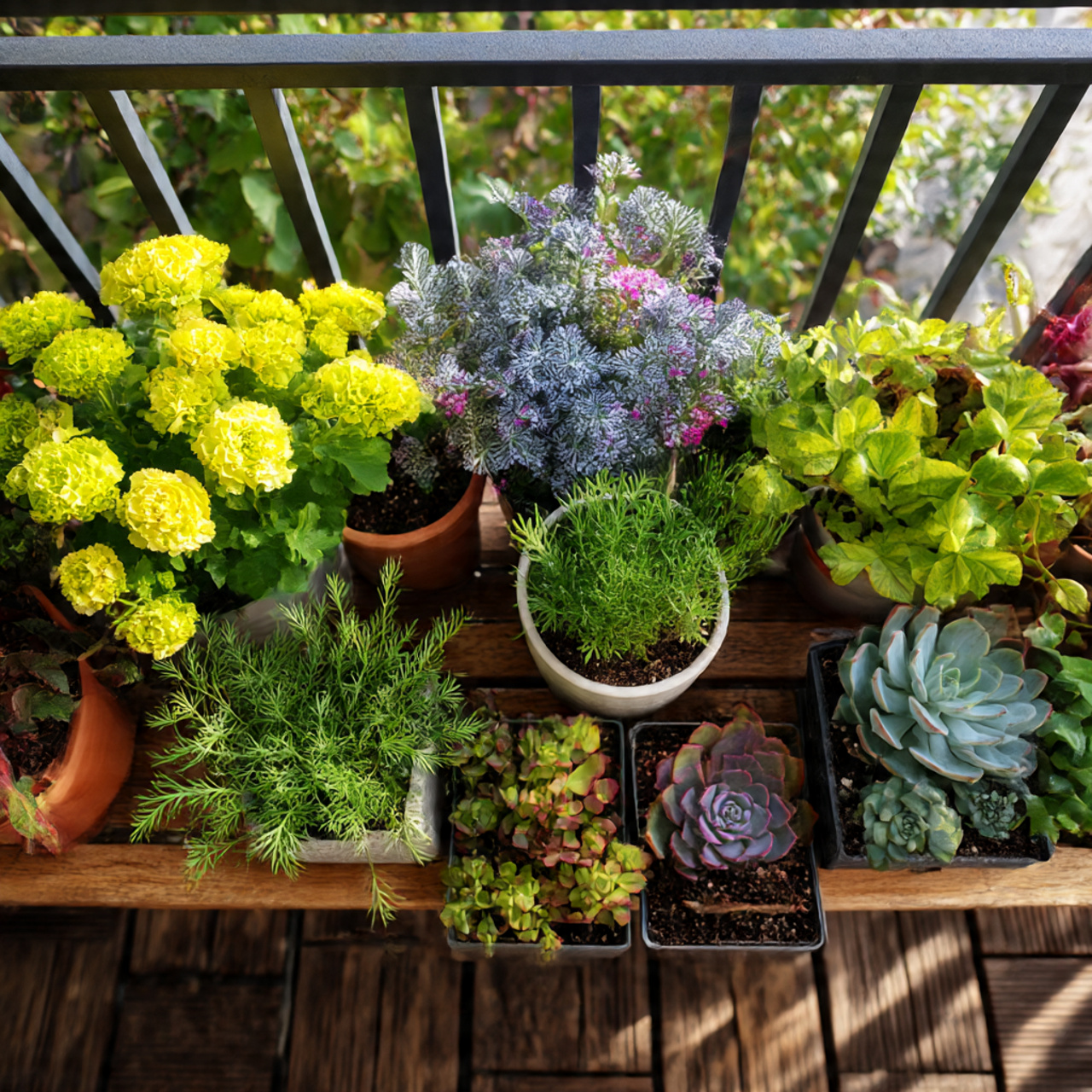
Keeping your balcony garden dynamic and interesting means embracing seasonal changes rather than fighting them.
Spring brings pansies and petunias in soft pastels. Summer is perfect for heat-loving herbs and vegetables. Fall invites ornamental kale and chrysanthemums. Winter works well with hardy succulents and evergreen miniatures.
Rotating plants seasonally prevents boredom and keeps you engaged with your garden year-round. It also works with natural growing conditions rather than struggling to maintain summer plants through winter.
Each season offers unique opportunities to learn new plants and experiment with different aesthetics.
Tip: Keep a garden journal noting what worked each season. Next year, you’ll have a personalized guide rather than starting from scratch.
Statement Small Trees
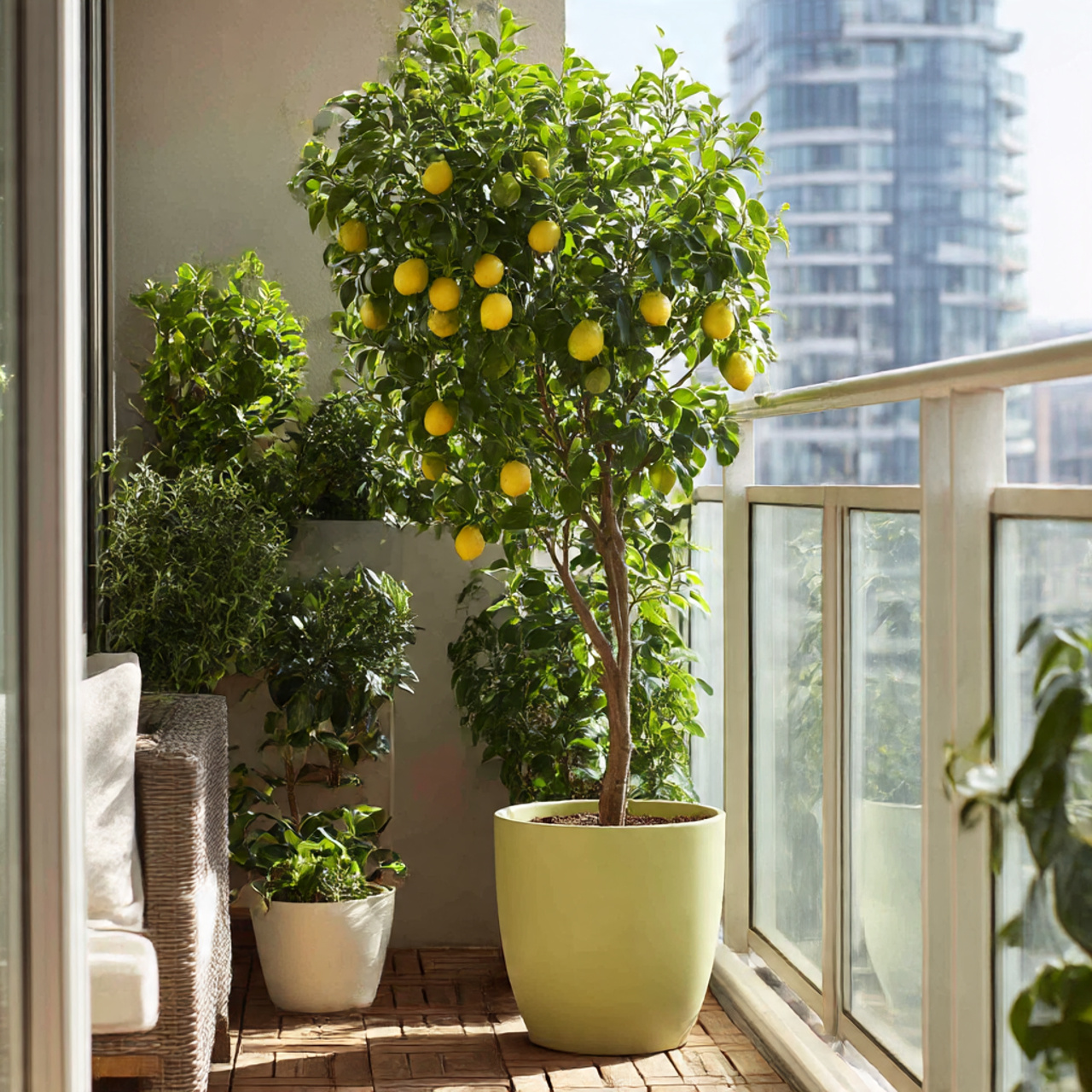
Dwarf trees add dramatic height and structure that smaller plants simply cannot provide. They create a focal point and give your balcony garden a more mature, established feeling.
Lemon trees offer glossy leaves, fragrant flowers, and edible fruit. Olive trees bring Mediterranean elegance with their silvery foliage. Dwarf ficus varieties provide classic tree shape in manageable size.
Plant trees in large containers (at least 18-20 inches) with quality potting soil. They need more consistent watering than smaller plants due to their size and root system.
With proper pruning, dwarf trees remain manageable while providing the architectural presence that elevates your entire balcony design.
Tip: Rotate trees periodically so all sides receive equal sunlight. This prevents lopsided growth and maintains an attractive, balanced shape.
Fresh Container Vegetables
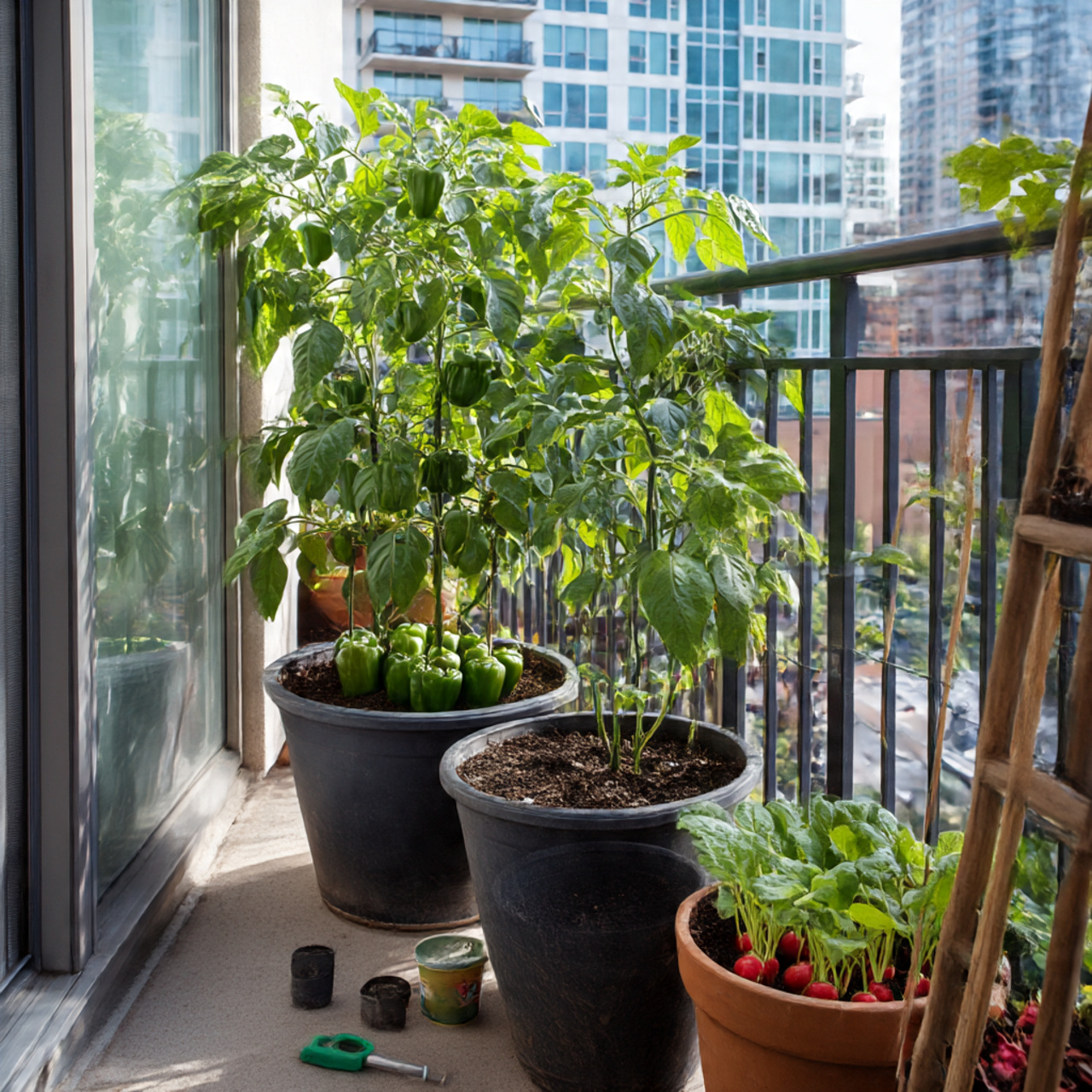
Expand your edible garden beyond herbs with container vegetables that deliver fresh produce throughout the growing season.
Bell peppers thrive in deep pots and produce abundantly. Carrots work well if you have containers at least 12 inches deep. Radishes grow quickly in shallow containers—perfect for impatient gardeners. Choose bush or patio varieties specifically bred for container culture.
The flavor difference between store-bought and balcony-grown vegetables is remarkable. Harvesting food you’ve nurtured from seed to plate creates a connection to your food that grocery shopping simply can’t provide.
Container vegetables need consistent moisture and weekly feeding with diluted liquid fertilizer to compensate for limited soil volume.
Tip: Use containers with self-watering reservoirs for vegetables. They maintain consistent soil moisture that’s crucial for good production and flavor.
Park-Like Artificial Grass Base
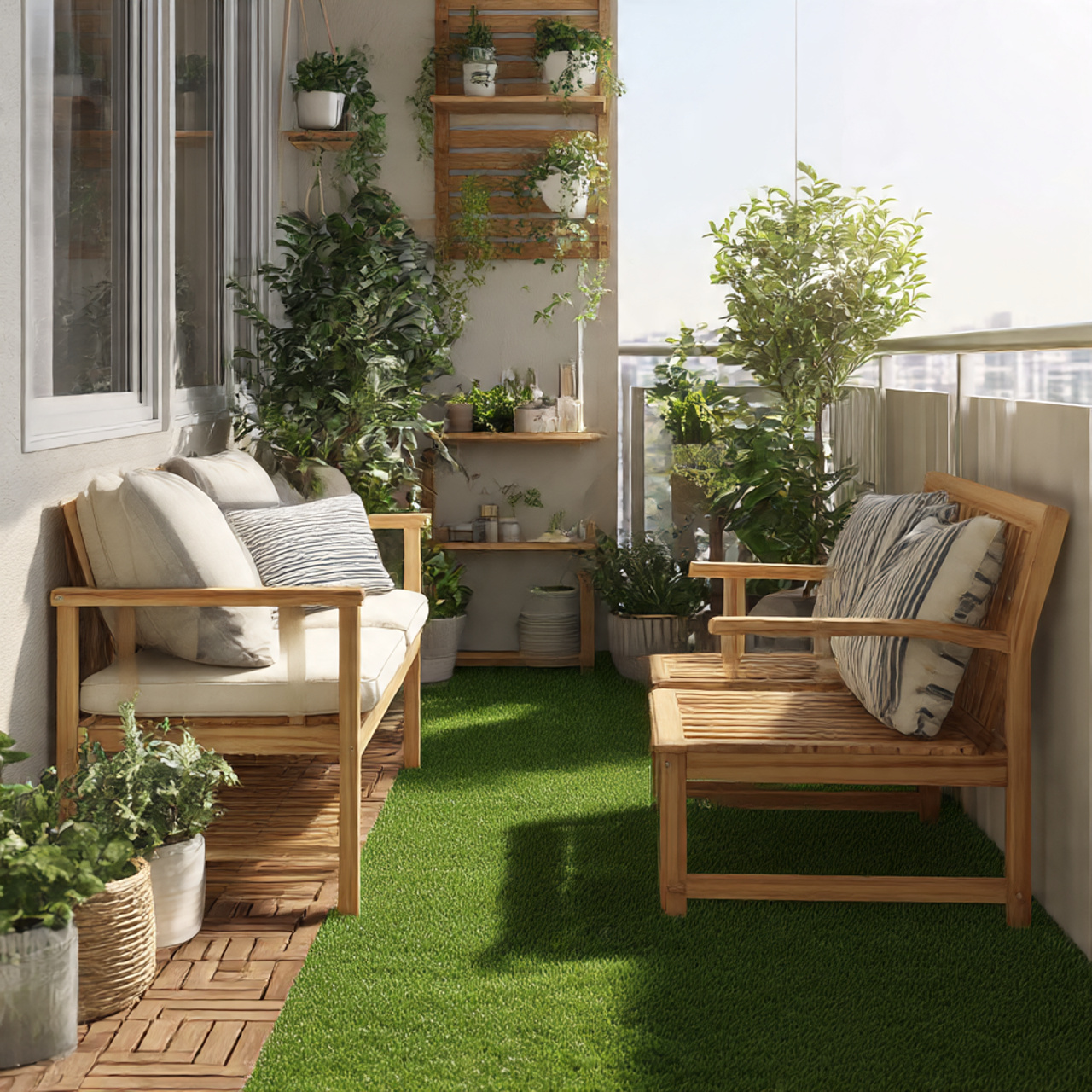
Artificial grass creates a soft, green foundation that transforms hard balcony surfaces into something more natural and inviting.
Modern artificial turf looks remarkably realistic and requires zero maintenance. It provides a comfortable surface for bare feet and creates visual continuity that makes your space feel larger.
Layer potted plants and wooden furniture on top of the grass base. The combination creates a miniature park atmosphere that’s especially appealing for families with children or pets.
Artificial grass works particularly well for balconies where weight restrictions make real grass impossible or where maintenance time is limited.
Tip: Choose artificial grass with drainage holes and install it on a slight slope so rainwater doesn’t pool underneath.
Atmospheric Lighting Design
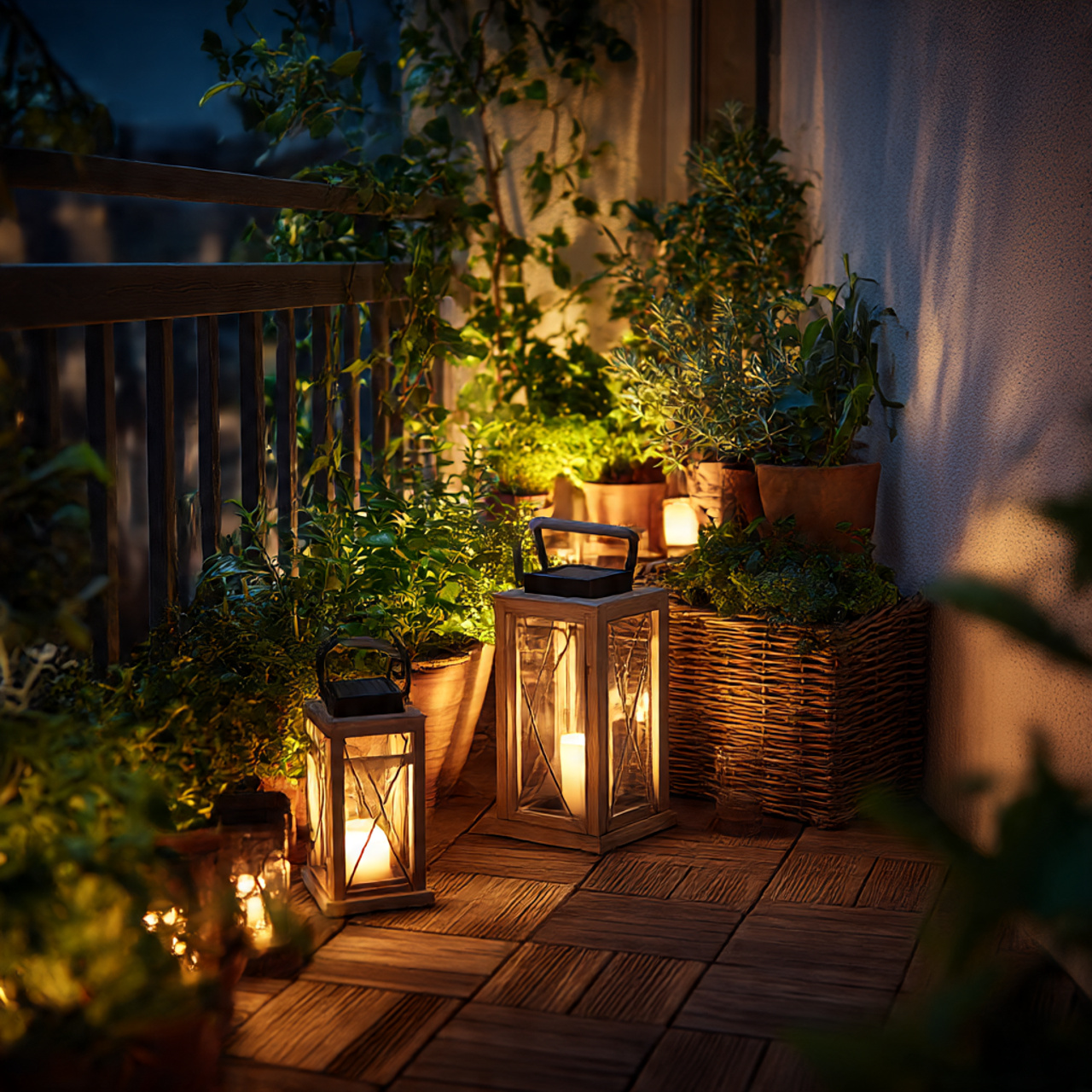
Beyond fairy lights, thoughtful lighting design extends your balcony’s functionality and creates distinct moods for different occasions.
Solar lanterns provide ambient light without electrical requirements. Floor uplights dramatically highlight large plants and create striking shadows. String lights with dimmer switches let you adjust intensity based on activity.
Lighting transforms your balcony from a daytime-only space into an evening destination. It’s the difference between briefly stepping outside and spending entire evenings in your garden.
Smart lighting systems can be programmed or voice-controlled, adding convenience while creating the perfect atmosphere automatically.
Tip: Layer different light sources at various heights—overhead strings, mid-level lanterns, and low accent lights—for the most dynamic, professional-looking result.
Cozy Rustic Countryside Vibe
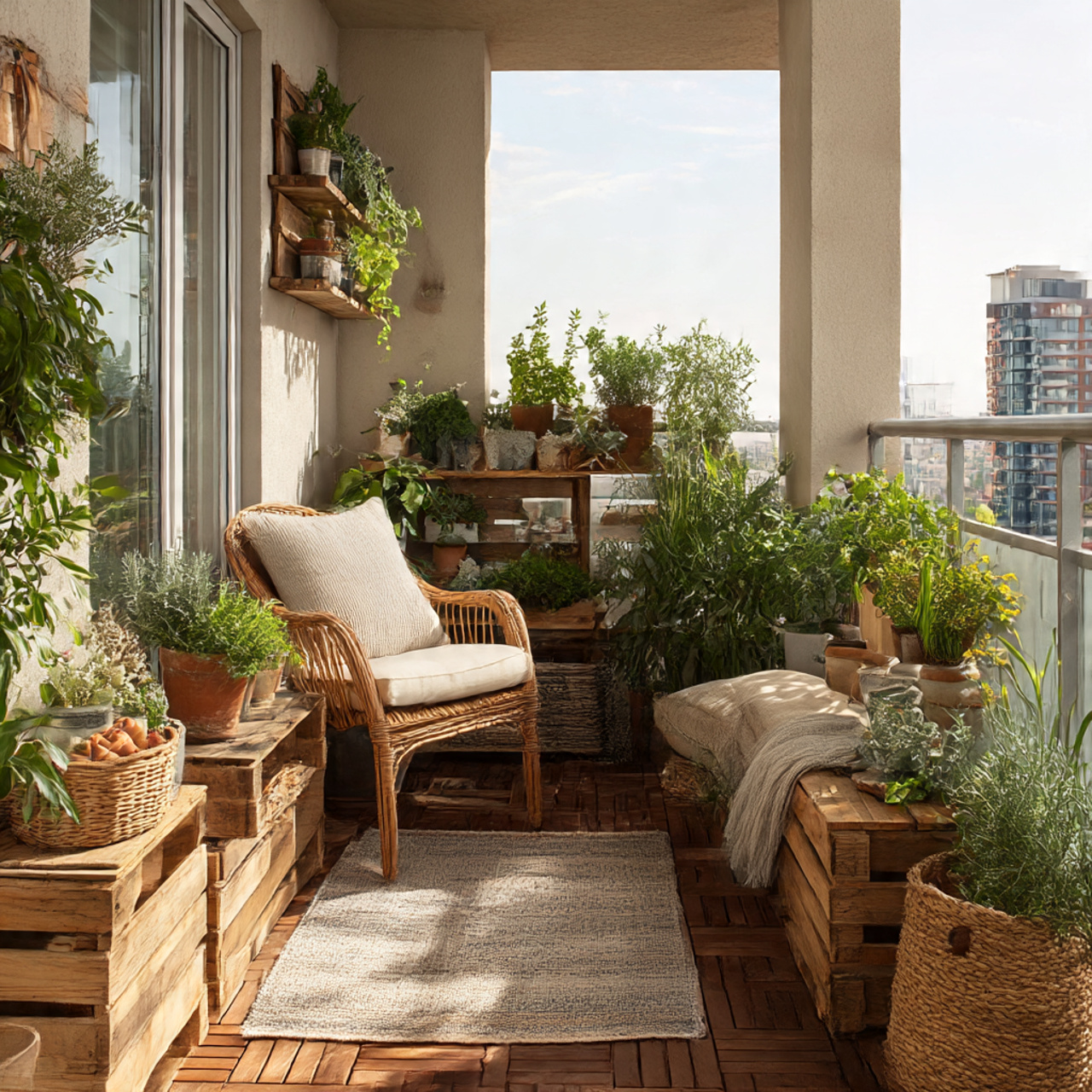
Rustic design brings countryside charm to urban balconies through natural materials and vintage-inspired elements.
Wicker furniture, weathered wooden crates, aged terracotta pots—these elements create an authentic, lived-in aesthetic. Add vintage watering cans, old lanterns, or galvanized buckets as decorative accents.
The earthy, warm tones of rustic design complement greenery beautifully. There’s an easy, relaxed feeling to this style that makes your balcony feel like a weekend cottage retreat.
Rustic doesn’t mean messy—it’s about curated imperfection and nostalgic charm rather than pristine modern minimalism.
Tip: Visit thrift stores and flea markets for authentic vintage garden accessories. Real aged items have character that new “distressed” products can’t replicate.
Safe Pet-Friendly Garden
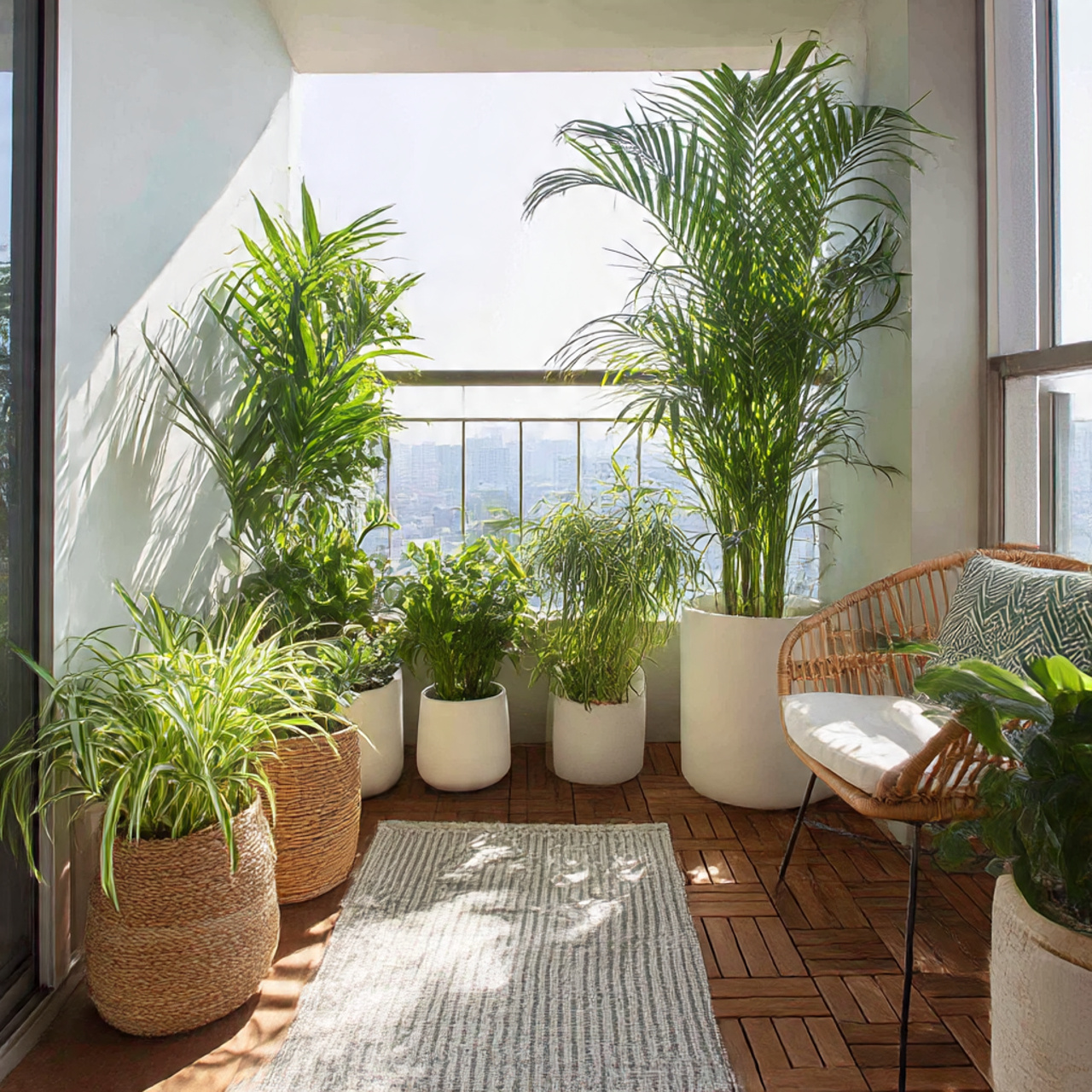
Pet owners need to be mindful about plant choices. A pet-friendly garden protects your furry family members while still creating a beautiful green space.
Spider plants are completely safe and nearly indestructible. Areca palms provide lush greenery without toxicity risk. Most herbs including rosemary, basil, and thyme are pet-safe. Boston ferns add classic beauty with zero danger.
Avoid common toxic plants like lilies, aloe (toxic to cats and dogs when ingested), and pothos. Research any plant before adding it to your pet-accessible balcony.
Pet-friendly gardens let everyone in your household enjoy outdoor time safely. Your pets get fresh air and stimulation while you maintain your gardening hobby.
Tip: Create a small “cat grass” container specifically for cats. They’ll be more likely to leave other plants alone if they have their own designated greenery to nibble.
FAQs About Balcony Garden
1. What are the best plants for a balcony garden?
Herbs, succulents, ferns, and flowering plants like geraniums or marigolds thrive in most balcony conditions. Always choose plants suited to your balcony’s sunlight level.
2. How can I start a balcony garden with little space?
Use vertical racks, hanging planters, and railing boxes. These maximize space and keep the area open while allowing more plants.
3. Can I grow vegetables in a balcony garden?
Yes, many vegetables like tomatoes, chilies, lettuce, and spinach grow well in containers with proper sunlight and watering.
4. How often should I water my balcony garden?
It depends on plant type and season. Generally, once a day in summer and every other day in winter works well. Ensure good drainage to avoid root rot.
5. What are common mistakes to avoid in balcony gardening?
Overwatering, using poor soil, and crowding too many plants are typical mistakes. Always consider space, light, and air circulation before planting.
Creating Your Personal Balcony Sanctuary
Your balcony garden is more than just plants in pots—it’s a daily practice of caring for living things, a connection to natural cycles, and a personal space that reflects who you are.
The beauty of balcony gardening is that there’s no perfect way to do it. Your garden might be three carefully chosen succulents in minimalist pots or an exuberant jungle of twenty different plants. Both are equally valid if they bring you joy.
Start wherever you are right now. Buy one plant this week. See how it does. Add another next month. Learn as you go. The process of building your balcony garden is as rewarding as the finished result.
There will be failures—plants that don’t make it, ideas that don’t work out. Every experienced gardener has killed plenty of plants. It’s part of learning. Don’t let setbacks discourage you from continuing.
Your balcony is waiting to transform into a green sanctuary that makes coming home feel like arriving somewhere special. In caring for your plants, you’re also caring for yourself—creating beauty, establishing routines, and connecting with the natural world right outside your door.
The perfect time to start is now. Your future self will thank you every morning when you step outside with your coffee and realize you’ve created something truly wonderful.