30 Creative Garden Edging Ideas to Upgrade Any Garden
Garden edging is like the perfect frame for a beautiful painting—it brings everything together and makes your outdoor space shine. Think of it as the secret ingredient that takes your garden from “nice” to “absolutely stunning.” Whether you’re working with a cozy backyard or a sprawling landscape, the right edging creates clean lines, keeps grass where it belongs, and gives your garden that professional, finished look.
Today’s options are more exciting than ever—from sleek metal strips to charming stone borders, sustainable wood to creative recycled materials. Let’s explore how you can use garden edging to transform your outdoor space into something truly special.
Why Garden Edging Actually Matters (It’s Not Just About Looks)
Sure, edging makes your garden look amazing, but it’s also your garden’s best friend when it comes to practical maintenance. Here’s what good edging does for you:
It creates a barrier that stops grass from sneaking into your flower beds (we’ve all dealt with that frustration). It holds mulch exactly where you want it, keeps different garden zones neatly separated, and makes mowing and trimming so much easier. One experienced gardener shared their approach perfectly: start with a good edging tool to cut straight down, clean everything up, then use a line trimmer to make those edges crisp.
Let’s dive into specific ideas that’ll inspire your next garden project.
Natural Stone Edging: Timeless Beauty That Lasts
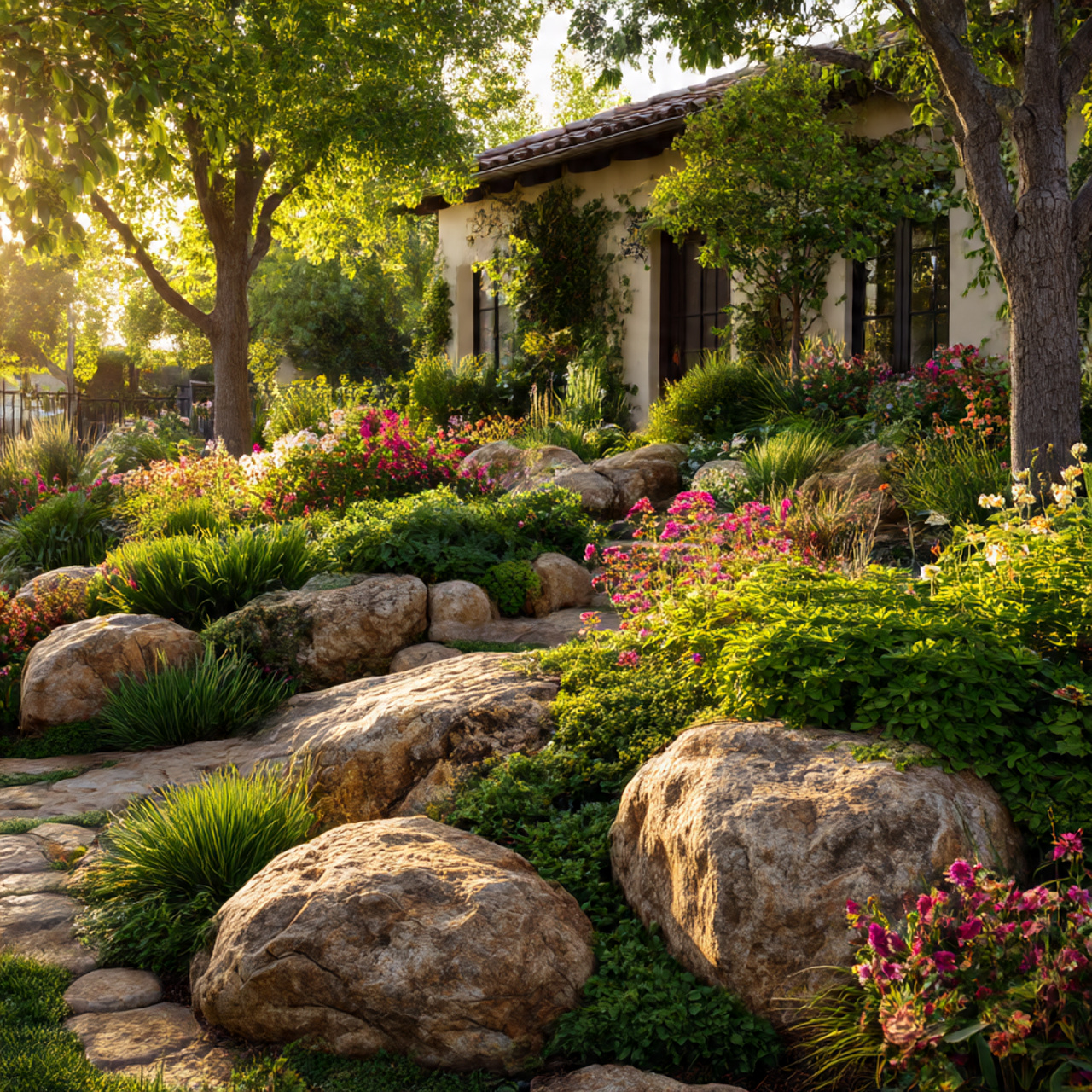
Natural stone brings an elegant, organic feel that never goes out of style. Picture a row of similarly-sized stones creating a gentle border around your flower beds—it’s classic for a reason.
Stone edging holds soil and mulch beautifully while requiring almost no maintenance year after year. The key is choosing stones that complement your existing patio materials or plant colors to create visual harmony throughout your space.
Installation Tip: Dig a shallow trench first, add a sand base, then nestle your stones in place. This simple foundation keeps everything stable and looking great.
Brick Borders: Versatile Charm for Any Garden Style
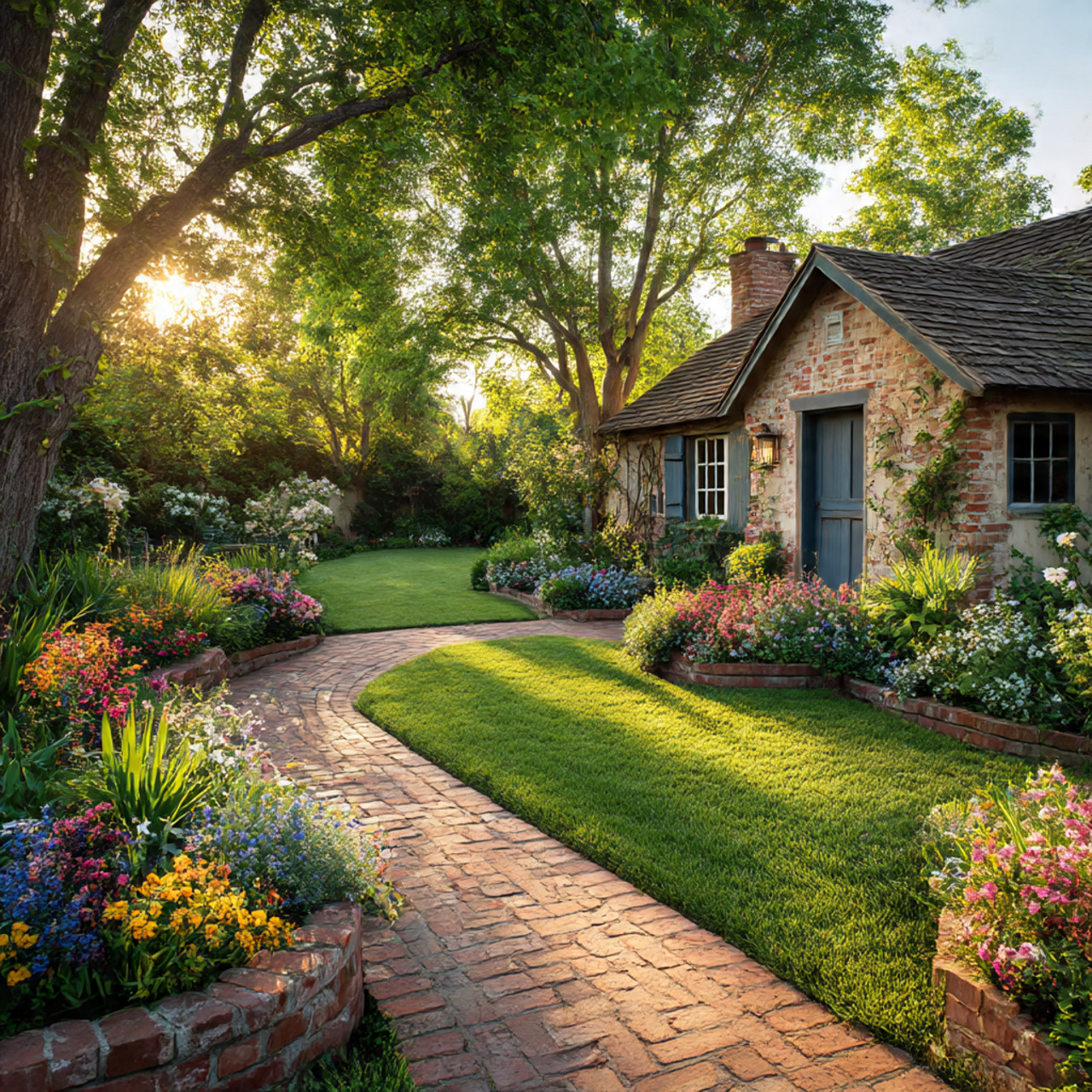
Brick edging is wonderfully adaptable—you can create formal straight lines or add visual interest by laying bricks at a 45-degree angle. The variety of brick colors and patterns means you’ll find something perfect for your space.
What makes brick special is its flexibility. It handles curves beautifully, works for wider garden paths, and can even be stacked for raised edging. Using reclaimed bricks adds character while being kind to your wallet and the environment.
Maintenance Bonus: Brick borders let you mow right up to the edge, keeping your whole garden looking sharp with minimal effort.
Treated Wood Edging: Warm and Natural Appeal
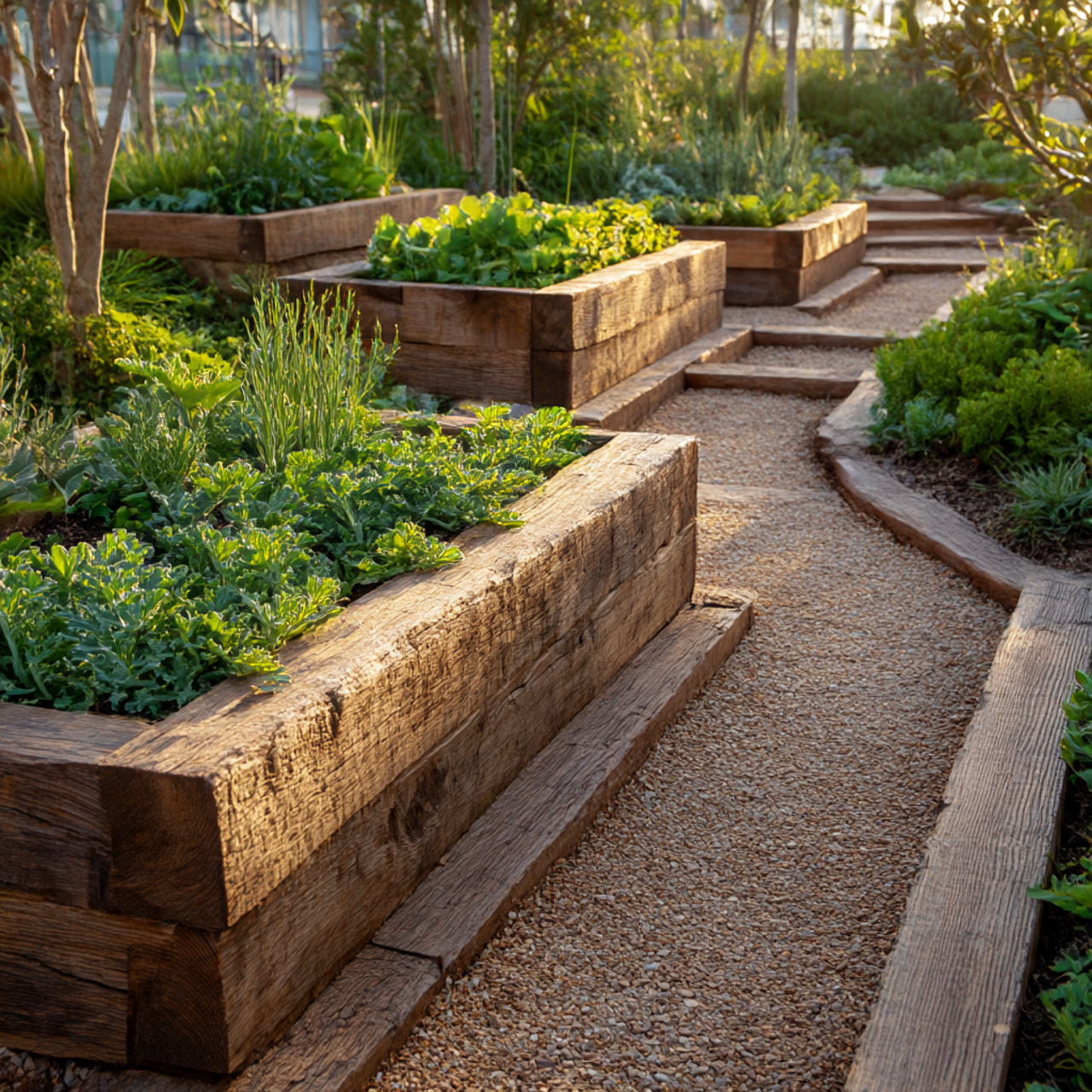
Wood brings a softer, more natural texture to garden edging that blends seamlessly with plants and flowers. Timber planks or logs work wonderfully for defining raised beds, creating distinct garden zones, or separating your lawn from planting areas.
Choose wood that’s properly treated for outdoor use, or invest in naturally durable hardwood if your budget allows. Wood’s natural warmth and flexibility make it easier to shape around curves or create terraced levels.
Durability Tip: The right wood treatment can make your edging last for years, giving you that beautiful natural look without constant replacement.
Metal Strip Edging: Sleek, Modern, and Built to Last
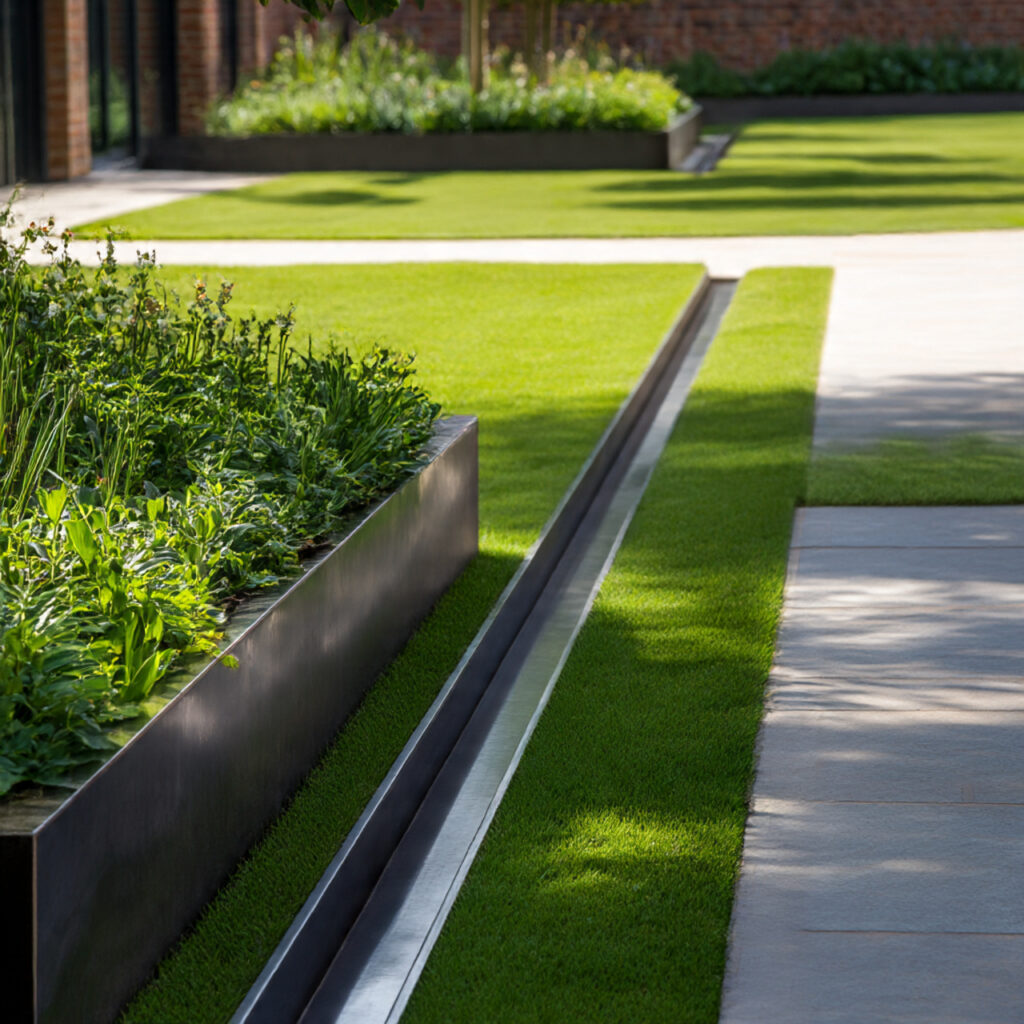
For contemporary gardens, metal edging delivers clean lines and a polished aesthetic that’s hard to beat. Steel or aluminum strips provide razor-sharp definition and incredible durability.
Metal edging shines in minimalist gardens, urban courtyards, and around modern patios. It resists wear beautifully and keeps lawn trimmings and mulch perfectly contained with virtually no maintenance required.
Style Note: This is your go-to choice when you want that crisp, architectural look that screams modern sophistication.
Garden Edging Ideas Using Plastic Edging
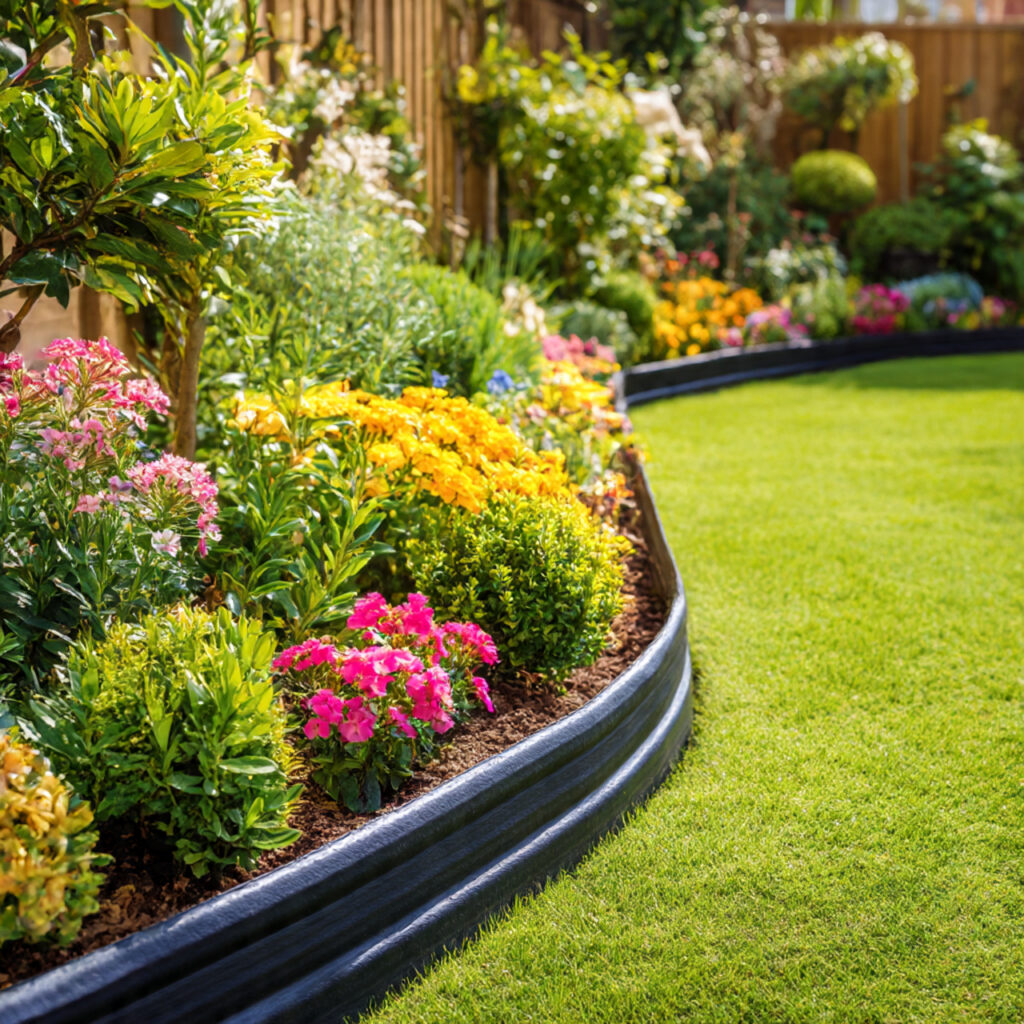
Working with a tight budget? Plastic edging offers an affordable solution that can last for many years when properly installed.
Most plastic edging comes in convenient rolls or pre-shaped panels, making installation straightforward even for beginners. While it won’t have the premium look of stone or metal, good planting design can make plastic edging look surprisingly polished.
Cost-Saver Tip: This is ideal for DIY enthusiasts or when you need to edge large garden areas without breaking the bank.
Gravel Basin Edging: Underrated and Incredibly Practical
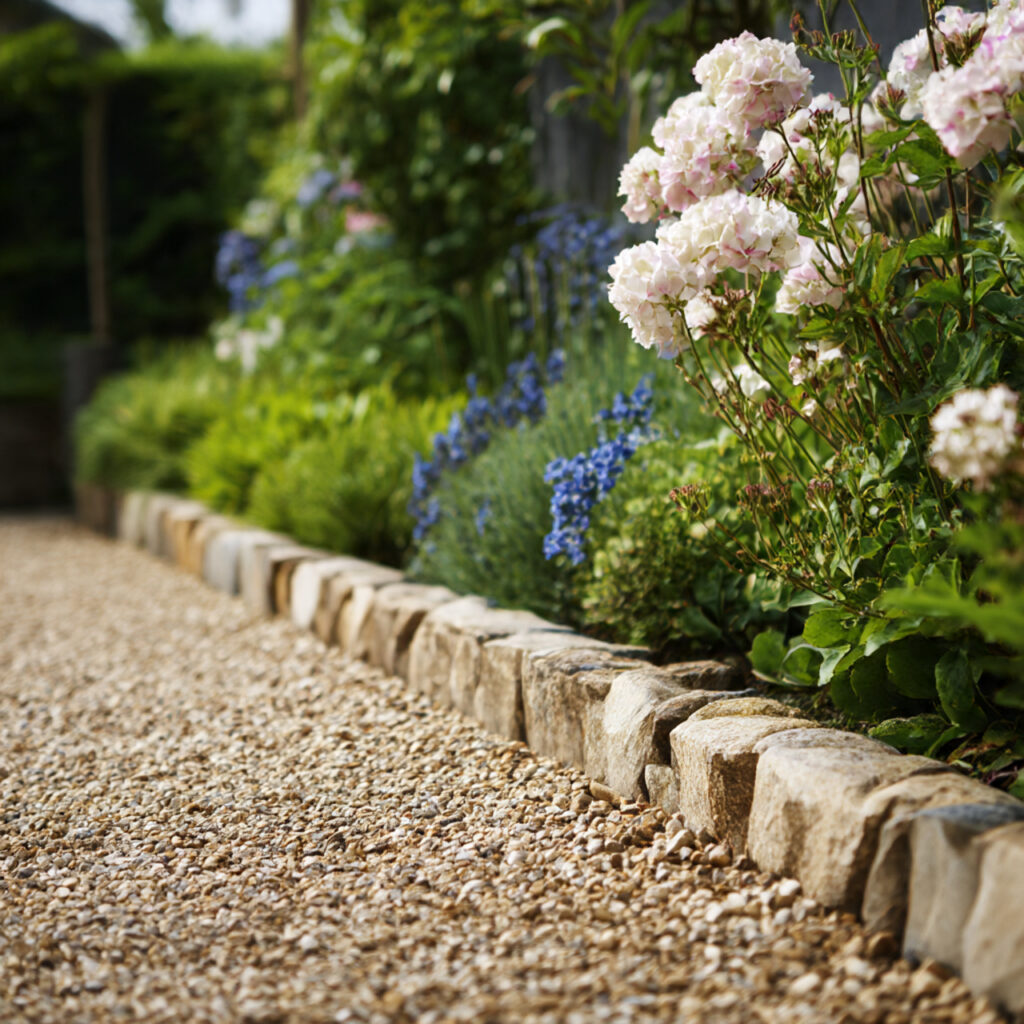
Don’t overlook gravel—it creates both a physical barrier and an attractive visual separation that many gardeners love.
A band of gravel along your bed edges prevents grass from creeping in while simplifying maintenance. Dig a shallow trench, add an anchor edge if desired, then fill with gravel. The bonus? Improved drainage and lovely texture.
Design Idea: Gravel edging works especially well along pathways where you want that satisfying crunch underfoot.
Raised Timber Bed Edging: Function Meets Visual Interest
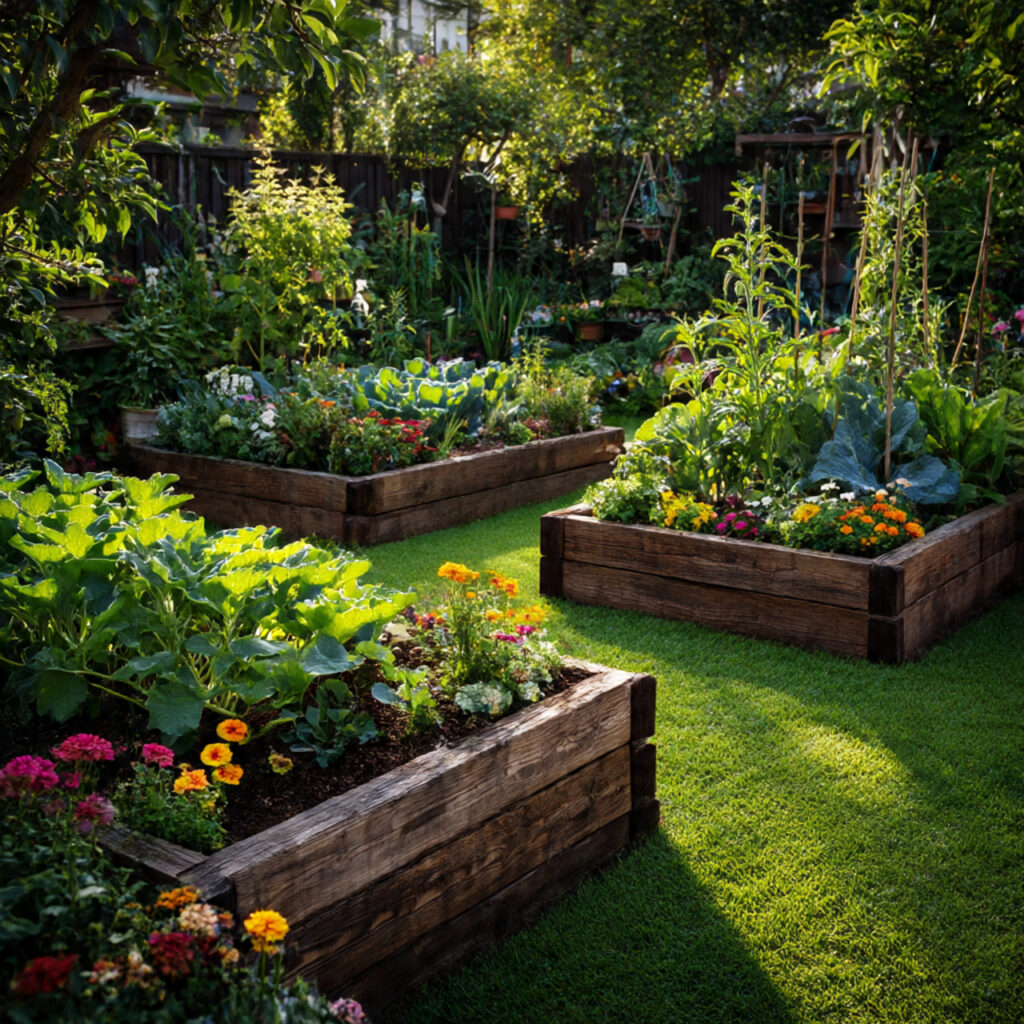
Raised timber beds do double duty—they create stunning borders while solving practical problems like slopes or uneven terrain.
The raised sides clearly define different zones while adding vertical interest to your garden. This approach lets you elevate flower beds or vegetable gardens while neatly containing soil and creating strong visual boundaries.
Longevity Tip: Treat the timber against moisture and pests, and avoid direct soil contact where possible to maximize its lifespan.
Log Roll Edging: Perfect for Curves and Cottage Gardens
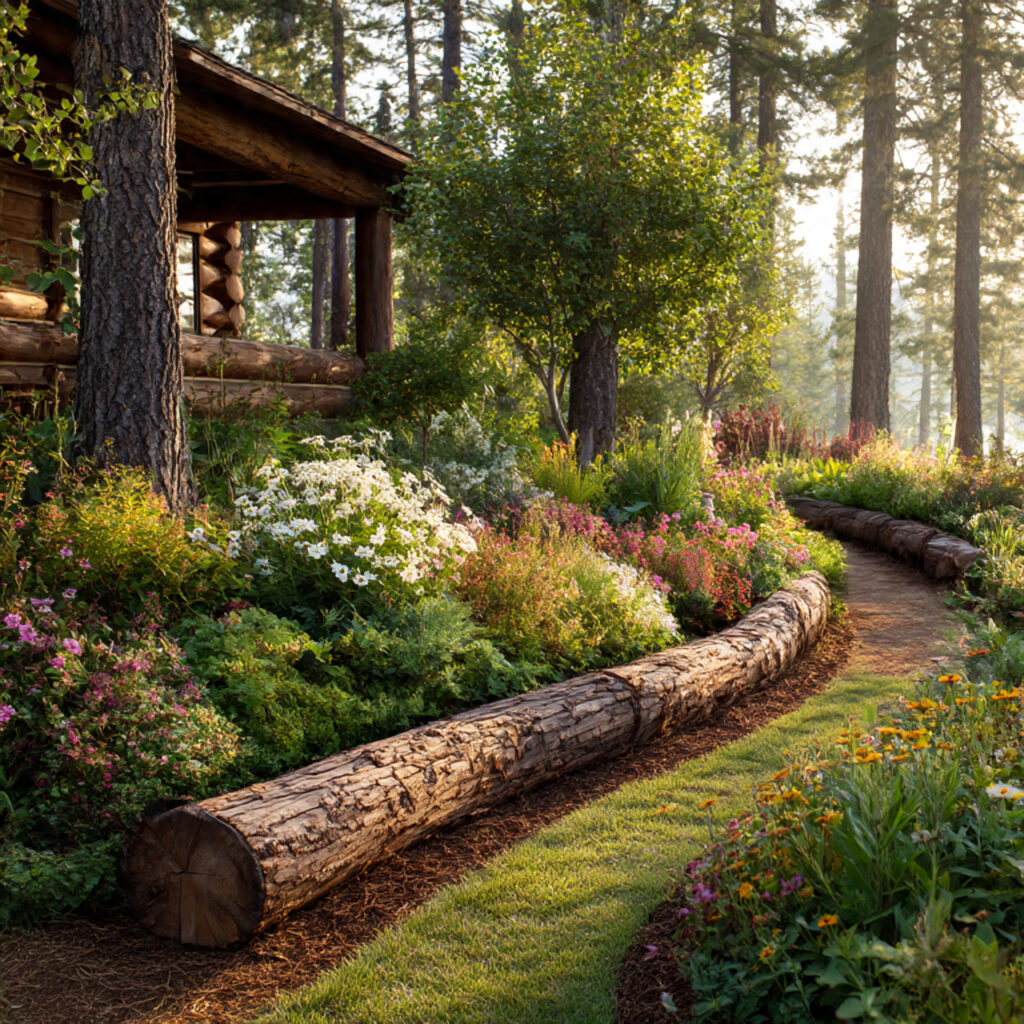
Log rolls bring a relaxed, natural charm that’s perfect for informal garden layouts and sweeping curves. These half-round logs or cylinders work wonderfully in cottage gardens or rustic settings.
Their flexibility allows you to create gentle curves and flowing arcs that rigid materials can’t achieve. The warm, natural look enhances the organic feel of casual garden designs.
Maintenance Note: Check periodically for rot or pest damage since you’re working with natural wood—a small price for such charming aesthetics.
Living Plant Borders: Nature as Your Edging
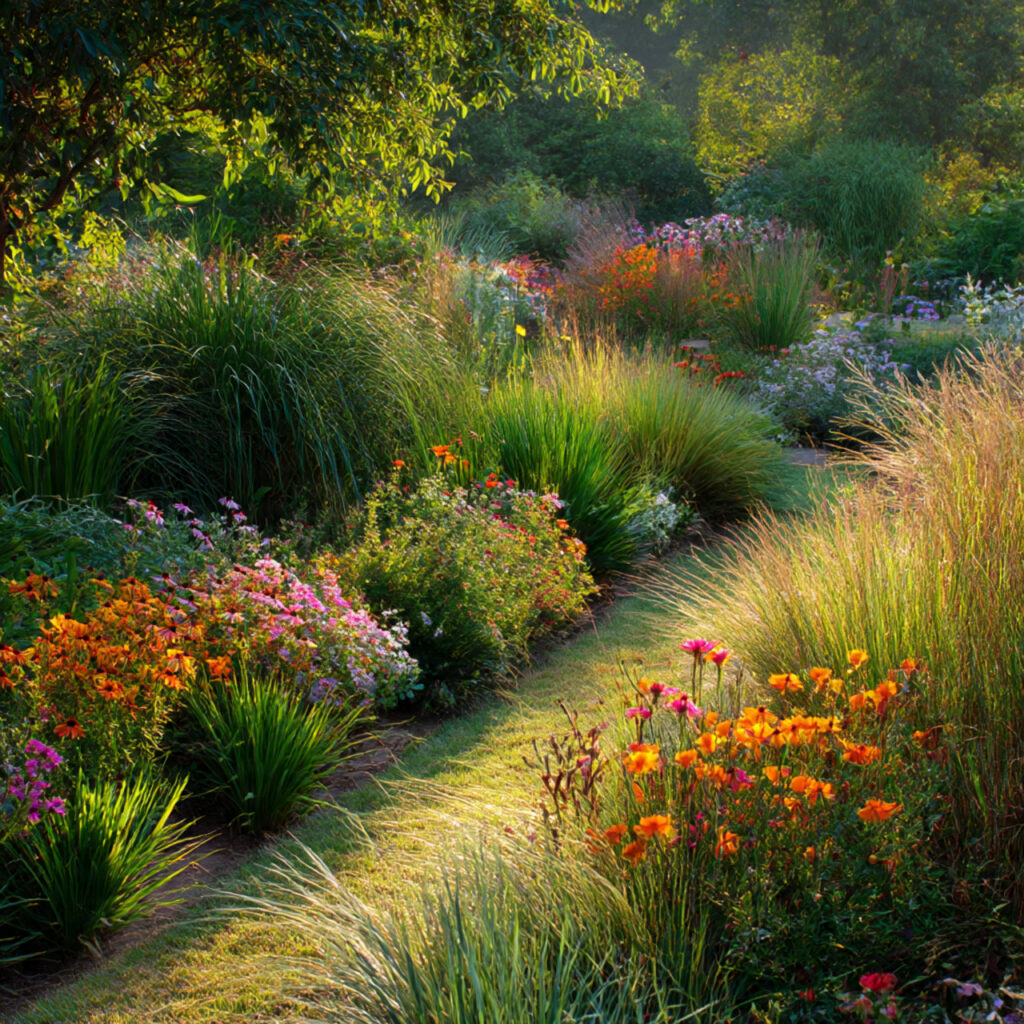
Why use hard materials when plants can create beautiful, living boundaries? Low-growing plants like mondo grass, boxwood, or seasonal annuals make wonderful edging that brings movement and life to your borders.
Living borders soften the transition between different garden areas and integrate seamlessly with your overall planting scheme. The edges gently blur rather than create hard lines.
Care Consideration: This approach needs regular trimming, weeding, and occasional replanting, but the lush, verdant result is worth the effort.
Recycled Material Edging: Sustainable Style with Character
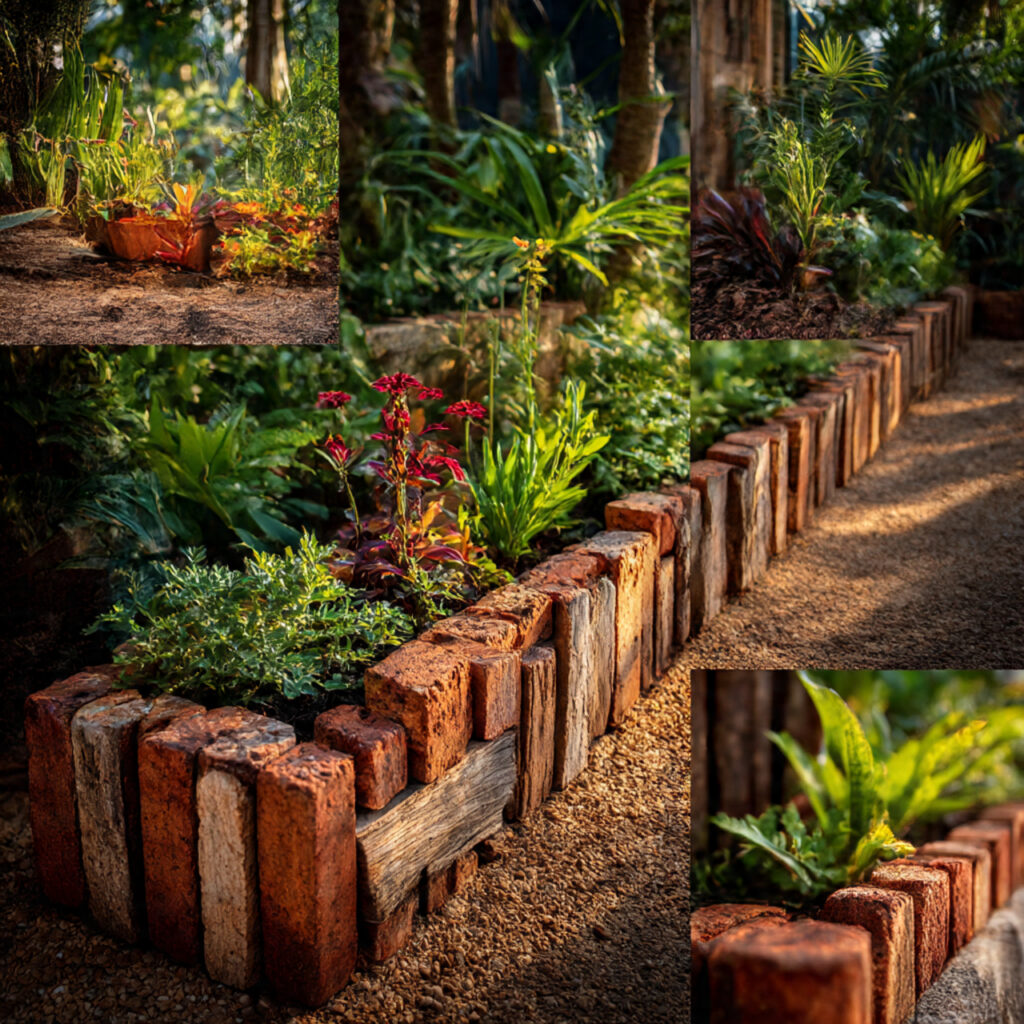
Get creative by incorporating reclaimed bricks, leftover pavers, old fence logs, or other recycled materials. This approach saves money while adding unique character to your garden.
Imagine setting old bricks sideways to create a charming border, or using reclaimed wood pieces in unexpected ways. Each recycled element tells a story.
Safety Check: Ensure materials are structurally stable, avoid anything toxic, and make sure your recycled items visually complement your garden’s colors and style.
Flagstone Path Borders: Relaxed Elegance
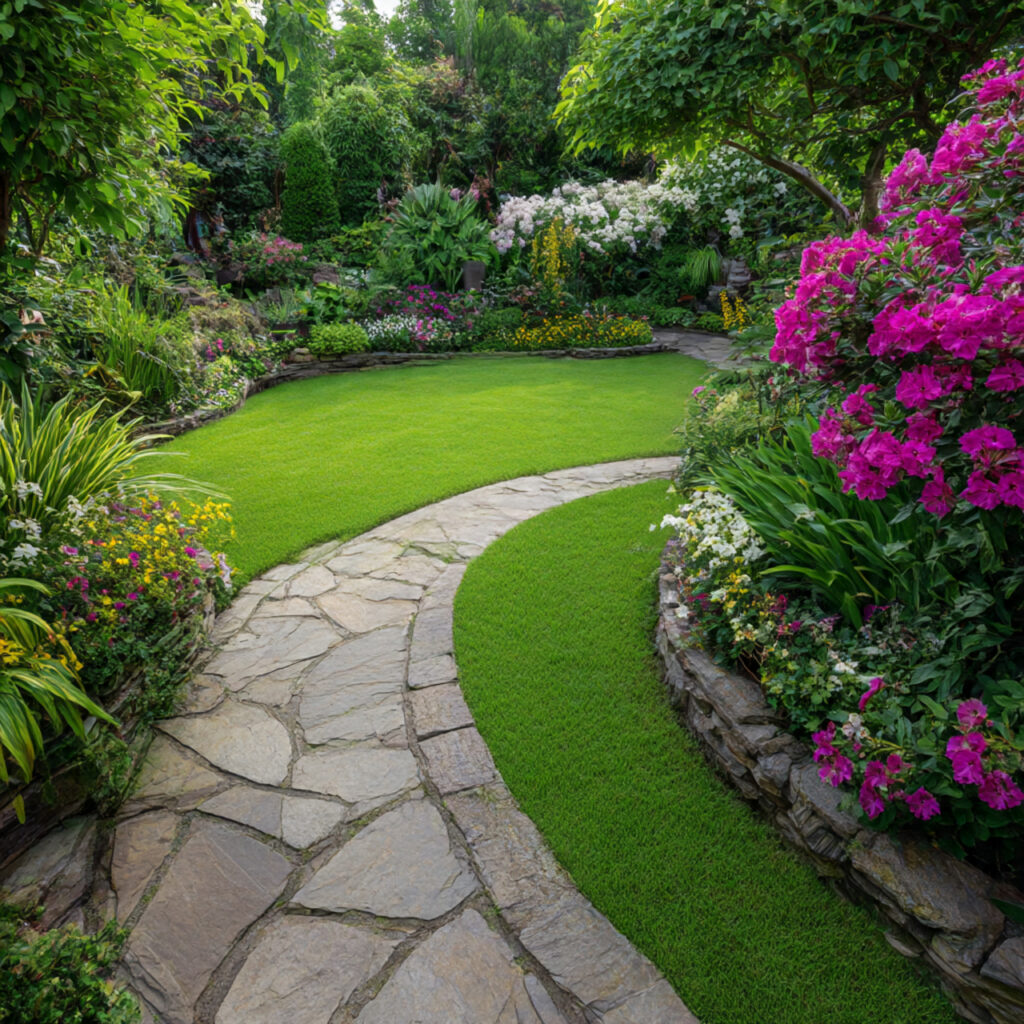
Flagstone pieces arranged beside lawns or planting beds serve as both edging and informal pathways. Their organic, irregular shapes create a relaxed, elegant feel.
This works especially well if you already have access to stones or a local stone yard. The natural variation in each piece adds character.
Installation Tip: Level each stone carefully and use jointing sand or mulch between pieces to prevent weeds and grass from pushing through.
Visit Also: Garden Path and Walkways
Vertical Stone Edging: Dramatic Height and Presence
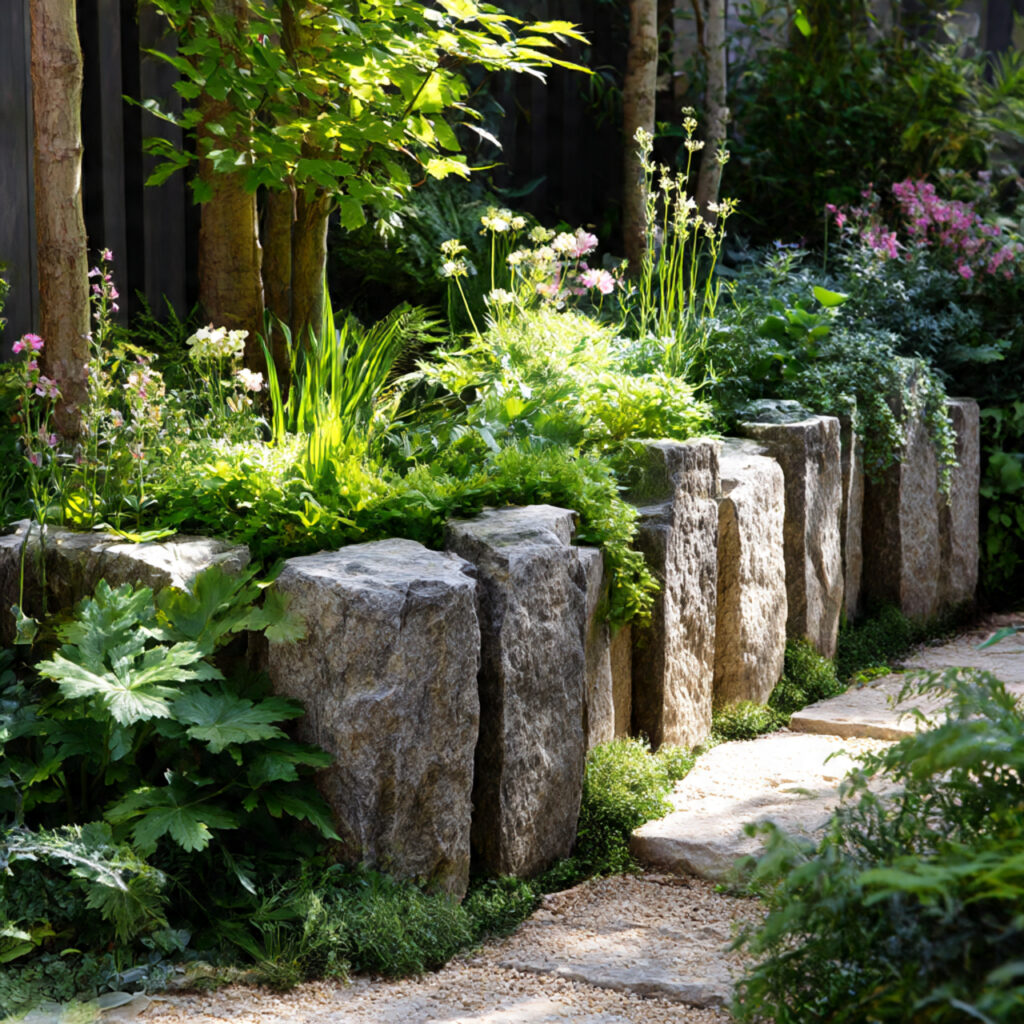
Instead of laying stones flat, try standing them upright for a dramatic low-wall effect. This creates visual impact through height and shadow—perfect for showcasing cascading plants or creating tiered gardens.
Vertical stone edging acts as both a root barrier and a physical barrier for mower wheels. It’s bold and architectural.
Effort Note: This style requires more installation labor and potentially higher costs, but the striking visual payoff often justifies the investment.
Concrete Curbing: Permanent and Virtually Indestructible
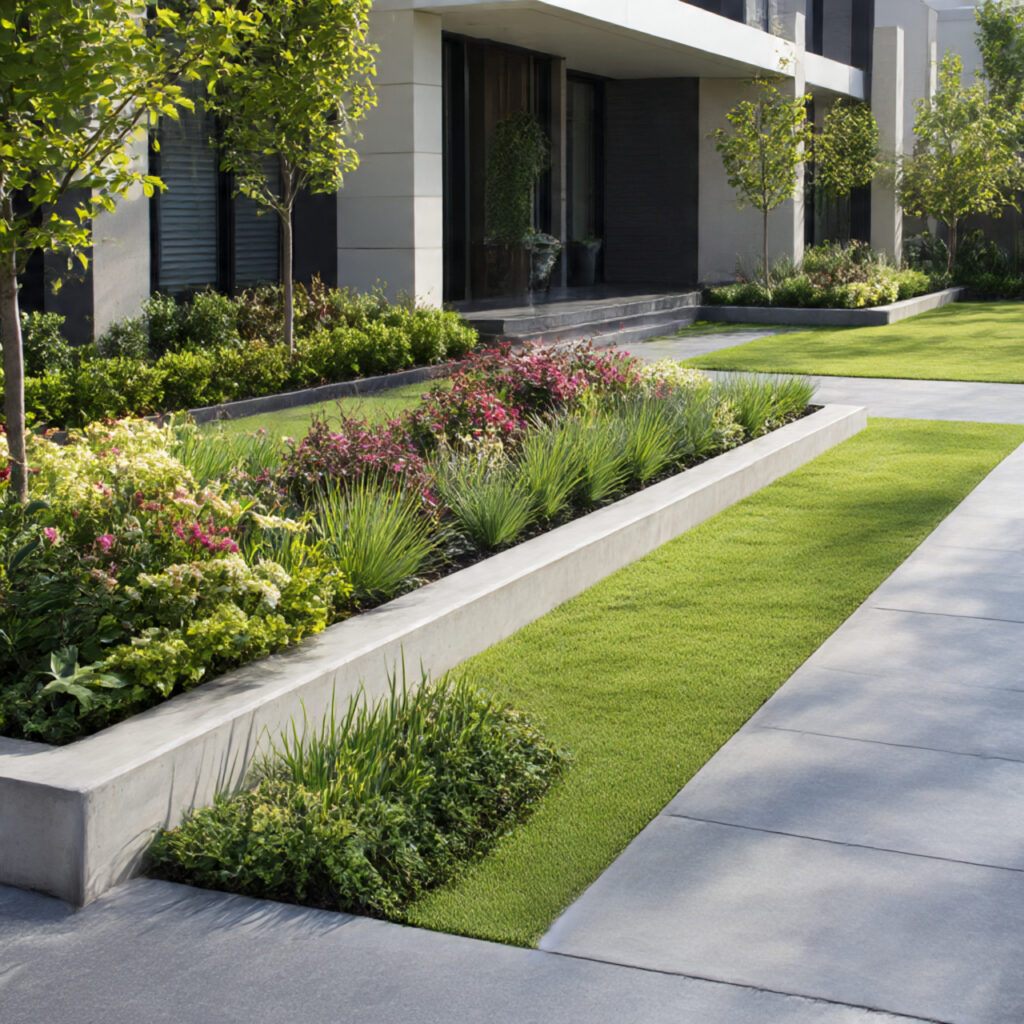
Concrete curbing offers unmatched permanence and durability. It creates an effective root barrier, withstands mowing equipment, and lasts for decades with minimal maintenance.
Because it’s permanent, use concrete curbing when you’re confident about your garden layout. Stamped or colored concrete can complement your patio or house exterior beautifully.
Planning Tip: This requires professional equipment and skill, so factor in installation costs—but remember, you’re investing once for long-term results.
Decorative Scalloped Edging: Affordable Elegance
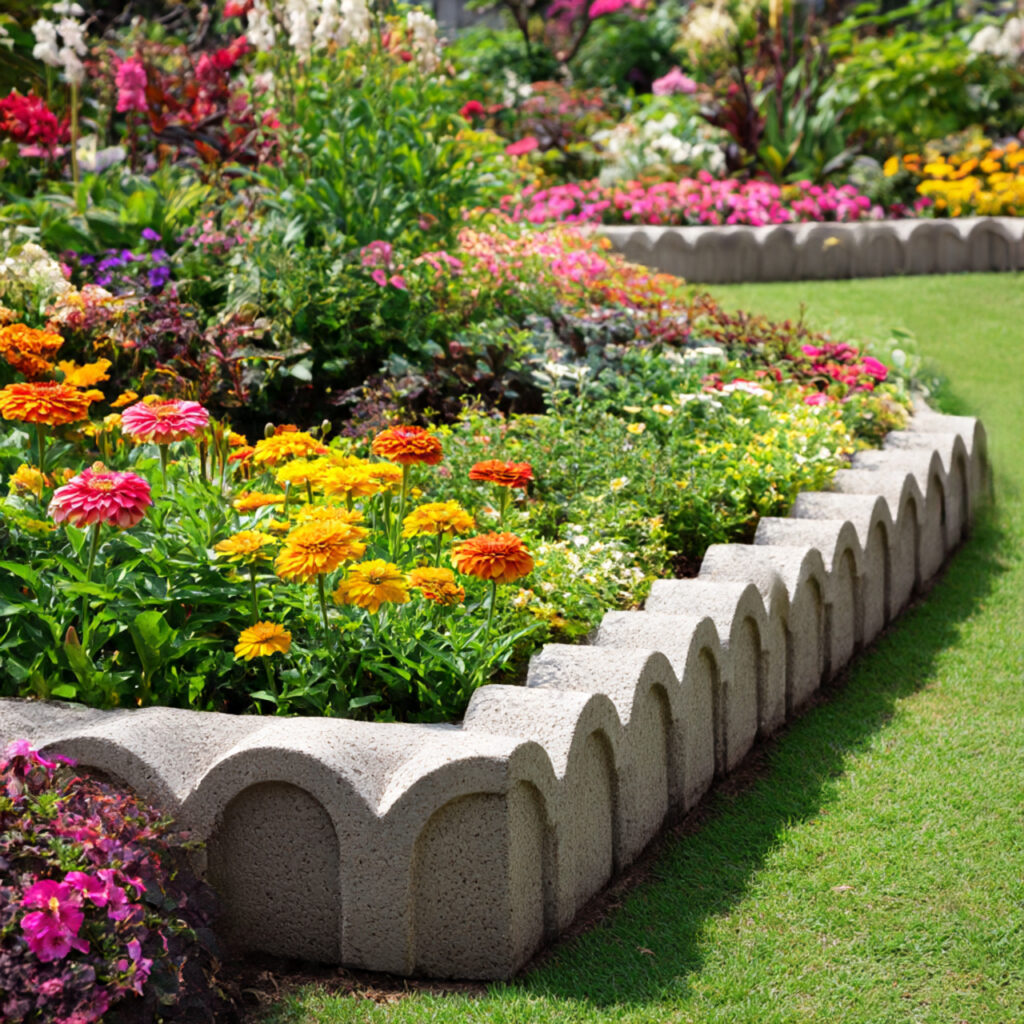
Scalloped concrete edging or decorative panels give you the look of expensive stonework at a fraction of the cost. These panels work beautifully in front gardens or around flower beds where visual appeal matters as much as function.
Anchoring Tip: Secure panels properly and integrate them thoughtfully with your plantings so they become part of the design rather than looking like add-ons.
Gravel and Boulder Combinations: Sculptural Drama
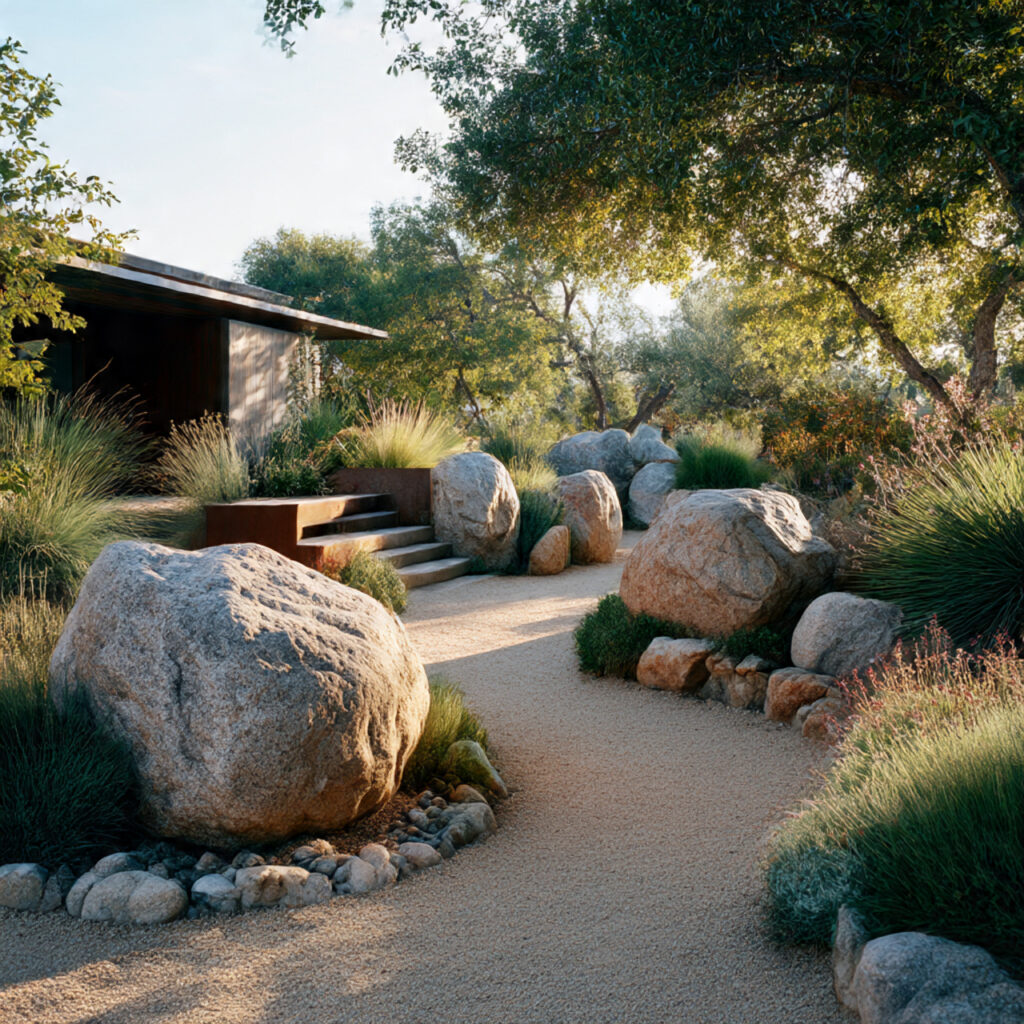
Pairing larger boulders with gravel or mulch creates striking borders perfect for dry gardens or xeriscape designs. The boulders provide sculptural focal points while gravel defines the space.
This approach emphasizes texture and structure over traditional flowery softness.
Weed Prevention Tip: Consider landscape fabric underneath to prevent grass and weeds from creeping between rocks.
Mini-Fence Edging: Whimsical Charm
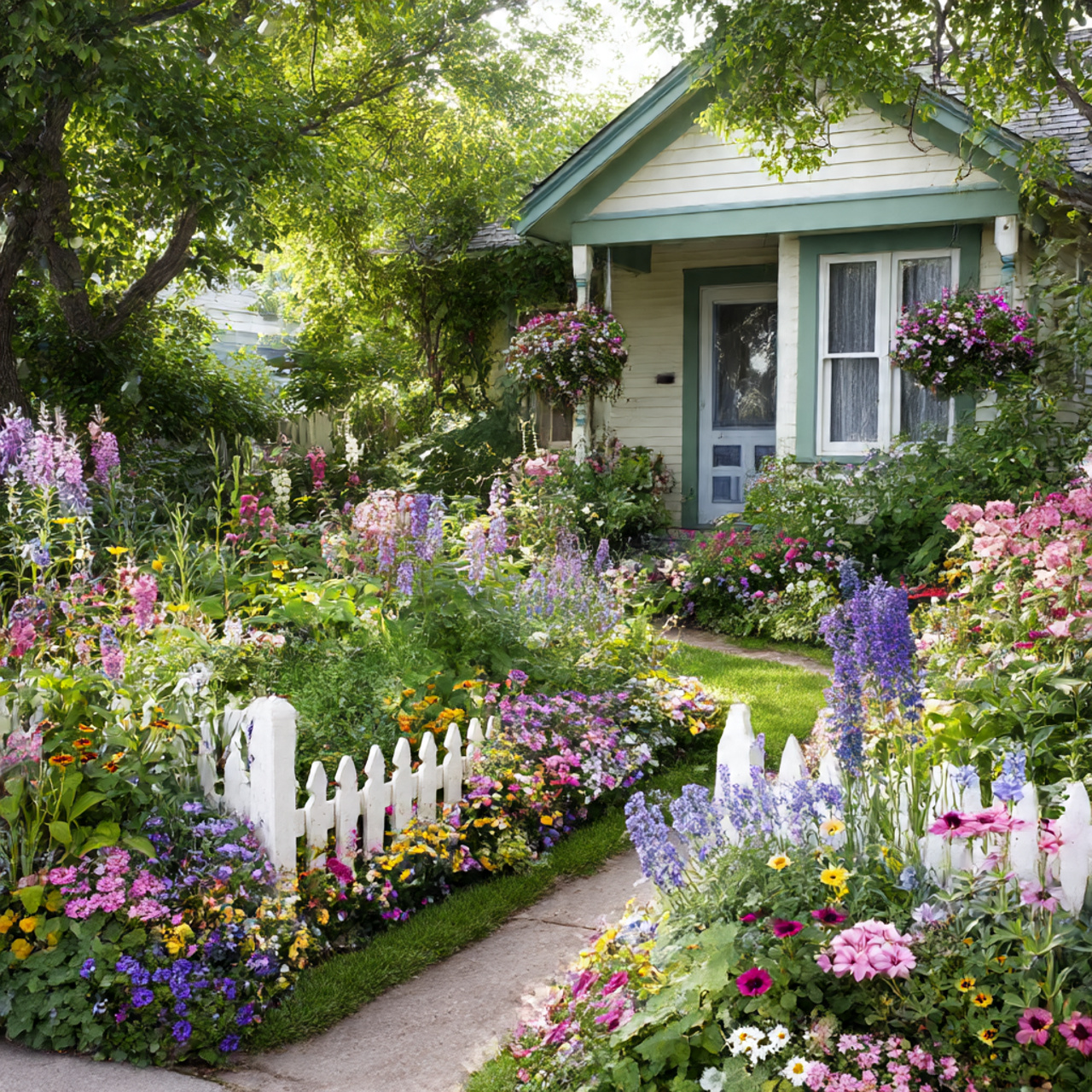
Low decorative fencing around beds adds charm and personality—perfect for cottage gardens, children’s plots, or vegetable beds where you want clear definition with a playful touch.
Choose materials that weather well in your climate, and be prepared for occasional maintenance like painting or staining.
Style Match: This works best when your garden already has a casual, friendly feel rather than formal sophistication.
Rope-Top Concrete Edging: Classical Refinement
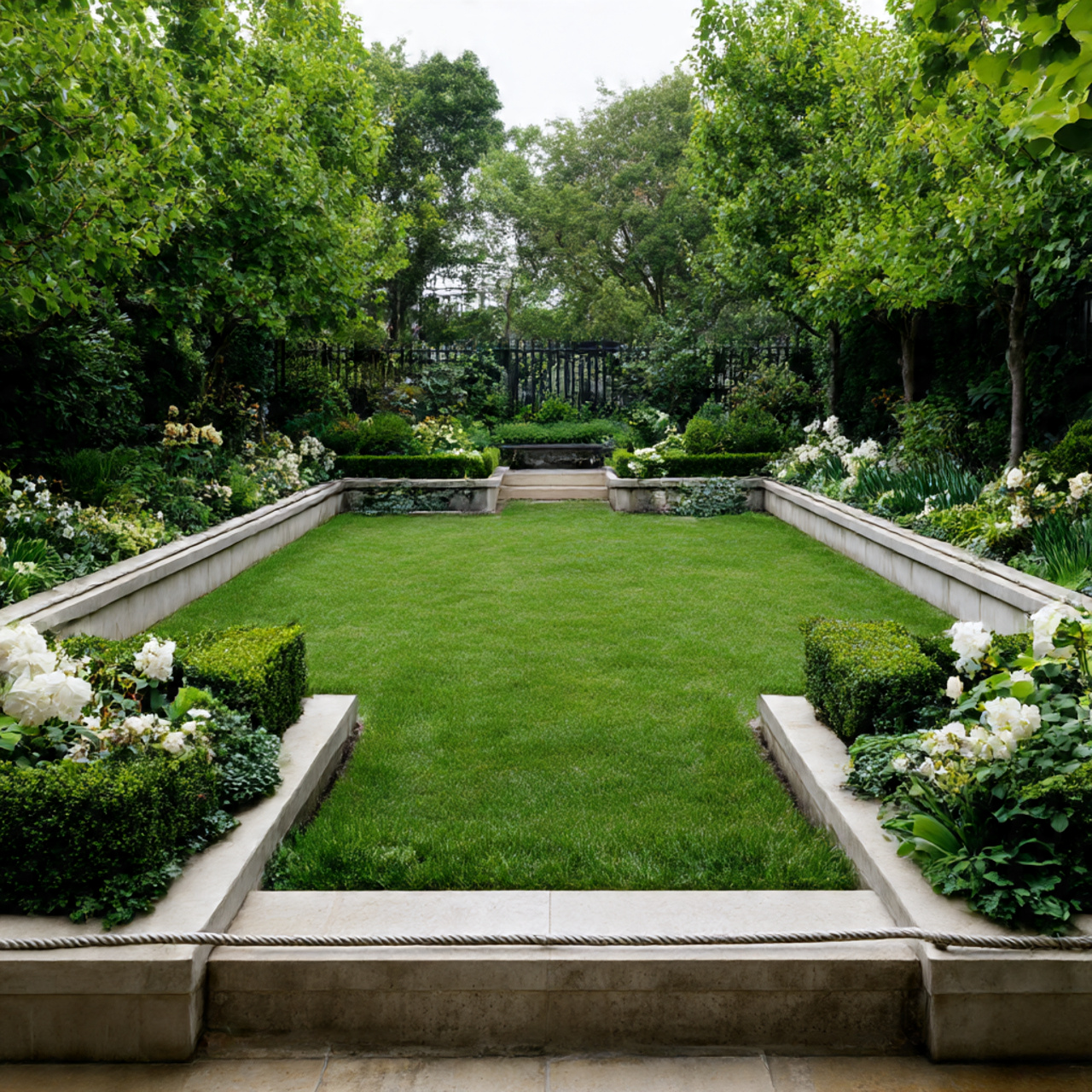
For formal or historic garden aesthetics, rope-top concrete edging adds elegant detail that elevates the entire space. The decorative rope detail provides visual interest while maintaining the permanence of concrete.
Best Use: This shines in symmetrical beds or with period architecture where refined details matter.
Bamboo Edging: Eco-Friendly and Affordable
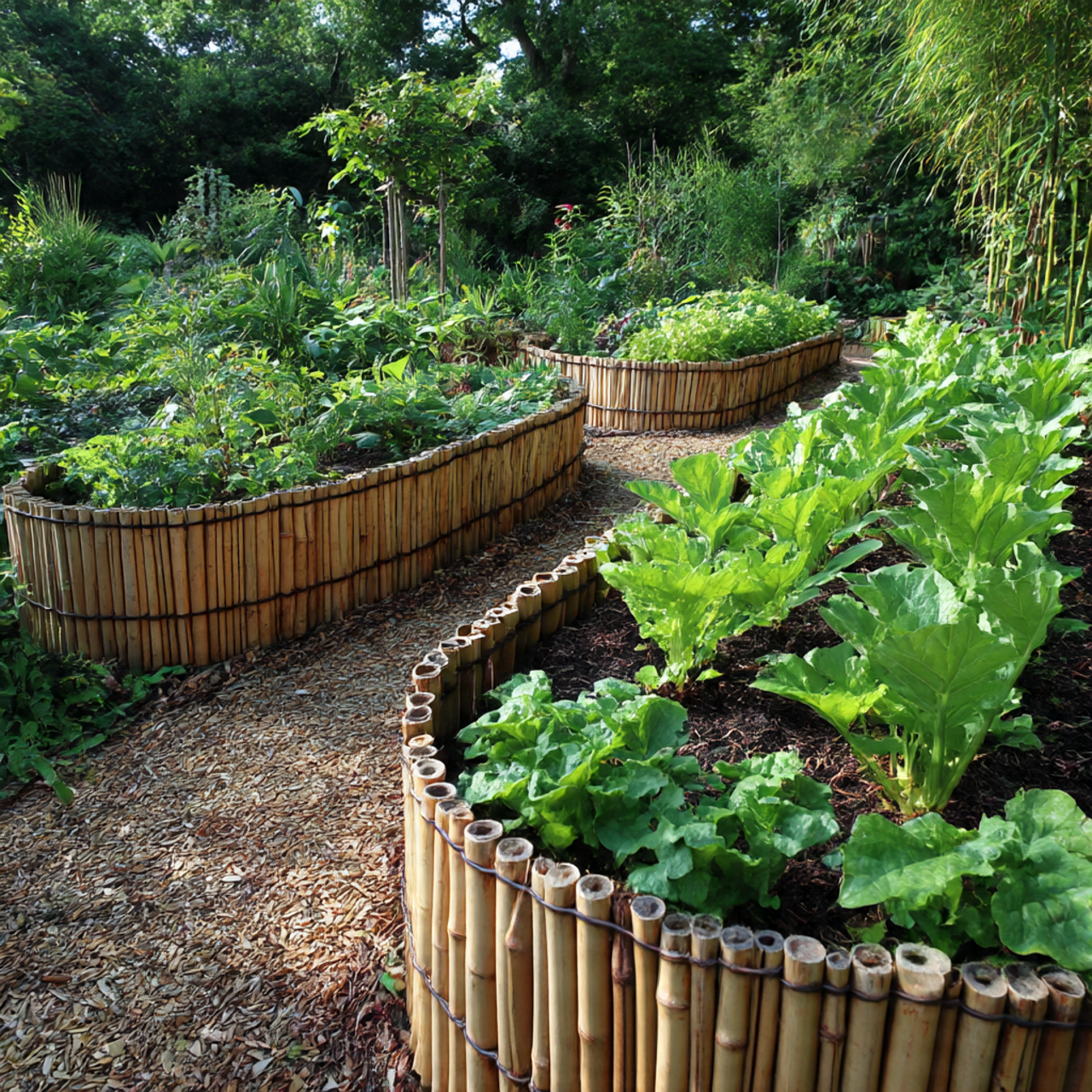
Bamboo offers a sustainable, budget-friendly option that pairs beautifully with natural planting schemes. Bamboo rolls can be pressed into soil and easily shaped around curves.
The informal look blends seamlessly with foliage and creates a relaxed atmosphere.
Climate Note: Ensure your bamboo is treated or naturally moisture-resistant, especially in humid areas, to prevent premature deterioration.
Curved Border Edging: Soft, Inviting Flow
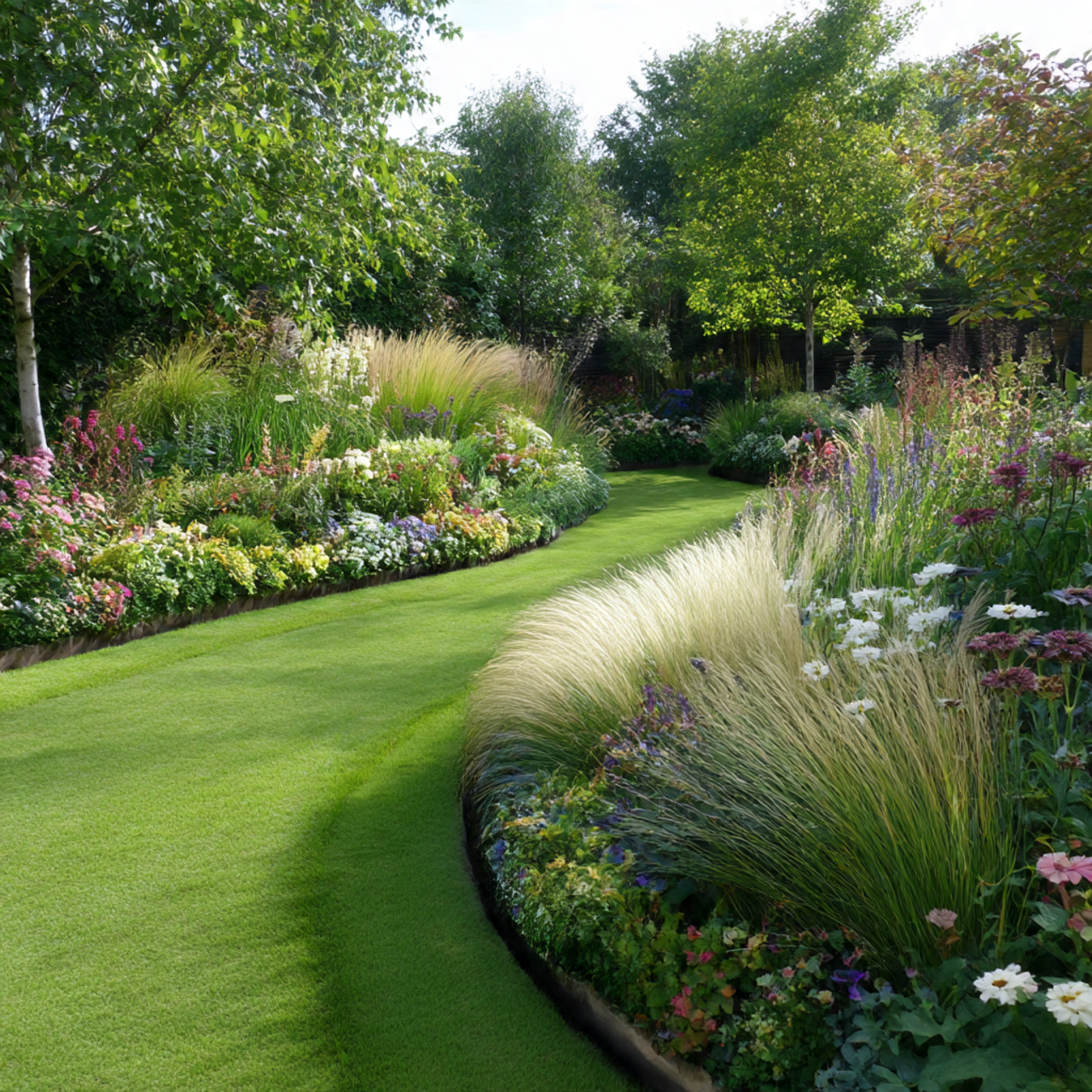
Gardens rarely benefit from all straight lines. Curved borders add visual softness and create a more inviting, natural feel as the eye wanders along flowing edges.
Use flexible materials like metal strips, plastic edging, or bendable timber. The key is creating smooth curves rather than awkward corners.
Design Benefit: Curves make gardens feel larger and more sophisticated than rigid rectangles.
Sloped Garden Edging: Taming Challenging Terrain
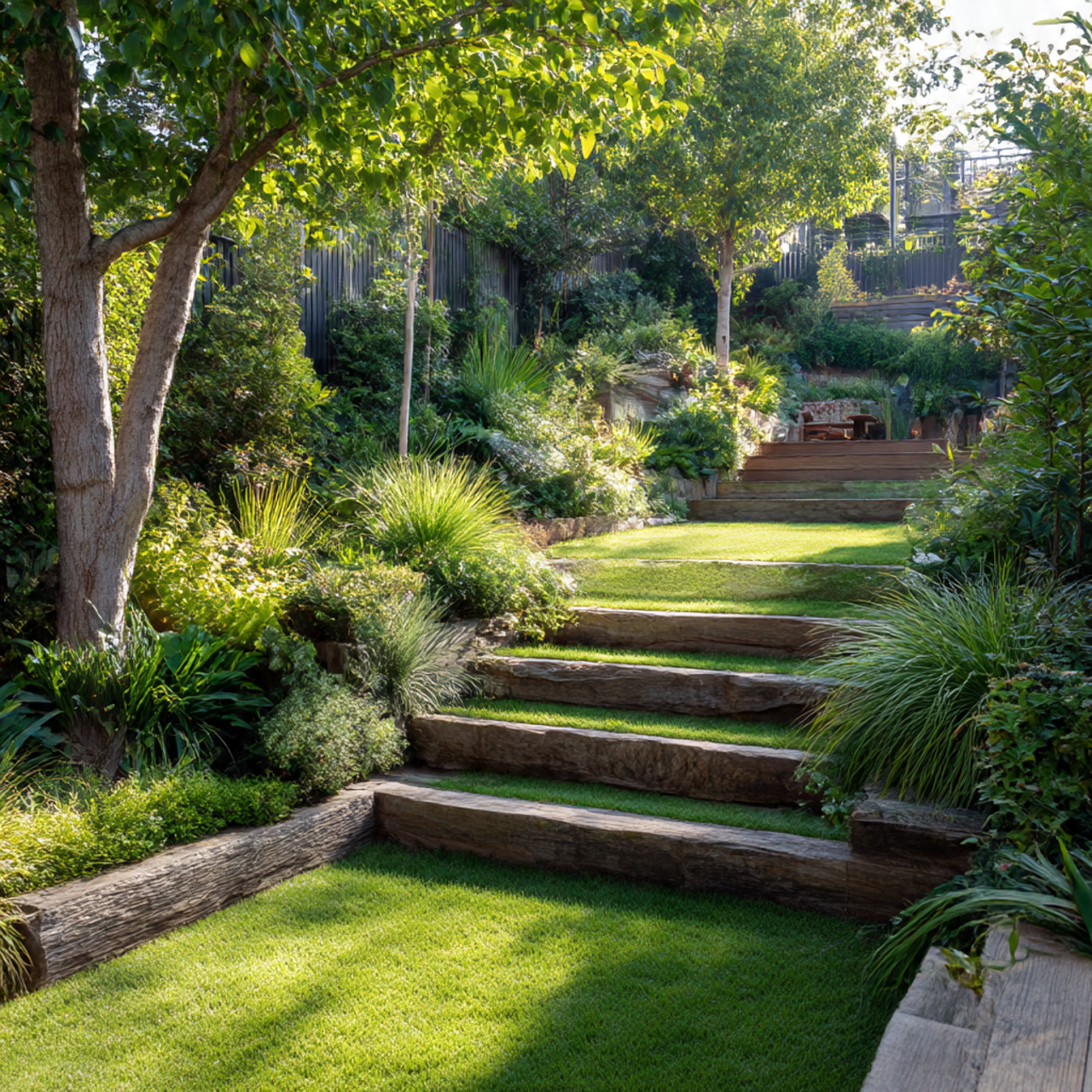
Slopes need specialized solutions. Consider timber sleepers, stone risers, or concrete blocks to hold soil and define planting areas on uneven ground.
The key is securing materials against soil pressure while ensuring proper drainage.
Stability Tip: Use these techniques to create terraced levels rather than fighting the natural slope—work with your terrain, not against it.
Mulch Trench Edging: Simple and Cost-Free
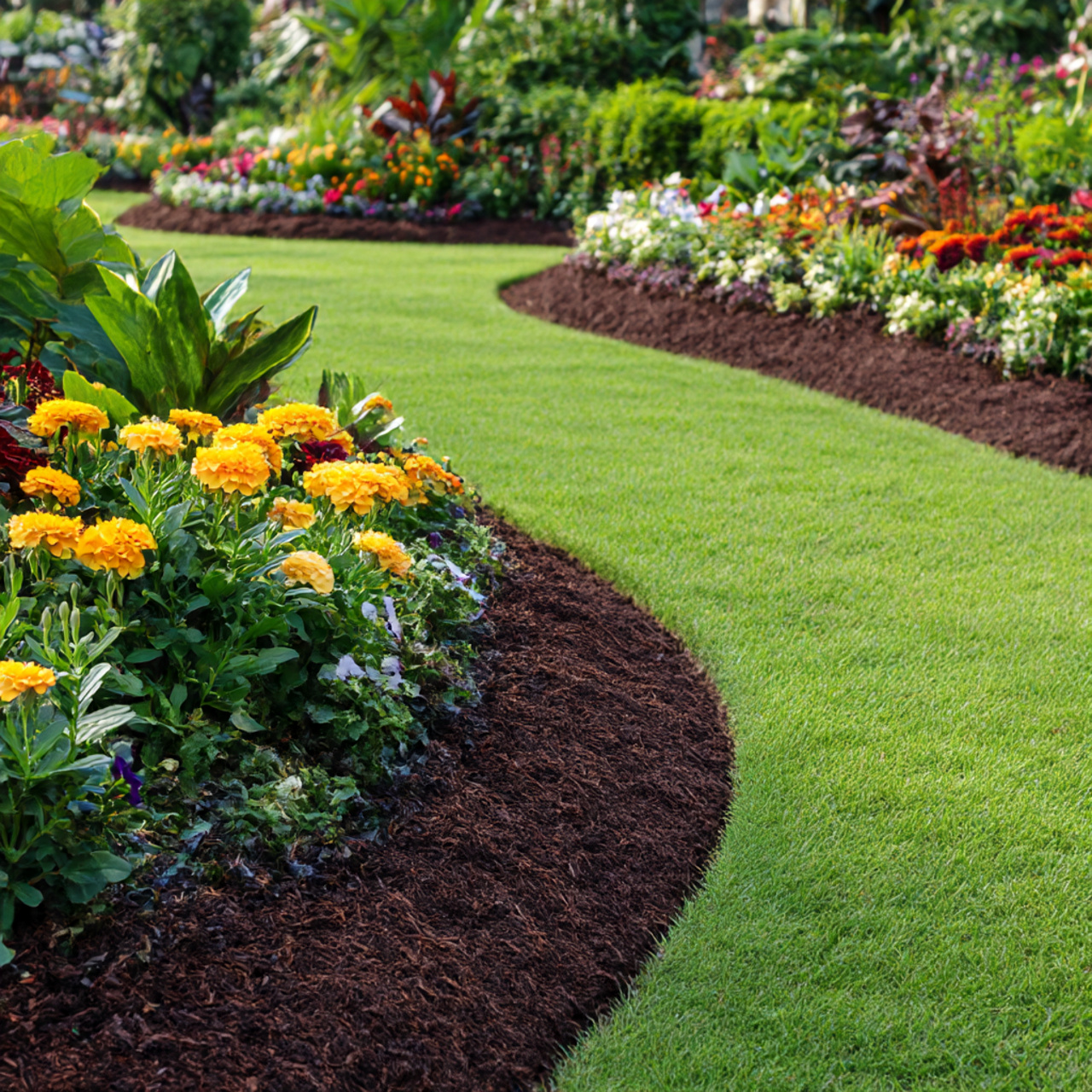
Sometimes the best edging requires no added materials—just a clean trench cut with a shovel. This V-cut trench creates a minimalist border that’s perfect for natural, informal gardens.
It’s free, stylish, and easy to maintain with regular mowing.
Minimalist Win: This proves that effective edging doesn’t always need materials—sometimes technique is enough.
Low-Maintenance Edging: Set It and Forget It
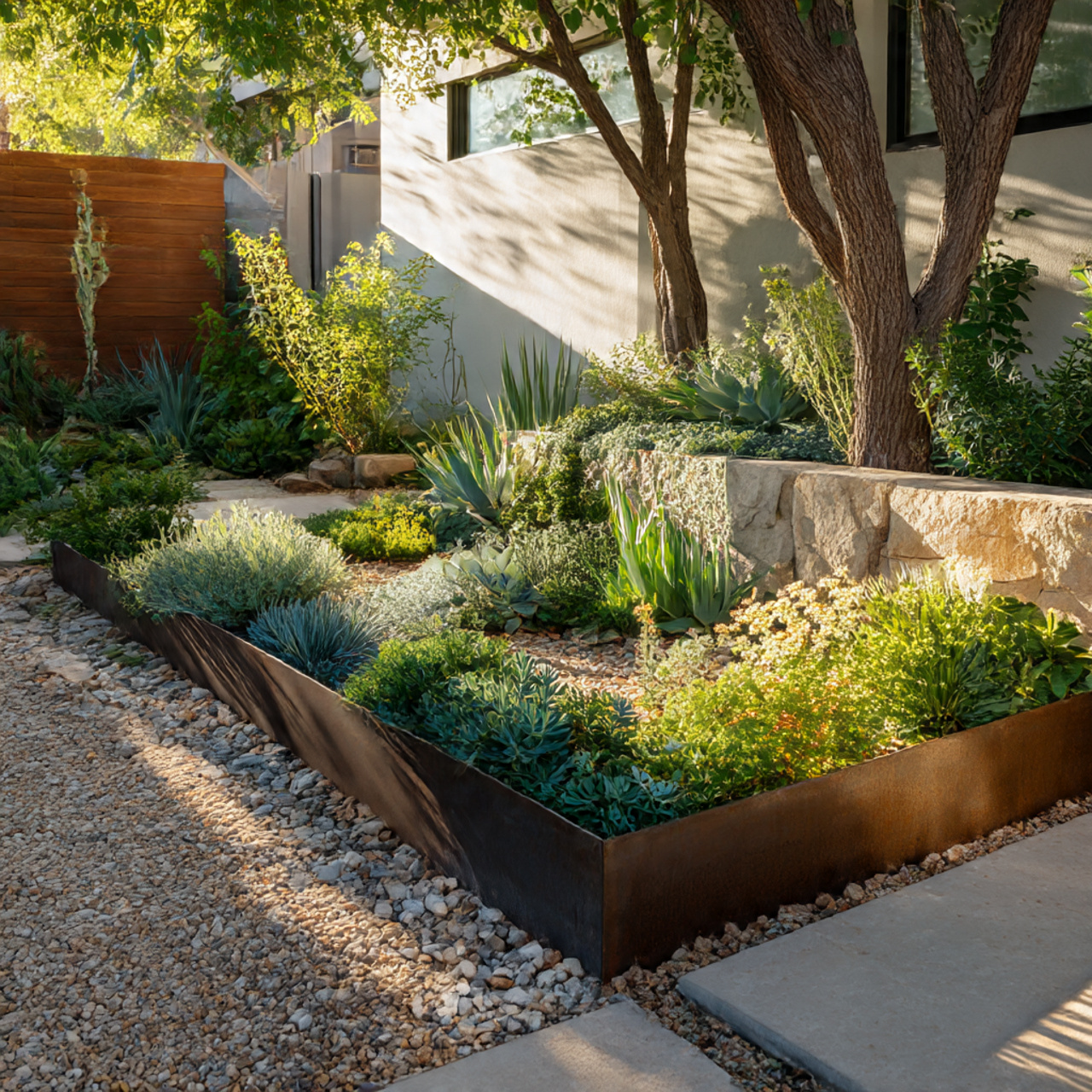
For busy gardeners, durable materials like metal, stone, or concrete curbing minimize ongoing work. These resist root intrusion, mower damage, and shifting.
Investment Perspective: Higher upfront costs pay off in long-term labor savings—especially valuable for large gardens or heavy mowing schedules.
Color-Contrast Borders: Bold Visual Drama
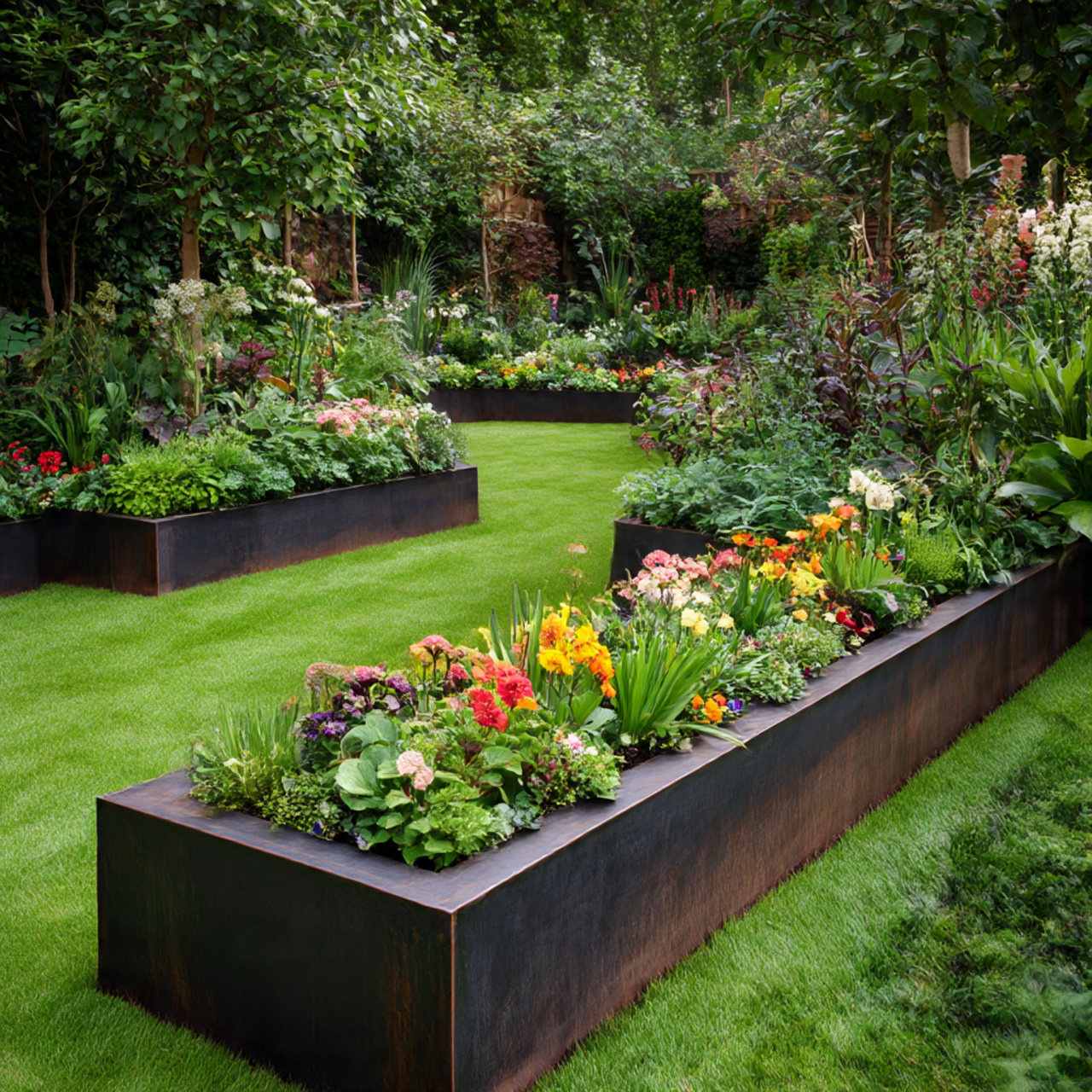
Create eye-catching borders by choosing materials that contrast with adjacent areas. Think dark metal against green turf, pale stone beside vibrant flowers, or red brick next to neutral paving.
Contrast draws attention and emphasizes your garden’s shape and flow.
Style Harmony: Ensure contrasting materials still fit your overall garden aesthetic—modern, cottage, or traditional.
Large-Scale Landscape Edging: Matching Garden Size
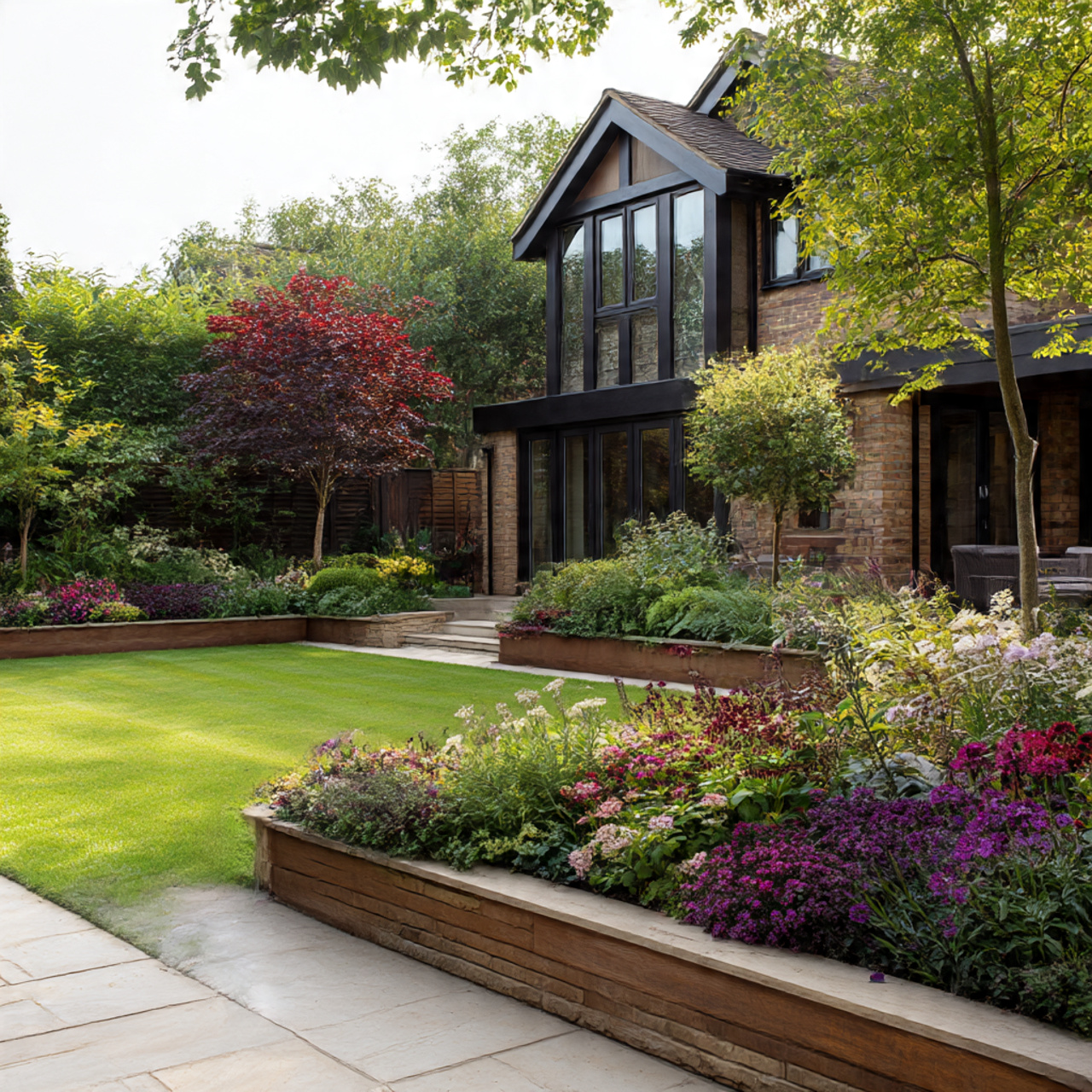
Bigger landscapes need substantial edging—stone blocks, concrete curbing, wide timber, or low retaining walls. These materials define zones and handle maintenance machinery.
Proportion Matters: Choose materials and proportions that match your garden’s scale without overwhelming the plants.
Front Garden Statement Borders: Boosting Curb Appeal
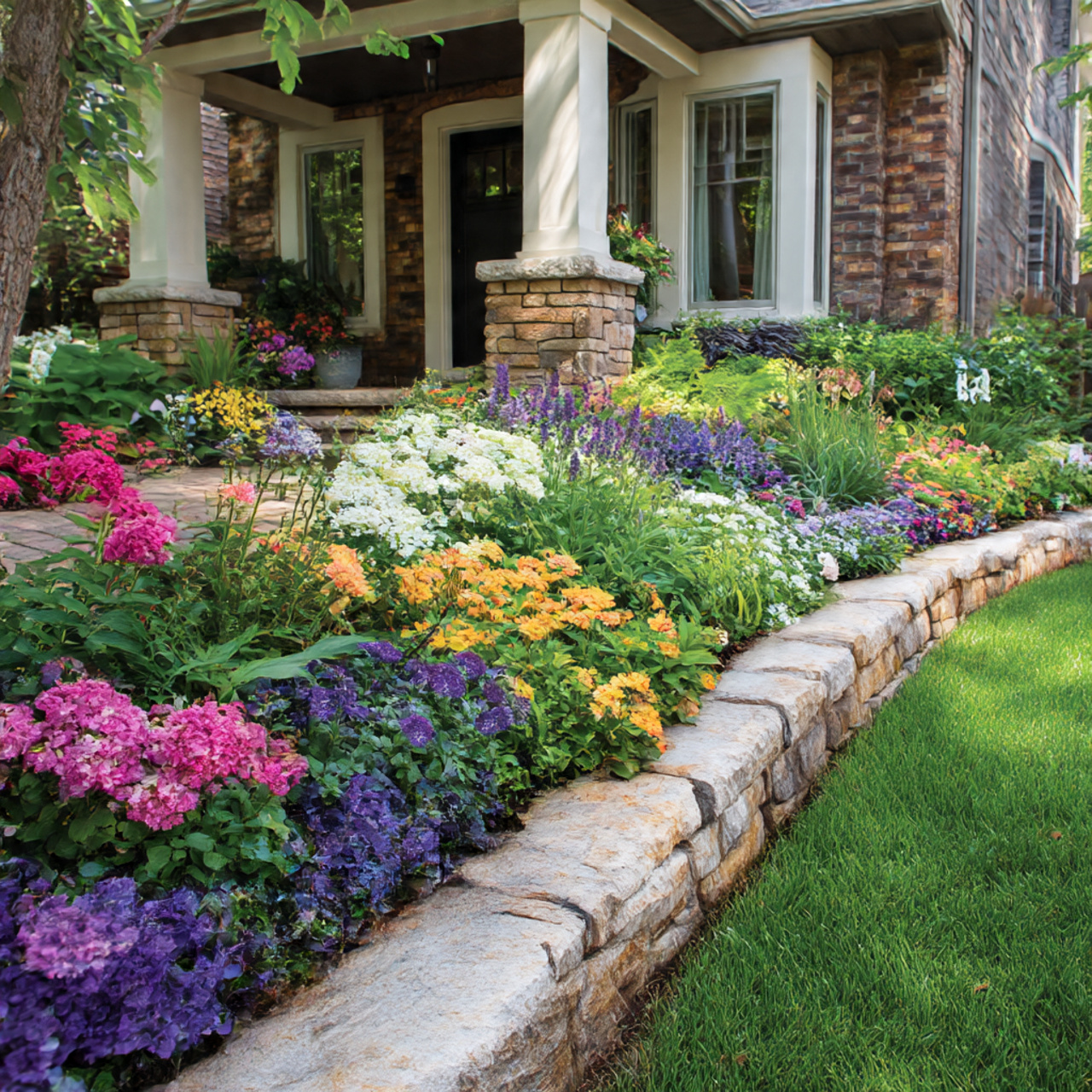
Your front garden is your home’s first impression—make it count with bold edging that complements your house. Use stone or brick that matches your home’s exterior, integrate with pathways, and consider distinctive shapes.
Visibility Factor: Choose durable, attractive materials that withstand foot traffic and look fresh year-round.
Vegetable Garden Edging: Functional and Accessible
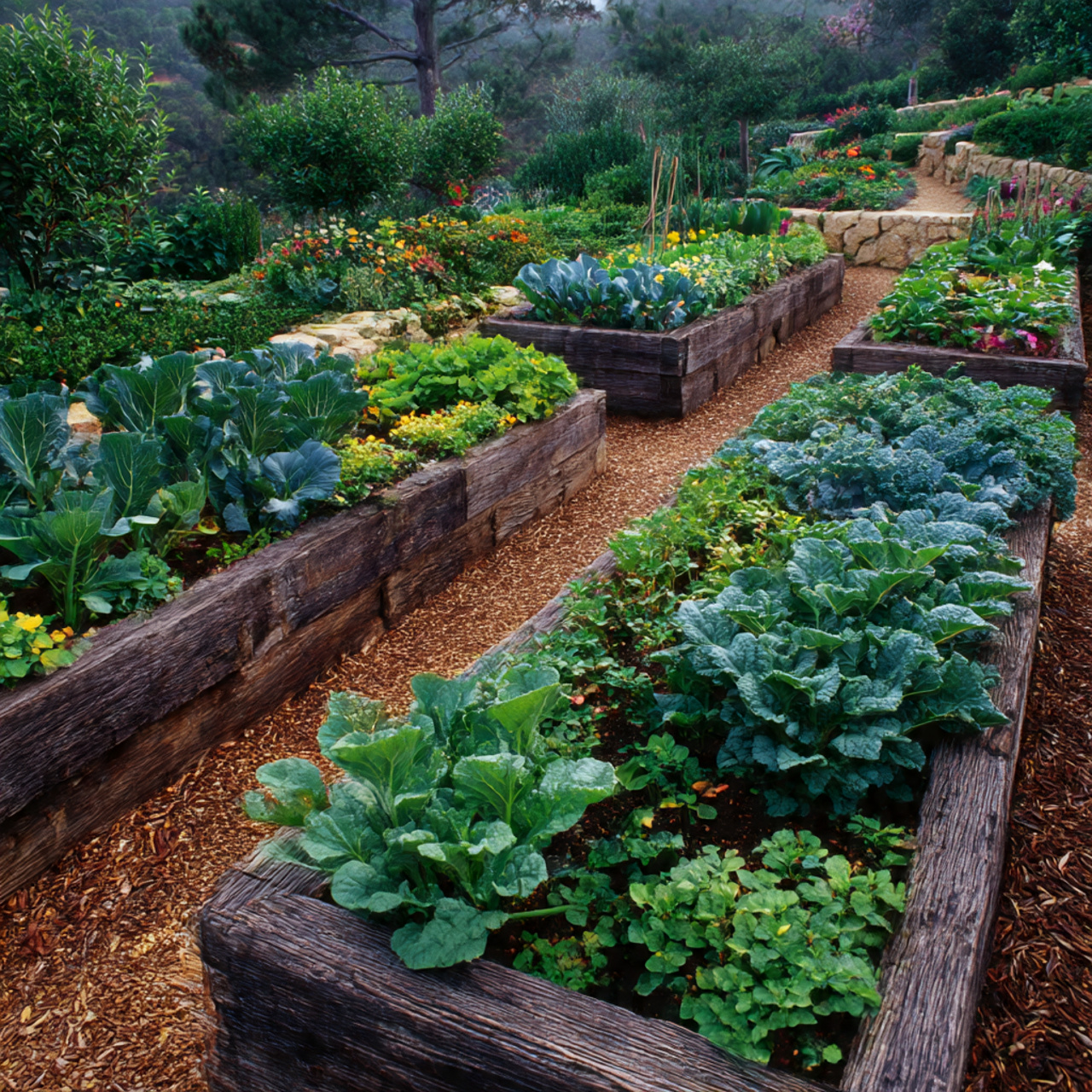
For edible gardens, focus on functionality. Low timber or stone borders contain soil, create clean paths between beds, and separate mulch from produce zones.
Rotation Tip: Choose edging that’s easy to adjust as you rotate crops or redesign bed layouts.
Circular and Island Bed Edging: Emphasizing Geometry
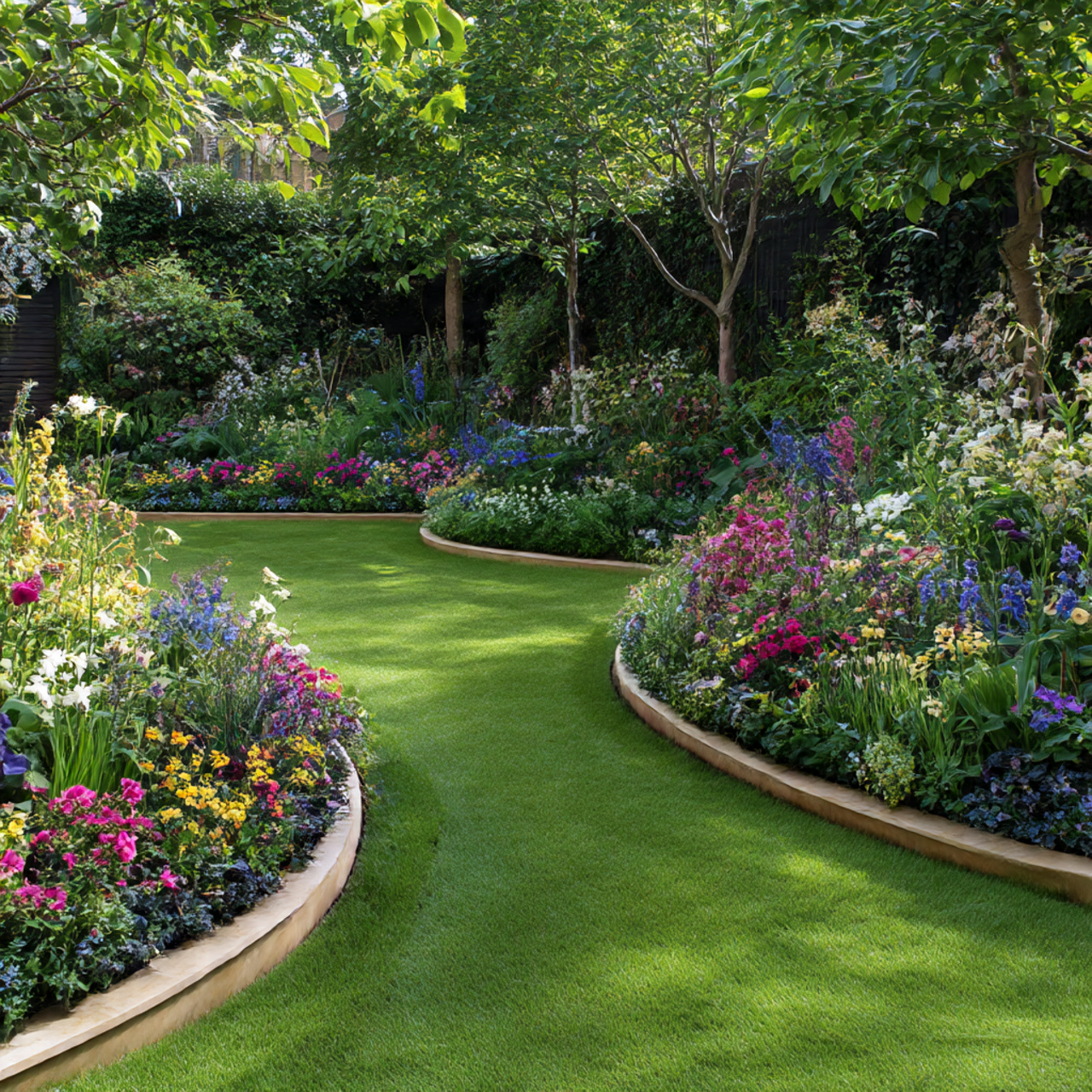
Island beds surrounded by lawn benefit from edging that emphasizes their shape. Curved materials like flexible plastic, timber, or log rolls highlight the geometry beautifully.
Smooth Curves: The challenge is ensuring curves are graceful and materials flex appropriately—take time to get it right.
Mixed Material Transition Edging: Bridging Different Zones
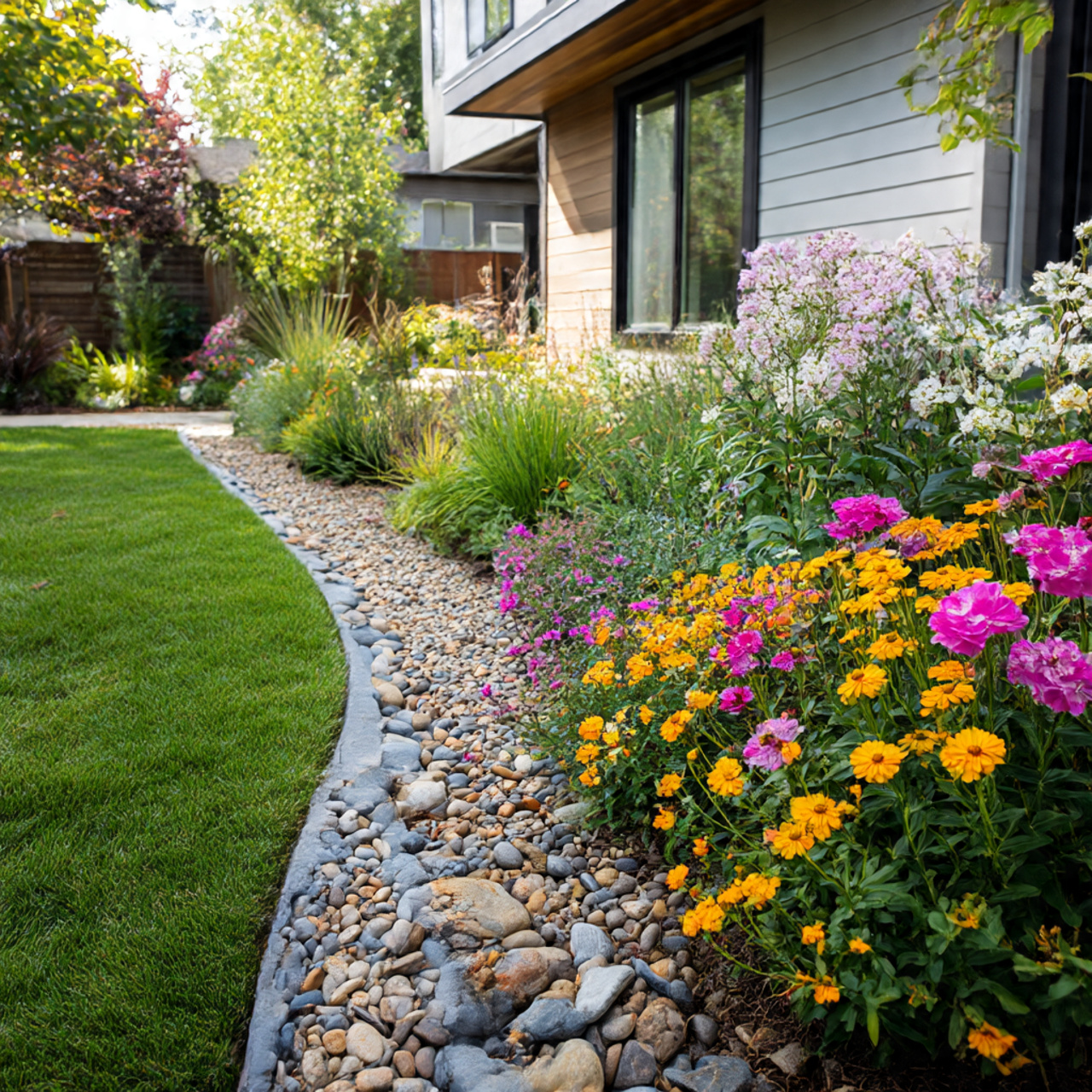
Modern gardens often transition between materials—lawn to gravel, planting to patio, grass to mulch. Edging bridges these transitions elegantly.
Use stones to prevent mulch spillage, or metal strips between paving and planting.
Intentional Design: Make visual junctions look purposeful by choosing complementary materials in color and style.
Minimalist Modern Edging: Clean Lines and Simplicity
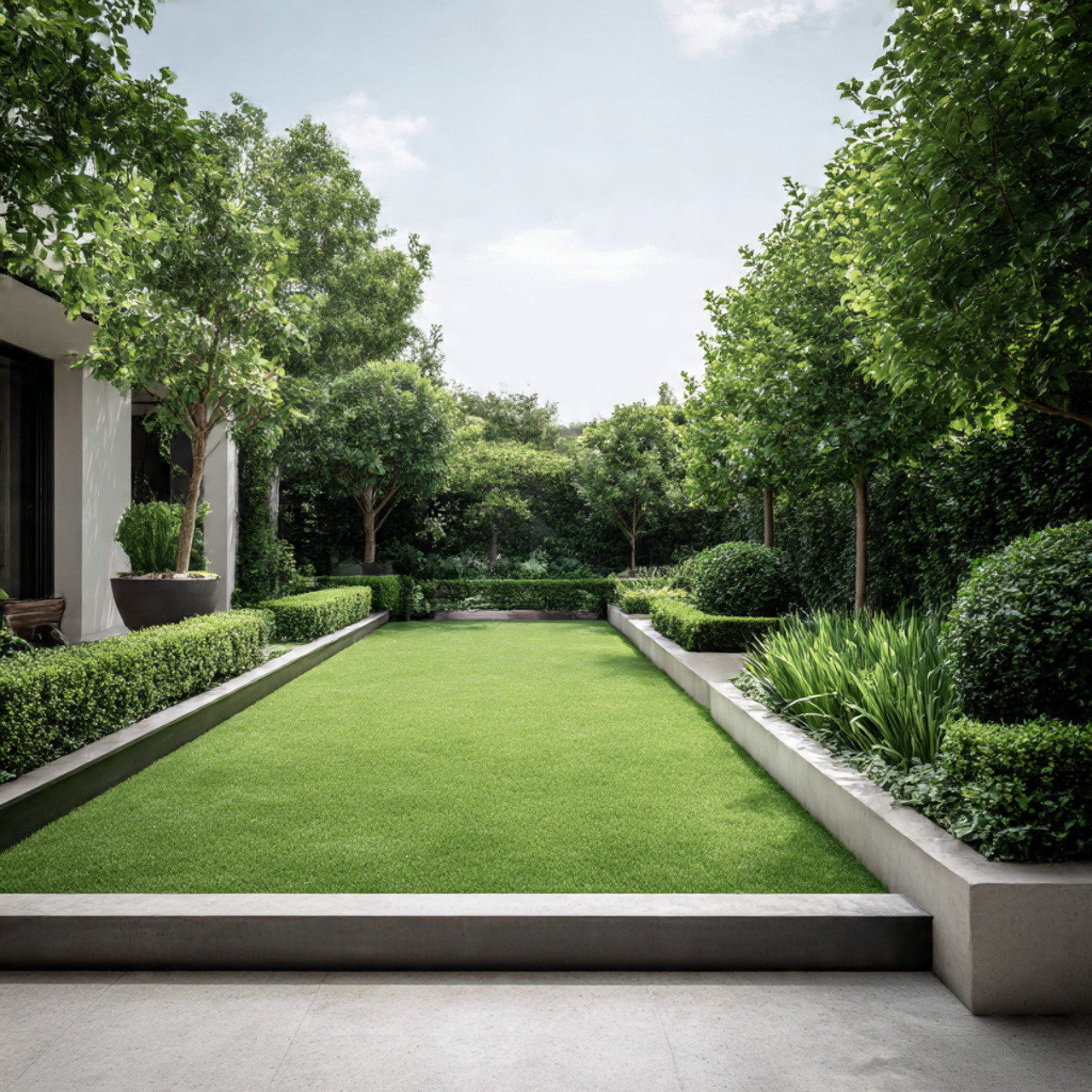
Minimalist gardens need edging that’s clean, sleek, and unobtrusive. Thin metal strips, dark steel borders, or low concrete curbs emphasize crisp lines over ornate details.
Style Rule: Avoid rustic or decorative materials unless using them as intentional contrast—keep colors muted and textures simple.
Budget DIY Edging: Getting Creative on a Shoestring
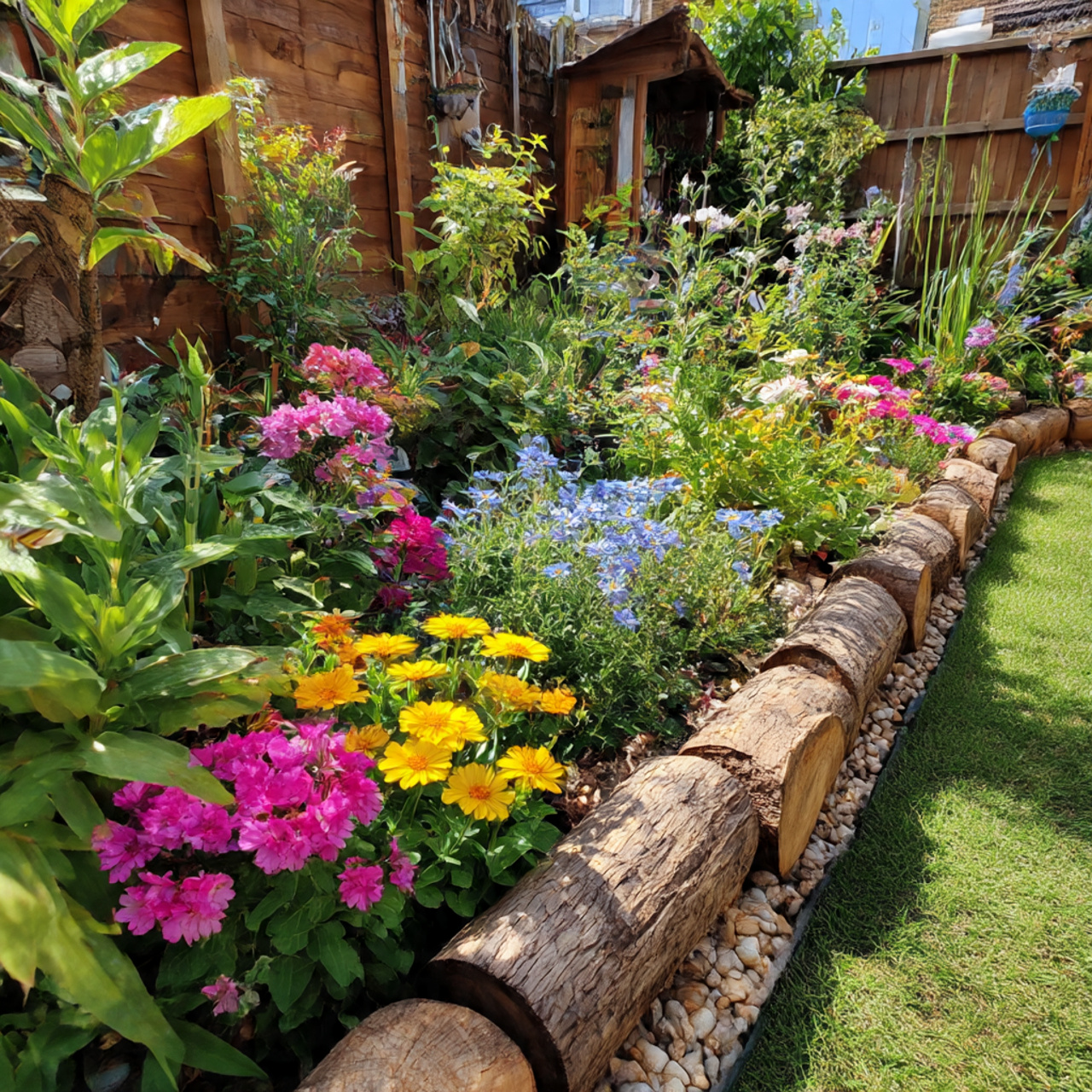
Limited budget? Try wood chip mulch, salvaged logs, simple plastic edging, or spade-cut trenches. These options require more maintenance but achieve defined borders without heavy expense.
Easy For: Renters, starter gardens, or experimental zones where you want flexibility.
Frequently Asked Questions
How deep should I install my edging? Install deep enough to anchor firmly—usually 3-4 inches below ground level. The top should sit slightly above the soil surface to contain mulch and prevent grass from crossing over. A shallow trench provides the perfect foundation.
Will edging really stop grass from invading my flower beds? Absolutely! Proper edging with correct installation (including a trench, tight joints, and occasional maintenance) creates an effective barrier. Materials like metal or deep-set stone work particularly well as root barriers.
Which edging material lasts the longest? Stone, concrete curbing, and metal edging typically outlast wood options by years or even decades. If longevity is your priority, invest in these durable materials upfront for long-term savings.
Can I create curved borders with most edging materials? Yes! Many materials handle curves beautifully. Flexible options like metal strips, plastic edging, and log rolls work especially well. Plan your curves carefully and anchor properly for smooth, flowing lines.
Should I match my edging to my garden’s style? Definitely. While function is important, aesthetic harmony makes your garden feel cohesive. Contemporary gardens pair well with sleek metal; cottage gardens love natural stone or log rolls. Match your edging to your overall vision for the best results.
Final Thoughts: Creating Your Perfect Garden Edge
The right edging transforms your outdoor space from ordinary to extraordinary—both visually and functionally. Whether you choose natural stone elegance, budget-friendly plastic, gentle curves, or bold straight lines, there’s a perfect solution for your garden’s size, terrain, and budget.
Start by considering your garden’s personality, scale, and how much maintenance you’re willing to handle. Then select materials and methods that align with your vision. Take care during installation—whether you’re tackling a DIY trench or hiring professionals for concrete curbing—and maintain those edges so they continue providing structure and beauty.
When done thoughtfully, garden edging becomes more than a border—it’s the framework that showcases your plants, guides the eye through your landscape, and defines your outdoor living space. Excellent edging doesn’t just define your garden—it elevates every element within it.
Ready to start your edging project? Your dream garden is waiting for that perfect finishing touch.