23 Tradescantia Nanouk Care Secrets Every Home Gardener Should Know
If you’re looking for a houseplant that brings stunning pops of pink, purple, and green into your home, the Tradescantia Nanouk is your perfect match. With its eye-catching foliage and relatively easy maintenance, this beautiful trailing plant has become a favorite among plant lovers everywhere.
But here’s the thing: to keep those gorgeous colors vibrant and your plant healthy, you need to understand exactly what makes this beauty tick. That’s where proper Tradescantia Nanouk care comes in. Don’t worry though—it’s easier than you might think! This guide walks you through everything you need to know, from watering schedules to lighting tricks, so your plant can flourish year-round.
Understanding the Basics of Tradescantia Nanouk Care
Before we jump into the details, let’s talk basics. Your Tradescantia Nanouk has five essential needs: the right light, proper watering, good soil, comfortable temperature, and adequate humidity. Get these fundamentals right, and you’re already halfway to becoming a Tradescantia Nanouk expert.
Think of it like building a house—you need a solid foundation before you add the walls and roof. Once you nail these core elements, everything else becomes surprisingly simple.
Light Requirements for Tradescantia Nanouk Care
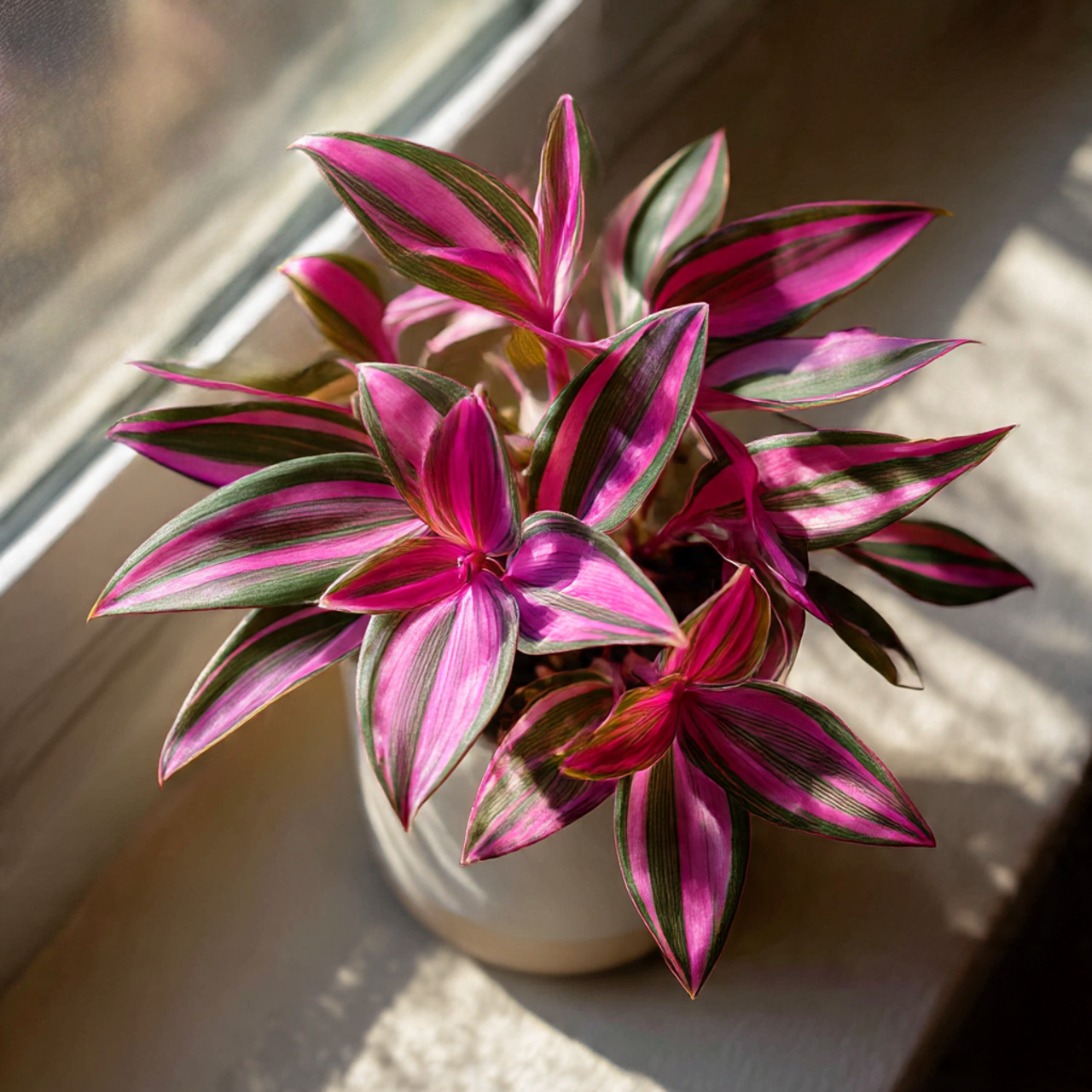
Here’s the golden rule: bright, indirect light is your Tradescantia Nanouk’s best friend. Too little light? Your plant loses its vibrant colors and starts stretching out with leggy, sparse stems. Too much direct sunlight? Those beautiful leaves can get scorched and damaged.
Practical Tip: Find a spot near a window where your plant gets plenty of filtered light throughout the day—think of it as giving your plant sunglasses! East or west-facing windows work wonderfully. Here’s a game-changer: rotate your pot about a quarter turn each week. This simple habit ensures all sides get equal light exposure, preventing your plant from leaning like the Tower of Pisa and keeping the growth nice and balanced.
Watering and Moisture in Tradescantia Nanouk Care
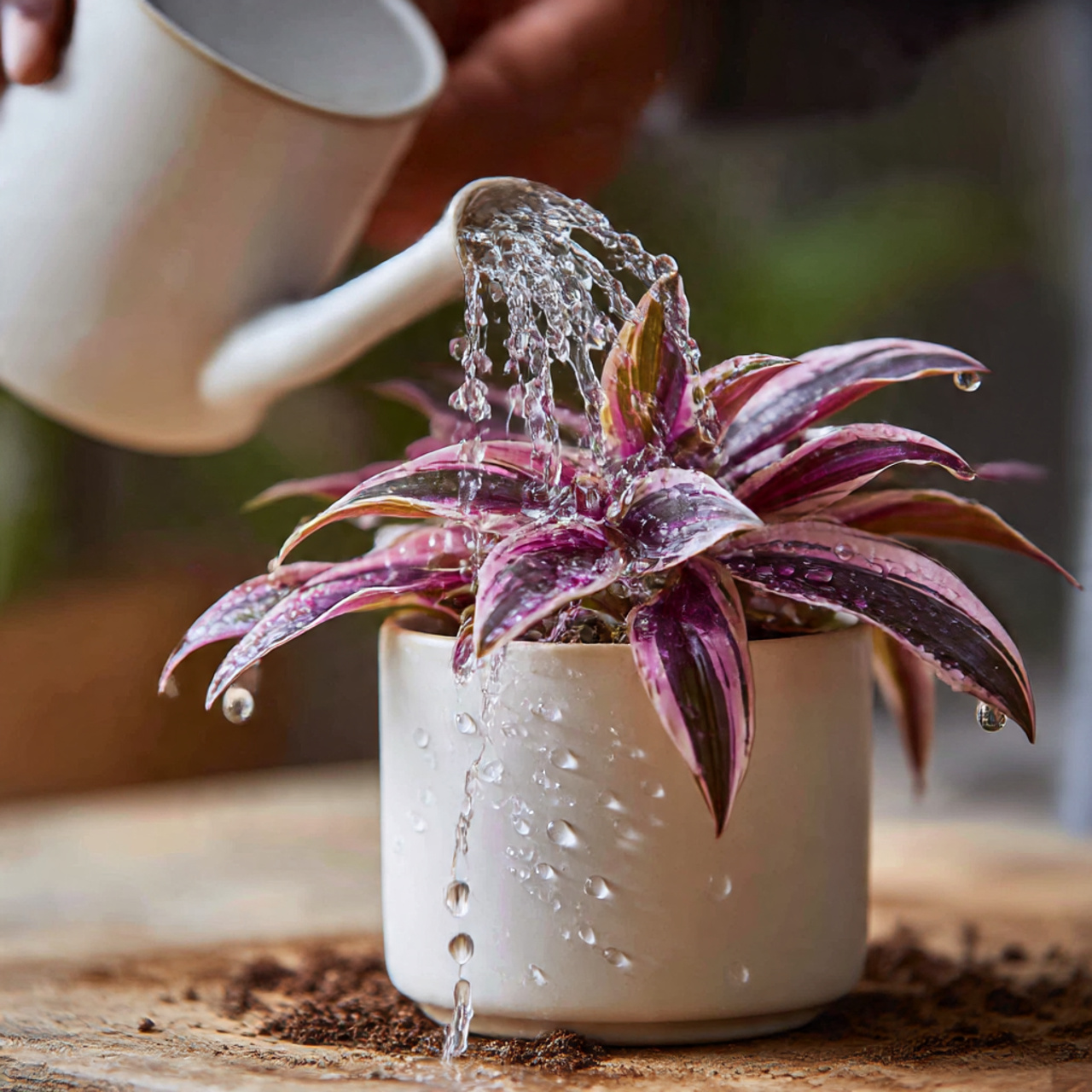
Watering is where many plant parents go wrong, but it doesn’t have to be complicated. Your Tradescantia Nanouk likes its soil slightly moist—not soaking wet, not bone dry. Think of Goldilocks: you want it just right.
Practical Tip: Stick your finger about an inch deep into the soil. If it feels dry at that depth, it’s time to water. If it’s still moist, wait another day or two. Always make sure water drains completely through the bottom—never let your plant sit in a saucer of standing water, as this is the fastest route to root rot. A pot with drainage holes isn’t optional; it’s essential for keeping your Tradescantia Nanouk healthy and happy.
Choose the Right Soil Mix
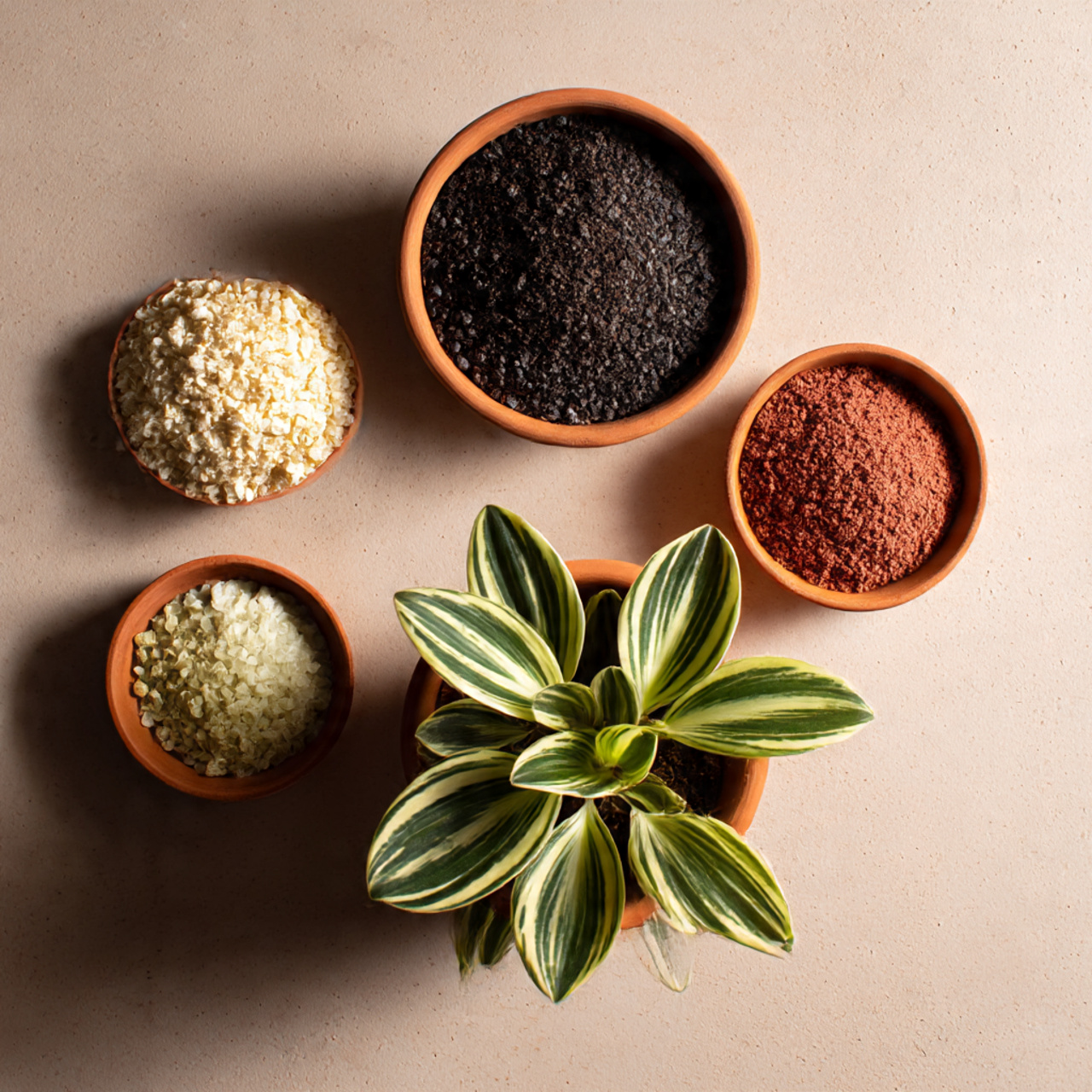
Your plant’s roots need to breathe, and the right soil makes all the difference. Tradescantia Nanouk thrives in light, well-draining soil that’s packed with organic nutrients but doesn’t hold water like a sponge.
Practical Tip: Create your perfect mix by combining regular potting soil with perlite or coarse sand at about a 2:1 ratio. This gives you excellent drainage while still holding enough moisture to keep roots happy. When it’s time to repot (we’ll get to that later), choose a pot that’s only one size bigger than the current one. These plants actually like being a bit cozy—it helps them grow fuller rather than just focusing on root expansion.
Create the Ideal Climate
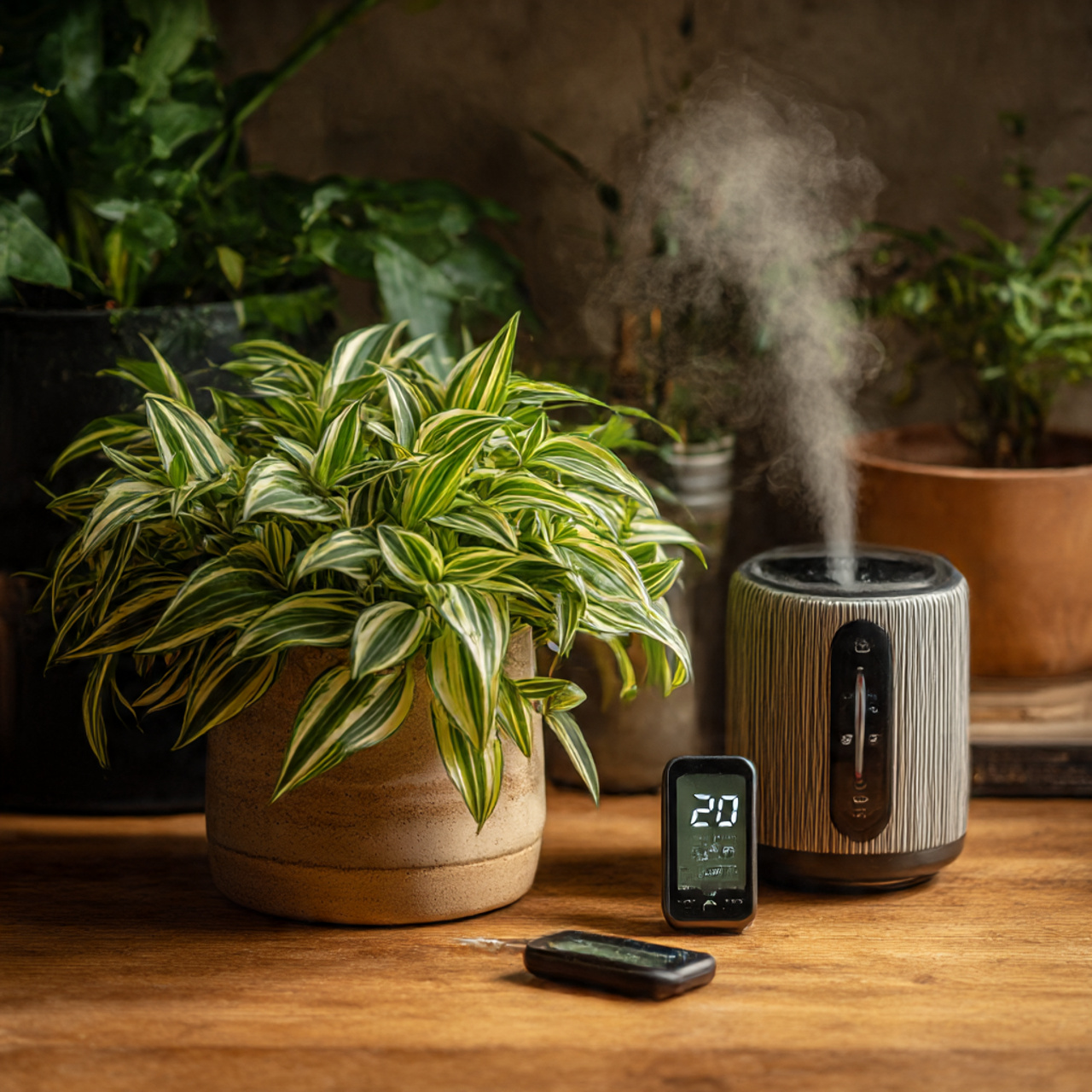
Temperature and humidity might not seem like a big deal, but they directly affect how vibrant and lush your Tradescantia Nanouk looks. The sweet spot is between 55–75°F (13–24°C)—basically comfortable room temperature for most homes.
Practical Tip: Keep your plant away from cold drafts, air conditioning vents, and heating units that create dry air. To boost humidity (which your plant absolutely loves), try grouping several houseplants together—they’ll create their own little humid microclimate. You can also place your pot on a pebble tray filled with water, just make sure the bottom of the pot isn’t touching the water directly. These simple tricks can dramatically improve leaf quality and color intensity.
Regular Pruning
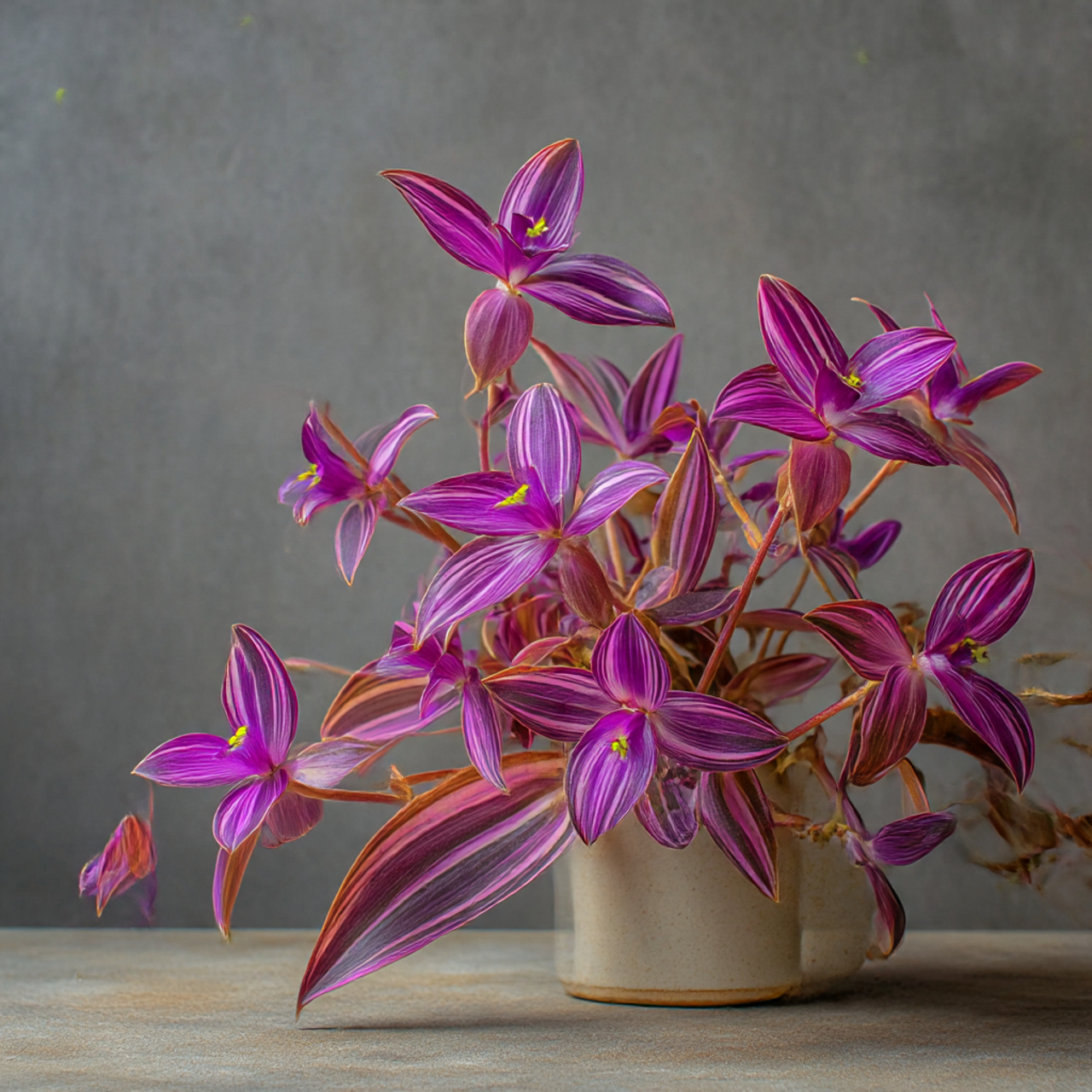
Nobody wants a leggy, sparse-looking plant. Regular pruning is your secret weapon for keeping your Tradescantia Nanouk looking full, compact, and absolutely stunning. Plus, it’s incredibly easy to do.
Practical Tip: Every few weeks, pinch back the growing tips of stems—just use your thumb and forefinger or clean scissors to snip off the last inch or two. This encourages your plant to send out side shoots instead of just growing longer, creating that lush, bushy look everyone loves. Remove any yellowing or weak stems while you’re at it. The best part? Those cuttings don’t have to go to waste—you can propagate them into brand new plants!
Fertilising in Tradescantia Nanouk Care
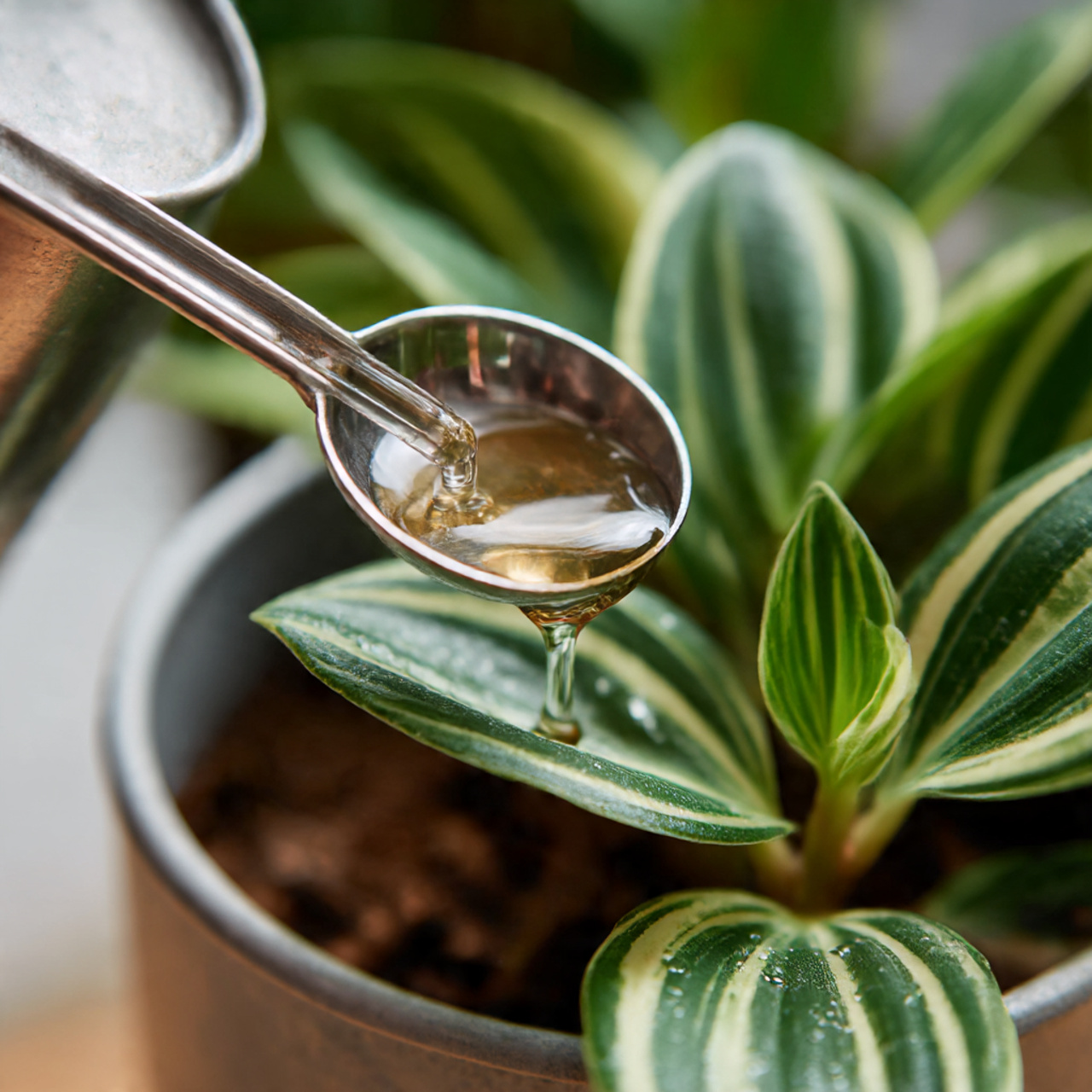
Think of fertilizer as vitamins for your plant. During the growing season (spring and summer), your Tradescantia Nanouk benefits from regular feeding that keeps those colors bold and growth steady.
Practical Tip: Use a balanced, water-soluble fertilizer diluted to half the recommended strength every four to six weeks during spring and summer. Here’s the key: more isn’t better! Overfeeding can cause salt buildup in the soil and actually stress your plant’s roots. When fall and winter roll around and growth naturally slows down, cut back to feeding once every two months or stop entirely. Your plant goes into a rest period and doesn’t need the extra nutrients.
Multiply Your Collection Through Propagation
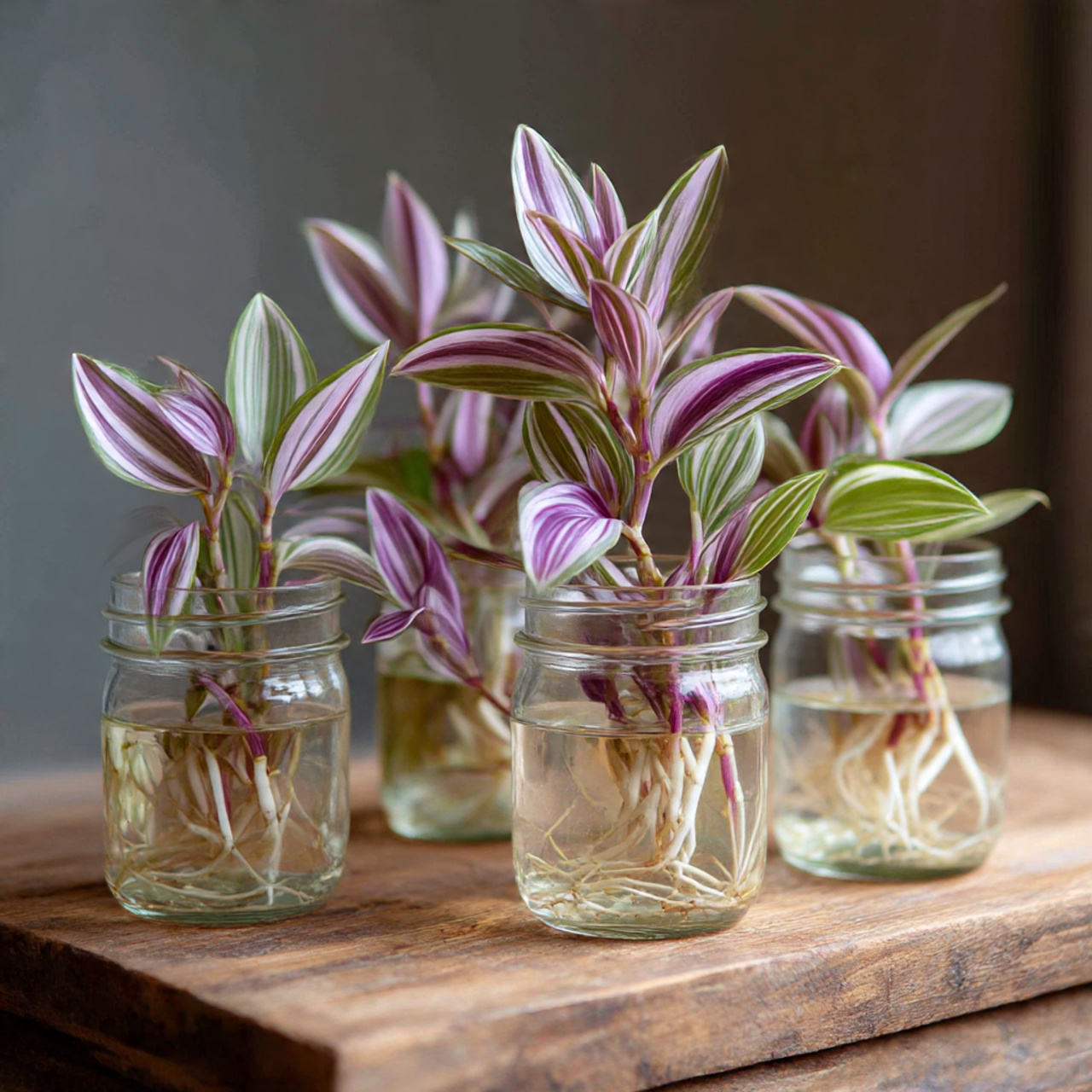
Here’s some exciting news: Tradescantia Nanouk is incredibly easy to propagate. If you want more plants to fill your home or gift to friends, this is one of the most rewarding aspects of plant care.
Practical Tip: Take a healthy stem cutting about 3-4 inches long, making your cut just below a node (that’s the little bump where leaves emerge). Remove the bottom leaves and place your cutting in a glass of water or directly into moist soil. Keep it in bright, indirect light and within 2-3 weeks, you’ll see roots forming. Once roots are about an inch long, you can pot up water-propagated cuttings. It’s that simple! This is also a great way to refresh an older plant that’s gotten too leggy.
Keep Pests and Diseases at Bay
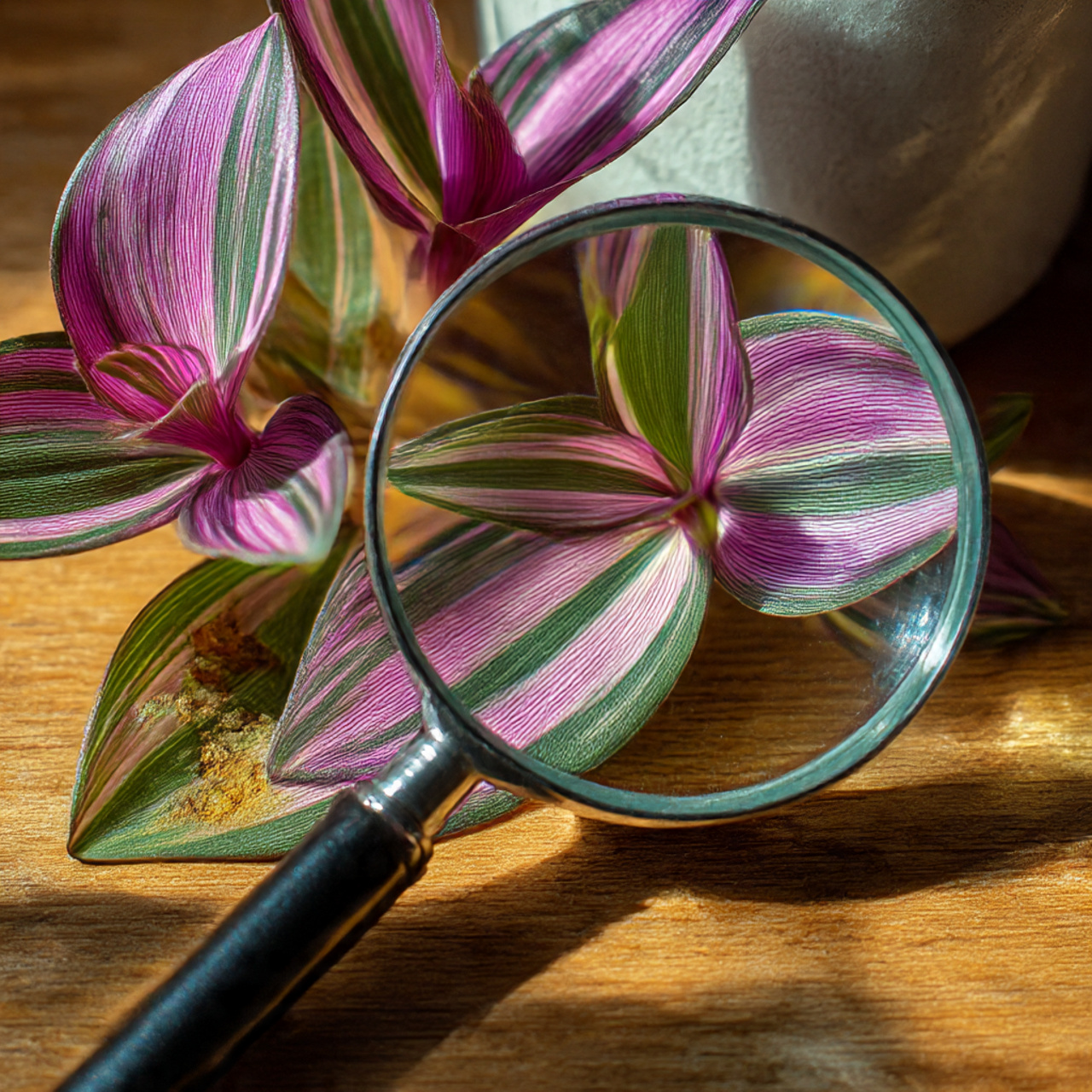
While Tradescantia Nanouk is generally hardy, it’s not completely immune to problems. Spider mites and mealybugs are the most common culprits, especially in dry conditions with dusty leaves.
Practical Tip: Make it a habit to inspect your plant weekly, paying special attention to the undersides of leaves where pests like to hide. Keep leaves clean by gently wiping them with a damp cloth every few weeks—clean leaves are healthy leaves! If you spot pests, immediately isolate your plant from others and treat it with a solution of mild dish soap and water (about 1 teaspoon soap per quart of water). Spray or wipe affected areas, then rinse after 15 minutes. Maintaining proper humidity and good air circulation is your best defense against pests in the first place.
Hanging, Trailing, or Tabletop? You Choose
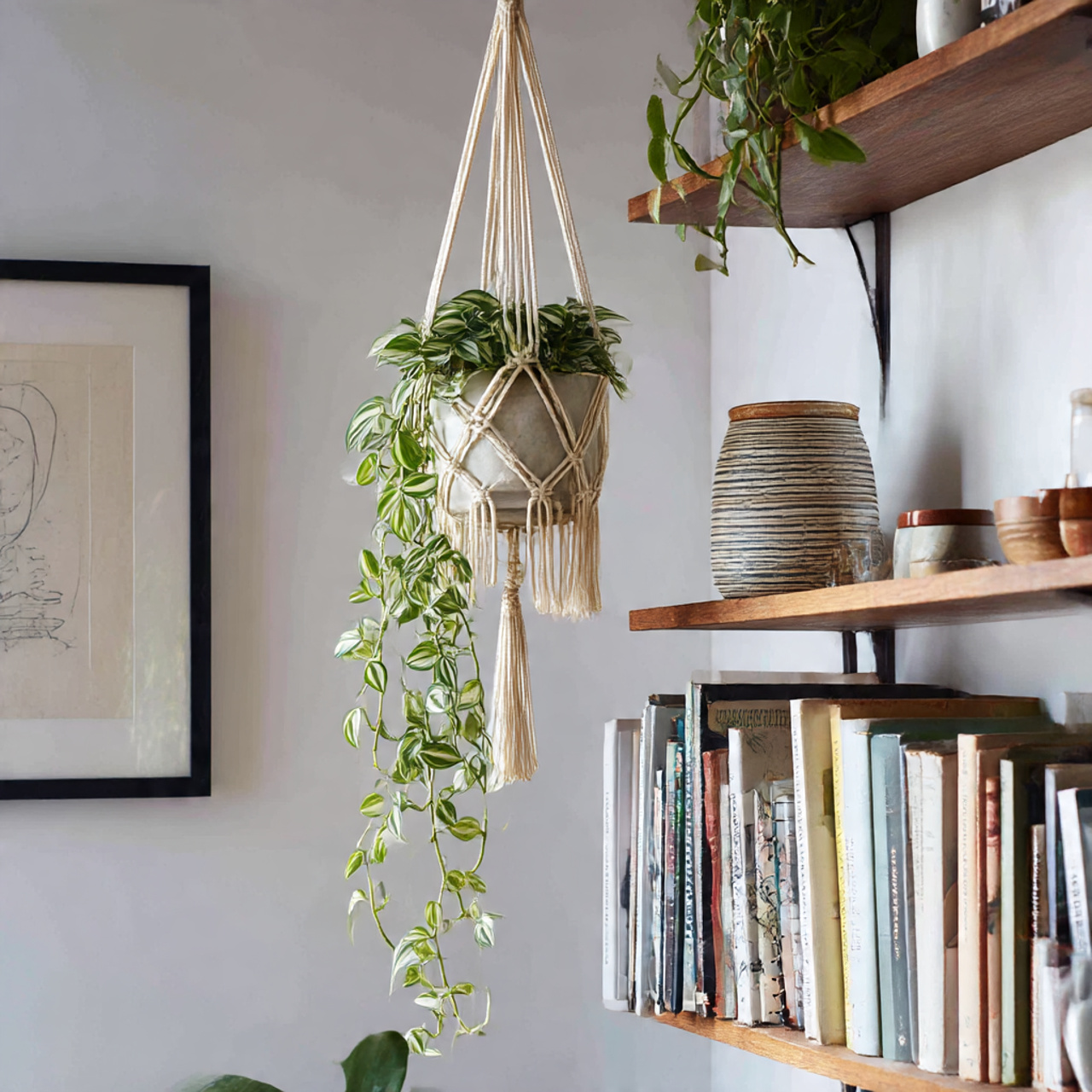
One of the best things about Tradescantia Nanouk is its versatility. Those gorgeous stems naturally trail and cascade, making it perfect for hanging baskets, but it looks equally stunning on a shelf or tabletop.
Practical Tip: If you’re hanging your plant, make sure it still gets plenty of bright, indirect light—don’t just tuck it in a dark corner because it looks pretty there. For tabletop displays, let the stems drape gently over the pot’s edge rather than piling them up on the soil surface. This allows for better air circulation and prevents stem rot. Whichever display method you choose, remember to rotate the plant regularly so all sides develop evenly and maintain that gorgeous color all around.
Know When It’s Time to Repot
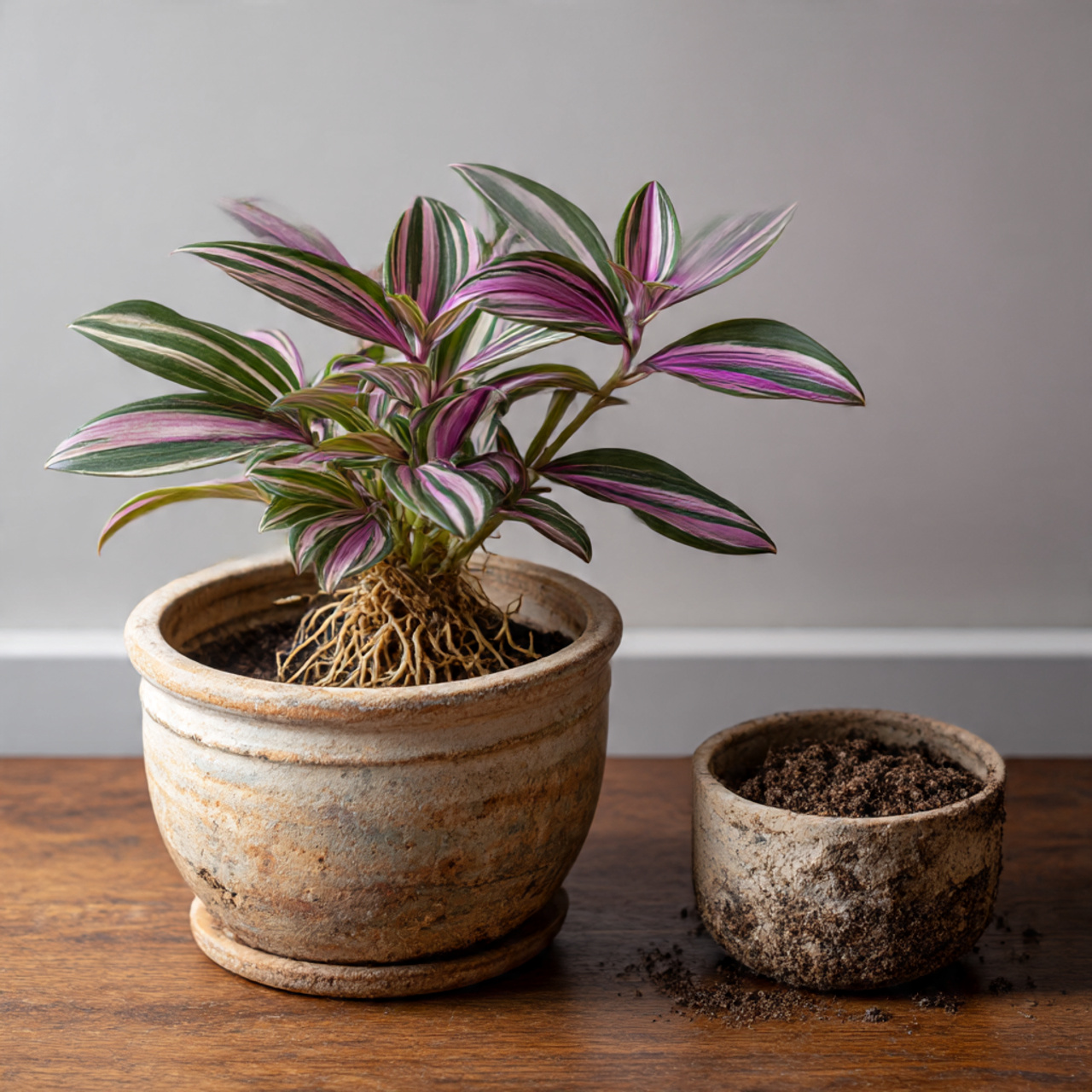
Your plant will tell you when it needs more space—you just need to know what to look for. Tradescantia Nanouk doesn’t need frequent repotting, but when the time comes, it’s an important step in maintaining plant health.
Practical Tip: Watch for these clear signs it’s repotting time: roots poking through drainage holes, soil drying out within a day of watering, or growth that’s significantly slowed down. Spring is the ideal time to repot. Choose a container just one size larger (about 1-2 inches wider in diameter), completely refresh the old soil with a new airy mix, and gently tease out any circling roots before settling your plant into its new home. Don’t go too big with the pot—excess soil holds moisture your plant can’t use, which increases the risk of root rot.
Maximize Those Stunning Colors
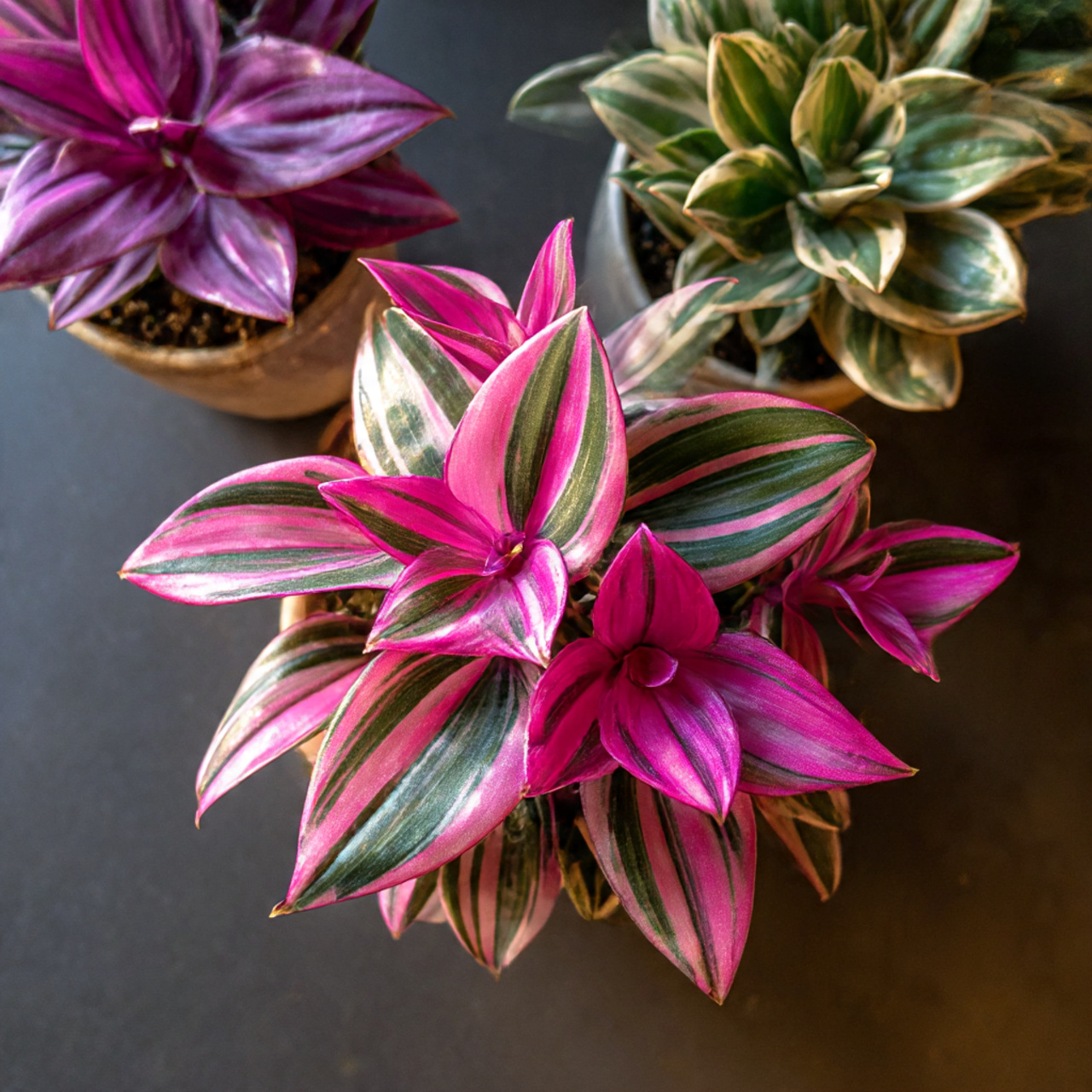
Let’s be honest—you chose this plant for its incredible pink, purple, and green variegation. Keeping those colors bold and vibrant is all about getting the growing conditions right.
Practical Tip: Color intensity is directly linked to light quality. If you notice your leaves fading or turning more green than pink, move your plant to a brighter spot immediately. Avoid prolonged low-light situations, as your plant will lose its signature variegation trying to produce more chlorophyll. Balanced watering and proper fertilization also play supporting roles in color maintenance. When your plant is glowing with rich, saturated colors, you’ll know your care routine is spot-on.
Adjust Your Care with the Seasons
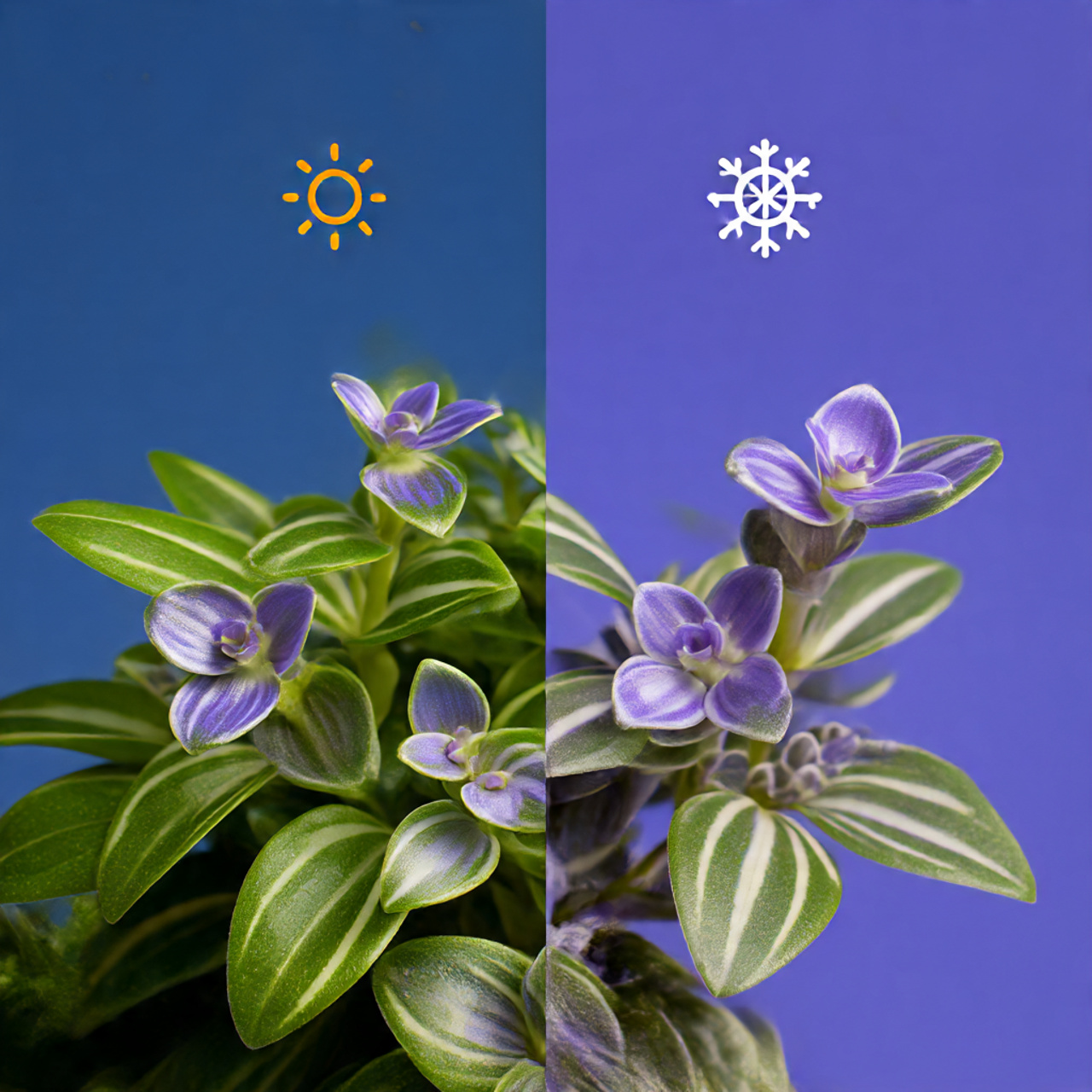
Just like you change your wardrobe with the seasons, your Tradescantia Nanouk needs slightly different care throughout the year. Understanding these natural cycles helps you work with your plant, not against it.
Practical Tip: During fall and winter, your plant’s growth slows way down—this is completely normal. Cut back on watering (maybe once every 10-14 days instead of weekly) and stop or significantly reduce fertilizing. Keep your plant away from cold windows and drafts. When spring arrives, gradually increase watering frequency as you notice new growth emerging, and resume your regular feeding schedule. Think of winter as your plant’s vacation time and spring/summer as its active working months.
Style Your Space Thoughtfully
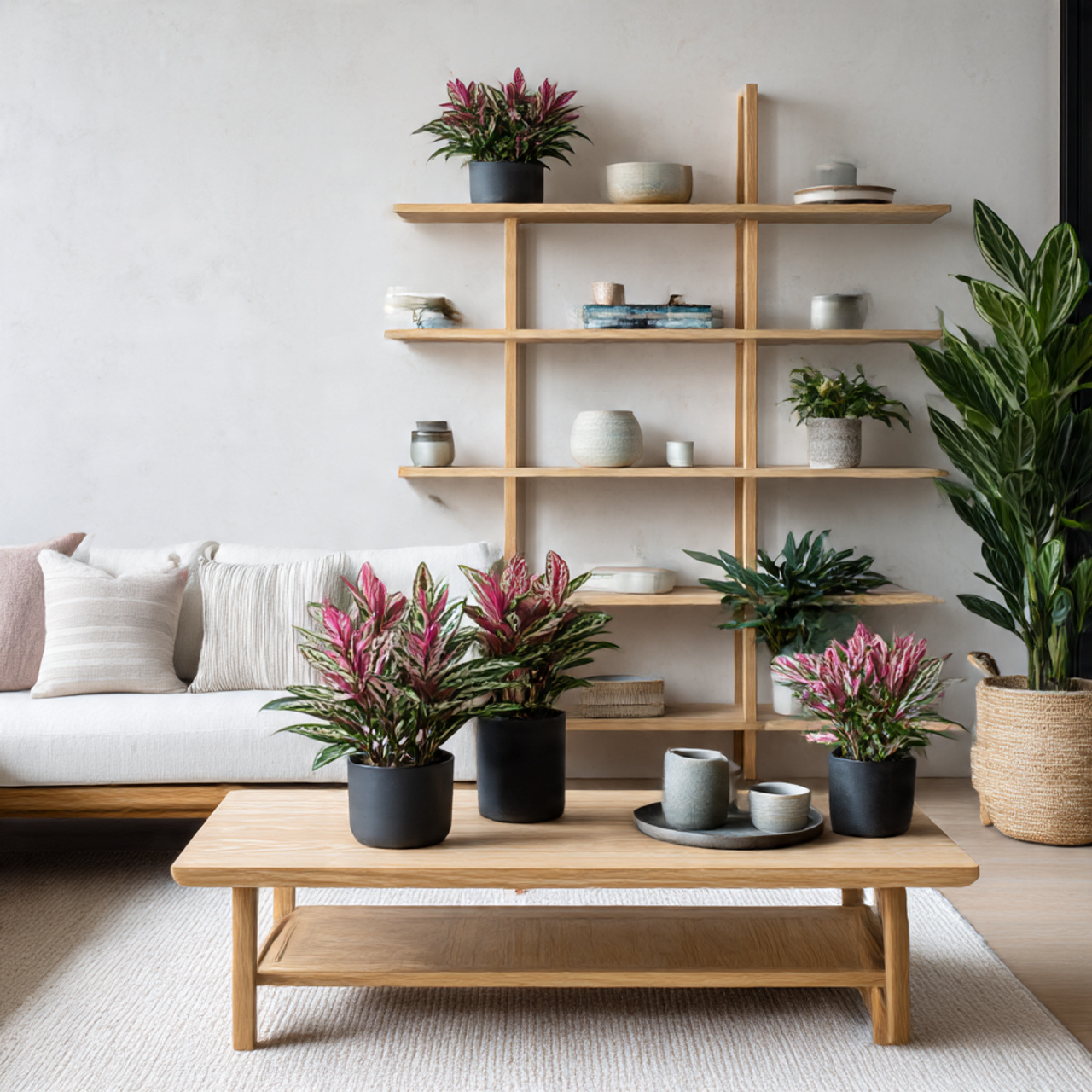
Your Tradescantia Nanouk isn’t just a plant—it’s a living piece of art that can enhance your home’s aesthetic. But placement is about more than just looks; it’s about meeting your plant’s needs while creating visual impact.
Practical Tip: Choose a location that satisfies both form and function. A bright east-facing windowsill, a shelf near a south-facing window with sheer curtains, or a hanging planter in a well-lit bathroom all work beautifully. Make sure there’s enough space for air to circulate around the plant—don’t crowd it between heavy curtains or push it flush against a wall. Rotate your plant every week or two to encourage symmetrical growth. When your plant looks good and grows well, that’s the perfect placement.
Become an Observant Plant Parent
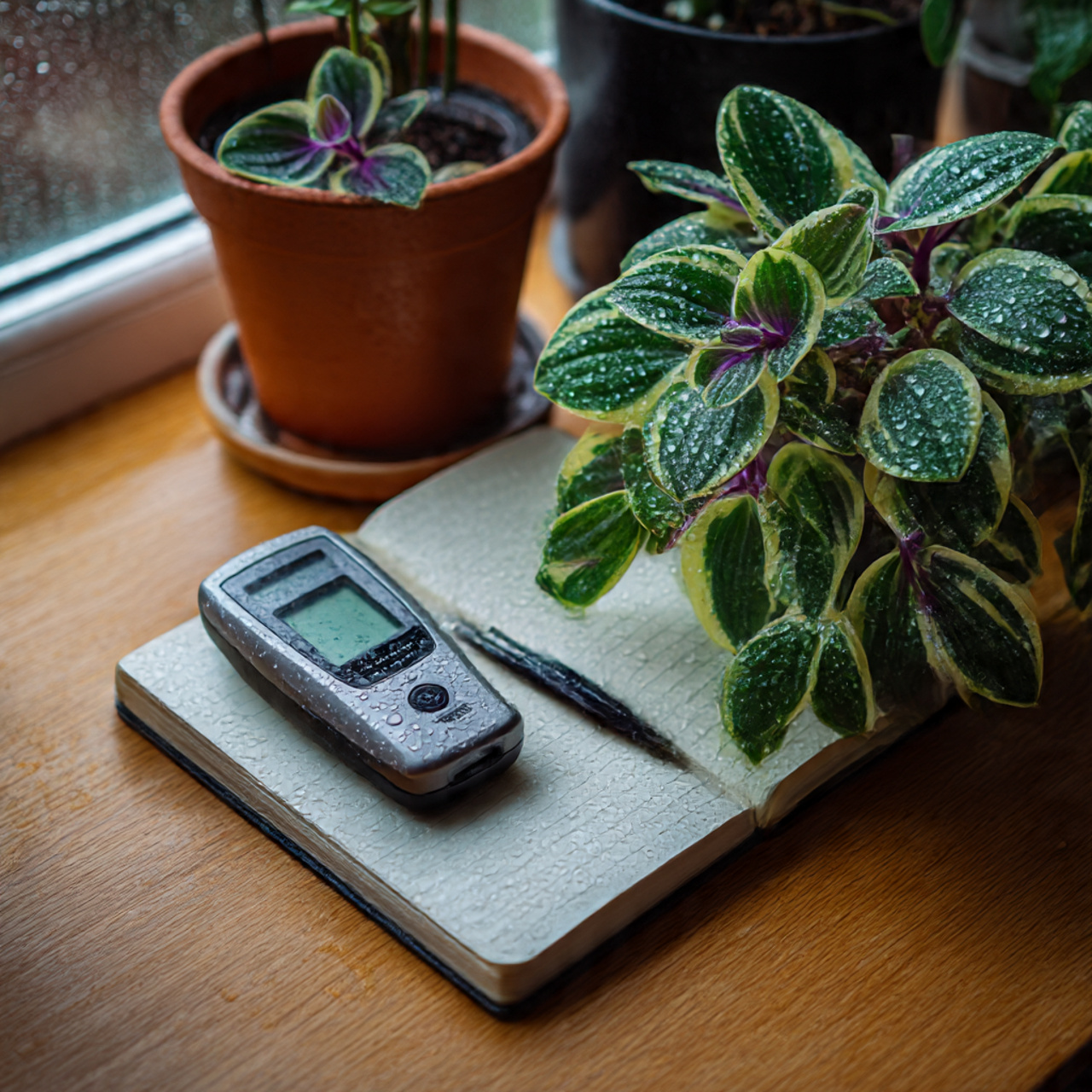
The best plant care isn’t about following rigid rules—it’s about paying attention to what your specific plant is telling you. Every home environment is a bit different, so learning to read the signs is crucial.
Practical Tip: Check your plant every few days and note any changes. Drooping, soft leaves usually mean you’re under-watering. Yellowing leaves with brown spots? Likely over-watering. Pale, washed-out colors signal insufficient light, while crispy brown leaf edges point to low humidity. The key is to adjust one thing at a time, then wait a week or two to see the results before making another change. Keep mental notes (or even a quick plant journal if you’re keen) about what works. This observation habit transforms you from a casual plant owner into a true plant whisperer.
Don’t Ignore What’s Below the Surface
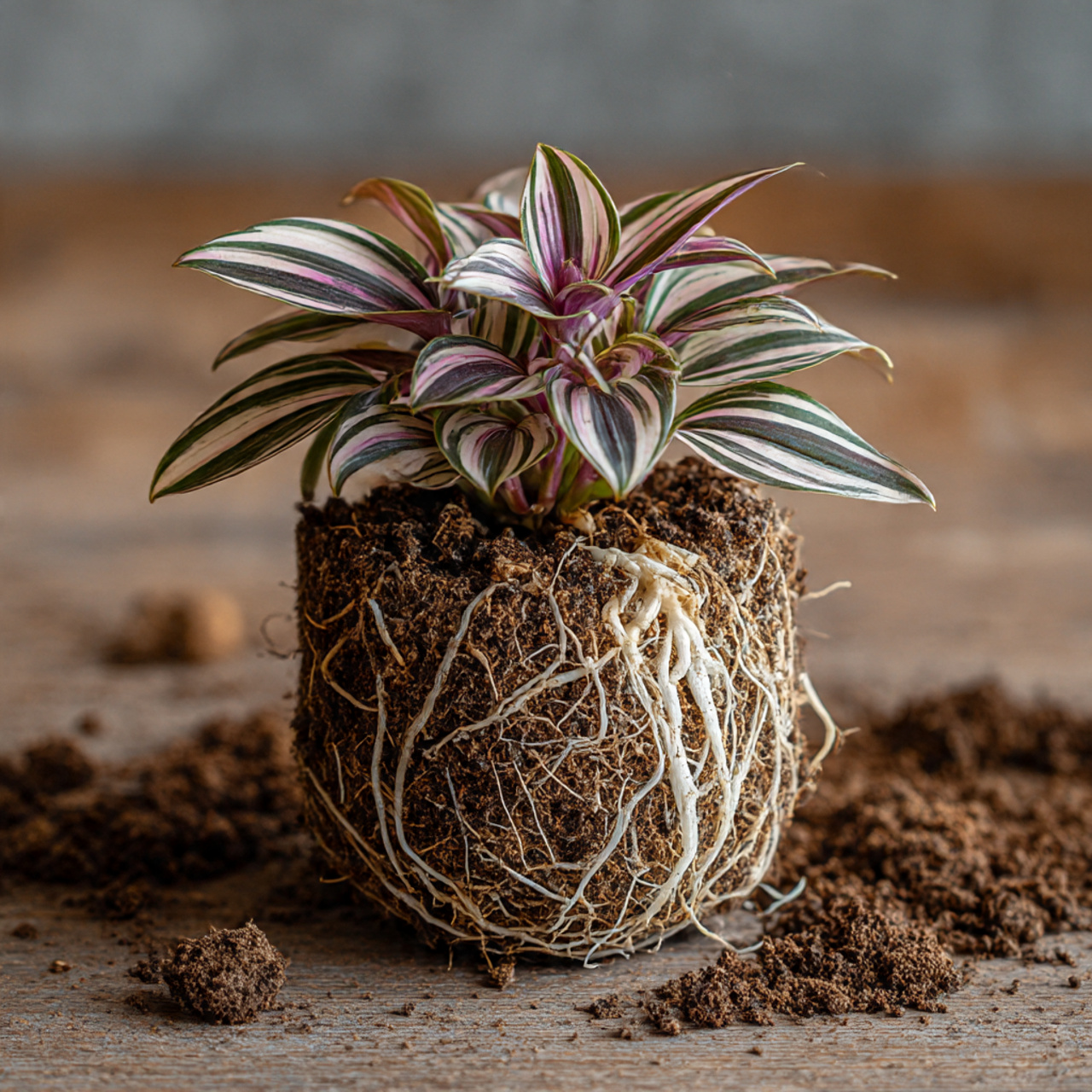
While we focus a lot on the beautiful foliage, root health is what supports everything you see above the soil. Healthy roots mean a healthy plant, plain and simple.
Practical Tip: When repotting or taking cuttings, take a moment to inspect the roots. They should be firm, white or light tan, and spread throughout the soil. If you see mushy, dark brown, or black roots, that’s root rot from overwatering or poor drainage—trim these away with clean scissors. Refresh the soil completely and adjust your watering habits going forward. Think of root checks as annual health check-ups for your plant. Strong roots are the foundation of everything else in your care routine working together properly.
Control Humidity Levels Effectively
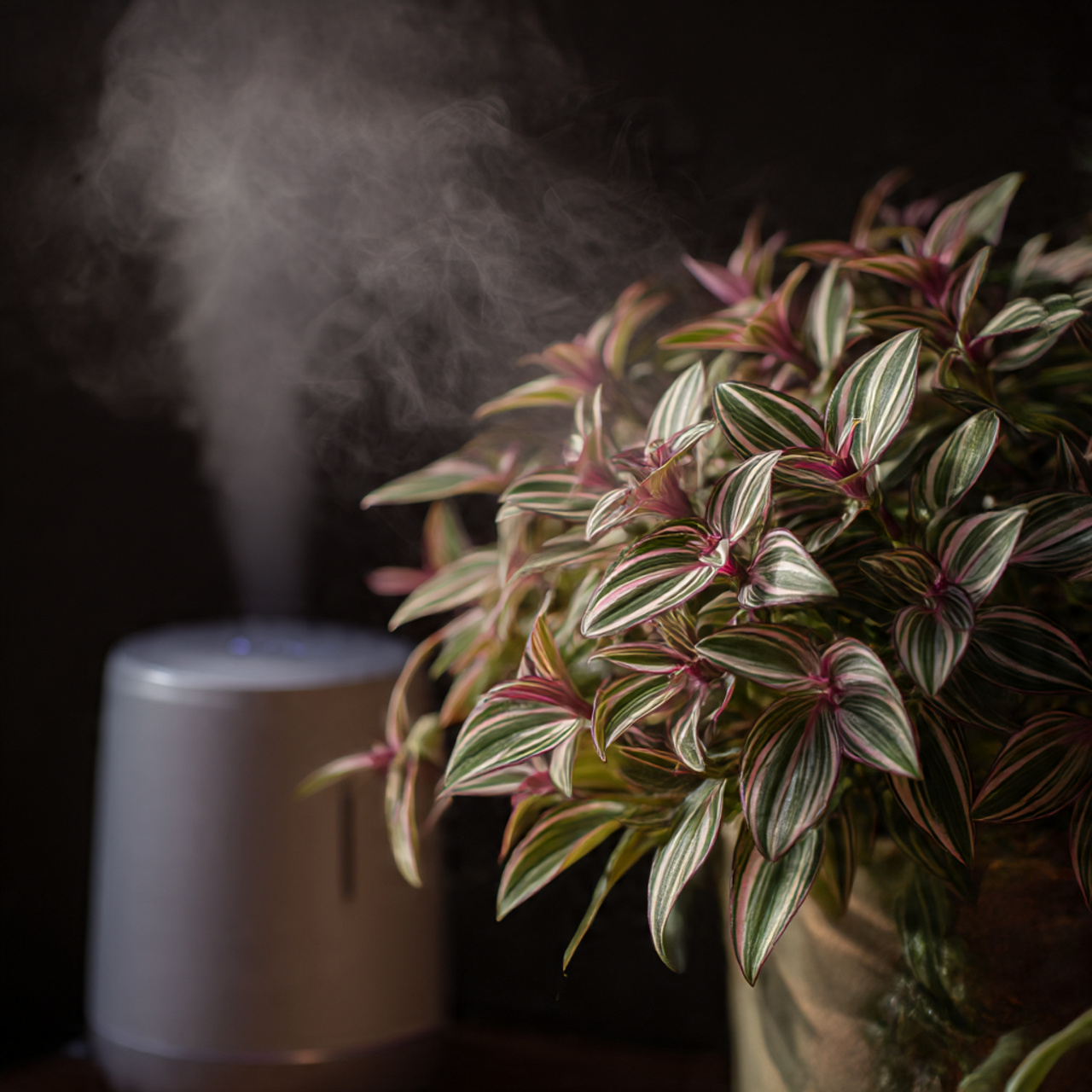
Humidity affects everything from leaf texture to color vibrancy to pest resistance. While Tradescantia Nanouk can tolerate average home humidity, it truly thrives with a bit more moisture in the air.
Practical Tip: If your home’s air is dry (especially during winter with heating running), try these easy humidity boosters: Group your Tradescantia Nanouk with other houseplants to create a shared humid zone. Set up a pebble tray—fill a shallow tray with pebbles and water, then place your pot on top (not touching the water). Or invest in a small humidifier if you have multiple humidity-loving plants. You can also give leaves a light misting a few times per week, though this is less effective than the other methods. Aim for 50-60% humidity if possible—your plant will reward you with lush, full foliage.
Fix Lighting Issues Quickly
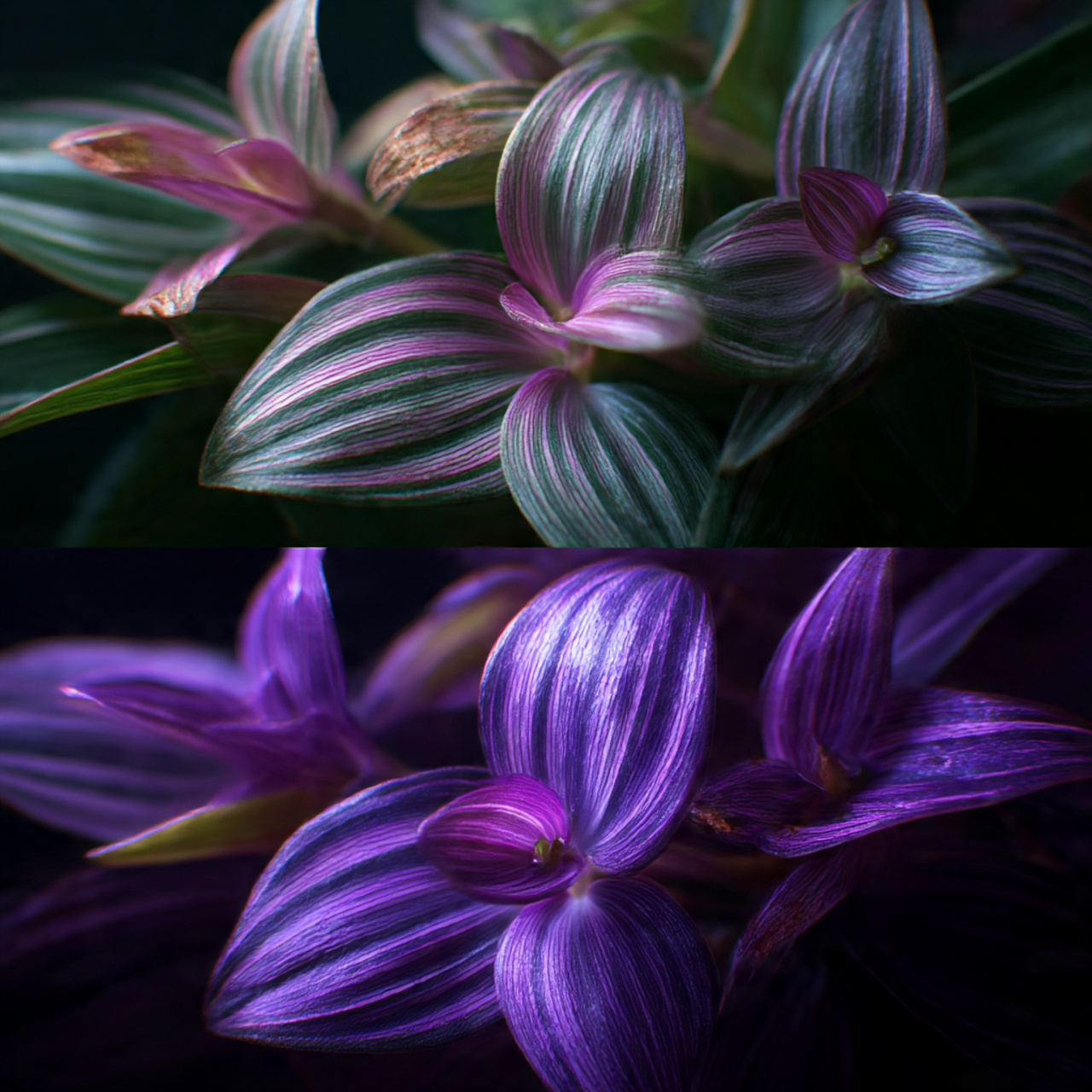
Light problems are usually the easiest to fix but also the most commonly overlooked. If your plant isn’t looking its best, lighting should be your first suspect.
Practical Tip: Watch for these telltale signs: stems stretching out and growing long distances between leaves (called etiolation) means not enough light. Move your plant closer to a window or supplement with a LED grow light positioned 12-18 inches above the plant. On the flip side, bleached-looking leaves or brown scorched spots mean too much direct sun—move your plant back from the window or add a sheer curtain as a filter. The goal is bright but filtered light—imagine dappled sunlight through tree leaves. Get this right, and you’ll see dramatic improvements in just a few weeks.
Pay Attention to Water Quality
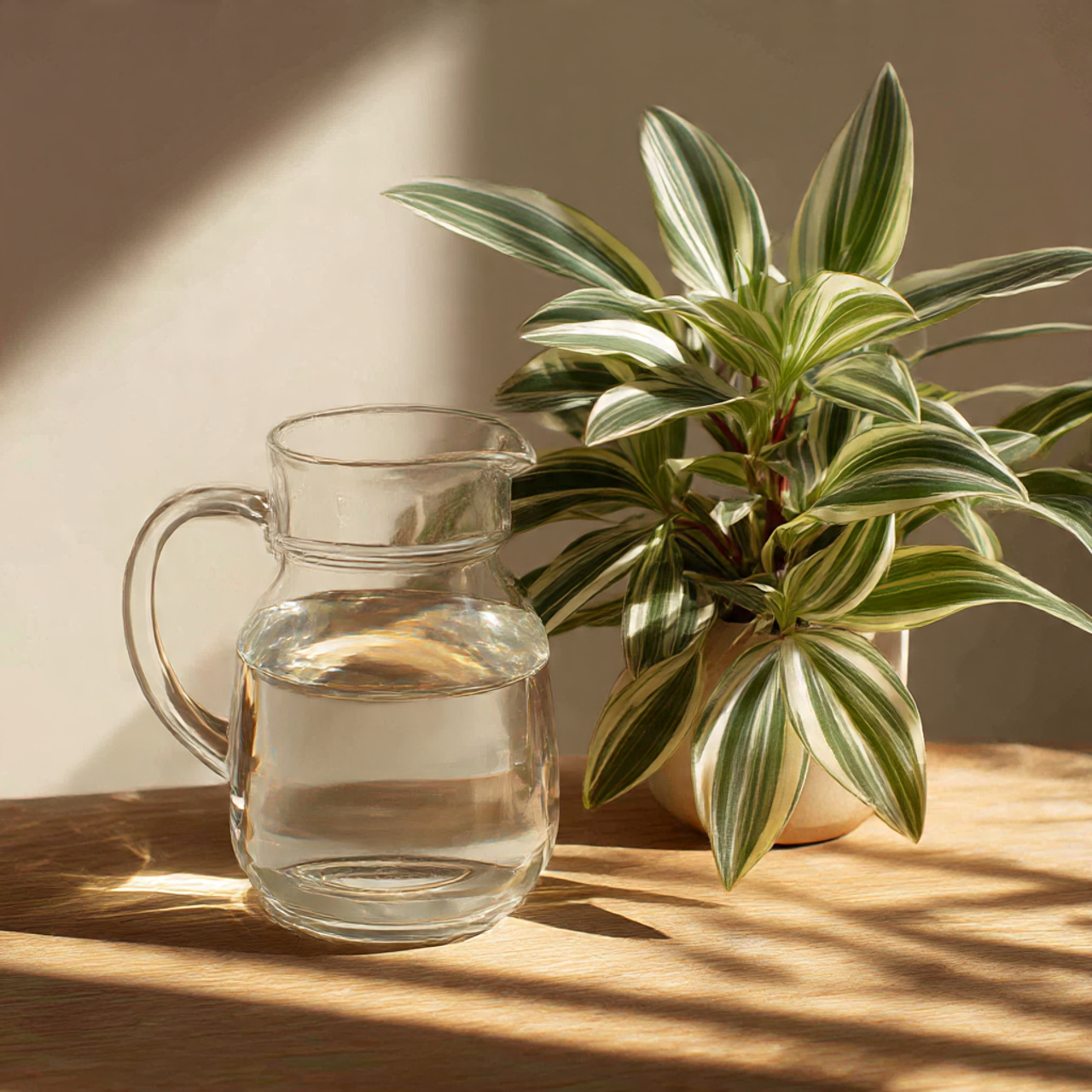
Not all water is created equal when it comes to plants. If you’ve been following all the care guidelines but still seeing problems, your water might be the culprit.
Practical Tip: Tap water often contains chlorine, fluoride, and dissolved minerals that can build up in soil over time, causing brown leaf tips and edges. If you notice this happening, switch to filtered, distilled, or rainwater if possible. If you must use tap water, let it sit in an open container overnight so chlorine can evaporate. Room temperature water is also gentler on roots than cold water straight from the tap. This simple switch can eliminate a surprising number of common plant problems.
Refresh Your Soil Annually
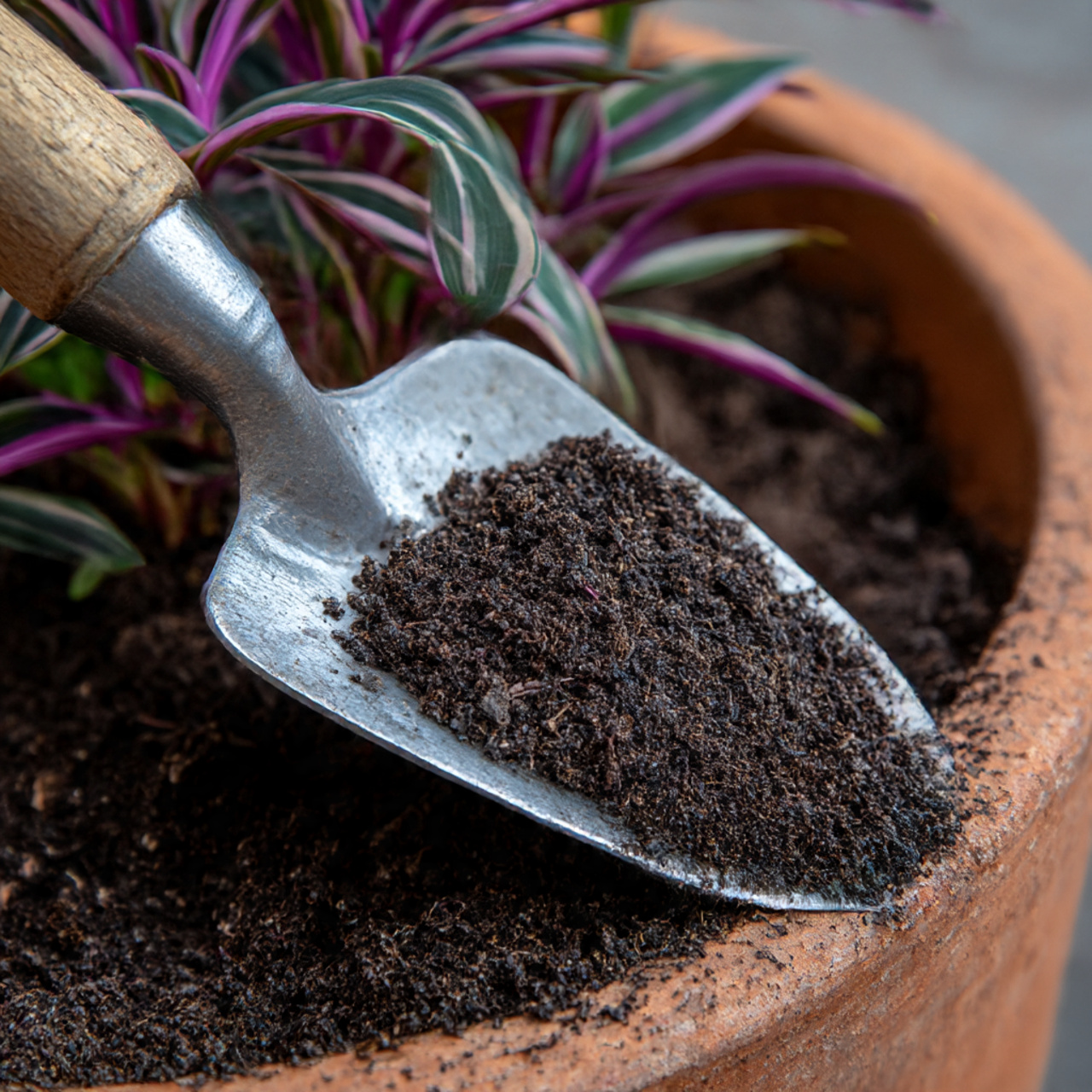
Even the best soil doesn’t last forever. Over time, it breaks down, compacts, and loses its ability to drain properly and provide nutrients—even if you’re fertilizing regularly.
Practical Tip: Once a year (spring is ideal), refresh your plant’s soil even if you’re not moving it to a bigger pot. Gently remove your plant, shake off as much old soil as possible, and replant in fresh, airy potting mix. This annual refresh removes accumulated salts from fertilizer and tap water, improves oxygen flow to roots, and gives your plant a nutritional boost. It’s like giving your plant a fresh start. You’ll often see a surge of new growth within weeks of a soil refresh.
Indoor vs. Outdoor Care Considerations
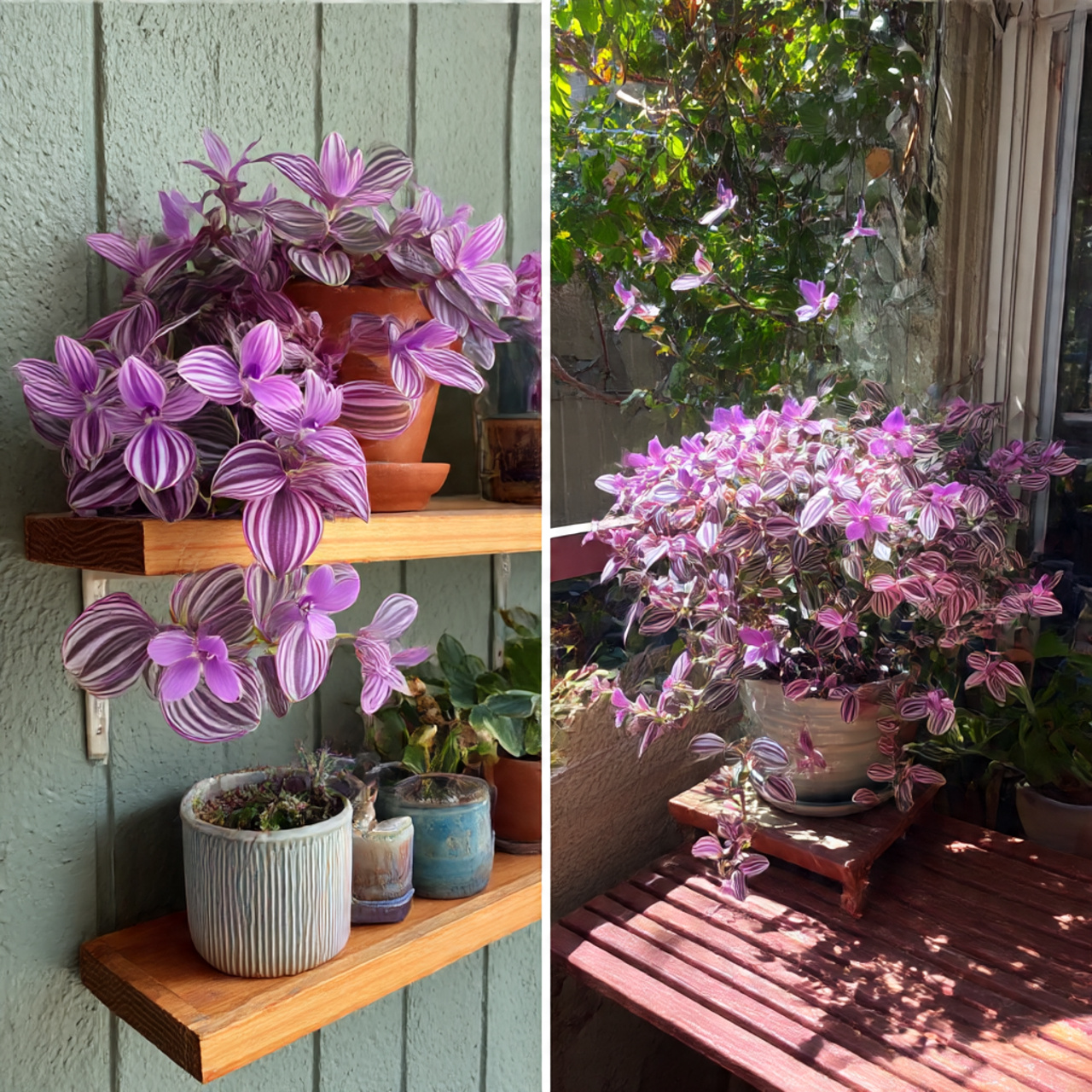
Can you take your Tradescantia Nanouk outside? Absolutely! But the care approach shifts slightly depending on where your plant lives.
Practical Tip: Outdoors, place your plant in a spot with bright shade or morning sun with afternoon shade—never full, hot afternoon sun which will scorch leaves quickly. Outdoor plants naturally get better humidity from the environment but also dry out faster, so check soil moisture more frequently. Always bring your plant indoors before temperatures drop below 50°F in fall. For indoor plants, the challenge is usually dry air from heating and air conditioning—address this with the humidity tricks mentioned earlier. Whether inside or out, consistent watering and appropriate light remain your care priorities.
Guide and Shape Your Plant’s Growth
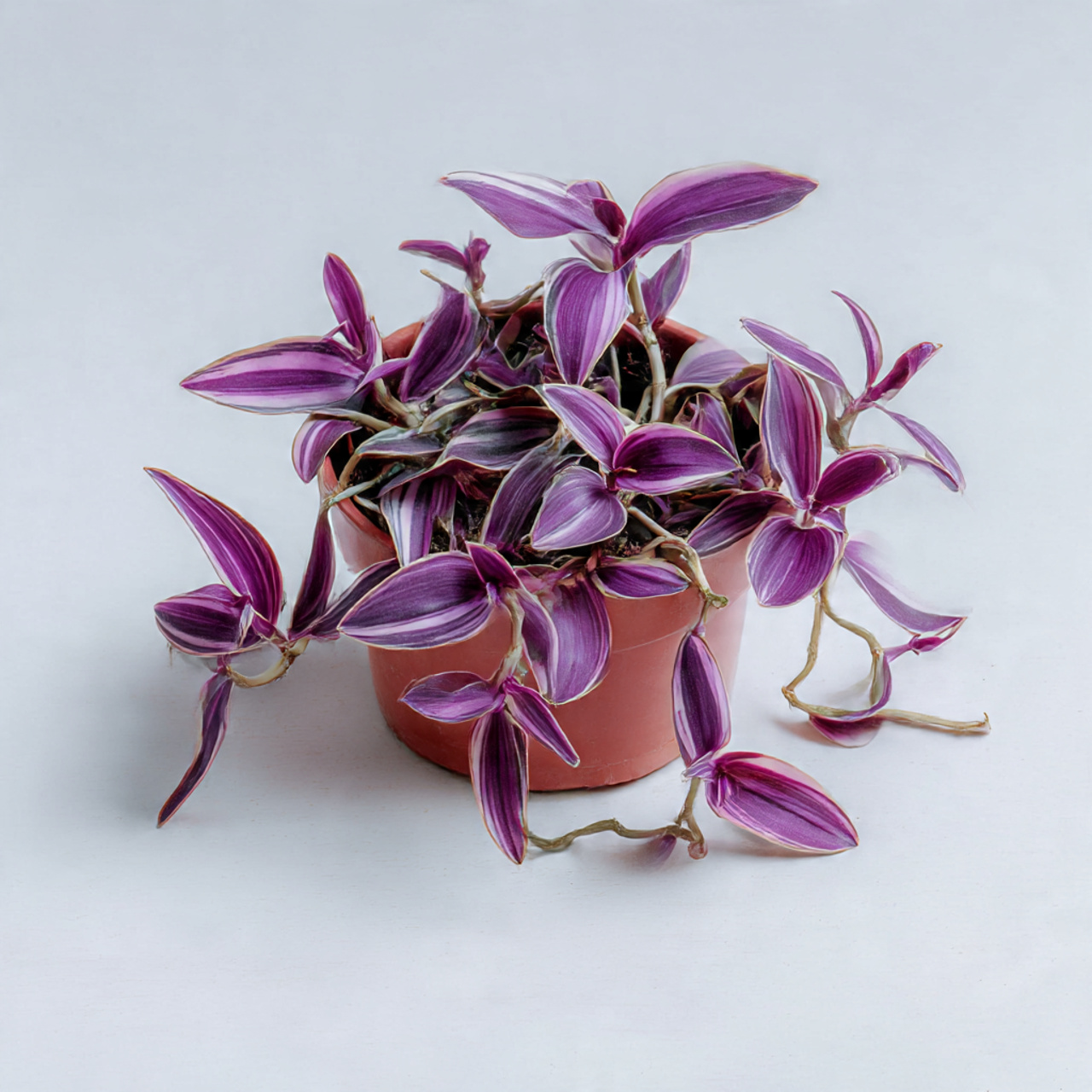
Want your Tradescantia Nanouk to grow in a specific direction or maintain a certain shape? You can absolutely train it with gentle guidance.
Practical Tip: Use the pinching technique we discussed in pruning, but strategically pinch stems that are growing in directions you don’t want, while leaving others to continue. You can gently guide trailing stems around the pot’s edge or toward specific areas using small plant clips or pins (nothing tight—just gentle direction). Regularly rotating your plant combined with selective pruning gives you surprising control over the overall shape. A well-shaped plant isn’t just prettier—it’s also healthier because it gets even light exposure and better air circulation.
Keep Your Plant Clean and Dust-Free
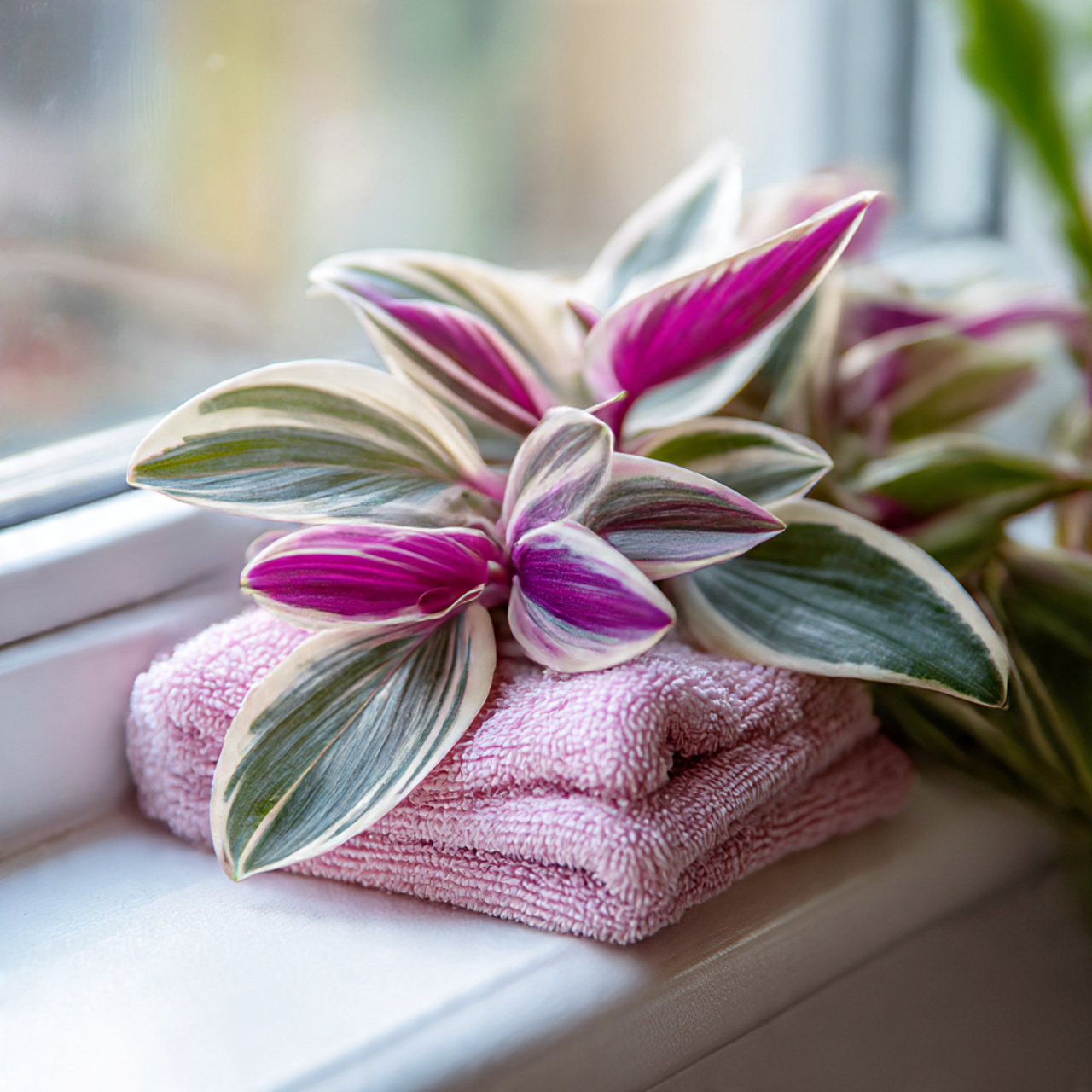
This might seem like a minor detail, but dust accumulation on leaves is more problematic than you might think. Dust blocks light absorption and can even clog the tiny pores leaves use to “breathe.”
Practical Tip: Every 2-3 weeks, gently wipe down your plant’s leaves with a soft, slightly damp cloth or give it a gentle shower in your sink or bathtub using lukewarm water. Let the plant drain completely before putting it back in its spot. Not only does this keep photosynthesis working efficiently, but it also gives you a chance to inspect for pests and enjoy how much more vibrant clean leaves look. This small maintenance task takes just a few minutes but makes a noticeable difference in plant health and appearance.
Visit Also: Spider Plant Care
Revive a Struggling or Neglected Plant
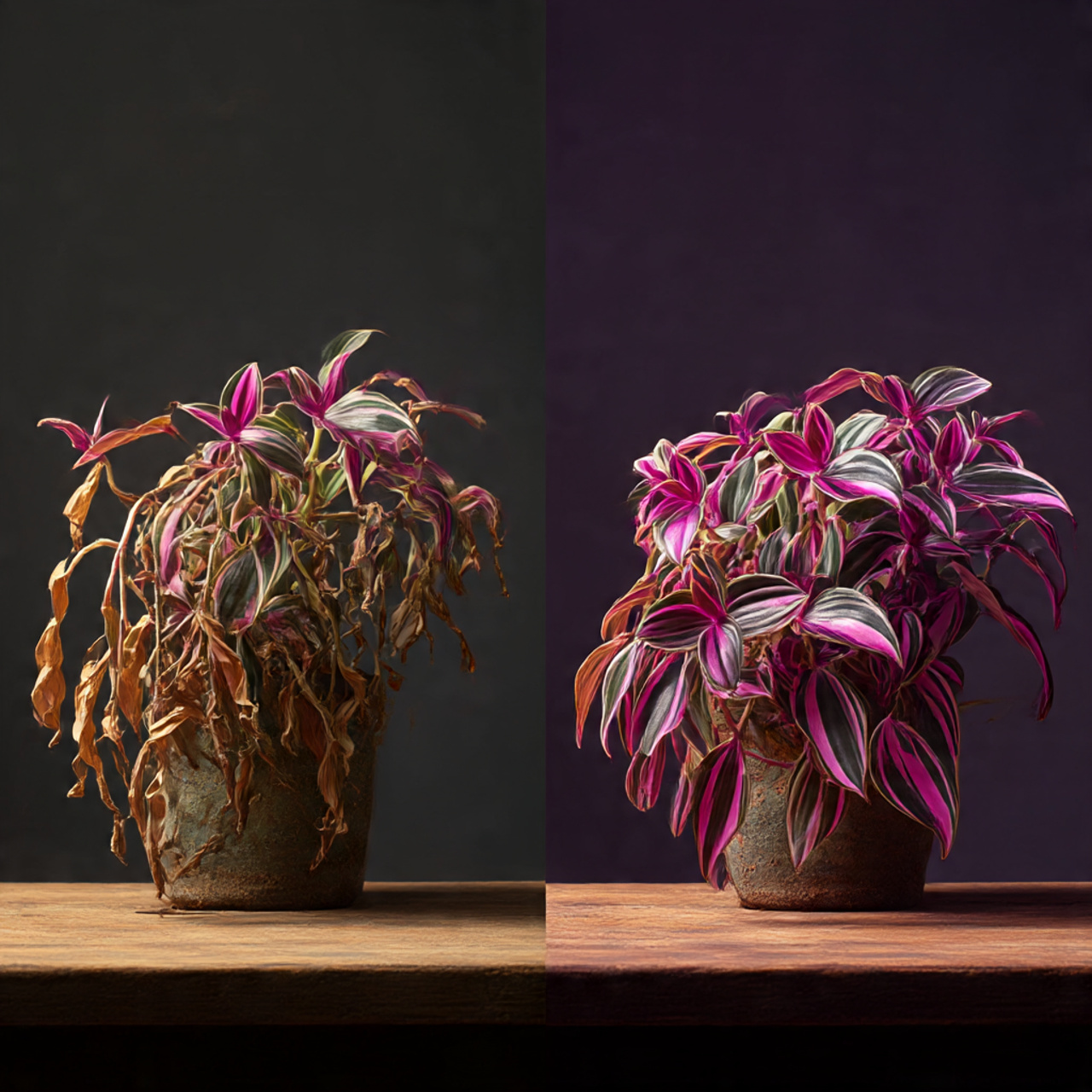
Maybe you went on vacation and forgot to arrange plant care, or perhaps you inherited a sad-looking Tradescantia Nanouk from a friend. Don’t give up—these plants are surprisingly resilient and can often bounce back.
Practical Tip: Start by trimming away all dead, crispy, or completely yellowed growth—this helps the plant redirect energy to healthy parts. Replace compacted or exhausted soil with fresh mix. Move the plant to proper lighting conditions if it wasn’t there before. Rehydrate gradually with small amounts of water every few days rather than soaking it all at once. Hold off on fertilizer for at least a month to avoid stressing recovering roots. Be patient—you might not see improvement for 2-3 weeks, but then new growth will start emerging. With consistent care, even a nearly dead-looking plant can make a full comeback in a few months.
FAQs
Q: How often should I water my Tradescantia Nanouk?
Water whenever the top inch of soil feels dry to the touch—this usually works out to about once a week, but can vary based on your home’s conditions. Always check the soil rather than following a strict schedule. The goal is to keep soil lightly moist but never soggy or waterlogged.
Q: My Tradescantia Nanouk leaves are losing their beautiful pink and purple colors—what’s wrong?
This almost always means your plant isn’t getting enough bright, indirect light. Move it closer to a window or add supplemental grow lighting. The vibrant variegation depends on proper light levels—more light (without direct sun) equals better colors. You should see improvement within 2-3 weeks of better lighting.
Q: Why are the edges of my leaves turning brown and crispy?
Brown leaf edges typically indicate either low humidity, mineral buildup from hard tap water, or both. Increase humidity around your plant using the methods we discussed, and switch to filtered or distilled water if possible. The brown edges won’t turn green again, but new growth should emerge healthy.
Q: When is the best time to prune my Tradescantia Nanouk?
Spring and early summer are ideal since the plant is actively growing and will quickly produce new shoots where you prune. However, you can do light maintenance pruning (removing dead or yellowing stems) any time of year. Just avoid heavy pruning during winter when growth is slower.
Q: Can I propagate Tradescantia Nanouk during winter?
Yes, you can propagate year-round, but cuttings will root more slowly in winter due to lower light levels and your plant’s natural dormancy period. For best success, keep propagations in a warm, bright spot and be patient—roots may take 4-6 weeks in winter versus 2-3 weeks in spring or summer.
Wrapping It All Up
Here’s the beautiful truth about Tradescantia Nanouk care: it’s genuinely straightforward once you understand what this plant needs. Give it bright, filtered light, water when the soil starts to dry, use well-draining soil, maintain moderate humidity, and keep temperatures comfortable. Add in regular pruning, occasional feeding during growing season, and seasonal adjustments, and you’ve got the complete recipe for success.
This stunning plant isn’t just about looking pretty on your shelf—though it certainly does that! It’s about the satisfaction of watching something thrive under your care. Those vibrant pink, purple, and green leaves become more than just decoration; they become visible proof that you’ve created the right environment and established the right routines.
Whether you’re a complete beginner or an experienced plant parent adding to your collection, Tradescantia Nanouk rewards attention with consistent beauty and steady growth. Start with the basics, observe how your plant responds, and adjust as needed. Before you know it, you’ll have a lush, colorful masterpiece that you propagated into multiple plants throughout your home.
So grab those pruning scissors, check that soil moisture, and give your Tradescantia Nanouk the care it deserves. Your reward? A stunning, healthy plant that brings joy every single day.