25 Rubber Plant Secrets: Grow, Style & Love This Indoor Beauty
If you’re looking for a houseplant that combines stunning looks with easy maintenance, you’ve found your match. The rubber plant (Ficus elastica) has earned its place as one of the most popular indoor plants worldwide, and for good reason. With its bold, shiny leaves and forgiving nature, it’s perfect whether you’re a first-time plant parent or a seasoned green thumb.
What makes this plant truly special? Beyond its striking appearance, it actually cleans the air you breathe while adding a touch of natural elegance to any room. Once used to produce natural rubber (hence the name), today it thrives in homes and offices as a beloved companion that asks for very little but gives so much in return.
Why Rubber Plant Is the Ideal Indoor Green Companion
Think of the rubber plant as your home’s three-in-one solution. It’s a natural air filter that removes nasty toxins like formaldehyde from your space. It’s a design statement that instantly elevates any room. And it’s incredibly adaptable, tolerating various light conditions while needing just moderate attention.
Whether you’re furnishing your first apartment or refreshing your longtime home, this plant works beautifully. Let’s dive into some practical ideas to help you grow, style, and enjoy your rubber plant to the fullest.
Rubber Plant Care Basics
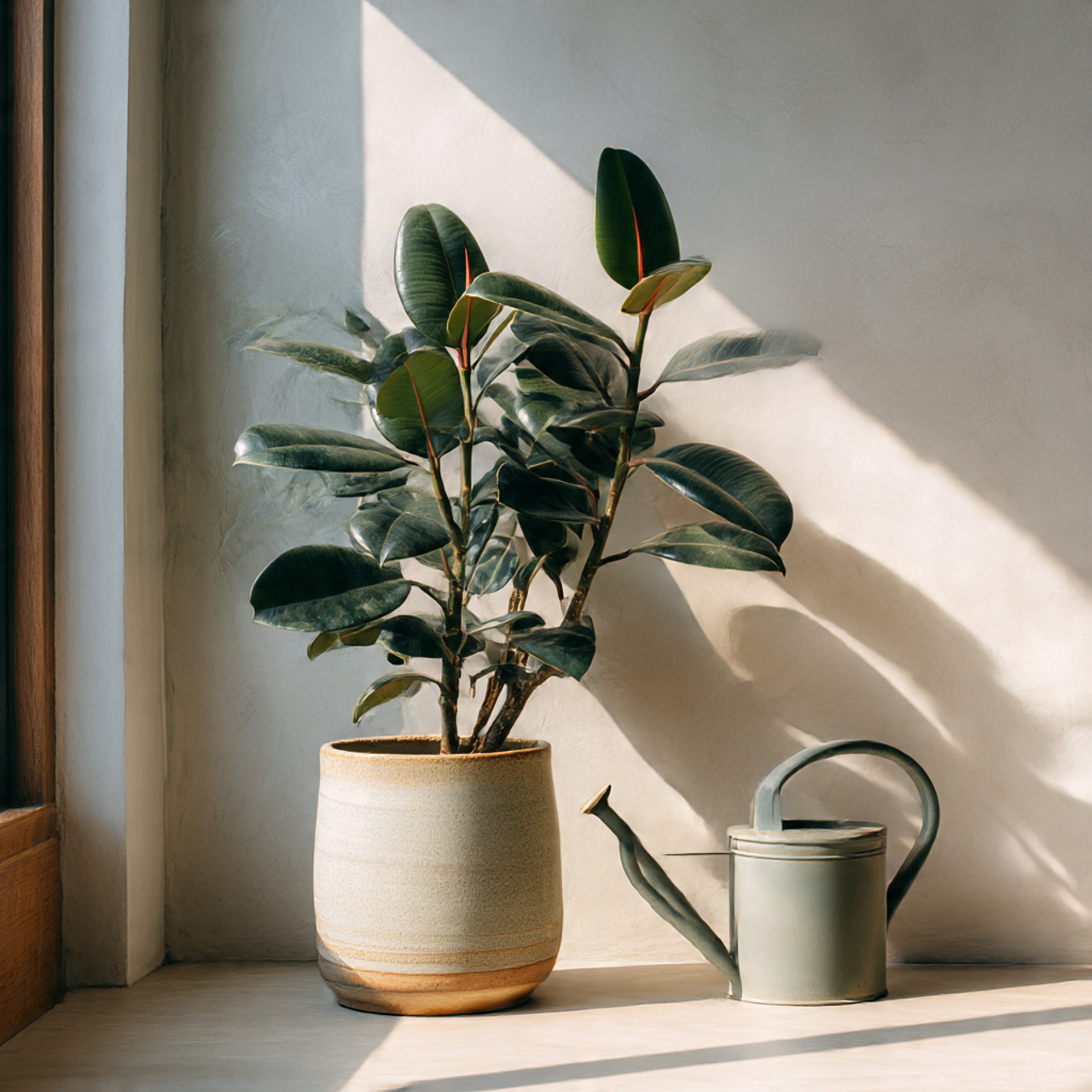
Getting the fundamentals right sets you up for years of success. Your rubber plant loves bright, indirect sunlight—think of a spot near a window with sheer curtains. It can handle lower light, but growth will slow down noticeably.
Practical Tip: Stick your finger into the soil about an inch deep before watering. If it feels dry, water thoroughly until it drains from the bottom. If it’s still moist, wait another day or two. This simple touch test prevents the number one killer of rubber plants: overwatering and root rot.
Feed your plant with a balanced liquid fertilizer once monthly during spring and summer. And here’s a game-changer: wipe those big, beautiful leaves with a damp cloth every week. It’s not just for looks—dust actually blocks the light your plant needs for photosynthesis. With consistent care, your rubber plant can reach an impressive 8 feet tall indoors.
Rubber Plant Varieties to Try
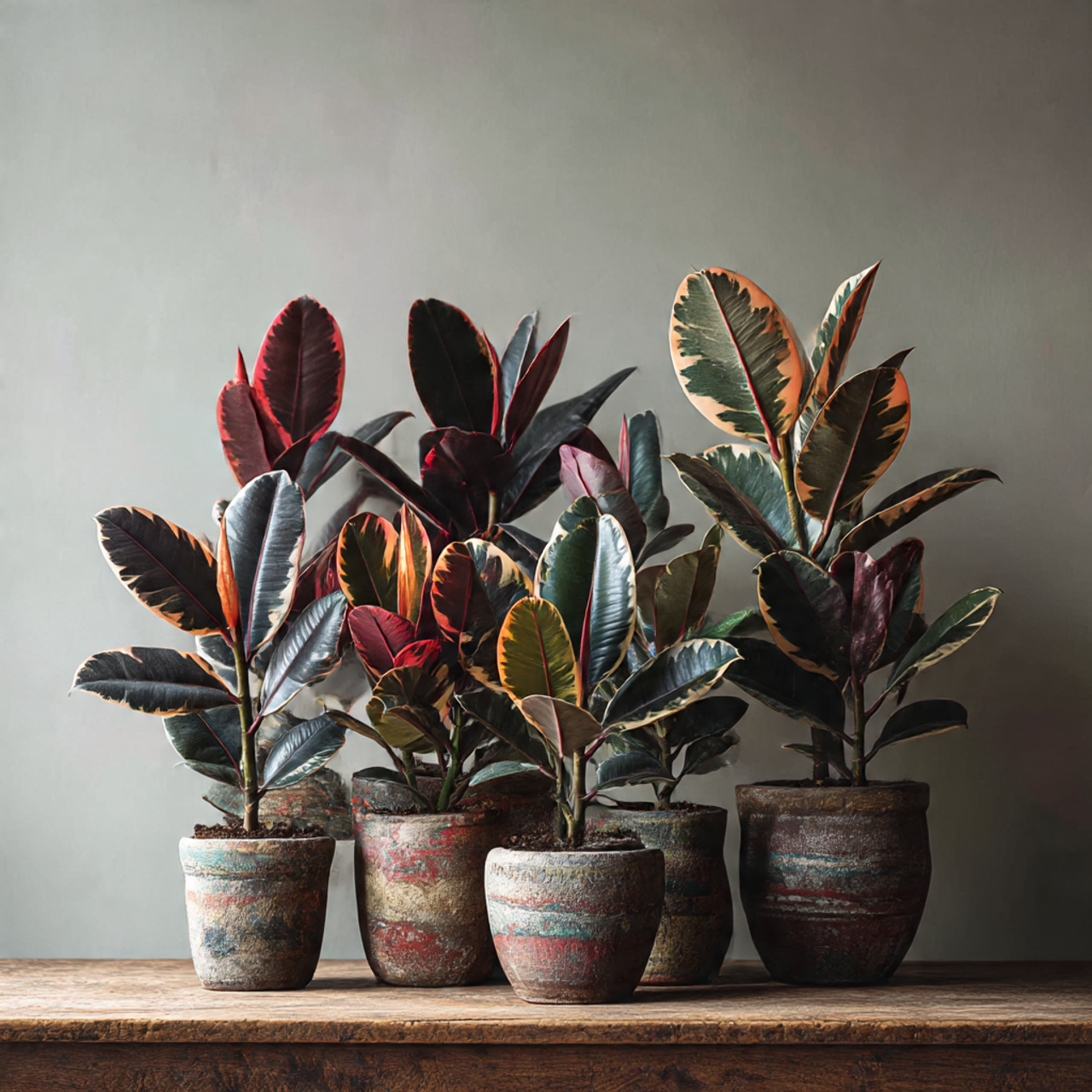
Not all rubber plants look the same, and that’s the exciting part. The classic ‘Robusta’ variety features deep, forest-green leaves that never go out of style. But if you want something more eye-catching, check out ‘Tineke’ with its gorgeous cream and pink variegation, or ‘Ruby’ which displays stunning pink highlights.
For a dramatic, moody look, the ‘Burgundy’ variety sports leaves so dark they’re almost black with deep red undertones.
Design Example: Create your own indoor jungle by grouping three different varieties together—perhaps a tall Robusta in the center, flanked by a variegated Tineke and a burgundy variety. The color contrast creates incredible visual depth while keeping care requirements simple since they all need the same treatment.
Rubber Plant Propagation
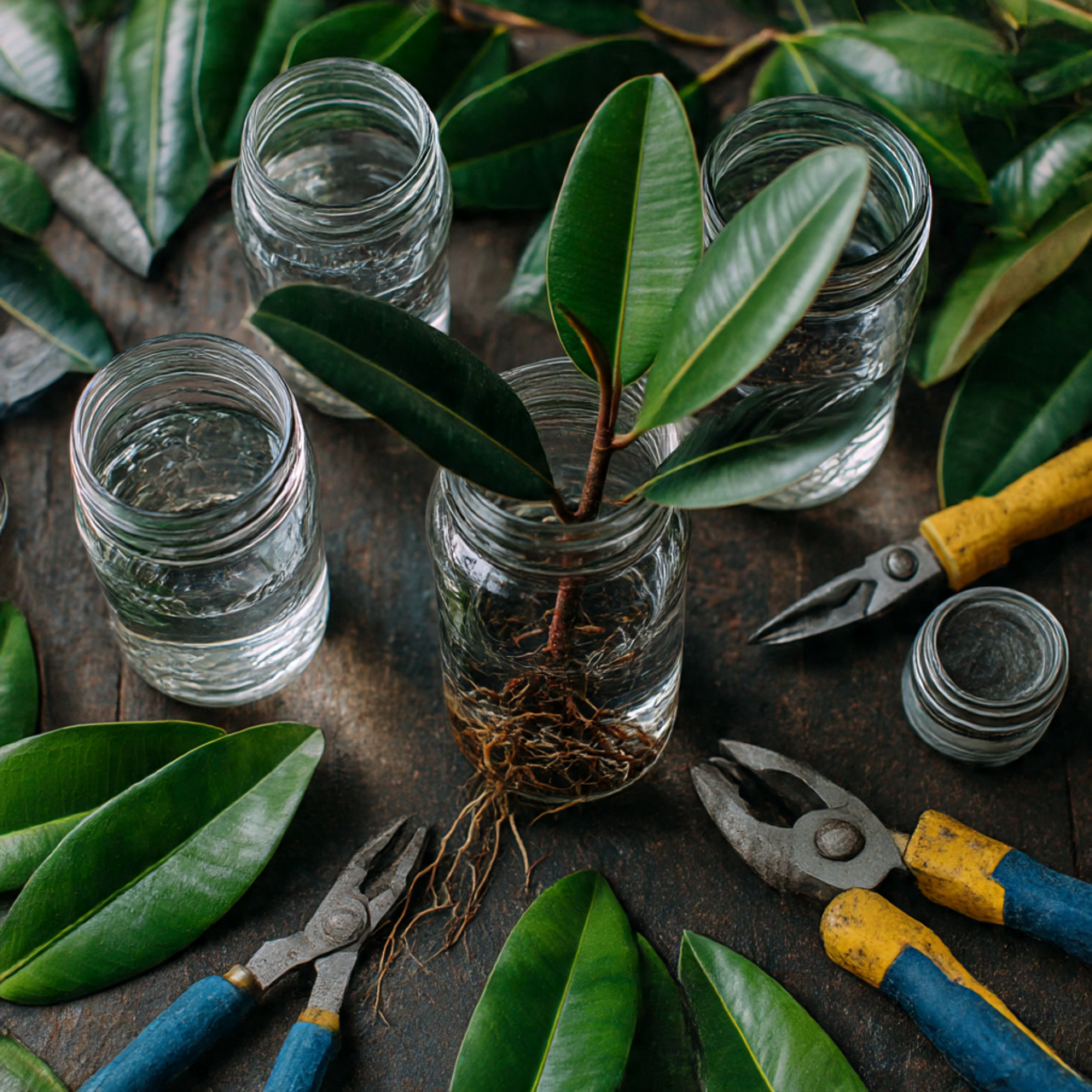
Want more rubber plants without spending a dime? Propagation is surprisingly easy and deeply satisfying. The best time is spring or early summer when the plant is actively growing.
Step-by-Step Guide: Choose a healthy stem with at least two leaves. Using clean, sharp scissors, cut just below a leaf node (that’s the bump where leaves emerge). You’ll notice white, milky sap—totally normal. Let it dry for 5-10 minutes, then place your cutting in water or directly into moist potting soil. Change the water every few days if using the water method.
Within 3-4 weeks, you’ll see roots developing. This not only gives you free plants to share with friends but also encourages your mother plant to grow bushier and fuller. It’s a win-win!
Rubber Plant in Living Room Decor
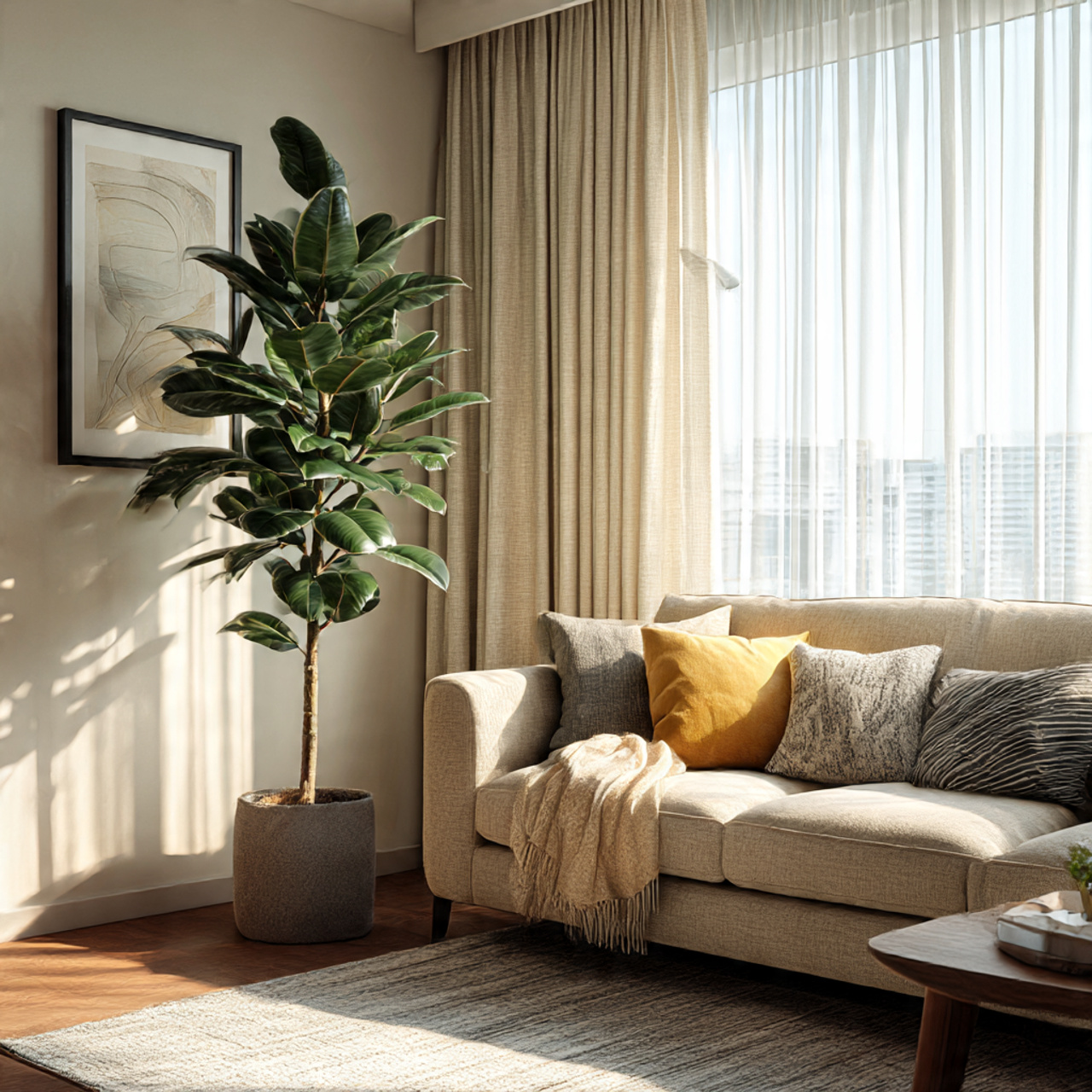
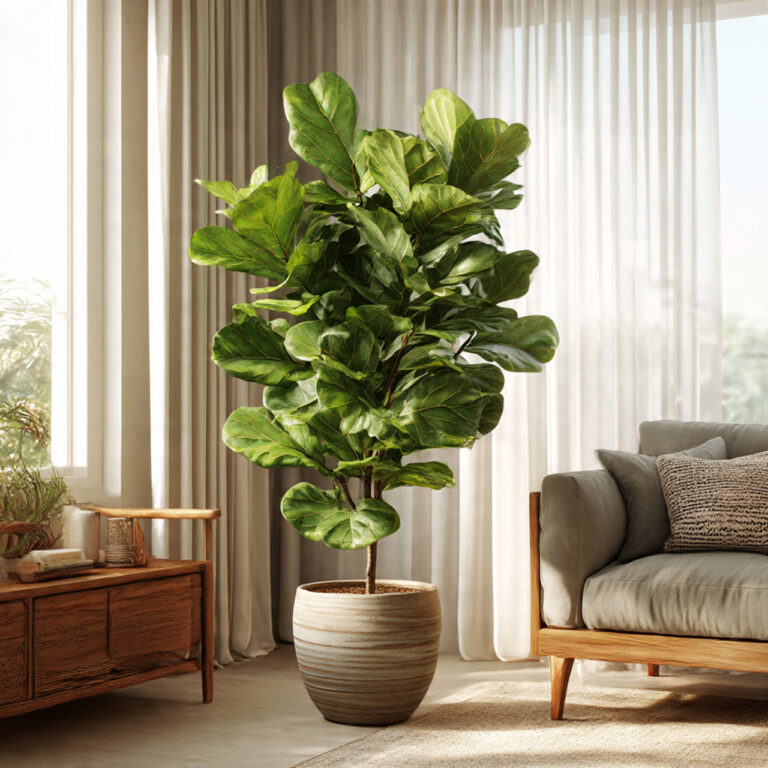
Your living room is where life happens, and a rubber plant makes it feel more alive. Those large, glossy leaves create a powerful focal point that draws the eye without overwhelming your space. The key is placement and pot selection.
Styling Tip: Position your rubber plant about 3-5 feet from an east or north-facing window where it gets plenty of filtered light. Choose a planter that complements your existing furniture—a woven basket for bohemian vibes, sleek white ceramic for modern spaces, or natural terracotta for farmhouse charm. Make sure your pot is at least 2 inches wider than the root ball to give roots room to spread.
The contrast between the plant’s bold, architectural leaves and minimalist furniture creates a sophisticated, magazine-worthy look.
Visit Also: Monstera Plant
Rubber Plant as an Air Purifier
Here’s something that matters more than aesthetics: your rubber plant is actively cleaning your air right now. NASA’s famous Clean Air Study highlighted plants like Ficus elastica as effective at removing harmful compounds from indoor environments.
Those broad leaves work as natural filters, absorbing formaldehyde (found in furniture and carpets), benzene, and carbon monoxide while releasing fresh oxygen.
Real-World Application: If you live in a city apartment with limited ventilation, or if you’ve recently renovated your home (which releases lots of VOCs), placing 2-3 rubber plants in your main living areas can make a measurable difference in air quality. Think of it as a beautiful air purifier that never needs filter replacements.
Rubber Plant and Feng Shui Benefits
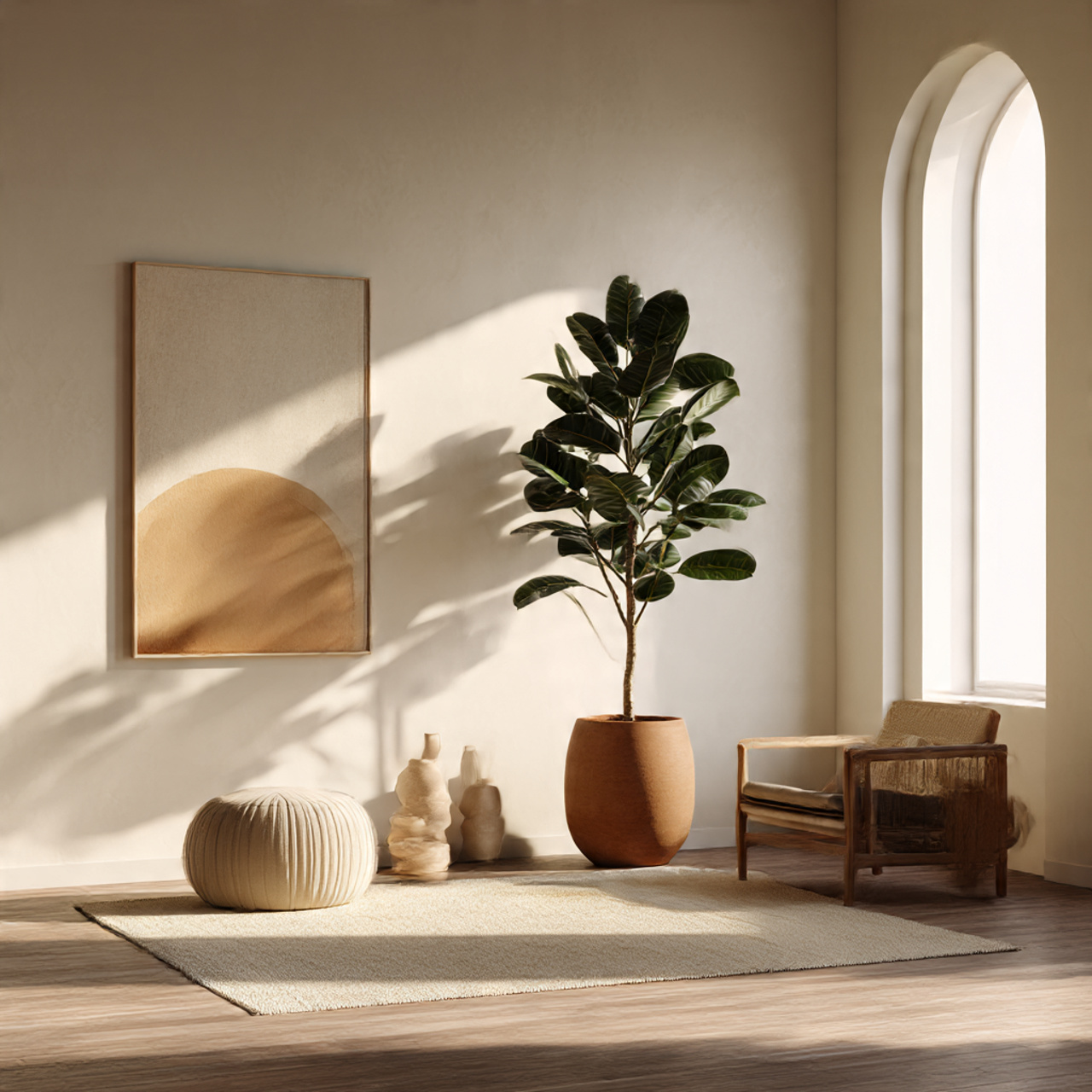
In Feng Shui philosophy, the rubber plant is considered highly auspicious. Its rounded leaves symbolize wealth and good fortune, while its sturdy, upward growth represents stability and progress in life and business.
Feng Shui Tip: Place your rubber plant in the southeast corner of your home or office—this is considered the wealth and abundance sector. If you’re unsure about directions, use a compass app on your phone. Alternatively, positioning it near your home’s entrance is believed to welcome positive energy and opportunities into your life.
Even if you’re not into Feng Shui, there’s something psychologically uplifting about nurturing a thriving plant in your space.
Rubber Plant Watering Tips
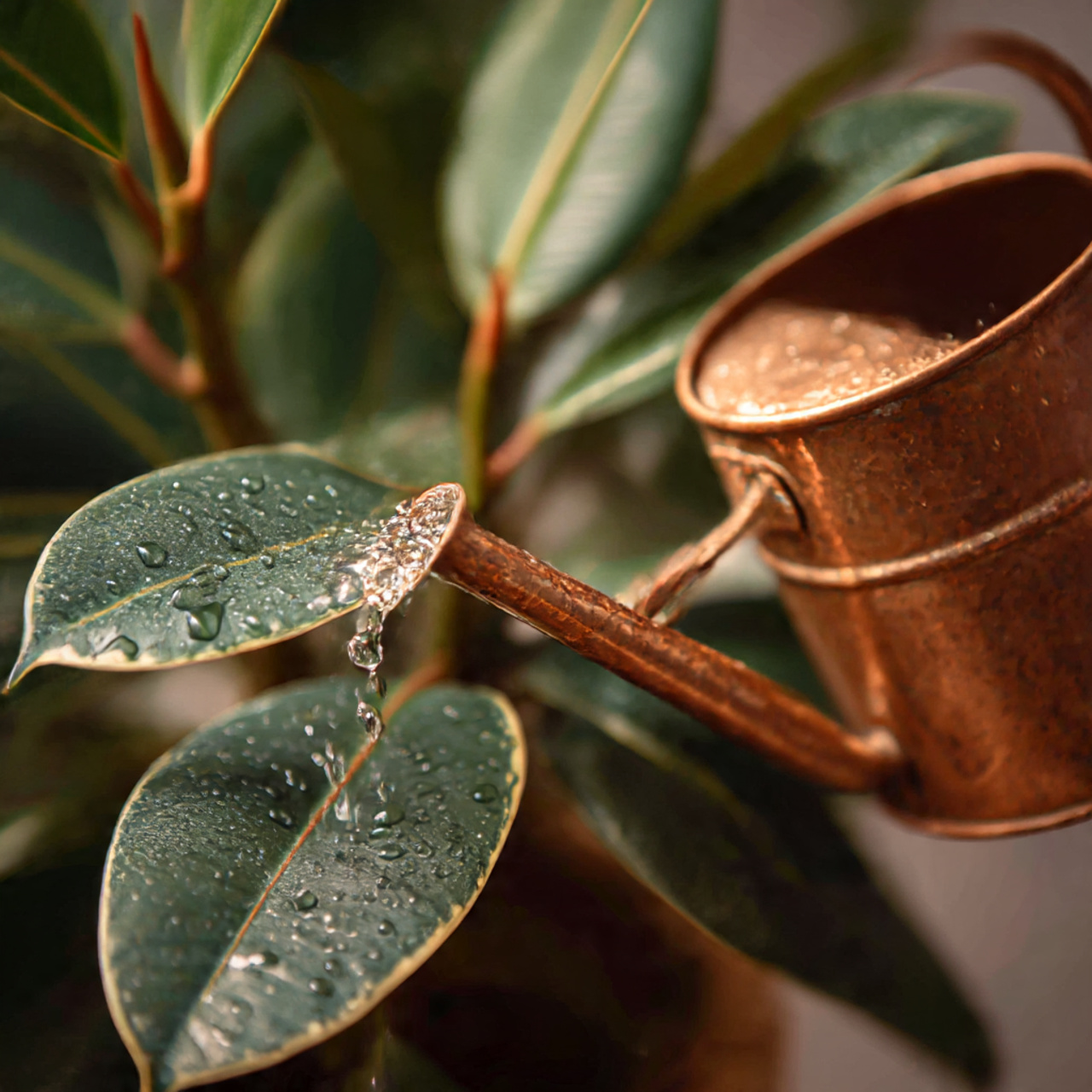
Let’s talk about the most common mistake: overwatering. More rubber plants die from too much love (in the form of water) than from neglect. The goal is consistent moisture, not constant wetness.
Watering Tip: Use room-temperature water—cold water can shock the roots. Water thoroughly until it flows from the drainage holes, then empty the saucer. Never let your plant sit in standing water. In summer, you might water every 5-7 days. In winter, when growth slows dramatically, you might only water every 10-14 days.
A moisture meter (available for under $10) takes the guesswork out completely. Aim for a reading between 3-4 on a scale of 10.
Rubber Plant Lighting Requirements
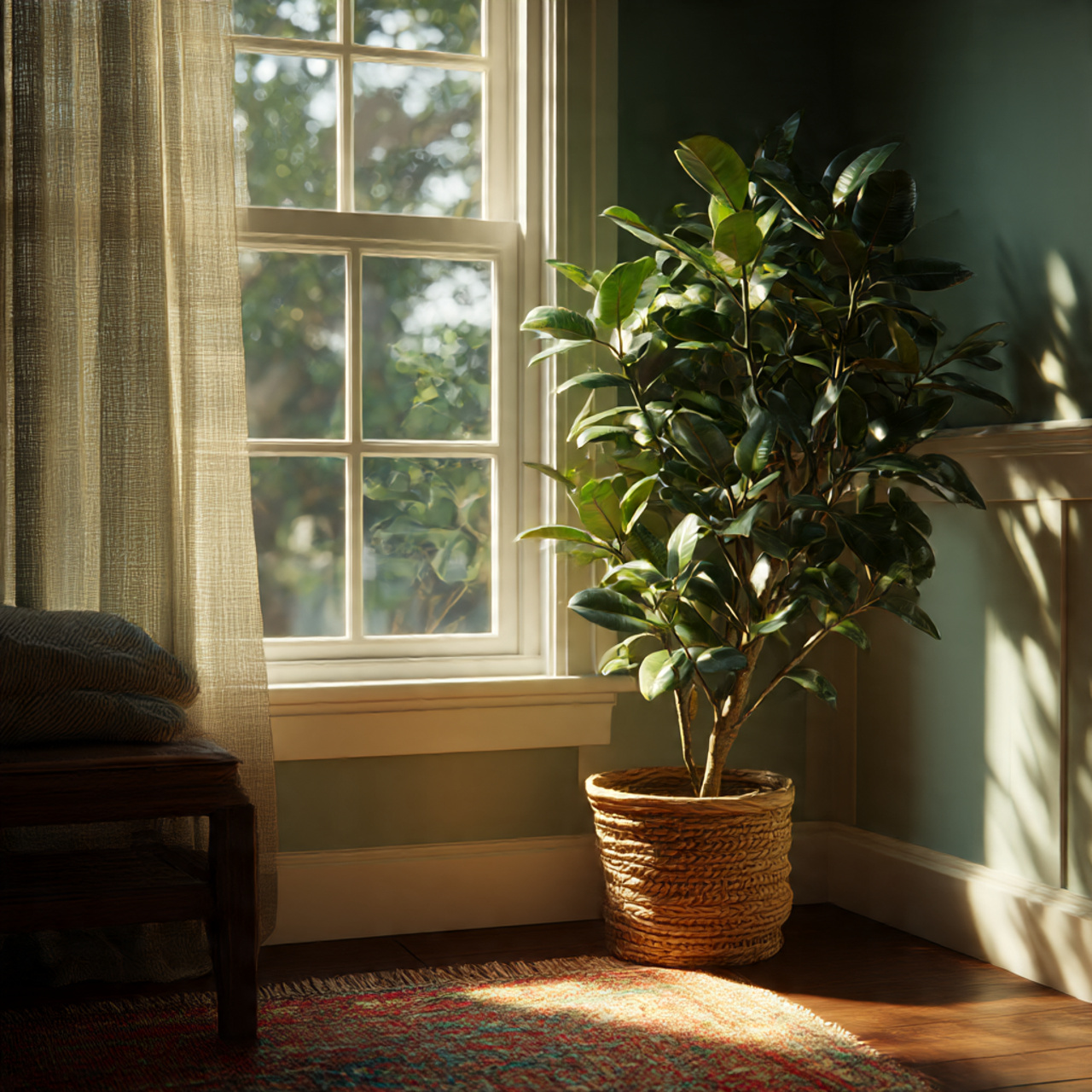
Light is like food for your rubber plant—it needs enough but not too much. Bright, indirect light is the sweet spot. Think of the light you’d read a book comfortably in without squinting or needing a lamp.
Location Example: An east-facing window provides gentle morning sun—perfect. A north-facing window offers consistent, indirect light all day—also great. South or west-facing windows get intense afternoon sun, so place your plant 3-6 feet back from the window, or use sheer curtains to diffuse the light.
If your leaves start getting crispy brown edges, that’s sunburn—move it back. If new leaves are small and pale, or the plant gets leggy, it needs more light. During dark winter months, a simple LED grow light on a timer (6-8 hours daily) keeps your plant thriving.
Rubber Plant in Minimalist Interiors
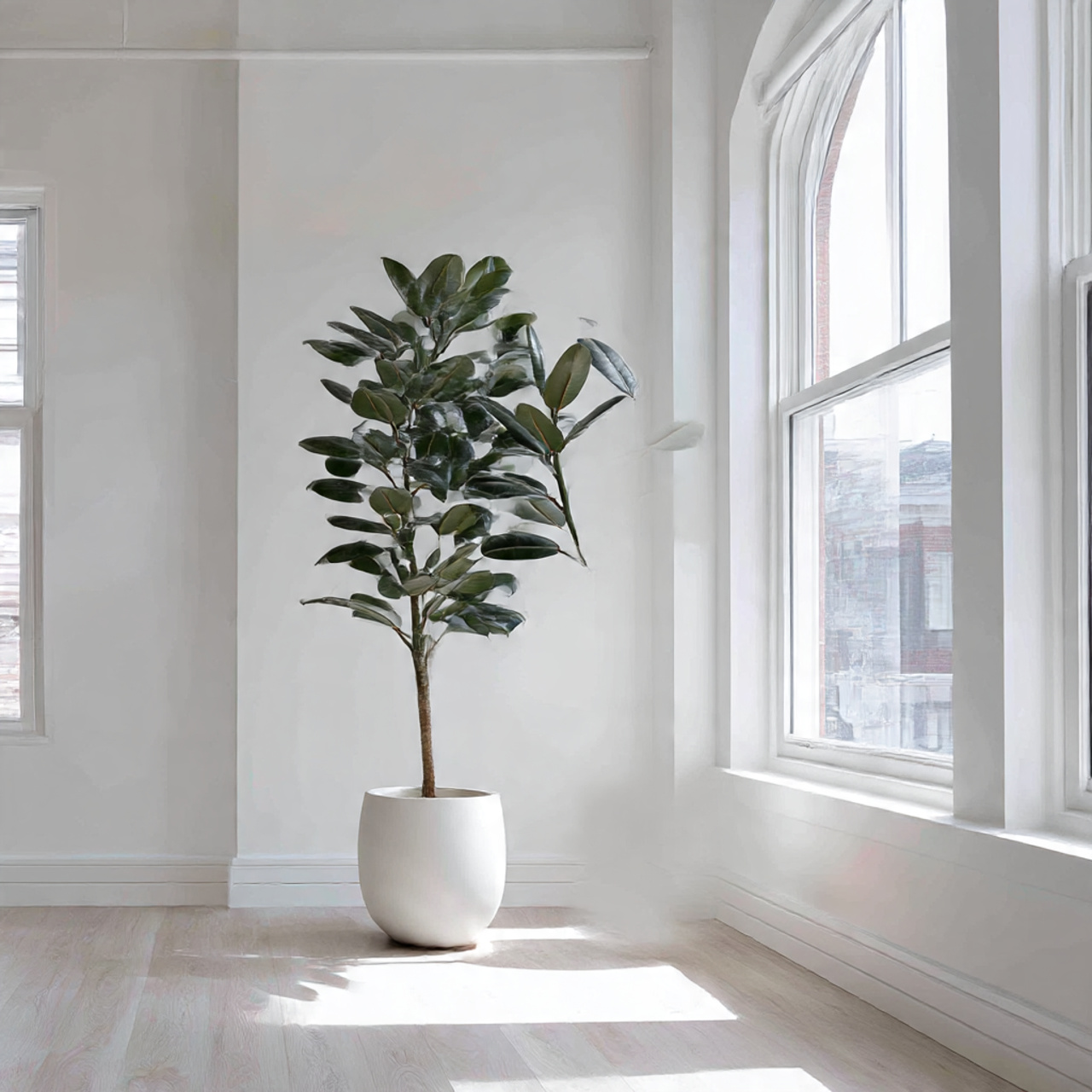
Minimalism isn’t about having less—it’s about choosing better. A single, well-placed rubber plant embodies this philosophy perfectly. Its clean lines and bold presence need no additional decoration.
Design Idea: Choose one tall rubber plant (4-6 feet) in a simple matte ceramic pot. Place it in a corner of your living room with white or light gray walls. The contrast creates a striking focal point that feels intentional and calming. Add a simple wooden side table or floor cushion nearby to complete the zen aesthetic.
The beauty of minimalist styling is that your rubber plant becomes the art—no gallery wall or fancy decorations needed.
Rubber Plant for Office Spaces
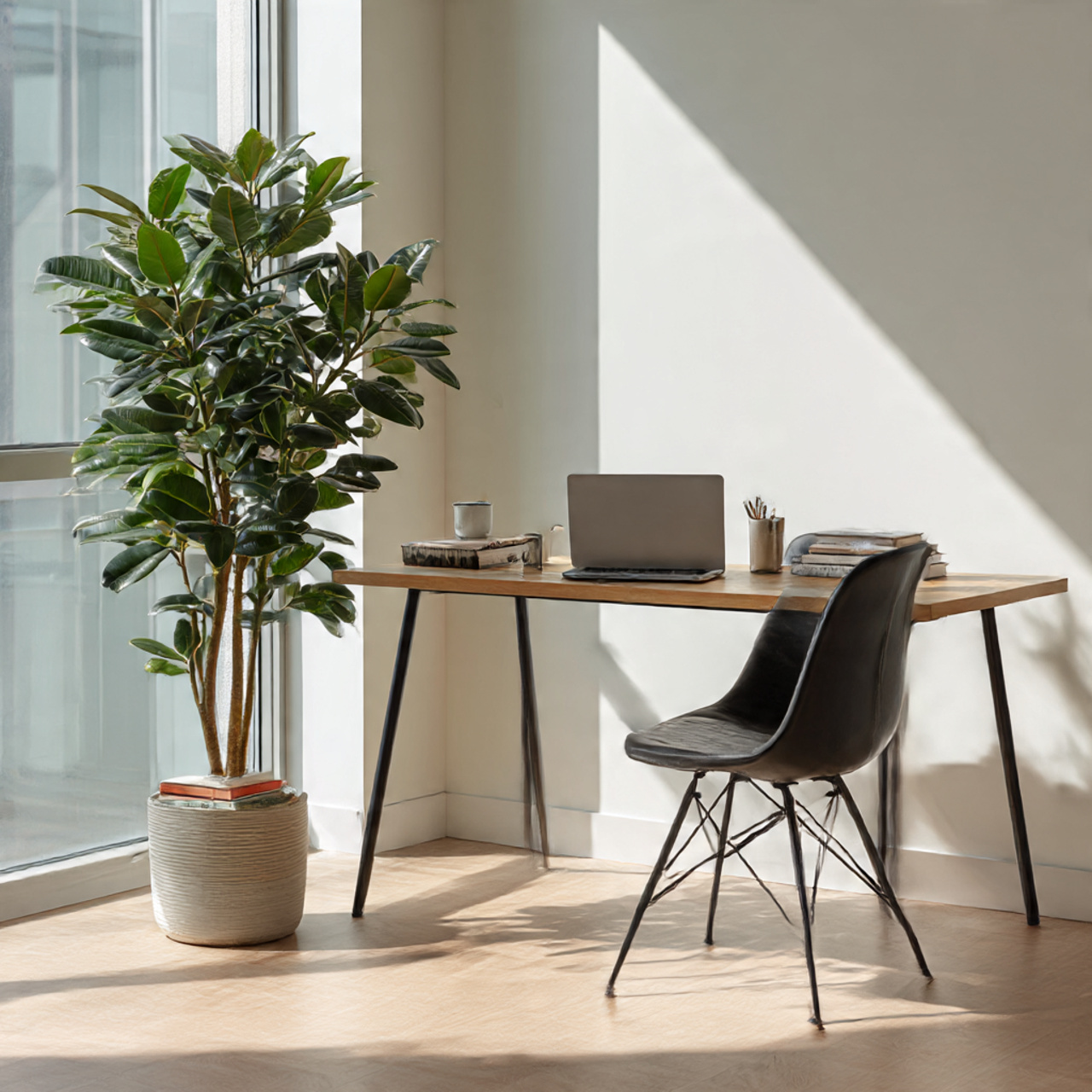
Your office probably needs a rubber plant more than your home does. Studies consistently show that plants in workspaces reduce stress, increase productivity, and improve air quality—crucial if you’re breathing recycled air conditioning all day.
Office Placement Tip: Position a rubber plant on a credenza near your desk or in a corner of the conference room. Since it needs minimal care, you can water it once weekly and wipe the leaves every other week. If your office has limited natural light, choose a grow light or select the more shade-tolerant ‘Robusta’ variety.
Your colleagues will notice the difference. Plants create a calmer, more inviting atmosphere that makes those long workdays feel more bearable.
Rubber Plant with Modern Planters
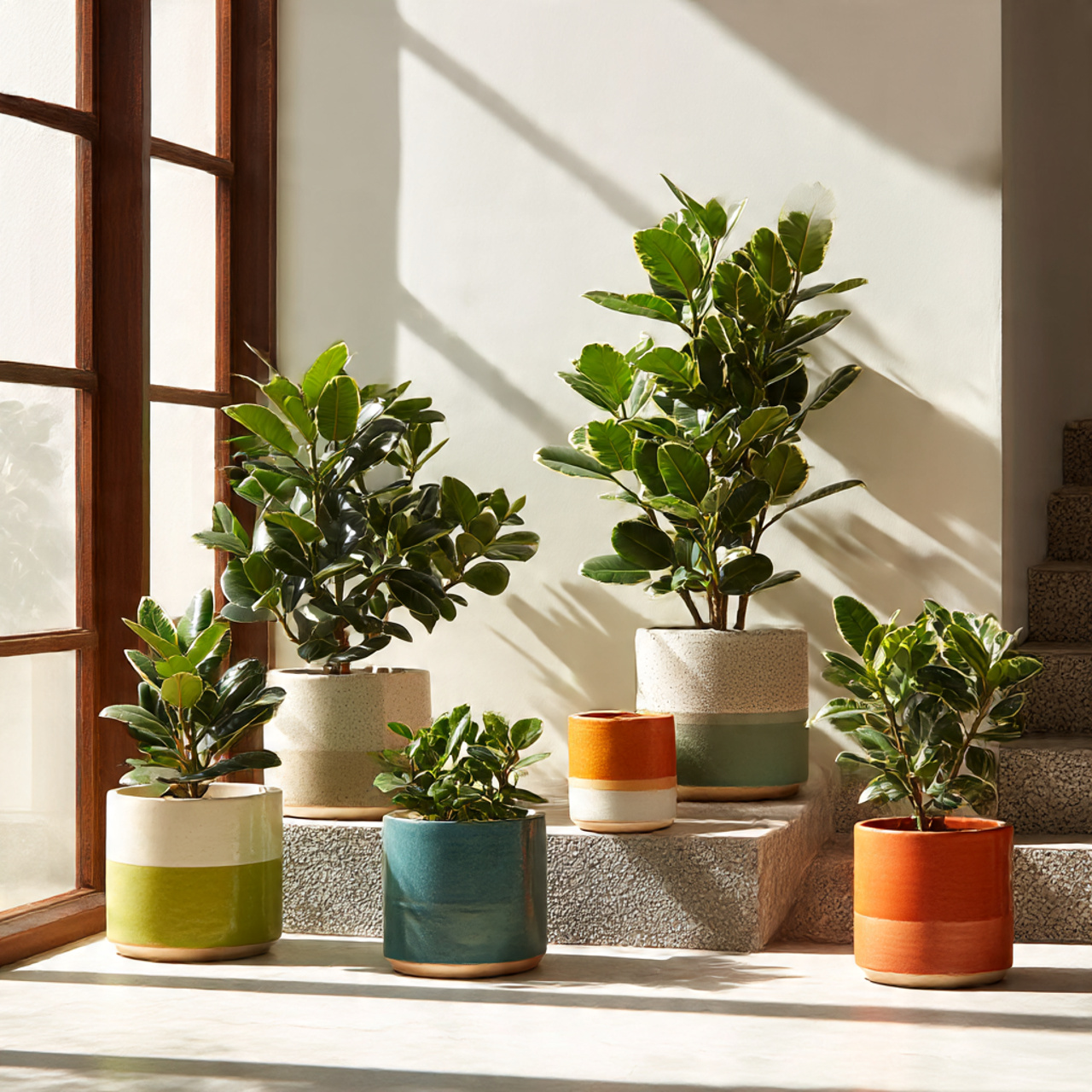
The pot you choose dramatically impacts your plant’s overall vibe. Beyond aesthetics, practical considerations matter too—drainage, weight, and size all affect your plant’s health.
Planter Selection Guide:
- Terracotta: Classic and breathable, perfect for preventing overwatering. Great for rustic or Mediterranean decor.
- Ceramic with drainage: Offers endless color and texture options. Choose one with a drainage hole and saucer.
- Concrete: Modern and sturdy, ideal for taller plants. Adds industrial chic to contemporary spaces.
Size Tip: Select a pot 2-3 inches wider than your plant’s current root ball. Too large promotes overwatering; too small restricts growth.
Rubber Plant Pruning and Shaping
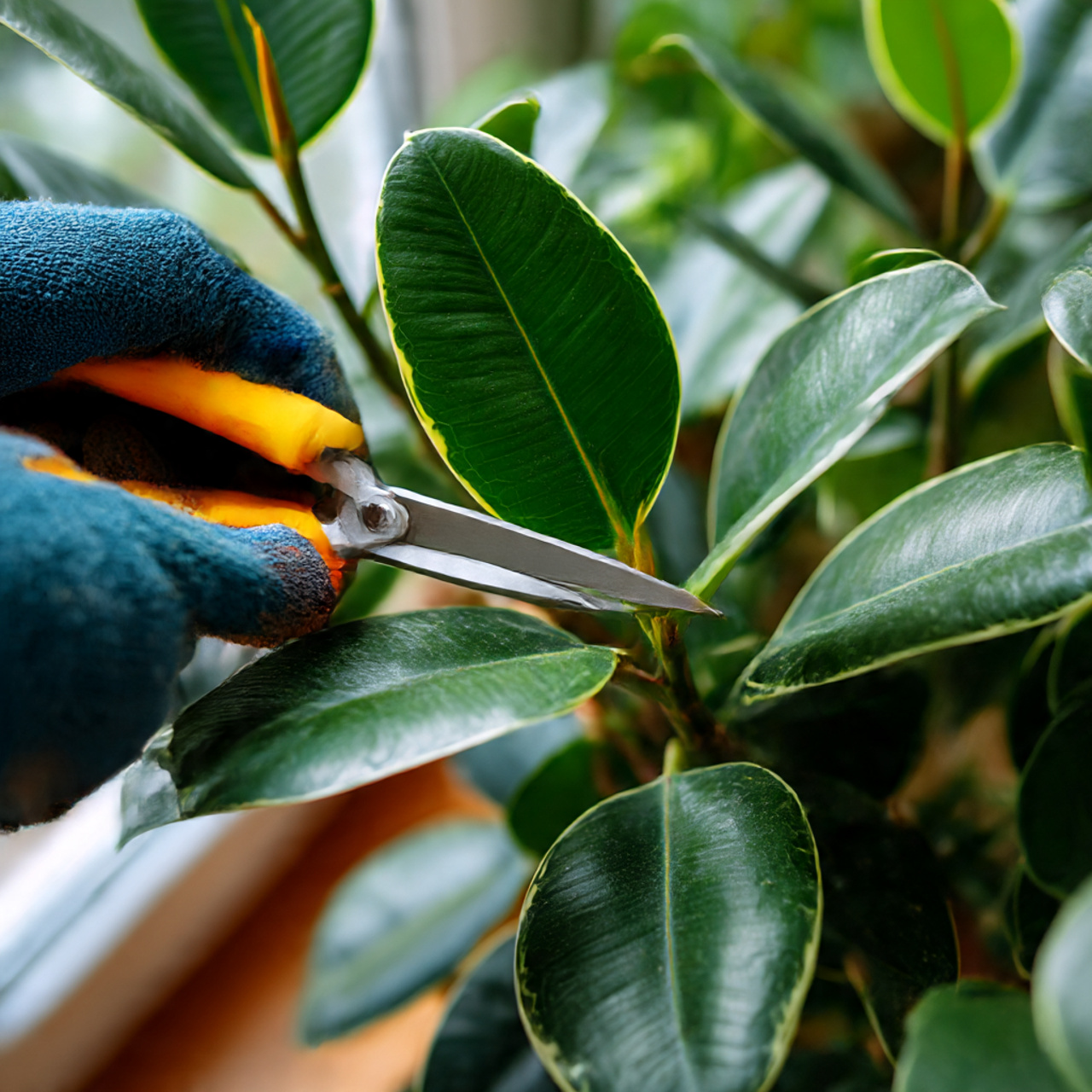
Regular pruning isn’t just maintenance—it’s how you sculpt your rubber plant’s future shape. Want it bushy and compact? Prefer a single trunk tree-style? Pruning makes it happen.
Pruning Instructions: Using clean, sharp pruning shears, remove any yellowing or brown leaves at the base. To encourage branching, cut the main stem just above a leaf node—this signals the plant to grow two new branches from that point. Always prune in spring or early summer during active growth.
Safety Note: The white sap that oozes out can irritate skin, so wear gloves. Wipe the sap from your tools immediately to prevent it from hardening.
Prune strategically every 6-12 months to maintain your desired shape and prevent your plant from becoming top-heavy.
Rubber Plant in Bedrooms
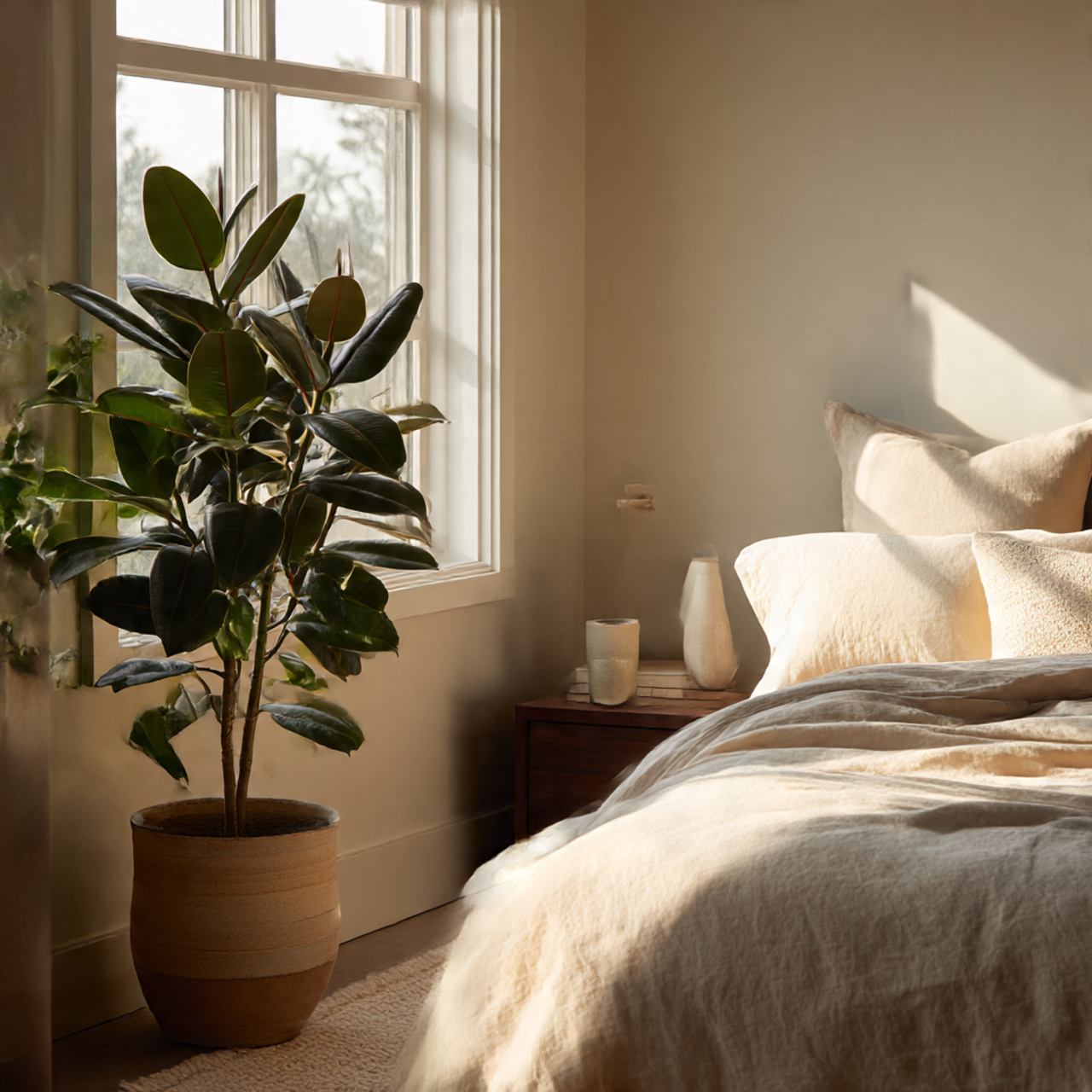
Your bedroom should be your personal retreat, and a rubber plant enhances that peaceful atmosphere. Unlike some plants that release carbon dioxide at night, rubber plants continue improving air quality while you sleep.
Bedroom Setup Tip: Place your rubber plant near a window but away from heating vents or air conditioning units—temperature fluctuations stress the plant. The added greenery creates a calming, spa-like environment that promotes better sleep quality. Position it where morning light will hit it first for optimal health.
Bonus: It’s much easier to care for than fussy flowers, giving you one less thing to worry about before bed.
Rubber Plant in Bathrooms
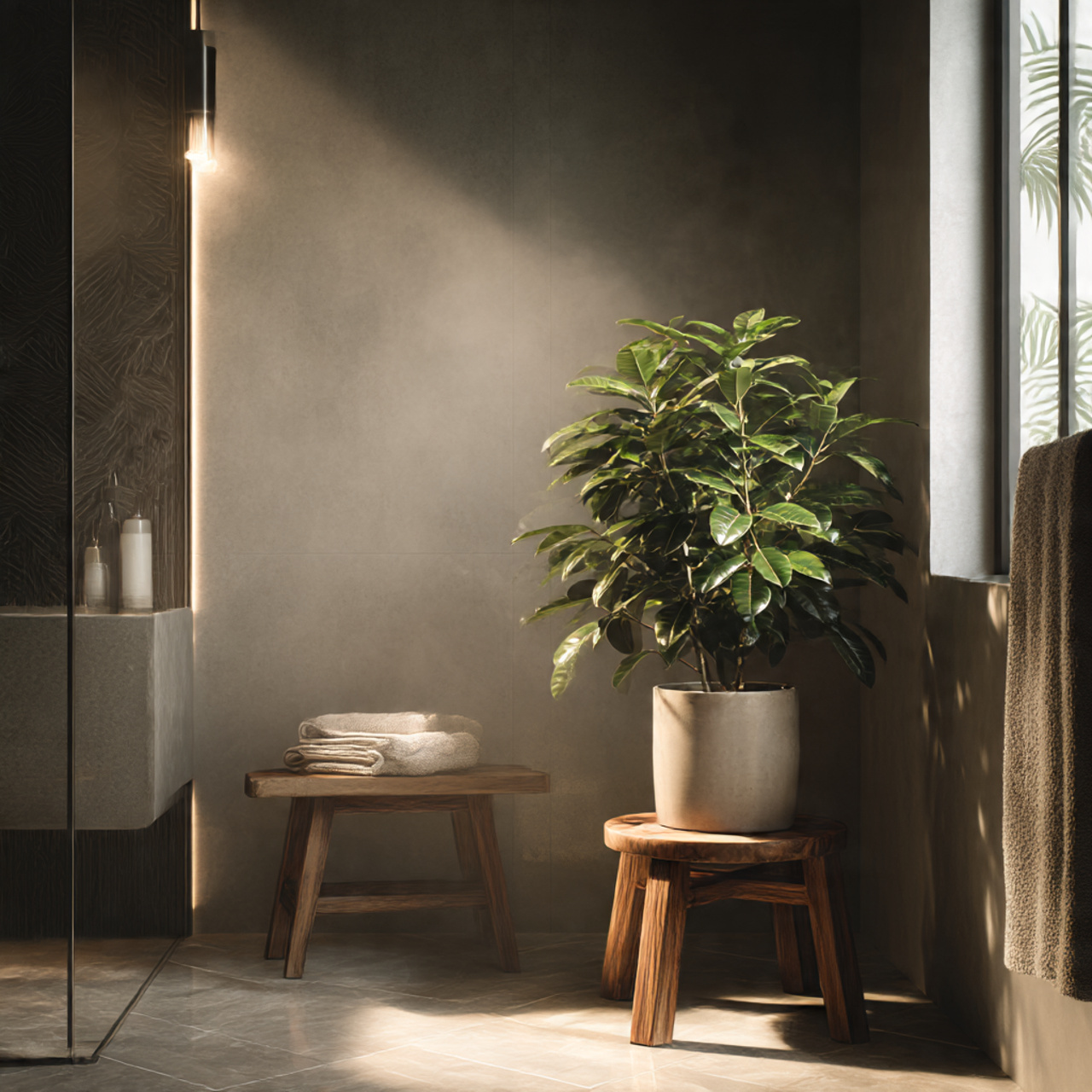
Bathrooms seem like odd plant spots, but rubber plants actually appreciate the humidity boost from showers and baths. If your bathroom has a window, you’ve got a perfect setup.
Bathroom Growing Tip: A bathroom window with frosted glass or sheer curtains provides ideal indirect light. The humidity from daily showers mimics the rubber plant’s native tropical environment, promoting lush, glossy leaves. Just ensure your bathroom has a fan or window you crack occasionally—air circulation prevents mold on leaves and soil.
This works especially well in smaller bathrooms that need a touch of life without taking up precious counter space.
Rubber Plant for Beginners
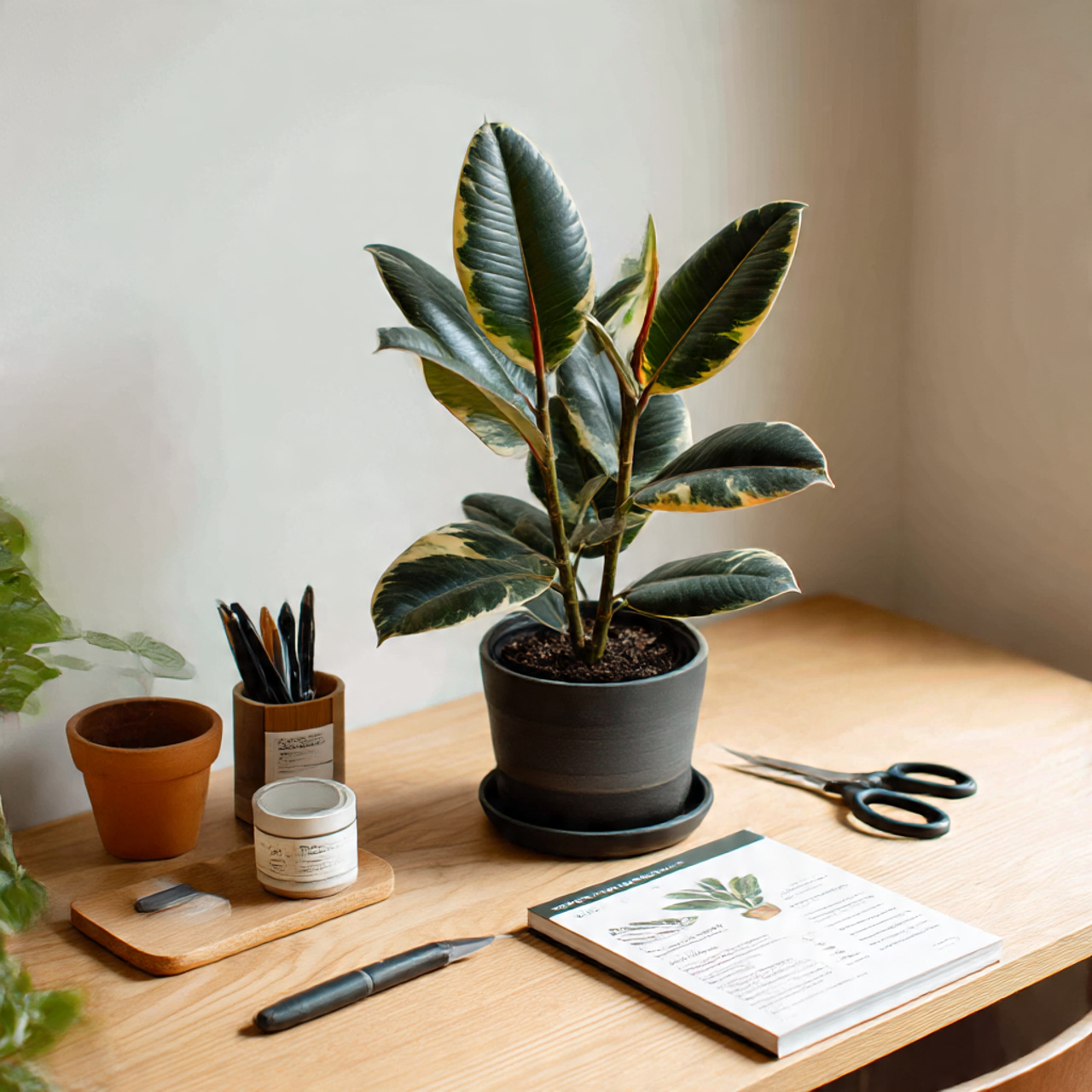
New to plant parenting? The rubber plant forgives your learning curve. It tolerates occasional missed waterings, adapts to various light conditions, and clearly communicates its needs through leaf appearance.
Beginner Success Tips: Start with a small to medium-sized plant (2-3 feet tall). Set a weekly reminder on your phone to check the soil. Keep a simple care journal—note when you water, fertilize, or notice changes. This helps you learn your plant’s rhythm.
The rubber plant grows slowly and steadily, unlike fast-growing vines that quickly overwhelm new plant parents. You’ll build confidence as you watch it thrive under your care.
Rubber Plant Repotting Guide
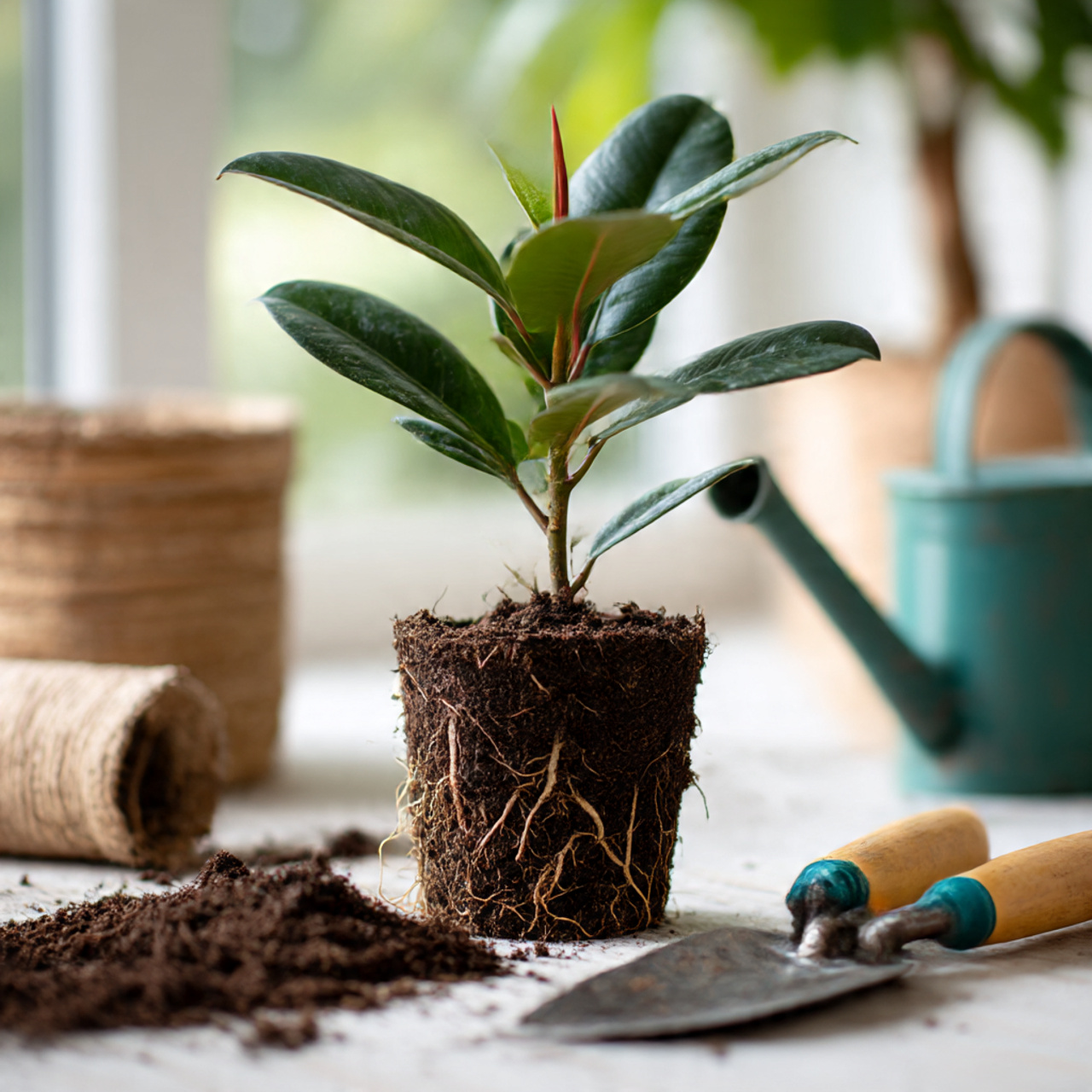
Every 2-3 years, your rubber plant outgrows its home and needs fresh soil and more room. Spring is the perfect time for this refresh.
Complete Repotting Guide:
- Water your plant thoroughly 24 hours before repotting—this reduces transplant shock.
- Choose a pot one size larger (2 inches wider in diameter).
- Prepare your soil mix: 40% peat moss or coco coir, 30% perlite, 30% quality potting soil.
- Gently remove the plant, loosening any circling roots.
- Add soil to the new pot, position your plant at the same depth, and fill around the sides.
- Water well and place in its normal spot.
Important: Don’t fertilize for 4-6 weeks after repotting—fresh soil contains nutrients, and fertilizing too soon can burn stressed roots.
Rubber Plant Seasonal Care
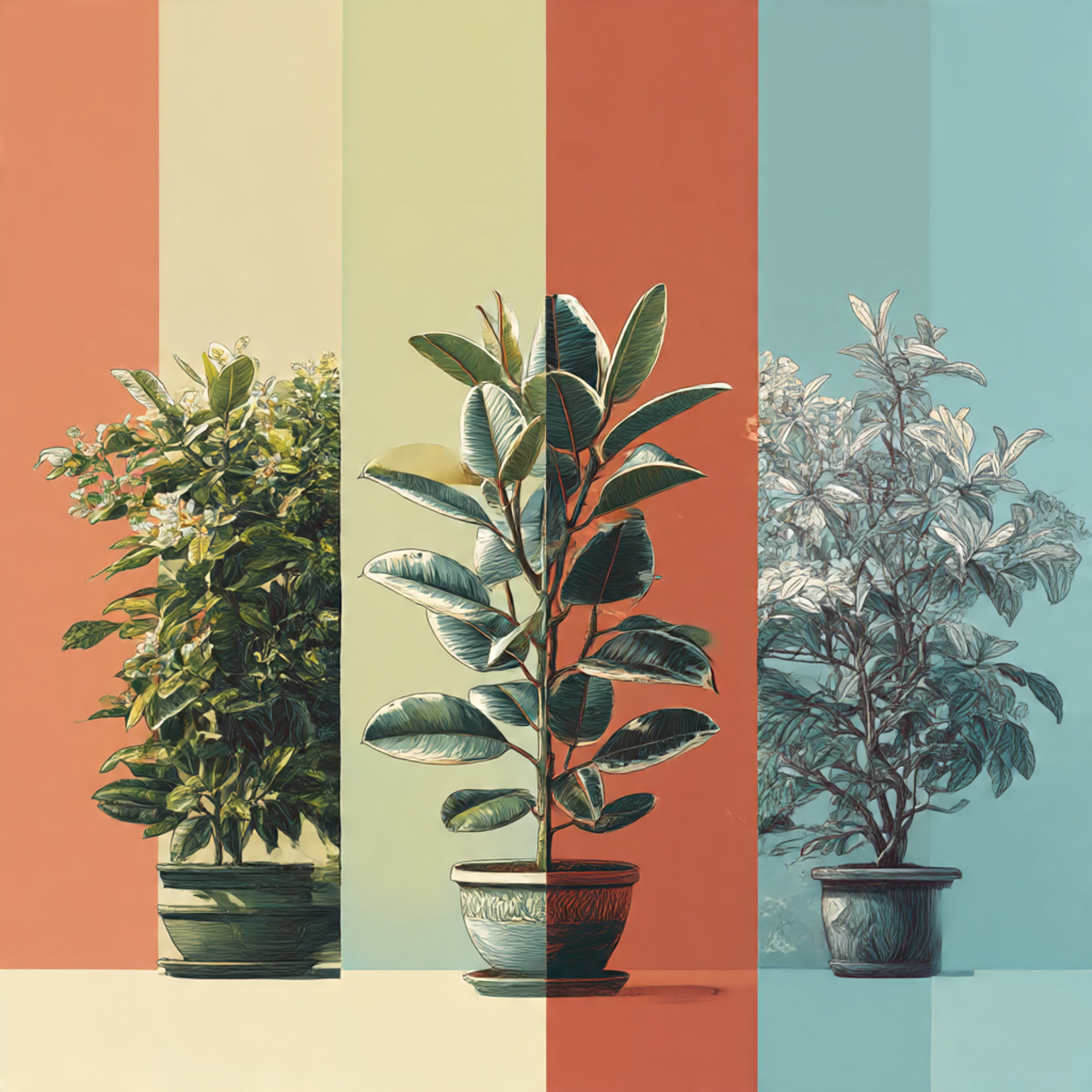
Your rubber plant experiences seasons just like you do, even indoors. Adapting your care routine ensures year-round health.
Seasonal Care Calendar:
- Spring/Summer (Growing Season): Water when top inch is dry (every 5-7 days), fertilize monthly, prune if needed, wipe leaves weekly.
- Fall/Winter (Dormant Period): Reduce watering frequency (every 10-14 days), skip fertilizer completely, maintain humidity with a pebble tray if air is dry, rotate plant quarterly for even growth.
Practical Tip: In winter, heated indoor air becomes very dry. Place your pot on a tray filled with pebbles and water (bottom of pot above water level) to increase humidity around the plant without risking root rot.
Rubber Plant and Pets
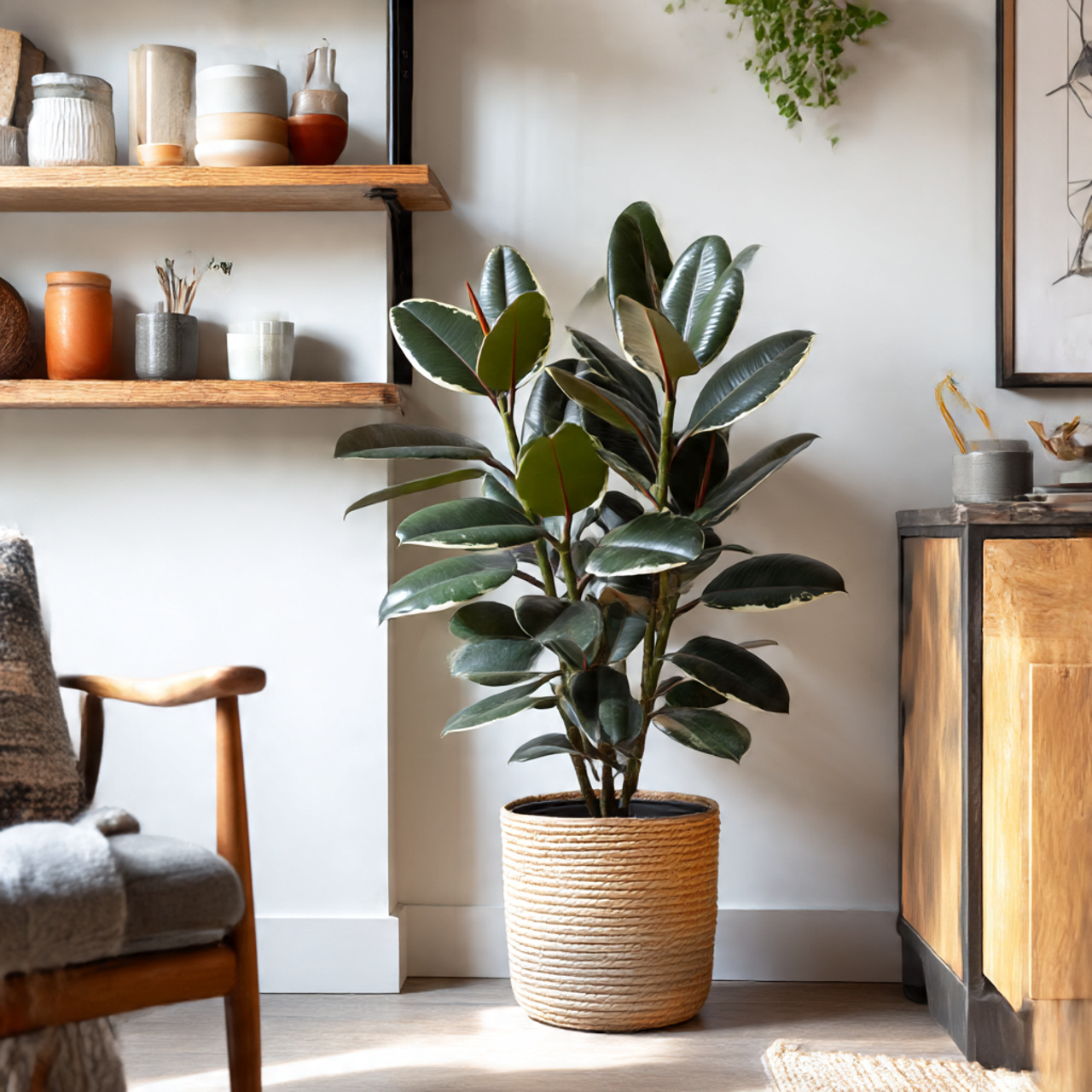
As beautiful as rubber plants are, they contain a latex sap that’s mildly toxic if chewed or ingested by cats or dogs. Symptoms include drooling, vomiting, or oral irritation.
Pet-Safe Strategies:
- Place plants on high shelves or plant stands out of reach.
- Use hanging planters if you have curious cats.
- Create a designated “pet-safe plant zone” with non-toxic options like spider plants or Boston ferns, training pets that those are okay to investigate.
Rubber Plant Growth Problems
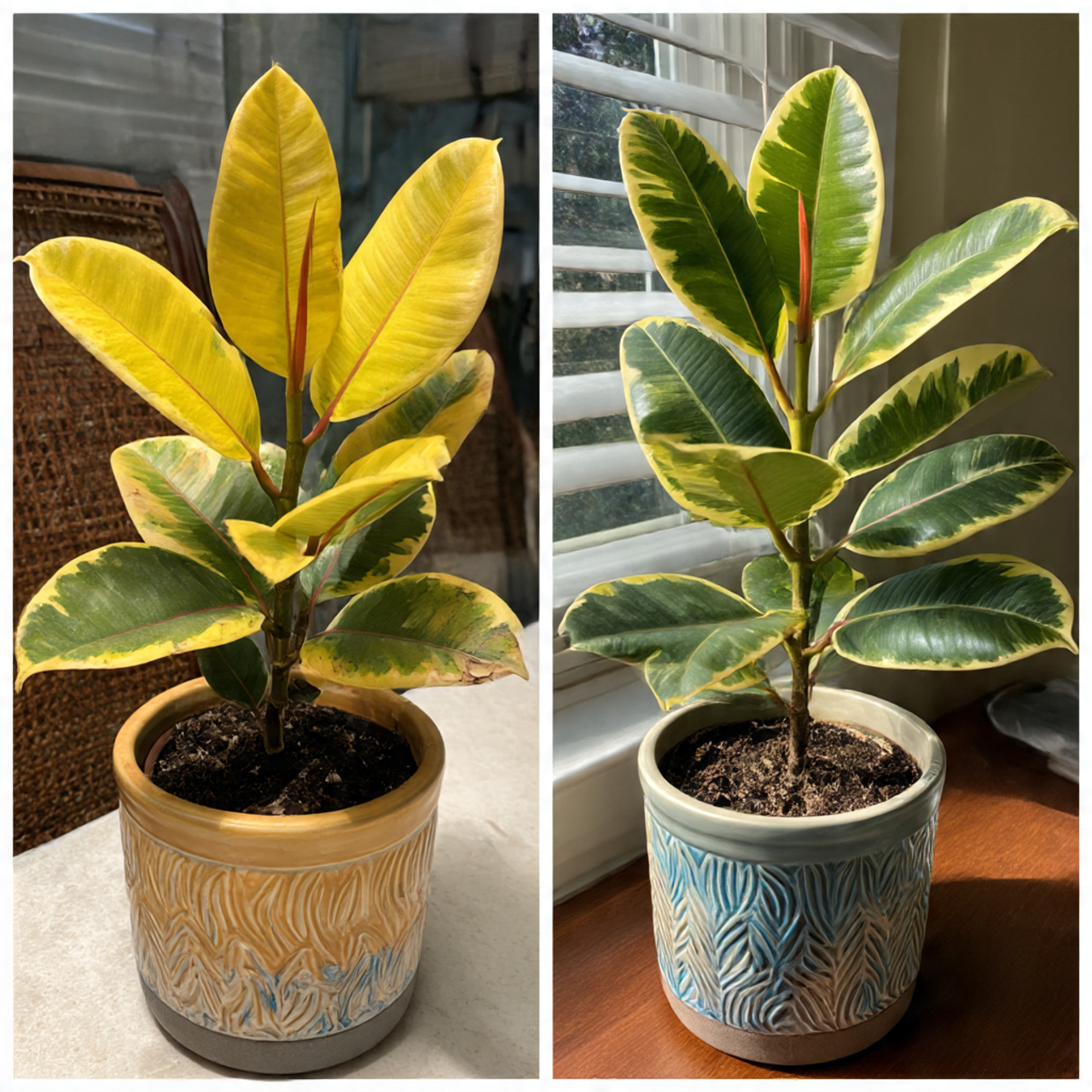
Even with great care, issues occasionally pop up. The good news? Your rubber plant tells you exactly what’s wrong through its leaves.
Problem-Solving Guide:
- Yellowing lower leaves: Usually overwatering. Let soil dry out more between waterings.
- Leaves dropping suddenly: Temperature shock from drafts or moving the plant. Keep away from doors, windows, and vents.
- Brown, crispy leaf edges: Too much direct sun or low humidity. Move back from window or increase humidity.
- Leggy growth with small leaves: Insufficient light. Move closer to a light source.
- Leaves losing color/variegation fading: Needs more light, especially for variegated varieties.
Recovery Tip: Make adjustments gradually. Sudden changes stress plants further. Move your plant 1-2 feet at a time over several days rather than relocating it across the room all at once.
Rubber Plant Leaf Cleaning
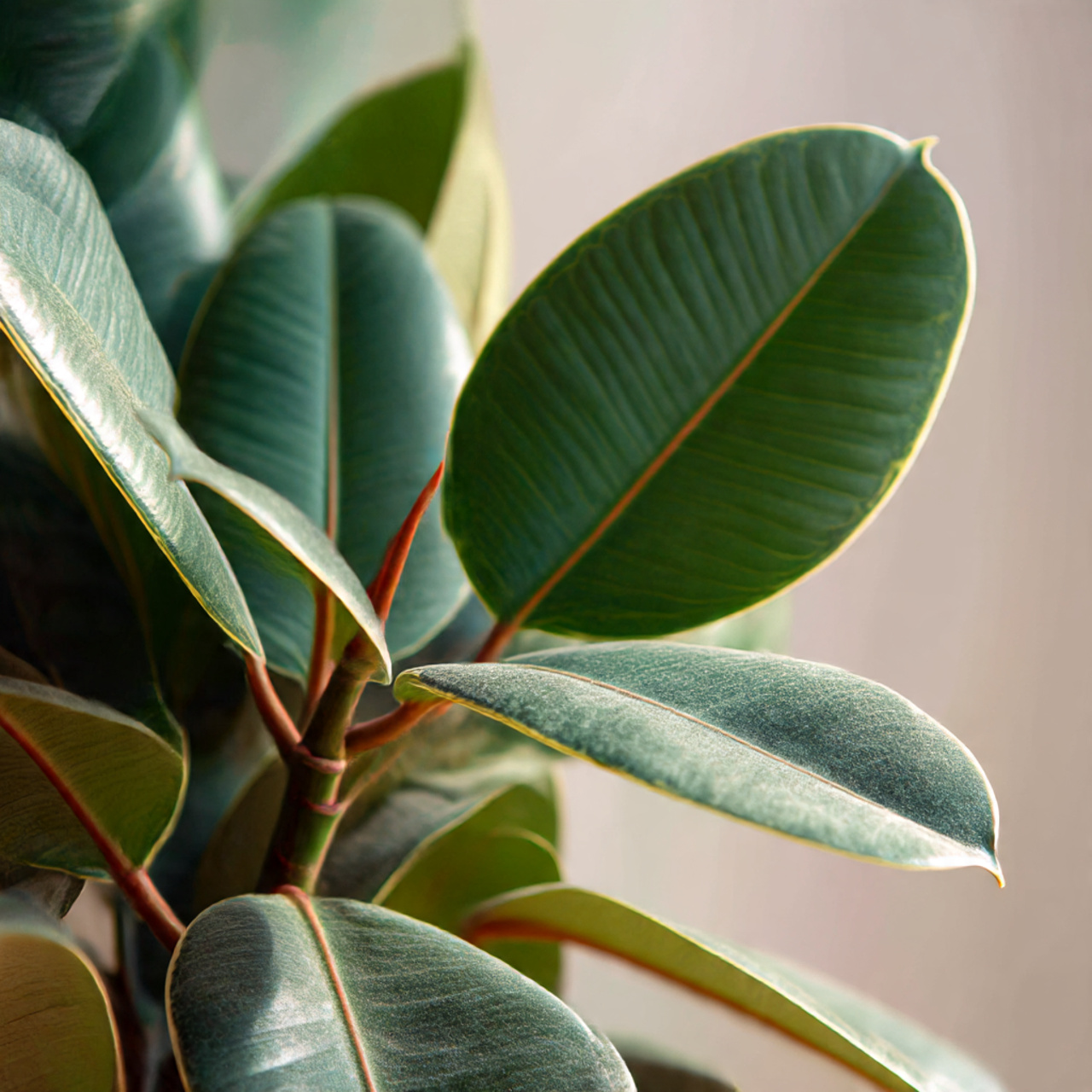
Dust accumulation isn’t just cosmetic—it literally blocks the light your plant needs to produce food through photosynthesis. Clean leaves also photosynthesize up to 30% more efficiently.
Leaf Cleaning Method:
- Support each leaf from underneath with one hand.
- Using a soft, damp microfiber cloth, gently wipe from the base to the tip, following the natural direction.
- Clean both top and bottom surfaces—pests often hide on undersides.
- For extra shine and pest prevention, mix 1-2 drops of mild dish soap in a cup of lukewarm water, or use diluted neem oil (1 tsp per cup water) once monthly.
Time-Saving Tip: If your plant is small enough, take it into the shower and give it a gentle lukewarm rinse every few months. This mimics natural rainfall and cleans everything at once. Let it drain completely before returning to its spot.
Rubber Plant Soil Mix
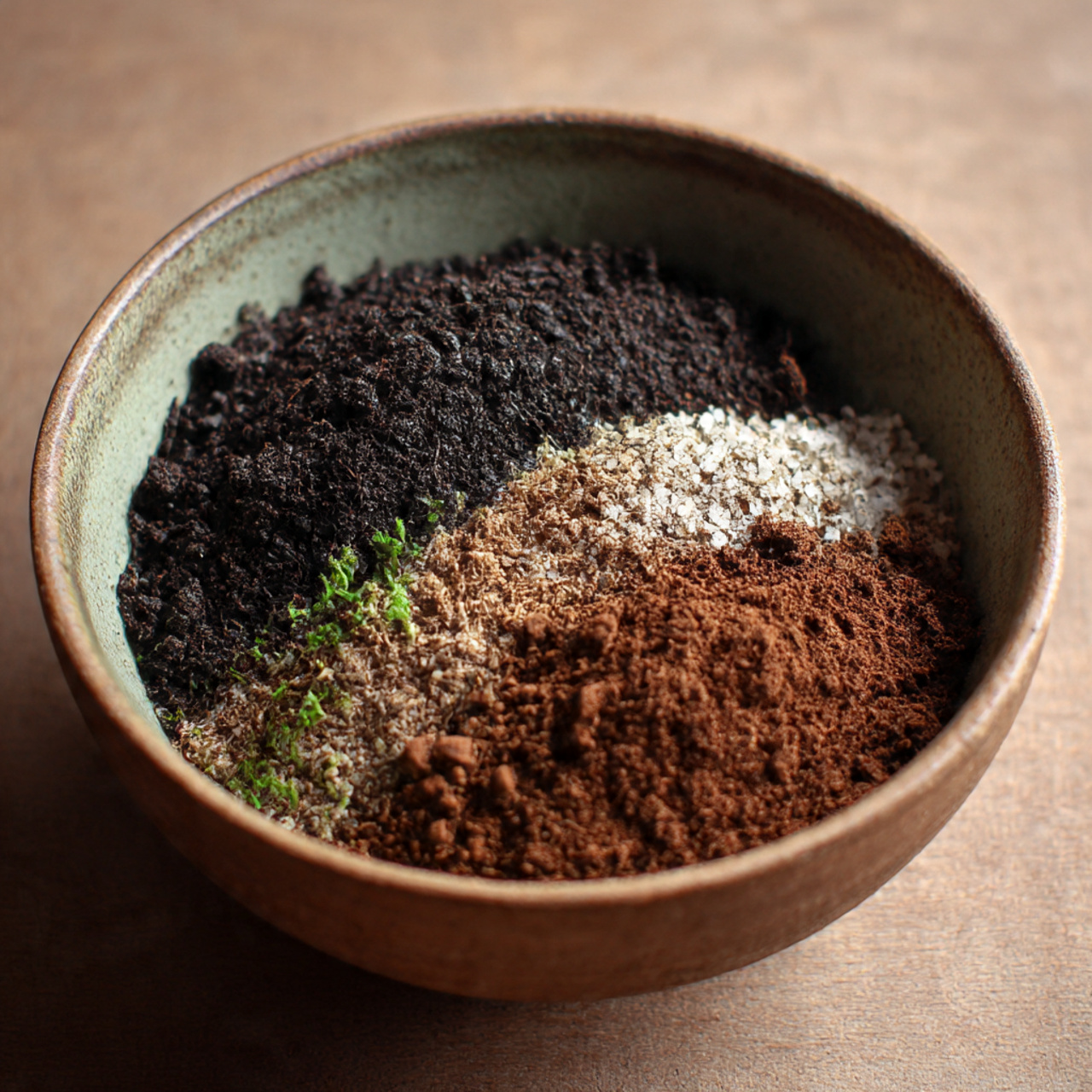
Soil is your plant’s foundation—literally. The right mix provides the perfect balance of moisture retention, drainage, and nutrition. Never use straight garden soil for indoor plants; it’s too dense and compacts easily.
DIY Soil Recipe:
- 40% peat moss or coco coir (moisture retention)
- 30% perlite or pumice (drainage and aeration)
- 20% quality potting mix (nutrition and structure)
- 10% compost or worm castings (slow-release nutrients)
Buying Tip: If mixing your own sounds complicated, look for bags labeled “tropical plant mix” or “aroid mix” at garden centers. These are already formulated with the drainage rubber plants love.
Good soil feels light and fluffy, never dense or muddy. When you water, it should absorb quickly and drain within seconds—not pool on top or rush straight through.
Rubber Plant Prop Styling

Interior designers love rubber plants because they add instant sophistication without overwhelming a space. The key is treating them as functional sculpture.
Professional Styling Ideas:
- Mid-Century Modern: Pair your rubber plant with a wooden tripod stand and teak furniture. The organic curves complement the era’s clean lines.
- Bohemian Chic: Use a woven basket or macramé hanger. Layer with other plants of varying heights.
- Industrial Loft: Place in a concrete or metal planter. Position against exposed brick or next to metal shelving.
- Scandinavian Minimalist: Choose a simple white ceramic pot. Let the plant be the only “decoration” in a corner with natural wood flooring.
Photography Tip: Rubber plants photograph beautifully and are popular props in home staging and product photography. Their glossy leaves reflect light naturally, adding depth to flat images. Position them slightly behind or beside your subject for professional-looking composition.
Rubber Plant in Outdoor Spaces
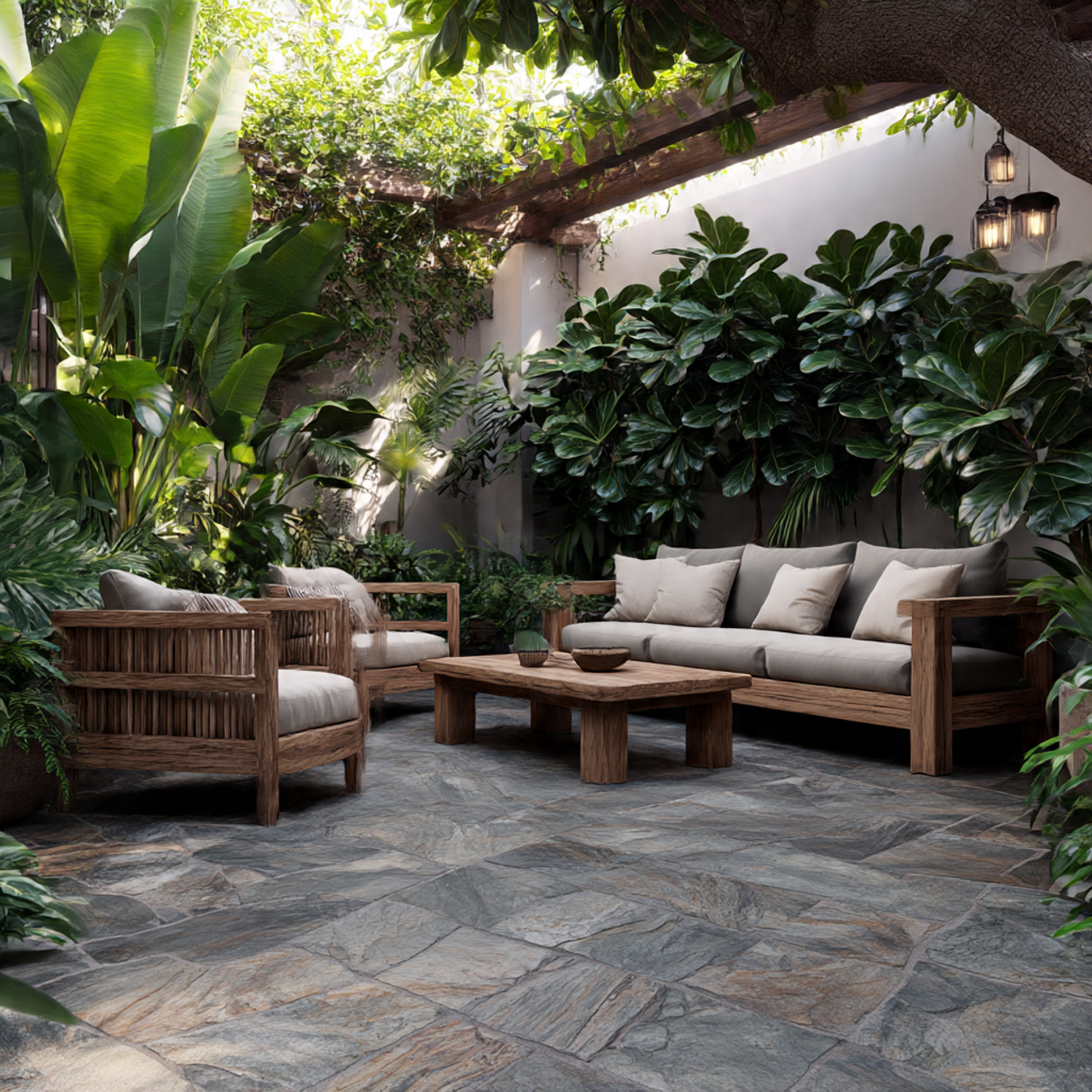
If you live where temperatures stay above 50°F (10°C) year-round, your rubber plant can live outdoors and reach magnificent sizes—sometimes 20-30 feet tall as a landscape tree.
Outdoor Growing Guidelines:
- Choose a location with partial shade—under a large tree canopy or on a covered patio works perfectly.
- Morning sun with afternoon shade provides ideal conditions.
- Protect from strong winds that can tear or damage leaves.
- Use well-draining soil amended with compost.
Temperature Alert: If you experience occasional cold snaps, have a plan to cover your plant with frost cloth when temperatures dip below 50°F, or keep it in a large container you can move indoors temporarily.
In tropical and subtropical regions like Southern Florida, Southern California, or Hawaii, rubber plants become stunning landscape features that require virtually no maintenance once established.
Rubber Plant Longevity and Legacy
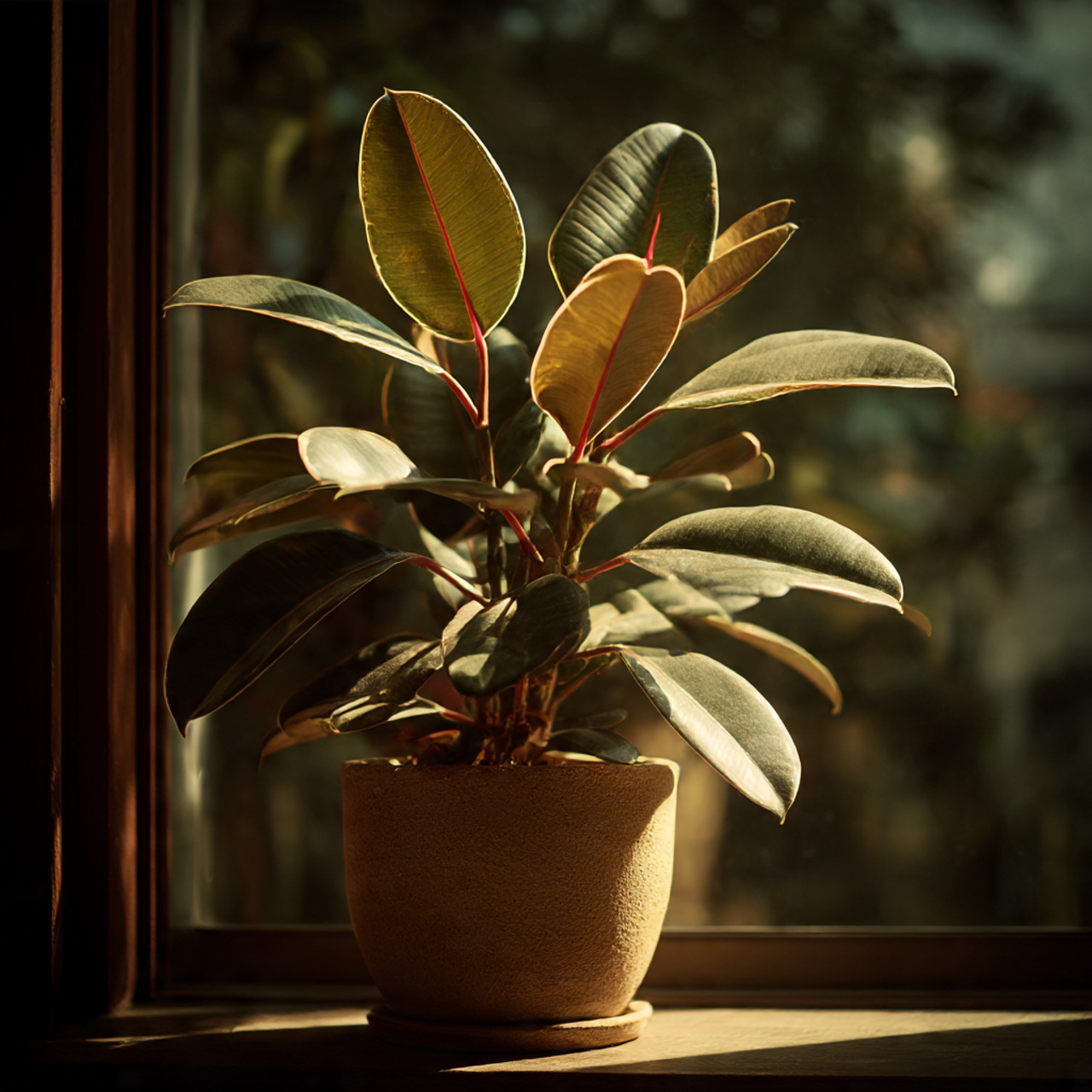
With proper care, your rubber plant can live for 50+ years, making it a genuine family heirloom. Many people inherit rubber plants from parents or grandparents, continuing the care tradition across generations.
Creating Your Legacy Plant:
- Document your plant’s journey with photos annually—watching growth over decades is remarkable.
- Pass along care knowledge when gifting propagated cuttings to family members.
- Consider starting a plant when a child is born—it becomes a living timeline of their growth.
Longevity Secret: Consistency is key. Rubber plants thrive on routine—same watering schedule, same location, same care year after year. Avoid constantly moving or changing conditions. Plants that stay in one happy spot for decades grow the largest and healthiest.
There’s something deeply satisfying about nurturing a living thing that outlasts most furniture, electronics, and even some cars. Your rubber plant becomes part of your home’s story.
Rubber Plant Home Styling Inspiration
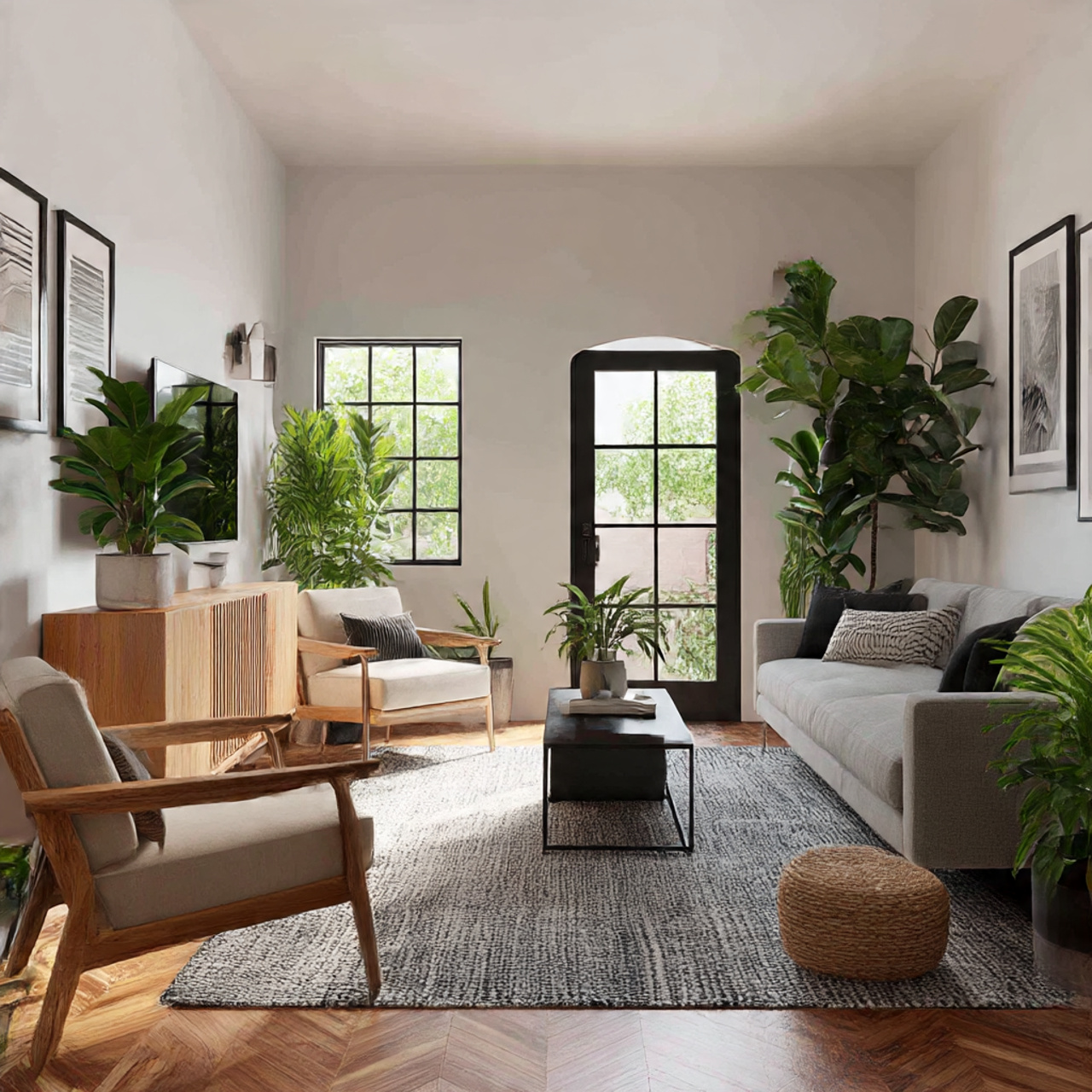
No matter your aesthetic, the rubber plant adapts beautifully. Its architectural form and timeless appeal make it the Swiss Army knife of houseplants.
Complete Design Blueprint:
For Small Spaces: Choose a 2-3 foot plant in a corner with a minimalist white planter. Adds life without cluttering.
For Large Rooms: Go bold with a 6-8 foot floor plant. It fills vertical space and creates a statement in high-ceilinged rooms.
For Plant Collections: Use rubber plants as “anchor plants”—their height and solidity ground collections of smaller, bushier plants.
Color Coordination Tip: Dark green rubber plants pop against light walls. Variegated varieties look stunning with jewel-toned accent walls (emerald, sapphire, burgundy).
Group odd numbers (3 or 5) of plants at varying heights for the most visually pleasing arrangements. Place your tallest rubber plant in back, medium plants in middle, trailing or shorter plants in front for professional-looking depth and dimension.
FAQs About Rubber Plant
Q1: How often should I water my rubber plant?
Water when the top inch of soil feels dry to the touch—typically every 7-10 days in summer and every 10-14 days in winter. Always check soil moisture rather than following a strict schedule, as frequency varies based on your home’s temperature, humidity, and light levels.
Q2: Can rubber plants survive in low light conditions?
Yes, rubber plants tolerate low light, but they won’t thrive. Growth slows significantly, leaves may become smaller, and variegated varieties often lose their colorful patterns and revert to solid green. For best results, provide bright, indirect light from an east or north-facing window.
Q3: Why is my rubber plant dropping leaves?
Leaf drop usually signals overwatering (check if soil is soggy), cold drafts from air conditioning or windows, or sudden environmental changes like moving the plant to a new location. Sometimes a few lower leaves dropping is normal as the plant matures. Adjust watering, ensure stable temperatures above 60°F, and avoid moving your plant frequently.
Q4: How tall can a rubber plant grow indoors?
Indoors, rubber plants typically reach 6-10 feet tall, though they can be pruned to maintain any height you prefer. Without pruning, they’ll grow as tall as your ceiling allows. Outdoors in tropical climates, they become trees reaching 30+ feet.
Q5: Are rubber plants toxic to cats and dogs?
Yes, rubber plants are mildly toxic to pets if chewed or ingested. The milky sap causes drooling, vomiting, and oral irritation. Place plants on high shelves or use hanging planters to keep them out of reach. If ingestion occurs, contact your veterinarian promptly.
Q6: What do I do about brown spots on leaves?
Brown crispy spots indicate too much direct sunlight—move your plant back from the window. Brown mushy spots suggest fungal issues from overwatering—reduce watering frequency and ensure proper drainage. Small brown tips are often caused by low humidity or fluoride in tap water—use filtered water and increase humidity.
Final Thoughts: Your Rubber Plant Journey Starts Now
The rubber plant offers something rare in our busy modern lives: beauty that requires minimal effort but delivers maximum impact. It’s not just about having a pretty plant—it’s about inviting nature into your daily space, breathing cleaner air, and nurturing something that grows alongside you.
Whether you’re furnishing your first studio apartment, refreshing your family home, or adding life to your office, this resilient plant adapts to your lifestyle. It forgives missed waterings, tolerates imperfect light, and rewards your basic care with years—even decades—of stunning foliage.
Start with one rubber plant. Learn its rhythm. Watch it grow. And before you know it, you’ll understand why plant lovers around the world consider it indispensable. This isn’t just adding greenery to your home—it’s creating a living, breathing space that feels more balanced, more beautiful, and more like home.
Your rubber plant journey begins with a single step: bringing one home and giving it a chance to transform your space. Trust the process, enjoy the growth, and welcome this incredible plant into your life.