15 Rain Garden Ideas to Create an Eco-Friendly Yard
Managing rainwater runoff has become a pressing challenge for homeowners who care about sustainable living. If you’ve noticed water pooling in your yard or streaming down your driveway during storms, you’re not alone. A rain garden ideas, provide a beautiful and practical solution that works with nature instead of against it.
Think of a rain garden as your yard’s natural sponge. It catches rainwater from your roof, driveway, and other hard surfaces, allowing it to soak slowly into the ground rather than rushing into storm drains or washing away your topsoil. The best part? These gardens don’t just solve problems—they create stunning outdoor spaces that attract butterflies, birds, and beneficial insects while changing with each season.
Whether you’re working with a compact city lot or a spacious suburban property, the right approach can help you prevent flooding, clean pollutants from runoff, and establish a gorgeous garden feature that makes your neighbors ask, “How did you do that?”
Understanding the Basics of Rain Garden Design
Getting started with a rain garden doesn’t require a degree in landscape architecture, but knowing a few key principles will set you up for success.
Location is everything. Your rain garden should sit at least 10 feet away from your home’s foundation to protect it from water damage. Look for natural low spots where water already tends to gather after storms—these areas are perfect candidates. The garden itself should be a gentle depression between 4 and 8 inches deep with gradually sloping sides that prevent erosion and make maintenance a breeze.
Soil matters more than you might think. Regular yard soil often doesn’t drain quickly enough for a rain garden. You’ll want to mix in compost and sand to create a blend that allows water to percolate efficiently while keeping your plants healthy and happy.
Quick tip: Before digging, call 811 to have underground utilities marked. Nothing ruins a weekend project faster than accidentally hitting a water or gas line!
Native Plant Selection for Maximum Impact
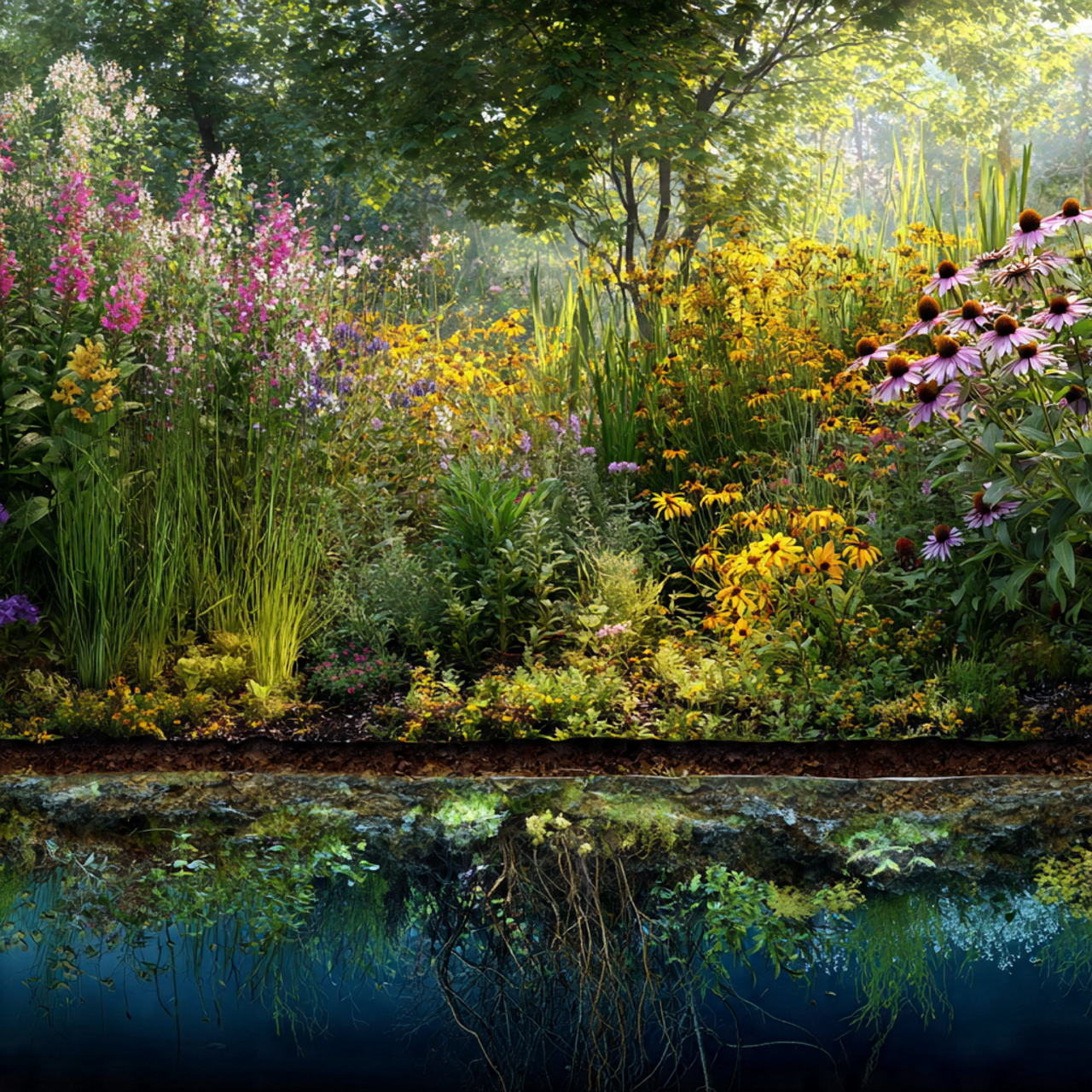
Choosing plants native to your region is hands-down the smartest decision you’ll make for your rain garden’s long-term success.
Native species have spent thousands of years adapting to your area’s rainfall patterns, soil conditions, and temperature swings. They’ve developed deep, extensive root systems that create natural channels for water to seep into the ground. Once established, these plants practically take care of themselves—no constant watering, fertilizing, or fussing required.
For the wettest areas where water pools longest, try cardinal flower, swamp milkweed, or joe-pye weed. These moisture lovers thrive with “wet feet.” Along the drier edges, black-eyed susans and purple coneflowers excel, handling both occasional flooding and drought conditions.
Why this matters for your ecosystem: Native plants provide exactly what local butterflies, bees, and birds need to survive. They’ve evolved together over millennia, creating perfect partnerships for food and shelter.
Smart planting strategy:
- Deepest zone (wettest): Moisture-loving species that tolerate standing water
- Middle zone: Versatile plants that handle moderate moisture
- Outer edges: Drought-tolerant varieties that dry out quickly
Common mistake to avoid: Don’t randomly scatter plants throughout your garden. Grouping them by water tolerance ensures each plant gets the moisture level it prefers, resulting in healthier growth and fewer losses.
Creating Natural Stone Borders
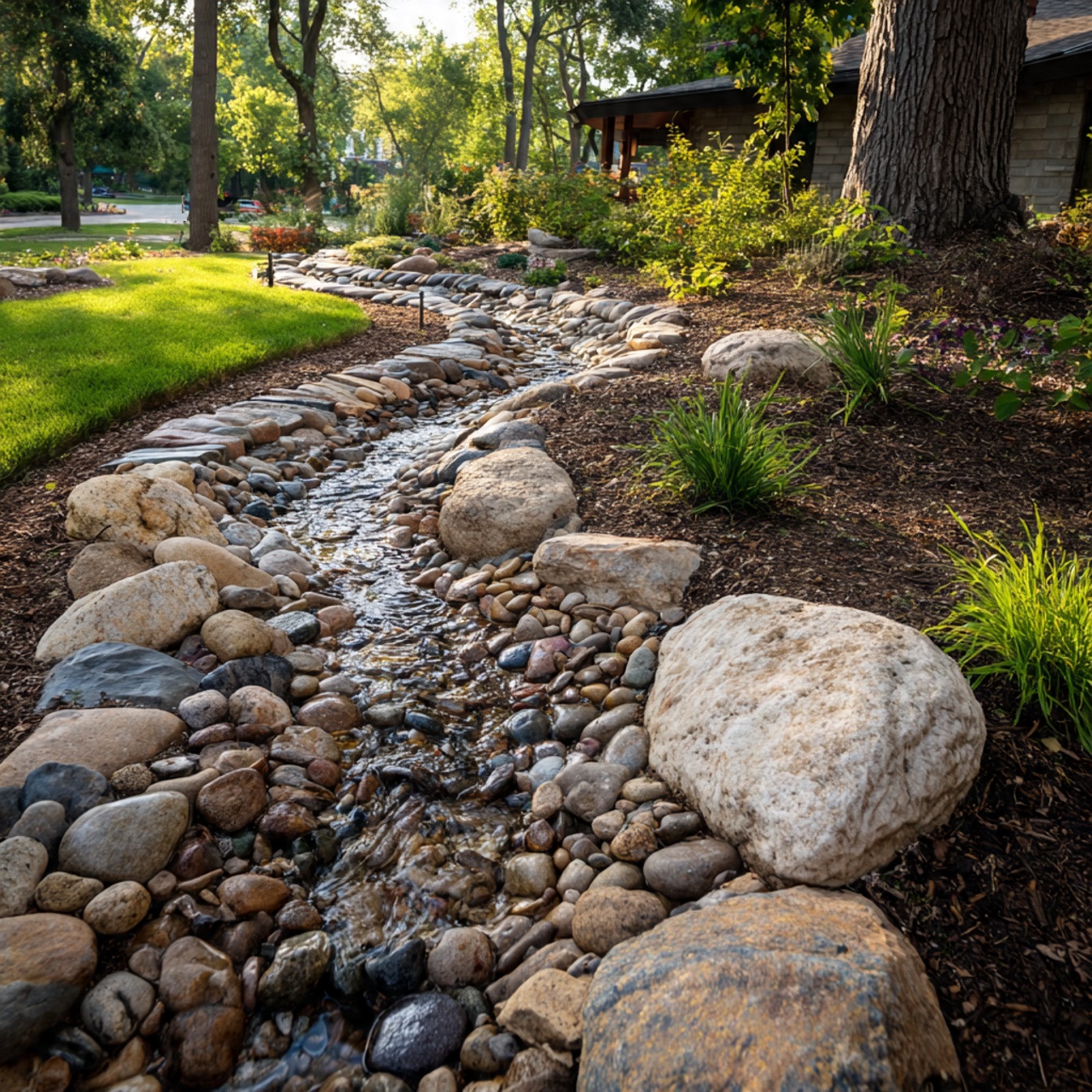
Natural stone edging serves double duty—it looks gorgeous and solves practical problems that plague poorly designed rain gardens.
River rock, fieldstone, or locally sourced boulders define your garden’s boundaries while preventing mulch from washing away during heavy downpours. These materials allow water to flow freely into the garden while keeping your lawn and soil exactly where they belong. At the inlet where water rushes in, place larger stones strategically to slow the flow and prevent erosion from carving channels through your carefully prepared soil.
Stone borders also create a clean edge that makes mowing around your garden easier and gives the whole feature a polished, intentional appearance.
Scale matters: Large properties can handle dramatic boulders that create visual impact, while smaller yards look better with modest river rock arrangements. Stack stones in irregular, natural-looking patterns rather than rigid lines—think woodland creek bed, not formal garden wall.
Pro tip: Visit local stone yards instead of big-box stores. You’ll find better selection, more interesting shapes, and often better prices on bulk purchases.
Safety consideration: Larger boulders are heavy! Use proper lifting techniques or mechanical help to avoid injury during installation.
Installing a Swale Connection
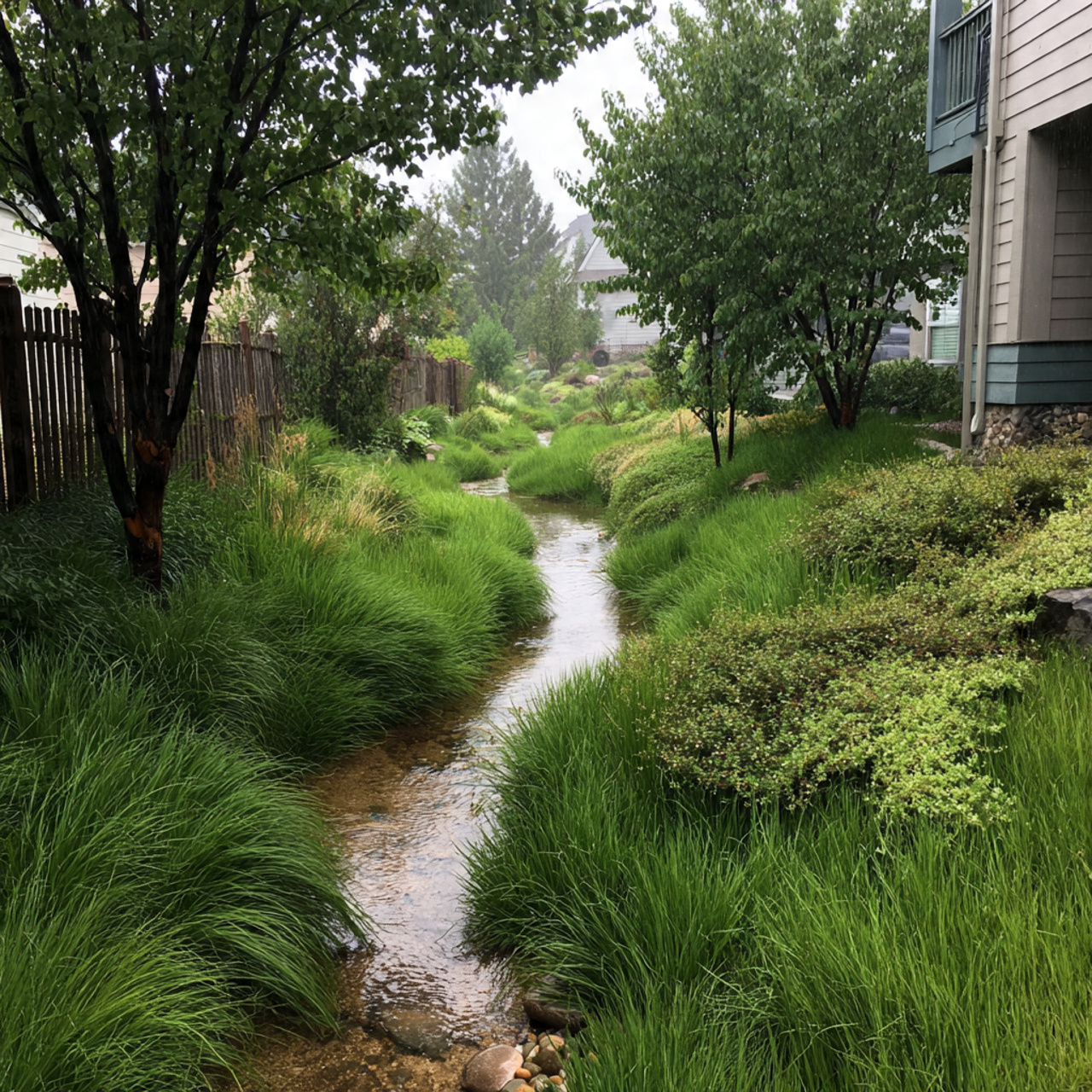
Getting water from your downspout or driveway to your rain garden efficiently requires a swale—basically a shallow, vegetated channel that guides runoff where you want it to go.
This gentle depression should slope gradually toward your rain garden at a 1-2% grade (that’s about 1-2 inches of drop per 10 feet of length). Line it with erosion-resistant grasses or low-growing sedges that hold soil in place while adding attractive greenery to your landscape.
Dual benefits: During storms, your swale acts as a water highway. During dry periods, it functions as an attractive landscape feature that blends seamlessly with surrounding plantings.
Why swales beat pipes: Unlike buried drainage pipes, vegetated swales slow water flow naturally and filter out sediment before it reaches your main garden. The plants’ roots stabilize soil while the foliage reduces water velocity.
Advanced technique: Make your swale longer than strictly necessary. The extended length provides more infiltration opportunities, reducing the total water volume that reaches your rain garden during extreme weather events.
Common mistakes to avoid:
- Making the swale too steep (causes erosion)
- Using bare soil instead of vegetation (invites weeds and erosion)
- Creating too shallow a channel (water overflows during heavy rains)
Incorporating Colorful Perennials for Year-Round Interest
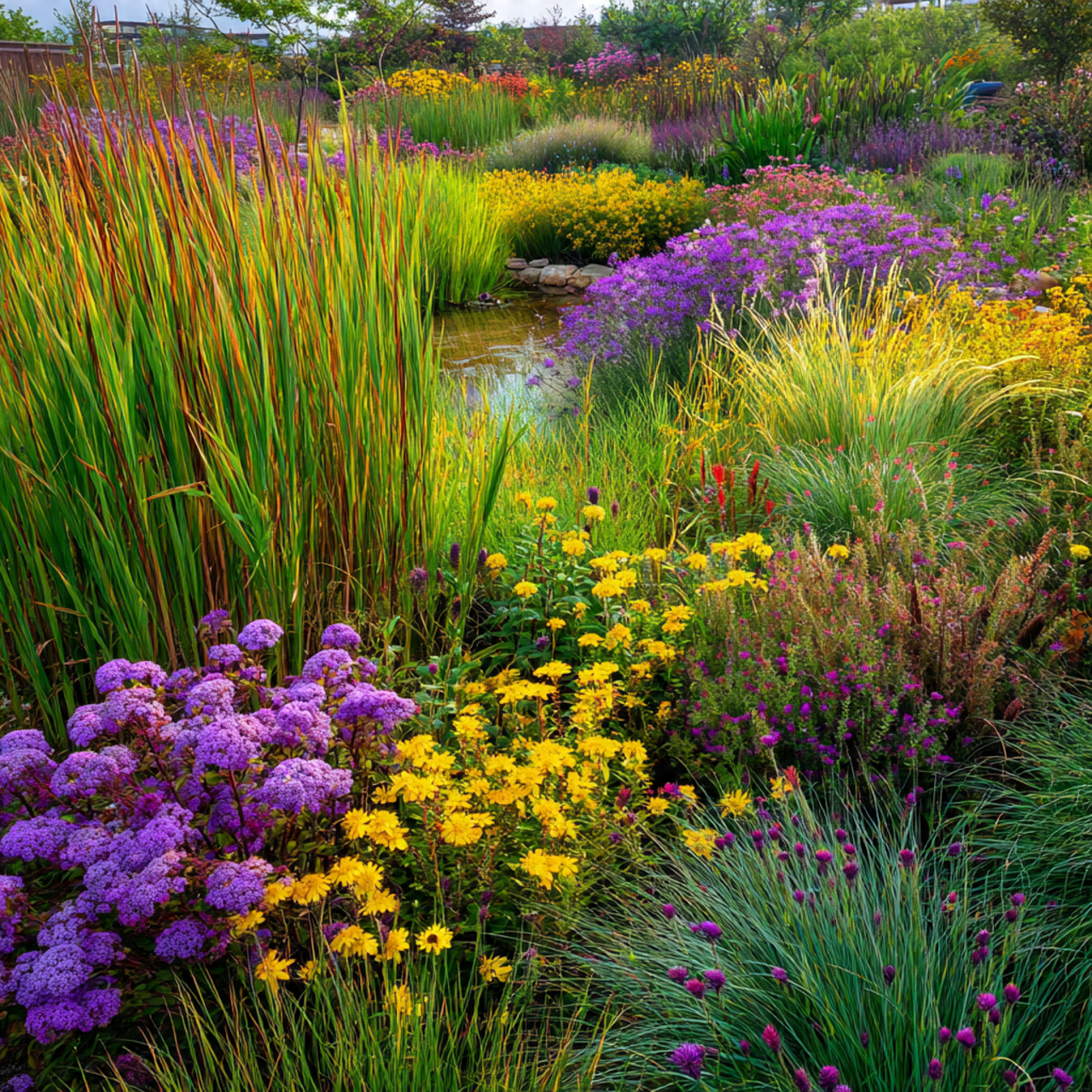
A rain garden that only looks good for two weeks in June isn’t living up to its potential. Strategic perennial selection creates non-stop color from early spring through late fall.
Think of your garden as a relay race, with different plants taking the baton throughout the season. Marsh marigolds kick things off with vibrant yellow blooms in April. Ironweed takes over in late summer with purple flower spikes. Asters and goldenrod finish strong in autumn, providing crucial nectar for migrating monarch butterflies.
Beyond flowers, consider texture and height:
- Tall grasses like switchgrass or little bluestem add vertical drama and graceful movement
- Lower-growing sedges create living groundcover that chokes out weeds
- Mix fine-textured plants with bold-leaved species for visual contrast
Example bloom schedule:
- April-May: Marsh marigold, Virginia bluebells
- June-July: Black-eyed susan, bee balm
- August-September: Ironweed, joe-pye weed
- October: Asters, goldenrod
Tip: Even when plants aren’t flowering, interesting foliage textures and seed heads keep your garden attractive. This transforms what could be purely functional into a dynamic four-season feature.
Designing with Layered Planting Zones
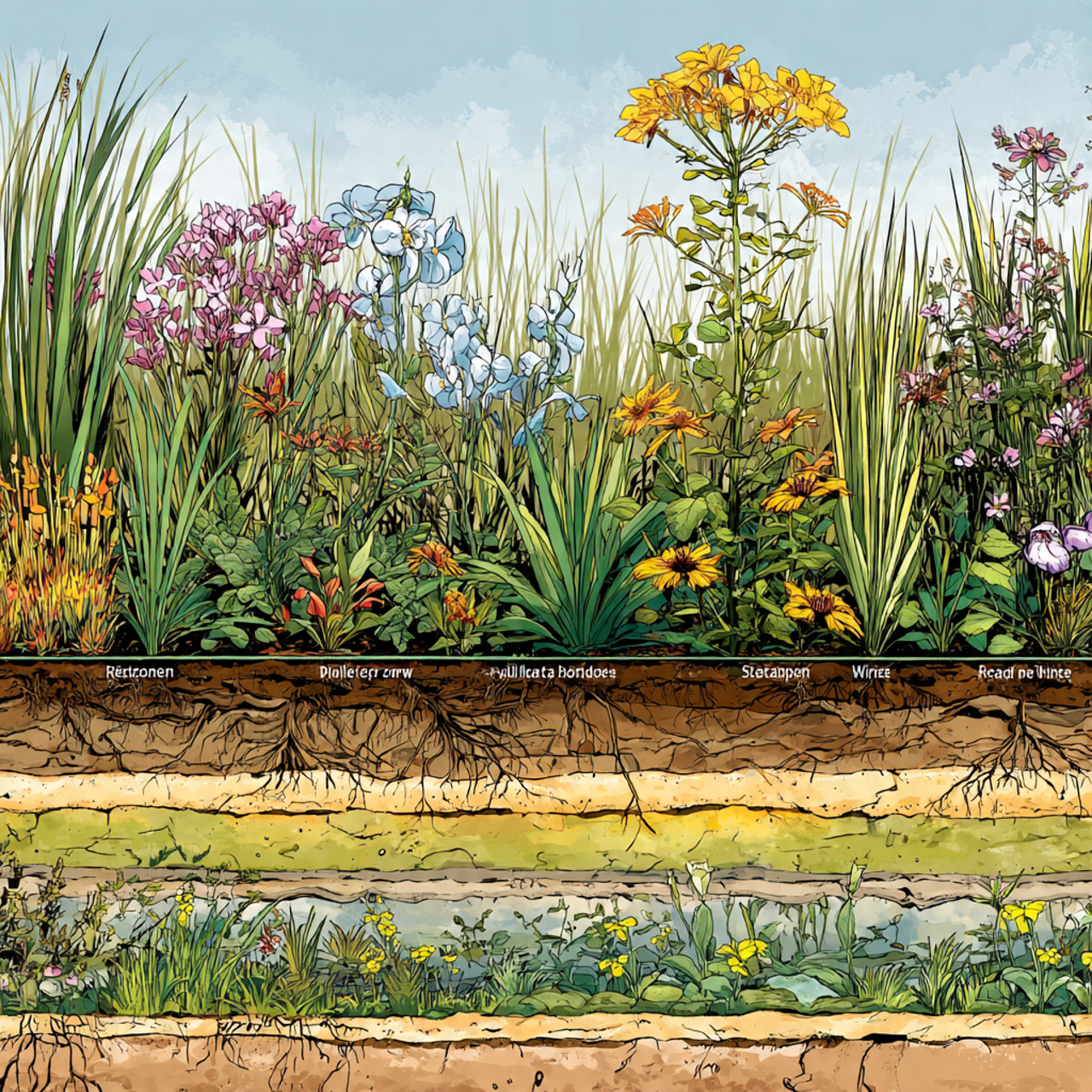
Scientific research shows that dividing your rain garden into moisture zones based on how long water sits creates optimal conditions for each plant while maximizing water-handling capacity.
The three-zone system:
Zone 1 (Deepest/Wettest): This area may hold water for up to 48 hours after heavy rain. Choose plants that tolerate saturated soils like buttonbush or cardinal flower. These plants actually enjoy “wet feet” and will thrive where others would rot.
Zone 2 (Middle): Experiences moderate moisture—wet after rains but draining within 24 hours. Perfect for versatile plants like blue flag iris or swamp milkweed that handle both wet and relatively dry conditions.
Zone 3 (Outer/Driest): Dries out quickly after storms. Requires drought-tolerant species like little bluestem grass or butterfly weed that won’t suffer during dry spells between rain events.
Planning tip: Sketch your design on paper before buying plants. Note which areas get full sun versus partial shade, and mark drainage patterns. This prevents expensive mistakes and creates a cohesive design that actually works.
Avoid this mistake: Don’t place moisture-loving plants on the dry edges or drought-tolerant plants in the wet center. Ignoring moisture preferences leads to plant death and wasted money.
Adding a Dry Creek Bed Feature
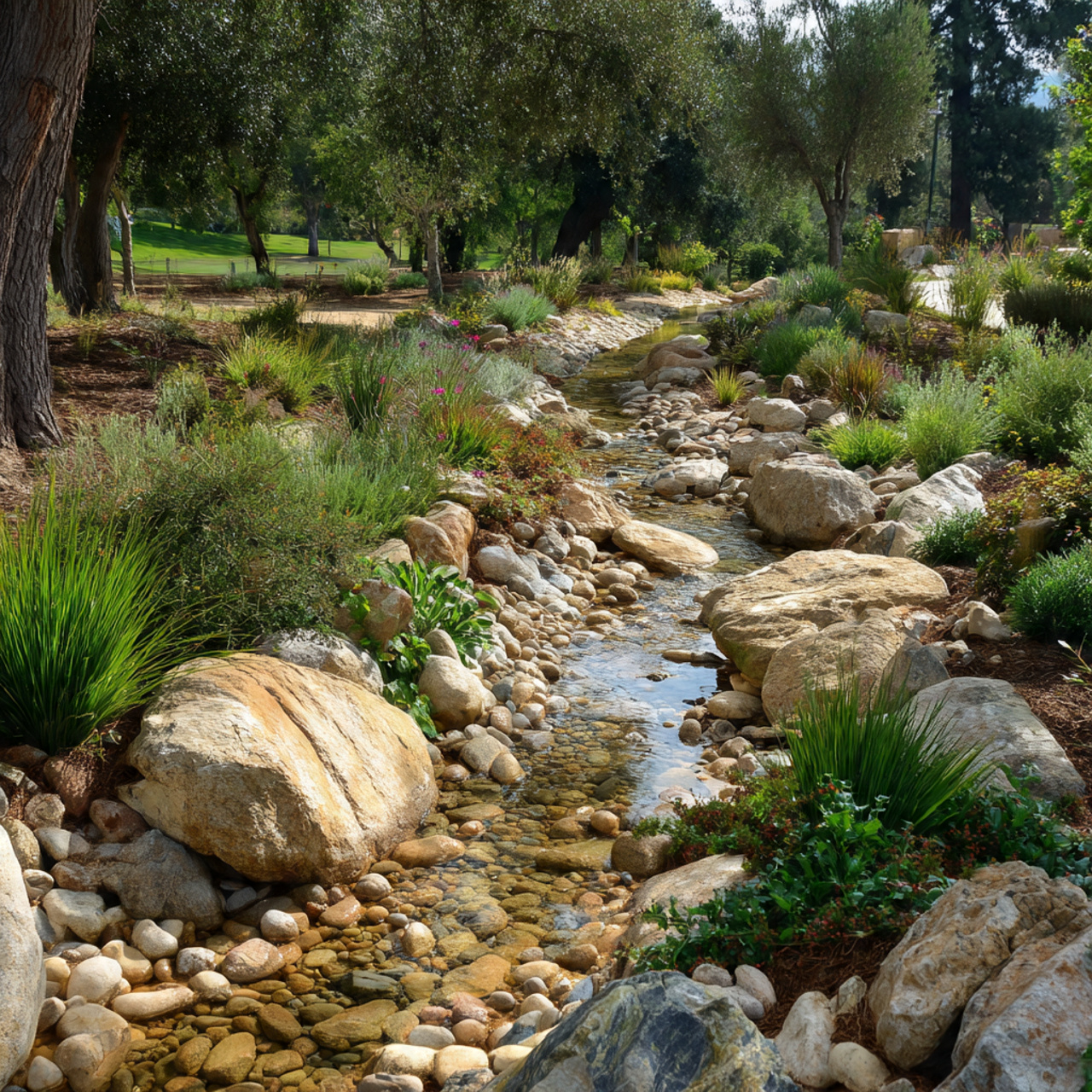
A dry creek bed combines stunning visual appeal with serious water-management capability, creating one of the most dramatic rain garden features you can install.
Use river rocks in varying sizes to create a meandering channel that comes alive during storms but serves as an eye-catching landscape element during dry weather. Position larger boulders along the edges to create natural-looking banks and prevent erosion. Fill the channel with smooth river stones that allow water to flow freely while filtering sediment.
When this approach really shines: Properties with significant slopes or substantial runoff volumes benefit most. The dry creek bed can collect water from multiple sources—downspouts, driveways, and patios—routing everything efficiently to your rain garden.
Design technique: Make the creek bed meander naturally rather than running in a straight line. Natural streams curve, and yours should too. This increases the channel length (more infiltration time) while looking more authentic.
Plant placement strategy:
- Moisture-loving plants directly along the creek banks
- Transition to moderate-moisture plants 2-3 feet away
- Drought-tolerant species on higher ground away from the channel
Example: Imagine a gentle stream that only flows after rainstorms—that’s the aesthetic you’re creating. During dry periods, it’s a beautiful rock feature. During storms, it becomes functional artwork.
Utilizing Ornamental Grasses for Structure
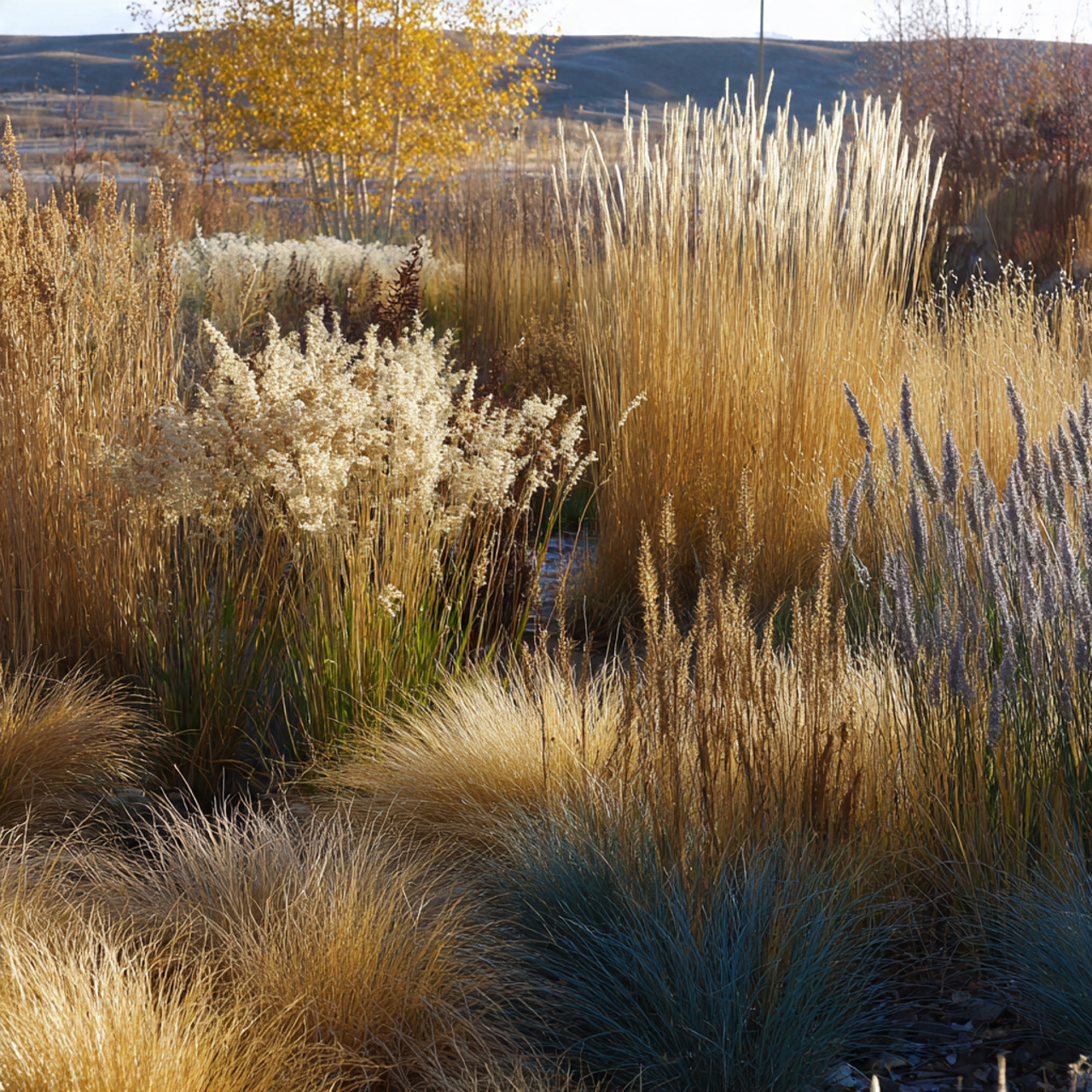
Ornamental grasses deliver exceptional visual impact while requiring minimal maintenance—a winning combination for busy homeowners.
Native grasses like prairie dropseed, switchgrass, and tufted hairgrass offer textures ranging from fine and delicate to bold and architectural. They contrast beautifully with broadleaf perennials while developing extensive root systems that enhance soil structure and dramatically increase water infiltration rates.
Four-season interest:
- Spring: Fresh green growth emerges
- Summer: Airy seed heads sway in breezes
- Autumn: Golden and bronze tones develop
- Winter: Attractive dried silhouettes add structure
Height arrangement strategy:
- Background/center: Tall grasses like big bluestem (4-6 feet)
- Middle ground: Medium grasses like little bluestem (2-3 feet)
- Edges: Short varieties like Pennsylvania sedge (6-12 inches)
Hidden benefits: While you’re enjoying the visual show above ground, those deep grass roots are working beneath the surface to process water, prevent soil compaction, and create channels that help rainwater soak in faster.
Maintenance tip: Cut back ornamental grasses in late winter before new growth emerges. Leave them standing through winter for wildlife habitat and visual interest.
Establishing Mulch Layers for Soil Health
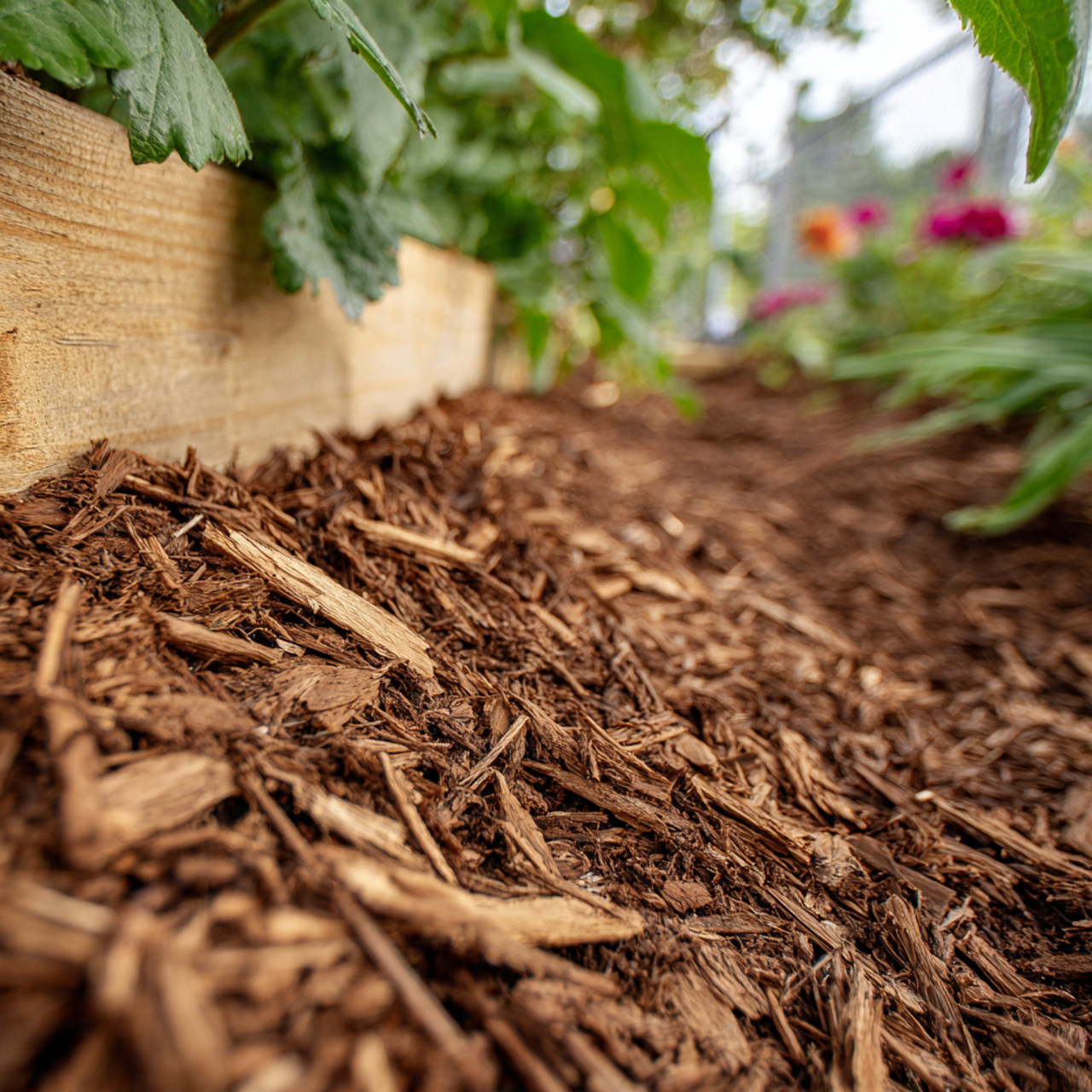
Proper mulching might not sound exciting, but it’s one of the most important steps for long-term rain garden success.
Apply a 2-3 inch layer of shredded hardwood mulch or leaf compost across your entire garden bed, keeping it pulled back slightly from plant stems to prevent rot. This organic blanket moderates soil temperature extremes, reduces water evaporation during dry spells, and gradually breaks down to improve soil structure over time.
Mulch selection matters:
- ✓ Shredded hardwood mulch
- ✓ Leaf compost
- ✓ Wood chips from native trees
- ✗ Dyed mulches (chemicals leach out)
- ✗ Treated wood products (toxic to plants and groundwater)
How it works during storms: Properly applied mulch stays in place during heavy rains while allowing water to penetrate freely. Compare this to bare soil, which compacts and sheds water instead of absorbing it.
Annual maintenance: Refresh your mulch layer each spring. As the previous year’s mulch decomposes (which is good—it’s feeding your soil), add a new layer to maintain the 2-3 inch depth.
Money-saving tip: Many municipalities offer free mulch from chipped yard waste. Call your local public works department to ask about availability.
Creating a Butterfly and Pollinator
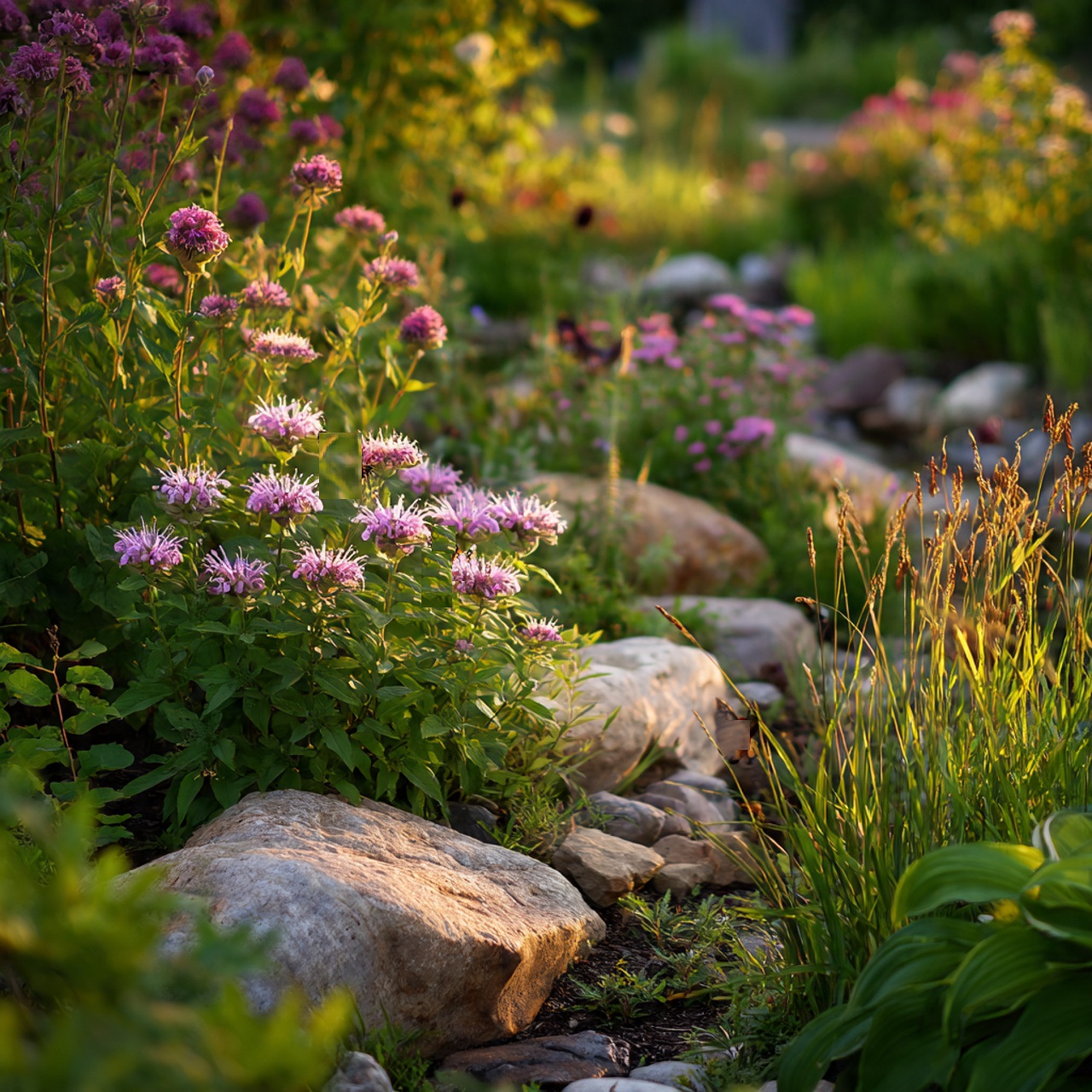
Transforming your rain garden into a pollinator sanctuary multiplies its ecological value far beyond stormwater management.
Select nectar-rich flowers that bloom throughout the growing season: bee balm, mountain mint, and wild bergamot attract butterflies, bees, and hummingbirds. But don’t stop there—include host plants where butterflies can lay eggs. Milkweed supports monarch butterflies, while native violets feed fritillary caterpillars.
Complete habitat checklist:
- ✓ Nectar plants for adult pollinators
- ✓ Host plants for caterpillars
- ✓ Shallow water sources (flat stones in sunny spots)
- ✓ Bare soil patches for ground-nesting bees
- ✓ Overwintering sites (leave dead plant stems standing)
Critical rule: Avoid pesticides completely. Even “organic” pesticides can harm beneficial insects. A truly pollinator-friendly garden works with natural pest control—ladybugs, lacewings, and birds handle pest problems naturally.
Why this matters: Pollinator populations have crashed in recent decades. Your rain garden can provide crucial habitat that supports these threatened species while managing stormwater—a double environmental win.
Observation opportunity: Place a bench near your rain garden and watch the wildlife show. You’ll see butterflies nectaring, bees gathering pollen, and birds hunting insects—proof your garden is working!
Incorporating Evergreen Elements for Winter Appeal
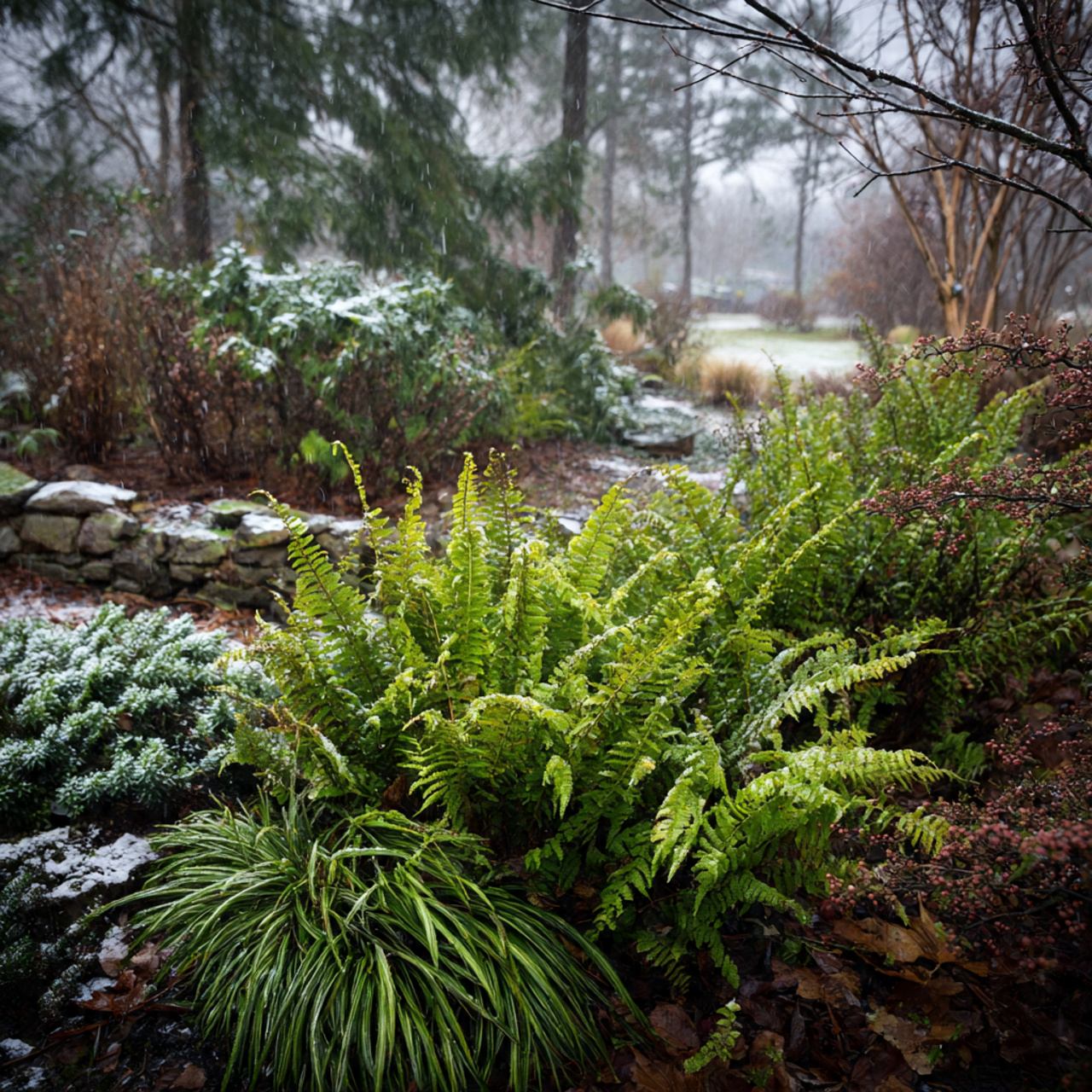
Most rain gardens rely heavily on perennials that die back in winter, leaving bare ground for months. Adding evergreens solves this problem beautifully.
Christmas fern retains deep green fronds through winter, even under snow. Evergreen sedges like Carex plantaginea provide groundcover that stays lush year-round. For larger gardens, native evergreen shrubs like inkberry holly or winterberry offer structural elements that persist through winter while their roots continue processing water beneath frozen ground.
Winter benefits beyond aesthetics:
- Evergreens provide critical shelter for birds during harsh weather
- They offer hiding places for beneficial insects overwintering in your garden
- Green foliage brightens dreary winter landscapes
- Structure and form remain visible even under snow
Placement strategy: Position evergreen elements where you’ll see them from your windows during winter. There’s no point in winter interest if it’s hidden in a back corner you never look at!
Bonus advantage: Evergreen roots remain active longer into fall and start earlier in spring compared to deciduous plants, extending your garden’s water-processing season.
Designing a Terraced Rain Garden for Slopes
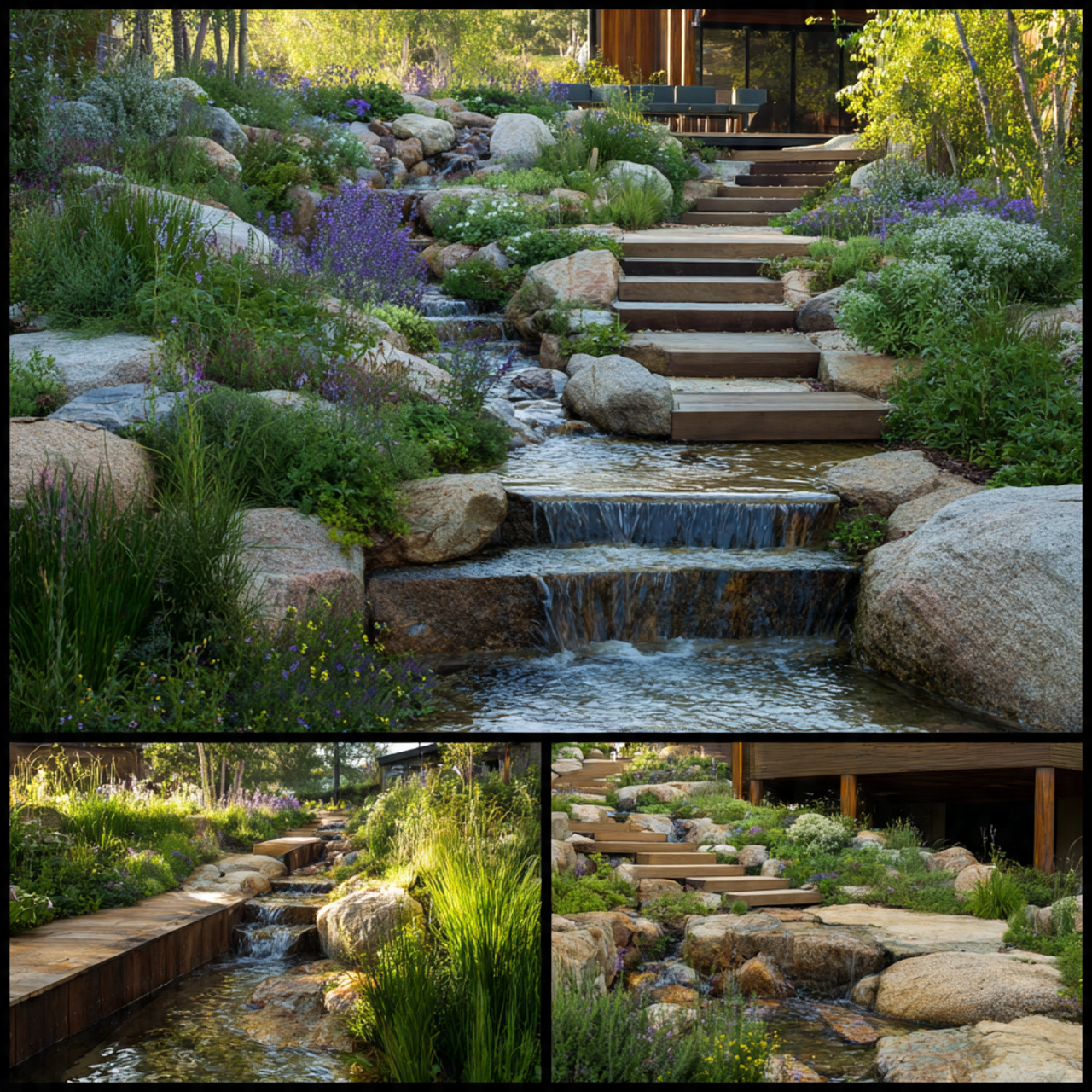
Sloped properties present special challenges, but terraced rain gardens solve them elegantly while creating architectural interest.
Build a series of shallow basins connected by overflow channels, allowing water to cascade from one level to the next like a natural waterfall system. Each terrace slows runoff velocity and increases infiltration time, preventing erosion while filtering pollutants before water reaches downstream areas.
Construction materials:
- Natural stone (most natural appearance)
- Wooden timbers (rustic look, less expensive)
- Stacked rocks (labor-intensive but no materials cost)
How it works: Instead of water rushing downhill in an erosive torrent, it moves from terrace to terrace, spending time in each basin before overflowing to the next level. This dramatically increases total infiltration while reducing erosion risk.
Planting opportunities: Each terrace creates distinct microclimates. Lower terraces stay wetter longer, while upper terraces drain quickly. This diversity lets you grow a wider variety of plants than a single-level garden would support.
Safety consideration: Ensure retaining structures are stable and properly installed. Failing terraces can cause serious erosion problems. If you’re building more than 2-3 feet of total elevation change, consider consulting a professional.
Visit More: Water Garden
Integrating Artistic Elements and Garden Art
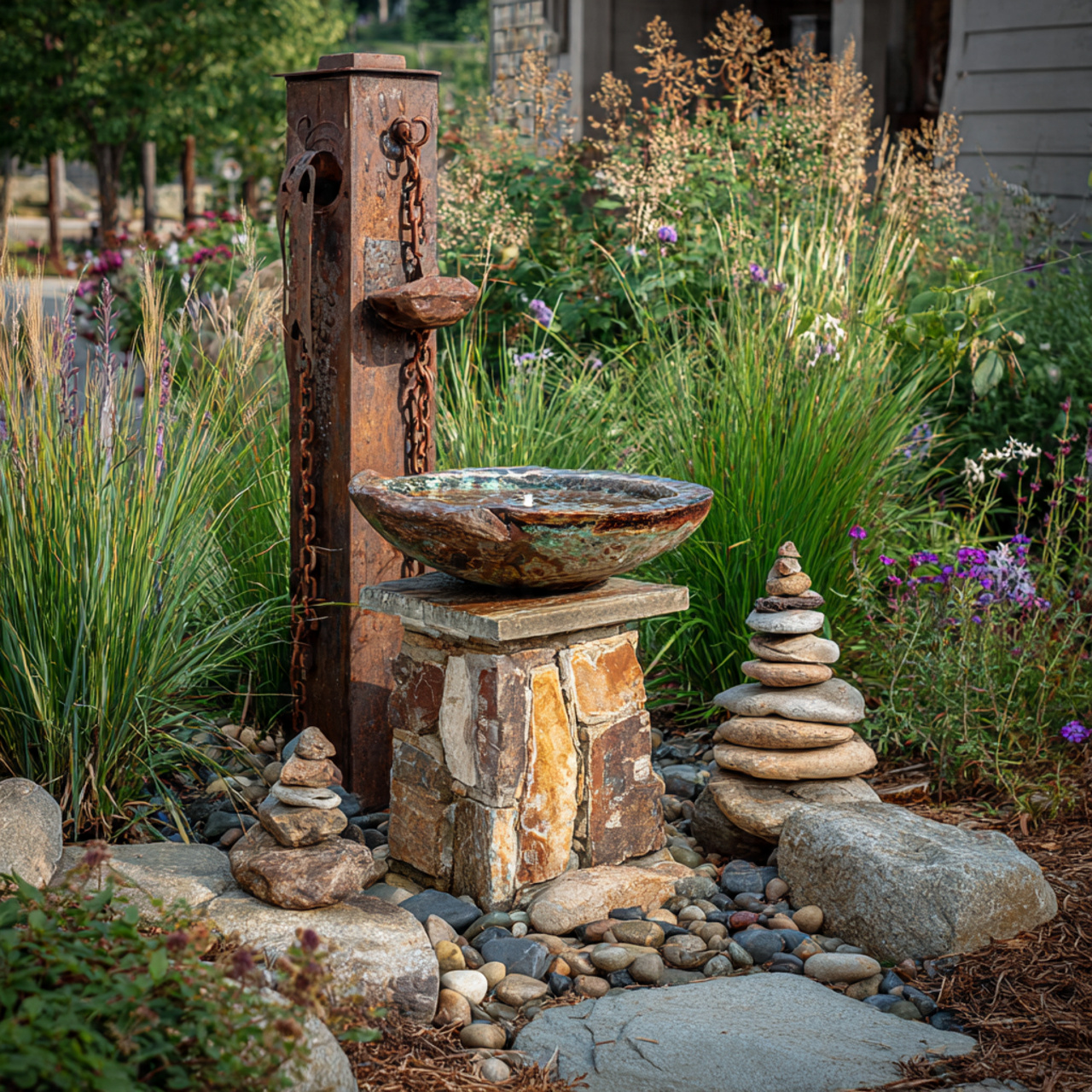
Who says functional landscaping can’t be beautiful? Artistic elements transform utilitarian rain gardens into intentional design features.
Rain chains guide water from downspouts into your garden while creating visual beauty and soothing sounds during storms. They’re both functional and decorative—the perfect combination.
Sculptural elements like metal garden art, ceramic birdbaths, or stone cairns serve as focal points during dry periods when your garden isn’t actively managing water. They give eyes something to rest on and create conversation pieces.
Material choices that weather beautifully:
- Copper (develops attractive green patina)
- Natural stone (timeless appearance)
- Cast iron (develops rustic surface)
- Ceramic (adds color and personality)
Important consideration: Ensure decorative elements don’t block water flow or prevent infiltration. Elevate sculptures on pedestals or stones rather than embedding bases directly in soil.
Design philosophy: Your rain garden demonstrates that sustainable landscape practices can be stunning. Art reinforces this message—beauty and environmental function aren’t mutually exclusive.
Planning for Seasonal Color Transitions
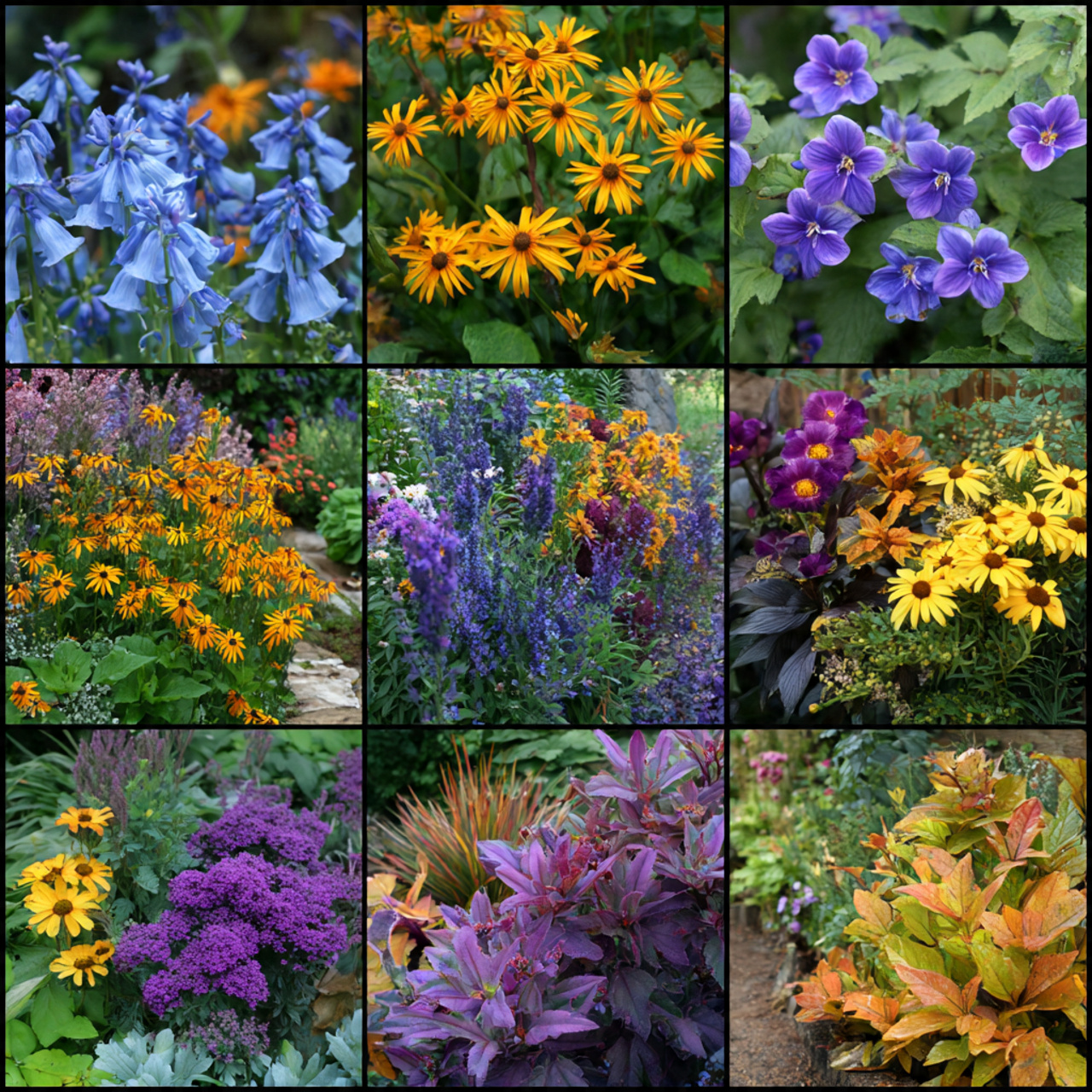
Strategic plant selection creates a garden that evolves through the seasons rather than having one brief moment of glory.
Spring (April-May): Virginia bluebells provide early blue flowers before tree canopies fill in. Marsh marigolds add cheerful yellow blooms.
Early Summer (June-July): Black-eyed susans and purple coneflowers take center stage with bold, daisy-like flowers that attract butterflies.
Late Summer (August-September): Joe-pye weed and ironweed produce tall flower spikes when many gardens fade from heat.
Fall (October): Asters and goldenrod finish the season strong, providing critical nectar for migrating monarch butterflies.
Don’t forget foliage color: Copper iris offers burgundy leaves. Golden groundsel provides chartreuse foliage that brightens shaded areas. Blue-green sedges contrast beautifully with warm flower colors.
Planning approach: Create a spreadsheet or calendar noting when each plant blooms. This reveals gaps in your color sequence and helps you select additions that fill those gaps.
The result: Your rain garden continuously evolves, offering fresh visual experiences throughout the growing season while maintaining essential stormwater management function.
Establishing a Micro-Habitat with Varied Textures
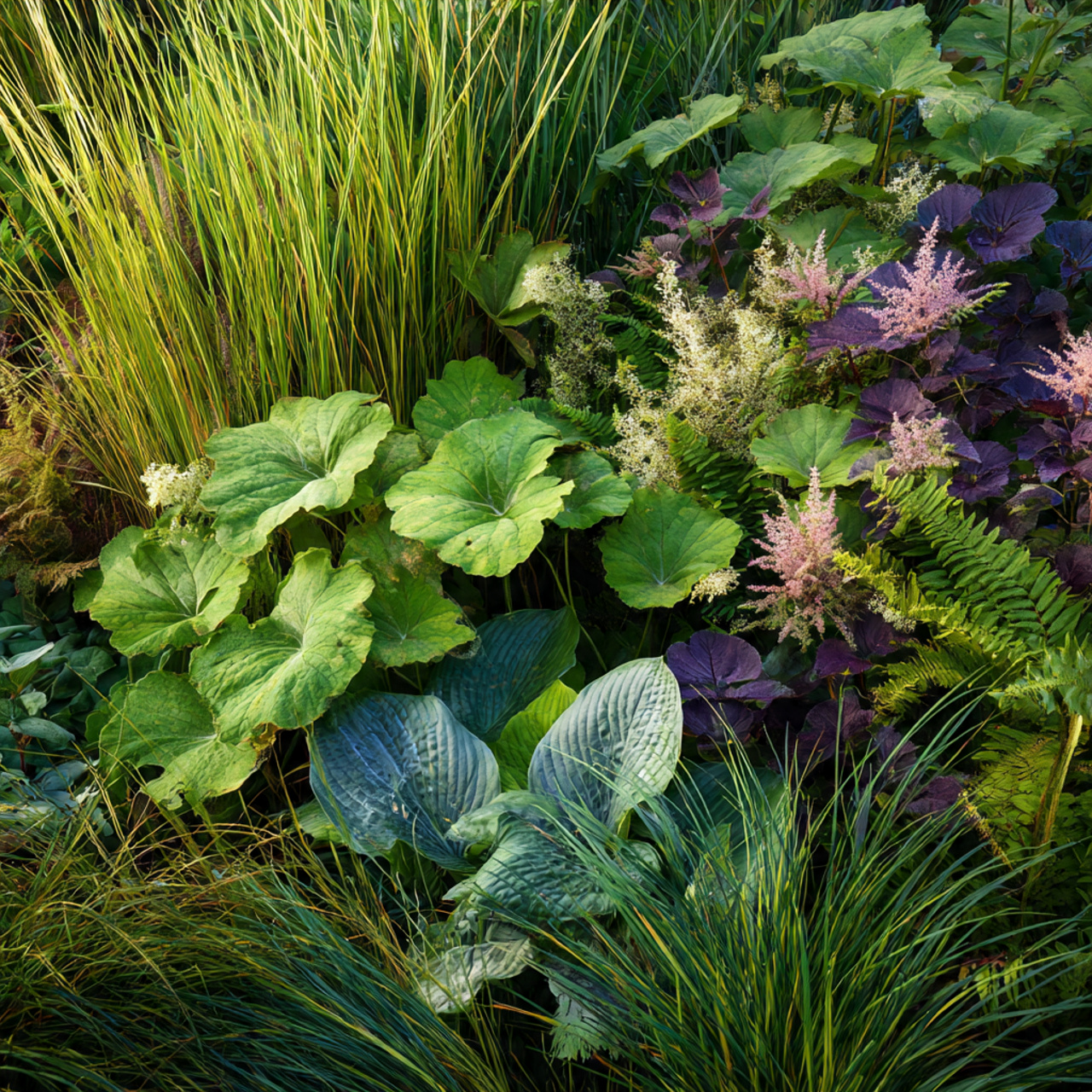
Combining diverse plant textures creates sophisticated visual complexity while serving practical purposes.
Texture combinations that work:
- Fine-textured prairie dropseed grass + bold-leaved elephant’s ear
- Feathery astilbe plumes + strong vertical iris foliage
- Delicate fern fronds + substantial hosta leaves
Why texture diversity matters functionally: Different leaf shapes and structures capture and channel rainfall in unique ways. Varied root systems occupy different soil depths and ecological niches, maximizing use of available space and resources.
The synergy effect: This diverse plant community works together to process water more efficiently than a monoculture would. Deep roots, shallow roots, fibrous roots, and taproots all contribute differently to soil structure and water infiltration.
Visual impact: Textural variety creates depth and interest that holds attention even from a distance. Your rain garden becomes a rich tapestry engaging multiple senses rather than a simple depression filled with generic plants.
Design tip: Stand back and squint at your garden. If everything blurs into one texture, add more variety. If it looks chaotic, simplify by repeating successful texture combinations in multiple locations.
Incorporating Educational Signage and Community Engagement
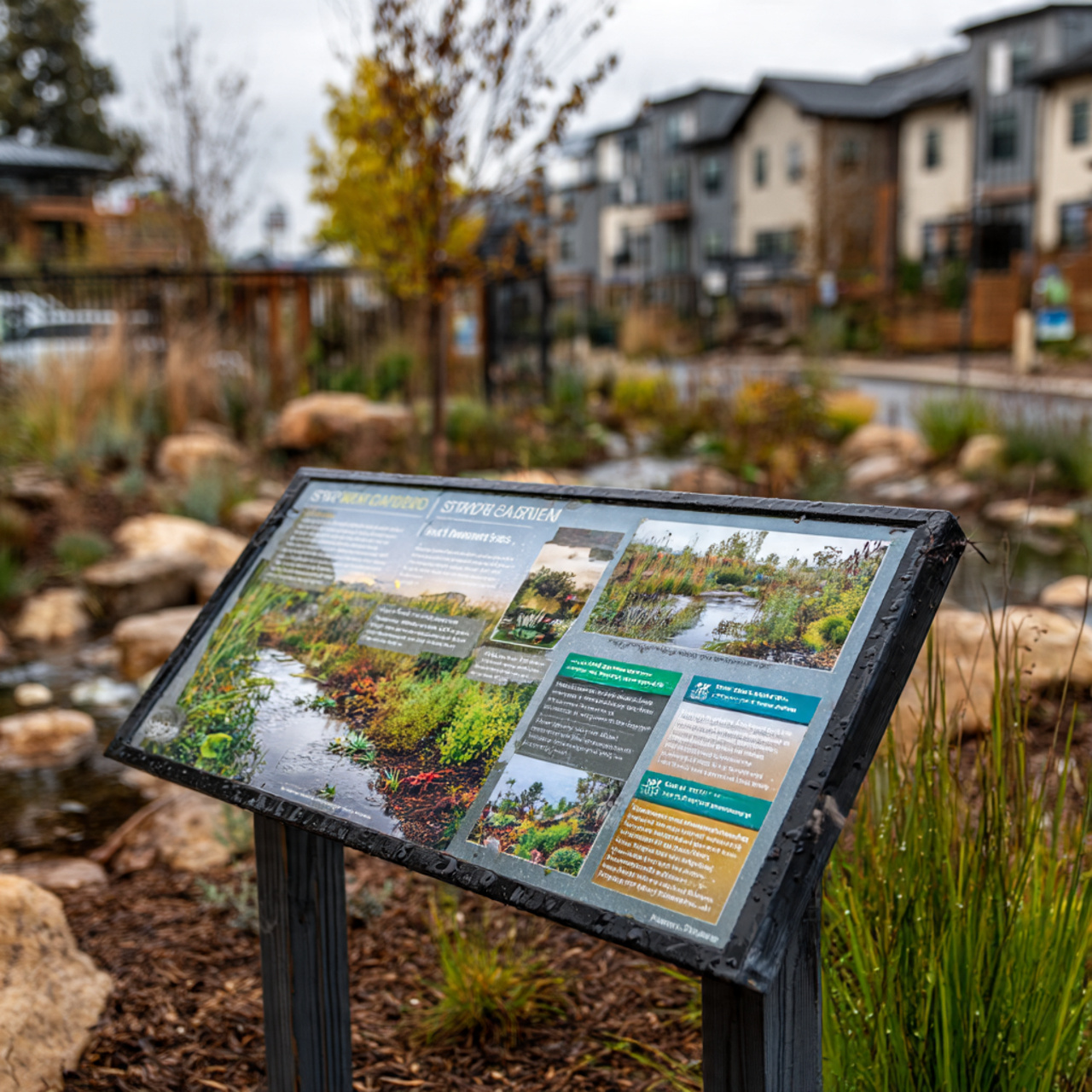
Installing informative signage extends your rain garden’s benefits beyond your property line.
What to include on signs:
- How the garden captures and filters runoff
- Native plants featured and their ecological relationships
- Wildlife the garden supports
- Water volume managed annually
Community impact strategies:
- Host neighborhood workshops on rain garden installation
- Share progress photos on community platforms
- Offer tours during garden walks or open houses
- Create demonstration gardens in public spaces
Why this matters: Stormwater problems affect entire watersheds, not just individual properties. When neighbors understand how rain gardens work and see your success, they’re inspired to implement similar practices. This multiplies environmental benefits across the community.
Conversation starter: Attractive, well-maintained rain gardens make people curious. Be ready to answer questions and share resources. Your enthusiasm can spark a neighborhood-wide movement toward better water management.
Documentation idea: Keep a photo journal showing your garden’s development from excavation through establishment. These before-and-after images powerfully demonstrate what’s possible and inspire others to take action.
Frequently Asked Questions
FAQs – Short Form
How long does it take for a rain garden to drain after a storm?
A properly designed rain garden drains within 12-48 hours after rainfall. Drainage time varies based on soil type, garden depth, and water volume. If water stands longer than 48 hours, improve soil permeability by adding compost and sand or install an overflow pipe. Sandy soils drain faster than clay soils, making soil amendment essential for proper function.
Can I install a rain garden myself or do I need professional help?
Most homeowners can install small to medium rain gardens as DIY projects using basic tools. The process involves excavating, amending soil, and planting—all manageable weekend tasks. Consider professional help for large installations, complex drainage issues, or sites near septic systems. Local extension offices often provide free consultations and region-specific guides to help you decide.
What’s the difference between a rain garden and a bioswale?
A rain garden is a bowl-shaped depression that collects and infiltrates water in one spot. A bioswale is an elongated vegetated channel that moves water from one place to another while allowing infiltration along its length. Rain gardens work well for specific runoff sources like downspouts, while bioswales handle sheet flow across larger areas. Many designs combine both for maximum effectiveness.
How much maintenance does a rain garden require?
First two years need regular watering during dry spells, weeding, and mulch replenishment. Once established, maintenance is minimal—annual debris removal in spring, cutting back dead foliage in late winter, refreshing mulch, and dividing plants every few years. Native plants dramatically reduce upkeep since they thrive without fertilizers, pesticides, or frequent watering.
Will a rain garden attract mosquitoes?
No. Properly functioning rain gardens drain within 48 hours, while mosquitoes need 7-10 days of standing water to develop. If water stays longer, fix the drainage issue. Rain gardens actually reduce mosquito populations by supporting natural predators like dragonflies and birds while eliminating standing water in low spots and clogged drains.
Conclusion
Creating a rain garden transforms ordinary yards into hardworking ecosystems that tackle modern stormwater challenges while boosting your property’s beauty and value. These sustainable landscape features deliver environmental benefits that ripple far beyond individual properties—cleaner waterways, reduced neighborhood flooding, and healthier wildlife populations all improve when more people adopt this approach.
Whether you start small with a modest installation near a single downspout or undertake a comprehensive landscape transformation, the core principles remain the same: work with nature instead of against it, choose plants suited to your conditions, and design for both soggy and dry periods.
The most successful rain gardens balance gorgeous aesthetics with ecological function, creating outdoor spaces you genuinely enjoy while serving critical environmental purposes. As weather patterns become more unpredictable and extreme storms grow more common, rain gardens offer practical solutions that individual homeowners can implement immediately without waiting for municipal action.
By capturing and filtering stormwater where it falls on your property, you reduce strain on aging infrastructure while creating wildlife habitat, supporting threatened pollinators, and demonstrating environmental stewardship that inspires neighbors to follow your lead. That’s the real power of rain gardens—they turn individual yards into pieces of a larger solution, proving that positive environmental change starts right in our own backyards.