Growing Potatoes: 14 Tips for an Amazing Harvest
Have you ever wondered why homegrown potatoes taste so much better than store-bought ones? There’s something incredibly satisfying about digging up your own spuds—crispy on the outside, fluffy on the inside, and bursting with flavor you just can’t buy. Whether you’ve got a sprawling backyard or just a sunny balcony, potato cultivation is easier than you think. Let me walk you through everything you need to know to grow mountains of delicious potatoes, even if you’re a complete beginner.
Understanding How to Grow Potatoes Actually
Here’s something most people don’t realize: potatoes aren’t roots—they’re actually swollen underground stems called tubers. Think of them as the plant’s energy storage units, kind of like nature’s pantry. Unlike carrots or beets that grow downward, potatoes develop along these underground stems in all directions, which is why the right soil conditions are absolutely crucial.
The magic happens when temperatures cool down. Potato plants are clever—they wait for soil temperatures to drop before they start packing on the pounds (or tubers, in this case). When it gets too hot outside, they basically put tuber production on pause. That’s why understanding your local climate is your first step to potato-growing success.
Quick Tip: Potatoes originally come from the cool highlands of South America, so they naturally prefer cooler growing conditions. If you live in a hot climate, timing is everything!
Picking the Perfect Seed Potatoes
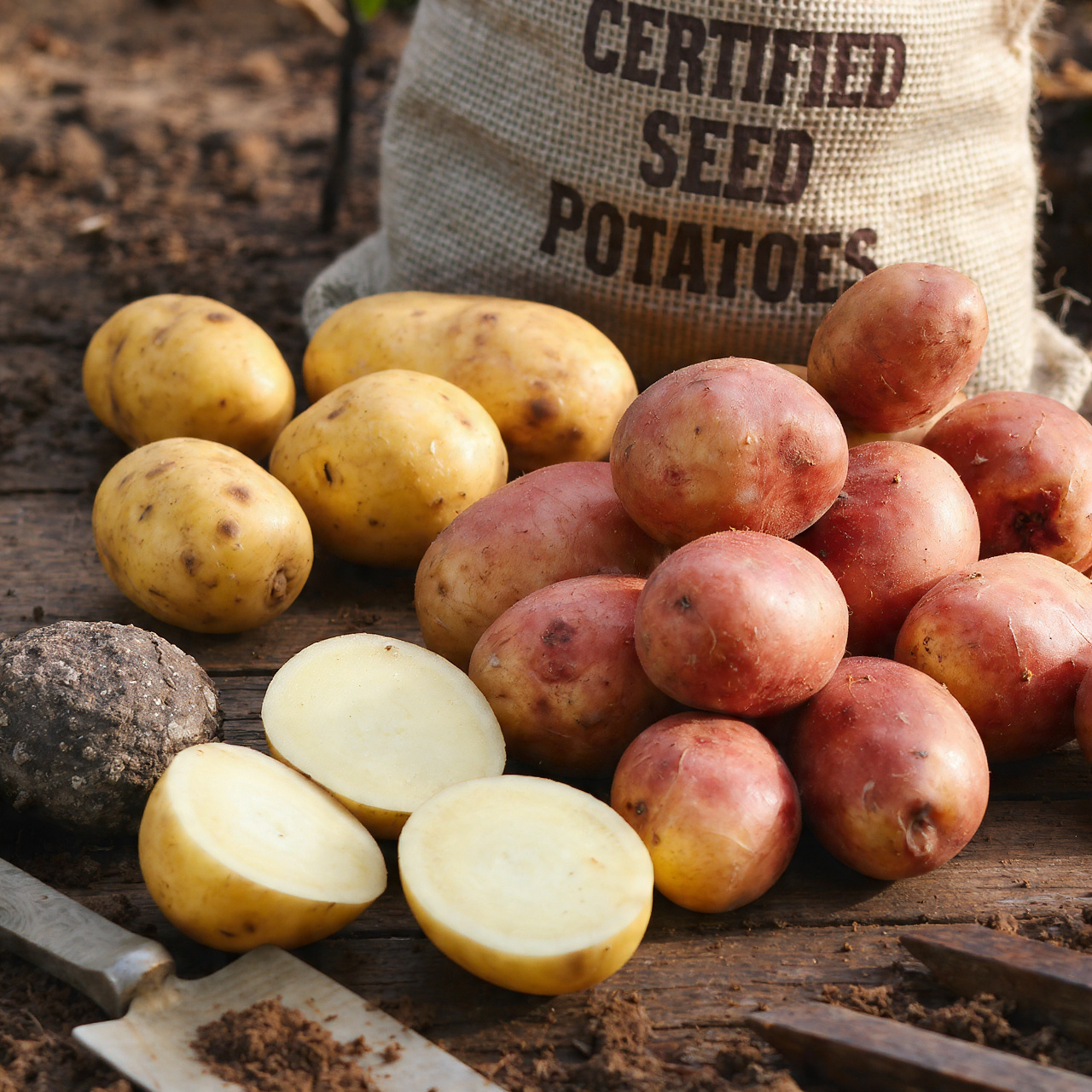
Let’s clear up a common misconception right away: those potatoes sprouting in your kitchen cupboard aren’t ideal for planting. Here’s why—grocery store potatoes are typically treated with sprout inhibitors to keep them fresh longer. For your garden, you want certified seed potatoes from a reputable nursery or garden center.
What to look for:
- Firm texture (no soft spots or wrinkles)
- Healthy-looking “eyes” (those little dimples that sprout)
- Disease-free certification on the bag
- Varieties suited to your climate and cooking needs
Tip: Match your potato variety to your favorite dishes. Waxy varieties like Red Bliss are perfect for potato salads because they hold their shape. Starchy types like Russets make incredible baked potatoes and fluffy mashed potatoes. All-purpose varieties like Yukon Gold work beautifully for everything.
Size matters here: Your seed potatoes should be about the size of a golf ball or slightly larger. If you’ve got bigger ones (think egg-sized or larger), cut them into chunks about 1.5 to 2 ounces each—roughly the size of a large strawberry. Each piece needs at least two eyes to sprout successfully.
Common Mistake to Avoid: Never plant freshly cut seed potatoes! Let cut pieces sit in a cool, dry spot for 48 hours. This “curing” time allows the cut surface to form a protective layer that prevents rot. It’s like letting a wound scab over before going swimming.
Getting Your Soil Right
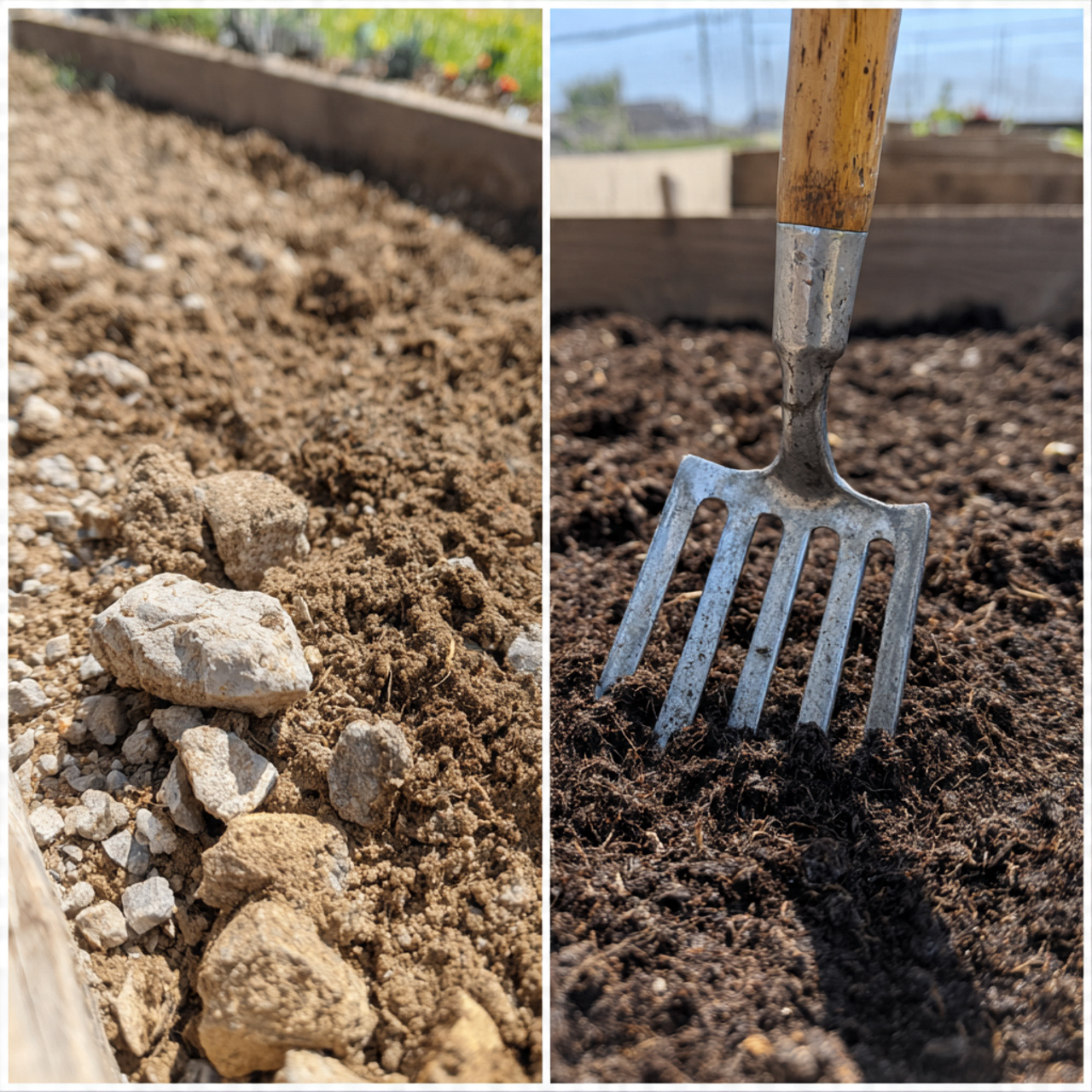
I can’t stress this enough: soil preparation is where most beginners either succeed brilliantly or struggle unnecessarily. Potatoes need room to expand, and compacted or clay-heavy soil is like trying to grow in concrete.
Your soil should be:
- Loose and crumbly (you should be able to easily push your hand into it)
- Well-draining (water shouldn’t puddle on the surface)
- Free of rocks and hard clumps
- Rich in organic matter
Step-by-step soil prep:
- Dig or till your planting area to at least 12 inches deep
- Break up any clumps—they should crumble easily in your hand
- Remove rocks, sticks, and debris (rocks can cause oddly-shaped potatoes)
- Mix in 2-3 inches of compost or aged manure across the entire bed
- Test your soil pH—aim for 5.0 to 6.5 (slightly acidic)
Safety Warning: Never use fresh manure! It can introduce diseases and burns plants with excess nitrogen. Always use aged or composted manure that’s at least 6 months old.
Example: Think of your ideal potato soil like a chocolate cake—moist, crumbly, and easy to dig into. If your soil is more like cookie dough (sticky and dense), you need to add more organic matter and perhaps some sand to improve drainage.
Timing Your Planting Just Right
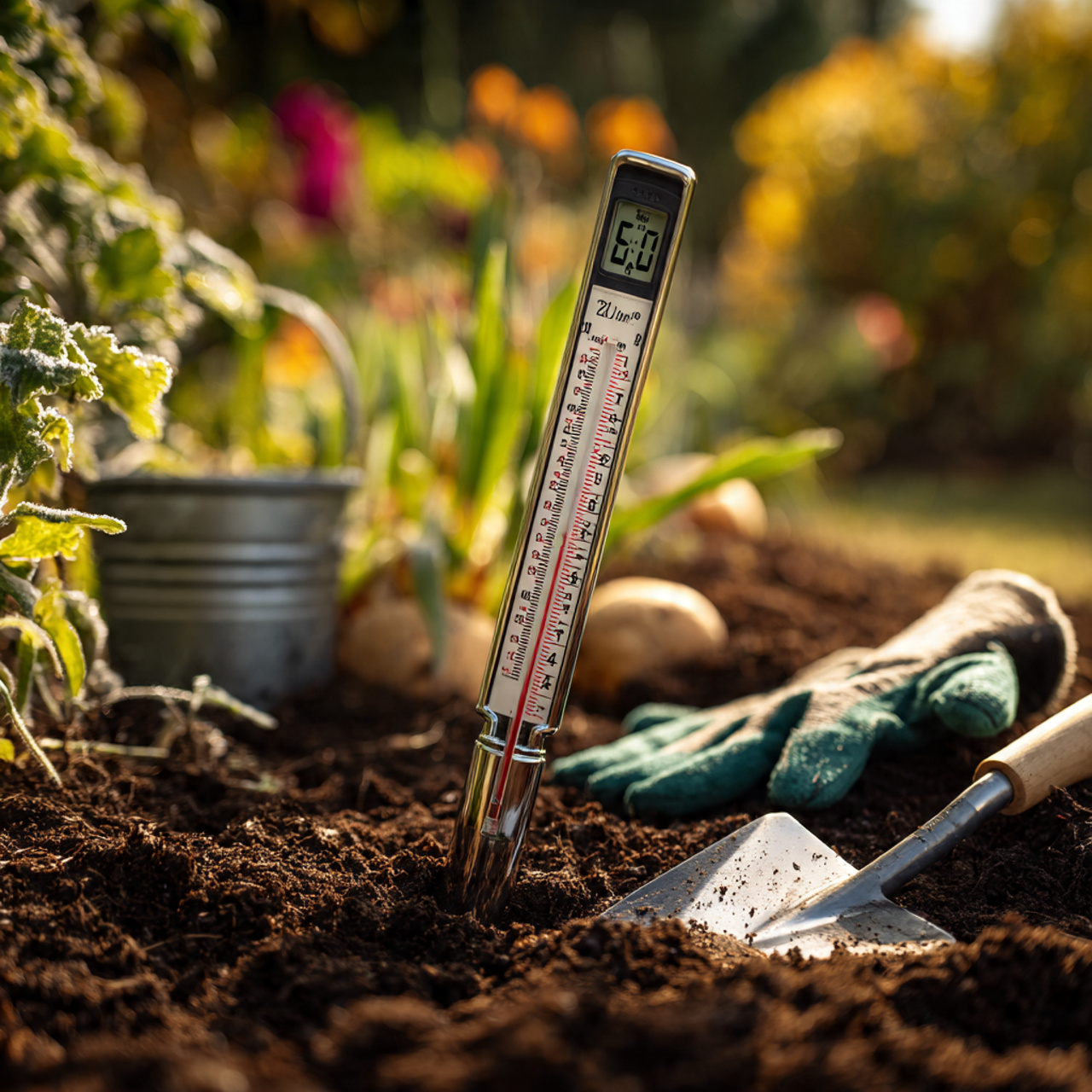
Planting too early in cold, soggy soil is like sending your seed potatoes to a watery grave. Too late, and summer heat arrives before your plants can produce tubers. The sweet spot? When soil temperatures reach 45-50°F, usually 2-4 weeks before your last expected spring frost.
Regional timing guide:
- Northern climates: Plant in early to mid-spring (March-April) for summer harvest
- Southern climates: Plant in late winter or early fall (February or September) for cooler growing conditions
- Moderate climates: You might squeeze in two crops—early spring and late summer plantings
Smart Tip: Don’t rely on the calendar alone. Use a soil thermometer—stick it 4 inches deep in the morning. If it reads 45°F or warmer consistently for three days, you’re good to go!
Stagger your plantings: Instead of planting everything at once, plant a new row every two weeks for about a month. This gives you fresh potatoes throughout the season instead of 50 pounds all at once in July.
Planting at the Right Depth
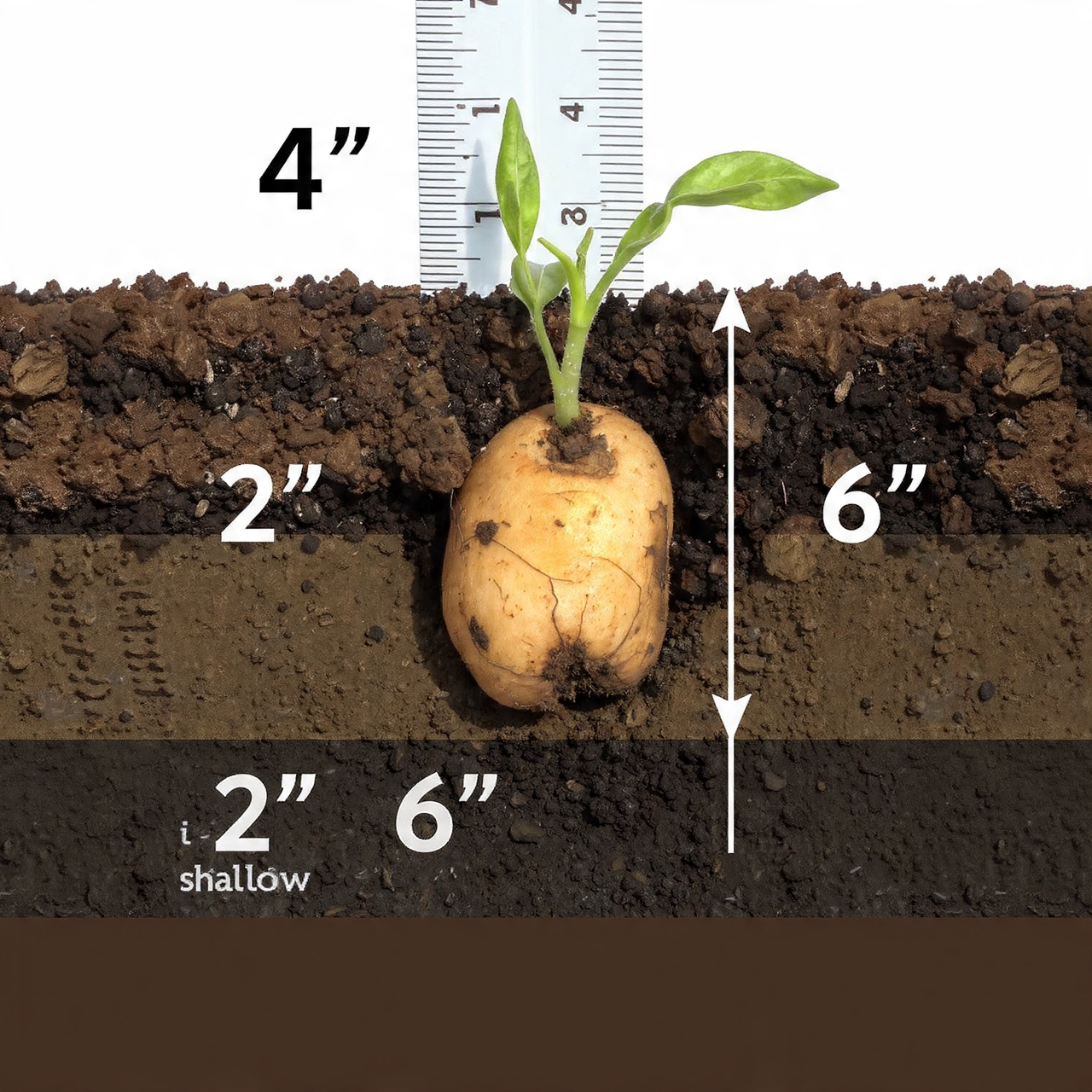
Getting your planting depth right is simpler than you think, but it makes a huge difference in your final harvest.
The basic rule: Plant seed potatoes 4 inches deep, spacing them 12 inches apart in rows that are 30 inches apart.
Why this depth?
- Too shallow: Tubers get exposed to sunlight and turn green (which makes them toxic)
- Too deep: Sprouts struggle to reach the surface, resulting in weak plants
- Just right: Perfect balance of protection and easy emergence
Soil-specific adjustments:
- Heavy clay soil → Plant 3 inches deep (prevents rotting)
- Sandy soil → Plant up to 5 inches deep (retains more moisture)
- Perfect loamy soil → Stick with 4 inches
Tip: Create trenches instead of individual holes. It makes hilling easier later. Place your seed potatoes eye-side up in the trench, then gently cover with loose soil—don’t pack it down!
Mastering the Hilling Technique
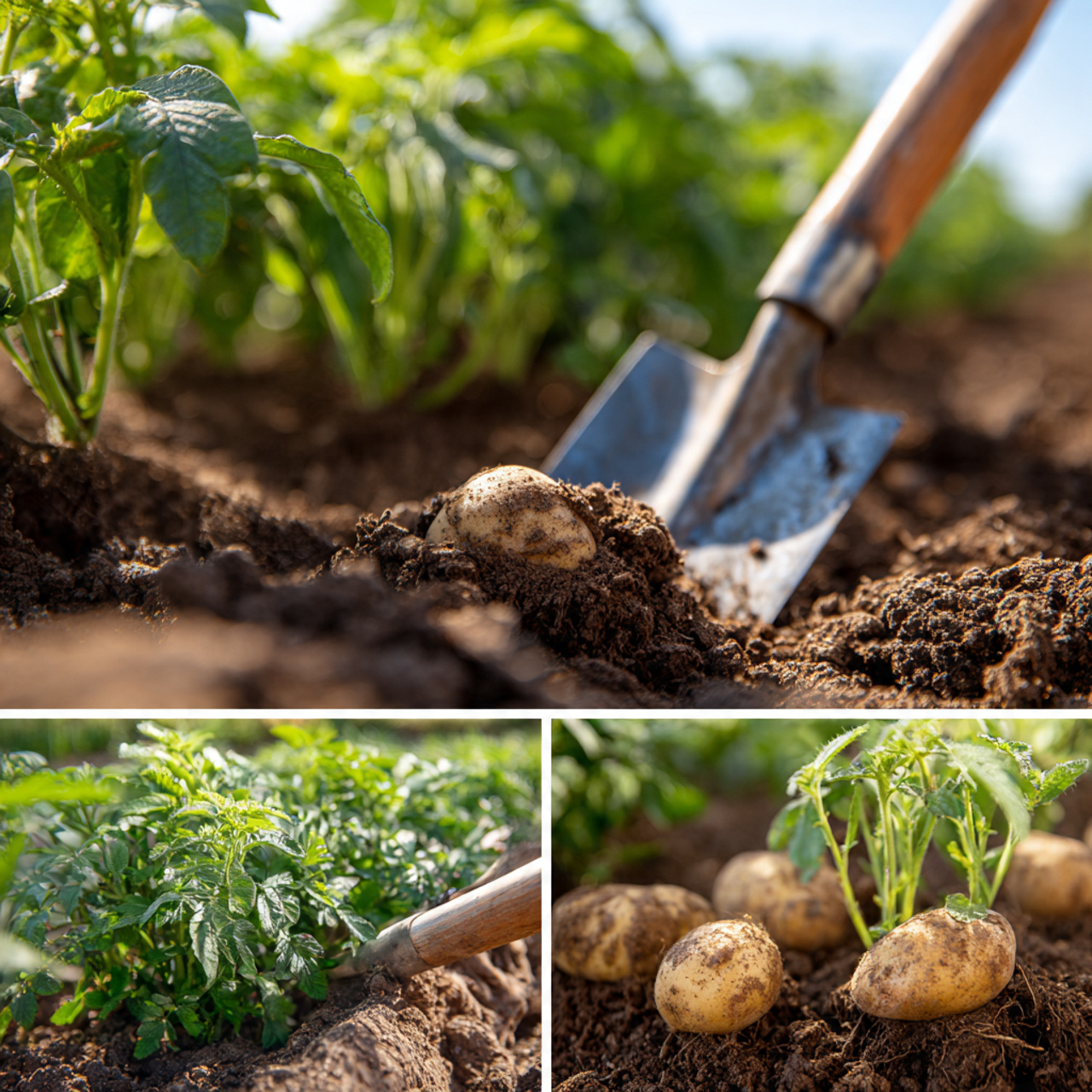
If I could teach you only one potato-growing skill, it would be hilling. This simple technique can literally double or triple your harvest, yet many beginners skip it entirely.
What is hilling? It’s the process of mounding soil around your growing plants, which encourages them to produce more tubers along the buried stems.
How to hill like a pro:
- First hilling: When plants are 6-8 inches tall, pull soil from the pathways and mound it around the base of each plant, leaving 4-6 inches of foliage exposed
- Second hilling: Two weeks later, repeat the process
- Third hilling: Continue every 2-3 weeks until plants flower
- Stop: Once flowers appear, tuber formation is complete—no more hilling needed
Visual Guide: Imagine building a small mountain around each plant. The peak of your “mountain” should reach about halfway up the visible plant stem.
Common Mistakes:
- Burying the entire plant (leaves need sunlight!)
- Hilling just once (multiple hillings = more potatoes)
- Forgetting to hill at all (this is the #1 yield-killer)
- Hilling after flowering (wastes time and energy)
Example: Each hilling creates about 6-8 inches of buried stem. Potato plants can form 5-8 tubers per buried stem section. Three hillings = three layers of potato production = massive harvests!
Watering the Smart Way
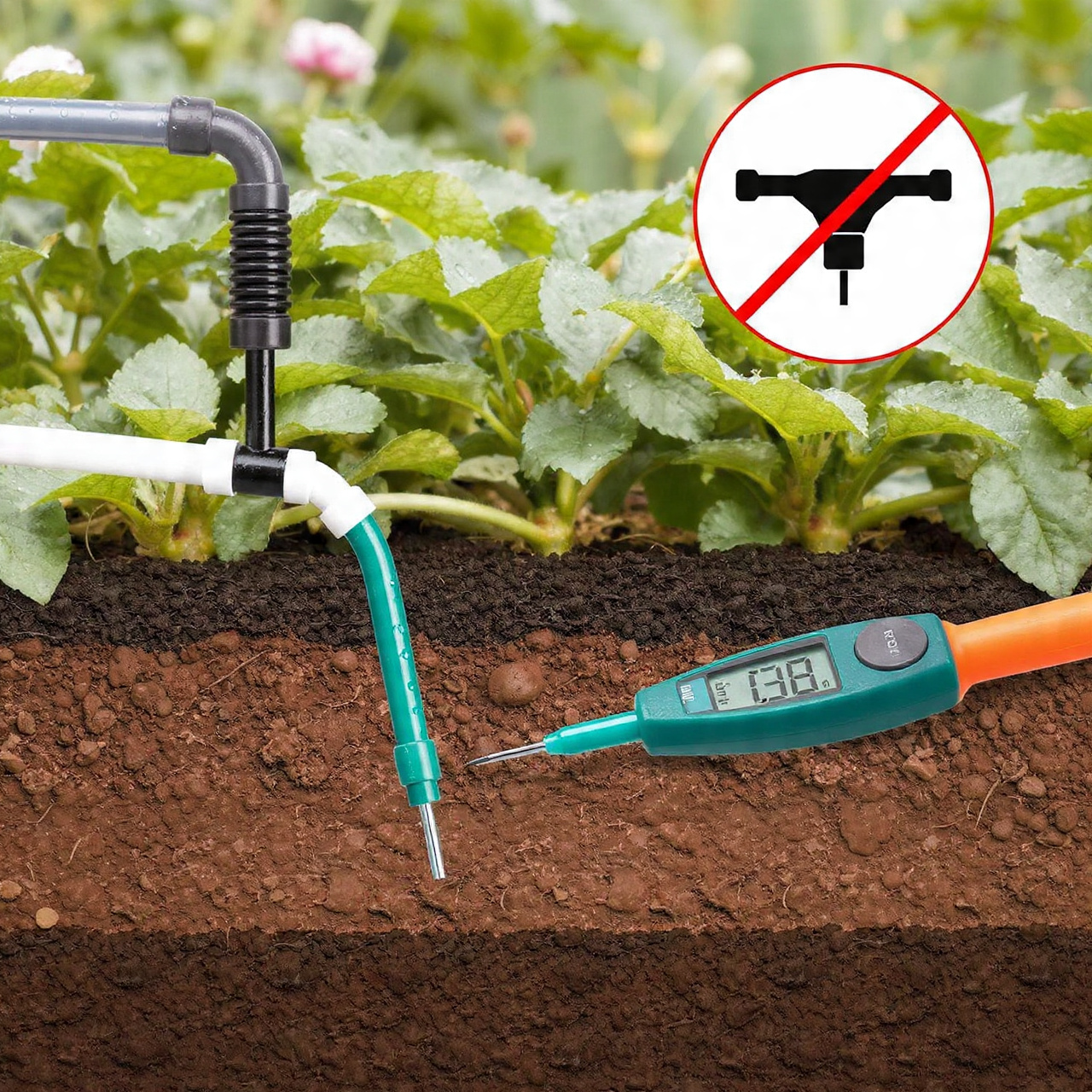
Potatoes are a bit like Goldilocks—they don’t want soil that’s too dry or too wet, but just right. Inconsistent watering causes all sorts of problems: cracked potatoes, hollow centers, or misshapen tubers.
The golden rule: Provide 1-2 inches of water per week through rain or irrigation.
How to check moisture:
- Stick your finger 4 inches into the soil
- If it feels barely moist (like a wrung-out sponge), you’re perfect
- Completely dry? Time to water
- Wet and muddy? Hold off and improve drainage
Critical watering windows:
- When plants flower: This is when tubers are forming—don’t let them dry out!
- During tuber bulking: The 4-6 weeks after flowering when potatoes are sizing up
- Two weeks before harvest: Reduce watering to let skins toughen for better storage
Best watering methods:
- ✅ Drip irrigation (keeps foliage dry)
- ✅ Soaker hoses (efficient and disease-preventing)
- ❌ Overhead sprinklers (promotes fungal diseases)
Pro Tip: Water deeply but less frequently. Daily light sprinkles encourage shallow roots. Instead, water thoroughly once or twice a week, soaking the soil 6-8 inches deep.
Avoid This: Letting soil dry out completely, then flooding it. This stress causes growth cracks that ruin potato quality. Consistency is key!
Feeding Your Potato Plants
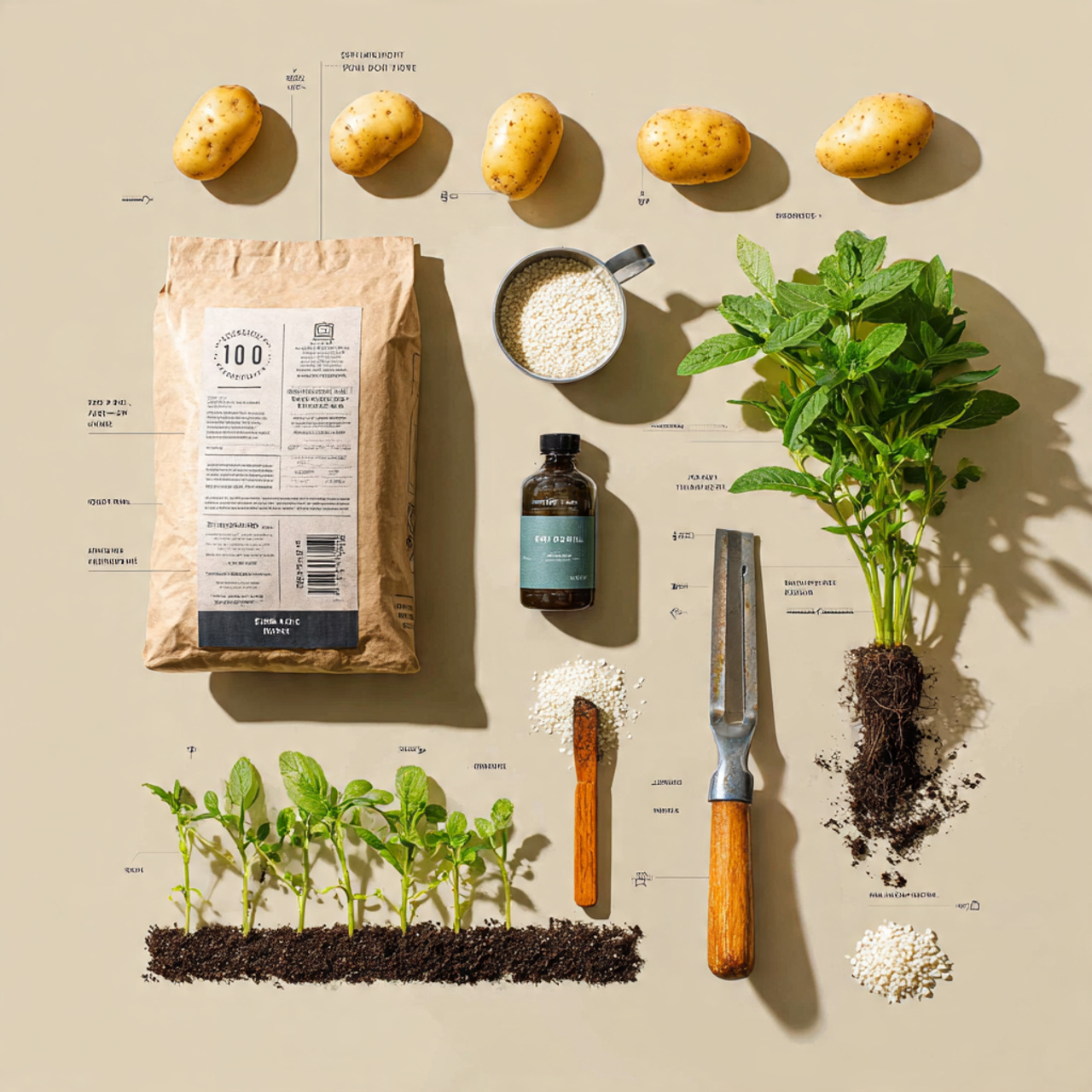
Think of fertilizer as a balanced meal for your plants—not too much of any one thing. Potatoes need nutrition, but overfertilizing creates lush, beautiful plants with disappointing harvests underground.
What potatoes need:
- Balanced NPK ratios (like 10-10-10 or 5-10-10)
- Moderate nitrogen (too much = all leaves, no tubers)
- Adequate phosphorus and potassium for tuber development
Fertilizing schedule:
- At planting: Work fertilizer into the soil below seed potatoes
- At first hilling: Side-dress with granular fertilizer along the row before mounding soil
- Six weeks before harvest: Stop all fertilizing to let plants mature
Organic options:
- Compost (provides slow-release nutrients)
- Fish emulsion (diluted, every 3 weeks)
- Aged manure (mixed into soil before planting)
- Bone meal (for phosphorus)
Warning Sign: If your potato plants have thick, dark green leaves and grow 3 feet tall but produce small potatoes, you’re probably over-fertilizing with nitrogen. Switch to a lower-nitrogen formula next season.
Example Recipe: Mix 1 cup of 10-10-10 fertilizer per 10-foot row at planting, then 1/2 cup per 10 feet at first hilling. Simple and effective!
Keeping Pests Under Control
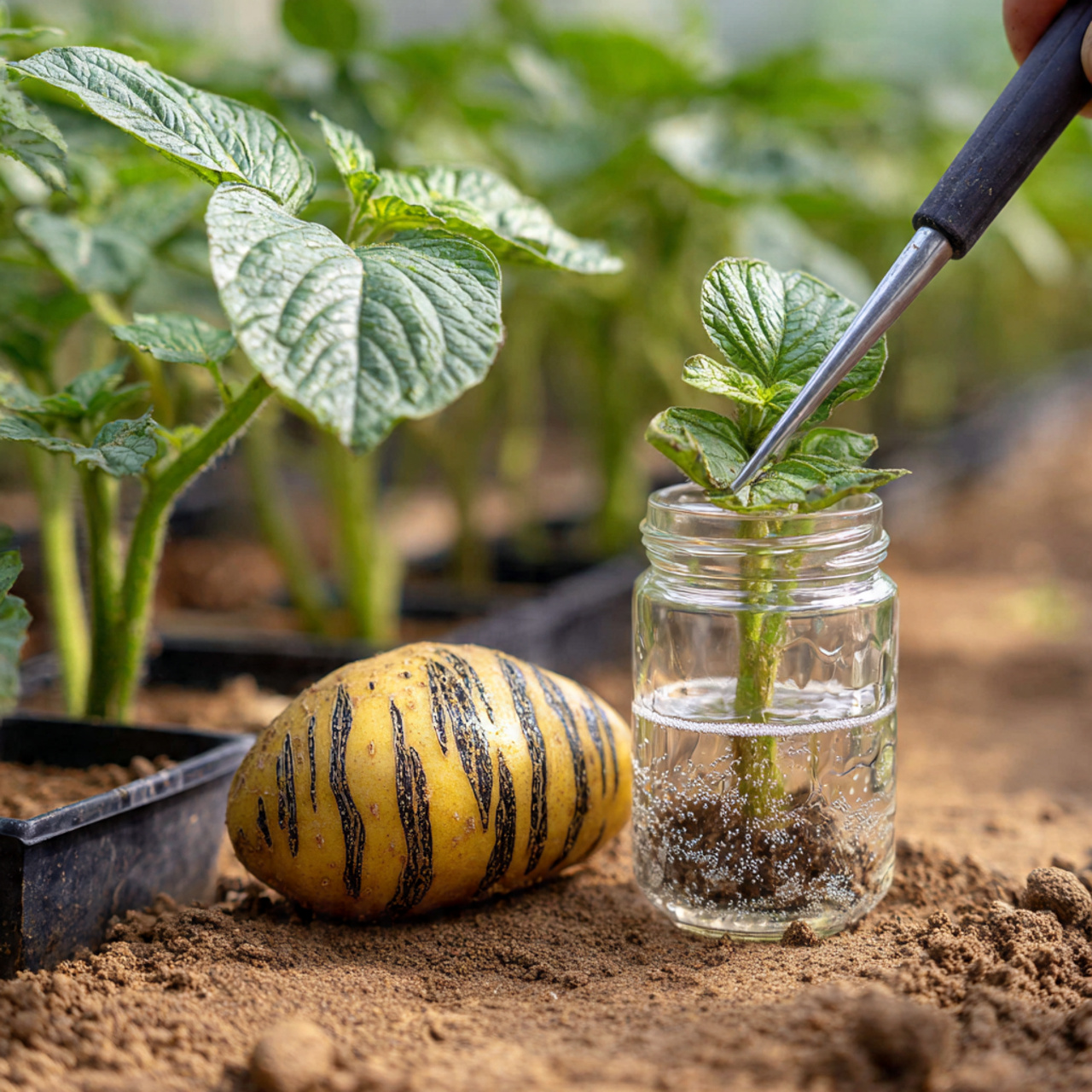
Let’s be honest—bugs love potatoes almost as much as we do. But don’t worry, pest control doesn’t have to mean dumping chemicals everywhere.
Your main enemy: Colorado Potato Beetles These distinctive yellow-and-black striped beetles are like tiny eating machines. Left unchecked, they’ll turn your beautiful plants into lace curtains.
Control strategies:
- Hand-picking: In small gardens, check plants daily and drop beetles into soapy water
- Row covers: Prevent beetles from reaching plants in the first place
- Organic sprays: Spinosad or neem oil for larger infestations
- Mulch with straw: Makes it harder for beetles to find plants
Other troublemakers:
- Wireworms: Hard-bodied larvae that tunnel through tubers
- Solution: Trap with potato pieces buried before planting, then discard
- Flea beetles: Create tiny holes in leaves
- Solution: Yellow sticky traps and neem oil
- Aphids: Suck plant juices and spread disease
- Solution: Strong water spray or insecticidal soap
Prevention is Best: Crop rotation naturally reduces pest populations since bugs can’t find their favorite food. Moving potatoes to a new spot each year disrupts their life cycle.
Safety Tip: Always check organic spray labels for harvest waiting periods. Even natural products need time to break down before you can safely eat your potatoes.
Preventing Common Diseases
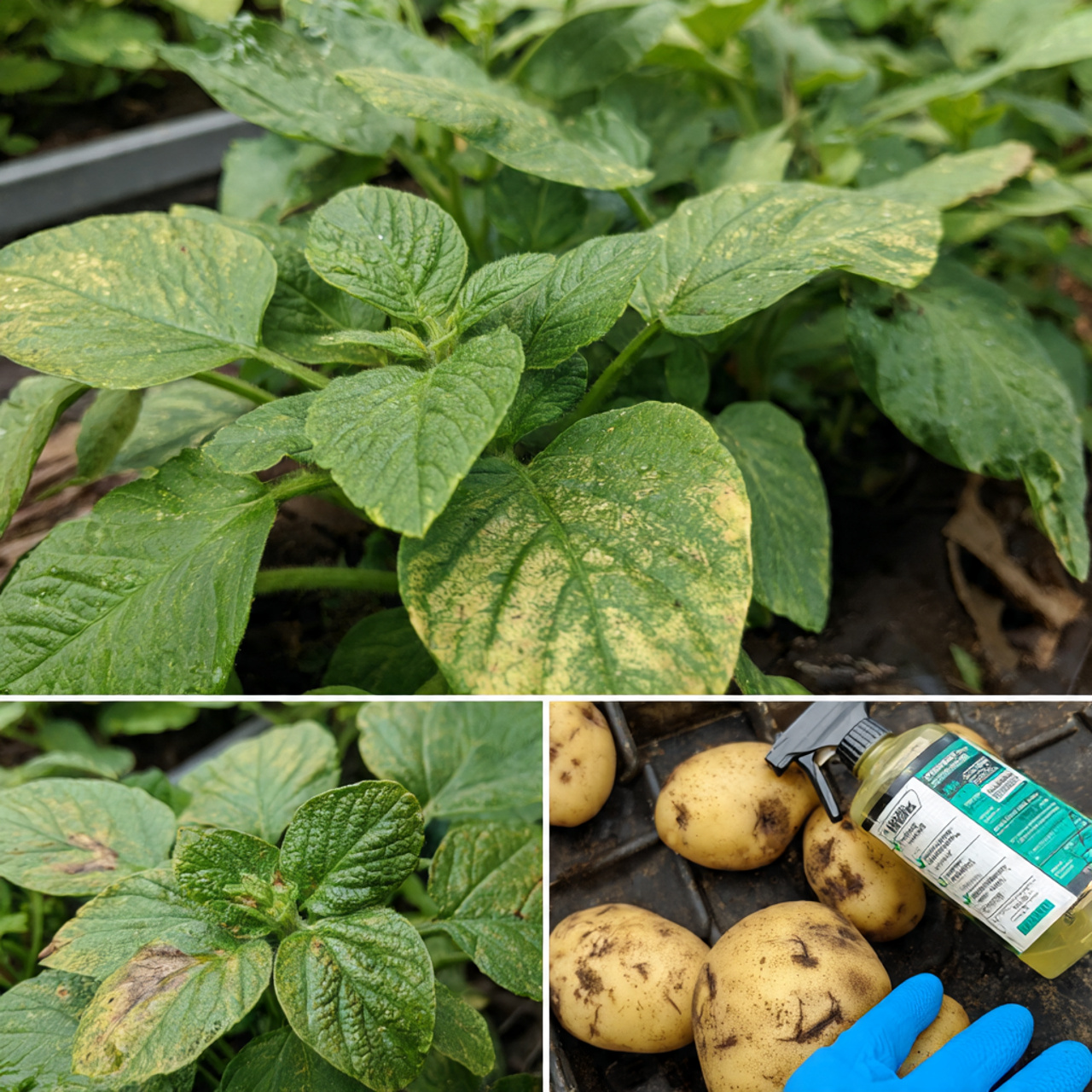
Potato diseases can wipe out an entire crop quickly, but armed with the right knowledge, you can prevent most problems before they start.
Late Blight (the big scary one): This is the disease that caused the Irish Potato Famine. It thrives in cool, wet weather and can destroy plants in days.
Warning signs:
- Dark, water-soaked spots on leaves
- White fuzzy growth on leaf undersides
- Rapid spread from plant to plant
Prevention tactics:
- Ensure good air circulation (don’t crowd plants)
- Water at soil level, never overhead
- Remove infected plants immediately and destroy (don’t compost!)
- Apply copper fungicide preventatively in humid climates
Early Blight: Less devastating but still problematic. Creates brown bull’s-eye spots on lower leaves.
How to manage:
- Remove affected leaves promptly
- Mulch around plants to prevent soil splash
- Maintain good fertility (healthy plants resist better)
- Consider copper spray in wet seasons
Scab: Creates rough, corky patches on potato skin. Doesn’t affect eating quality but looks unappealing.
Prevention:
- Keep soil pH between 5.0-6.0 (scab loves alkaline soil)
- Maintain consistent moisture during tuber formation
- Avoid fresh manure (encourages scab)
- Choose resistant varieties
Golden Rule: Crop rotation is your best disease prevention tool. Never plant potatoes (or their relatives: tomatoes, peppers, eggplants) in the same spot more than once every 3-4 years.
Growing Potatoes in Containers
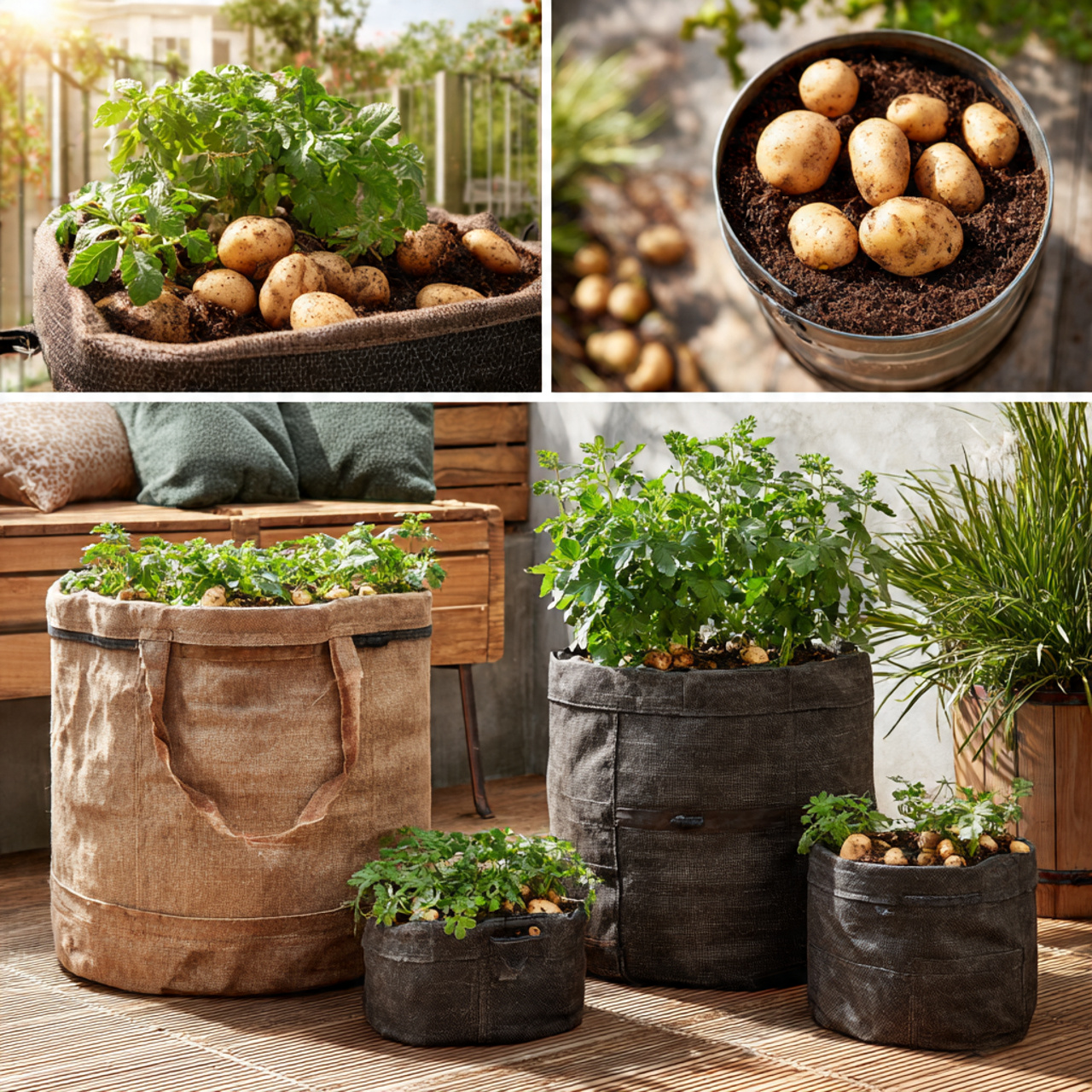
No garden? No problem! Container-grown potatoes can be just as productive as in-ground crops, and they’re perfect for patios, balconies, or small yards.
Container requirements:
- Minimum 15 inches deep and wide
- Drainage holes are absolutely essential
- 10-15 gallon capacity for best results
- Dark-colored containers (helps keep soil cool)
Best container types:
- ✅ Fabric grow bags (excellent drainage and air circulation)
- ✅ Large plastic pots with drainage
- ✅ Half whiskey barrels
- ✅ Purpose-built potato towers
- ❌ Containers without drainage holes
Planting process:
- Fill container with 4 inches of potting mix (not garden soil!)
- Place one seed potato per 3 gallons of container volume
- Cover with 3 inches of mix
- As plants grow, add more potting mix (this is hilling!)
- Continue adding mix until container is full
Container-specific tips:
- Check moisture daily—containers dry out fast
- Use quality potting mix with added compost
- Fertilize more frequently (nutrients wash out faster)
- Position where they’ll get 6-8 hours of sun
- Harvest by dumping the container—easy and fun!
Example Setup: A 15-gallon container can hold 2-3 seed potatoes and produce 10-15 pounds of potatoes. That’s a lot of dinners from one pot!
Common Container Mistakes:
- Using garden soil (too heavy, compacts badly)
- Skipping drainage holes (death sentence for potatoes)
- Underwatering (containers need daily attention)
- Overcrowding (give each plant space)
Knowing When to Harvest
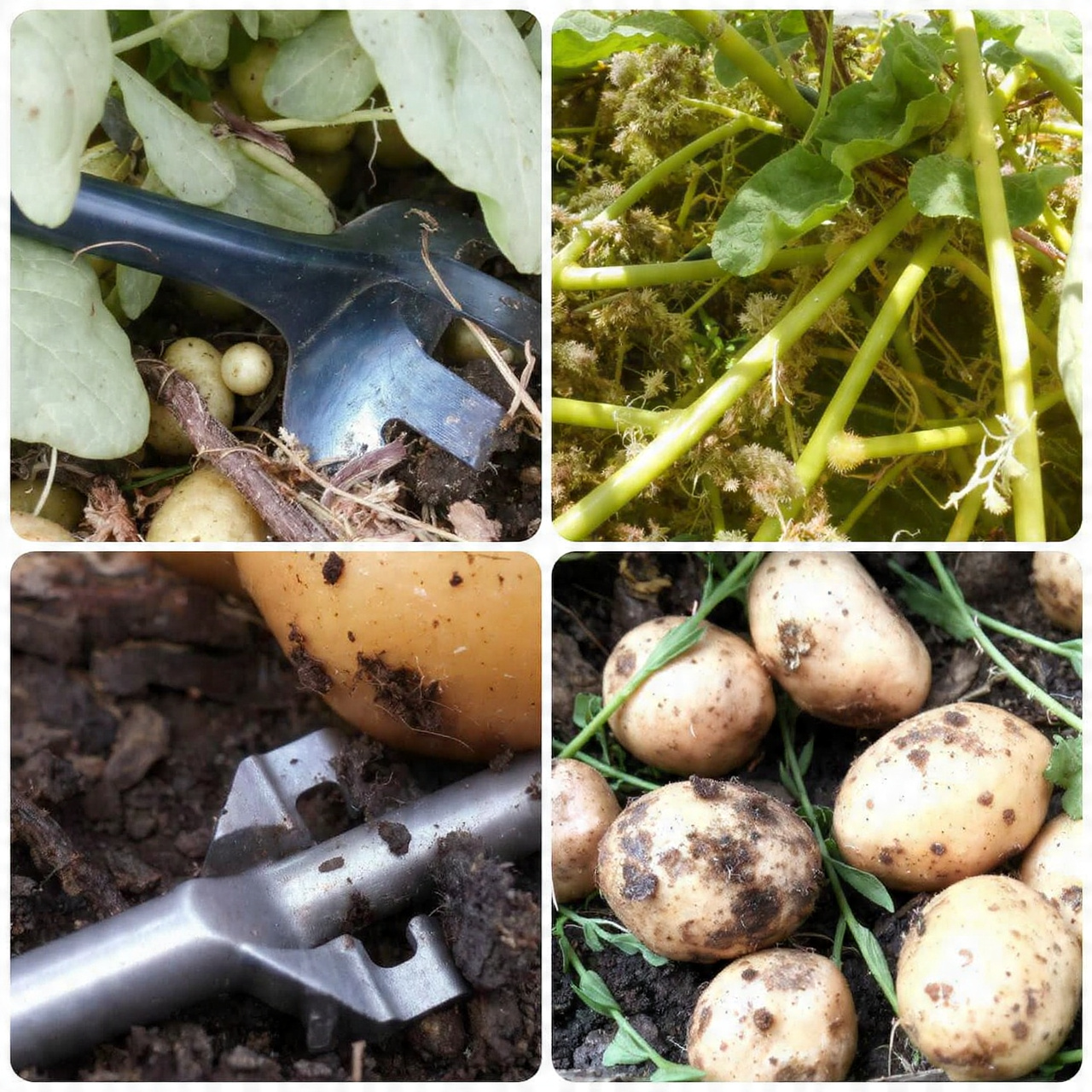
Patience pays off in potato growing, but how do you know when they’re ready? There are actually two harvest options, depending on what you’re craving.
New Potatoes (baby potatoes):
- When: As soon as plants flower (about 8-10 weeks after planting)
- How: Gently dig around the plant base without disturbing the main plant
- Size: Small, marble to golf-ball sized
- Taste: Tender skin, sweet flavor, perfect for roasting whole
- Storage: Use within a week—they don’t keep long
Storage Potatoes (full-size):
- When: After vines turn yellow and die back (90-120 days after planting)
- The waiting game: Once vines die, wait 2 more weeks for skins to set
- Skin test: Rub your thumb across the skin—if it doesn’t easily peel off, they’re ready
- Yield: Maximum size and best storage quality
Signs of readiness:
- ✅ Yellowing, dying vines
- ✅ Thick skin that resists rubbing
- ✅ Proper days to maturity reached (check seed packet)
- ❌ Still-green vines (not ready)
- ❌ Thin, papery skin (wait longer)
Weather Considerations: If a hard frost is coming and your plants haven’t died back yet, cut the vines at ground level. Wait two weeks, then harvest. This forces skin maturation.
Harvesting Without Damage
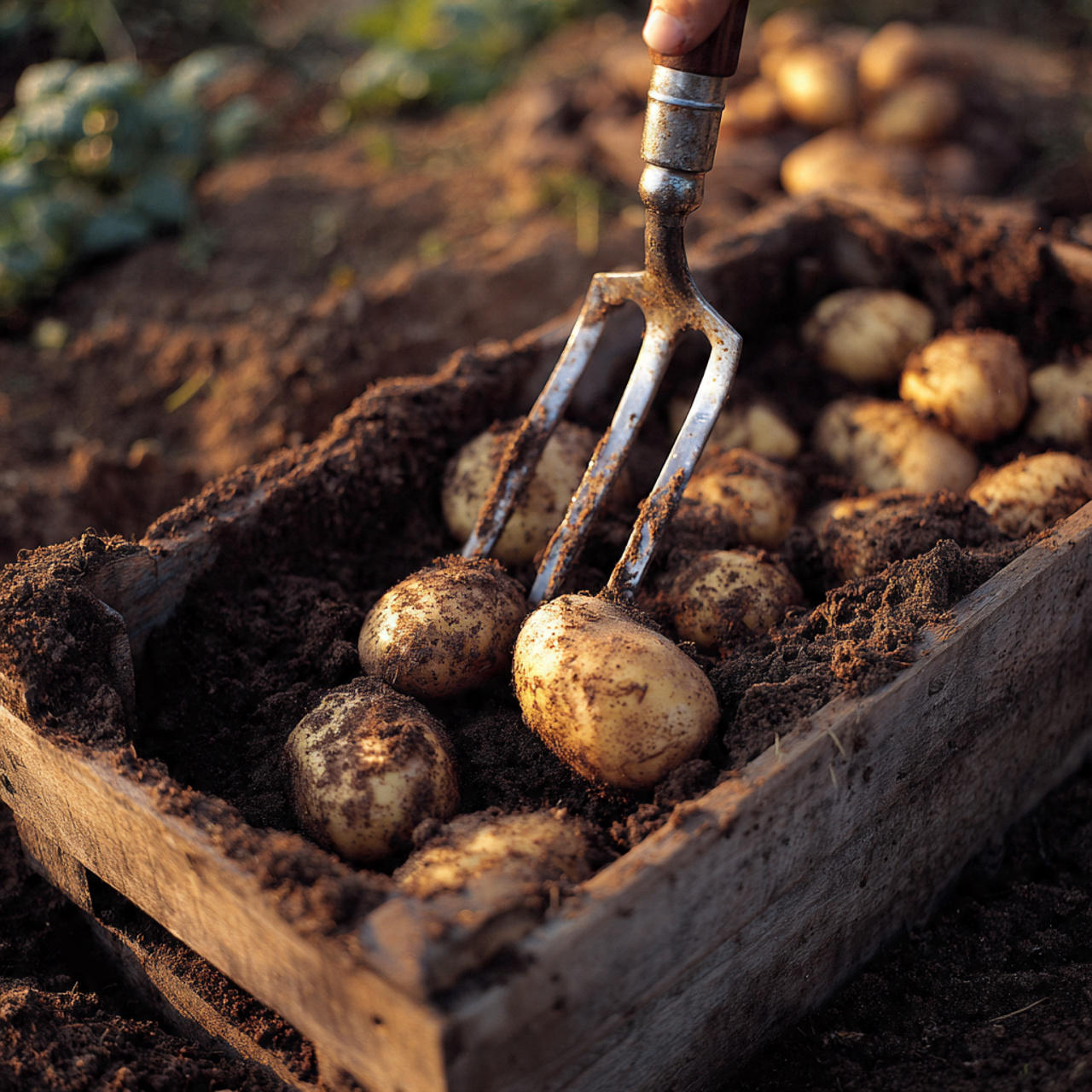
You’ve waited months for this moment—don’t ruin your potatoes in the last step! Gentle handling is everything.
Perfect harvest conditions:
- Dry soil (not soaking wet or bone dry)
- Cloudy day or early morning (direct sun greens potatoes quickly)
- Dry weather forecast (wet potatoes rot in storage)
Step-by-step harvesting:
- Use a garden fork, not a shovel (less likely to spear potatoes)
- Insert fork 12 inches away from the plant center
- Gently lift and shake soil from roots
- Feel through the soil with your hands for hidden potatoes
- Place carefully in shallow containers (not deep buckets where weight causes bruising)
Handling do’s and don’ts:
- ✅ Handle like eggs—they bruise easily
- ✅ Brush off soil with your hands or a soft brush
- ✅ Leave in single layers to cure
- ❌ Don’t wash them! Moisture encourages rot
- ❌ Don’t toss or drop them
- ❌ Don’t stack deeply—top layer weight damages bottom potatoes
What to do immediately after harvest:
- Lay potatoes in a single layer in a dark, well-ventilated area
- Let them cure for 10-14 days at 50-60°F
- This toughens skins and heals minor cuts
- After curing, brush off remaining soil and sort for storage
Damaged Potato Protocol: Set aside any cut or bruised potatoes to eat first—they won’t store well. Don’t throw them out; just prioritize them for immediate use.
Visit Also: Vegetable Gardening
Storing Your Harvest Long-Term
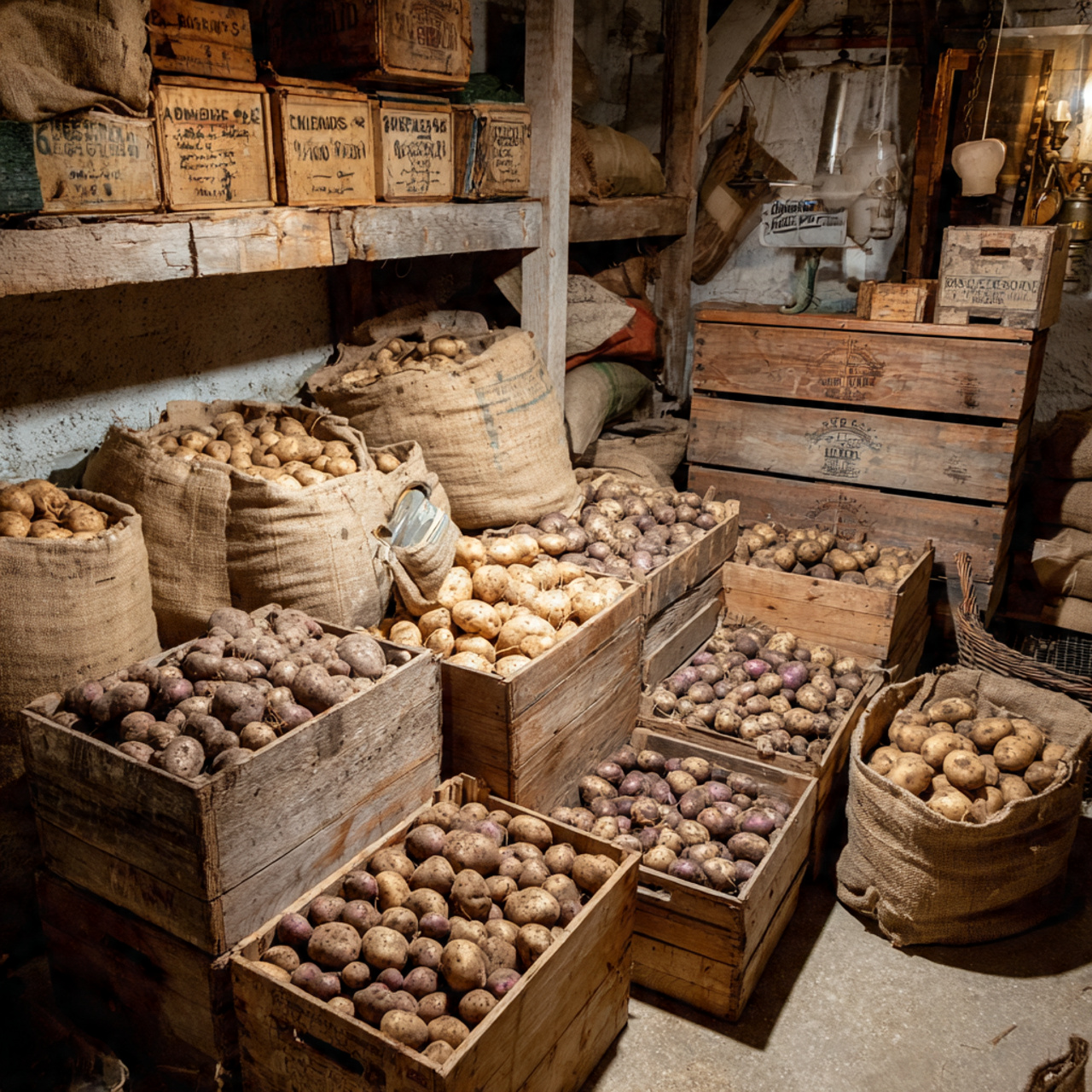
All that hard work deserves proper storage! Done right, you can enjoy homegrown potatoes for 6-8 months.
Ideal storage conditions:
- Temperature: 38-40°F (warmer = faster sprouting, colder = sugar conversion)
- Humidity: 90% (prevents shriveling)
- Light: Complete darkness (light causes greening and toxic solanine)
- Ventilation: Good air circulation (prevents condensation and rot)
Best storage locations:
- Unheated basement or root cellar
- Insulated garage (in cold climates)
- Cool closet on north side of house
- Purpose-built root cellar
- NOT your heated house (too warm)
Storage containers:
- Cardboard boxes with ventilation holes
- Burlap or paper bags (never plastic!)
- Wooden crates
- Mesh bags
- Covered with newspaper for darkness
Variety storage times:
- Late-season varieties: (Russet, Yukon Gold) 6-8 months
- Mid-season varieties: 4-6 months
- Early varieties: 2-3 months—eat these first!
Monthly maintenance:
- Sort through stored potatoes
- Remove any showing soft spots, sprouts, or rot
- One bad potato can spoil neighbors
- Check for mice or pest issues
Critical Warnings:
- ⚠️ Never store near apples or onions (they emit ethylene gas that triggers sprouting)
- ⚠️ Green potatoes are toxic—toss them out
- ⚠️ Temperature fluctuations ruin storage quality
- ⚠️ Light exposure for even a few hours can cause greening
Smart Tip: Store different varieties separately and label with harvest date. Use early varieties first, save late varieties for spring eating.
Planning Smart Crop Rotation
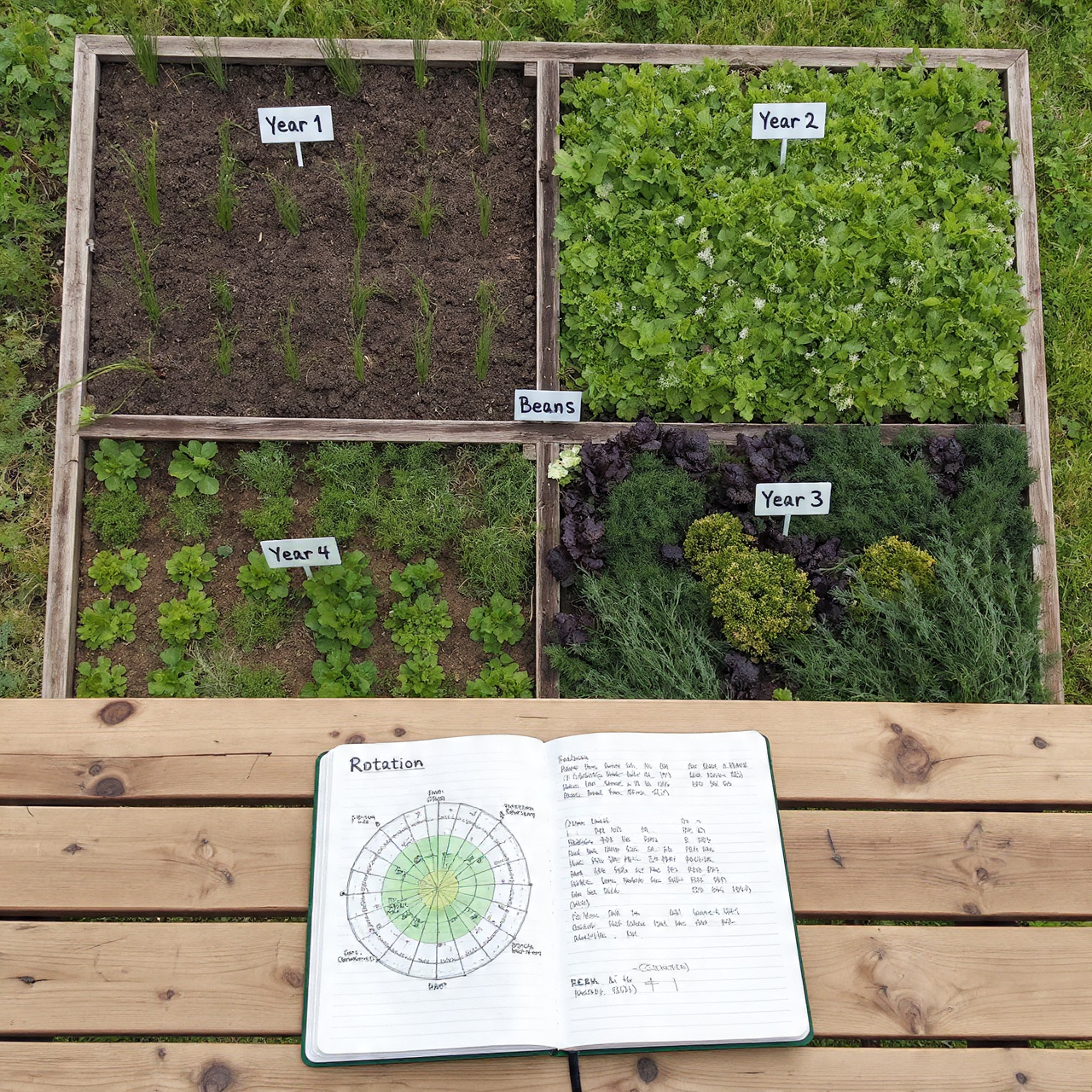
This might seem like overthinking, but crop rotation is probably the single most important thing you can do for long-term potato-growing success.
Why rotation matters:
- Prevents disease buildup in soil
- Disrupts pest life cycles
- Balances soil nutrient demands
- Reduces need for chemicals
- Improves overall garden health
The basic rotation rule: Never grow potatoes in the same spot more than once every 3-4 years.
Plants to rotate WITH potatoes:
- ✅ Beans and peas (add nitrogen to soil)
- ✅ Corn (different nutrient needs)
- ✅ Lettuce and greens (light feeders)
- ✅ Carrots and beets (different diseases)
- ✅ Squash and cucumbers (unrelated families)
Plants to AVOID in potato beds:
- ❌ Tomatoes (same disease family)
- ❌ Peppers (same disease family)
- ❌ Eggplants (same disease family)
- ❌ Potatoes again (obviously!)
Example 4-year rotation:
- Year 1: Potatoes
- Year 2: Beans or peas
- Year 3: Leafy greens or corn
- Year 4: Root vegetables
- Year 5: Back to potatoes
Record-keeping made easy:
- Sketch your garden layout each year
- Label which beds grew what
- Note varieties planted and results
- Track disease or pest issues
- Keep seed packets with notes
Pro Strategy: Divide your garden into four sections and rotate crops through them systematically. This makes planning almost automatic after the first year.
What if I only have one garden bed? Grow potatoes in containers for a year or two while you let your bed “rest” with non-related crops. It’s worth the patience!
Your Top Potato-Growing Questions Answered
Can I grow potatoes from store-bought potatoes? Store-bought potatoes often carry sprout inhibitors and diseases that compromise success. While technically possible, certified seed potatoes provide superior results with disease-free genetics bred for your region. The minimal cost difference justifies purchasing proper seed stock.
How many potatoes does one plant produce? A healthy potato plant typically yields 5-10 tubers, producing 1-2 pounds per plant under good conditions. Yields vary based on variety, soil quality, and growing conditions. Proper hilling and consistent care maximize production per plant.
Do potatoes need full sun? Potatoes require at least 6-8 hours of direct sunlight daily for optimal tuber development. Partial shade reduces yields significantly. Choose the sunniest available location for best results when growing potatoes.
Why are my potatoes turning green? Green potatoes indicate chlorophyll and solanine production from light exposure. This occurs when tubers grow too close to the surface or storage conditions allow light penetration. Green portions contain toxic compounds and should not be eaten. Proper hilling and dark storage prevent greening.
Can I plant potato pieces immediately after cutting? Cut seed potatoes require 24-48 hours of curing time before planting. This allows cut surfaces to form a protective callus that resists rot. Plant whole small seed potatoes immediately, but always cure cut pieces first.
Time to Get Growing!
There you have it—everything you need to know to grow incredible potatoes in your own backyard (or balcony!). From choosing the right seed potatoes to storing your harvest through winter, these 15 essential practices will set you up for success.
Remember, potato growing isn’t about perfection—it’s about progress. Your first harvest might not be Instagram-worthy, but I guarantee those potatoes will taste better than anything from the grocery store. Each season, you’ll learn what works in your specific soil and climate, tweaking your approach until you’ve got it dialed in.
The best part? Potatoes are forgiving. Miss a hilling? You’ll still get potatoes, just fewer. Forget to fertilize once? Your plants will manage. The key is starting with good soil, maintaining consistent moisture, and hilling regularly—nail those three things, and you’re 80% of the way there.
So what are you waiting for? Spring planting season is just around the corner. Order your seed potatoes, start preparing that garden bed, and get ready to experience the incredible satisfaction of digging up your own homegrown harvest. Trust me, once you taste the difference, you’ll never look at store-bought potatoes the same way again.
Happy growing, and here’s to your best potato harvest yet!