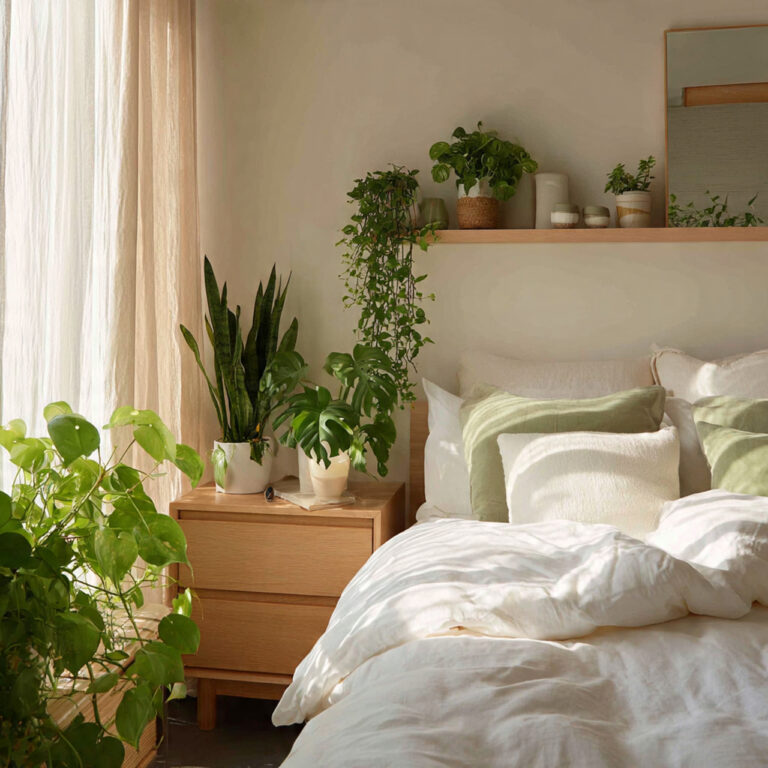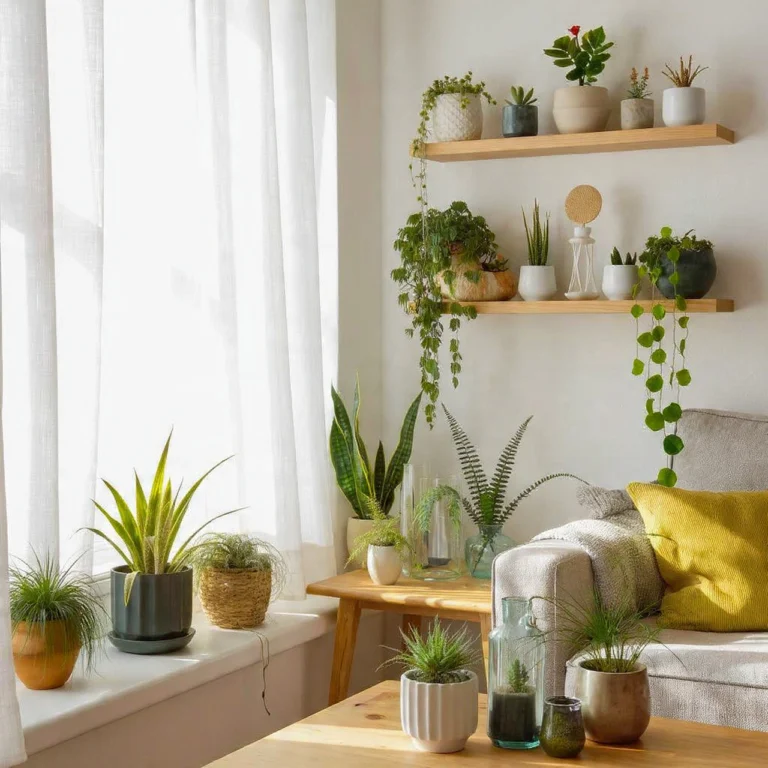
17 Stunning Pothos Climbing Ideas for Vertical Indoor Gardens
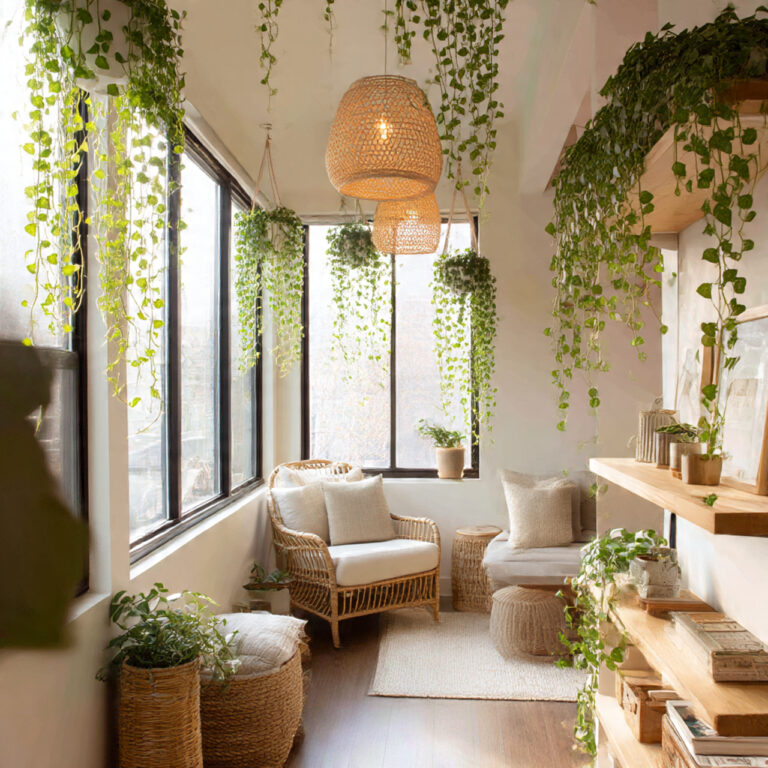
If you’re looking for a low-maintenance plant that can turn your blank walls into a greenery, pothos climbing ideas, is your answer. This incredibly forgiving vine doesn’t just survive—it thrives when you give it something to climb on. I’ve watched countless pothos plants transform from simple desk decorations into stunning vertical displays that completely change the feel of a room.
What makes pothos special is how naturally they want to climb. In the wild, these plants wrap themselves around trees and reach for the sun, and they’ll happily do the same thing in your home with just a little guidance. Whether you’re dealing with a tiny apartment or just want to add some life to an empty corner, training your pothos to grow upward is easier than you might think.
The Science Behind Why Pothos Love to Climb
Here’s something fascinating: pothos aren’t just trailing plants that happen to climb sometimes. They’re actually born climbers. Along their stems, they grow special aerial roots—these tiny root-like structures that grab onto whatever they can find. In rainforests, this is how they climb up tree bark toward the light filtering through the canopy.
When you give your pothos a proper climbing surface, something amazing happens. The leaves get bigger, the stems grow thicker, and the whole plant becomes more vibrant. It’s like the plant knows it’s doing what it was meant to do. I’ve seen pothos leaves double in size when they’re allowed to climb properly compared to ones that just hang down.
Quick Tip: If your pothos isn’t climbing well, check if the surface you’re using has enough texture. Smooth surfaces make it nearly impossible for those aerial roots to grip properly.
Using Moss Poles: The Classic Choice That Actually Works
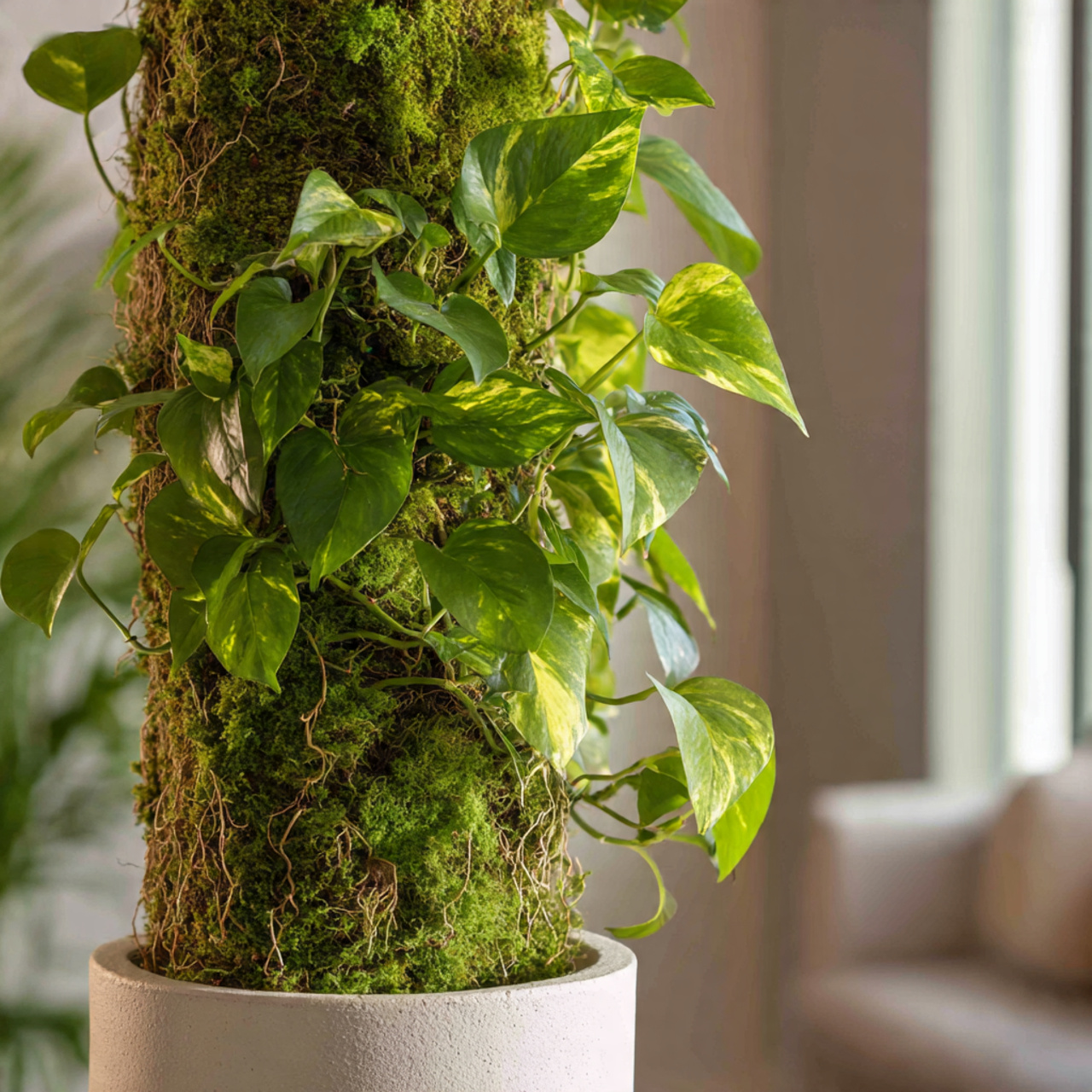
Let’s start with moss poles because they’re honestly the closest thing you can get to a tree trunk indoors. These poles are usually made with a core (often PVC or wood) that’s wrapped in sphagnum moss or coconut coir. The moss stays slightly damp, which your pothos absolutely loves.
Setting one up is straightforward. Push the pole deep into your pot—at least 2-3 inches if you can—so it doesn’t wobble around. Then gently guide your vines around it. Here’s the secret that makes a huge difference: keep that moss moist. I spray mine with a water bottle every few days, and you can actually see the aerial roots reaching out to attach themselves.
Pro Tips for Moss Poles:
- Start with a 2-3 foot pole for young plants; you can always add extensions later
- Use soft plant ties or even old pantyhose strips to attach vines initially
- Position the pole before the plant gets too big—it’s much easier
- Look for poles with a diameter of at least 2 inches for better stability
Common Mistake to Avoid: Don’t let the moss dry out completely. Dry moss is slippery and your pothos won’t be able to grip it properly.
Building a Wooden Trellis: Structure Meets Style
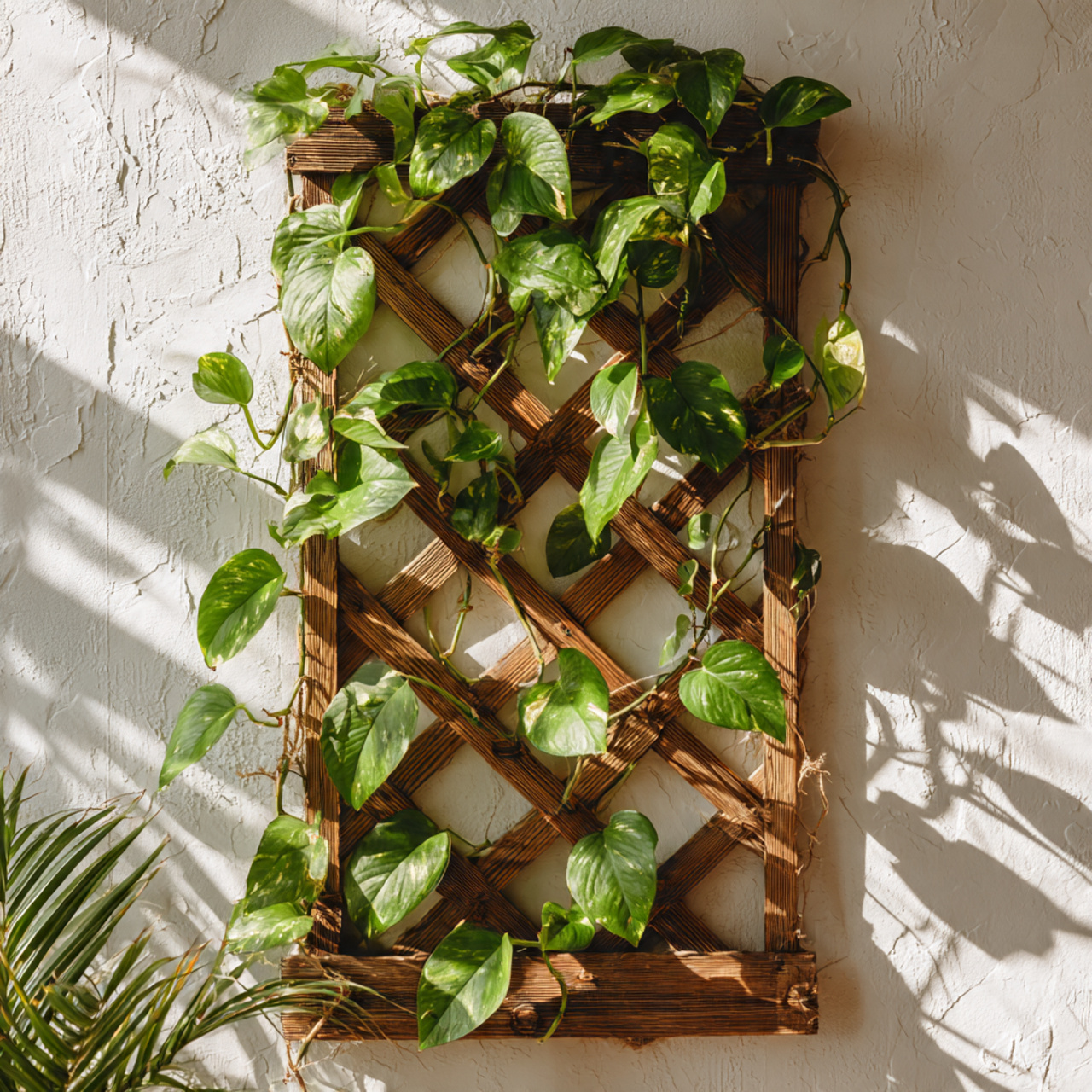
Wooden trellises give you more control over exactly how your pothos grows. Think of them like a roadmap for your plant—you’re creating specific paths for the vines to follow. I love using cedar or bamboo because they naturally resist the moisture from your plant without rotting.
You can buy ready-made trellises or make your own with simple wooden slats. The key is creating a pattern with gaps between the wood pieces so vines can weave through. A lattice pattern works beautifully, or you can go simpler with a ladder-style design.
Installation Tips:
- Secure the trellis to the wall or prop it firmly in the pot before adding vines
- Leave about an inch of space between the trellis and the wall for air circulation
- Use natural jute twine to tie vines gently—never use wire or anything that cuts into stems
- Check ties monthly and loosen them as stems thicken
Design Idea: Create a diamond pattern trellis for a more elegant look, or go with straight vertical lines for a modern aesthetic.
Safety Note: Make sure wall-mounted trellises are anchored into studs, not just drywall, especially as your plant gains weight.
Wire Grids: The Modern Minimalist’s Dream
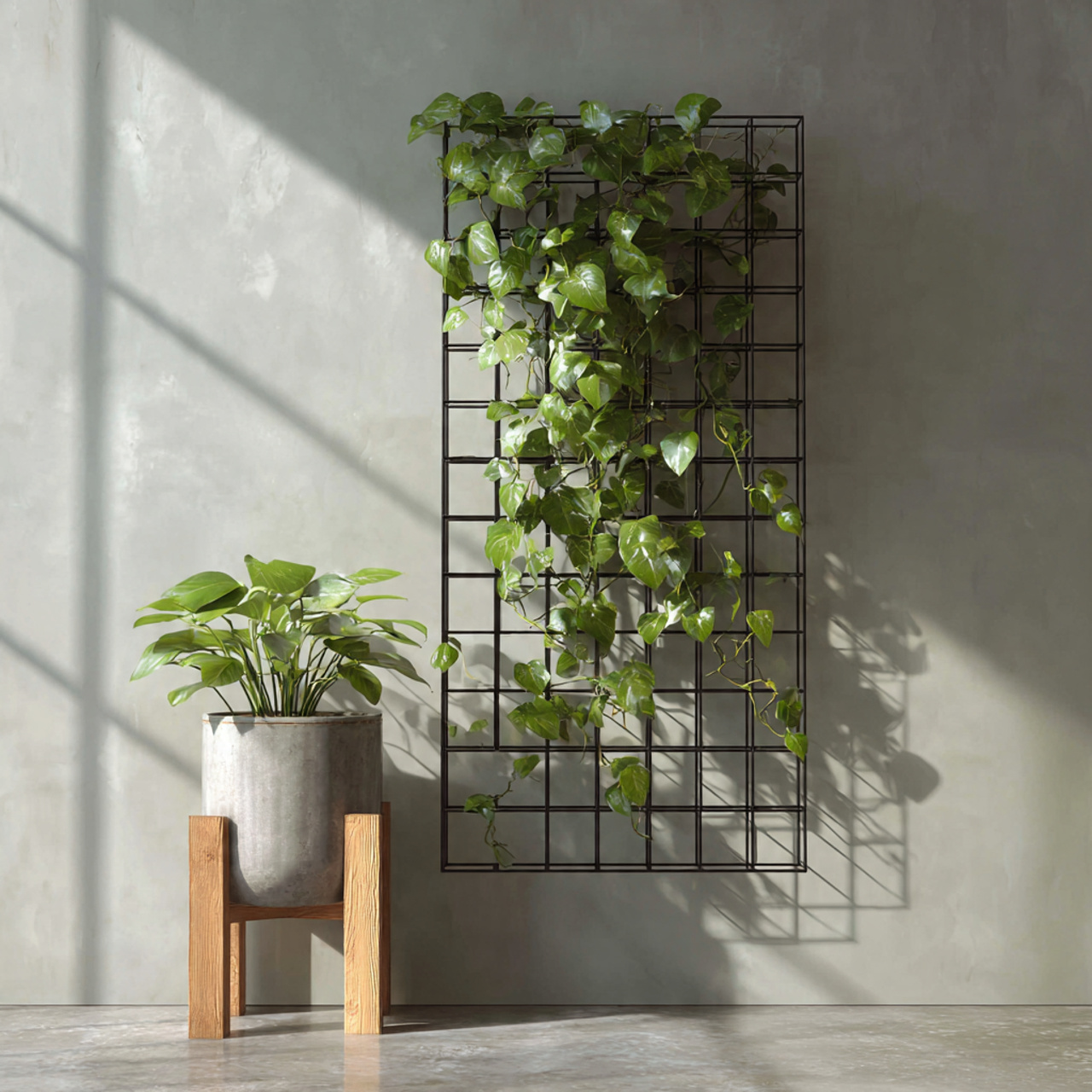
If you’re into clean, contemporary spaces, wire grid panels are perfect. These metal grids (sometimes called mesh panels) give you that Instagram-worthy look while being incredibly functional. The best part? You can find them at office supply stores or online for pretty cheap.
The grid structure gives you tons of attachment points, so you can guide your vines to create almost any pattern you want. I’ve seen people create geometric designs, let the vines spread naturally for a wild look, or even spell out words.
Setup Guidelines:
- Use Command strips for lightweight grids or proper anchors for heavier ones
- Mount the grid 2-3 inches away from the wall using spacers
- Black grids create dramatic contrast; white or gold grids feel softer
- Clean the grid every few months—dust accumulates in those little squares
Styling Tip: Combine multiple smaller grids instead of one large one for a more interesting, modular look you can rearrange.
Macrame Magic: Bohemian Charm with Climbing Power
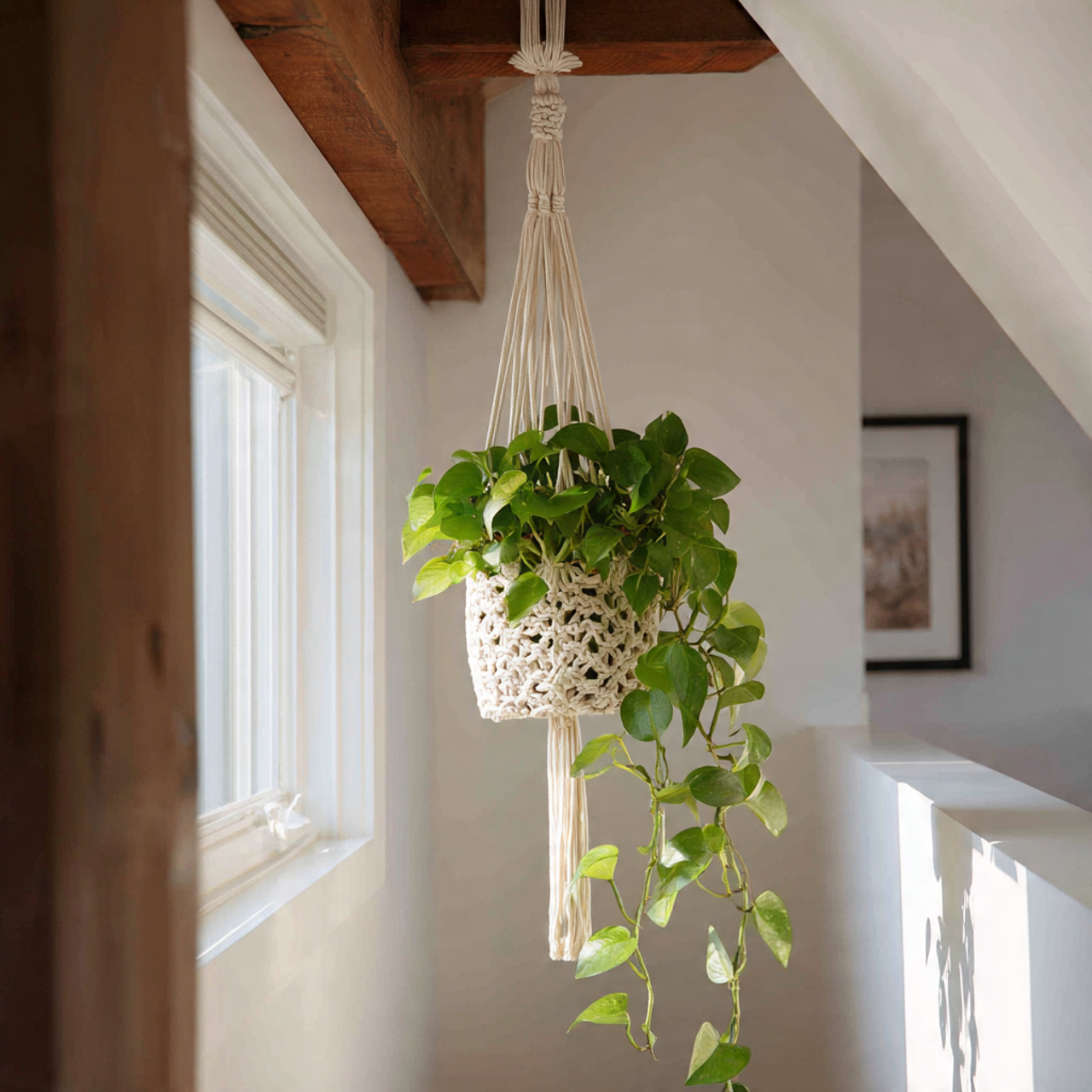
Macrame isn’t just for hanging planters anymore. When you extend those knotted cords upward or outward, you create built-in climbing paths that look absolutely gorgeous. The thick, textured rope is perfect for aerial roots to grab onto.
You don’t need to be a macrame expert to make this work. Start with a basic hanging planter in macrame, then add extra cords that extend upward to a ceiling hook or outward to wall hooks. As your pothos grows, the vines will naturally wrap around these cords.
Best Practices:
- Use natural fibers like cotton, jute, or hemp—synthetic materials are too slippery
- Choose rope that’s at least 1/4 inch thick for durability
- Extend cords at diagonal angles for more interesting growth patterns
- Secure top attachment points very firmly—they’ll hold increasing weight
Creative Example: Create a macrame “curtain” where multiple cords hang at different lengths, letting your pothos create a living room divider.
Avoid This: Don’t use dyed rope that might bleed color when wet, especially if it’s hanging over furniture or carpet.
Tension Rods: The Renter’s Best Friend
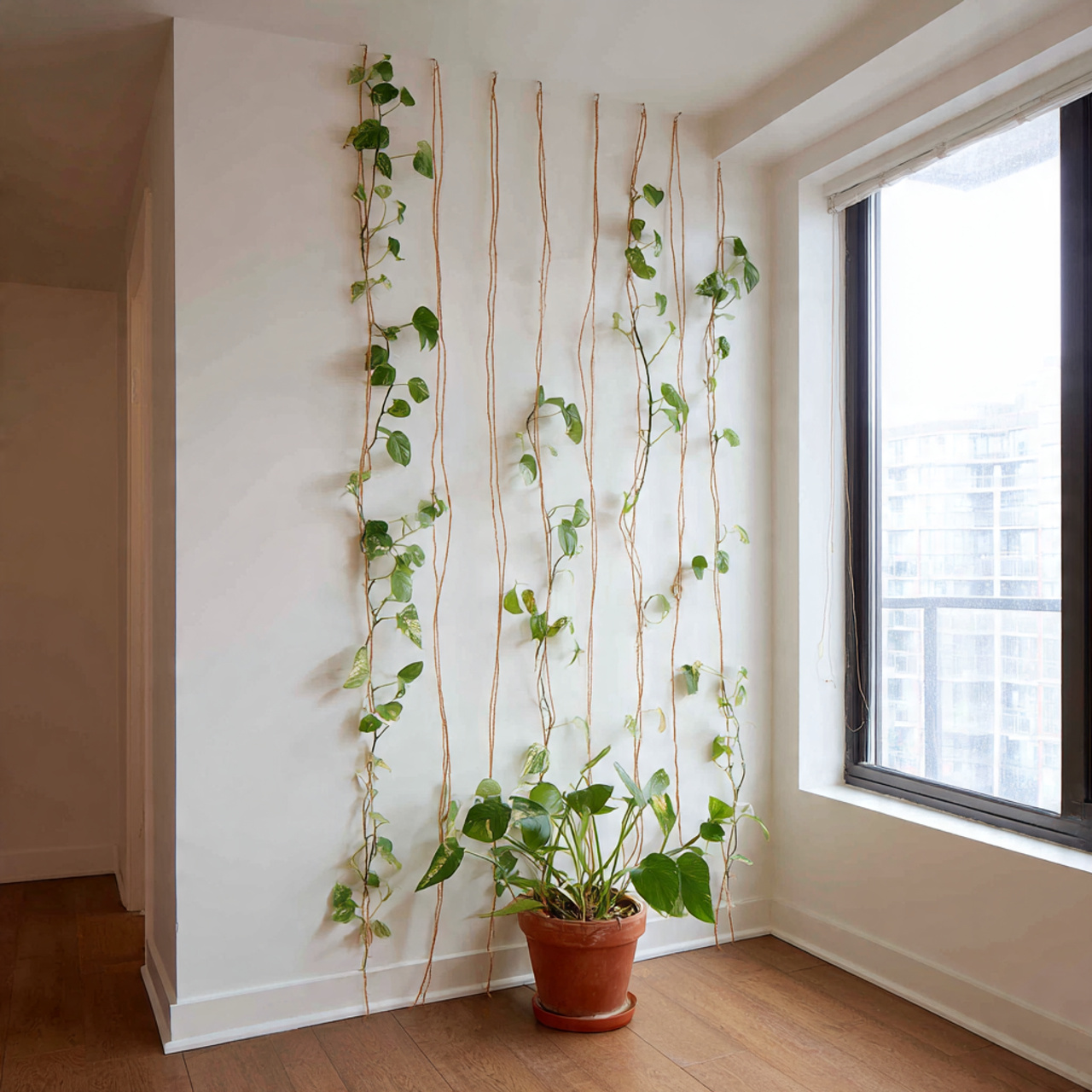
Not ready to commit to drilling holes in your walls? Tension rods are your solution. These spring-loaded bars wedge between your floor and ceiling or between walls without any hardware. I love recommending these to renters or anyone who likes to rearrange furniture frequently.
The trick is using the rods as anchor points and then stringing fishing line, thin rope, or even decorative chains between them. Your pothos vines follow these lines upward, creating vertical growth without permanent fixtures.
How to Make It Work:
- Use multiple rods spaced 2-3 feet apart for larger plants
- Run strings at angles between rods for more climbing options
- Test the rod’s stability every month—they can loosen over time
- Position rods near corners for extra stability
Budget Tip: One tension rod costs around $15-20, and you can create an entire climbing system for under $50 including string or twine.
Important: Check manufacturer weight limits. Most standard tension rods hold 10-20 pounds, which is plenty for pothos but not if you’re adding other heavy items.
DIY PVC Solutions: Professional Results on a Shoestring Budget
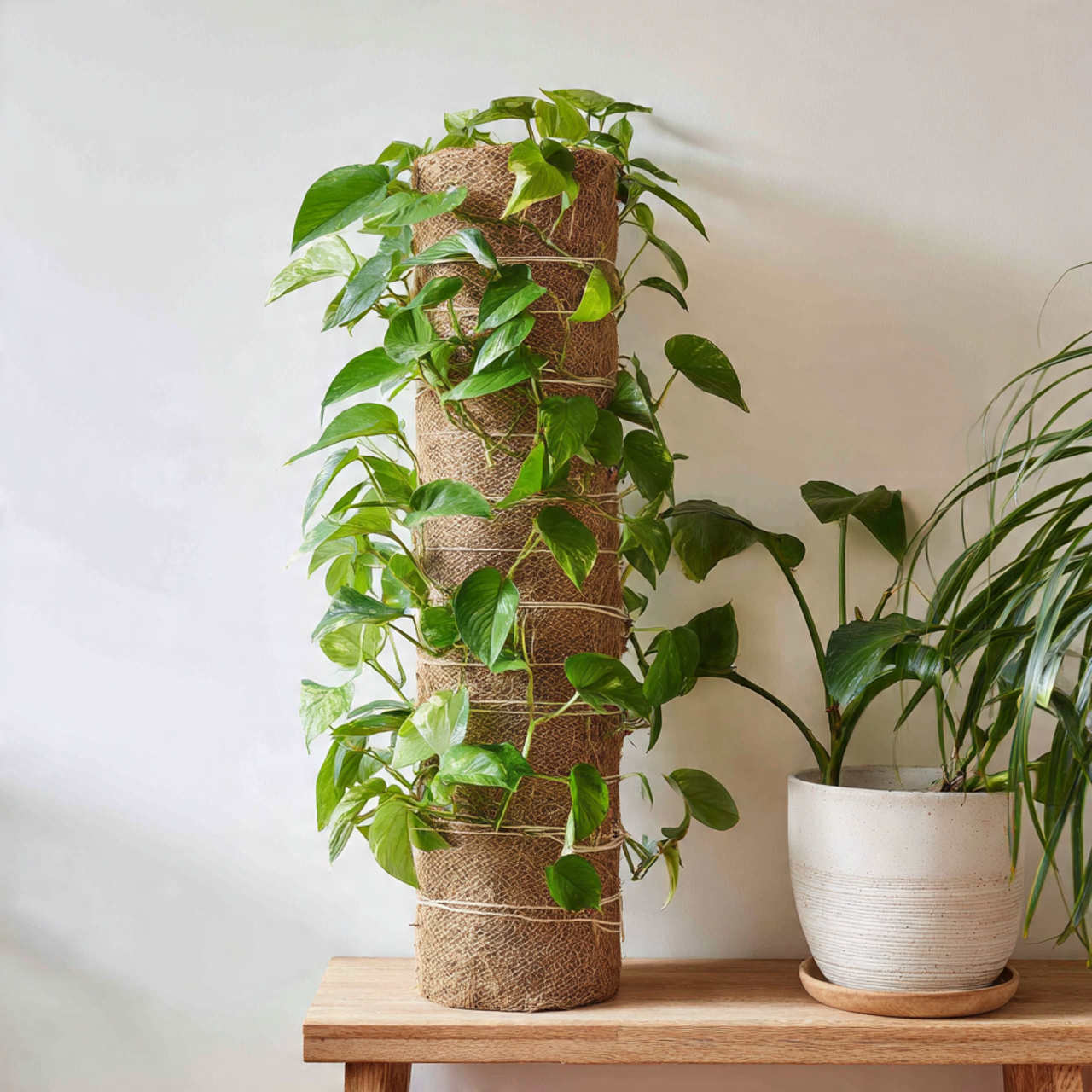
PVC pipe might not sound glamorous, but hear me out. For under $20, you can build a custom climbing structure that’s exactly the right size for your space. The trick is covering that industrial-looking pipe with something textured.
I usually wrap PVC poles with coconut coir sheets (secured with fishing line) or burlap. You can also hot-glue sheet moss onto the surface. Once it’s covered and your pothos starts growing, you’d never know there’s plastic underneath.
Building Steps:
- Cut PVC to your desired height with a simple hacksaw
- Use PVC cement to attach a base flange if you want a freestanding structure
- Wrap your chosen material tightly, securing every few inches
- Insert into your pot or mount to a base board
Advanced Idea: Drill small holes along the PVC and thread wire through to create horizontal supports where vines can rest.
Cost Breakdown: A 6-foot structure typically costs $15-25 total, versus $50-100 for pre-made moss poles.
Natural Bamboo Stakes: Sustainable and Strong
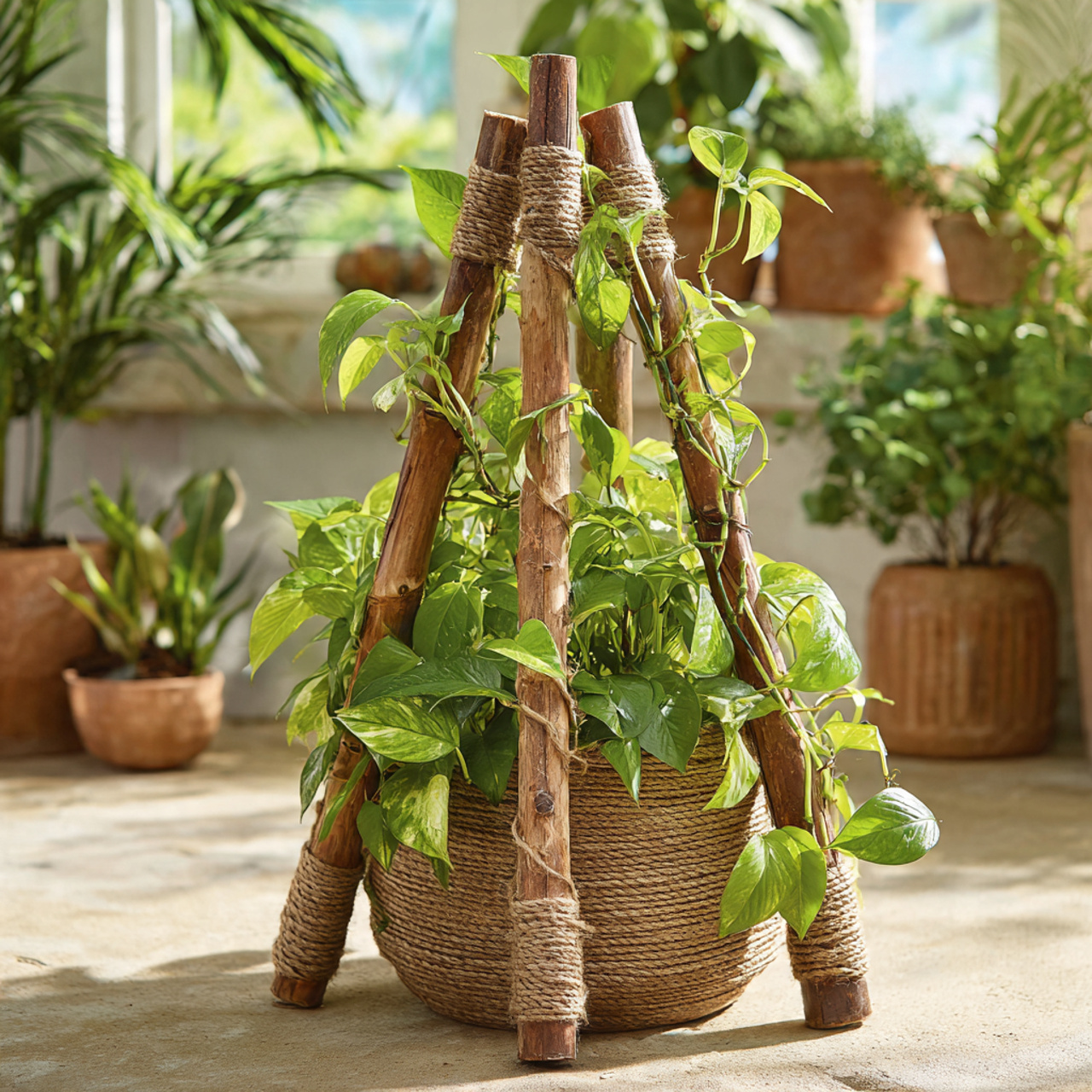
Bamboo stakes bring that organic, jungle vibe without any plastic. They’re surprisingly strong for how lightweight they are, and since bamboo is sustainable and biodegradable, it’s an eco-friendly choice too.
The smooth surface of bamboo can be tricky for aerial roots at first. My solution? Loosely wrap the stakes with natural jute twine in a spiral pattern. This gives the roots something to grip while keeping the natural bamboo look visible.
Using Bamboo Effectively:
- Group 3-5 stakes together and secure them at top and bottom for a fuller look
- Choose stakes at least 1/2 inch in diameter for stability
- Position stakes at slight angles leaning against each other for a tipi shape
- Replace stakes every 2-3 years as they age
Example Setup: Place three bamboo stakes in a triangle formation in your pot, tie them together at the top, and train vines up each stake for a sculptural effect.
Vintage Ladder Displays: Rustic Character with Purpose
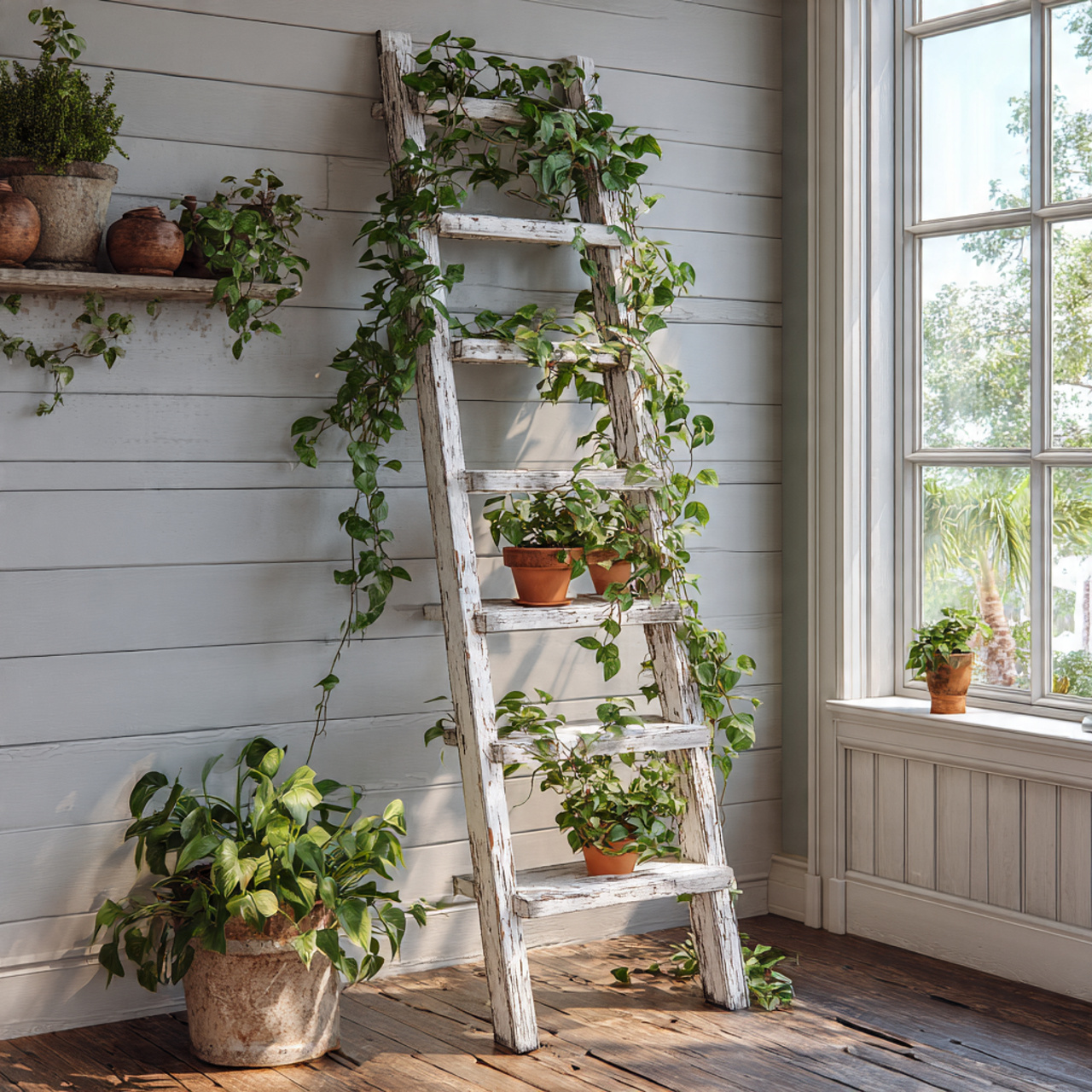
An old wooden ladder leaning against a wall isn’t just decorative—it’s the perfect pothos climbing structure. I’ve found great ladders at thrift stores for $10-20, and they instantly add character while giving your plant multiple levels to explore.
Place your pothos pot on the floor or a lower rung, then train vines to climb the side rails and drape over the steps. You can even place smaller pots on different rungs for a layered garden effect.
Preparation Steps:
- Sand rough spots to prevent stem damage
- Seal wood with a water-resistant coating on areas that might get wet
- Test stability—secure it to the wall with L-brackets if needed
- Distress paint for an authentic vintage look, or leave natural
Safety First: Make sure the ladder is stable and won’t tip forward as vines add weight to the front.
Styling Idea: Paint each rung a different subtle color for a playful rainbow effect, or go monochrome for sophistication.
Invisible String Systems: Let the Plant Shine
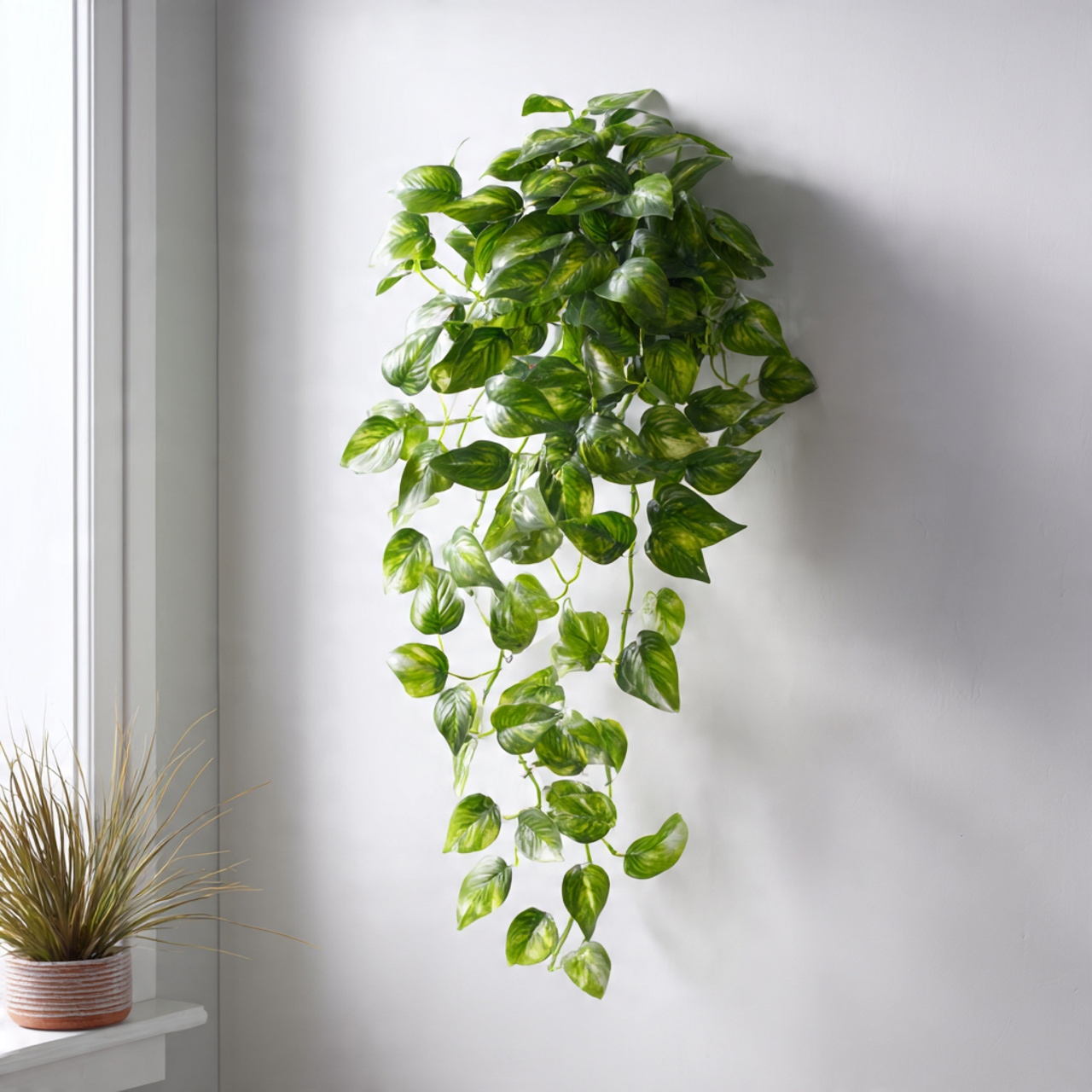
Sometimes the best support structure is one you can barely see. By installing small clear hooks and connecting them with fishing line or very thin clear wire, you create climbing paths that seem to disappear, making your pothos look like it’s floating in mid-air.
This works especially well in modern or minimalist spaces where you don’t want visible structures competing with the plant itself. The fishing line is strong enough to support vines but thin enough to be nearly invisible from a few feet away.
Installation Strategy:
- Map out your pattern on paper first
- Use adhesive hooks rated for at least 5 pounds each
- Run fishing line with just slight tension—not too tight
- Place hooks 12-18 inches apart for adequate support
Pro Tip: Use 30-50 pound test fishing line for durability. Yes, that’s overkill for the weight, but the thicker line is easier to work with and more UV-resistant.
Common Pitfall: Don’t space hooks too far apart or vines will sag between them and the “floating” effect is lost.
Wall Shelves with Built-in Climbing Routes
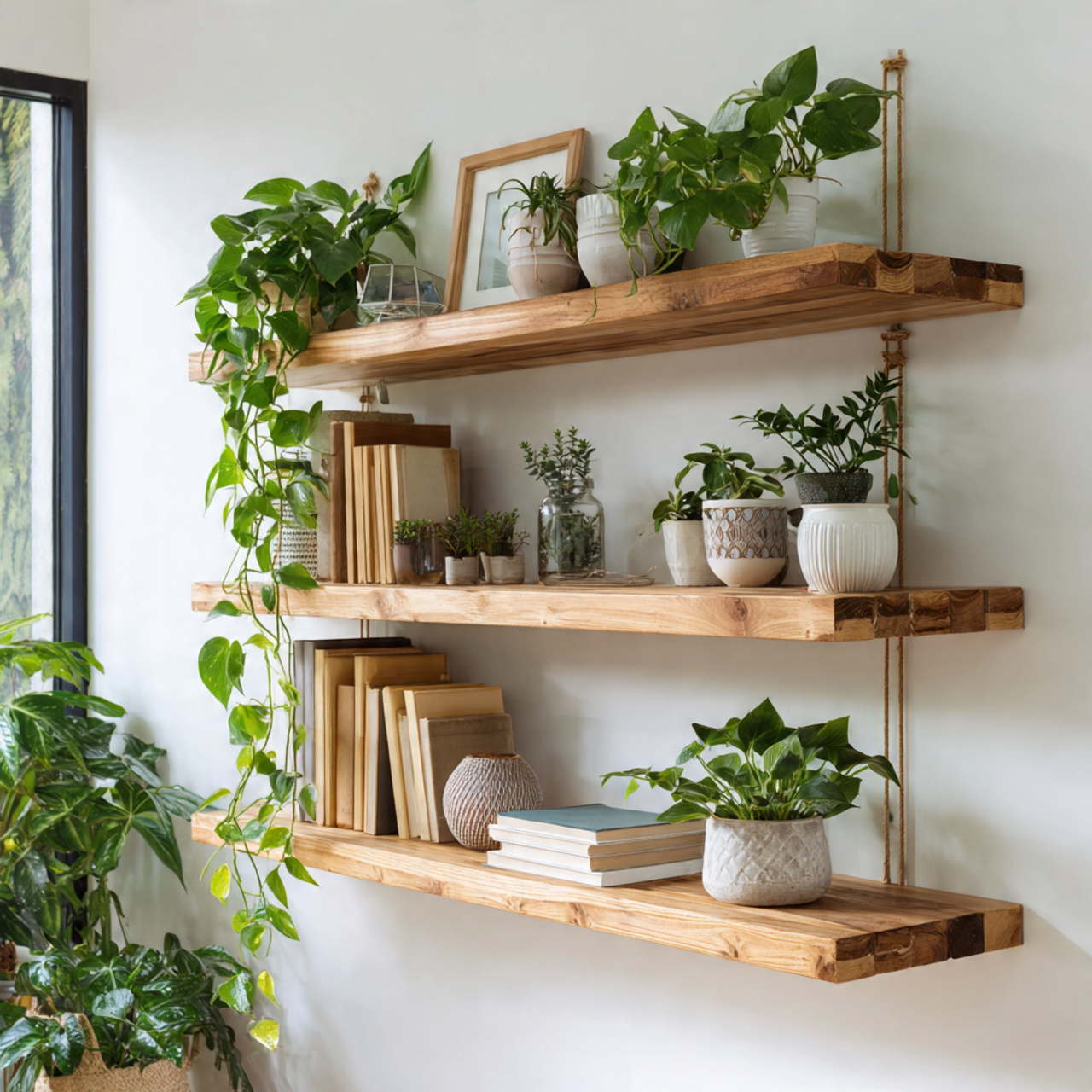
Why not combine storage with plant support? By installing floating shelves at different heights and connecting them with climbing structures, you create a living wall that’s also functional. Place your pothos on a shelf and add a moss-wrapped dowel or strings going up to the next level.
This approach works brilliantly in home offices or living rooms where you need both display space and greenery. Books, decorative items, and plants share the same vertical space efficiently.
Design Considerations:
- Use sealed or treated wood that can handle occasional water exposure
- Install a small tray under pots to catch any drainage
- Connect shelves with thin wooden dowels wrapped in coir for a cohesive look
- Stagger shelf heights for visual interest
Example Layout: Three shelves at 2-foot intervals with bamboo stakes running between them, creating a ladder effect.
Chicken Wire Frames: Cottage Garden Indoors
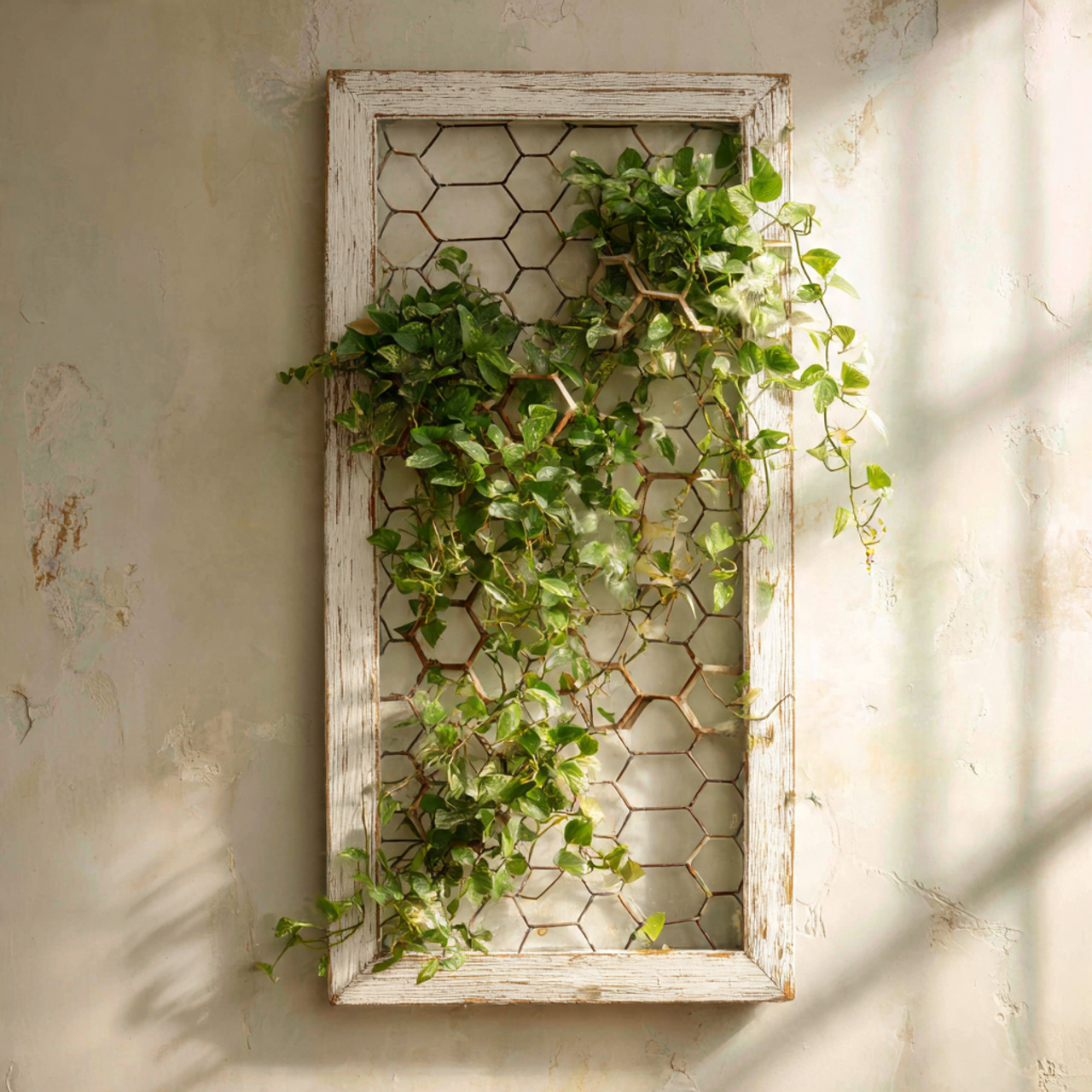
If you love that cottage or farmhouse aesthetic, chicken wire stretched across a wooden frame is your answer. The small hexagonal openings give vines countless places to grab, and the whole setup has this charming, casual look.
Build a simple rectangular frame from 1×2 lumber, staple chicken wire across it, and either mount it to a wall or make it freestanding with a base. Paint the frame white for cottage charm, or leave it natural for rustic appeal.
Building Basics:
- Use 1/2-inch or 1-inch chicken wire mesh
- Wear gloves—those wire edges are sharp
- Sand the wooden frame edges smooth before assembly
- Apply a white or pastel paint for that perfect cottage look
Safety Tip: Fold or file down any sharp wire ends that might catch on clothing or skin.
Versatility Note: These frames work great as room dividers in studios or for creating defined plant zones in open-concept spaces.
Corner Poles: Making Dead Space Come Alive
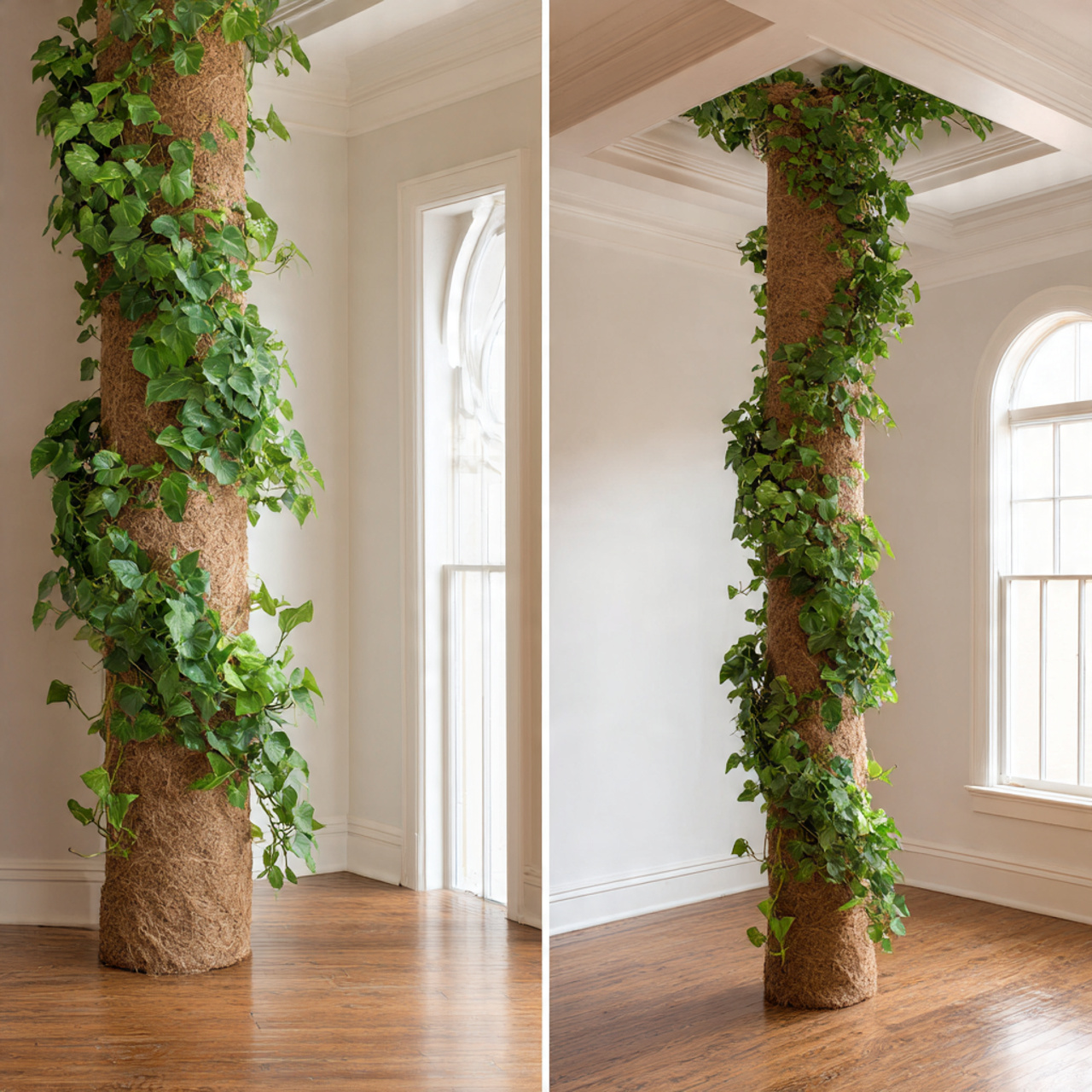
Room corners are wasted space in most homes, but a floor-to-ceiling pole wrapped in climbing material turns them into vertical gardens. This is especially effective in rooms with high ceilings where you want to draw the eye upward.
Secure a sturdy pole (wood, bamboo, or PVC) between floor and ceiling using mounting flanges at both ends. Wrap it in your preferred climbing material, place your pothos at the base, and watch it spiral upward creating a living column.
Installation Musts:
- Secure firmly at both ceiling and floor—this will hold significant weight
- Wrap material tightly so it doesn’t slip down as the plant grows
- Position in corners with adequate light from nearby windows
- Consider LED grow lights if the corner is dim
Design Impact: A 10-foot corner pole covered in lush pothos completely transforms the perception of ceiling height in a room.
Bathroom Shower Rod Setups: Humidity
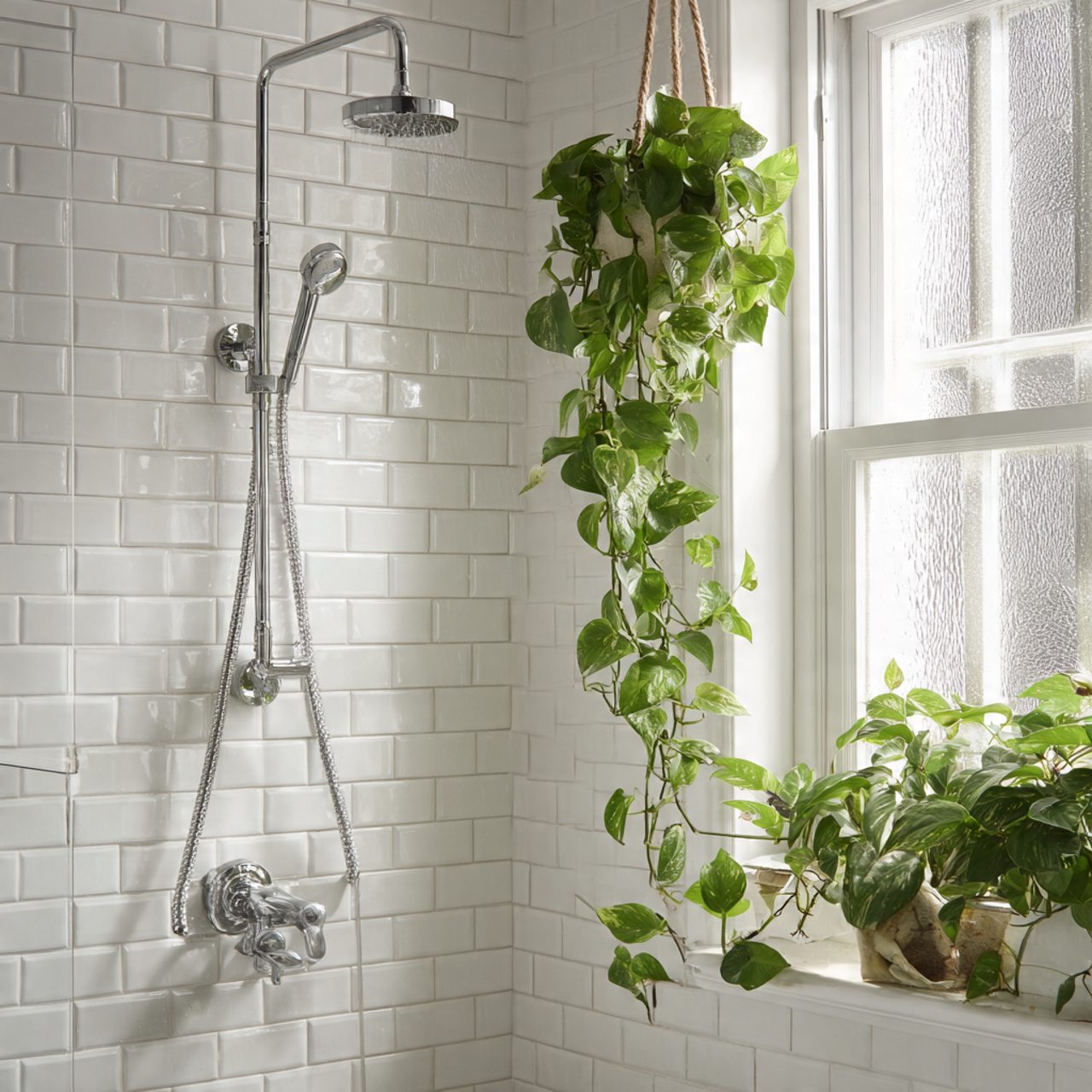
Your bathroom is actually an ideal pothos habitat because of the natural humidity from showers. Adapt a tension shower rod or use the existing curtain rod to hang your pothos container, then run strings or chains down or across for climbing support.
The steam from hot showers mimics tropical conditions, encouraging rapid, healthy growth. Just make sure the plant gets enough light—either from a window or with a simple LED grow bulb.
Key Considerations:
- Use rust-proof hardware (stainless steel or plastic)
- Ensure plants don’t block shower function
- Position containers where they won’t get directly soaked with hot shower water
- Check that the rod can handle the added weight
Perfect Example: Hang a pot from the rod above the toilet area, with strings running down to smaller pots on a windowsill, creating a cascading effect.
Avoid: Don’t use this method in bathrooms without adequate light—pothos needs at least medium indirect light to thrive.
Geometric Frame Art: Plants Meet Sculpture
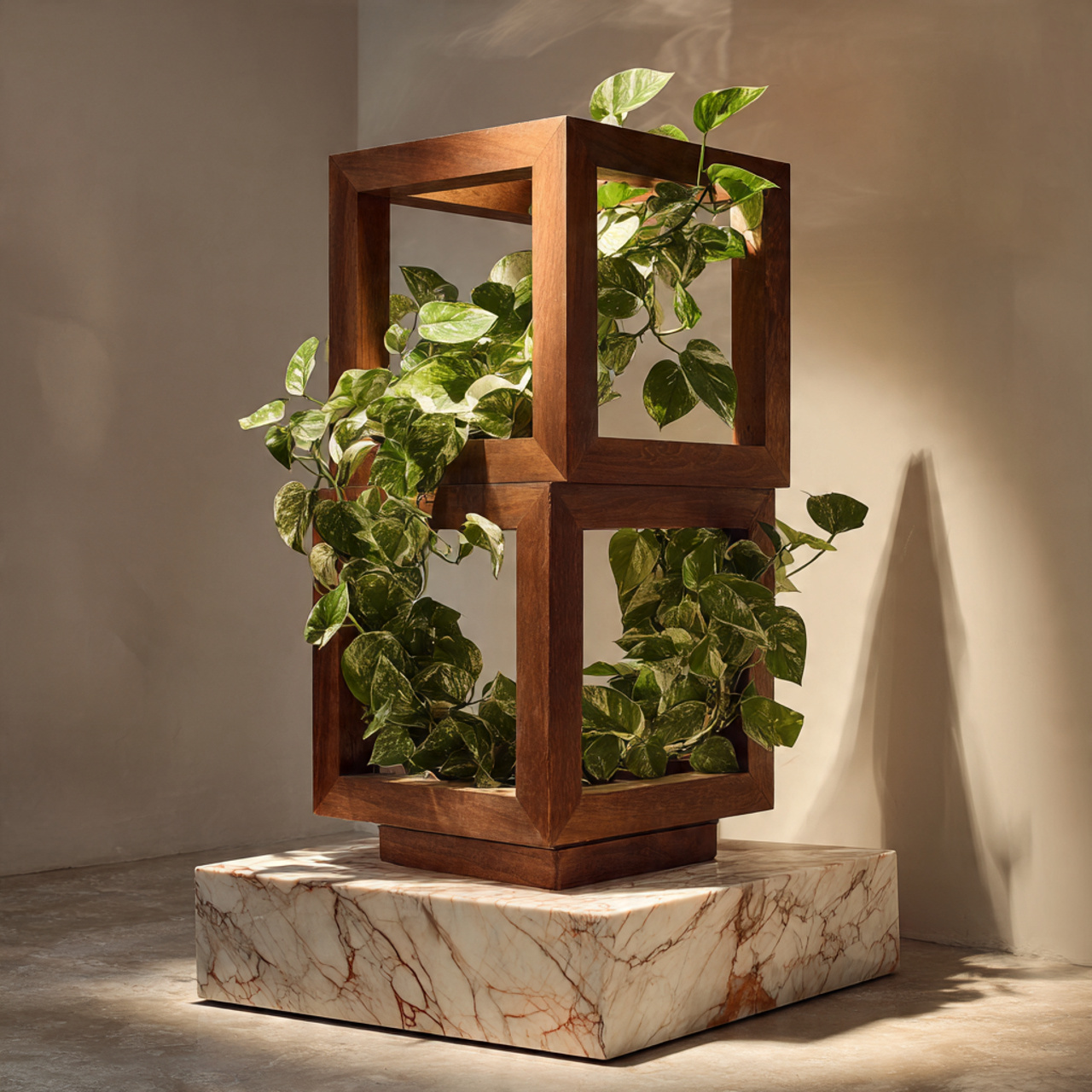
For something truly unique, build three-dimensional geometric shapes—cubes, pyramids, or hexagons—using wooden dowels or metal rods. Your pothos grows along the edges and through the openings, creating living sculpture that changes as the plant matures.
These work best as statement pieces in entryways, living rooms, or above dining tables (if hung from ceiling). The contrast between rigid geometry and organic plant growth is visually stunning.
Construction Tips:
- Start with simple shapes like cubes before attempting complex polyhedrons
- Use wood glue and small finishing nails for wood constructions
- Metal rods can be connected with epoxy or specialized connectors
- Make frames 18-24 inches on each side for good proportion
Creative Variation: Nest two or three geometric shapes of different sizes for added dimension.
Display Tip: Light these from below with uplighting for dramatic shadow effects in the evening.
Pegboard Walls: Infinite Customization
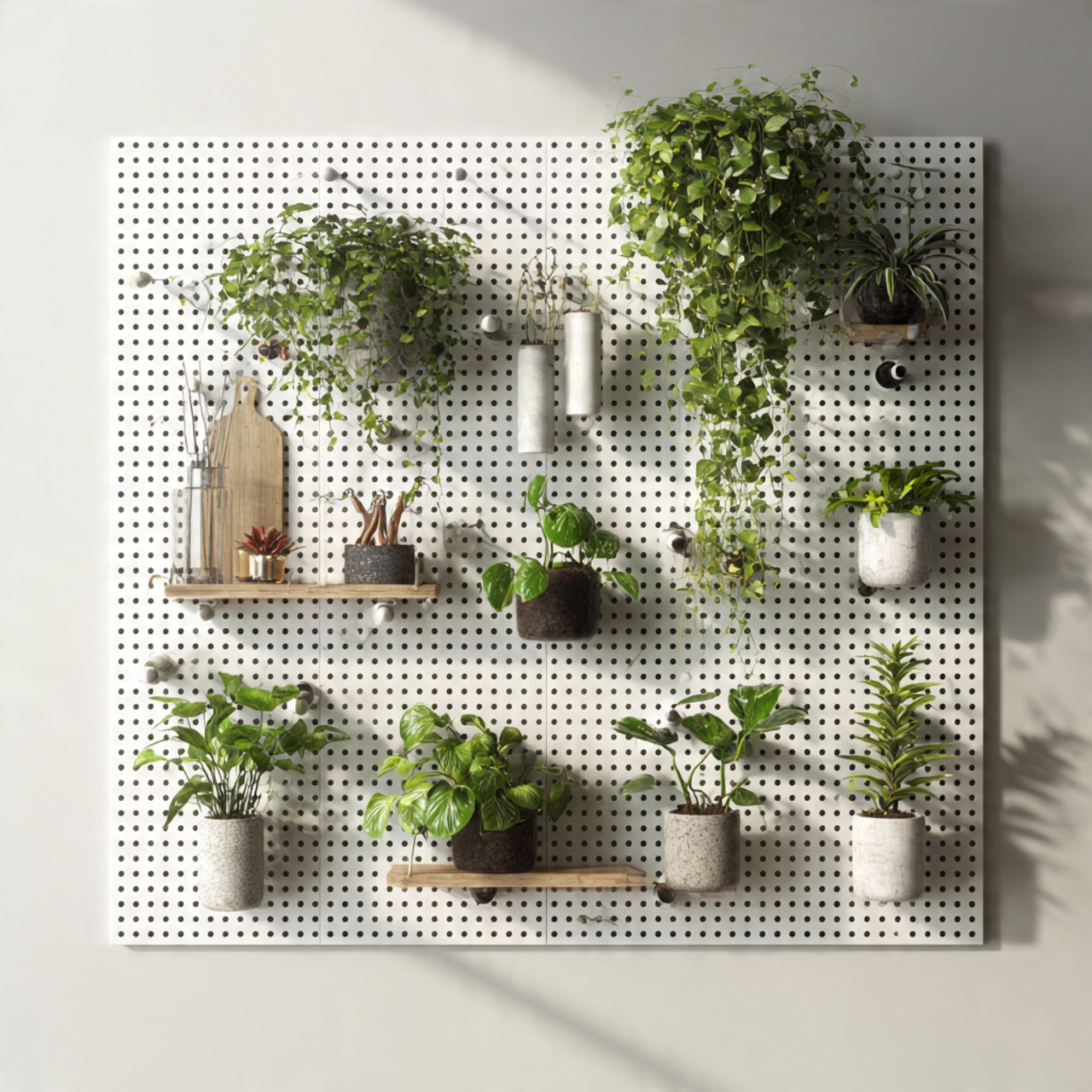
Pegboard panels offer unlimited flexibility because you can move hooks and pegs whenever you want to change your climbing pattern. Paint a pegboard to match your wall, mount it with spacers for air circulation, and insert hooks to support strings, chains, or small containers.
This system is perfect for people who love to experiment or who want their display to evolve over time. Rearrange the pattern monthly, seasonally, or whenever inspiration strikes.
Setup Strategy:
- Use 1/4-inch pegboard (standard) mounted 1-2 inches from wall
- Paint with high-quality primer and paint for durability
- Get a variety of hook types—some for string, some for containers
- Map out designs with painter’s tape before committing
Organizational Bonus: The pegboard can hold both plants and functional items like keys, bags, or calendars—especially useful in entryways or home offices.
Industrial Cable Systems: Urban Elegance
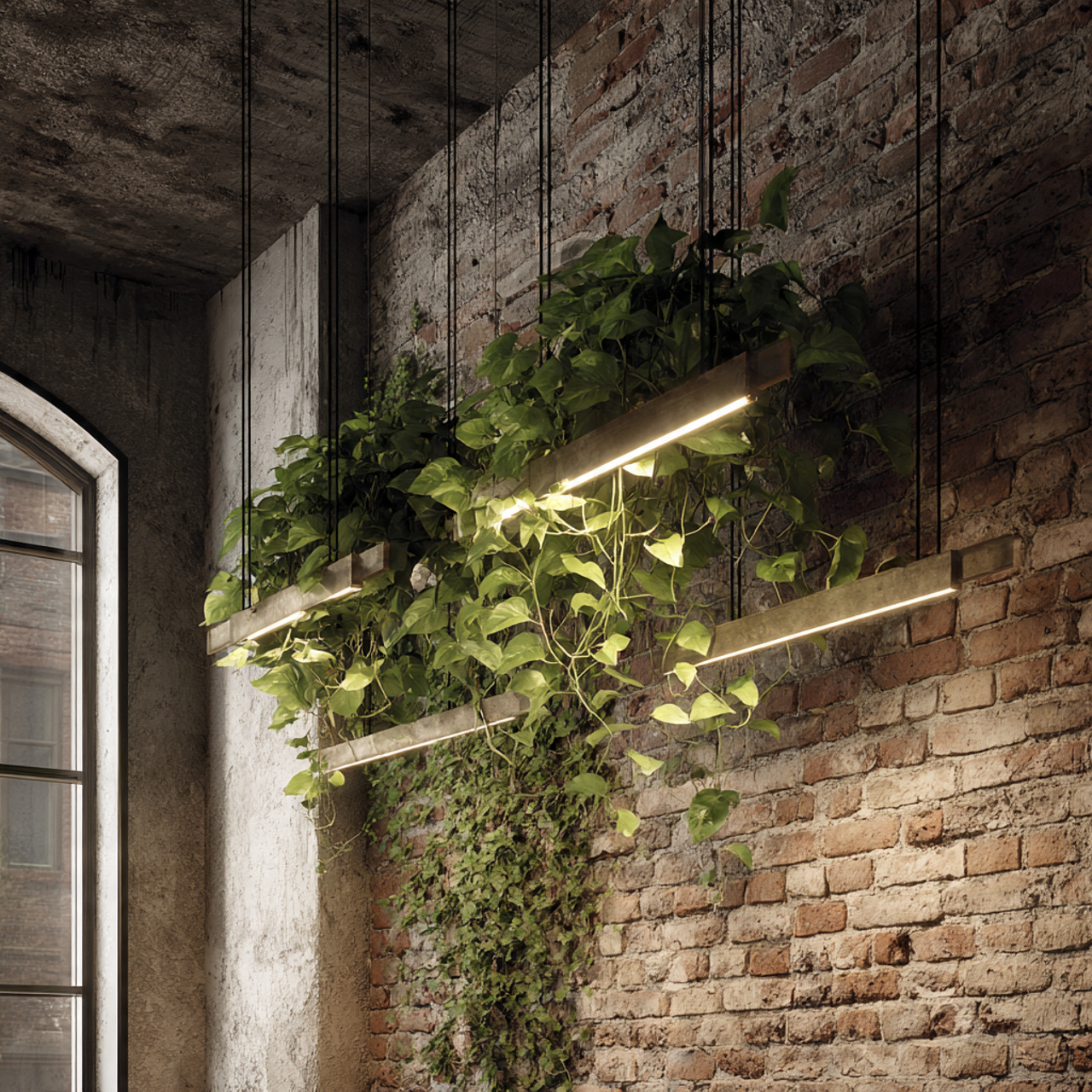
Stainless steel cables stretched taut between wall mounts create sleek, almost invisible climbing paths. This system suits lofts, modern apartments, and any space with industrial or contemporary design. The cables are incredibly strong but visually subtle, keeping all attention on the plant.
The technical setup requires turnbuckles to maintain tension and proper anchors rated for the load, but once installed, these systems are maintenance-free and extremely durable.
Installation Requirements:
- Use 1/16-inch or 1/8-inch stainless steel cable
- Install eye bolts or turnbuckles into wall studs
- Tension cables firmly but don’t over-tighten
- Space cables 6-12 inches apart for adequate support
Cost Note: A complete cable system for a 6-foot wall section typically costs $40-60 in materials.
Aesthetic Tip: Run cables at interesting angles rather than just vertically—diagonal or crisscross patterns add visual movement.
Repurposed Furniture: Sustainable Creativity
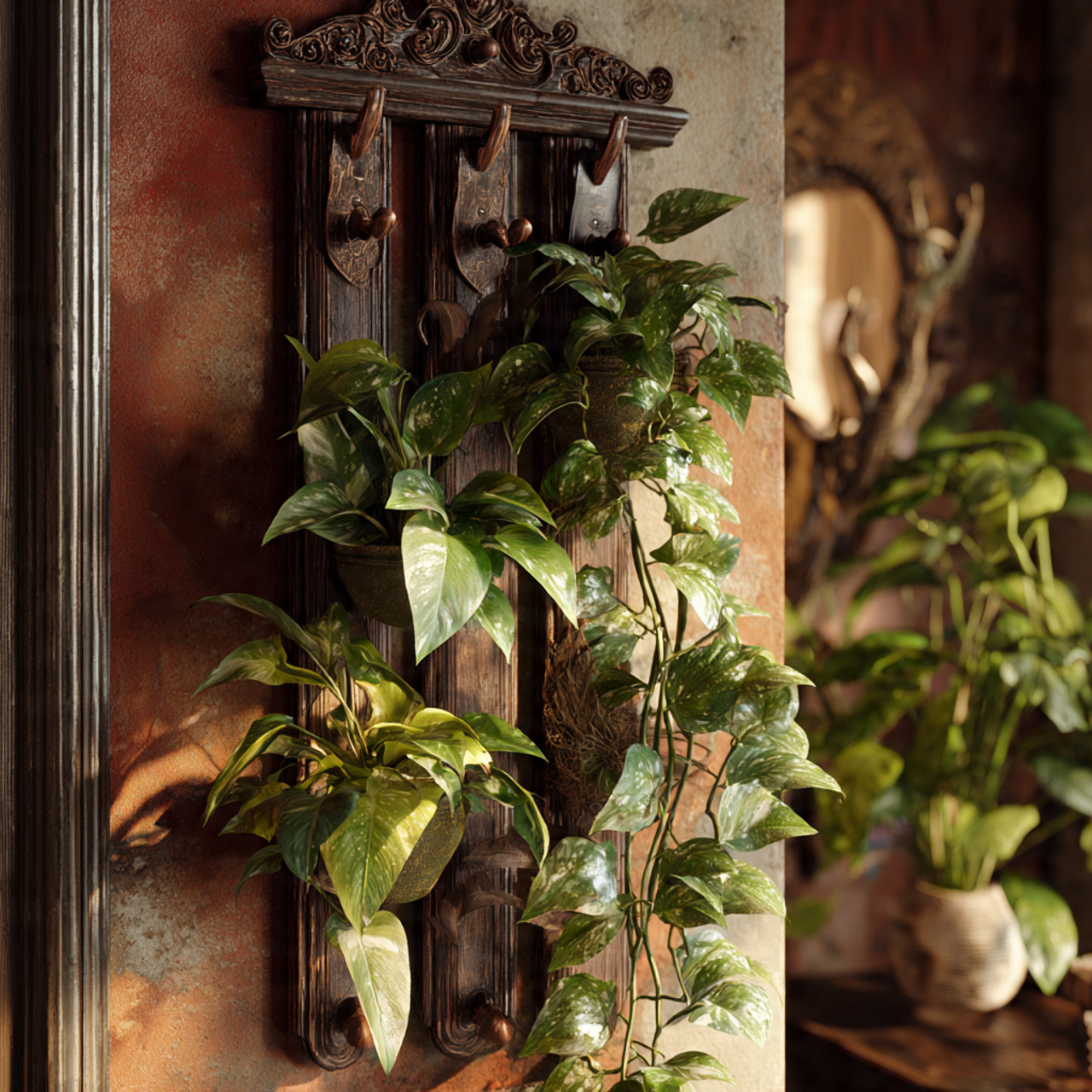
Old coat racks, hat stands, decorative screens, or even chair backs can become unique climbing structures. This approach embraces sustainability while creating one-of-a-kind plant displays that tell a story.
I found an ornate Victorian coat rack at an estate sale for $15, and it’s now the centerpiece of my plant room with three different pothos varieties climbing up its branches.
Selection Criteria:
- Choose pieces with interesting shapes and multiple attachment points
- Ensure structural integrity—no wobbly or cracked items
- Consider moisture resistance or plan to seal surfaces
- Pick items that complement your existing decor style
Preparation Steps:
- Clean thoroughly with mild soap and water
- Apply polyurethane or another sealant to wood surfaces
- Remove or cover sharp hardware that might damage vines
- Anchor tall pieces securely so they won’t tip over
Inspiration: Vintage folding screens make excellent room-dividing plant supports with their multiple panels and decorative cutouts.
Visit More: Plant Wall Idea Indoor
Your Pothos Climbing Questions Answered
How long does it take for pothos to start climbing after I set up a support?
You’ll typically see your pothos beginning to attach within 2-4 weeks if conditions are right. The aerial roots need time to sense the support structure and grow toward it. Keep the climbing surface slightly moist and position new growth near the support to encourage faster attachment. During active growing seasons (spring and summer), you might see progress even sooner.
Should I cut off the aerial roots if they look messy?
Never cut off aerial roots! These are essential for climbing and nutrient absorption. They might look unusual at first, but they’re signs of a healthy climbing pothos. If aesthetics concern you, train them toward your support structure where they’ll attach and become less noticeable. Once attached, they blend in with the rest of the plant and actually enhance the lush appearance.
What’s better for apartment renters—moss poles or command hook systems?
Command hook systems with strings are definitely more renter-friendly since they don’t require putting anything into your pot or drilling into walls. However, a moss pole inserted into the pot itself doesn’t damage anything and can move with you. If you want zero permanent changes, go with removable hooks. If you don’t mind transporting a pole in your pot, moss poles often give better results.
My pothos won’t attach to the smooth bamboo stake. What am I doing wrong?
Smooth surfaces are the problem. Wrap the bamboo with jute twine in a spiral pattern, or attach small pieces of burlap or coir fiber with hot glue. You can also rough up the bamboo surface slightly with sandpaper. The plant needs texture to grip—think tree bark, not smooth plastic or polished wood.
Can I combine different climbing methods for the same plant?
Absolutely! Some of the best displays use multiple techniques. For example, start with a moss pole in the pot for initial upward growth, then transition vines to wall-mounted strings or a trellis as they reach higher. Just make sure transitions between supports are smooth so vines don’t have gaps where they’ll droop.
How do I keep a climbing pothos from getting too tall?
Regular pruning is your friend. Cut vines back to your desired length just above a leaf node (where a leaf meets the stem). The plant will branch from that point, creating fuller growth. Don’t be afraid to cut—pothos tolerates pruning extremely well and you can propagate those cuttings to create new plants or fill in sparse areas.
Does climbing direction matter? Should I train pothos clockwise or counterclockwise?
Pothos naturally prefers to climb counterclockwise in the Northern Hemisphere (clockwise in the Southern Hemisphere) because that’s how they evolved to follow the sun. That said, they’re adaptable and will climb either direction. If your plant seems to resist the direction you’re training it, try the opposite direction for easier growth.
What type of material should I absolutely avoid for pothos climbing supports?
Avoid anything with sharp edges (exposed cut wire, splintered wood), materials treated with chemicals or preservatives that might leach, and smooth plastic or glass surfaces. Also skip anything that can’t get slightly wet without damage, since you’ll need to mist climbing supports occasionally. Treated lumber is fine if it’s sealed; just avoid fresh creosote-treated wood.
Final Thoughts on Creating Vertical Pothos Gardens
Watching a pothos transform from a simple houseplant into a climbing masterpiece is genuinely rewarding. You’re not just growing a plant—you’re creating a living feature that changes your space’s entire atmosphere. The beauty of pothos is that they’re forgiving enough for beginners but interesting enough to keep experienced gardeners engaged.
Start simple if you’re new to this. A basic moss pole or some tension rods with string will teach you how your specific plant likes to grow. Once you understand your pothos’s personality—and yes, each plant has one—you can experiment with more elaborate structures.
Remember that the “perfect” climbing setup is the one that works for your space, matches your aesthetic, and most importantly, keeps your plant healthy and growing. Don’t get overwhelmed by all the options. Pick one method that excites you, give it a try, and adjust as you learn what your pothos needs.
The most successful vertical gardens I’ve seen weren’t necessarily the most complicated or expensive—they were the ones where someone paid attention to their plant, experimented with what worked, and weren’t afraid to change things up when needed.
Your blank wall is waiting. Your pothos is ready. The only thing missing is giving it something to climb. Start with one simple support structure this weekend and see where it takes you. In a few months, you’ll be amazed at the transformation—both of your plant and your space.