Transform Your Backyard: 18 Creative Water Garden Ideas for Any Space
Picture stepping into your backyard and hearing the gentle trickle of water, watching dragonflies dance across lily pads, and feeling the day’s stress melt away. That’s the magic a water garden brings to your home. Whether you’re working with a sprawling lawn or a tiny apartment balcony, there’s a water garden solution perfectly suited to your space.
Creating your own aquatic oasis might seem daunting, but it’s more achievable than you think. This comprehensive guide walks you through some practical water garden ideas, each designed to fit different spaces, budgets, and skill levels. Let’s dive in and discover which style speaks to you.
Why Your Outdoor Space Needs a Water Garden
Adding a water garden to your property does more than just look pretty—it creates a thriving mini-ecosystem right in your backyard. You’ll notice birds stopping by for a drink, beneficial insects hovering near the surface, and maybe even frogs taking up residence. During summer heat waves, the evaporation from your water feature naturally cools the surrounding area by several degrees.
Beyond the environmental perks, a water garden serves as nature’s white noise machine, masking annoying sounds from nearby traffic or chatty neighbors. Real estate professionals consistently report that well-maintained water features boost property values, making this both a personal retreat and a smart investment.
What makes water gardens particularly appealing:
- Lower maintenance than traditional flower beds once established
- Efficient use of vertical space—perfect for compact yards
- Year-round visual interest, including stunning ice formations in winter
- Natural ecosystem that balances itself over time
- Attracts pollinators and wildlife without extra effort
Pro tip: Start by observing your yard throughout the day to identify the best spot—you’ll want at least 4-6 hours of sunlight for most aquatic plants, but not intense all-day sun which promotes algae growth.
Container Water Gardens: Perfect for Beginners and Small Spaces
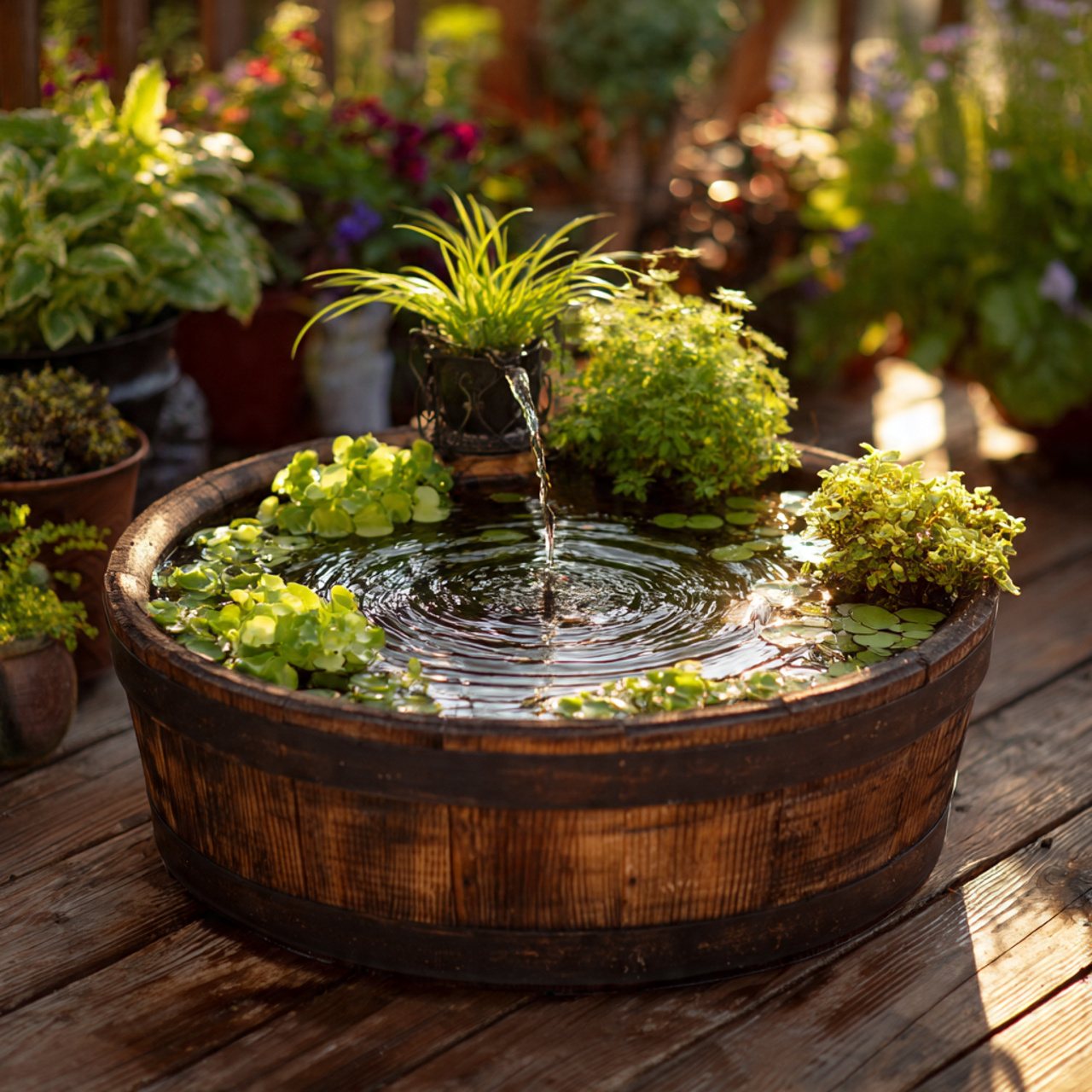
Container water gardens are the ultimate starter project. Think beyond traditional pots—whiskey barrels, vintage bathtubs, galvanized horse troughs, and even repurposed kitchen sinks can become charming water features. The beauty lies in their flexibility: renters can take them along when moving, and homeowners can experiment with placement until finding the perfect spot.
Getting started checklist:
- Choose containers at least 18 inches deep for proper plant root development
- Ensure your vessel is completely watertight (seal wood containers with pond liner)
- Position where you’ll enjoy it most—patios, balconies, or near entryways
- Fill with dechlorinated water (let tap water sit 24 hours or use dechlorinator)
- Add aquatic plants in mesh baskets for easy rearranging
Essential additions:
- Floating plants like water lettuce or water hyacinth (they reduce algae by blocking sunlight)
- A small solar-powered fountain for movement and oxygen
- Decorative rocks or gravel to anchor plants and add visual appeal
Common mistake to avoid: Don’t overcrowd your container. A good rule of thumb is covering no more than 60% of the water surface with plants, leaving room for light penetration and gas exchange.
Maintenance reality check: Expect to top off water weekly during hot weather and remove any yellowing leaves. That’s it. This simplicity makes container gardens ideal for testing the waters before committing to larger projects.
Raised Pond Water Gardens: Accessibility Meets Elegance
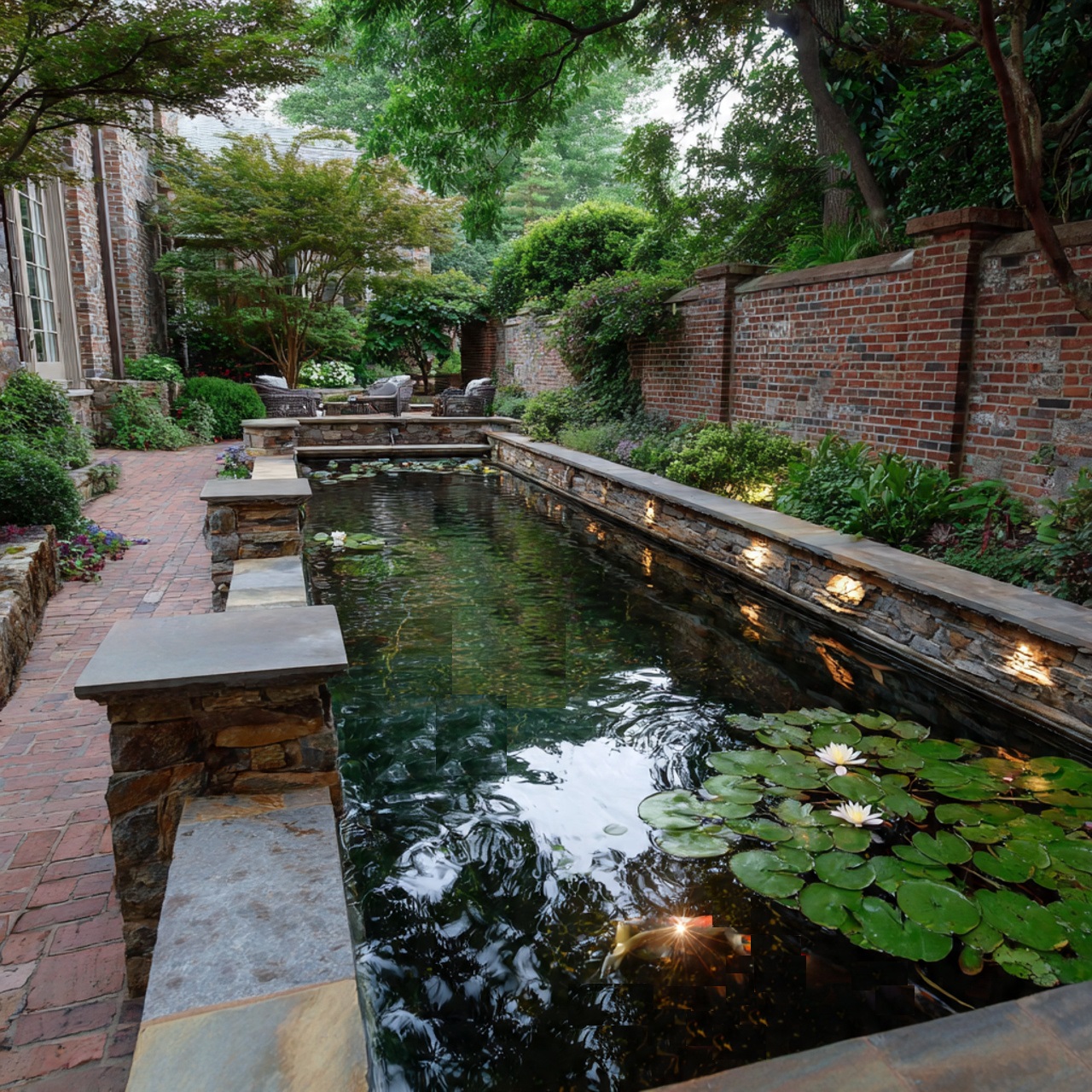
Raised pond water gardens eliminate all that bending and kneeling that makes traditional ponds hard on your back. By building walls to waist height, you bring your aquatic plants and fish to eye level where you can actually appreciate them. This design also protects your water feature from ground runoff that might carry pesticides or debris.
Structural essentials:
- Calculate weight capacity—water weighs about 8.3 pounds per gallon
- Build on solid, level foundations (compacted gravel or concrete pads)
- Use materials that complement your home: natural stone, brick, timber, or rendered concrete
- Install overflow drains to handle heavy rainfall
Smart design features:
- Wide walls double as seating for gatherings
- Built-in lighting within the structure creates evening ambiance
- Coping stones overhang slightly to hide waterline fluctuations
Key advantage: Raised structures warm faster in spring, giving you several extra weeks of growing season for your aquatic plants and allowing fish to become active earlier.
Safety consideration: Ensure walls are structurally sound with proper footings, especially in freeze-thaw climates where ground movement can crack improperly built structures.
Natural Swimming Pools: Recreation Meets Ecosystem
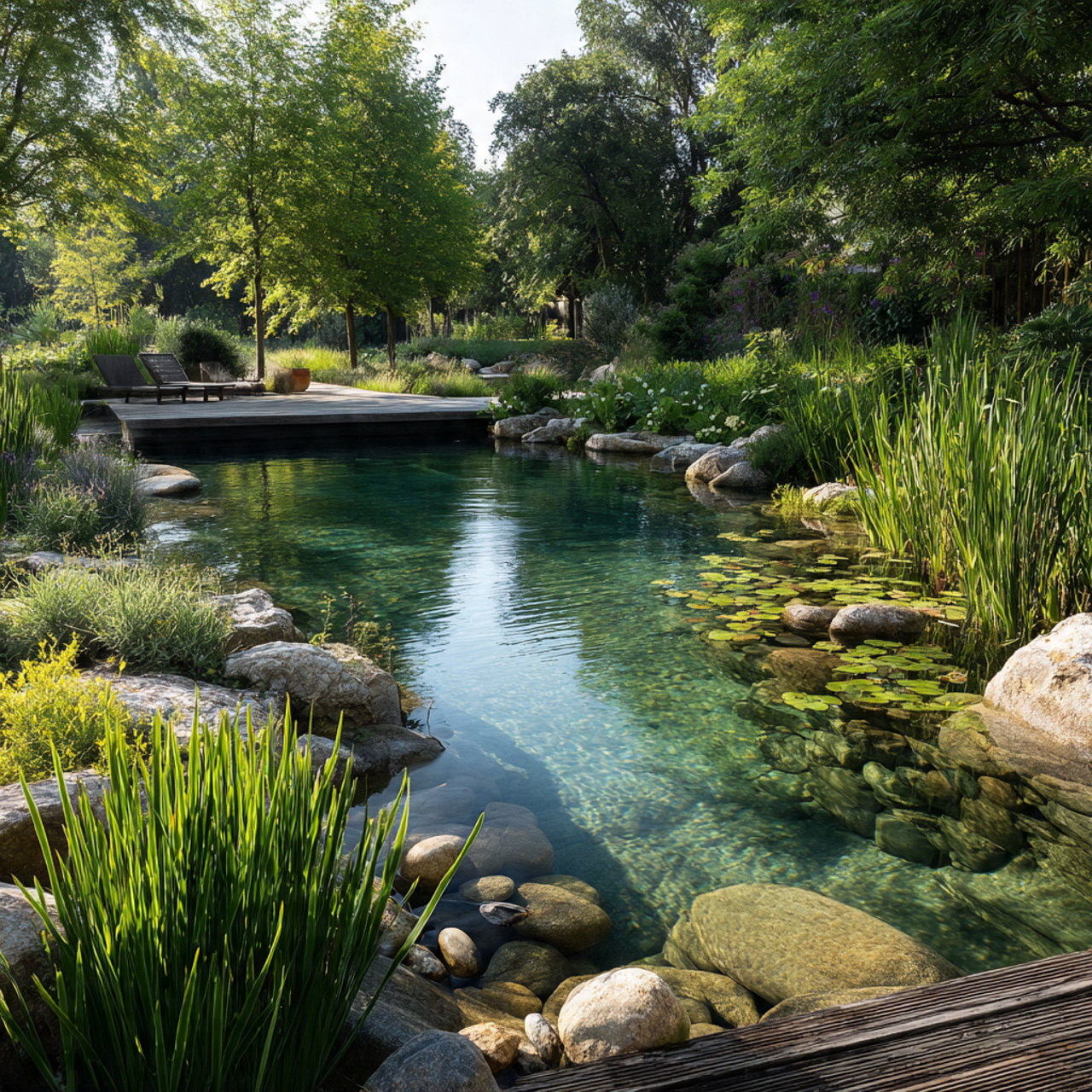
Imagine swimming in crystal-clear water that’s cleaned by plants instead of harsh chemicals. Natural swimming pools split your water garden into two zones: the swimming area and a regeneration zone filled with aquatic plants that act as biological filters. These plants remove contaminants while beneficial bacteria living in gravel beds break down organic matter.
System requirements:
- The plant filtration zone should occupy 50-70% of total surface area
- Include diverse plant types: submerged oxygenators, floating species, and marginal plants
- Gravel substrate houses beneficial bacteria colonies
- Circulation pump moves water between zones
Design considerations:
- Separate zones with underwater walls or borders
- Minimum 6-foot depth in swimming area for diving
- Gradual entry steps or beach-style shallow access points
- Skimmer systems remove surface debris
Honest cost breakdown: Initial construction typically costs 20-30% more than conventional chlorine pools, but you’ll save significantly on chemicals, electricity, and maintenance over the years. Plus, you’re creating a swimmable ecosystem rather than a chemical bath.
Important note: Check local health department regulations—some areas have specific requirements for residential swimming ponds. Get permits before breaking ground.
Koi Ponds: Living Jewels in Your Garden
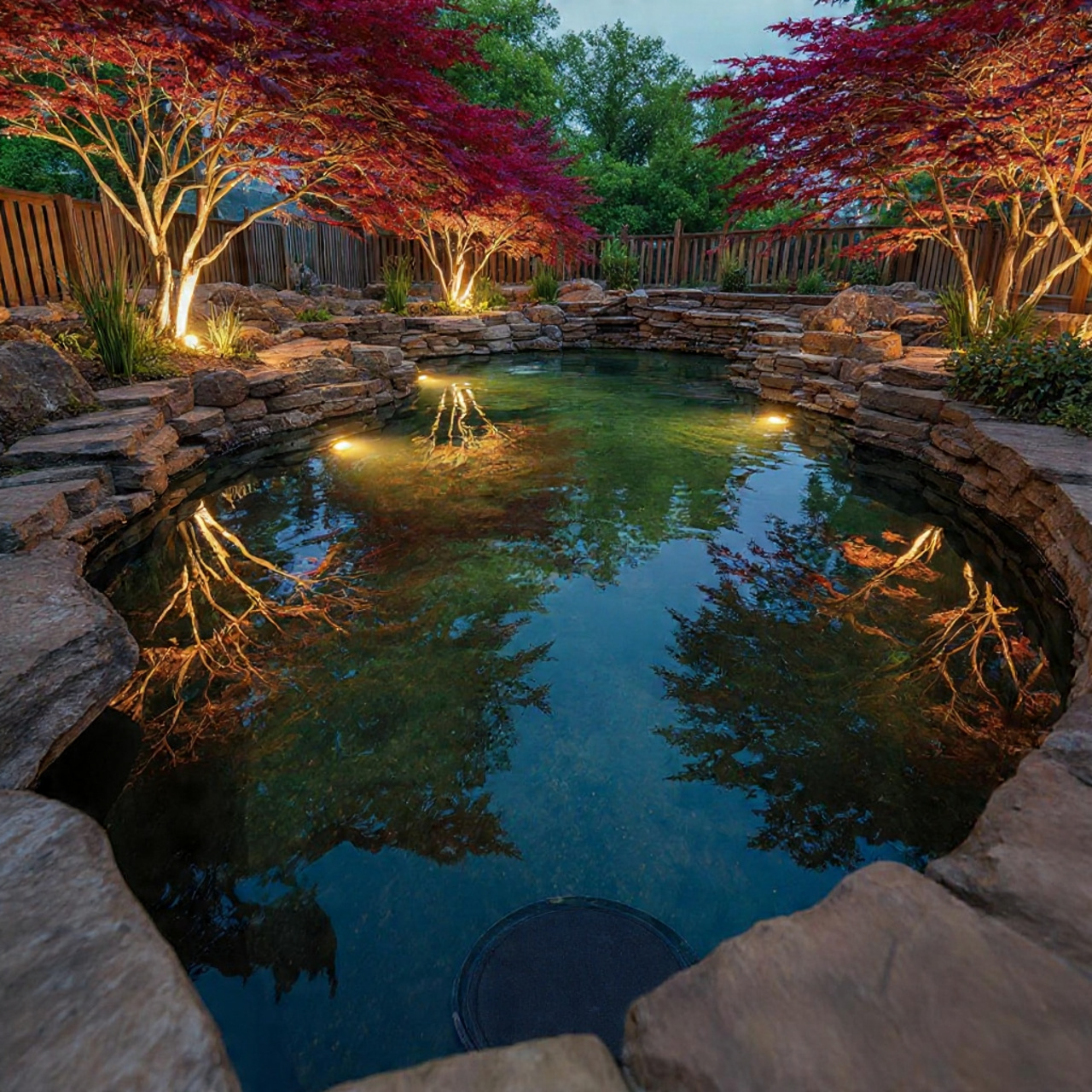
Koi ponds transform your water garden into an interactive experience. These ornamental carp recognize their owners, swim eagerly to greet you at feeding time, and display breathtaking colors ranging from brilliant orange to metallic platinum. However, koi have specific needs that differ from standard decorative ponds.
Minimum requirements for healthy koi:
- 1,000-gallon capacity minimum (bigger is always better)
- 3-4 feet depth to protect from predators and temperature swings
- Filtration system rated for double your pond volume
- Bottom drains for effective waste removal
- Adequate aeration through air stones or waterfalls
Critical design elements:
- Avoid narrow ledges where koi might get trapped
- Include deeper zones where fish can retreat
- Smooth surfaces prevent injury to fish
- Shade coverage for 30-40% of surface area
Water quality management:
- Test ammonia, nitrites, nitrates, and pH weekly initially
- Maintain pH between 7.0-8.5
- Zero ammonia and nitrite levels (toxic to fish)
- Regular partial water changes of 10-15%
Feeding guidelines:
- Quality pellets sized appropriately for your fish
- Feed based on water temperature (more in summer, less in cool weather)
- Stop feeding entirely when water drops below 50°F
- Never overfeed—uneaten food pollutes water
Long-term commitment: Koi can live 50+ years with proper care. These aren’t goldfish—they’re intelligent pets that recognize individuals and develop distinct personalities.
Waterfall Features: Adding Movement and Sound
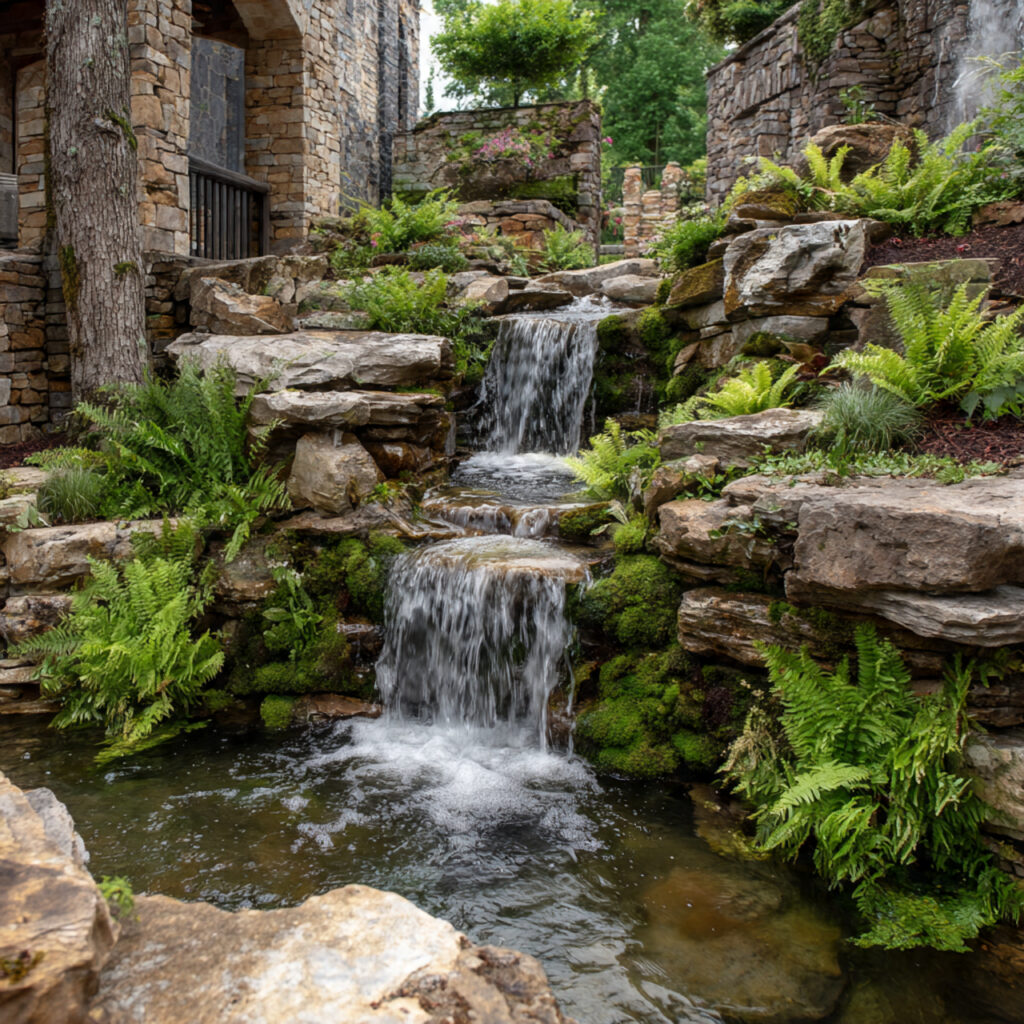
Nothing compares to the mesmerizing sight and sound of water cascading over rocks. Waterfall features do more than please the senses—they naturally aerate your water, supporting fish and beneficial bacteria while creating visual movement that draws the eye through your landscape.
Construction fundamentals:
- Start with large foundation stones as your base structure
- Layer medium-sized rocks to create water channels
- Use small stones and gravel to fill gaps and direct flow
- Tuck liner edges under rocks for a natural appearance
- Create planting pockets between stones for moisture-loving perennials
Pump sizing formula:
- Measure vertical height from water surface to waterfall top (head height)
- Plan for 100 gallons per hour for every inch of spillway width
- Account for friction loss in tubing (add 20% capacity)
- Consider adjustable flow pumps for seasonal variation
Sound control techniques:
- Wide, shallow falls create gentle trickling sounds
- Narrow drops produce louder splashing
- Pool depth below the fall affects volume
- Experiment with rock placement to fine-tune acoustics
Energy-saving tips:
- Install timers to run during peak enjoyment hours
- Consider solar pumps for smaller features
- Use energy-efficient LED lights if adding illumination
Common mistake: Building falls too steep with insufficient water volume creates an unnatural appearance and excessive splashing that depletes pond levels.
Visit More: Small Garden Waterfalls
Bog Gardens: Carnivorous Plants and Wetland Wonders
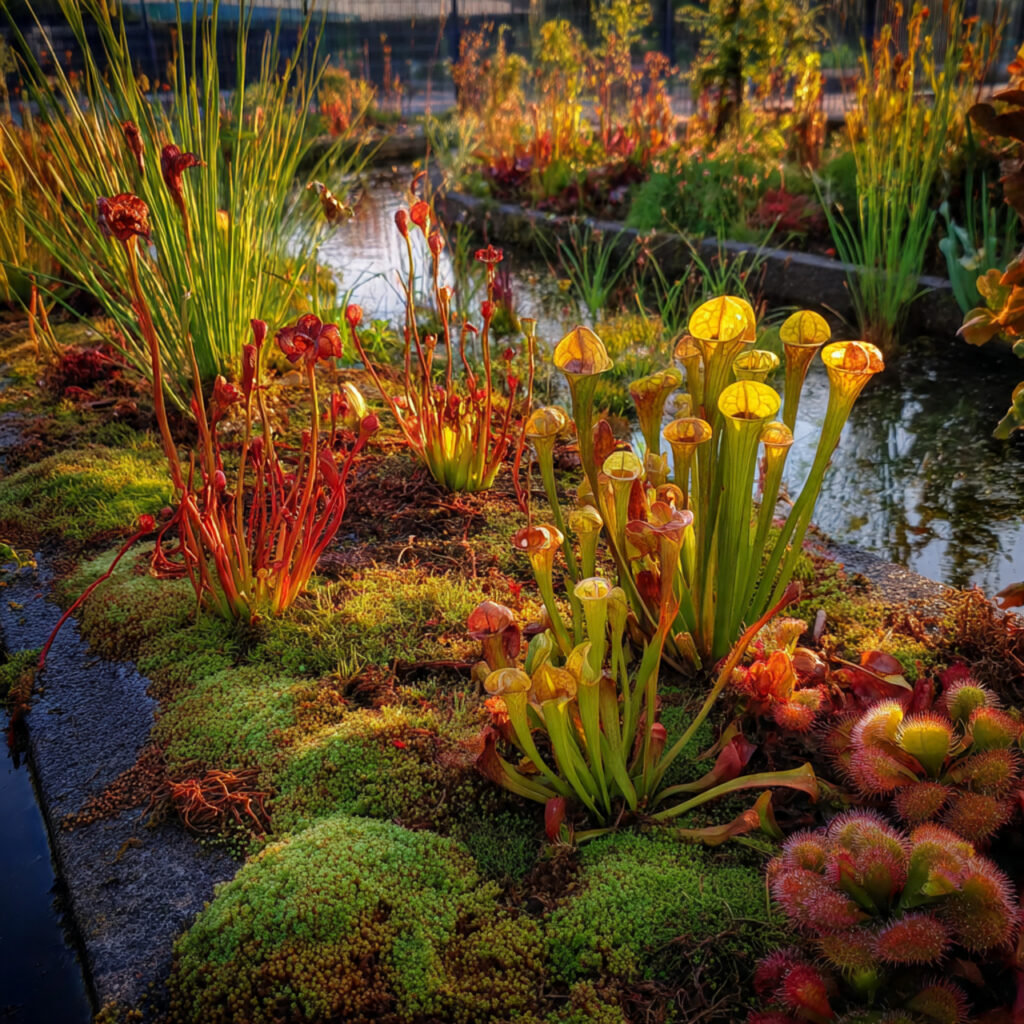
Bog gardens open up a fascinating world of carnivorous plants like pitcher plants, sundews, and Venus flytraps. These specialized environments mimic natural wetlands with acidic, nutrient-poor conditions where these unique plants evolved to capture insects for nutrition.
Creating bog conditions:
- Mix 50% peat moss, 25% perlite, and 25% coarse sand
- Never use regular potting soil or compost (too nutrient-rich)
- Maintain water level just below soil surface
- Use only rainwater or distilled water (tap water minerals harm carnivorous plants)
Ideal bog residents:
- Pitcher plants (Sarracenia species)
- Sundews (Drosera species)
- Venus flytraps (Dionaea muscipula)
- Bog orchids for added color
- Native wetland sedges and rushes
Light requirements: Most carnivorous plants demand full sun (6+ hours daily) to thrive and develop vivid coloration. Insufficient light results in weak, elongated growth.
Integration options:
- Create a separate bog section adjacent to your main pond
- Build contained bog within larger water garden using liner
- Establish standalone bog containers for patio display
Fascinating fact: These slow-growing plants require minimal feeding beyond what they catch themselves. Resist the urge to “help” them—they’ve perfected their hunting strategy over millions of years.
Stream Gardens: Bringing Nature’s Flow Home
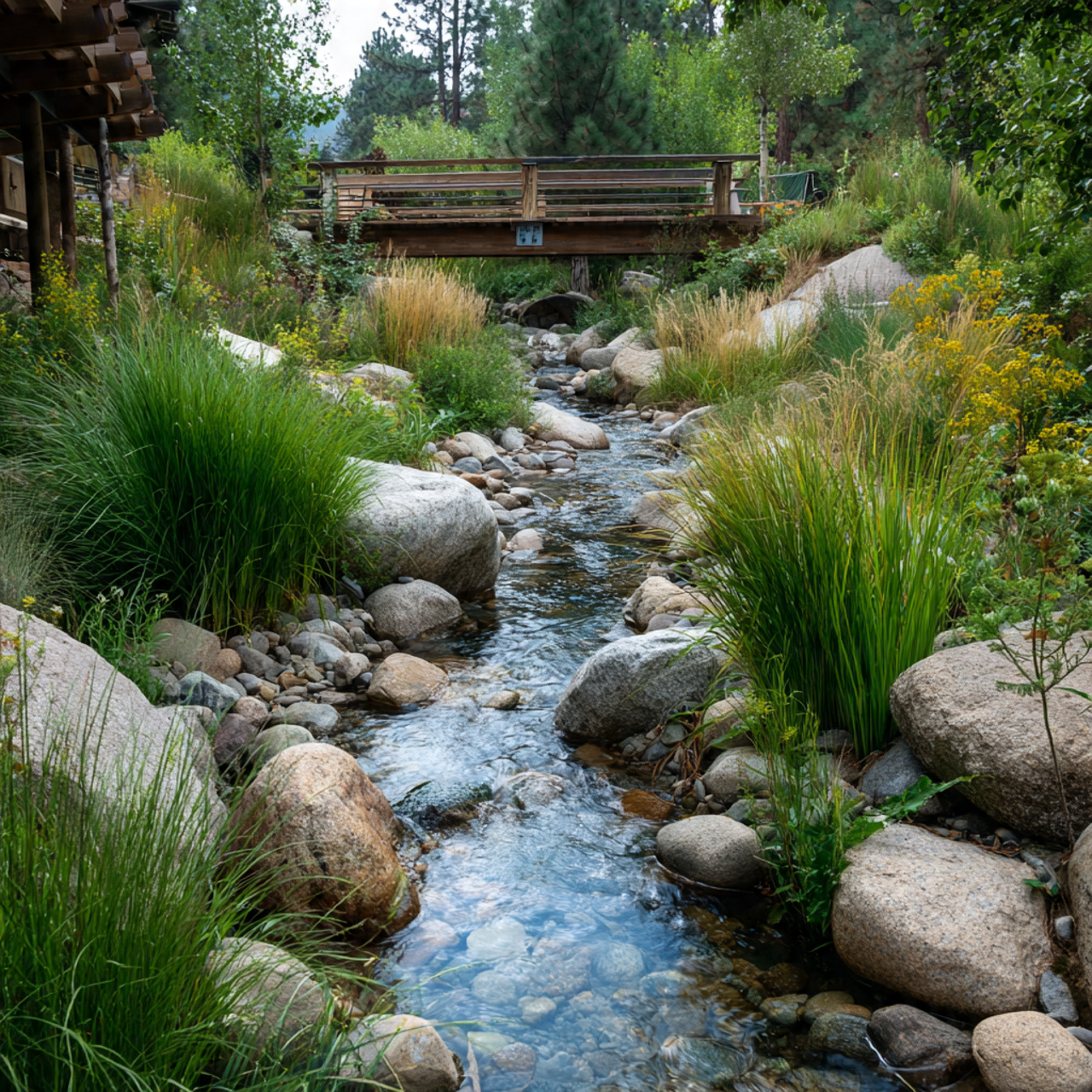
Stream gardens capture the essence of natural waterways meandering through forests. Unlike static ponds, streams create a journey through your landscape, offering multiple viewing perspectives and the soothing sound of flowing water. They’re particularly effective in sloped yards where elevation changes enhance the natural effect.
Design principles:
- Meander the stream rather than creating straight channels
- Vary width to produce different flow rates and sounds
- Create occasional pools where water slows and deepens
- Use smooth river rocks for a natural streambed
- Plant native vegetation along banks for authenticity
Technical specifications:
- Calculate pump capacity based on total length and elevation gain
- Aim for visible movement without aggressive rushing
- Include header pool at top to receive pumped water
- Build spillways at elevation changes for mini-waterfalls
Crossing solutions:
- Flat stepping stones set just above water level
- Small arched bridges for dramatic focal points
- Timber crossings for rustic settings
Wildlife benefits: Stream habitats attract more diverse species than still ponds because moving water provides varied microhabitats—fast currents, slow pools, and everything in between.
Pro tip: Create wider, deeper pools every 8-10 feet along your stream where sediment can settle naturally, reducing maintenance and creating habitat diversity.
Fountain Features: Vertical Drama and Maximum Impact
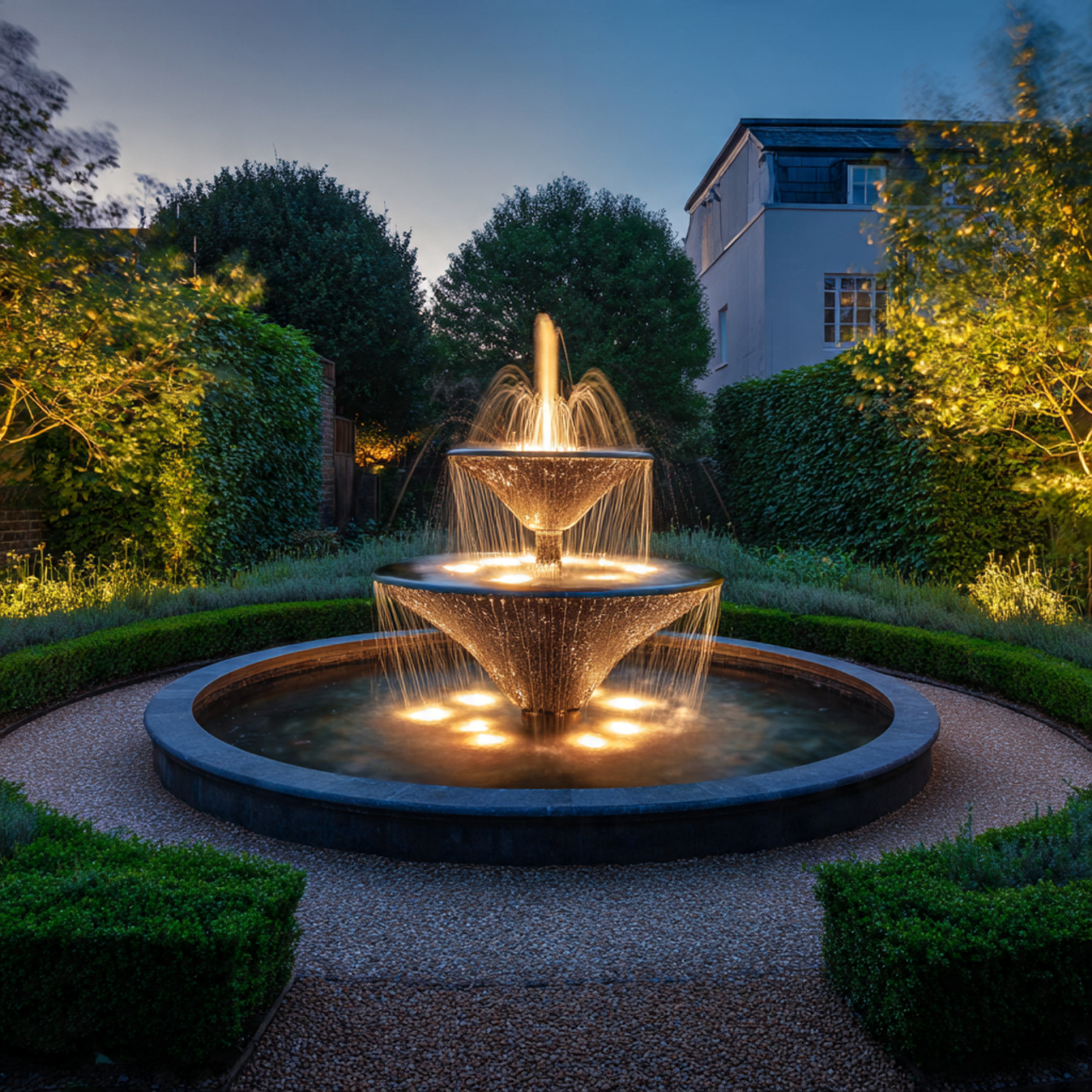
Fountain-style water gardens emphasize upward water movement, creating spectacular vertical displays that work beautifully in formal settings. The spray pattern provides maximum aeration and produces captivating sounds that range from gentle bubbling to powerful splashing, depending on your pump settings.
Fountain style selection:
- Modern geometric designs complement contemporary architecture
- Classical tiered fountains suit traditional homes
- Natural rock formations fit informal landscapes
- Bubbling urns or spheres add sculptural elements
Installation considerations:
- Submersible pumps hide within basin, keeping mechanics invisible
- Calculate spray height versus wind exposure (high sprays lose water in windy conditions)
- GFCI outlets are mandatory for all water feature electrical connections
- Underground basins can be disguised with decorative grating
Lighting strategies:
- Submersible LED uplights create dramatic nighttime effects
- Colored LEDs add festive atmosphere for entertaining
- Keep lights aimed at water, not outward (reduces light pollution)
Winterization checklist:
- Drain system completely before first freeze
- Remove and clean pump, storing indoors
- Cover basin to prevent debris accumulation
- Disconnect electrical connections
Space-saving advantage: Fountain gardens deliver maximum visual and auditory impact in compact footprints, making them ideal for small yards, courtyards, or urban patios.
Wildlife Habitat Ponds: Nature’s Sanctuary
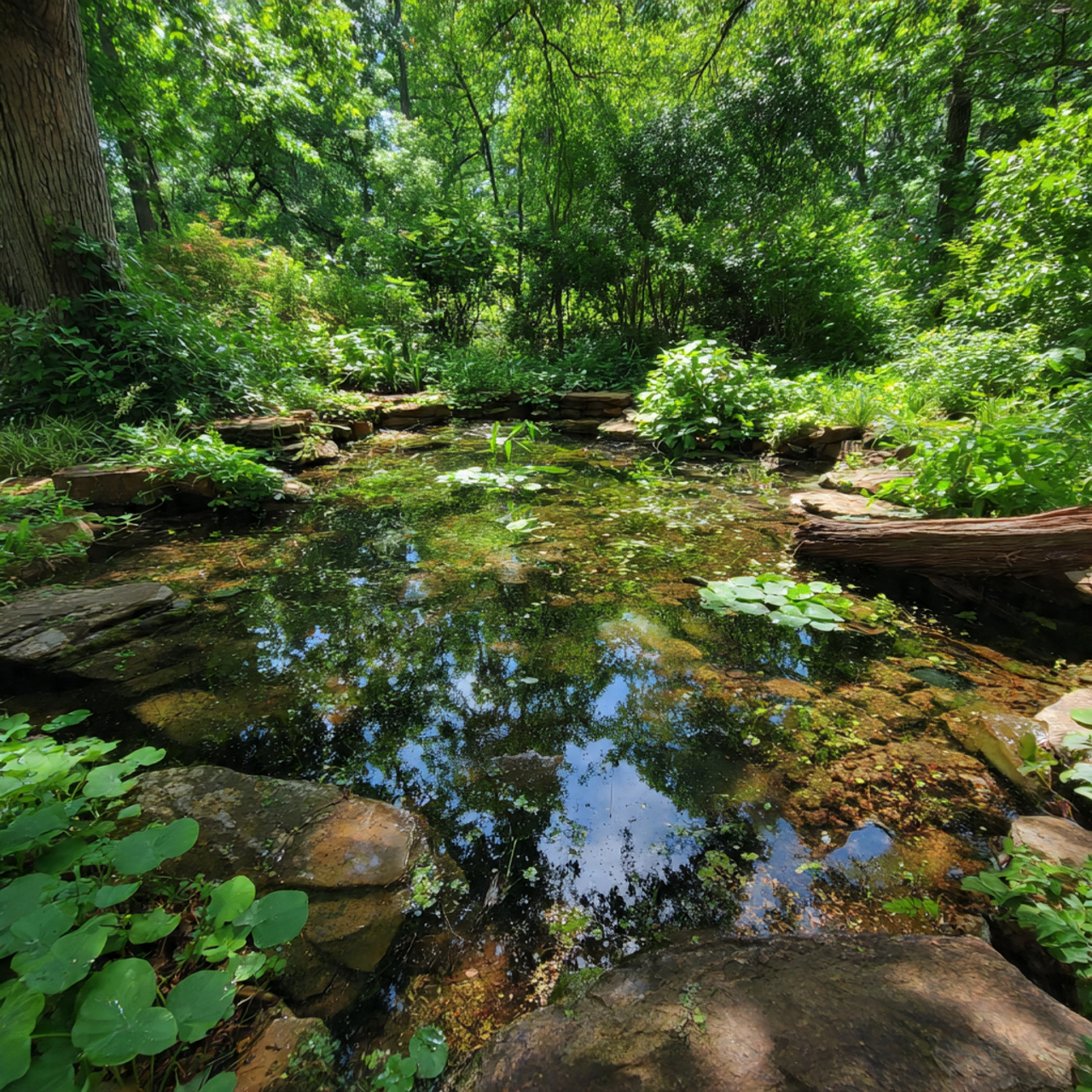
Wildlife-focused water gardens prioritize ecological function over formal aesthetics. By designing with native species in mind, you create genuine habitat that supports local biodiversity. The reward comes in watching your garden teem with life—dragonflies hunting mosquitoes, frogs calling at dusk, and birds bathing in shallow edges.
Critical design elements:
- Shallow beach areas (2-6 inches deep) for safe bird access
- Gently sloped edges (no vertical walls) for amphibian entry and exit
- Overhanging rocks and logs provide protective cover
- Muddy areas for nest-building materials
- Completely avoid fish if prioritizing amphibians (fish eat tadpoles)
Native plant selection:
- Research species indigenous to your specific region
- Include submerged oxygenators for water quality
- Plant marginal species in varied depths
- Avoid non-native invasives that escape into local waterways
Habitat enhancements:
- Leave some fallen leaves in place (important for invertebrates)
- Add submerged brush piles for shelter
- Create rock piles near edges for basking and hiding
- Allow algae to grow moderately (it’s part of the ecosystem)
Patience required: Wildlife discovers new habitats gradually. Birds typically arrive within days, insects within weeks, but frogs and salamanders might take a full season or more to establish populations.
Avoid these mistakes:
- Don’t make it too deep—shallow, varied depths support more species
- Resist constant cleaning—some “mess” is healthy ecosystem function
- Never use pesticides anywhere near your wildlife pond
Formal Water Gardens: Geometric Elegance
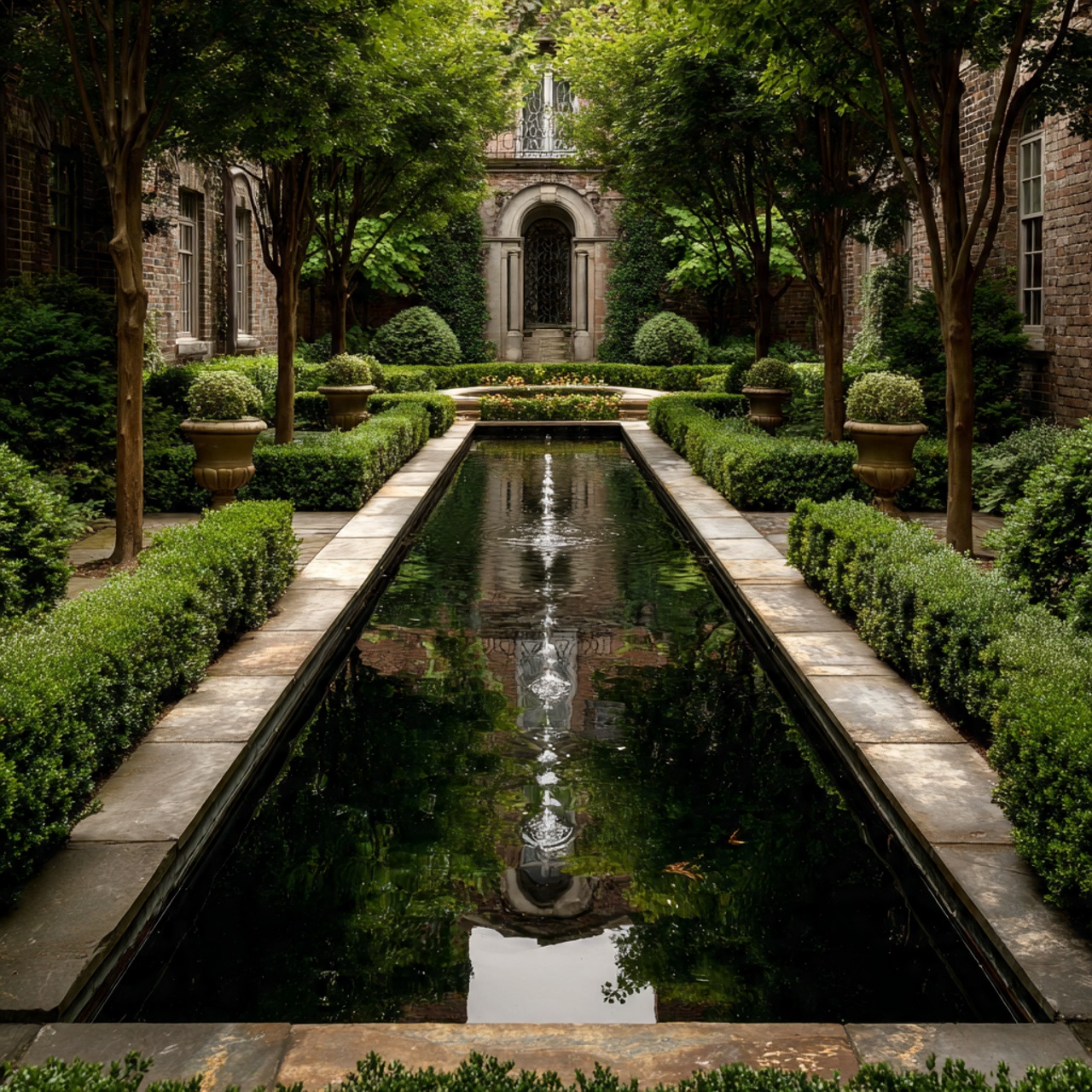
Formal water gardens embrace clean lines, symmetry, and controlled aesthetics. These geometric designs—circles, rectangles, or squares—create sophisticated focal points that complement architectural landscapes and manicured settings. Think European courtyards or classical estates rather than wild naturalistic ponds.
Defining characteristics:
- Precise geometric shapes with sharp edges
- Cut stone or uniform pavers for edging
- Symmetrical plant placement (or single dramatic specimen)
- Minimal decorative elements for restrained elegance
- Often elevated or raised for additional formality
Maintenance requirements:
- Debris removal must be prompt to maintain pristine appearance
- Strict plant trimming keeps growth from obscuring geometric lines
- Clean, clear water is essential (algae control is critical)
- Edge cleaning keeps mortar lines and coping crisp
Ideal locations:
- Entry courtyards or formal gardens
- Symmetrical landscape designs
- Near classical architecture
- Spaces requiring refined, controlled aesthetics
Design tip: Formal water gardens benefit from professional installation to ensure perfect proportions and flawless construction. Imperfect edges or asymmetry defeat the entire aesthetic purpose.
Contrast strategy: Pair your formal water feature with informal surrounding plantings to create dramatic tension between controlled and natural elements.
Japanese-Inspired Water Gardens: Harmony and Contemplation
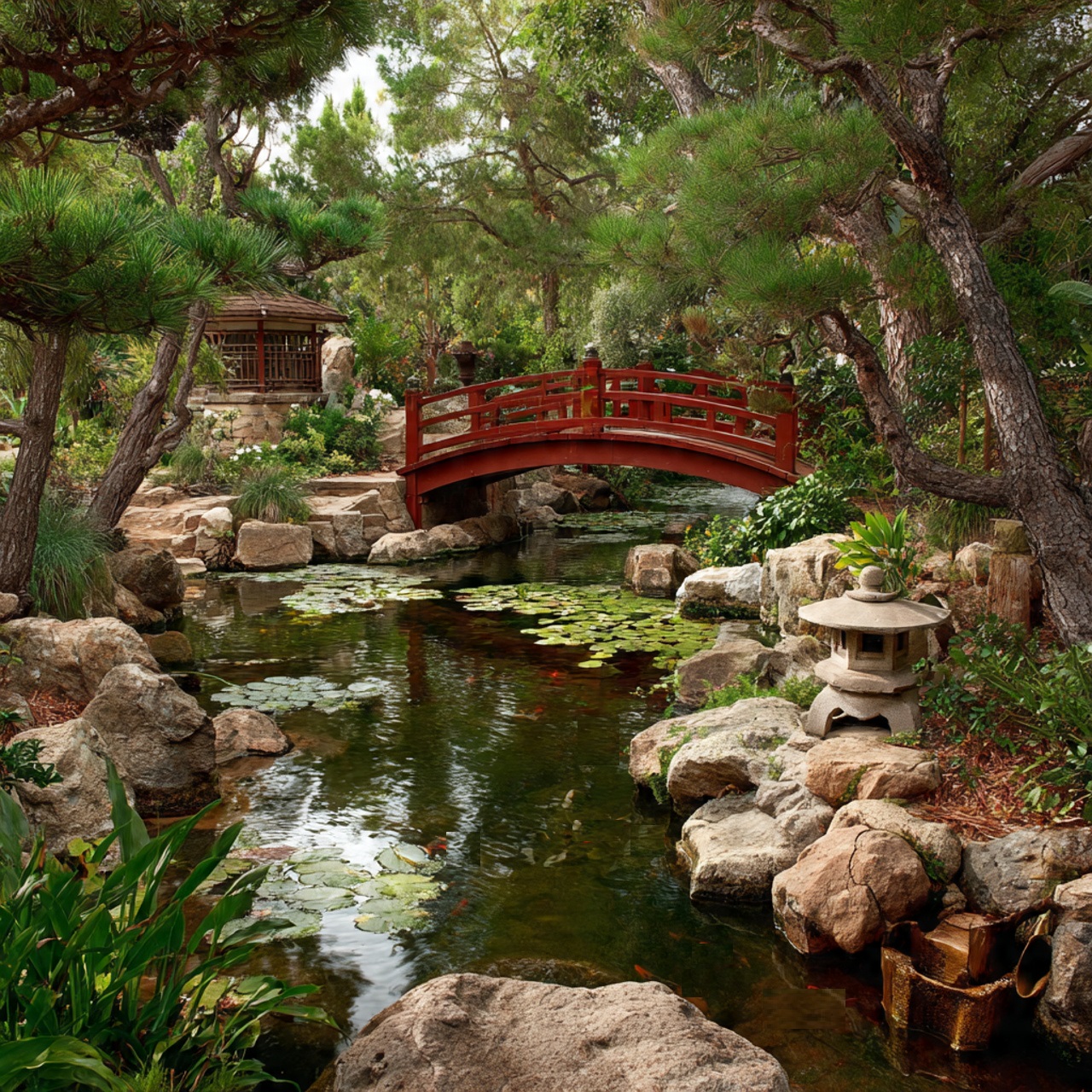
Japanese water garden design follows centuries-old principles that balance natural elements with intentional placement. Every rock, plant, and water feature carries symbolic meaning. The goal isn’t to dominate nature but to capture its essence in miniature, creating spaces for meditation and quiet observation.
Core design principles:
- Asymmetrical balance rather than mirror symmetry
- Odd numbers of elements (groups of 3, 5, or 7)
- Island or peninsula representing sacred mountains
- Careful rock selection and placement suggesting natural formations
- Restrained plant palette emphasizing evergreens
Traditional elements to incorporate:
- Stone lanterns (tōrō) for vertical interest and illumination
- Bamboo water spouts (shishi-odoshi) producing gentle sounds
- Arched bridges symbolizing the path to paradise
- Stepping stones encouraging slow, mindful movement
- Moss-covered rocks suggesting age and natural patina
Plant selection:
- Japanese maple for seasonal color
- Black pine or other shaped evergreens
- Bamboo for movement and sound
- Japanese iris in shallow waters
- Lotus for symbolic spiritual meaning
Water philosophy: In Japanese gardens, water sounds should be subtle and contemplative—gentle trickles rather than dramatic cascades. The sound invites meditation rather than commanding attention.
Common mistake: Overcrowding ruins Japanese garden aesthetics. Empty space (ma) is as important as the elements themselves, providing visual rest and contemplative balance.
Aquaponics Systems: Growing Food and Beauty Together
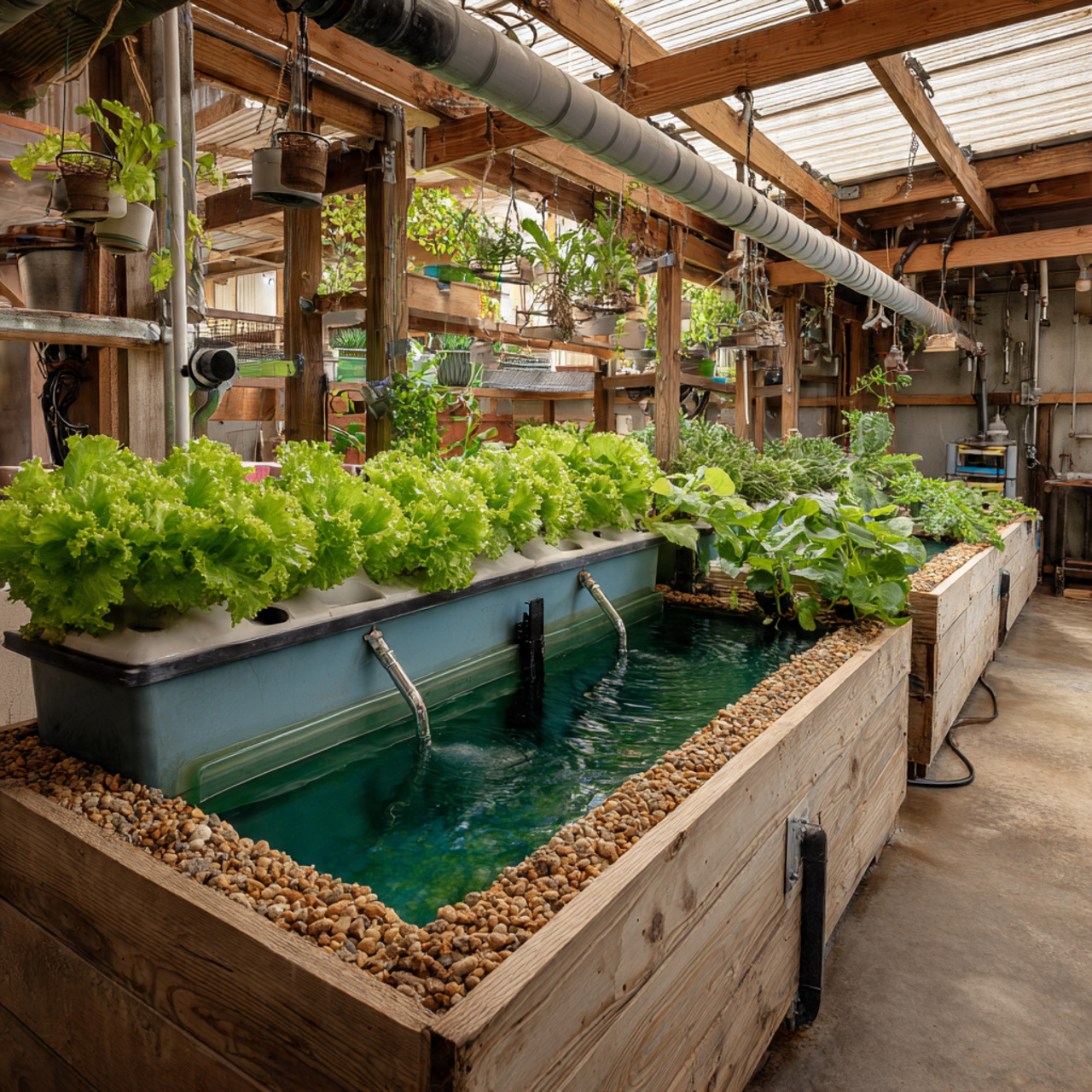
Aquaponics water gardens merge fish keeping with food production in a fascinating closed-loop system. Fish produce waste that becomes fertilizer for plants, while plant roots filter and clean the water that returns to the fish. This symbiotic relationship produces both ornamental aquatic life and fresh vegetables or herbs—doubling your garden’s productivity.
System components:
- Fish tank housing ornamental or edible species
- Grow beds filled with expanded clay or gravel media
- Bell siphons or timed pumps for flood-and-drain cycles
- Biofilter area for beneficial bacteria colonization
Stocking ratios:
- 1 pound of fish per 5-10 gallons of water
- Grow bed volume should equal fish tank volume (1:1 ratio)
- Start with hardy fish like goldfish or tilapia
Best crops for aquaponics:
- Leafy greens (lettuce, kale, chard) thrive with minimal nutrients
- Herbs (basil, cilantro, mint) grow prolifically
- Tomatoes and peppers (require mature systems with higher nutrients)
- Strawberries in established systems
Water chemistry management:
- Monitor pH weekly (optimal range 6.8-7.2)
- Test ammonia, nitrites, and nitrates regularly
- Cycle new systems for 4-6 weeks before adding fish
- Maintain consistent water temperature for fish health
Important distinction: Aquaponics is more intensive than decorative water gardens. You’re managing two living systems simultaneously—fish health and plant nutrition. It rewards those willing to learn the science behind the beauty.
Miniature Tabletop Water Gardens: Aquatic Beauty Indoors
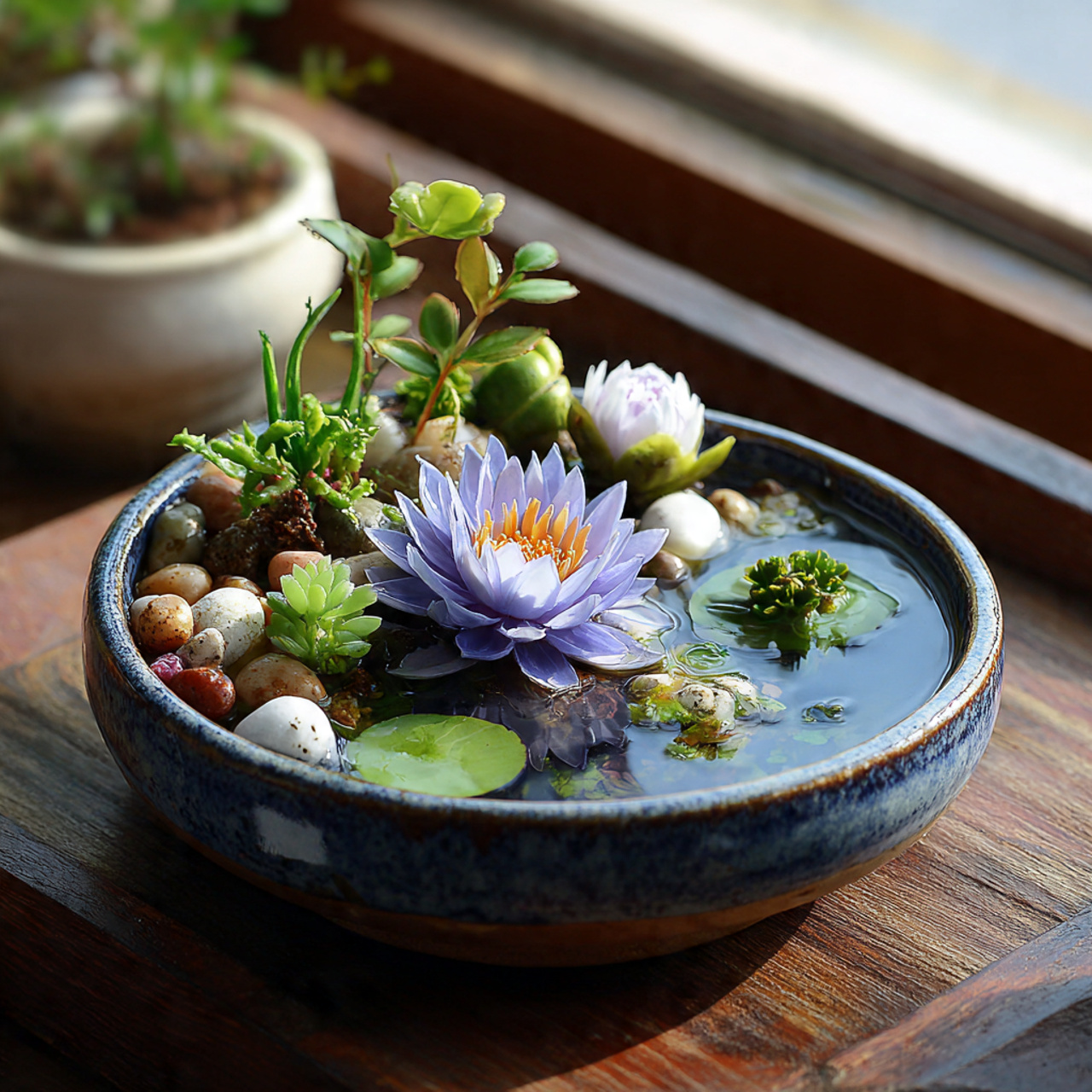
Miniature water gardens bring aquatic charm to apartments, offices, or any space lacking outdoor areas. These desktop-sized ecosystems fit in shallow bowls, decorative dishes, or repurposed containers, creating living art that requires surprisingly little maintenance once established.
Container selection:
- Wide, shallow vessels work better than narrow, deep ones
- Glass allows viewing from sides (interesting for children)
- Ceramic or glazed pottery prevents water seepage
- Minimum 6-inch diameter for stability
Plant choices for small scale:
- Miniature water lily varieties (dwarf cultivars)
- Floating plants like duckweed or dwarf water lettuce
- Small iris or acorus grass for vertical interest
- Marimo moss balls for unique texture
Light requirements:
- 4-6 hours indirect sunlight daily, or
- Positioning 6-12 inches under full-spectrum grow lights
- South or west-facing windows work well
- Rotate containers weekly for even growth
Maintenance routine:
- Replace 25% water weekly to prevent toxin buildup
- Use dechlorinated or distilled water
- Trim plants regularly to maintain scale
- Remove any decaying plant material promptly
Limitation reality: Miniature water gardens cannot house fish due to insufficient water volume and oxygen. However, you can include small aquatic snails that help with algae control and add interest.
Teaching opportunity: These tiny ecosystems make excellent educational tools for children learning about aquatic biology, nitrogen cycles, and plant care.
Seasonal Maintenance: Keeping Your Water Garden Thriving Year-Round
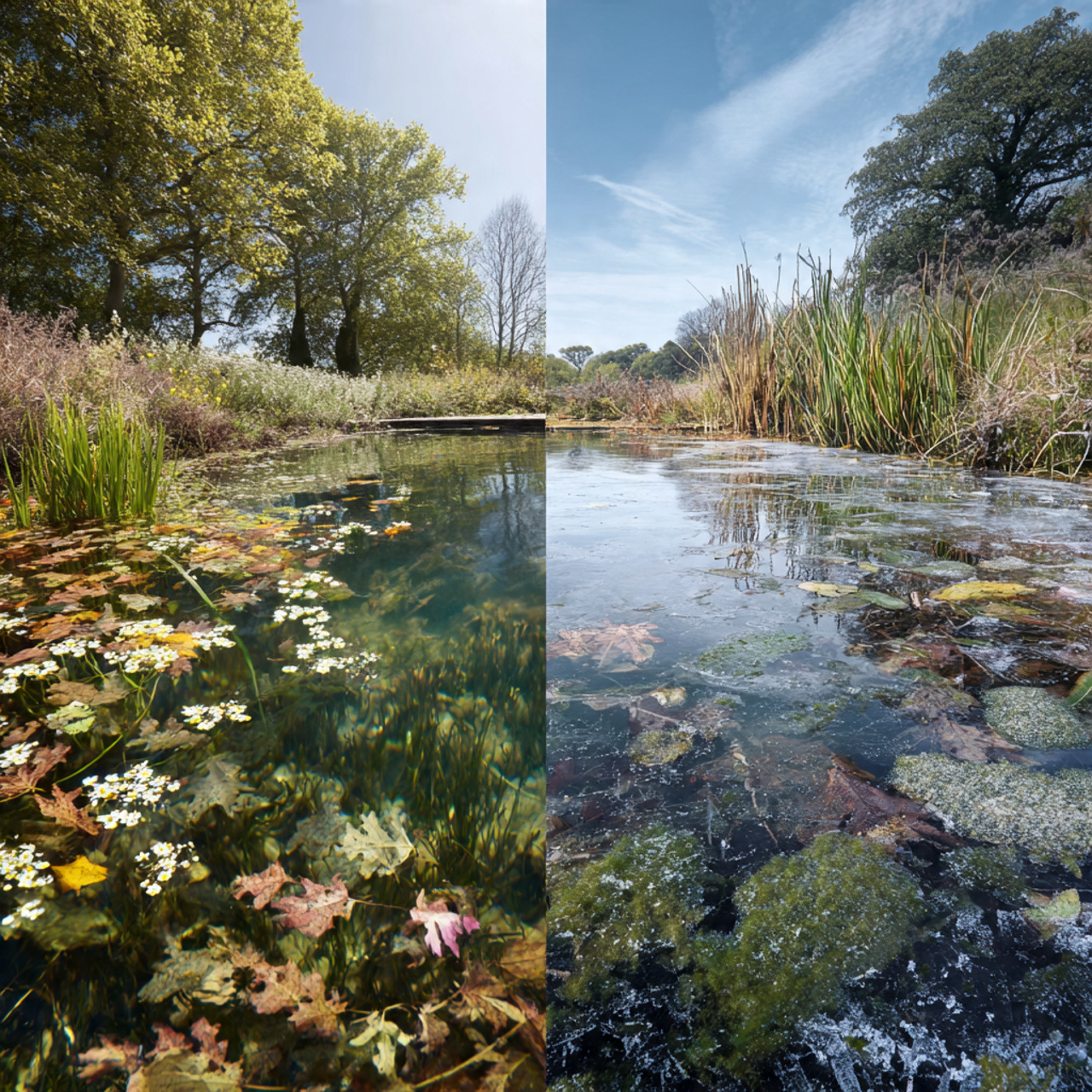
Water gardens shift with the seasons, each bringing different tasks and considerations. Understanding these cycles helps you work with nature rather than against it, maintaining a healthy ecosystem that largely cares for itself.
Spring awakening (March-May):
- Remove accumulated winter debris and dead plant material
- Clean filters and restart equipment gradually
- Test water parameters and adjust as needed
- Divide overgrown plants before active growth begins
- Begin feeding fish when water consistently exceeds 50°F
- Gradually increase portions as metabolism accelerates
Summer vigilance (June-August):
- Monitor water levels daily during heat waves
- Top off with dechlorinated water to maintain volume
- Add floating plants if algae blooms occur (shade reduces photosynthesis)
- Maintain 40-60% surface coverage for temperature control
- Check pump intake for clogs from plant matter
- Feed fish peak rations during warm months
Fall preparation (September-November):
- Net over pond to catch falling leaves
- Remove tropical plants before first frost
- Trim hardy plants but leave some stems for winter interest
- Continue feeding fish until water drops below 50°F
- Clean thoroughly before winter dormancy
- Stop fertilizing aquatic plants
Winter care (December-February):
- In cold climates, prevent complete freeze-over (gas exchange essential)
- Use pond de-icers or floating heaters in fish ponds
- Stop feeding fish entirely during dormancy
- Remove pumps and store indoors in freeze zones
- Hardy plants overwinter underwater at proper depth
- Monitor occasionally for problems
Critical mistake to avoid: Never break ice by striking it—shock waves can harm or kill dormant fish. Instead, use warm water to melt viewing holes.
Lighting Your Water Garden: Extending Evening Enjoyment
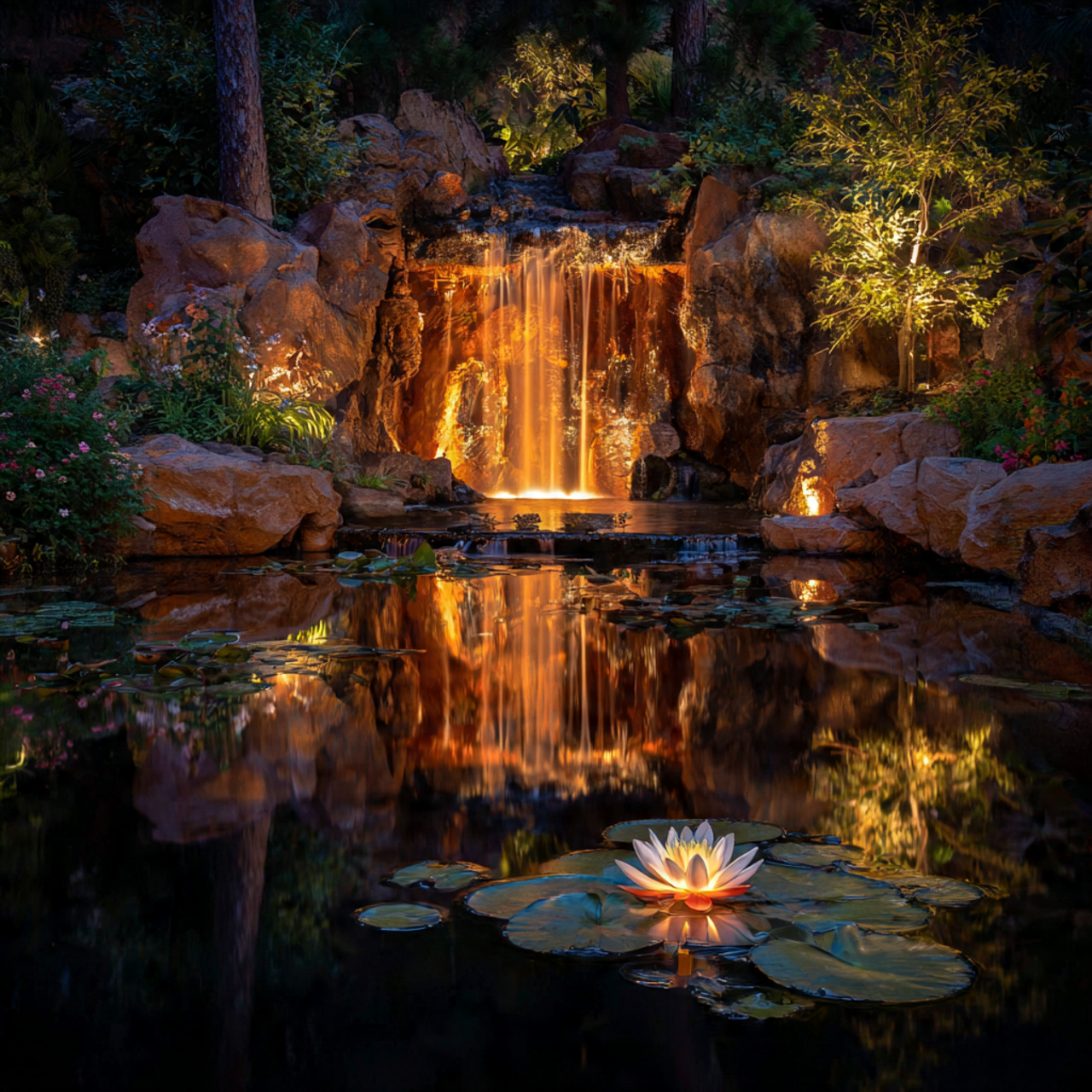
Strategic lighting transforms your water garden from a daytime feature into an enchanting nighttime spectacle. Properly positioned lights create depth, highlight key features, and safely illuminate pathways around your water feature.
Lighting techniques:
- Submersible uplights placed beneath waterfalls make cascades luminescent
- Spotlights highlight specimen plants or sculptures
- Path lights around the perimeter ensure safe navigation
- Floating lights create magical surface reflections
Installation essentials:
- Always use low-voltage (12V) systems near water
- Install GFCI-protected outlets (safety requirement)
- Bury cables 6-12 inches deep in conduit
- Keep transformers in weatherproof housings away from water
Color temperature choices:
- Warm white (2700-3000K) creates natural, inviting ambiance
- Cool white (5000-6500K) produces crisp, modern effects
- Colored LEDs add drama for entertaining (use sparingly)
- Color-changing systems allow mood adjustment
Automation options:
- Timers turn lights on at dusk automatically
- Photocell sensors adapt to seasonal daylight changes
- Smart controllers allow phone-based adjustment
- Solar options eliminate electrical installation completely
Important balance: While dramatic lighting is beautiful, excessive illumination promotes algae growth. Use timers to limit operation to evening viewing hours (4-6 hours maximum).
Selecting the Right Plants: Building Your Aquatic Ecosystem
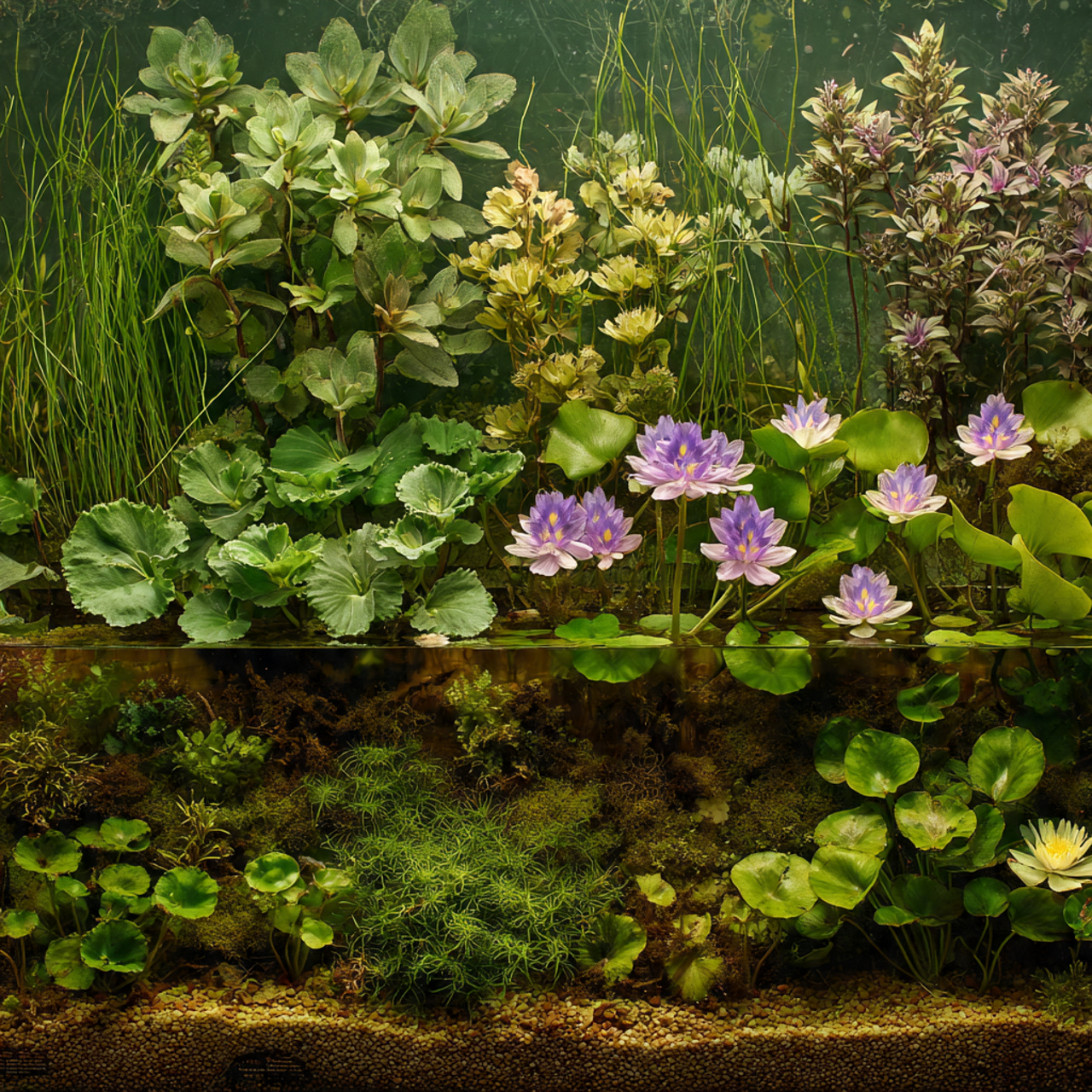
Plant selection shapes your water garden’s character, maintenance needs, and ecological health. Understanding the four main categories helps you create balanced, beautiful aquatic plantings that thrive in your climate.
Marginal plants (shallow water, 0-6 inches):
- Pickerelweed produces purple flower spikes
- Japanese iris adds elegant vertical blooms
- Cattails provide dramatic height (can be aggressive)
- Sweet flag offers fragrant, grass-like foliage
Floating plants (no anchoring required):
- Water hyacinth absorbs excess nutrients rapidly
- Water lettuce provides excellent shade coverage
- Duckweed spreads quickly (good for wildlife ponds)
- Salvinia creates delicate, textured surface coverage
Submerged oxygenators (underwater, critical for balance):
- Anacharis grows rapidly, starving algae of nutrients
- Hornwort thrives without substrate anchoring
- Cabomba produces feathery underwater foliage
- Water milfoil hosts beneficial bacteria
Deep water plants (18+ inches depth):
- Water lilies offer classic floating leaves and stunning blooms
- Lotus produces dramatic leaves and architectural flowers
- Water poppy provides bright yellow blooms
Climate matching:
- Hardy plants survive winter freezing (zones 3-7)
- Tropical varieties require removal before frost or indoor overwintering
- Check specific plant zones before purchasing
- Consider bloom times for continuous seasonal interest
Planting strategy:
- Use mesh aquatic baskets for easy maintenance and movement
- Plant in aquatic soil, not regular garden soil
- Top with pea gravel to prevent soil from floating away
- Start with fewer plants than you think—they grow vigorously
Aggressive spreader alert: Some plants like cattails, water hyacinth, and certain irises spread rapidly and may require regular division or containment.
Building Beautiful Water Gardens on Any Budget
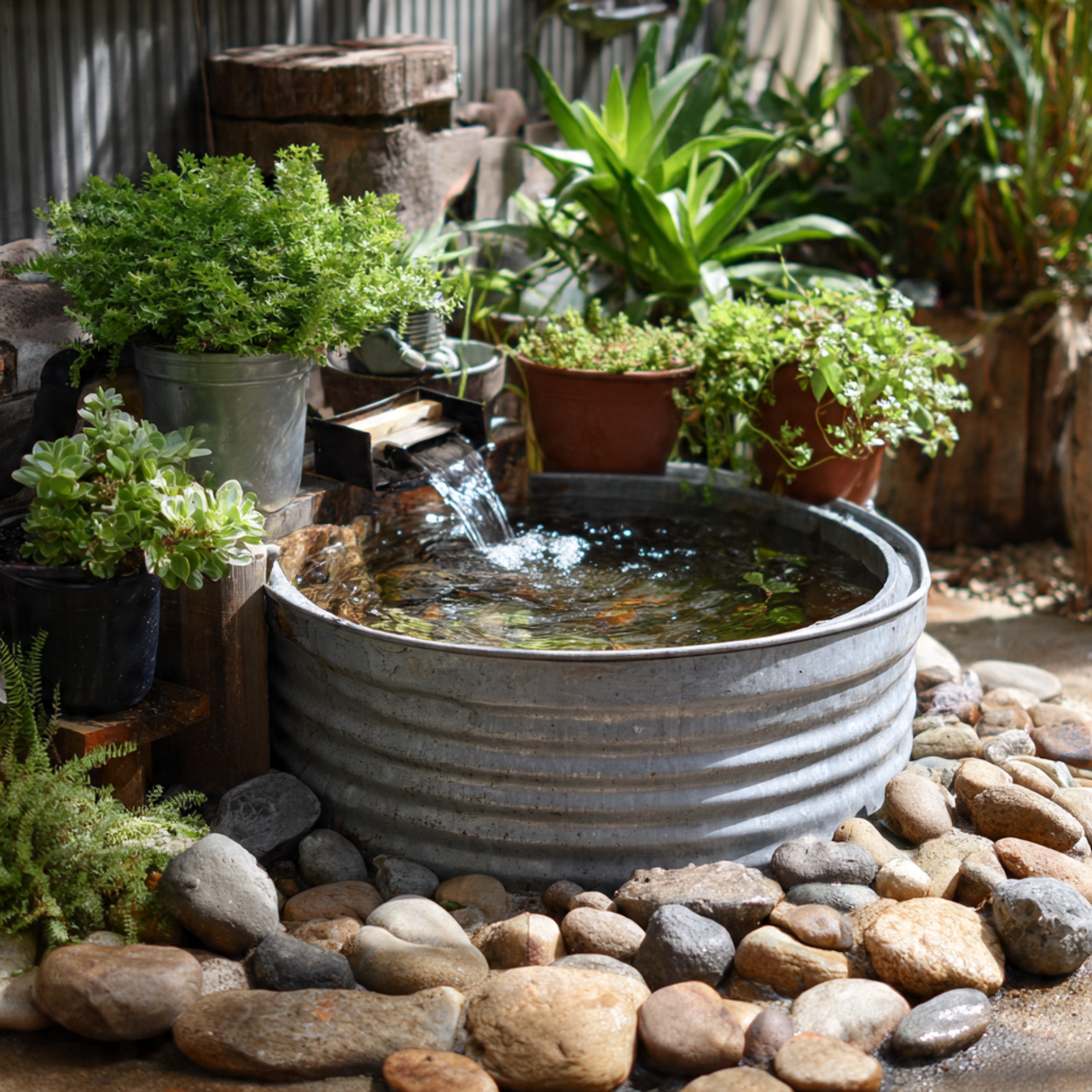
Creating a stunning water garden doesn’t require draining your savings account. With creativity, resourcefulness, and willingness to DIY, you can establish a gorgeous aquatic feature for a fraction of professional installation costs.
Budget-friendly container options:
- Stock tanks from farm supply stores ($80-200)
- Food-grade plastic barrels cut in half ($20-40)
- Vintage bathtubs from architectural salvage yards ($50-150)
- Preformed kiddie pools disguised with creative edging (under $30)
- Repurposed sinks or large bowls (free to $20)
Free or cheap materials:
- Collect rocks from your property or creek beds (with permission)
- Request leftover stone from construction sites
- Join local “Buy Nothing” groups for secondhand pond equipment
- Propagate plants from divisions rather than buying full-size specimens
- Create biofilters using storage containers and lava rock ($30-50)
DIY cost-cutting strategies:
- Rent concrete mixers to form your own pond base ($40/day versus $2000+ for preformed liners)
- Build waterfalls using basic PVC pipe and submersible pumps ($50-100)
- Shop end-of-season sales for 50-70% off pumps and supplies
- Start small and expand gradually, spreading costs across seasons
Money-saving plant tips:
- Buy young plants in spring and let them grow to full size
- Trade divisions with other water garden enthusiasts
- Join local pond societies for plant swaps and equipment sales
- Start marginals from seed (pennies versus $8-15 per plant)
Realistic budget breakdown:
- Basic container garden: $100-300
- Small DIY in-ground pond (150 gallons): $400-800
- Medium pond with simple waterfall (500 gallons): $1,200-2,000
- Large, elaborate feature (1000+ gallons): $3,000-10,000+
Smart splurging: Invest in a quality pump and proper liner—these foundation elements justify the expense because replacement is difficult and costly.
Safety First: Protecting People and Pets Around Water Features
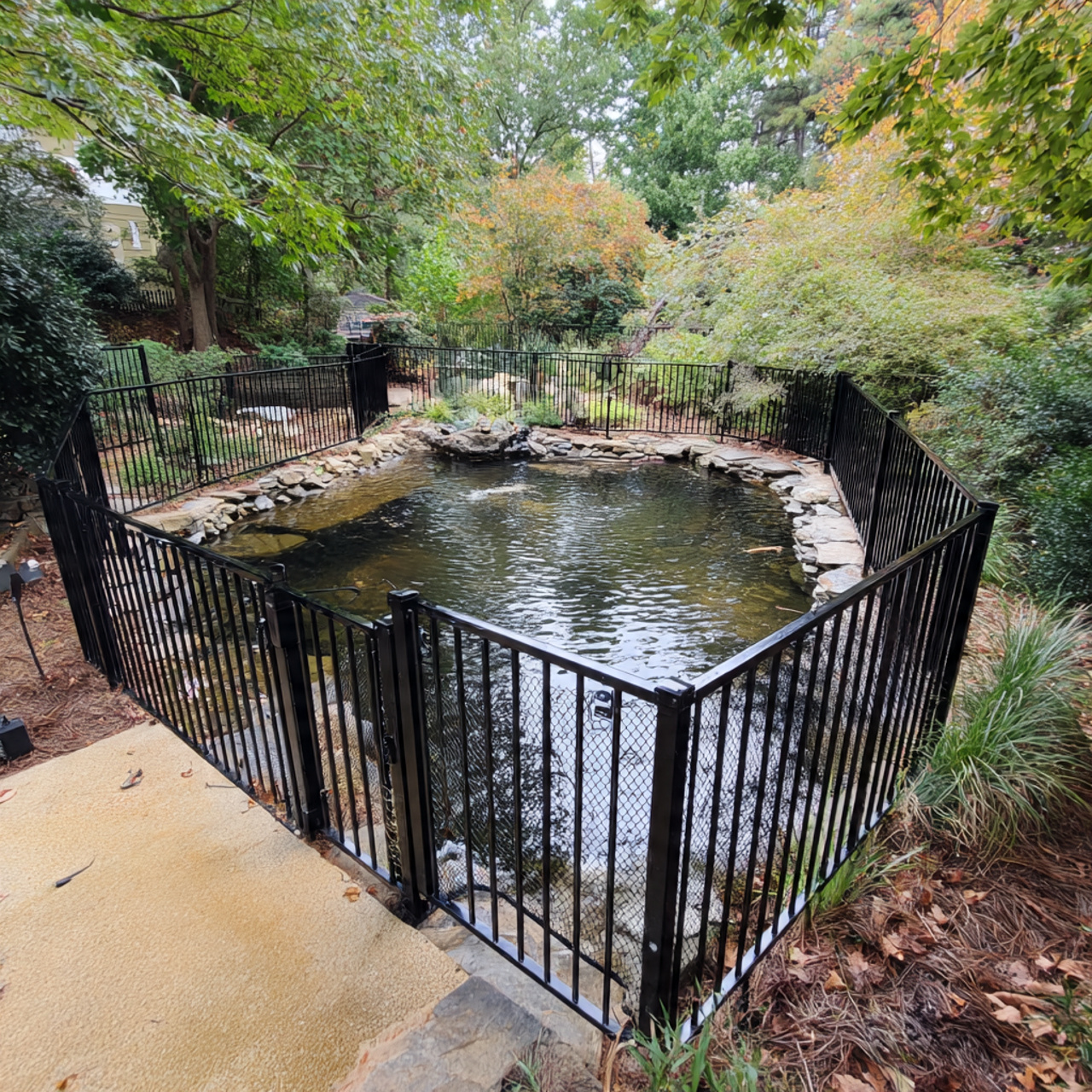
Water gardens add beauty but also require responsible safety planning. Whether you have young children visiting occasionally or active pets exploring your yard, these precautions prevent accidents and provide peace of mind.
Physical barriers and safeguards:
- Install fencing if local regulations require it (check municipal codes)
- Rigid metal grids just below water surface prevent falls while staying invisible
- Heavy-duty netting creates barriers without obstructing views
- Slopes rather than vertical walls provide escape routes if someone falls in
- Proper lighting prevents nighttime accidents
Electrical safety (non-negotiable):
- GFCI outlets are legally required for outdoor water features
- Bury cables properly in conduit at correct depths
- Keep pumps and filters inaccessible to children and pets
- Disconnect power before performing any maintenance
- Professional electrical installation recommended for permanent features
Child-specific precautions:
- Constant supervision remains essential for young children
- Even 2 inches of water presents drowning risk for toddlers
- Consider delaying installation until children reach age 5+
- Teach water safety rules explicitly and repeatedly
- Install audible alarms on doors accessing yard with pond
Pet considerations:
- Create graduated entry/exit points with shallow beaches
- Train dogs to recognize pond boundaries
- Secure pump intakes with guards to prevent injuries
- Avoid toxic plants around water features (some aquatics are poisonous if ingested)
Public or semi-public settings:
- Post clear signage indicating water depth
- Ensure adequate perimeter lighting
- Regular inspections for loose rocks or damaged edges
- Consider liability insurance for commercial properties
Emergency preparedness:
- Keep rescue equipment (reaching pole, life ring) nearby for large features
- Ensure fence gates lock securely
- Post emergency numbers in visible locations
- Teach children how to respond if someone falls in (get adult help, don’t enter water)
Reality check: No safety measure replaces active supervision. Multiple layers of protection work better than relying on any single safeguard.
Your Water Garden Questions Answered
How much should I expect to spend on a water garden?
Budget anywhere from $100-300 for basic container setups to $1,500-3,000 for small DIY in-ground ponds. Professional installations with waterfalls and elaborate landscaping range from $5,000-50,000+ depending on size and complexity.
Will my water garden become a mosquito breeding ground?
Not if designed correctly. Moving water from pumps or fountains prevents mosquito larvae development. Fish like goldfish and koi eat any larvae that appear. Only stagnant, still water without circulation attracts mosquitoes.
How much time does water garden maintenance actually take?
Expect 10-15 minutes weekly for debris removal and basic checks during growing season. Monthly tasks take 30-45 minutes for testing water and trimming plants. One thorough annual cleaning in spring requires 3-6 hours depending on pond size.
Can I skip the pump and just have still water?
Small containers under 50 gallons can work without pumps if heavily planted and contain no fish. Larger ponds need circulation for oxygen and water quality. Pumpless designs require weekly water changes and cannot support fish populations.
What’s the minimum depth my water garden needs?
Container gardens need 12-18 inches for plant roots. Standard decorative ponds should be 18-24 inches deep for stability. Fish ponds in cold climates require 3-4 feet to prevent freezing. Wildlife ponds benefit from varied depths including shallow 2-6 inch zones for birds.
Creating Your Personal Aquatic Paradise
Your water garden journey can start today, regardless of your experience level or budget. The variety of styles—from simple container gardens to elaborate ecosystem ponds—ensures there’s a perfect fit for your space, vision, and commitment level. Beginning with a small project lets you develop skills and understanding before tackling more ambitious designs.
The transformation happens gradually. What starts as a simple water container with a few plants evolves into a thriving ecosystem attracting wildlife, providing daily meditation opportunities, and becoming your favorite outdoor destination. Each season brings new discoveries as plants mature, fish grow, and the balanced ecosystem develops its own rhythm.
Don’t wait for the “perfect” moment or complete knowledge. Water gardens teach through doing. Start simple, observe carefully, and expand your aquatic sanctuary as your confidence grows. Your backyard oasis awaits—time to make that first splash.