Winter Garden: 18 Ideas to Transform Your Cold-Season Space
Most people think gardening ends when the first frost hits, but that couldn’t be further from the truth. Your outdoor space can actually thrive during winter, offering stunning visual displays, supporting wildlife, and even providing fresh vegetables when you least expect them. The secret? Understanding how to work with the cold instead of against it.
A winter garden isn’t just about survival—it’s about celebrating what makes this season special. Think about the striking silhouettes of bare branches outlined against a crisp blue sky, bright berries popping against fresh snow, and the sweet surprise of flowers blooming in February. Whether you’ve got a tiny balcony or a sprawling backyard, you can create a winter sanctuary that looks intentional, not neglected.
Planning Your Cold-Season Outdoor Space
Before you buy a single plant or move anything around, spend some time really getting to know your space during winter. Every garden has its own personality when temperatures drop—some spots stay surprisingly warm while others turn into frost pockets overnight.
Take walks around your property on cold days and notice which areas get hit hardest by wind, where snow melts first (those are your warm zones!), and which spots stay protected. South-facing walls typically act like natural heaters, radiating warmth that can help borderline plants make it through rough patches. Meanwhile, low-lying areas become cold air swimming pools where frost settles heaviest.
Quick Tip: Take photos of your space throughout winter from different angles and times of day. You’ll spot problem areas and opportunities you’d otherwise miss when spring fever kicks in.
Think about what you actually want from your winter garden. Are you aiming for:
- Eye candy to enjoy from your windows?
- Fresh salad greens in January?
- A bird-watching haven?
- All of the above?
Most successful winter gardens blend beauty and function—gorgeous evergreens standing alongside productive cold frames packed with leafy greens.
Evergreen Structural Plants
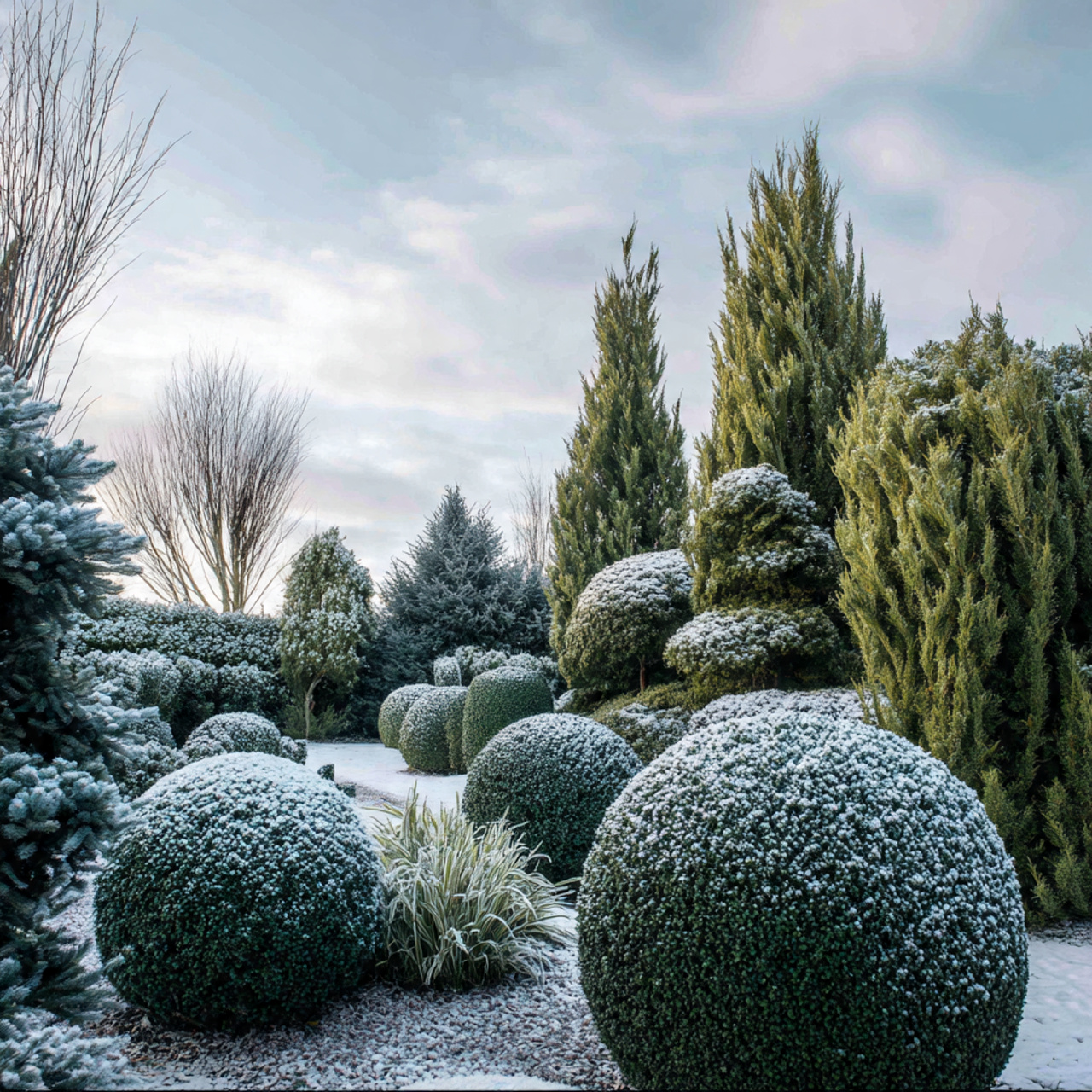
Evergreens are the heroes of winter gardens, providing color and structure when everything else has called it quits for the season. Conifers like dwarf Alberta spruce, mugo pine, and various junipers keep their needles year-round, creating focal points that actually improve when snow dusts their branches. Broadleaf evergreens such as boxwood, holly, and rhododendron bring different textures to the mix while staying reliably green.
Smart Selection Tips:
- Check mature sizes before planting—that cute little evergreen might turn into a monster that needs constant trimming
- Group plants with similar needs together (water-lovers with water-lovers, sun-seekers with sun-seekers)
- Position strategically where you’ll actually see them from inside your home during cozy winter evenings
- Create windbreaks by placing larger evergreens where they’ll protect more delicate plants from harsh winter winds
Common Mistake to Avoid: Don’t plant large-growing evergreens in small spaces just because they look tiny at the garden center. A 3-foot spruce today might be 15 feet in ten years, creating ongoing maintenance headaches.
Winter-Blooming Flora
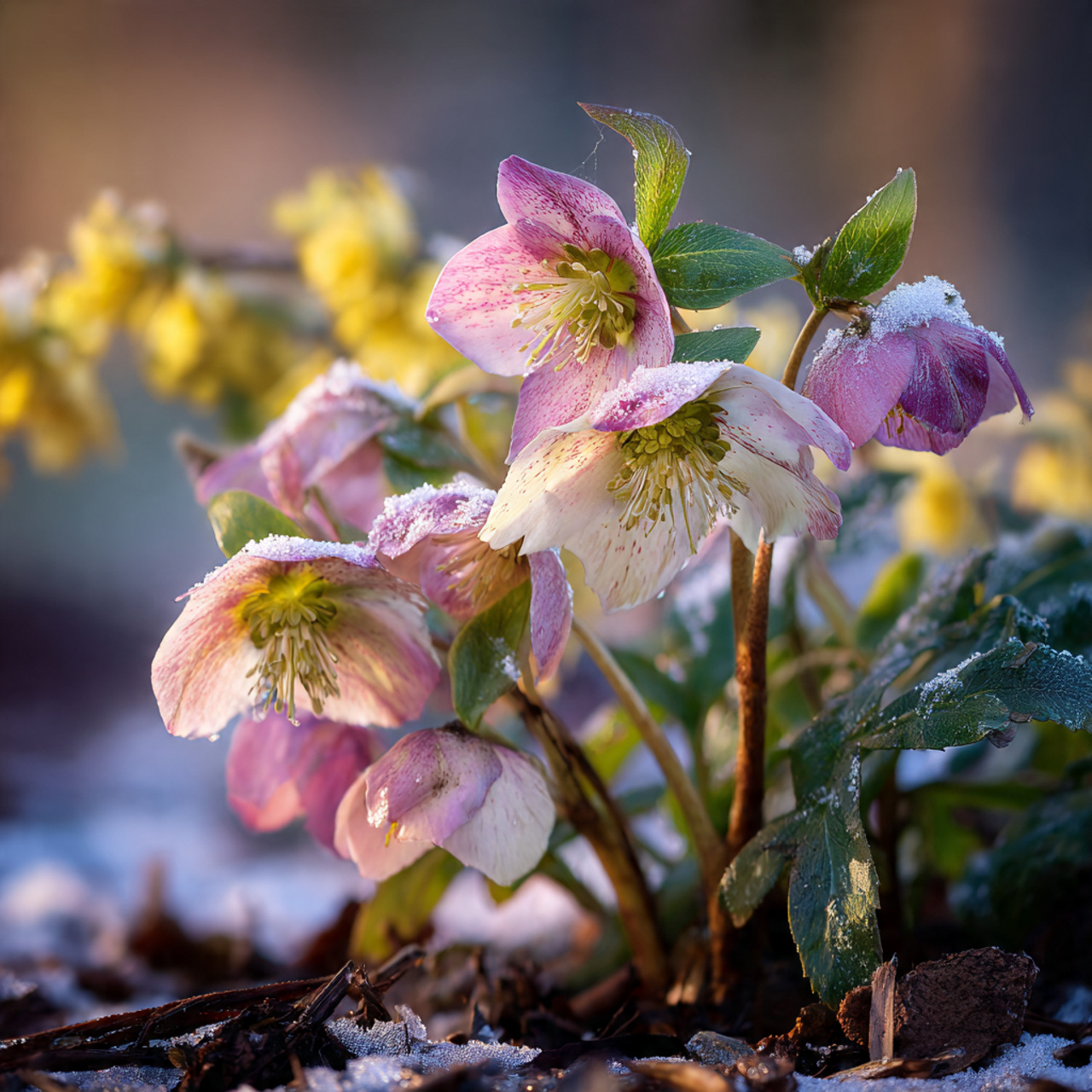
Some brave plants actually bloom during winter, and they’re absolute showstoppers when the rest of the world looks drab. Witch hazel puts out quirky, fragrant flowers on bare branches from January through March—they look like colorful spiders and smell amazing. Hellebores (Christmas roses or Lenten roses) push through snow to show off nodding flowers in gorgeous shades. Winter jasmine cascades with cheerful yellow blooms, while heathers carpet the ground in pink or white.
Placement Strategy:
- Near entrances where you’ll pass them daily and catch their fragrance
- Along well-traveled paths to maximize enjoyment
- Visible from windows so you can admire them without braving the cold
- In partial shade with afternoon protection—harsh sun during freeze-thaw cycles can damage delicate flowers
Bonus Benefit: These early bloomers provide crucial nectar for the first pollinators that emerge on warmer winter days. You’re not just enjoying beauty—you’re supporting the ecosystem.
Tip: Plant multiple varieties with staggered bloom times. That way, you’ll have flowers appearing from November straight through to March instead of just one brief show.
Ornamental Grasses and Seed Heads
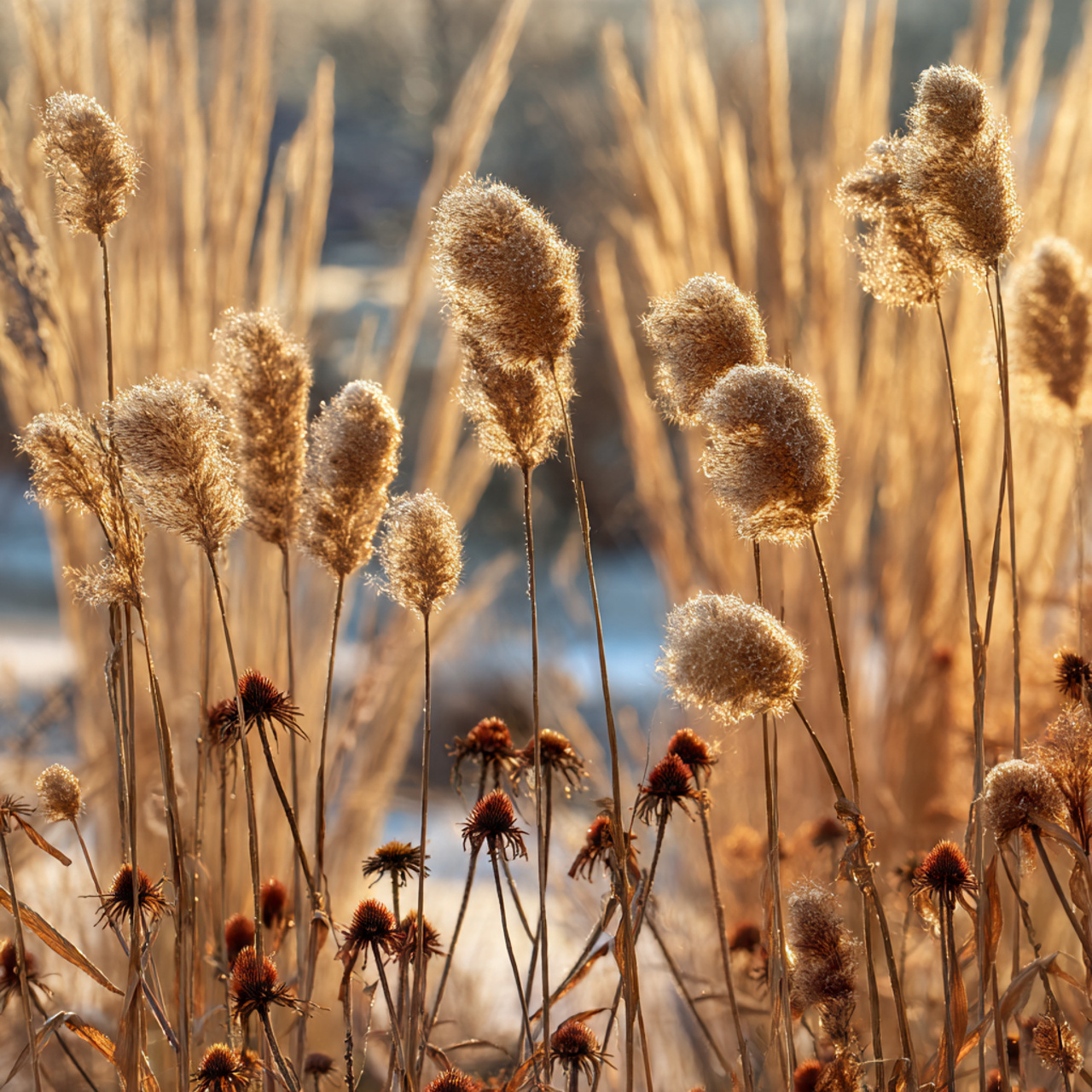
Ornamental grasses become absolute stars when winter arrives. Their tawny plumes and architectural shapes dance in winter breezes and catch frost and snow in ways that’ll make you grab your camera. Varieties like feather reed grass, switchgrass, and miscanthus hold their structure beautifully through winter, adding movement and vertical interest when most plants have collapsed.
Why Leave Them Standing:
- They provide critical habitat for beneficial insects trying to survive winter
- Birds feast on their seeds throughout cold months
- Their dried foliage protects crown roots from temperature swings
- They look absolutely stunning when backlit by low winter sun
Design Secret: Position grasses where morning or late afternoon sun can shine through them, creating dramatic golden silhouettes that seem to glow.
Important Timing Note: Resist the urge to cut back ornamental grasses in fall. Wait until late winter or early spring—you’ll get months of visual interest while helping wildlife survive.
Combine grasses with other plants that keep interesting seed heads like coneflowers (echinacea), black-eyed Susans (rudbeckia), and sedum for layered texture throughout winter.
Colorful Bark and Stems
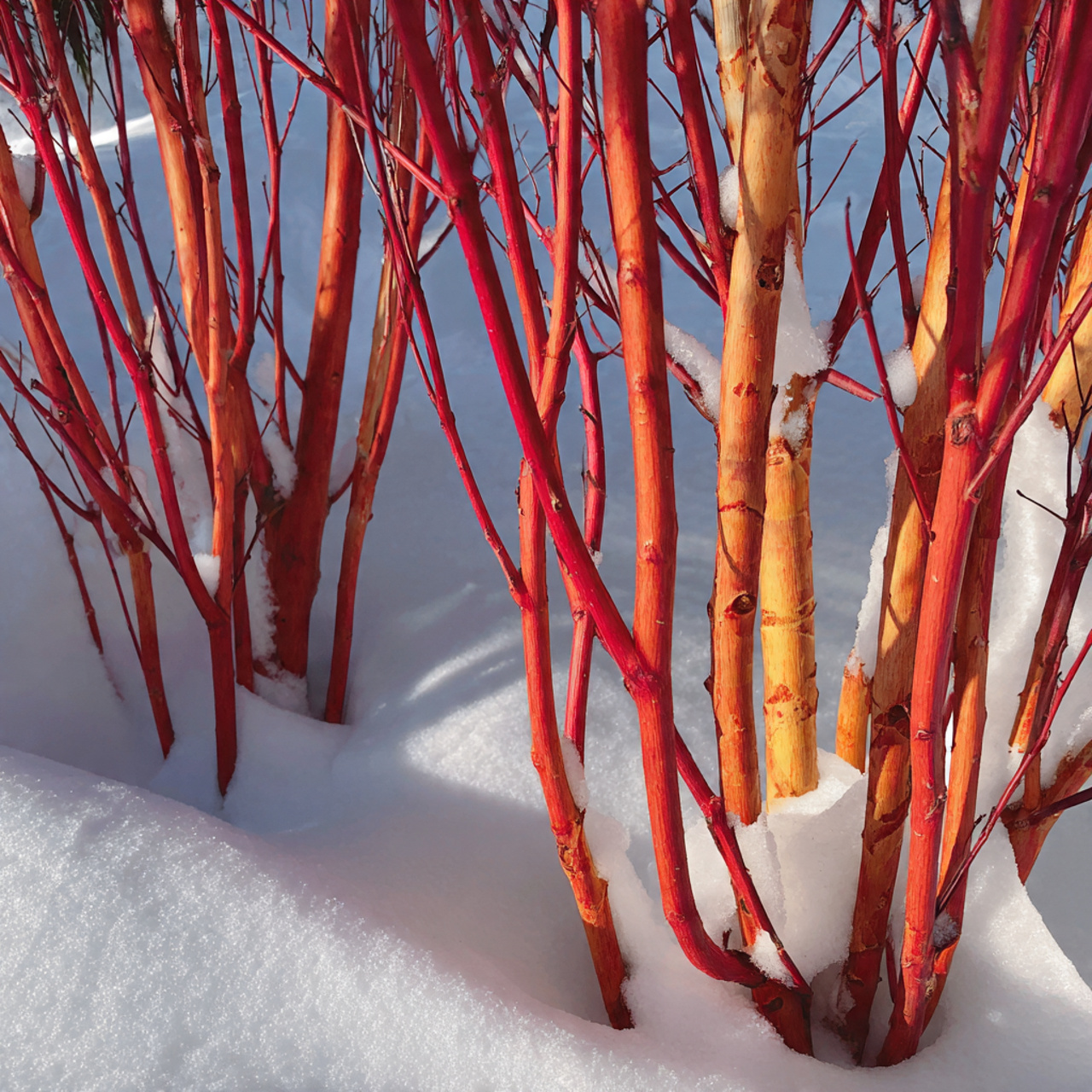
When leaves drop, certain trees and shrubs reveal their secret superpower—stunning bark that becomes the main attraction. Coral-bark maple shows off brilliant red-orange stems that practically glow against snow. Different dogwood varieties offer red, yellow, or lime-green winter twigs. Paperbark maple and birch species provide peeling bark in copper, white, or cinnamon tones that adds incredible texture.
Maintenance Tip: Prune shrubs grown for stem color in late winter. This encourages vigorous new growth, and it’s the youngest stems that show the most intense colors.
Lighting Matters:
- Plant where winter sun will hit directly (especially morning and late afternoon light)
- The angled winter sunlight intensifies colors dramatically
- Position near dark backgrounds to make light-colored bark pop
- Use as focal points to draw the eye through your winter landscape
Example Combinations:
- Red-twig dogwood against dark evergreens = stunning contrast
- White birch bark surrounded by dark mulch = dramatic impact
- Yellow-twig dogwood with burgundy-leaved heuchera at its base = color coordination even in winter
Berry-Producing Shrubs
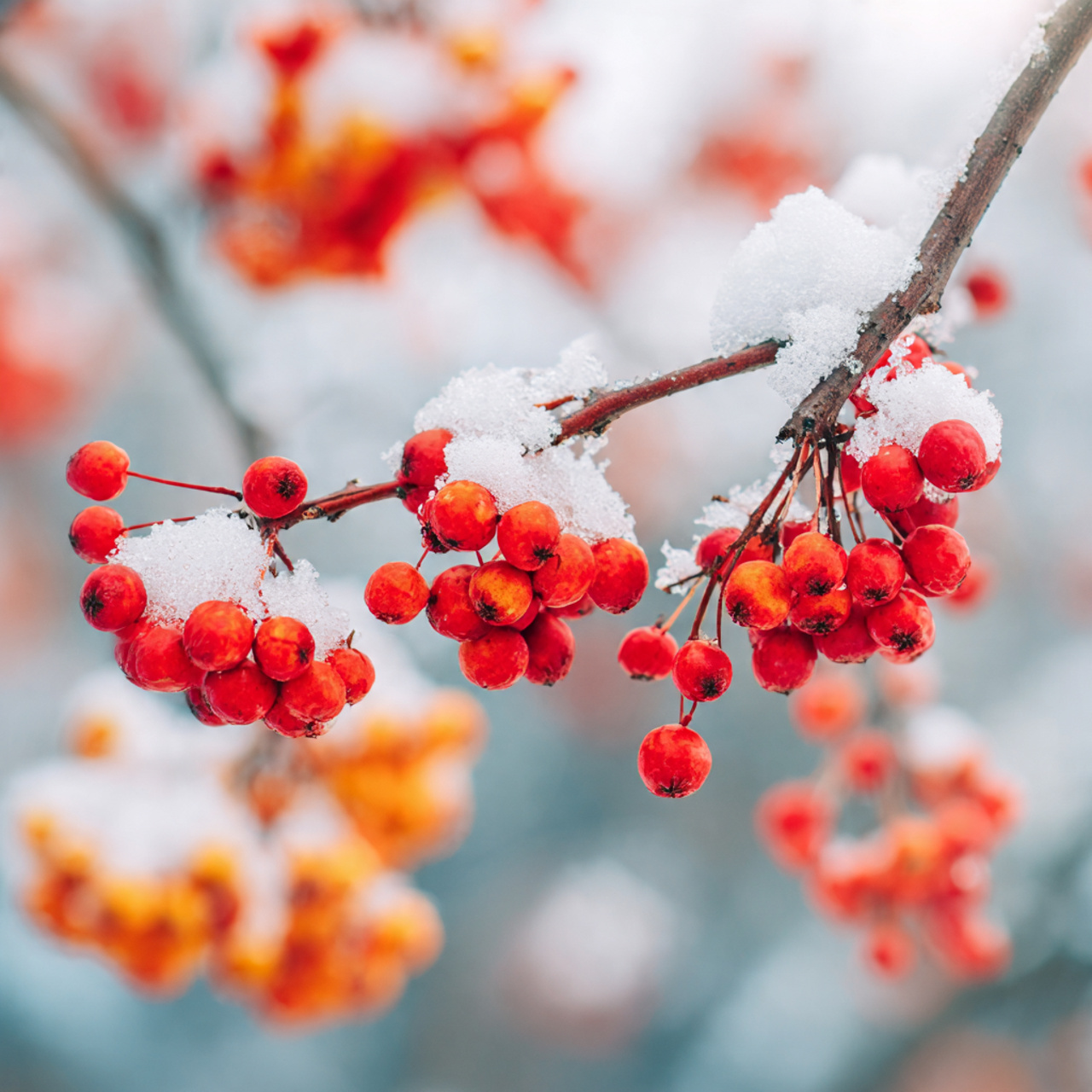
Plants with persistent berries are like holiday decorations that nature provides—and they double as critical food sources for winter birds. Winterberry holly creates spectacular displays with abundant red or orange berries that hang on after leaves drop, looking especially dramatic against snow. Beautyberry holds clusters of unusual purple or white berries into early winter, while cotoneaster species bear red or black fruits that birds appreciate during lean months.
Critical Pollination Fact: Most berry-producing plants need both male and female specimens to produce fruit. Don’t make the common mistake of buying just one plant and wondering why it never berries!
Research Requirements:
- Check pollination needs before purchasing
- Note the recommended male-to-female ratios (often 1 male per 5-6 females)
- Some varieties are self-fertile—look for these if space is limited
Placement Tips:
- Plant in groups where you can see the fruit display from inside
- Position near windows where you enjoy watching birds feed
- Choose varieties with different fruiting times to extend the show from November through March
- Place near seating areas (but not directly overhead where droppings become an issue)
Wildlife Win: A well-planned berry selection supports local bird populations when they need it most while giving you a front-row seat to nature’s drama.
Berry-Producing Shrubs
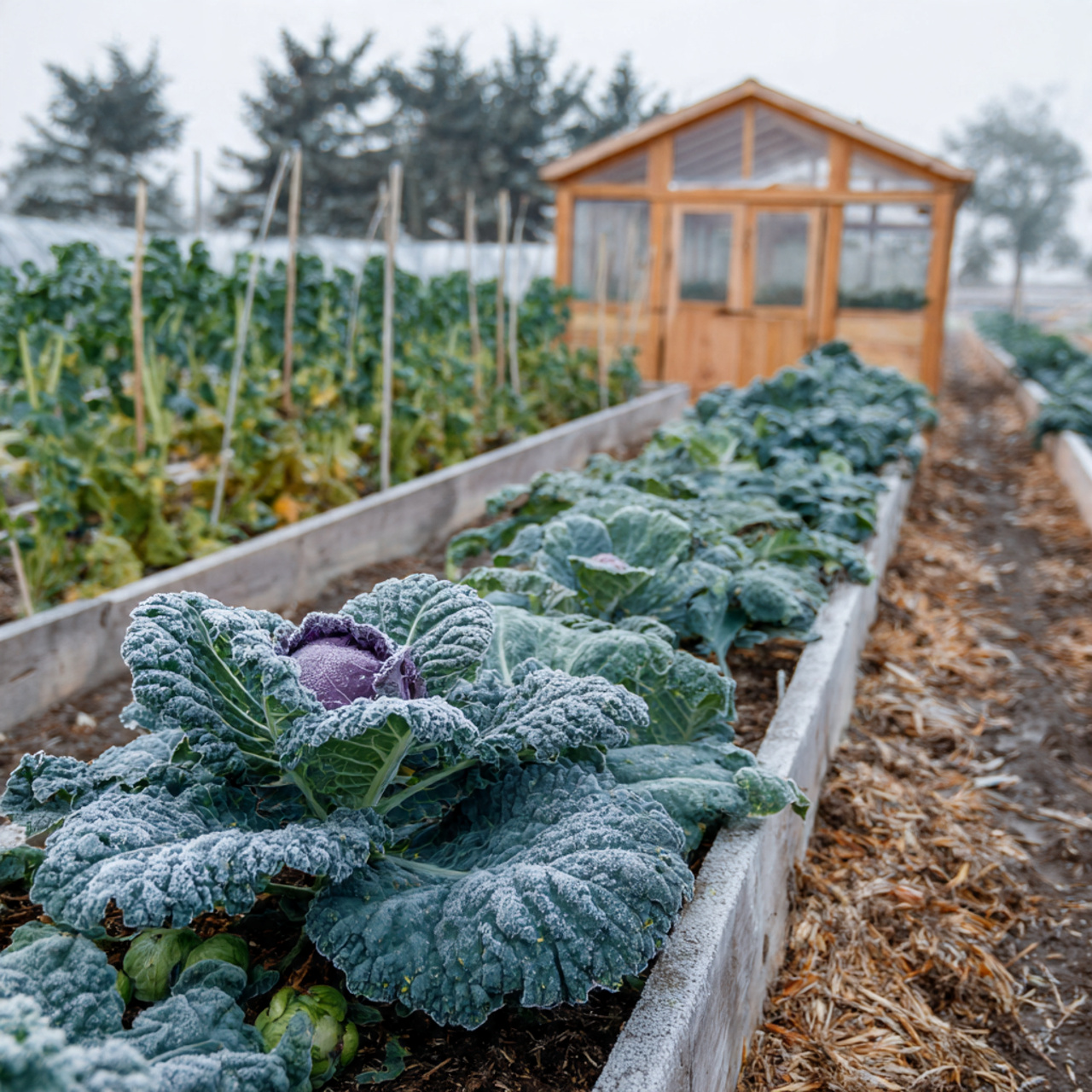
Here’s something many gardeners don’t realize: some vegetables actually taste better after frost. When temperatures drop, cold-hardy plants convert starches to sugars as a survival mechanism—meaning your kale, collards, Brussels sprouts, and leeks become sweeter and less bitter after they’ve been kissed by frost.
Top Cold Warriors:
- Kale varieties (especially Lacinato and Red Russian) survive temperatures down to 10°F
- Collards get increasingly tender with each frost
- Leeks can be harvested straight from frozen ground
- Root vegetables (carrots, parsnips, beets) stay fresh in-ground with heavy mulch protection
- Asian greens like mizuna and tatsoi thrive under row covers
- Winter lettuce varieties produce in cold frames when protected from harsh wind
Critical Timing Factor: Most cold-season crops need establishment during late summer or early autumn before hard cold arrives. They need time to develop strong root systems while weather is still moderate.
Success Strategy:
- Succession plant every 2-3 weeks for continuous harvests instead of overwhelming gluts
- Use protection like cloches, cold frames, or low tunnels for marginally hardy crops
- Harvest in afternoon when leaves have thawed and are less brittle
- Mulch heavily (6-8 inches) around root crops you plan to leave in ground
Common Mistakes to Avoid:
- Planting too late (crops won’t mature before deep cold)
- Over-harvesting individual plants (take a few leaves from each rather than stripping one plant)
- Neglecting water during dry winter spells (plants still need moisture)
Container Winter Interest
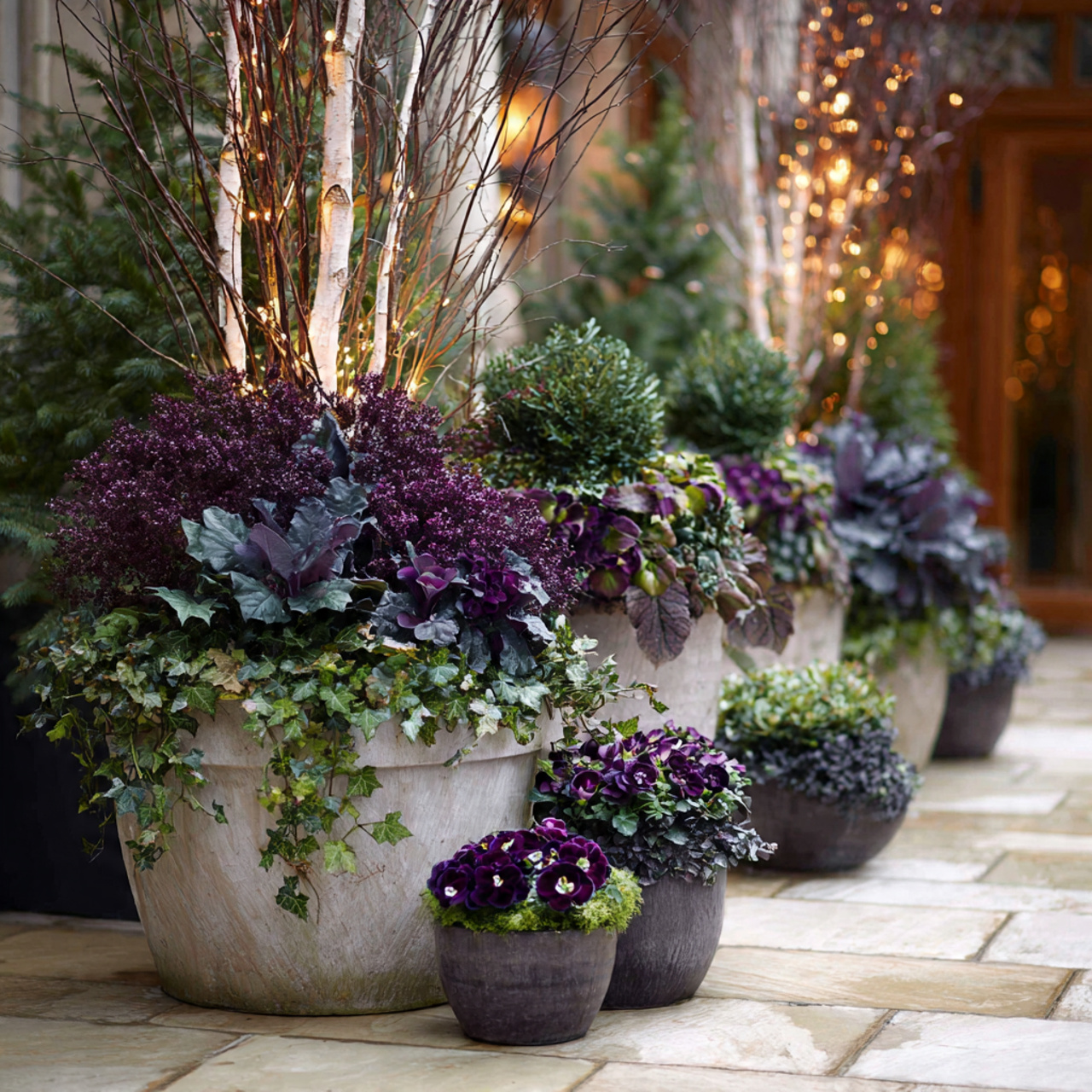
Containers give you incredible flexibility—you can move color exactly where you need it, protect tender plants during extreme cold, and refresh your display whenever the mood strikes. Winter containers work best when you think beyond just “surviving” and aim for genuine beauty.
Winning Container Formulas:
- Evergreen base (dwarf conifer or boxwood for structure)
- Trailing elements (variegated ivy cascading over edges)
- Seasonal color (winter pansies or ornamental kale for pops of color)
- Vertical interest (cut branches of holly, birch, or red-twig dogwood)
Container Material Matters:
- Avoid: Terracotta and ceramic pots—they crack during freeze-thaw cycles
- Choose: Resin, fiberglass, or thick plastic containers that withstand winter
- Consider: Wood containers that insulate roots better than plastic
Winter Container Tips:
- Elevate pots using pot feet to ensure drainage and prevent ice damage
- Group containers together for visual impact and to create protective microclimates
- Refresh seasonally by swapping out elements that fade or fail
- Move strategically during extreme cold warnings to protect borderline plants
Example Combination: Blue-needled dwarf spruce centered in a large pot, surrounded by white pansies, with trailing silver-variegated ivy, and tall red-twig dogwood branches stuck in the soil for height. This combo provides structure, color, texture, and interest at multiple levels.
Wildlife Support Stations
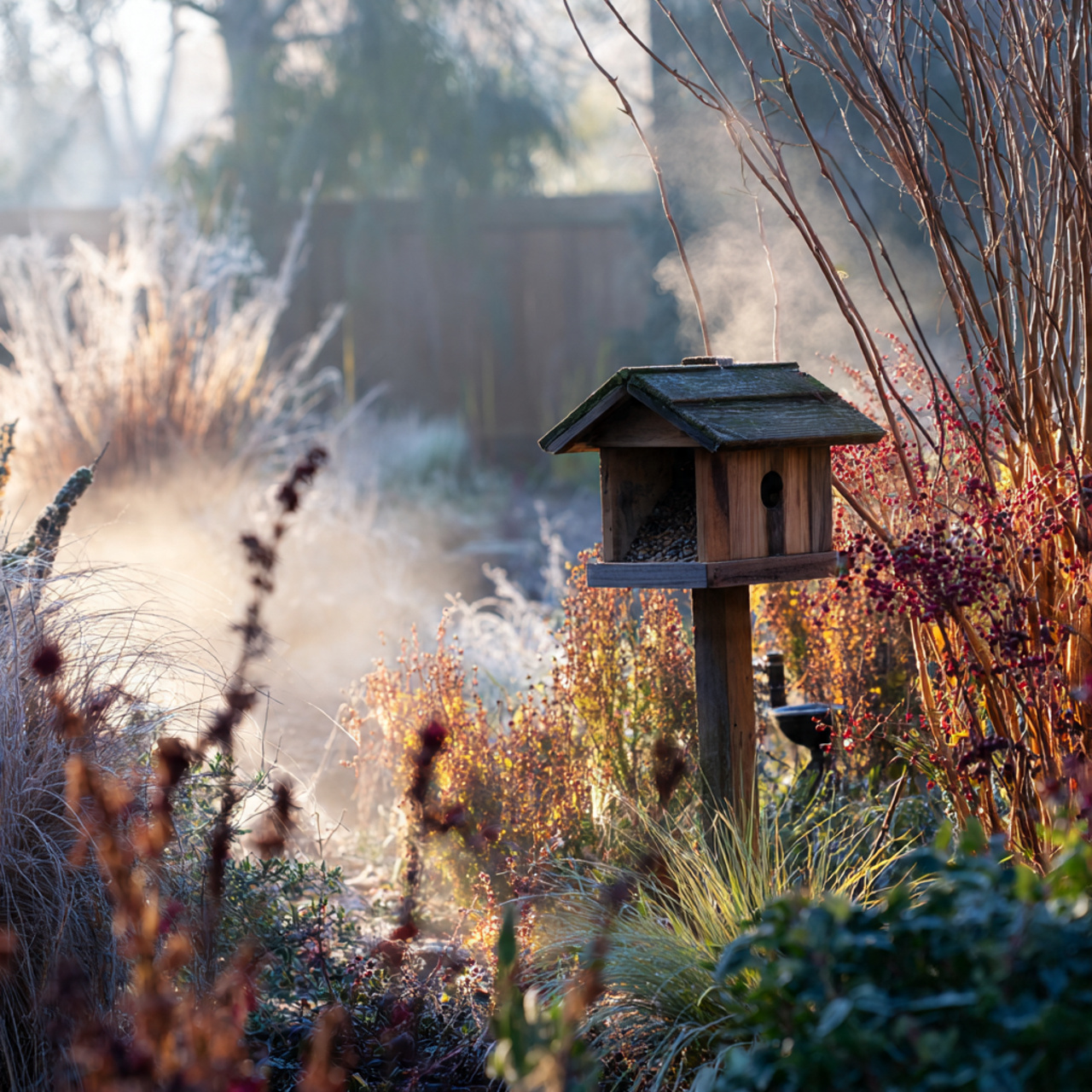
Your winter garden can become a lifeline for local wildlife struggling through harsh months. When you support birds, beneficial insects, and small mammals, you’re not just being kind—you’re creating a healthier, more balanced ecosystem that’ll benefit your garden year-round.
Insect Overwinter Housing:
- Leave hollow-stemmed perennials standing (they house native bees)
- Create brush piles from pruned branches (beetles, butterflies, and beneficial insects shelter here)
- Skip fall cleanup in at least some areas (leaf litter protects countless insects)
Bird Sanctuary Essentials:
- Multiple feeder types (tube feeders for small birds, platform feeders for larger species, suet feeders for woodpeckers)
- Heated birdbath providing crucial water when ground sources freeze
- Shelter options (dense evergreens for protection from predators and weather)
- Native berry producers (birds evolved to rely on native plant species)
Why Native Plants Matter: Local wildlife has co-evolved with native plants over thousands of years. They know how to use them for food, shelter, and nesting materials. A winter garden filled with natives supports far more biodiversity than one filled with exotic ornamentals.
Safety Measures:
- Place feeders near windows but not so close birds can’t see them (prevent window strikes)
- Clean feeders regularly to prevent disease spread
- Position brush piles away from areas where outdoor cats roam
- Avoid excessive pesticide use that eliminates insects birds need for protein
The Payoff: You’ll enjoy endless entertainment watching winter birds while knowing you’re making a real difference in their survival.
Hardscape Elements
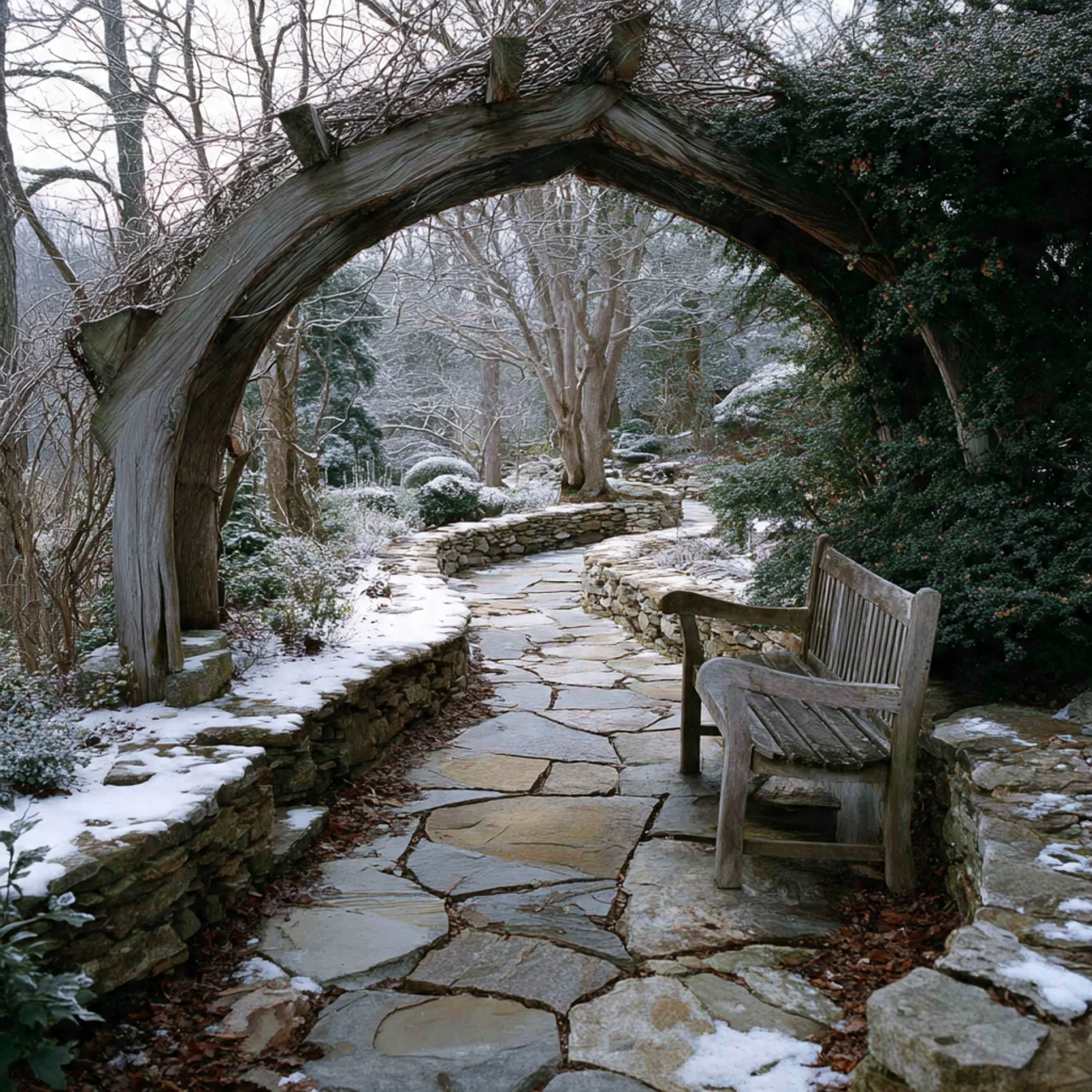
When plants shrink back or go dormant, hardscape elements become your garden’s bones—and suddenly everything you built becomes highly visible. Paths, walls, arbors, and gates create year-round structure that guides movement and organizes space even when plantings are minimal.
Material Considerations:
- Stone and concrete paths look beautiful but become skating rinks when icy
- Gravel paths provide better winter traction and drain well
- Brick offers good slip resistance and a timeless look
- Weathered wood complements winter’s subdued palette perfectly
Design Elements That Shine in Winter:
- Pergolas and arbors gain architectural presence without vine coverage
- Garden walls create protected microclimates and backdrop for plants
- Gates and fences become focal points rather than plant supports
- Seating areas positioned out of prevailing winds become cozy observation posts
Winter-Specific Planning:
- Create at least one protected sitting area where you can enjoy mild winter days
- Ensure paths stay accessible and safe during snow and ice
- Design structures to look beautiful when dusted with snow
- Consider how hardscape will appear from warm indoor viewing spots
Tip: Arbors and pergolas covered in snow create beautiful geometric patterns that photograph wonderfully and add visual interest on gray winter days.
Protective Structures
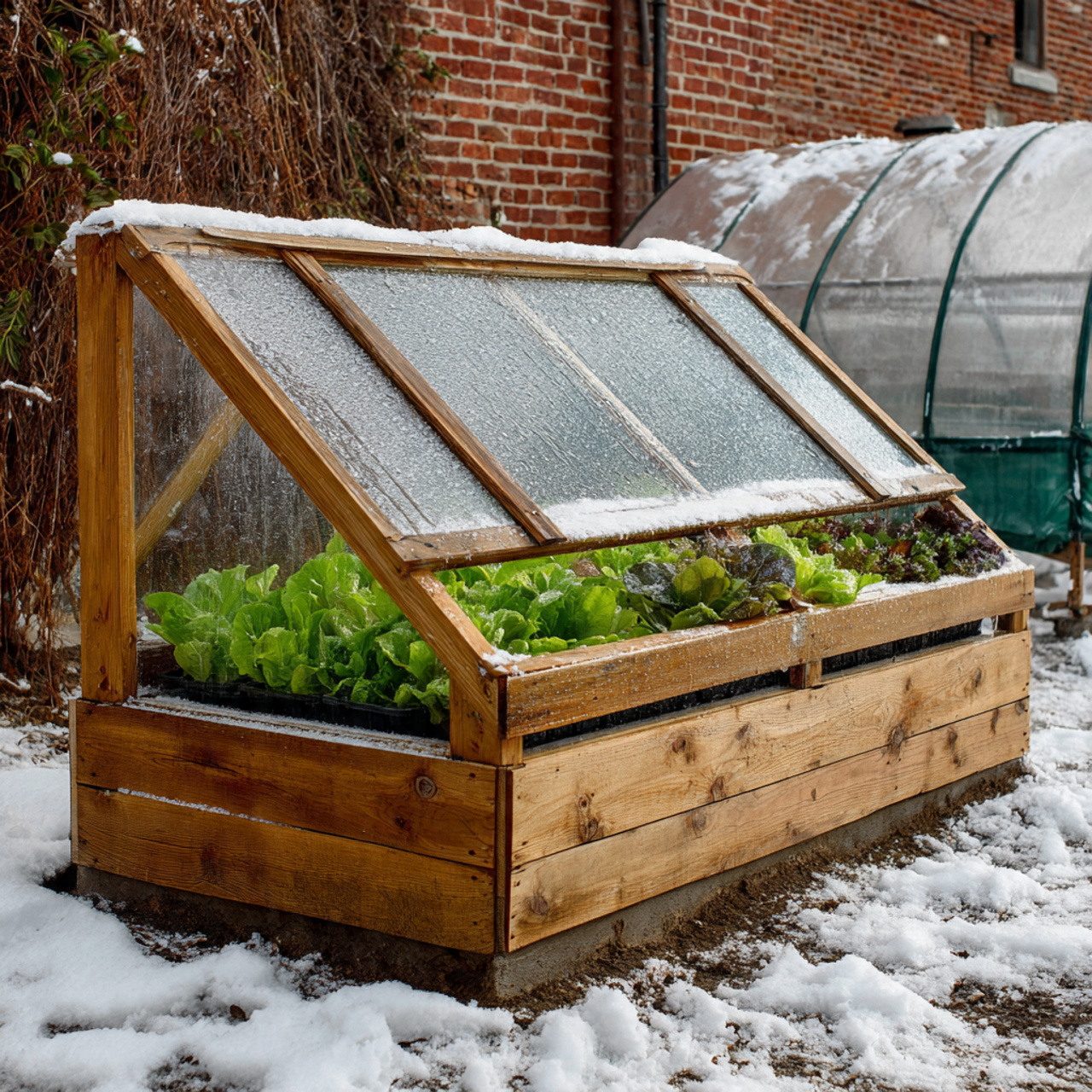
Cold frames, cloches, and hoop houses are game-changers for extending your growing season and protecting vulnerable plants. These structures work by trapping solar heat during the day and releasing it slowly overnight—essentially creating Mediterranean microclimates in Minnesota (or wherever you garden).
Structure Types:
- Cold frames (permanent boxes with transparent lids, best against south-facing walls)
- Portable cloches (individual plant covers you can move as needed)
- Hoop houses (semi-permanent tunnel structures covered in plastic)
- Row covers (lightweight fabric that provides several degrees of protection)
Critical Design Elements:
- Ventilation is essential—even in winter, closed structures can overheat on sunny days and cook your plants
- Drainage must be considered—standing water will freeze and damage roots
- Easy access for harvesting and monitoring (don’t build something you dread opening)
- Maximum light transmission using transparent or translucent materials
Temperature Management:
- Check structures on sunny winter days—temps can soar inside
- Install automatic vent openers if you can’t monitor daily
- Learn to “read” your plants for signs of heat stress even in winter
- Consider adding thermal mass (water jugs painted black) to moderate temperature swings
Common Mistakes:
- Building cold frames without ventilation (plants get fried on sunny days)
- Positioning where afternoon sun creates excessive heat
- Making structures so complicated you avoid using them
- Forgetting to secure covers against winter winds
Lighting Design
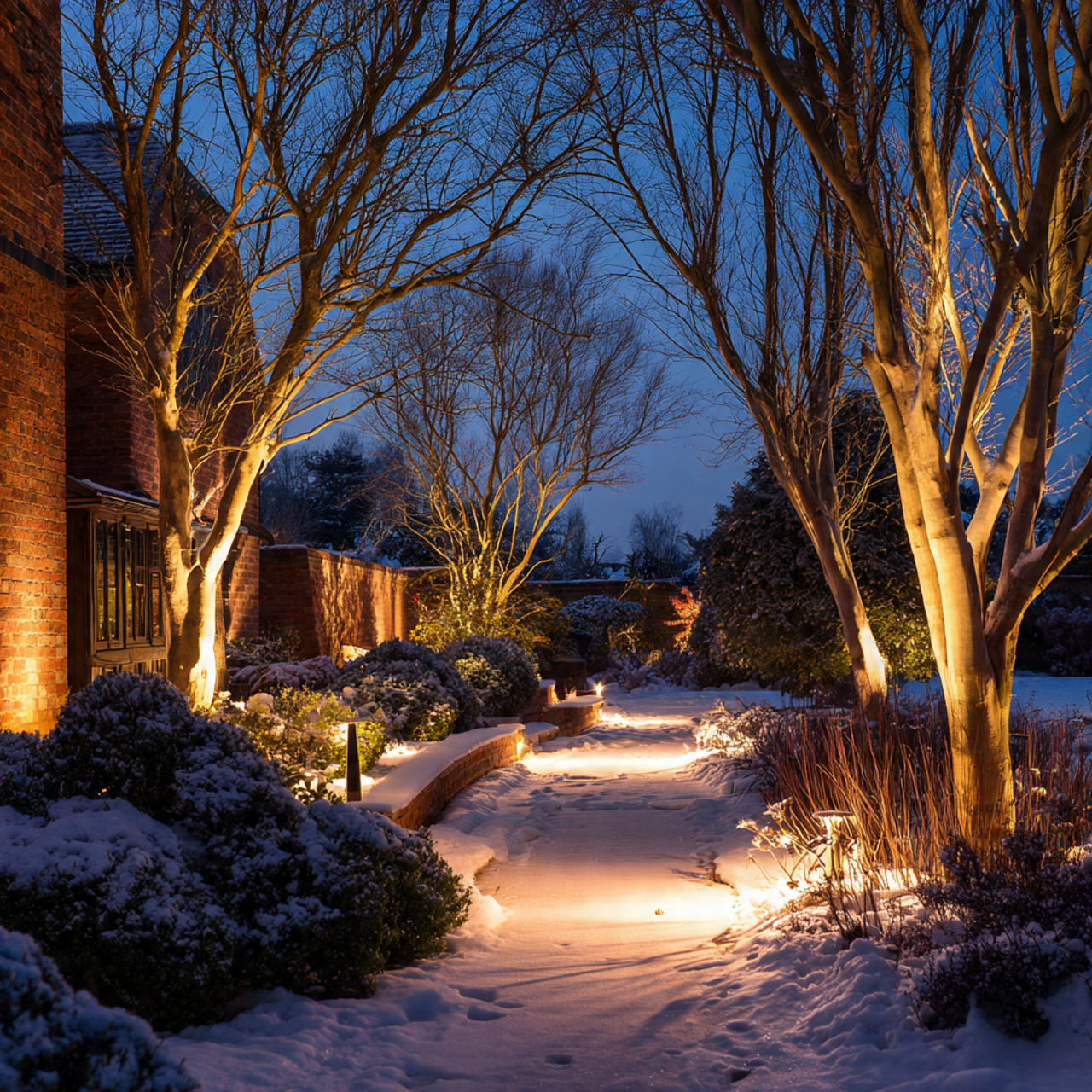
Strategic outdoor lighting transforms your winter garden from “looks good during the day” to “absolutely enchanting at night.” Plus, with darkness arriving around 5 PM, good lighting dramatically extends how much you actually enjoy your space.
Effective Lighting Techniques:
- Uplighting illuminates tree bark and branch structures, creating dramatic shadows on walls or fences
- Path lighting provides safe navigation while highlighting garden borders
- Accent lighting near evergreens showcases their forms against winter darkness
- Cross-lighting (lights from multiple angles) creates depth and prevents harsh shadows
Fixture Selection:
- Choose fixtures rated for outdoor winter conditions
- Use LED bulbs—they perform well in cold temperatures and save energy
- Opt for warm white (2700-3000K) rather than cool blue tones
- Consider smart bulbs you can control and dim from inside
Design Principles:
- Layer your lighting with multiple lower-intensity lights rather than harsh spotlights
- Light what matters (don’t try to illuminate everything equally)
- Create focal points by highlighting specific specimen plants or features
- Consider views from inside since you’ll see your lit garden through windows most often
Practical Consideration: Solar lights work but their battery performance decreases significantly in very cold weather. For primary lighting, hardwired LED fixtures provide more reliable illumination.
Safety Note: Avoid creating glare that blinds people walking paths or makes it hard to see actual obstacles. Well-designed lighting illuminates without overwhelming.
Textural Combinations
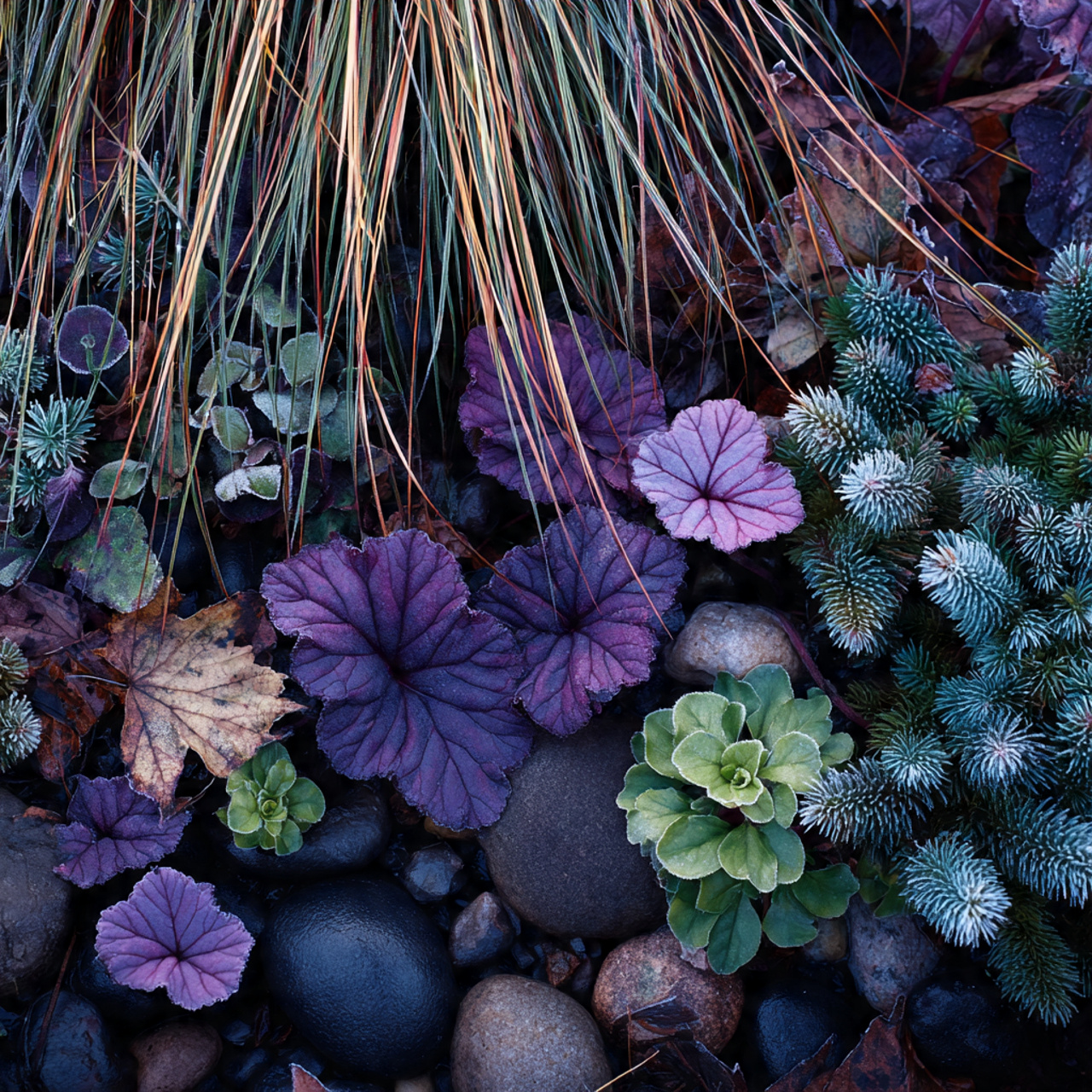
When color fades from your winter palette, texture becomes everything. The contrast between different leaf shapes, bark patterns, and growth habits creates visual interest that’s actually more sophisticated than summer’s color riot.
Texture Pairing Ideas:
- Fine-textured ornamental grasses with bold-leaved evergreens (like yucca or bergenia)
- Smooth bark (like beech) against rough stone walls
- Prostrate junipers beneath upright columnar evergreens
- Delicate evergreen ferns at the base of chunky-leaved hostas that died back
How Winter Enhances Texture:
- Frost outlines individual leaves and needles, highlighting their shapes
- Snow accumulates differently on horizontal vs. vertical surfaces, emphasizing form
- Ice creates temporary sculptures on seed heads and ornamental grasses
- Low winter light creates long shadows that emphasize three-dimensional texture
Plant Combinations That Work:
- Dramatic contrast: Large-leaved fatsia beside needle-fine chamaecyparis
- Subtle variation: Different evergreens with varying needle lengths grouped together
- Ground layer interest: Hellebores with bold leaves emerging through fine-textured carex
Design Tip: When planning plant combinations, take photos in black and white. This removes color from consideration and helps you see texture and form more clearly—exactly what matters most in winter.
Fragrant Winter Specimens
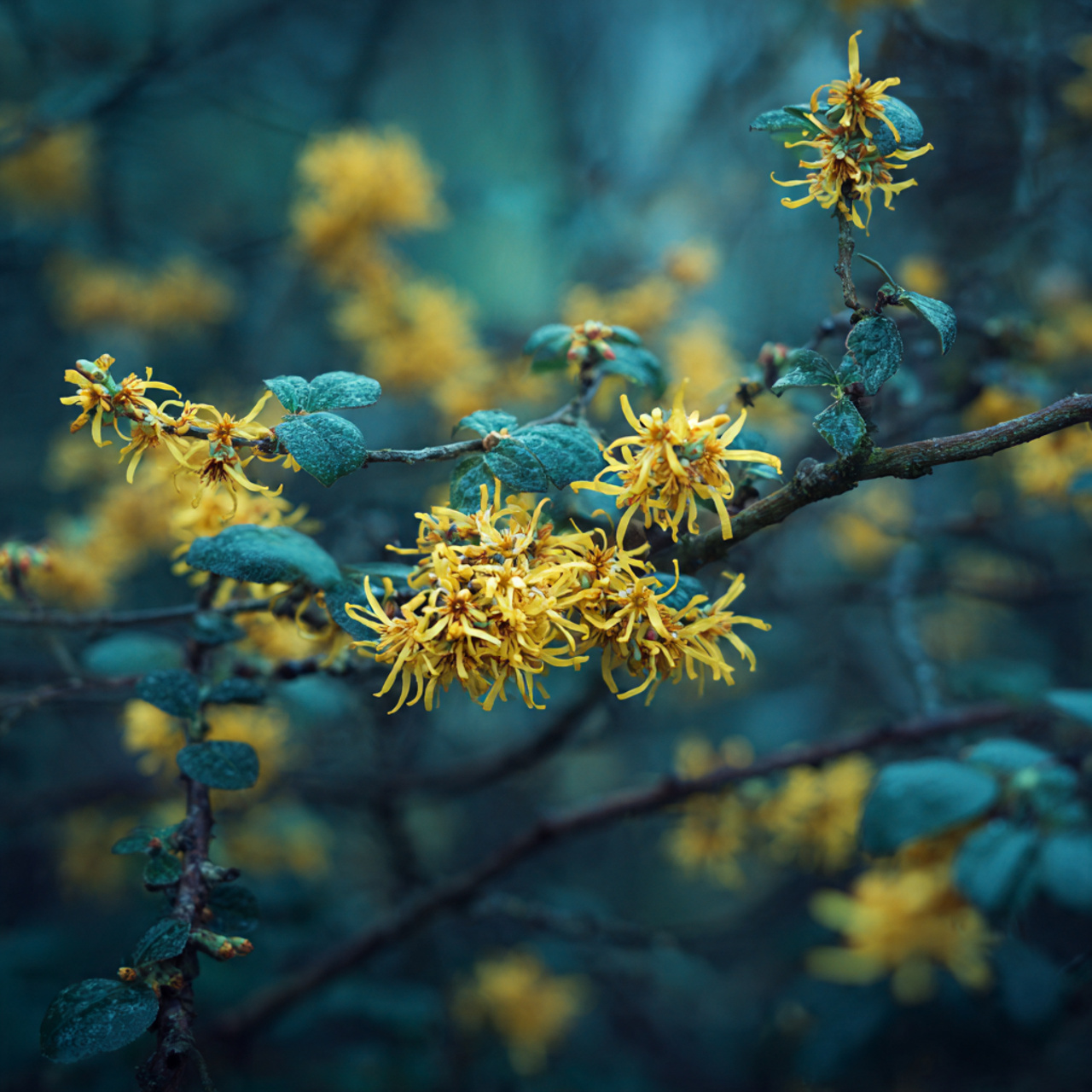
Nothing surprises people more than encountering powerful fragrance in the middle of winter. These plants seem to defy logic by blooming when everything else is dormant—and their scent carries beautifully on cold, still air.
Top Fragrant Performers:
- Witch hazel (spicy-sweet scent from quirky yellow, orange, or red flowers)
- Wintersweet/Chimonanthus (small yellow flowers with intense, honey-like fragrance)
- Winter daphne (incredibly powerful sweet scent that carries 20+ feet)
- Mahonia (honey-scented yellow flower clusters)
- Sarcococca/sweet box (penetrating vanilla fragrance from tiny white flowers)
Placement Strategy for Maximum Impact:
- Near entrances where you’ll brush past them daily and get a scent greeting
- Beside paths where their fragrance creates “scent zones” as you walk through
- By seating areas for enjoyment during mild winter days outdoors
- Below windows you open occasionally for fresh air (scent wafts inside)
Scent Tips:
- Fragrance releases most strongly during mild, still days (not during bitter cold or wind)
- Group several plants together to intensify the effect
- Many winter-fragrant plants need established root systems before blooming heavily (be patient)
Example Garden Moment: Imagine walking to your car on a gray February morning and suddenly catching the sweet, spicy scent of witch hazel blooming beside your path. These unexpected encounters make winter gardening worthwhile.
Avoid This Mistake: Don’t plant fragrant specimens in high-wind areas—the scent dissipates before you can enjoy it.
Maintenance Practices
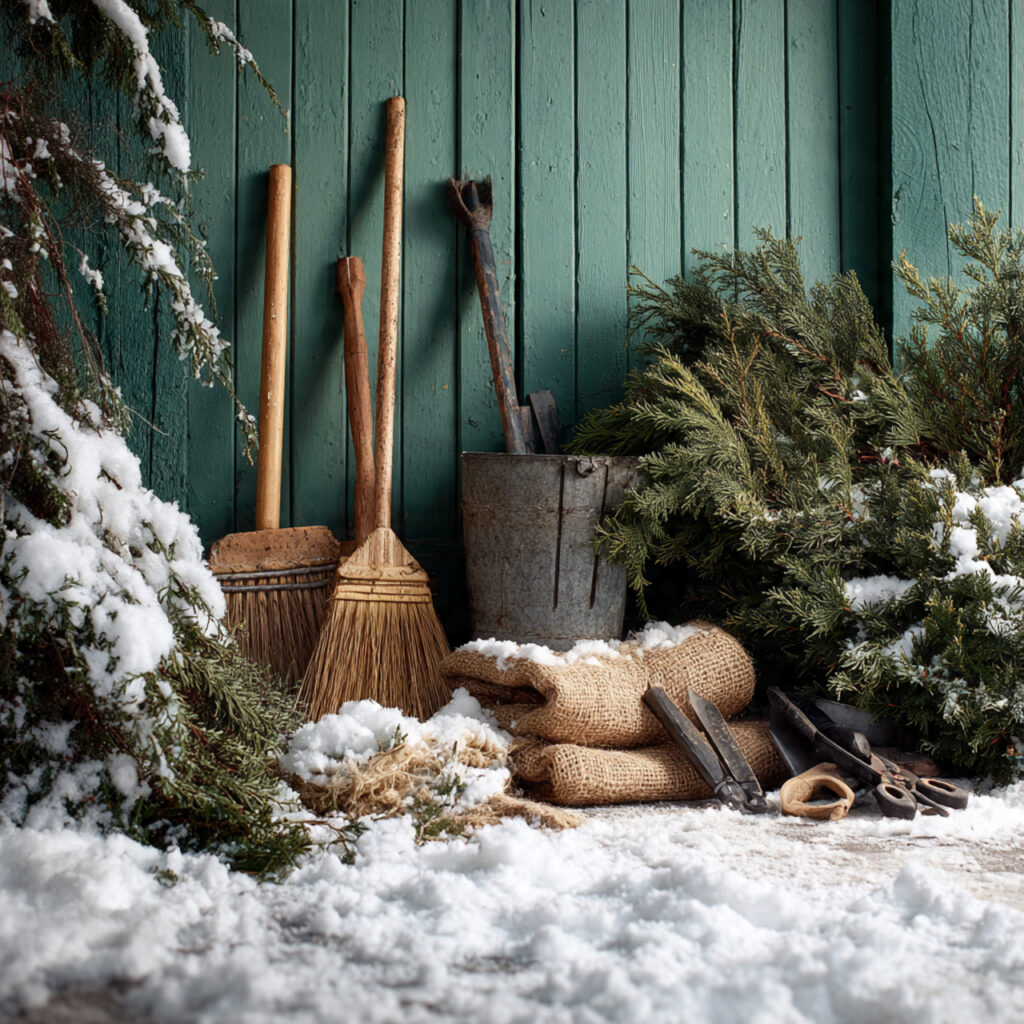
Winter garden maintenance looks different from summer’s constant weeding and watering, but it’s not zero-maintenance. The key is working with winter conditions rather than fighting them.
What to Do:
- Remove heavy snow from evergreen branches (gently shake or brush off to prevent breakage)
- Monitor soil moisture during dry spells—evergreens still transpire and need water
- Check protective structures regularly (clear snow from cold frame lids, ensure ventilation on warm days)
- Maintain tools during downtime (sharpen, oil, repair)
- Plan next season while observing current performance
What NOT to Do:
- Don’t work wet or frozen soil (causes compaction and structural damage)
- Don’t prune spring-flowering shrubs that have already set buds (you’ll remove this spring’s flowers)
- Don’t remove ALL snow from plant beds (light snow actually insulates roots)
- Don’t rush spring cleanup (beneficial insects are still overwintering in plant stems and leaf litter)
Mulch Management:
- Apply protective mulch AFTER ground freezes (prevents rodent nesting)
- Pull mulch away from plant crowns slightly (prevents rot issues)
- Use 2-4 inches for most plants (6-8 inches for root vegetables left in ground)
- Avoid piling mulch against tree trunks (causes bark problems)
Winter Watering Guidelines:
- Water during mild periods when soil is workable
- Focus on evergreens and recently planted specimens
- Water mid-morning so plants can absorb before nighttime freeze
- Skip watering when temps are near freezing (can cause ice damage)
Observation Opportunities: Winter is the perfect time to really see your garden’s structure, identify problem areas, and make notes about what to change next season. Keep a garden journal and capture ideas while they’re fresh.
Seasonal Transition Planning
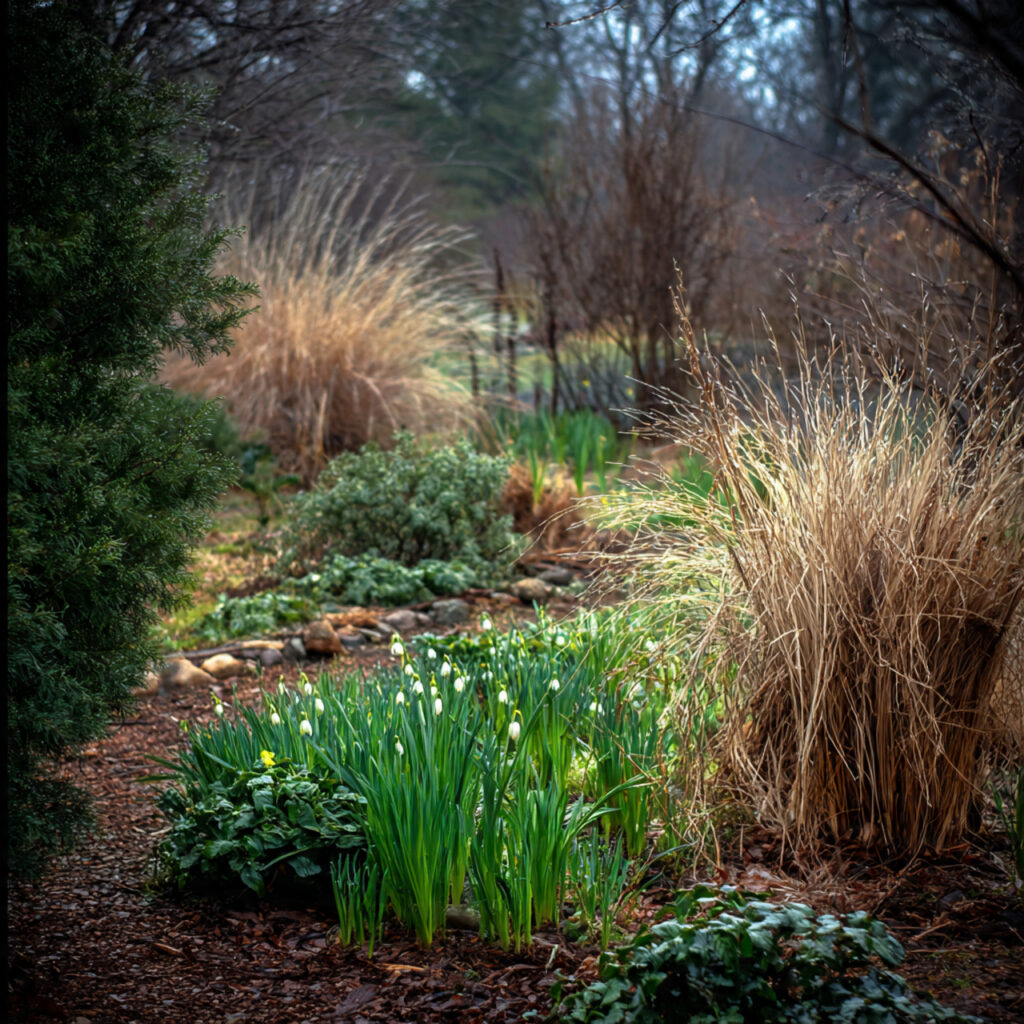
The best winter gardens don’t just look good in January—they transition beautifully both entering and exiting the cold season. This requires thinking several months ahead and planning plant combinations that work across seasons.
Autumn Preparation:
- Plant spring bulbs beneath deciduous shrubs (flowers emerge before leaves shade them out)
- Leave ornamental seed heads standing for winter interest and wildlife food
- Apply protective mulch after ground freezes completely (prevents frost heaving)
- Mark dormant perennials with stakes so you don’t accidentally dig them up during winter projects
Late Winter Considerations:
- Resist early cleanup urges (beneficial insects are still overwintering)
- Leave seed heads for migrating birds that need late-winter food
- Wait for consistent warm weather before cutting back grasses and perennials
- Watch for emerging bulbs and adjust mulch if it’s too thick
Transition Plantings:
- Hellebores bloom December through April (bridge winter to spring)
- Spring bulbs extend the show (snowdrops, early crocus, winter aconite)
- Early-blooming perennials like pulmonaria take over as winter plants fade
Example Timeline:
- Early winter (December-January): Evergreens, berries, ornamental grasses at their peak
- Mid-winter (January-February): Winter bloomers join the show
- Late winter (February-March): Early bulbs emerge, berries get eaten, grasses start looking tired
- Spring transition (March-April): Perennials emerge, but keep winter structures until they’re established
Tip: Accept that your winter garden will look different in November than in March. That evolution is part of its charm—not a design flaw.
Regional Adaptations
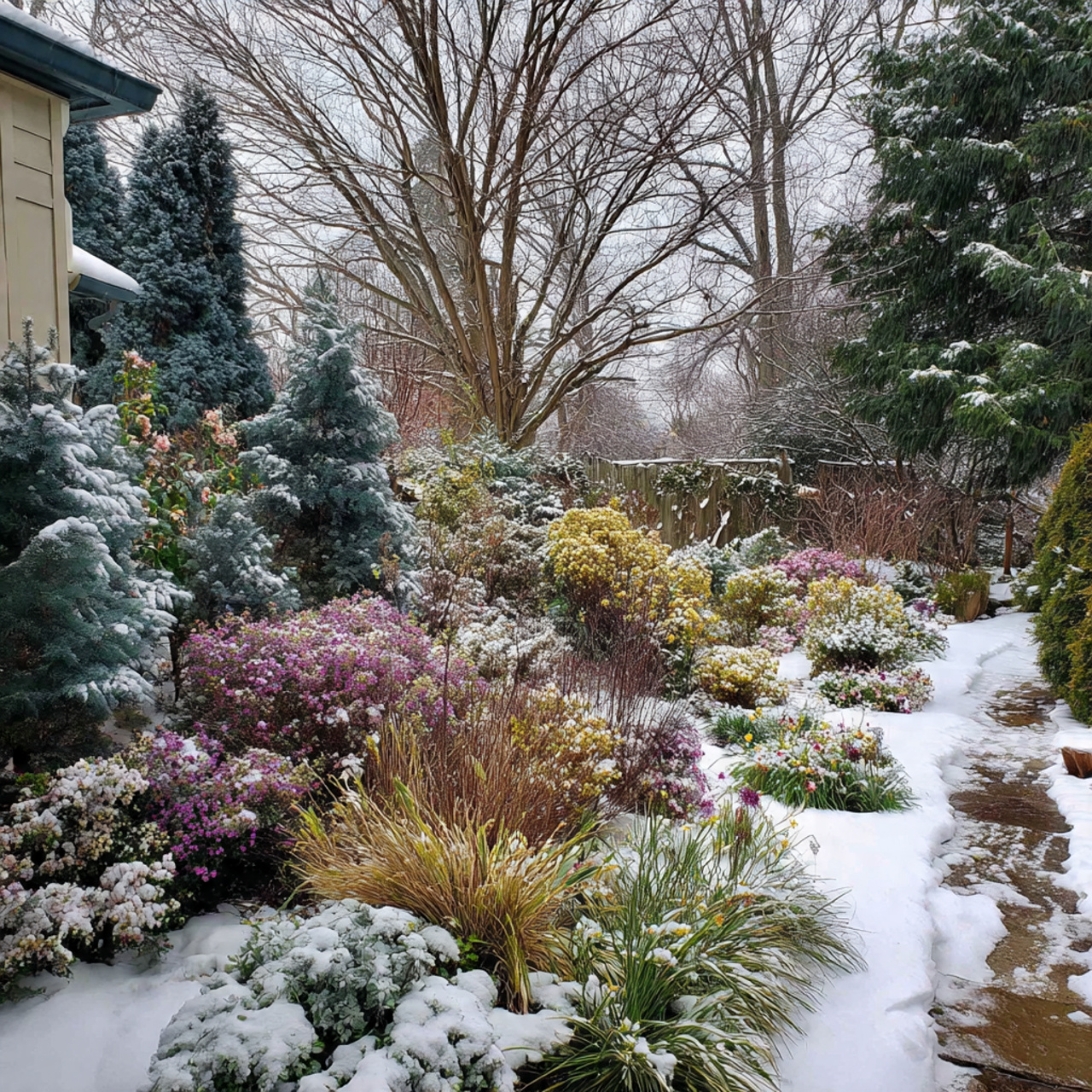
There’s no one-size-fits-all approach to winter gardening—what works in Atlanta fails miserably in Minneapolis, and vice versa. Your strategy must match your specific climate reality.
Mild-Winter Regions (Zones 8-10):
- Can grow cool-season annuals like pansies and snapdragons
- Enjoy tender perennials that survive mild winters
- Focus on plants with winter flowers since evergreens are year-round
- Challenge is maintaining interest without true dormancy
Moderate-Winter Regions (Zones 6-7):
- Widest plant palette options
- Can experiment with both hardy and borderline plants
- Balance evergreens, winter bloomers, and structural elements
- Microclimates make significant difference in plant survival
Harsh-Winter Regions (Zones 3-5):
- Must prioritize exceptionally hardy plants
- Rely heavily on evergreens and structural elements
- Use protective structures for any winter vegetable production
- Snow cover becomes design element rather than obstacle
Research Your Specific Conditions:
- Connect with local gardening groups and Master Gardeners
- Visit botanical gardens during winter to see what thrives
- Talk to neighbors with established winter gardens
- Contact your local cooperative extension service for plant recommendations
Microclimate Matters More Than Zone: A protected courtyard in Zone 5 might support plants rated for Zone 6, while an exposed hilltop in Zone 6 might need Zone 5 plants. Learn your specific site’s quirks through observation and experimentation.
Avoid This Trap: Don’t try to replicate winter garden designs from different climates. A gorgeous English winter garden featuring plants that need mild, wet winters simply won’t work in dry, frigid Minnesota.
Microclimate Maximization
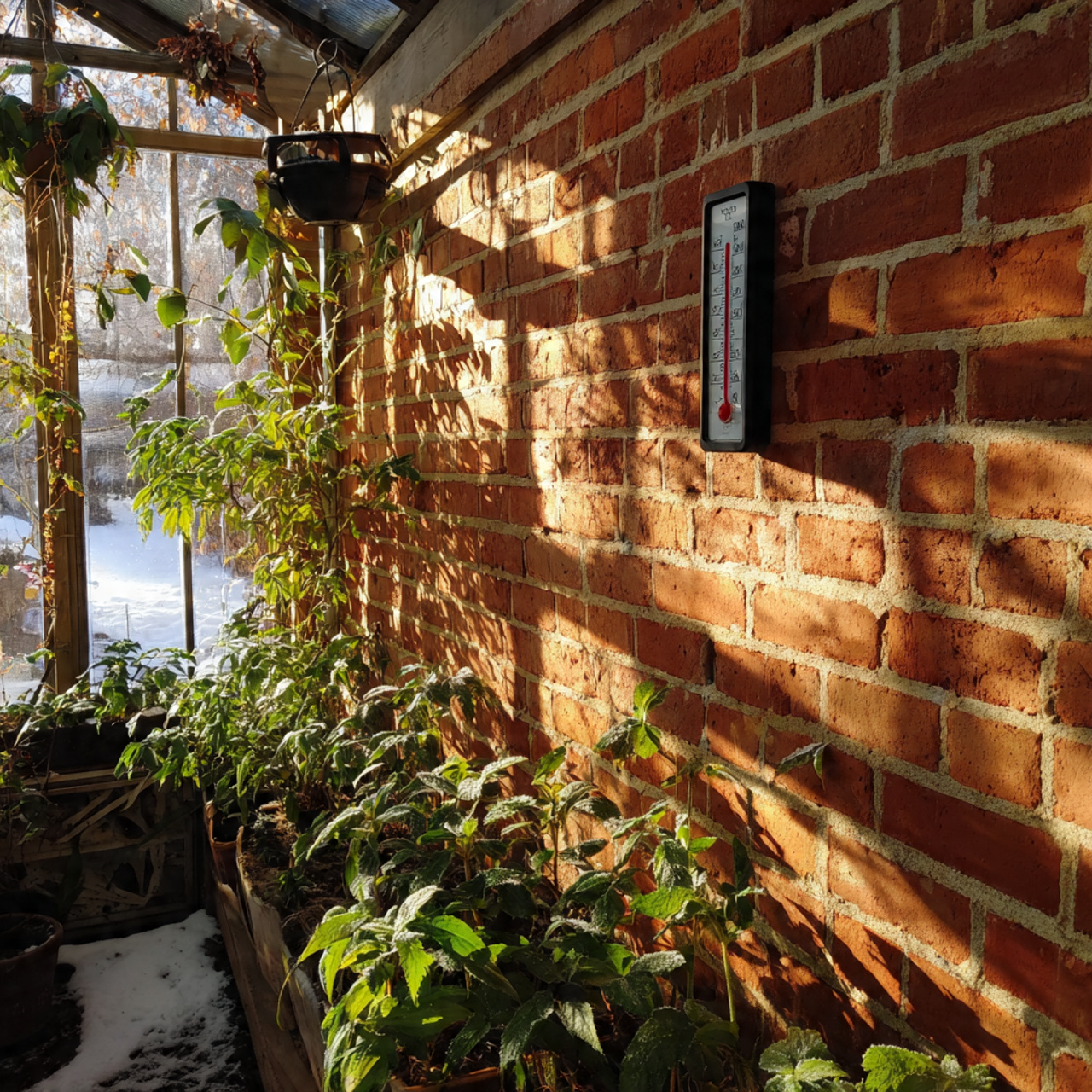
Every garden contains microclimates—pockets that are warmer, colder, wetter, or drier than the surrounding area. Smart winter gardeners identify these zones and exploit them strategically.
Warm Microclimates:
- South-facing walls absorb and radiate heat (can be 5-10°F warmer)
- Protected corners blocked from wind (reduces effective temperature drop)
- Areas beneath evergreen canopies (shelter from temperature extremes)
- Near foundations (buildings leak heat, warming adjacent soil)
Cold Microclimates:
- Low-lying areas (cold air pools like water, creating frost pockets)
- North-facing slopes (receive minimal winter sun)
- Exposed hilltops (wind chill makes temperatures feel colder)
- Open areas away from buildings (no thermal mass or windbreak)
How to Map Your Microclimates:
- Walk your space on a cold morning and note where frost persists longest
- Observe where snow melts first and lasts longest
- Feel temperature differences near buildings vs. open areas
- Notice where wind hits hardest and where it’s calm
- Track which areas receive winter sun vs. constant shade
Strategic Plant Placement:
- Put borderline-hardy plants in warm microclimates (south walls, protected corners)
- Place hardiest specimens in cold pockets where others would struggle
- Use thermal mass creatively (stone walls, water features) to moderate temperatures
- Position cold-sensitive vegetables near heat-radiating structures
Example Strategy: You’re in Zone 6 but want to grow a Zone 7 plant. Place it against a south-facing brick wall (thermal mass), protected from north winds by an evergreen (windbreak), with good drainage (prevents cold, wet roots). You’ve effectively created a Zone 7 microclimate within your Zone 6 garden.
Tip: Over several winters, you’ll learn exactly which spots are your garden’s “warm zones” and “cold zones.” Keep notes and use this knowledge to push your plant palette beyond what your zone rating suggests is possible.
Year-Round Design Integration
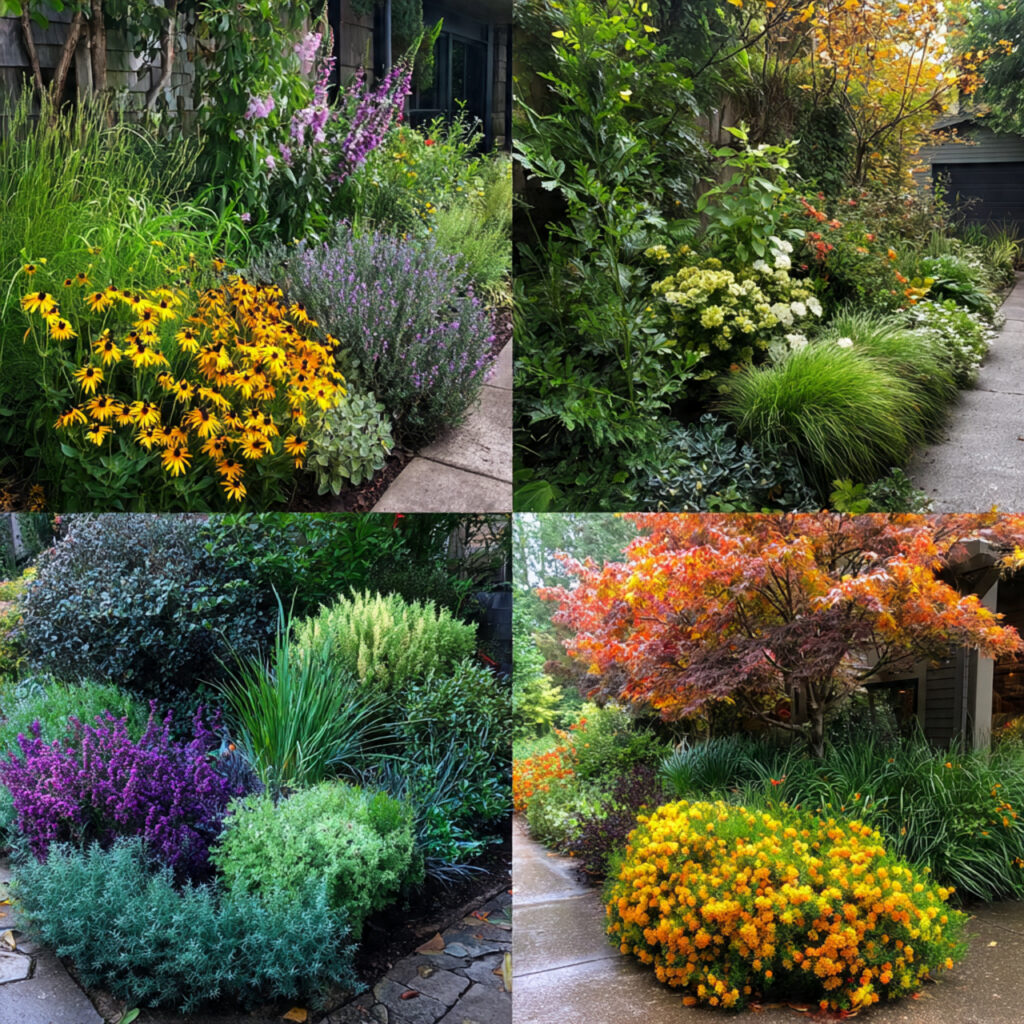
The biggest mistake in winter gardening? Treating it as separate from the rest of your landscape. The most successful gardens flow seamlessly through all four seasons, with each season having its moment to shine.
Multi-Season Plant Selection:
- Spring: Flowering shrubs and perennials
- Summer: Foliage color and texture
- Autumn: Fall color and developing seed heads
- Winter: Structure, evergreen foliage, berries
Example Multi-Season Plant: Oakleaf hydrangea offers white flowers in spring/summer, burgundy fall foliage, exfoliating cinnamon bark in winter, and interesting dried flower heads that persist through snow.
Design Considerations:
- Inside-out thinking: Position winter elements visible from rooms you use most
- Layer at multiple heights: Ground covers, mid-height shrubs, and tall trees ensure interest from every viewing angle
- Create focal points: Something attractive visible from every major window
- Plan sight lines: Frame winter views with evergreens or structural elements
Succession of Interest:
- Early winter features: Berries, ornamental grasses at peak, evergreen structure
- Mid-winter features: Winter bloomers emerge, architectural bare branches
- Late winter features: Early bulbs, emerging perennials, anticipation of spring
Balance is Key: Don’t create a garden that only looks good in winter at the expense of other seasons. Aim for a landscape where every season brings something special, with winter being an equal partner rather than an afterthought.
Interior View Planning: Since you’ll view your winter garden primarily from inside, walk through your home during winter and note what’s visible from each room. Then design specifically for those sight lines, ensuring something attractive appears in each view.
Visit Also: Home Garden Ideas
Frequently Asked Questions
Can I start a winter garden in the middle of winter? You can add container plantings, hardscape elements, and cut branches mid-winter for immediate improvement. However, most winter garden plants need autumn planting before cold arrives. Use winter to plan structural changes for late-summer implementation.
How do I keep my winter garden looking good all season? Remove broken branches after storms, refresh containers as needed, and keep paths clear. Leave seed heads and grasses standing rather than cutting back. Embrace the natural winter aesthetic including dormancy.
What are the best vegetables for winter harvesting? Kale, collards, leeks, Brussels sprouts, carrots, and parsnips excel in winter gardens. Hardy lettuces and Asian greens tolerate cold under protection. Plant in late summer or early autumn for winter maturity.
Do I need to water my winter garden? Evergreens need supplemental water during dry periods, especially before ground freezes. Water during mild periods when soil is workable. Snow provides moisture, but monitor conditions during snowless winters.
How can I attract birds to my winter garden? Plant berry-producing shrubs, leave seed heads standing, install feeders, and provide heated birdbaths. Dense evergreens and brush piles offer shelter. Avoid excessive pesticides that eliminate insects birds need.
Conclusion
Your winter garden isn’t about making your landscape “survive” the cold months—it’s about creating an outdoor space that truly thrives when temperatures drop. By choosing plants that celebrate winter rather than merely tolerate it, designing with four-season interest in mind, and working with your specific microclimates, you’ll have a garden that looks intentional and beautiful all year long.
The magic happens when you shift your perspective. Instead of mourning summer’s abundance, appreciate winter’s unique gifts: the architectural beauty of branches silhouetted against snow, the surprise of fragrant blooms in February, the satisfaction of harvesting fresh kale after a hard freeze, and the joy of watching winter birds feast on berries you planted specifically for them.
Start small with one area—maybe add a cluster of evergreens near your front entry or install a cold frame for winter greens. Learn your garden’s specific personality through winter observation. Notice which spots stay surprisingly warm, where snow melts first, and which views you actually enjoy from inside your cozy home. Each winter teaches you something new about your space.
The most successful winter gardens don’t exist in isolation—they’re thoughtfully integrated into landscapes that offer something special every season. Whether you’re focused on growing food, creating wildlife habitat, or simply enjoying beauty during months when most people write off gardening entirely, your winter garden connects you with nature when you need that connection most.
So grab your coat, head outside, and start planning. Your winter garden awaits—and it’s going to be spectacular.