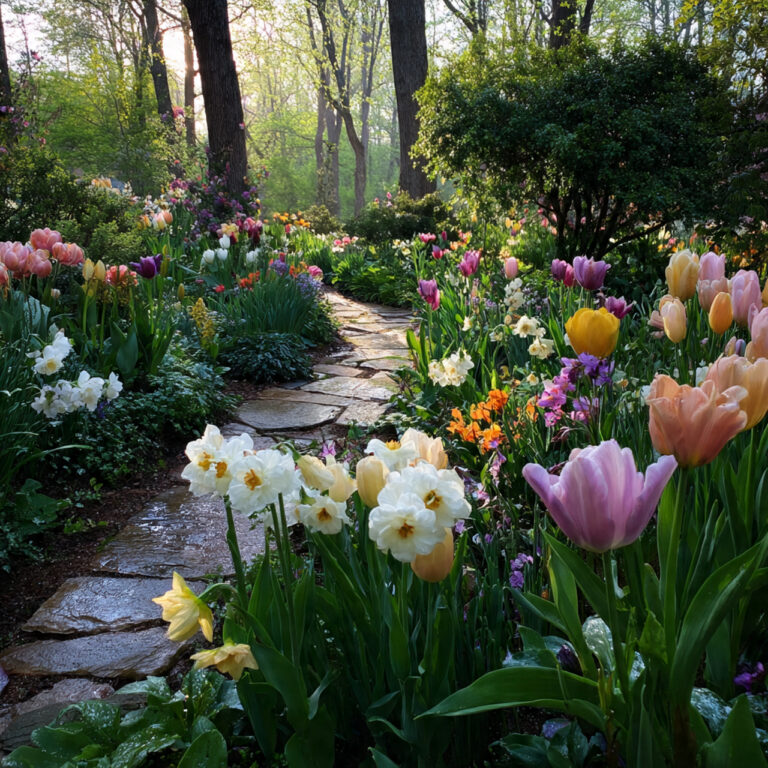
19 Cottage Garden Design Ideas for Your Dream Outdoor Space
Cottage garden design transforms ordinary outdoor spaces into enchanting retreats filled with romance, color, and natural beauty. This timeless gardening style originated in England centuries ago when rural workers cultivated practical yet beautiful gardens around their humble dwellings. Today, this approach remains beloved for its informal charm, abundant blooms, and welcoming atmosphere that invites you to slow down and appreciate nature’s beauty.
Unlike formal gardens with rigid structures and precise plantings, cottage garden design embraces a more relaxed, organic aesthetic. The seemingly effortless tumble of flowers, herbs, and vegetables creates spaces that feel both abundant and intimate. Whether you’re working with a small urban plot or sprawling countryside acreage, these design principles adapt beautifully to create outdoor sanctuaries that nourish the soul and delight the senses.
Understanding the Cottage Garden Philosophy
Cottage garden design represents more than just a planting style—it embodies a philosophy of gardening that values abundance over formality and charm over perfection. This approach emerged from necessity when English cottage dwellers needed to maximize limited space by combining ornamental flowers with edible plants, creating gardens that were both beautiful and productive.
The beauty of this design philosophy lies in its accessibility and forgiving nature. Unlike formal gardens that demand precise maintenance and expert knowledge, cottage gardens welcome imperfection and encourage experimentation. Plants are allowed to self-seed, creating happy accidents and natural combinations that often surpass planned designs. This organic approach makes cottage garden design ideal for both beginners seeking a low-pressure entry into gardening and experienced gardeners looking to create more relaxed, naturalistic spaces.
Layered Planting for Maximum Impact
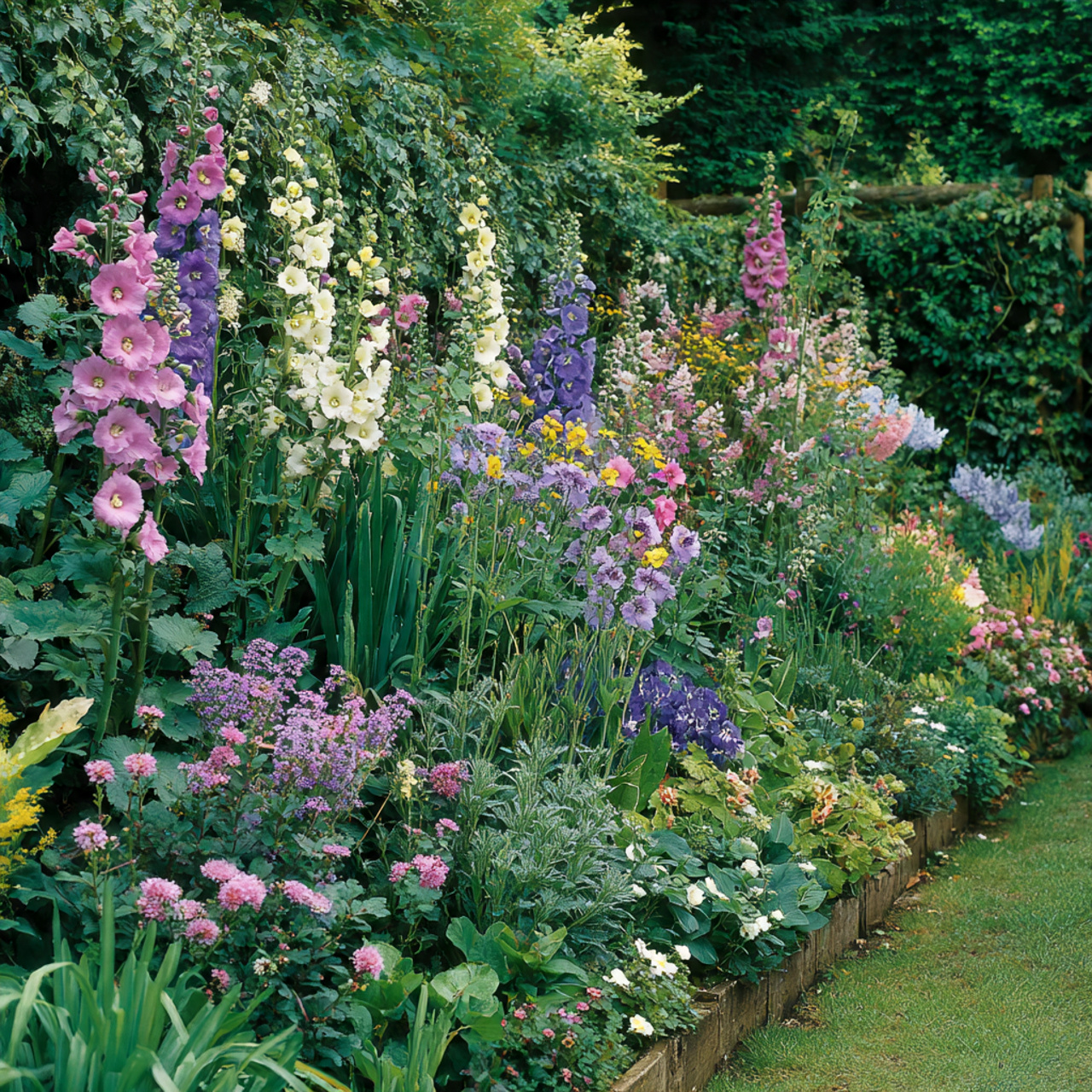
Cottage garden design thrives on density and vertical interest through strategic layering of plants at different heights. This fundamental technique creates the lush, overflowing appearance characteristic of successful cottage gardens. Start by positioning taller plants like hollyhocks, delphiniums, and foxgloves at the back of borders or center of island beds, then work forward with medium-height perennials, finishing with low-growing edgers and groundcovers.
Effective layering requires understanding mature plant sizes and growth habits to prevent shorter specimens from being smothered. Consider bloom times as well—stagger flowering periods across your layers to ensure continuous visual interest throughout the growing season.
Key layering principles:
- Place tall plants (4-6 feet) at the rear or center
- Position mid-height bloomers (2-4 feet) in the middle zones
- Edge with low growers (under 12 inches) at borders
- Allow some tall, airy plants to weave through lower layers for natural movement
- Repeat key plants in groups of odd numbers across layers for cohesion
Embracing Informal Pathways
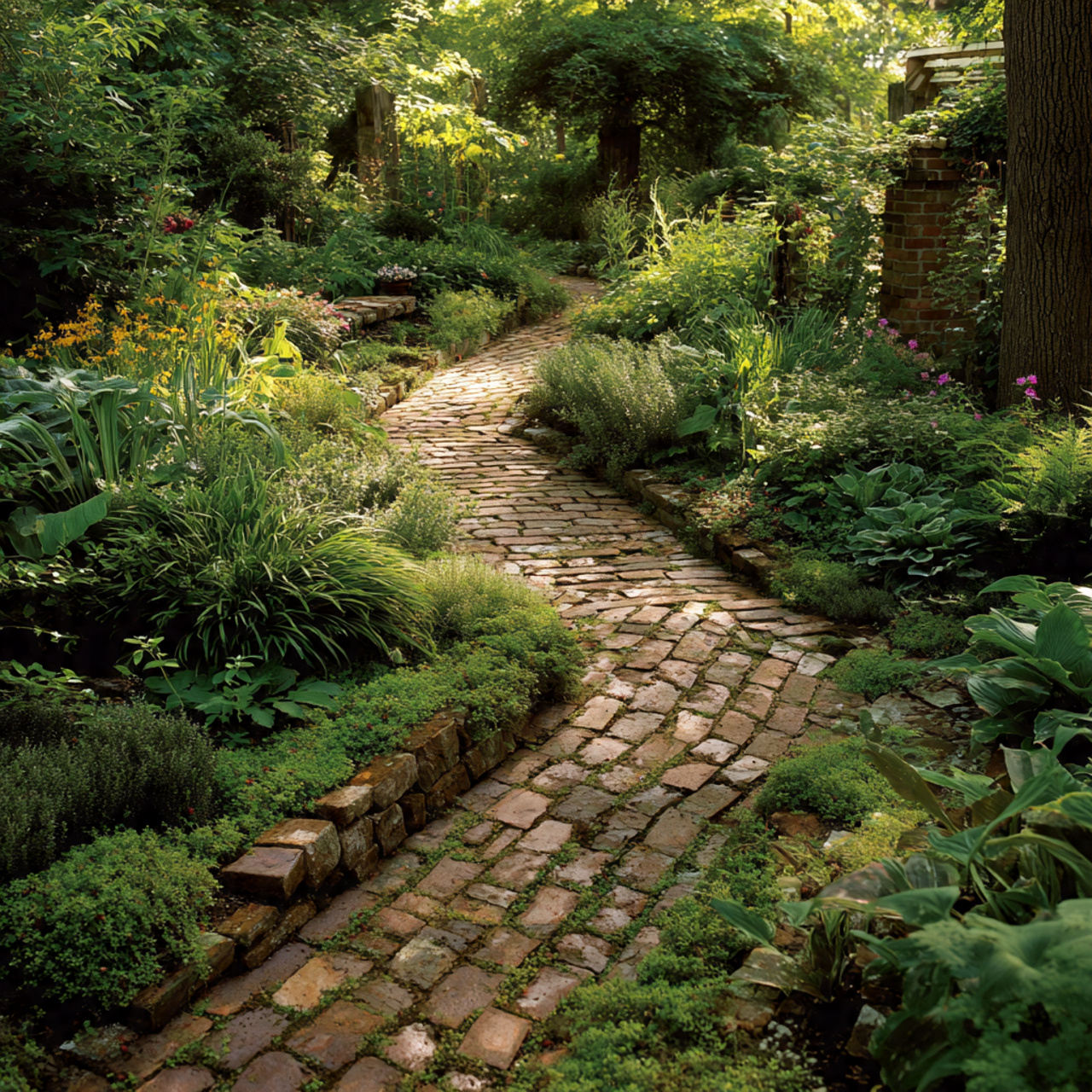
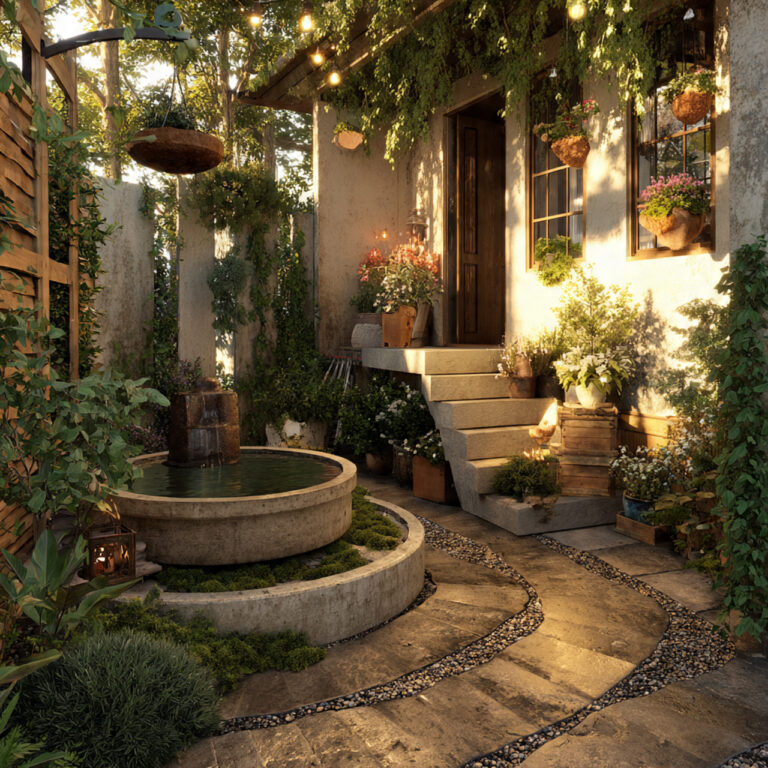
Pathways in cottage garden design should meander naturally rather than follow rigid straight lines, inviting exploration and creating intimate garden rooms. Materials like weathered brick, crushed gravel, stepping stones, or even simple mulch paths contribute to the relaxed, timeless aesthetic while providing practical access for maintenance and enjoyment.
The width and surface of your paths matter tremendously. Too narrow, and you’ll struggle to navigate overgrown borders; too wide, and you lose valuable planting space. Most cottage garden paths work best at 2-3 feet wide, allowing comfortable passage while encouraging plants to spill generously over edges. Let creeping thyme, chamomile, or other low groundcovers colonize path edges to soften boundaries and release pleasant fragrances underfoot.
Pathway material options:
- Reclaimed brick laid in herringbone or basket-weave patterns
- Decomposed granite or pea gravel for budget-friendly solutions
- Natural flagstone with irregular shapes for organic appeal
- Wood chip mulch for woodland cottage garden sections
- Grass paths between borders for traditional country charm
Mixed Planting of Flowers and Edibles
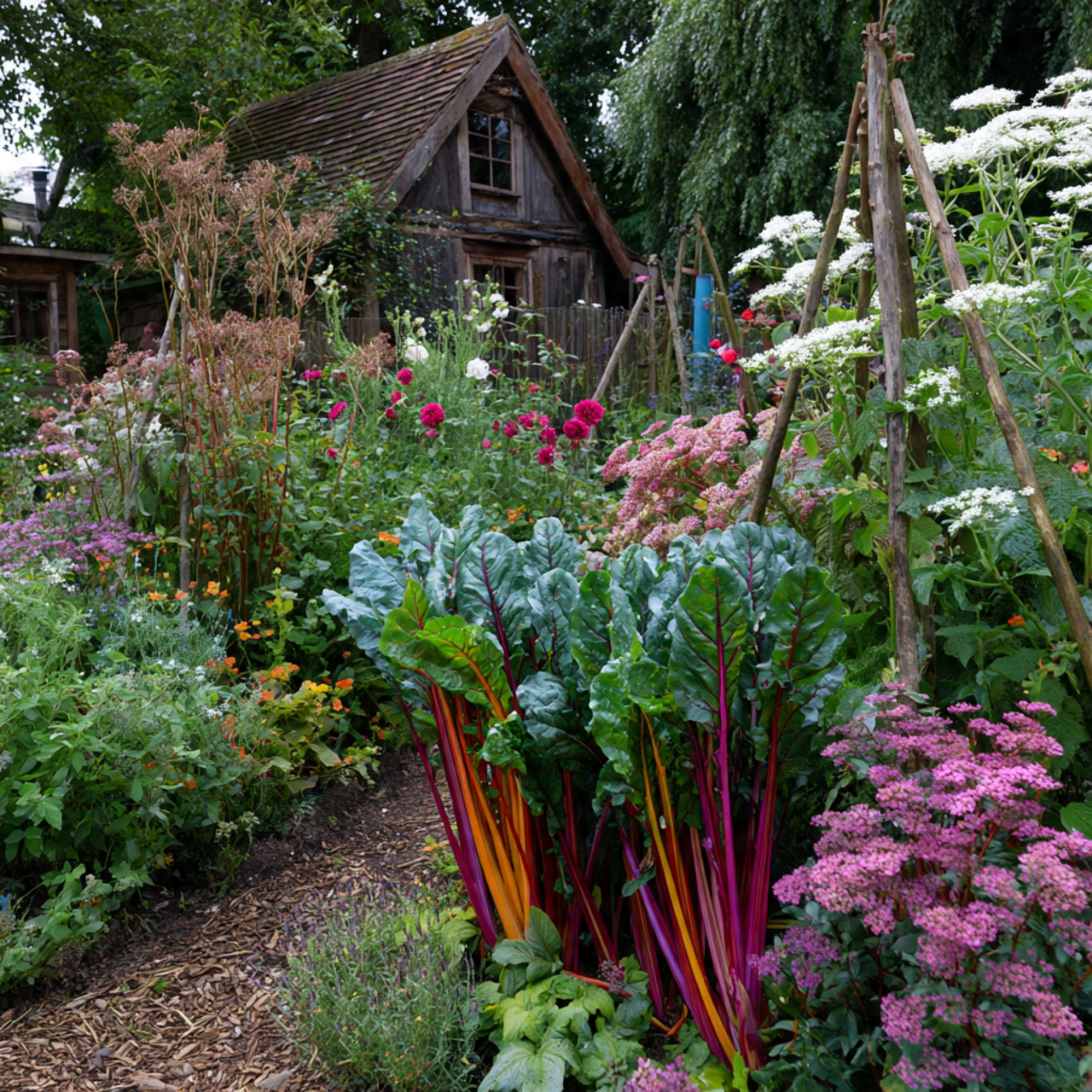
True cottage garden design blurs the distinction between ornamental and edible plants, creating productive beauty that would have been essential to historical cottage gardeners. Intersperse vegetables, herbs, and fruit plants throughout your flower borders rather than segregating them into separate kitchen gardens. Ruby chard adds colorful foliage, purple-podded beans climb decoratively up supports, and feathery bronze fennel provides height and texture.
This integrated approach offers practical benefits beyond aesthetics. Aromatic herbs like rosemary, sage, and lavender can help deter pests from neighboring vegetables, while flowering edibles attract beneficial pollinators that improve yields. The diversity also confuses pest insects that rely on large monoculture plantings.
Ornamental edibles to integrate:
- Rainbow chard for bold, colorful foliage
- Scarlet runner beans for vertical interest and vibrant blooms
- Purple cabbage and kale as striking focal points
- Artichokes for architectural presence and silver-green leaves
- Strawberries as edible groundcover beneath roses
- Currant or gooseberry bushes for structure and fruit
Self-Seeding Annuals for Effortless Abundance
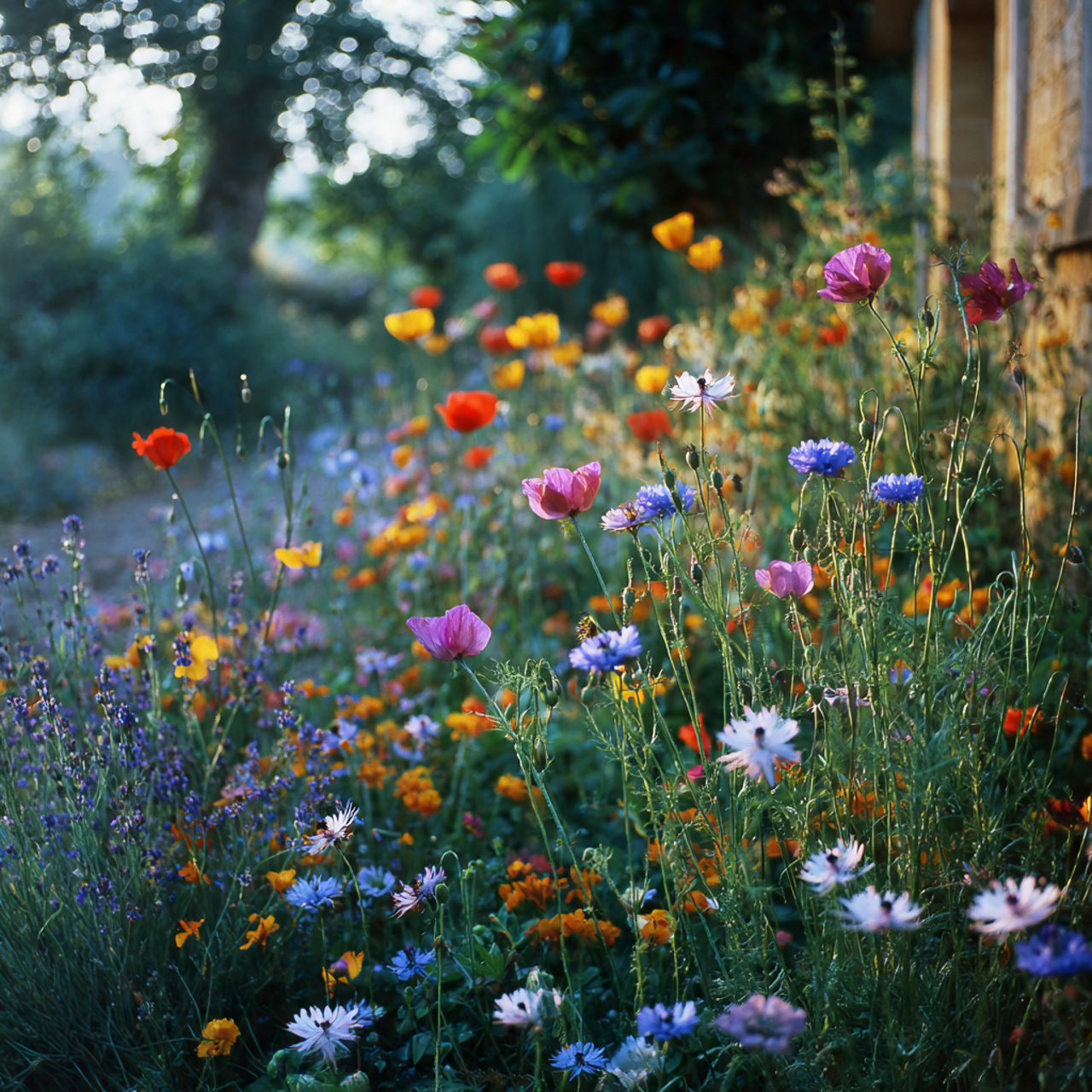
Cottage garden design achieves its characteristic abundance partly through strategic use of self-seeding annuals that return year after year without replanting. Plants like love-in-a-mist, calendula, poppies, and larkspur scatter seeds that germinate in unexpected locations, creating the happy accidents and natural drifts that formal gardening could never achieve.
Working with self-seeders requires a different mindset than conventional gardening. You’ll need to tolerate some uncertainty about exactly where plants will appear and resist the urge to weed too aggressively in spring when seedlings emerge. The reward is gardens that evolve organically, developing unique character as plants find their preferred niches.
Pro tips for managing self-seeders:
- Learn to identify desirable seedlings to avoid accidental weeding
- Deadhead selectively—remove some spent blooms but leave others to set seed
- Disturb soil minimally in areas where you want plants to establish
- Thin overcrowded seedlings rather than pulling them entirely
- Collect and scatter seeds in bare spots you want to fill
Climbing Plants for Vertical Drama
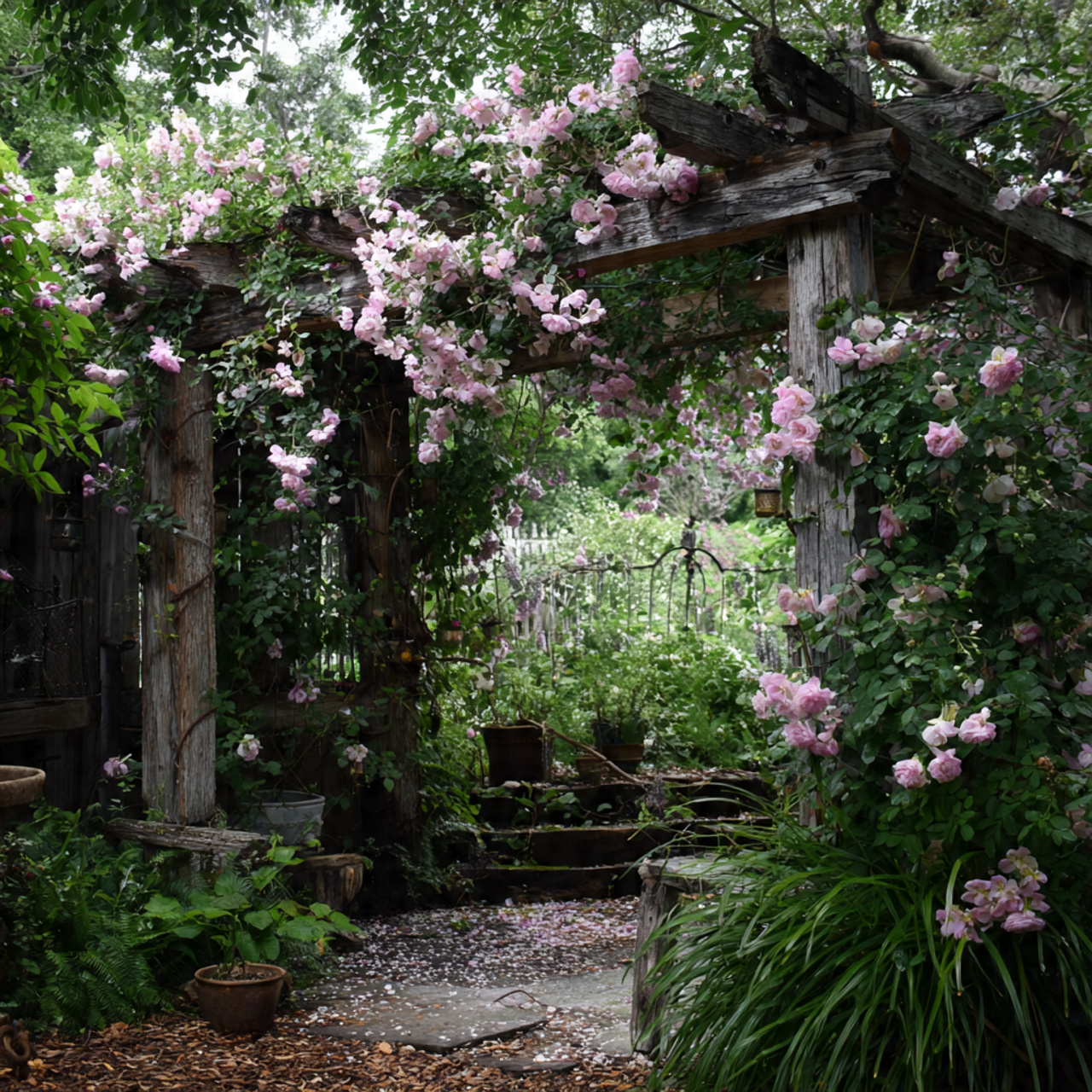
Vertical elements transform cottage garden design from flat to dimensional, creating layers of interest and maximizing limited space. Climbing roses, clematis, honeysuckle, and sweet peas scramble over arbors, pergolas, fences, and walls, adding height, fragrance, and romantic appeal. These vertical plantings also provide privacy and help define separate garden areas.
Choose supports that enhance your cottage aesthetic—weathered wood arbors, vintage metal obelisks, or rustic twig structures all work beautifully. Avoid overly modern or sleek materials that clash with the garden’s informal character. Position climbers where they can frame views, create shaded seating areas, or disguise unsightly structures.
Popular cottage garden climbers:
- Climbing roses in soft pastels or vibrant hues
- Clematis varieties for extended bloom seasons
- Sweet peas for fragrance and cut flowers
- Honeysuckle for evening scent and hummingbirds
- Morning glories for fast coverage and cheerful blooms
- Climbing hydrangea for shade tolerance
Color Schemes that Create Harmony
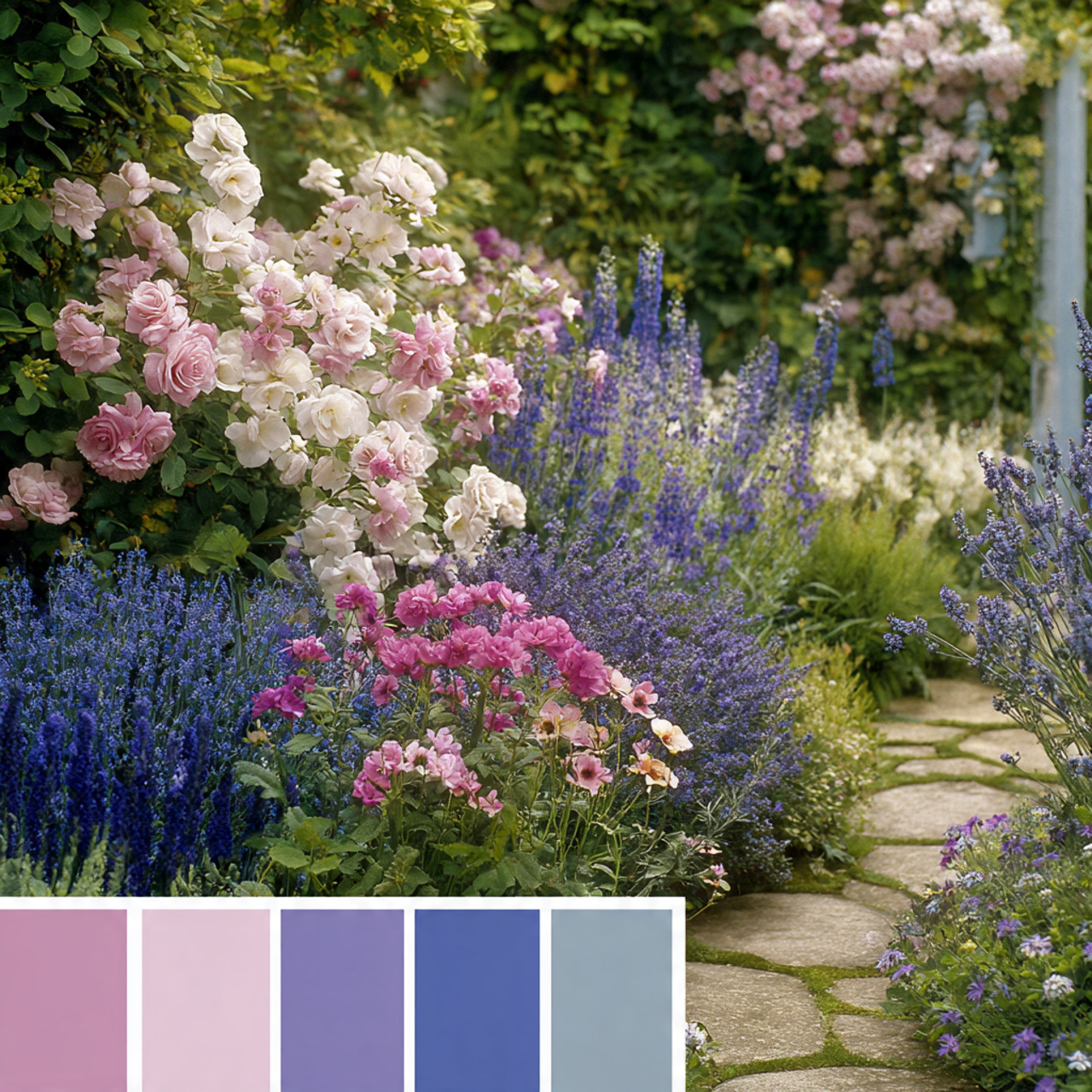
While cottage garden design appears unstructured, successful examples typically follow loose color schemes that create cohesion within the abundance. Traditional palettes favor soft pastels—pinks, lavenders, blues, and whites—punctuated with occasional hot colors for contrast. Alternatively, you might choose jewel tones, warm sunset colors, or even monochromatic schemes adapted to cottage style.
Color theory still applies in informal gardens. Analogous colors (neighbors on the color wheel) create harmonious, soothing combinations, while complementary contrasts add excitement and visual pop. Consider how colors will interact throughout the season as different plants bloom in succession.
Effective cottage color combinations:
- Soft pinks, lavender blues, and creamy whites for classic romance
- Hot oranges, reds, and yellows with purple accents for vibrant energy
- Cool blues, purples, and whites for calming, moonlit gardens
- Apricots, corals, and soft yellows for warm, welcoming spaces
Cottage Garden Roses as Foundation Plants
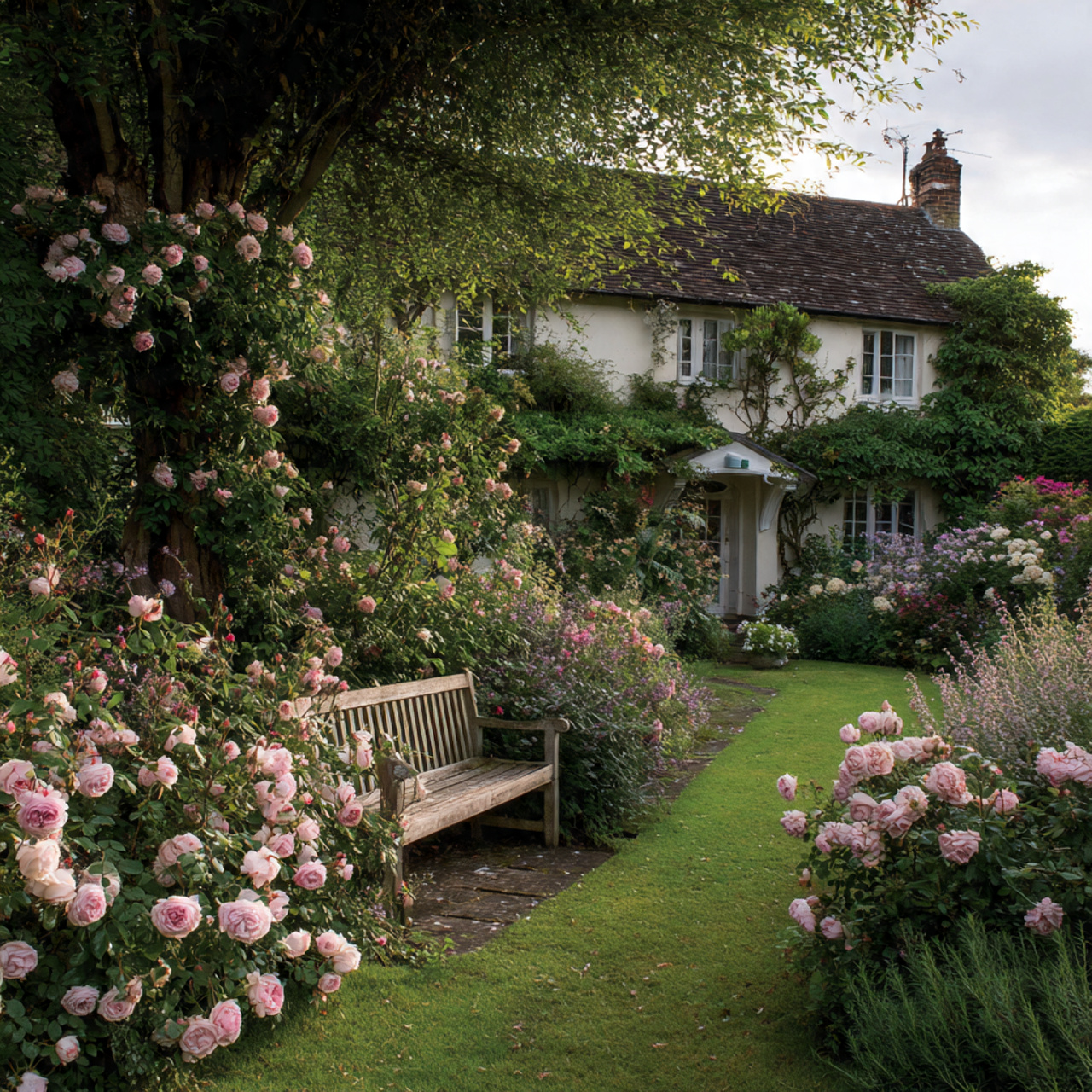
Roses anchor cottage garden design with their romantic blooms, heady fragrances, and long cultural association with English gardens. Old garden roses, David Austin English roses, and antique varieties work particularly well, offering fuller blooms, stronger scents, and more relaxed growth habits than modern hybrid teas. Choose disease-resistant varieties suited to your climate to minimize maintenance while maximizing beauty.
Position roses where their beauty can be fully appreciated—near seating areas, along pathways, or framing entry points. Underplant with low-growing companions like catmint, geraniums, or lady’s mantle that complement rose blooms while hiding leggy lower growth. Allow climbers to scramble through trees or over structures for height and drama.
Common mistakes to avoid:
- Planting high-maintenance varieties that require constant spraying
- Spacing roses too closely, limiting air circulation and encouraging disease
- Neglecting regular deadheading, which reduces repeat blooming
- Choosing modern hybrid teas that look too formal for cottage style
- Failing to amend soil properly before planting
Informal Seating Areas
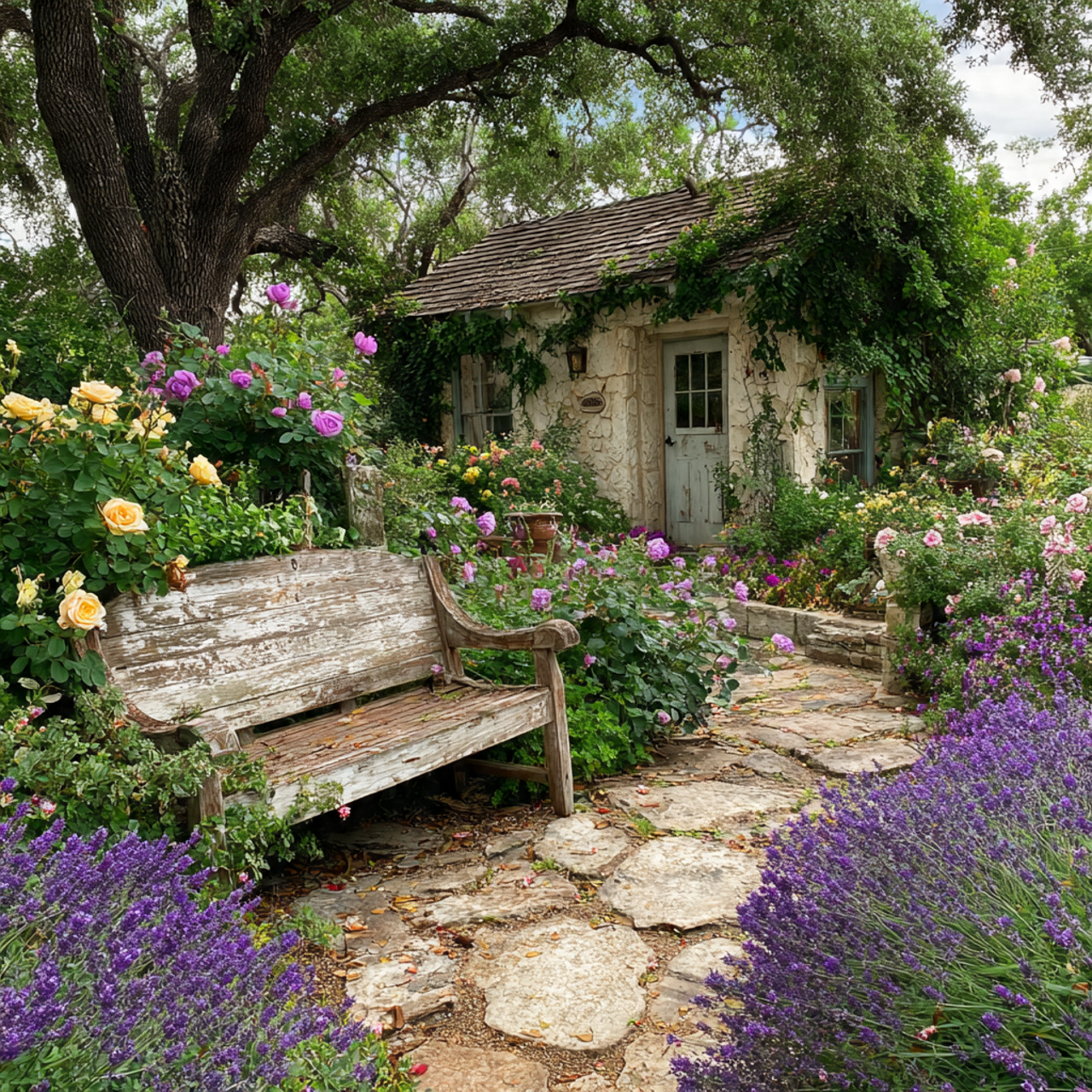
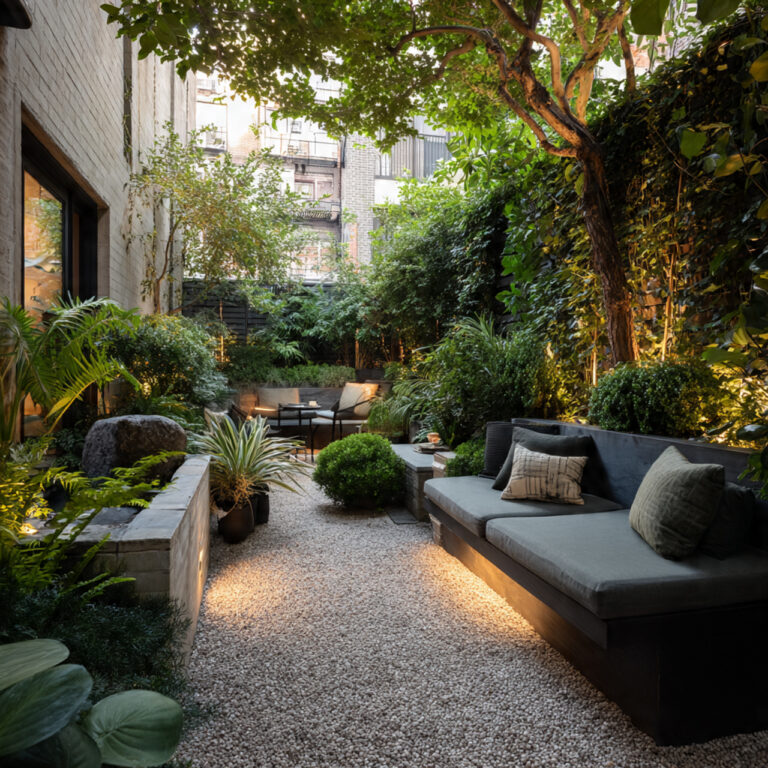
Cottage garden design invites lingering through thoughtfully placed seating that feels integrated into the landscape rather than imposed upon it. A weathered wooden bench nestled among fragrant plants, a bistro set tucked into a sheltered corner, or a simple Adirondack chair positioned to catch evening light—these elements transform gardens from visual displays into lived-in spaces.
Choose seating materials that age beautifully and blend with natural surroundings. Vintage or antique furniture adds character, while new pieces in classic designs create timeless appeal. Position seats to take advantage of pleasant views, afternoon shade, or proximity to especially fragrant plantings. A small table nearby makes the space more functional for morning coffee or afternoon reading.
Seating placement considerations:
- Morning sun for breakfast spots
- Afternoon shade for summer comfort
- Views of favorite plantings or water features
- Proximity to fragrant plants like roses, jasmine, or herbs
- Shelter from prevailing winds
- Privacy from neighbors or street traffic
Fragrant Plant Combinations
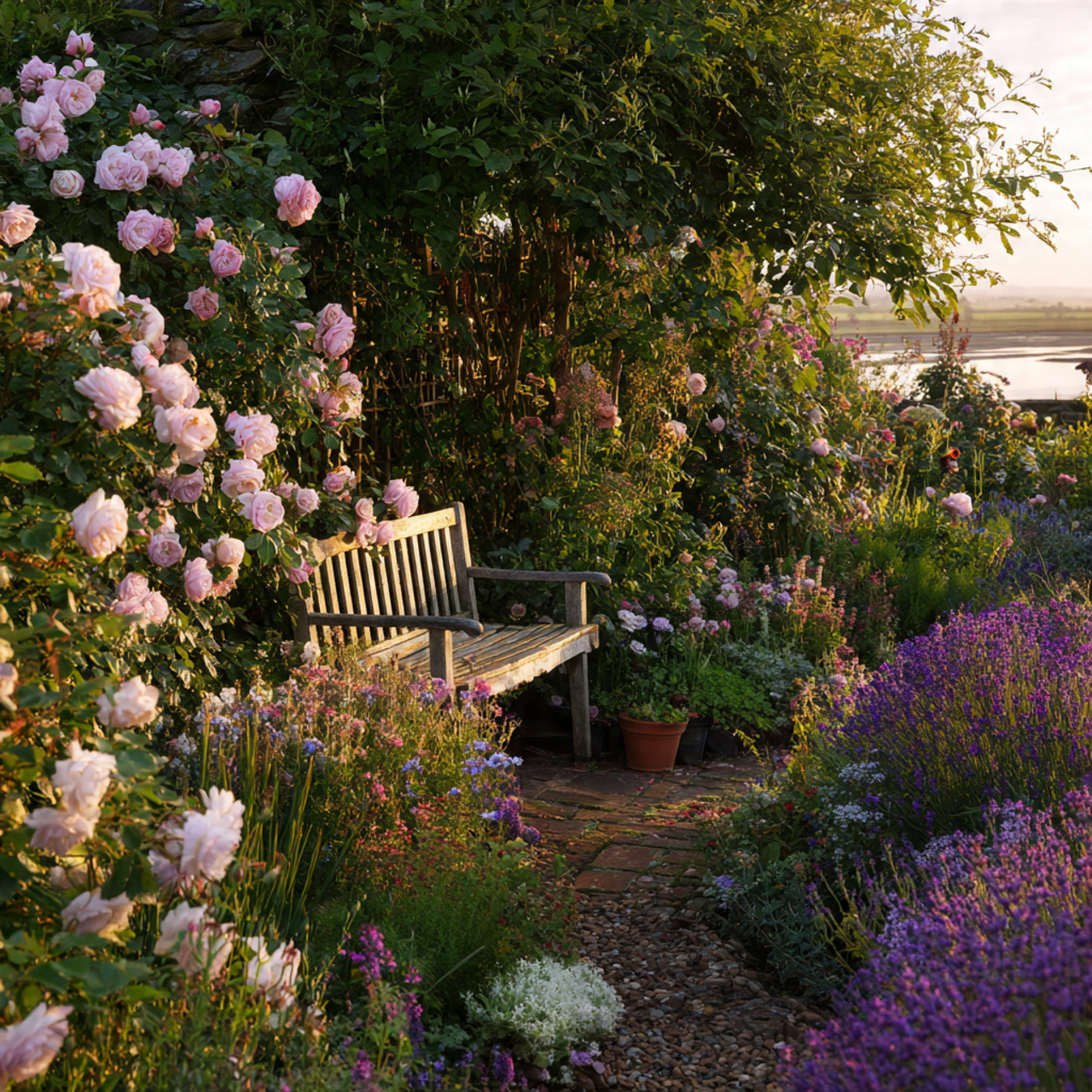
Scent elevates cottage garden design from merely visual to fully sensory, creating memories and emotional connections that outlast any single bloom. Layer fragrance throughout the garden and across seasons—spring bulbs like hyacinth and narcissus, summer roses and stock, autumn-blooming sweet autumn clematis. Position the most fragrant plants near seating areas, doorways, and windows where you’ll most appreciate them.
Different fragrances peak at various times of day. Many flowers release their strongest scent in evening to attract night-pollinating moths, while others perfume morning air. Plant a diverse fragrance palette to enjoy scent throughout your waking hours.
Fragrance all-stars for cottage gardens:
- Old garden roses and English roses for classic rose perfume
- Lavender for herbal, calming aromatics
- Sweet peas for intense, sweet fragrance
- Dianthus (pinks) for spicy clove scent
- Night-scented stock for evening fragrance
- Heliotrope for vanilla-like sweetness
- Nicotiana for tobacco flower perfume
Perennial Backbone Structure
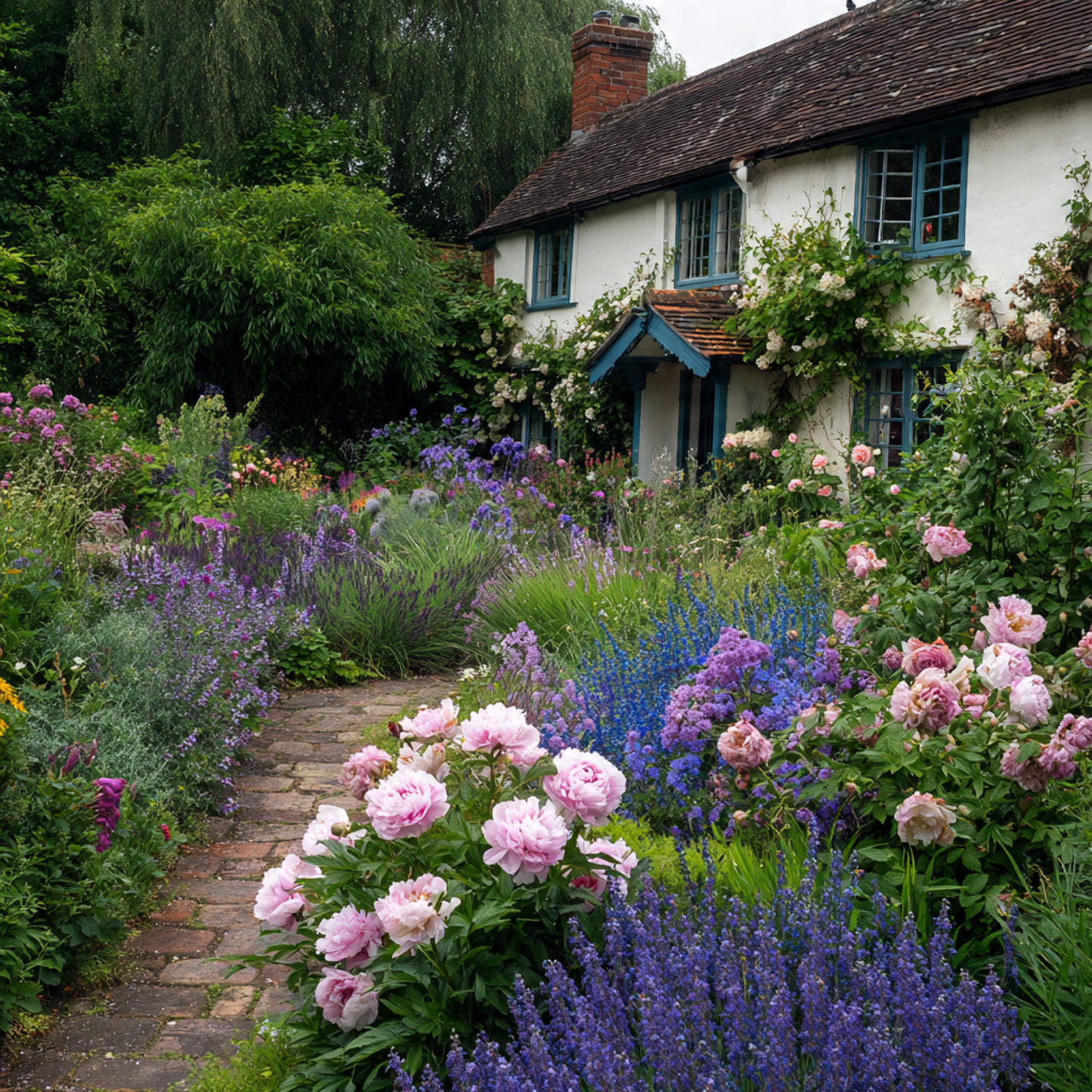
While annuals provide cottage garden design with seasonal abundance, perennials create the enduring structure that gives gardens character and reduces annual workload. Choose long-lived, reliable performers like peonies, daylilies, hardy geraniums, and salvias that return stronger each year. These plants become old friends, marking seasons and providing continuity as annuals come and go.
Successful perennial selection requires matching plants to your specific conditions—sun exposure, soil type, moisture levels, and hardiness zone. Don’t fight your site; instead, choose plants adapted to thrive in your existing conditions. Group perennials with similar cultural needs to simplify maintenance and improve plant health.
Essential cottage garden perennials:
- Peonies for spectacular late spring blooms
- Hardy geraniums for long-flowering groundcover
- Delphiniums for vertical spires of blue
- Lupines for colorful cottage charm
- Catmint for billowing lavender-blue clouds
- Lady’s mantle for lime-green foliage and flowers
- Astilbe for shade-tolerant plumes
Natural Mulching Techniques
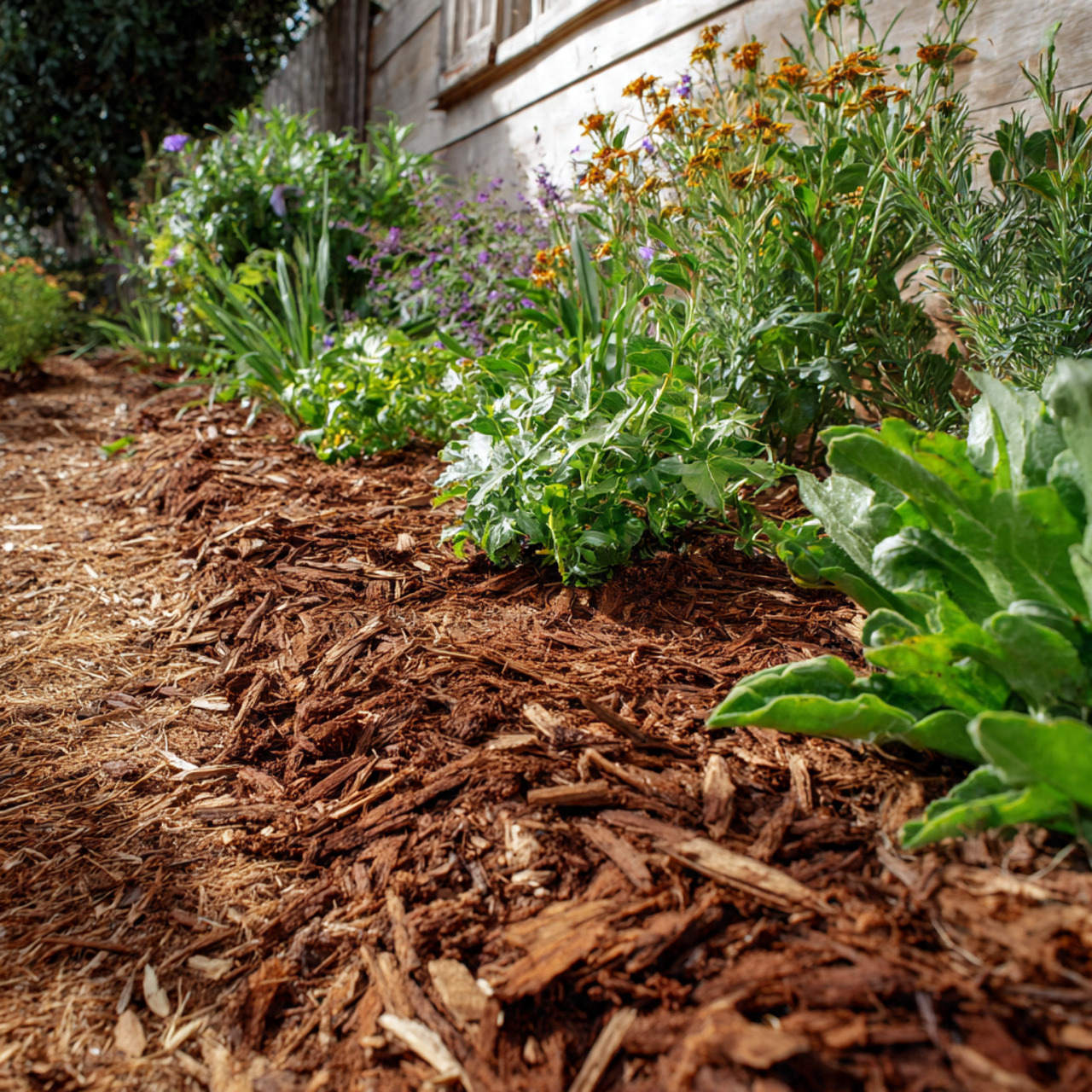
Mulching in cottage garden design serves practical purposes—moisture retention, weed suppression, soil improvement—while maintaining the garden’s informal aesthetic. Organic mulches like shredded bark, leaf mold, or compost work best, breaking down over time to enrich soil. Avoid artificial-looking dyed mulches or excessive bare-earth gaps that disrupt the lush, abundant feeling.
Apply mulch 2-3 inches deep around plants, pulling it slightly back from stems to prevent rot. As organic mulches decompose, they’ll need replenishment, but this ongoing process feeds soil biology and improves structure. In areas where you want plants to self-seed freely, use lighter mulch applications that won’t smother emerging seedlings.
Pro tips for cottage garden mulching:
- Use locally sourced materials to reduce costs and environmental impact
- Allow leaf litter to remain under shrubs and trees naturally
- Top-dress with compost annually for nutrient boost
- Mulch paths differently than beds—gravel for paths, organic matter for planting areas
- Leave some bare soil areas for ground-nesting bees
Water Features for Ambiance
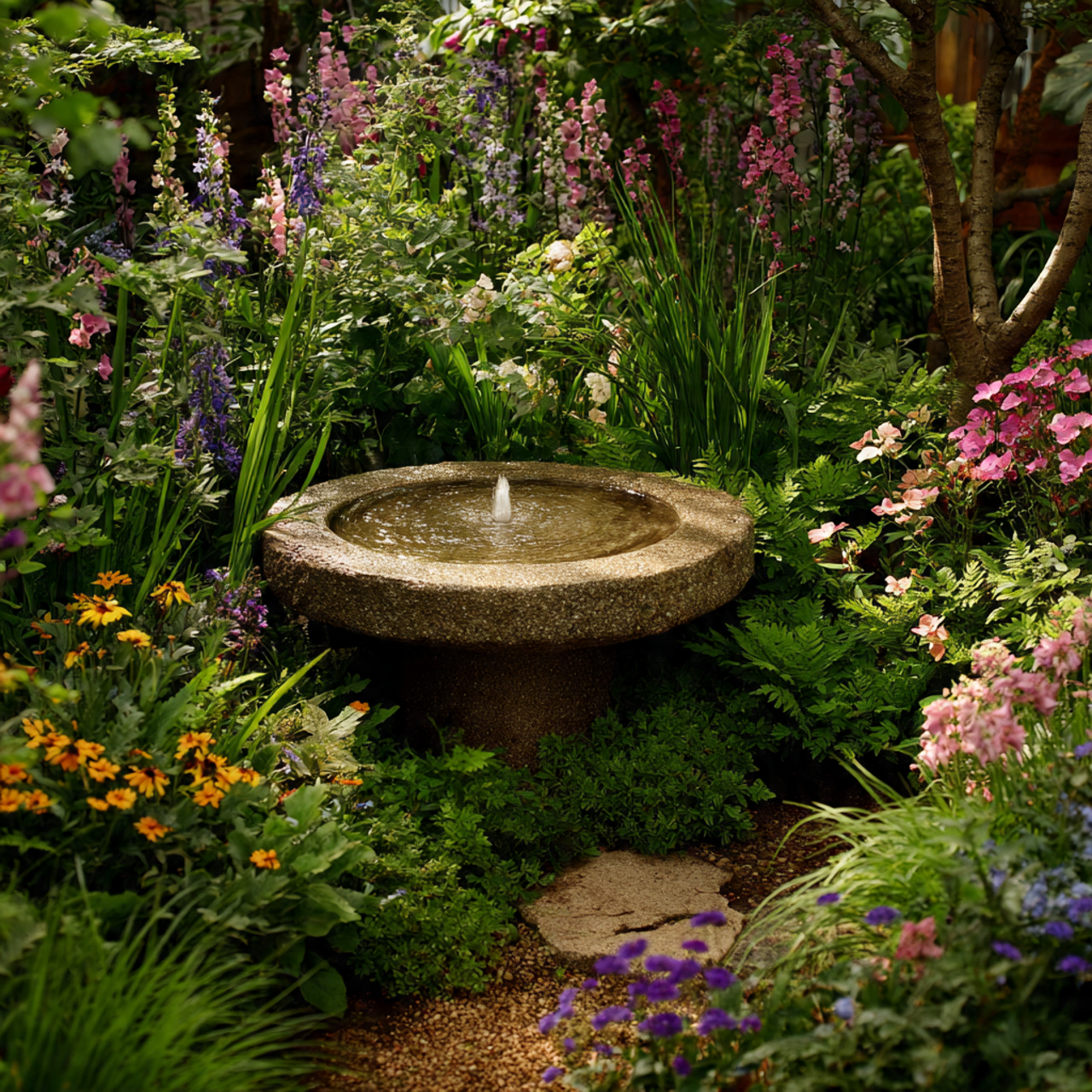
Water elements enhance cottage garden design with movement, sound, and reflective qualities that add another dimension to the space. A simple birdbath becomes a garden focal point and wildlife magnet, while a small fountain or pond introduces soothing sounds that mask urban noise. Keep water features proportional to your garden size and maintain the informal aesthetic with natural materials.
Position water features where you’ll see and hear them from seating areas or indoor windows. Surrounding plantings should complement and soften hard edges—moisture-loving plants near ponds, creeping groundcovers around birdbath bases. Ensure adequate shade for ponds to reduce algae growth and protect fish during hot weather.
Water feature options by scale:
- Birdbaths for smallest spaces and wildlife attraction
- Wall-mounted fountains for vertical spaces
- Container water gardens for patio or deck settings
- Small preformed ponds for moderate gardens
- Natural wildlife ponds for larger properties
Cottage Garden Bulbs for Seasonal Interest
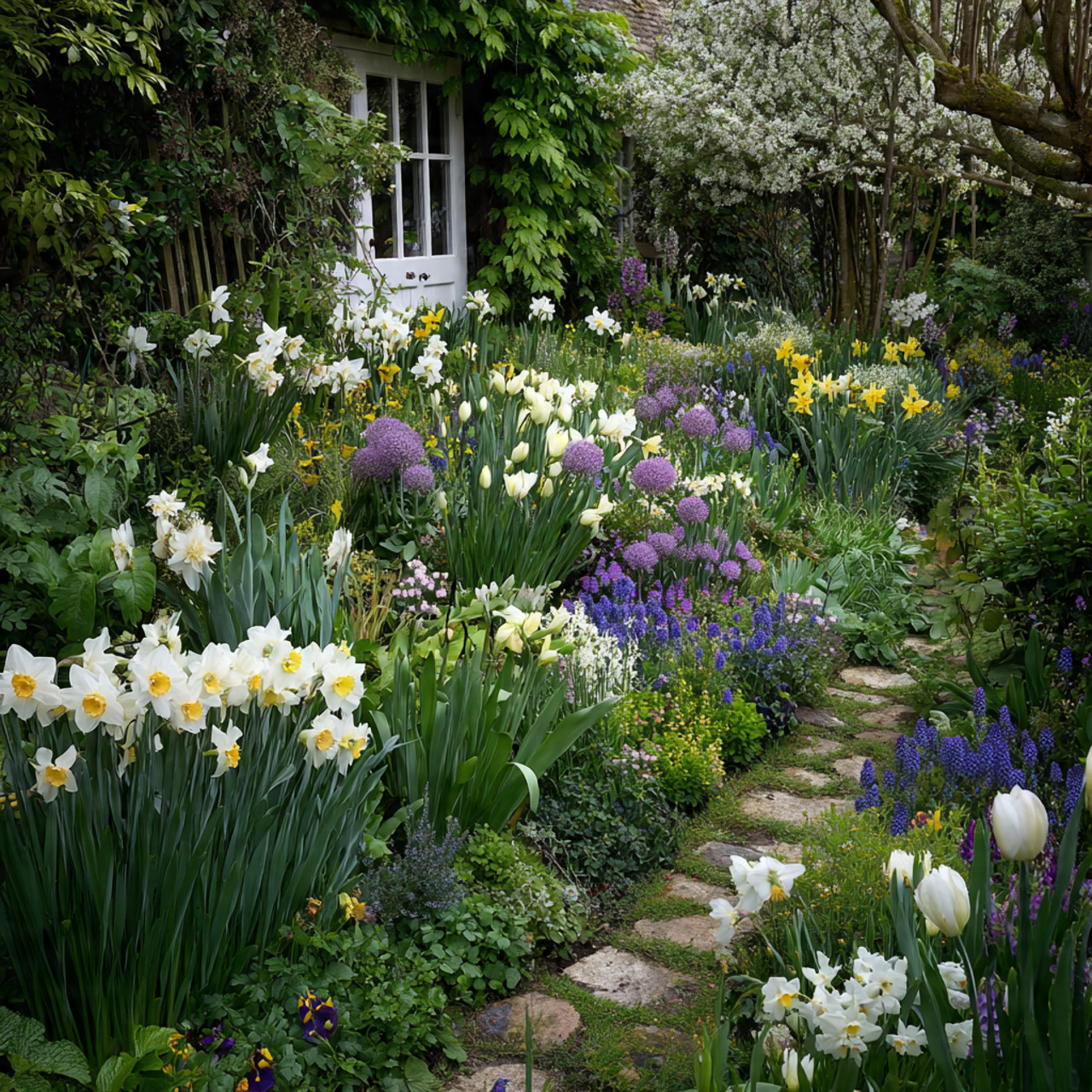
Bulbs extend cottage garden design interest into early spring and late fall when most perennials rest. Naturalized daffodils, grape hyacinths, and species tulips create drifts of color that multiply over years, while summer bloomers like alliums and lilies add height and drama. Plant bulbs in irregular clusters rather than formal rows for authentic cottage appeal.
Layer bulbs at different depths to create succession blooming from the same space. Early crocuses emerge first, followed by daffodils, then tulips, maximizing limited square footage. As bulb foliage yellows after blooming, emerging perennials disguise the decline, maintaining visual interest throughout transitions.
Bulb planting strategy:
- Plant early, mid, and late spring bulbs for extended bloom
- Position bulbs among perennials that will hide declining foliage
- Choose varieties that naturalize readily in your climate
- Plant in generous groups (minimum 12-25 bulbs) for impact
- Mark bulb locations to avoid accidental disturbance when dormant
Ornamental Grasses for Movement
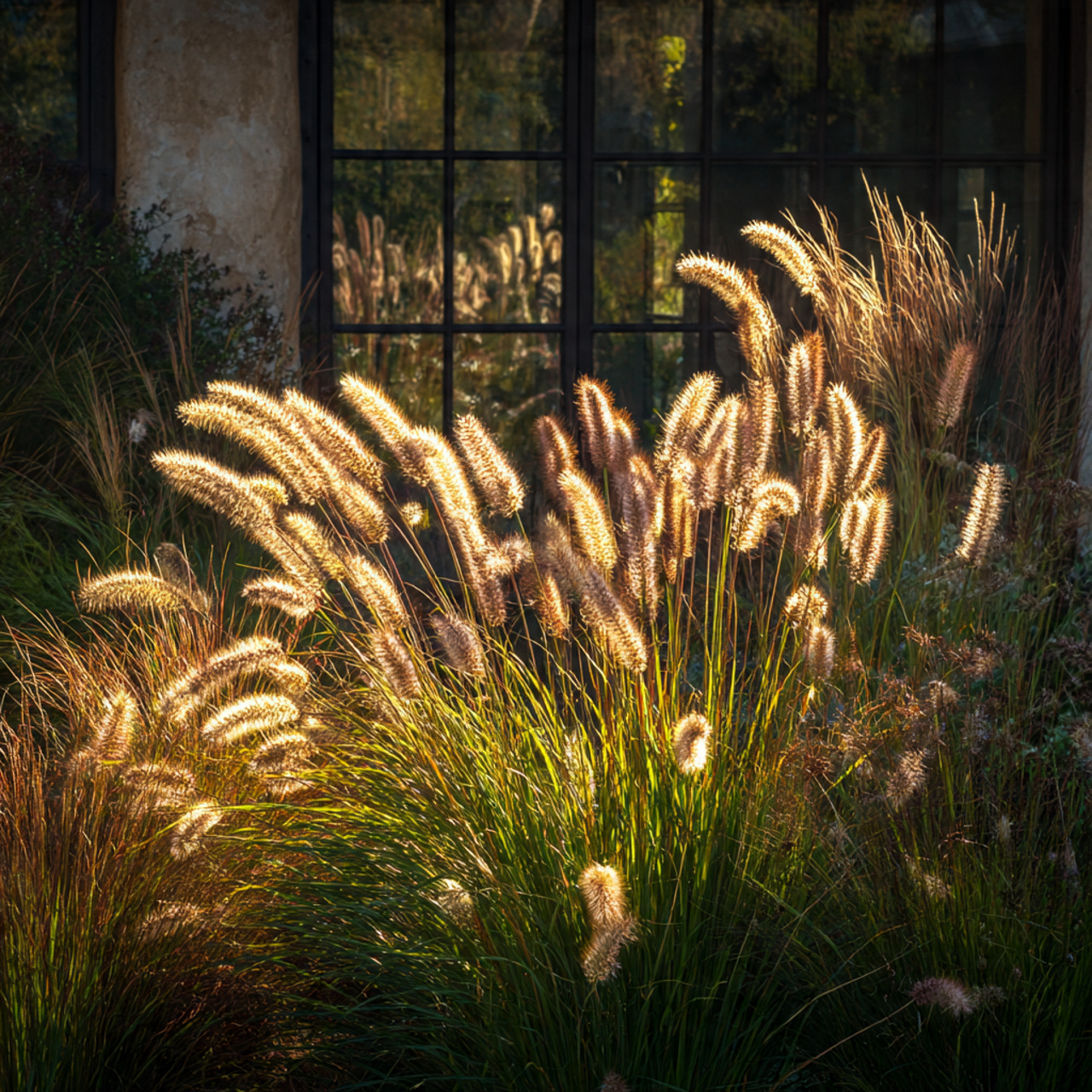
Grasses introduce cottage garden design with texture, movement, and seasonal interest that complements flowering plants beautifully. Their swaying motion catches breezes, creating dynamic contrast against static floral forms. Choose varieties with appropriate mature sizes—compact fountain grass for smaller spaces, larger miscanthus for substantial gardens.
Grasses shine particularly in late summer and fall when many cottage plants fade, providing structure and interest through winter months. Their seed heads attract birds and create stunning frost-covered displays. Position grasses where backlight can illuminate their forms, creating magical glowing effects.
Cottage-appropriate ornamental grasses:
- Fountain grass (Pennisetum) for arching, bottle-brush blooms
- Mexican feather grass (Stipa) for fine, flowing texture
- Blue oat grass (Helictotrichon) for steel-blue color
- Feather reed grass (Calamagrostis) for vertical accent
- Miscanthus varieties for substantial presence
Wildlife-Friendly Planting
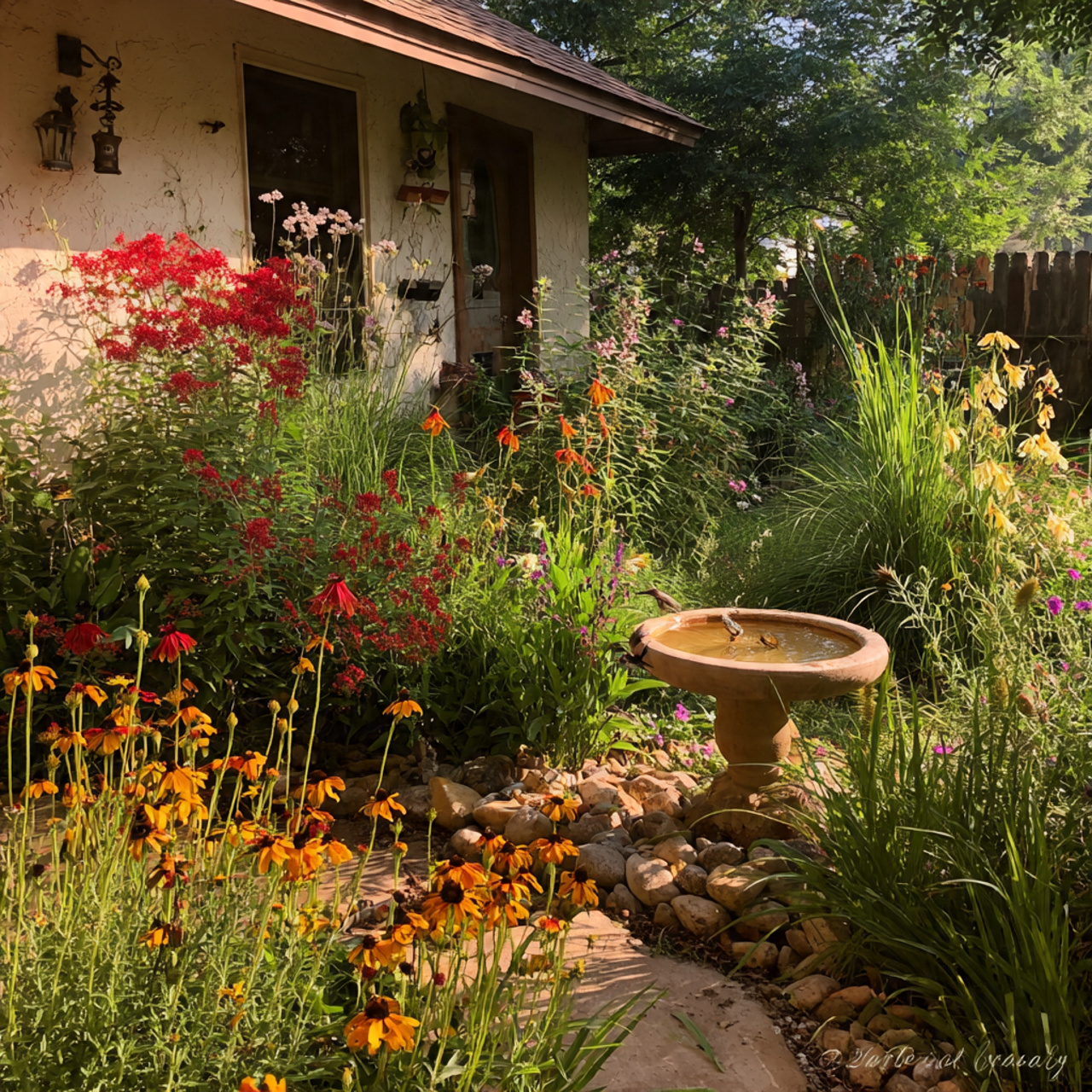
Cottage garden design naturally attracts beneficial wildlife when planted with native and pollinator-friendly species. Butterflies, bees, hummingbirds, and beneficial insects all contribute to garden health while adding living beauty. Create diverse habitats with varied plant heights, bloom times, and structure to support wildlife throughout their life cycles.
Resist the urge to maintain overly tidy gardens—leave some stems standing through winter for beneficial insect habitat, allow fallen leaves to shelter ground-dwelling creatures, and provide water sources. Avoid pesticides that harm beneficial insects along with pests, relying instead on ecosystem balance to control problems.
Wildlife-attracting features:
- Native flowering plants matched to local pollinators
- Continuous bloom sequence from early spring to late fall
- Host plants for butterfly and moth caterpillars
- Seed heads left standing for winter bird food
- Brush piles and rock walls for shelter
- Shallow water sources with stones for insect landing
Dooryard Garden Plantings
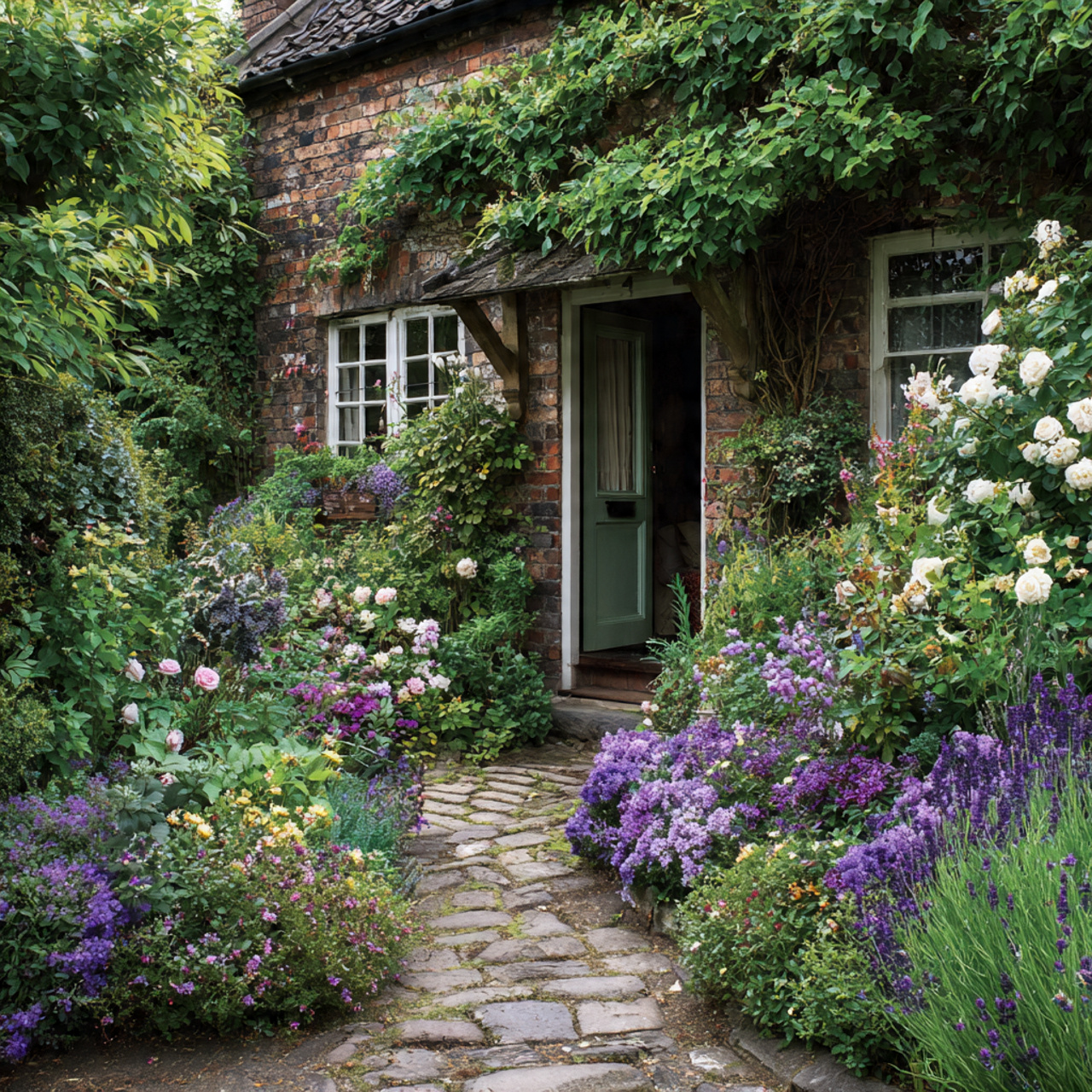
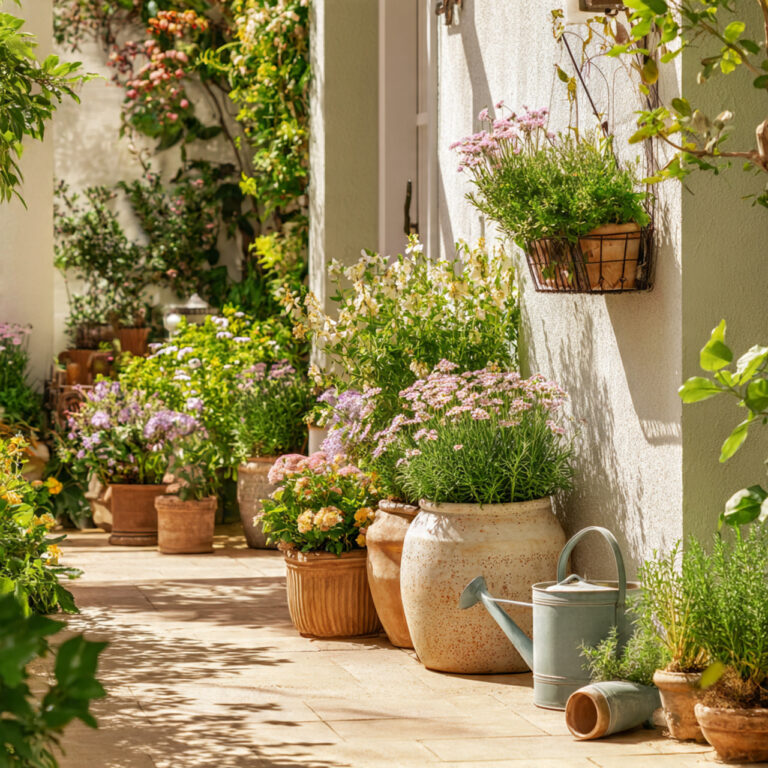
The area immediately surrounding your home deserves special attention in cottage garden design, creating a welcoming transition between structure and landscape. Foundation plantings should feel abundant rather than sparse, with flowers tumbling against walls and fragrant plants flanking entry paths. This intimate space sets the tone for your entire garden while creating curb appeal.
Consider how plantings will be viewed from inside as well as outside—position colorful, interesting specimens where they’ll be appreciated through windows. Keep mature sizes in mind to avoid overwhelming the house or blocking views. Include evergreens for year-round structure but avoid the rigid, formal foundation plantings common in conventional landscaping.
Common mistakes near foundations:
- Planting too close to walls, limiting air circulation
- Choosing plants that will outgrow the space
- Creating symmetrical, formal arrangements inappropriate for cottage style
- Neglecting windows when positioning tall plants
- Using only evergreens without seasonal flowering interest
Mixing Plant Textures
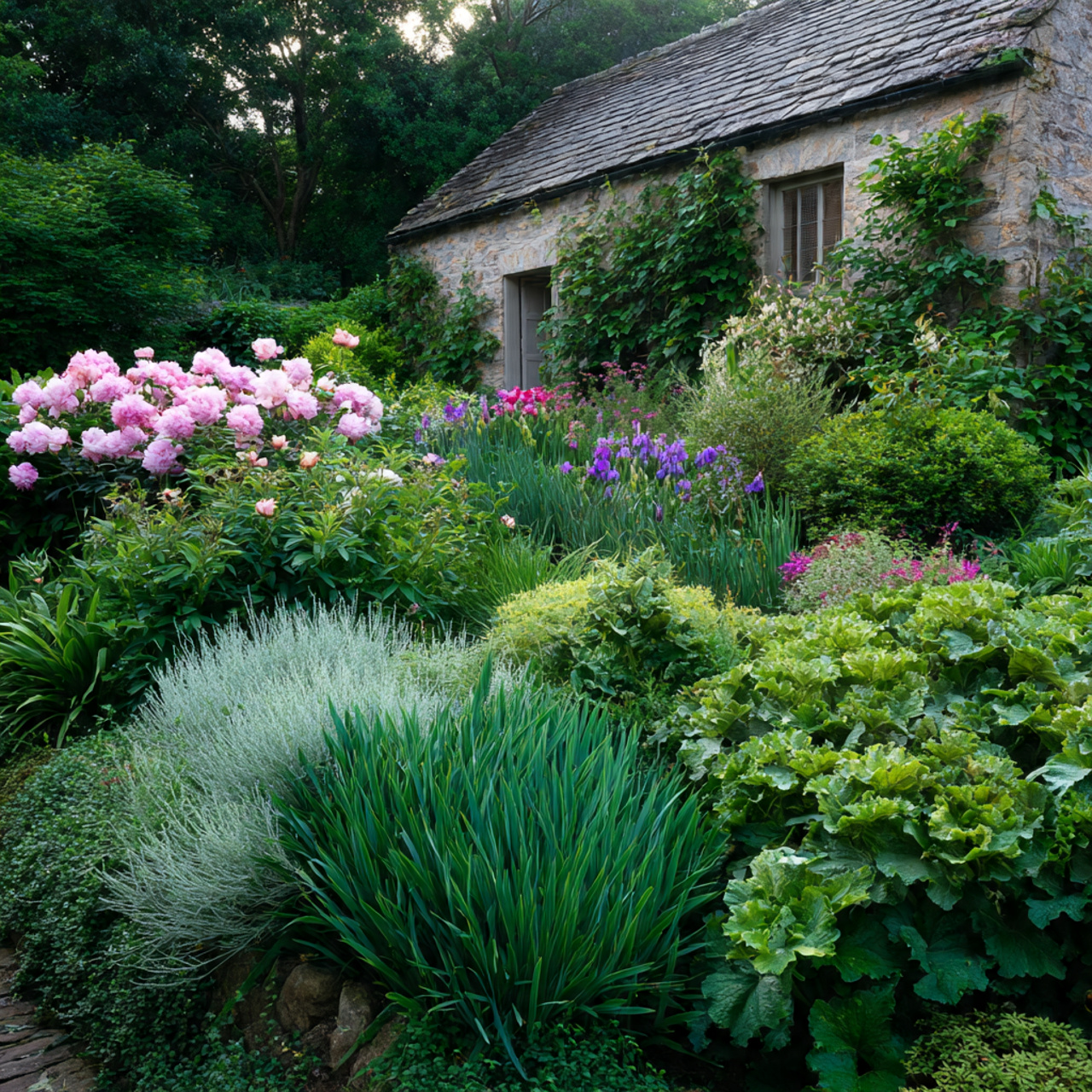
Texture creates visual interest in cottage garden design even when color is limited, contrasting fine, ferny foliage with bold, architectural leaves. Feathery fennel plays beautifully against the substantial leaves of hostas, while spiky iris foliage contrasts with soft, billowing geraniums. These textural combinations add sophistication and prevent gardens from appearing chaotic despite their informal planting.
Consider foliage texture as carefully as flower color when selecting plants. Many striking combinations rely primarily on leaf interest, providing beauty throughout the growing season rather than only during brief bloom periods. Balance fine textures with bold ones, smooth with rough, vertical with horizontal for maximum impact.
Texture contrast examples:
- Feathery artemisia with bold sedum leaves
- Fine-textured catmint alongside substantial peony foliage
- Grass-like day lily leaves contrasting rounded geraniums
- Spiky yucca or iris punctuating soft, billowing masses
Seasonal Succession Planning
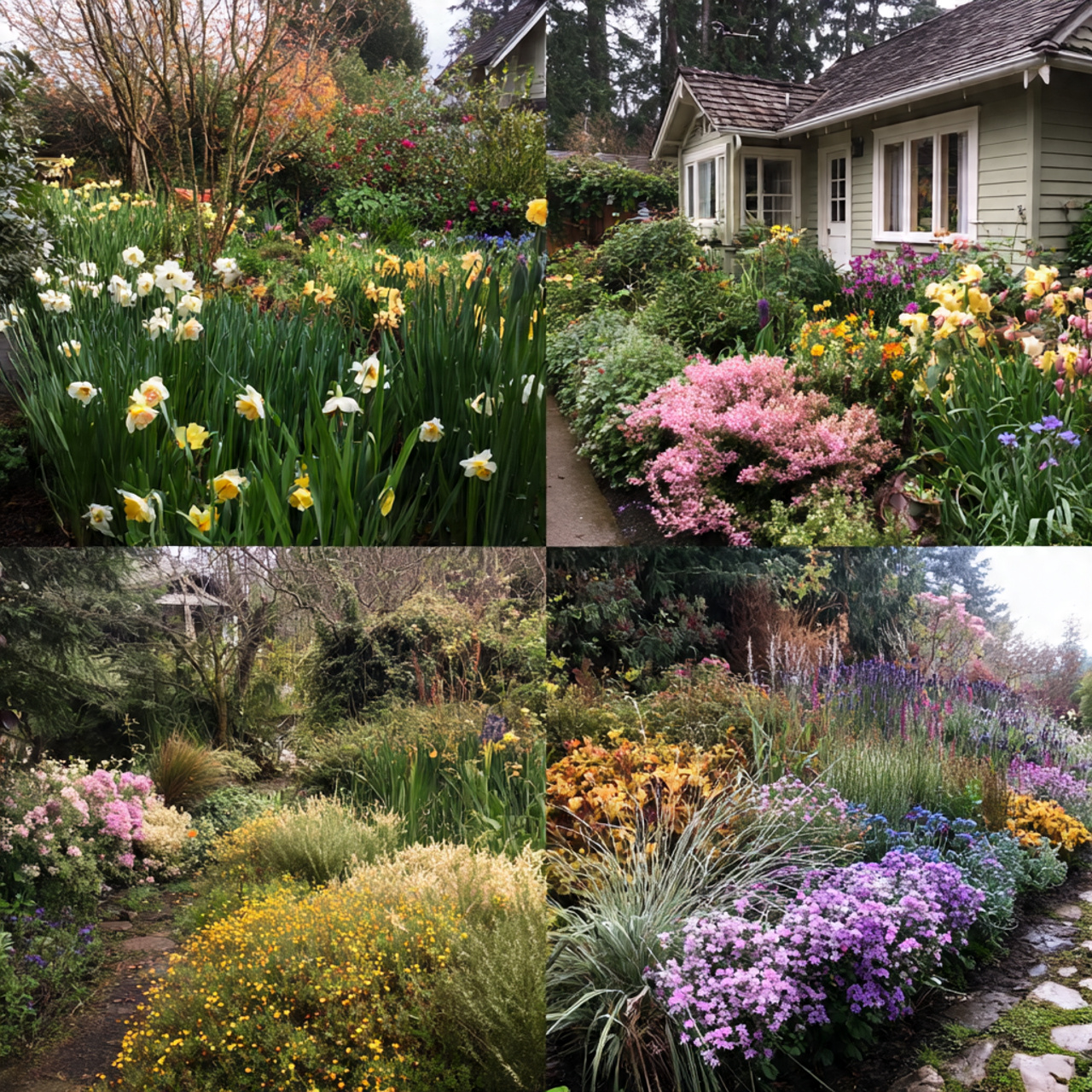
Successful cottage garden design maintains interest across all seasons through thoughtful succession planning. Map bloom times for your chosen plants to identify gaps, then add species that fill those periods. Early spring bulbs transition to late spring perennials, which yield to summer annuals and roses, followed by fall bloomers and winter structure plants.
Don’t neglect shoulder seasons—early spring and late fall—when careful planning makes the difference between drab landscapes and gardens with extended appeal. Include plants selected specifically for autumn color, winter berries, or early spring emergence to ensure year-round engagement with your outdoor space.
Seasonal interest checklist:
- Early spring bulbs and hellebores
- Late spring perennials (peonies, columbine, bleeding heart)
- Summer workhorses (roses, daylilies, salvias)
- Late summer bloomers (echinacea, rudbeckia, sedum)
- Fall stars (asters, anemones, chrysanthemums)
- Winter structure (evergreens, grasses, interesting bark)
Creating Garden Rooms
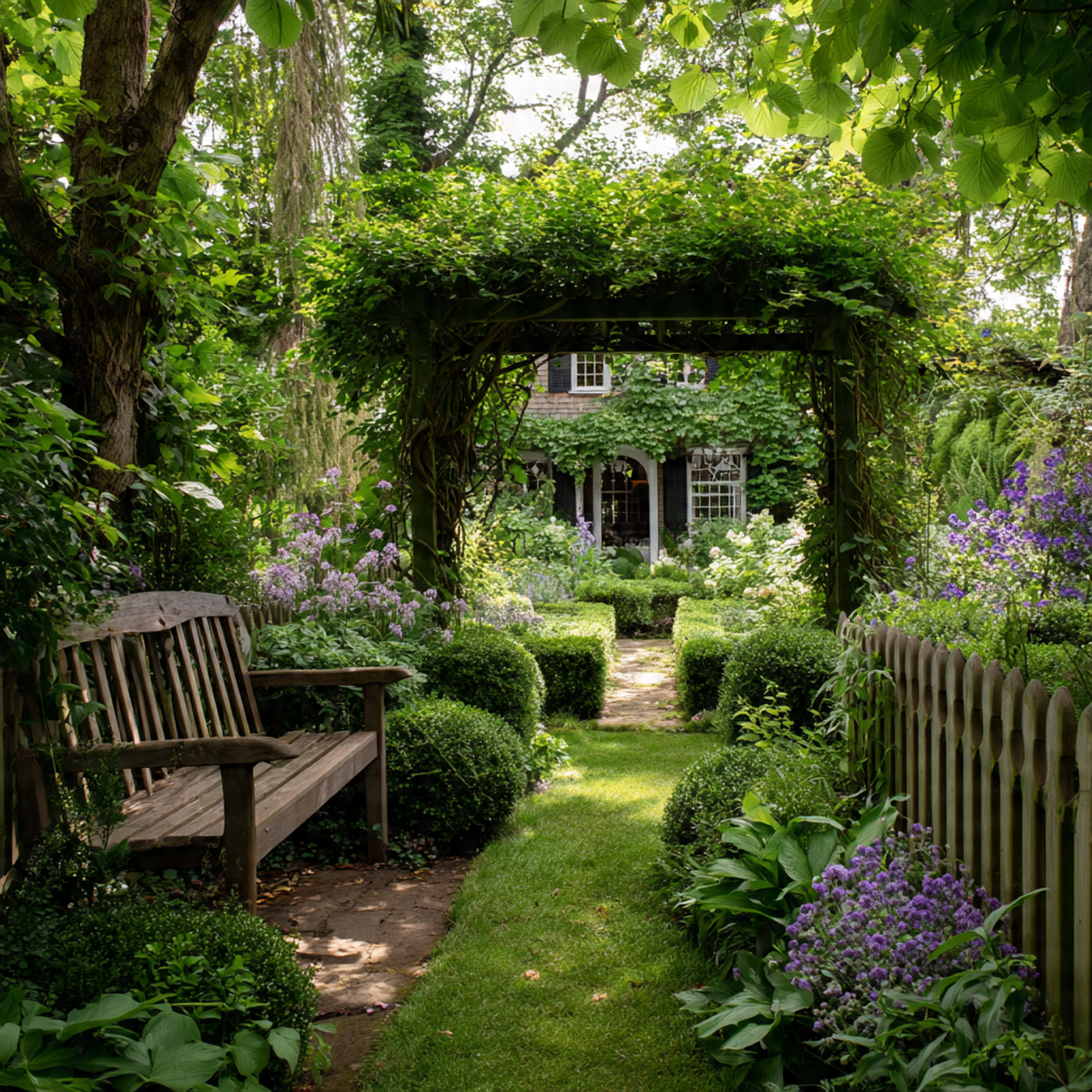
Dividing larger spaces into intimate garden rooms enhances cottage garden design by creating mystery and encouraging exploration. Use hedges, arbors, fences, or substantial plantings to suggest boundaries without completely blocking views. Each room can have its own character—a rose garden, herb garden, cutting garden—while maintaining overall design cohesion.
Garden rooms don’t require vast acreage; even small yards benefit from subtle divisions that create the illusion of greater space. A simple arbor marking the transition between lawn and planting beds, or a low hedge defining a seating area, adds structure that makes gardens feel intentional rather than random.
Room divider options:
- Low picket fences or wattle hurdles
- Boxwood or lavender hedges
- Climbing plants on trellis panels
- Mixed shrub borders
- Changes in ground plane materials
Visit Also: Modern Garden Design
Frequently Asked Questions
How do I start a cottage garden from scratch?
Start by improving your soil with organic matter, then plant foundation perennials, roses, and structural shrubs. Fill gaps with fast-growing annuals while permanent plants establish. Begin with one manageable area and expand gradually over seasons.
What are the best plants for low-maintenance cottage gardens?
Hardy geraniums, daylilies, sedums, and catmint are reliable perennials. Self-seeding annuals like calendula and cosmos return without replanting. Disease-resistant roses and ornamental grasses provide structure with minimal care.
Can I create a cottage garden in a small urban space?
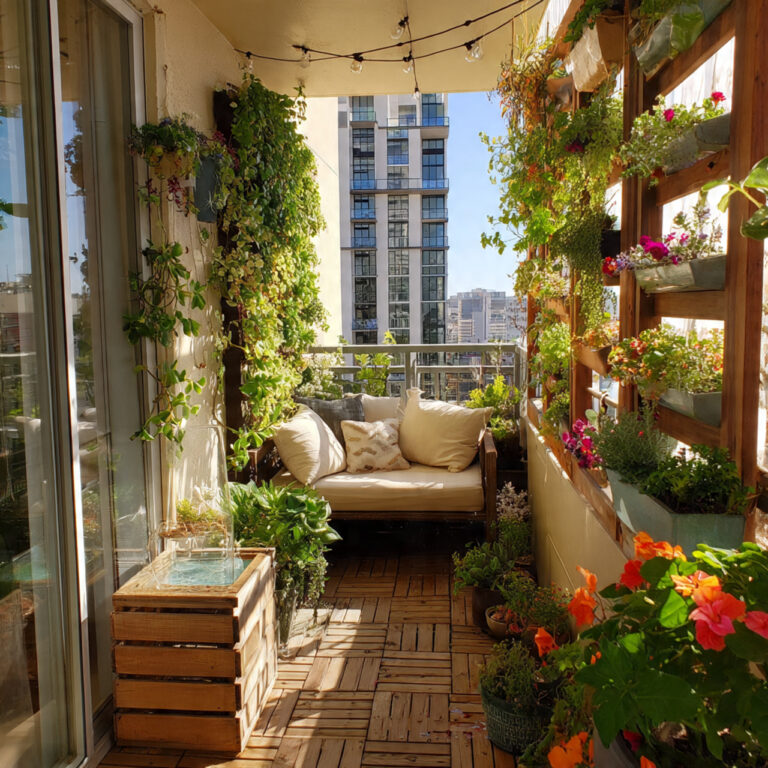
Yes. Use vertical space with climbing plants and containers with compact varieties. Even small spaces work beautifully—focus on creating one detailed area with informal plantings, mixed flowers, and fragrant specimens.
How much maintenance does a cottage garden require?
Expect weekly deadheading and path clearing during growing season. Spring needs dividing and mulching; summer requires watering and deadheading; fall involves cutting back. The informal style tolerates imperfection, so choose low-maintenance plants if time is limited.
What’s the difference between cottage garden design and English garden style?
Cottage gardens are informal, densely planted spaces originally around workers’ cottages, mixing edibles with ornamentals. English gardens encompass broader styles including formal designs. Cottage gardens emphasize practical beauty and accessible, humble charm.
Conclusion: Creating Your Personal Cottage Garden Sanctuary
Cottage garden design offers a refreshing alternative to formal, high-maintenance landscapes, creating outdoor spaces that nourish both body and soul. By embracing the principles outlined in these 25 ideas—layered plantings, self-seeding annuals, mixed edibles and ornamentals, fragrant combinations, and sustainable practices—you’ll develop a garden that reflects your personal style while honoring centuries of cottage gardening tradition.
Remember that successful cottage gardens evolve gradually over seasons and years. Start with a solid foundation of healthy soil, reliable perennials, and basic infrastructure, then allow your garden to develop organically as you learn what thrives in your specific conditions. Embrace happy accidents, welcome self-seeders, and resist the urge to over-manicure every corner. The magic of cottage garden design lies in its imperfection—the unexpected color combinations, the plants that exceed their boundaries, the volunteers that appear in surprising locations.
Your cottage garden will become a living reflection of your gardening journey, improving each season as you refine plant combinations, learn maintenance rhythms, and deepen your connection to the natural world. Whether you’re transforming a small urban balcony or a sprawling country property, these timeless design principles will guide you toward creating an abundant, welcoming space that delights visitors and provides sanctuary for you, your family, and local wildlife for years to come.