25 Lawn Edging Ideas That Instantly Make Your Yard Look Cleaner
A pristine lawn doesn’t just happen overnight. Behind every professionally manicured yard lies a secret weapon: proper lawn edging. Those crisp, defined lines you admire in magazine-worthy landscapes aren’t just for show—they’re the foundation of an organized, healthy outdoor space that practically maintains itself.
Think of lawn edging as the frame around a masterpiece painting. Without it, even the most beautiful artwork loses its impact. Your lawn works the same way. You could have the greenest grass in the neighborhood, but without clear borders separating it from garden beds, walkways, and driveways, the whole space can look unfinished and chaotic.
In this guide, I’ll explore everything you need to know about lawn edging—from choosing the right materials to installation techniques that actually last. Whether you’re tackling a DIY weekend project or planning a complete landscape overhaul, you’ll discover practical strategies that deliver professional results without the professional price tag.
Why Lawn Edging Is Essential for Every Landscape
Lawn edging creates the physical and visual separation between your grass and everything else—flower beds, pathways, patios, and driveways. Without these boundaries, your lawn naturally spreads into areas where it doesn’t belong, creating that unkempt, overgrown appearance that screams “neglected yard.”
But here’s what most homeowners don’t realize: lawn edging isn’t just cosmetic. It’s a strategic tool that reduces your workload, protects your investments in hardscaping, and keeps materials exactly where you placed them. When you install quality edging correctly, it pays dividends season after season by minimizing the constant battle against creeping grass and migrating mulch.
Smart Strategy Tip:
- Start with high-impact areas first—focus on zones where grass meets stone, concrete, or wood mulch
- These create the most dramatic visual improvement with minimal effort
- Save less visible borders for phase two of your edging project
- Prioritize areas visible from your main entry points and street view
Lawn Edging for Clean Visual Boundaries
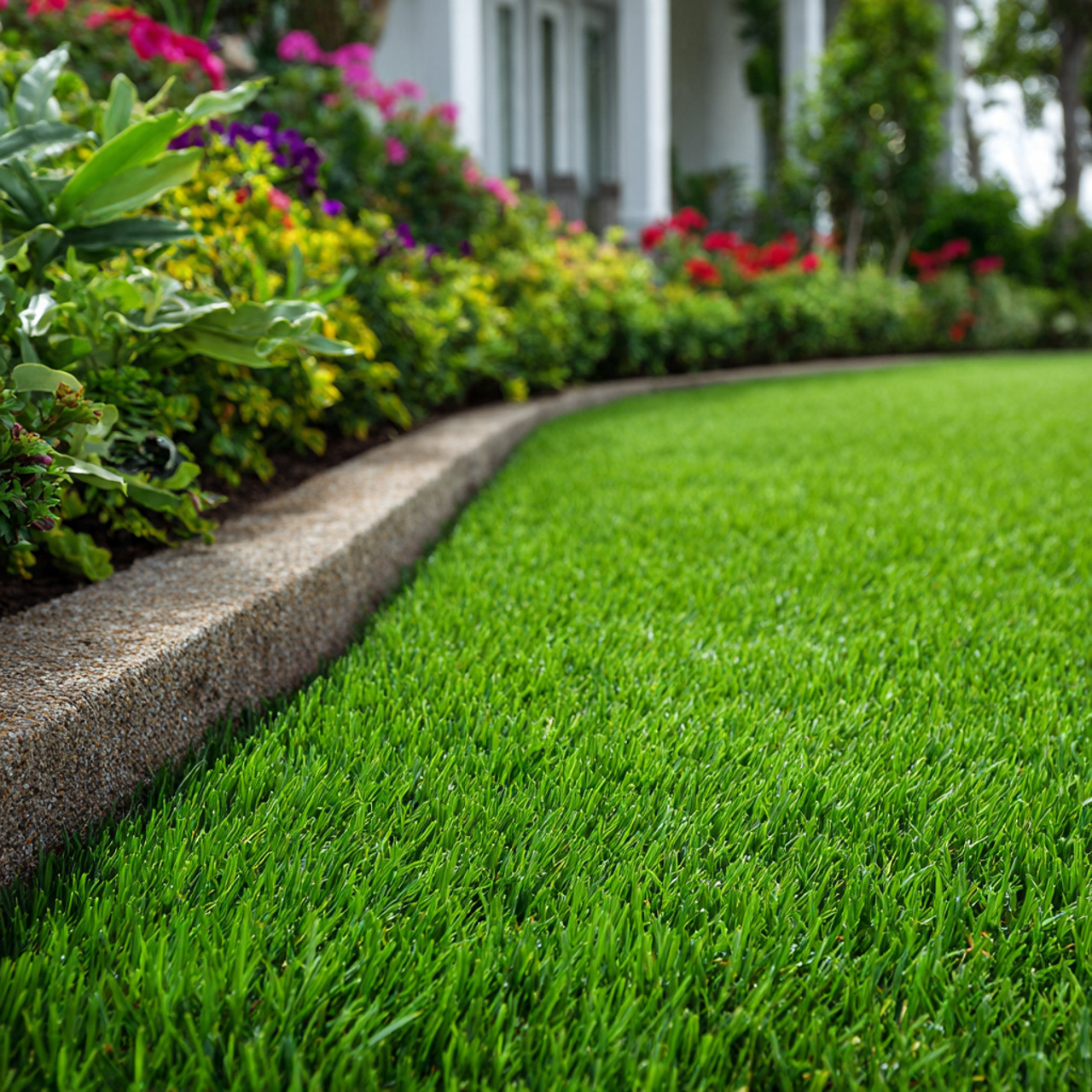
Clean, defined edges instantly transform your lawn from “meh” to magnificent. Even if your grass isn’t competition-ready, crisp borders give the impression of meticulous care and professional landscaping. These lines guide the viewer’s eye, creating natural flow and highlighting your best landscape features.
Think about what draws your attention when you visit a well-maintained property. It’s rarely the grass itself—it’s the way everything fits together. Edging provides that organizational framework, turning random plantings into intentional design.
Pro Visualization Tips:
- Walk to your curb or main viewing point and study your lawn objectively
- Notice where your eyes naturally travel across the landscape
- Mark these high-visibility sightlines as priority edging zones
- Curved edges soften modern architecture; straight lines complement traditional homes
- Take photos from multiple angles to spot inconsistencies you miss in person
Common Mistakes to Avoid:
- Creating edges that don’t follow the natural flow of your property
- Making curves too tight or angular (they’ll be hard to mow and maintain)
- Ignoring how edging will look from inside your home looking out
Stopping Grass Invasion in Its Tracks
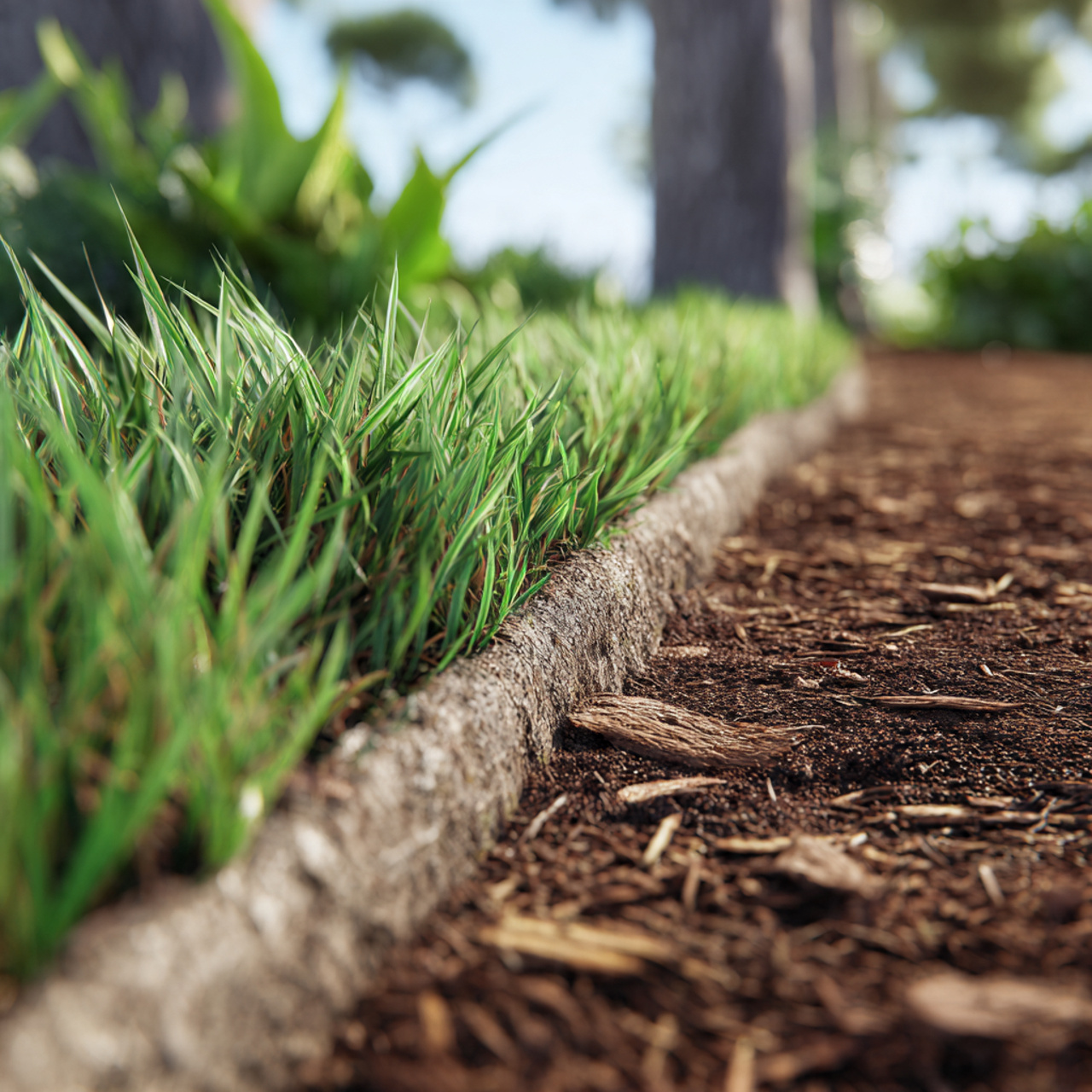
Grass is relentlessly aggressive. Left unchecked, it will march into your flower beds, creep under fences, and claim your walkways as its own territory. This isn’t gardening paranoia—it’s biology. Grass spreads through underground runners (rhizomes) and surface stems (stolons) that constantly seek new ground to colonize.
Quality lawn edging acts as your first line of defense, creating a physical barrier that significantly slows this invasion. While no edging system is 100% grass-proof forever, the right installation can reduce border maintenance by 70% or more.
Installation Depth Matters:
- Extend edging at least 3-4 inches below soil level for effective root blocking
- Deeper barriers (5-6 inches) work better for aggressive grass varieties like Bermuda
- Shallow edging (1-2 inches) provides minimal containment and will fail quickly
- Check your specific grass type’s root depth to determine ideal barrier depth
Maintenance Time-Saver:
- Annual spring check: inspect edges for breakthrough spots
- Quick 15-minute touch-up beats hours of border reshaping later
- Keep a small hand edger tool for spot corrections between major maintenance
Slashing Your Long-Term Maintenance Hours
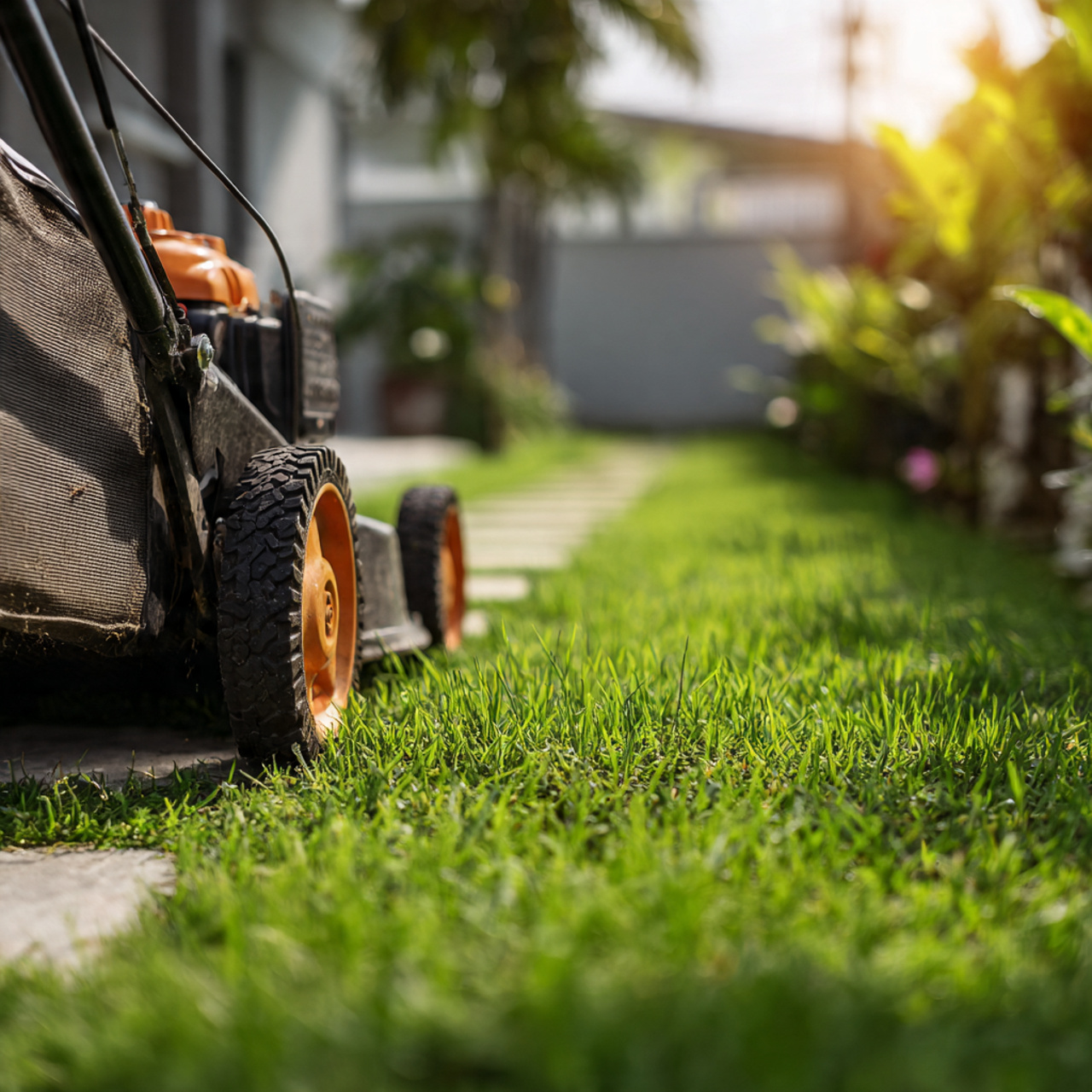
Here’s what nobody tells you about lawn edging: it’s one of those rare home improvements that actually reduces work instead of creating it. Defined borders make every mowing session faster and more efficient. You’ll spend less time doing awkward trimming in corners and along beds, and more time enjoying your yard.
But the benefits go deeper. Grass growing over concrete pathways and stone patios doesn’t just look bad—it causes real damage over time. Grass roots trap moisture against these surfaces, leading to staining, cracking, and premature deterioration of expensive hardscaping.
Mowing Efficiency Checklist:
- Align edging width with your mower’s cutting deck (typically 18-22 inches)
- Design edges that accommodate your mower’s turning radius
- Eliminate tight corners that require multiple trimmer passes
- Create mowing strips (4-6 inch flat zones) between lawn and vertical edges
Example Time Savings: Average lawn without edging: 45 minutes mowing + 20 minutes trimming = 65 minutes total Same lawn with proper edging: 35 minutes mowing + 5 minutes trimming = 40 minutes total Annual savings: 25 minutes × 30 mowing sessions = 12.5 hours recovered per year
Visit More: Garden Edging Ideas
Boosting Property Value and Street Appeal
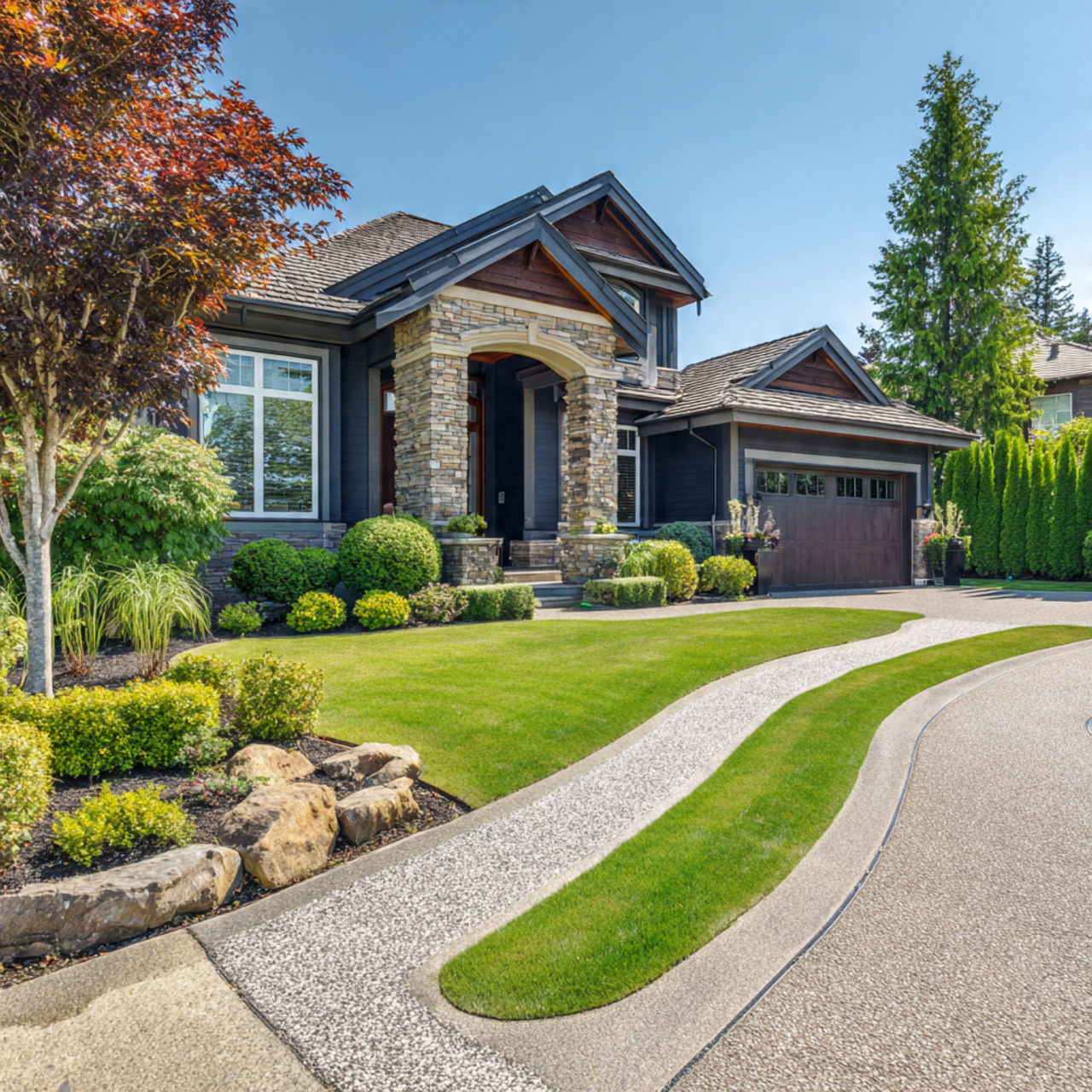
Curb appeal isn’t just real estate jargon—it’s the difference between a home that sells quickly at asking price and one that lingers on the market. Lawn edging ranks among the highest ROI landscaping improvements because it delivers visible results without major renovation costs.
Here’s the psychology: potential buyers notice clean lines subconsciously, even if they can’t articulate what looks “right” about a property. Well-defined edges signal that the entire property has received consistent, thoughtful care. That impression extends beyond the lawn to the home’s interior and mechanical systems.
High-Impact Zones for Resale Value:
- Front lawn borders (highest visibility, maximum impact)
- Driveway edges (daily visual contact point)
- Main walkway borders (frames the entry experience)
- Foundation plantings (creates finished, intentional look)
Quick Curb Appeal Wins:
- Fresh mulch + new edging = instant 5-year appearance improvement
- Focus 80% of budget on front yard; most buyers never see the backyard
- Coordinate edging material with home’s architectural style
Understanding Edging Materials and Their Lifespan
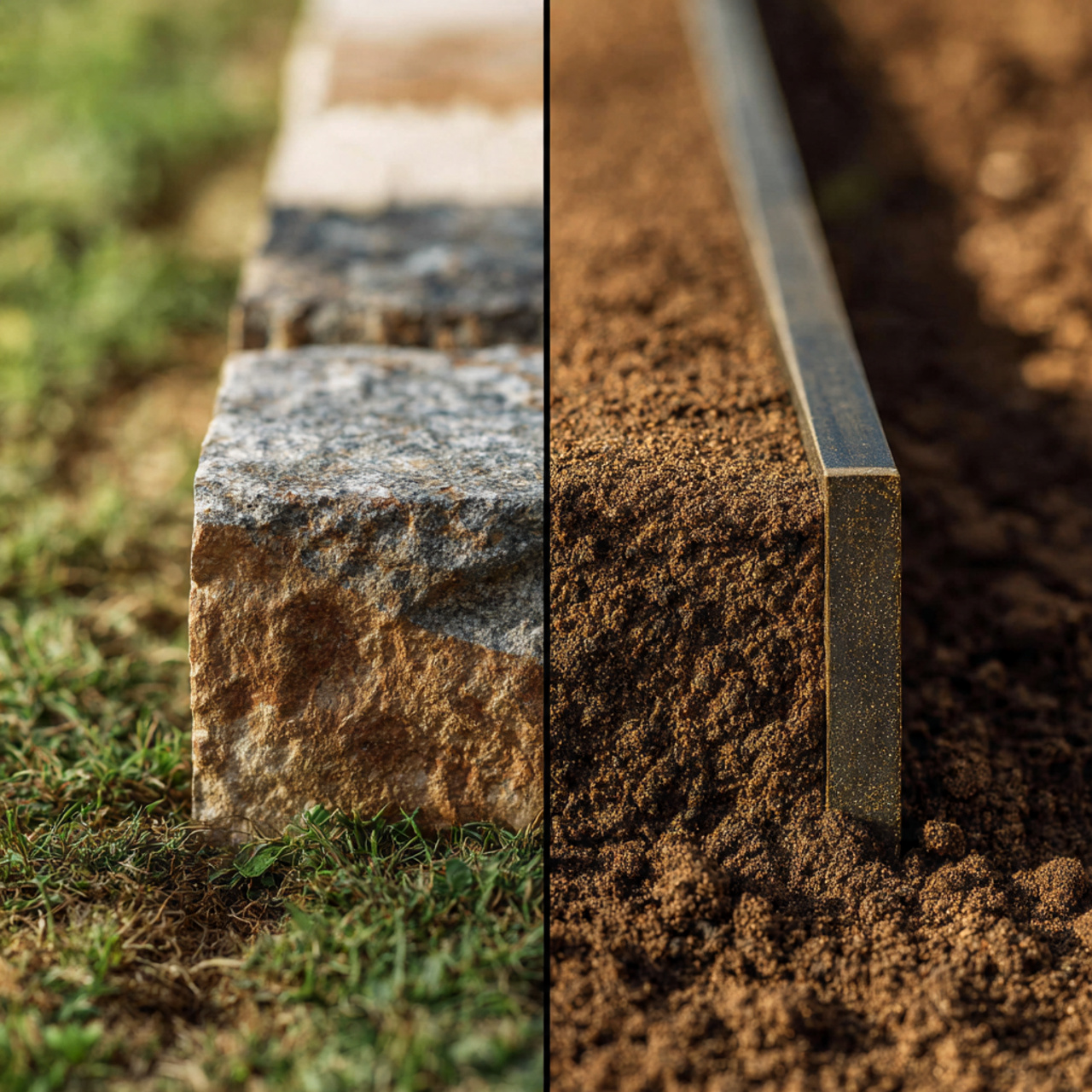
Not all edging materials are created equal. Some flex and adapt to soil movement, while others remain rigidly in place. Some weather beautifully for decades, while others deteriorate within a few seasons. Your climate, soil composition, and foot traffic patterns all dramatically affect which materials will succeed or fail in your specific yard.
The biggest mistake homeowners make is choosing edging based solely on appearance or initial cost. A beautiful material that fails in three years costs far more than a practical option that lasts fifteen.
Critical Material Selection Factors:
- Climate compatibility: Freeze-thaw cycles destroy inappropriate materials
- Soil type: Clay vs. sandy soil affects stability and drainage needs
- Sun exposure: UV degradation is real for plastics and composites
- Traffic levels: High-use areas demand more durable solutions
- Maintenance tolerance: Some materials need annual adjustment, others are set-and-forget
Research Before Buying Tip:
- Google “[your city/region] lawn edging forum” for local experiences
- Ask neighbors with established edging about their material choices
- Visit local landscaping supply yards and ask what professionals use locally
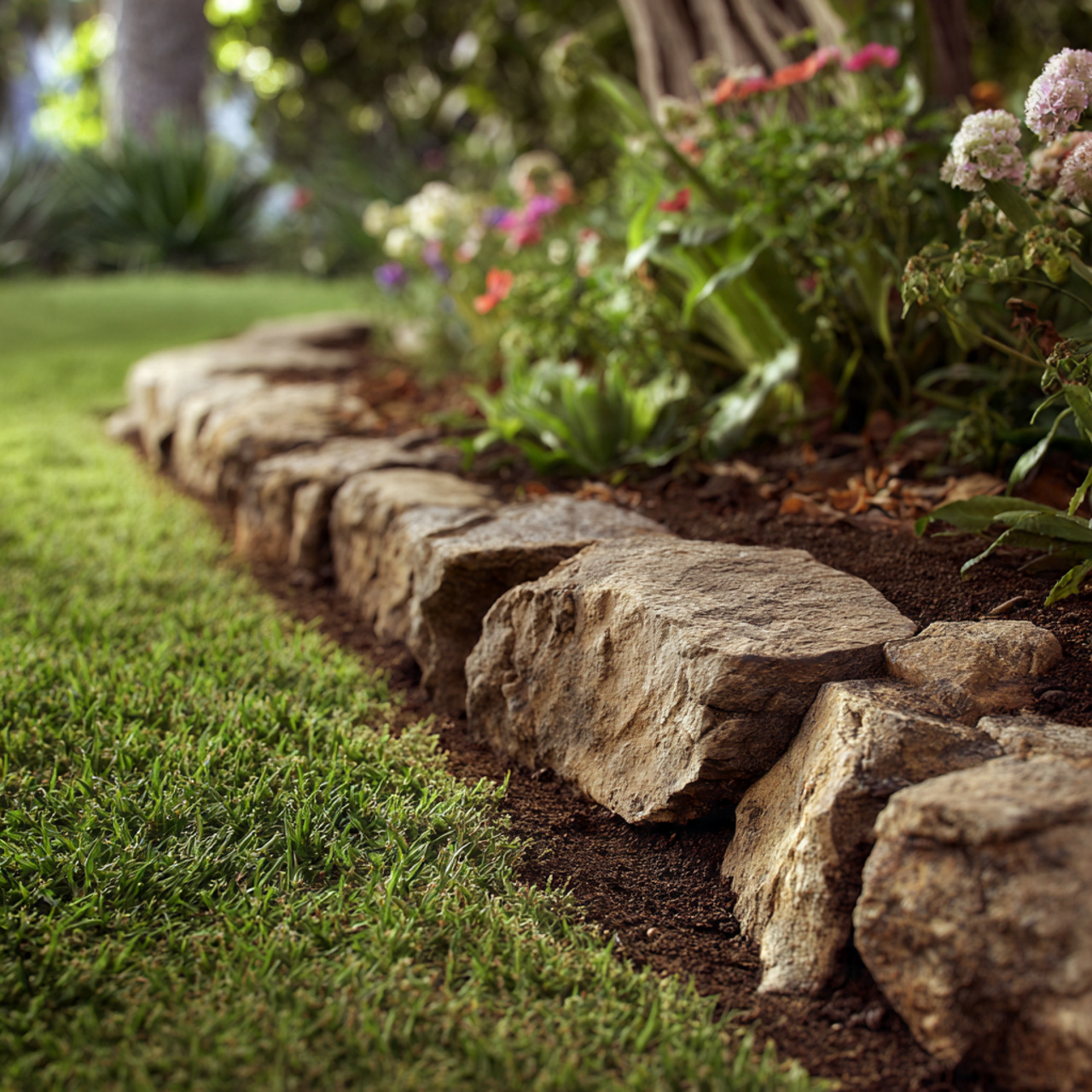
Lawn Edging with Natural Stone
The Ultimate Guide to Lawn Edging: Creating Beautiful, Low-Maintenance Borders
A pristine lawn doesn’t just happen overnight. Behind every professionally manicured yard lies a secret weapon: proper lawn edging. Those crisp, defined lines you admire in magazine-worthy landscapes aren’t just for show—they’re the foundation of an organized, healthy outdoor space that practically maintains itself.
Think of lawn edging as the frame around a masterpiece painting. Without it, even the most beautiful artwork loses its impact. Your lawn works the same way. You could have the greenest grass in the neighborhood, but without clear borders separating it from garden beds, walkways, and driveways, the whole space can look unfinished and chaotic.
In this comprehensive guide, we’ll explore everything you need to know about lawn edging—from choosing the right materials to installation techniques that actually last. Whether you’re tackling a DIY weekend project or planning a complete landscape overhaul, you’ll discover practical strategies that deliver professional results without the professional price tag.
Why Lawn Edging Is Essential for Every Landscape
Lawn edging creates the physical and visual separation between your grass and everything else—flower beds, pathways, patios, and driveways. Without these boundaries, your lawn naturally spreads into areas where it doesn’t belong, creating that unkempt, overgrown appearance that screams “neglected yard.”
But here’s what most homeowners don’t realize: lawn edging isn’t just cosmetic. It’s a strategic tool that reduces your workload, protects your investments in hardscaping, and keeps materials exactly where you placed them. When you install quality edging correctly, it pays dividends season after season by minimizing the constant battle against creeping grass and migrating mulch.
Smart Strategy Tip:
- Start with high-impact areas first—focus on zones where grass meets stone, concrete, or wood mulch
- These create the most dramatic visual improvement with minimal effort
- Save less visible borders for phase two of your edging project
- Prioritize areas visible from your main entry points and street view
Creating Picture-Perfect Visual Boundaries
Clean, defined edges instantly transform your lawn from “meh” to magnificent. Even if your grass isn’t competition-ready, crisp borders give the impression of meticulous care and professional landscaping. These lines guide the viewer’s eye, creating natural flow and highlighting your best landscape features.
Think about what draws your attention when you visit a well-maintained property. It’s rarely the grass itself—it’s the way everything fits together. Edging provides that organizational framework, turning random plantings into intentional design.
Pro Visualization Tips:
- Walk to your curb or main viewing point and study your lawn objectively
- Notice where your eyes naturally travel across the landscape
- Mark these high-visibility sightlines as priority edging zones
- Curved edges soften modern architecture; straight lines complement traditional homes
- Take photos from multiple angles to spot inconsistencies you miss in person
Common Mistakes to Avoid:
- Creating edges that don’t follow the natural flow of your property
- Making curves too tight or angular (they’ll be hard to mow and maintain)
- Ignoring how edging will look from inside your home looking out
Stopping Grass Invasion in Its Tracks
Grass is relentlessly aggressive. Left unchecked, it will march into your flower beds, creep under fences, and claim your walkways as its own territory. This isn’t gardening paranoia—it’s biology. Grass spreads through underground runners (rhizomes) and surface stems (stolons) that constantly seek new ground to colonize.
Quality lawn edging acts as your first line of defense, creating a physical barrier that significantly slows this invasion. While no edging system is 100% grass-proof forever, the right installation can reduce border maintenance by 70% or more.
Installation Depth Matters:
- Extend edging at least 3-4 inches below soil level for effective root blocking
- Deeper barriers (5-6 inches) work better for aggressive grass varieties like Bermuda
- Shallow edging (1-2 inches) provides minimal containment and will fail quickly
- Check your specific grass type’s root depth to determine ideal barrier depth
Maintenance Time-Saver:
- Annual spring check: inspect edges for breakthrough spots
- Quick 15-minute touch-up beats hours of border reshaping later
- Keep a small hand edger tool for spot corrections between major maintenance
Slashing Your Long-Term Maintenance Hours
Here’s what nobody tells you about lawn edging: it’s one of those rare home improvements that actually reduces work instead of creating it. Defined borders make every mowing session faster and more efficient. You’ll spend less time doing awkward trimming in corners and along beds, and more time enjoying your yard.
But the benefits go deeper. Grass growing over concrete pathways and stone patios doesn’t just look bad—it causes real damage over time. Grass roots trap moisture against these surfaces, leading to staining, cracking, and premature deterioration of expensive hardscaping.
Mowing Efficiency Checklist:
- Align edging width with your mower’s cutting deck (typically 18-22 inches)
- Design edges that accommodate your mower’s turning radius
- Eliminate tight corners that require multiple trimmer passes
- Create mowing strips (4-6 inch flat zones) between lawn and vertical edges
Example Time Savings: Average lawn without edging: 45 minutes mowing + 20 minutes trimming = 65 minutes total Same lawn with proper edging: 35 minutes mowing + 5 minutes trimming = 40 minutes total Annual savings: 25 minutes × 30 mowing sessions = 12.5 hours recovered per year
Boosting Property Value and Street Appeal
Curb appeal isn’t just real estate jargon—it’s the difference between a home that sells quickly at asking price and one that lingers on the market. Lawn edging ranks among the highest ROI landscaping improvements because it delivers visible results without major renovation costs.
Here’s the psychology: potential buyers notice clean lines subconsciously, even if they can’t articulate what looks “right” about a property. Well-defined edges signal that the entire property has received consistent, thoughtful care. That impression extends beyond the lawn to the home’s interior and mechanical systems.
High-Impact Zones for Resale Value:
- Front lawn borders (highest visibility, maximum impact)
- Driveway edges (daily visual contact point)
- Main walkway borders (frames the entry experience)
- Foundation plantings (creates finished, intentional look)
Quick Curb Appeal Wins:
- Fresh mulch + new edging = instant 5-year appearance improvement
- Focus 80% of budget on front yard; most buyers never see the backyard
- Coordinate edging material with home’s architectural style
Understanding Edging Materials and Their Lifespan
Not all edging materials are created equal. Some flex and adapt to soil movement, while others remain rigidly in place. Some weather beautifully for decades, while others deteriorate within a few seasons. Your climate, soil composition, and foot traffic patterns all dramatically affect which materials will succeed or fail in your specific yard.
The biggest mistake homeowners make is choosing edging based solely on appearance or initial cost. A beautiful material that fails in three years costs far more than a practical option that lasts fifteen.
Critical Material Selection Factors:
- Climate compatibility: Freeze-thaw cycles destroy inappropriate materials
- Soil type: Clay vs. sandy soil affects stability and drainage needs
- Sun exposure: UV degradation is real for plastics and composites
- Traffic levels: High-use areas demand more durable solutions
- Maintenance tolerance: Some materials need annual adjustment, others are set-and-forget
Research Before Buying Tip:
- Google “[your city/region] lawn edging forum” for local experiences
- Ask neighbors with established edging about their material choices
- Visit local landscaping supply yards and ask what professionals use locally
Natural Stone Edging: Timeless and Permanent
Stone edging brings unmatched natural beauty to landscapes. These materials blend seamlessly with virtually any design style, from cottage gardens to modern minimalist spaces. The substantial weight of stone provides excellent stability, resisting movement from frost heave, foot traffic, and equipment impacts.
When installed with proper attention to foundation and leveling, natural stone can easily outlast your ownership of the property. Many stone edges continue performing beautifully for 30-50 years or longer.
Installation Reality Check:
- Stone is incredibly unforgiving of poor installation
- Improper leveling creates low spots that collect water and debris
- Uneven heights create trip hazards and look amateurish
- Heavy stones require careful handling to prevent injury
Pro Installation Tips:
- Dry-fit your entire edge layout before setting anything permanently
- Use a 4-foot level (not just eyeballing) for consistent height
- Photograph your dry-fit layout from multiple angles before finalizing
- Install a 2-3 inch gravel base for improved drainage and stability
- Budget 2-3 times longer than you think installation will take
Best Stone Choices:
- Flagstone: irregular shapes, natural appearance
- Limestone blocks: formal, uniform look
- River rock: rounded, smooth aesthetic
- Granite cobbles: extremely durable, varied colors
Lawn Edging Using Brick or Pavers
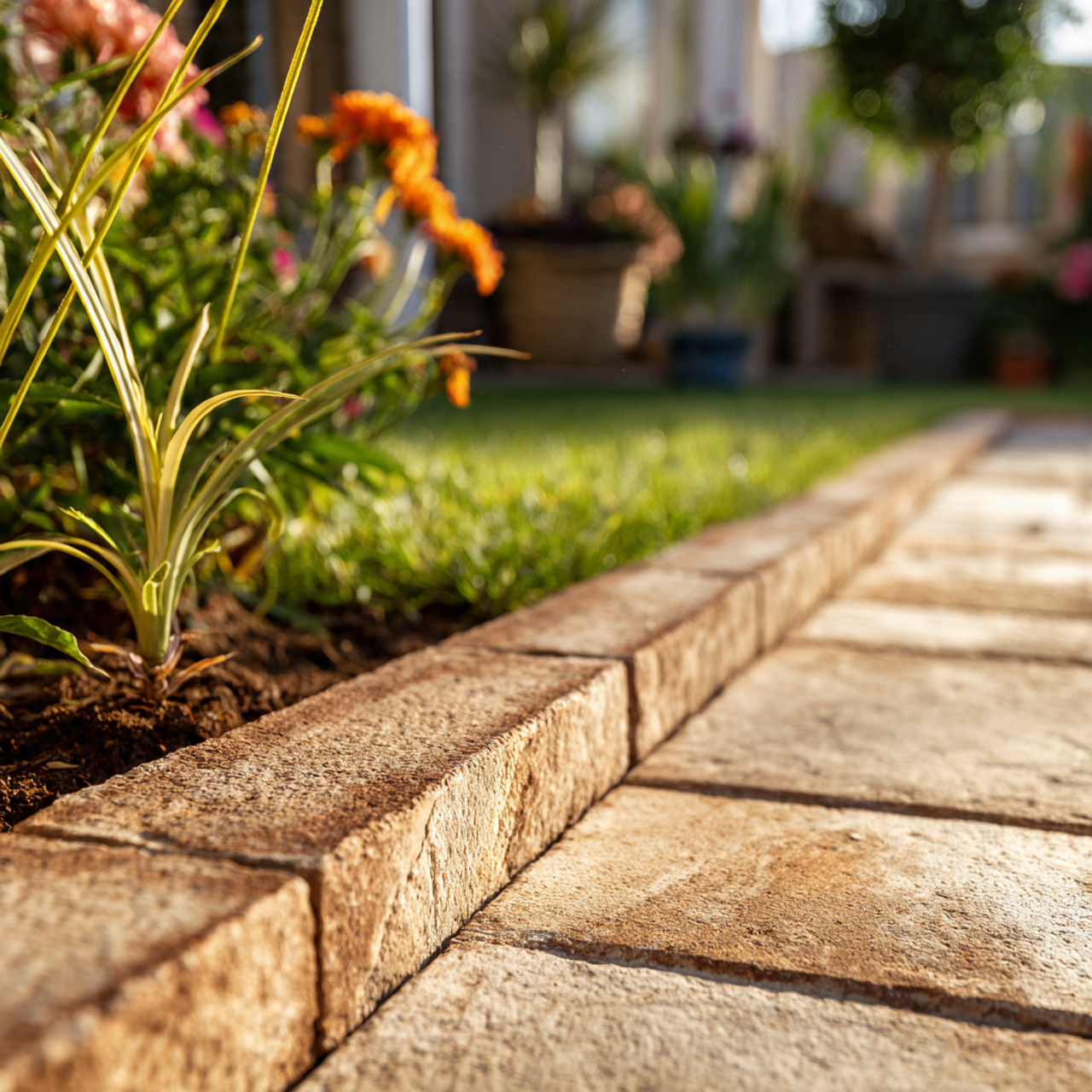
Brick and paver edging delivers that refined, estate-quality appearance that pairs beautifully with traditional architecture. These materials create strong geometric lines and work especially well when matched with existing brick or paver pathways and patios. Properly installed brick edging can last 20-30 years with minimal maintenance.
The challenge lies entirely in foundation preparation. Without adequate base work, even the finest bricks will sink, tilt, and shift within a few seasons—creating both visual chaos and genuine safety hazards.
Foundation Success Formula:
- Excavate 6-8 inches deep (deeper for heavy clay soils)
- Layer 1: 3-4 inches compacted crushed gravel (not rounded pea gravel)
- Layer 2: 1-2 inches leveling sand
- Compact each layer separately before adding the next
- Set bricks on edge (vertical) for maximum height and presence
Common Installation Failures:
- Skipping the gravel base layer (causes settling)
- Using sand alone as a base (washes away over time)
- Failing to compact base materials (gradual sinking)
- Installing bricks flat instead of on edge (minimal height, easy displacement)
Maintenance Expectations:
- Annual inspection for settling or tilting
- Reset 1-3 bricks per year on average in high-traffic areas
- Refresh sand joints every 2-3 years
- Power wash to remove moss and algae buildup
Lawn Edging with Metal Strips
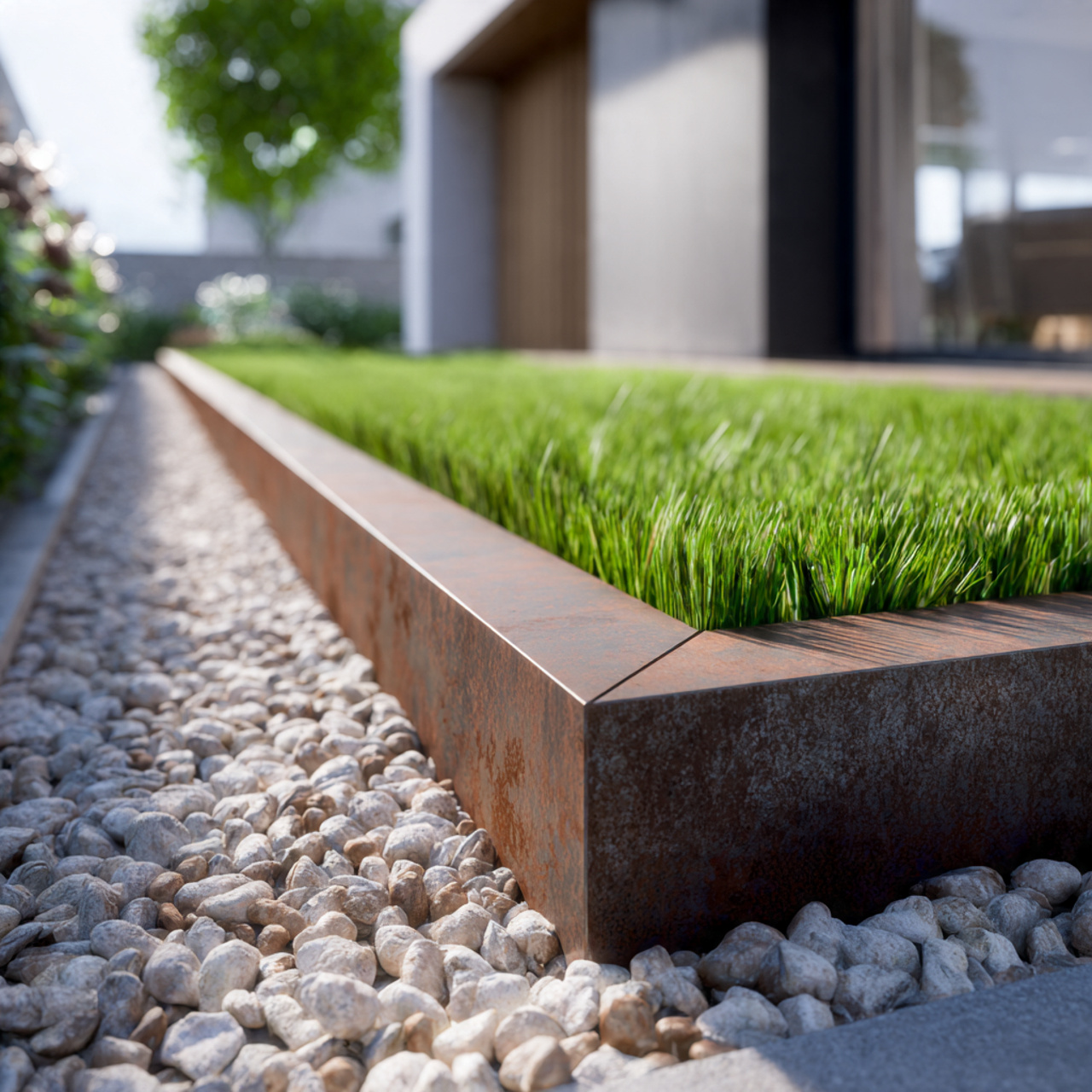
Metal edging has surged in popularity for its ability to create razor-sharp, contemporary lines that virtually disappear while defining boundaries perfectly. The thin profile keeps visual attention on your plants and lawn, not the edging itself. Steel and aluminum strips work equally well for sweeping curves or precise straight edges.
However, metal comes with specific considerations. Uncoated steel will develop rust patina (which some find attractive, others problematic), while poor-quality aluminum can become brittle and fracture. Direct sun exposure can make metal uncomfortably hot to touch, and some metals react negatively with certain soil pH levels.
Material Options Explained:
- Galvanized steel: Budget-friendly, develops gray patina, 10-15 year life
- Cor-Ten steel: Designed to rust to a stable brown finish, 20+ year life
- Powder-coated aluminum: Won’t rust, lightweight, 15-20 year life
- Stainless steel: Premium price, virtually permanent, 30+ year life
Installation Critical Points:
- Leave 1/4-inch expansion gaps every 8-10 feet on long runs
- Metal expands and contracts significantly with temperature changes
- Without expansion allowance, panels will buckle and warp
- Stake every 2-3 feet minimum; use more stakes on curves
- Bury top edge 1/2 inch below soil level for invisible appearance
Safety Measures:
- Wear heavy gloves—sharp edges can cause nasty cuts
- File or grind any exposed sharp edges smooth
- Choose thicker gauge metal (14-gauge minimum) for high-traffic areas
Lawn Edging Made from Plastic or Composite
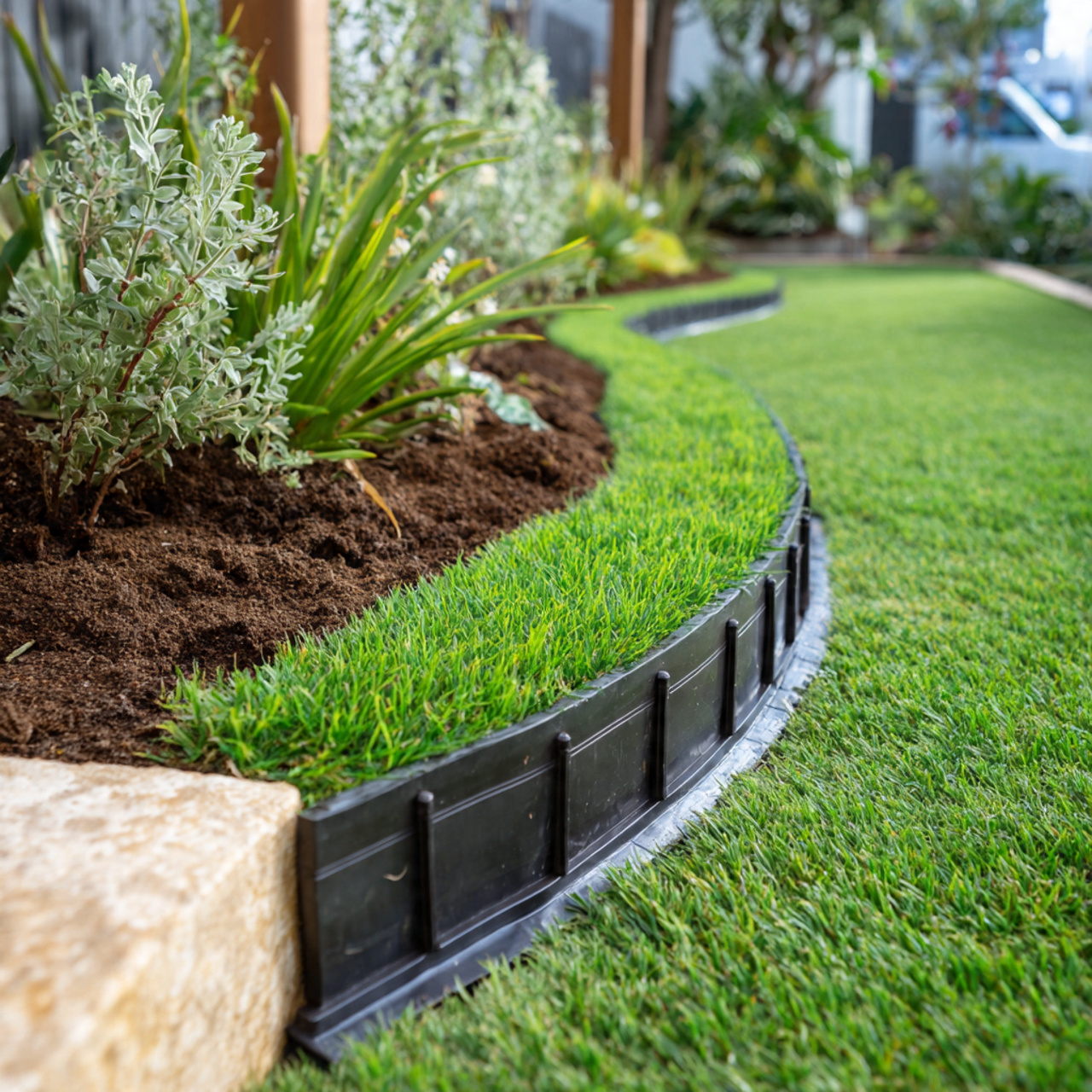
Plastic and composite edging materials win on affordability and ease of installation. Most DIYers can complete an edging project in a single weekend without specialized tools or skills. These materials excel in situations where budget constraints matter or where temporary/experimental borders make sense.
The tradeoff is durability and longevity. Lower-grade plastics become brittle under UV exposure, crack during freeze-thaw cycles, and pop out of the ground as soil expands and contracts. However, premium composites (wood-plastic blends) perform significantly better than basic vinyl.
Quality Indicators:
- Thickness: 1/4 inch minimum; 3/8 inch preferred for longevity
- UV stabilizers: Should be explicitly mentioned on packaging
- Stake design: Integrated stakes work better than separate pins
- Warranty: Quality brands offer 10-15 year warranties
- Flexibility: Should bend without cracking when cold
Installation Boost for Loose Soils:
- Standard recommendation: stake every 3 feet
- Loose/sandy soil: stake every 18-24 inches instead
- Use stakes 1.5 times longer than recommended depth
- Drive stakes at slight angles alternating directions for better hold
- Apply light foot pressure along entire length after staking
Lifespan Expectations:
- Budget vinyl edging: 3-5 years
- Mid-grade plastic: 5-8 years
- Quality composite: 8-12 years
- Premium reinforced composite: 12-15 years
Mastering Curved Edge Design
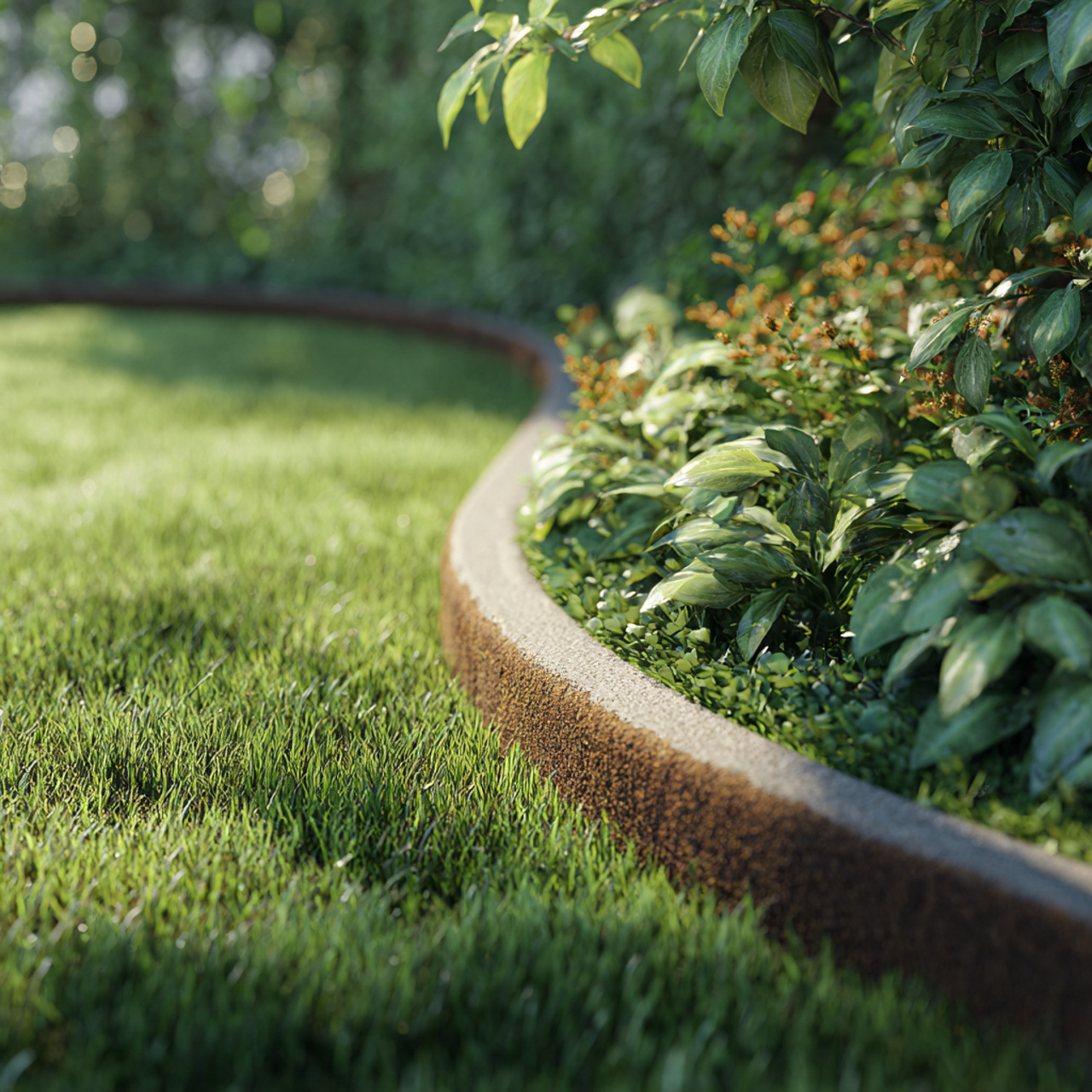
Curves introduce organic flow and visual softness to landscapes, but they’re notoriously difficult to execute and maintain without proper edging. The key is choosing materials that naturally accommodate curves rather than fighting against them.
Rigid materials like wood boards or metal panels designed for straight lines will create awkward faceted edges instead of smooth curves. Flexible edging made from rolled steel, heavy-duty plastic, or composite materials bends smoothly around gradual curves.
Curve Planning Method:
- Lay out garden hose or rope to visualize curve shape
- Walk around it from multiple viewing angles
- Photograph from key viewpoints (deck, windows, street)
- Adjust until curves feel natural and intentional
- Mark curve outline with landscape paint before excavating
Curve Design Principles:
- Gentle, sweeping curves look professional and are easier to mow
- Tight radius curves create awkward mowing angles
- Avoid S-curves unless lawn is large enough to handle them
- Odd numbers of curves (1, 3, 5) look more natural than even numbers
Common Curve Mistakes:
- Creating waves instead of smooth flowing curves
- Making curves too tight for mower turning radius
- Using rigid materials that create segmented appearance
- Failing to plan curves in relation to mowing patterns
Lawn Edging for Straight-Line Precision
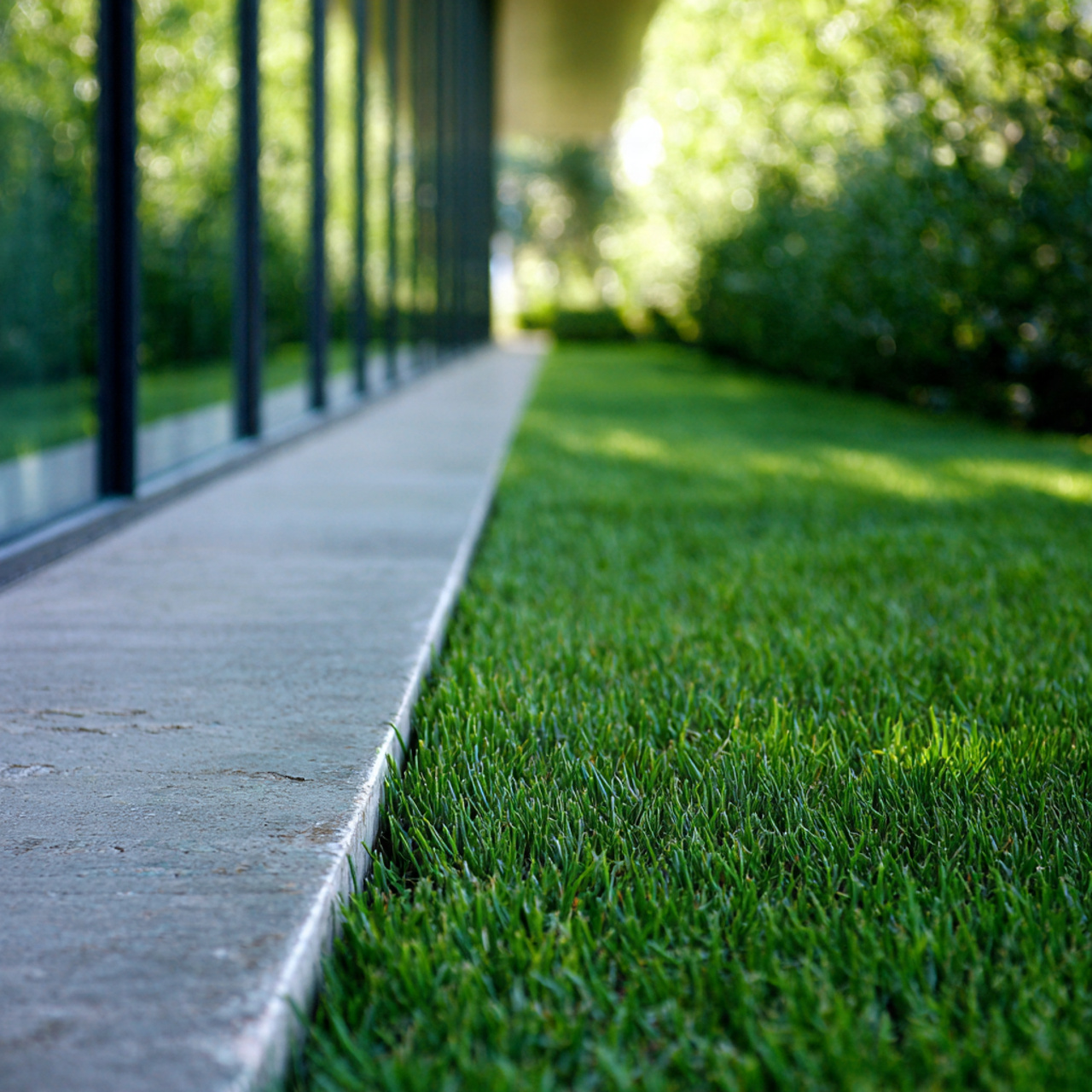
Straight edges communicate order, precision, and contemporary design sensibility. They work beautifully alongside modern architecture and create satisfying symmetry. But here’s the challenge: the human eye easily detects even minor deviations in straight lines, making installation precision absolutely critical.
A straight edge that’s “mostly straight” looks worse than no edge at all. Small wobbles and variations become increasingly obvious as distance increases, undermining the entire purpose of edging.
Professional Straight-Line Technique:
- Drive stakes at start and end points of each straight section
- Stretch mason’s string tight between stakes at final edging height
- Use line level to ensure string is perfectly level
- Keep string 1/2 inch above final edging position as guide
- Check alignment every 3-4 feet during installation
Precision Tools Worth Having:
- 4-foot or 6-foot builder’s level (not just eyeballing)
- Mason’s string (doesn’t stretch like regular twine)
- Line level attachment
- Measuring tape for consistent setback distances
- Landscape marking paint
Example Application: For a 40-foot driveway edge, even a 2-inch deviation at the midpoint becomes glaringly obvious. Using proper string lines keeps variance under 1/4 inch, creating that crisp professional appearance you’re after.
Keeping Mulch Where It Belongs
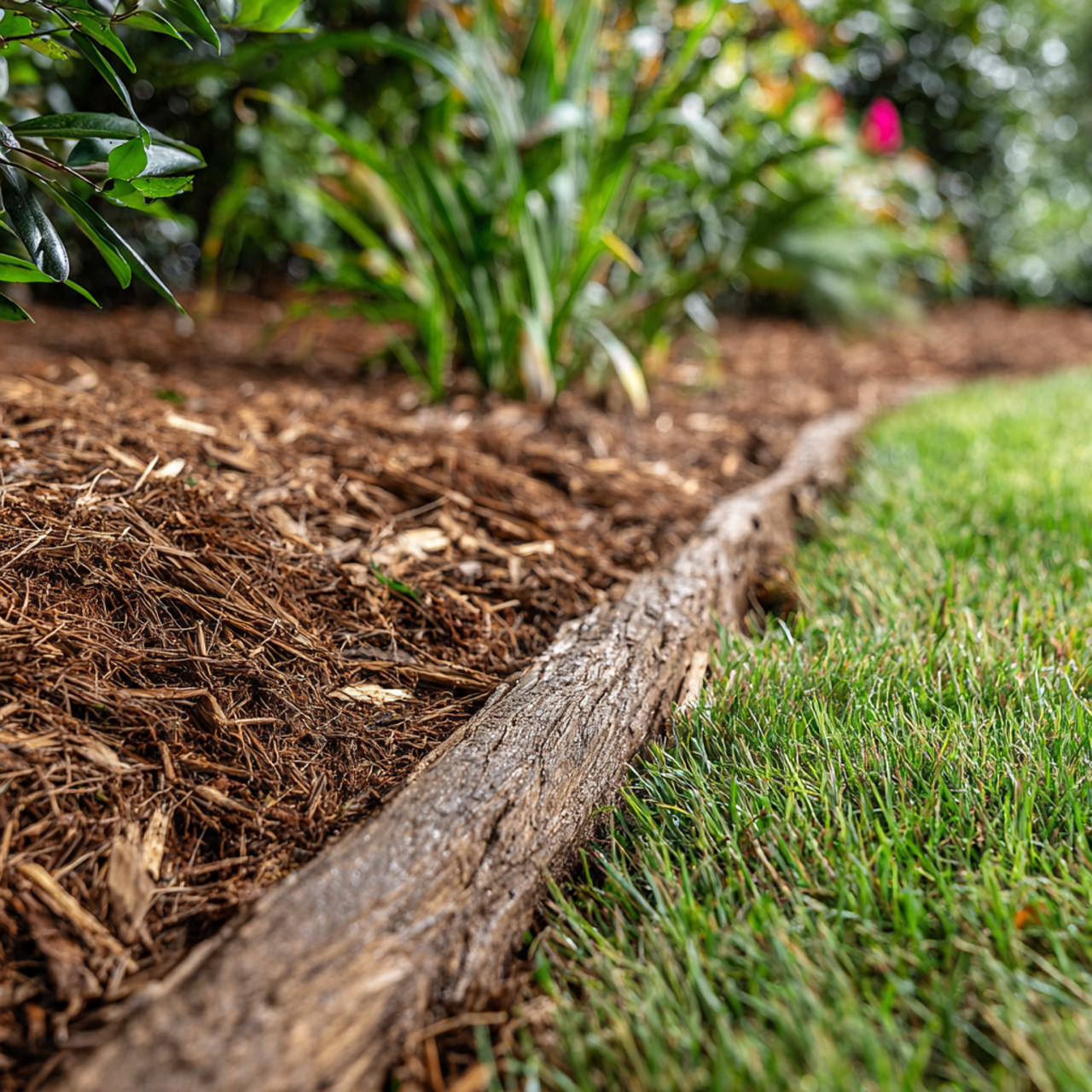
Mulch migration is among the most frustrating landscaping problems. Heavy rain washes it onto lawns, wind scatters it across paths, and normal settling causes it to thin in beds while accumulating against grass. Without effective edging, you’re essentially spreading fresh mulch annually just to replace what’s escaped.
Lawn edging acts as a retaining dam, holding mulch within bed boundaries through rain, wind, and seasonal changes. This maintains consistent 2-3 inch mulch depth that suppresses weeds and retains soil moisture effectively.
Effective Mulch Containment Design:
- Choose edging with minimum 3-4 inch above-ground height
- Install edging so top edge sits 1 inch above desired mulch surface
- This accommodates fresh mulch top-dressing without overflow
- Slope bed away from edging slightly for natural drainage
- Use deeper edging (5-6 inches exposed) for slopes and high-rain areas
Mulch Depth Guidelines:
- Standard beds: 2-3 inches mulch depth
- Tree rings: 3-4 inches (but keep away from trunk)
- Slopes: 3-4 inches to resist erosion
- Low-water areas: 4-5 inches for maximum moisture retention
Tip for Heavy Rain Regions: Install a slight berm or raised edge on the upslope side of beds to redirect water flow around (not through) mulched areas. This prevents mulch washout during storms.
Lawn Edging to Protect Walkways
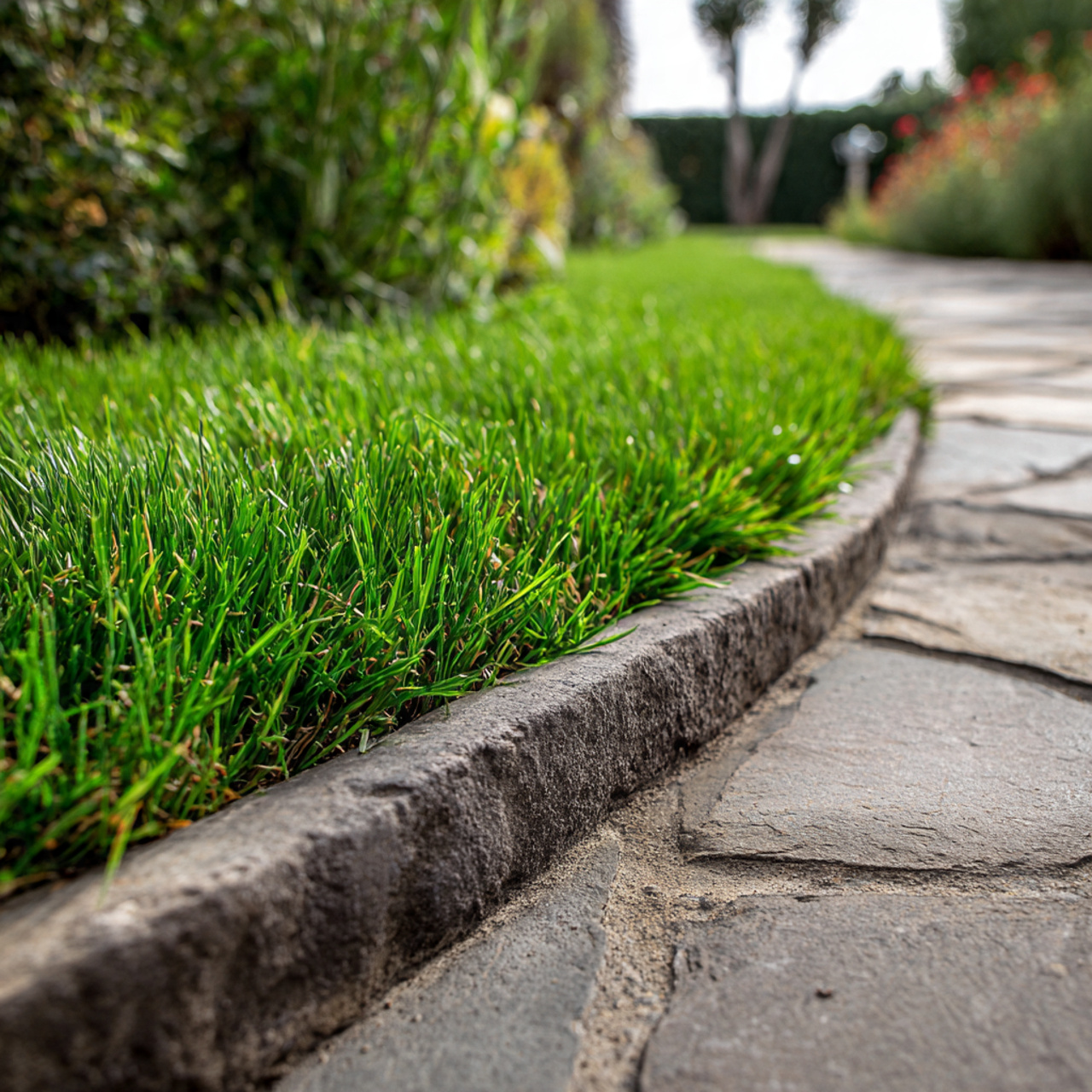
Grass creeping onto walkways creates a messy appearance, but more importantly, it creates genuine safety hazards. Grass on concrete or pavers becomes slippery when wet, increasing fall risk. Additionally, grass and soil washing onto paths gradually erode surface materials and trap moisture that causes cracking.
Strategic edging along walkways prevents these problems while maintaining clean, safe passage through your landscape.
Walkway Edge Best Practices:
- Install edging flush with walkway surface (not raised above)
- Create a 1-2 inch mowing strip between grass and path
- This eliminates the need for trimming directly against hardscape
- Match edging material to walkway for visual continuity
- Example: brick edging with brick paths, stone with stone paths
Safety Considerations:
- Avoid raised edges that create trip hazards
- Ensure smooth transitions at all crossing points
- Keep edging surface smooth (no sharp corners or lips)
- Install edging on both sides of walkways for symmetry and containment
Drainage Protection: Grass growing against walkways traps soil and debris that blocks water drainage. Proper edging maintains a clean separation that allows water to flow freely along path edges without pooling.
Creating Healthy Borders Around Trees and Shrubs
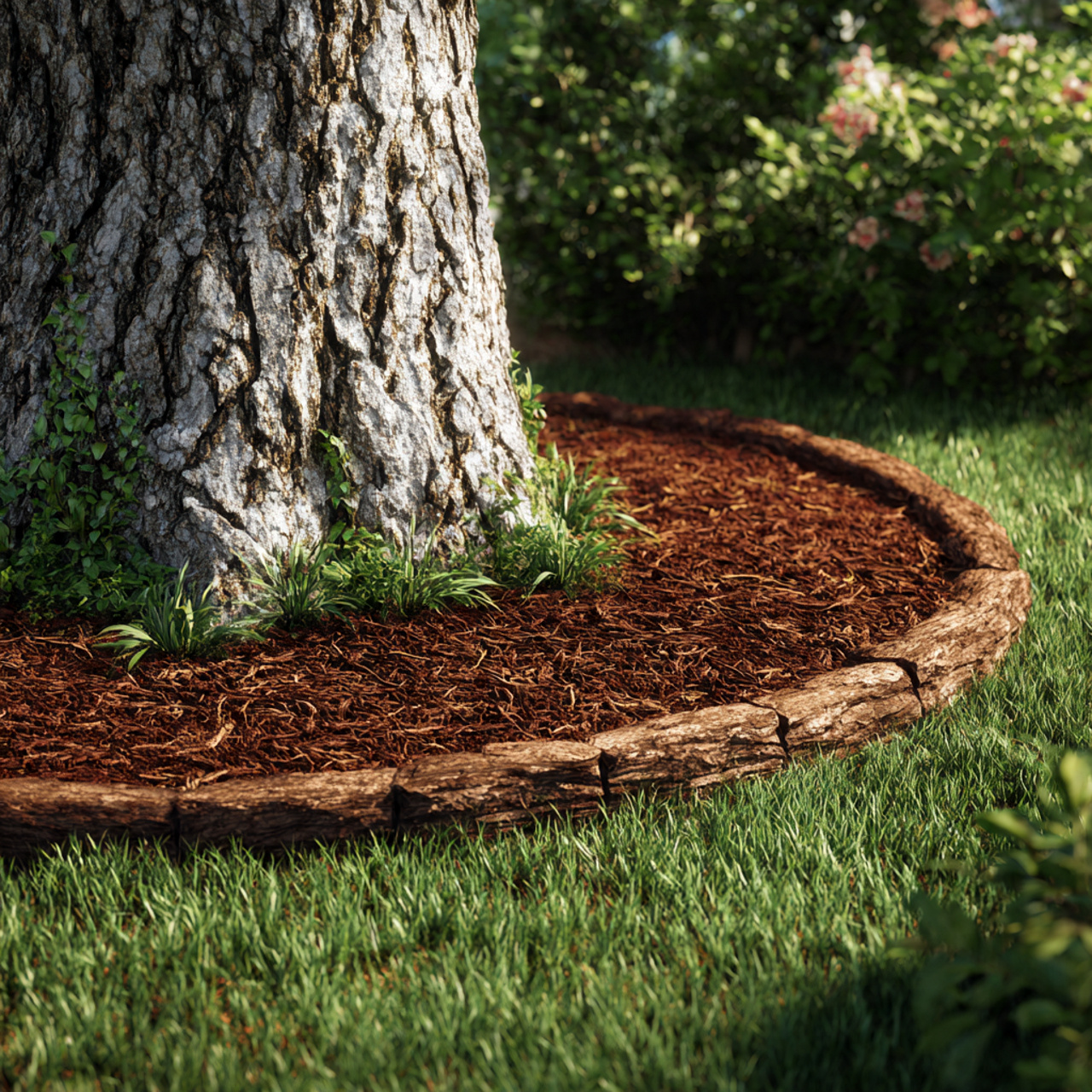
Trees and shrubs thrive when given defined space separate from lawn competition. Lawn edging creates these protective zones, allowing you to maintain mulch rings that retain moisture, regulate soil temperature, and reduce root competition from grass.
However, improper edging around trees can cause serious damage. Too-close edging restricts natural root expansion, while edging that traps moisture against bark encourages rot, disease, and pest problems.
Safe Tree Edging Distances:
- Small trees (under 15 feet mature height): 2-3 foot radius minimum
- Medium trees (15-30 feet): 3-4 foot radius minimum
- Large trees (30+ feet): 4-6 foot radius minimum
- Leave 3-4 inches clearance between mulch ring edge and trunk
Root Protection Guidelines:
- Never install edging closer than 12 inches to trunk
- Avoid cutting through major surface roots during installation
- Use shallow hand tools near root zones, not power equipment
- Expand mulch rings as trees grow (increase radius every 3-5 years)
Common Tree Edging Mistakes:
- Creating volcano mulch mounds against trunk (causes rot)
- Installing rigid edging that will be heaved by root growth
- Making rings too small for tree’s mature size
- Damaging bark with mowing/trimming equipment
Managing Drainage with Strategic Edging
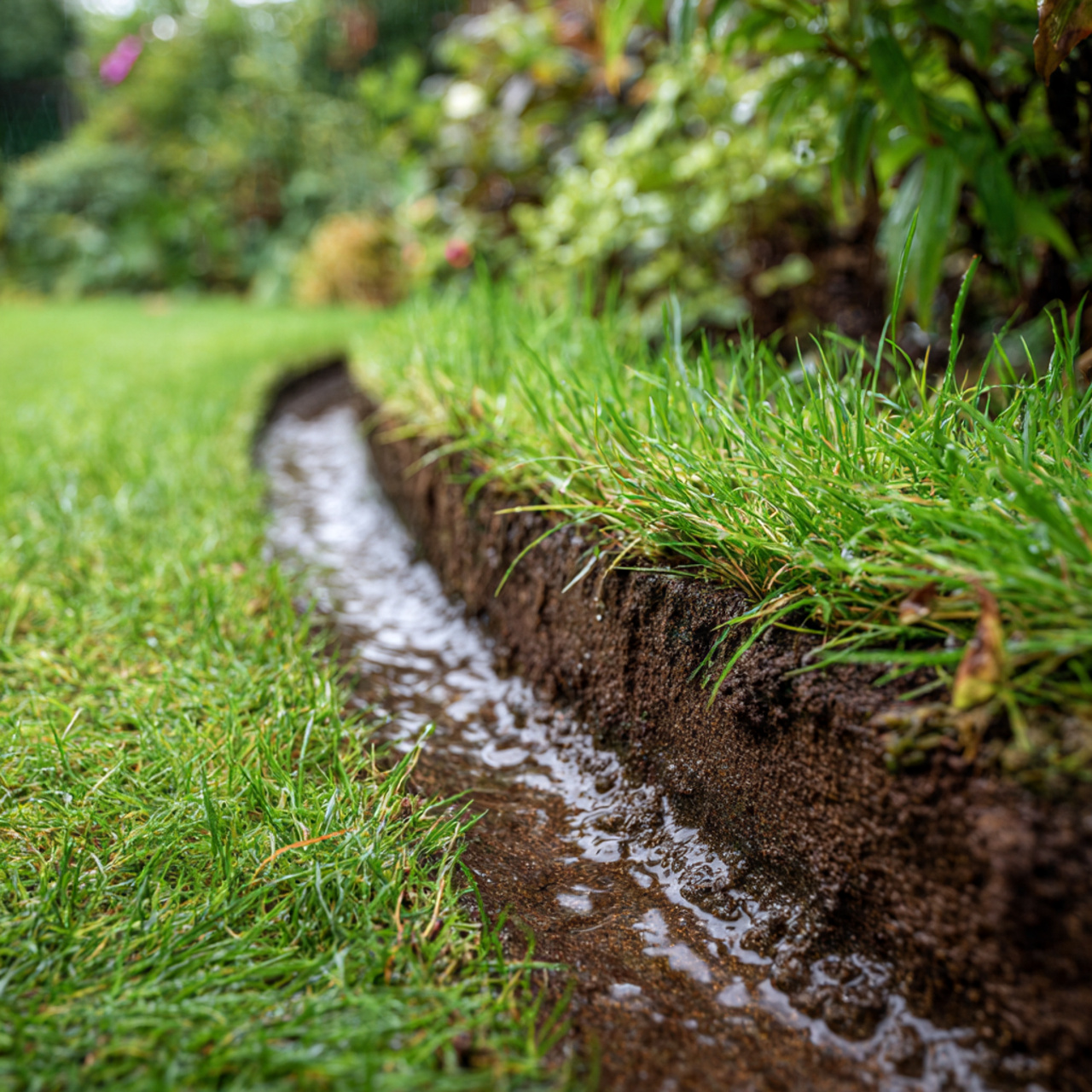
Water is lawn edging’s hidden enemy. Poor drainage undermines even the best materials, causing erosion, shifting, settling, and premature failure. Successful edging installation requires understanding how water moves across your property and designing accordingly.
Edging installed without drainage consideration becomes a dam that traps water, creating soggy soil, material displacement, and breeding grounds for mosquitoes and disease.
Pre-Installation Drainage Analysis:
- Observe your lawn during and after heavy rain
- Mark where water naturally flows and pools
- Identify low spots and drainage patterns
- Plan edging to work with (not against) natural water movement
- Never install edging across primary drainage paths
Drainage-Friendly Installation:
- Grade soil slightly away from edging (1/4 inch per foot)
- Install gravel base layer for improved water percolation
- Leave small gaps (1/4 inch) every 8-10 feet for water passage
- Avoid creating closed circular edges that trap water
- Add drainage pipes beneath edging in problem areas if needed
Warning Signs of Drainage Problems:
- Standing water along edges after rain
- Soil erosion underneath or behind edging
- Edging tilting or shifting after storms
- Moss or algae growing on edging surfaces
Taming Slopes with Specialized Edging
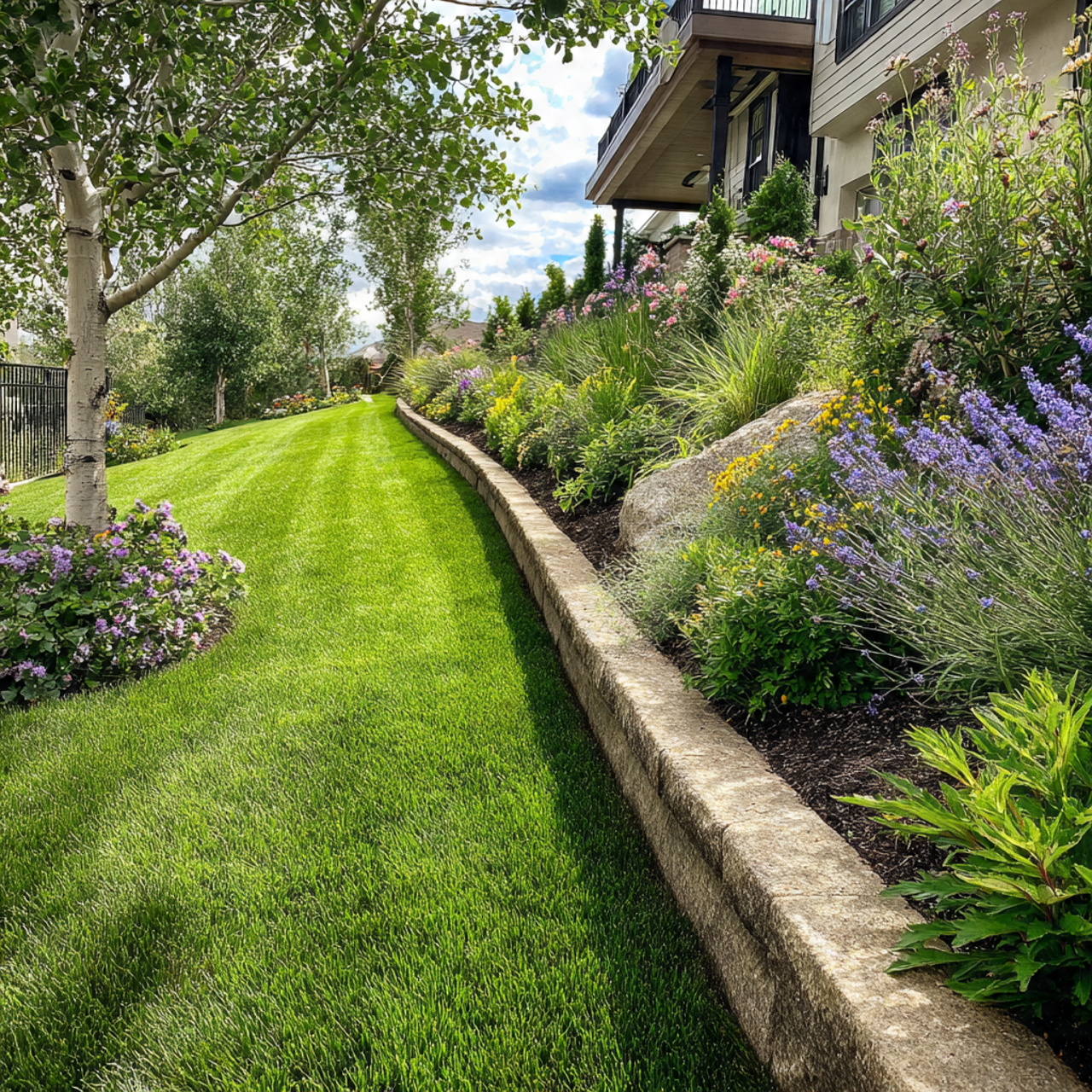
Sloped lawns present unique edging challenges. Gravity constantly works to pull materials downhill, and water erosion accelerates on slopes. Standard edging installation techniques that work perfectly on flat ground often fail completely on inclines.
The solution lies in terracing, enhanced anchoring, and material selection specifically suited to slope stabilization.
Slope Edging Strategies:
- Gentle slopes (0-5%): Standard edging with extra stakes works
- Moderate slopes (5-15%): Step edging down slope in terraces
- Steep slopes (15%+): Professional terracing usually required
- Follow slope contours horizontally, not up-and-down
Enhanced Anchoring for Slopes:
- Double or triple stake frequency compared to flat ground
- Drive stakes at angles (not vertical) for better holding power
- Use longer stakes (minimum 12 inches on slopes)
- Consider deadman anchors (buried horizontal stakes) for heavy materials
- Install on the uphill side of desired edge line for gravity assistance
Terracing Technique: Instead of one continuous edge running down a slope, create 3-4 horizontal edges stepping down the hill. Each level edge is easier to stabilize and maintain than one long sloped edge.
Material Recommendations for Slopes:
- Best: Heavy stone or concrete blocks (gravity helps stability)
- Good: Metal edging with extensive staking
- Avoid: Lightweight plastic (insufficient weight/anchoring)
Seasonal Maintenance and Inspection Schedule
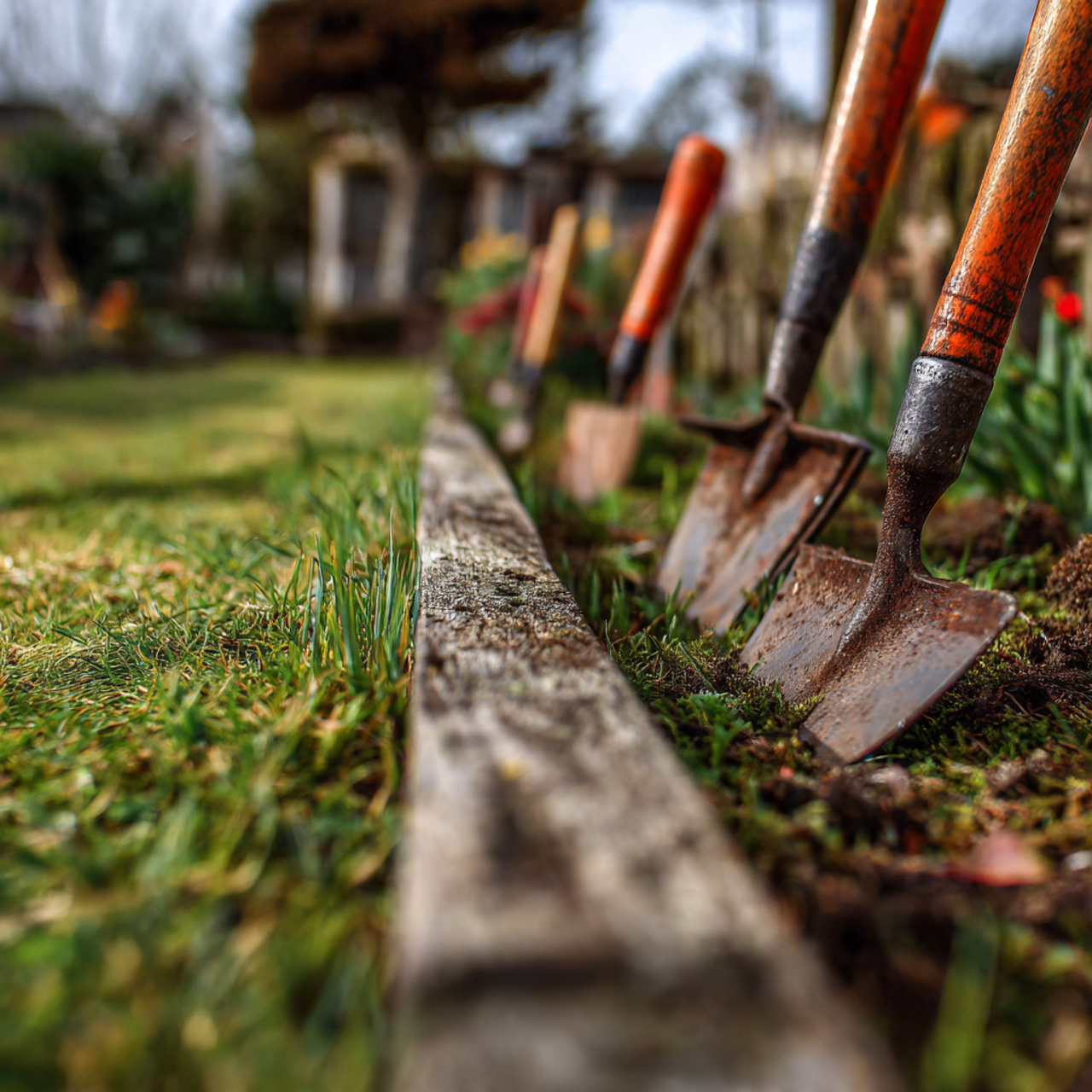
Lawn edging isn’t a set-and-forget installation. Seasonal weather changes create stress on materials through freeze-thaw cycles, thermal expansion, soil heaving, and moisture fluctuations. Regular inspection and minor adjustments prevent small issues from becoming major replacement projects.
The good news: proper maintenance requires minimal time investment—usually just 30-60 minutes twice annually.
Spring Inspection Checklist (March-April):
- Walk entire edge perimeter looking for shifted sections
- Check for frost heave displacement (common in northern climates)
- Reset any lifted or tilted pieces
- Refill any eroded soil gaps beneath edging
- Tighten or replace loose stakes
- Address any grass breakthrough points
Fall Inspection Checklist (October-November):
- Remove leaf accumulation along edges
- Check drainage flow before ground freezes
- Secure any loose sections before winter
- Add soil to any settled areas
- Note any sections needing replacement next spring
Quick Maintenance Habits:
- Pair edging inspection with seasonal lawn aeration
- Check after major storms for displacement
- Address small problems immediately (5-minute fix vs. 2-hour repair later)
- Keep spare materials from original installation for repairs
Suppressing Weeds Along Border Zones
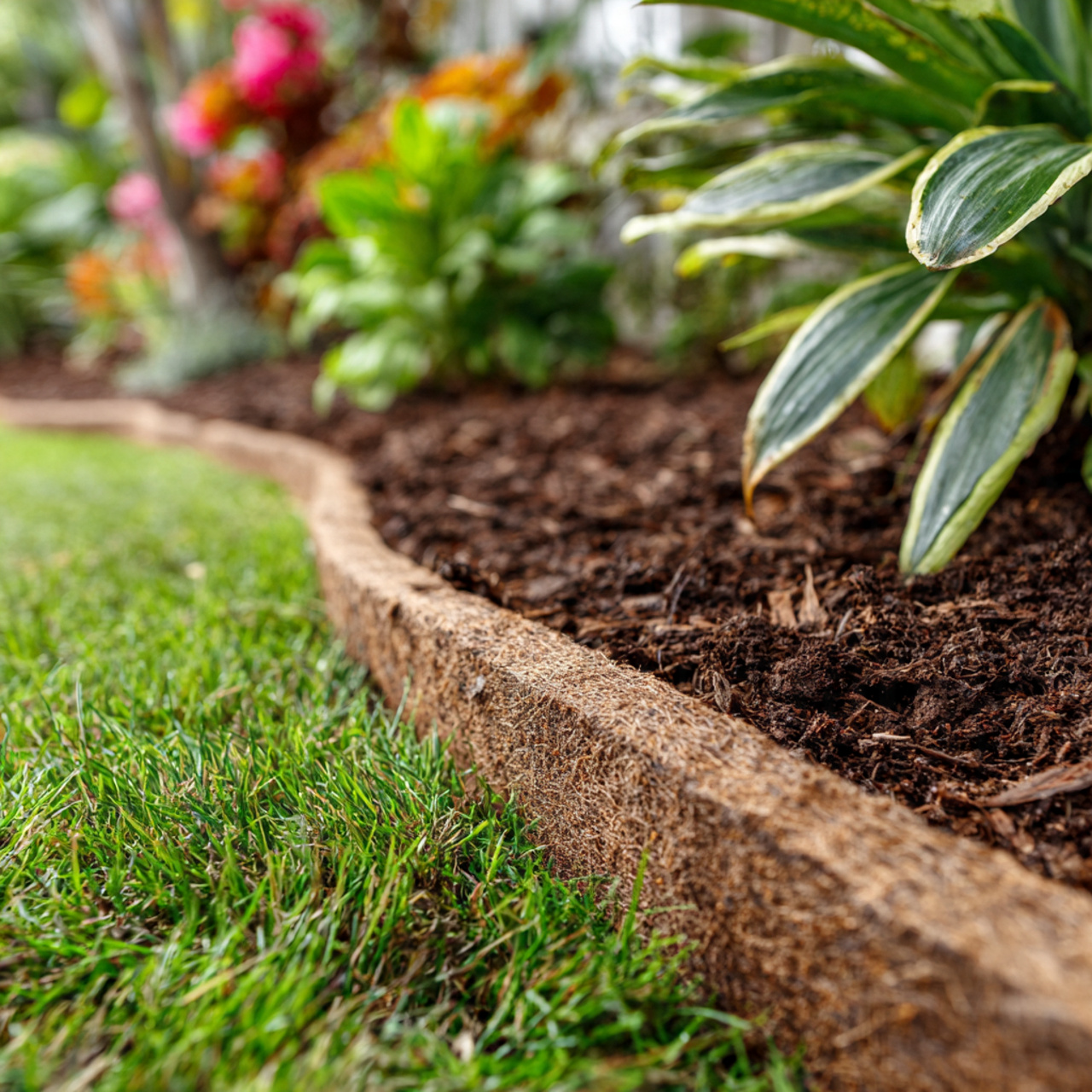
While lawn edging doesn’t eliminate weeds completely, it significantly reduces their ability to migrate between lawn and garden beds. The physical barrier creates distinct zones that are easier to manage with targeted weed control strategies.
The real weed-fighting power comes from combining edging with proper bed preparation and layered defense systems.
Multi-Layer Weed Defense:
- Layer 1 – Base barrier: Landscape fabric beneath edging
- Layer 2 – Physical edge: Properly installed edging material
- Layer 3 – Surface mulch: 3-4 inches of quality mulch
- Layer 4 – Regular maintenance: Annual weeding/mulch refresh
Landscape Fabric Installation Tips:
- Extend fabric 6 inches beyond both sides of edging location
- Overlap fabric seams by 8-12 inches (weeds find gaps)
- Use commercial-grade fabric (not thin plastic sheeting)
- Secure with landscape staples every 12 inches
- Install edging through fabric for maximum effectiveness
Weed Pressure Reduction: Properly edged lawn with fabric and mulch: 60-80% reduction in border weeds compared to unedged lawn. This translates to 15-30 minutes saved per week during growing season.
Avoid This Mistake: Don’t use landscape fabric under grass—only under beds and edging. Fabric beneath lawn prevents healthy root development and water penetration.
Protecting and Improving Soil Quality
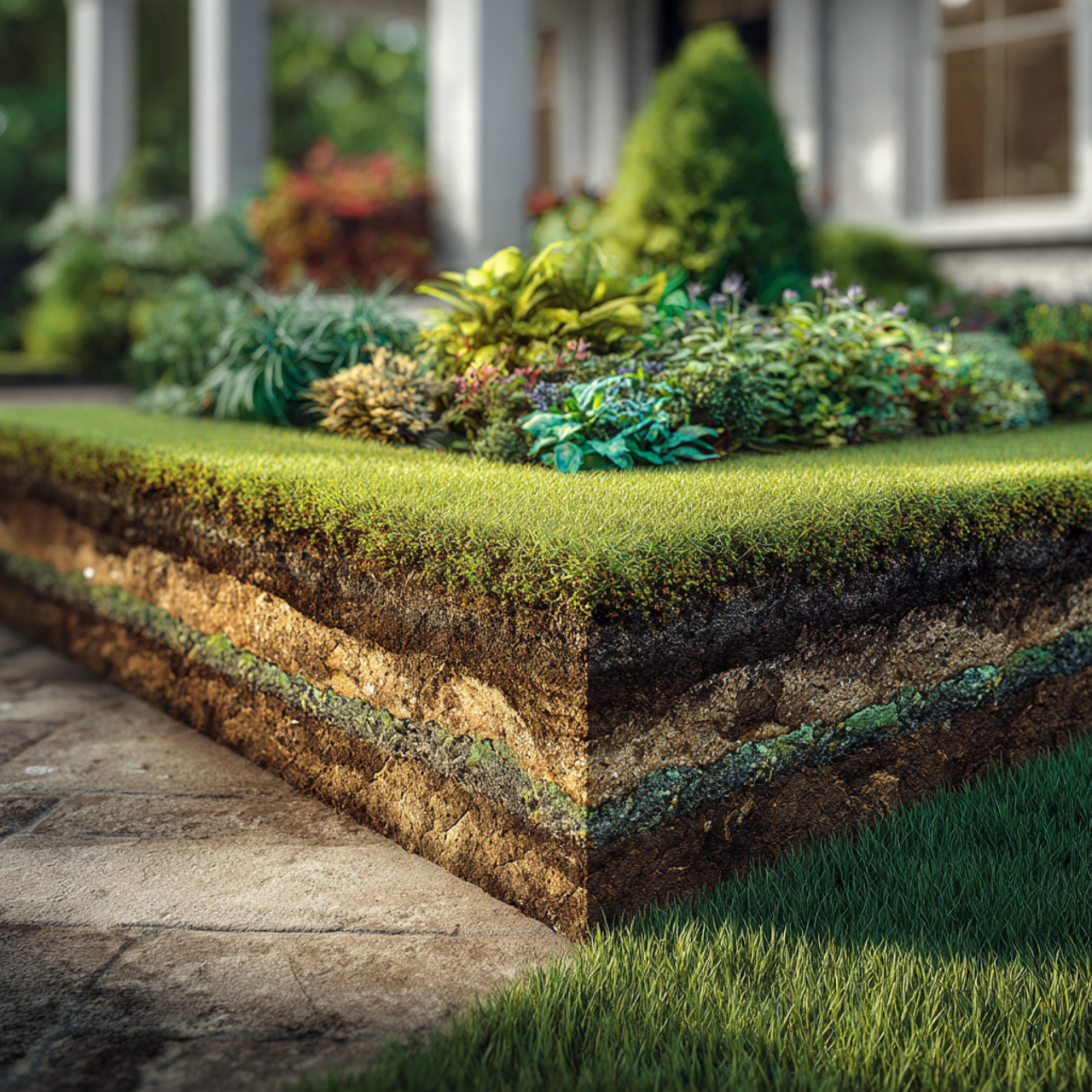
Strategic edging helps maintain distinct soil environments on each side of the border. Your lawn soil needs different treatment than garden bed soil—different pH levels, different nutrients, different amendments. Without separation, these materials gradually mix and dilute, reducing effectiveness of your soil improvement efforts.
Additionally, edging reduces soil compaction at borders caused by foot traffic, equipment wheels, and repeated mower passes.
Soil Separation Benefits:
- Lawn fertilizer stays in lawn (doesn’t contaminate vegetable beds)
- Garden amendments stay in beds (not diluted into lawn)
- Compost and manure applications remain targeted
- pH adjustments work more effectively
- Soil test results remain accurate to specific zones
Installation for Soil Health:
- Don’t bury edging so tightly that it blocks air/water movement
- Leave 1/4-inch gap between edging and soil for percolation
- Avoid compacting soil during installation (work from boards)
- Install in spring/fall when soil moisture is optimal
- Add compost to disturbed soil after edging installation
Compaction Prevention: Create designated walking paths and mowing strips to concentrate traffic away from sensitive planting areas. Edging helps define these pathways naturally.
Planning Your Edging Installation Project
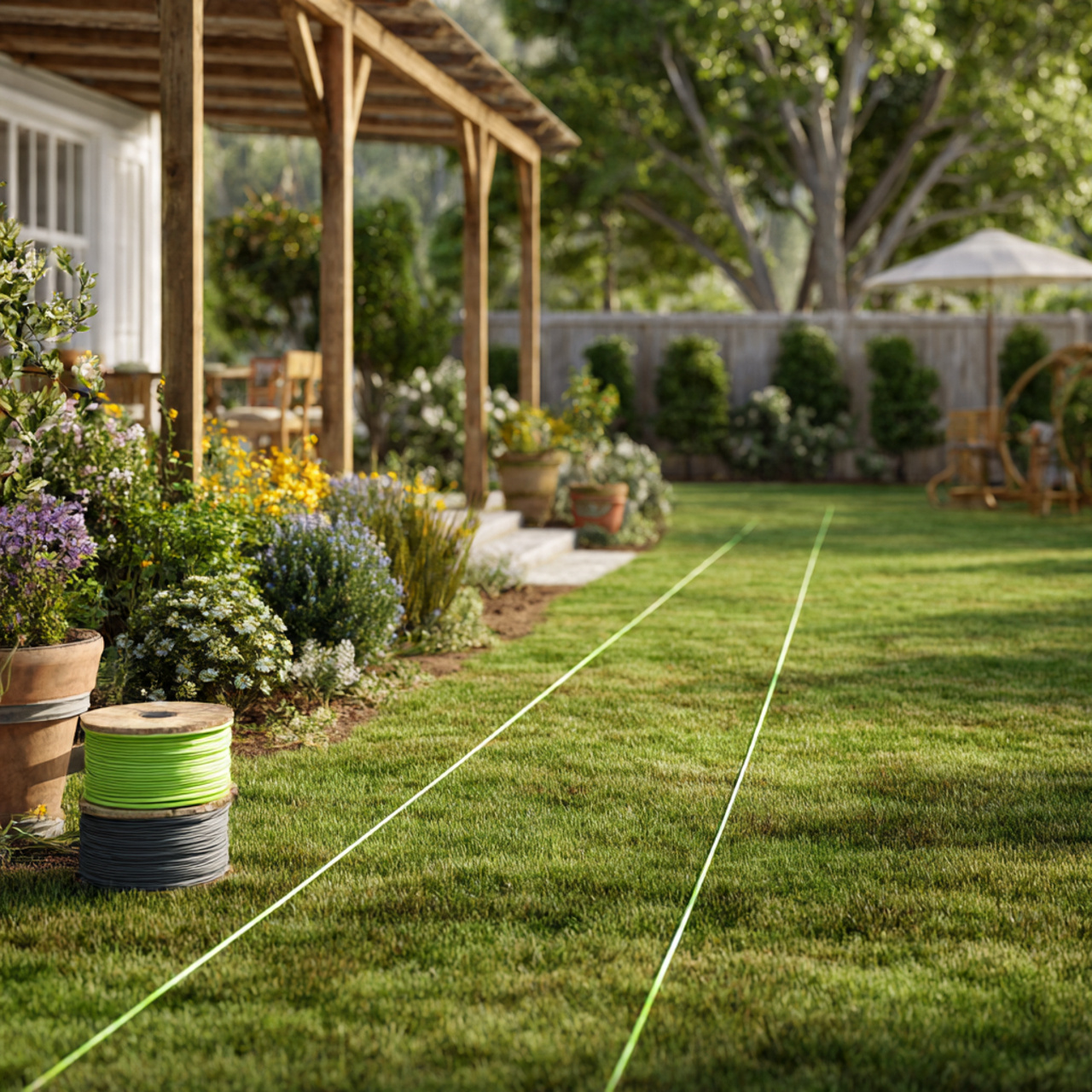
Successful edging projects begin long before you dig the first trench. Thoughtful planning prevents expensive mistakes, ensures you buy correct quantities, and helps you avoid buried utility lines and underground irrigation systems.
Rushed installation leads to wavering lines, mismatched materials, and edging that fails within the first season.
Pre-Installation Planning Steps:
- Map your entire edge plan on graph paper
- Measure all edge lengths accurately
- Note curves, corners, and grade changes
- Mark location of sprinkler heads, drains, downspouts
- Identify where water flows during rain
- Call 811 for utility marking (required by law)
- Free service marks underground electric, gas, water, cable
- Call 2-3 business days before digging
- Seriously—hitting a utility line is dangerous and expensive
- Calculate materials needed
- Measure total linear feet of edging needed
- Add 10% waste factor for cuts and mistakes
- Count required stakes (usually every 2-3 feet)
- List all tools needed (rent what you don’t own)
Timeline Expectations:
- Small project (50 linear feet): 1 weekend for most DIYers
- Medium project (150 linear feet): 2-3 weekends
- Large project (300+ linear feet): Consider phasing or hiring help
Weather Considerations:
- Best installation: spring or fall when soil is workable
- Avoid: frozen ground (winter) or rock-hard dry soil (summer)
- Slightly moist soil is easiest to dig and shape
Repairing and Adjusting Existing Edging
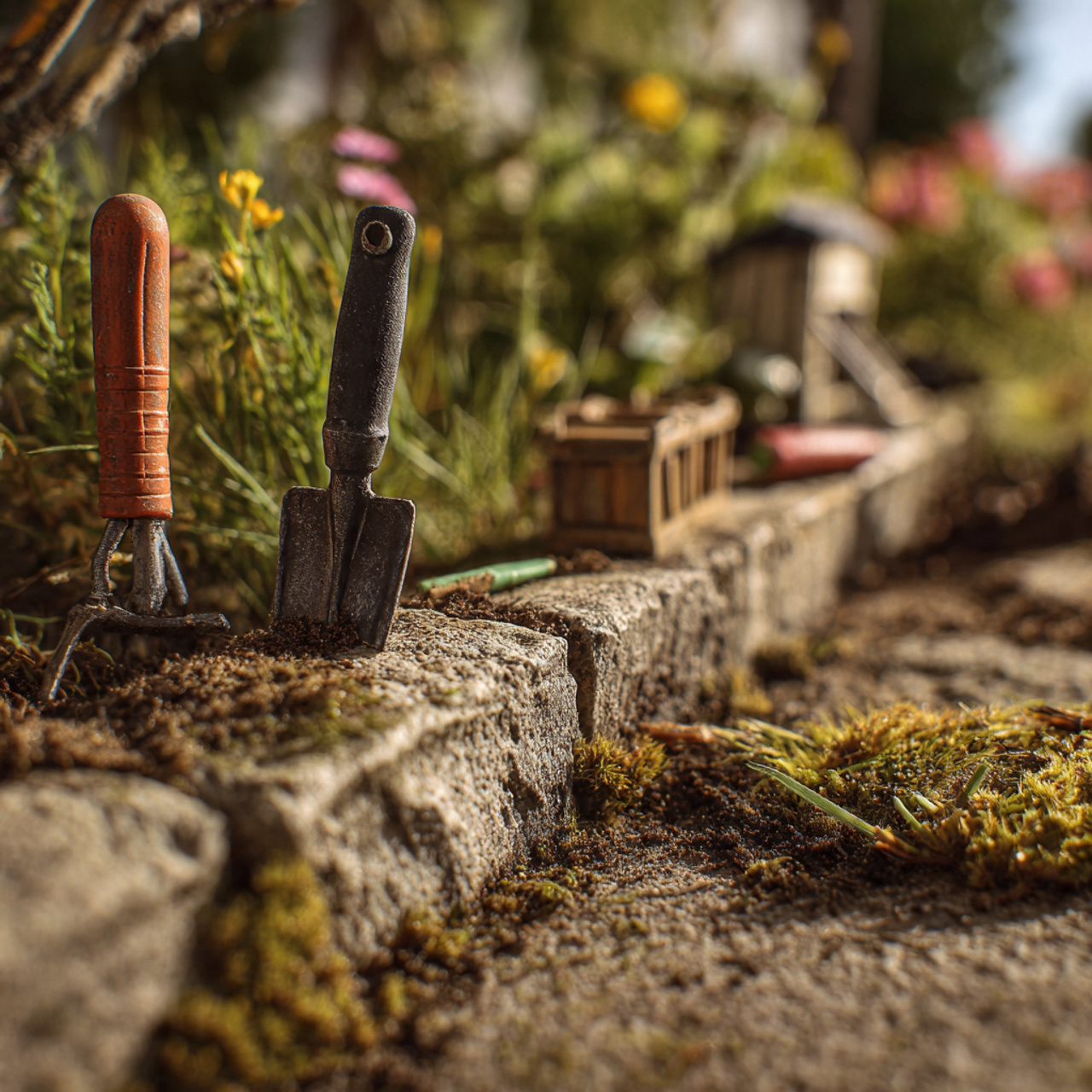
Even professionally installed edging requires occasional adjustment. Soil naturally settles over time, tree roots expand, frost heaves materials upward, and heavy rains erode foundations. The key to long-lasting edging is catching problems early when they’re quick fixes rather than waiting until complete reinstallation is necessary.
Common Problems and Quick Fixes:
Problem: Tilted or sunken sections
- Cause: Settled foundation or eroded base material
- Fix: Remove section, add compacted gravel, reset level
- Time: 15-30 minutes per section
- Prevents: Tripping hazards and water pooling
Problem: Gaps between edging pieces
- Cause: Soil compaction, temperature changes, settling
- Fix: Fill gaps with matching material or cut filler pieces
- Time: 5-10 minutes per gap
- Prevents: Mulch escape and weed penetration
Problem: Grass growing through or over edging
- Cause: Insufficient depth or height
- Fix: Re-trench deeper, add height extension, or replace
- Time: 30-60 minutes per problem area
- Prevents: Complete border failure
Keep Spare Materials: Save extra edging pieces, matching bricks, or extra stones from your original installation. Matching replacement materials becomes difficult or impossible years later when products change or are discontinued.
Repair Kit to Keep Handy:
- 5-10 extra stakes
- Bag of compacted gravel
- Matching spare edging pieces
- Hand tamper
- Small level
- Landscape adhesive (for brick/stone)
Controlling Costs Without Sacrificing Quality
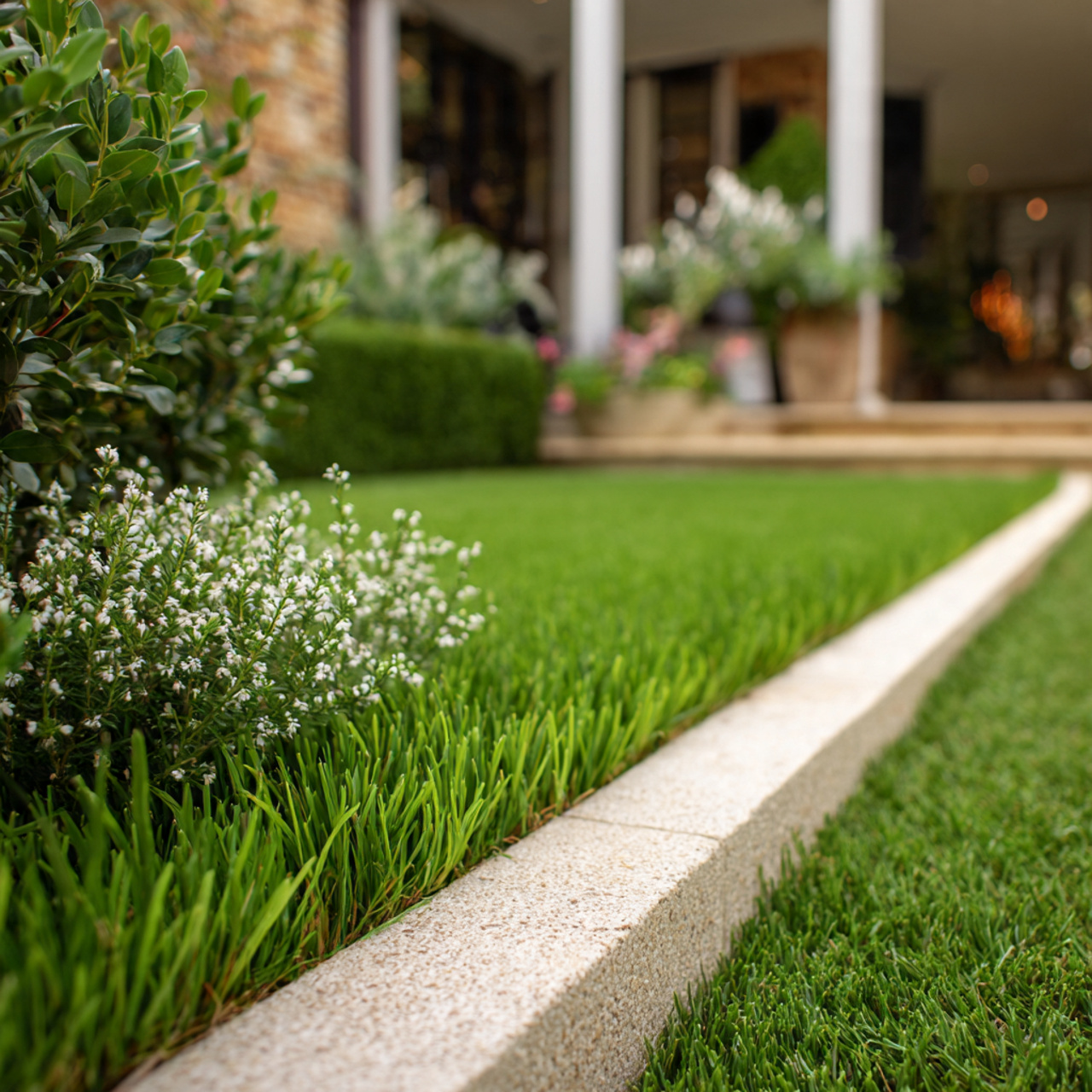
Lawn edging doesn’t require a massive budget to be effective. Smart material selection, strategic installation priorities, and appropriate DIY work can deliver professional results at a fraction of professional pricing.
The key is understanding where to invest and where to economize.
Cost-Effective Strategy:
- Invest heavily: High-visibility areas (front yard, entry paths)
- Mid-grade materials: Side yards and secondary beds
- Budget options: Back areas with low visibility
- Phase the project: Complete one section at a time properly
Budget Breakdown Example (100 linear feet):
- Budget approach: Plastic edging = $100-150 materials
- Mid-range approach: Metal edging = $250-400 materials
- Premium approach: Natural stone = $500-800 materials
- DIY installation saves $500-1,500 in labor costs
Where to Save Money:
- Buy materials during off-season sales (fall/winter)
- Purchase bulk quantities for price breaks
- Borrow or rent specialized tools rather than buying
- Do your own installation (saves 50-70% of total cost)
Where NOT to Skimp:
- Foundation preparation (gravel base is cheap insurance)
- Quality stakes (cheap stakes pop out)
- Adequate material quantity (running short mid-project is expensive)
- Safety equipment (gloves, eye protection, knee pads)
Long-Term Cost Analysis: A $500 edging system that lasts 15 years costs $33/year. A $150 system that fails in 3 years and needs replacement costs $50/year plus your time to reinstall. Choose durability.
Lawn Edging for DIY Projects
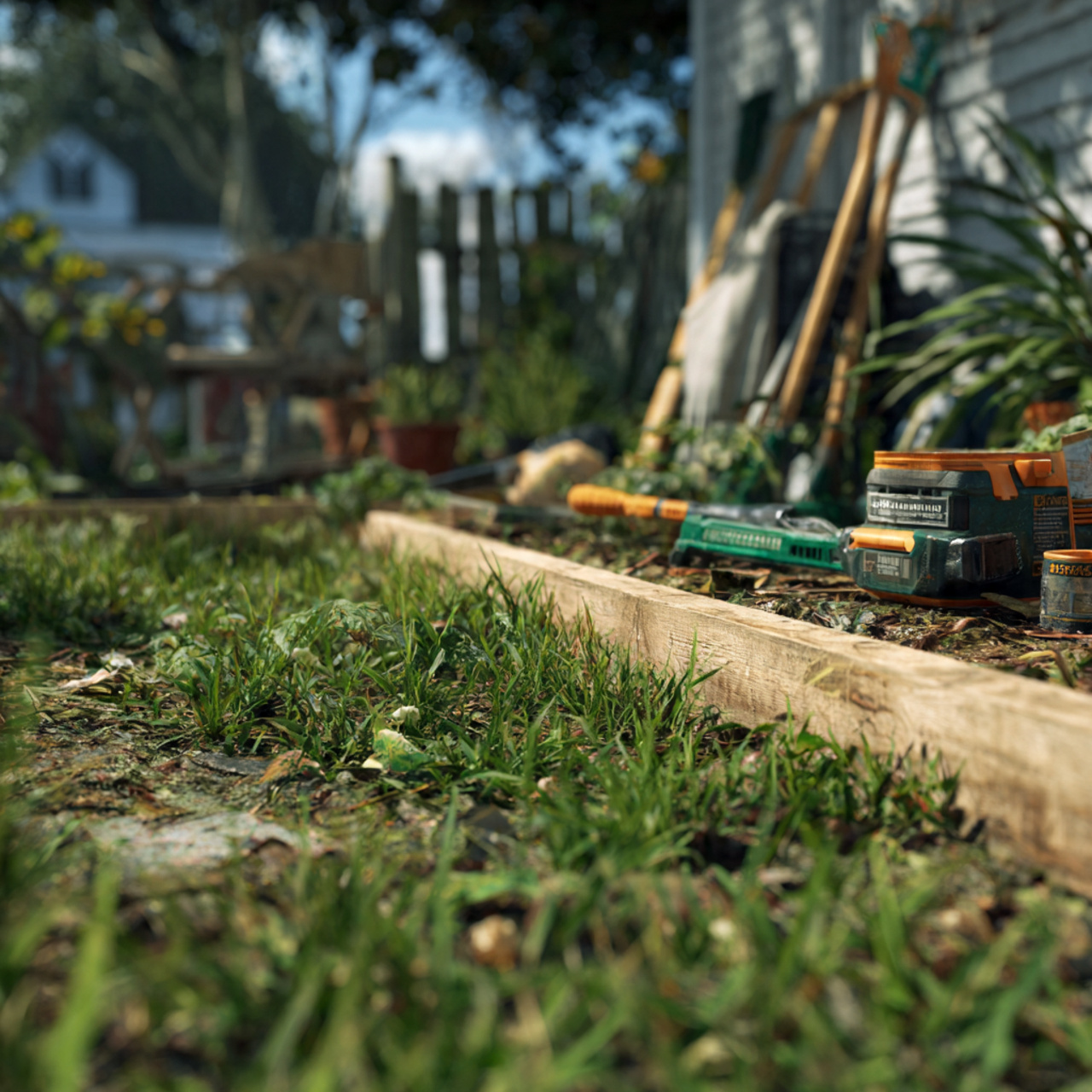
Many homeowners successfully install professional-looking lawn edging themselves. The work isn’t technically difficult, but it does require patience, precision, and willingness to do it right rather than fast.
The satisfaction of completing your own edging project—plus saving hundreds to thousands in labor costs—makes this an ideal DIY landscape improvement.
Essential DIY Skills Needed:
- Ability to measure accurately and repeatedly
- Patience for careful, methodical work
- Physical capability for digging and kneeling
- Comfort using hand tools and basic power tools
- Willingness to redo sections that aren’t right
Complete Tool List:
- Flat spade or edging tool
- String and stakes
- 4-foot level
- Rubber mallet
- Hand tamper
- Wheelbarrow
- Safety glasses and gloves
- Knee pads (your knees will thank you)
DIY Success Tips:
- Start with a small, low-visibility test section
- Practice your technique before tackling the front yard
- Work in short sessions (2-3 hours) to maintain quality
- Take breaks to step back and assess your work
- Don’t rush—better to take extra time than redo poor work
When to Stop and Call a Professional:
- If you hit unexpected buried utilities or irrigation
- When dealing with severe slopes requiring terracing
- If installing complex stone patterns or specialized materials
- When physical limitations make the work unsafe
- If you realize mid-project that it’s beyond your skill level
Time Investment Reality: First-time DIYers typically install 8-12 linear feet per hour. With practice, this improves to 15-20 feet per hour. Be realistic about project scope relative to your available time.
When to Hire Professional Installation
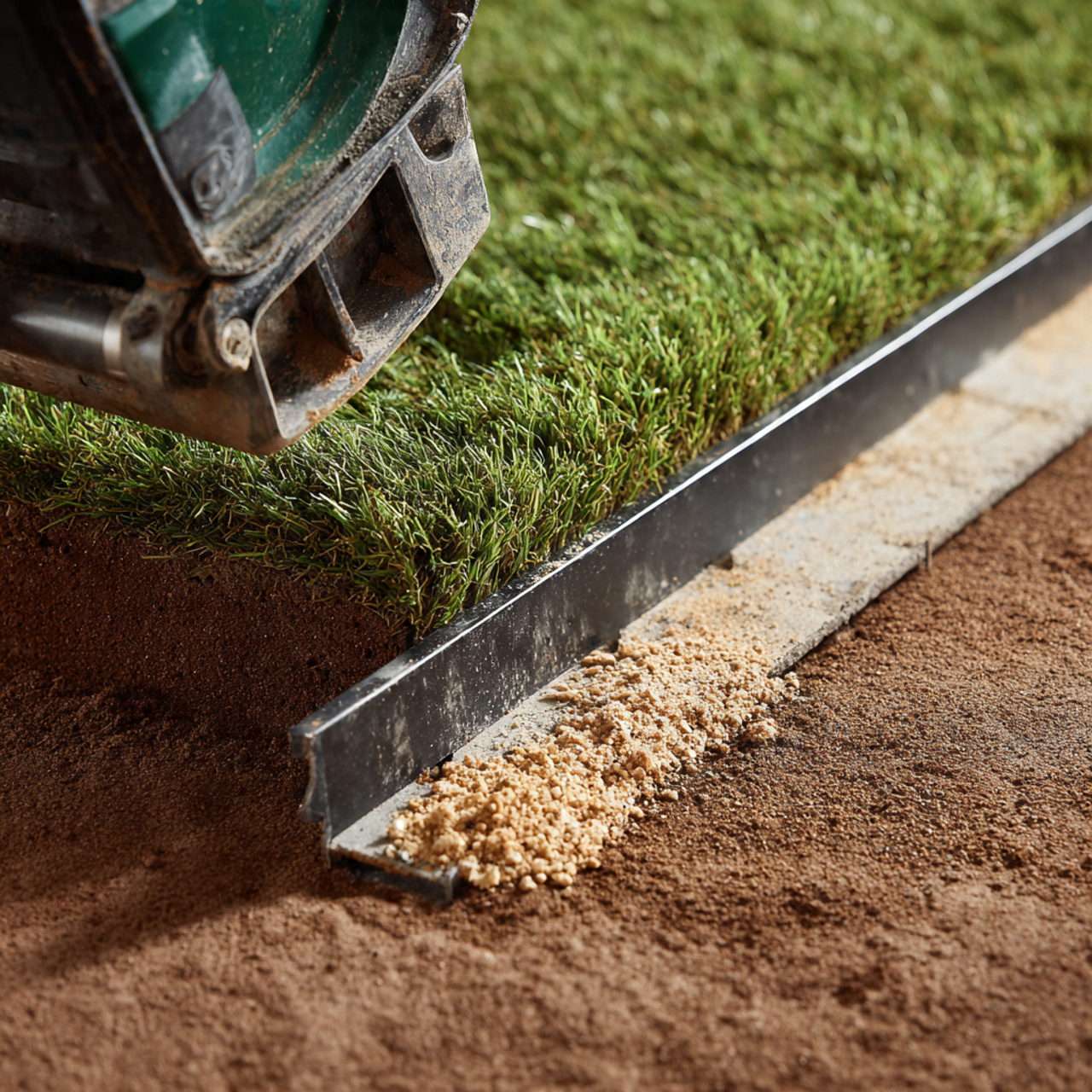
Hiring a professional for lawn edging can save time and prevent costly mistakes, especially for complex projects. While simple edging can be a DIY task, certain situations clearly benefit from expert handling.
Professional installation is worth considering when:
- Your landscape includes curves, slopes, or uneven terrain
- You’re using premium materials like stone, brick, or metal
- Proper drainage and soil behavior are difficult to assess visually
- You want long-lasting results without frequent adjustments
Experienced installers understand how soil expands, shifts, and drains—factors that are easy to overlook but critical for durable edging. Poor installation can lead to lifting, sinking, or grass invasion over time.
Tip before hiring:
Ask to see photos or examples of previous lawn edging projects. This helps you evaluate their craftsmanship, alignment accuracy, and attention to detail.
Lawn Edging for Long-Term Consistency
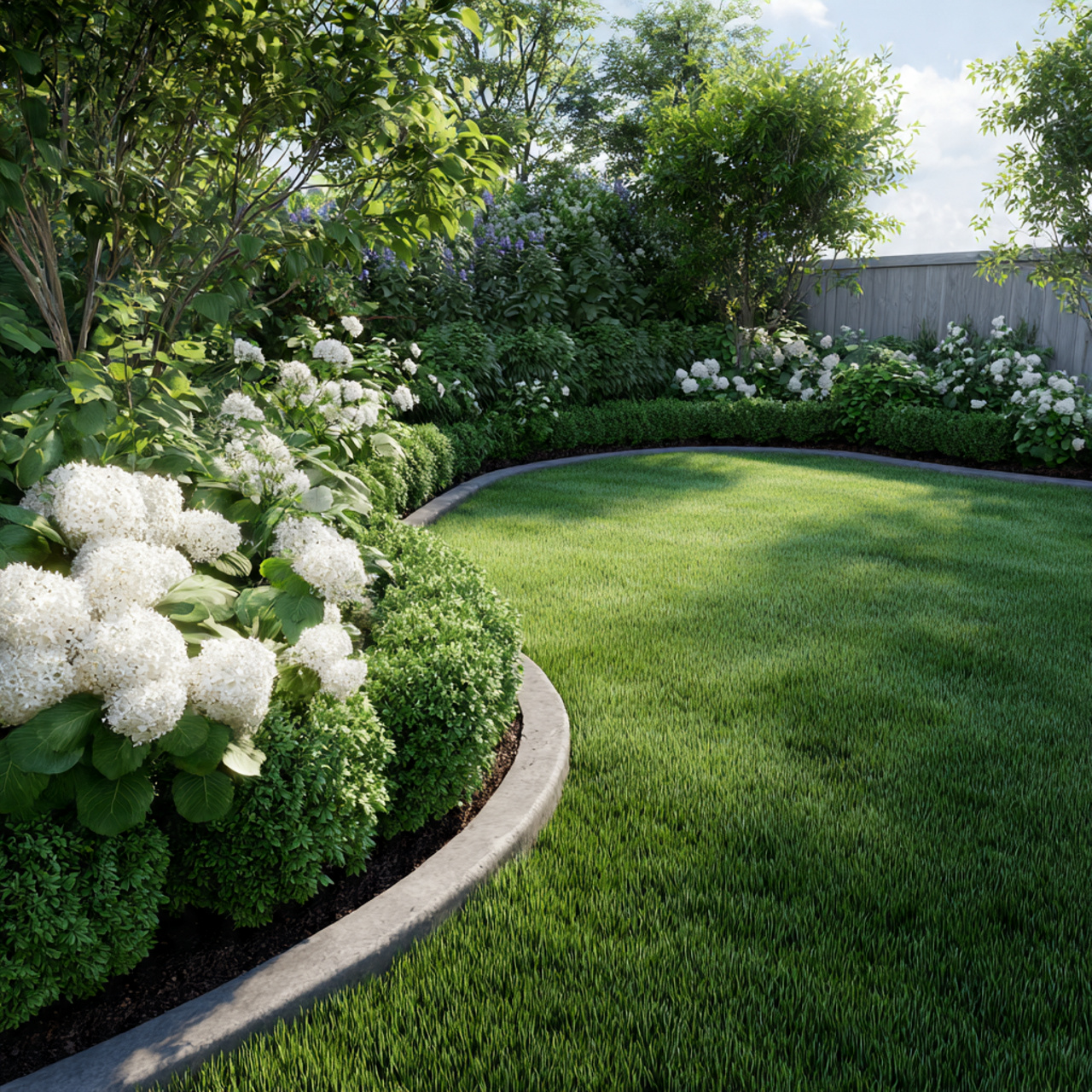
Consistency plays a major role in effective landscape design. Lawn edging should complement the overall style of your yard rather than compete with it.
Using too many different edging materials or styles can make the landscape feel cluttered and disconnected. A cohesive approach creates balance and improves visual flow.
Best practices for consistent lawn edging:
- Choose one primary edging material for most areas
- Limit yourself to one or two styles across the entire yard
- Match edging materials with hardscapes, pathways, or borders
- Maintain similar heights, colors, and finishes for a uniform look
This approach makes the yard feel intentional and professionally designed rather than pieced together over time.
Frequently Asked Questions About Lawn Edging
How deep should lawn edging be installed?
Most lawn edging should be installed several inches below the soil surface. This depth helps prevent grass roots from spreading underneath and keeps the edging stable. In loose or sandy soil, deeper installation improves durability.
Can lawn edging damage grass or plants?
When installed correctly, lawn edging does not harm grass or plants. Problems usually arise when edging is placed too close to root systems or when future plant growth is not considered during installation.
How often does lawn edging need maintenance?
Lawn edging typically requires inspection once or twice a year. Minor adjustments may be necessary after heavy rain, frost, or seasonal soil movement, but well-installed edging needs minimal upkeep.
Is lawn edging necessary for small yards?
Yes. In smaller yards, lawn edging often makes an even bigger visual impact. Clean, defined lines help compact spaces feel organized, polished, and intentionally designed.
What is the most durable lawn edging option?
Durability depends on climate and soil conditions, but stone and properly installed brick edging tend to last the longest. Metal edging can also be very durable when installed correctly and treated with a protective finish.
Conclusion
Lawn edging is not a decorative afterthought. It is a structural element that shapes how a landscape looks, functions, and ages. Clean edges bring order to outdoor spaces and reduce ongoing maintenance when chosen and installed thoughtfully.
The right lawn edging depends on material behavior, site conditions, and design goals. By understanding how each option performs over time, you can make decisions that hold up rather than require constant correction.
A well-edged lawn does not draw attention to itself. Instead, it quietly supports everything around it. That is the mark of effective lawn edging done right.