25 Creative Flagstone Patio Ideas for Every Backyard Style
Picture stepping out into your backyard and finding yourself in a space that feels like a natural extension of your home—a place where rustic charm meets modern comfort. That’s exactly what a flagstone patio delivers. This timeless outdoor feature doesn’t just add square footage to your living space; it creates an inviting sanctuary where memories are made, from quiet morning coffees to lively weekend barbecues.
What makes flagstone so special? Unlike cookie-cutter concrete slabs, each piece tells its own story through unique textures, shapes, and earth-toned colors. Whether you’re dreaming of a cozy reading nook or a full-scale outdoor entertainment hub, flagstone adapts to your vision while standing strong against whatever Mother Nature throws its way.
Why Flagstone Patios Are Worth Your Investment?
Natural stone has graced outdoor spaces for centuries, and there’s a reason it never goes out of style. Flagstone brings that authentic, organic quality that manufactured materials simply can’t replicate. The irregular edges and varied patterns create visual interest that makes your patio feel like it’s always belonged there.
Here’s what sets flagstone apart:
- Built to last – Handles foot traffic, weather extremes, and daily use without breaking a sweat
- Unique character – No two patios look exactly alike thanks to natural stone variations
- Smart investment – Adds tangible value to your property while you enjoy it
- Design flexibility – Works beautifully with any landscape style, from cottage gardens to modern minimalism
Tip: Flagstone naturally stays cooler underfoot than concrete during hot summer days, making it more comfortable for barefoot lounging.
Understanding Different Types of Flagstone
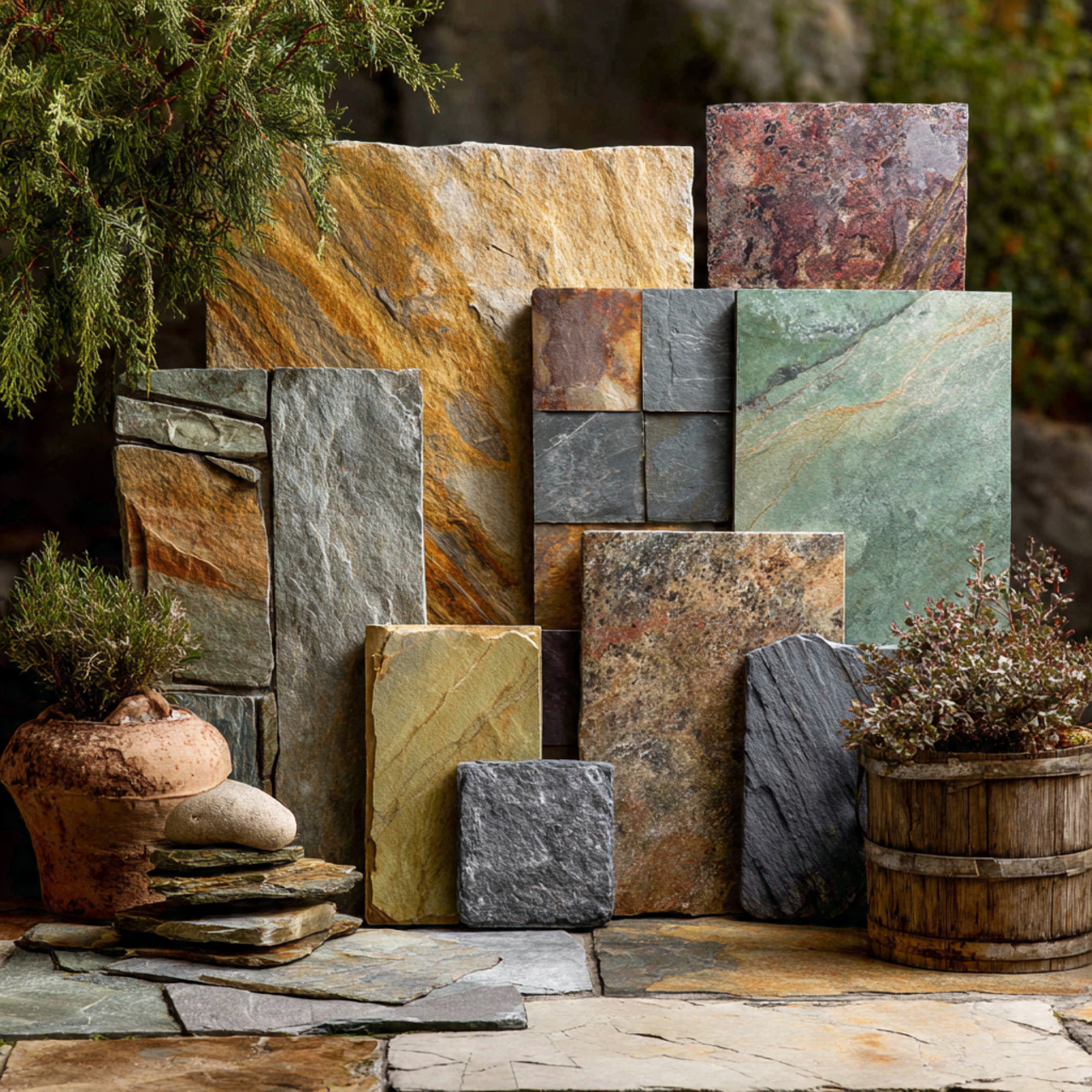
Not all flagstone is created equal. Each variety brings distinct personality traits to your outdoor space, and understanding these differences helps you make the perfect match.
Popular flagstone types and their characteristics:
Sandstone – Warm beiges, reds, and tans that complement natural gardens. Slightly softer texture makes it comfortable underfoot.
Limestone – Creamy whites and soft grays create a bright, elegant look. Works wonderfully in formal settings.
Slate – Sleek, sophisticated surface with rich colors from charcoal to burgundy. Excellent slip resistance when wet.
Bluestone – Premium choice with distinctive blue-gray tones. Exceptionally durable and perfect for high-traffic areas.
Selection tip: Consider your climate first. In freeze-thaw regions, choose dense stones like bluestone or slate that resist cracking. In warmer climates, lighter sandstone helps reflect heat.
Avoid this mistake: Don’t select stone based solely on appearance in dry conditions. Always ask to see samples wet—some stones darken dramatically or become slippery when damp.
Designing Your Flagstone Patio Layout
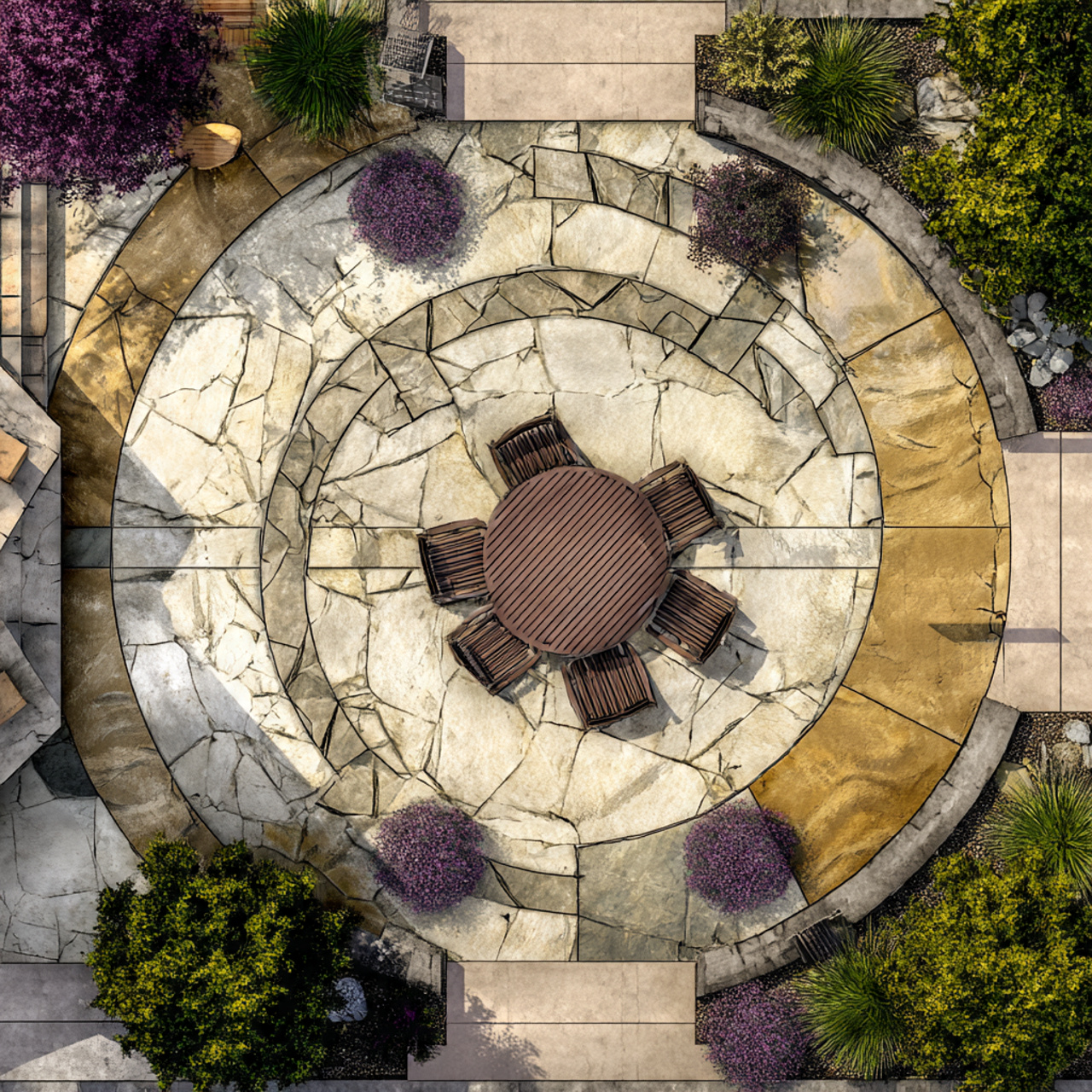
Before the first stone gets placed, spend time envisioning how you’ll actually use the space. Your patio layout should feel intuitive, guiding movement naturally while creating distinct zones for different activities.
Layout styles to consider:
- Random/Irregular – Stones of varying sizes fit together like a natural puzzle, creating organic flow
- Geometric – Uniform shapes arranged in structured patterns for contemporary appeal
- Circular/Curved – Softens corners and creates intimate gathering spots
- Mixed pattern – Combines techniques for custom, one-of-a-kind designs
Planning checklist: ✓ Map out traffic flow from house to yard ✓ Identify sun and shade patterns throughout the day ✓ Account for existing trees, slopes, or drainage issues ✓ Sketch furniture placement before finalizing dimensions
Example: A 12×16-foot patio comfortably fits a dining table for six plus a small seating area. Add another 6×8 feet if you want to include a grill station.
Integrating Flagstone Patios with Landscaping
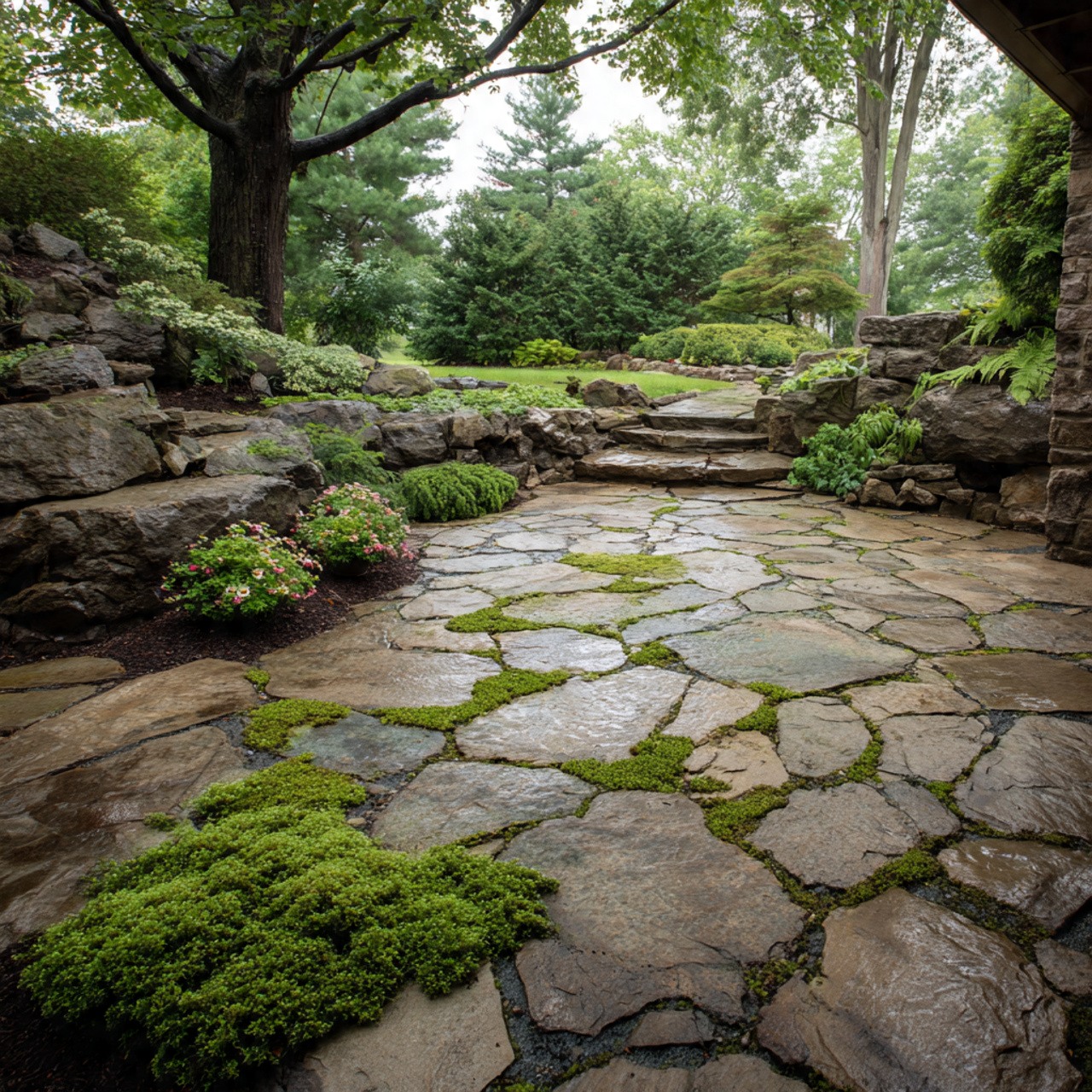
A flagstone patio shouldn’t feel like a foreign object dropped into your yard. The magic happens when hardscape and softscape work together in harmony.
Integration strategies:
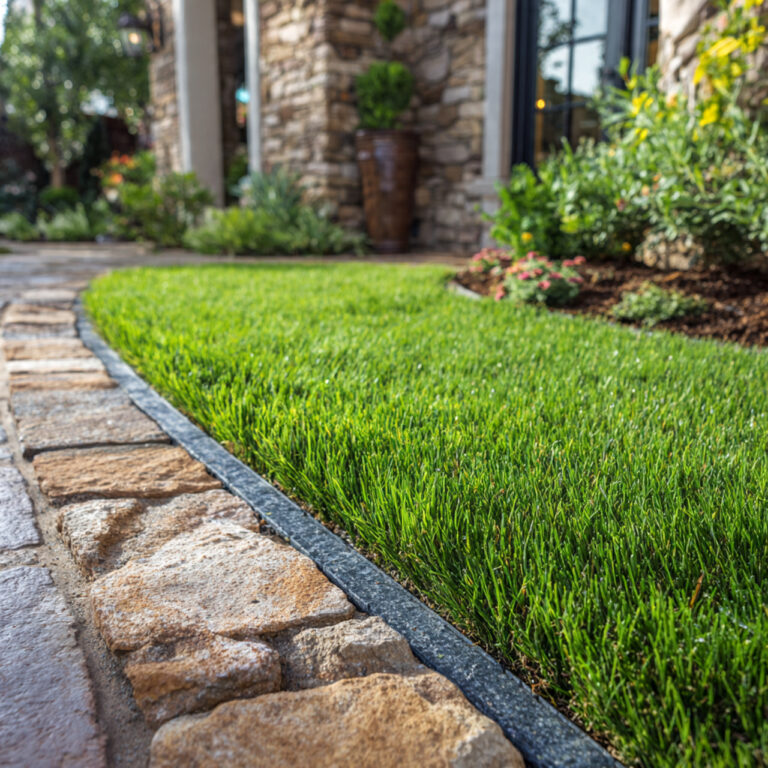
Plant low-growing perennials along patio edges to soften the transition—lavender, catmint, or ornamental grasses create beautiful borders without obstructing views.
Ground covers between stones add living texture. Creeping thyme releases fragrance when stepped on, while Irish moss creates a lush, green filler that tolerates light foot traffic.
Layered planting around the perimeter provides depth: tall shrubs in back, mid-height flowers in middle, trailing plants in front.
Drainage benefit: Strategic landscaping directs water away from the patio while preventing erosion around stone edges.
Common mistake to avoid: Don’t plant aggressive spreaders like mint directly in joints—they’ll take over. Stick with well-behaved ground covers designed for pavement cracks.
Flagstone Patio for Outdoor Entertaining

Transform your flagstone patio into the neighborhood’s favorite gathering spot. The stable, level surface supports everything you need for hosting in style.
Zone your space effectively:
- Cooking zone – Position grill 10+ feet from seating with adequate counter space
- Dining area – Allocate room for chairs to pull out comfortably (add 3 feet beyond table edges)
- Lounge section – Arrange conversation seating in U or L shapes for easy interaction
- Activity space – Keep a clear area for kids to play or guests to mingle
Heat-resistant advantage: Unlike wooden decks, flagstone handles BBQ sparks and fire pit embers without damage.
Shade solution: Add a pergola over dining areas to extend usability during midday heat. Retractable awnings offer flexibility for sun or shade as needed.
Tip: Install weather-resistant outlets and speakers during construction—adding them later requires tearing up finished work.
Creating Cozy Seating Areas
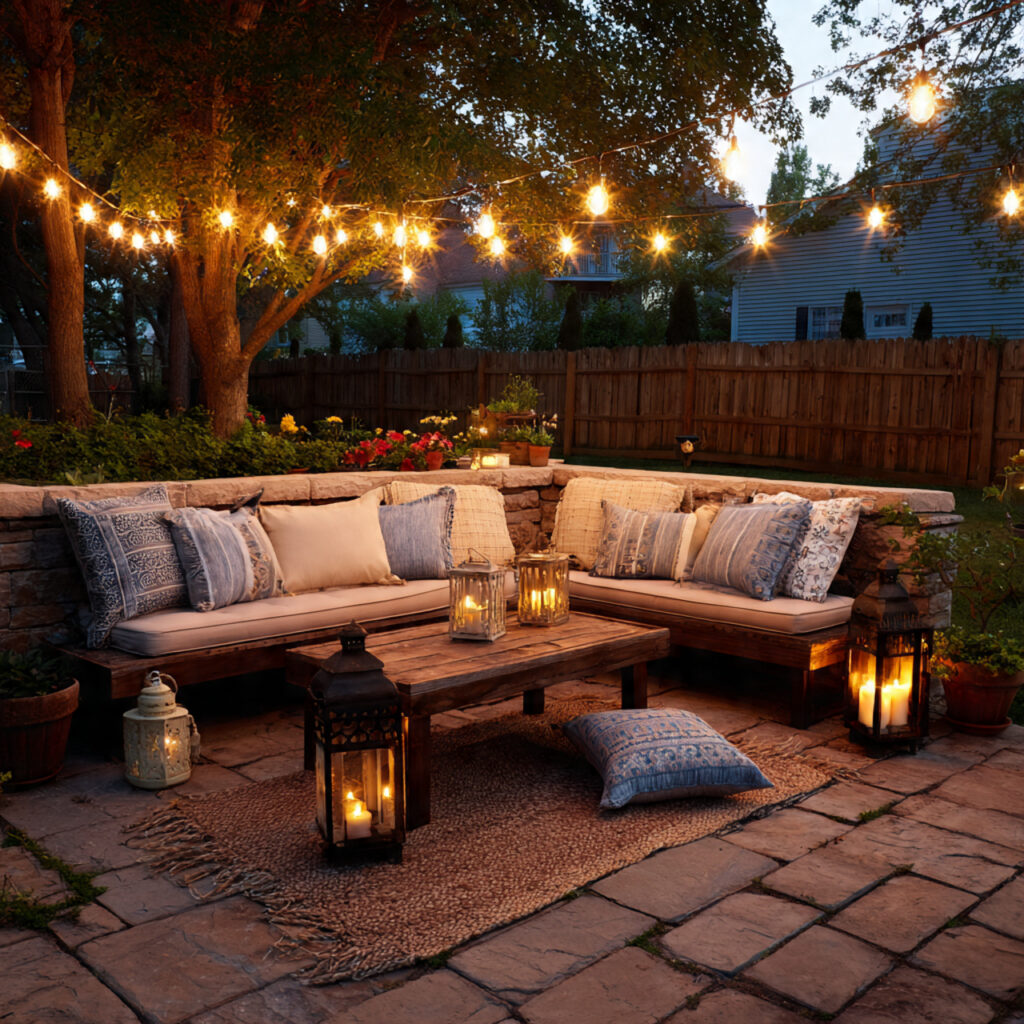
Not every inch needs to accommodate crowds. Carve out quiet corners where you can unwind with a book or enjoy morning coffee solo.
Creating cozy corners:
Scale matters – A 6×6-foot alcove fits two comfortable chairs with a small side table perfectly.
Anchor with furniture – Choose deep-cushioned pieces that invite lingering: Adirondack chairs, cushioned loveseats, or a hanging egg chair.
Layer comfort – Weather-resistant outdoor pillows and throws add pops of color while inviting you to stay awhile.
Define the space – Use potted plants, a privacy screen, or strategic lighting to create psychological boundaries without walls.
Evening atmosphere: String Edison bulbs overhead or place solar lanterns nearby for warm, flattering light that extends use past sunset.
Safety note: Ensure seating areas have level stone placement—wobbly furniture on uneven surfaces creates hazards and discomfort.
Combining Flagstone with Fire Pits
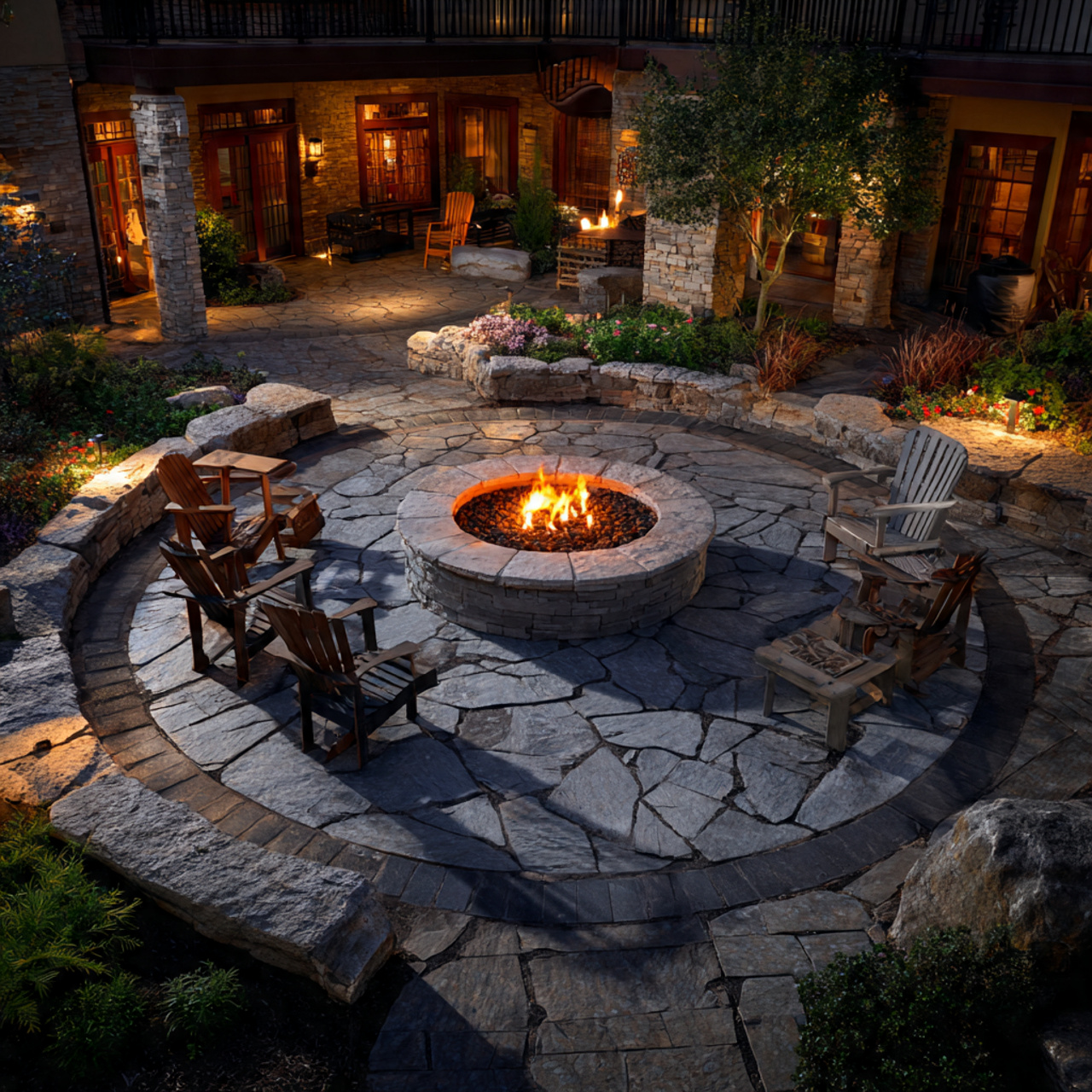
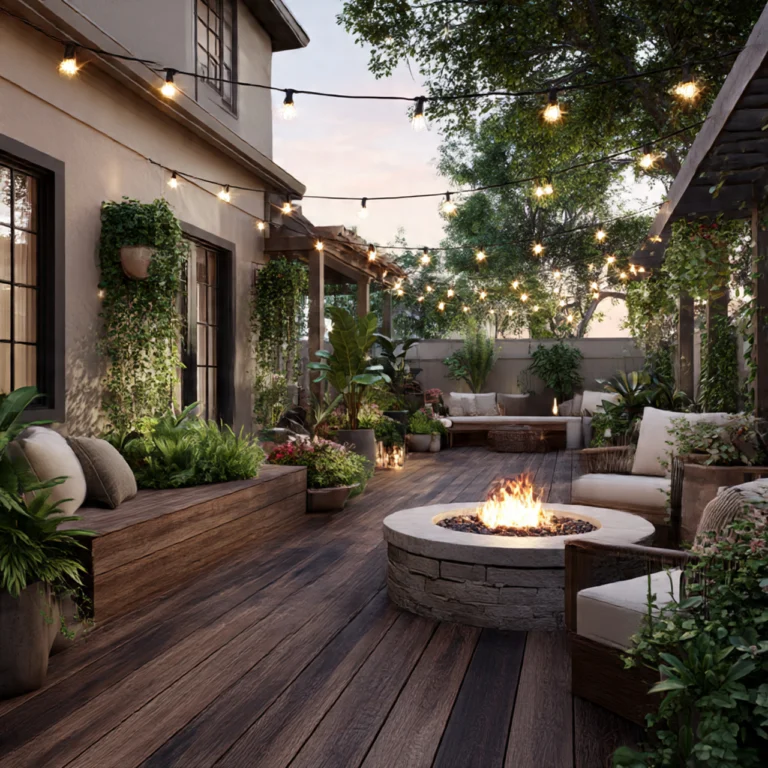
Few additions match the appeal of a fire feature on a flagstone patio. Fire and stone have partnered for millennia, and that primal combination still works its magic today.
Fire pit considerations:
Built-in vs. portable – Permanent installations make dramatic focal points; movable options offer flexibility if you redesign later.
Sizing guide – A 36-48 inch diameter pit accommodates 6-8 people comfortably seated around it.
Heat-resistant stone – Flagstone naturally tolerates high temperatures, but avoid limestone near flames as it can crack from extreme heat.
Seating arrangement – Place stone bench seating or movable chairs 3-4 feet from fire edge for warmth without excessive heat.
Safety measures:
- Keep fire pit at least 10 feet from structures and overhanging branches
- Install on stable, level stone base to prevent tipping
- Have fire extinguisher or water source readily accessible
- Check local regulations—some areas require permits for permanent installations
Bonus tip: Extend your fire pit area with additional flagstone “heat zones” where people can move closer or farther as desired.
Using Flagstone for Poolside Patios
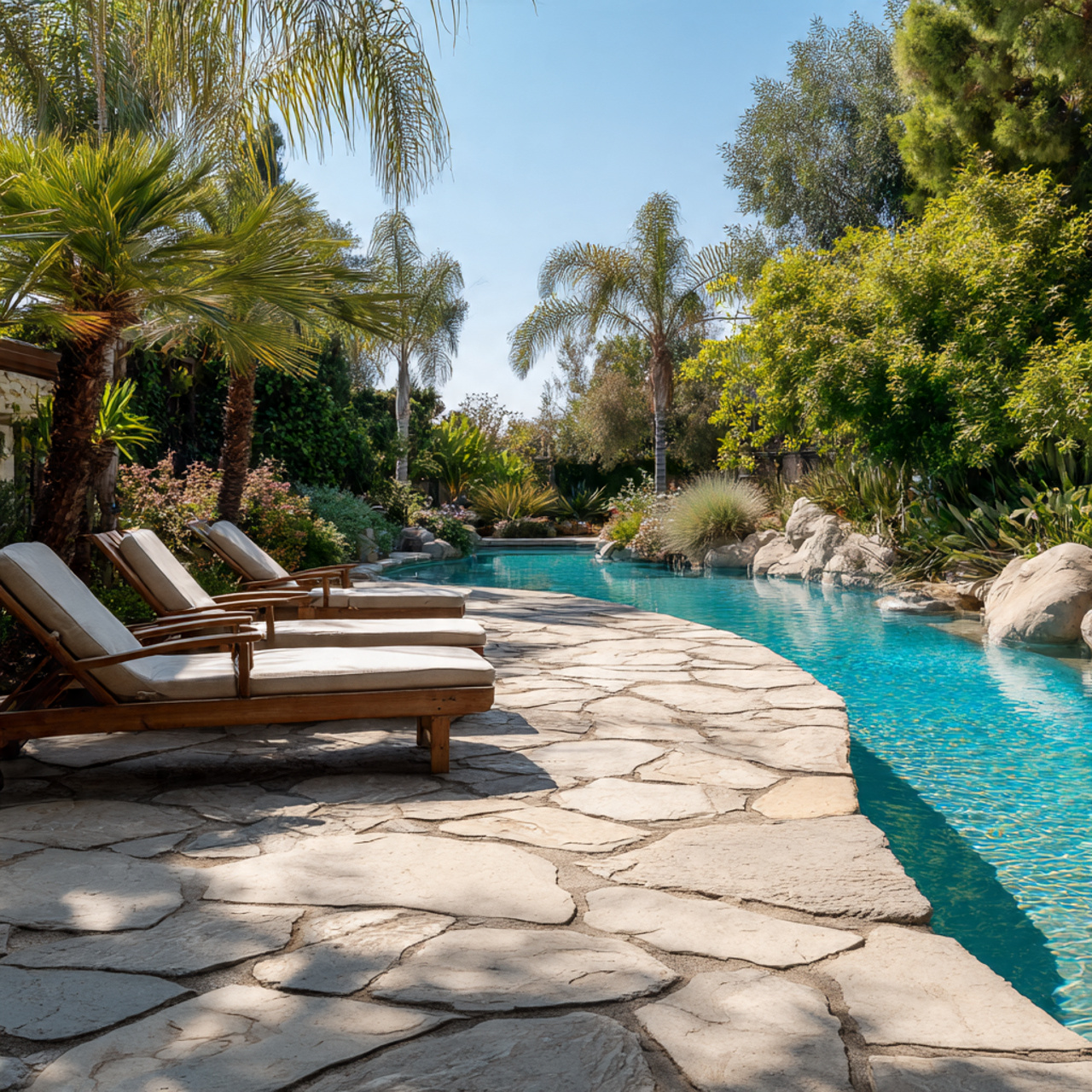
If you’re fortunate enough to have a pool, flagstone creates the ideal surround that’s both practical and luxurious.
Why flagstone excels poolside:
Slip resistance – Textured surface provides grip even when splashed with water. Choose rough-cut over smooth-finished stones.
Cool surface – Natural stone reflects heat better than concrete, staying comfortable for bare feet.
Resort aesthetic – Earth tones and organic patterns create that high-end vacation vibe right at home.
Durability – Withstands chlorine exposure, constant moisture, and freeze-thaw cycles better than many alternatives.
Pool deck specifics:
- Slope patio 1/4 inch per foot away from pool for proper drainage
- Leave 1/2-inch gaps between stones to prevent water pooling
- Seal stones to prevent water absorption and staining from pool chemicals
- Round or soften sharp stone edges near pool entry points
Avoid this mistake: Don’t use dark-colored slate in full sun—it absorbs heat and can become uncomfortably hot. Stick with lighter sandstone or tan/beige tones.
Flagstone Pathways Connecting Your Patio
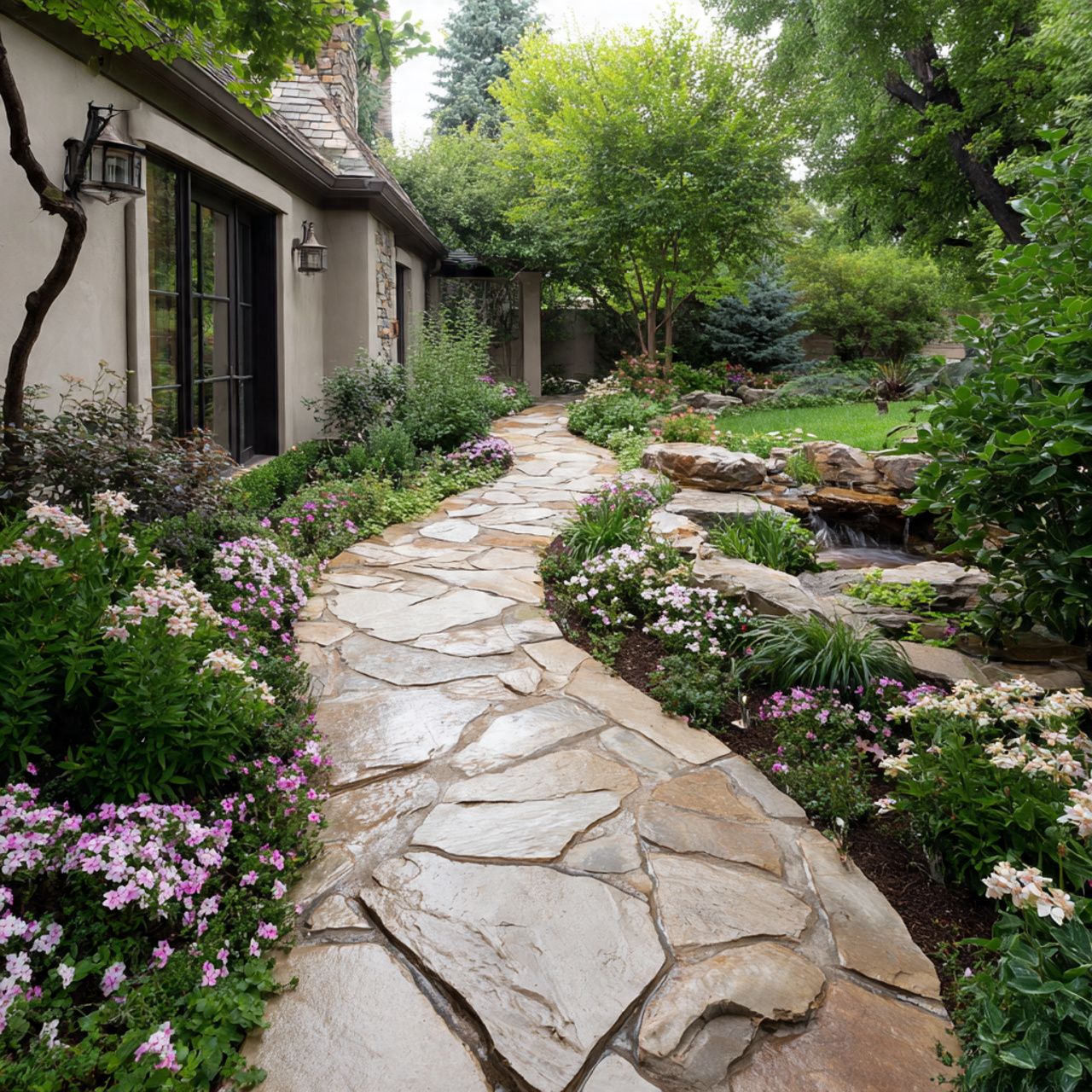
Why stop at the patio? Extend flagstone into pathways that weave through your landscape, connecting spaces and inviting exploration.
Pathway design ideas:
Stepping stones – Individual flagstones set in grass or ground cover create casual, whimsical routes.
Solid paths – Tightly fitted stones form permanent walkways that handle regular traffic.
Curved lines – Wind paths around plantings to slow the journey and create discovery moments.
Straight shots – Direct routes work well for functional paths between frequently used areas.
Design consistency: Use the same stone type as your patio, or choose a complementary variety for visual interest while maintaining cohesion.
Width guidelines:
- Main pathways: 3-4 feet (allows two people to walk side-by-side)
- Secondary paths: 2-3 feet (single-file traffic)
- Stepping stone paths: 12-18 inches per stone
Tip: Place stepping stones 18-24 inches apart center-to-center for a comfortable walking stride.
Maintenance Tips for Flagstone Patios
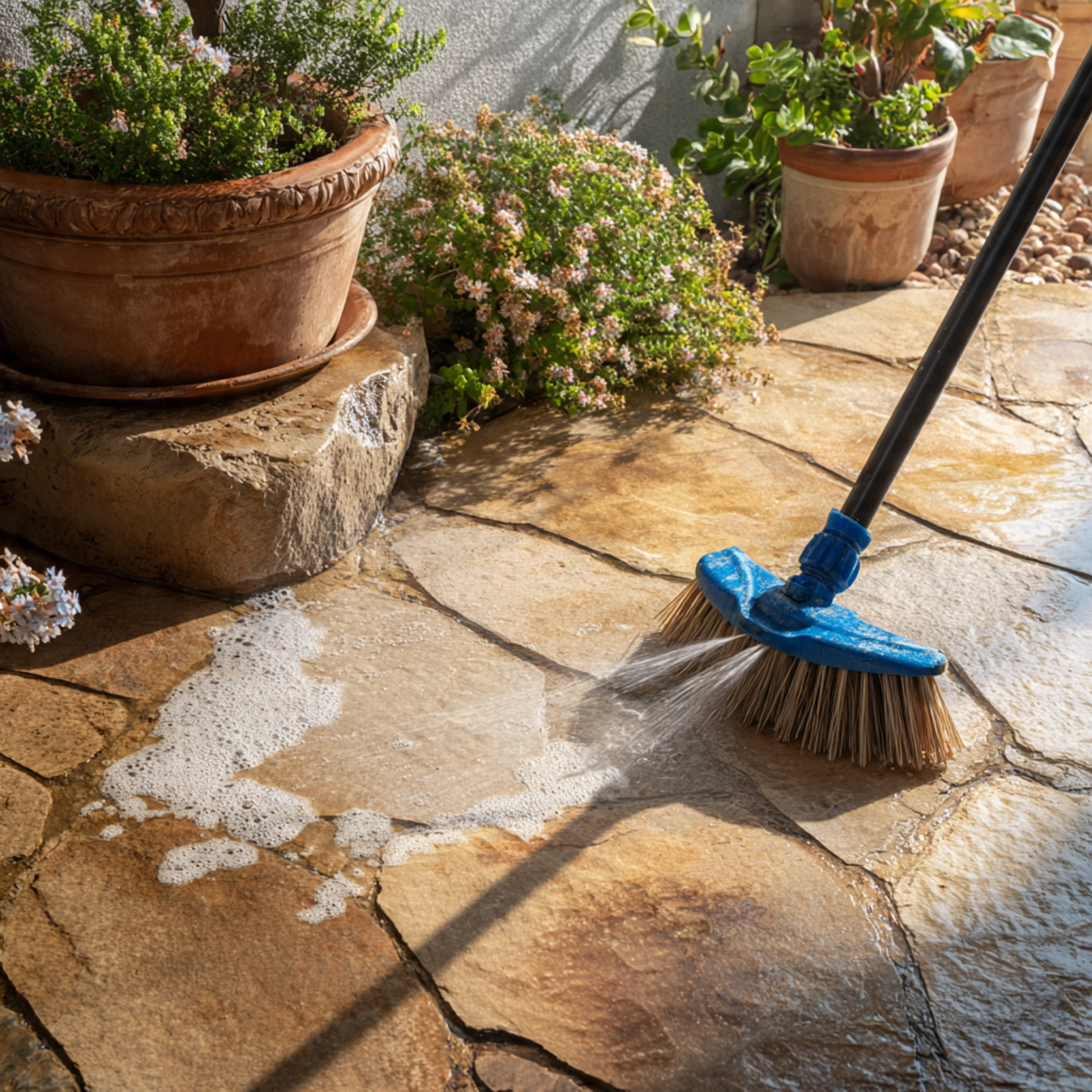
Good news—flagstone is remarkably low-maintenance compared to wooden decks or stamped concrete. A little regular attention keeps it looking fantastic for decades.
Essential maintenance routine:
Weekly: Quick sweep to remove debris, leaves, and dirt before they stain.
Monthly: Rinse with garden hose to wash away accumulated grime.
Seasonally: Scrub with mild dish soap and water using a stiff brush. Rinse thoroughly.
Every 2-3 years: Reseal the stone to protect against stains, moisture penetration, and weed growth.
Stain removal:
- Oil/grease: Absorb fresh spills with cat litter, then clean with degreaser
- Rust: Apply commercial rust remover designed for natural stone
- Organic stains: Mix oxygen bleach with water and scrub gently
Sealing benefits: ✓ Enhances natural colors ✓ Prevents water absorption and freeze damage ✓ Makes cleaning easier ✓ Reduces moss and algae growth
Caution: Never use acidic cleaners (vinegar, lemon juice) or harsh chemicals on limestone—they cause permanent etching and damage.
Enhancing Your Patio with Outdoor Furniture
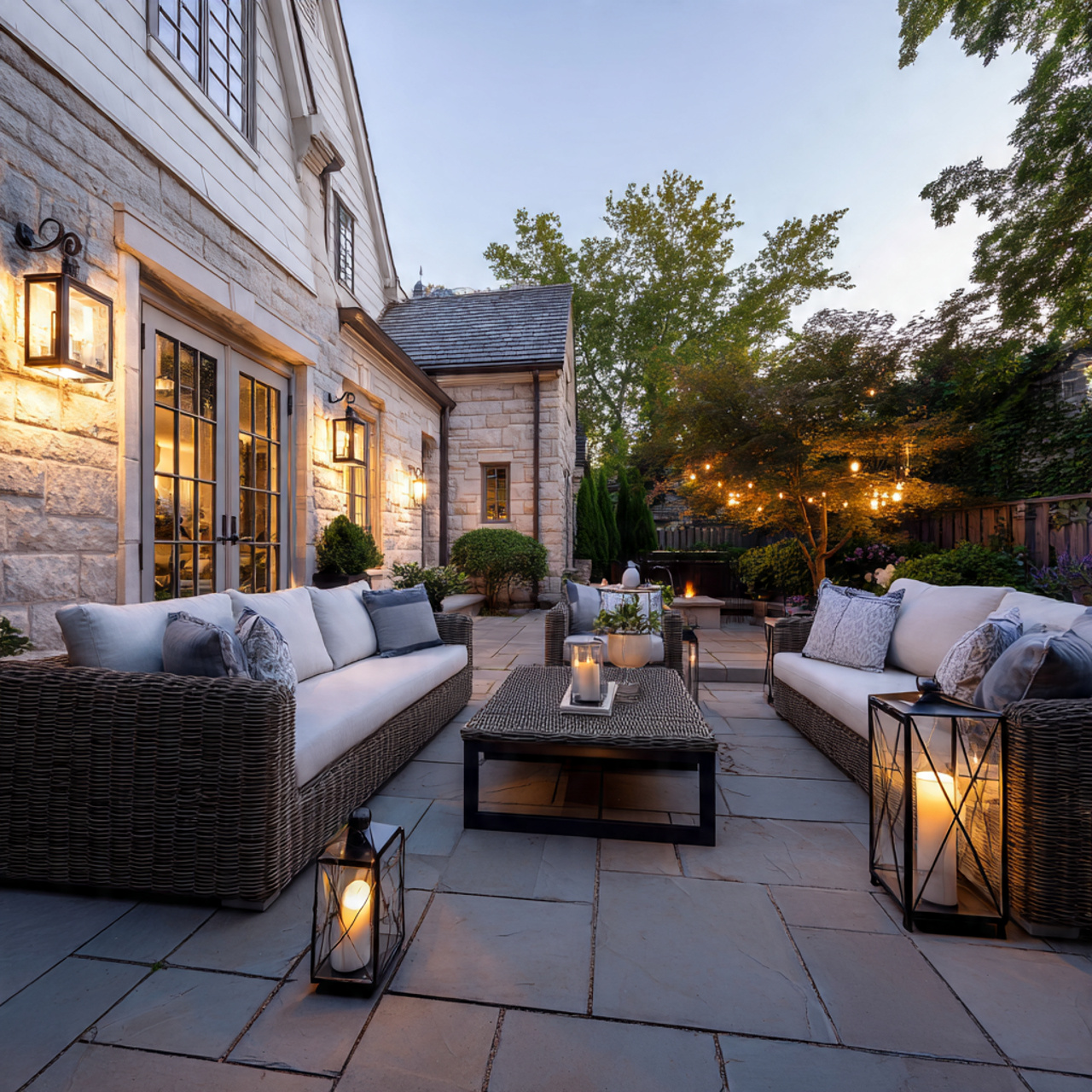
The right furniture transforms functional space into an outdoor room you’ll actually want to use every day.
Material selection guide:
Wrought iron – Classic, durable, and stable (won’t blow away in wind). Requires cushions for comfort and occasional rust-prevention treatment.
Teak – Naturally weather-resistant wood that ages beautifully to silver-gray patina. Premium price but exceptional longevity.
Aluminum – Lightweight, rust-proof, and easy to rearrange. Modern aesthetic works well with contemporary designs.
All-weather wicker – Comfortable, stylish, and available in various colors. Choose high-quality resin that won’t crack or fade.
Arrangement tips:
- Create conversation areas with seating facing each other
- Leave 24-30 inches of walkway space around furniture
- Anchor furniture groupings with an outdoor rug to define zones
- Add side tables within arm’s reach of every seat
Example layout: For a 12×16 patio, use a 6-person dining set on one end (8×10 feet) and a 4-piece conversation set on the other (6×8 feet) with 2 feet of circulation space between.
Adding Outdoor Kitchens and Dining Areas
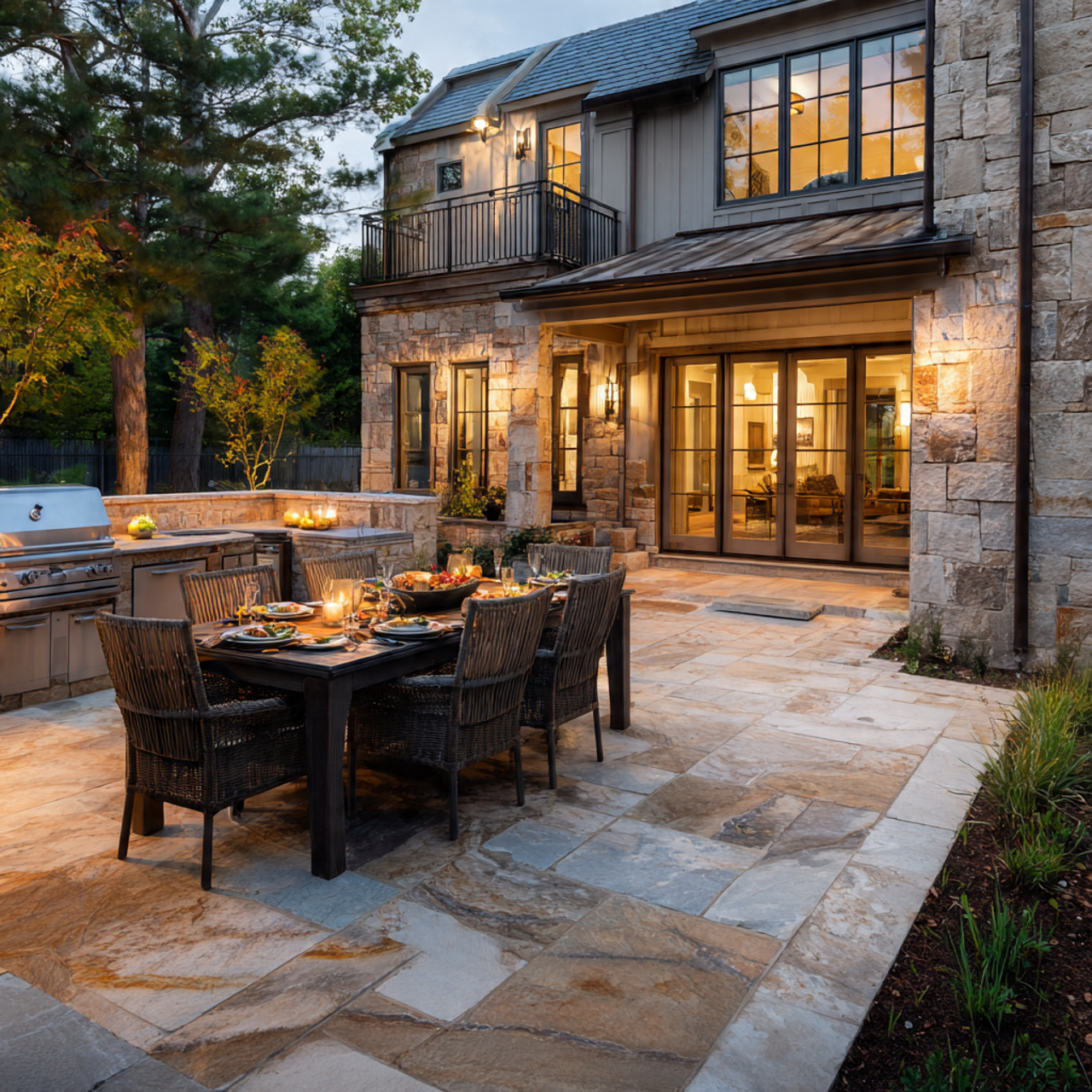
Take your culinary adventures outside with a full-service kitchen built on your flagstone patio. This is where entertainment reaches gourmet levels.
Essential outdoor kitchen elements:
Grill station – Built-in or high-quality freestanding grill as the centerpiece.
Prep counters – 3-4 feet of weather-resistant countertop on either side of grill.
Storage – Weatherproof cabinets for utensils, plates, and cooking supplies.
Refrigeration – Outdoor-rated mini fridge or beverage cooler keeps ingredients and drinks cold.
Sink – Running water eliminates trips indoors during food prep.
Why flagstone works perfectly:
- Heat-resistant surface handles dropped hot pots and BBQ coals
- Stable foundation supports heavy equipment without settling
- Natural stone aesthetic complements stainless steel appliances
- Easy to clean food spills and grease
Safety requirements:
- Install GFCI outlets for all electrical connections
- Position grill away from house siding and overhead structures
- Ensure proper gas line installation if using natural gas
- Include adequate task lighting for evening cooking
Budget tip: Start with essentials (grill and counter space) and add luxury features like pizza ovens or smokers over time.
Installing Lighting for Evening Ambiance
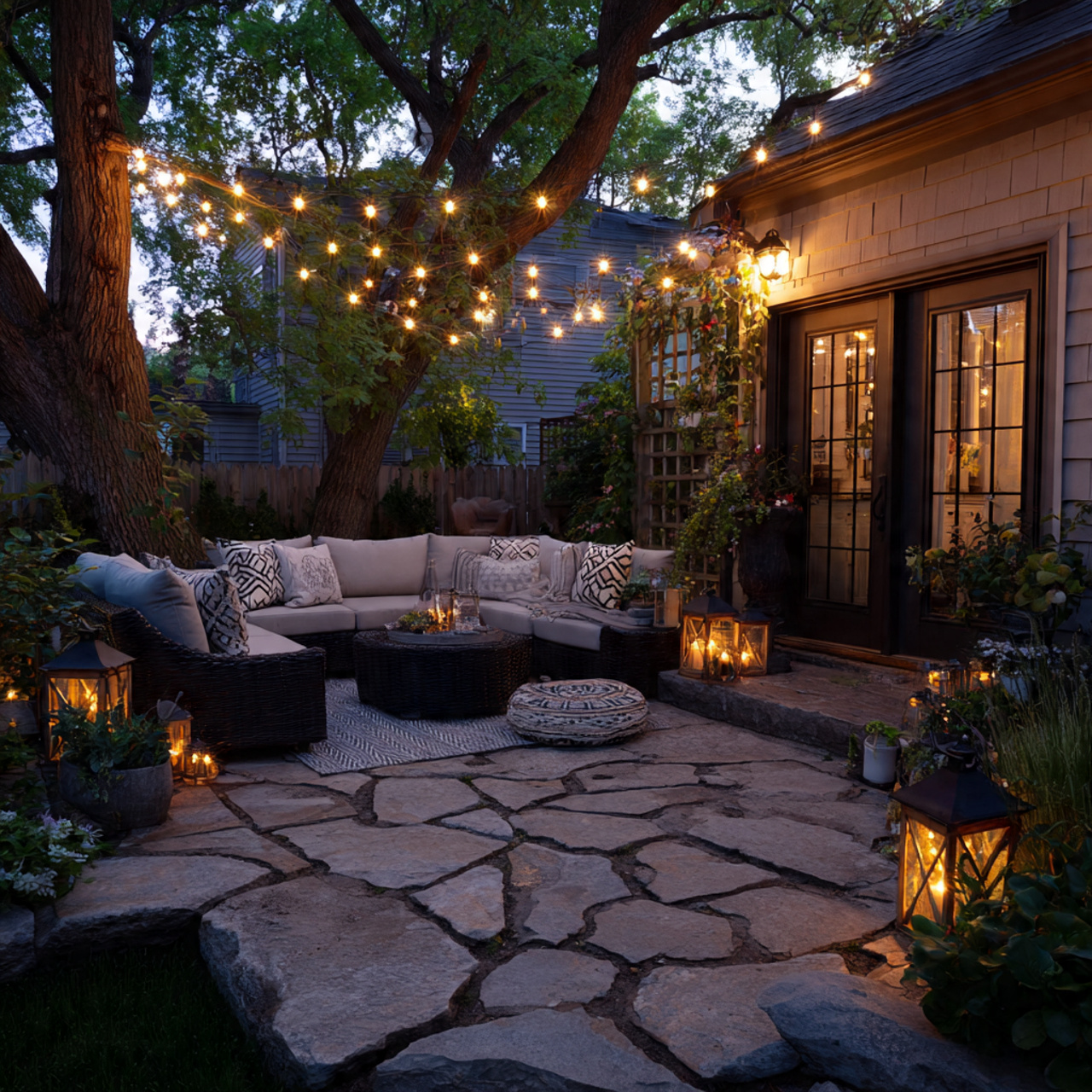
When the sun sets, proper lighting extends your patio’s usefulness while creating magical ambiance that daytime can’t match.
Layered lighting approach:
Ambient lighting – String lights, chandeliers, or overhead fixtures provide general illumination.
Task lighting – Bright lights over cooking and dining areas ensure functionality.
Accent lighting – Uplights on trees, spotlights on water features, or LED strips under seating create drama.
Pathway lighting – Solar stakes or low-voltage fixtures along walkways prevent trips and falls.
Lighting options:
- String lights: Warm Edison bulbs create cafe atmosphere (hang 8-10 feet high)
- Solar fixtures: No wiring needed, eco-friendly, placement flexibility
- Low-voltage LED: Energy-efficient, long-lasting, professional look
- Lanterns and candles: Portable mood lighting for tables and seating areas
Placement strategy: ✓ Light transitions between patio levels or steps ✓ Illuminate seating areas without shining directly in eyes ✓ Highlight landscape features as focal points ✓ Create pools of light and shadow for depth
Tip: Install dimmer switches so you can adjust brightness based on activity—bright for dinner parties, soft for romantic evenings.
Creating Multi-Level Flagstone Patios
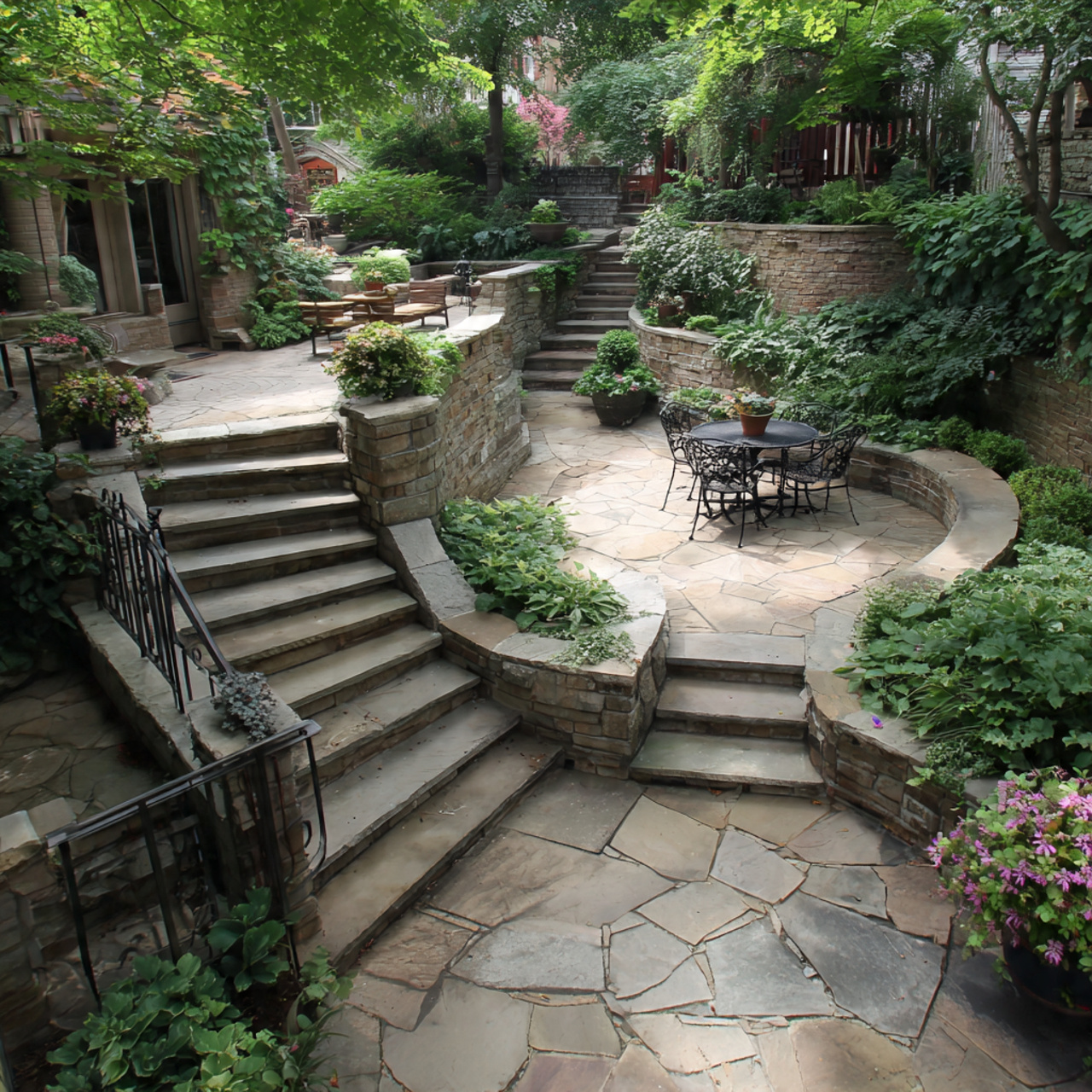
If your yard has natural slope, embrace it with multi-level flagstone terraces. Even flat yards benefit from raised sections that create visual variety.
Benefits of multiple levels:
Defined zones – Each level serves different purposes: dining above, fire pit below, garden beyond.
Better drainage – Stepped design naturally channels water downward.
Increased seating – Retaining walls double as casual bench seating.
Architectural interest – Vertical elements add drama to otherwise flat landscapes.
Construction considerations:
Retaining walls – Use matching or complementary stone for cohesive look. Walls over 3 feet high typically require engineering.
Steps between levels – Build with 6-7 inch rise and 11-12 inch tread depth for comfortable climbing.
Railings – Code usually requires railings for elevation changes over 30 inches.
Transitions – Blend levels with cascading plants or install lighting in steps.
Example design: Create upper dining terrace (12×14 feet) connected by stone steps to lower lounge area (10×12 feet) with fire pit. Total square footage: 288 sq ft spread across engaging vertical space.
Safety note: Ensure all levels are properly graded and compacted during construction to prevent settling that creates trip hazards.
Incorporating Water Features
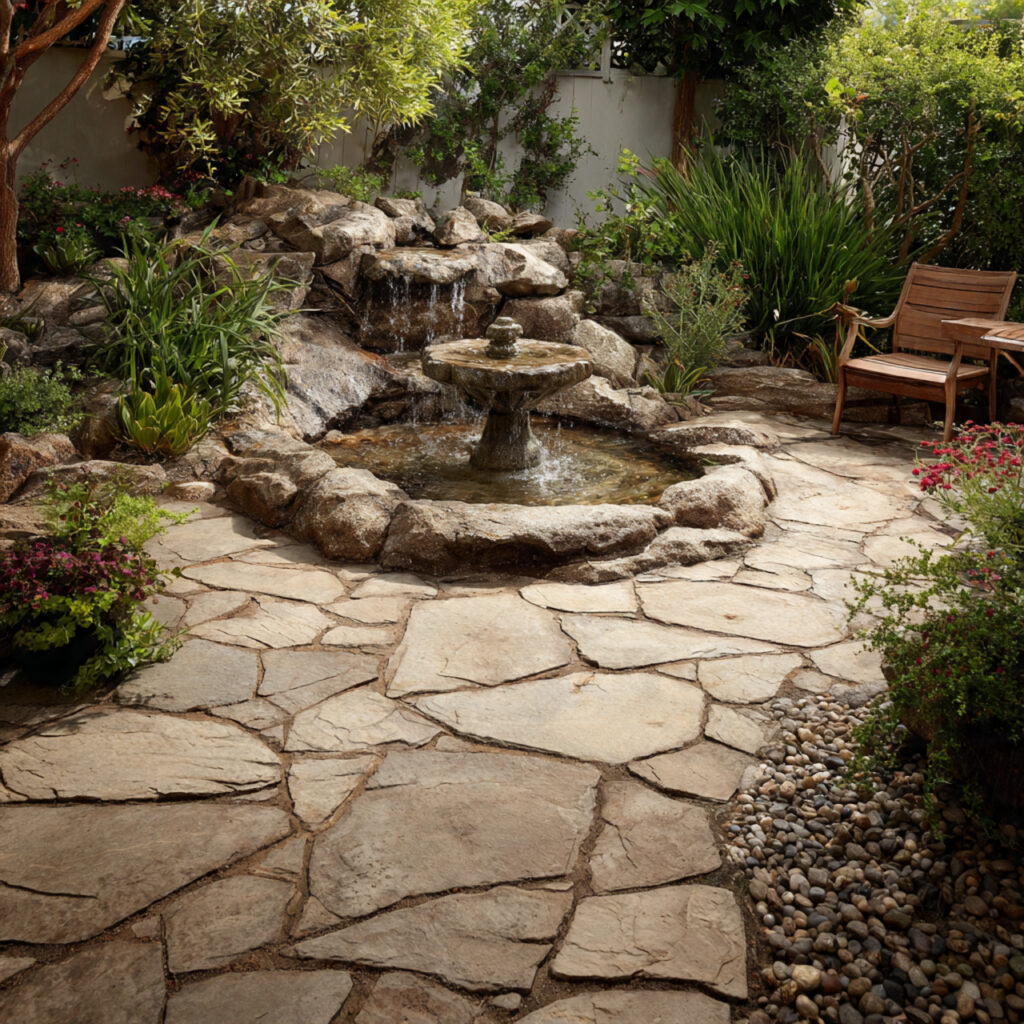
The gentle sound of flowing water transforms a patio from pleasant to peaceful. Pair water features with flagstone for a naturalistic design that soothes the senses.
Water feature options:
Fountains – Self-contained units require minimal installation. Choose from classic tiered designs to modern geometric shapes.
Ponds – Create small ecosystem with plants and possibly fish. Requires more maintenance but offers living beauty.
Waterfalls – Incorporate into retaining walls or multi-level designs for natural cascading effect.
Bubbling rocks – Low-profile option where water percolates up through stacked stones.
Installation essentials:
- Position near electrical outlet for pump (or use solar-powered options)
- Ensure proper leveling so water flows correctly
- Install underlayment to protect against leaks
- Include drainage plan for overflow during heavy rain
Placement strategy: Locate water features where sound carries to main seating areas but won’t overpower conversation. Near patio edge works well, creating focal point without dominating space.
Maintenance reality: Plan for weekly water top-offs during summer, monthly pump cleaning, and seasonal winterization in cold climates.
Avoid this mistake: Don’t position fountains where prevailing winds blow spray onto seating areas or create excessive evaporation.
Sustainable Flagstone Patio Options
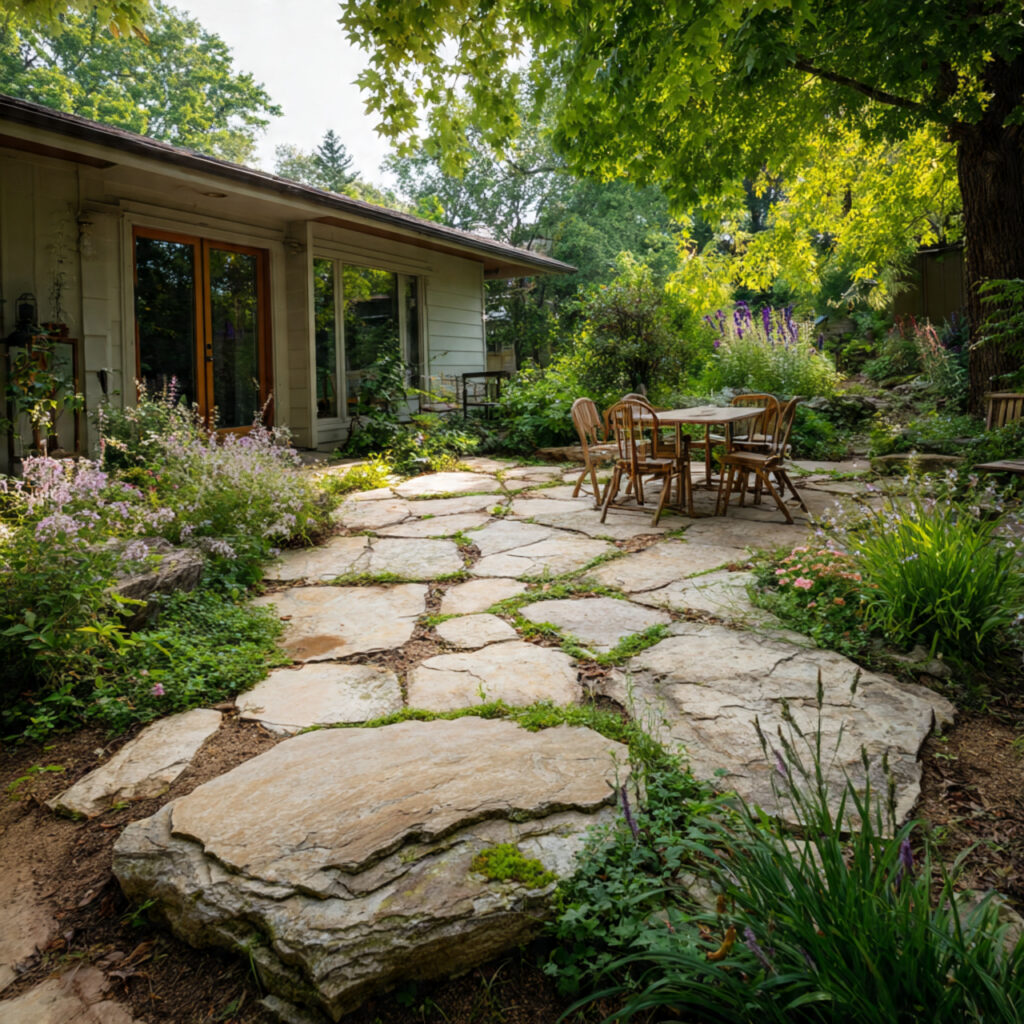
Make your patio project earth-conscious with sustainable material selection and installation practices.
Green flagstone options:
Locally sourced stone – Reduces transportation emissions and supports regional economy. Stone from within 500 miles significantly lowers carbon footprint.
Reclaimed flagstone – Salvaged from old buildings, walls, or patios. Unique character with environmental bonus.
Permeable installation – Leave wider gaps between stones filled with gravel or ground cover to allow rainwater infiltration instead of runoff.
Native plant integration – Use region-appropriate plants around patio that require minimal water and no chemicals.
Sustainable practices: ✓ Avoid chemical sealers—choose water-based, low-VOC products ✓ Install drip irrigation for surrounding plants to conserve water ✓ Compost yard waste instead of sending to landfill ✓ Use hand tools when possible instead of gas-powered equipment
Long-term sustainability: Flagstone’s decades-long lifespan means you’re not replacing materials every few years like wood decking or cheaper pavers.
Tip: Calculate total project emissions including transport. Sometimes a highly durable imported stone has lower lifetime impact than softer local stone requiring replacement.
Seasonal Decoration Ideas

One of flagstone’s greatest assets is its neutral backdrop that works with any decorating scheme. Swap accessories seasonally to keep your outdoor space feeling current and inviting.
Spring refresh:
- Bright floral cushions in yellows, pinks, and greens
- Hanging baskets with trailing petunias or fuchsias
- Pastel table linens and fresh flower centerpieces
- Light, breathable furniture covers
Summer vibes:
- Bold tropical patterns and vibrant colors
- Outdoor rugs defining seating zones
- Citronella candles and tiki torches
- Shade sails or umbrellas in fun prints
Autumn warmth:
- Burnt orange, deep red, and golden yellow accents
- Cozy throw blankets and plush pillows
- Pumpkins and mums in decorative planters
- Fire pit becomes central feature
Winter ambiance:
- Weatherproof lanterns with LED candles
- Evergreen planters and wreaths
- Warm metallic accents (copper, bronze)
- Heat lamps or blankets for cold-weather lounging
Storage tip: Keep off-season decor in weatherproof deck boxes that double as extra seating when needed.
Flagstone Patios for Small Spaces
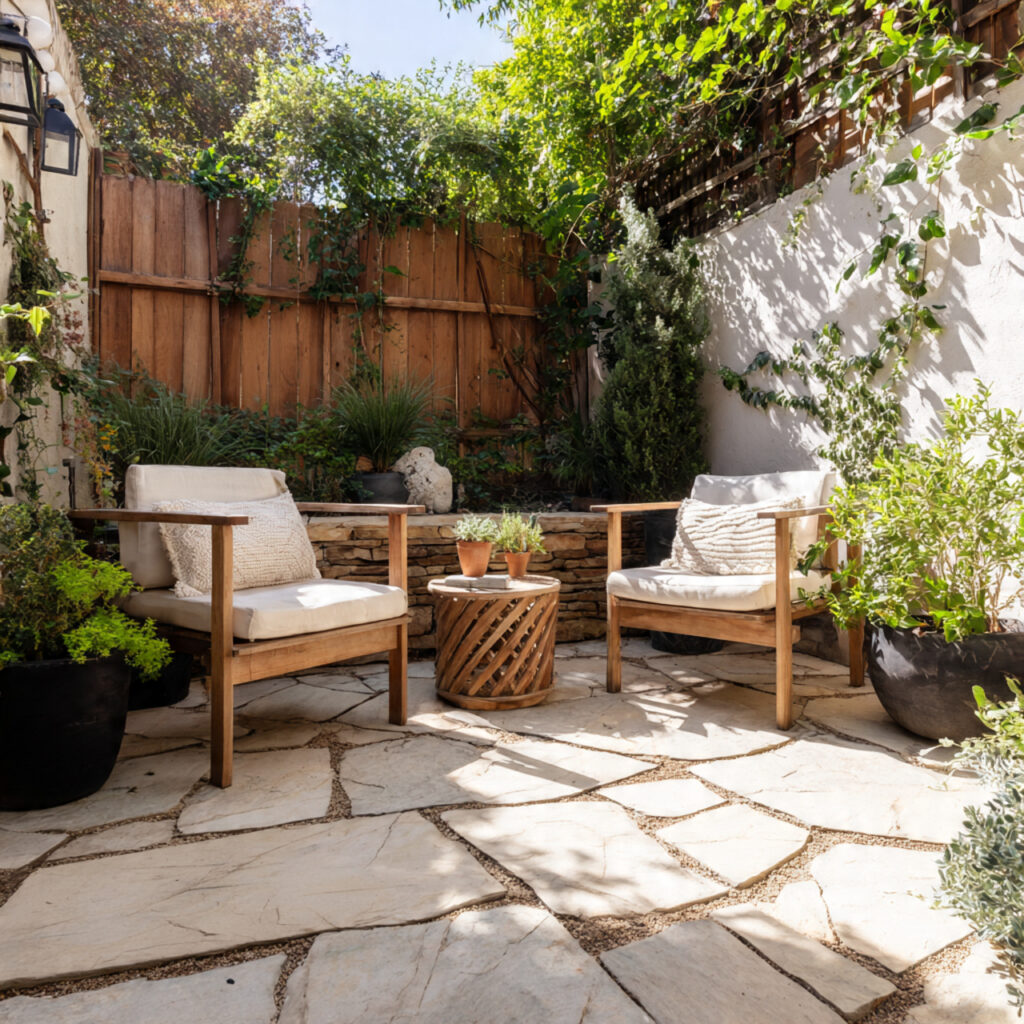
Limited square footage doesn’t mean limited potential. Small flagstone patios pack impressive functionality when thoughtfully planned.
Small-space strategies:
Multi-purpose furniture – Ottoman that stores cushions, bench with hidden compartment, folding chairs that disappear when not needed.
Vertical gardening – Wall planters, trellises, and hanging pots add greenery without consuming floor space.
Light colors – Pale sandstone or limestone makes areas feel more open and airy.
Minimal pattern – Simple layouts appear less busy than complex designs in tight quarters.
Furniture scale:
- Bistro table (24-30 inches) instead of full dining set
- Loveseat rather than sectional sofa
- Nesting tables that tuck away
Example: An 8×10-foot patio accommodates a small bistro set for dining plus two lounge chairs—perfect for morning coffee or intimate dinners.
Optical tricks:
- Run stone pattern diagonally to create perception of width
- Use mirrors on adjacent walls to visually double space
- Install lighting at multiple heights to draw eye upward
Avoid: Don’t overcrowd with furniture and accessories. Empty space makes small areas feel intentional rather than cramped.
Blending Flagstone with Other Materials
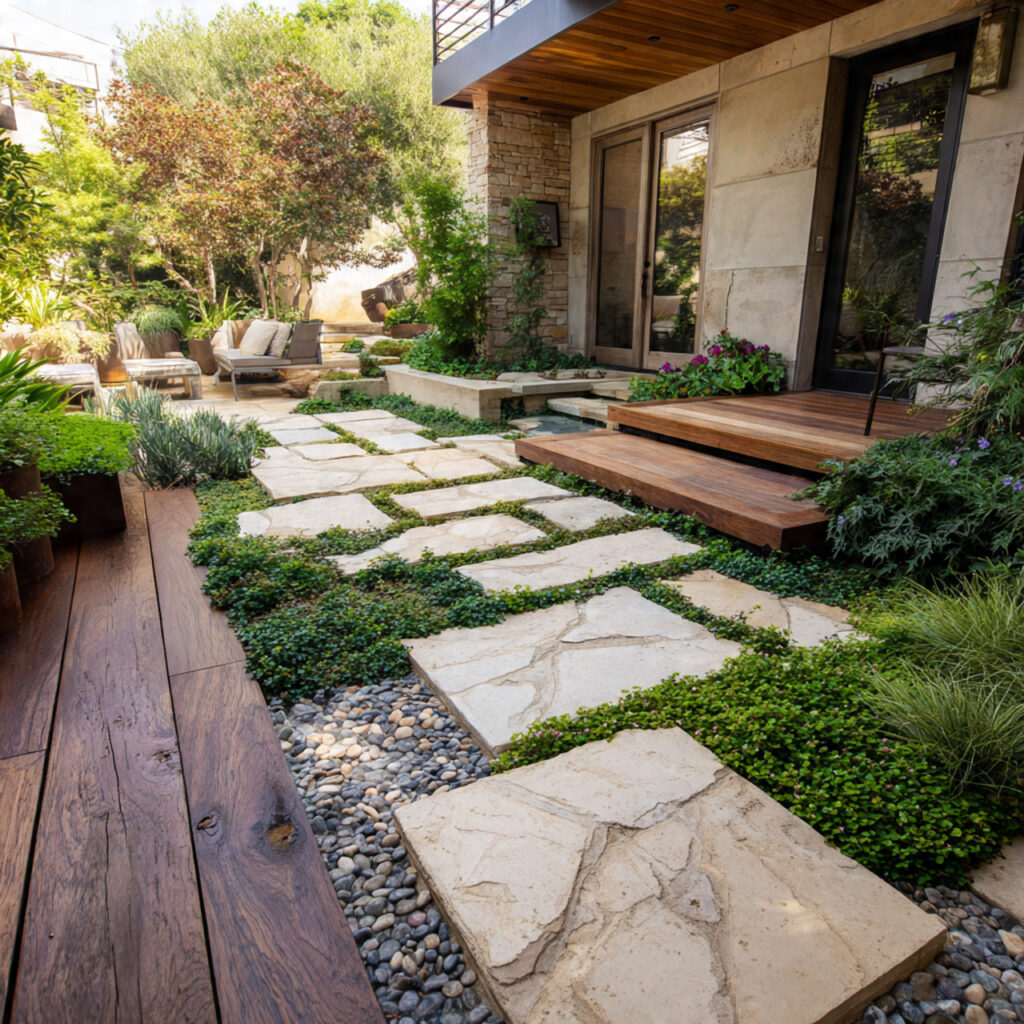
Who says you must commit to flagstone alone? Combining materials creates texture, contrast, and personalized style that’s uniquely yours.
Winning material combinations:
Flagstone + Wood – Natural pairing where wood deck transitions into stone patio, or wooden pergola overhead complements stone underfoot.
Flagstone + Gravel – Fill gaps between stones with pea gravel for drainage and casual beach house vibe.
Flagstone + Concrete – Pour concrete borders or geometric inserts for modern edge and cost savings on larger areas.
Flagstone + Brick – Create borders or accent patterns with brick’s warmth against stone’s cool tones.
Design principles:
- Maintain 60-30-10 ratio (60% flagstone, 30% secondary material, 10% accent)
- Choose materials with similar maintenance requirements
- Consider texture contrast—smooth with rough, solid with perforated
- Repeat materials in multiple locations for cohesion
Example design: Flagstone patio with gravel-filled joints, wooden privacy screen on one side, and brick-edged planting beds creates layered, professional landscape.
Cost benefit: Strategically mixing less expensive materials with premium flagstone stretches budget while maintaining high-end appearance.
Flagstone Patios for Commercial Spaces
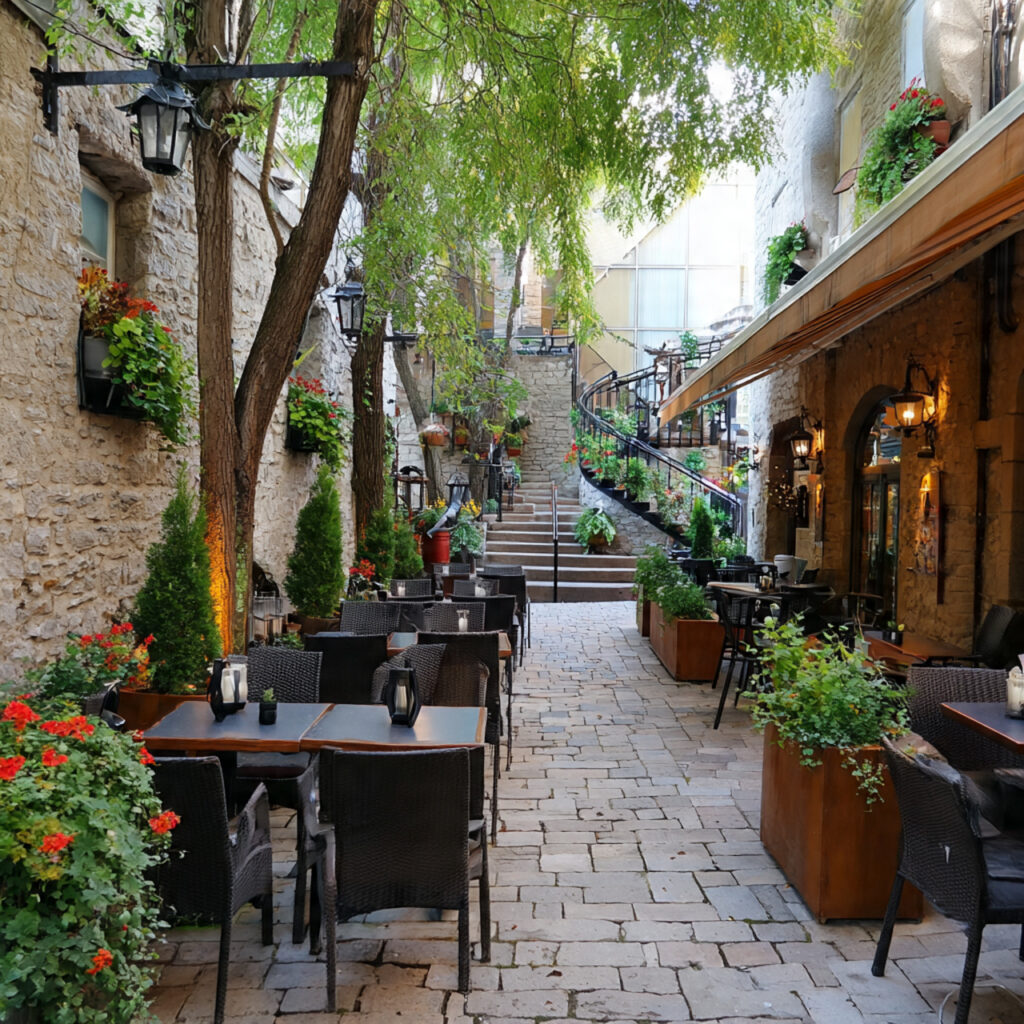
Businesses discover flagstone’s appeal extends far beyond residential properties. The professional appearance and extreme durability make it ideal for customer-facing spaces.
Commercial uses:
Restaurant patios – Creates inviting outdoor dining that stands up to constant foot traffic and weather exposure.
Hotel courtyards – Provides that resort luxury guests expect while requiring minimal upkeep.
Retail plazas – Durable enough for daily crowds while maintaining attractive appearance.
Office commons – Employee break areas and client meeting spaces benefit from natural stone’s calming effect.
Commercial advantages:
- Withstands heavy traffic without showing wear
- Low maintenance reduces long-term costs
- Timeless appeal doesn’t look dated as trends change
- ADA-compliant when properly installed and maintained
Business considerations:
- Local building codes often have specific requirements for commercial installations
- Slip resistance becomes critical liability issue—choose textures and sealers carefully
- Accessibility standards require smooth transitions and maximum slope ratios
- Higher-grade stone justified by increased traffic and longer replacement cycles
ROI perspective: Attractive outdoor spaces increase dwell time at restaurants (higher tabs) and retail (more purchases) while reducing maintenance costs over alternatives.
Safety Considerations for Flagstone Patios
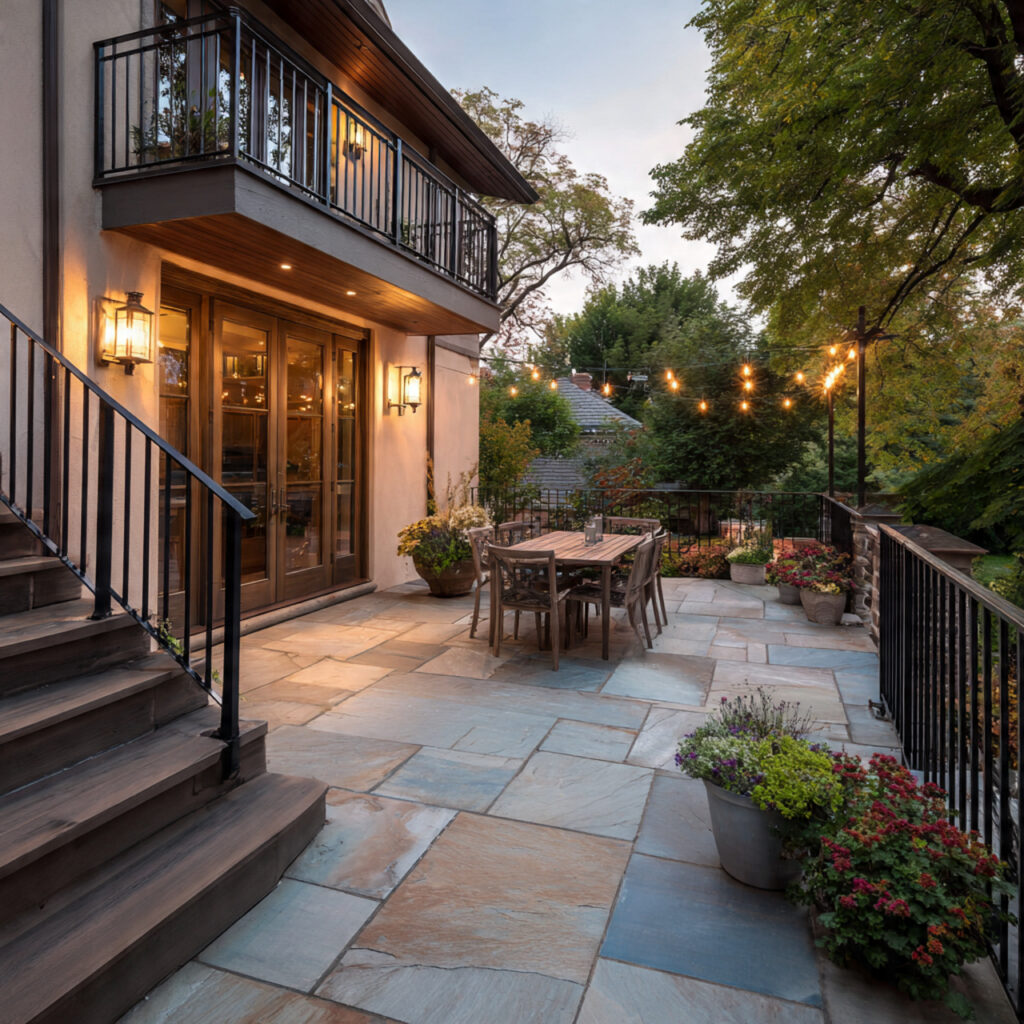
Beautiful design matters, but safety must come first. Proper planning prevents injuries and liability issues down the road.
Safety checklist:
Level surfaces – Eliminate wobbling stones and trip hazards by ensuring stable, well-compacted base and proper installation.
Smooth edges – Grind down sharp corners and protruding edges, especially in high-traffic areas and near seating.
Slip resistance – Choose naturally textured stones and apply anti-slip sealers in wet areas like near pools or fountains.
Adequate lighting – Illuminate all walking surfaces, steps, and elevation changes to prevent after-dark accidents.
Railings and barriers – Install code-compliant railings for any elevation change over 30 inches or near drop-offs.
Specific safety measures:
- Mark step edges with contrasting stone or lighting
- Keep pathways clear of furniture, planters, and trip hazards
- Install ground-fault outlets for all electrical elements
- Maintain proper drainage to prevent ice formation in winter
- Anchor furniture in windy locations
Child safety: Round table corners, secure fire pits with spark screens, and fence pool areas according to local requirements.
Pet considerations: Avoid jagged stones that could cut paw pads, and ensure gaps between stones aren’t wide enough to trap small feet.
Regular inspection: Walk your patio quarterly to identify settling, cracks, or other developing hazards before someone gets hurt.
Budgeting for Your Flagstone Patio
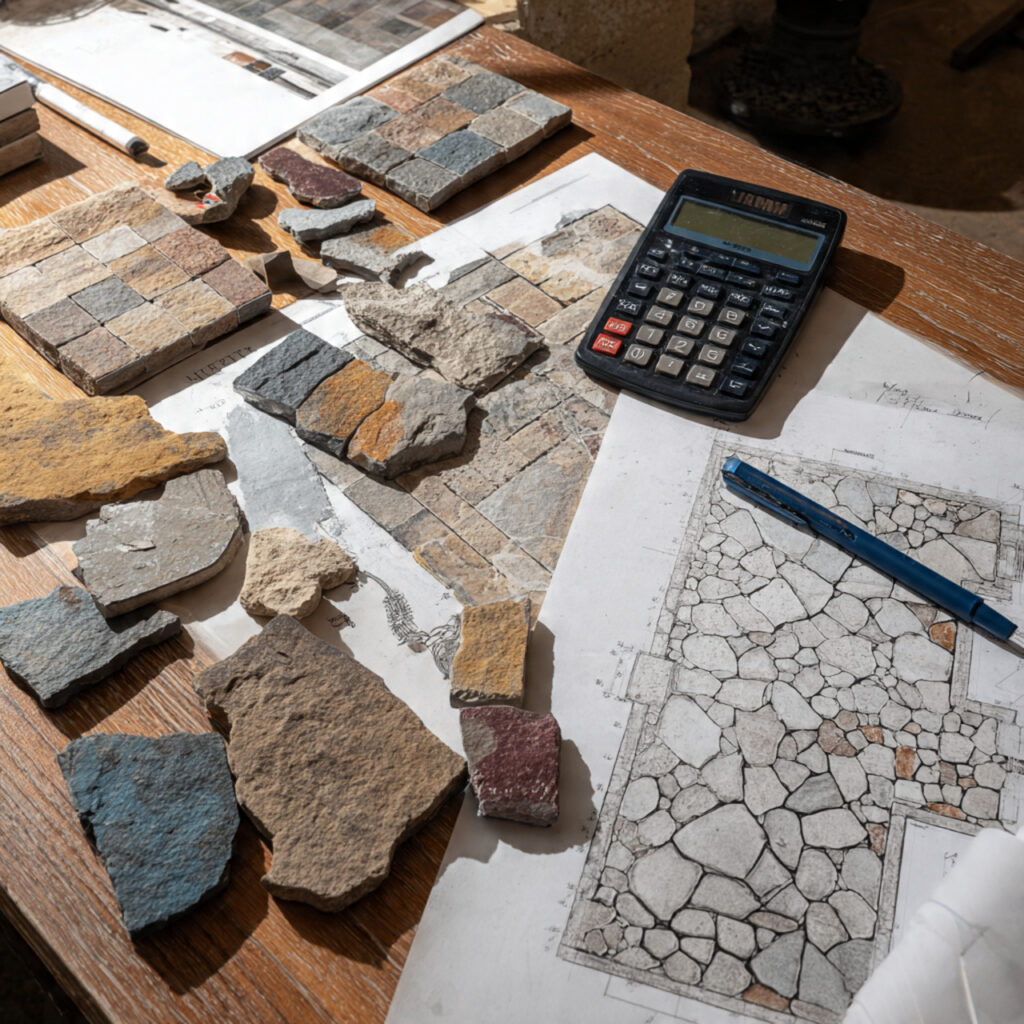
Let’s talk numbers. Flagstone patios represent significant investment, but understanding costs upfront prevents sticker shock and helps you plan accordingly.
Cost factors:
Stone type – Basic sandstone: $3-6/sq ft. Premium bluestone: $15-30/sq ft. Rare imported varieties: $30+/sq ft.
Installation method – DIY: Materials only. Professional dry-lay: $15-25/sq ft installed. Mortared installation: $25-50/sq ft installed.
Size and complexity – Simple 10×12 patio costs less than same square footage across multiple levels with curves.
Site preparation – Flat, accessible yards cost less than sloped terrain requiring extensive grading and retaining walls.
Budget breakdown example (300 sq ft patio):
- Economy: $3,000-5,000 (DIY sandstone, basic layout)
- Mid-range: $8,000-12,000 (professional installation, quality stone, simple design)
- Premium: $15,000-25,000+ (complex design, top-tier materials, integrated features)
Additional costs to budget:
- Base materials (gravel, sand): $300-800
- Delivery fees: $100-500
- Equipment rental (if DIY): $200-400
- Sealing: $1-3/sq ft
- Furniture and accessories: Varies widely
Long-term value: Factor in that flagstone requires minimal maintenance and lasts 50+ years versus wood decking (15-20 years) or basic concrete (20-30 years).
Money-saving tips:
- Buy stone during off-season (late fall/winter)
- Choose locally available varieties
- Handle demolition and site prep yourself
- Start smaller and expand in phases
Financing reality: Many homeowners finance patio projects through home equity lines or renovation loans. Monthly payment on $15,000 over 5 years at 7% APR: roughly $300/month.
DIY vs. Professional Installation
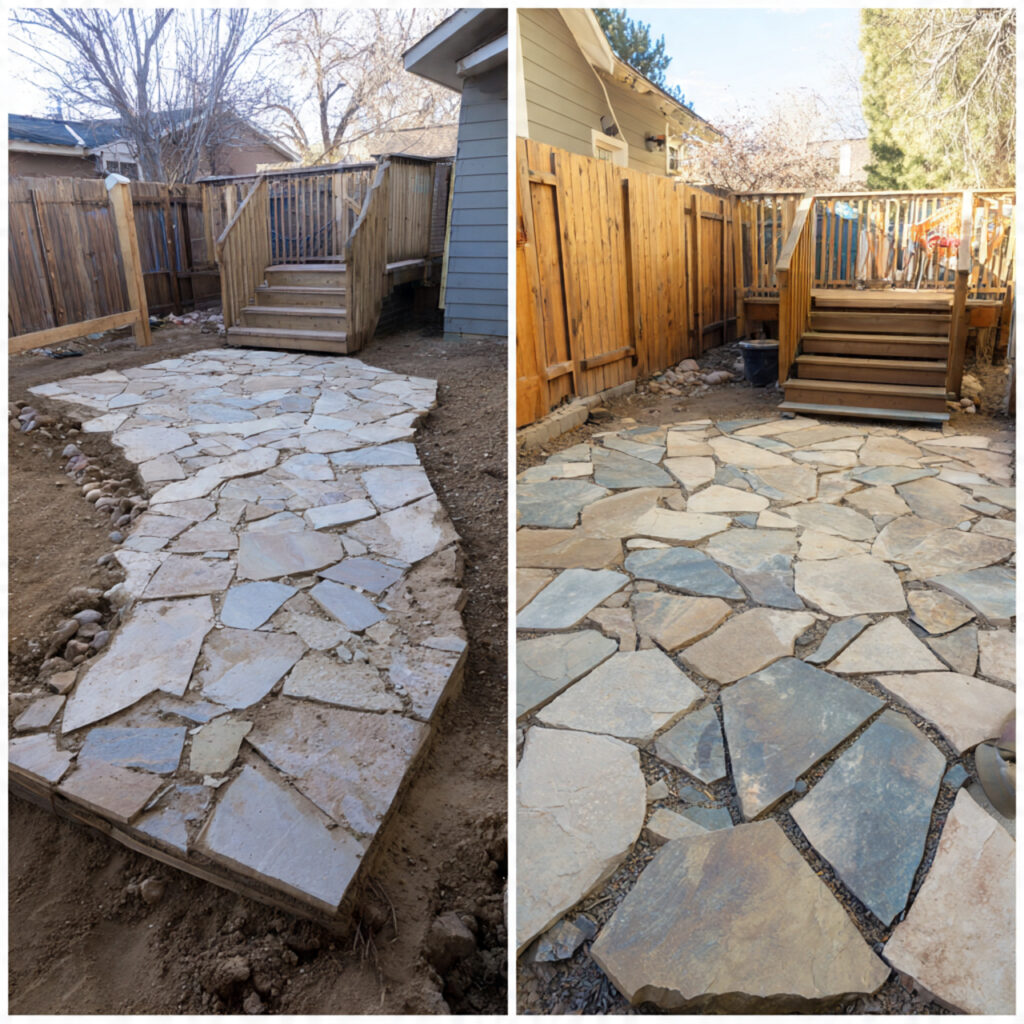
The temptation to save money with DIY is real, but understand what you’re taking on before committing to handle installation yourself.
DIY advantages:
- Significant labor cost savings (typically 40-60% of total project)
- Work at your own pace
- Complete creative control
- Satisfaction of building with your own hands
DIY challenges:
- Physically demanding (lifting 50+ lb stones repeatedly)
- Requires specific knowledge of grading, drainage, and leveling
- Mistakes costly to fix and may require professional help anyway
- Time-consuming (weekends for weeks or months)
Professional advantages:
- Expertise ensures proper installation and longevity
- Warranty on workmanship
- Access to professional tools and equipment
- Completed in days rather than months
- Handles permits and code compliance
Professional costs:
- Higher upfront investment
- Less flexibility in timeline
- Requires finding reputable contractor
Good candidates for DIY:
- Small patios (under 150 sq ft)
- Simple rectangular or irregular random layouts
- Relatively flat terrain
- Experience with similar projects
- Physically capable of heavy labor
- Ample free time
Hire professionals for:
- Large or complex projects
- Multiple levels or retaining walls
- Curved edges or intricate patterns
- Sloped sites requiring significant grading
- Projects with deadlines
- When physical limitations or time constraints exist
Hybrid approach: Handle demolition, site clearing, and finishing touches yourself while hiring pros for grading, stone layout, and installation—splits cost savings with quality assurance.
Interview questions for contractors:
- How many flagstone patios have you installed?
- Can I see photos or visit completed projects?
- What warranty do you provide?
- Are you licensed and insured?
- What’s your timeline and payment schedule?
- How do you handle drainage and base preparation?
Adding Greenery Between Stones
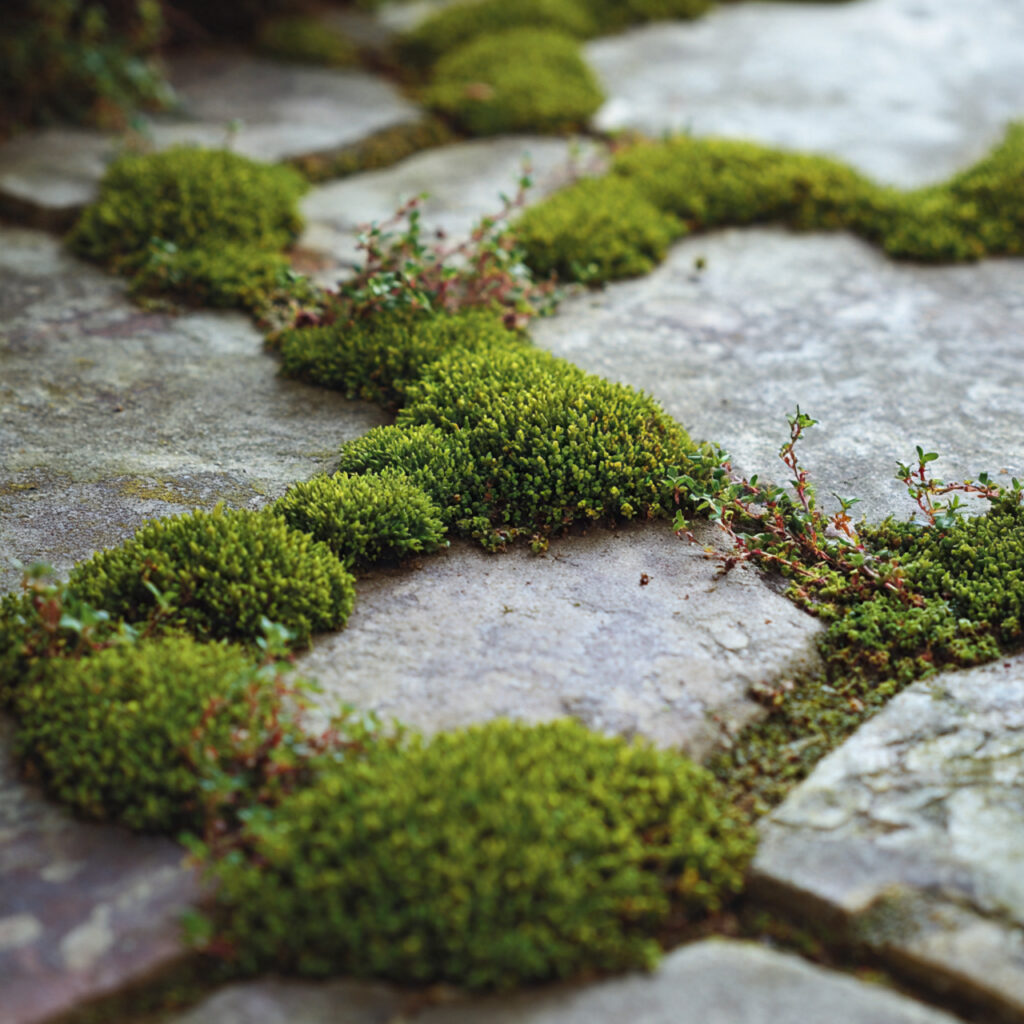
Transform joint spaces from necessary gaps into living features. Low-growing plants soften hardscape edges while solving practical problems.
Best plants for stone gaps:
Creeping thyme – Fragrant when stepped on, drought-tolerant, lavender blooms in summer. Handles moderate foot traffic.
Irish moss – Lush green carpet resembles moss but is actually a flowering plant. Prefers shade and consistent moisture.
Blue star creeper – Tiny blue flowers in spring, forms dense mat. Tolerates light shade and occasional walking.
Corsican mint – Intense minty scent when crushed, grows in sun or shade. Avoid areas with heavy traffic.
Planting technique:
- Remove existing weeds and debris from joints
- Fill gaps with quality soil mix
- Plant small plugs or seedlings 4-6 inches apart
- Water regularly until established (6-8 weeks)
- Trim occasionally to maintain tidy appearance
Benefits beyond beauty: ✓ Improved drainage as roots break up compacted soil ✓ Natural weed suppression by occupying space ✓ Softens hardscape visually ✓ Adds fragrance and pollinator habitat
Maintenance requirements:
- Water during establishment and dry spells
- Trim back overgrowth monthly during growing season
- Divide and replant thin areas as needed
- Pull any aggressive weeds that appear
Climate considerations: Choose plants suited to your hardiness zone and microclimate. Shade lovers like moss won’t thrive in full sun; sun-lovers like thyme fail in shade.
Alternative to planting: If you prefer low-maintenance, use polymeric sand that hardens when wet, preventing weed growth without requiring care.
Creating Outdoor Living Rooms
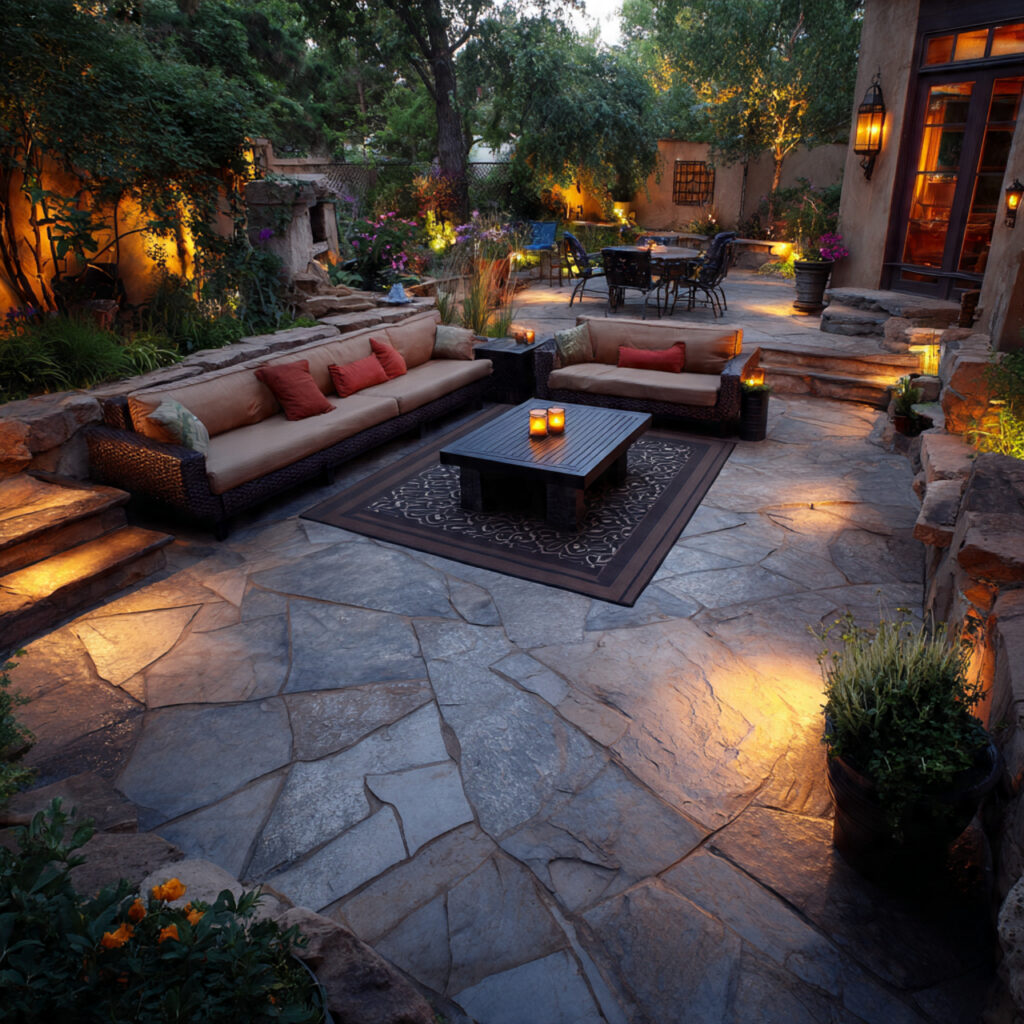
Why should living rooms stay indoors? Extend your home’s comfort zone into the fresh air with a fully furnished flagstone outdoor living room.
Essential elements:
Comfortable seating – Deep-cushioned sofas and chairs with weather-resistant upholstery invite hours of relaxation.
Coffee table – Central gathering point for drinks, books, and conversation.
Outdoor rug – Defines space, adds warmth, and makes stone more comfortable for bare feet.
Storage – Weather-resistant chests or benches hold cushions, blankets, and outdoor essentials.
Side tables – Convenient spots for setting down drinks within arm’s reach of every seat.
Design approach:
- Arrange furniture to encourage face-to-face conversation
- Create U-shape or L-shape layouts that feel inclusive
- Leave 18-24 inches between coffee table and seating
- Include task lighting near reading areas
Weather protection:
- Pergola or retractable awning provides shade and rain shelter
- Weatherproof fabrics resist fading and mildew
- Covers protect furniture during extended periods of non-use
- Strategic landscaping creates natural windbreaks
Personal touches:
- Outdoor-safe artwork on adjacent walls
- Decorative pillows in seasonal colors
- Potted plants flanking seating areas
- Candles or fire feature for ambiance
Technology integration: Weatherproof speakers, charging stations with GFCI protection, and Wi-Fi extenders let you work or entertain seamlessly outdoors.
Example setup: 14×16-foot living room space with 3-piece sectional, coffee table, two side tables, outdoor rug, and overhead string lights creates complete outdoor room for roughly $3,000-5,000 in furnishings.
Flagstone Patios for Pet-Friendly Spaces
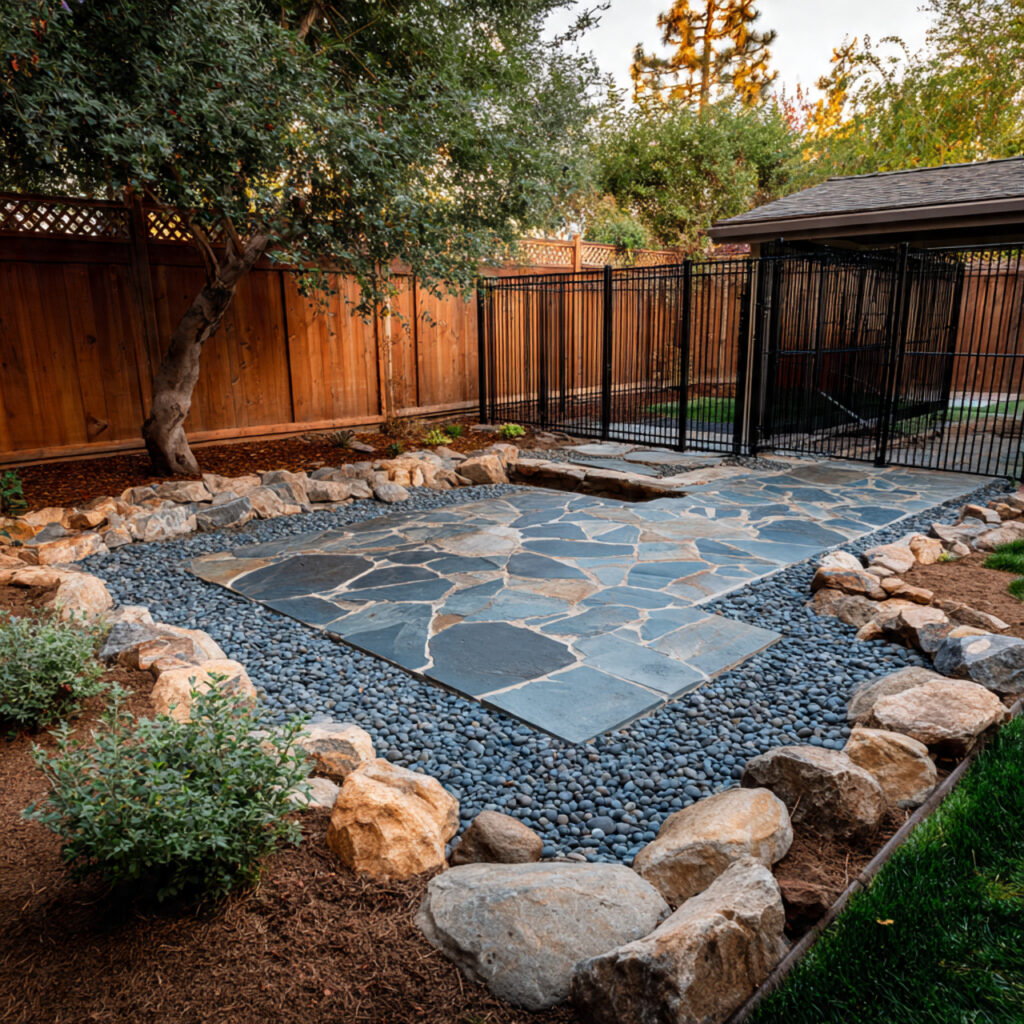
Your four-legged family members deserve outdoor comfort too. Design your flagstone patio with pets in mind for a space everyone enjoys.
Pet-safe features:
Smooth stone selection – Avoid rough textures that could scrape paw pads. Sandstone or smooth-cut flagstone works better than jagged slate.
Appropriate gaps – Keep joints narrow enough that small paws won’t get stuck. Under 1 inch for small breeds.
Shade provision – Covered areas protect from summer heat. Remember, stone can become hot—shade keeps it comfortable.
Water access – Designated pet water station prevents pets from drinking from fountains or ponds.
Secure boundaries – Fencing prevents escape and creates safe play area.
Pet zone ideas:
- Dedicated corner with water bowl and pet bed
- Shaded area with cooling mat during summer
- Low planters (pets won’t dig up or damage)
- Hose bib nearby for quick paw rinse after play
Plants to avoid: Azaleas, lilies, sago palms, and many common landscape plants are toxic to pets. Research before planting.
Maintenance with pets:
- Sweep frequently to remove pet hair and debris
- Clean accidents immediately to prevent staining
- Use pet-safe cleaning products
- Trim ground cover plants that might harbor ticks
Design considerations: ✓ Avoid sharp furniture corners at dog-height ✓ Secure fire pits to prevent curious pets from tipping ✓ Create easy access from house (pet door or ground-level entry) ✓ Include digging deterrent if you have enthusiastic diggers
Cat-specific features: Vertical elements like cat shelves on adjacent walls, perches with good views, and contained catnip plants create feline paradise.
Innovative Flagstone Patterns
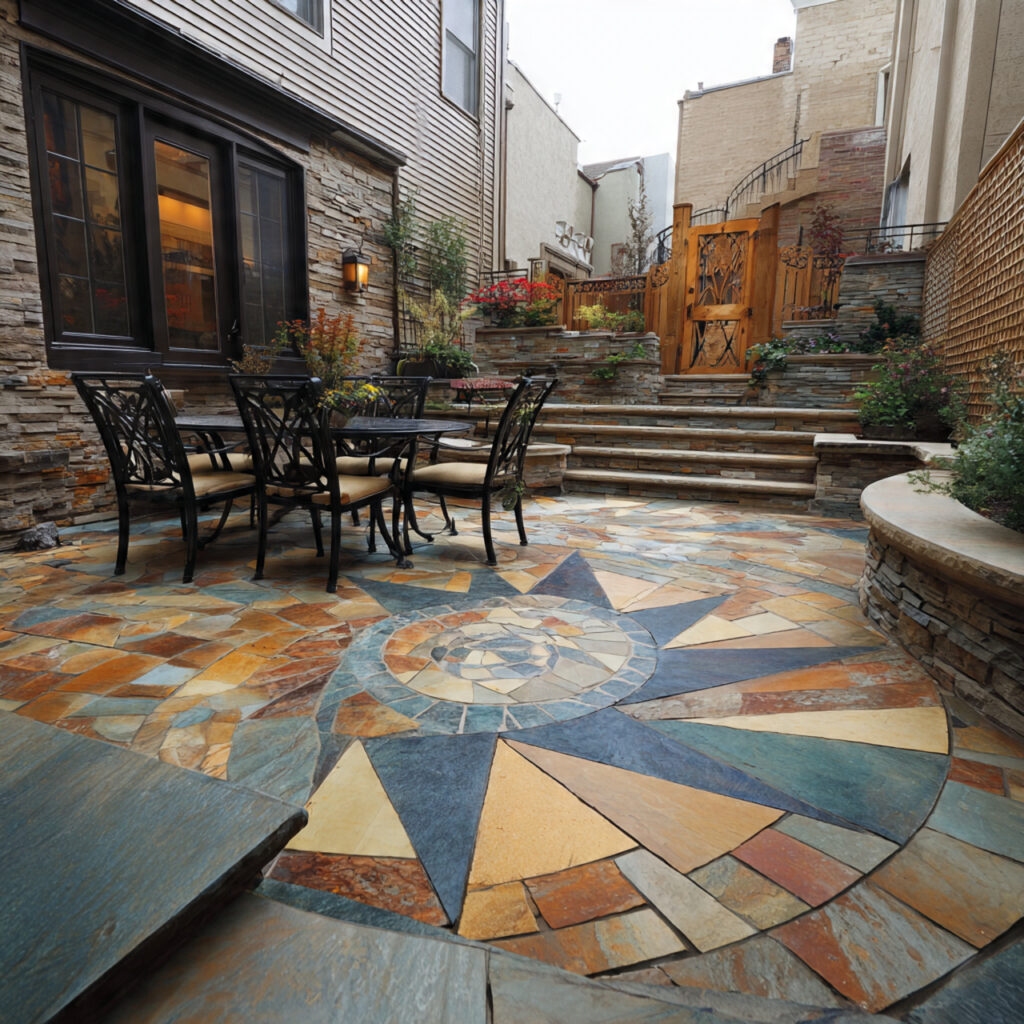
Move beyond basic layouts with pattern work that turns functional hardscape into outdoor art.
Innovative pattern ideas:
Herringbone- Rectangular stones arranged in V-shaped weaving pattern. Classic, sophisticated, visually engaging.
Fan or peacock – Stones radiate from central point in fan shape. Stunning focal point for entryways or center medallions.
Mosaic inlays – Smaller stone pieces create pictures or geometric designs within larger flagstone field.
Concentric circles – Rings of stone expanding outward create hypnotic pattern. Works beautifully around fire pits.
Mixed sizes – Large anchor stones surrounded by progressively smaller pieces create organic, natural flow.
Color blocking – Group similar-colored stones into intentional patterns or gradients.
Technical considerations:
- Complex patterns require professional installation
- More cuts and fitting mean higher labor costs
- Intricate designs need careful planning and layout before installation
- Some patterns work better with specific stone shapes
Pattern psychology:
- Straight lines feel formal and modern
- Curves create relaxed, natural atmosphere
- Symmetrical patterns appear intentional and designed
- Random layouts feel organic and cottage-like
Example: Create border using small, tightly fitted stones in contrasting color, with large irregular flagstones filling center field—combines precision with natural beauty.
Mixing colors and textures:
- Alternate warm and cool tones for depth
- Combine smooth and textured stones for tactile interest
- Use contrasting colors to define zones or highlight features
DIY tip: Lay out pattern without mortar first, taking photos from multiple angles to ensure you like the design before committing to permanent installation.
Frequently Asked Questions (FAQs)
Q1: How long does a flagstone patio last?
With proper installation and regular maintenance, flagstone patios easily last 50 years or more—many historic flagstone paths and courtyards have survived centuries. The key factors are correct base preparation, appropriate stone selection for your climate, and periodic sealing every 2-3 years. Minor repairs like re-leveling settled stones or filling joints extend lifespan indefinitely. Think of it as a lifetime investment rather than a temporary feature.
Can I really install a flagstone patio myself, or should I hire pros?
Small, simple patios (under 150 square feet with basic layouts) make reasonable DIY projects if you’re physically capable and have patience. You’ll need to understand proper grading, base preparation, and stone placement techniques—plenty of online tutorials exist. However, large patios, complex patterns, multiple levels, or challenging terrain benefit enormously from professional expertise. Poor installation leads to settling, drainage issues, and premature failure that costs more to fix than hiring professionals initially. Many homeowners compromise by doing prep work themselves and hiring pros for actual installation.
How do I stop weeds from taking over the gaps between stones?
You have several effective options. Polymeric sand fills joints and hardens when wet, creating barrier that prevents weed seeds from germinating. Professional-grade sealers also reduce weed growth. Alternatively, embrace living ground covers like creeping thyme or moss that outcompete weeds while adding beauty. For existing weeds, pull them when small before roots establish, or use targeted organic herbicides. Avoid harsh chemicals that damage stone. Regular maintenance (sweeping and quick weeding) prevents problems from starting. The tighter your joints, the fewer weeds you’ll battle.
Is flagstone dangerous when wet—will people slip?
Slip resistance varies dramatically by stone type and finish. Smooth-polished stones become quite slippery when wet and should be avoided for patios, especially near pools. Rough-textured stones like natural-cleft slate, sandstone with natural surface, or flamed-finish bluestone provide excellent traction even when wet. You can also apply anti-slip sealers specifically designed for natural stone. For pool areas or frequently wet locations, always choose highly textured varieties and test them wet before committing. Proper drainage that prevents water pooling also improves safety significantly.
What’s the best way to clean and maintain flagstone long-term?
Maintenance is straightforward: sweep weekly to remove debris, hose off monthly, and deep clean seasonally with mild dish soap and water using a stiff brush—avoid pressure washers that can damage joints and erode stone. Reseal every 2-3 years to protect against stains, moisture absorption, and weed growth. For specific stains, use appropriate cleaners: degreaser for oil, oxygen bleach for organic stains, commercial rust remover for iron deposits. Never use acidic cleaners (vinegar, lemon juice) on limestone or marble as they cause permanent etching. Catch spills quickly and clean immediately for easiest maintenance.
Final Thoughts: Your Flagstone Patio Journey Starts Here
Creating a flagstone patio is more than a home improvement project—it’s an investment in how you live. Every carefully placed stone becomes part of your daily life, hosting everything from quiet morning solitude to celebration-filled gatherings with loved ones.
The beauty of flagstone lies in its versatility. Whether you’re working with a compact urban courtyard or sprawling suburban yard, these timeless ideas adapt to your space, budget, and vision. Start with a clear purpose: Do you primarily want dining space? A relaxation retreat? An entertainment hub? Let that purpose guide your decisions about size, layout, features, and furnishings.
Remember that the best patios evolve over time. You don’t need to implement every feature immediately. Begin with quality foundational work—proper base preparation and stone installation—then add elements like fire pits, outdoor kitchens, or water features as your budget and needs develop.
Most importantly, design for how you actually live, not how design magazines suggest you should. The perfect patio is the one you use regularly, the one that feels like a natural extension of your home, and the one that brings you genuine joy every time you step outside.
Your flagstone patio awaits—time to transform that backyard vision into beautiful, lasting reality.