25 Best Garden Pergola Ideas for Small, Modern, and Rustic Gardens
Think of a pergola as your garden’s architectural jewelry—it doesn’t just sit there looking pretty; it works hard to make your outdoor space more livable, more beautiful, and more valuable. Whether you’re sipping morning coffee or hosting weekend barbecues, the right pergola turns an ordinary backyard into your favorite room of the house.
Let’s be honest: choosing a pergola can feel overwhelming with so many styles, materials, and designs out there. But here’s the good news—once you understand what works for your space and lifestyle, you’ll wonder how you ever lived without one. This guide walks you through practical, inspiring pergola ideas that actually make sense for real gardens and real budgets.
A thoughtfully planned pergola strikes that sweet spot between shelter and sunshine. It becomes a home for climbing roses, a frame for your outdoor furniture, and that Instagram-worthy backdrop everyone asks about. The secret lies in matching the right materials, design, and location to your garden’s personality and your daily needs. Smart planning means your pergola will look gorgeous and stand strong for decades.
Why Pergolas Make Your Garden Better
Here’s what makes pergolas special: they create definition without boxing you in. Unlike solid-roof structures that can feel closed off, pergolas let you enjoy fresh air and dappled sunlight while still marking off a special zone in your yard. It’s the difference between sitting anywhere in your garden and having a place to sit.
Beyond the practical perks, pergolas change how your garden feels and flows. They naturally guide people through your space, draw the eye toward your best features, and turn a flat yard into something with dimension and interest. When done right, a pergola doesn’t just add beauty—it multiplies how much you actually use your outdoor space.
Quick Benefits:
- Creates usable shade without blocking airflow
- Increases your home’s curb appeal and resale value
- Provides structure for plants to climb and flourish
- Defines separate “rooms” in larger gardens
- Offers a framework for lights, fans, or decor
Classic Wooden Pergola Designs
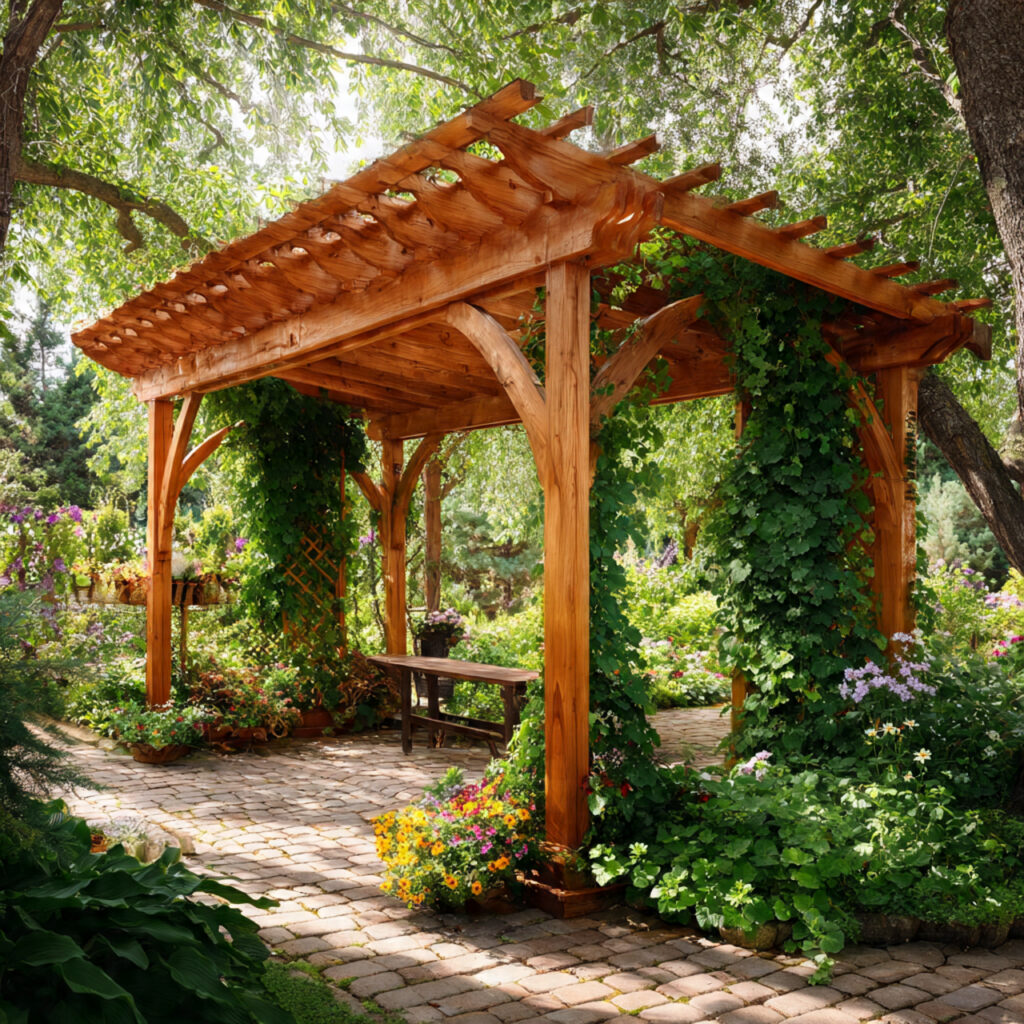
Wood remains the go-to choice for good reason—it looks natural, ages beautifully, and plays well with everything from cottage gardens to modern landscapes. Cedar and redwood bring natural rot resistance, while pressure-treated pine offers budget-friendly durability.
The beauty of wood is its chameleon quality. Leave it natural for that organic, weathered look, stain it to match your deck, or paint it crisp white for coastal charm. You can drape fabric over it, train vines up it, or hang lanterns from it—wood adapts to whatever vision you have.
Tips:
- Choose cedar or redwood for humid climates (they resist moisture naturally)
- Apply weatherproof sealant every 2-3 years to prevent cracking
- Consider thicker posts (6×6 inches) for a sturdier, more substantial look
- Install ground-level posts in concrete footings to prevent rot at the base
Common Mistake to Avoid: Skipping the sealer. Even naturally resistant wood needs protection from UV rays and moisture to maintain its color and strength.
Sleek Modern Minimalist Pergolas

If your style leans contemporary, minimalist pergolas deliver clean sophistication. Think straight lines, geometric precision, and materials like powder-coated aluminum or composite beams in black, white, or charcoal gray. These designs don’t compete with your garden—they complement it.
Modern pergolas shine in uncluttered spaces where less really is more. They provide structure without visual weight, letting your carefully chosen plants and furniture take center stage. Perfect for urban gardens or newly built homes with contemporary architecture.
Design Elements:
- Flat or slightly angled roofs (no decorative curves)
- Monochromatic color schemes
- Hidden fasteners for seamless appearance
- Integration with outdoor lighting systems
- Mix of materials (steel posts with wood slats)
Styling Tip: Pair with concrete planters, modern outdoor furniture, and minimal plantings for maximum impact.
Smart Pergola Solutions for Small Gardens
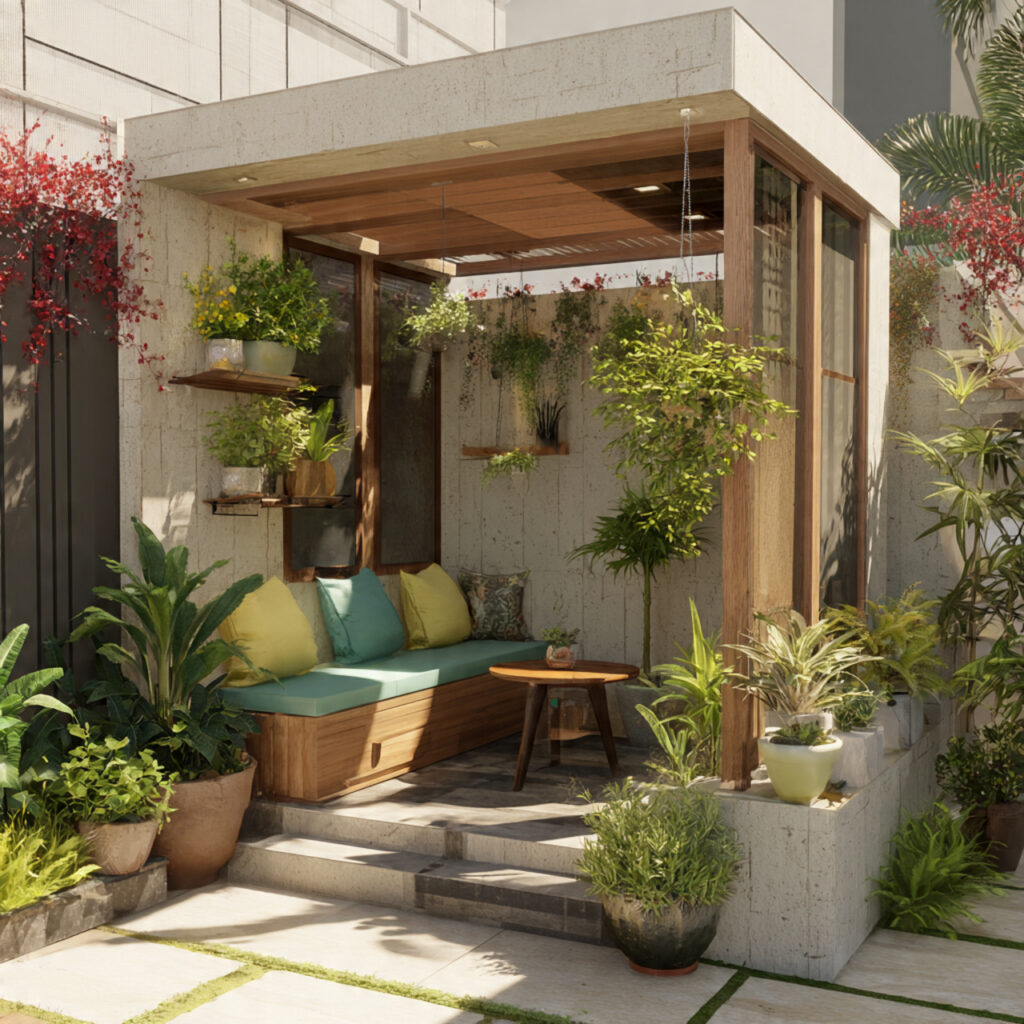
Don’t let limited space stop you—compact pergolas work wonders in cozy gardens. The trick is proportion: choose slimmer posts, shallower depth, and open roof spacing to avoid overwhelming your space. A small pergola creates that “outdoor room” feeling without eating up your entire yard.
Location matters enormously in tight spaces. Tucking a pergola into a corner or against your home’s back wall leaves the center of your garden open while still giving you that defined seating or dining spot you’re after.
Space-Saving Strategies:
- Mount one side to your house wall (saves 2 posts worth of space)
- Use 4×4 posts instead of 6×6 for a lighter footprint
- Install on your existing patio rather than expanding it
- Choose vertical slats on one side for privacy without bulk
- Keep roof slats widely spaced to maintain open feel
Measurement Guideline: For a small garden seating area, a 6×8 or 8×8 foot pergola typically provides enough coverage without dominating.
Freestanding Pergola Designs

Freestanding pergolas give you complete freedom to place your structure exactly where it makes the most sense—over the fire pit, in the center of a lawn seating area, or marking the entrance to your garden path. No walls needed, no attachments required.
This independence makes freestanding designs perfect for larger properties or when you want to create a true destination spot separate from your house. They become landmarks in your landscape, drawing people to explore different parts of your garden.
Ideal Placements:
- Center of a patio surrounded by gardens
- Over an outdoor kitchen or bar area
- Creating shade for a hot tub or pool
- Marking a transition between garden zones
- Anchoring one corner of a large lawn
Stability Note: Freestanding pergolas need robust anchoring—use concrete footings at least 3 feet deep in cold climates to prevent frost heave.
Attached Pergolas for Seamless Living
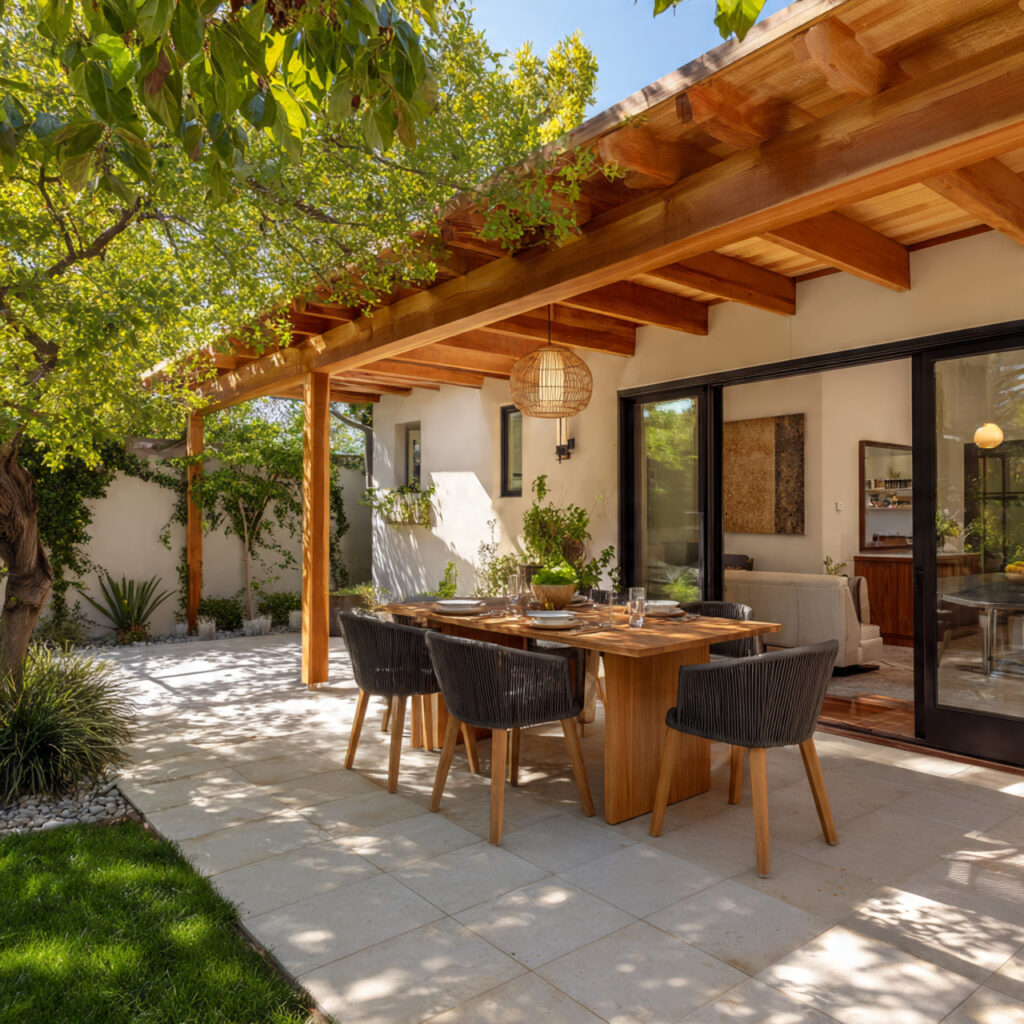
Attached pergolas extend your home’s footprint without the cost or hassle of a full addition. Built right off your back door, they create a natural flow from kitchen to outdoor dining or from living room to alfresco lounge space.
This design makes practical sense for daily use—step outside with your morning coffee, serve dinner without trekking across the yard, or keep an eye on kids playing while you cook. It’s outdoor living made effortless.
Functional Advantages:
- Direct access from indoor living spaces
- Shares one wall (reduces material and labor costs)
- Can integrate with existing electrical for lights and fans
- Provides covered transition during rain
- Often easier to run utilities (power, water) to the space
Installation Tip: Ensure proper flashing where the pergola attaches to your house to prevent water infiltration behind your siding.
Living Pergolas with Climbing Plants

A plant-covered pergola is nature’s air conditioner. Climbing vines like wisteria, jasmine, clematis, or grapevines transform bare beams into a living canopy that provides cooling shade, gorgeous blooms, and seasonal fragrance.
Yes, you’ll need patience—most climbers take 2-3 seasons to really fill in. But once established, you’ve got a self-maintaining roof that changes with the seasons, offering lush summer shade and allowing warming winter sun when leaves drop.
Top Climbing Plants:
- Wisteria: Stunning purple flowers, aggressive growth (needs pruning)
- Jasmine: Fragrant white blooms, evergreen in warm climates
- Climbing roses: Classic romance, needs regular maintenance
- Grapevine: Edible fruit, beautiful fall color, rapid coverage
- Clematis: Variety of colors, less aggressive than wisteria
Care Tips:
- Install sturdy wire or cables for vines to grip
- Prune annually to prevent overwhelming the structure
- Water deeply during establishment (first 2 years)
- Choose deciduous vines if you want winter sunlight
Safety Measure: Avoid wisteria on wooden structures if you won’t maintain it—mature vines can damage wood with their weight and strength.
Pergolas with Retractable Canopies
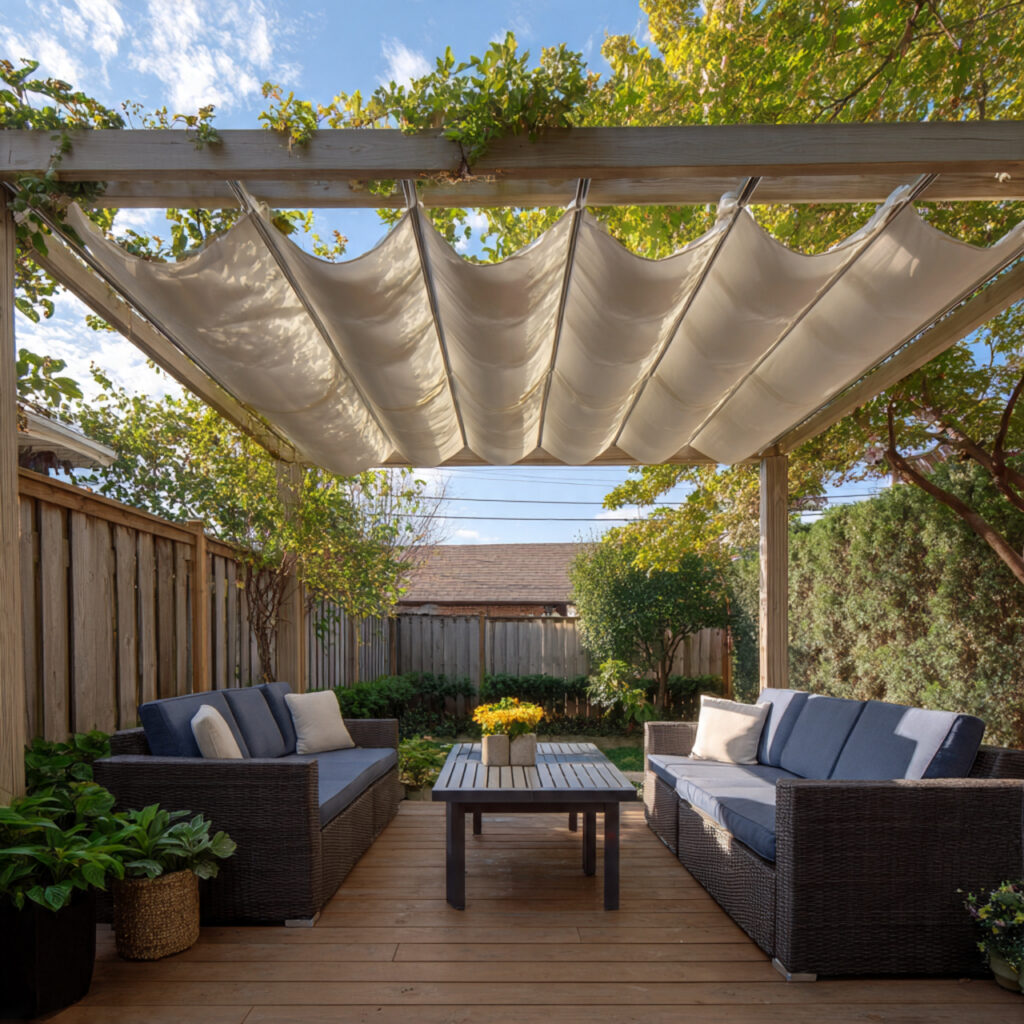
Want the best of both worlds? Retractable canopies let you control your coverage. Slide open the fabric roof on perfect weather days, close it when the sun gets intense, or keep it shut during light rain. It’s like having a convertible car for your backyard.
This adaptability makes your pergola useful in more situations and more seasons. No commitment to permanent shade means you stay comfortable whether it’s scorching July or pleasant October.
Canopy Options:
- Manual crank systems (budget-friendly)
- Motorized retraction (easy, but requires electrical)
- Waterproof vs. water-resistant fabrics
- UV-protective materials (block 95%+ of harmful rays)
- Colors ranging from neutral to vibrant
Tip: Choose solution-dyed acrylic fabric—it resists fading, mildew, and water far better than polyester.
Metal Garden Pergola Structures
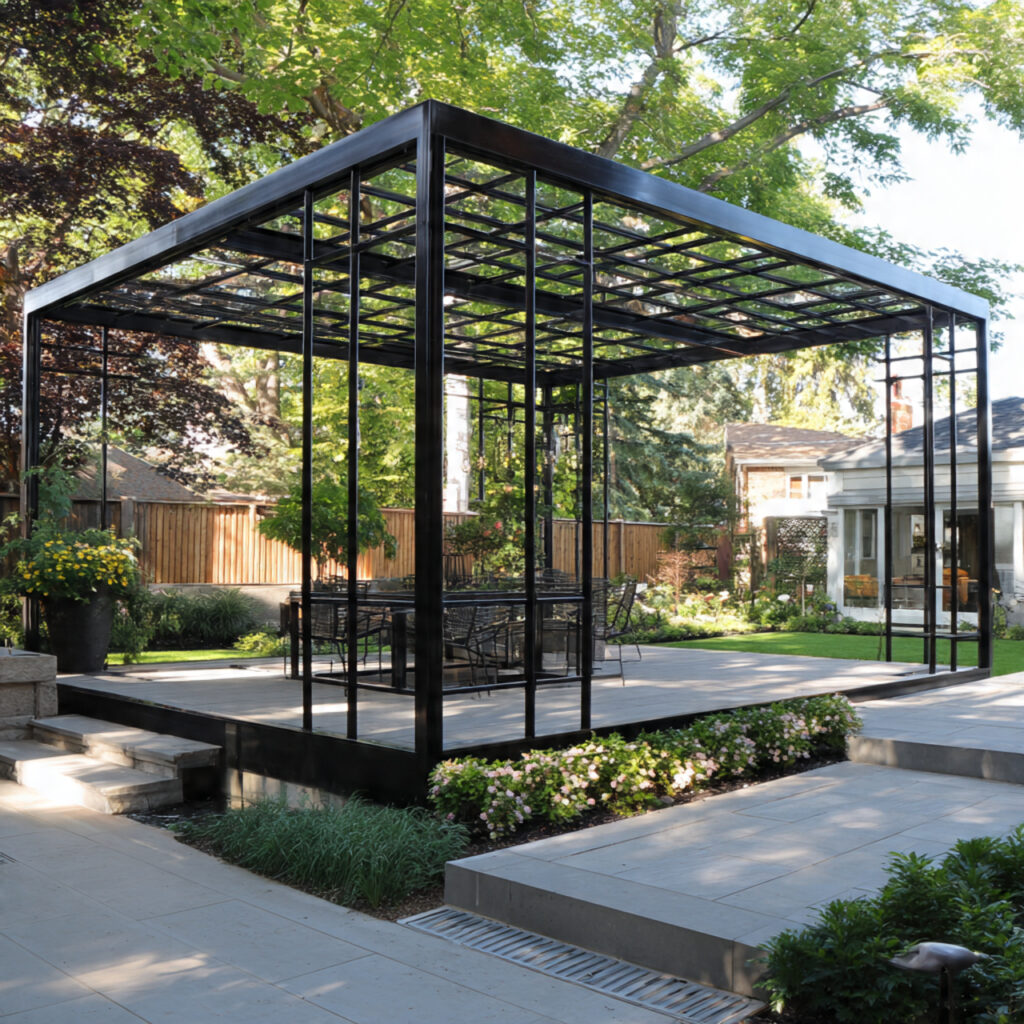
Metal pergolas—whether steel, aluminum, or wrought iron—bring serious longevity with minimal fuss. No staining, no rotting, no termites. Powder-coated finishes resist rust and maintain their color for years with just occasional washing.
The streamlined profiles of metal work beautifully in modern landscapes, but decorative wrought iron can also suit traditional gardens. You’re looking at decades of use with barely any maintenance beyond an annual cleaning.
Material Comparison:
- Aluminum: Lightweight, rust-proof, easy to install, higher cost
- Steel: Extremely strong, heavier, needs powder coating to prevent rust
- Wrought iron: Decorative, traditional look, requires periodic rust treatment
Best Use: Perfect for coastal areas where salt air destroys wood, or for anyone who wants a set-it-and-forget-it structure.
Avoid This Mistake: Don’t paint metal pergolas with house paint—use outdoor metal paint or powder coating for lasting finish.
Rustic Pergola Concepts
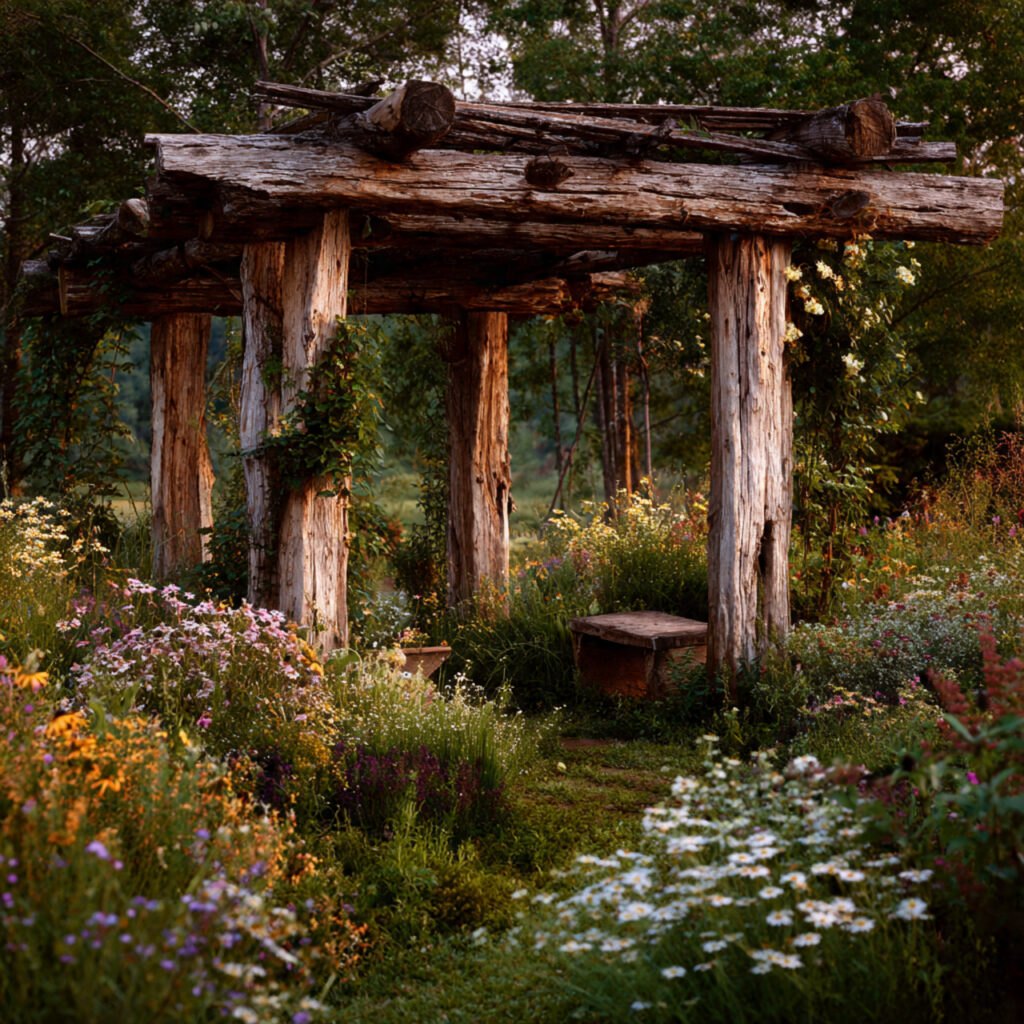
Rustic pergolas celebrate imperfection. Rough-hewn beams, natural wood grain, and irregular shapes create that relaxed countryside charm. Leave the bark on posts, embrace knots and weathering, or use reclaimed barn wood for authentic character.
This style practically demands to be surrounded by cottage garden plants, wildflowers, and maybe a gravel path. It’s the opposite of formal—think weekend retreat, farmhouse vibes, and spaces that feel discovered rather than designed.
Rustic Design Elements:
- Unfinished or minimally treated wood
- Visible beam connections (no hidden hardware)
- Irregular post thickness or length
- Chunky proportions over delicate lines
- Natural stain or no finish at all
Styling Idea: Add vintage outdoor furniture, galvanized metal planters, and string Edison bulbs for authentic rustic atmosphere.
Pergolas for Outdoor Dining
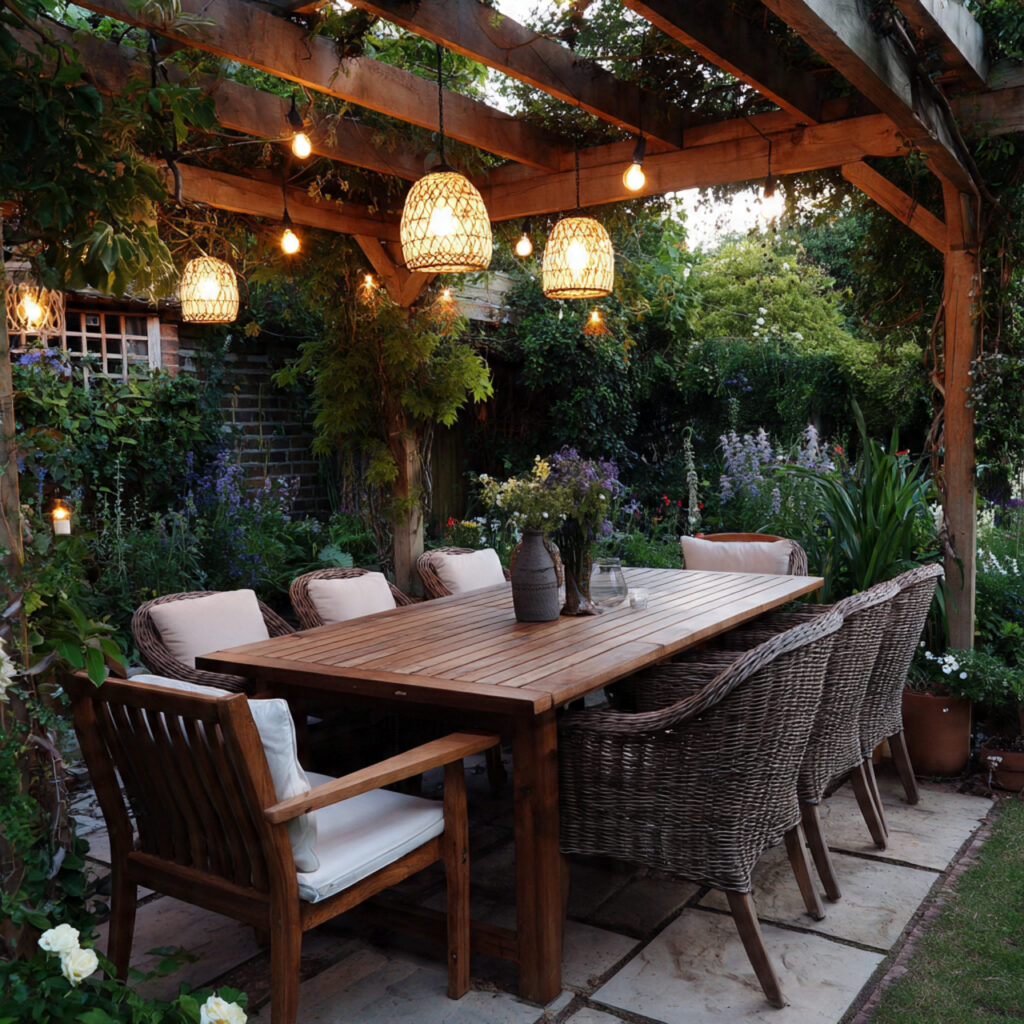
A dining pergola turns every meal into an occasion. Position it to shade your table during typical meal times, and suddenly you’re eating outside three seasons a year instead of just occasionally.
The magic happens when you add thoughtful extras: pendant lights for evening dinners, outdoor curtains for wind protection, or a ceiling fan for sticky summer nights. Your pergola becomes the dining room you actually want to use.
Design Considerations:
- Size to fit your table plus 3-4 feet on all sides for chairs and movement
- Mount ceiling hooks for hanging lights or fans
- Consider prevailing wind direction (add screens on windy sides)
- Install outlets nearby for serving warmers or speakers
- Choose weather-resistant materials if you won’t cover the table
Dimension Guide: For a 6-person table, plan for at least a 10×10 foot pergola; 8-10 people need 12×12 feet minimum.
Pergolas with Built-In Seating
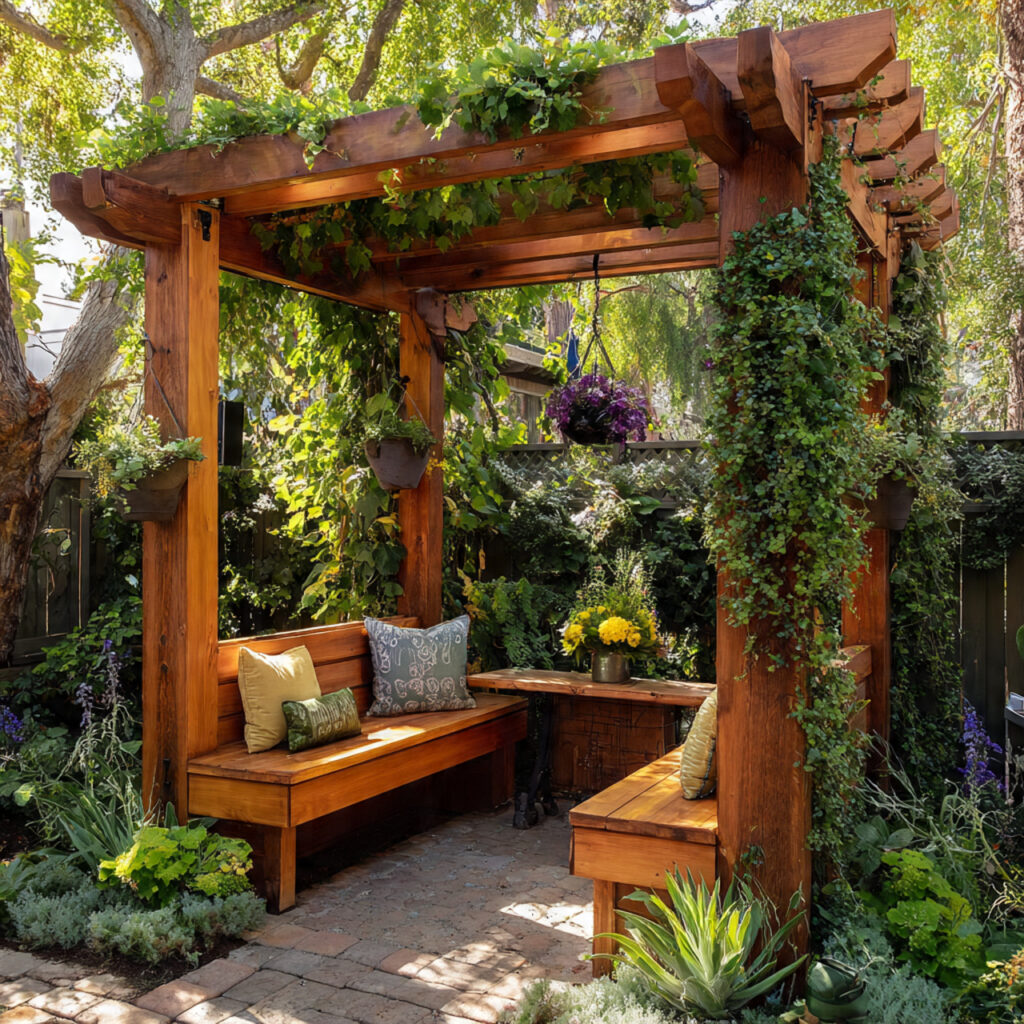
Why buy separate furniture when you can build seating right into your pergola? Integrated benches or L-shaped lounges save money, maximize space, and create a custom look that exactly fits your needs.
Built-in seating especially shines in compact gardens where every square foot counts. You define the space, provide seating, and avoid the furniture-shuffling dance when you need to mow or entertain.
Built-In Options:
- Corner benches with storage underneath
- Full perimeter seating (like a cabana)
- Swing bench suspended from pergola beams
- Raised platform with cushioned seating
- Combination of fixed seating and open space
Comfort Tip: Add 2-3 inches of foam padding topped with outdoor fabric cushions—built-in doesn’t have to mean uncomfortable.
Garden Pergolas with Lighting Features
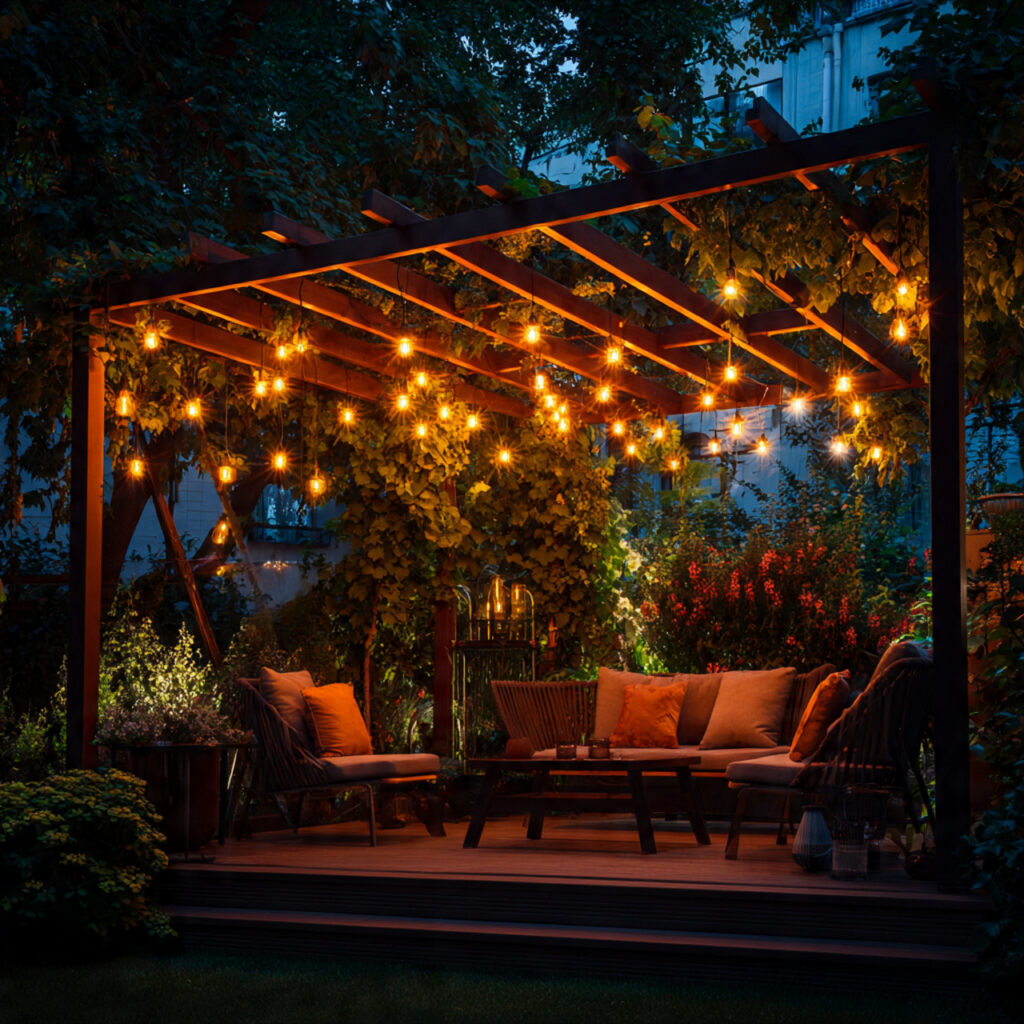
Lighting changes everything. String bistro lights across the beams for instant ambiance, install recessed LED spots for task lighting, or hang vintage lanterns for old-world charm. Suddenly your pergola works as well at 9 PM as it does at 9 AM.
Good lighting extends your outdoor season and your usable hours. It’s the difference between heading inside at dusk and staying outside enjoying the evening air.
Lighting Ideas:
- Café string lights strung in parallel lines
- Solar-powered post cap lights (no wiring needed)
- Rope lighting integrated into beam edges
- Hanging pendant lights over dining areas
- Uplights at the base highlighting climbing plants
Safety First: Use outdoor-rated fixtures and ensure all electrical work meets code—consider hiring a licensed electrician for permanent installations.
Energy Saver: LED string lights use 75% less energy than incandescent and last 25 times longer.
Pergolas Over Garden Pathways
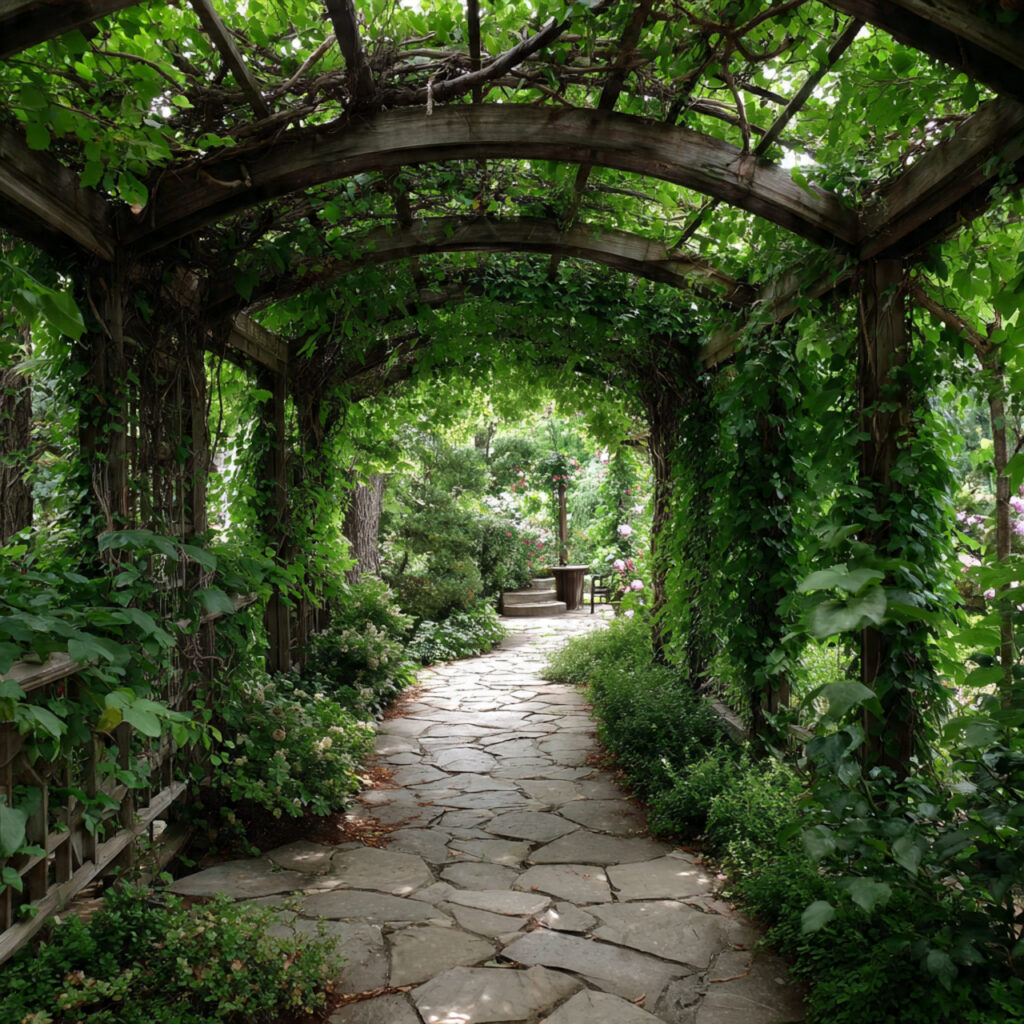
A pathway pergola transforms a simple walk into an experience. Whether it’s the journey from your driveway to front door or a stroll through your backyard garden, an overhead structure adds drama, shade, and destination.
Train fragrant climbers over a pathway pergola and you’ve created an immersive sensory experience—the visual beauty of blooms, the perfume of flowers, and the cool relief of shade all working together.
Design Tips:
- Make pathway pergolas at least 4 feet wide (5-6 feet is better for comfortable passage)
- Keep height at 7-8 feet minimum for clearance with plants
- Consider a series of connected arches for long paths
- Add ground lighting for safe evening walking
- Plant scented climbers like honeysuckle or roses
Example: A 20-foot pathway from patio to garden shed becomes a highlight feature with a pergola and climbing roses.
Pergolas with Privacy Screens
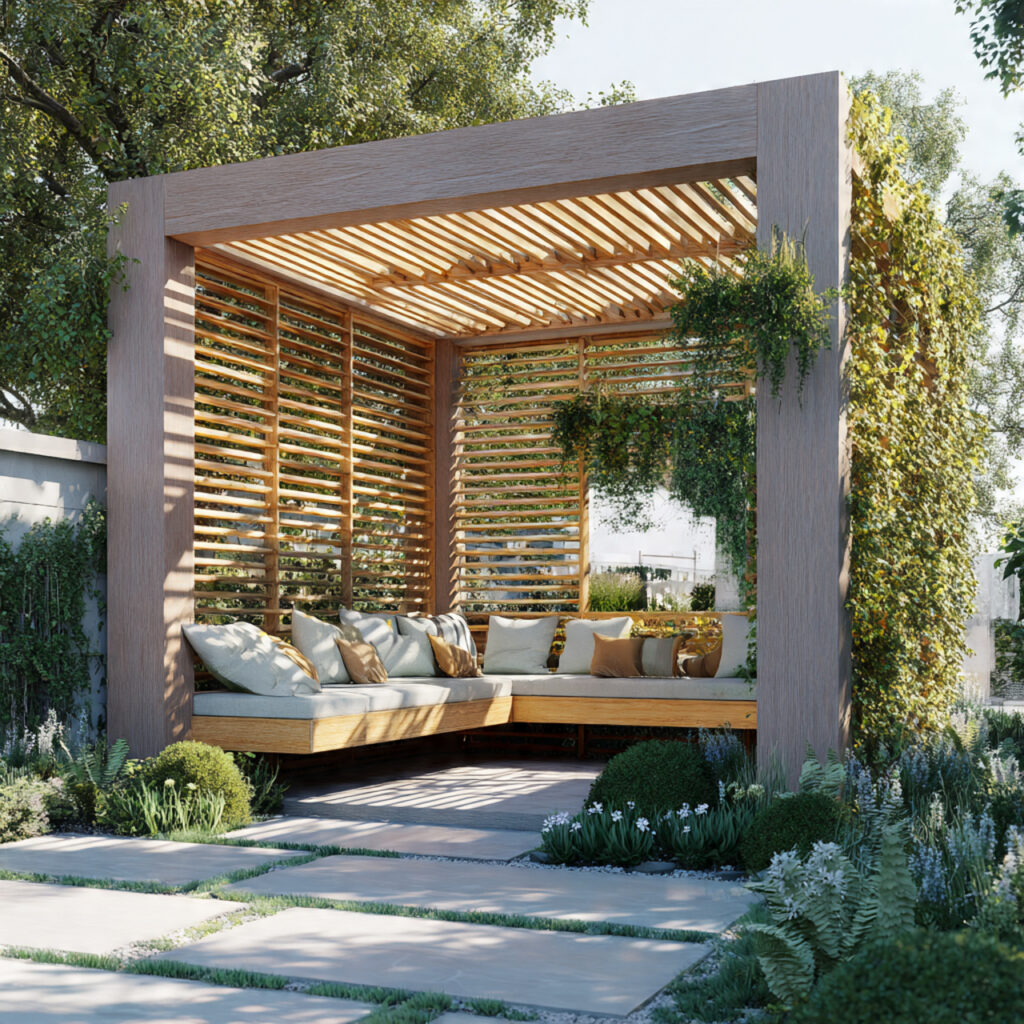
Urban gardens and close neighbors call for privacy solutions. Adding lattice panels, slatted walls, or fabric screens to one or more sides of your pergola creates intimacy without building a fortress. You still get airflow and light, just not uninvited views.
Privacy screens work equally well for blocking an ugly view (neighbor’s garage, utility boxes) or simply creating a sense of enclosure that makes your space feel more room-like and comfortable.
Privacy Solutions:
- Vertical wood slats spaced 2-3 inches apart
- Lattice panels with fast-growing vines
- Bamboo or reed screening rolls
- Outdoor curtain panels on tracks
- Living walls (plants in vertical planters)
Tip: Angle slats at 45 degrees for privacy that still allows light and air movement—flat vertical slats can feel too enclosed.
Mediterranean-Style Pergolas
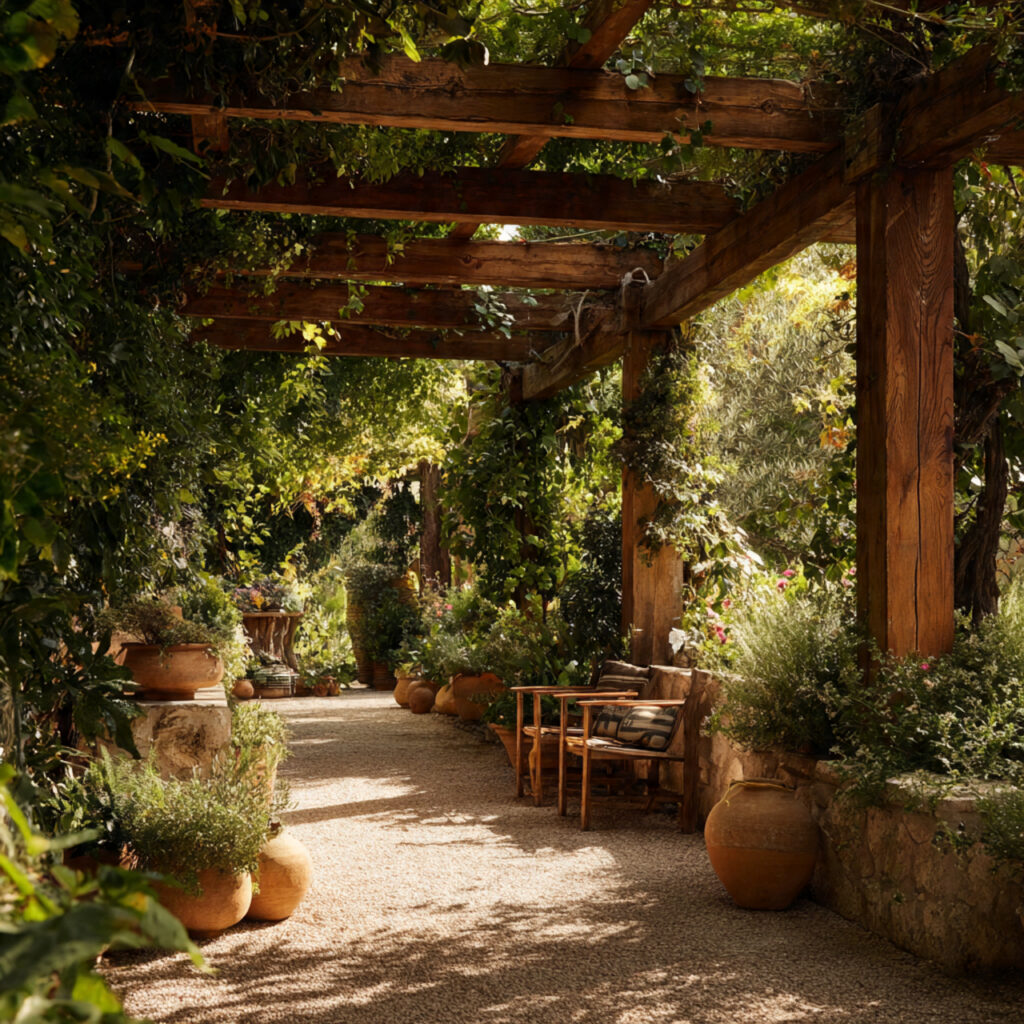
Mediterranean pergolas transport you to coastal Italy or Spain. Think chunky beams painted white or left natural, terracotta tile accents, and gravel floors dotted with olive trees and lavender. The look is sun-soaked, relaxed, and effortlessly elegant.
These designs work beautifully in warm, dry climates but can be adapted anywhere. The key elements—natural materials, textured surfaces, and a connection to outdoor living—translate universally.
Mediterranean Elements:
- Whitewashed or natural wood beams
- Stone or stucco support columns
- Gravel or stone paving underneath
- Terracotta pots with herbs and citrus
- Wrought iron accents or lighting
- Vine coverage (especially grapevines)
Plant Pairing: Lavender, rosemary, olive trees, bougainvillea, and succulents complete the Mediterranean mood.
Pergolas for Poolside Areas
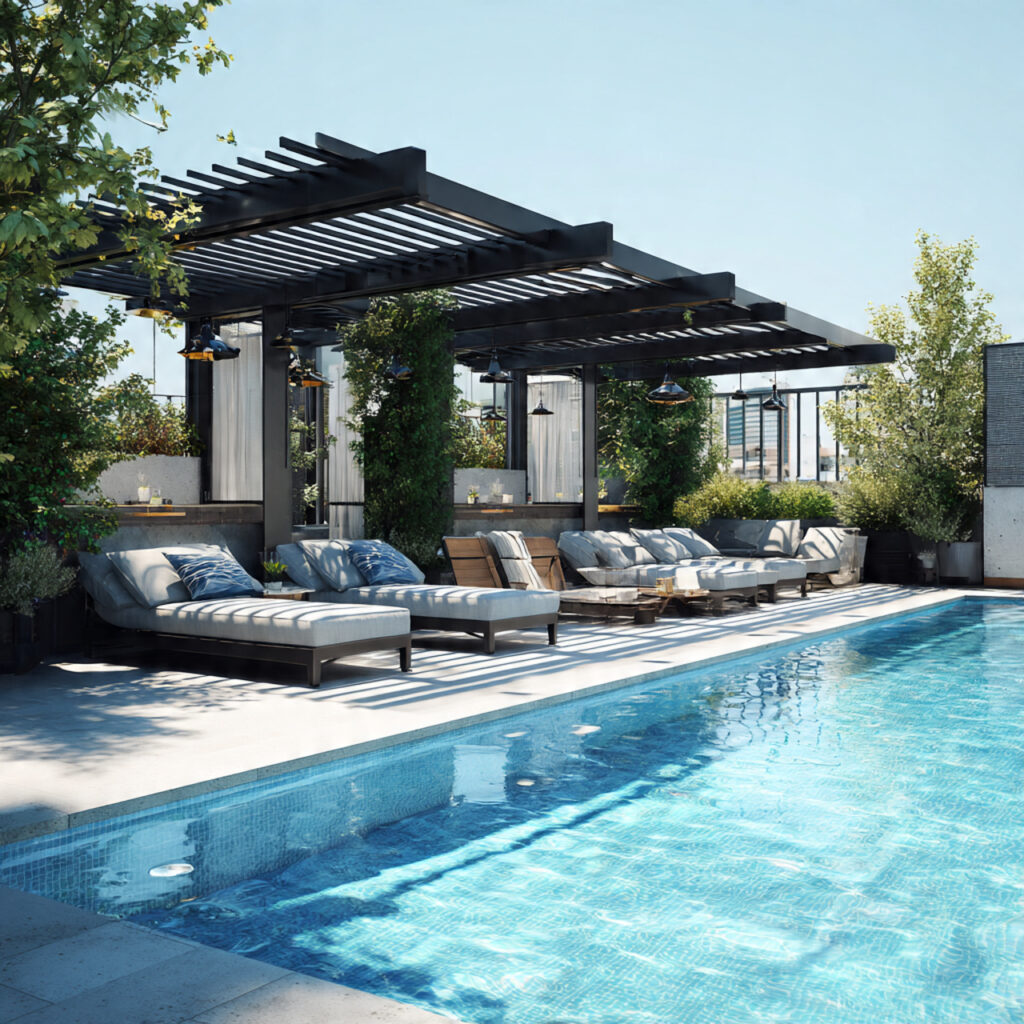
A pergola near your pool creates that resort feeling you crave. Position it away from the water’s edge to provide a shaded spot for toweling off, reading, or watching swimmers without getting splashed.
Poolside structures need materials that can handle constant moisture, splashing chlorinated water, and wet feet. Choose accordingly, and your pergola will look fresh for years despite the harsh environment.
Material Must-Haves:
- Aluminum or vinyl (completely moisture-proof)
- Marine-grade stainless steel hardware
- Sealed or composite decking for flooring
- Mildew-resistant fabric if adding curtains
- Slip-resistant surface materials
Safety Zone: Keep the pergola at least 5-6 feet from pool edge to prevent jumping/diving injuries and reduce splash exposure.
Bonus Feature: Add outdoor shower hookups or storage for pool supplies under built-in benches.
Pergolas with Fabric Curtains
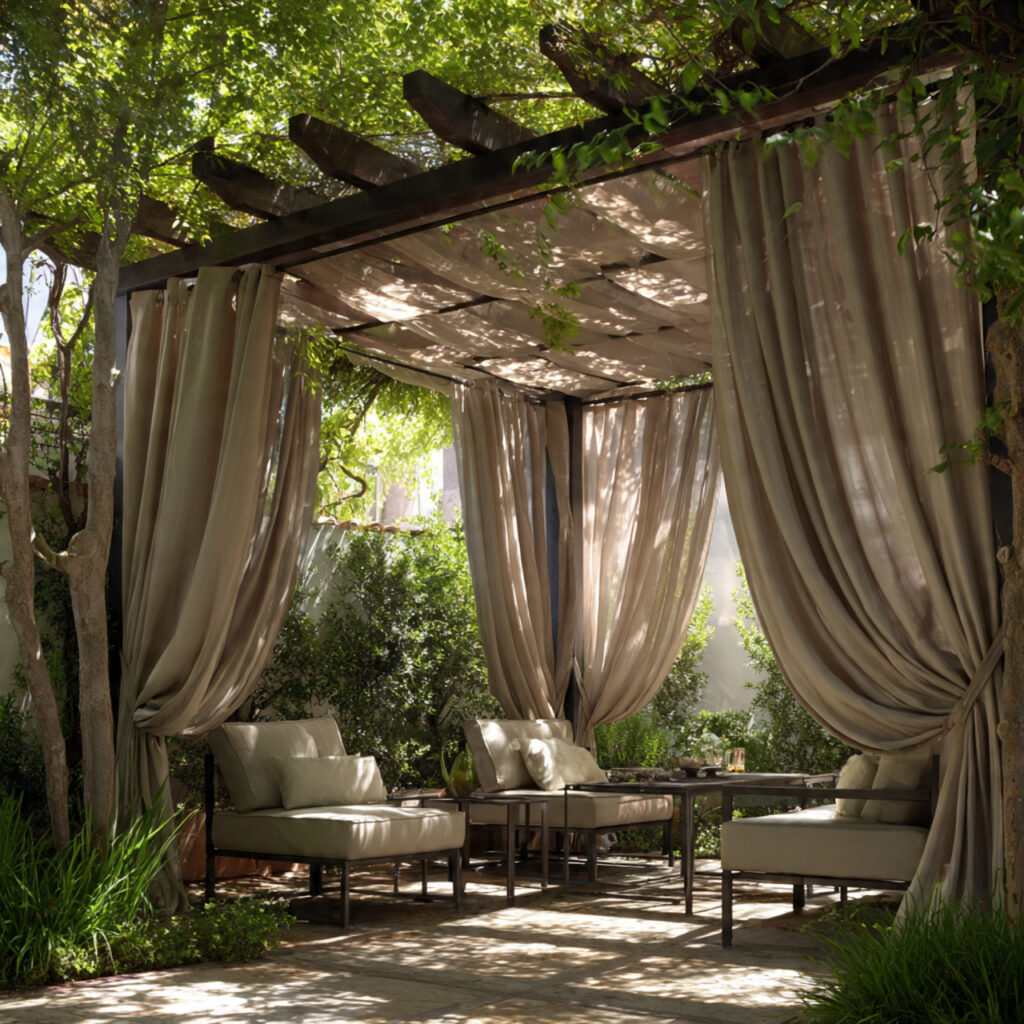
Outdoor curtains add instant softness, color, and function. Draw them closed for privacy during dinner parties, pull them to block afternoon glare, or tie them back on perfect days. They’re the easiest way to customize your pergola’s look seasonally or even weekly.
Weather-resistant outdoor fabrics now come in countless colors and patterns. Go neutral for timeless elegance, bold for personality, or sheer for filtered light with visibility.
Curtain Options:
- Sheer fabrics: Soften light, maintain views, filter wind
- Canvas/outdoor acrylic: Block sun and privacy, water-resistant
- Mosquito netting: Keeps bugs out during summer evenings
- Thermal curtains: Provide shade and reduce heat transfer
Installation Methods:
- Curtain rods mounted to pergola beams
- Cable wire systems with clip rings
- Track systems for smooth sliding
- Grommets with rope ties (nautical look)
Care Tip: Choose machine-washable outdoor fabrics and clean seasonally to prevent mildew and maintain appearance.
Rooftop Garden Pergolas
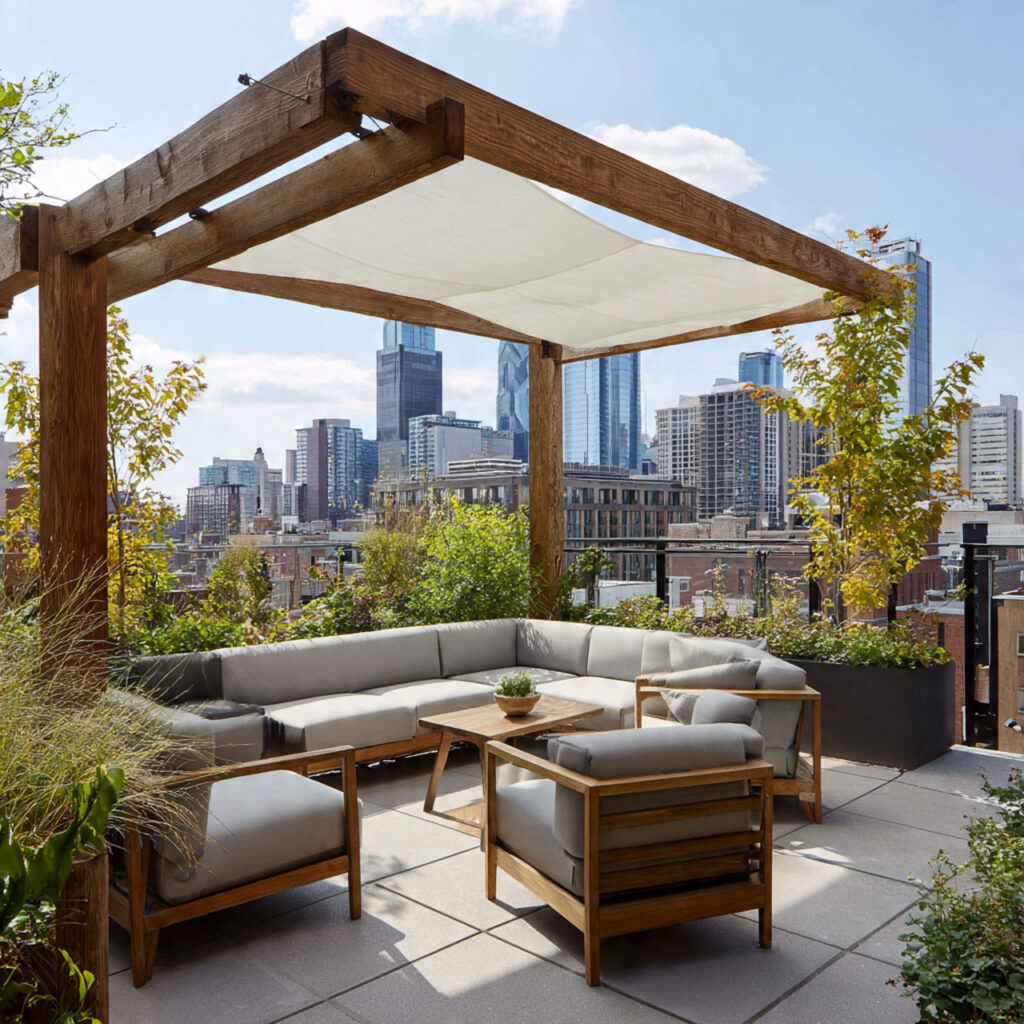
Rooftop pergolas turn neglected urban space into your private sky oasis. The challenges—weight restrictions, wind exposure, and access—are real, but aluminum or composite materials keep things light while still providing structure.
Creating outdoor rooms on rooftops dramatically increases your usable living space and often provides better views and more privacy than ground-level yards. Plus, rooftop pergolas add architectural interest visible from the street.
Rooftop Considerations:
- Check building weight capacity before installation
- Use lightweight materials (aluminum, hollow composite)
- Secure to roof structure (not just deck surface)
- Account for higher wind loads (deeper footings/anchors)
- Consider building codes for roof structures
- Ensure proper drainage around posts
Design Idea: Add planters with ornamental grasses that move in the breeze for movement and softness at height.
Pergolas with Integrated Planters
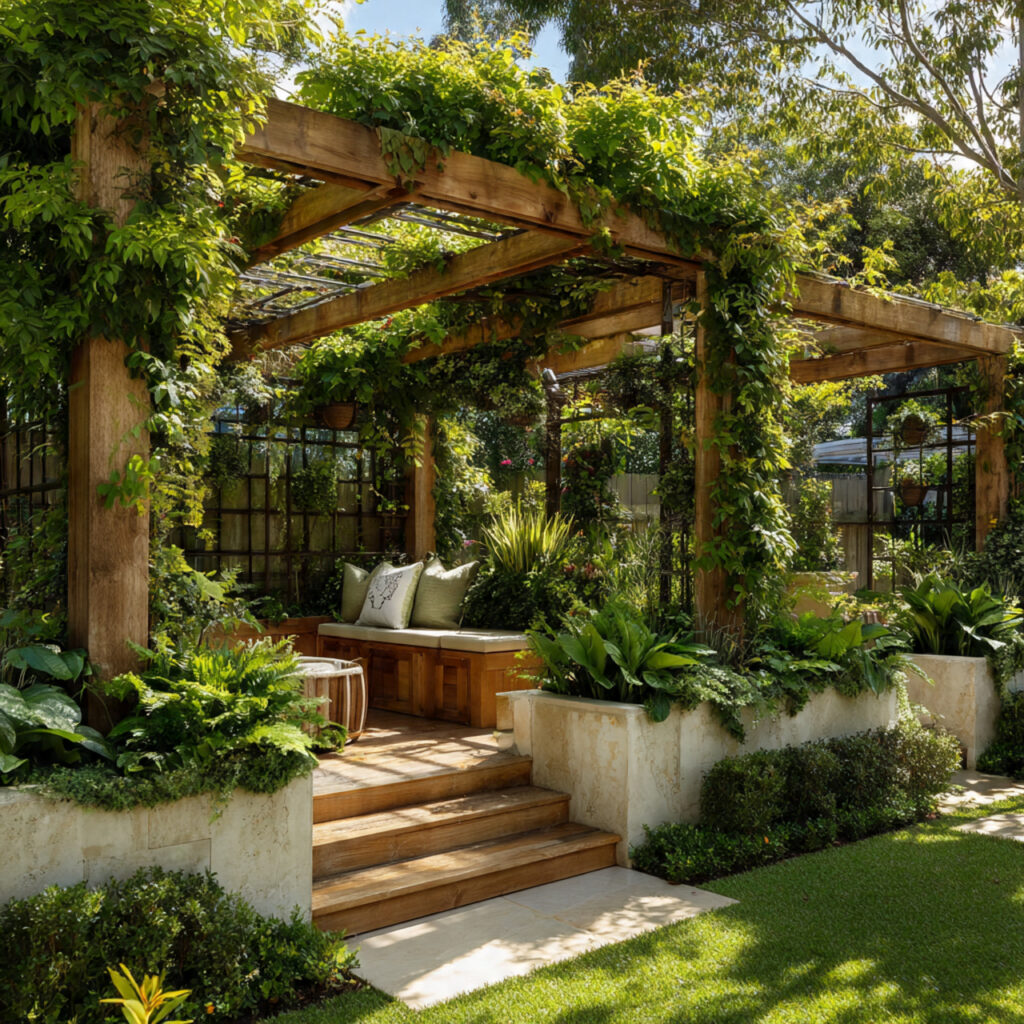
Built-in planters solve the “where do I put plants?” problem elegantly. Posts become planting columns, beam ends support hanging baskets, or raised beds form the pergola’s base. Everything looks intentional and connected.
This approach works especially well for climbing plants—their roots are right where you want growth to start, and watering is simplified when planters are built into the structure.
Planter Integration Ideas:
- Post bases with 18-24 inch planting wells
- Elevated planter boxes forming pergola perimeter
- Hanging planter brackets on crossbeams
- Vertical planter panels on privacy walls
- Corner planters at each post
Drainage Must: Include drainage holes and gravel layer in all built-in planters to prevent root rot and structural water damage.
Plant Selection: Choose plants based on your pergola’s sun exposure—flowering vines for sunny spots, ferns for shaded areas.
Pergolas for Seasonal Shade
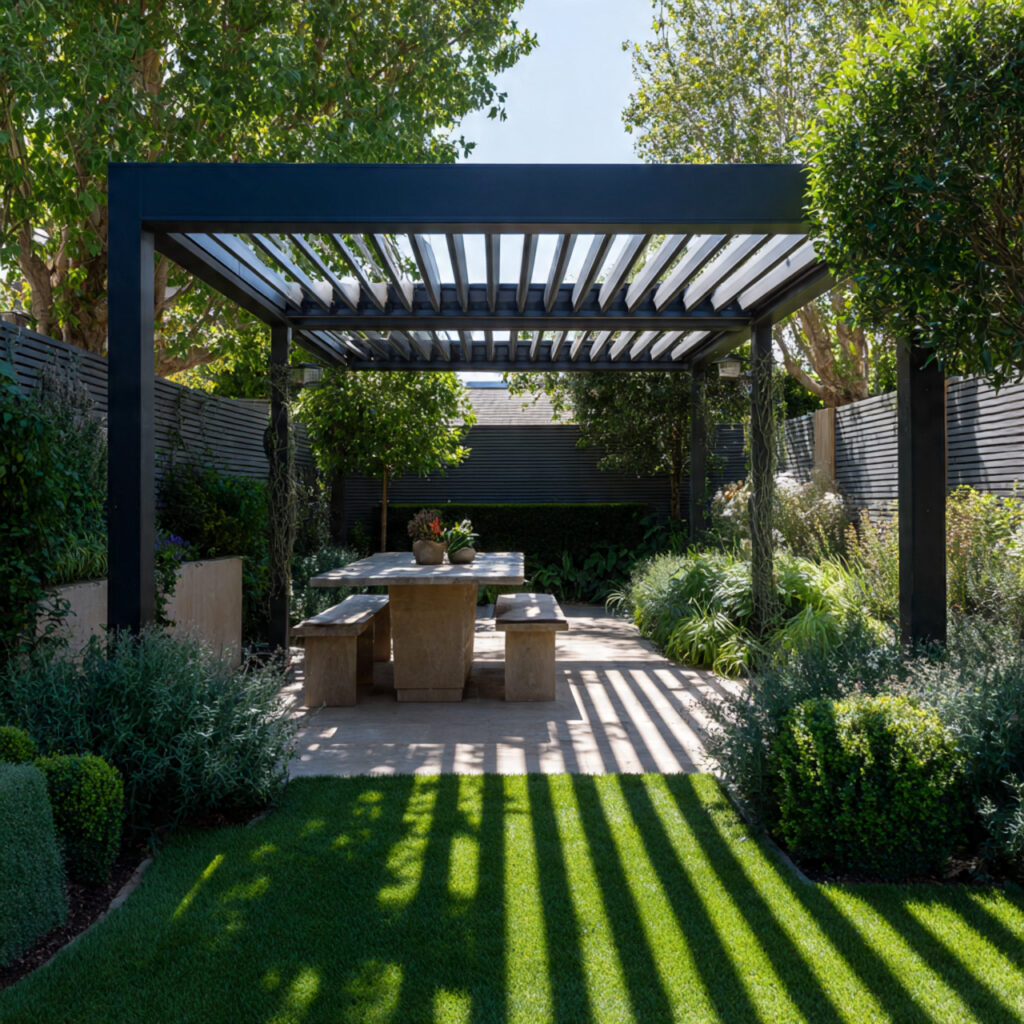
Strategic pergola design considers how the sun moves throughout the year. In summer, when the sun is high, closely-spaced slats provide maximum shade. Winter’s low-angle sun streams between those same slats, naturally warming your space when you want it.
This passive solar approach means your pergola works with nature, keeping you comfortable without additional shade structures or heating. It’s smart, sustainable design at its best.
Sun-Smart Design:
- Slat spacing: 6-8 inches apart for partial shade, 3-4 inches for more coverage
- Orientation: Run slats east-west for north-south sun protection
- Slat angles: Slight angle (15-20 degrees) can increase shade coverage
- Deciduous vines: Full summer shade, open winter warmth
Climate Tip: In hot southern climates, angle slats to block high summer sun while allowing lower winter sun through.
Pergolas with Adjustable Slatted Roofs
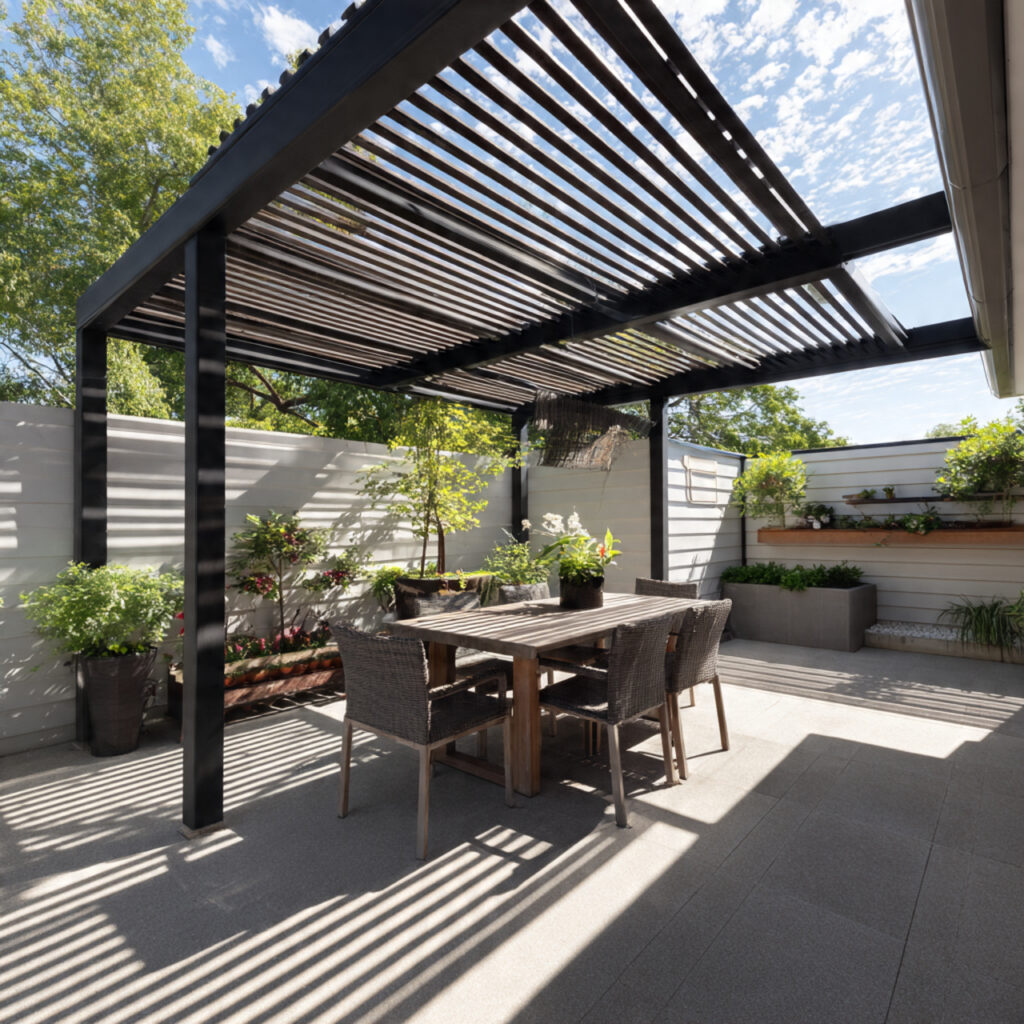
Louver pergolas take control to the next level. Motorized slats rotate from fully closed (complete shade) to fully open (full sun) at the touch of a button. Weather changes? No problem—close the slats.
This modern innovation costs more upfront but delivers ultimate flexibility. Integrated rain sensors can automatically close slats when weather turns, protecting your furniture and ensuring your outdoor space works in more conditions.
Adjustable Roof Benefits:
- Weather protection: Close slats form a watertight seal
- Temperature control: Adjust shade throughout the day
- Ventilation: Angle slats for airflow while maintaining coverage
- Automation: Smart home integration for scheduled adjustments
- Longevity: Protects furniture by closing when you’re away
Investment Note: Motorized louvered systems cost 2-3x more than traditional pergolas but eliminate need for separate shade solutions.
Pergolas as Garden Focal Points
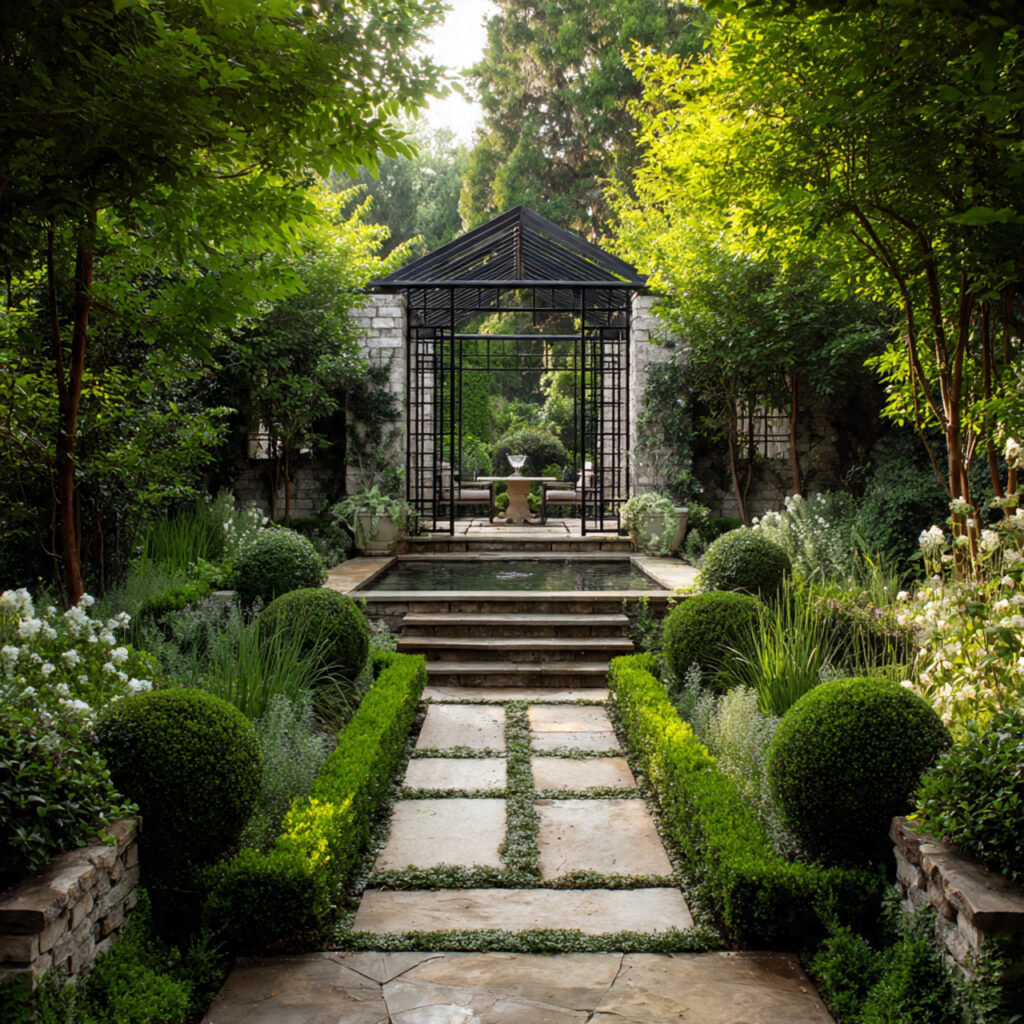
Sometimes the pergola isn’t just a structure—it’s the statement. Position it prominently, choose bold colors or distinctive materials, and watch it become your garden’s anchor point. Everything else relates to it.
A focal point pergola should be visible from key views: kitchen window, main entrance, or seating areas. It draws the eye, organizes the space, and gives your garden a sense of intention and completion.
Creating Impact:
- Contrast: Dark pergola in light garden, or vice versa
- Scale: Larger than surrounding elements for dominance
- Placement: End of sight lines or center of open spaces
- Color: Bold hue that pops against greenery
- Shape: Unusual design (hexagonal, curved beams)
Example: A black steel pergola with geometric design becomes a sculptural centerpiece in a modern landscape with white gravel and minimal plantings.
Pergolas for Relaxation Zones

Create your escape-from-everything spot with a pergola designed purely for unwinding. Position it in the quietest corner of your garden, add comfortable seating, maybe a hammock or swing, and surround it with calming plants.
This isn’t about entertaining or dining—it’s about having a dedicated space to read, nap, meditate, or simply exist without obligation. Everyone deserves a refuge.
Relaxation Elements:
- Comfortable furniture (deep seats, plush cushions)
- Sound elements (fountain, wind chimes)
- Screening for full privacy
- Soft, dimmable lighting
- Calming color palette
- Fragrant plants nearby (lavender, jasmine)
Location Tip: Choose a spot away from driveways, play areas, and outdoor work zones—you want to feel removed from daily activity.
Pergolas with Eco-Friendly Materials
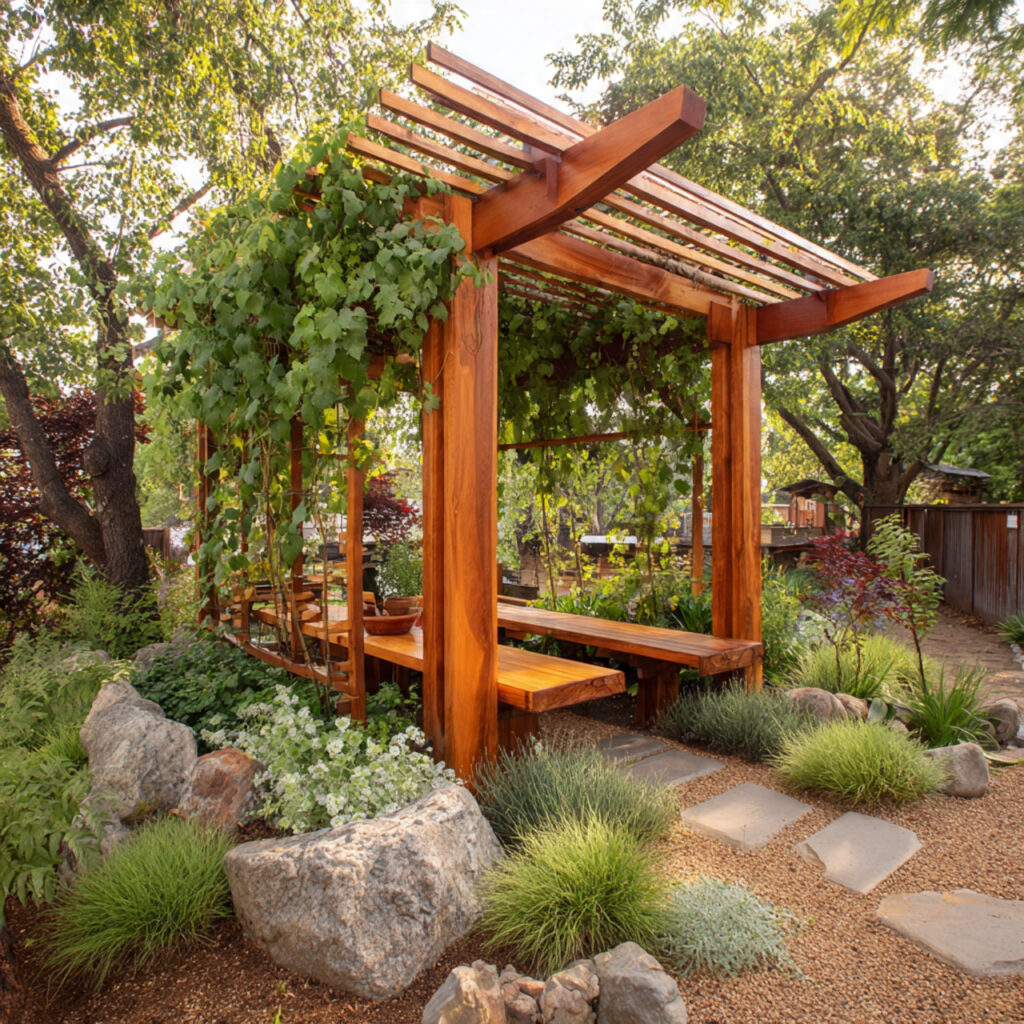
Sustainable pergolas use reclaimed wood, FSC-certified lumber, recycled composite materials, or rapidly renewable bamboo. These choices reduce environmental impact without sacrificing durability or beauty.
Eco-friendly building extends beyond materials to low-VOC finishes, local sourcing to reduce transportation emissions, and designs that work with—not against—natural site features.
Sustainable Options:
- Reclaimed barn wood: Character-rich, salvaged from old structures
- FSC-certified lumber: Responsibly harvested new wood
- Recycled plastic composite: Made from reclaimed materials, no maintenance
- Bamboo: Grows rapidly, naturally rot-resistant
- Local stone or metal: Reduces shipping impact
Maintenance Bonus: Many eco-materials (composites, recycled metals) need less chemical treatment and replacement, reducing lifetime environmental footprint.
Certification Note: Look for Cradle to Cradle or LEED-compliant materials if building a certified green home.
Custom-Built Pergola Ideas
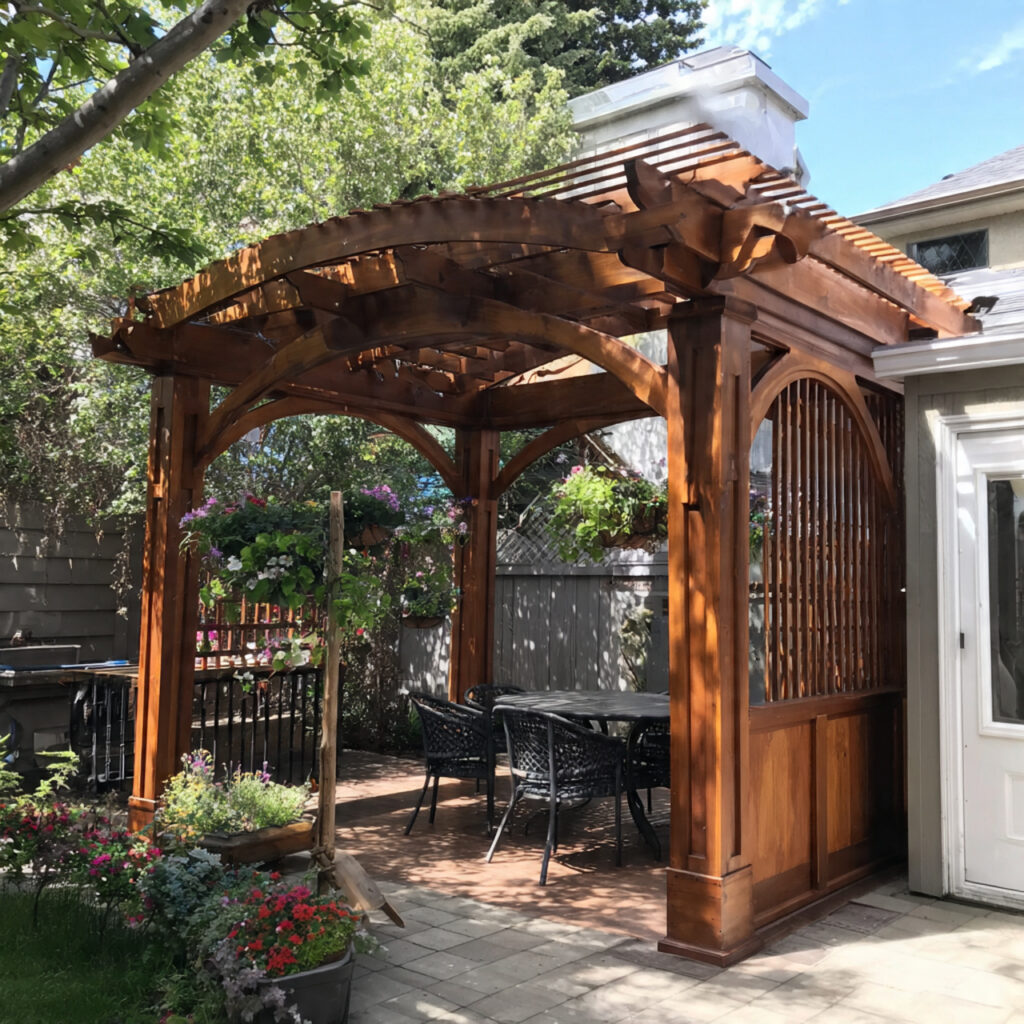
Pre-fab kits serve a purpose, but custom pergolas deliver exactly what you envision. Work with a carpenter or designer to create proportions that perfectly fit your space, integrate unique features, and use materials that match your aesthetic.
Custom builds cost more but eliminate compromises. That awkward corner becomes a perfectly-fitted retreat. Your specific mixture of shade and openness gets designed in from the start. The pergola becomes truly yours.
Custom Advantages:
- Exact sizing for your space
- Integration with existing architecture
- Unique features (built-in bar, fire pit, speakers)
- Material combinations not available in kits
- Professional engineering for difficult sites
Process Tip: Collect inspiration photos, but also clearly communicate how you’ll actually use the space—function drives the best designs.
Budget Reality: Custom pergolas typically cost 50-100% more than comparable kit installations but deliver significantly more value in fit and finish
Visit Also: Fire Pit Ideas
Frequently Asked Questions
What is the best material for a garden pergola?
The best material depends on climate, maintenance preference, and design style. Wood offers a natural look, while metal provides durability and low upkeep.
Do garden pergolas need planning permission?
In many areas, pergolas do not require permission if they meet size and height limits. Local regulations should always be checked.
How long does a garden pergola last?
A well-built pergola can last 10–25 years or more, depending on materials, maintenance, and weather exposure.
Can a pergola increase property value?
Yes, a thoughtfully designed pergola can enhance outdoor living space and improve overall property appeal.
How do I maintain a garden pergola?
Regular cleaning, inspections, and protective treatments help extend the life of a pergola, especially for wooden structures.
Final Thoughts
Your garden deserves more than just lawn and flowerbeds—it deserves spaces that invite you outside and make you want to stay. That’s exactly what a thoughtfully chosen pergola delivers. Whether you’re drawn to the timeless appeal of weathered wood, the clean lines of modern metal, or something completely unique to your style, there’s a pergola design waiting to transform your outdoor space.
The beauty of pergolas lies in their versatility. They adapt to small urban patios and sprawling suburban yards alike. They support your morning coffee ritual and your weekend entertaining. They provide just enough shelter while keeping you connected to fresh air and changing seasons.
Start by thinking about how you actually live outside. Do you need dining shade? A quiet reading nook? A dramatic entrance to your garden? Let function guide your design choices, and the aesthetics will follow naturally. Choose materials that fit your climate and your willingness to maintain them. Consider placement carefully—the right spot makes all the difference.
With smart planning, quality materials, and maybe a little help from climbing plants and string lights, your pergola will become the feature you wonder how you ever lived without. It’s not just an outdoor structure—it’s an investment in better days, memorable evenings, and a home that truly extends beyond its walls.