Cucumber Trellis Made Easy: 25 Creative & Practical Gardening Ideas
If you’ve ever grown cucumbers, you know they can quickly become an unruly tangle without proper support. A well-designed cucumber trellis isn’t just about organization—it’s your secret weapon for healthier plants, bigger harvests, and a more productive garden overall.
Whether you’re working with a tiny apartment balcony or a sprawling backyard, growing cucumbers vertically changes everything. Your fruits grow straighter, stay cleaner, and are much easier to spot when it’s time to harvest. Plus, you’ll avoid the heartbreak of discovering rotted cucumbers hidden under leaves on the ground.
In this guide, I’ll walk you through some practical trellis ideas that actually work. Each option is designed to fit different spaces, budgets, and skill levels, so you can find the perfect solution for your garden situation.
Why Your Cucumbers Need a Trellis
Let’s talk about why trellising your cucumbers is one of the smartest moves you can make as a gardener.
When cucumber vines sprawl on the ground, they face several problems: fruits rot from soil contact, leaves stay damp and invite diseases, and you’ll spend way too much time searching through tangles for ripe cucumbers. A trellis solves all these issues in one go.
Key benefits you’ll notice immediately:
- Space efficiency: Grow more plants in less area by going vertical
- Better air circulation: Reduces fungal diseases like powdery mildew
- Cleaner fruits: No more yellow spots or rot from ground contact
- Easier harvesting: Everything’s visible and at comfortable picking height
- Straighter cucumbers: Gravity helps them grow uniform and marketable
Tip: Trellised cucumbers can yield up to 3 times more per square foot compared to ground-grown plants, making them perfect for small-space gardening.
The beauty of trellises is their versatility. You can build them from virtually anything—wood scraps, bamboo poles, PVC pipes, chicken wire, or even repurposed materials. This means there’s a solution for every budget and garden style.
Classic Wooden Trellis Setup
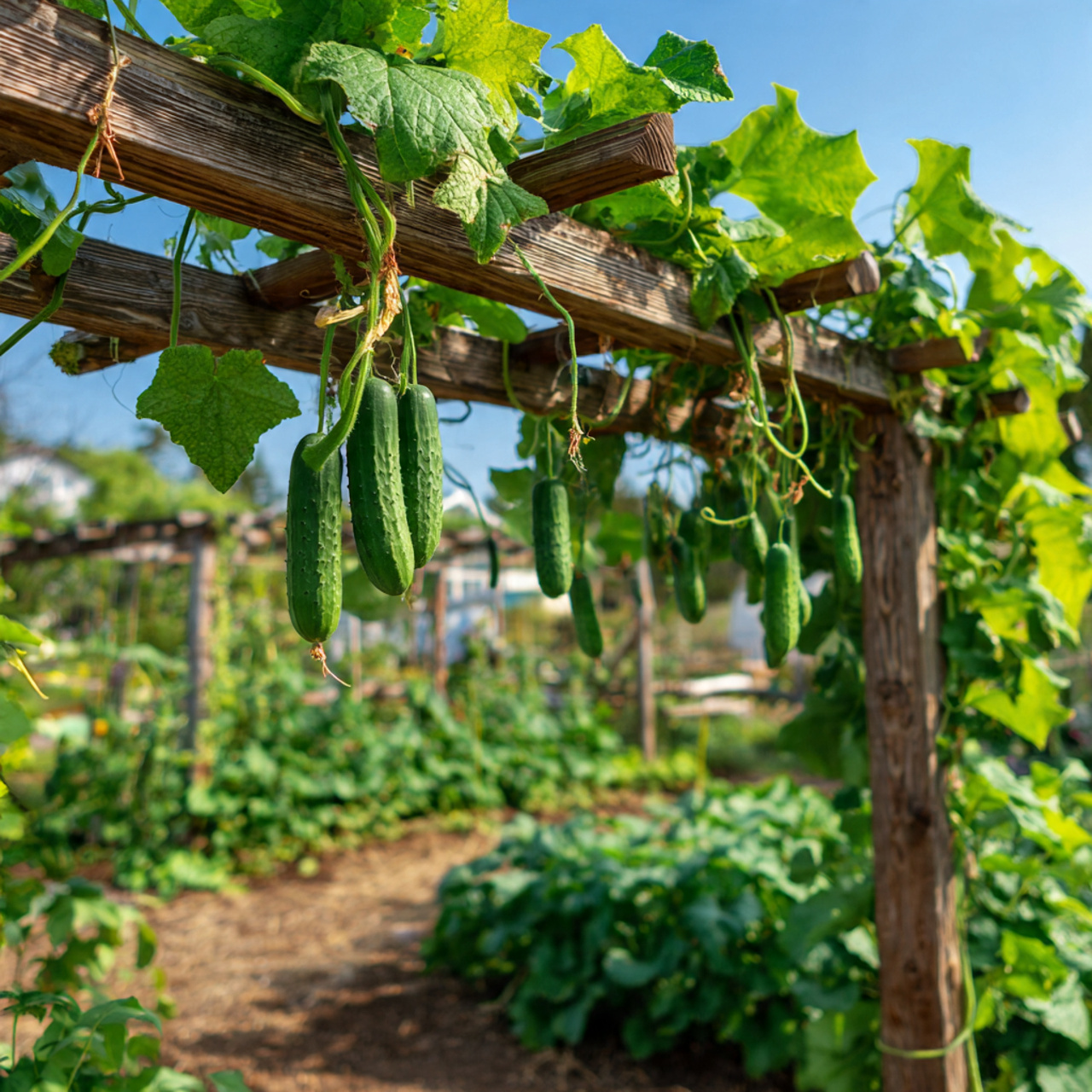
A traditional wooden trellis remains one of the most reliable choices for cucumber support. You can construct it in various configurations—A-frames, flat panels, or lattice patterns—depending on your garden layout.
Treated cedar or pine lumber will serve you for several growing seasons while naturally blending into your garden landscape. The sturdy construction handles heavy vine loads without bowing or breaking.
What makes this option shine:
- Provides excellent support for indeterminate (vining) varieties
- Creates space underneath for companion plants like lettuce or radishes
- Easy to customize height and width for your specific needs
Quick Tip: Apply a coat of outdoor wood sealant every 2-3 years to extend your trellis lifespan. Regular pruning of side shoots keeps vines manageable and improves air flow between plants.
DIY PVC Pipe Trellis
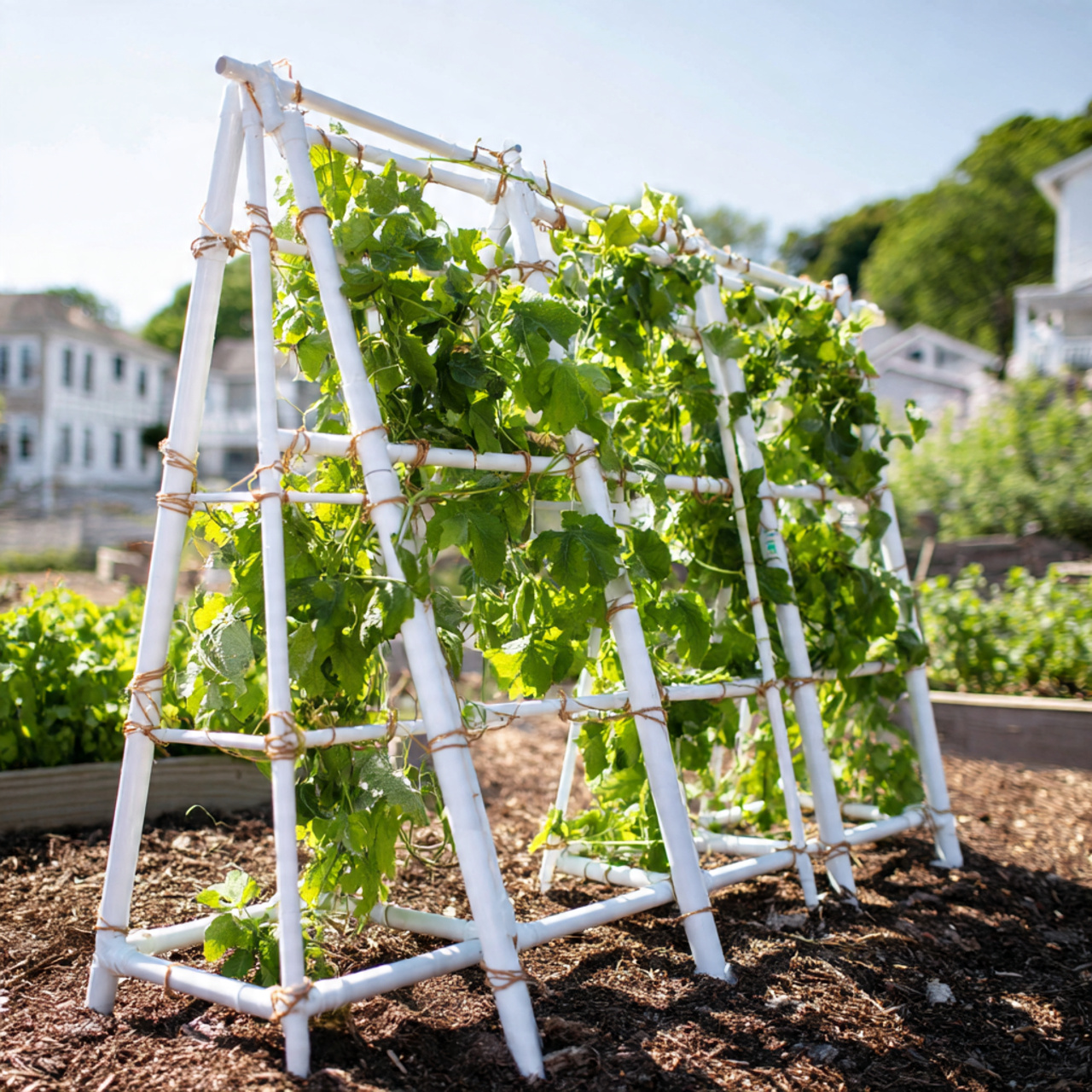
PVC pipe offers an incredibly affordable and versatile option for cucumber support. These lightweight pipes snap together easily without special tools, making this perfect for gardening beginners.
You can create various shapes—A-frames for stability, teepees for visual interest, or simple rectangular frames for raised beds. The best part? Everything disassembles for winter storage.
Why gardeners love PVC trellises:
- Weather-resistant and lasts for years
- No rust or rotting issues
- Can be relocated between garden beds
- White PVC reflects sunlight, keeping roots cooler
Implementation idea: Attach garden netting or jute twine between the PVC frame to give tendrils something to grip. Space strings about 6 inches apart for optimal vine distribution.
Vertical String Trellis
25 Creative Cucumber Trellis Ideas to Transform Your Garden
If you’ve ever grown cucumbers, you know they can quickly become an unruly tangle without proper support. A well-designed cucumber trellis isn’t just about organization—it’s your secret weapon for healthier plants, bigger harvests, and a more productive garden overall.
Whether you’re working with a tiny apartment balcony or a sprawling backyard, growing cucumbers vertically changes everything. Your fruits grow straighter, stay cleaner, and are much easier to spot when it’s time to harvest. Plus, you’ll avoid the heartbreak of discovering rotted cucumbers hidden under leaves on the ground.
In this guide, I’ll walk you through 25 practical trellis ideas that actually work. Each option is designed to fit different spaces, budgets, and skill levels, so you can find the perfect solution for your garden situation.
Why Your Cucumbers Need a Trellis
Let’s talk about why trellising your cucumbers is one of the smartest moves you can make as a gardener.
When cucumber vines sprawl on the ground, they face several problems: fruits rot from soil contact, leaves stay damp and invite diseases, and you’ll spend way too much time searching through tangles for ripe cucumbers. A trellis solves all these issues in one go.
Key benefits you’ll notice immediately:
- Space efficiency: Grow more plants in less area by going vertical
- Better air circulation: Reduces fungal diseases like powdery mildew
- Cleaner fruits: No more yellow spots or rot from ground contact
- Easier harvesting: Everything’s visible and at comfortable picking height
- Straighter cucumbers: Gravity helps them grow uniform and marketable
Pro Tip: Trellised cucumbers can yield up to 3 times more per square foot compared to ground-grown plants, making them perfect for small-space gardening.
The beauty of trellises is their versatility. You can build them from virtually anything—wood scraps, bamboo poles, PVC pipes, chicken wire, or even repurposed materials. This means there’s a solution for every budget and garden style.
1. Classic Wooden Trellis Setup
A traditional wooden trellis remains one of the most reliable choices for cucumber support. You can construct it in various configurations—A-frames, flat panels, or lattice patterns—depending on your garden layout.
Treated cedar or pine lumber will serve you for several growing seasons while naturally blending into your garden landscape. The sturdy construction handles heavy vine loads without bowing or breaking.
What makes this option shine:
- Provides excellent support for indeterminate (vining) varieties
- Creates space underneath for companion plants like lettuce or radishes
- Easy to customize height and width for your specific needs
Quick Tip: Apply a coat of outdoor wood sealant every 2-3 years to extend your trellis lifespan. Regular pruning of side shoots keeps vines manageable and improves air flow between plants.
2. Budget-Friendly PVC Pipe Trellis
PVC pipe offers an incredibly affordable and versatile option for cucumber support. These lightweight pipes snap together easily without special tools, making this perfect for gardening beginners.
You can create various shapes—A-frames for stability, teepees for visual interest, or simple rectangular frames for raised beds. The best part? Everything disassembles for winter storage.
Why gardeners love PVC trellises:
- Weather-resistant and lasts for years
- No rust or rotting issues
- Can be relocated between garden beds
- White PVC reflects sunlight, keeping roots cooler
Implementation idea: Attach garden netting or jute twine between the PVC frame to give tendrils something to grip. Space strings about 6 inches apart for optimal vine distribution.
3. Simple Vertical String Trellis
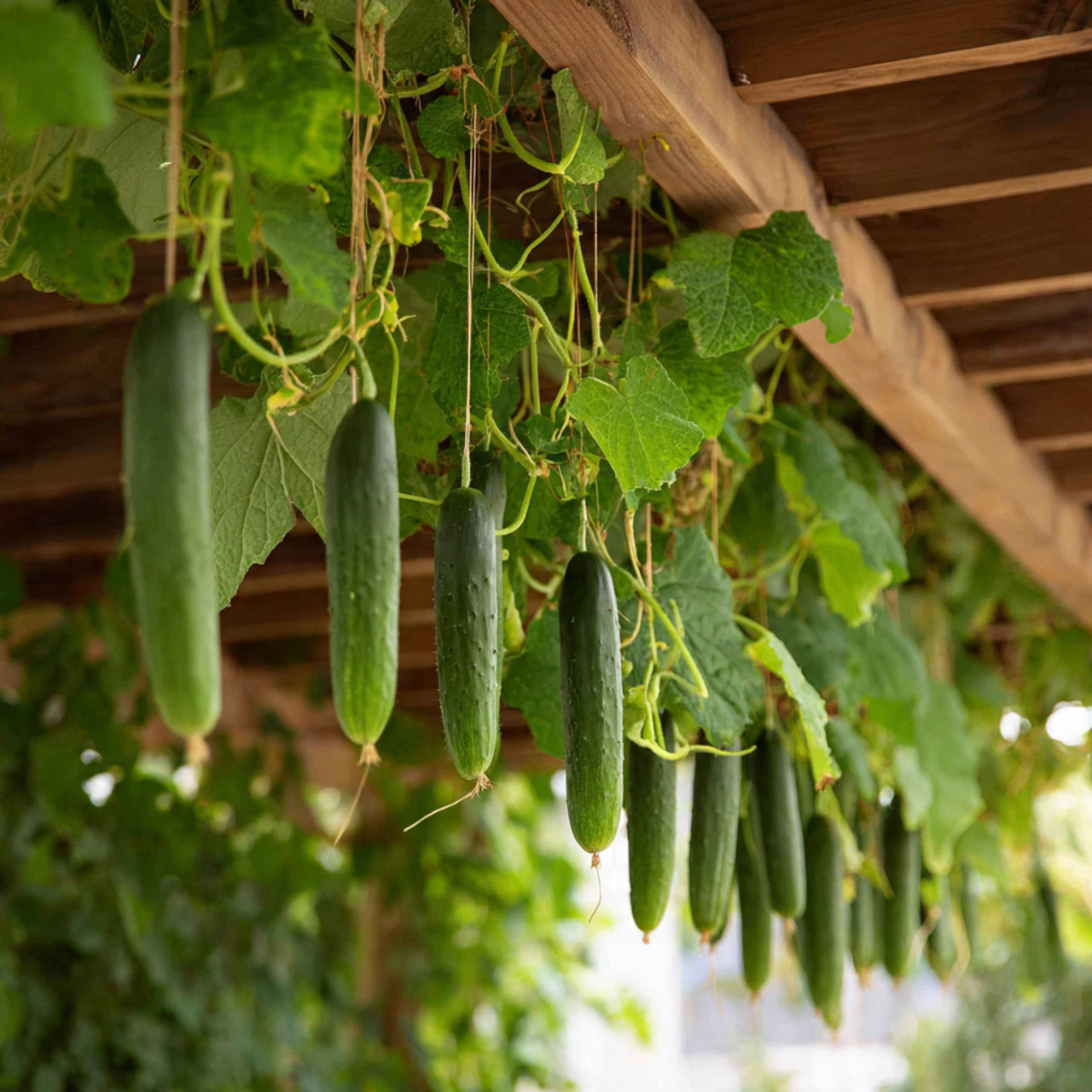
Sometimes the simplest solutions work best. A string trellis uses sturdy twine stretched vertically from an overhead support down to the soil level, creating climbing pathways for your vines.
This method excels in greenhouses, small gardens, or anywhere space is at a premium. Installation takes minutes, and materials cost just a few dollars.
Perfect for:
- Balcony container gardens
- Greenhouse cucumber production
- Temporary garden setups
Advice: Use natural jute or cotton twine instead of synthetic materials—it’s easier for tendrils to grip. Replace strings each season to prevent disease carryover, and guide young vines by gently wrapping them around the string in a clockwise direction.
A-Frame Trellis Design
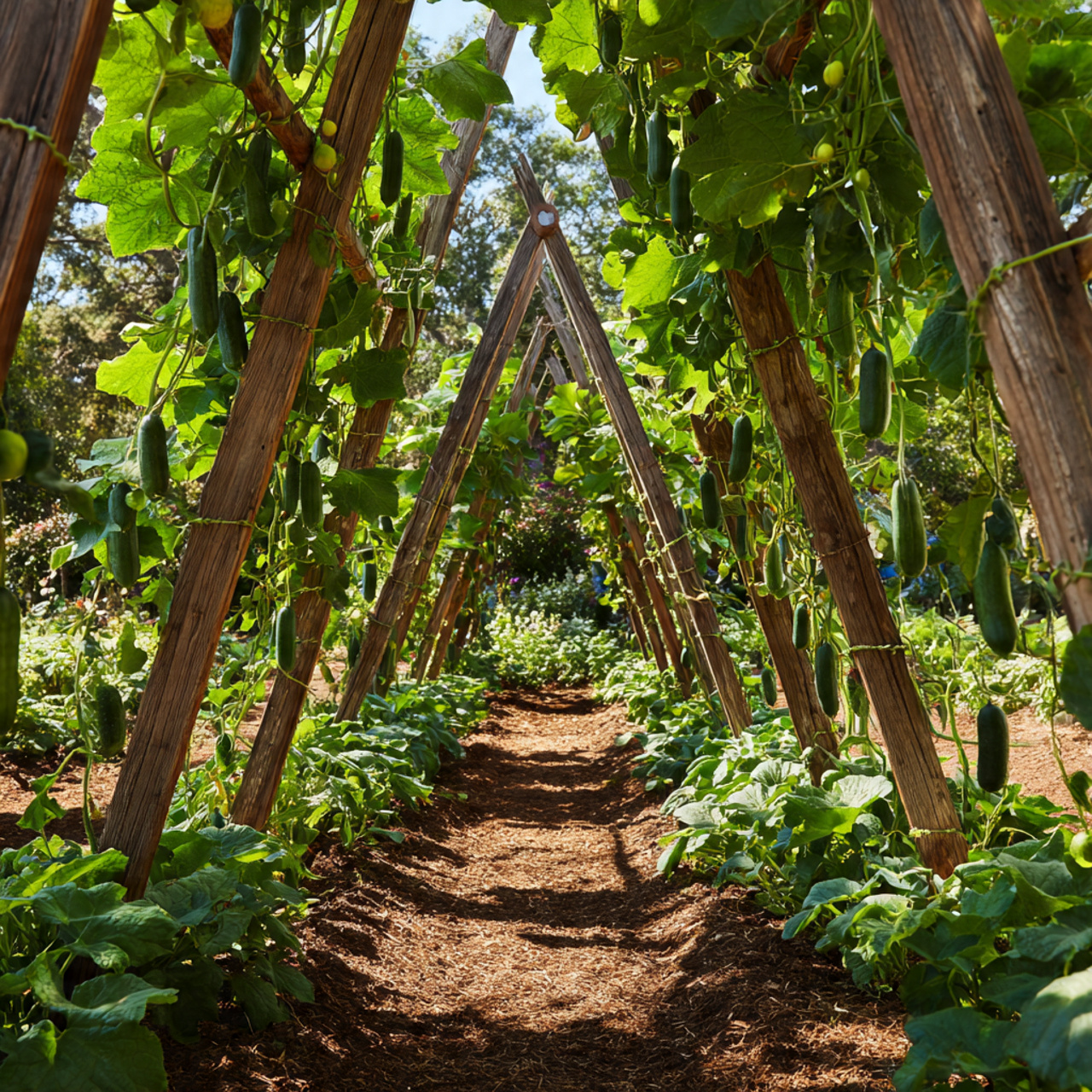
An A-frame trellis stands freely and supports cucumbers on both angled sides, effectively doubling your growing area in the same footprint. This design works beautifully over narrow garden beds or pathways.
The slanted structure sheds rain naturally and allows excellent light penetration from both sides, preventing the shaded, damp conditions that invite disease.
Standout advantages:
- Self-supporting without wall attachment needed
- Accessible from both sides for easy maintenance
- Creates a natural garden divider or privacy screen
- Excellent for succession planting different varieties
Design tip: Build your A-frame 5-6 feet tall with a 3-4 foot base width. This ratio provides stability while remaining easy to reach for harvesting.
Sustainable Bamboo Trellis
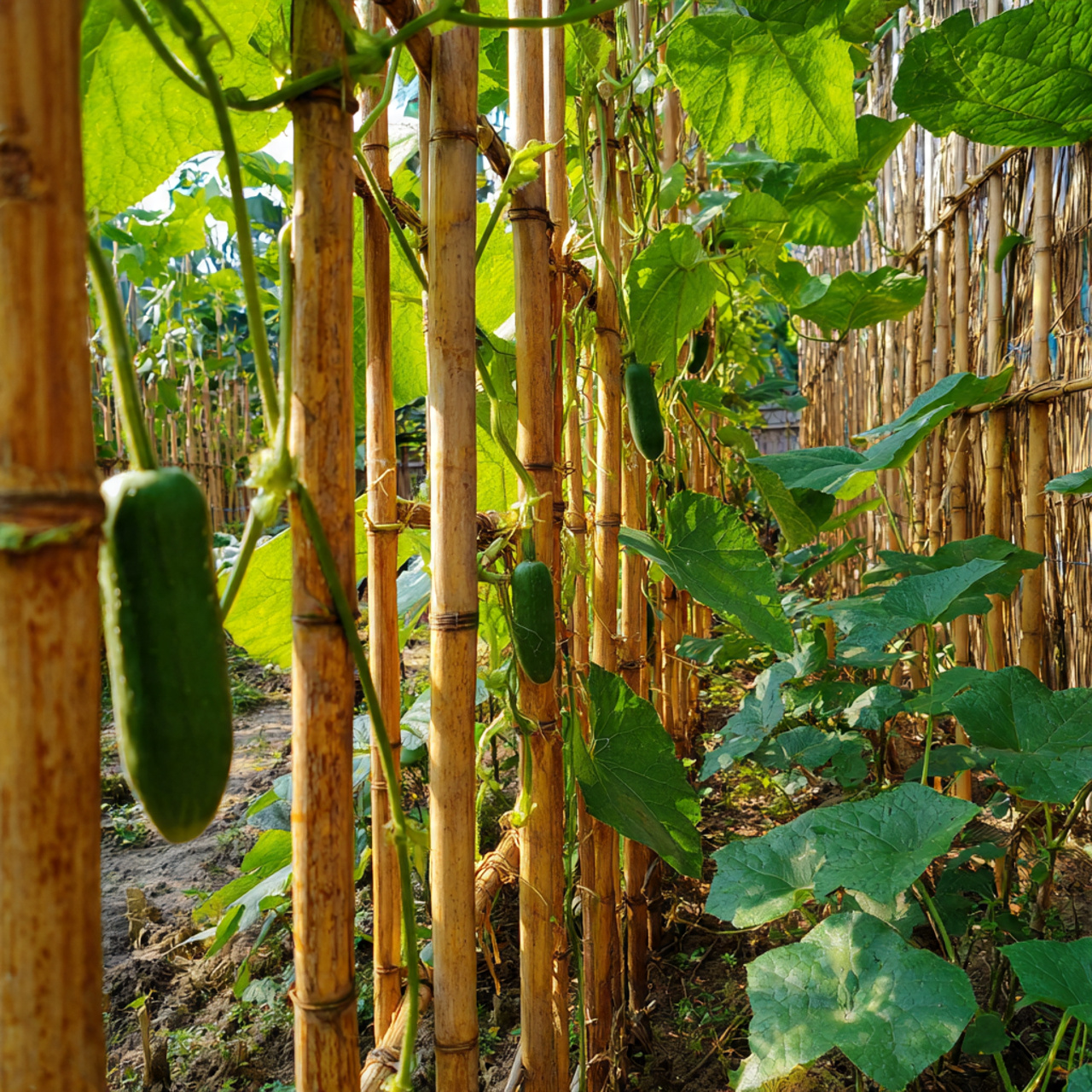
If you’re looking for an eco-friendly option that doesn’t sacrifice strength, bamboo deserves your attention. This renewable resource is naturally rot-resistant and handles impressive weight.
Bamboo poles can be arranged in countless configurations—vertical poles, teepee formations, or artistic arch designs that become garden focal points.
Environmental benefits:
- Rapidly renewable resource
- Biodegradable at end of life
- No chemical treatments needed
- Natural aesthetic that complements organic gardens
Construction note: Lash bamboo poles together with weatherproof twine or zip ties. The natural texture of bamboo gives tendrils excellent grip without additional support materials.
Garden Netting Trellis System
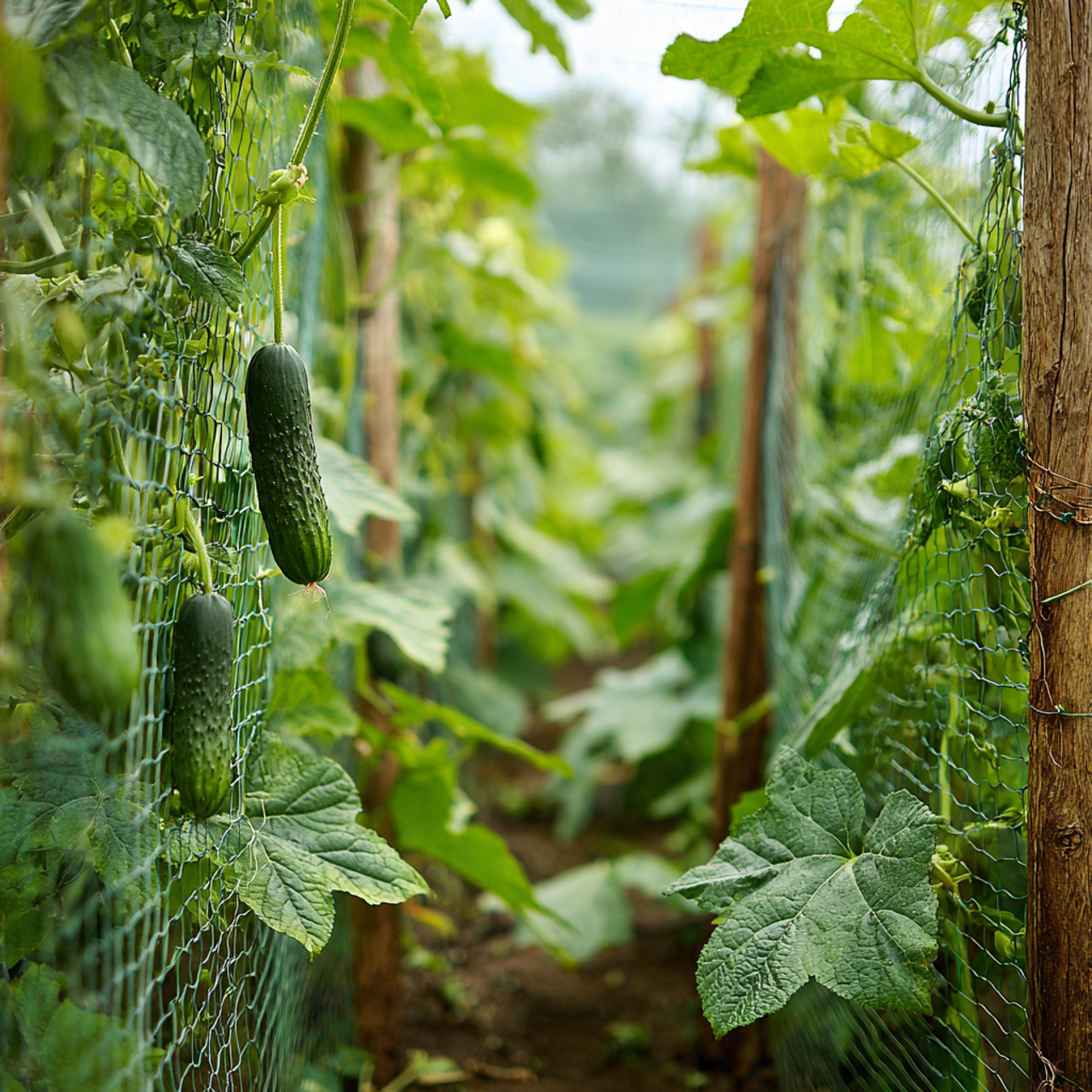
Stretch durable garden netting between sturdy posts to create an instant climbing surface. Cucumber tendrils weave through the mesh naturally, requiring minimal training from you.
This approach covers large areas efficiently and costs less than building elaborate wooden structures. Plus, netting rolls up for compact storage when the season ends.
Why netting works so well:
- Lightweight yet strong enough for heavy fruit loads
- Mesh size (4-6 inches) perfect for cucumber tendrils
- Quick to install and adjust
- Suitable for vertical farming and intensive gardening
Practical application: Secure netting tautly to prevent sagging under weight. For best results, use posts every 6-8 feet and add a horizontal support wire at the top to bear the main load.
Beautiful Arch Trellis Design
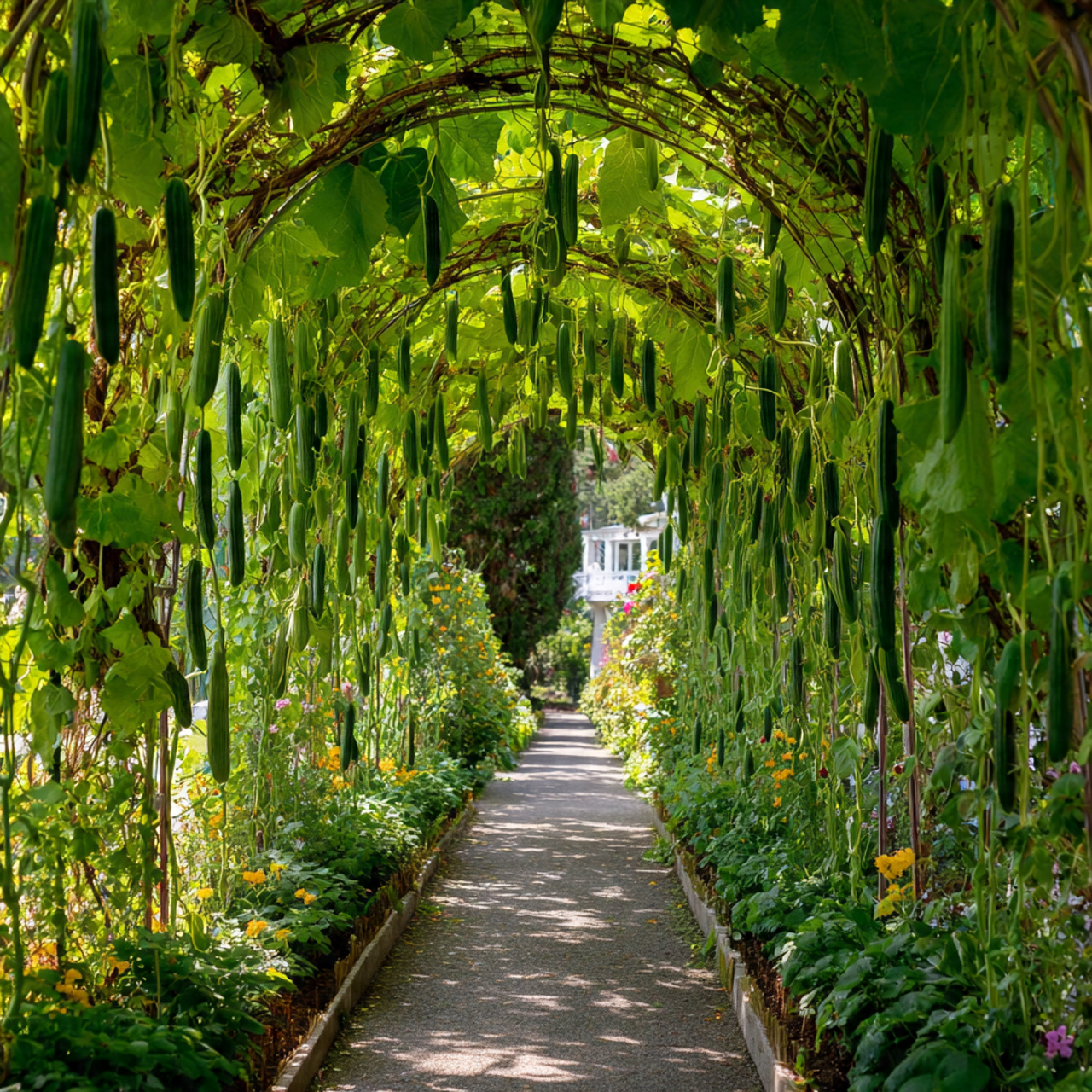
Transform your garden pathway into a productive feature with an arched cucumber trellis. Vines climb the curved structure while fruits dangle beautifully, creating an edible tunnel that’s both functional and gorgeous.
This design works wonderfully at garden entrances or along walkways where you want to combine practicality with visual appeal.
Multiple benefits:
- Creates inviting garden spaces
- Fruits hang freely for easy spotting and picking
- Excellent air circulation reduces disease pressure
- Makes a dramatic garden statement
Maintenance tip: Prune regularly to prevent the arch from becoming too dense, which would block light and air. Trim side shoots to 2-3 leaves beyond the flowering point to balance fruit production and vine growth.
Durable Tensioned Wire Trellis
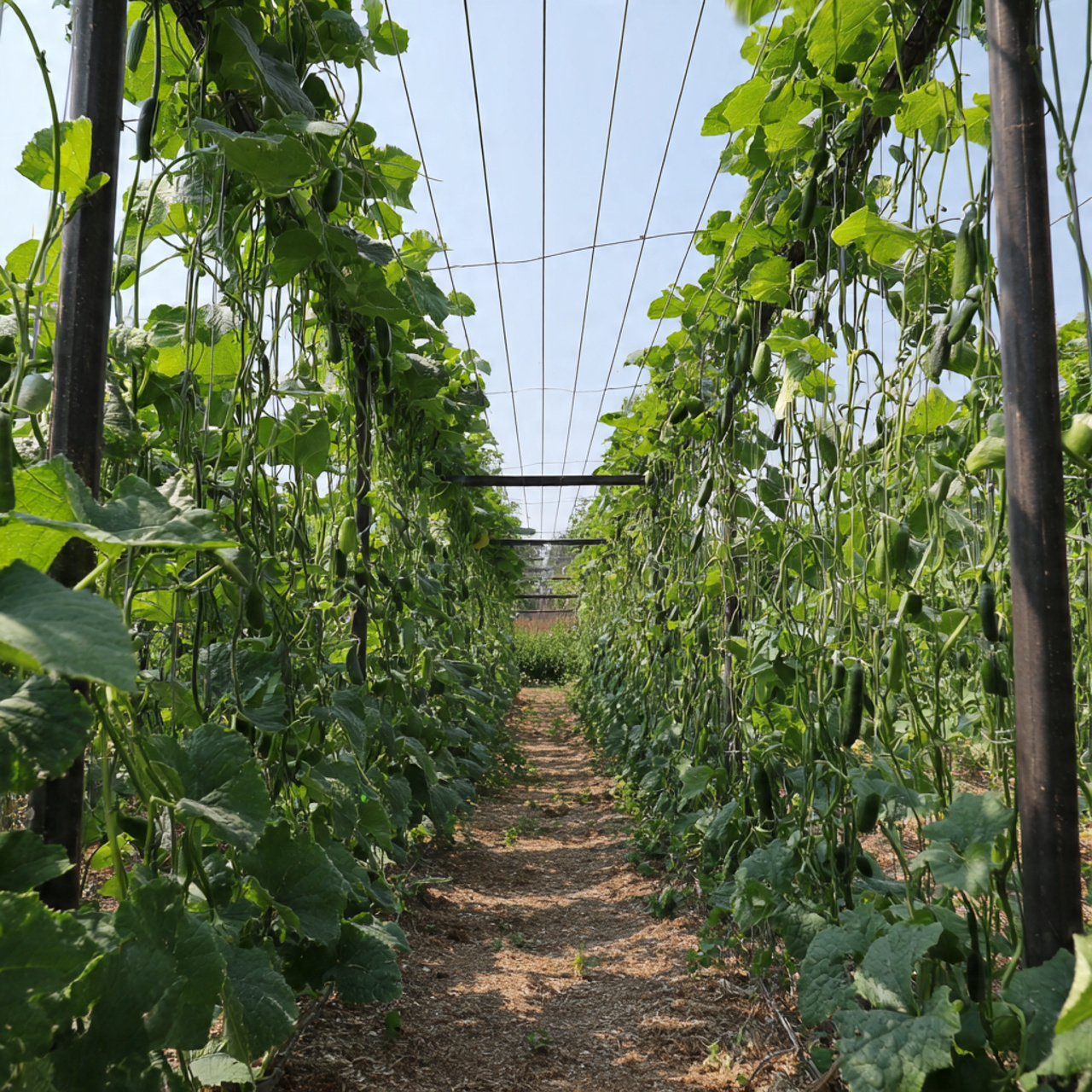
Run galvanized wires horizontally between sturdy posts at different heights, creating multiple levels for vine support. Cucumbers naturally climb along these wires with minimal guidance needed.
This commercial-style system is incredibly durable and can support years of heavy harvests. The open design promotes air movement and makes inspections easy.
Commercial-grade advantages:
- Extremely strong and long-lasting
- Adjustable wire spacing for different varieties
- Professional appearance
- Works for small gardens or small farm operations
Installation guide: Space wires 12-18 inches apart vertically. Use wire tensioners at one end to maintain tautness as vines grow. Galvanized or coated wire prevents rust in wet conditions.
Repurposed Ladder Trellis

Got an old wooden ladder gathering dust? Turn it into a charming trellis by leaning it against a fence or wall. The horizontal rungs provide perfect climbing supports for cucumber vines.
This approach adds rustic character while being completely functional. It’s particularly clever for small spaces where every square foot counts.
Space-saving benefits:
- Utilizes vertical wall space
- Perfect for balconies or small patios
- No ground footprint needed
- Encourages even vine distribution
Styling idea: Paint your ladder in coordinating colors or leave it weathered for farmhouse charm. Secure it firmly to prevent tipping as vines add weight throughout the season.
Trellis with Integrated Companion Planting
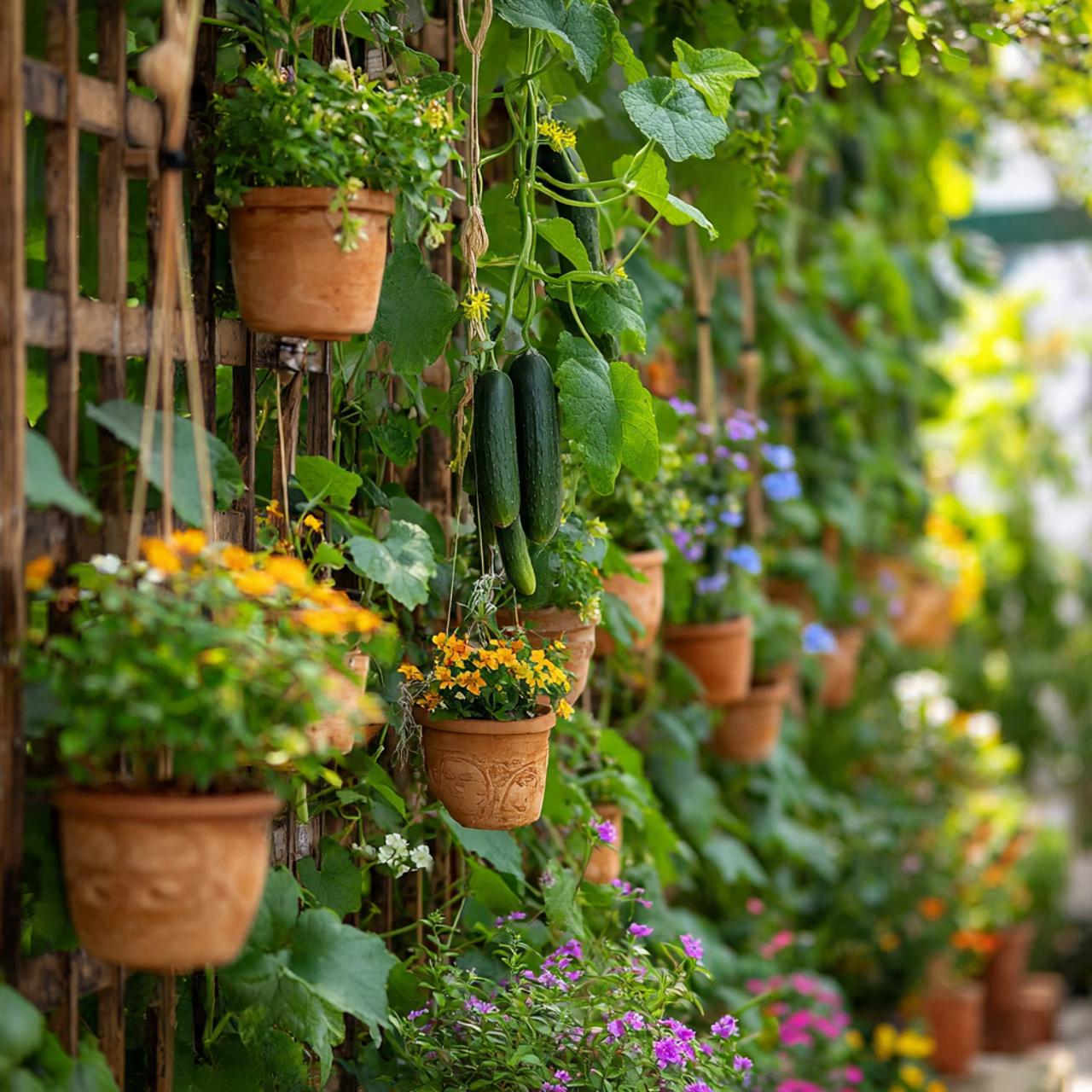
Combine your cucumber trellis with hanging baskets or pots mounted at different levels. This vertical garden approach lets you grow cucumbers alongside beneficial companion plants.
Herbs like basil and flowers like marigolds naturally deter cucumber pests while making efficient use of vertical space.
Companion planting advantages:
- Basil repels aphids and beetles
- Marigolds deter nematodes and whiteflies
- Nasturtiums attract beneficial predatory insects
- Maximizes productivity per square foot
Smart combinations: Plant low-growing lettuce or spinach at the trellis base where cucumber leaves create afternoon shade. Add hanging pots of trailing herbs at upper levels for easy harvesting.
Classic Teepee Trellis Structure

Arrange three to four long poles in a circle and tie them together at the top to form a teepee shape. This freestanding structure provides excellent support while adding architectural interest to your garden.
The teepee design is especially beloved by children—it creates a natural play space as vines fill in, making it perfect for family gardens.
Why teepees work wonderfully:
- Stable without anchoring or attachment
- Provides 360-degree growing surface
- Kid-friendly garden hideaway
- Ideal for container or raised bed growing
Building tip: Use poles 6-8 feet tall for standard cucumbers. Space the bottom ends 3-4 feet apart for stability. Tie securely at the top with weatherproof rope, leaving a foot of pole extending above the tie point.
Recycled Pallet Trellis
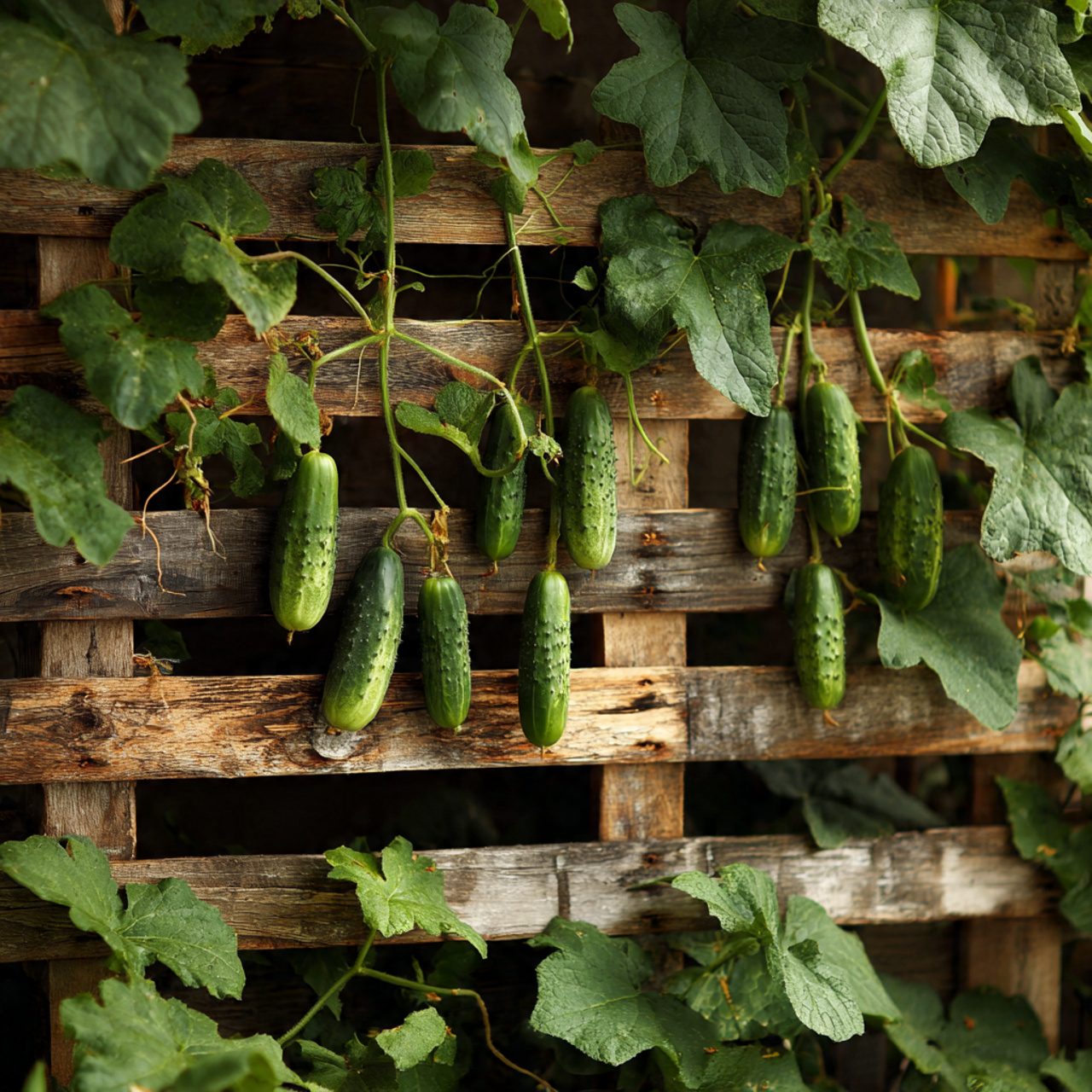
Wooden shipping pallets transform beautifully into vertical growing supports. The pre-spaced slats create natural climbing rungs, and the whole project costs nothing if you source pallets for free.
This recycling approach keeps materials out of landfills while providing sturdy, functional garden support.
Upcycling advantages:
- Usually free or very inexpensive
- Already assembled and durable
- Can be customized with paint or stain
- Easy to mount vertically or lean at angles
Safety first: Only use pallets stamped “HT” (heat-treated) rather than “MB” (methyl bromide treated). Give them a good cleaning, sand rough spots, and apply outdoor sealant to extend lifespan.
Space-Smart Horizontal Wire System
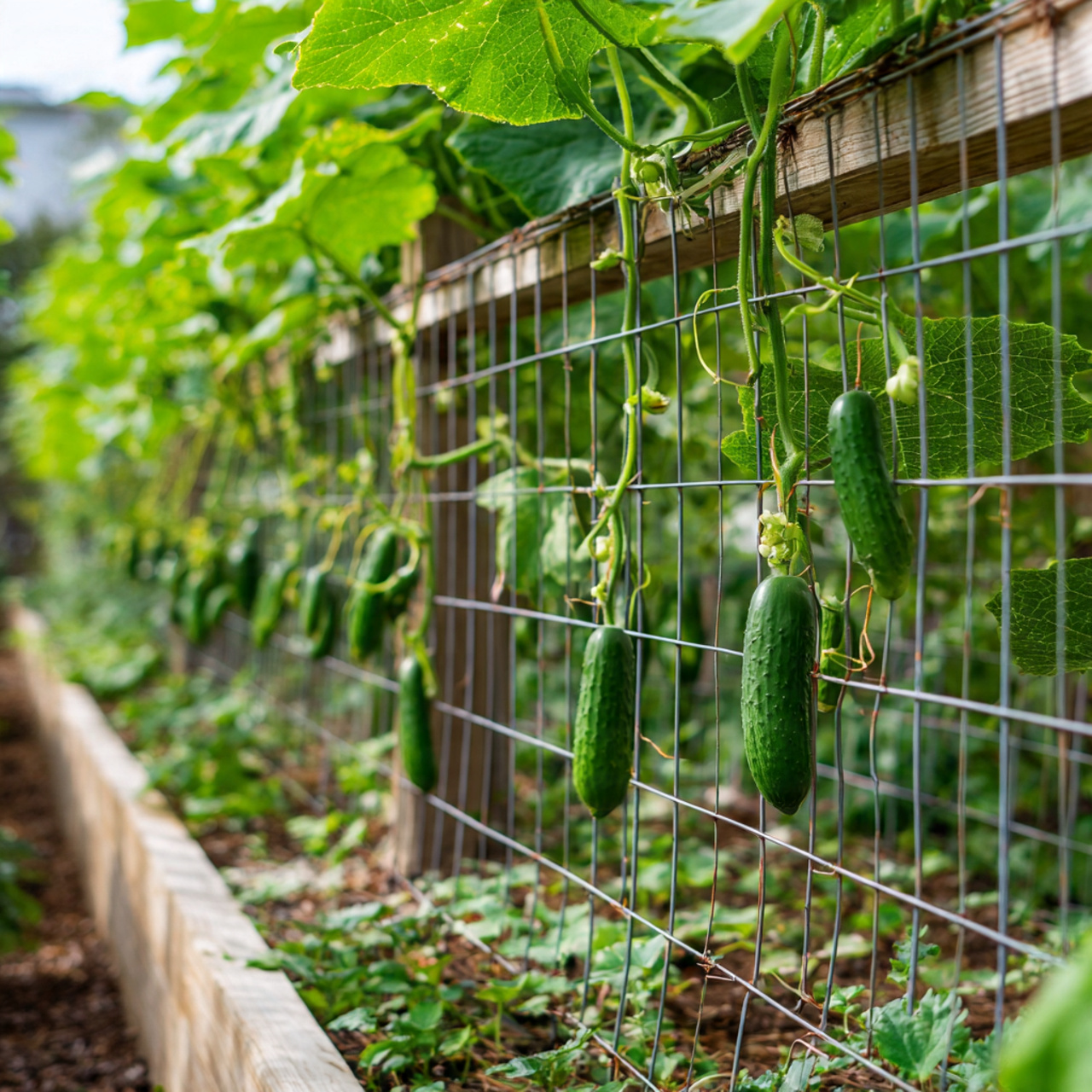
Instead of training vines to climb vertically, horizontal wires guide cucumber growth sideways across a frame. This less common approach works brilliantly in greenhouses or covered spaces with height limitations.
The horizontal orientation still keeps fruits off the ground while accommodating low ceilings or overhangs.
Unique benefits:
- Saves precious vertical space
- Perfect for greenhouse or covered patio growing
- Allows even light distribution along entire vine length
- Reduces fruit deformities caused by uneven growth
Setup details: Install wires 18-24 inches apart in horizontal runs. Guide main vines along wires and allow fruiting laterals to hang downward where cucumbers develop straight due to gravity.
Elegant Obelisk Trellis
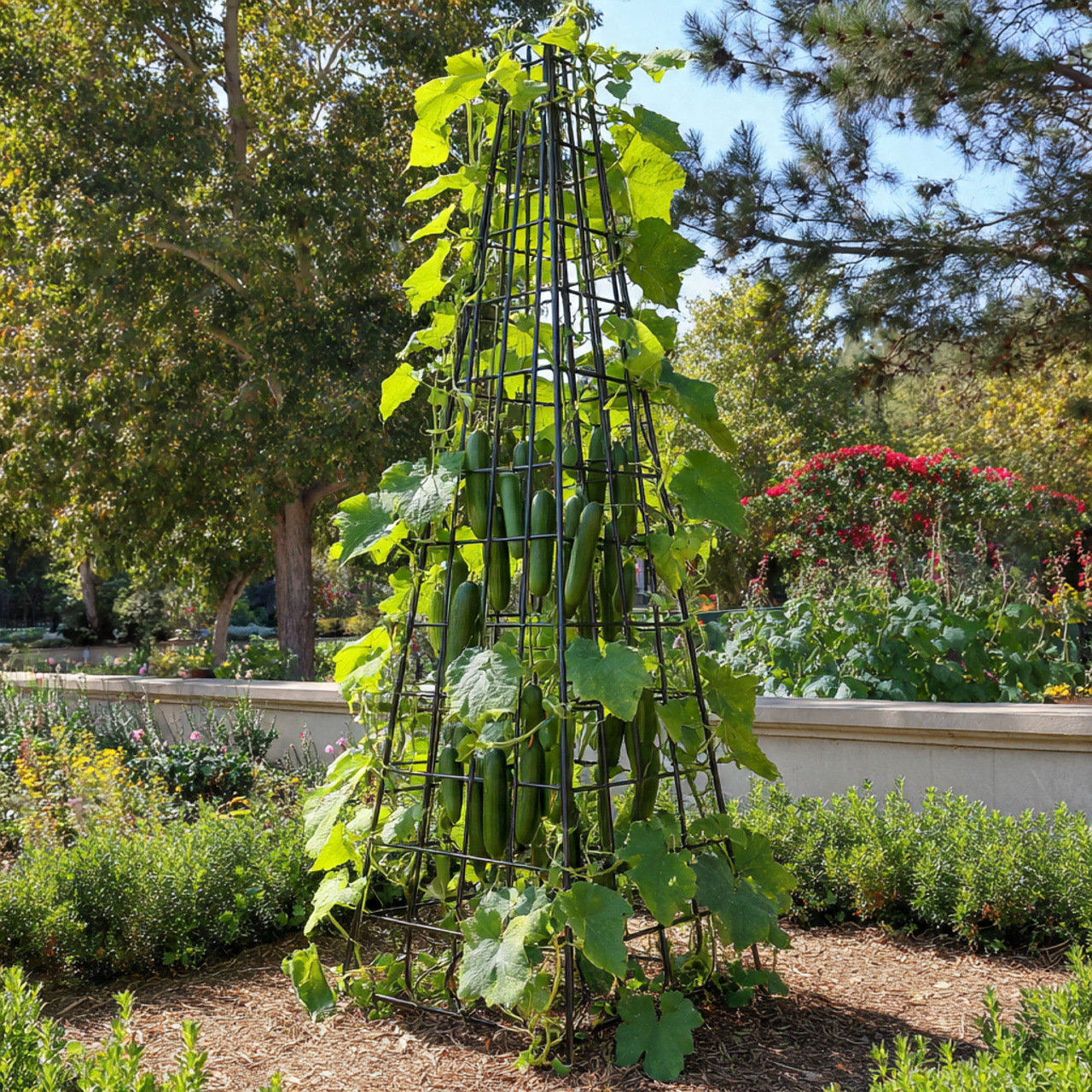
An obelisk trellis brings sculptural beauty to ornamental vegetable gardens. These tall, tapered structures serve as garden focal points while providing excellent cucumber support.
Choose from metal, wood, or even willow branch constructions depending on your aesthetic preferences.
Decorative benefits:
- Adds vertical interest and structure
- Works beautifully in formal garden designs
- Draws the eye upward in small spaces
- Vines create living sculpture effect
Placement strategy: Position obelisks at bed corners, pathway intersections, or as centerpieces in circular plantings. The vertical accent provides structure even before vines fill in.
Innovative Spiral Trellis
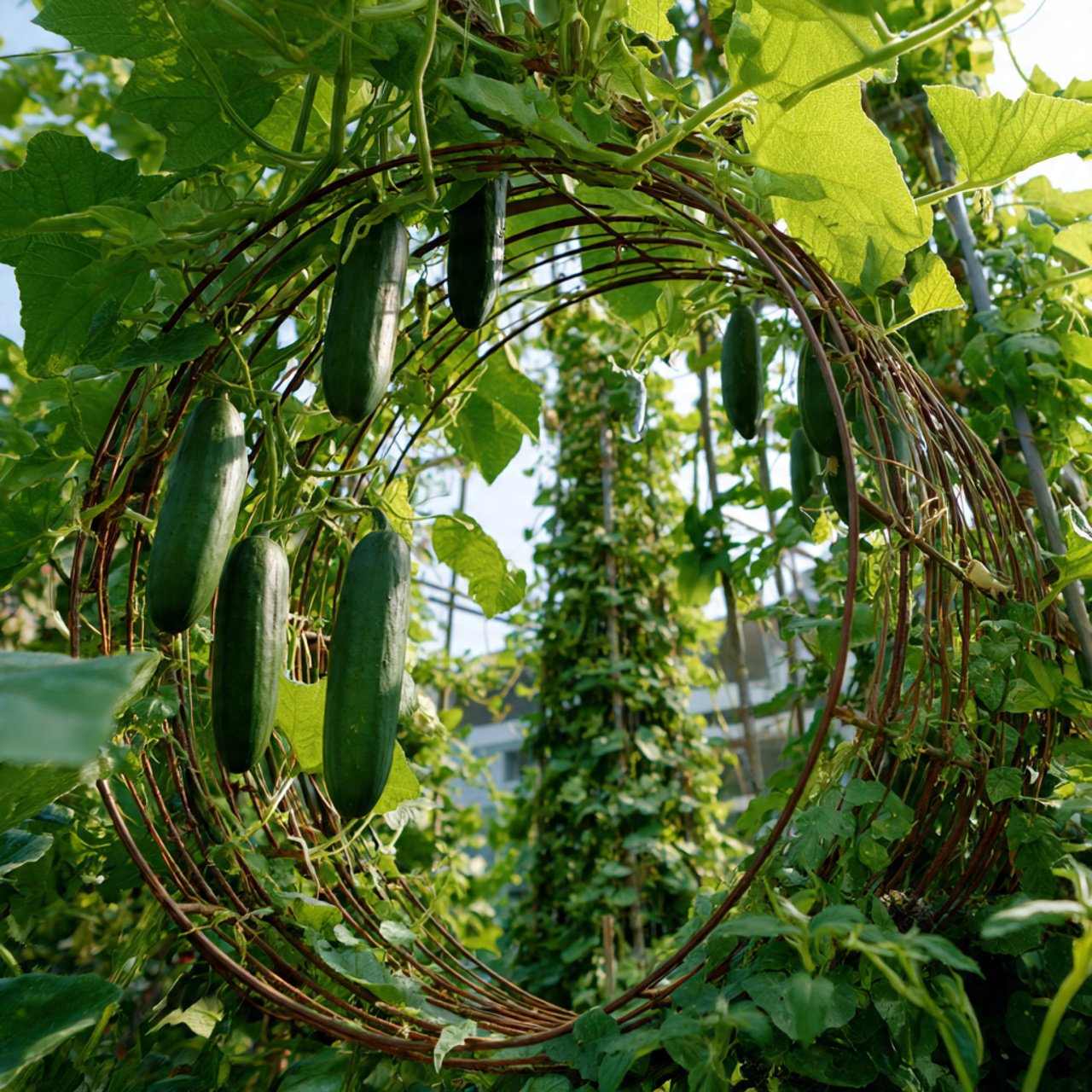
A spiral or corkscrew-shaped trellis guides vines to twist upward in a helical pattern. This unique design saves space while creating an eye-catching garden feature.
The continuous spiral encourages even fruiting along the entire structure rather than just at the top.
Creative advantages:
- Maximizes production in minimal footprint
- Distinctive visual appeal
- Even fruit distribution throughout
- Perfect for container gardens
Construction approach: Use heavy-gauge wire formed into a spiral around a central pole, or purchase ready-made spiral plant supports. The gradual twist naturally guides tendril attachment.
Compact Bamboo Teepee
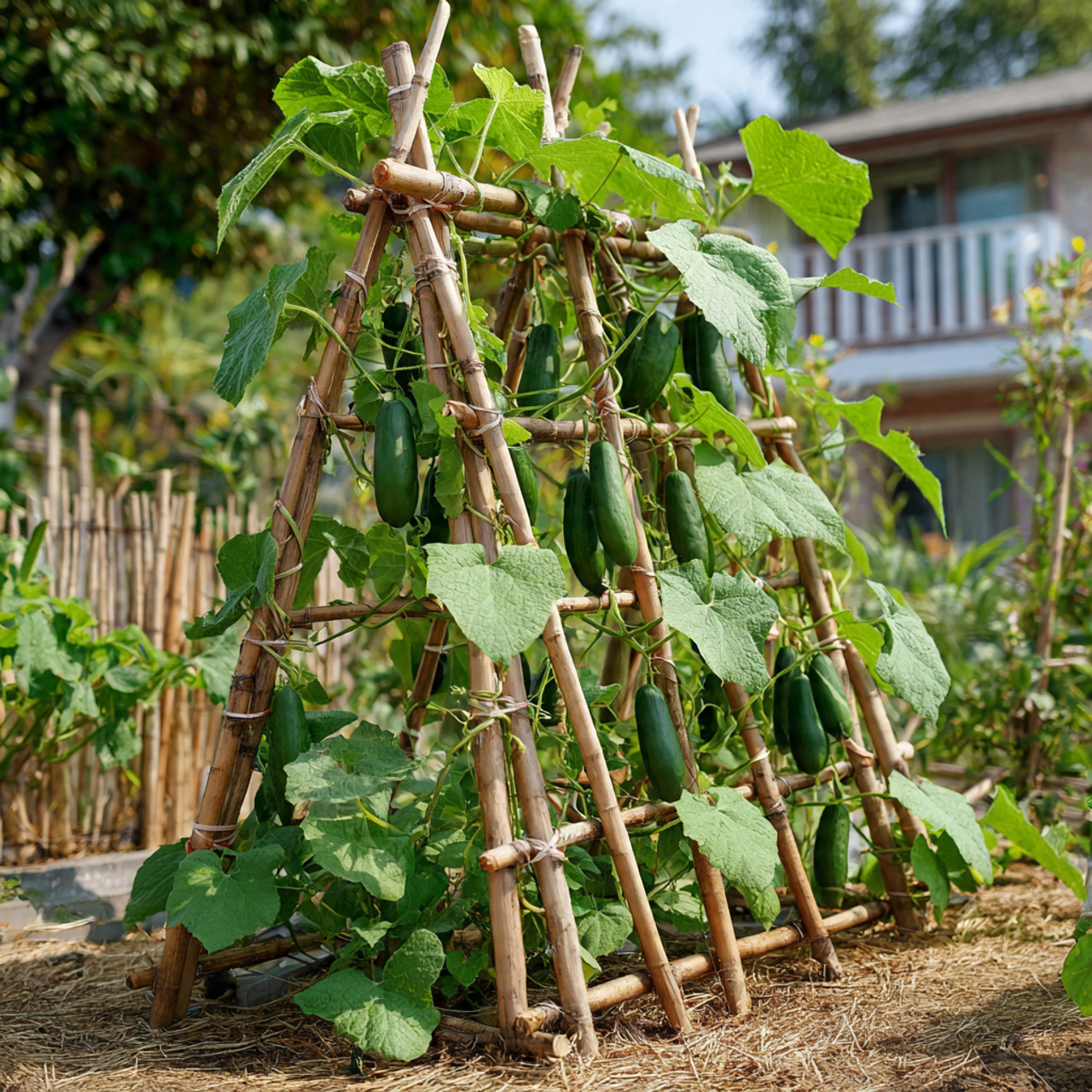
Similar to the classic teepee but specifically using bamboo poles creates an lighter, more portable version perfect for smaller gardens or container growing.
Bamboo’s natural strength supports surprising weight despite its slim profile, and the golden color adds warm tones to green garden spaces.
Small-space benefits:
- Takes up minimal ground space
- Easy to move if needed
- Lightweight yet incredibly strong
- Naturally pest-resistant material
Assembly instructions: Use 5-7 bamboo poles 6-8 feet long. Secure with weatherproof twine both at the top and midway down for additional stability as fruit weight increases.
Wall-Mounted Vertical Trellis
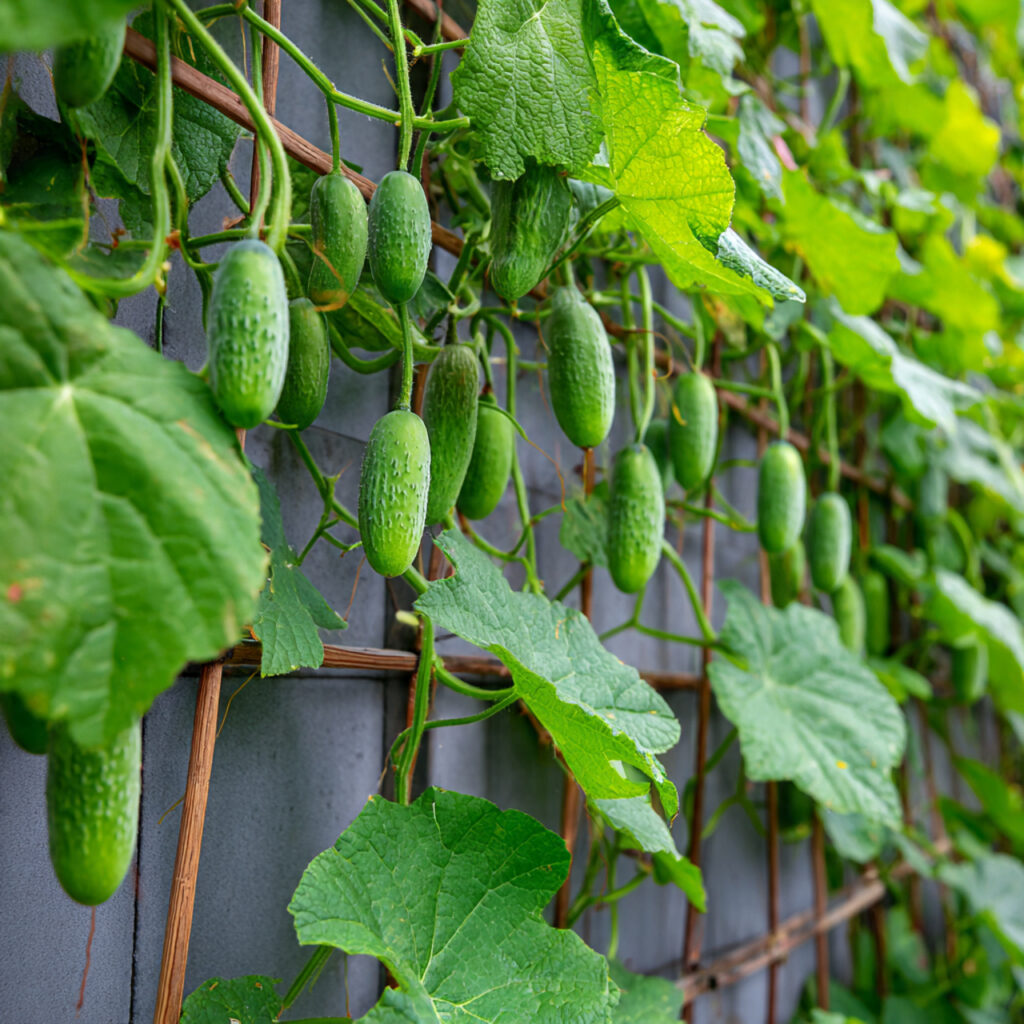
Attach a trellis directly to a wall, fence, or building exterior to grow cucumbers in the tightest spaces. This approach is ideal for urban gardeners working with balconies, patios, or courtyard gardens.
The vertical mounting eliminates ground footprint entirely while utilizing otherwise wasted vertical space.
Urban gardening advantages:
- Zero ground space required
- South-facing walls provide excellent sun exposure
- Building radiates stored heat for extended growing
- Easy harvesting at eye level
Installation tip: Ensure secure mounting with appropriate hardware. Leave 3-4 inches of air space between trellis and wall to promote air circulation and prevent moisture issues.
Adjustable Height Trellis System
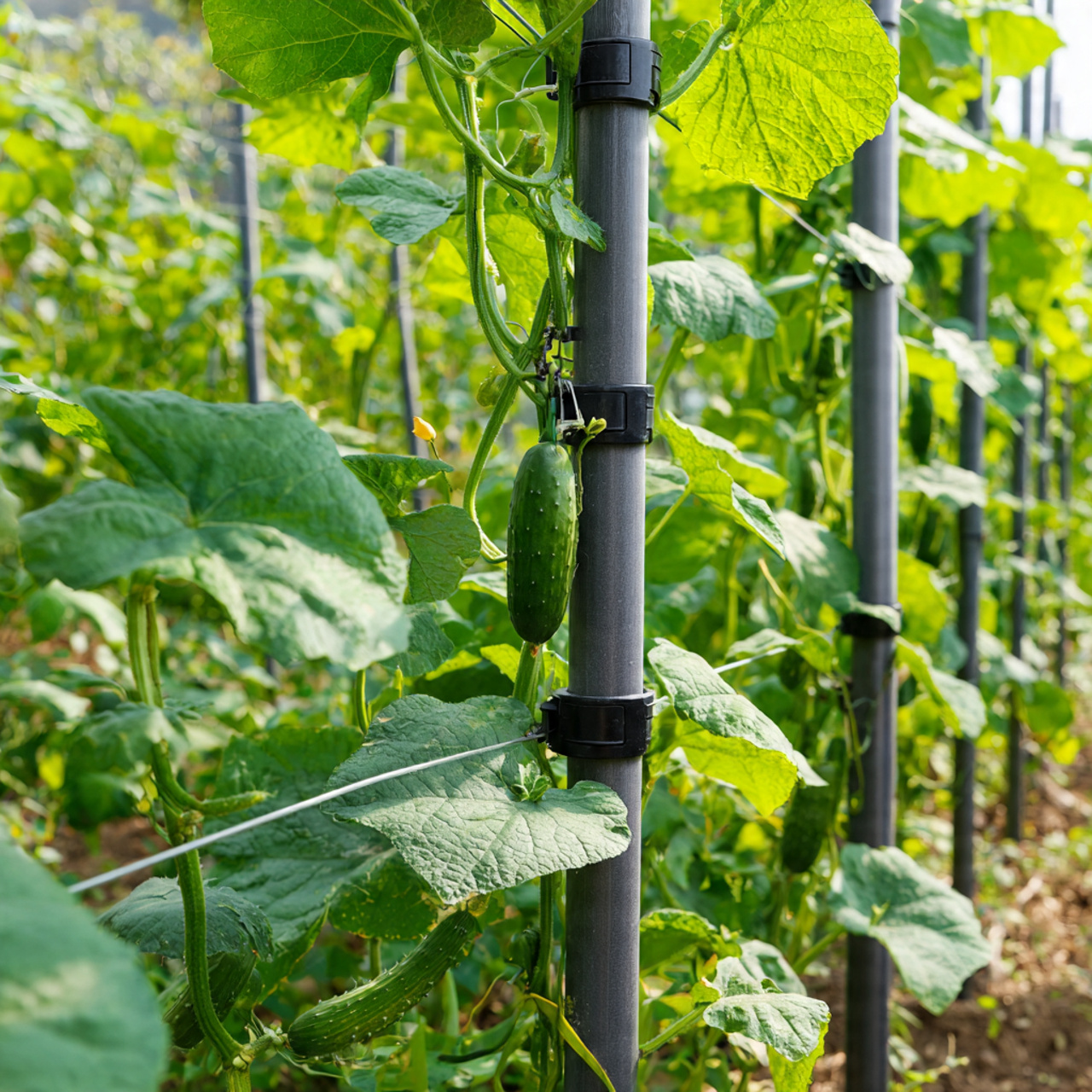
Build flexibility into your trellis design with adjustable components that accommodate different cucumber varieties or allow height modifications between seasons.
This adaptable approach works perfectly if you experiment with various cucumber types or share garden space with different climbing vegetables.
Flexibility benefits:
- Accommodates dwarf and standard varieties
- Adjusts for different seasonal needs
- Single investment serves multiple purposes
- Extends trellis useful life
Design feature: Use telescoping poles or add moveable cross-pieces with clamps. This allows customization without rebuilding each season.
Hanging Trellis for Containers
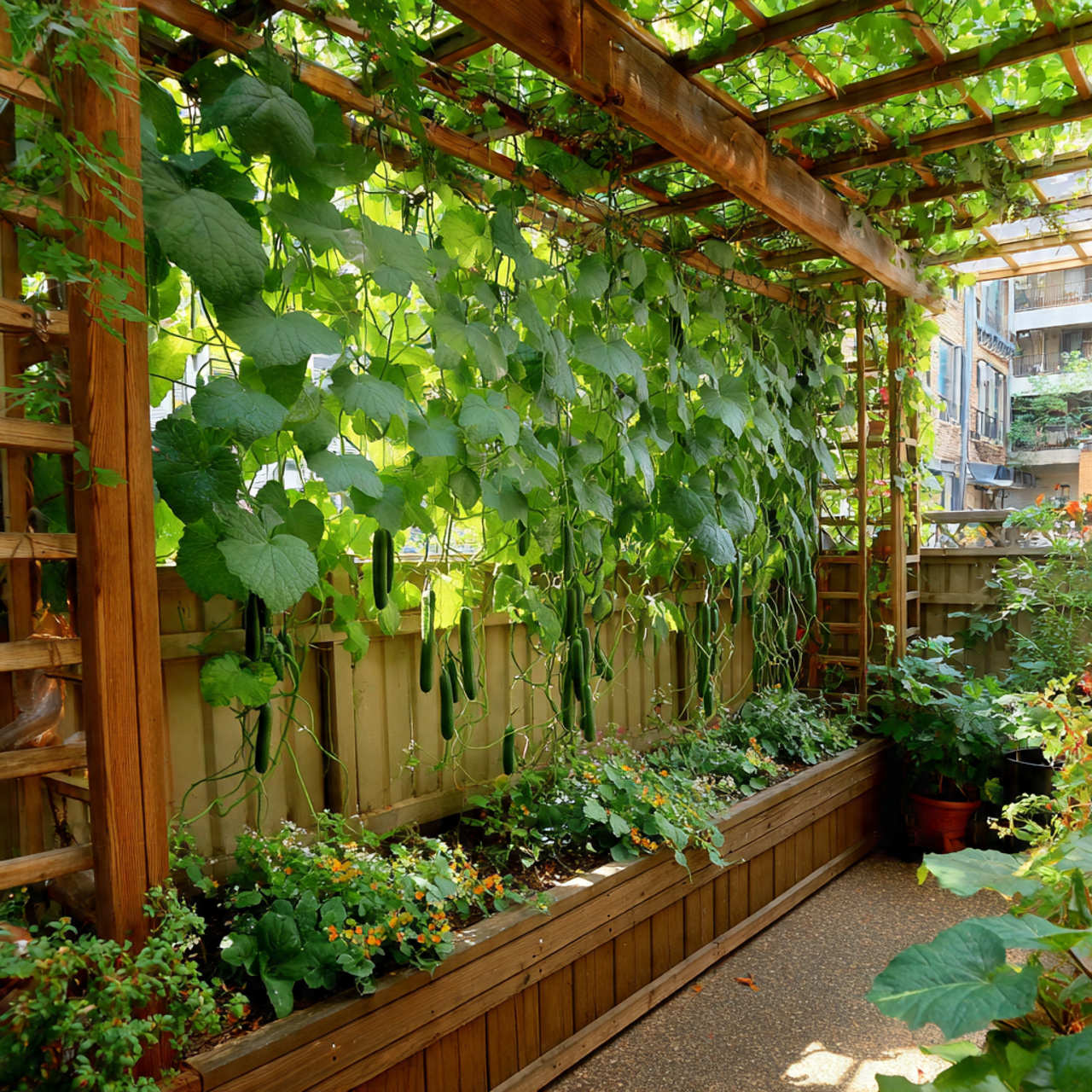
Suspend a trellis above container-grown cucumbers, allowing vines to climb upward from pots on the ground or even from elevated planters. This maximizes growing area in spaces like balconies where floor area is limited.
The overhead support keeps weight distribution balanced while creating an impressive vertical garden display.
Container gardening benefits:
- No permanent installation required
- Moves with container location changes
- Keeps fruits clean and visible
- Creates living privacy screen
Practical setup: Use overhead hooks, brackets, or pergola beams to suspend your trellis. Ensure containers are large enough (5+ gallons) to support the root system of climbing cucumber varieties.
Trellis with Integrated Irrigation
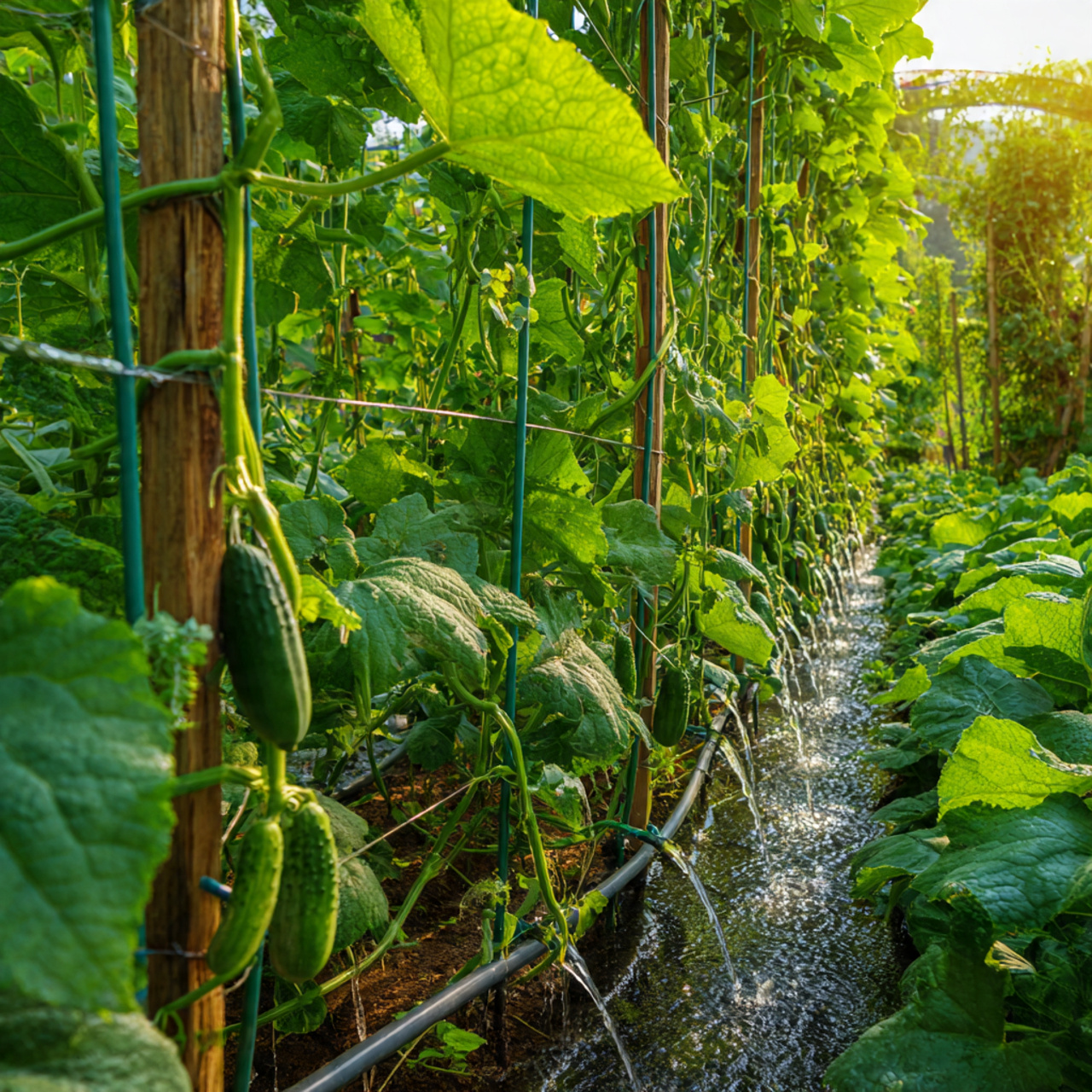
Combine your trellis structure with a drip irrigation system for automated watering. This dual-purpose design is especially valuable in hot climates where consistent moisture is crucial for quality fruit production.
Running drip lines up the trellis or alongside it ensures water reaches the root zone without wetting foliage—a key strategy for preventing fungal diseases.
Automation advantages:
- Consistent watering even during busy periods
- Reduces leaf wetness and disease risk
- Conserves water through targeted delivery
- Maintains even soil moisture for better fruit quality
System tip: Install drip emitters at the base of each plant with 1-2 gallons per hour flow rate. Use a timer for early morning watering to allow foliage to dry during the day.
Traditional Lattice Trellis
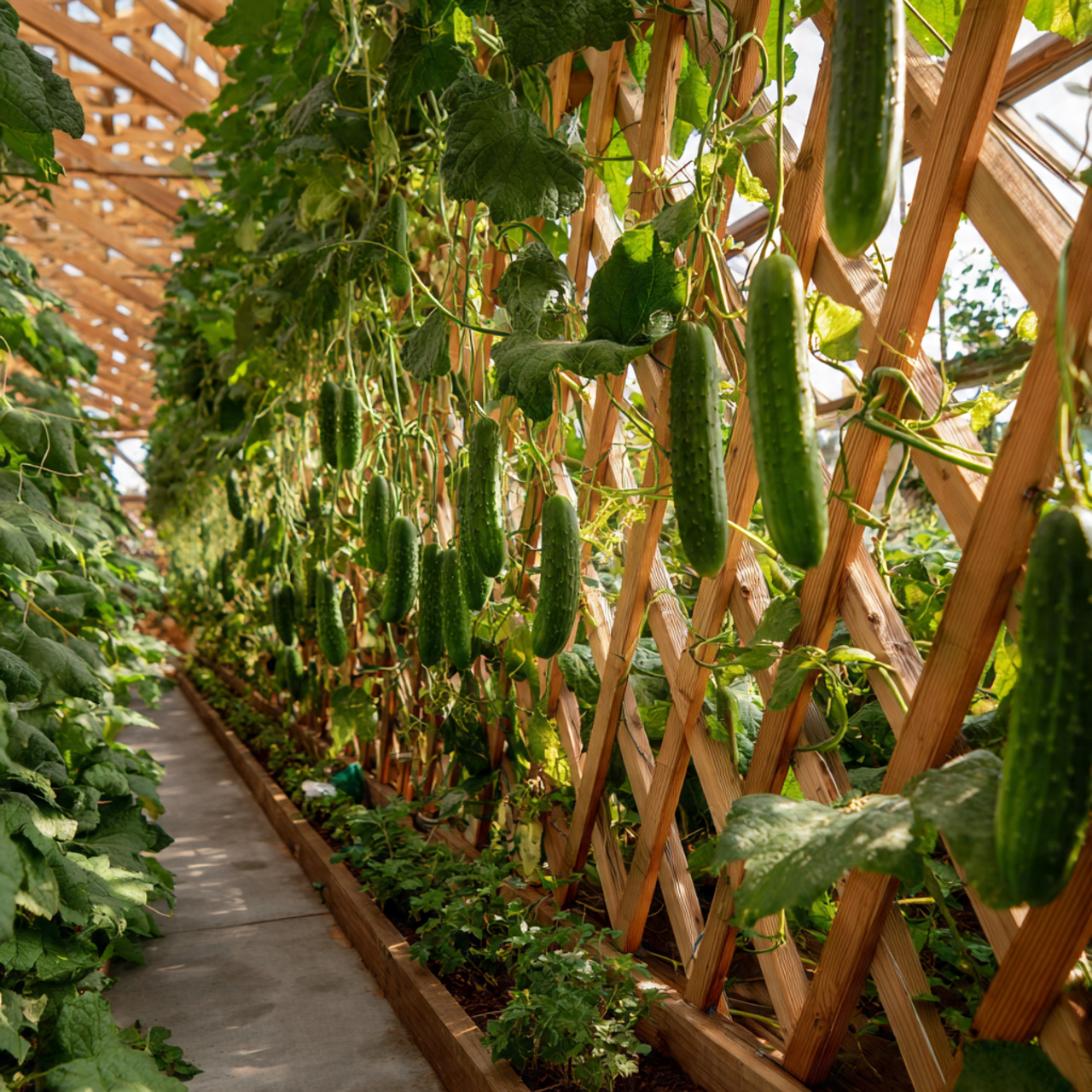
Create a classic lattice by crisscrossing wooden or bamboo strips to form a diamond or square pattern. This traditional design offers numerous attachment points for tendrils while adding timeless garden appeal.
The interwoven structure provides excellent support as vines weave through the openings naturally.
Classic design benefits:
- Attractive even before vines fill in
- Multiple attachment points for secure climbing
- Even weight distribution prevents sagging
- Available pre-made or DIY-friendly
Spacing guide: Use 4-6 inch spacing between lattice strips for optimal tendril attachment. Smaller spacing provides more support but may become too dense with foliage.
Minimalist Two-Post Wire System
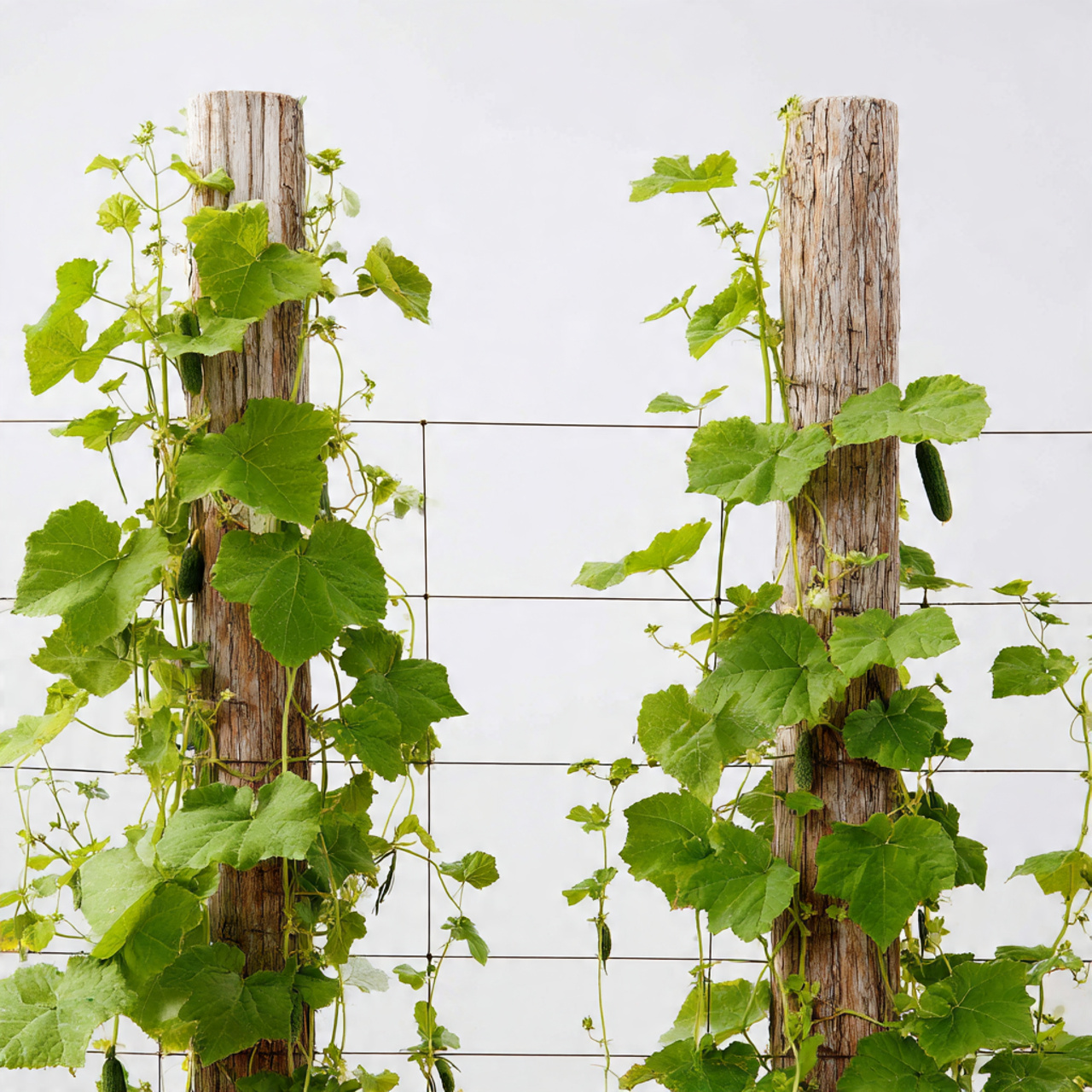
Sometimes simple is best. Stretch a single wire or several parallel wires between two posts to create a no-frills support system that gets the job done efficiently.
This stripped-down approach works wonderfully for temporary gardens, rental properties, or when you need quick seasonal setup.
Simplicity advantages:
- Extremely quick to install
- Very low cost
- Easy removal at season’s end
- Suitable for temporary garden plots
Quick setup: Use treated 4×4 posts or metal T-posts spaced 8-10 feet apart. Run galvanized wire tautly between them at 12-inch intervals. Train cucumber vines along the wires as they grow.
Trellis with Garden Archway
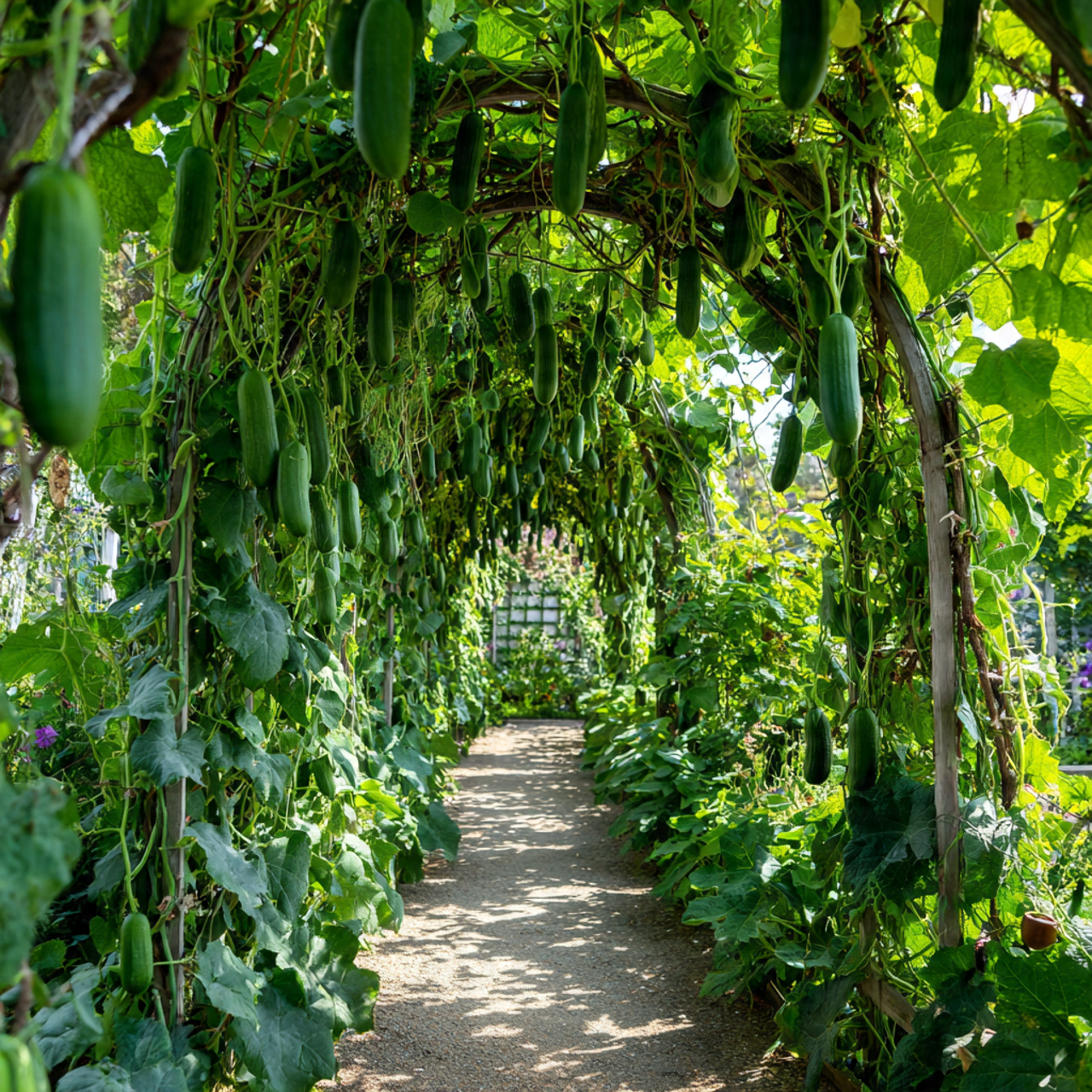
Extend the arch concept into a full tunnel by creating multiple connected arches over a pathway. Cucumbers growing on both sides create a living tunnel—a magical garden feature that’s highly productive.
Walking through your cucumber tunnel becomes a delightful garden experience while making excellent use of pathway edges.
Tunnel benefits:
- Defines garden pathways beautifully
- Doubles growing area using overhead space
- Creates cool, shaded walking areas
- Perfect for pick-your-own operations
Construction scale: Space arch hoops every 3-4 feet along your path. Use cattle panels, PVC, or metal conduit bent to shape. Cover with netting or allow vines to weave through frame directly.
Trellis with Rotating Frame
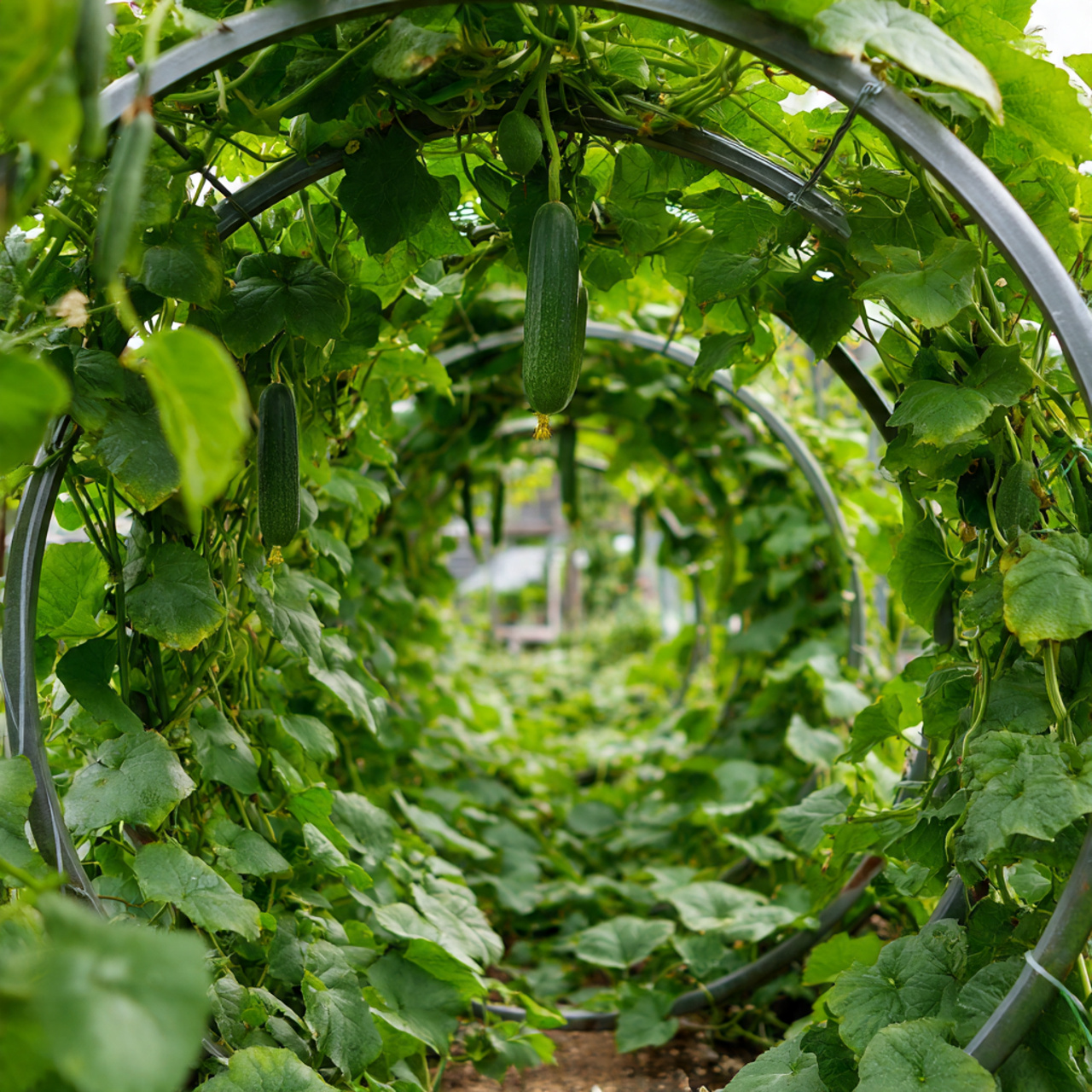
A more sophisticated option involves a frame that rotates, allowing you to turn the trellis throughout the day for even sun exposure. This ensures all vine parts receive adequate light and promotes uniform fruiting.
While more complex to construct, this system is valuable for serious gardeners or greenhouse operations focused on maximum productivity.
Advanced features:
- Prevents one-sided growth patterns
- Ensures even ripening across all fruits
- Maximizes photosynthesis efficiency
- Ideal for intensive production systems
Implementation note: This works best for greenhouse or high-tunnel production where you can access and rotate the frame daily. Use a lazy Susan bearing at the base for smooth rotation.
DIY Rustic Trellis from Branches
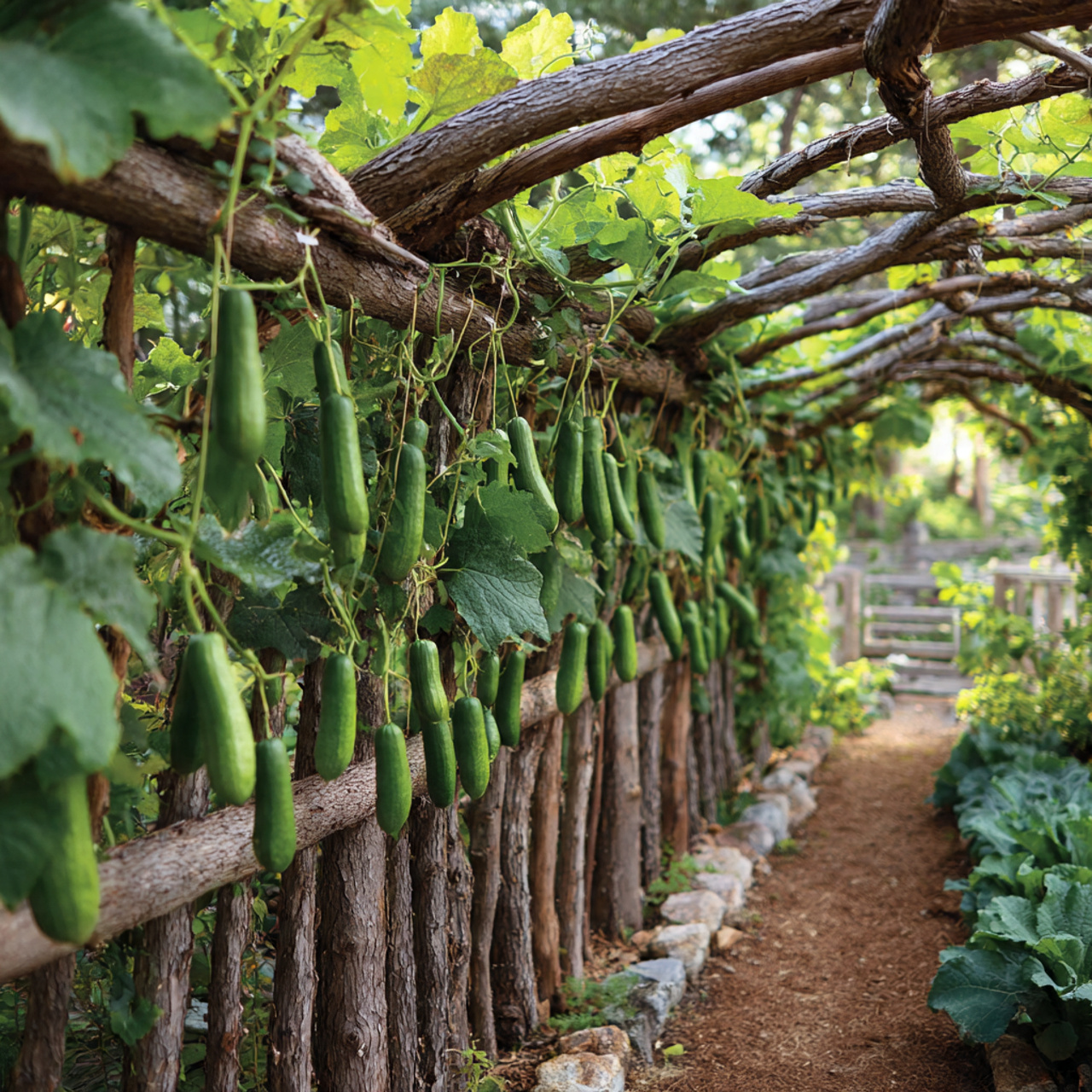
Embrace natural aesthetics by constructing a trellis from sturdy branches, twigs, or saplings collected from your property. This rustic approach costs nothing and adds organic character to cottage-style or permaculture gardens.
The irregular shapes and textures create visual interest while providing perfectly functional cucumber support.
Natural material benefits:
- Zero cost if sourced from your land
- Biodegradable and compostable
- Unique, one-of-a-kind appearance
- Blends seamlessly into natural garden settings
Gathering tips: Select straight branches 1-2 inches in diameter for main supports. Use flexible willow or grape vines for lashing and cross-pieces. Remove bark to extend durability, or leave it on for maximum rustic character.
Visit Also: Vegetable Gardening
FAQs
What’s the ideal height for a cucumber trellis?
Most cucumber varieties perform best on trellises standing 5-6 feet tall. This height accommodates the natural growth habit of vining cucumbers while keeping fruits within comfortable harvesting reach. Compact or bush varieties need only 3-4 feet, while aggressive growers can utilize 7-8 foot structures. Consider your own height and reach—you want to harvest without ladders.
Can I successfully grow cucumbers without any trellis?
Absolutely, cucumbers will grow sprawling on the ground as they do in nature. However, ground-grown cucumbers face more challenges: increased pest problems, higher disease pressure from soil contact, misshapen fruits from resting on uneven ground, and difficulty spotting ripe cucumbers hidden under foliage. Trellising dramatically improves plant health and your harvesting experience.
Which trellis material offers the best longevity?
For durability, metal and treated wood top the list, potentially lasting 10+ years with proper maintenance. PVC pipe offers excellent longevity without rot or rust issues. Bamboo provides 3-5 years of solid performance with minimal care. Recycled pallets vary depending on wood quality but generally last 2-4 seasons. Natural branches offer 1-2 seasons before composting back into the garden.
How do I keep cucumber vines from slipping off the trellis?
Prevention starts with training young plants correctly. Gently wrap new growth around supports in a clockwise direction. Use soft garden twine, plant clips, or strips of fabric to loosely tie vines at intervals—never tightly constrict stems. Prune excessive side growth to prevent tangled, heavy masses. Check weekly and redirect wayward growth before it becomes established in the wrong direction.
Can the same trellis support other climbing vegetables?
Most definitely! Cucumber trellises work beautifully for pole beans, snap peas, climbing squash varieties, small melon types, and even indeterminate tomatoes with additional support. This versatility makes trellis investment worthwhile. Just practice crop rotation by growing different plant families on the trellis each season to prevent disease and pest buildup in the same location.
Final Thoughts on Cucumber Trellising
Building a cucumber trellis ranks among the best investments you can make for your vegetable garden. The difference between trellised and ground-grown cucumbers is dramatic—healthier plants, cleaner fruits, easier maintenance, and significantly higher yields from the same amount of space.
From simple string systems costing just a few dollars to elaborate archways that become garden showpieces, there’s a trellis solution for every garden situation and budget. The 25 ideas covered here offer starting points for your creativity—feel free to adapt, combine, and modify based on your specific needs.
Remember that successful cucumber growing goes beyond just installing a trellis. Consistent watering, appropriate fertilization, regular harvesting, and attentive pruning all contribute to the thriving cucumber plants you’re working toward. The trellis provides the foundation, but your ongoing care brings everything together.
Start with whichever trellis idea matches your current situation, and don’t be afraid to experiment. Gardening rewards those willing to try new approaches. Your cucumbers will thank you with straighter fruits, healthier growth, and abundant harvests all season long.