24 Tiny Balcony Garden Inspiration for Modern Small-Space Living
Working with a small balcony doesn’t mean you have to sacrifice your dream of having a lush garden. The secret isn’t about cramming plants into every corner—it’s about being smart with your choices. Think of your tiny balcony as a precious canvas where every pot, plant, and piece of furniture needs to earn its place.
When you’re dealing with limited square footage, small decisions make a big impact. The type of pot you choose, where you position that favorite plant, or even how you arrange your morning coffee chair can completely change how your balcony feels and functions. But here’s the good news: with some creative thinking and practical strategies, your compact balcony can transform into a peaceful retreat where you can breathe fresh air, enjoy greenery, and unwind after a long day.
This guide walks you through some actionable ideas that work specifically for tiny spaces. You’ll discover how to maximize vertical areas, choose plants that actually thrive in small containers, and keep everything looking tidy without feeling cramped. Let’s turn that underused balcony into your favorite spot at home.
Know Your Space Before You Start Planting
Before buying a single plant or pot, take time to really understand your balcony. This isn’t the exciting part, but trust me—it’ll save you money, frustration, and dead plants down the road.
Here’s what you need to check:
- Measure everything: Grab a tape measure and note down your balcony’s exact dimensions, including height. You might be surprised how much vertical space you actually have.
- Test the weight capacity: Contact your building management or check the building specifications. This is crucial for safety, especially if you’re planning to use heavy terracotta pots or multiple containers.
- Track the sunlight: Spend a full day observing how sunlight moves across your balcony. Note which spots get morning sun, afternoon sun, or stay shaded all day.
- Check the wind exposure: If you’re on a higher floor, wind can be brutal. Stand outside during different times of day to gauge wind patterns.
Tip: Take photos of your balcony at different times—8am, noon, 3pm, and 6pm. This visual record helps you remember which spots get the best light when you’re shopping for plants later.
Understanding these basics helps you avoid common mistakes like buying sun-loving plants for a shaded balcony or overloading your space with too many heavy pots. When you work with your balcony’s natural conditions instead of against them, everything becomes easier.
Use Vertical Planter Walls
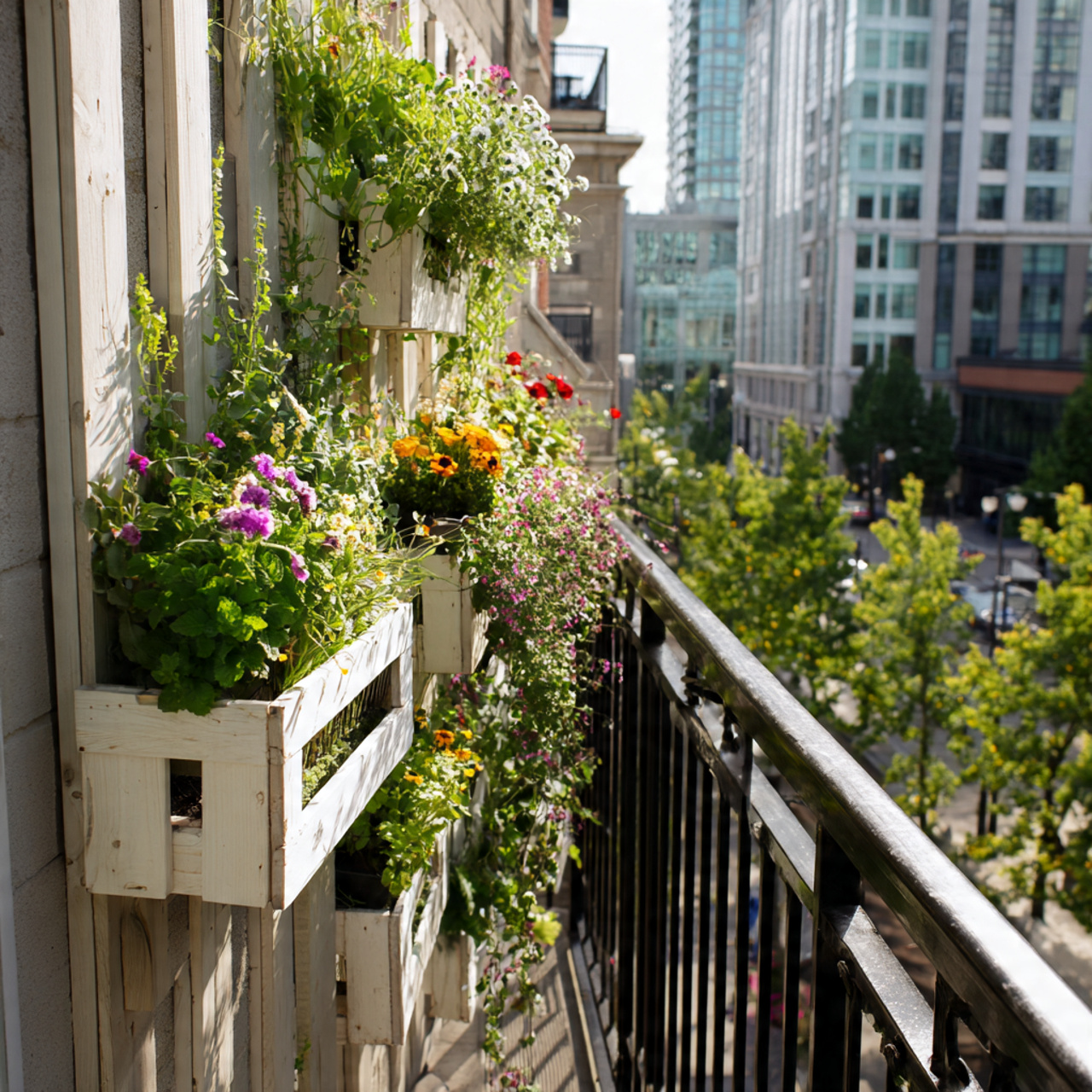
When floor space is tight, look up. Vertical planter walls are absolute game-changers for tiny balconies because they let you grow way more plants without sacrificing walking room or making the area feel stuffed.
Options that work well:
- Wall-mounted panels: Attach directly to solid walls and can hold multiple small pots in one frame
- Hanging pocket planters: Fabric or plastic pockets that hang like wall organizers
- Lean-against frames: Freestanding systems that rest against walls without drilling
Important Installation Tips:
- Always secure vertical planters to a solid wall rather than just leaning them against railings—this prevents disasters on windy days
- Use proper outdoor anchors and screws rated for your wall type
- Position the bottom of the planter at least 12 inches from the floor for easy watering access
Here’s what makes vertical planters so effective: they draw your eye upward, which makes the space feel taller and less cluttered at ground level. Plus, you can create beautiful layered effects by placing trailing plants at the top (they’ll cascade down naturally) and upright herbs or compact flowers in the middle and lower sections.
Hanging Basket Rows to Add Space Efficiency
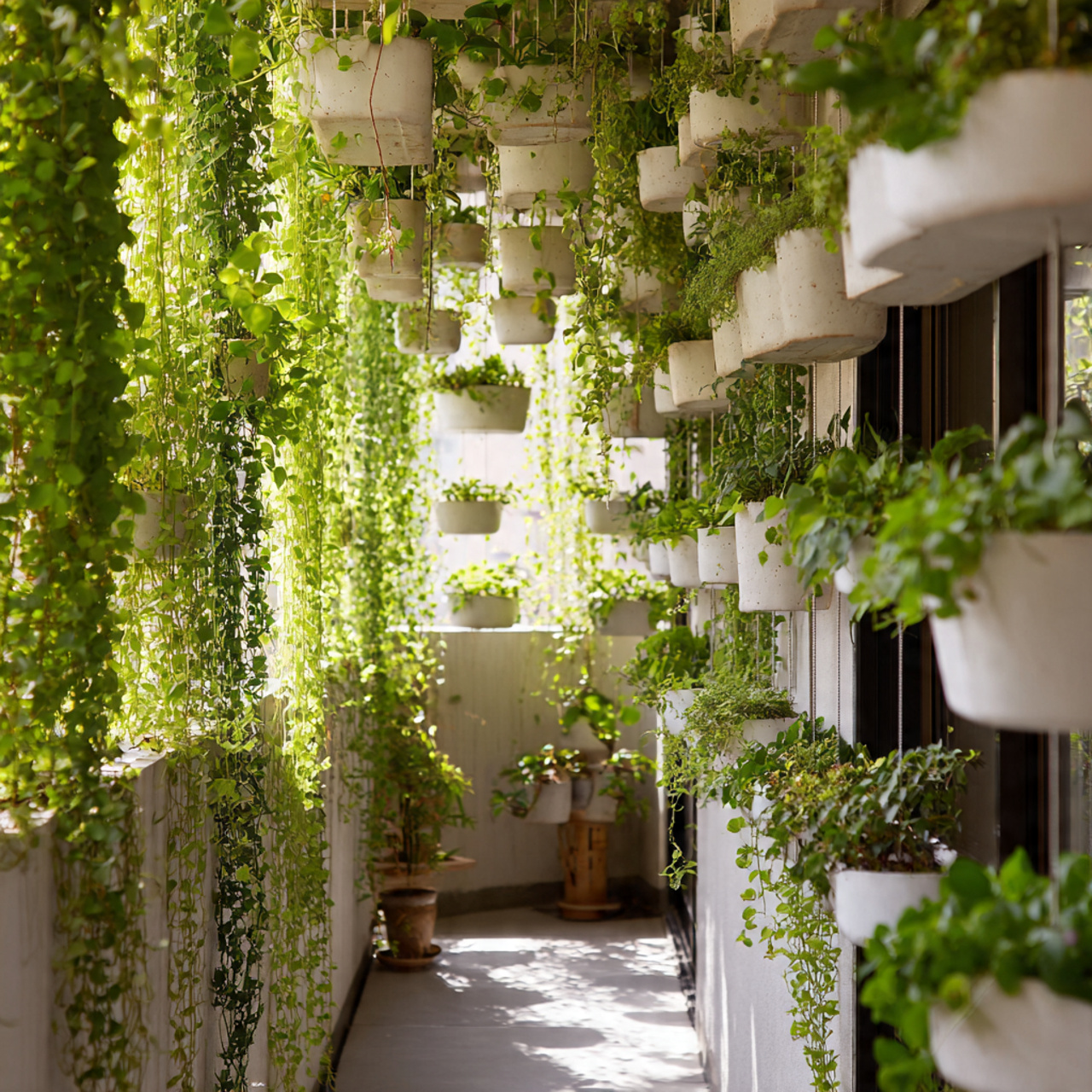
Hanging baskets are perfect for balconies with overhead clearance but limited floor area. They add greenery without blocking your movement or cluttering surfaces.
Strategic Placement Ideas:
- Hang from ceiling hooks along the balcony perimeter
- Stagger heights to create visual layers
- Position high enough to walk under comfortably (at least 6.5 feet)
- Avoid hanging over seating areas where water drips
Maintenance Made Easy:
- Use pulley systems for lowering baskets to water
- Choose lightweight containers (coconut coir or plastic)
- Install drip trays to prevent water mess
- Rotate baskets monthly for even sun exposure
Perfect Plants for Hanging Baskets:
- Trailing varieties: Fuchsias, lobelia, trailing petunias
- Edibles: Strawberries, cherry tomatoes, trailing herbs
- Low-maintenance: Succulents, spider plants
Budget Tip: Start with 2-3 hanging baskets rather than 10. You can always add more once you’ve mastered watering and care routines. Quality over quantity creates better results in small spaces.
Maximize Your Railing with Clip-On Planters
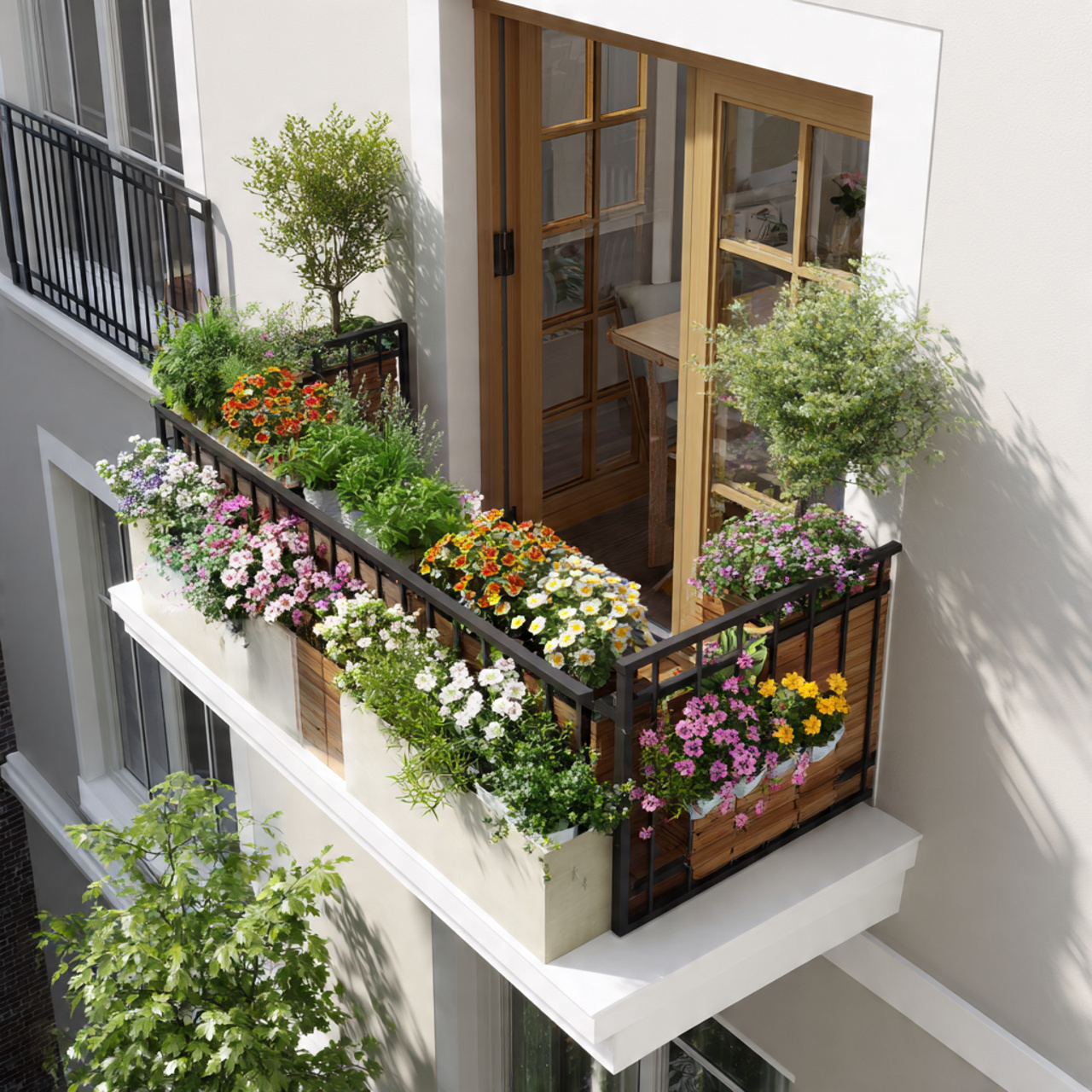
Your balcony railing is prime real estate that often goes completely unused. Rail planters attach directly to edges, creating instant garden space without touching the floor.
Benefits of Rail Planters:
- Zero floor space required
- Creates natural privacy screening
- Easy to install and remove
- Perfect for renters (no permanent changes)
Installation Best Practices:
- Check weight limits before loading planters
- Use adjustable brackets that grip firmly
- Distribute weight evenly along the railing
- Test stability before adding plants
What to Grow in Rail Planters:
- Compact herbs that you’ll harvest frequently
- Small flowering annuals for pops of color
- Ornamental grasses for movement and texture
- Trailing plants that soften the railing line
Safety Note: Avoid placing heavy ceramic pots on railings. Stick with lightweight resin or plastic containers, especially on upper floors where wind is stronger.
Choose Foldable Furniture for Flexibility
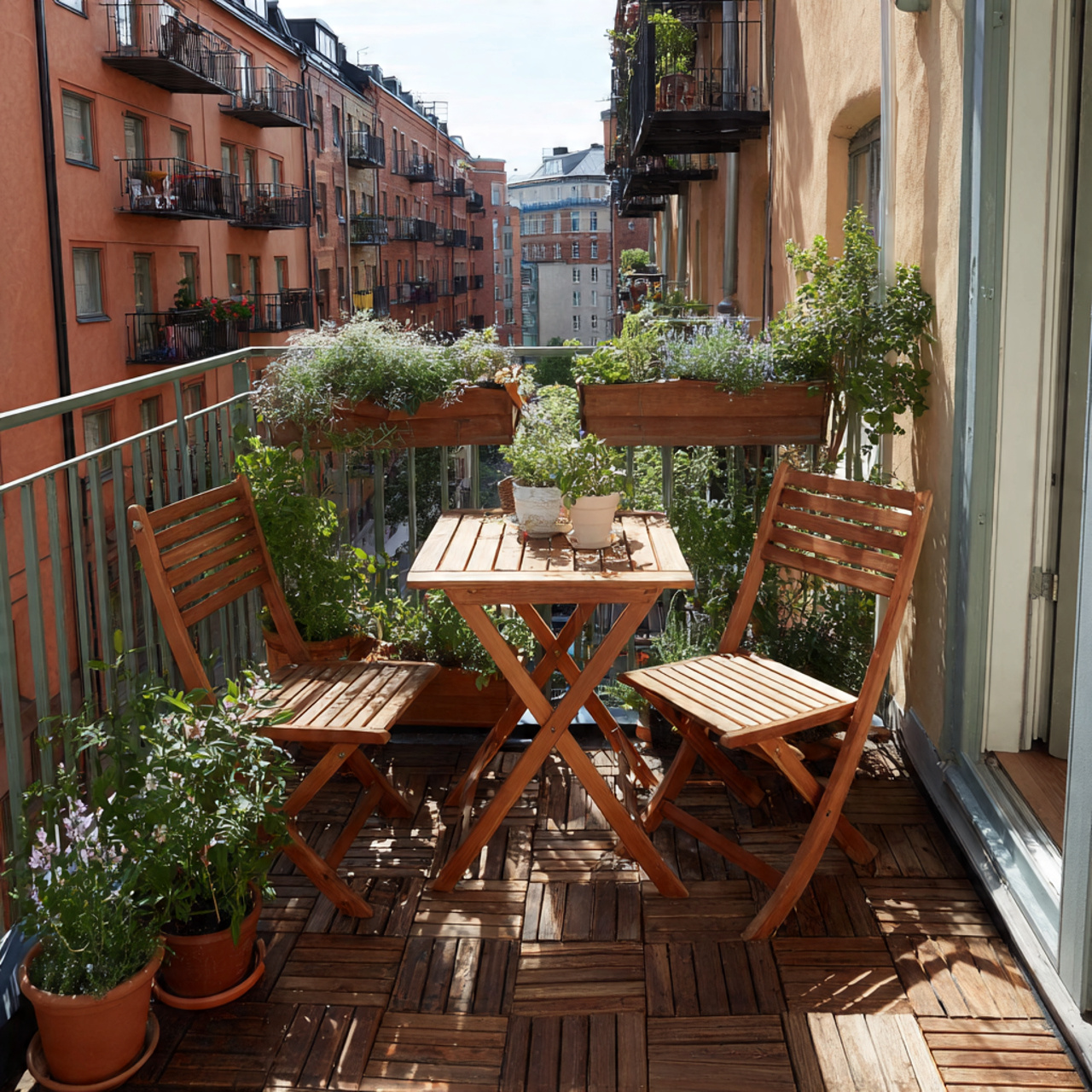
Fixed furniture is a tiny balcony’s worst enemy. Foldable options give you the flexibility to quickly reconfigure your space for different needs throughout the day.
Why Foldable Beats Fixed:
- Opens space instantly for plant care
- Allows deep cleaning of the balcony floor
- Creates room for hosting guests when needed
- Reduces visual clutter when stored
Top Foldable Furniture Choices:
- Bistro sets that collapse flat
- Wall-mounted drop-leaf tables
- Folding wooden chairs (weather-resistant)
- Stackable stools that nest together
Material Considerations:
- Metal: Durable but can get hot in direct sun
- Wood: Attractive but needs weatherproofing
- Resin: Lightweight and weather-resistant
- Bamboo: Eco-friendly and naturally rot-resistant
Real-World Example: Keep a folding bistro set on your balcony. Enjoy morning coffee with the table up, then fold it away to freely water plants and prune. When friends visit, unfold it again for outdoor drinks. This flexibility makes tiny spaces feel much larger.
Corner Plant Stands for Layered Organization
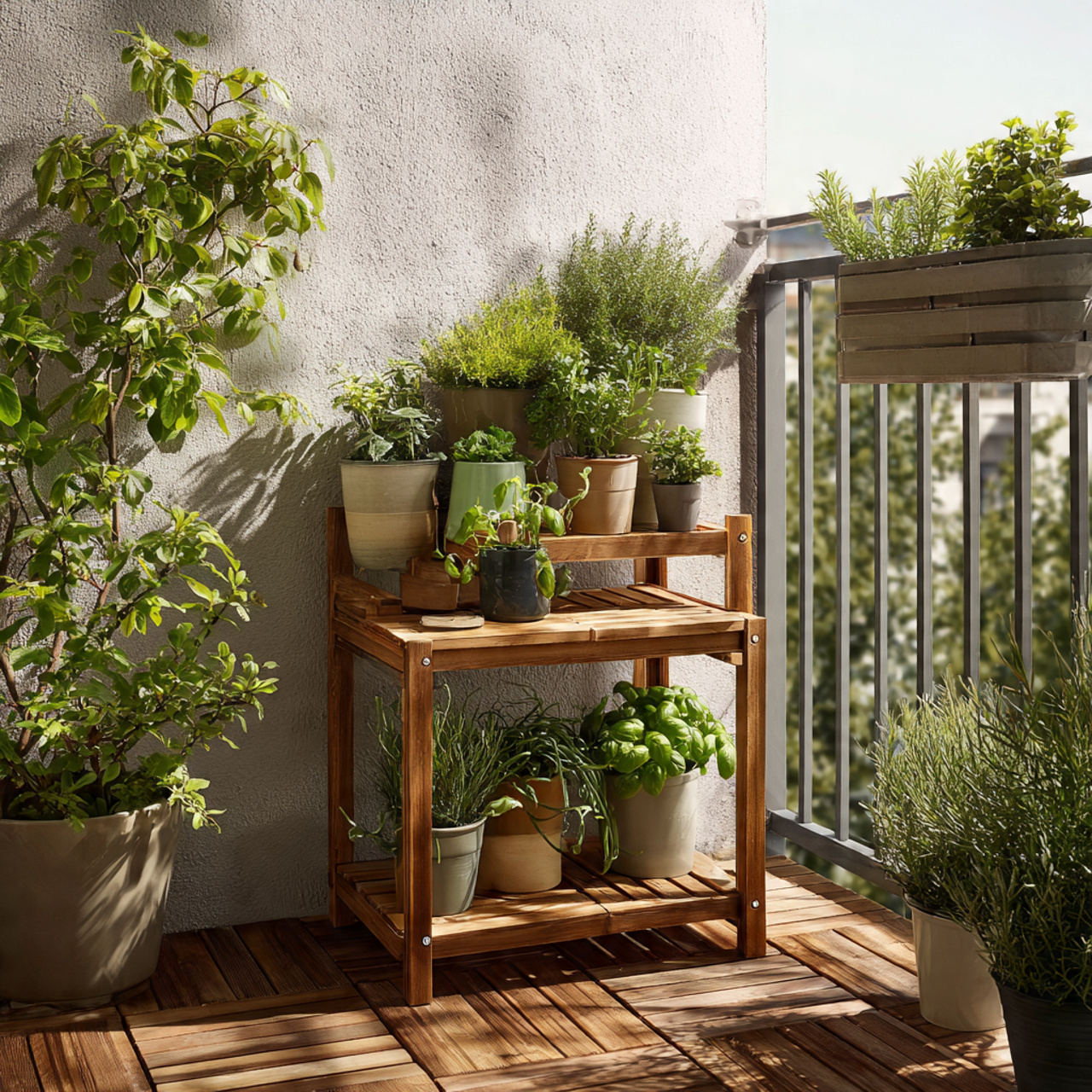
Corners are goldmines in small balconies! Instead of leaving them empty or cramming in random pots, use tiered corner stands to stack plants vertically.
Advantages of Corner Stands:
- Concentrate plants in one organized area
- Create natural focal points
- Simplify watering and maintenance routines
- Keep floor space open for movement
Smart Arrangement Strategy:
- Place heavy pots on bottom tiers for stability
- Position tall plants on lower levels
- Put smaller, light-loving plants up top
- Group plants with similar water needs
Maintenance Tip: Turn your corner stand into a “plant care station.” Keep a small watering can, pruning shears, and plant food on the bottom shelf. Everything you need stays organized in one spot.
Style Suggestion: Choose stands made from powder-coated metal (rust-resistant) or treated wood. Avoid wicker or bamboo in very humid climates—they deteriorate quickly.
Compact Herb Gardens for Daily Use
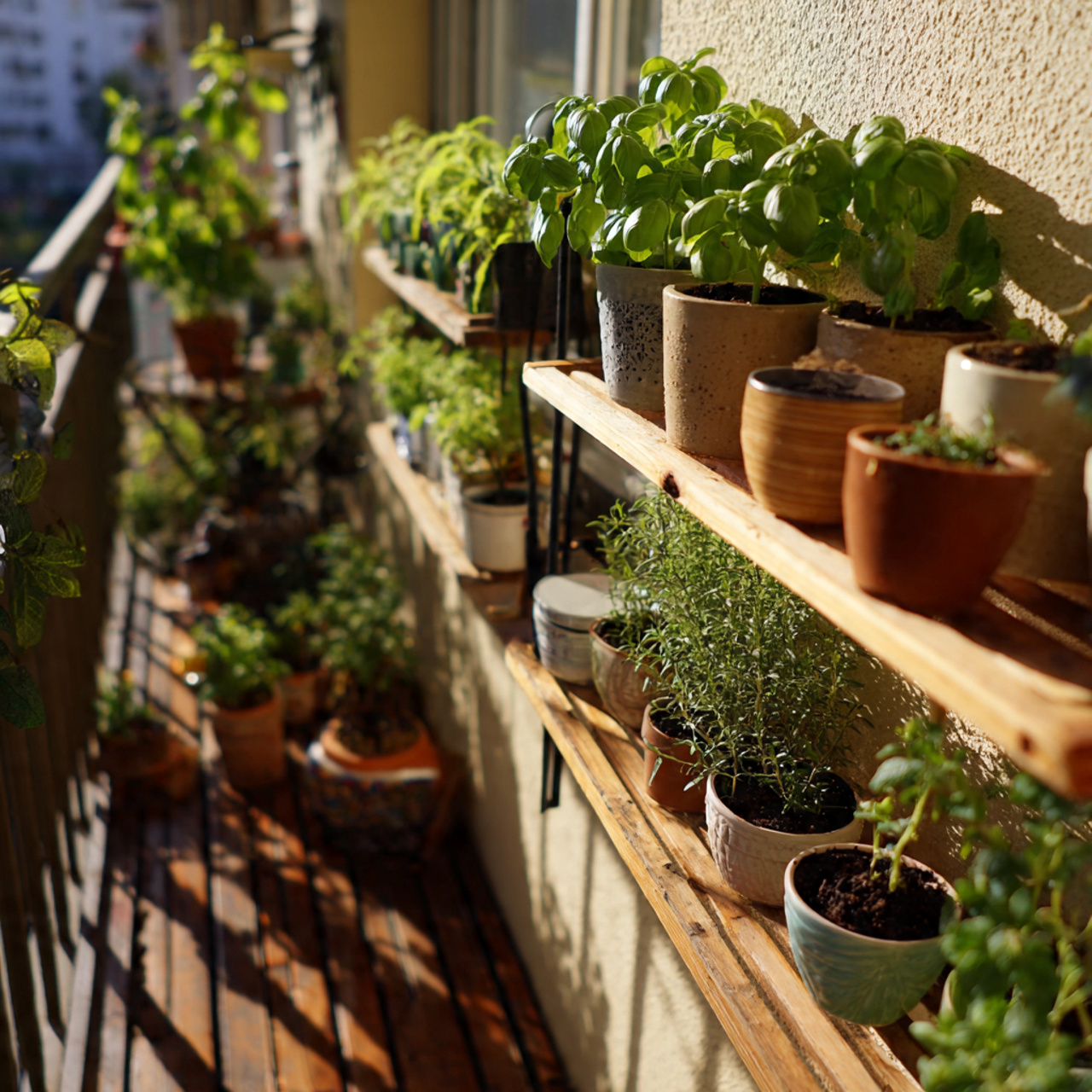
Herbs are the MVPs of tiny balcony gardens. They pack maximum function into minimal space, giving you fresh ingredients right outside your door.
Why Herbs Work Perfectly:
- Shallow roots fit in small containers
- Most varieties stay compact naturally
- Harvest frequently, which controls growth
- Many tolerate partial shade
Best Herbs for Small Spaces:
- Basil: Needs sun, pinch often to bush out
- Mint: Grows easily but spreads (use separate pots)
- Thyme: Drought-tolerant, great for edges
- Cilantro: Quick-growing, cool-season favorite
- Parsley: Biennial, cut-and-come-again harvest
Container Guidelines:
- 6-8 inch depth minimum for most herbs
- Drainage holes are non-negotiable
- Terra cotta breathes well for Mediterranean herbs
- Plastic retains moisture for basil and cilantro
Harvest Strategy: Pick herbs in the morning after dew dries for best flavor. Harvest from the top down to encourage bushier growth. Regular harvesting = healthier, more productive plants.
Quick Recipe Idea: Position your herbs near the kitchen door. When cooking, step out and snip what you need. Nothing beats the convenience and flavor of ultra-fresh herbs!
Cascading Plants to Add Movement and Softness
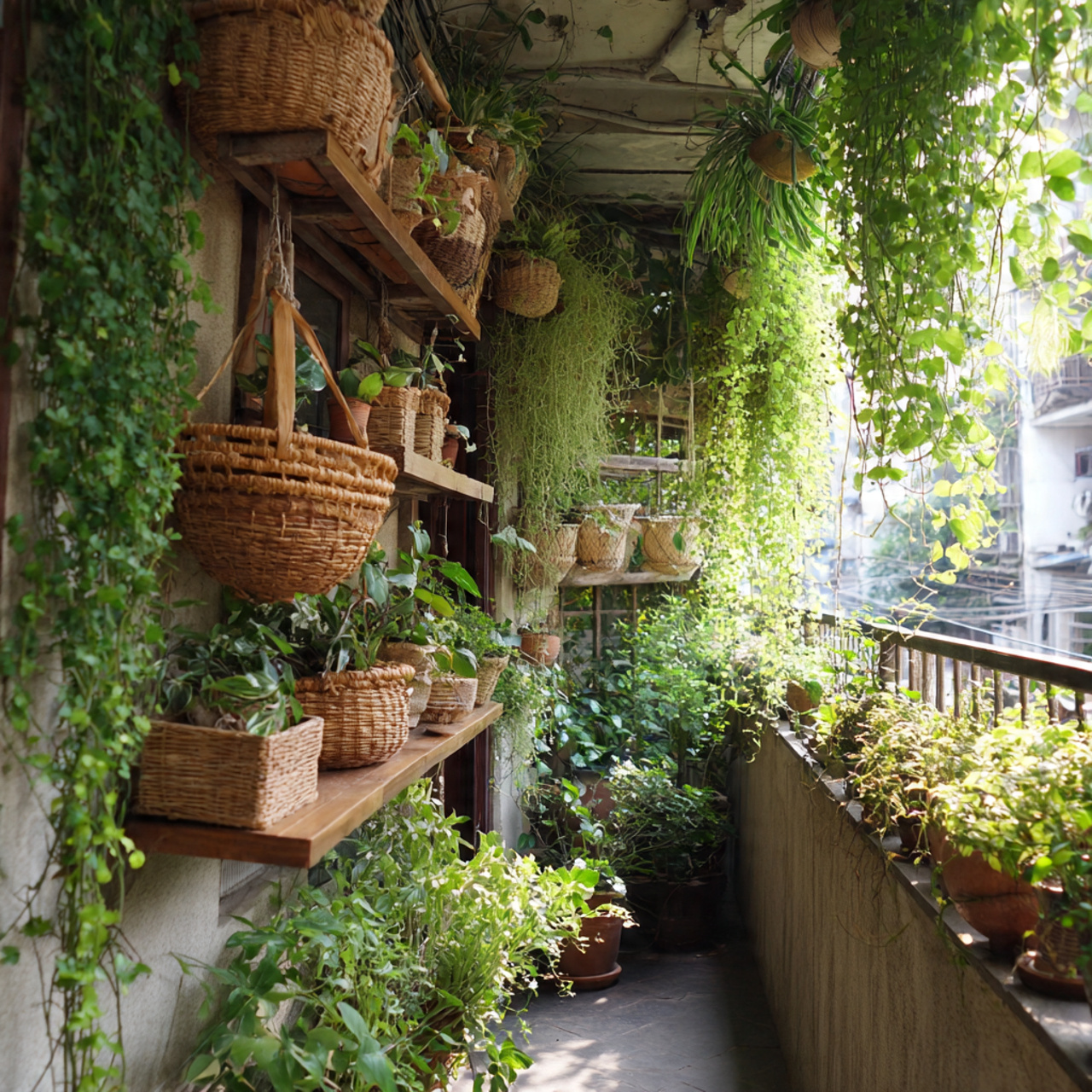
Trailing plants work magic in small spaces. Instead of growing outward and eating up precious room, they flow downward, creating beautiful movement without clutter.
Perfect Cascading Plants:
- Pothos: Nearly indestructible, low light tolerant
- Trailing Petunias: Colorful blooms all summer
- String of Pearls: Unique texture, drought-tolerant
- Ivy: Classic trailer, many varieties available
- Sweet Potato Vine: Fast-growing, vibrant foliage
Placement Strategies:
- Position in hanging baskets or wall-mounted containers
- Place on top shelves or plant stands
- Hang near corners to soften architectural angles
- Keep away from walkways to prevent tripping
Maintenance Must-Dos:
- Trim regularly to prevent excessive shading of lower plants
- Rotate containers to encourage even growth
- Check for pests hiding in dense foliage
- Prune brown or yellow leaves promptly
Design Trick: Pair cascading plants with upright growers. The combination creates natural balance—vertical structure plus flowing softness—that makes tiny spaces feel professionally designed.
Stacked Terracotta Pots for Vertical Efficiency
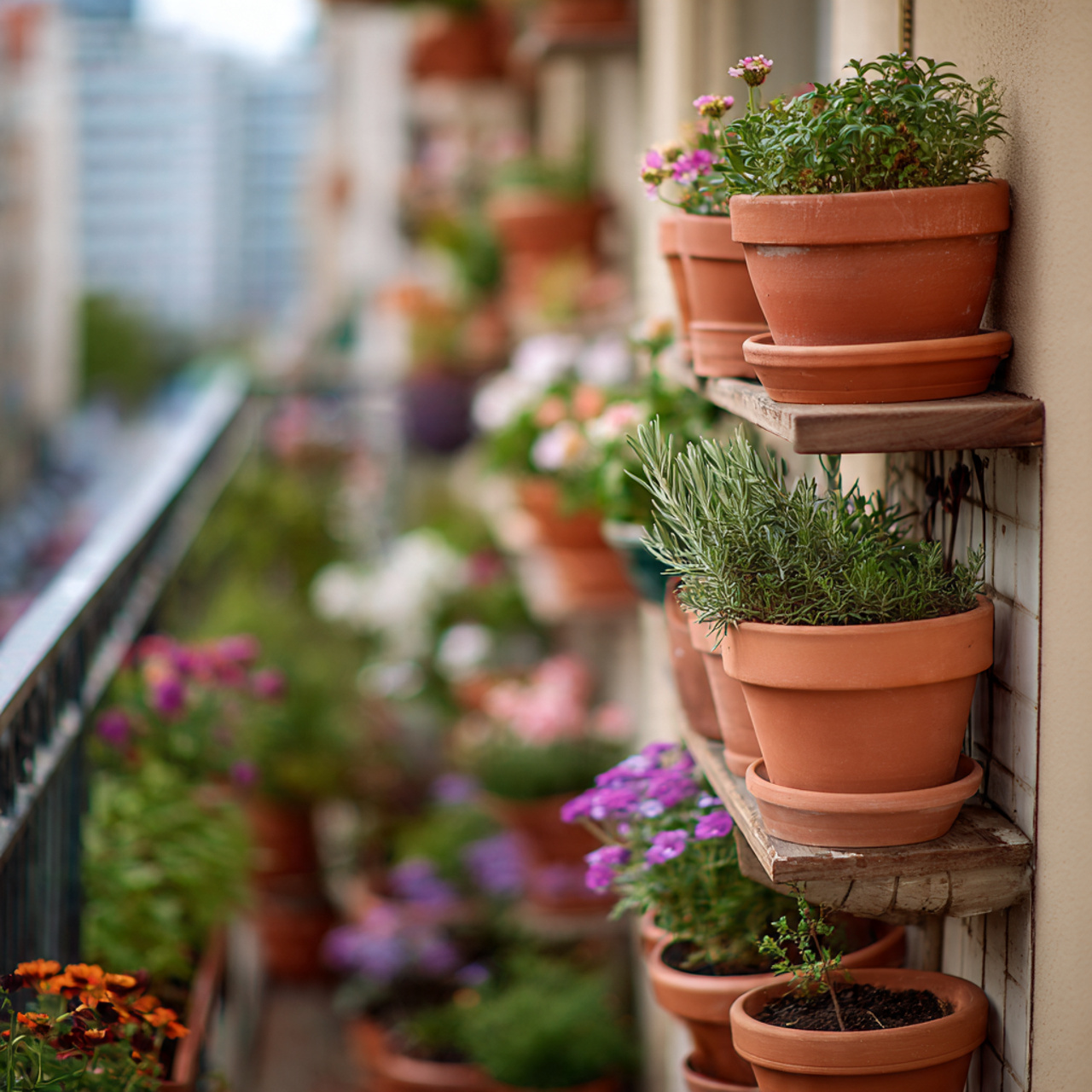
Stacked terracotta systems are brilliant for growing multiple plants in one compact footprint. Think of them as apartment buildings for your plants!
Why Terracotta Stacking Works:
- Natural weight provides wind stability
- Porous material prevents waterlogging
- Classic look suits any style
- Creates instant vertical interest
Building Your Stack:
- Start with the largest pot as the base
- Gradually decrease pot sizes as you stack
- Offset each pot slightly for planting pockets
- Secure near a wall for extra stability
Best Plants for Stacked Systems:
- Succulents and cacti (excellent drainage)
- Herbs with shallow roots
- Small flowering annuals
- Trailing plants on upper tiers
Watering Wisdom: Water the top pot thoroughly and let it drain down through the system. This naturally waters all levels, though you may need to supplement lower pots during hot weather.
Budget Tip: Buy terracotta during end-of-season sales. Chips and cracks don’t matter for stacking—they add character and improve drainage!
Slim Shelving Units Against the Wall
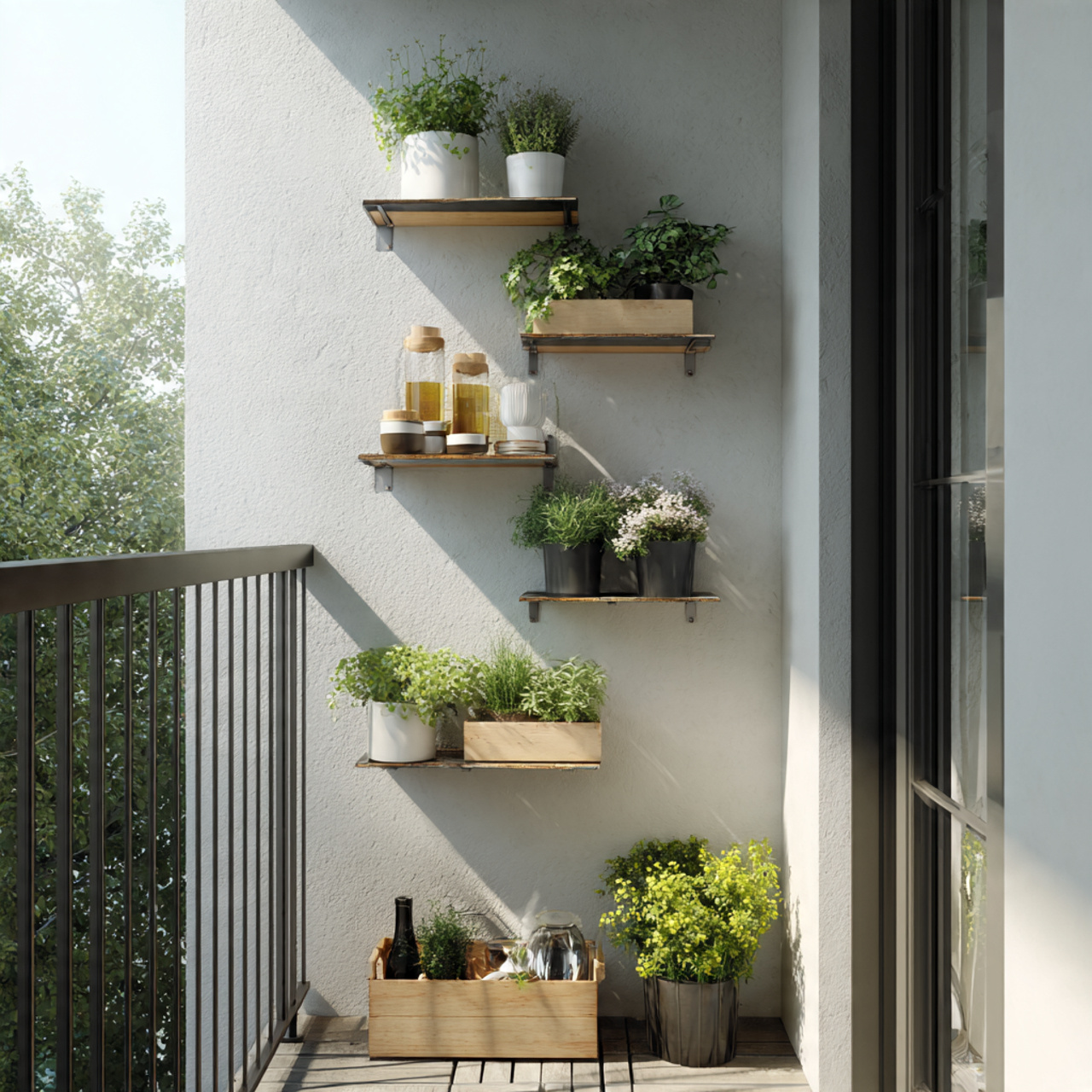
Shallow shelving units transform vertical wall space into organized plant displays without narrowing your walking path.
Key Benefits:
- Keeps small pots organized and accessible
- Provides storage for gardening supplies
- Creates visual interest through layered height
- Prevents floor clutter
Choosing the Right Shelves:
- Depth: 6-10 inches (enough for standard pots)
- Material: Powder-coated metal or treated wood
- Style: Open shelves prevent moisture buildup
- Height: Use full wall height for maximum capacity
Organization Strategy:
- Bottom shelf: Heavy items, watering can, soil bags
- Middle shelves: Frequently used plants and herbs
- Top shelf: Decorative or drought-tolerant plants
Practical Example: Install a 4-tier metal shelf unit (about 8 inches deep). Store small hand tools and watering supplies on the bottom. Arrange 6-8 herb pots on the middle shelves. Top it with trailing plants that cascade down. Total floor space used: less than one square foot!
Keep Seating Minimal and Moveable
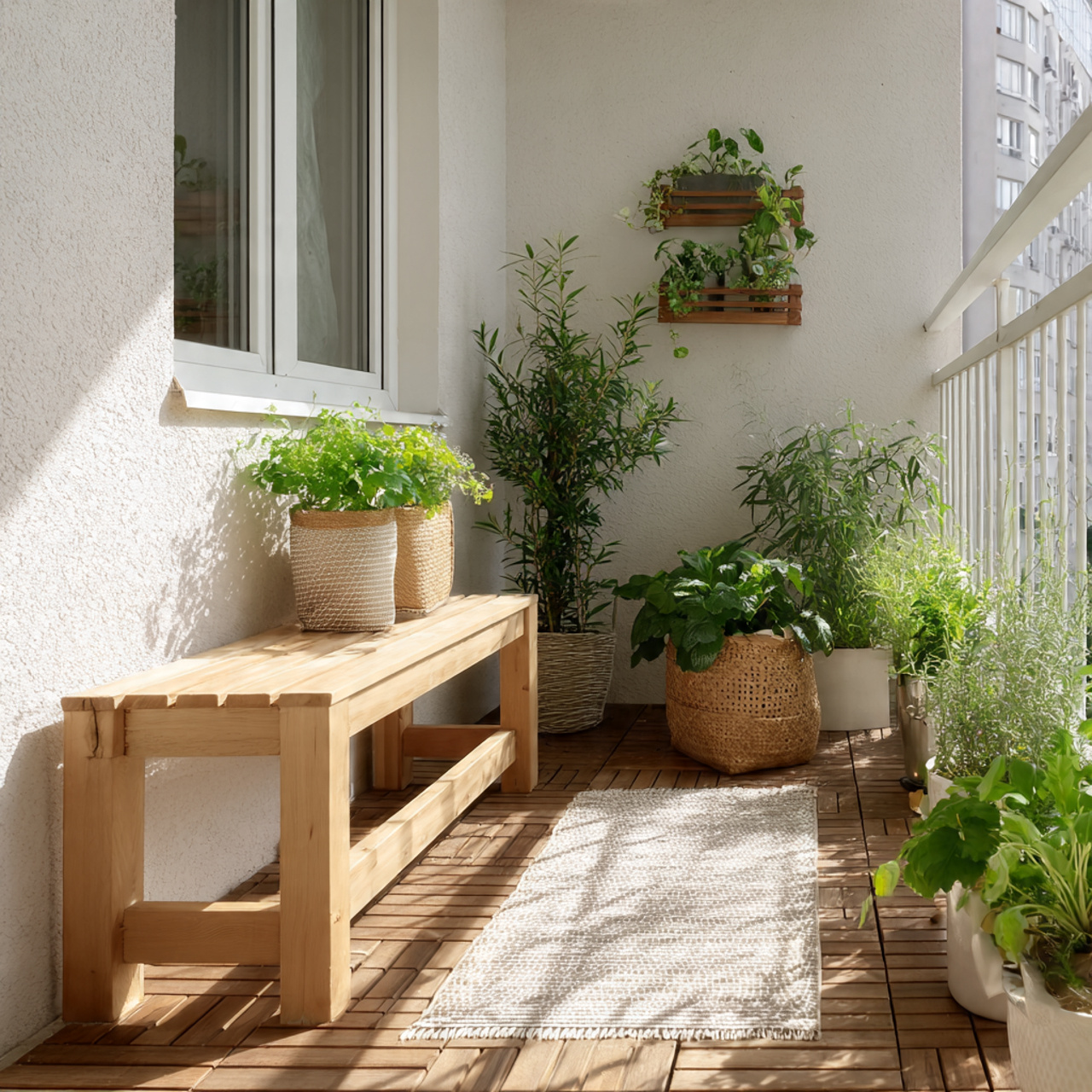
Bulky furniture kills tiny balconies. Your seating should complement your garden, not compete with it for precious space.
Smart Seating Options:
- Single folding chair instead of a loveseat
- Narrow wooden bench along one wall
- Lightweight stool that doubles as a plant stand
- Floor cushions that stack when not in use
Placement Guidelines:
- Position against walls to preserve open floor area
- Choose corner spots when possible
- Keep pathways clear for plant maintenance
- Ensure easy access to all plants
Material Selection:
- Weather-resistant fabrics (fade and water-resistant)
- Lightweight frames (easy to move)
- Neutral colors (don’t compete with plants)
- Compact dimensions (24 inches or less in depth)
Reality Check: You probably won’t spend hours lounging on a tiny balcony. A simple spot to enjoy morning coffee or a brief break is all you need. Keep expectations realistic and furniture minimal.
Self-Watering Pots for Maintenance Control
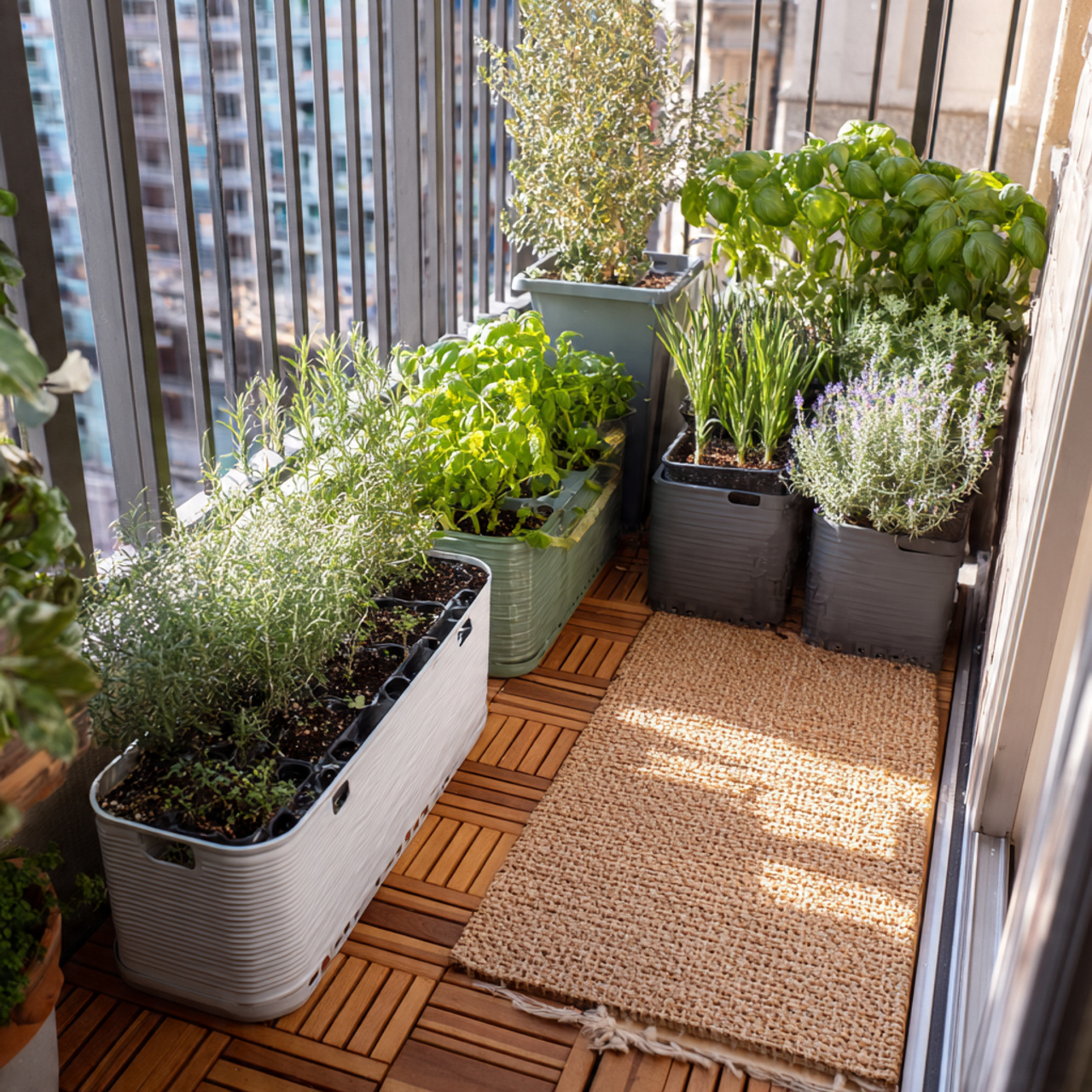
Self-watering pots are lifesavers for busy people or balconies with harsh conditions. They maintain consistent moisture levels, reducing plant stress and your workload.
How They Work:
- Built-in reservoir stores water at the bottom
- Wicking system draws moisture up to roots as needed
- Prevents both underwatering and overwatering
- Reduces watering frequency significantly
Best Uses for Self-Watering Pots:
- Plants requiring consistent moisture (tomatoes, peppers)
- Balconies with intense sun exposure
- When you travel frequently
- Windy locations where soil dries quickly
Important Maintenance:
- Check reservoir levels weekly
- Clean reservoirs monthly to prevent algae
- Still use well-draining potting mix
- Don’t rely solely on reservoir—top-water occasionally
Budget Consideration: Self-watering containers cost more upfront but save money long-term through healthier plants, reduced water waste, and fewer plant replacements.
Shade-Loving Plants for Low-Light Balconies
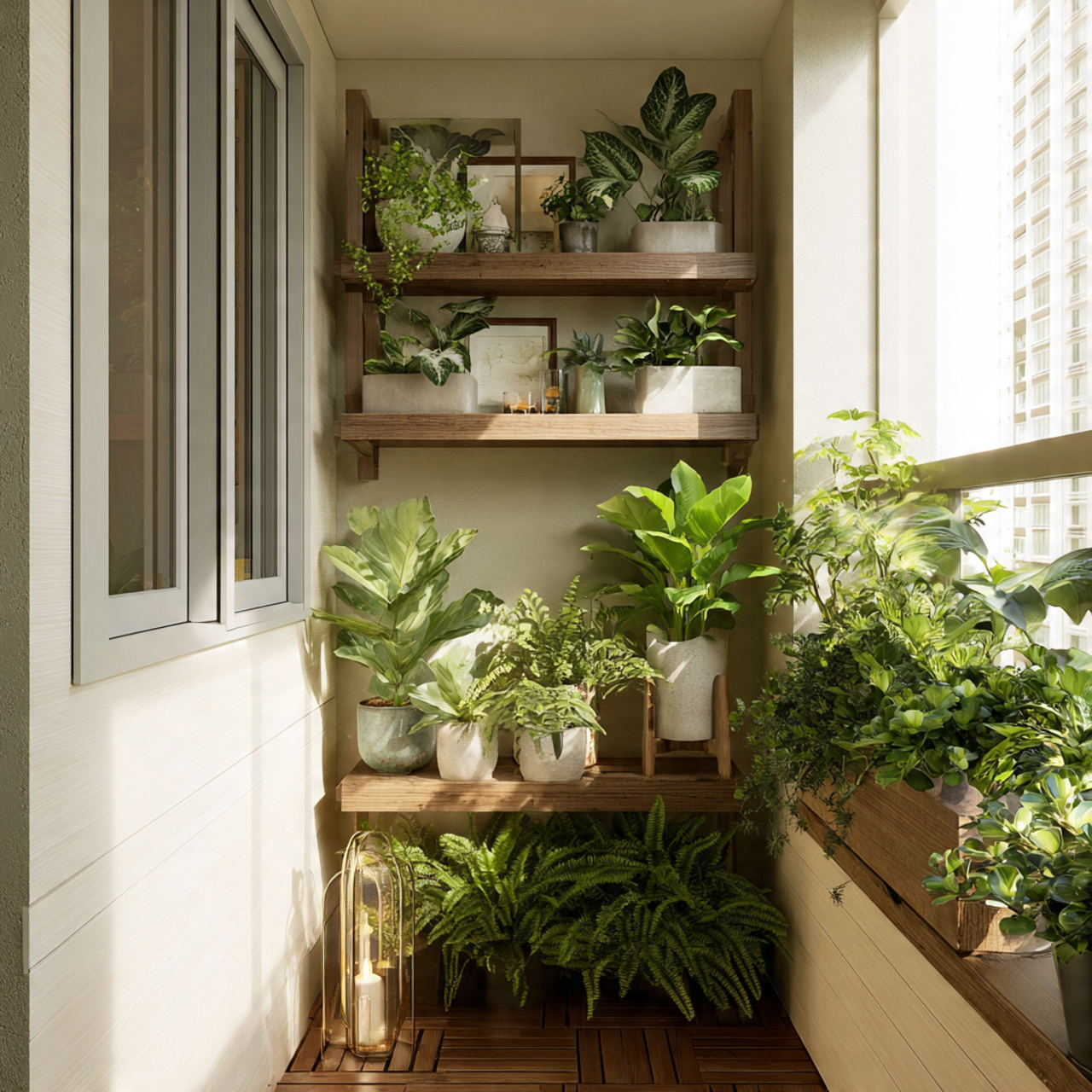
Not all balconies are sun-drenched, and that’s perfectly fine! Plenty of beautiful plants thrive in shady conditions—you just need to choose the right ones.
Top Performers for Shade:
- Ferns: Lush foliage, love humidity
- Peace Lily: Elegant white blooms, air-purifying
- Calathea: Stunning patterned leaves
- Hostas: Bold leaf shapes and colors
- Begonias: Shade-blooming flowers
Signs Your Plant Needs More Shade:
- Leaf burn (brown, crispy edges)
- Faded or bleached colors
- Wilting despite adequate water
- Slow or stunted growth
Care Adjustments for Shade:
- Water less frequently (slower evaporation)
- Use pots with excellent drainage
- Fertilize sparingly (slower growth = less food needed)
- Watch for pests in dense foliage
Misconception Buster: “Shade-tolerant” doesn’t mean “no light.” Even shade plants need indirect light. If you can comfortably read a book without artificial light, your plants can probably grow there.
Sun-Loving Plants for Bright Balconies
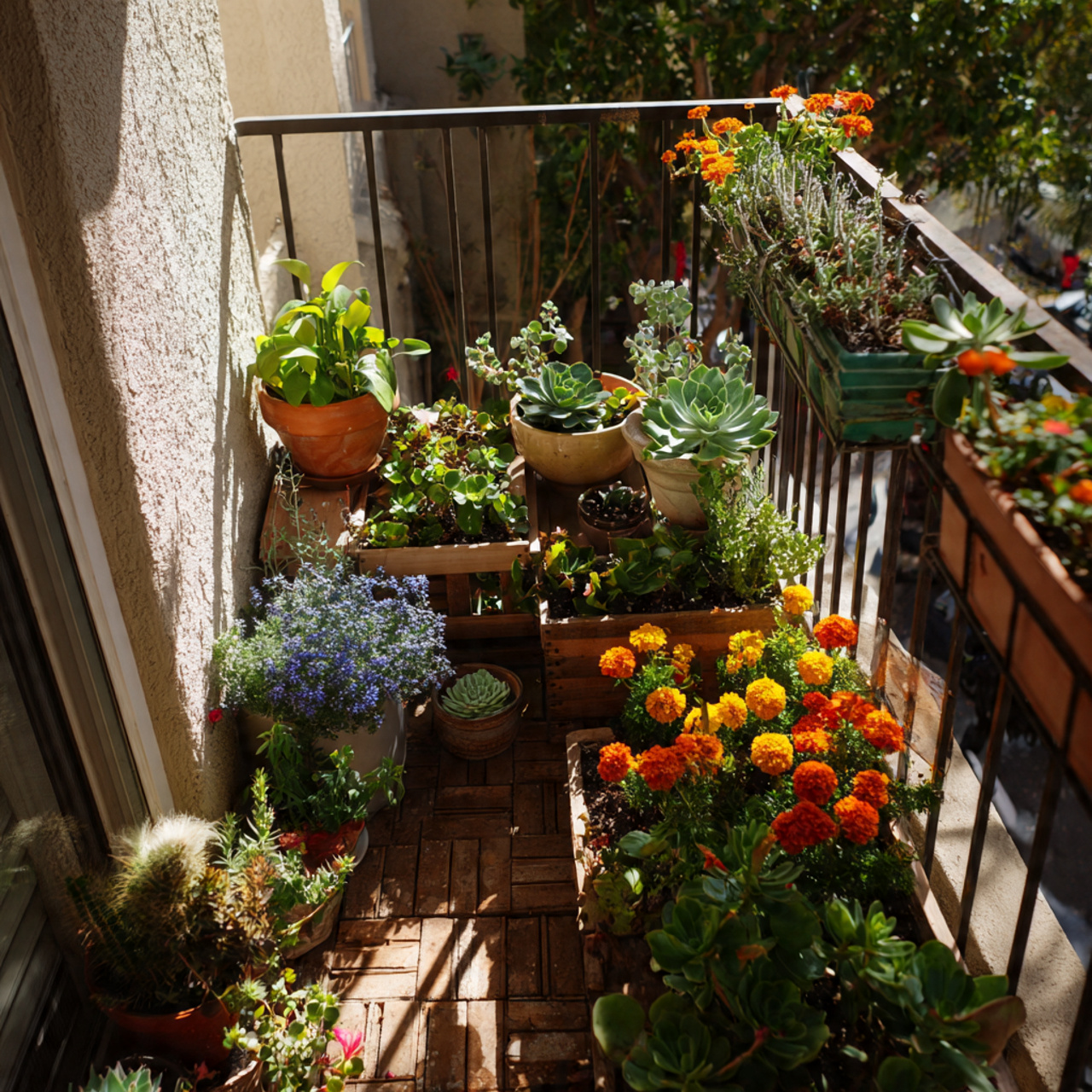
South-facing or west-facing balconies get intense sun and heat. Fighting this with shade-lovers is futile—embrace it with plants that thrive in these conditions!
Heat and Sun Champions:
- Succulents: Echeveria, sedum, jade plant
- Lavender: Fragrant, drought-tolerant, beautiful
- Marigolds: Bright blooms, pest-resistant
- Rosemary: Edible herb, loves heat
- Zinnias: Colorful, easy-growing annuals
Container Considerations for Hot Balconies:
- Light-colored pots reflect heat
- Larger containers retain moisture longer
- Terra cotta breathes but dries quickly
- Add mulch on soil surface to reduce evaporation
Watering Schedule:
- Water deeply but less frequently
- Water in early morning or late evening
- Avoid midday watering (wastes water to evaporation)
- Check moisture daily during heat waves
Tip: Group sun-loving plants together. They create mutual shade at soil level while leaves bask in sun, naturally reducing water loss and heat stress.
Compact Fruit Plants for Edible Appeal
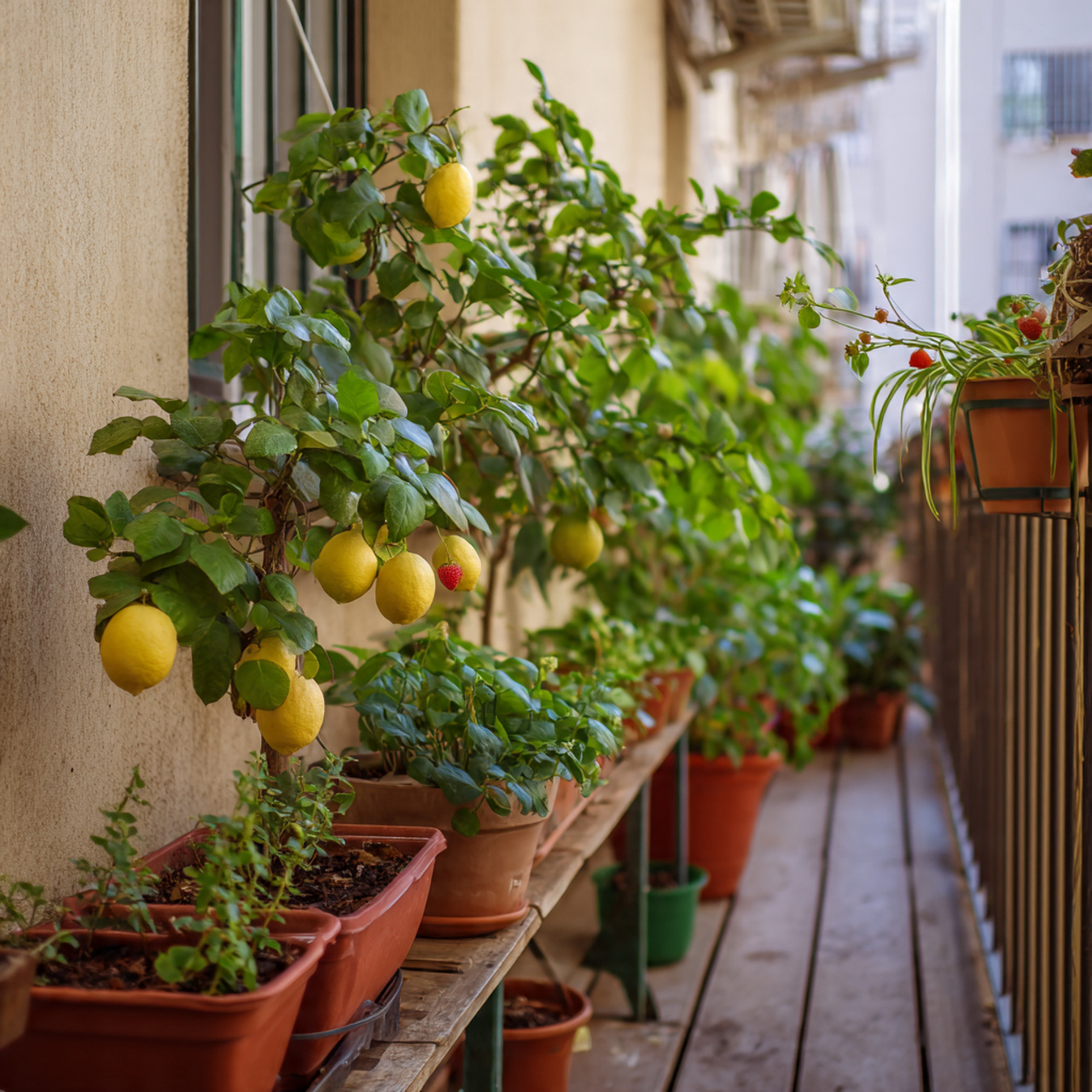
Yes, you can grow fruit on a tiny balcony! Dwarf varieties and berry plants produce genuine harvests without requiring orchard-sized space.
Container-Friendly Fruit Options:
- Strawberries: Produce quickly, great for hanging baskets
- Dwarf Lemon Trees: Fragrant blooms, edible fruit
- Blueberries: Beautiful fall color, nutritious berries
- Dwarf Peach or Nectarine: Surprisingly adaptable
- Cherry Tomatoes: Technically fruit, incredibly productive
Success Requirements:
- Minimum 5-gallon containers (larger is better)
- Full sun exposure (6-8 hours minimum)
- High-quality potting mix with good drainage
- Regular feeding during growing season
Realistic Expectations:
- First year: Establishment, limited harvest
- Second year onward: Increasing production
- Container fruits produce less than ground-planted
- But fresh fruit from your balcony? Priceless!
Care Investment: Fruit plants need more attention than ornamentals—regular watering, feeding, pruning, and pest monitoring. Start with one or two plants to gauge your interest before expanding.
A Structured Color Palette for Visual Order
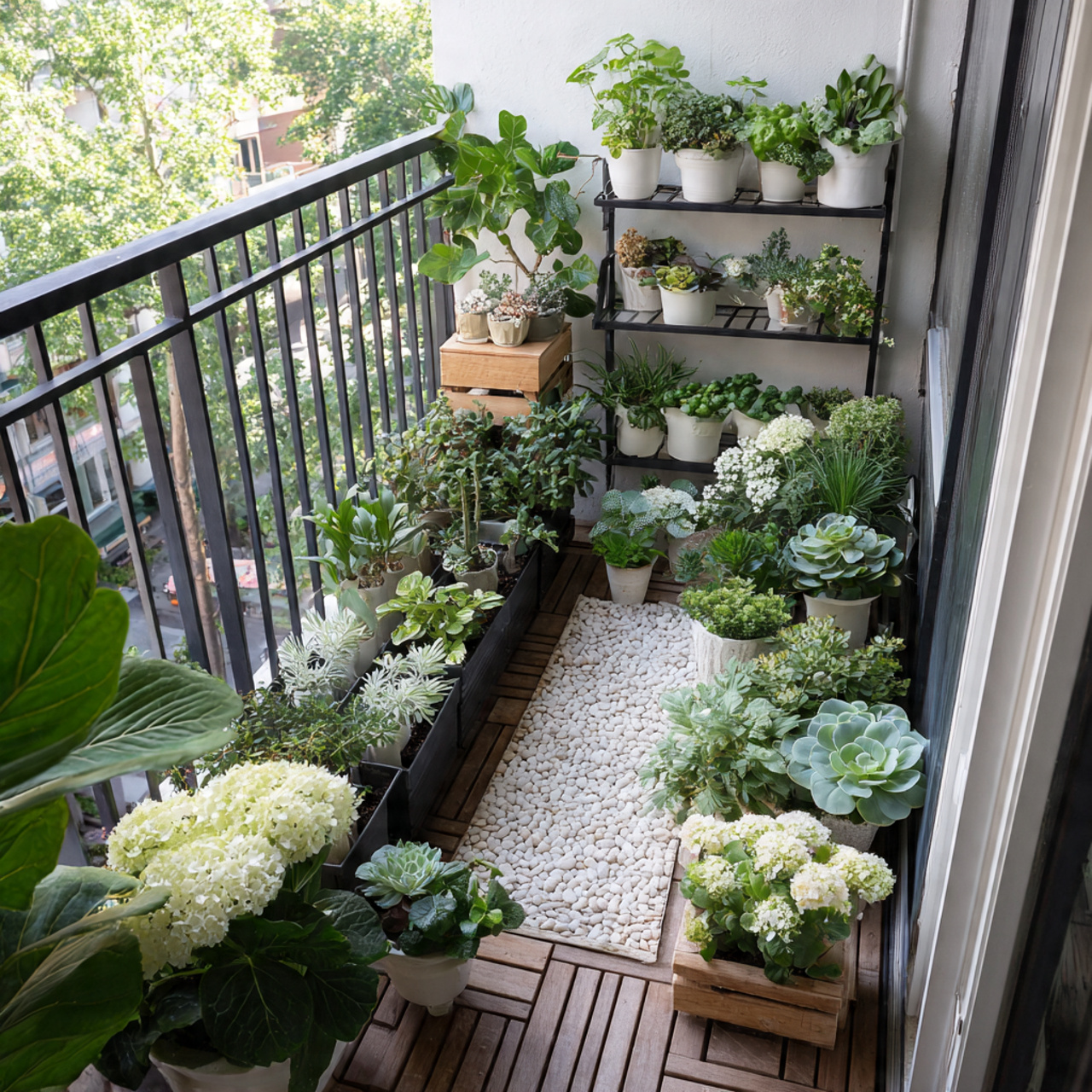
Too many colors in a small space creates visual chaos. A restrained palette makes your tiny balcony feel calm, spacious, and intentionally designed.
Effective Color Strategies:
- Green base with one accent color (white, yellow, or purple)
- Monochromatic blooms (all pink or all blue flowers)
- Complementary pairing (purple and yellow)
- All-foliage garden with texture variety
Benefits of Color Discipline:
- Makes plant selection easier (fewer options to consider)
- Creates cohesive, professional appearance
- Reduces visual clutter and overwhelm
- Makes the space feel larger
Example Palettes:
- Calming: Green foliage + white flowers + natural wood tones
- Vibrant: Green base + bold orange and yellow blooms
- Elegant: Green + purple flowers + gray containers
- Minimalist: All-green with varying leaf shapes and sizes
Quick Test: Before buying plants, take a photo of your balcony. Use a photo editing app to preview plant colors. Does it feel cohesive or chaotic? Trust your gut!
Aromatic Plants for Scent and Sensory Depth
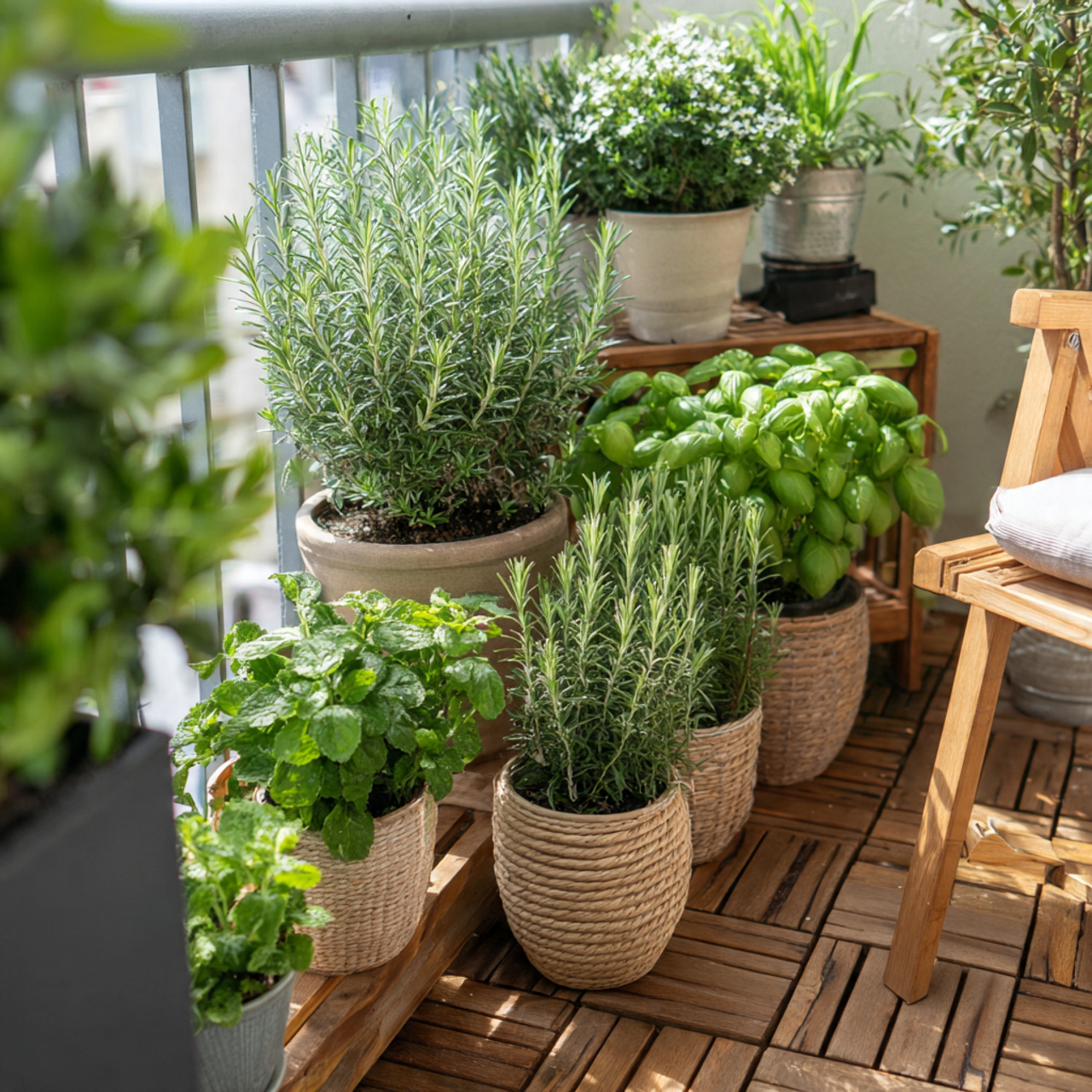
Fragrant plants transform your balcony from just a visual space to a multisensory retreat. The right scents create mood, repel pests, and make time outdoors more enjoyable.
Fragrant Favorites:
- Rosemary: Pine-like scent, culinary uses
- Lavender: Relaxing, classic garden fragrance
- Mint: Refreshing, invigorating aroma
- Jasmine: Sweet evening scent, romantic
- Scented Geraniums: Varied scents (rose, lemon, chocolate)
Strategic Placement:
- Near seating areas where you’ll notice the scent
- Along entry points to create welcoming atmosphere
- In containers at nose height (not on ground)
- Where air movement will carry fragrance
Additional Benefits:
- Many aromatic plants naturally repel mosquitoes and pests
- Brushing against herbs releases scent bursts
- Harvest fresh aromatics for cooking
- Calming scents reduce stress
Care Reminder: Most aromatic plants are Mediterranean herbs that prefer full sun, good drainage, and moderate water. Perfect for sunny balconies!
Container Grouping for Clean Aesthetics
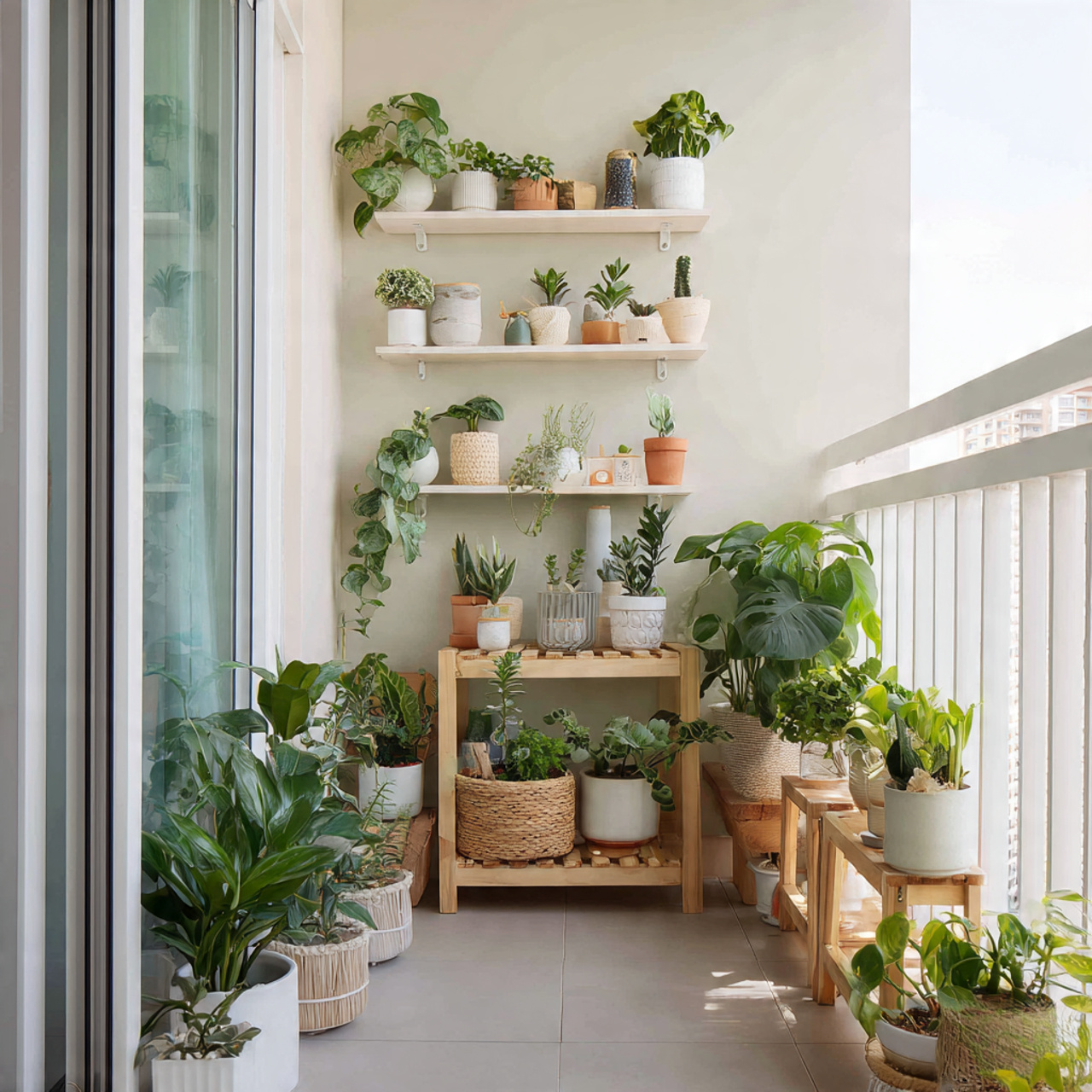
Random pots scattered everywhere make small spaces feel messy. Grouping containers creates intentional “plant zones” that feel organized and purposeful.
Grouping Benefits:
- Easier watering (plants in one area)
- Creates visual impact with repetition
- Simplifies maintenance routines
- Makes small spaces feel more designed
Effective Grouping Methods:
- Odd numbers (3, 5, 7 pots look most natural)
- Vary heights within groups
- Mix container sizes but keep style consistent
- Group plants with similar care needs
Practical Application:
- Corner Group: 3-5 pots of varying heights in one corner
- Rail Line: Same-style planters evenly spaced along railing
- Herb Cluster: All cooking herbs together near kitchen
- Color Pod: Flowering plants grouped by bloom color
Designer Tip: Leave negative space between groups. Empty floor or wall sections make your groupings stand out and prevent visual overwhelm.
Install Built-In Wood Planter Boxes
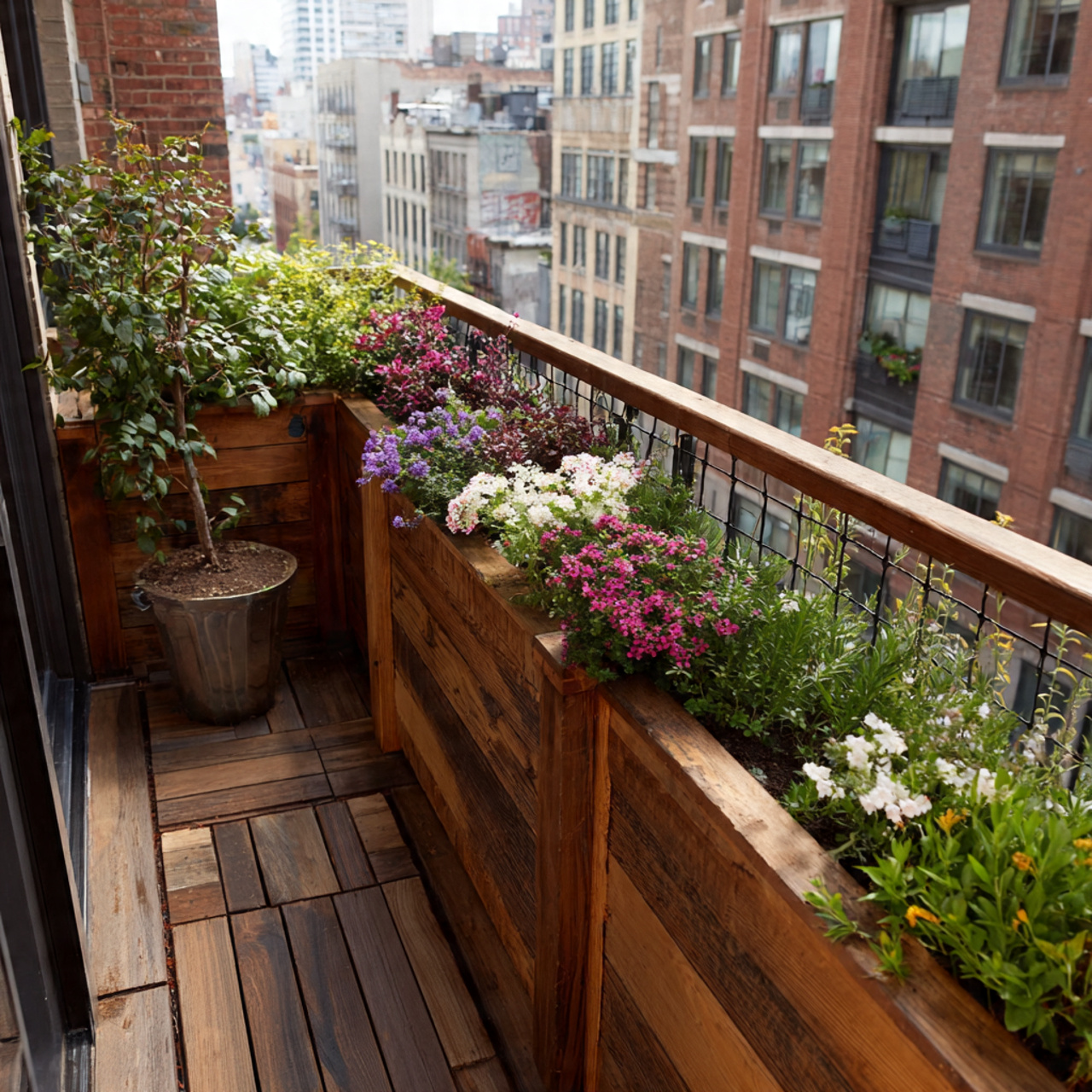
Fixed wooden boxes attached to walls or railings create permanent planting areas that feel integrated and intentional rather than temporary.
Advantages of Built-In Boxes:
- Hold multiple plants in one cohesive unit
- Create strong visual structure
- Free up floor space
- Simplify planting and maintenance
Construction Considerations:
- Use treated or naturally rot-resistant wood (cedar, redwood)
- Ensure drainage holes in bottom
- Line with plastic or landscape fabric
- Secure firmly to wall studs or railings
Size Guidelines:
- Minimum 8 inches deep for most plants
- 12+ inches deep for vegetables or deep-rooted plants
- Length based on available space
- Width: 8-12 inches (deeper = more stability)
What to Plant:
- Mixed herb collections
- Trailing and upright flower combinations
- Dwarf vegetable varieties
- Coordinated color schemes
Investment Note: Built-in boxes require more upfront effort and cost but create a polished, permanent look that makes tiny balconies feel like intentional outdoor rooms.
Multi-Level Planter Steps for Tiered Growth
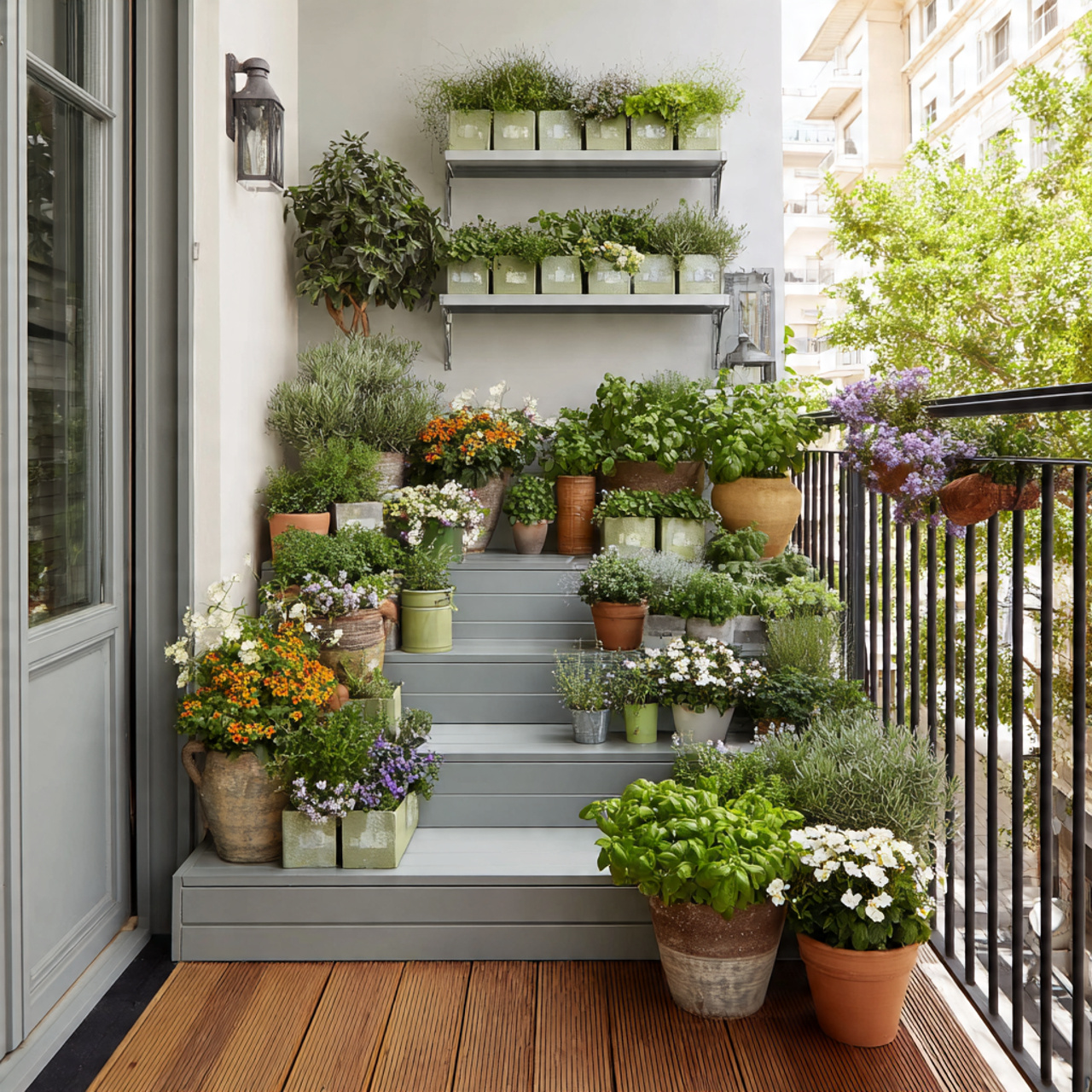
Tiered platforms turn flat balcony floors into dynamic, three-dimensional garden displays where every plant gets optimal light and visibility.
Why Tiered Systems Work:
- Prevent taller plants from shading smaller ones
- Create visual interest through varied heights
- Improve air circulation around all plants
- Make watering and maintenance easier
DIY Tiered Options:
- Ladder plant stands (leaning or A-frame style)
- Stair-step shelving units
- Cinder block configurations
- Stacked wooden crates
Strategic Plant Placement:
- Back/top tier: Tall or sun-loving plants
- Middle tier: Medium-height bloomers
- Front/bottom tier: Trailing or shade-tolerant plants
- Consider mature plant size when arranging
Maintenance Advantage: Water top tier first, allowing runoff to naturally water lower levels. Still check all pots—lower tiers may need supplemental watering.
Visual Balance: Keep the tallest tier against a wall and step down toward open space. This creates depth without blocking movement or views.
Use Mirrors to Expand Visual Space
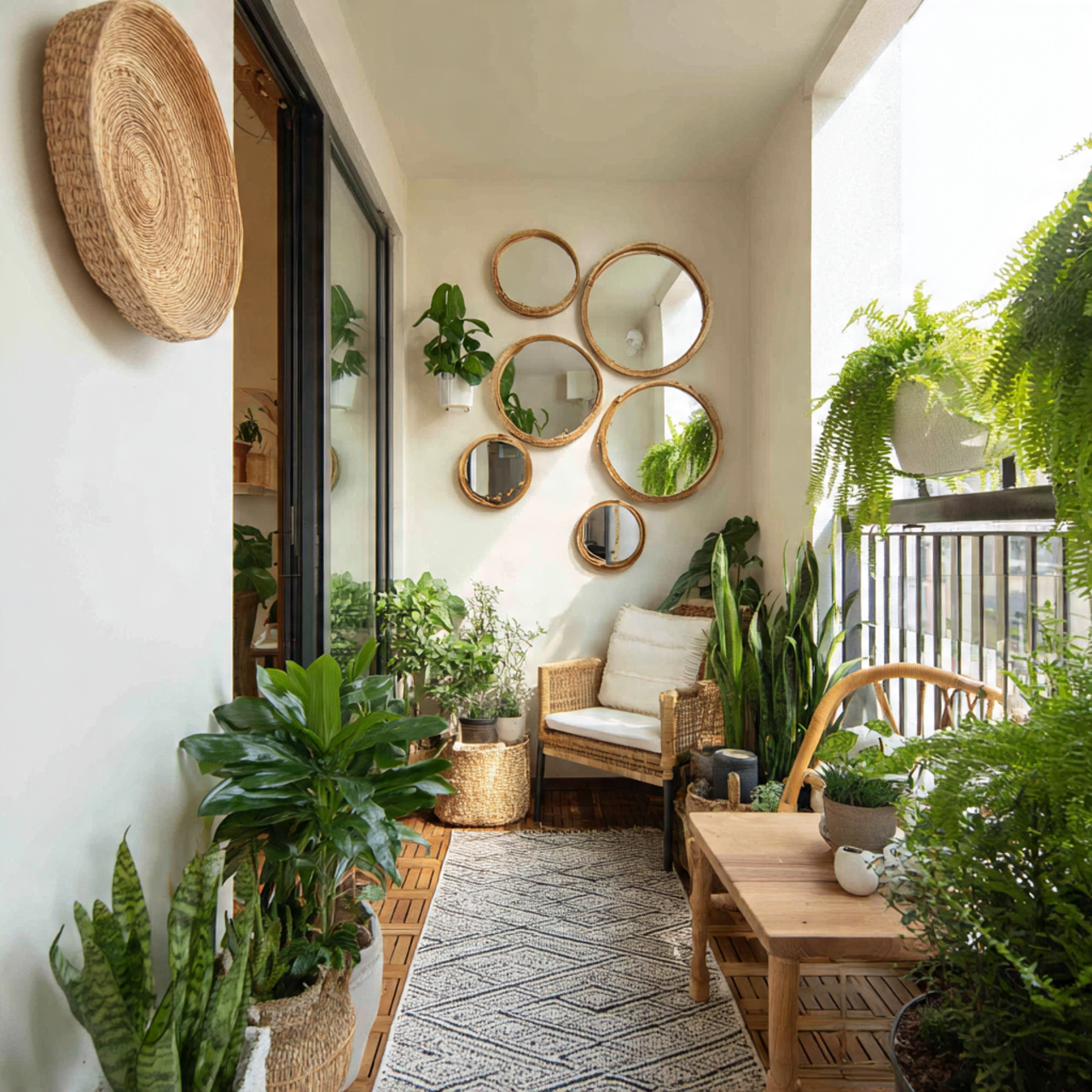
Strategically placed mirrors create the illusion of more space by reflecting light and greenery, making tiny balconies feel significantly larger.
Mirror Placement Strategies:
- Mount on solid walls, not railings
- Position to reflect plants, not neighboring balconies
- Angle slightly downward to reflect greenery
- Place in darker corners to bounce light
Choosing Outdoor Mirrors:
- Weather-resistant backing (rust-proof)
- Tempered or acrylic for safety
- Frame that withstands elements
- Secure mounting for wind resistance
Size Considerations:
- One large mirror often works better than multiple small ones
- Vertical mirrors create height illusion
- Horizontal mirrors widen narrow spaces
- Keep proportional to balcony size
Safety First: Use outdoor-rated mirrors only. Indoor mirrors deteriorate quickly outdoors. Ensure extremely secure mounting—falling mirrors are dangerous.
Designer Trick: Position a mirror behind a cluster of plants. The reflection doubles the visual impact of your greenery without actually adding more plants!
Add a Small Water Feature for Ambience
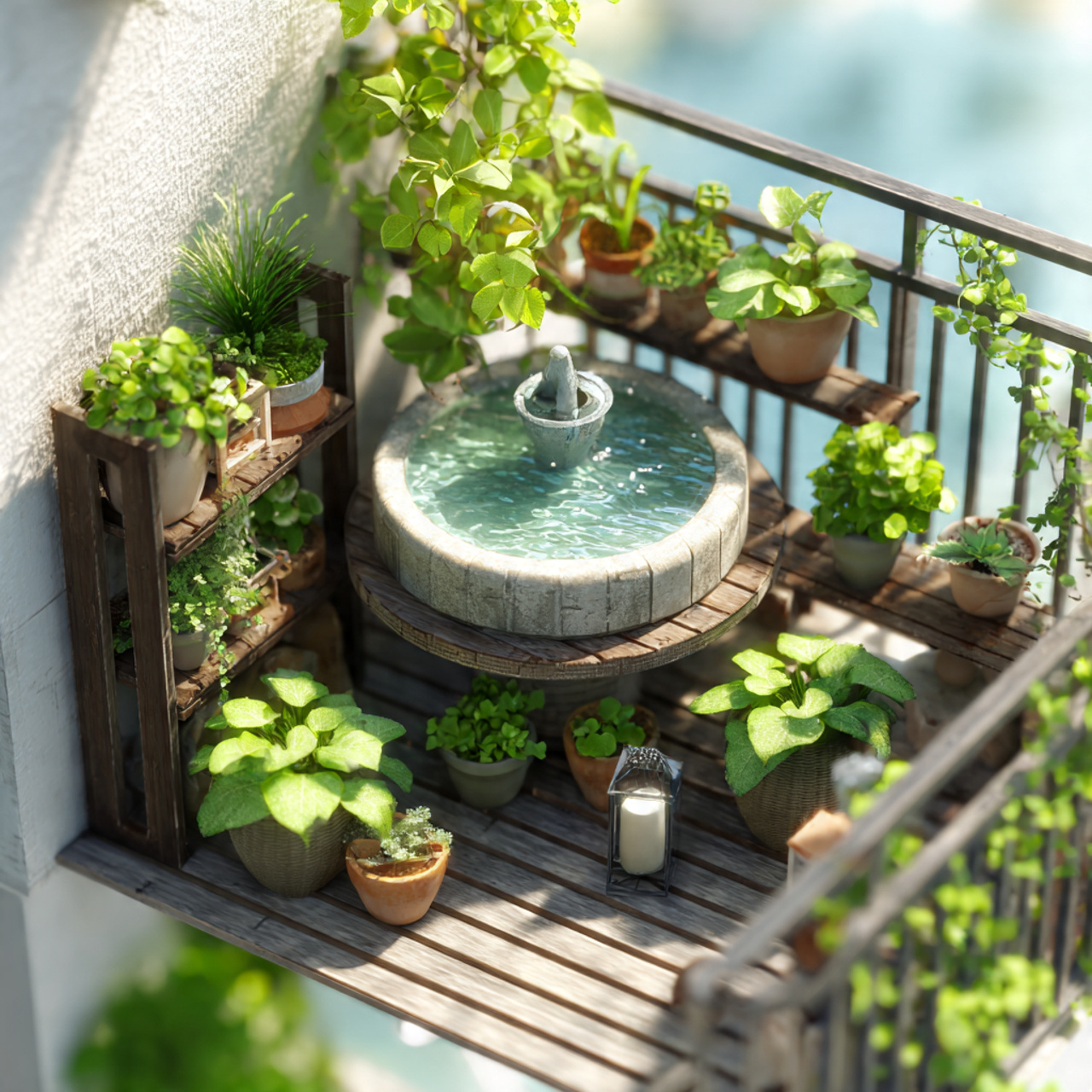
Compact tabletop fountains bring the soothing sound of running water to your balcony without consuming valuable floor space.
Benefits of Water Features:
- Masks urban noise (traffic, neighbors)
- Creates calming atmosphere
- Attracts beneficial birds and butterflies
- Adds movement and life to static spaces
Choosing the Right Fountain:
- Solar-powered (no electrical outlet needed)
- Lightweight resin or ceramic
- Low-splash design prevents water mess
- Self-contained (easy to set up)
Placement Tips:
- Position on stable table or shelf
- Keep away from electronics or fabric
- Place where you’ll hear it from indoors too
- Ensure easy access for refilling
Maintenance Requirements:
- Refill water weekly (more often in hot weather)
- Clean pump monthly to prevent clogging
- Use distilled water to reduce mineral buildup
- Drain and cover during freezing weather
Budget Reality: Small fountains range from $30-$150. Start with an inexpensive model to test whether you enjoy the feature before investing in premium versions.
Rotate Plants with the Seasons
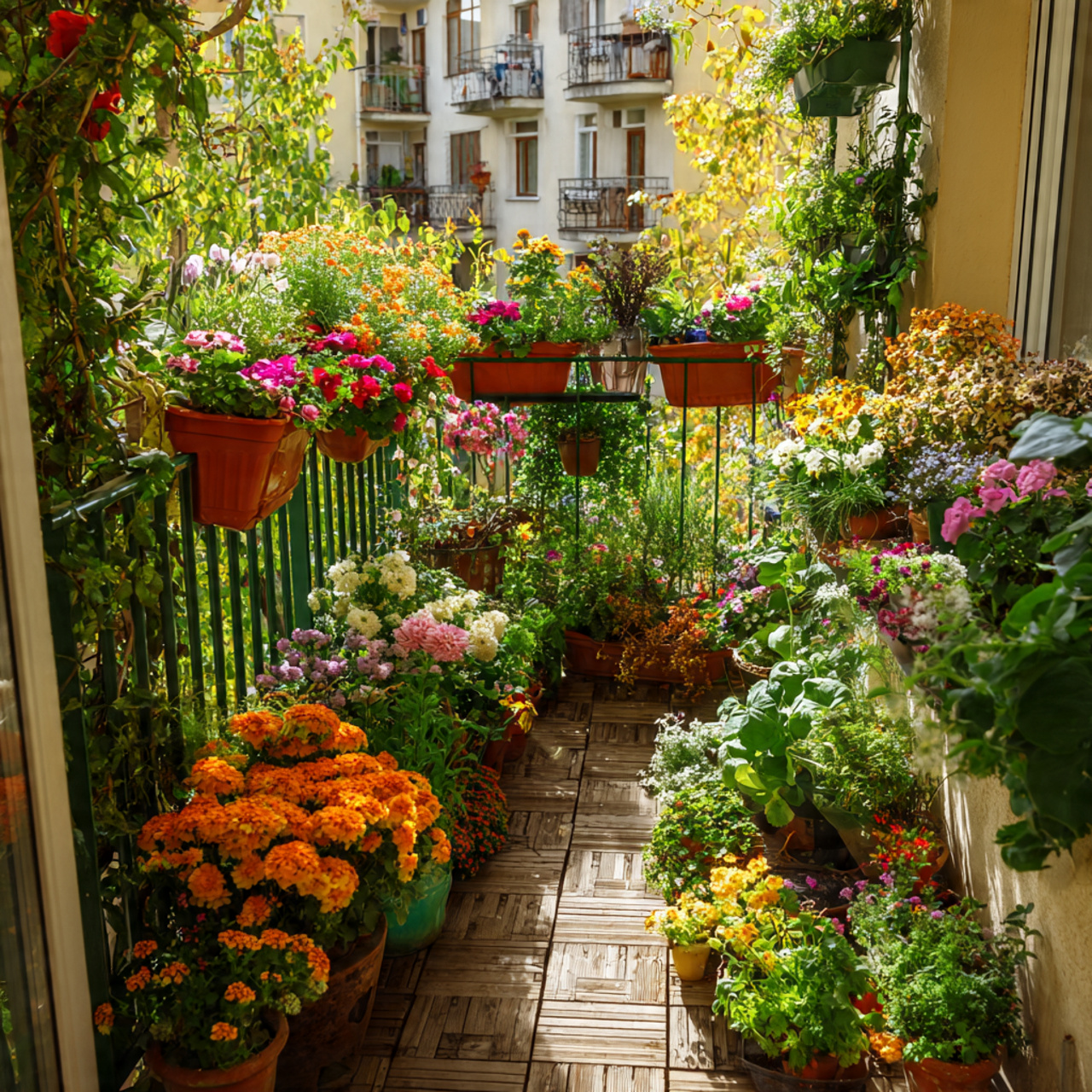
Changing plants seasonally keeps your balcony interesting year-round while ensuring each plant grows during its optimal conditions.
Seasonal Rotation Benefits:
- Plants thrive in their preferred temperatures
- Reduces pest and disease issues
- Creates visual variety throughout year
- Simplifies care (right plant, right season)
Basic Seasonal Plan:
- Spring: Pansies, primrose, cool-season vegetables
- Summer: Petunias, marigolds, tomatoes, peppers
- Fall: Mums, ornamental kale, cool-season herbs
- Winter: Evergreens, winter berries, cold-hardy succulents
Storage Solutions:
- Keep off-season pots in garage or basement
- Store empty containers nested inside each other
- Label pots with plant names for next season
- Clean thoroughly before storing
Cost Management: Focus rotation budget on 3-5 key pots that create the biggest visual impact. Keep some evergreen plants year-round as anchors.
Time-Saving Tip: Swap out seasonal annuals but keep perennial herbs and shrubs year-round. This gives you freshness without complete garden overhauls.
Climbing Plants for Vertical Drama
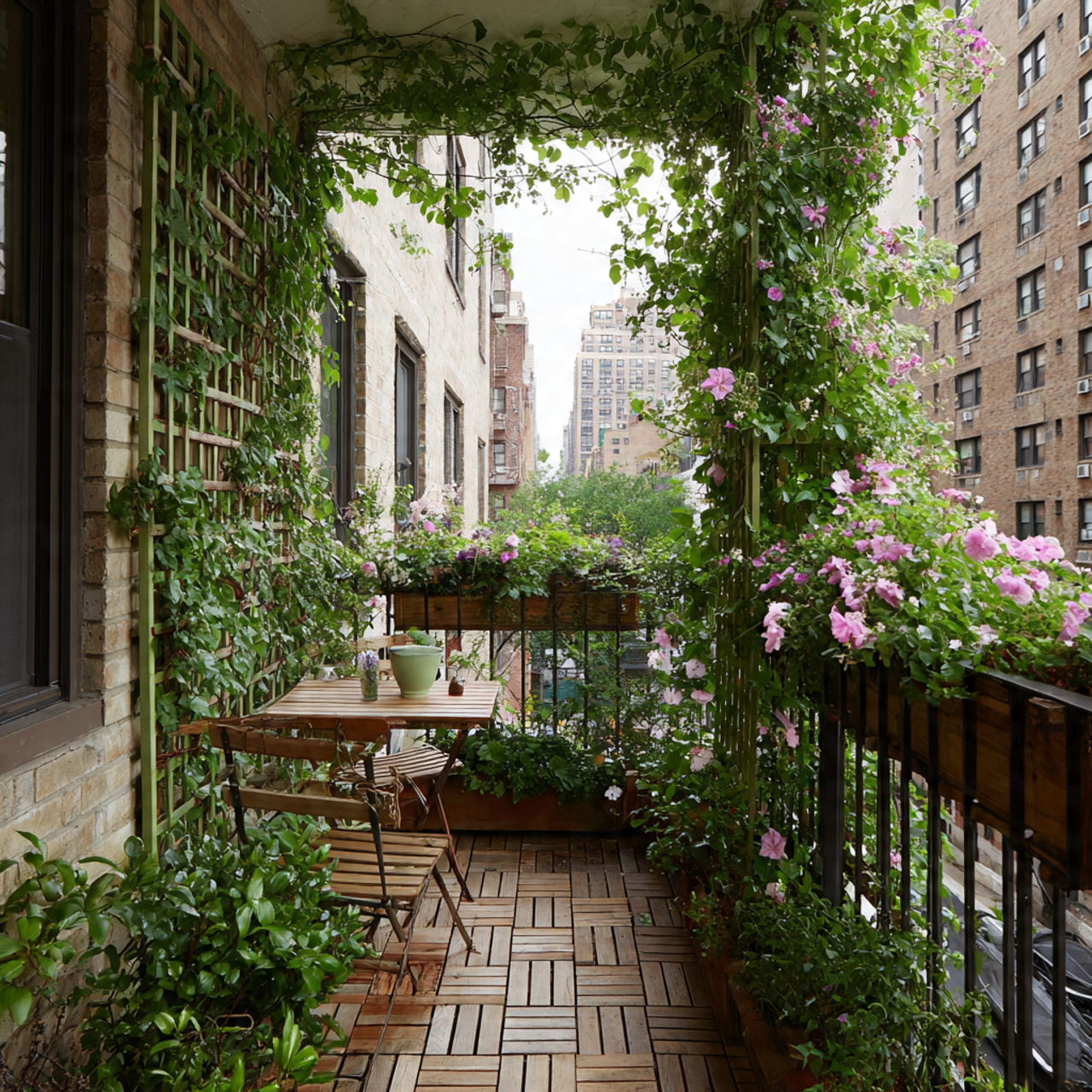
Vertical climbers maximize growing space dramatically. They cover walls, create privacy, and add lush greenery without using precious floor area.
Top Climbing Plants:
- Morning Glory: Fast-growing, colorful blooms
- Jasmine: Fragrant flowers, evergreen in mild climates
- Clematis: Stunning blooms, many varieties
- Climbing Roses: Classic beauty, needs support
- Pole Beans: Edible, productive, attractive
Support Structures:
- Tension wires along walls or railings
- Bamboo or metal trellises in large pots
- Wall-mounted lattice panels
- String or jute vertical lines
Training Techniques:
- Guide new growth weekly while plants are young
- Tie loosely with soft plant ties (not wire)
- Direct growth in desired direction consistently
- Remove competing growth heading wrong way
Pruning Schedule:
- Trim regularly to prevent overcrowding
- Remove dead or diseased growth immediately
- Cut back at season’s end for neatness
- Shape throughout growing season
Privacy Bonus: Dense climbers create natural screening from neighbors while maintaining airflow (unlike solid screens that block breezes).
A Small Compost Bin for Sustainability
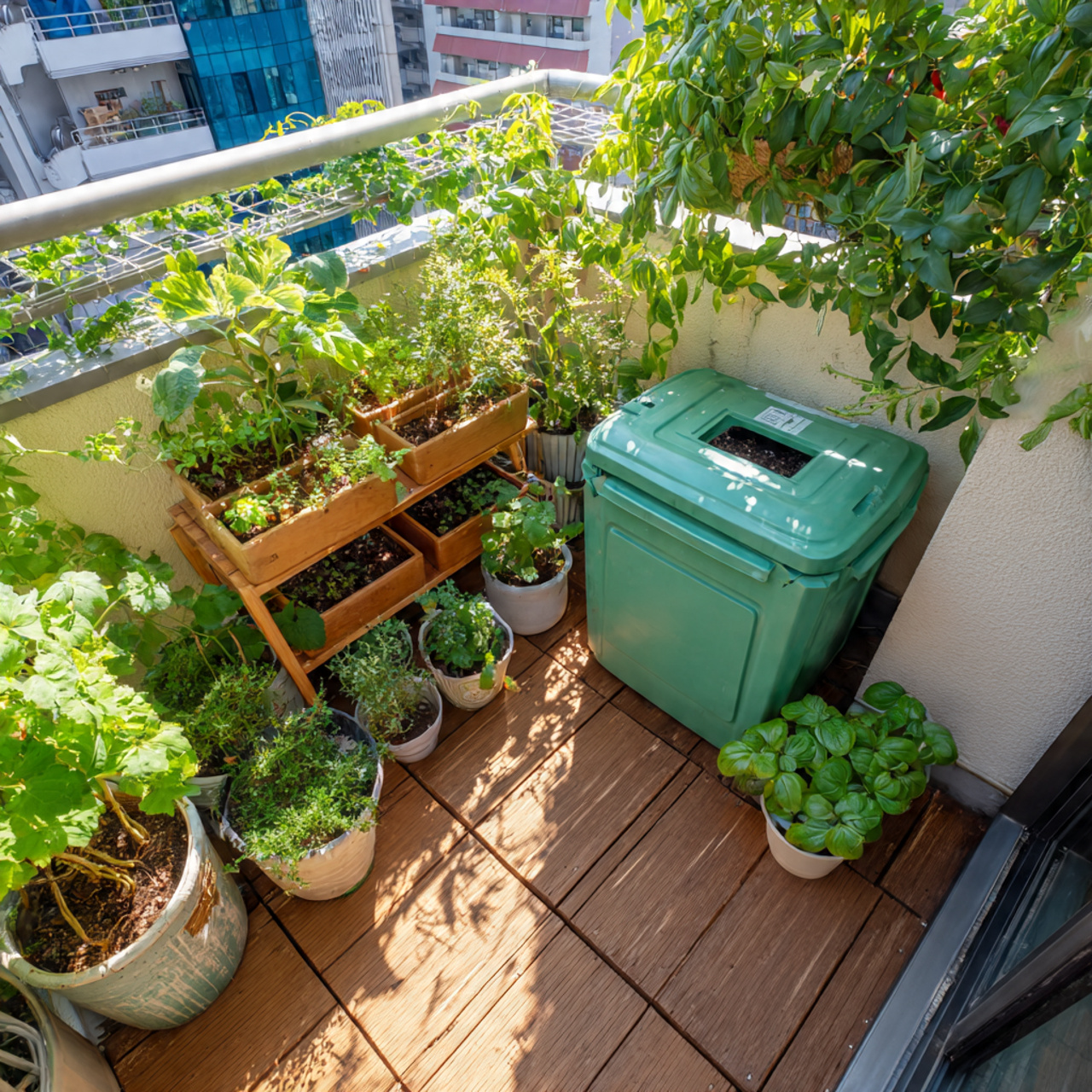
Balcony composting turns kitchen scraps into rich soil amendment while reducing household waste—all in a compact, odor-free system.
Small-Space Composting Options:
- Sealed countertop composters
- Small bokashi bins
- Worm composting (vermicomposting) systems
- Electric composters (fastest but priciest)
What to Compost:
- Vegetable and fruit scraps
- Coffee grounds and filters
- Tea bags (remove staples)
- Eggshells (crushed)
- Shredded paper and cardboard
What NOT to Compost:
- Meat, fish, dairy (attracts pests)
- Oily foods
- Pet waste
- Diseased plant material
Placement Considerations:
- Shaded corner (prevents overheating)
- Away from seating areas
- Easy access from kitchen
- On stable surface with drainage protection
Using Finished Compost:
- Mix into potting soil (25-30% compost)
- Top-dress around established plants
- Make compost tea for liquid fertilizing
- Reduces need for commercial fertilizers
Reality Check: Balcony composting requires consistent effort. If you forget about it for weeks, odors and pests can develop. Start small and increase capacity once you’ve established a routine.
FAQs About Creating a Tiny Balcony Garden
Q1: Can a tiny balcony garden support vegetables?
Yes, many vegetables grow well in containers when space is used carefully. Compact varieties such as cherry tomatoes, leafy greens, chilies, and herbs perform best. Adequate sunlight, proper drainage, and regular watering are more important than the size of the balcony itself.
Q2: How can overwatering be avoided in a small balcony garden?
Overwatering is easier to control by using pots with drainage holes and well-draining soil mixes. Self-watering containers can help regulate moisture, especially in hot or windy areas. Placing trays under pots also helps manage excess water without creating mess.
Q3: Which plants handle windy balcony conditions well?
Wind-tolerant plants such as lavender, rosemary, succulents, and sturdy ornamental grasses tend to perform better in exposed balconies. Using heavier containers and placing taller plants closer to walls improves stability and reduces tipping.
Q4: How can privacy be maintained on a small balcony without crowding it?
Privacy can be added through vertical solutions rather than floor-based ones. Climbing plants on trellises, railing planters, or lightweight screens allow you to block views while keeping the balcony open and breathable.
Q5: How often should plants in containers be fertilized?
Container plants usually need feeding every two to four weeks, depending on plant type and growth stage. Using a diluted liquid fertilizer helps prevent nutrient buildup while supporting steady growth in limited soil.
Final Thoughts on Creating Your Tiny Balcony Garden
Creating a thriving garden on a tiny balcony isn’t about wishful thinking or expensive transformations—it’s about working smart with what you have. Every successful small-space garden starts with realistic planning and grows through consistent small improvements.
You don’t need to implement every idea in this guide at once. In fact, you shouldn’t! Start with 3-5 strategies that match your balcony’s conditions, your lifestyle, and your goals. Maybe that’s vertical planters and a few herbs. Maybe it’s rail planters and foldable seating. Maybe it’s just getting your sunlight situation figured out before buying any plants at all.
The beauty of tiny balcony gardens is their flexibility. Unlike in-ground gardens, everything is movable, adjustable, and changeable. If something doesn’t work, you learn and adjust. If a plant struggles, you swap it out. This freedom to experiment without permanent consequences makes balcony gardening forgiving and fun.
Remember: your balcony garden should enhance your life, not create stress. Keep it simple, keep it manageable, and keep it enjoyable. With the practical strategies in this guide, your compact outdoor space can become exactly what you need it to be—a green sanctuary, an herb garden, a quiet retreat, or simply a more beautiful view when you look outside.
Start small, stay consistent, and watch your tiny balcony transform into a space you genuinely love spending time in.