24 Stunning Pink Princess Philodendron Ideas at Home
The Pink Princess Philodendron isn’t your average houseplant—it’s a conversation starter. With velvety dark green leaves painted with splashes of bubblegum pink, this beauty transforms ordinary spaces into botanical galleries. Plant enthusiasts can’t get enough of its exotic appeal, while collectors hunt for it like treasure. Whether you’re just starting your plant journey or you’ve been nurturing greenery for years, this philodendron opens up a world of creative possibilities.
Let’s explore hands-on ideas that’ll help you nurture, multiply, and beautifully showcase your Pink Princess Philodendron while keeping it healthy and Instagram-worthy.
Why Pink Princess Philodendron is a Must-Have Houseplant
This plant has earned its celebrity status for reasons beyond those striking pink streaks. Born from tropical rainforest genetics, this hybrid philodendron adapts surprisingly well to indoor life with just moderate light and humidity. It fits comfortably in apartments, brightens up office corners, and thrives on covered patios.
Here’s what makes it genuinely special: the variegation is completely unpredictable. Every single leaf unfolds with its own personality—a unique blend of pink, green, and sometimes rich burgundy tones. When conditions align perfectly, each new leaf becomes more vibrant than the last.
What makes it stand out:
- Each leaf pattern is one-of-a-kind (like botanical fingerprints)
- Low-maintenance compared to other rare variegated plants
- Adapts well to various indoor environments
- Increases in beauty as it matures
Choosing the Right Spot for Your Pink Princess Philodendron
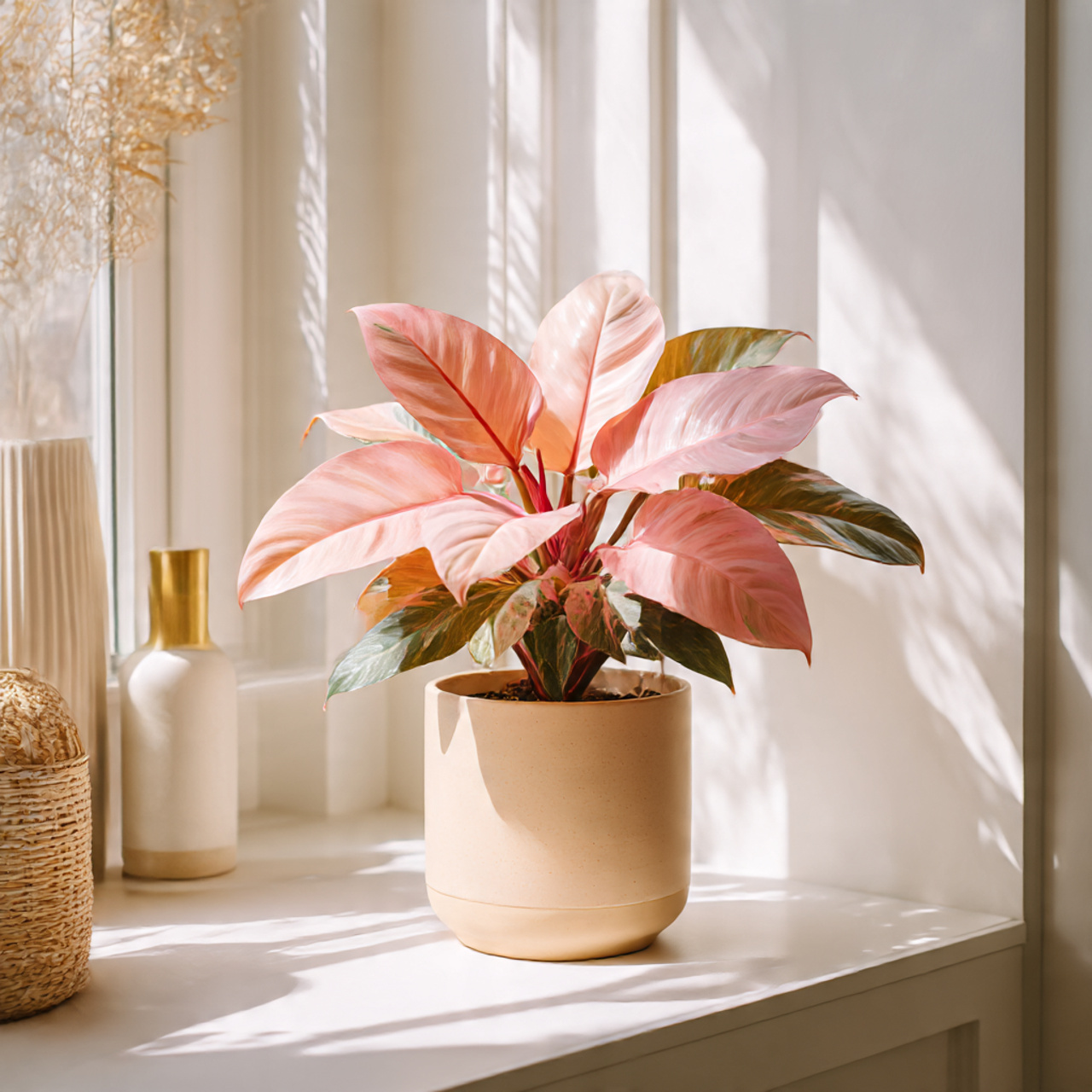
Light placement makes or breaks those gorgeous pink sections. This plant craves bright, indirect sunlight—think filtered rays through sheer curtains, not harsh afternoon sun beating down directly.
Lighting tips:
- East-facing windows provide ideal morning gentleness
- South or west windows need sheer curtains as buffers
- Avoid direct sun exposure (burns those delicate pink patches)
- Too little light = leaves turn completely green
Temperature sweet spot: Keep your space between 65–80°F (18–27°C). Watch out for cold drafts from AC vents or sudden temperature drops—these tropical natives don’t appreciate climate shocks.
Building the Perfect Soil Foundation
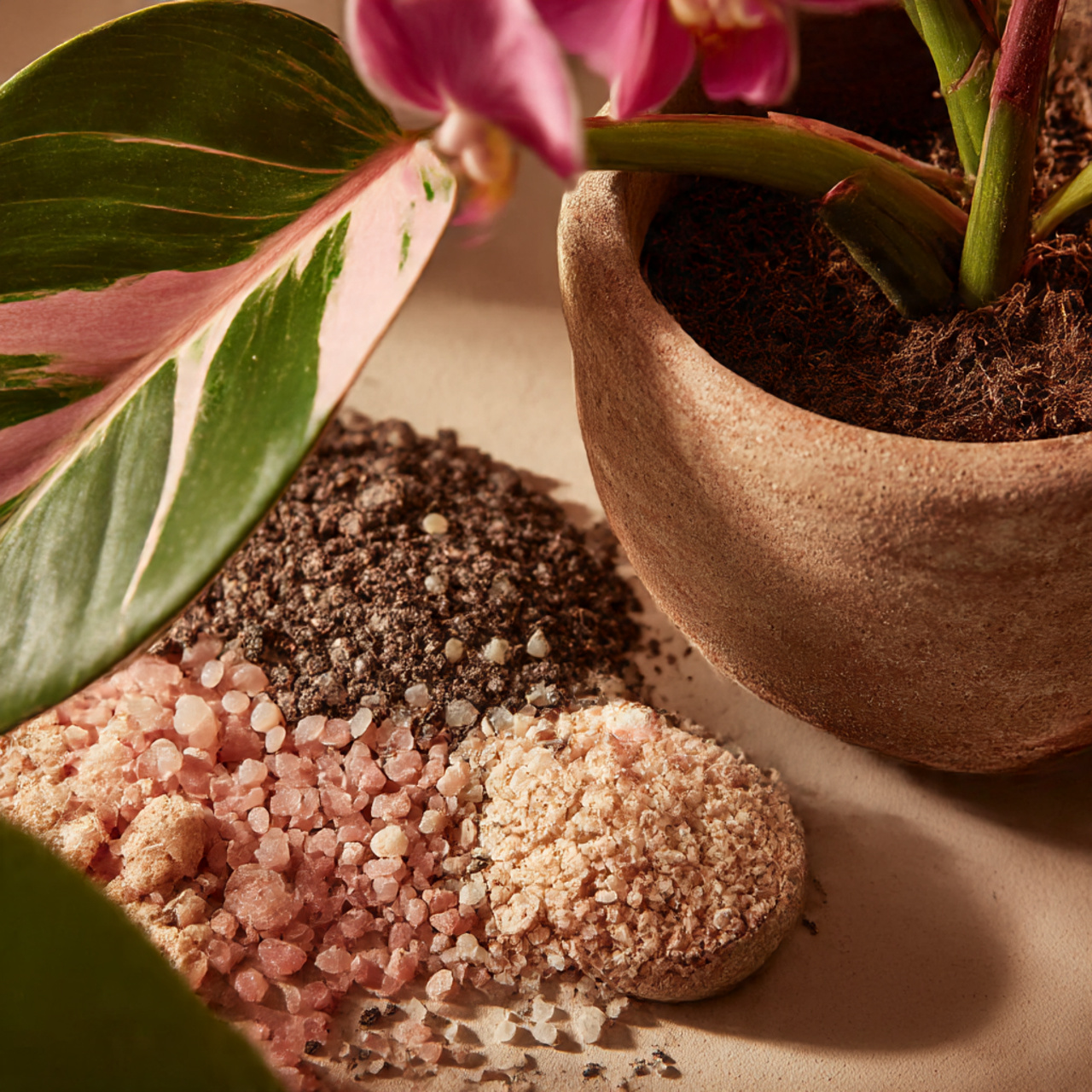
Think of soil as your plant’s home foundation. Pink Princess Philodendrons need a chunky, well-draining mix that holds moisture without becoming waterlogged—just like their natural rainforest floor habitat.
DIY soil recipe:
- 40% peat moss or coco coir (moisture retention)
- 30% perlite (drainage and aeration)
- 20% orchid bark (chunky texture)
- 10% worm castings (gentle nutrients)
Critical mistake to avoid: Never use regular garden soil or dense potting mix—these suffocate roots and invite root rot. Always use pots with drainage holes; standing water is this plant’s worst enemy.
Mastering the Watering Schedule
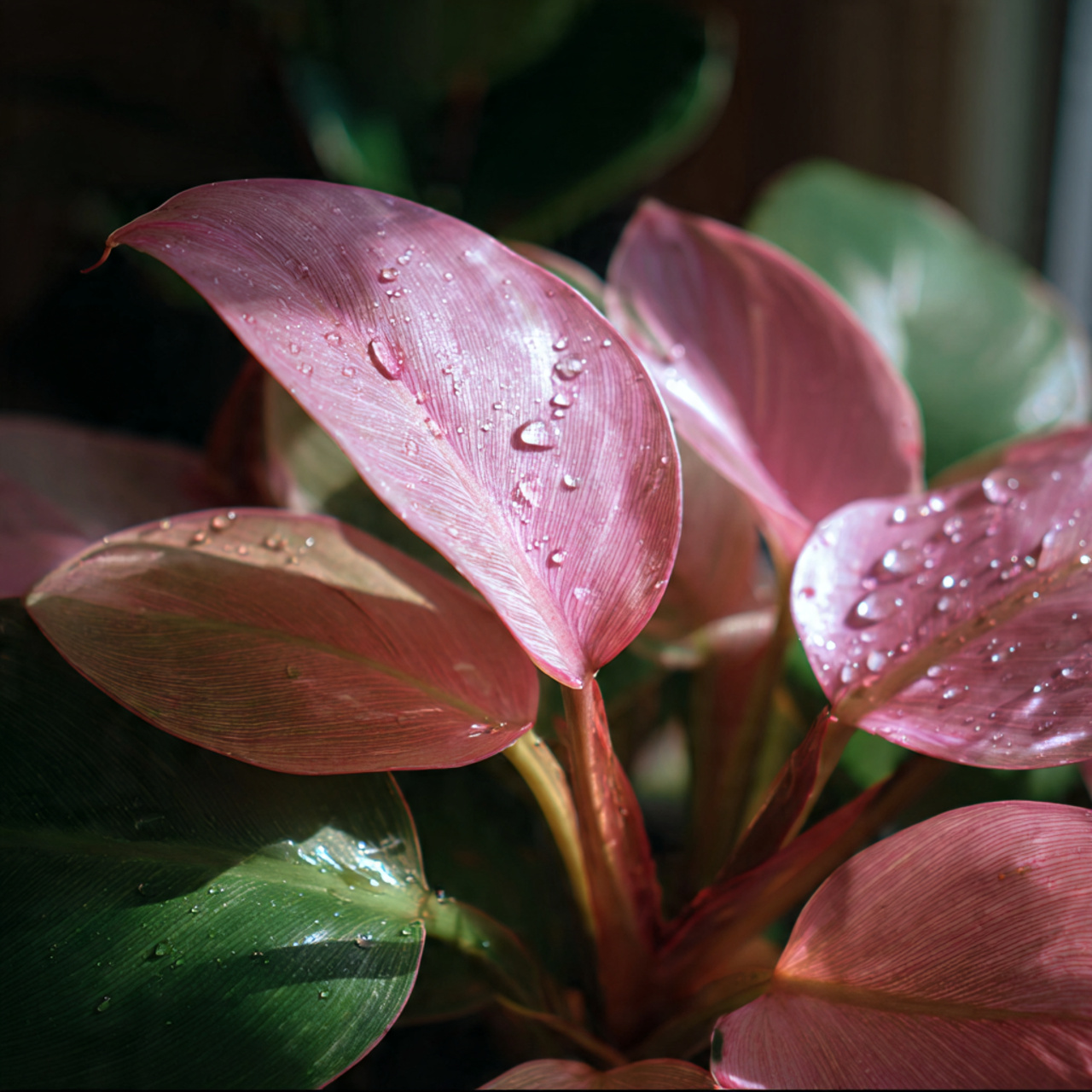
Overwatering kills more Pink Princess Philodendrons than anything else. The golden rule? Let the plant tell you when it’s thirsty.
Smart watering approach:
- Stick your finger 1-2 inches into soil—if it’s dry, water thoroughly
- Summer: check weekly
- Winter: check every 10-14 days
- Water until it drains from bottom holes, then empty the saucer
Tip: Use filtered water or rainwater when possible. Tap water’s minerals can build up over time, creating brown leaf edges and dulling that vibrant coloration.
Humidity and Light Balance for Vibrant Pink Leaves
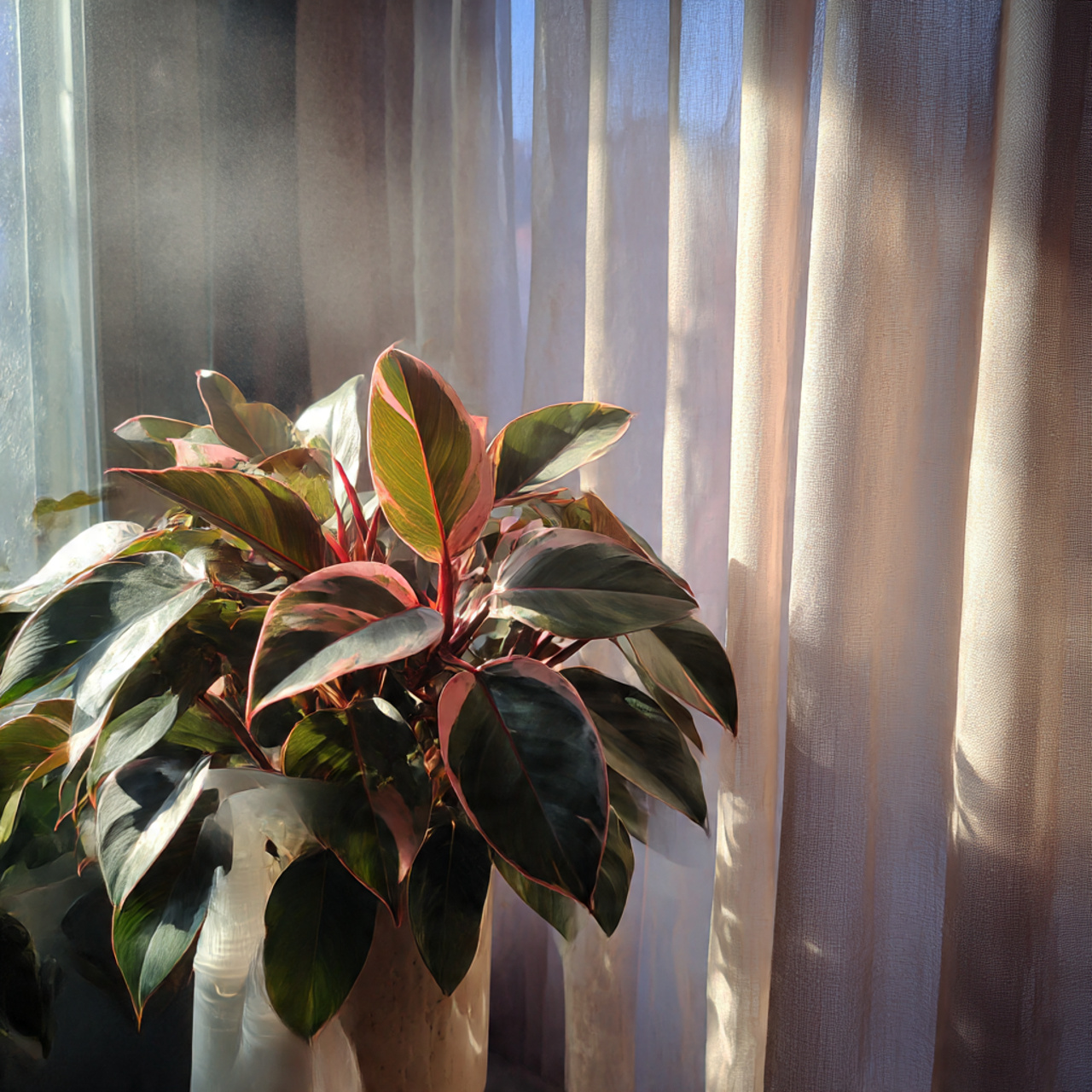
These tropical beauties adore humidity levels between 50–70%. Most homes sit around 30–40%, especially during winter heating months.
Easy humidity boosters:
- Group plants together (they create their own microclimate)
- Place pot on a pebble tray filled with water
- Run a small humidifier nearby
- Avoid misting (causes fungal issues on leaves)
Watch for these low-humidity signs:
- Brown, crispy leaf edges
- Leaves curling inward
- Slow or stunted growth
Feeding Your Plant for Lush Growth
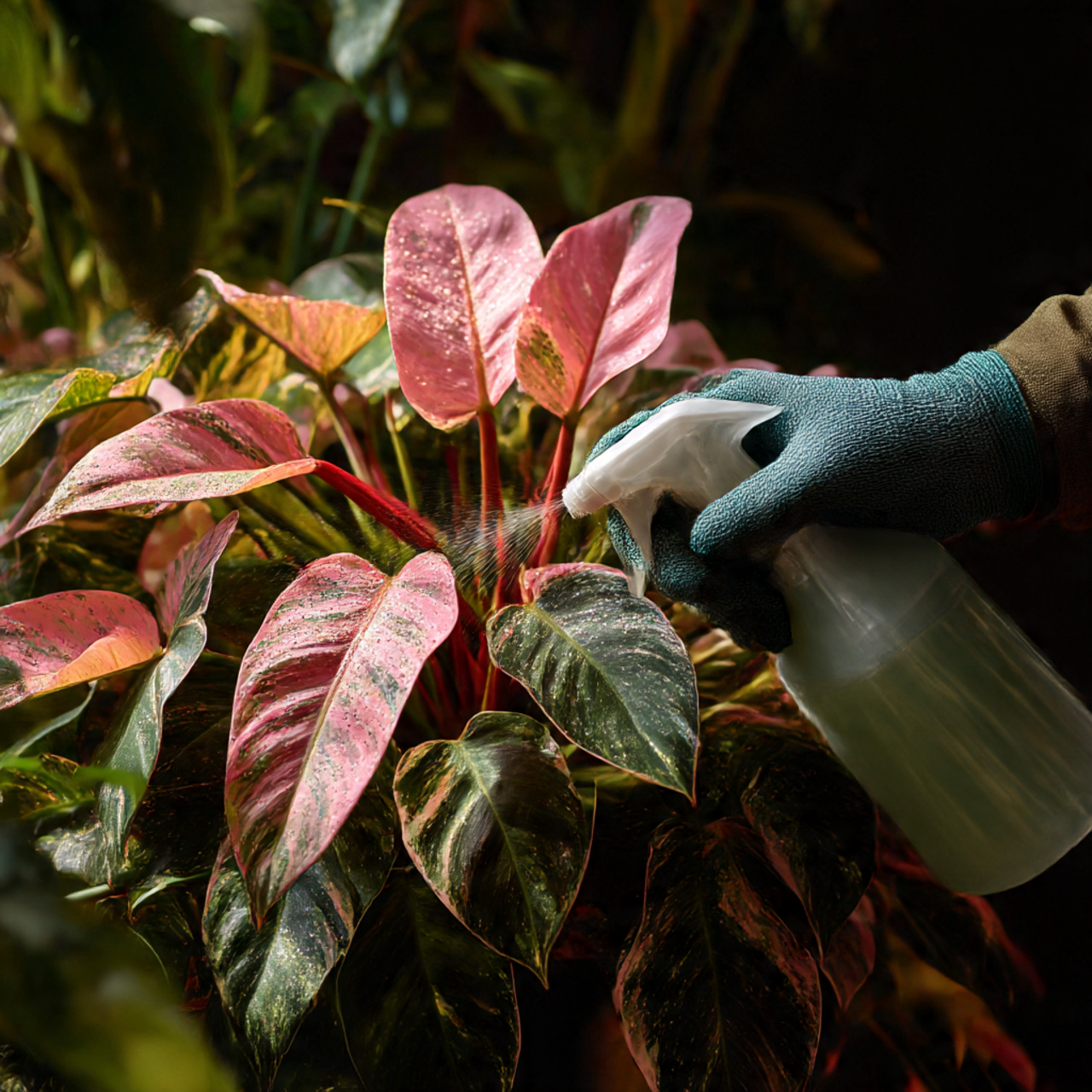
Fertilizer acts like vitamins for your philodendron—helpful in moderation, harmful when overdone.
Fertilizing schedule:
- Spring/Summer: liquid fertilizer every 4-6 weeks
- Fall/Winter: reduce to every 2-3 months
- Dilute to half-strength (better safe than sorry)
- Choose balanced formulas (10-10-10 or 20-20-20)
Common fertilizing mistakes:
- Over-fertilizing causes brown, crispy leaf tips
- Applying fertilizer to dry soil burns roots
- Using cheap fertilizers with harsh salts
Best practice: Water your plant first, then apply diluted fertilizer to moist soil.
Pruning for Balanced Growth and Shape
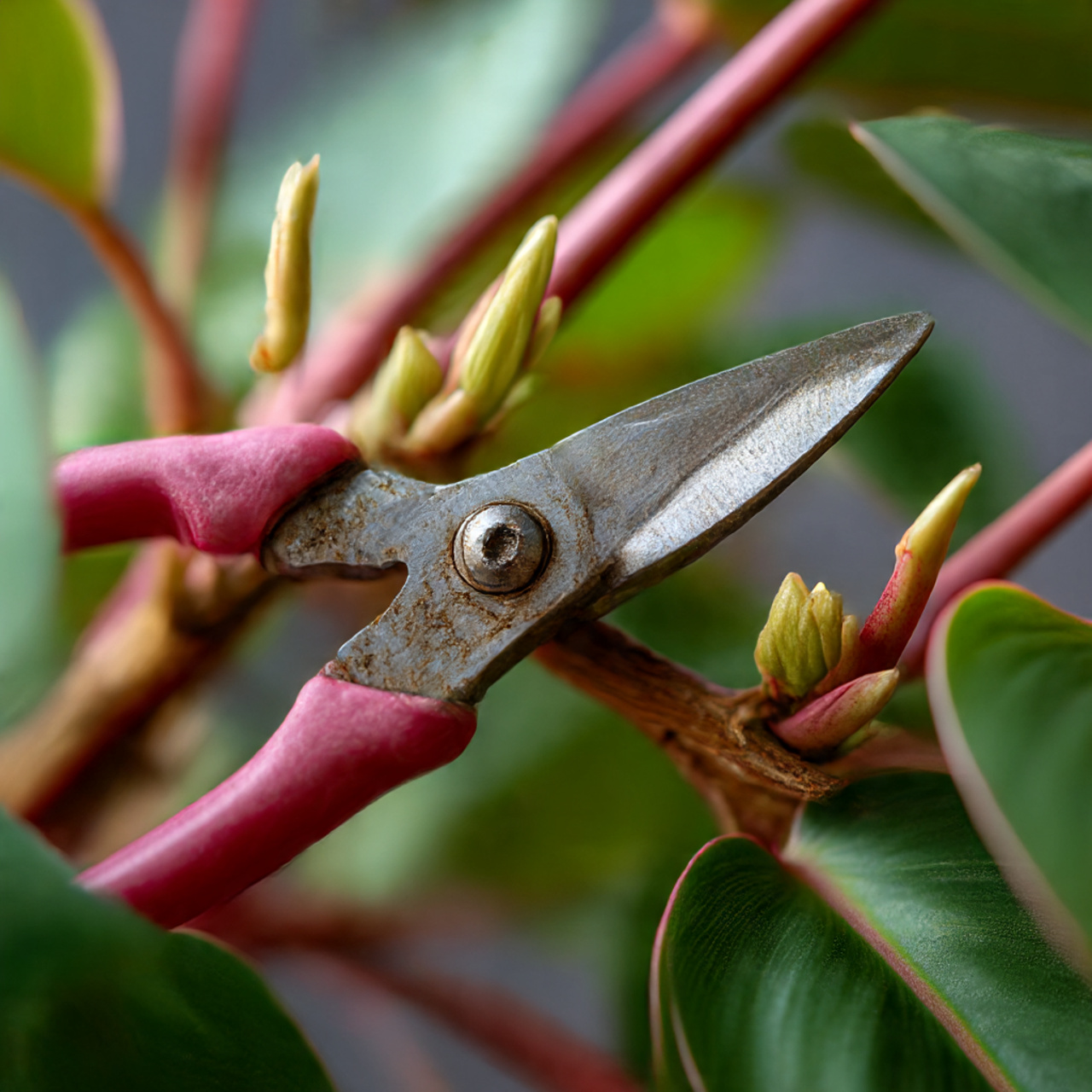
Strategic pruning keeps your plant bushy, balanced, and encourages those coveted pink leaves.
When and what to prune:
- Remove fully green stems (they drain energy from variegated growth)
- Cut leggy vines to promote bushier growth
- Trim damaged or yellowing leaves
- Prune in spring/early summer during active growth
Safety first:
- Always sterilize scissors with rubbing alcohol
- Wear gloves (sap can irritate skin)
- Make cuts just above a node at 45-degree angles
Bonus: Save those cuttings for propagation!
Propagation by Stem Cuttings
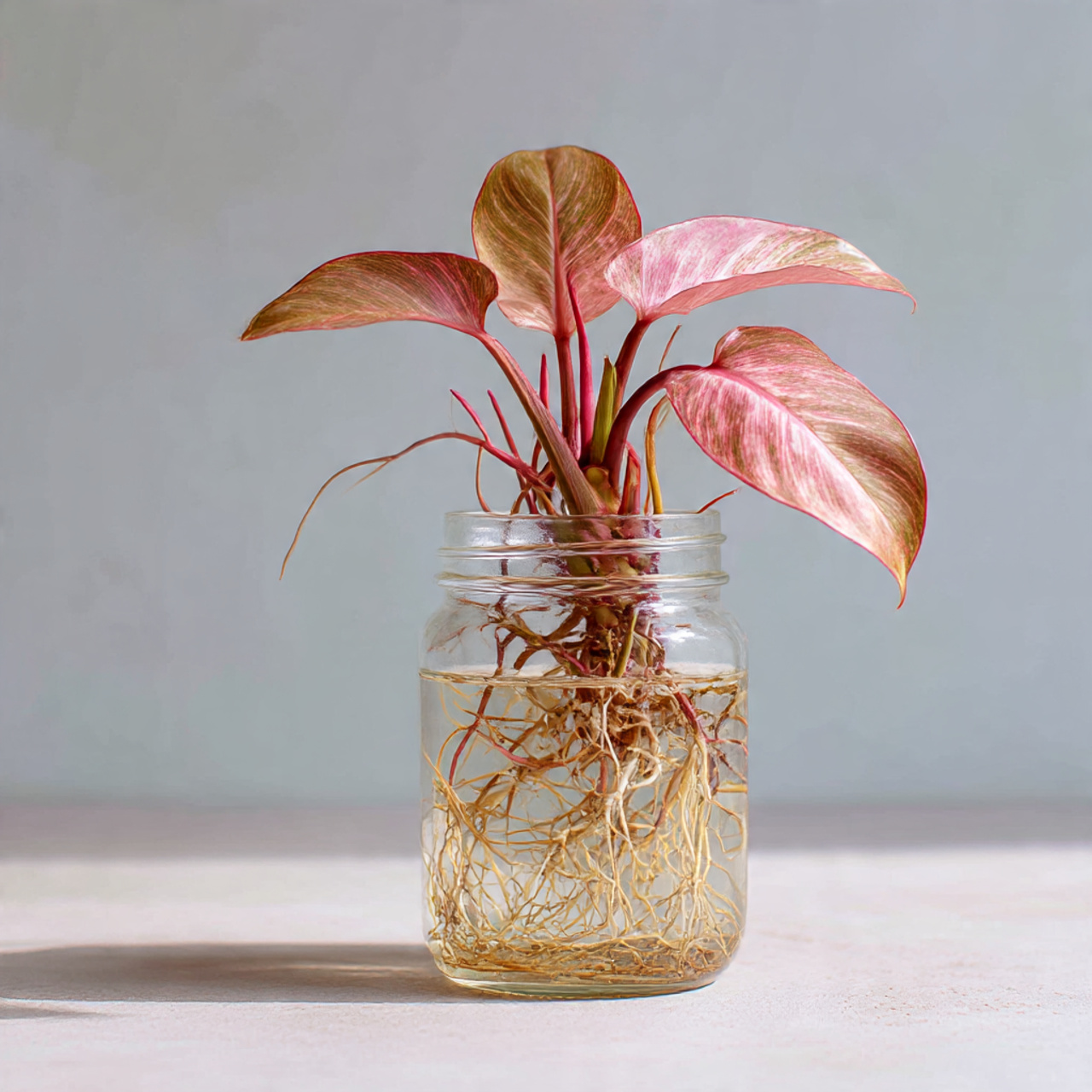
Multiplying your Pink Princess is easier than you’d think—and incredibly satisfying.
Step-by-step propagation:
- Choose a healthy stem with 2-3 leaves and visible nodes
- Cut below a node with sterilized scissors
- Place in water (change every 3-4 days) OR moist sphagnum moss
- Keep in bright, indirect light
- Wait 3-4 weeks for roots to develop (1-2 inches long)
- Transfer to soil and keep moist for 2 weeks
Pro propagation tips:
- Clear glass containers let you monitor root growth
- Add rooting hormone for faster results
- Cuttings with pink variegation produce variegated plants
- Patience is key—some cuttings root faster than others
Using Moss Poles for Climbing Support
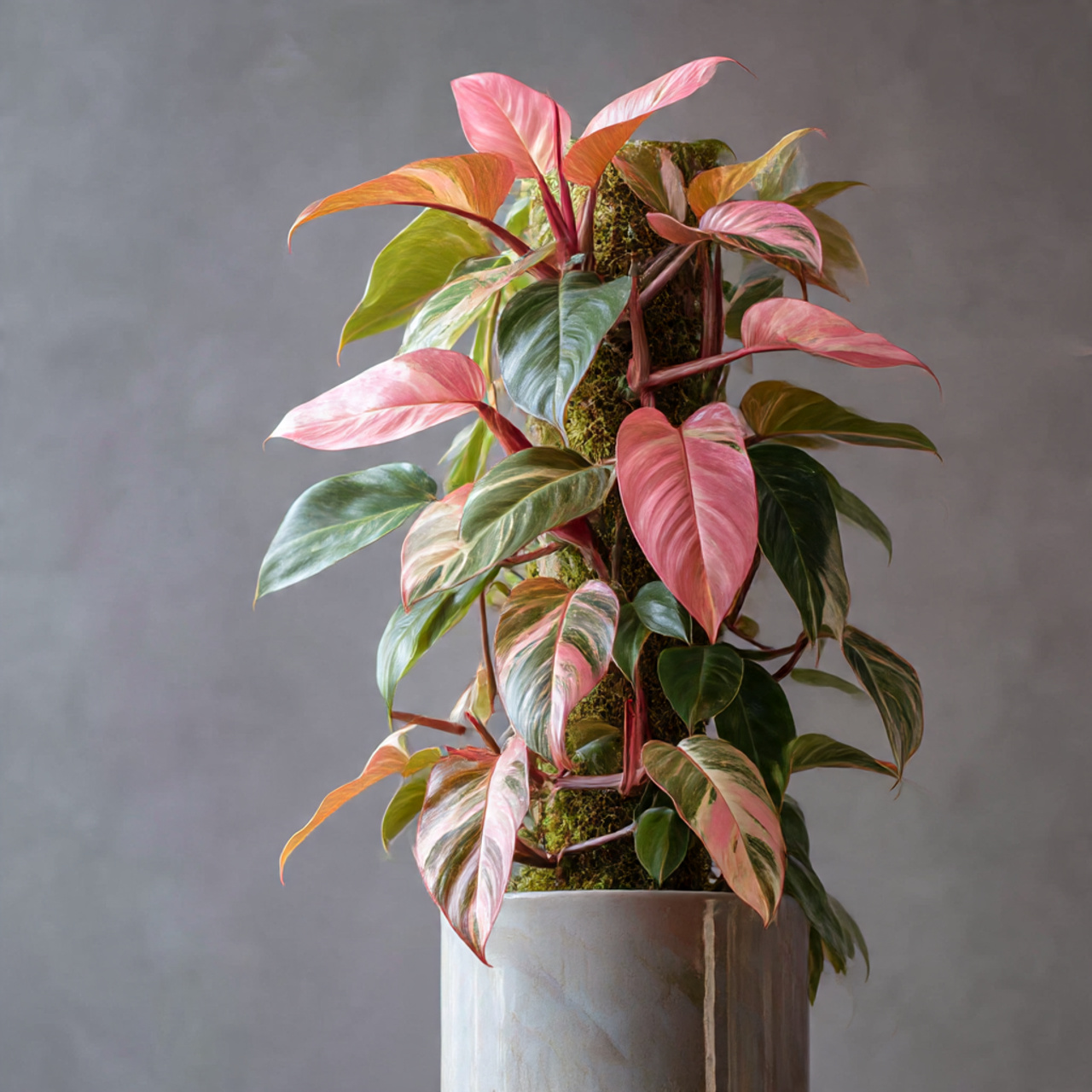
Moss poles mimic the tree trunks Pink Princess would climb in nature, triggering mature growth characteristics.
Benefits of climbing support:
- Leaves grow 2-3x larger
- Deeper, richer coloration develops
- More pronounced fenestrations (leaf splits)
- Creates stunning vertical displays
Installation guide:
- Insert pole when repotting to avoid root damage
- Gently tie stems with soft plant ties (not wire)
- Mist the moss pole to encourage aerial root attachment
- Reposition ties as plant grows upward
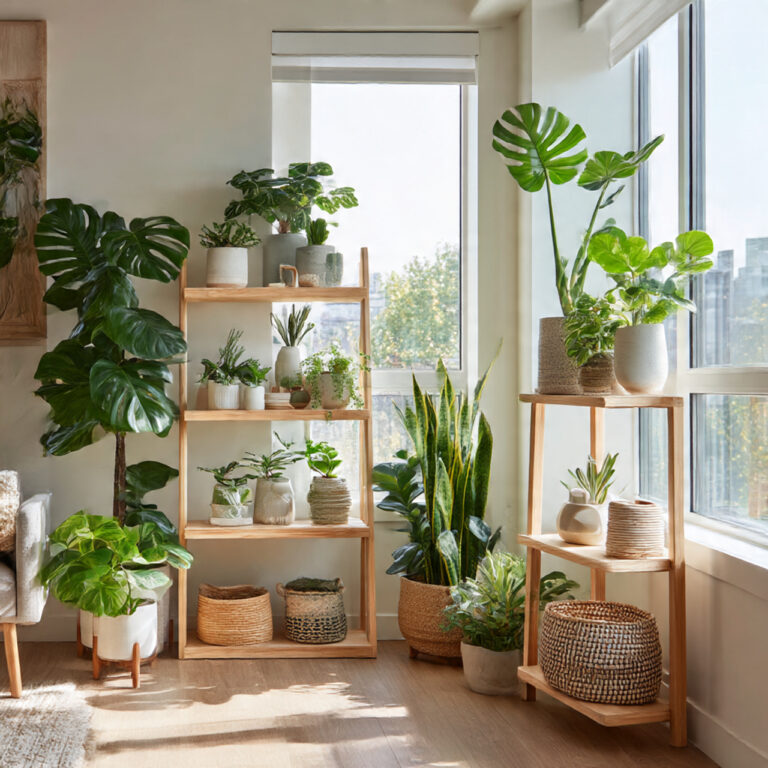
Designing a Statement Plant Corner
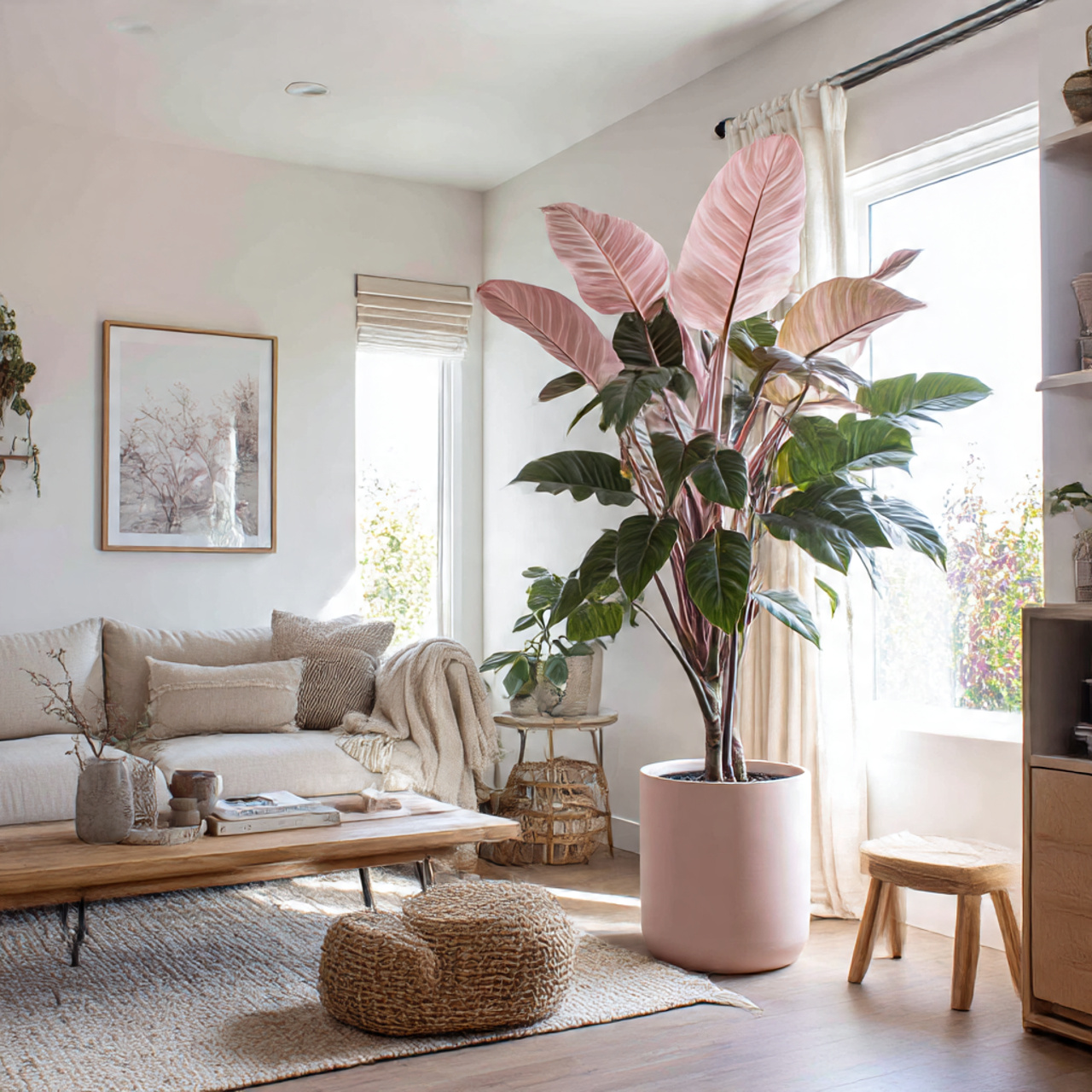
Turn an empty corner into a botanical focal point that stops guests in their tracks.
Styling ideas:
- Use white, blush, or gold planters to amplify pink tones
- Position against light-colored walls for maximum contrast
- Add a small spotlight or grow light for nighttime drama
- Place on decorative plant stands at varying heights
Design pairing suggestions:
- Minimalist Scandinavian spaces (clean lines highlight the pink)
- Boho interiors (macramé hangers and natural textures)
- Modern glam (metallic accents complement the colors)
Pairing Pink Princess Philodendron with Other Plants
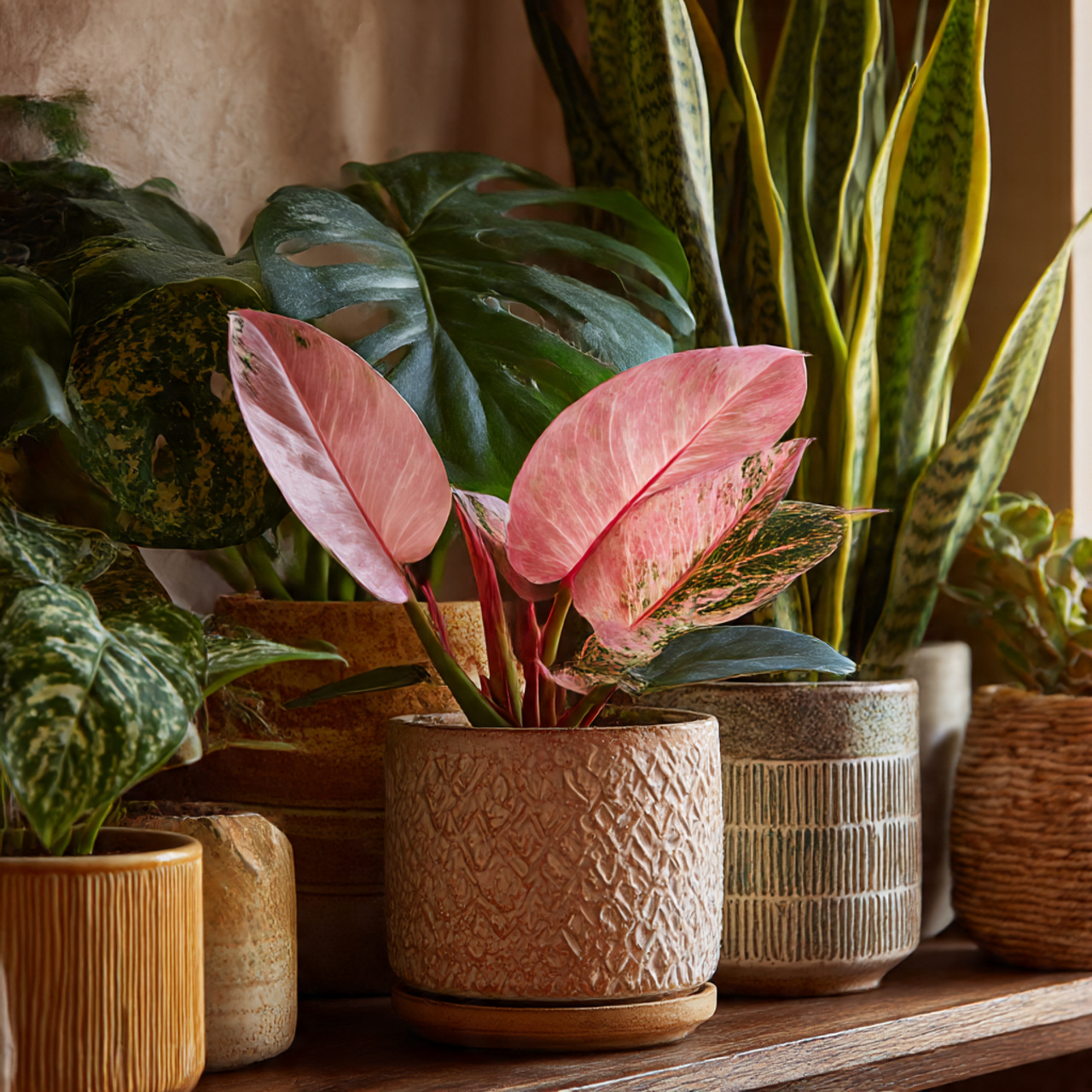
Strategic plant partnerships make your Pink Princess look even more spectacular.
Winning plant companions:
- Monstera Deliciosa (large green leaves create contrast)
- Pothos varieties (trailing greenery frames the pink)
- Snake Plants (upright structure adds dimension)
- Calatheas (patterned leaves add visual complexity)
Color-coordinated theme:
- Pair with Pink Aglaonema or Caladiums for a rosy palette
- Add burgundy-toned plants like Ruby Ficus
- Include silver-leafed varieties (Scindapsus Pictus) for shimmer
Spacing tip: Leave 12-18 inches between plants for air circulation and individual spotlight effect.
Repotting Your Pink Princess Philodendron
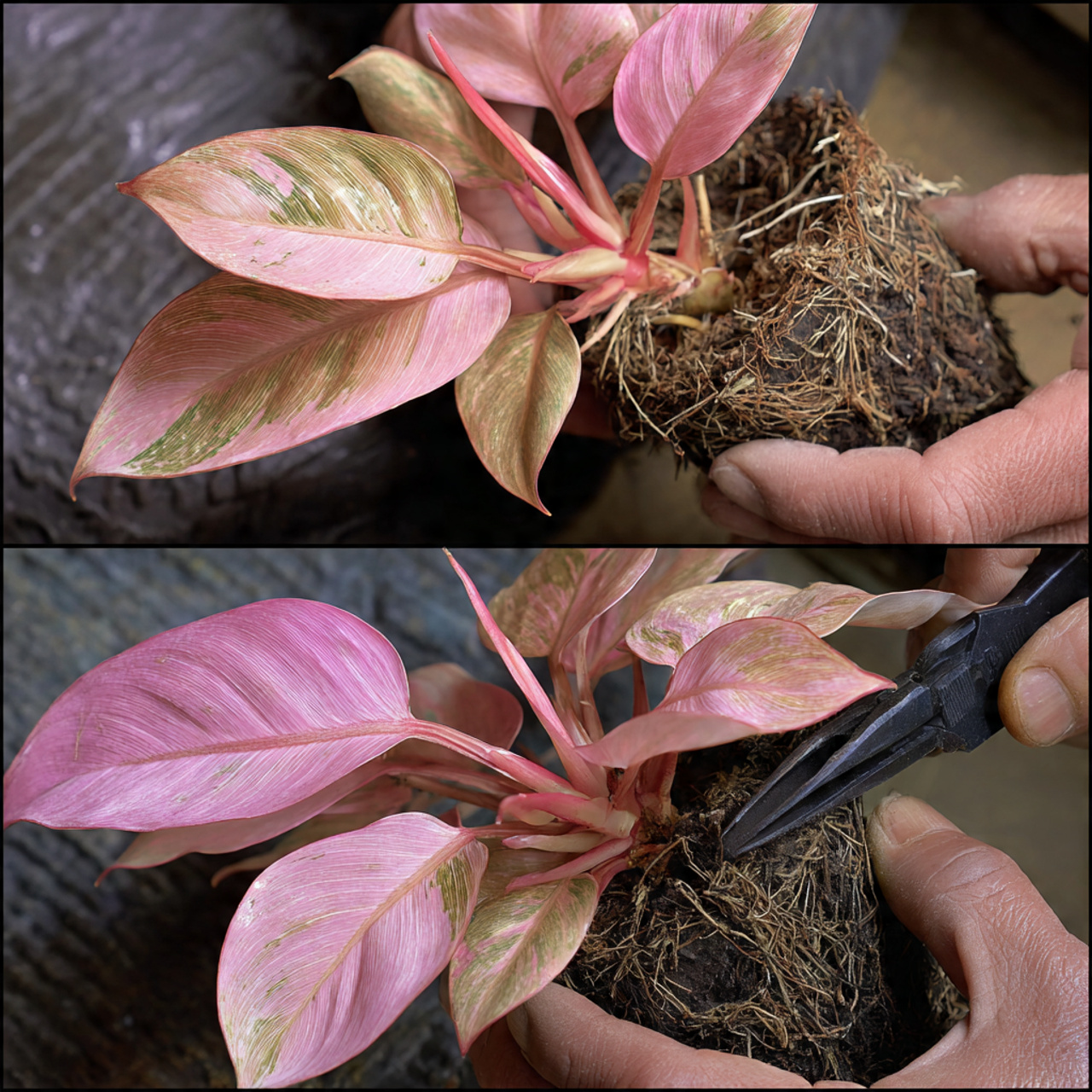
Fresh soil and more room help your plant reach its full potential.
Signs it’s time to repot:
- Roots circling the drainage holes
- Water running straight through without absorbing
- Growth has slowed significantly
- Plant top-heavy and tipping over
- 12-18 months have passed since last repotting
Repotting best practices:
- Choose a pot only 2 inches larger (too big causes overwatering)
- Repot in spring when active growth begins
- Gently loosen root ball before placing in new pot
- Water thoroughly after repotting, then normal schedule
Dealing with Yellow or Brown Leaves
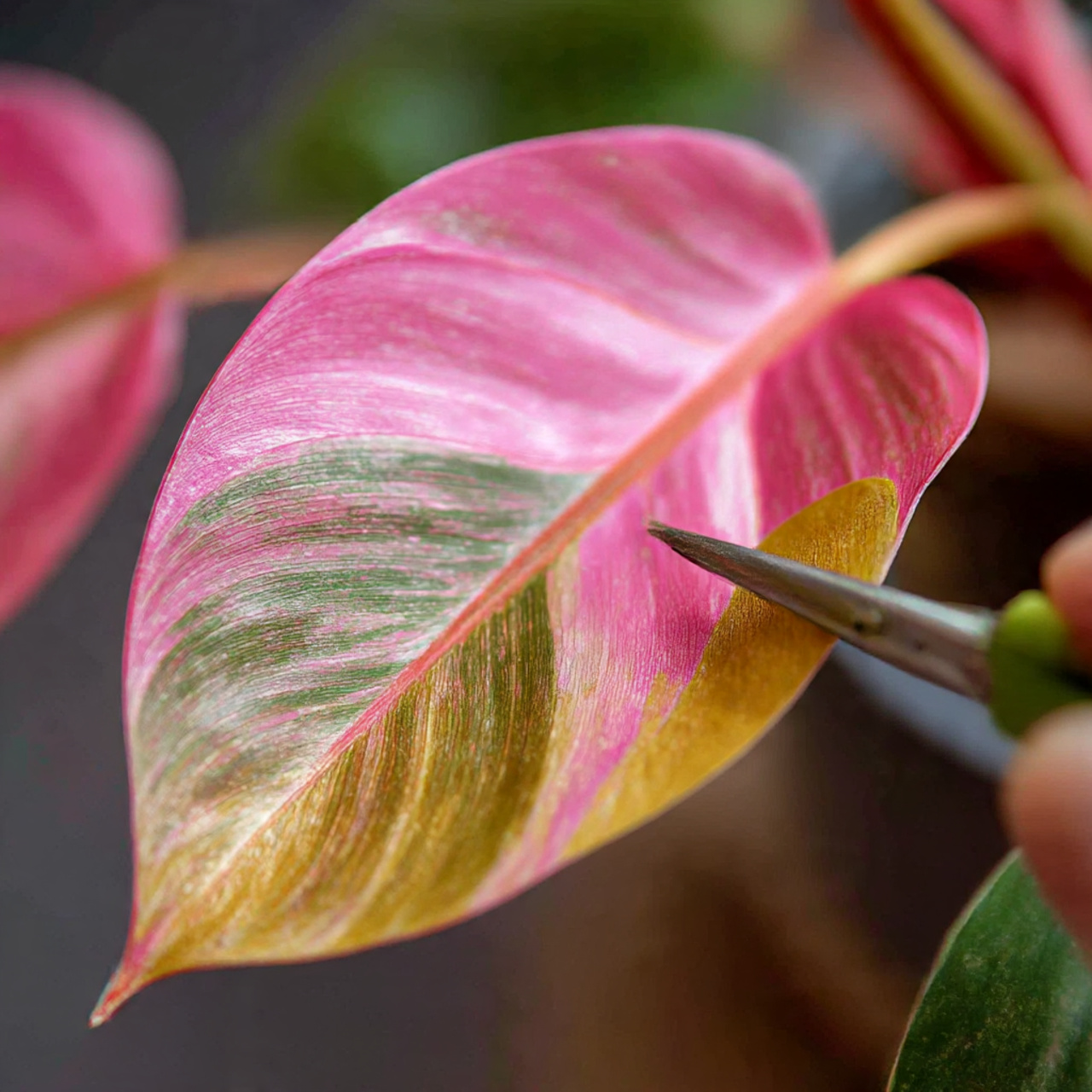
Discolored leaves tell stories—you just need to decode them.
Yellow leaves usually mean:
- Overwatering (most common culprit)
- Poor drainage or compacted soil
- Natural aging (lower leaves drop normally)
Brown leaves indicate:
- Underwatering (dry, crispy edges)
- Low humidity (brown tips)
- Too much direct sun (scorched patches)
- Fertilizer burn (crispy brown edges)
Action plan:
- Identify the cause by checking soil moisture
- Trim damaged leaves at the base
- Adjust watering, light, or humidity
- New healthy growth appears within 2-3 weeks
Maximizing Pink Variegation
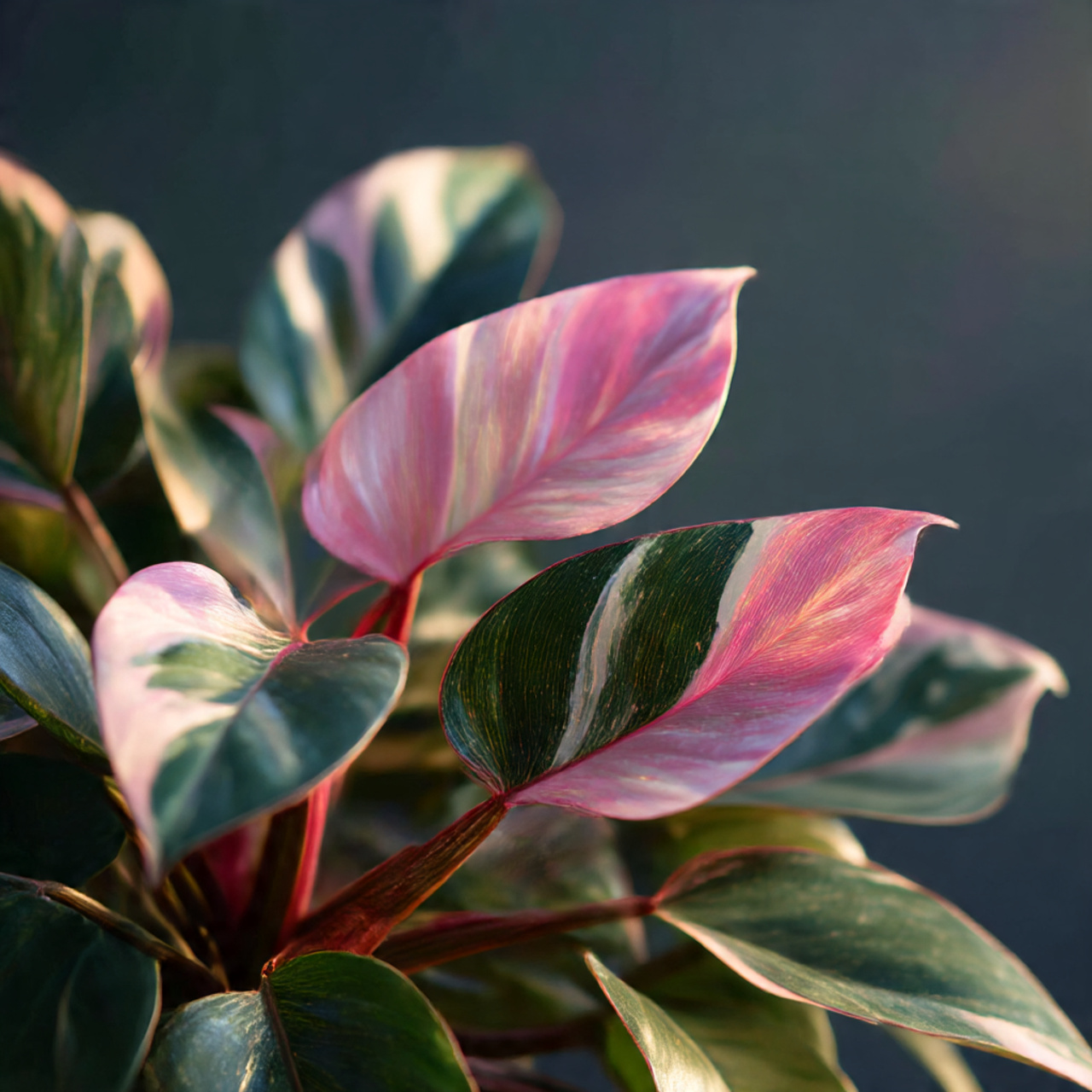
More pink isn’t luck—it’s strategic care.
How to encourage pinker leaves:
- Provide consistent bright indirect light (6-8 hours daily)
- Remove all-green stems immediately
- Maintain stable temperatures (no fluctuations)
- Keep humidity levels consistent
- Avoid stressing the plant with frequent changes
What kills pink variegation:
- Insufficient light (plant reverts to green for survival)
- Allowing green stems to dominate
- Temperature stress
- Overwatering (weakens the plant overall)
Reality check: Some leaves will be greener, some pinker—that’s normal. Aim for 30-50% pink coverage overall.
Brightening Office Spaces with Pink Beauty
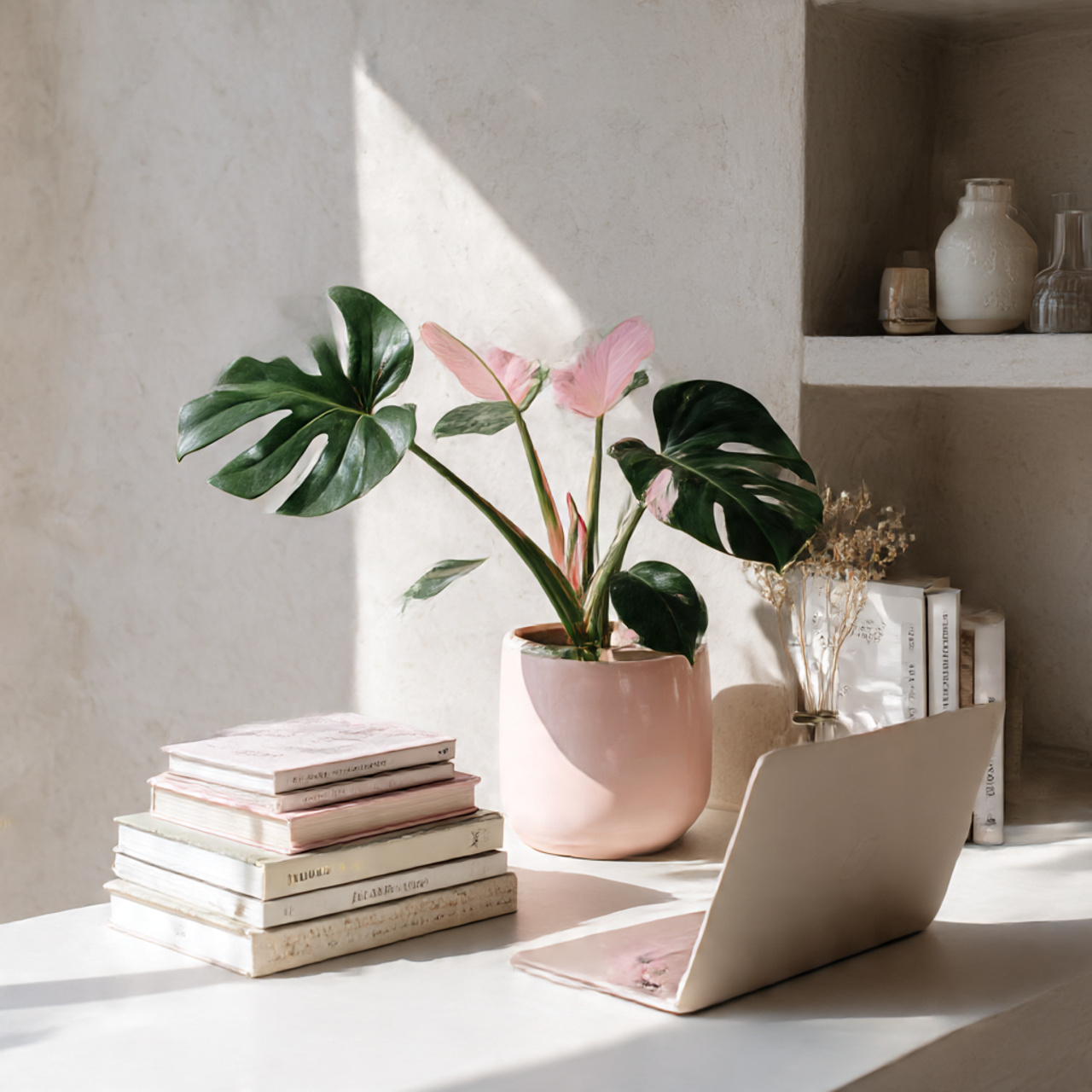
Bring life and color to sterile work environments while boosting air quality.
Office placement strategies:
- Desktop: Choose compact specimens in 4-6 inch pots
- Shelving: Let vines cascade for visual softness
- Filing cabinets: Brighten dull corners with trailing growth
- Meeting rooms: Create statement pieces with larger plants
Surviving office conditions:
- Works in fluorescent light when supplemented with grow lights
- Schedule watering on specific weekdays (avoid weekend forgetting)
- Rotate 90 degrees weekly for even growth
- Keep away from AC/heating vents
Productivity bonus: Studies show plants reduce stress and increase focus by 15%.
Creating Living Shelf Decor
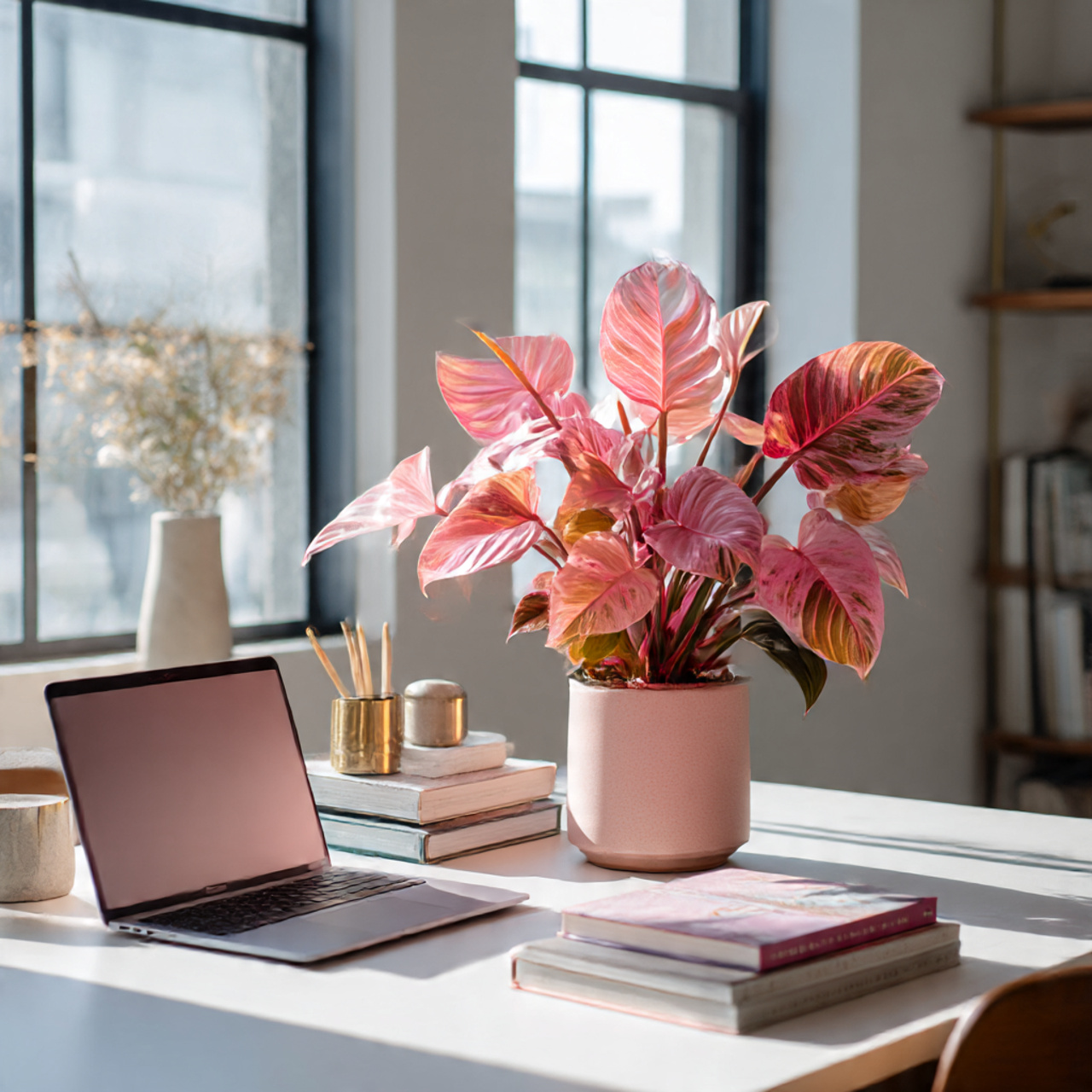
Transform ordinary shelves into cascading botanical displays.
Shelf styling tips:
- Place at eye level or slightly above for best viewing
- Use trailing vines to soften hard shelf edges
- Combine with books, candles, or art for dimension
- Choose decorative cache pots that match your aesthetic
Macramé hanger alternative:
- Creates vertical interest
- Allows vines to drape naturally
- Saves shelf space
- Perfect for boho or eclectic styles
Safety consideration: Ensure shelves support the weight (soil + water + pot = heavier than expected).
Giving the Gift of Pink Princess
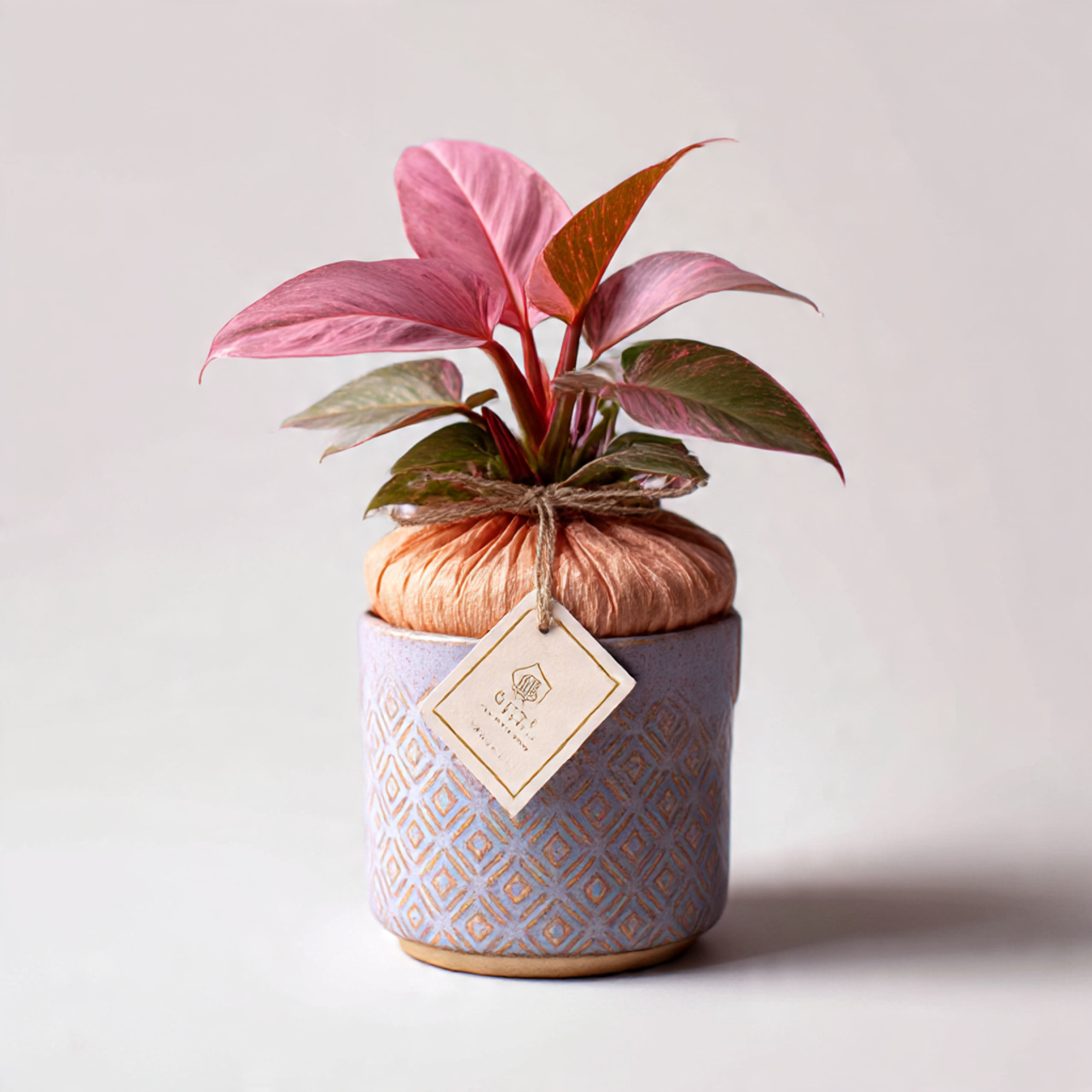
Few gifts rival a rare, living plant that grows more beautiful with time.
Gift presentation ideas:
- Include a personalized care card with specific instructions
- Choose a stylish ceramic or terracotta pot
- Add a moss pole or decorative stake
- Wrap with sustainable burlap or fabric ribbon
Perfect occasions:
- Housewarming (symbolizes growth in new space)
- Birthdays for plant lovers
- Congratulations on promotions/achievements
- Thoughtful “just because” gestures
Tip: Propagate your own plant months ahead for a truly meaningful, budget-friendly gift.
Protecting Against Common Pests
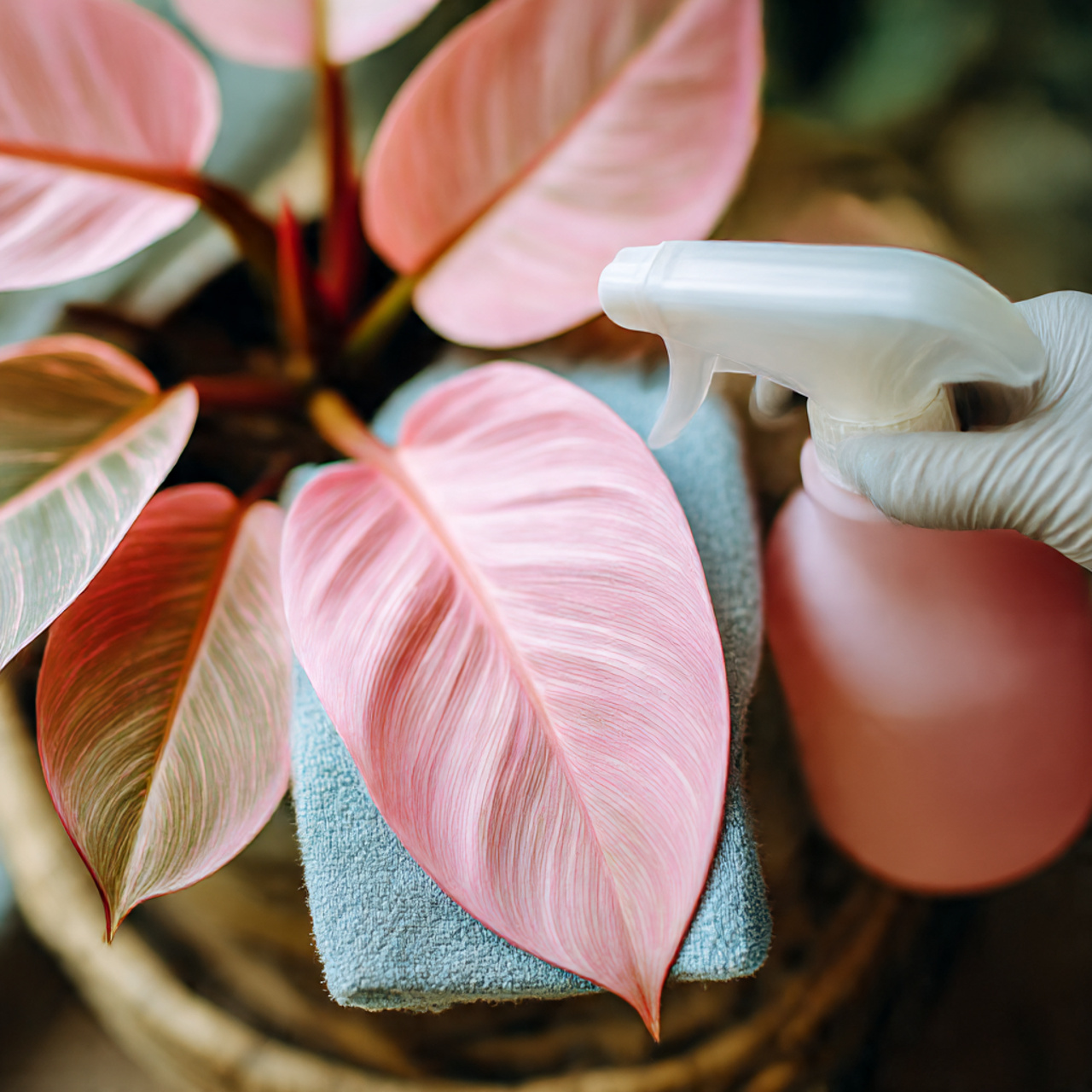
Prevention beats treatment every time when dealing with plant pests.
Common invaders:
- Spider mites (tiny webs under leaves)
- Mealybugs (white cottony clusters)
- Aphids (small green/black insects)
- Fungus gnats (tiny flies around soil)
Prevention routine:
- Weekly leaf inspection (check undersides)
- Wipe leaves monthly with damp cloth
- Quarantine new plants for 2 weeks
- Avoid overwatering (prevents fungus gnats)
Natural treatment options:
- Neem oil spray (2 tsp per quart water)
- Insecticidal soap for soft-bodied pests
- Isopropyl alcohol on cotton swabs for mealybugs
- Yellow sticky traps for fungus gnats
Using Grow Lights for Indoor Spaces
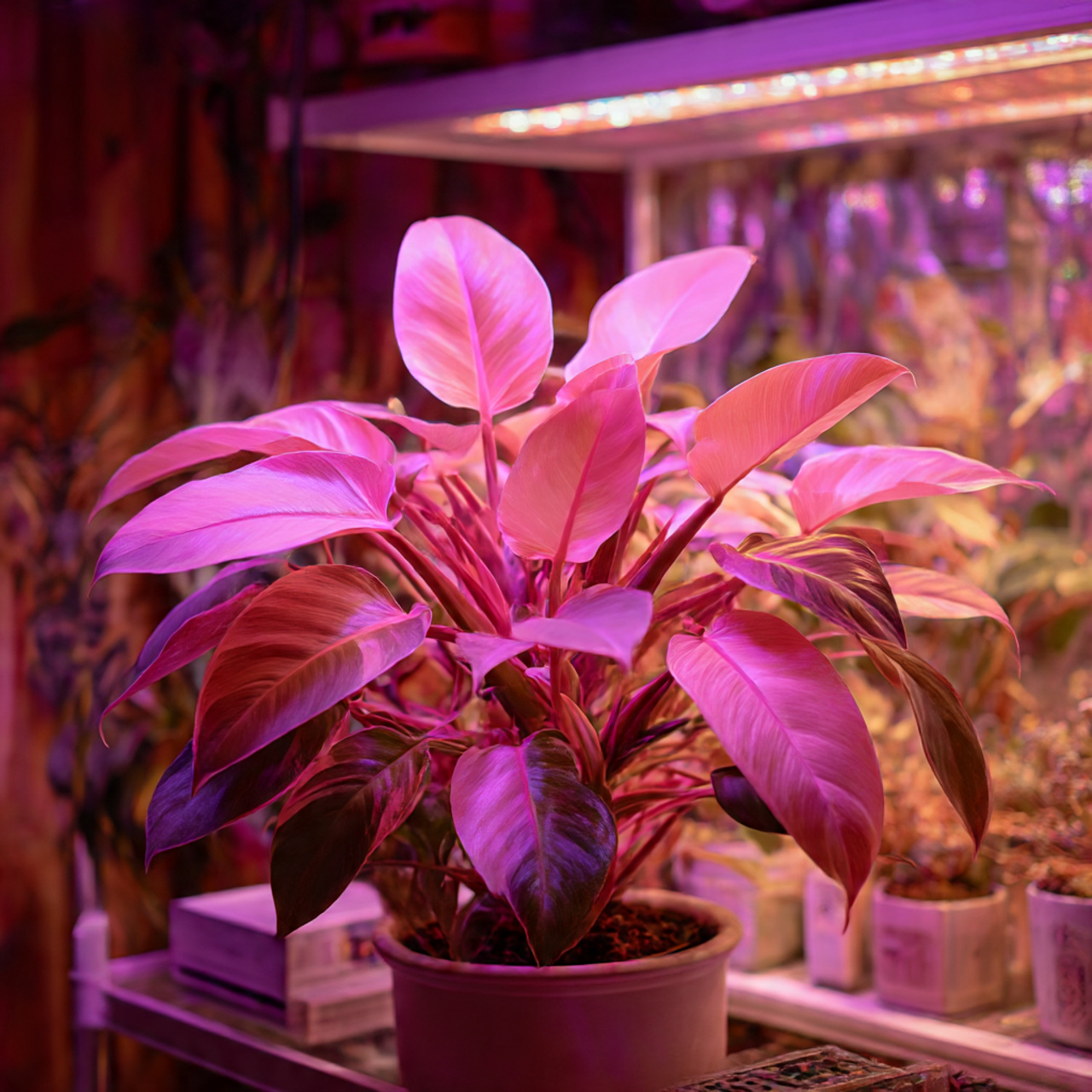
Don’t let low-light spaces stop you from enjoying this beauty.
Grow light basics:
- Full-spectrum LED lights work best
- Position 12-18 inches above plant
- Run for 10-12 hours daily
- Timer automation prevents forgetting
Choosing the right light:
- Look for lights with both blue and red spectrum
- Adjustable height options offer flexibility
- Clip-on styles work for single plants
- Panel lights cover multiple plants
Signs your plant needs more light:
- Leggy, stretched growth
- Variegation fading to green
- Slow growth rate
- Leaves turning toward light source
Seasonal Care Adjustments
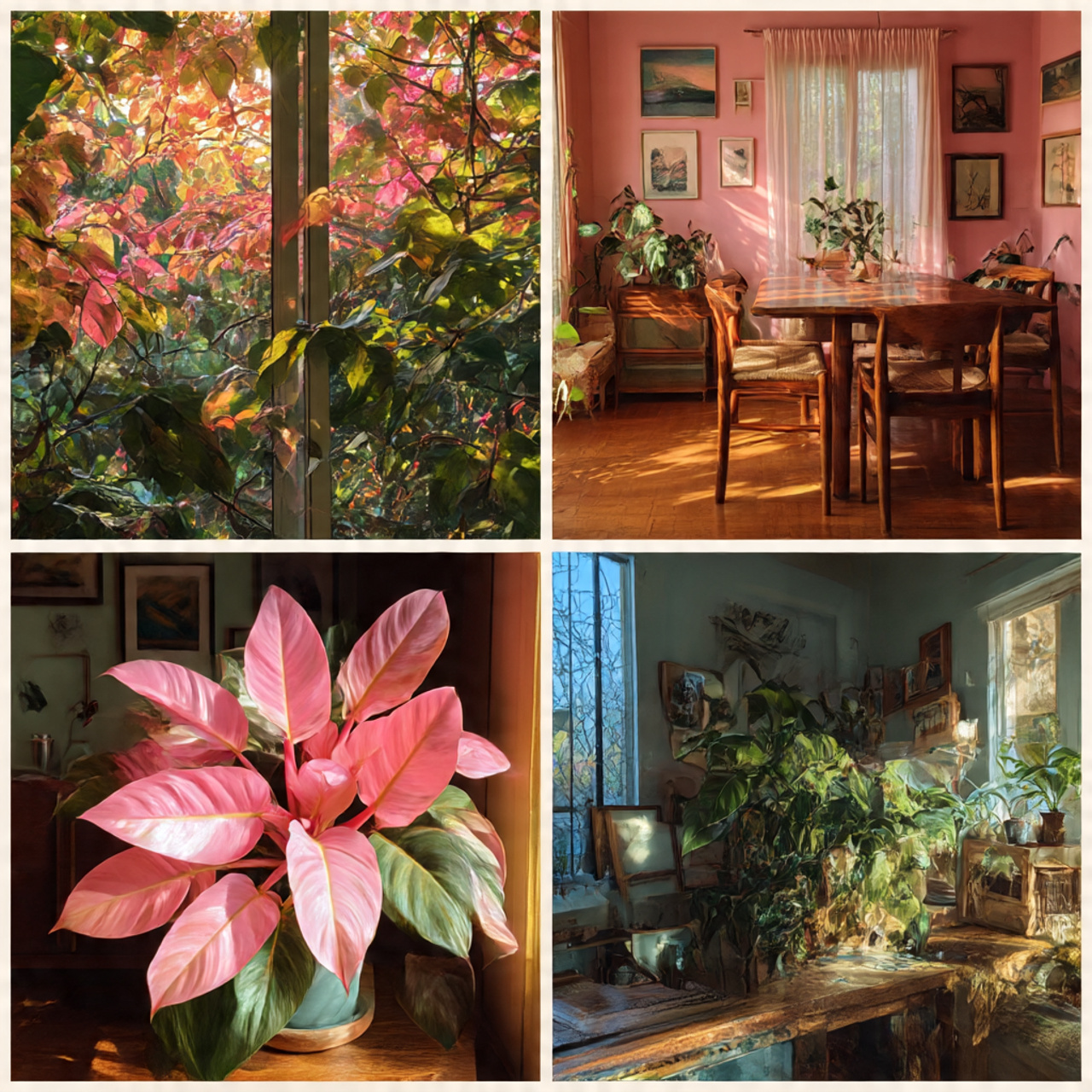
Your plant’s needs shift with the calendar—responsive care keeps it thriving.
Spring/Summer (active growth):
- Water more frequently (soil dries faster)
- Fertilize every 4-6 weeks
- Repot if needed
- Prune and propagate
- Maximum growth and new leaves
Fall/Winter (dormant period):
- Reduce watering frequency
- Fertilize every 2-3 months
- Stop pruning (wounds heal slower)
- Maintain consistent light
- Minimal growth is normal
Common seasonal mistakes:
- Overwatering in winter (leads to root rot)
- Under-watering in summer heat
- Fertilizing dormant plants
Training Pink Princess Philodendron on Trellises
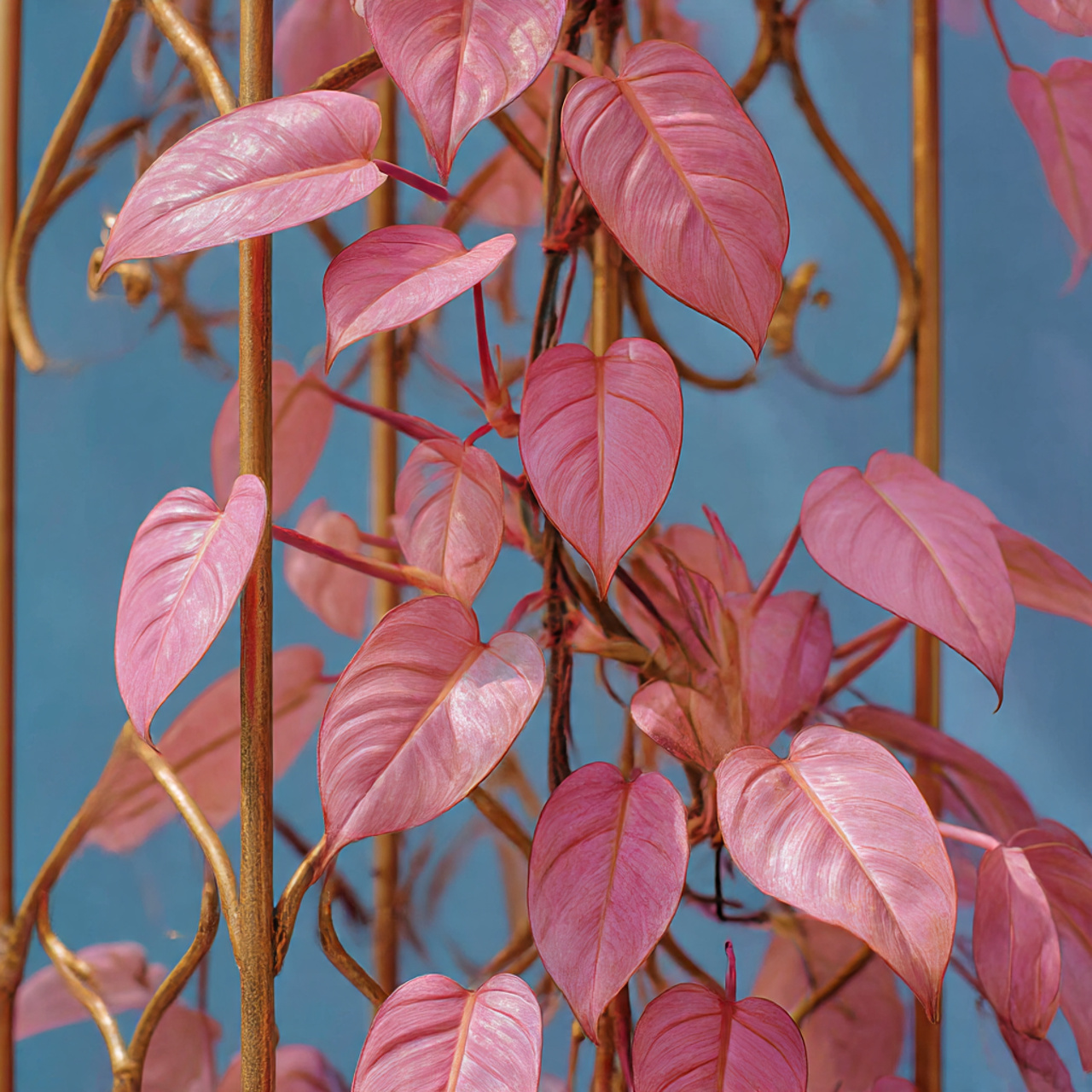
Guide growth into artistic shapes and patterns that enhance your décor.
Trellis training steps:
- Install trellis when plant is young (easier to guide)
- Gently weave vines through openings
- Secure with soft ties (raffia or velcro strips)
- Adjust weekly as growth continues
- Trim wayward stems for clean appearance
Trellis style options:
- Geometric metal grids (modern aesthetic)
- Bamboo ladders (natural, rustic feel)
- Wire hoops (circular growth pattern)
- Wall-mounted designs (space-saving vertical gardens)
Blending Art and Botanical Beauty
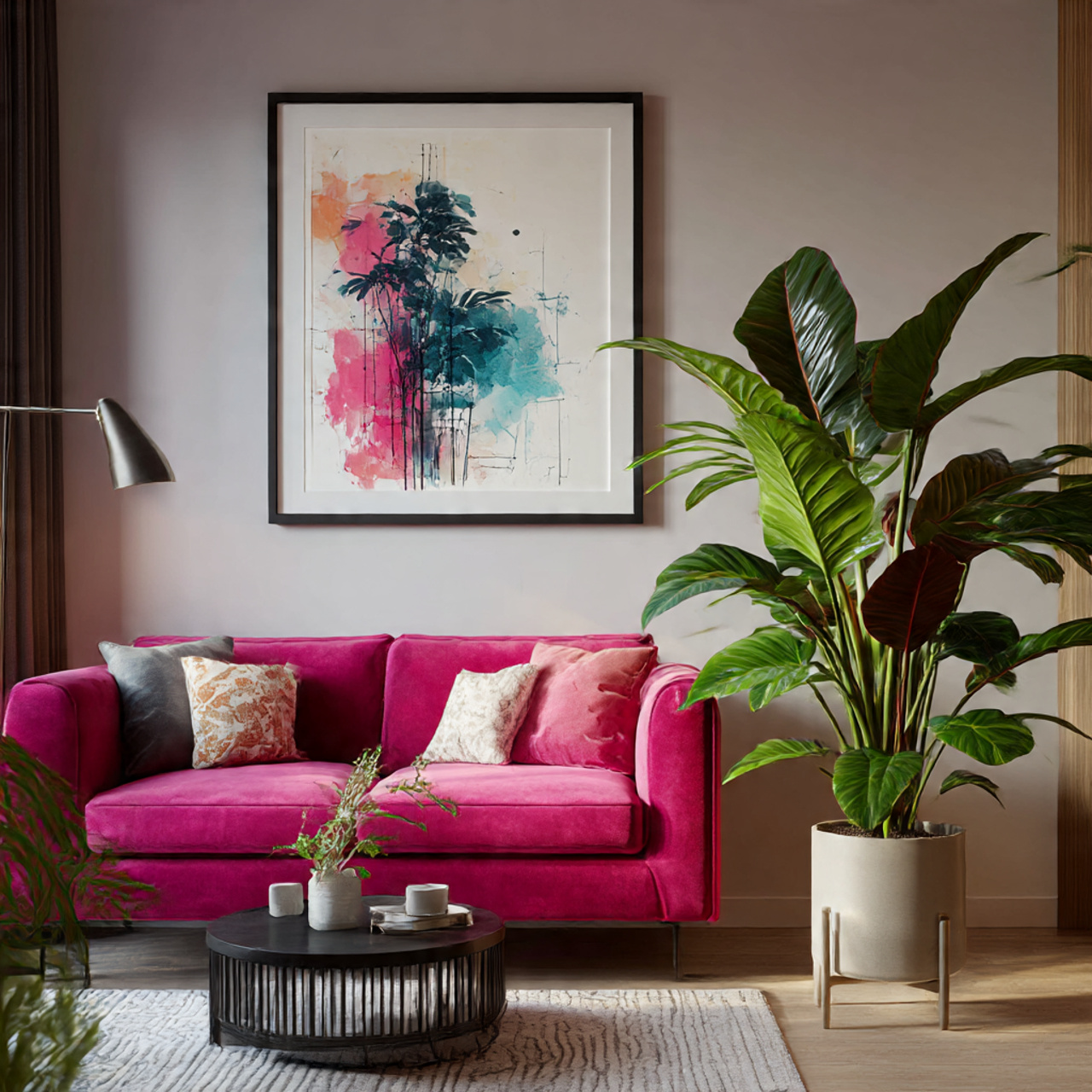
Your Pink Princess is living artwork—display it accordingly.
Artistic display concepts:
- Position against gallery white walls
- Pair with abstract paintings featuring pink tones
- Use as centerpiece in minimalist spaces
- Photograph and frame favorite leaves
Color theory application:
- Pink pops against navy or charcoal backgrounds
- Complements gold and brass accents beautifully
- Contrasts gorgeously with emerald green décor
- Softens stark white modern interiors
Instagram-worthy setup: Natural morning light + white background + close-up of newest pink leaf = viral potential.
Nighttime Care and Leaf Cleaning
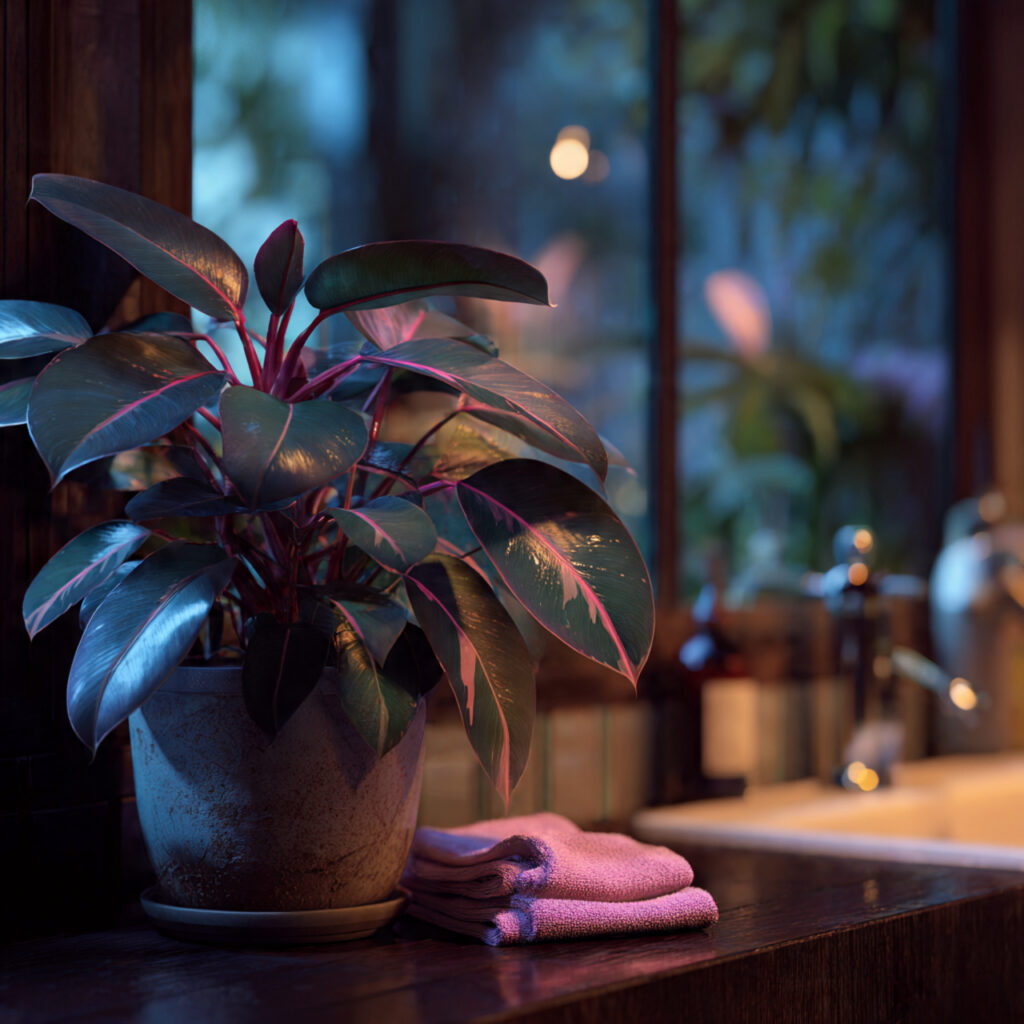
Evening routines keep your plant breathing easy and looking pristine.
Nighttime needs:
- Stable temperatures (avoid dropping below 60°F)
- Protection from cold window drafts
- Normal room darkness (no grow lights needed at night)
- Continued respiration and oxygen exchange
Weekly cleaning ritual:
- Wipe each leaf gently with soft, damp cloth
- Remove dust that blocks light absorption
- Check for pest evidence during cleaning
- Clean leaves photosynthesize 25% more efficiently
What to use:
- Plain water (safest option)
- Diluted neem oil (cleaning + pest prevention)
- Never use leaf shine products (clogs pores)
Capturing Perfect Plant Photos
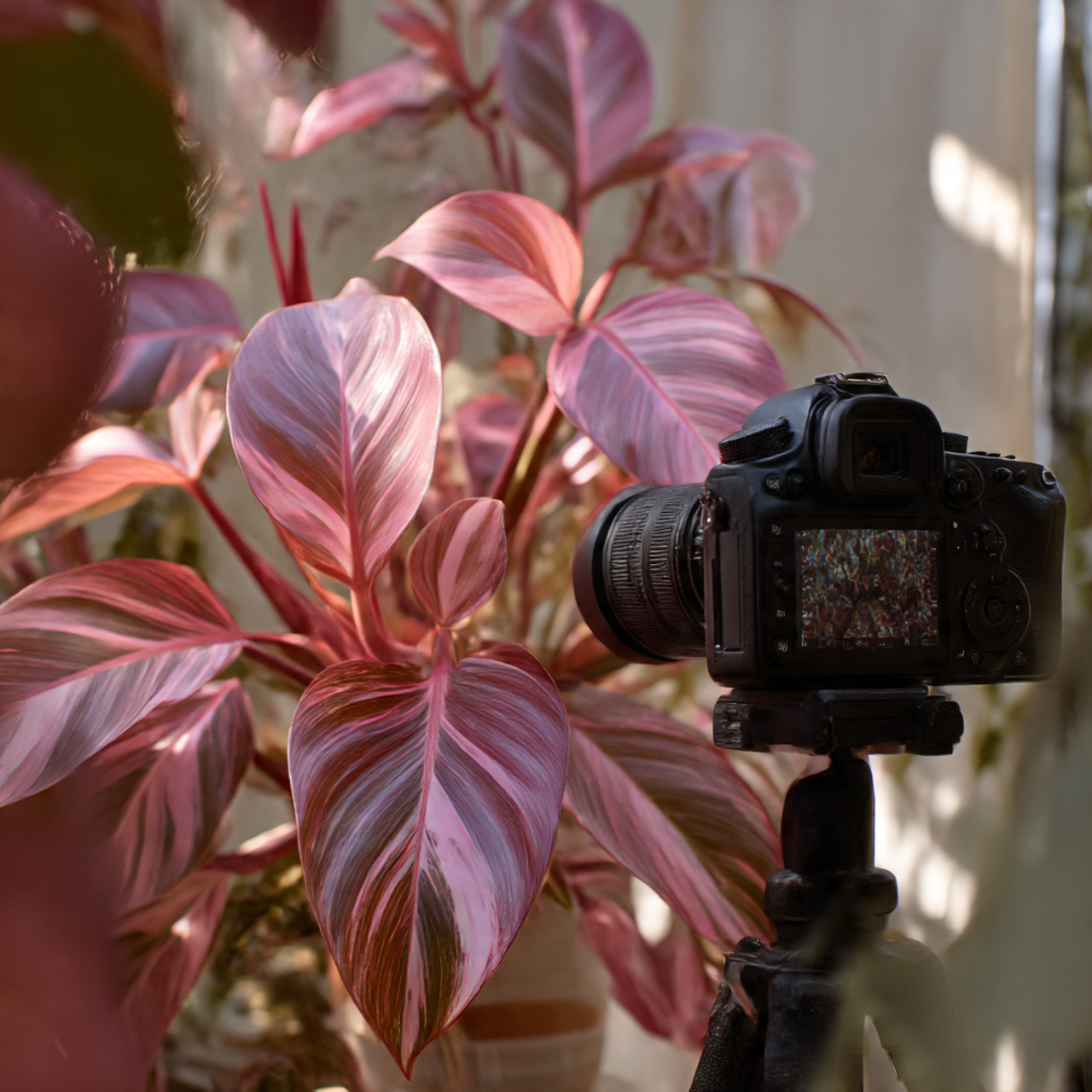
Share your Pink Princess pride with scroll-stopping photography.
Photography tips:
- Natural morning light shows truest pink colors
- Avoid harsh midday sun (washes out variegation)
- Use white or neutral backgrounds for contrast
- Get close for detailed leaf patterns
- Try different angles (top-down, profile, close-ups)
Editing suggestions:
- Slightly increase saturation (not too much)
- Boost shadows to show texture
- Crop tightly on most interesting leaves
- Keep it natural (over-editing looks fake)
Social media success:
- Use hashtags: #PinkPrincessPhilodendron #RarePlants #PlantParent
- Share care tips in captions
- Engage with plant community
- Document growth journey with monthly photos
Supporting Long-Term Maturity and Growth
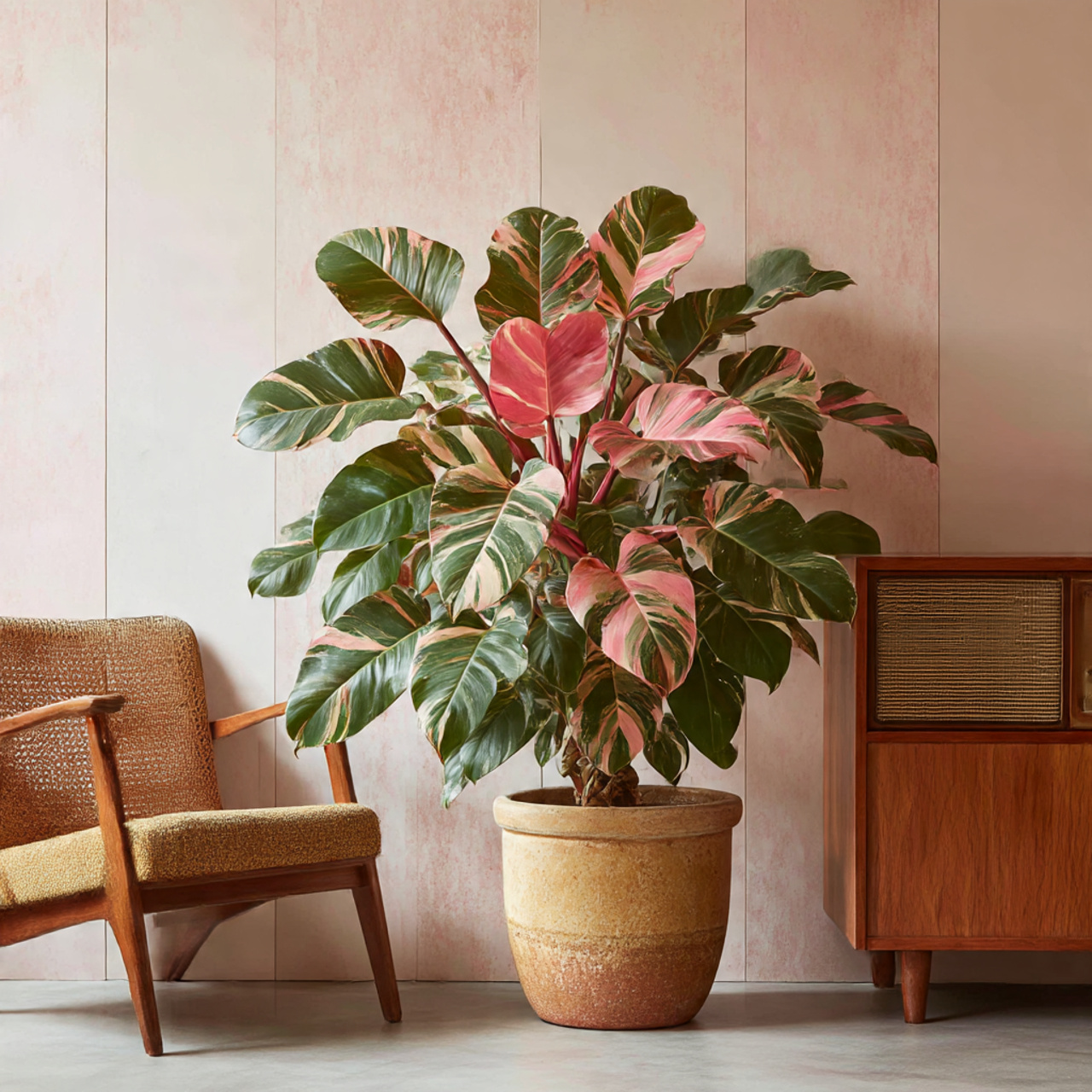
Mature Pink Princess Philodendrons become true showstoppers—here’s how to get there.
What to expect over time:
- Leaves double or triple in size
- Deeper, richer color saturation
- Thicker, woody stems develop
- More consistent variegation patterns
- Plant can reach 4-6 feet indoors with support
Long-term care essentials:
- Consistent environment (avoid moving frequently)
- Annual repotting into larger containers
- Ongoing support structure (taller moss poles)
- Patience (mature specimens take 3-5 years)
Investment value: Well-maintained mature plants can be worth $200-500+ due to their rarity and beauty.
Visit Also: Blue Star Fern
FAQs about Pink Princess Philodendron
Q: Why are the pink sections on my plant turning green? Low light is usually the culprit. Pink Princess needs bright, indirect light to maintain variegation. Move it closer to a window or add a grow light. Also, prune any fully green stems immediately—they’re more vigorous and will take over if left unchecked.
Q: How do I know when my plant needs water? Insert your finger 1-2 inches into the soil. If it feels dry, water thoroughly until water drains from the bottom. In warmer months, this might be weekly; in winter, every 10-14 days. The plant will also show signs of thirst with slightly drooping leaves.
Q: Can my pets safely be around this plant? No—Pink Princess Philodendron contains calcium oxalate crystals that are toxic to cats, dogs, and even humans if ingested. Symptoms include mouth irritation, drooling, and digestive upset. Keep it on high shelves or in rooms pets can’t access.
Q: Will my plant survive in just water long-term? It can live in water for several months and even produce new leaves, but soil provides better long-term nutrition and root development. Water propagation works great temporarily, but transition to soil for healthier, sustained growth.
Q: What’s the best temperature range for this plant? Keep your Pink Princess between 65–80°F (18–27°C) for optimal health. Avoid placing it near air conditioning vents, heaters, or drafty windows. Sudden temperature swings stress the plant and can cause leaf drop or color fading.
Q: How fast does Pink Princess Philodendron grow? Under ideal conditions, expect 3-6 new leaves during the growing season (spring/summer). Growth slows dramatically in fall and winter. With climbing support, the plant can add 12-24 inches of vine length annually.
Q: Why do some leaves have no pink at all? Variegation is genetically unstable in this hybrid. Some leaves will be greener, others pinker—it’s natural variation. However, if all new growth is completely green, increase light exposure and remove green-only stems to encourage pink production.
Final Thoughts: The Magic of Pink Princess Philodendron
The Pink Princess Philodendron offers more than just visual appeal—it’s a rewarding journey in patience, observation, and botanical artistry. Every leaf that unfurls brings anticipation: will it be mostly pink, half-and-half, or splashed with burgundy? That unpredictability is part of the charm.
With proper light, humidity, and attentive care, your plant will reward you with increasingly vibrant foliage and impressive growth. Whether you’re showcasing it as a living centerpiece, training it up a moss pole, or propagating to share with friends, this tropical gem brings natural elegance to any space.
The Pink Princess isn’t just a plant you own—it’s a relationship you nurture. As it grows, so does your understanding of its needs, its rhythms, and its remarkable ability to brighten even the simplest corner. Give it the care it deserves, and it’ll continue enchanting you for years to come.