25 Magical Fairy Garden Ideas to Transform Your Home & Garden
There’s something truly special about fairy gardens—they let you create your own little world of magic right in your own home. Whether you’re working with a tiny apartment balcony, a sprawling backyard, or even just a corner of your kitchen counter, these miniature wonderlands bring joy to everyone who sees them.
What makes fairy gardens so captivating? They’re more than just pretty decorations. These tiny landscapes give you a chance to tell stories, get creative with plants, and build something that grows and changes over time. Think tiny cottages nestled among real plants, winding stone paths leading to secret doors, and miniature furniture waiting for imaginary guests.
In this guide, you’ll discover some creative ways to build your own fairy garden—each one unique, each one magical. Let’s dive into this enchanting world together.
Why Create a Fairy Garden?
Fairy gardens combine the best of several hobbies into one delightful package. You get to play gardener, decorator, and storyteller all at once. The beauty is in their flexibility—you can start small with a single teacup or go big with an elaborate outdoor display.
Here’s what makes them so appealing:
- They work anywhere—indoors, outdoors, or in containers
- You can customize them to match your personality and style
- They’re perfect for all skill levels, from beginners to experts
- They provide a relaxing creative outlet that reduces stress
- Kids and adults alike find them absolutely captivating
Building a fairy garden teaches patience and attention to detail while letting your imagination run wild. Every tiny addition—a miniature bench here, a pebble path there—creates a world that feels alive and inviting.
Mini Fairy Villages
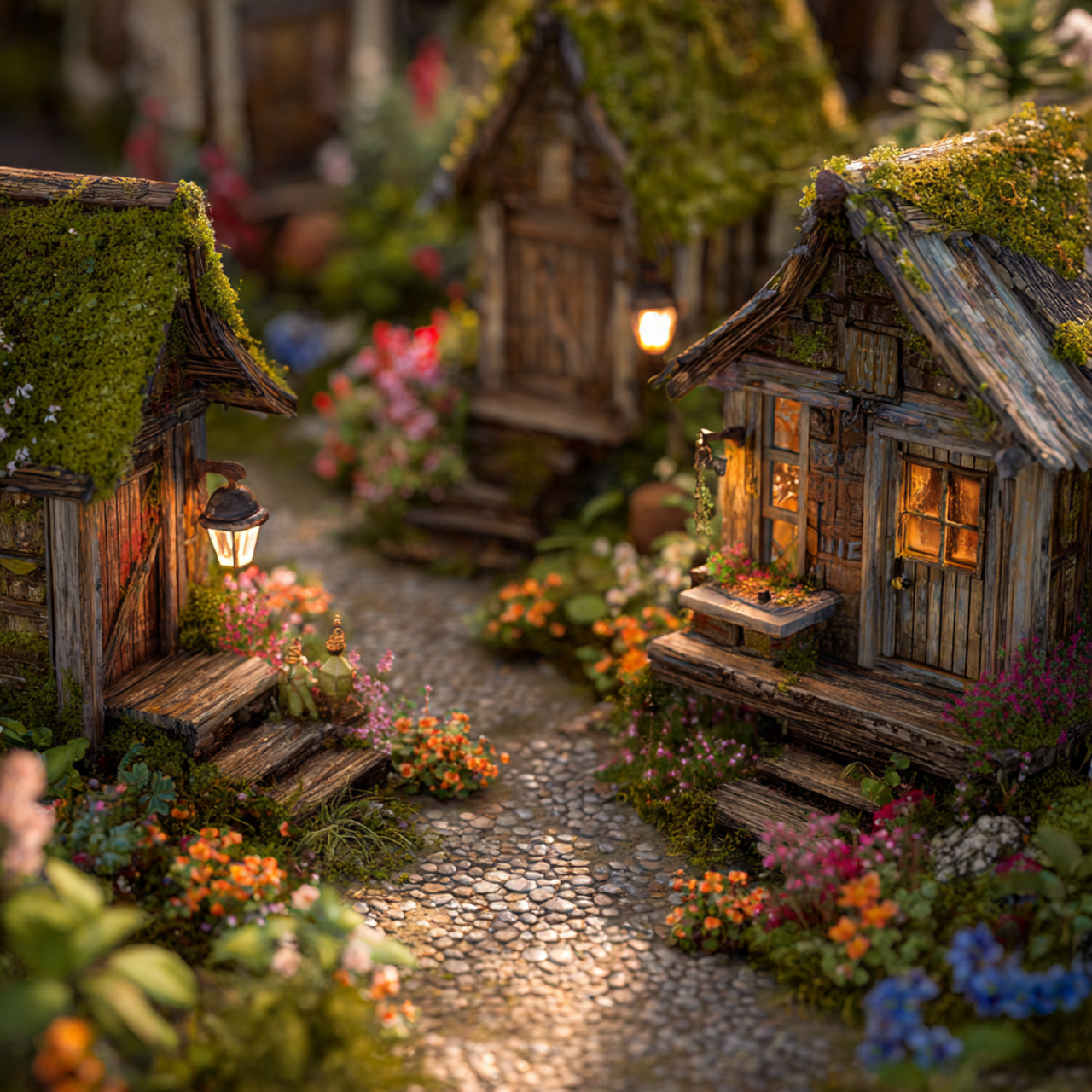
Transform your space into a bustling miniature community complete with houses, walkways, and gathering spots. The secret to making village scenes look realistic is all about layering and placement.
Tips for creating your village:
- Position taller buildings toward the back to create visual depth
- Use natural materials like moss between houses for a lived-in look
- Add small pebbles or gravel to create roads and courtyards
- Include tiny benches and lamp posts for authentic details
- Create different zones—residential areas, town squares, and garden spaces
Village themes offer endless storytelling possibilities. You might create a cozy woodland hamlet, a festive holiday town, or even a magical castle kingdom. Add miniature residents and watch your village come to life.
Moss-Covered Fairy Paths
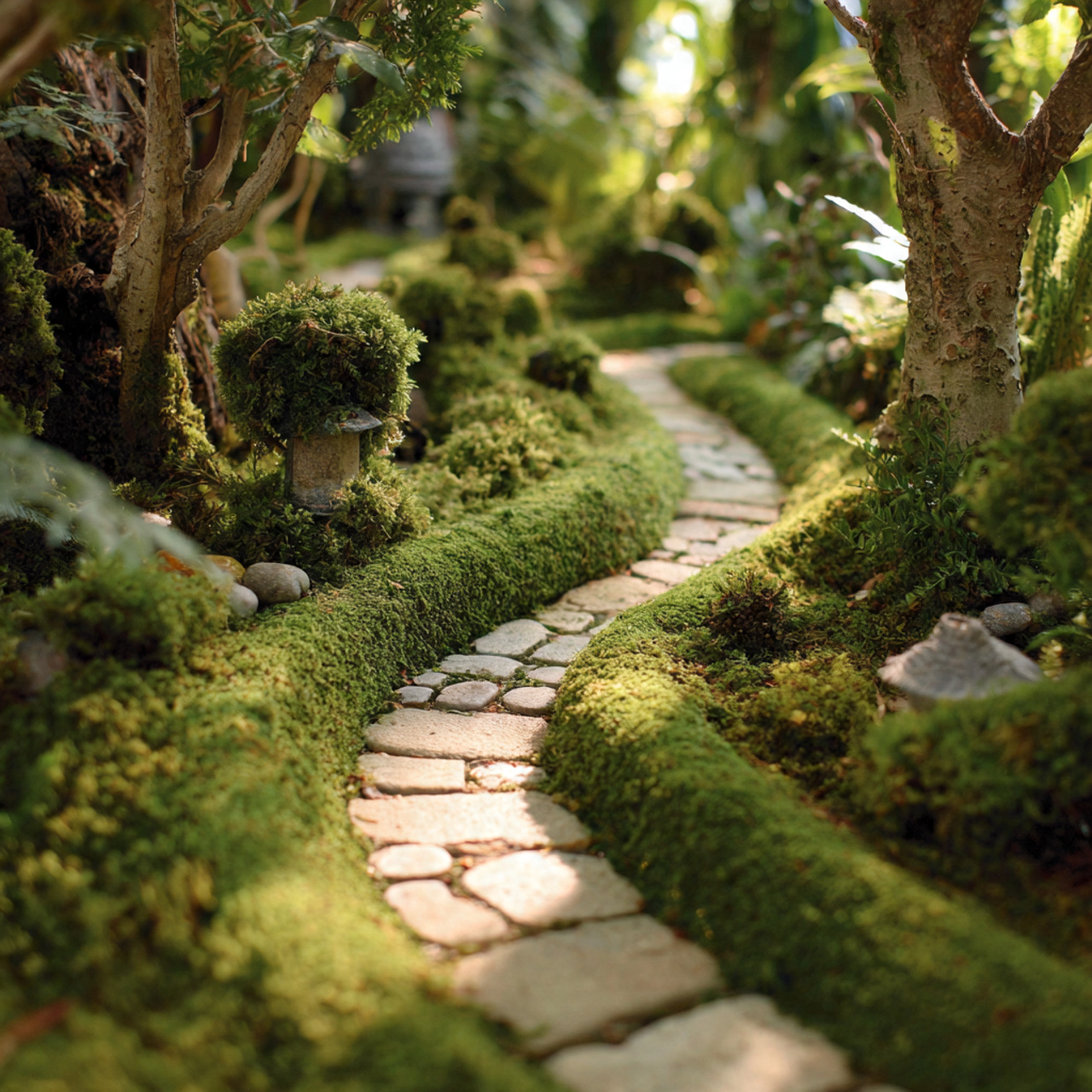
Winding moss pathways add instant charm while serving a practical purpose—they help keep your miniature plants hydrated. These soft, green trails guide the eye through your garden and create a sense of discovery.
Creating beautiful moss paths:
- Lay moss in curved lines rather than straight for a natural look
- Mist regularly to keep moss vibrant and healthy
- Place small stepping stones along the path for variety
- Add tiny wooden bridges where paths cross water features
- Ensure moss gets indirect sunlight to prevent drying out
The mystery of a winding path invites viewers to imagine where it leads—perhaps to a hidden fairy cottage or a secret garden spot.
Visit Also: Small Garden Design
Teacup Fairy Gardens
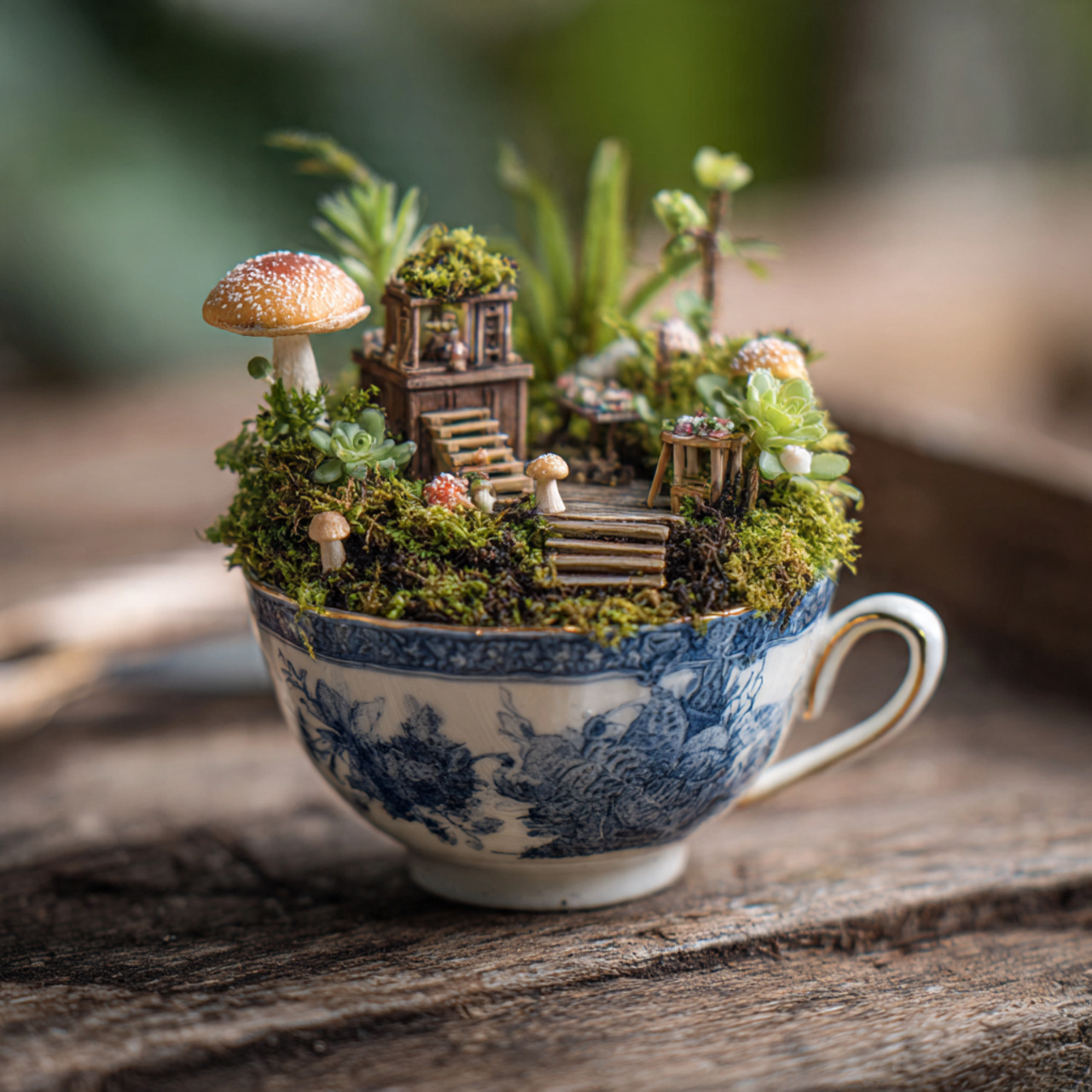
Vintage teacups make perfect homes for tiny gardens, especially if you’re short on space. These charming miniatures fit anywhere and make wonderful gifts.
Setting up your teacup garden:
- Choose teacups with drainage holes or add pebbles at the bottom
- Select small plants like miniature succulents or baby’s tears
- Add one or two tiny accessories—don’t overcrowd
- Place near a window for natural light
- Group several teacups together for a whimsical display
Teacup gardens prove that you don’t need much space to create something magical. They’re low-maintenance yet incredibly rewarding.
Tree-Root Fairy Homes
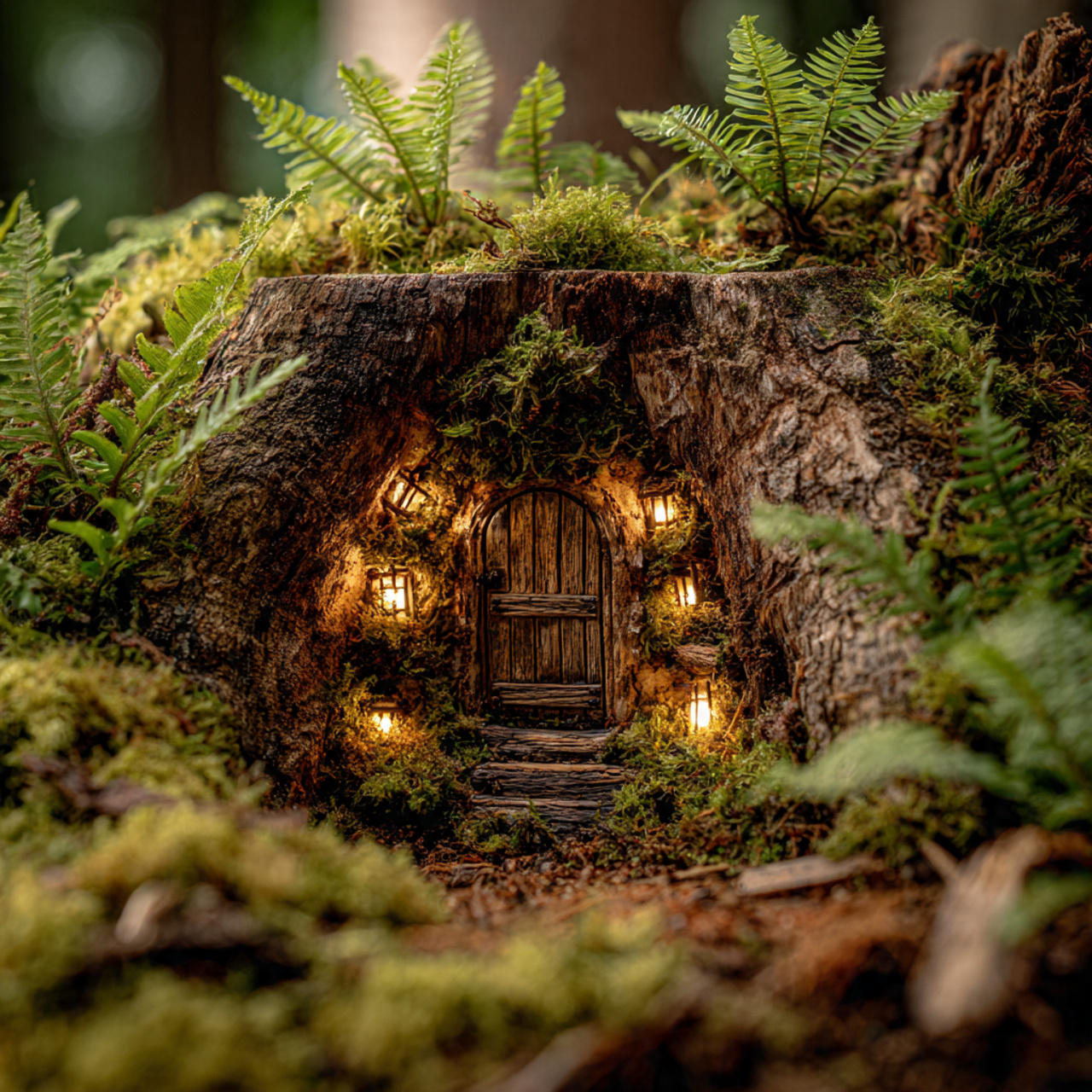
Nature provides ready-made fairy houses in the form of tree roots and stumps. With a little imagination, these become enchanting dwellings that look like they’ve been there forever.
Bringing tree-root homes to life:
- Add a tiny painted door between exposed roots
- Carve or attach small windows to stumps
- Place miniature steps leading to the entrance
- Surround with moss and small ferns for integration
- Add battery-operated lights inside for nighttime magic
These natural structures blend seamlessly with outdoor gardens and feel authentically fairy-like.
Waterfall and Miniature Pond Scenes
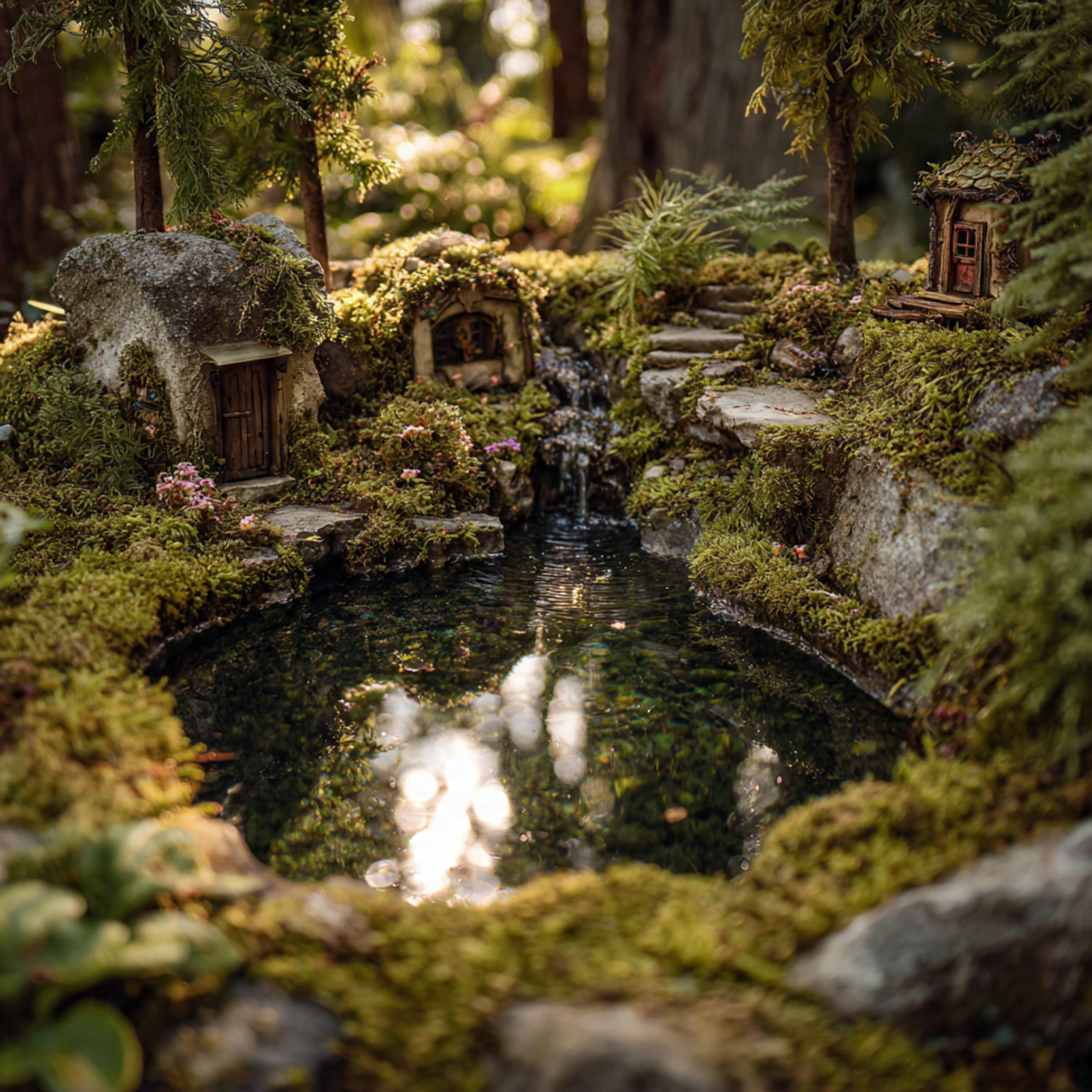
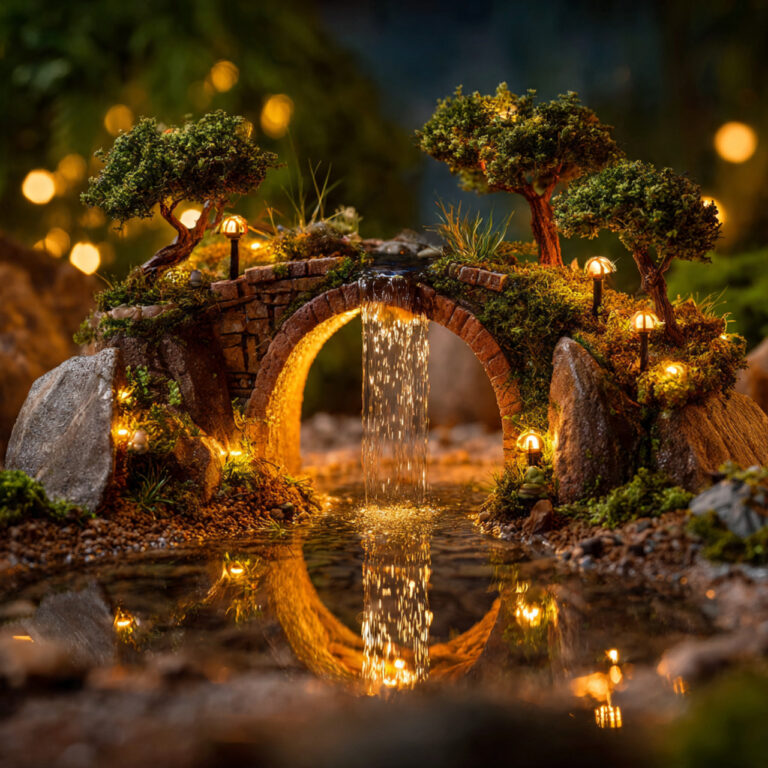
Nothing says “magical” quite like the gentle sound of trickling water. Small water features add movement, sound, and visual interest to your fairy world.
Creating water features:
- Use shallow dishes or resin pieces for ponds
- Add a small battery-powered pump for waterfalls
- Line pond edges with smooth pebbles and moss
- Float tiny lily pads or flowers on the surface
- Position near fairy houses to create waterfront property
Water features also attract real wildlife like birds and butterflies, adding another layer of life to your garden.
Fairy Garden in a Wooden Crate
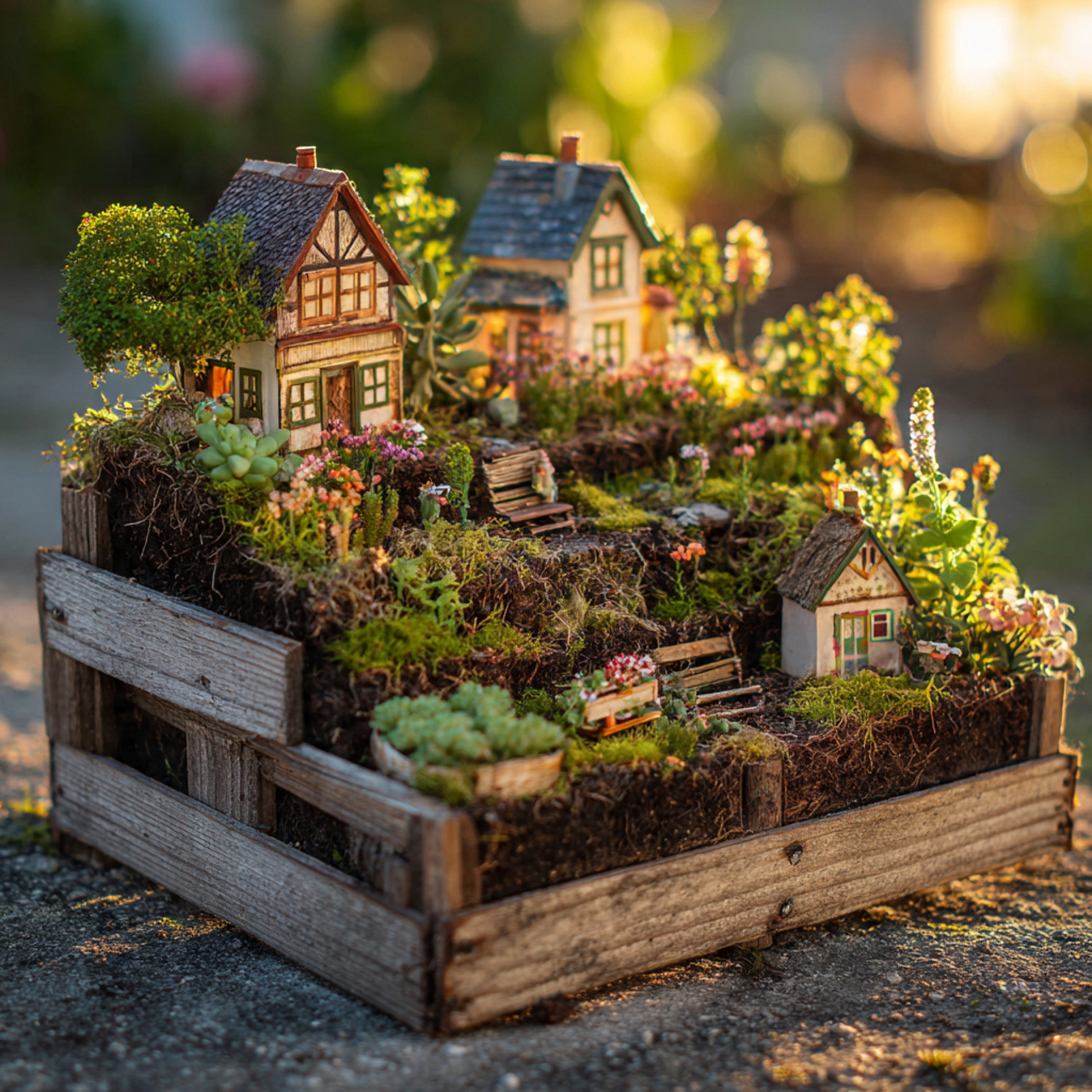
Repurposed wooden crates offer rustic charm and multiple levels for creative arrangements. They’re portable, affordable, and full of character.
Maximizing crate gardens:
- Fill the bottom with quality potting soil
- Create different heights using stacked stones or wood pieces
- Arrange plants and décor across multiple tiers
- Change decorations seasonally for variety
- Seal wood with weatherproof coating for outdoor use
Crates work beautifully on patios, balconies, or even indoors, and their vintage look adds warmth to any setting.
Mushroom-Themed Fairy Garden
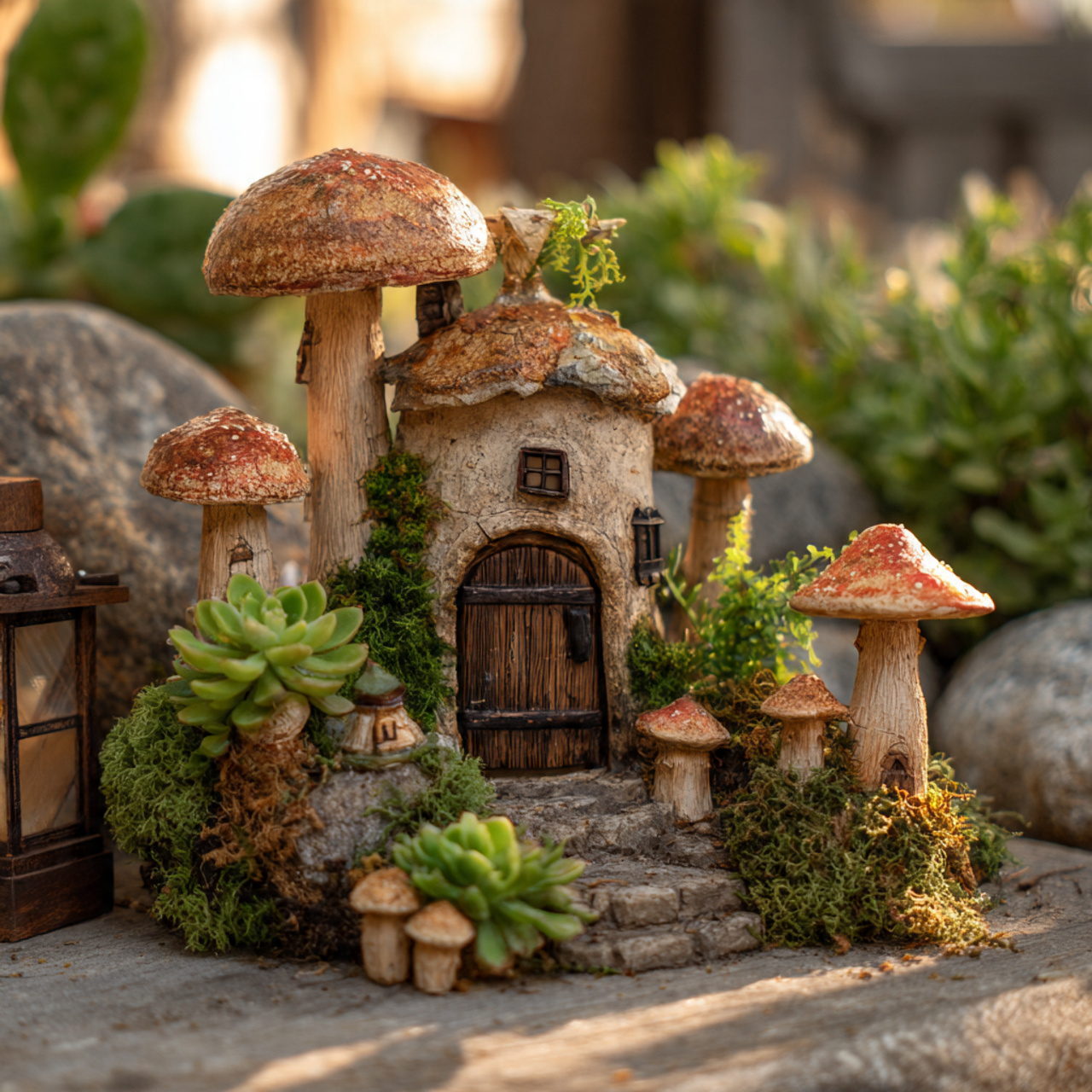
Mushrooms and fairy tales go hand-in-hand. Whether you use clay replicas or grow small edible varieties, these whimsical fungi add instant enchantment.
Incorporating mushrooms effectively:
- Scatter various sizes along pathways
- Use red and white spotted varieties for classic fairy-tale appeal
- Mix with moss for a forest floor effect
- Position near fairy houses as natural decorations
- Combine with small flowers for color contrast
Mushroom gardens evoke childhood stories and create that magical woodland atmosphere everyone loves.
Fairy Swing Set

A tiny swing adds playful energy and movement to your garden. It’s simple to make but creates a big impact.
Building miniature swings:
- Use twine or thin wire for ropes
- Create seats from popsicle sticks or small wooden pieces
- Hang from small branches or decorative posts
- Add a tiny sandbox or bench nearby
- Position where it can gently move in the breeze
Swings invite storytelling and make your garden feel interactive and alive.
Miniature Bridge over Pebble River
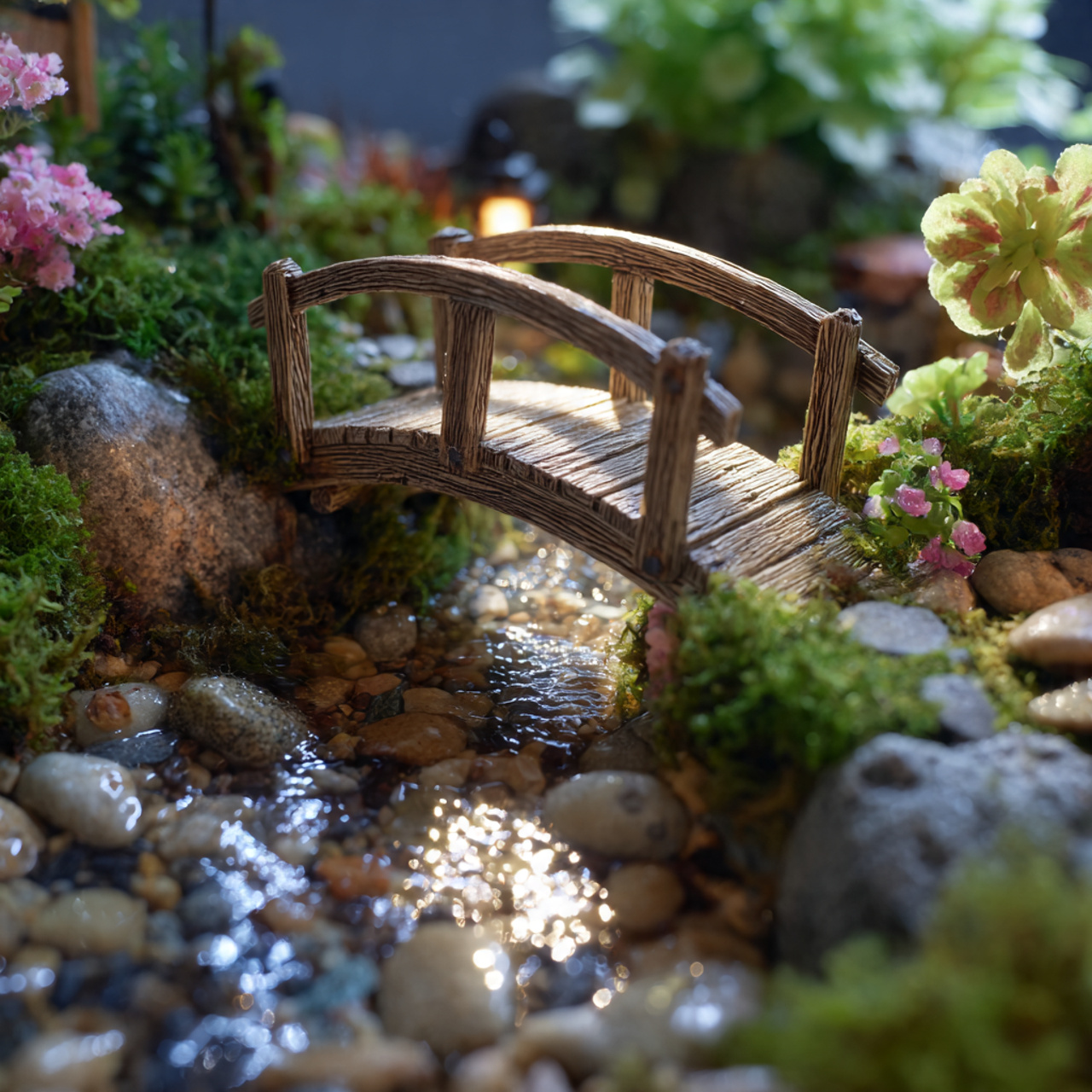
Bridges suggest journey and adventure—they hint that your fairy garden extends beyond what’s visible.
Constructing effective bridges:
- Build small arched bridges from sticks or craft wood
- Create “rivers” using blue glass beads or smooth pebbles
- Place bridges at natural crossing points
- Add railings for realistic detail
- Use different materials—wood, stone, or metal—for variety
This classic element adds dimension and narrative depth to any fairy landscape.
Fairy Lantern Garden

Miniature lanterns transform your garden from day to night, creating enchanting evening displays.
Lighting your fairy garden:
- Choose solar-powered lanterns for easy maintenance
- Place along pathways to highlight routes
- Position near doors and windows for cozy ambiance
- Mix different lantern styles for visual interest
- Ensure batteries are accessible for LED options
Garden lights make your creation enjoyable at any hour and add a warm, welcoming glow.
Succulent Fairy Garden
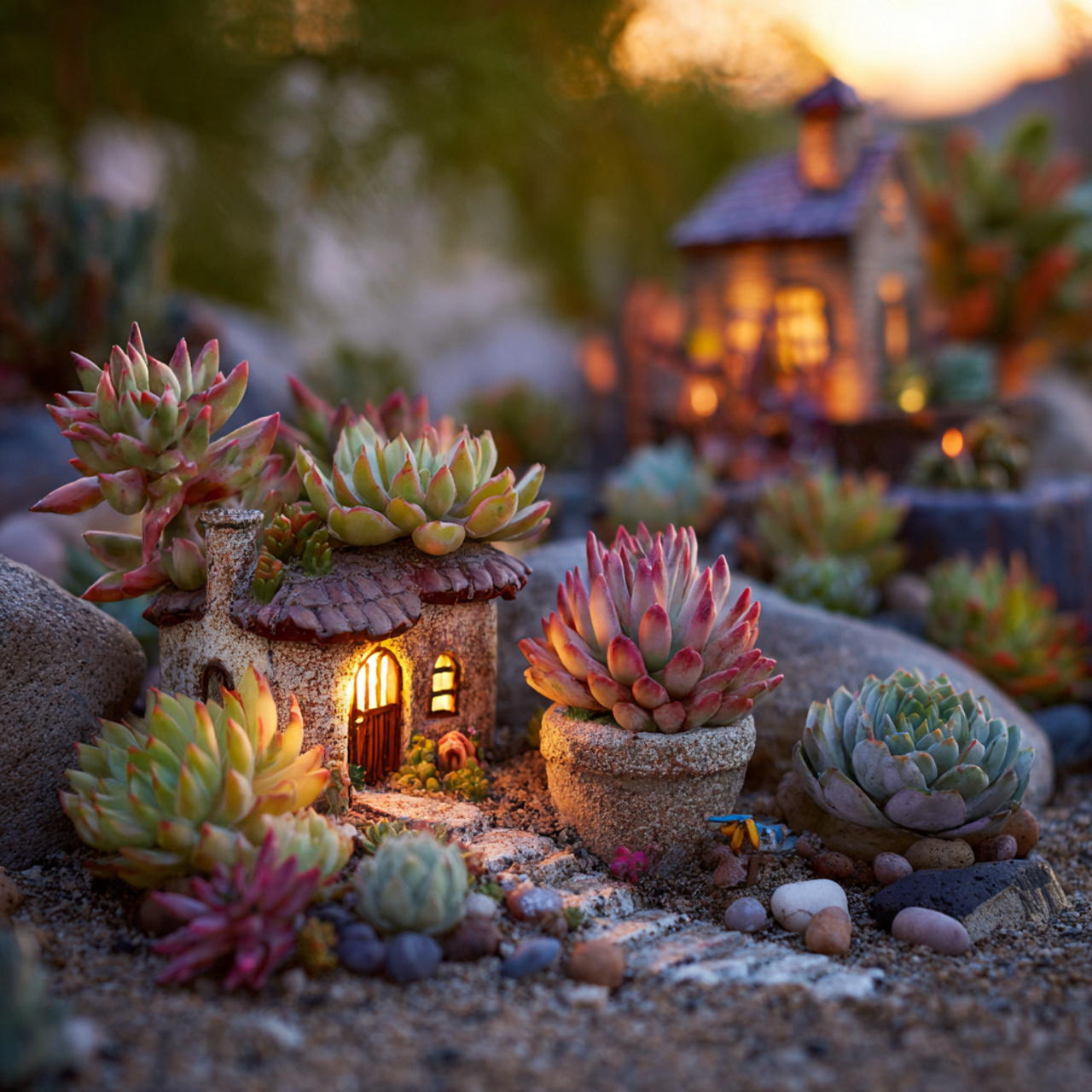
Succulents are ideal for fairy gardens—they’re hardy, come in amazing varieties, and require minimal care.
Creating succulent gardens:
- Mix different colors and textures for visual appeal
- Choose small varieties that won’t quickly outgrow the space
- Ensure proper drainage to prevent root rot
- Combine with pebbles and miniature accessories
- Water sparingly—succulents prefer dry conditions
These low-maintenance plants work equally well indoors or outdoors and look stunning year-round.
Broken Pot Fairy Garden
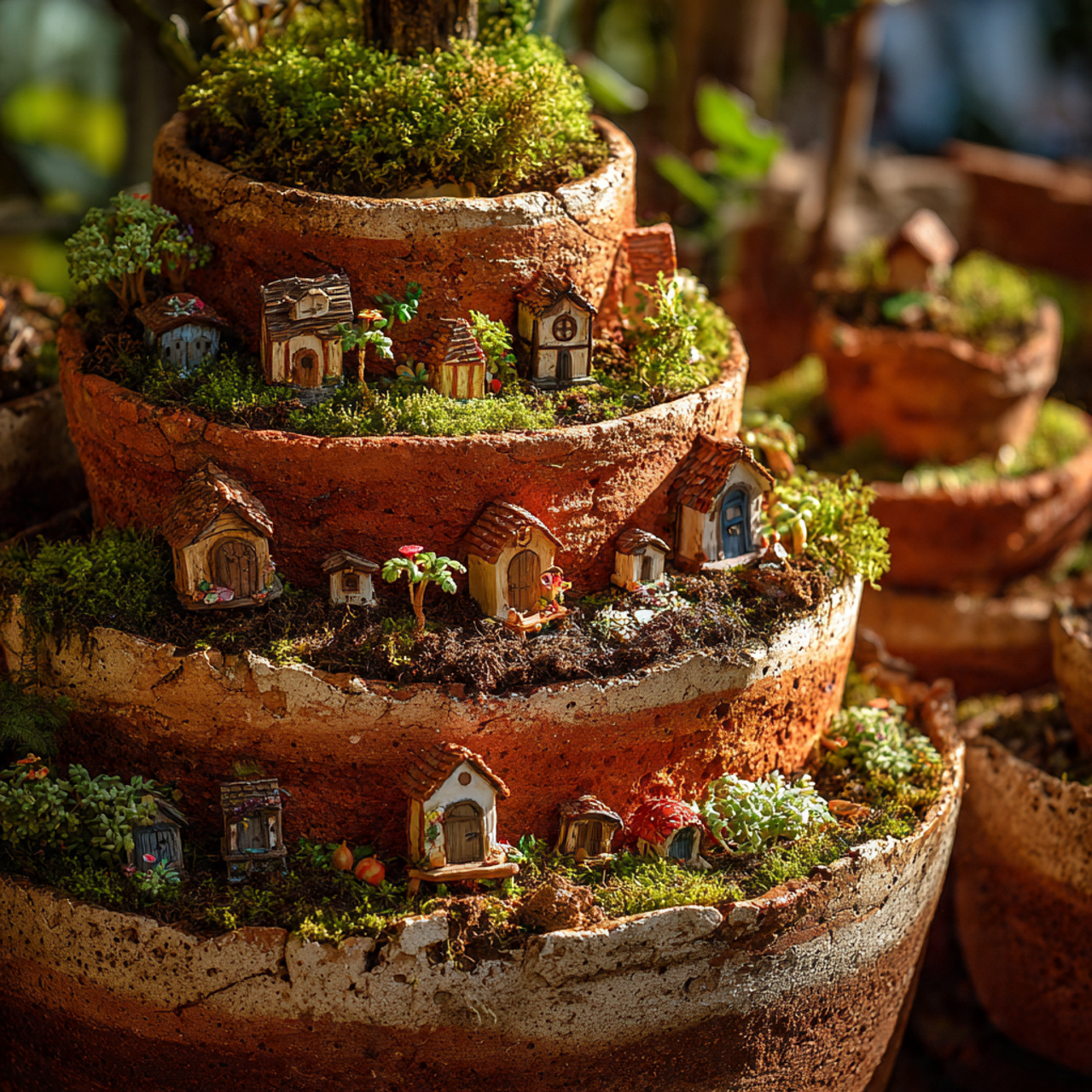
Don’t throw away cracked pots—they’re perfect for creative tiered gardens that add vertical interest.
Building broken pot gardens:
- Stack pieces at angles to create levels
- Secure with soil and pebbles
- Plant on each tier for a cascading effect
- Add tiny houses and figurines throughout
- Use moss to soften edges and blend pieces
This upcycling approach is eco-friendly and makes stunning displays in small spaces.
Fairy Treehouse Scene
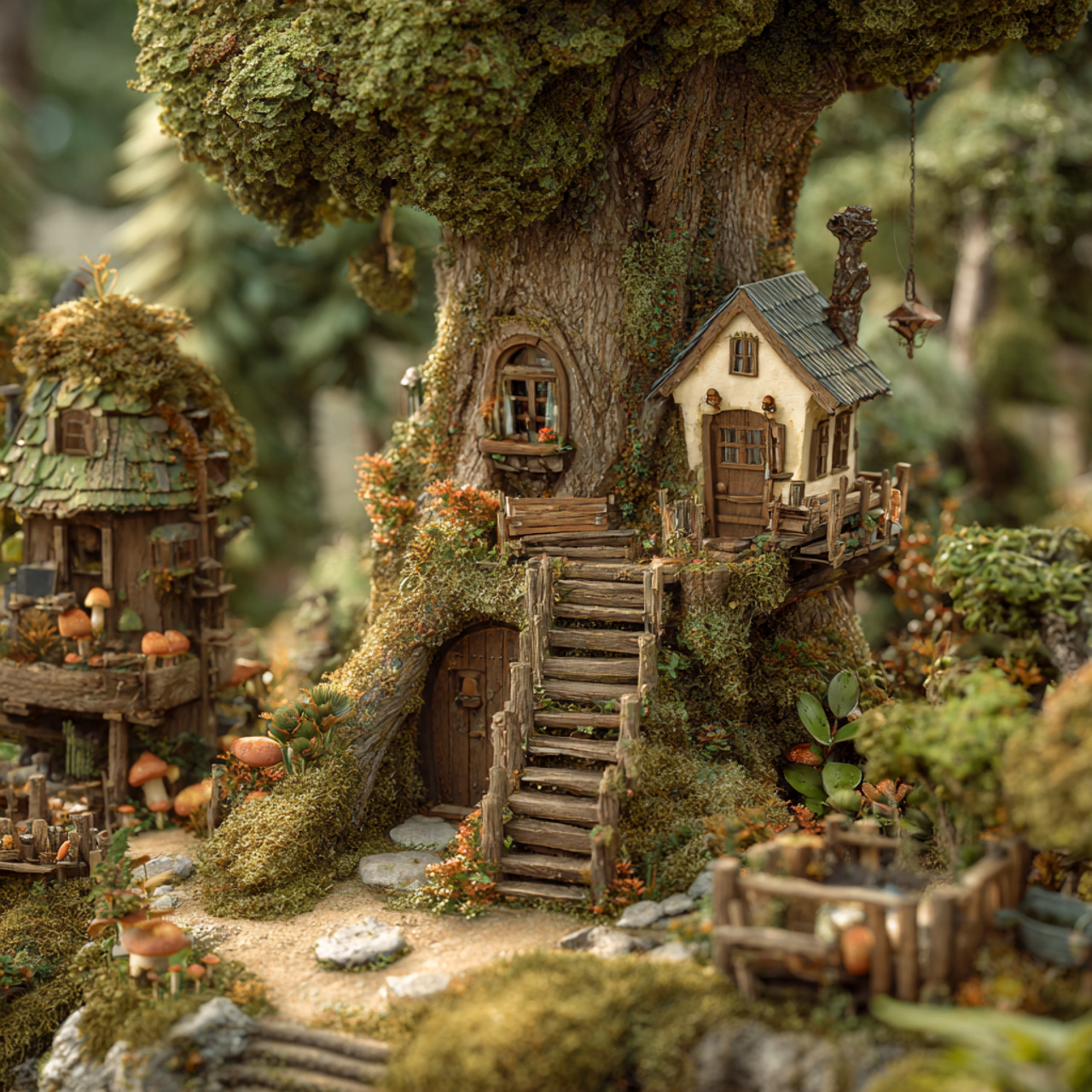
Treehouses add height and drama to fairy gardens. They become natural focal points that draw the eye upward.
Constructing miniature treehouses:
- Build from twigs, craft sticks, or small wood pieces
- Add a tiny ladder or stairs for access
- Surround the base with plants and moss
- Include small details like windows and doors
- Position figurines nearby to show scale
Treehouses inspire stories of fairy adventures and create memorable garden features.
Herb and Fairy Combo Garden
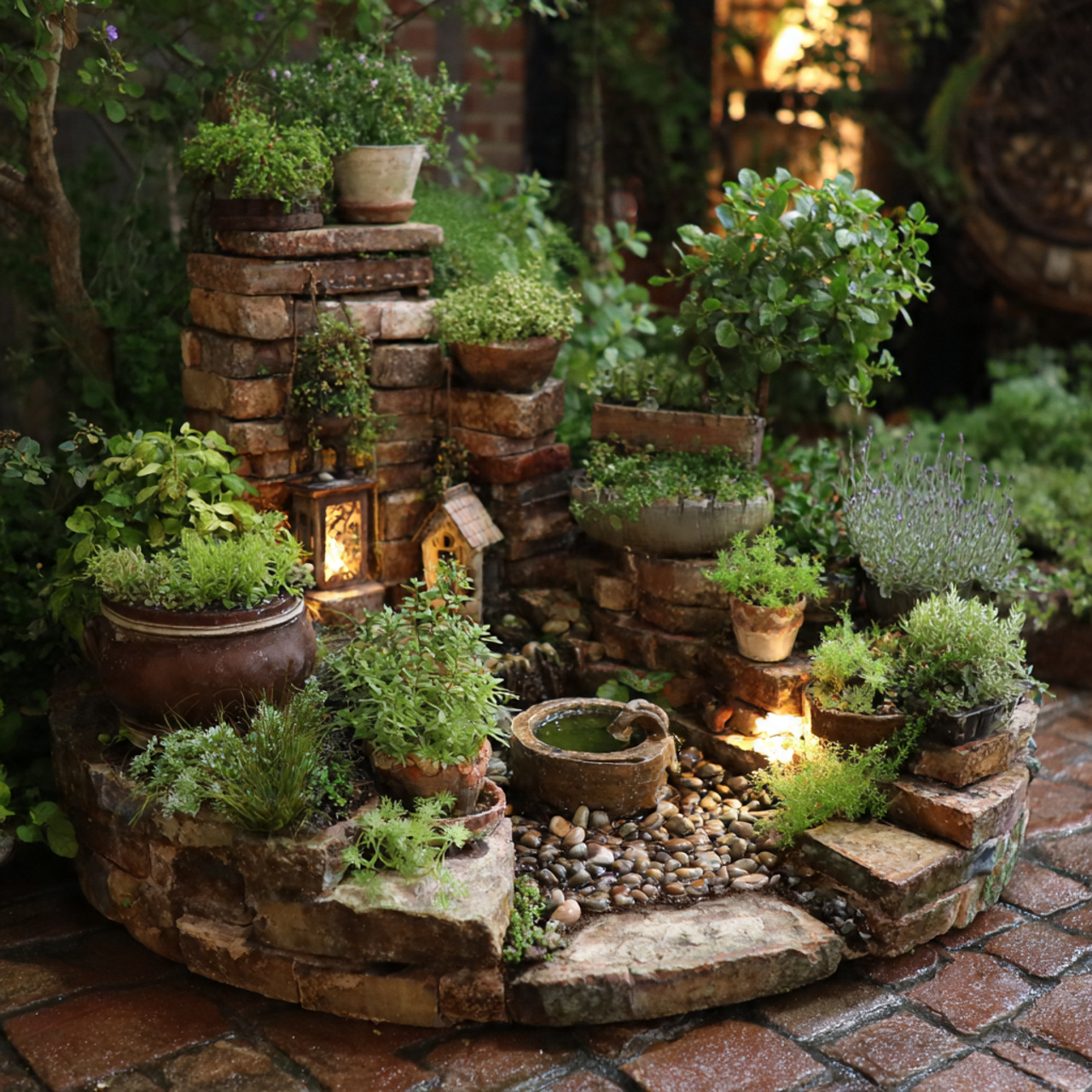
Combine function with fantasy by planting herbs among your fairy décor. You get beauty, fragrance, and culinary ingredients all in one.
Best herbs for fairy gardens:
- Creeping thyme—stays low and smells wonderful
- Small rosemary—adds height and aroma
- Oregano—provides texture and flavor
- Miniature basil—compact and useful
- Chamomile—delicate flowers and calming scent
This practical approach gives you a living garden that serves multiple purposes.
Pebble Courtyard
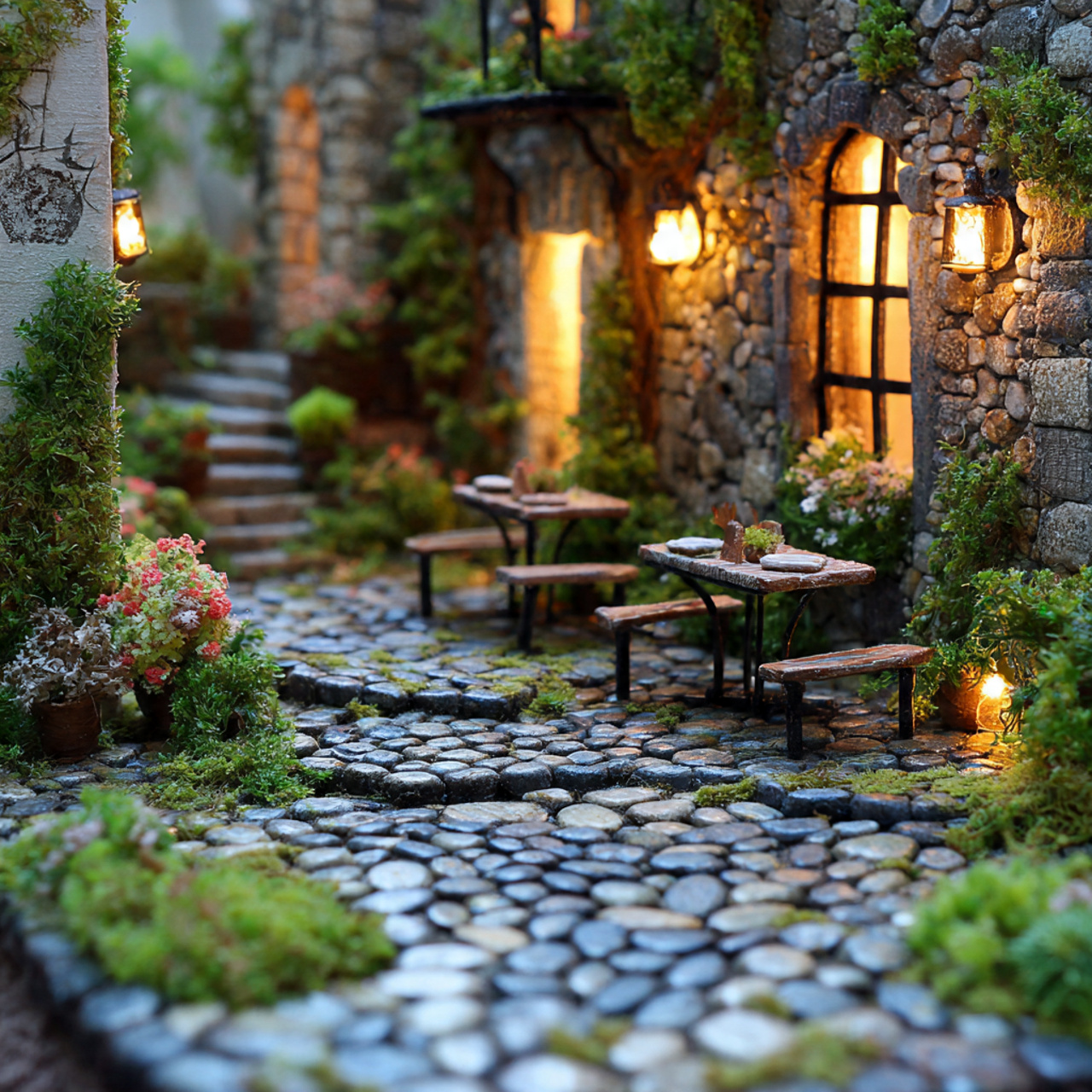
A well-designed courtyard adds structure and elegance. It creates gathering spaces for your fairy inhabitants.
Designing pebble courtyards:
- Arrange flat stones in patterns or circles
- Leave spaces between stones for small plants
- Add miniature furniture for fairy gatherings
- Include a tiny fountain or birdbath as centerpiece
- Edge with moss or small plants
Courtyards provide organized spaces that contrast beautifully with wilder garden areas.
Fairy Garden in a Birdbath
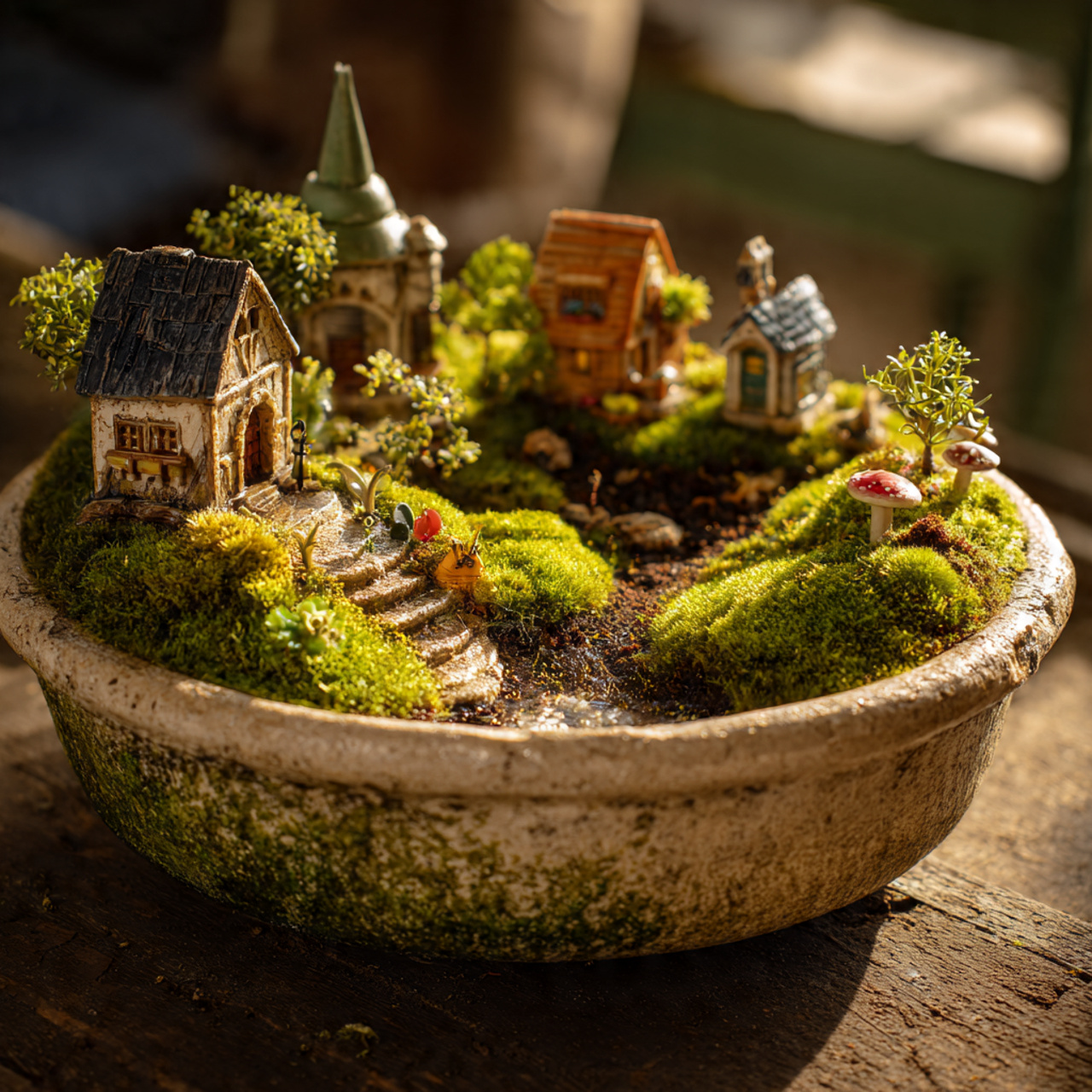
Elevate your fairy garden—literally—by using an old birdbath as your container. The height creates visual impact and saves ground space.
Setting up birdbath gardens:
- Add drainage holes if needed
- Fill with lightweight potting soil
- Arrange plants and décor from tall to short
- Ensure stability with proper weight distribution
- Position where it’s visible from multiple angles
This approach works wonderfully on patios or near entryways where you want maximum visual impact.
Rustic Wooden Door on a Tree Trunk
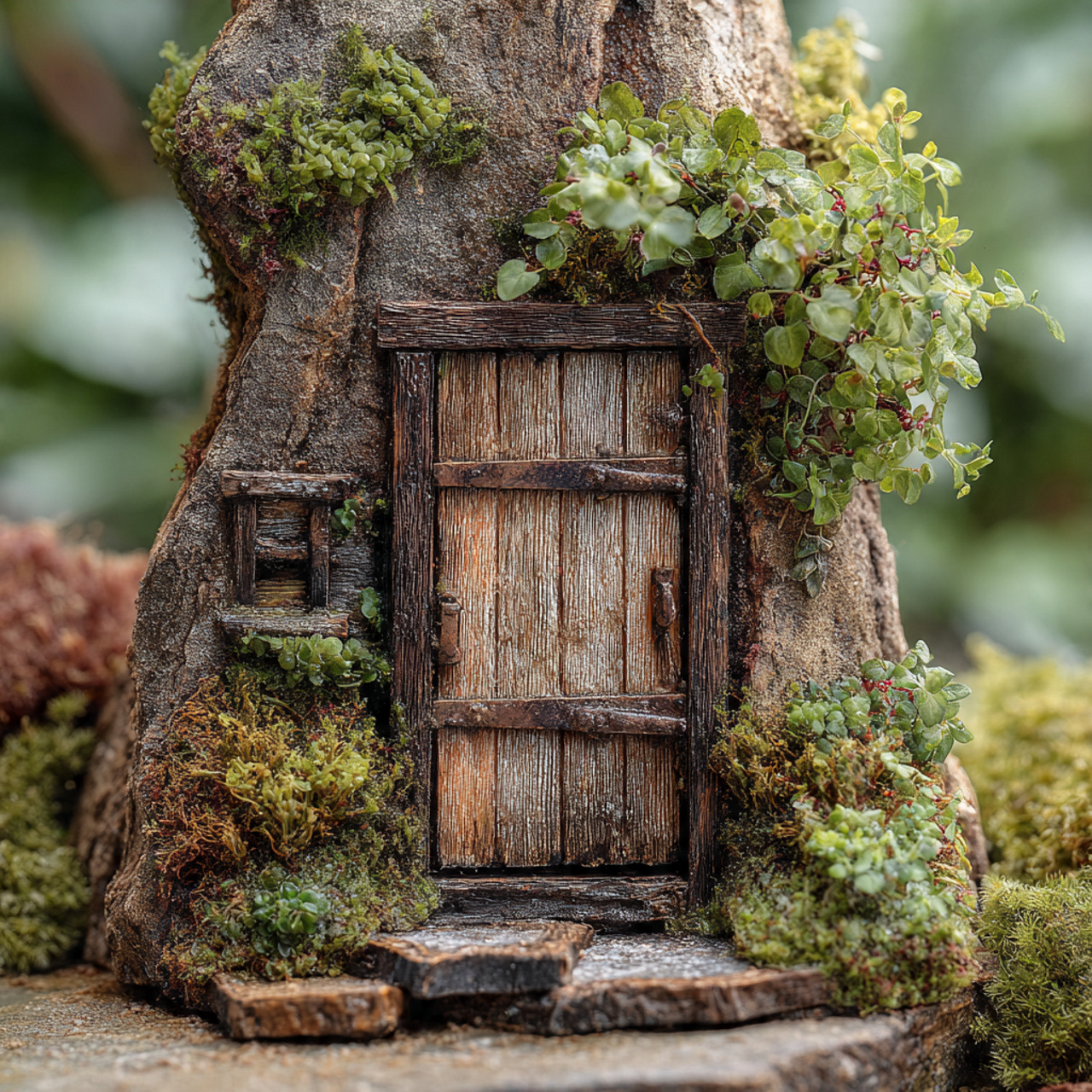
A simple painted door attached to a tree trunk suggests entire worlds hidden just beyond. It’s minimal effort for maximum charm.
Installing fairy doors:
- Choose or create doors sized proportionally to the tree
- Secure with weatherproof adhesive
- Add small details like doorknobs and hinges
- Surround with moss, pebbles, and small plants
- Consider adding tiny windows nearby
These mysterious doorways capture imaginations and become conversation starters.
Fairy Pond with Floating Décor
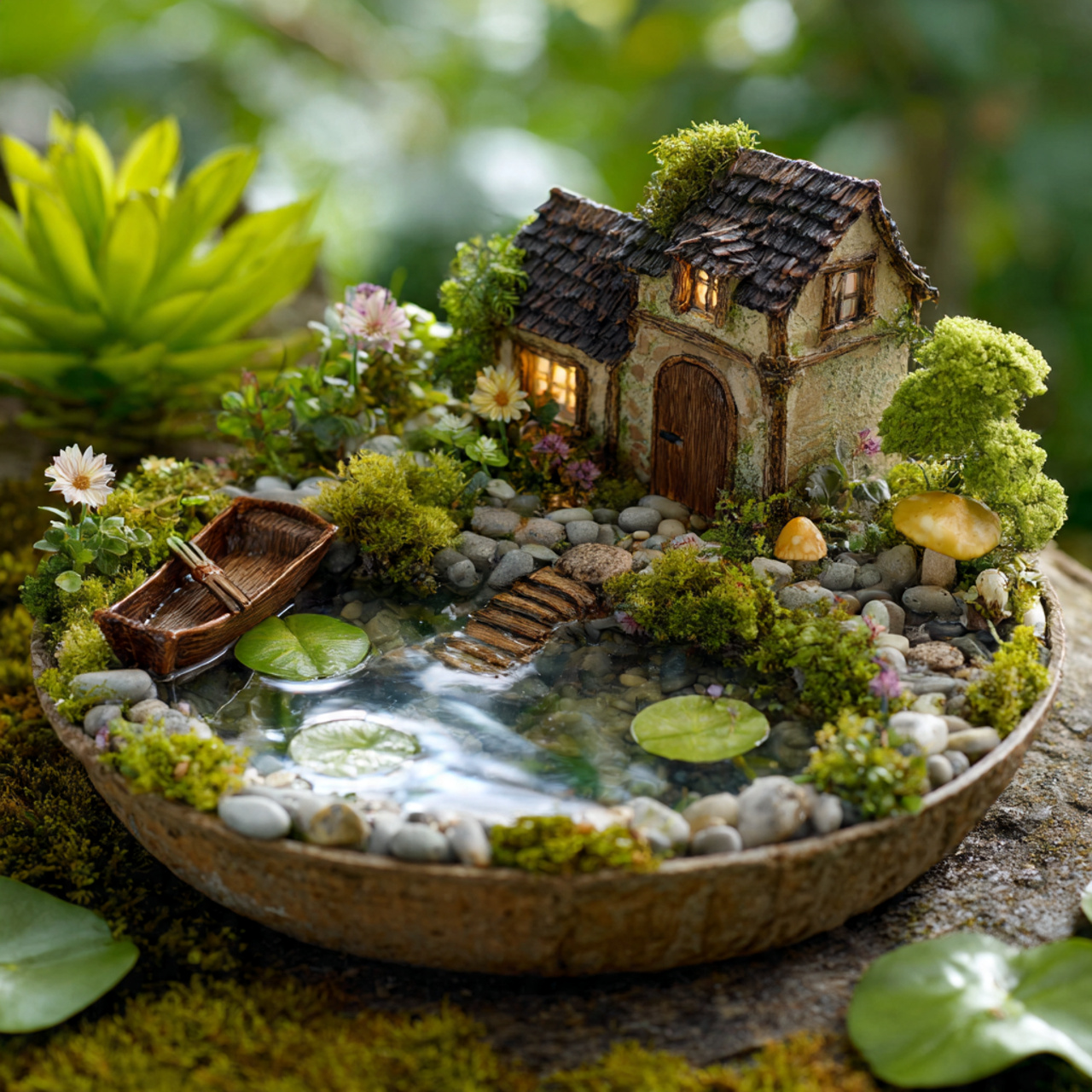
Small water containers decorated with floating elements add serenity and beauty. The reflective surface makes gardens feel larger and more magical.
Creating fairy ponds:
- Use shallow dishes or saucers as ponds
- Float miniature lily pads and flowers
- Add small figurines along the edges
- Place reflective materials at the bottom for depth
- Refresh water regularly to keep clean
These peaceful water features attract birds and create tranquil focal points.
Vintage Fairy Garden in a Suitcase
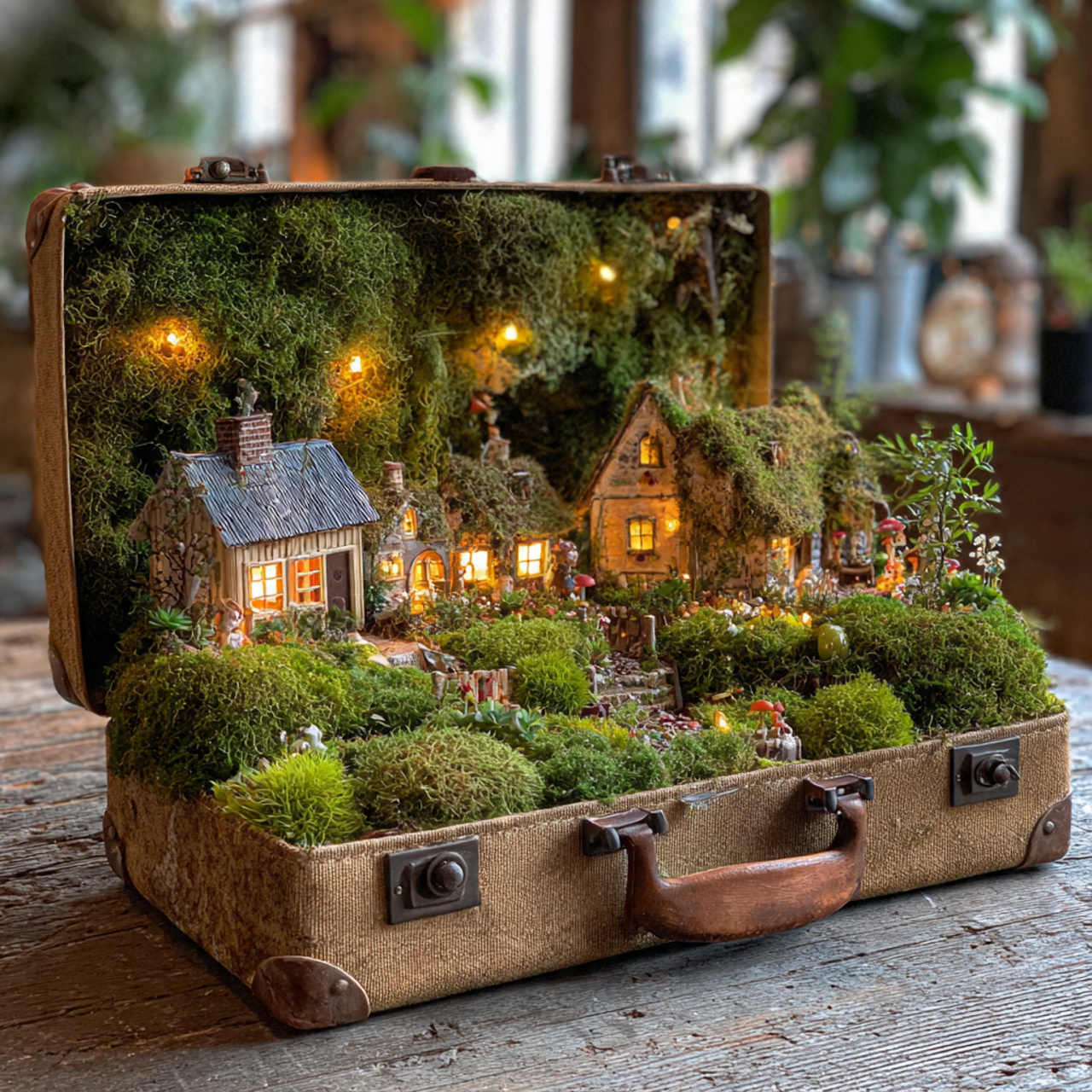
Old suitcases transform into portable fairy worlds with multiple levels and vintage charm.
Building suitcase gardens:
- Line the interior with plastic for protection
- Create levels using dividers or platforms
- Fill sections with different plants and scenes
- Add handles or straps for easy moving
- Display open or partially open for visibility
Suitcase gardens make unique gifts and conversation pieces.
Fairy Picnic Scene
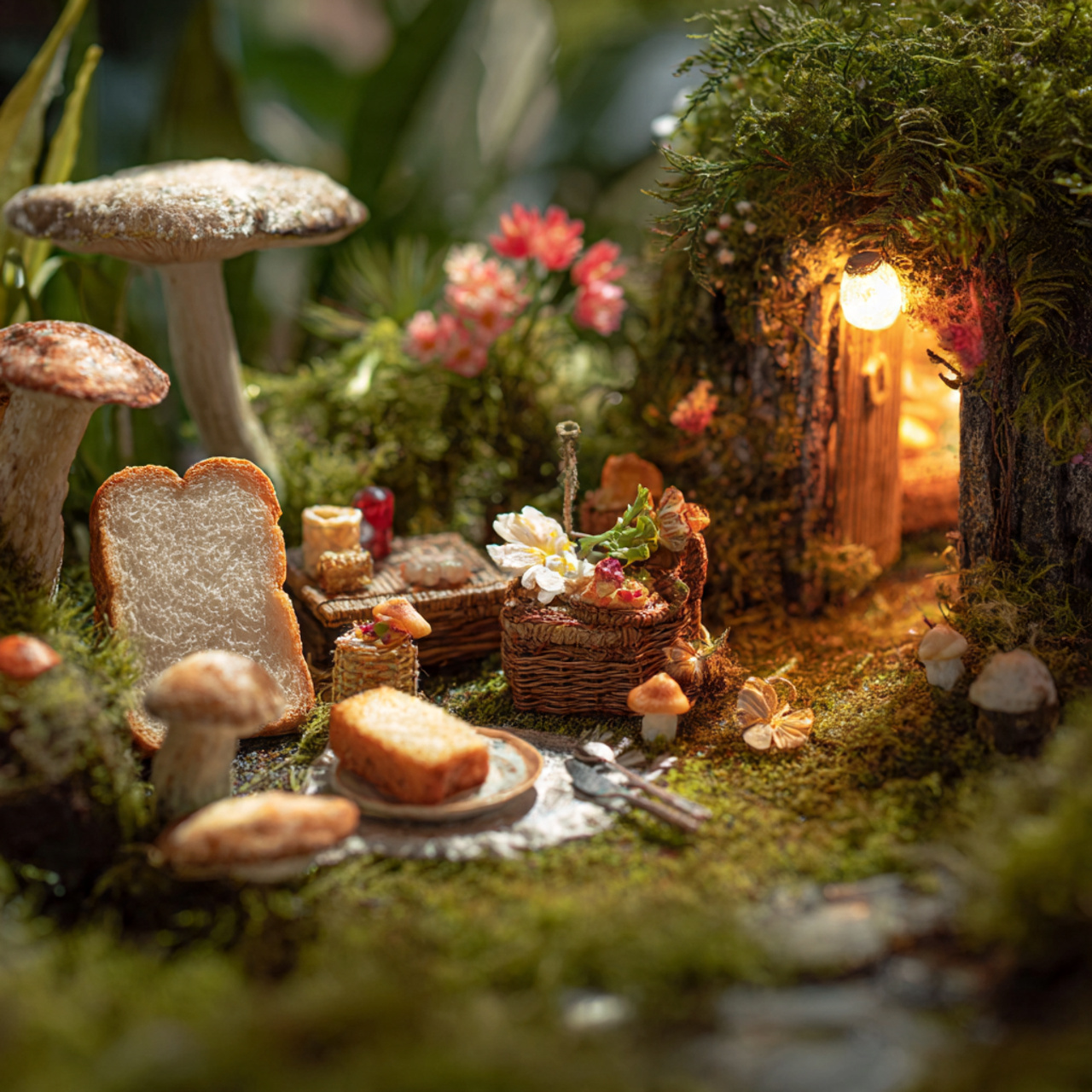
Create a miniature picnic complete with tiny tables, food, and relaxing fairies. It’s playful and brings your garden to life.
Setting up picnic scenes:
- Use miniature furniture scaled appropriately
- Add tiny baskets, plates, and food items
- Surround with flowering plants
- Include fairy figurines enjoying the meal
- Place on moss or grass-like plants for realism
Picnic scenes add personality and storytelling elements that viewers love.
Fairy Greenhouse Mini Garden
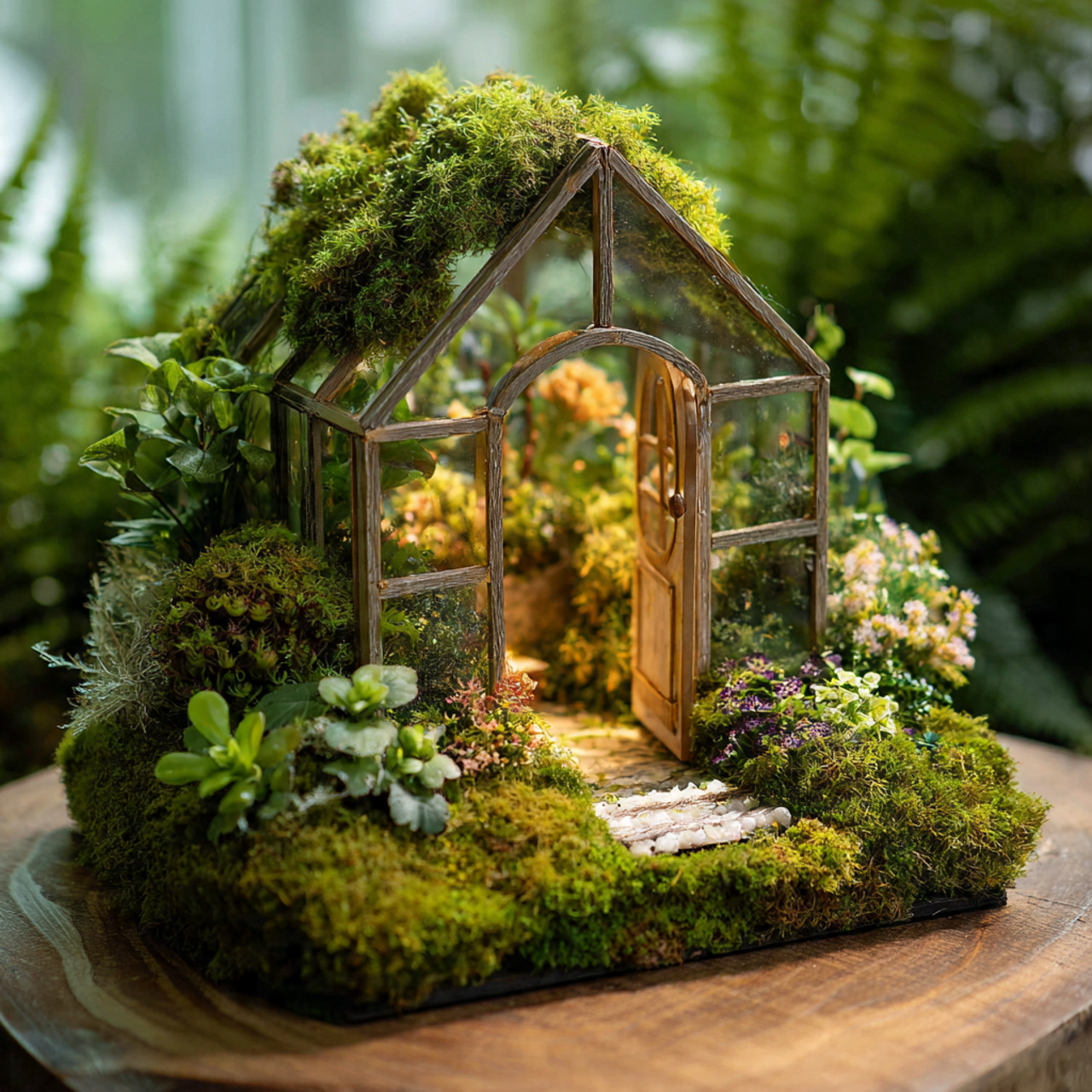
Tiny greenhouses protect delicate plants while adding architectural interest. They combine practicality with whimsy.
Creating mini greenhouses:
- Build from clear plastic or small glass frames
- Fill with tiny potted plants
- Add miniature gardening tools nearby
- Ensure adequate ventilation for plant health
- Position where it catches light
These structures add a realistic gardening element to your fairy world.
Seaside Fairy Garden
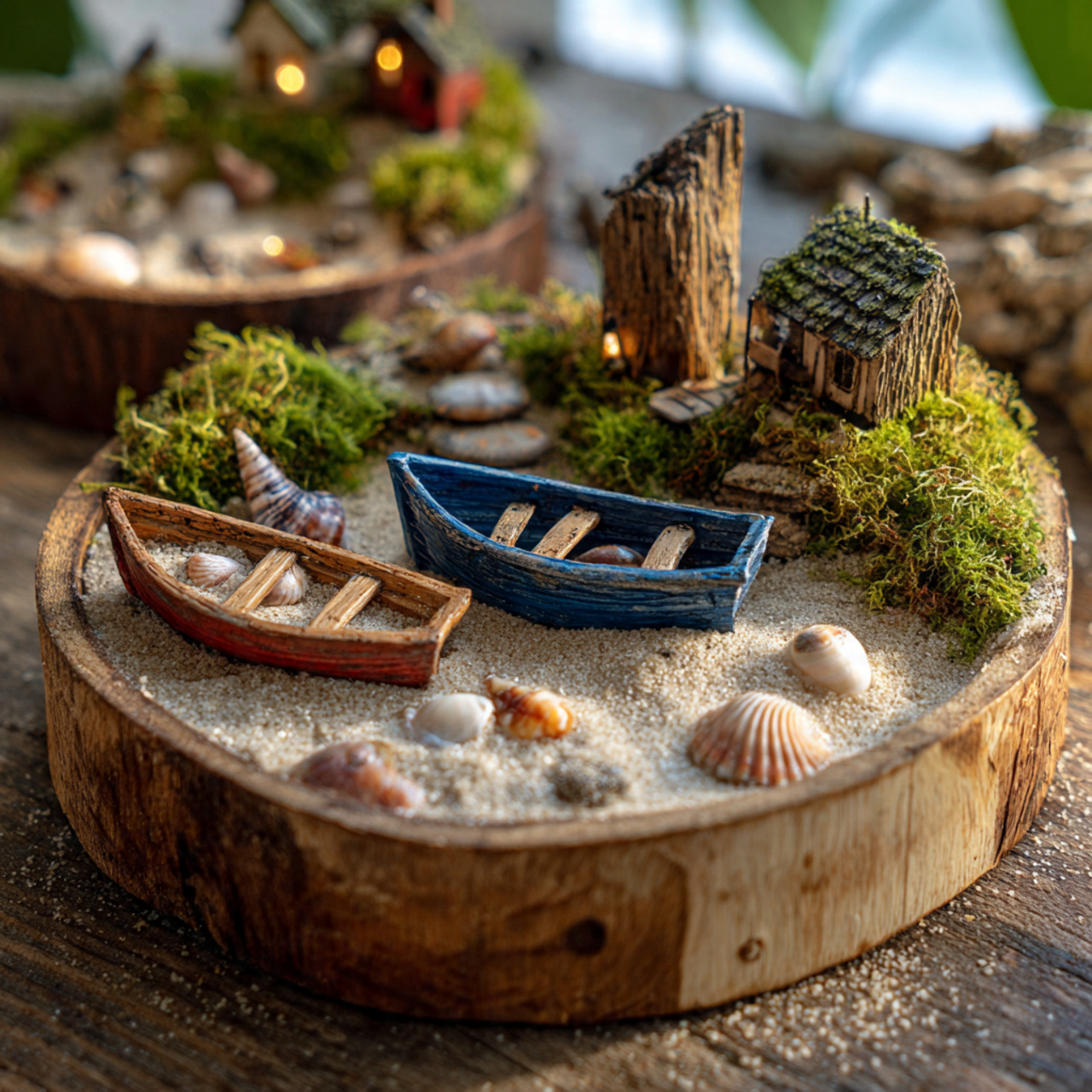
Bring vacation vibes home with coastal-themed fairy gardens featuring sand, shells, and nautical elements.
Building beach scenes:
- Use sand as your base material
- Add seashells of various sizes
- Include driftwood and small boats
- Create a beach chair area with tiny umbrellas
- Use blue glass beads for ocean water
Coastal gardens feel fresh, unique, and transport viewers to relaxing beach settings.
Fairy Maze with Mini Hedges
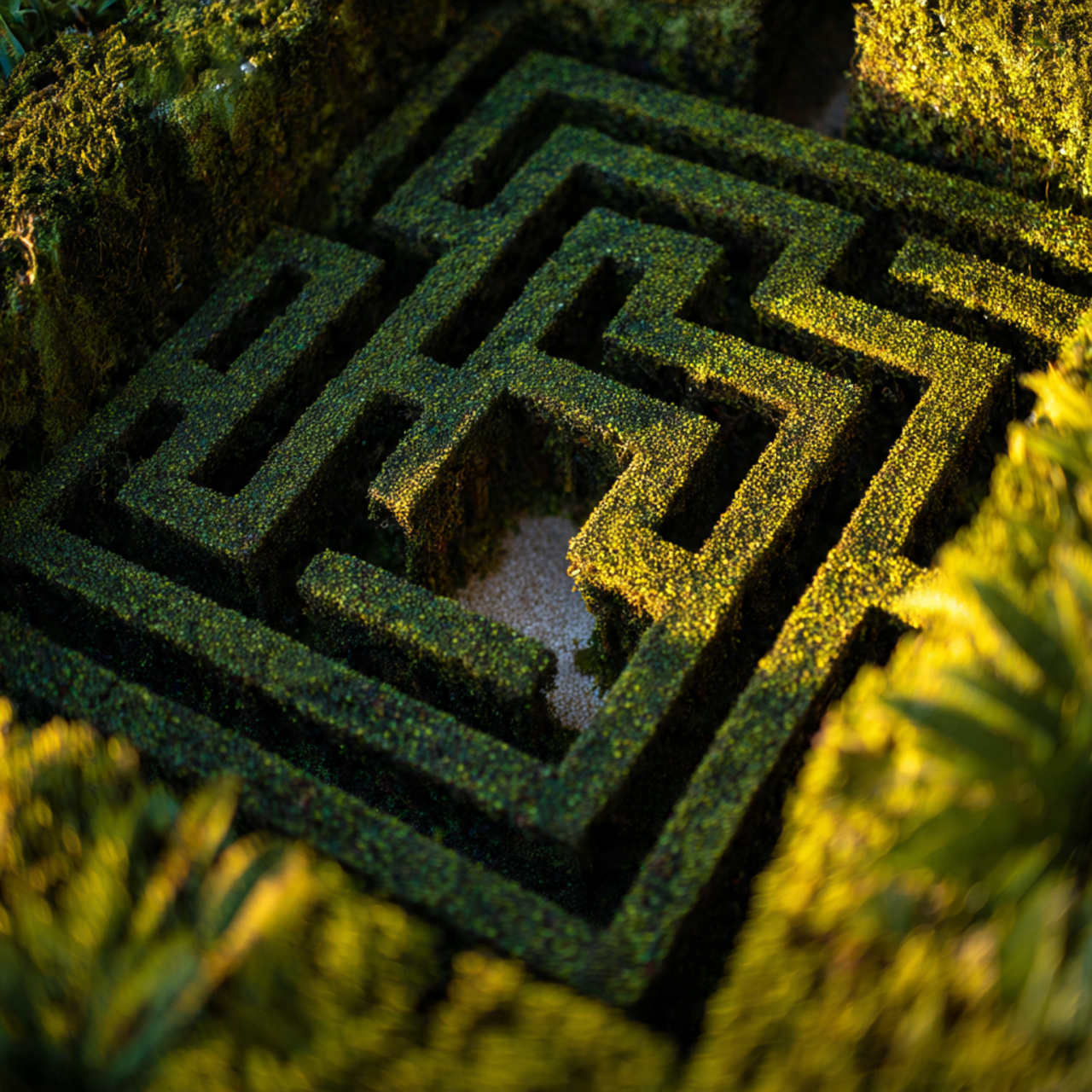
Create intricate pathways using small shrubs or moss. Mazes add complexity and invite exploration.
Designing fairy mazes:
- Use boxwood, thyme, or moss for walls
- Plan the pattern before planting
- Keep paths wide enough for visibility
- Add fairy figurines navigating the maze
- Include a center focal point or reward
Mazes demonstrate advanced design skills and create stunning visual effects.
Fairy Garden with Tiny Animals
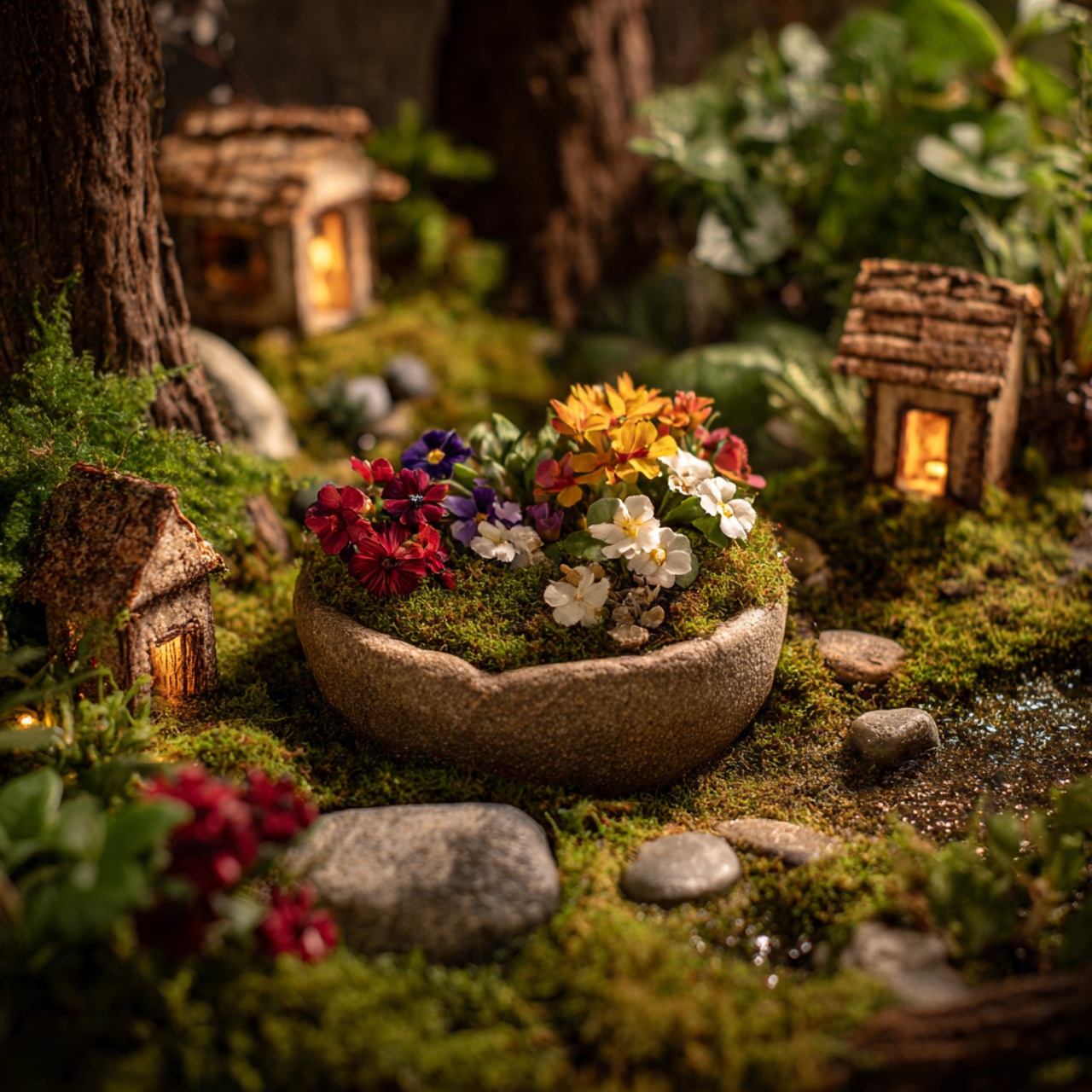
Miniature woodland creatures bring gardens to life. They add movement, story, and natural charm.
Incorporating animals effectively:
- Choose animals that fit your theme—woodland, farm, or fantasy
- Position them in natural activities—drinking, eating, walking
- Mix different species for variety
- Keep scale consistent across all figurines
- Place near appropriate features—ponds, gardens, houses
Animals make gardens feel inhabited and create endless storytelling opportunities.
Holiday-Themed Fairy Garden
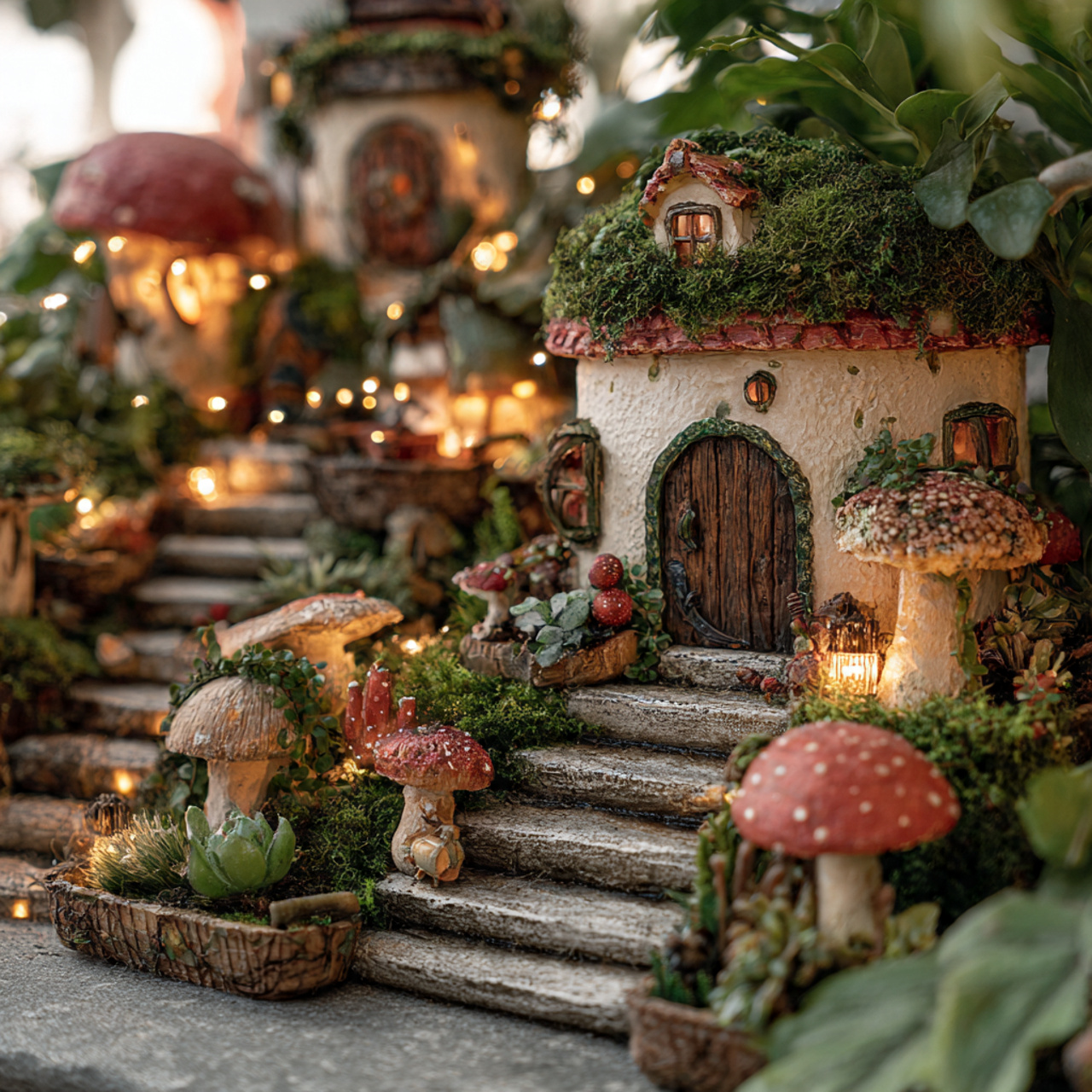
Keep your fairy garden fresh and exciting by updating decorations for different seasons and holidays.
Seasonal update ideas:
- Spring: Tiny Easter eggs, pastel colors, and flowering plants
- Summer: Beach themes, bright colors, and sun decorations
- Fall: Miniature pumpkins, autumn leaves, and harvest scenes
- Winter: Snow effects, tiny lights, and holiday decorations
- Halloween: Tiny jack-o’-lanterns, spooky elements, and orange accents
Seasonal changes keep your garden dynamic and give you reasons to redesign throughout the year.
FAQs About Fairy Garden Ideas
What plants work best for fairy gardens?
The best plants stay small and grow slowly. Miniature succulents, moss, creeping thyme, small ferns, baby’s tears, and tiny flowering plants all work beautifully. Choose plants based on your light conditions—some need full sun while others prefer shade. Consider maintenance too—succulents need less water than traditional plants.
Can I create a fairy garden indoors?
Absolutely! Indoor fairy gardens work wonderfully in terrariums, shallow bowls, teacups, or decorative containers. The key is choosing plants suited for indoor conditions—typically those that tolerate lower light levels. Succulents and air plants are excellent choices. Place near windows for natural light and water according to plant needs.
How do I protect outdoor fairy garden decorations from weather?
Weather protection starts with material choice. Use resin pieces instead of wood when possible, or seal wooden items with outdoor varnish. Apply weatherproof spray paint to protect colors from fading. Store delicate pieces during extreme weather. Regular maintenance—cleaning and touching up paint—keeps everything looking fresh. Consider bringing special pieces indoors during winter.
Are fairy gardens safe for kids?
Yes! Fairy gardens make wonderful projects for children. They encourage creativity, teach responsibility, and provide hands-on learning about plants and nature. For safety, use non-toxic materials, avoid small pieces for very young children, and choose plants without thorns or toxic properties. Supervise construction and make it a fun family activity.
How much maintenance do fairy gardens need?
Maintenance depends on plant choices and location. Most fairy gardens need weekly attention—trimming overgrown plants, removing dead leaves, refreshing moss with misting, cleaning pathways, and checking decorations for damage. Outdoor gardens need more frequent watering than indoor ones. Plan for seasonal cleanups and occasional replanting. The good news? This gentle maintenance is part of the relaxing appeal.
Final Thoughts
Fairy gardens open up a world of creativity where your imagination sets the only limits. Whether you choose a simple teacup garden or an elaborate outdoor village, these miniature worlds bring magic into everyday life. Each tiny detail—from moss-covered paths to miniature lanterns glowing at dusk—creates something special that you’ll enjoy for years to come.
Start small if you’re new to fairy gardening. Pick one idea that speaks to you, gather your materials, and let your creativity flow. As your confidence grows, you can expand, combine ideas, and develop your own unique style. The journey of building and maintaining a fairy garden is just as rewarding as the finished product.
So grab that old teacup, collect some moss from your backyard, or repurpose a wooden crate. Your magical miniature world is waiting to be created. Happy gardening!