24 Hibiscus Flower Ideas: Stunning Blooms That Elevate Any Garden
Few flowering plants command attention quite like the hibiscus. With blooms that can span up to 12 inches across and colors ranging from fiery reds to delicate pastels, these showstoppers have earned their reputation as garden royalty. What makes them even more appealing is their willingness to thrive with minimal fuss, rewarding gardeners with continuous blooms that last from spring through fall.
If you’ve been considering adding hibiscus to your landscape or wondering how to make the most of existing plants, you’re in the right place. This guide walks through some practical ways to incorporate these stunning flowers into your outdoor spaces, whether you’re working with sprawling gardens or compact balconies.
What Makes Hibiscus Flowers a Smart Choice for Your Garden?
Hibiscus flowers bring more to the table than just good looks. Their generous blooms create instant focal points, while their relatively fast growth habit means you won’t wait years to see results. These plants adapt surprisingly well to different growing situations, from traditional garden beds to containers and even indoor settings when conditions align.
The real bonus? Hibiscus flowers function as pollinator magnets. Hummingbirds can’t resist their nectar-rich centers, and butterflies frequently visit throughout the day. This natural wildlife activity creates a more balanced, healthier garden ecosystem without any extra effort on your part. Whether your priority is aesthetics, supporting local wildlife, or simply enjoying a low-maintenance plant that delivers consistent results, hibiscus checks all the boxes.
Hibiscus Flower for Tropical-Themed Landscapes
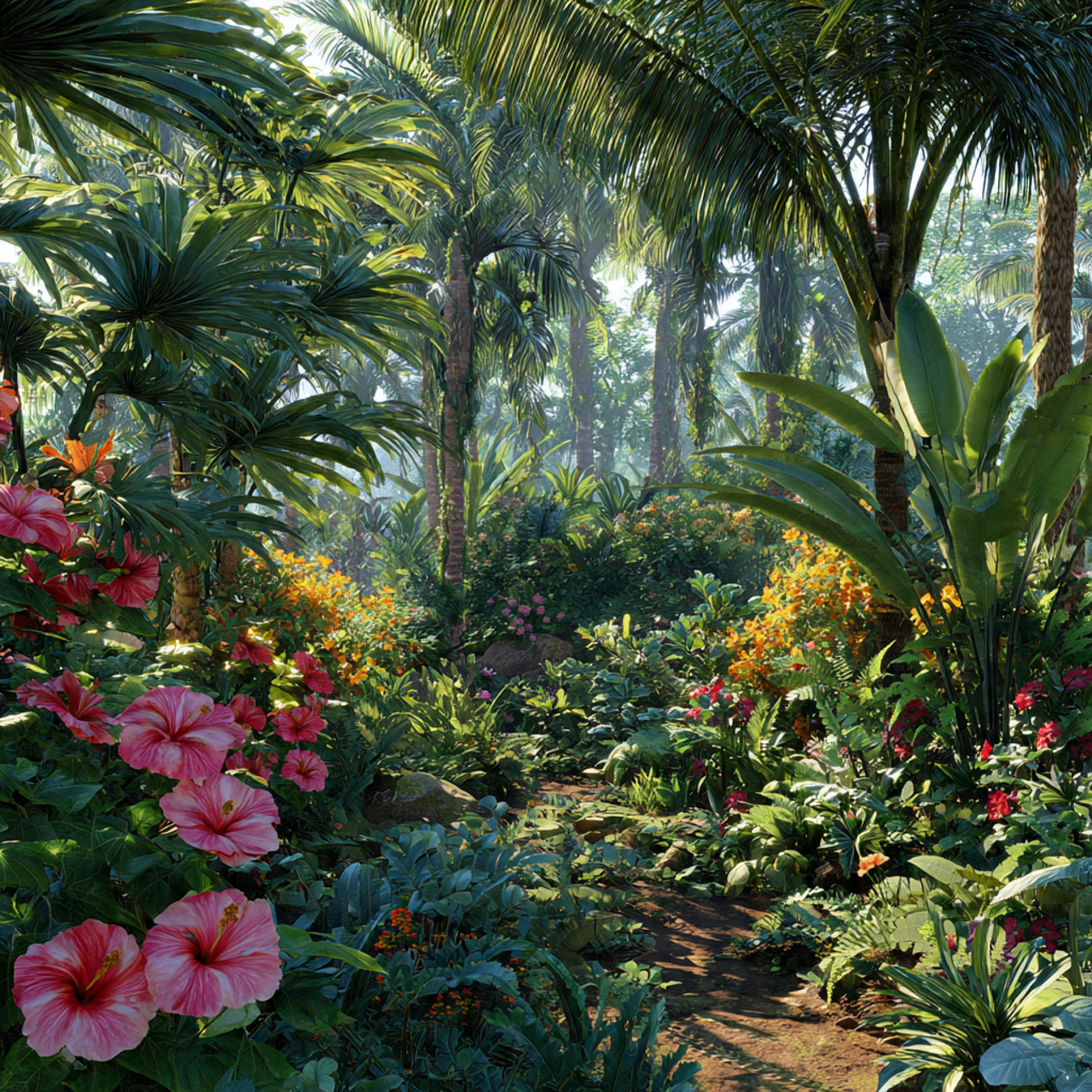
Transform your backyard into a tropical retreat by making hibiscus the star of the show. These blooms naturally evoke beach resorts and warm getaways, especially when you select varieties in bold oranges, hot pinks, or sunny yellows.
Quick implementation tips:
- Position hibiscus plants alongside broad-leafed companions like elephant ears, bird of paradise, or canna lilies
- Create depth by placing taller hibiscus varieties toward the back, with lower tropical plants in front
- Use dark mulch to intensify the contrast with bright blooms
- Water regularly during peak growing season to maintain that lush, resort-quality appearance
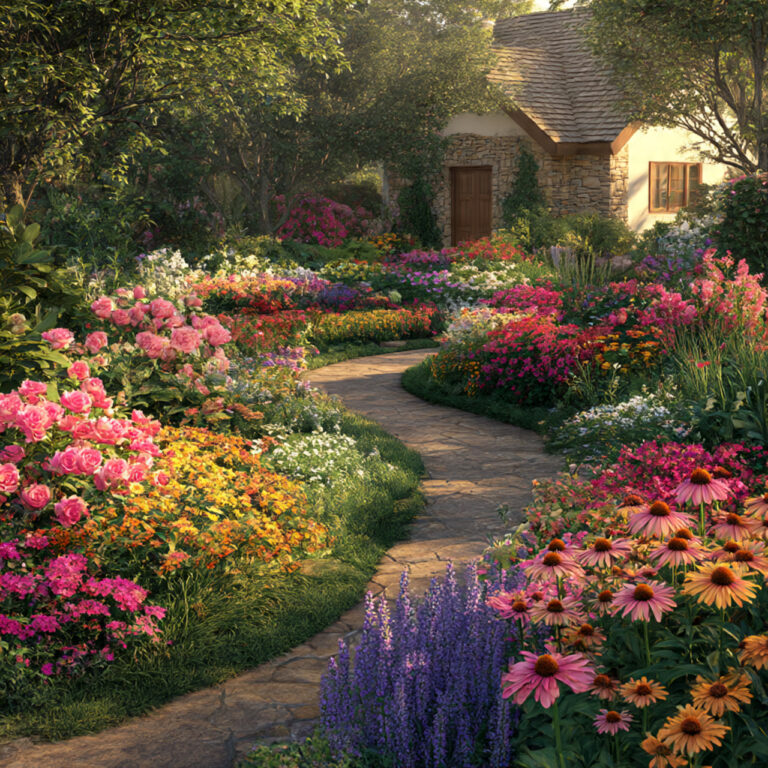
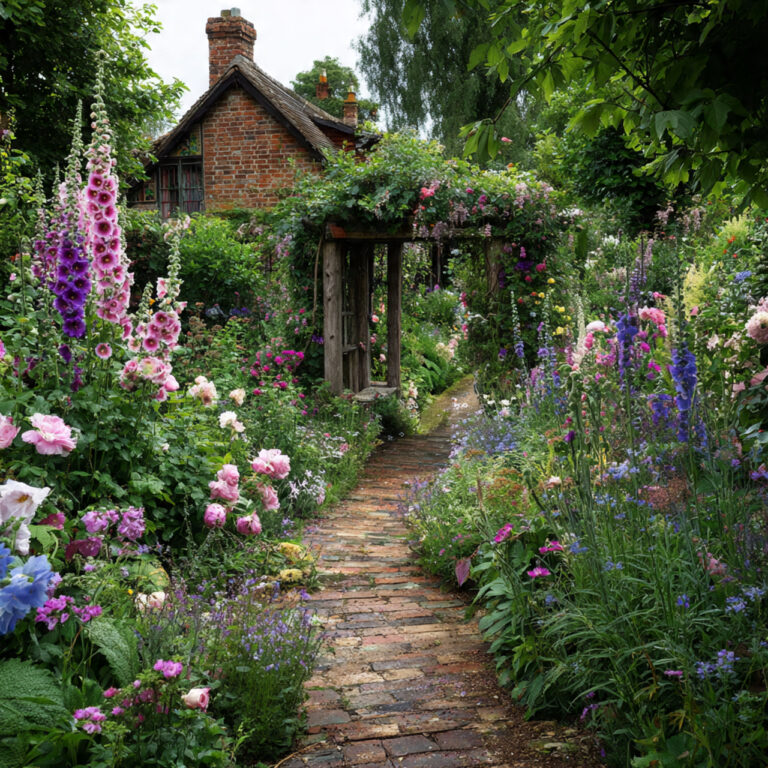
Frame Your Garden Paths with Floral Drama
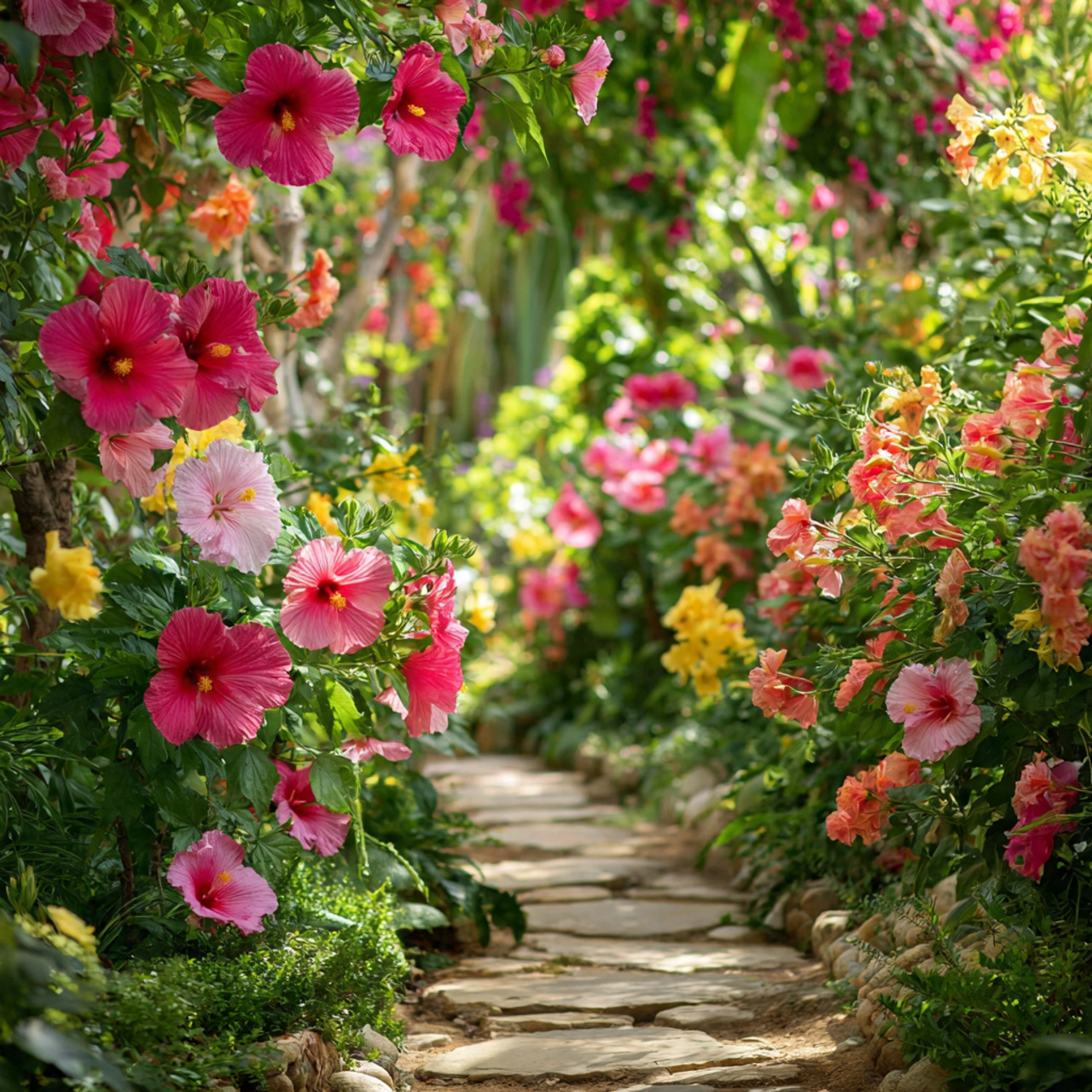
Nothing elevates a simple garden walkway like a ribbon of colorful blooms on either side. Hibiscus plants naturally grow to a height that makes them perfect path markers, creating living guideposts that direct movement through your landscape.
The key is consistency. Plant hibiscus at regular intervals along both sides of your pathway, spacing them close enough to create visual continuity but far enough apart to allow proper air circulation. The repeated bursts of color create rhythm and make even modest paths feel professionally designed.
Visit Also: Spring Flowers
Turn Your Patio into an Instant Showpiece
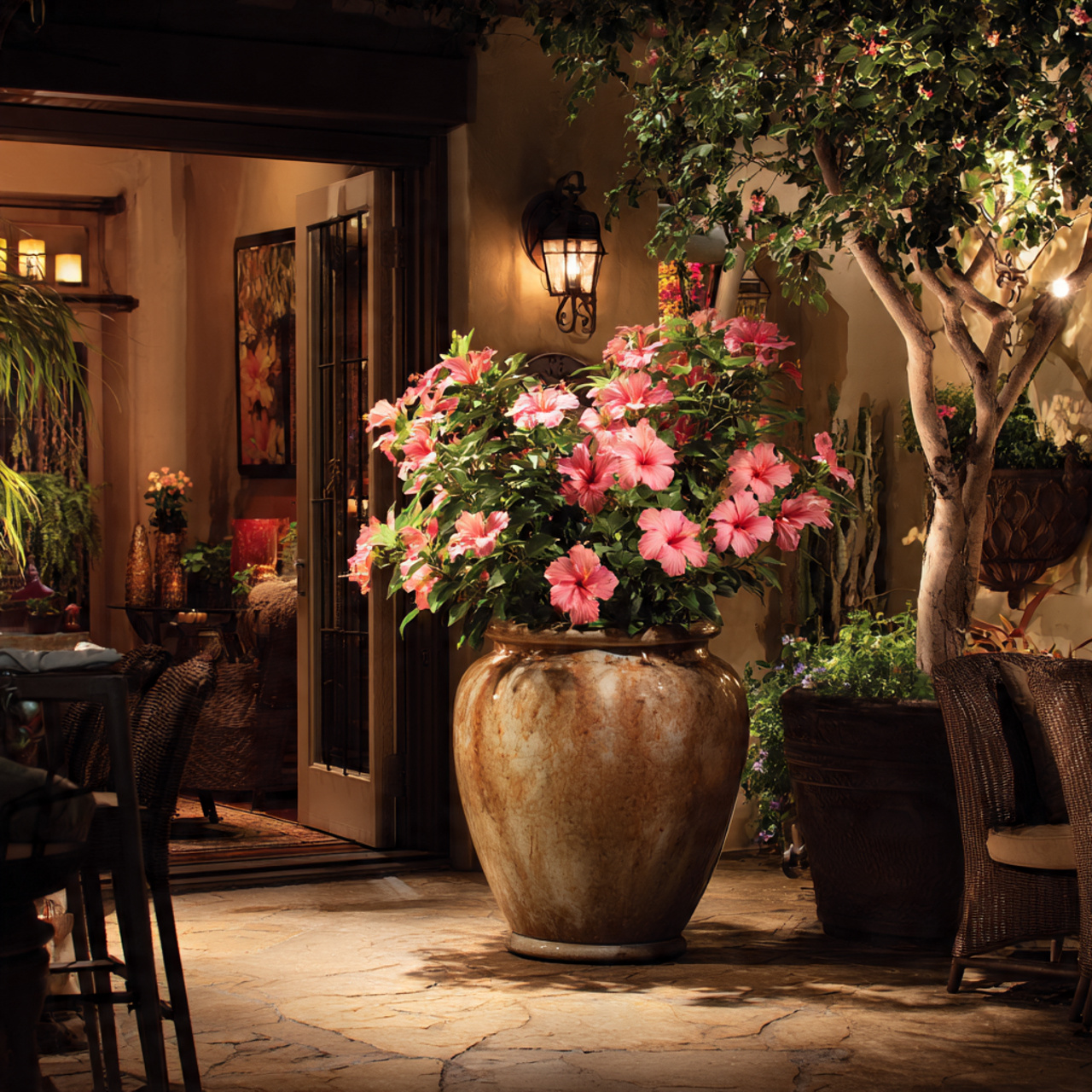
A single, well-placed hibiscus in a substantial container can completely change how your patio feels. Choose a pot that’s at least 14-16 inches in diameter to give roots adequate room and prevent the plant from drying out too quickly.
Container selection matters:
- Terracotta pots provide excellent drainage and a classic look
- Glazed ceramic containers retain moisture longer, reducing watering frequency
- Dark-colored pots absorb heat, which hibiscus generally appreciate
- Ensure drainage holes exist to prevent root rot
Position your container where it’ll receive morning sun and some afternoon protection in extremely hot climates. The portability of container-grown hibiscus means you can adjust placement as seasons change or when hosting outdoor gatherings.
Create a Pollinator Highway
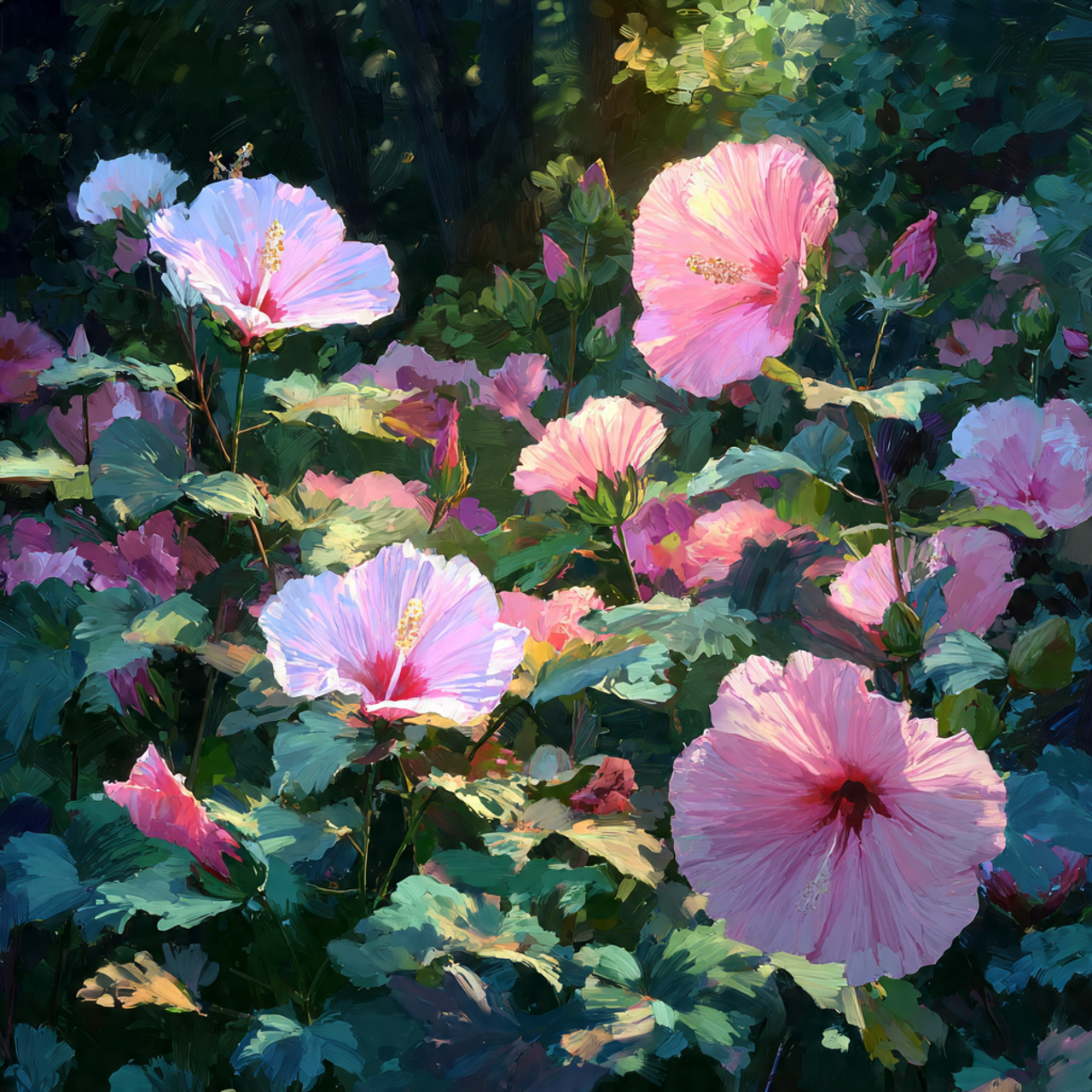
If you want your garden buzzing with beneficial insects and visiting hummingbirds, hibiscus flowers deserve a prominent role. Their wide-open blooms and accessible nectar make feeding easy for pollinators, while the bright colors act as beacons visible from considerable distances.
Boost pollinator activity:
- Plant hibiscus in groups of three or five rather than single specimens
- Mix different bloom colors to attract varied species throughout the season
- Avoid pesticides that harm beneficial insects
- Add a shallow water source nearby for butterflies and bees
- Choose red and orange varieties specifically for hummingbirds
- Leave some blooms to develop seed pods for birds
Build a Living Color Palette
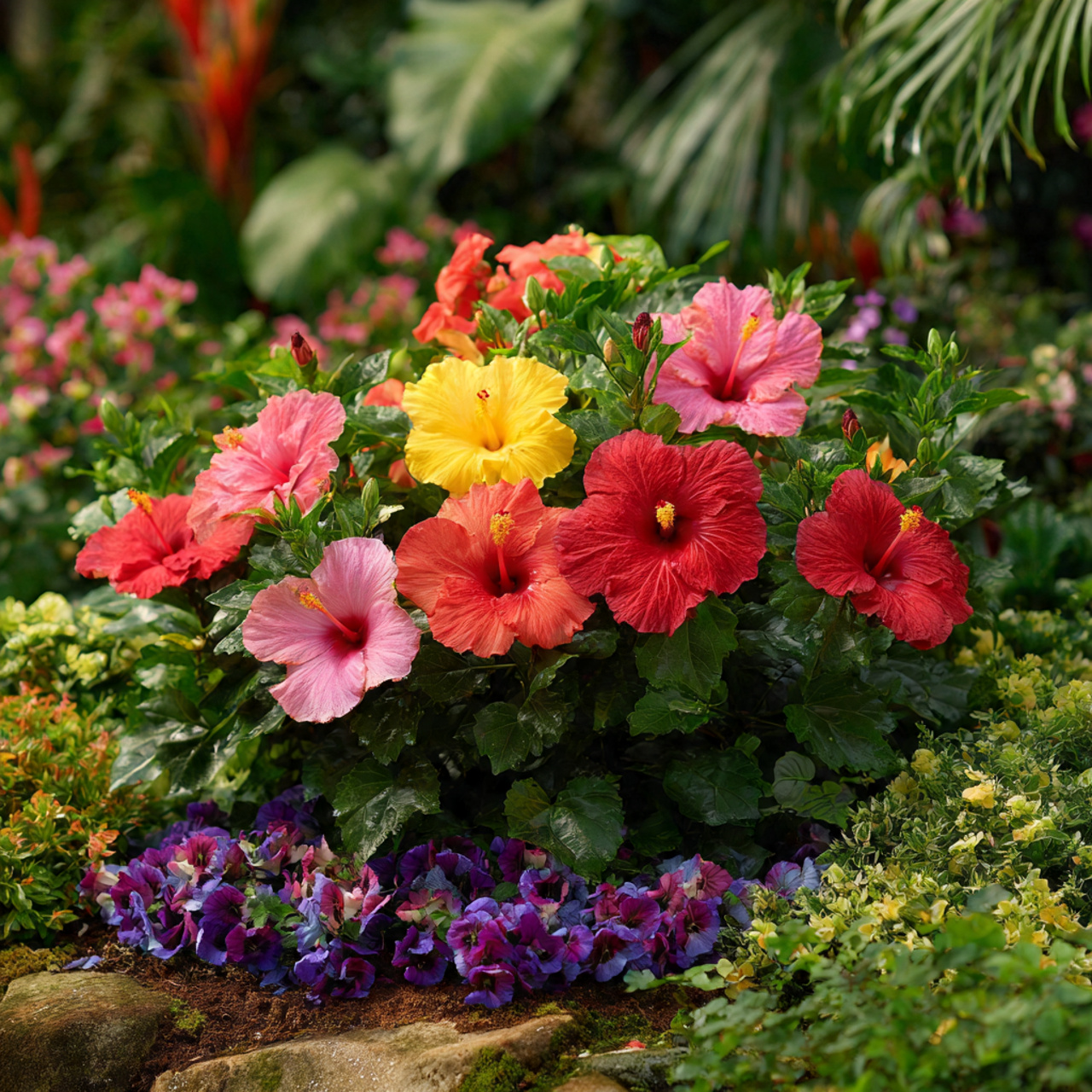
Gardens organized around specific color schemes feel more intentional and cohesive. Hibiscus varieties come in nearly every shade imaginable, making them perfect anchors for themed plantings.
Color scheme ideas:
- Cool & Calming: Whites, soft pinks, pale yellows, and lavenders
- Hot & Dramatic: Deep reds, burgundies, oranges, and near-black foliage varieties
- Gradient Effect: Transition from light to dark shades within the same color family
- Monochromatic Magic: Use different textures with a single color focus
- Complementary Contrast: Pair warm hibiscus blooms with cool-toned foliage plants
Master the Art of Container Clusters
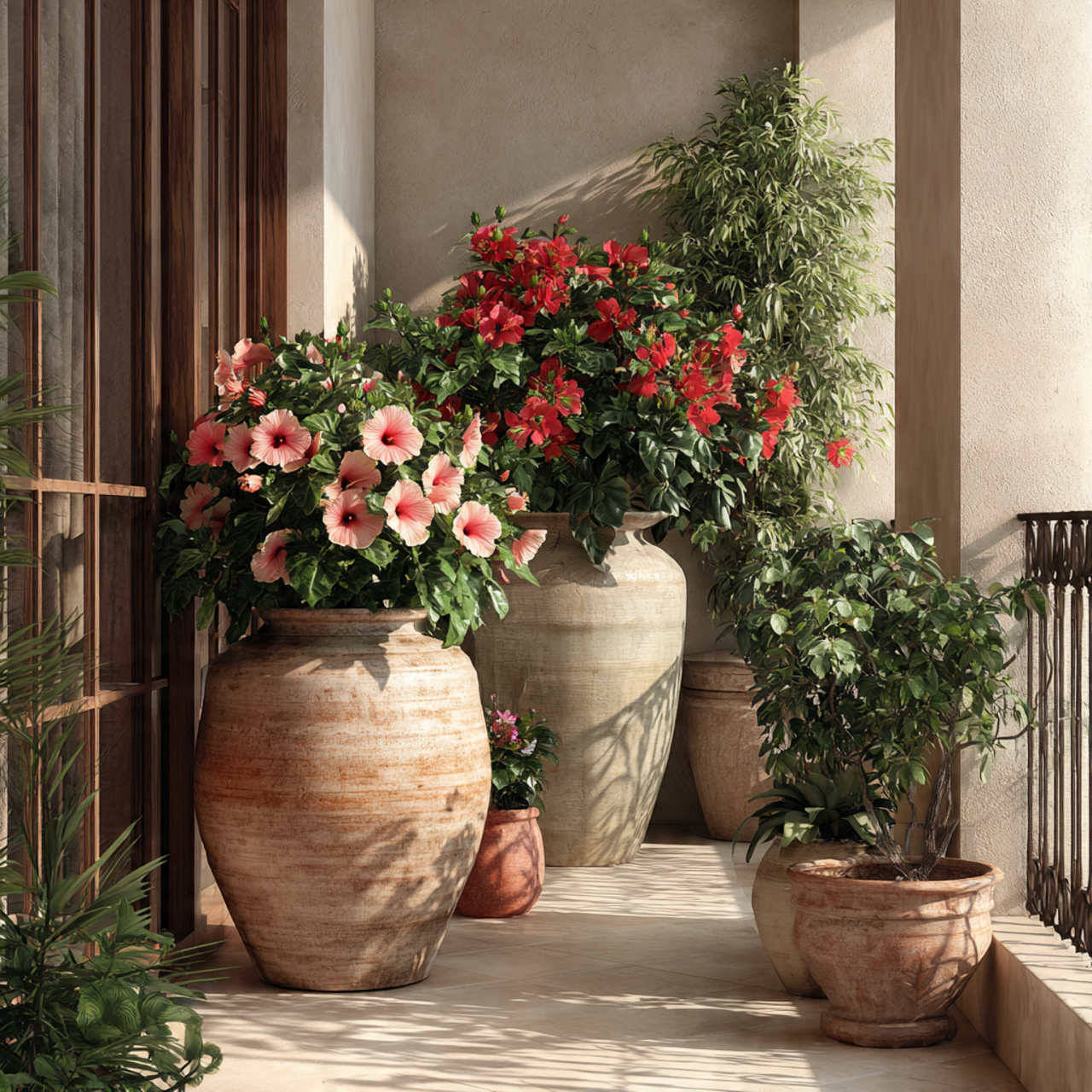
Instead of scattering individual pots across your deck or patio, group several hibiscus containers together for maximum impact. This approach creates the fullness of a traditional garden bed while maintaining the flexibility of container growing.
Clustering strategies:
- Vary heights by using different-sized containers or placing some on plant stands
- Mix colors freely for eclectic charm or stick to monochromatic schemes
- Use odd numbers (3, 5, 7) for the most visually pleasing arrangements
- Combine different pot materials and textures for added interest
- Position larger containers in the back, smaller ones in front
- Leave enough space between pots for air circulation
- Group containers with similar water needs together for easier maintenance
Hibiscus Flower Walls for Privacy
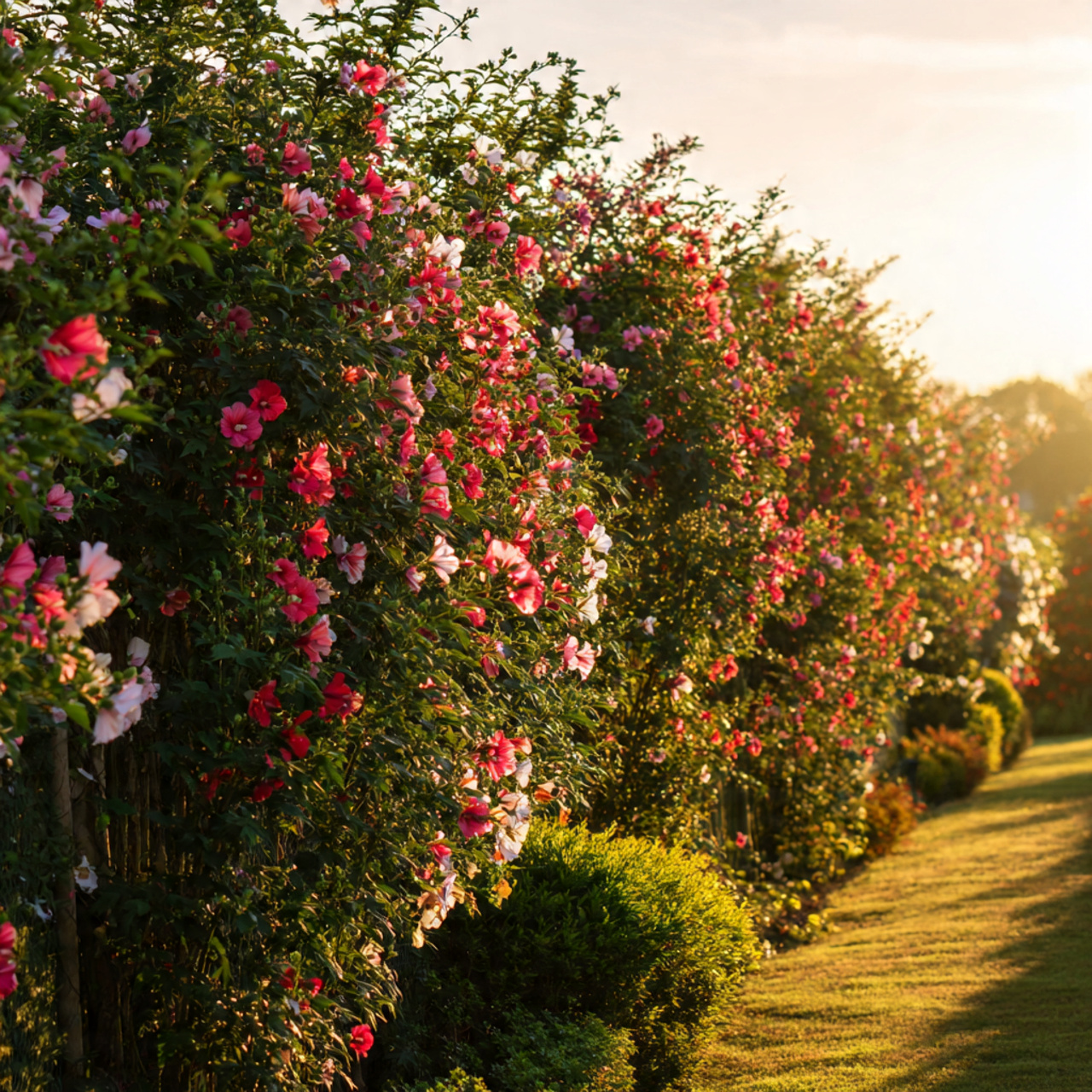
Privacy doesn’t have to come from static fences or hedges. Select taller hibiscus varieties, particularly hardy types that return each year, and plant them in staggered rows.
Privacy screen essentials:
- Choose varieties that grow 6-8 feet tall for effective screening
- Plant in double rows with staggered placement for density
- Space plants 2-3 feet apart to encourage fuller growth
- Mix evergreen shrubs with hibiscus for year-round coverage
- Allow 2-3 seasons for plants to fill in completely
- Prune strategically to encourage branching and thickness
- Combine with trellises or fencing for immediate partial privacy
Upgrade Your Home’s First Impression
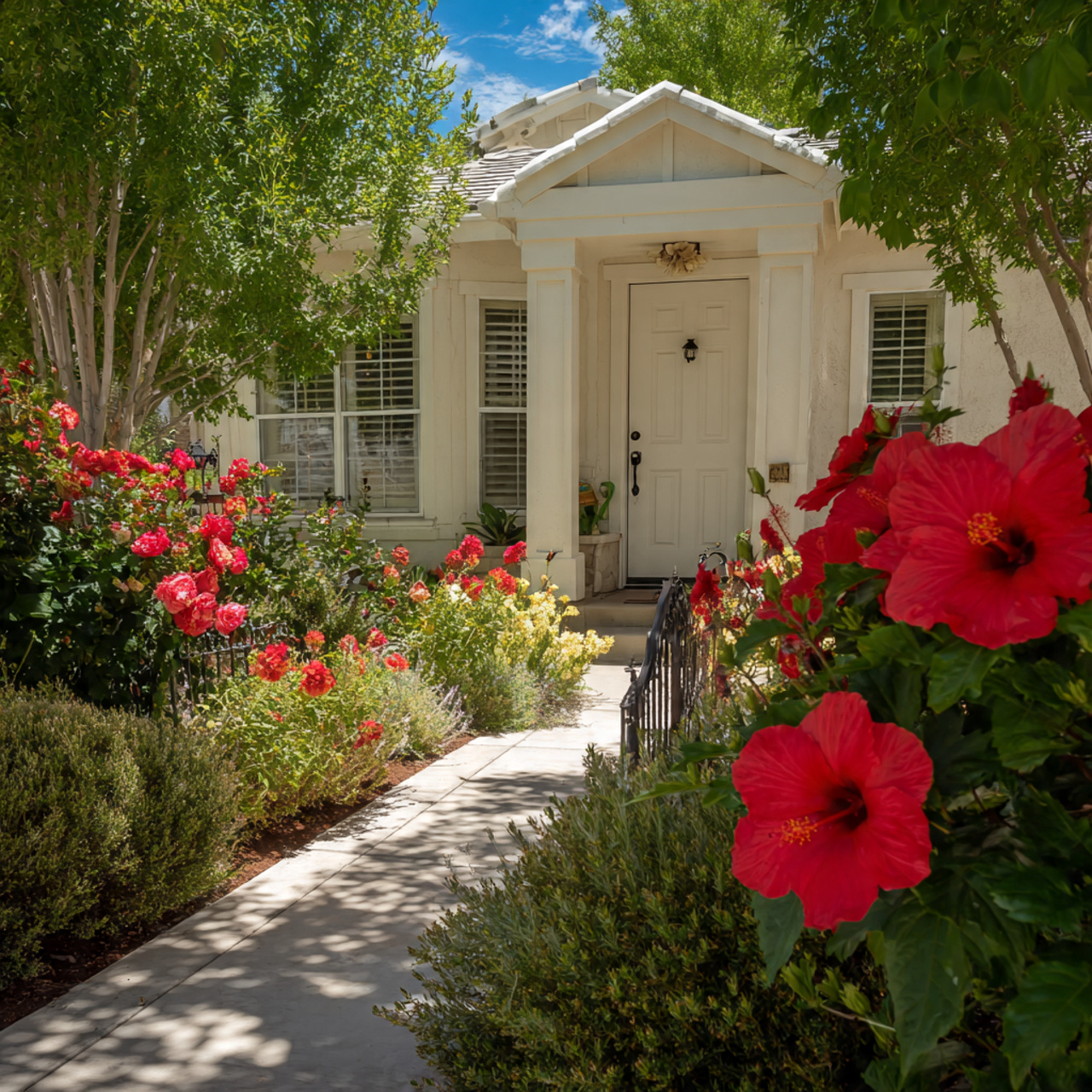
The area immediately around your front entrance sets the tone for your entire property. Flanking your front door, steps, or porch with vibrant hibiscus creates an instant welcome that changes with each bloom cycle.
Curb appeal boosters:
- Choose colors that complement your home’s exterior without matching exactly
- Use bold reds or oranges for striking contrast against neutral siding
- Select softer hibiscus shades for homes with colorful exteriors
- Frame doorways symmetrically with matching containers on each side
- Highlight front steps with progressive sizing from bottom to top
- Coordinate pot colors with trim or door colors for cohesion
- Maintain consistent deadheading for perpetual blooms
Reclaim Forgotten Corners
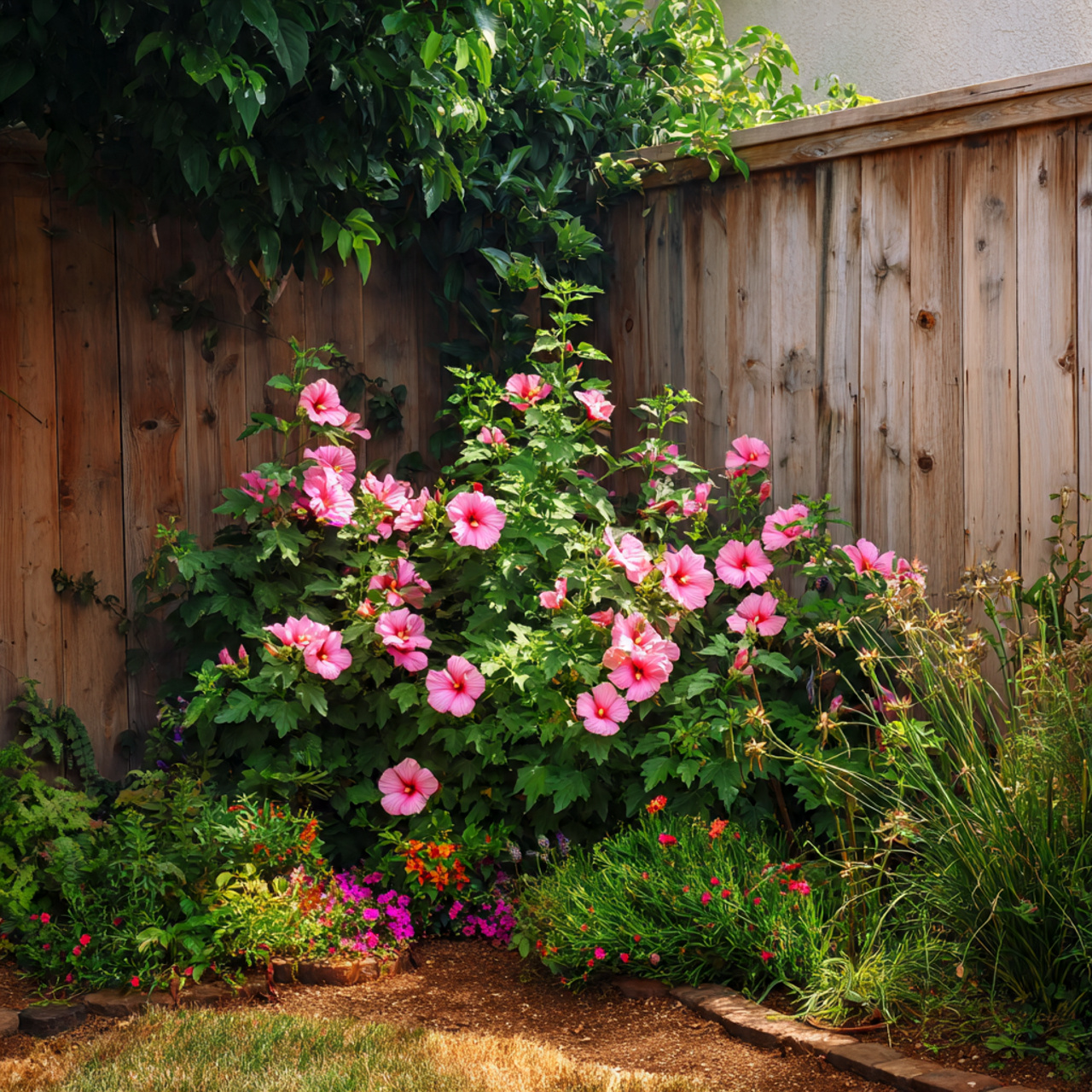
Every yard has those awkward spots that never quite come together—the angle where two fences meet, the space beside the shed, or that odd triangle created by intersecting pathways.
Corner transformation tactics:
- Group three to five plants in forgotten zones for visual weight
- Use the natural density of mature hibiscus to fill empty spaces
- Add complementary ground covers around the base
- Include decorative mulch or stones to define the area
- Position taller varieties toward the back of corner spaces
- Create mini garden vignettes with coordinating plants
- Install solar lights to highlight these newly transformed spots
Add Vertical Interest to Flat Landscapes
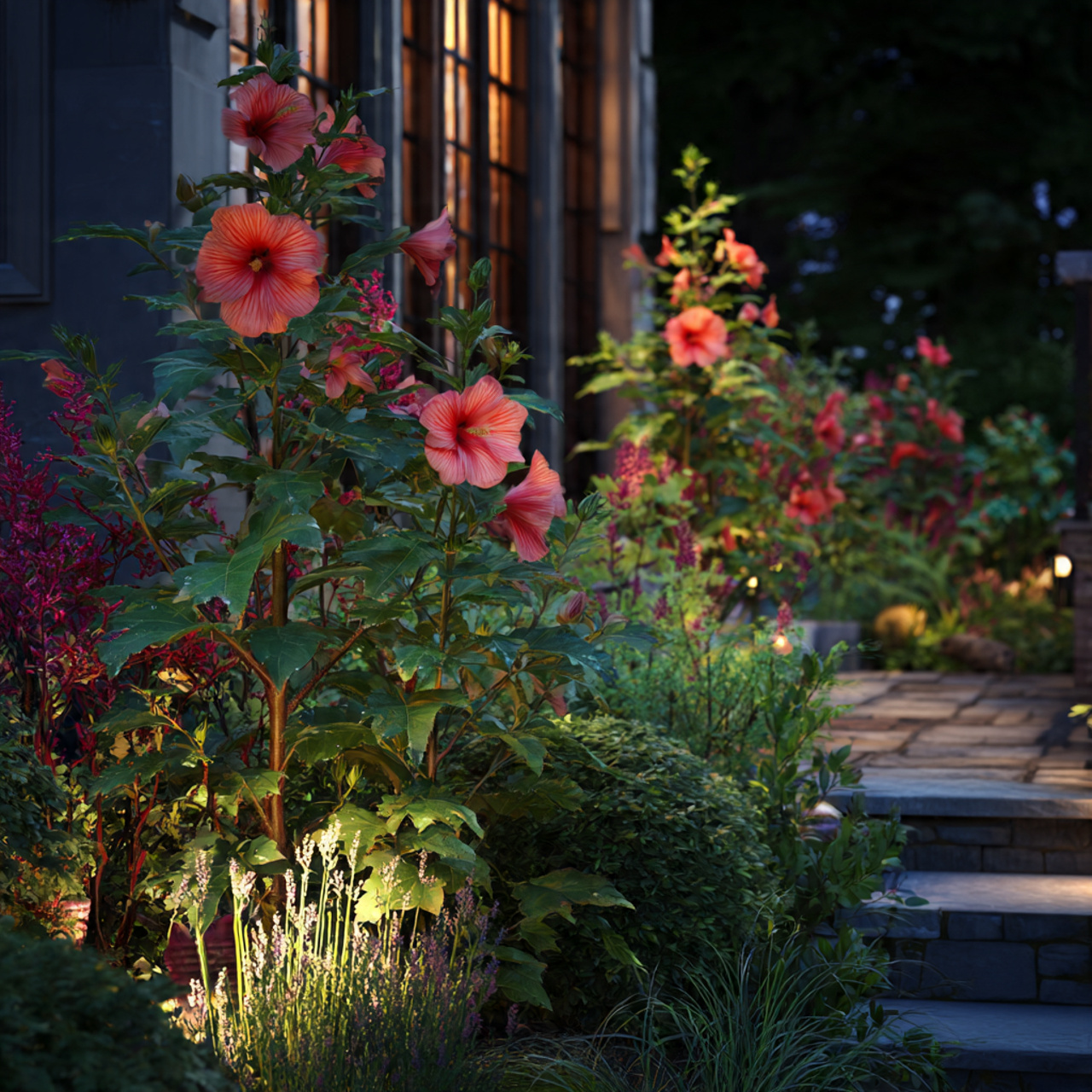
Gardens that read as one horizontal plane lack visual excitement. Hibiscus naturally grows upright, making it ideal for introducing height variation without relying on hardscaping or structures.
Layering techniques:
- Use taller hibiscus varieties behind low-growing perennials and annuals
- Create three distinct height levels: ground covers, mid-height plants, and tall hibiscus
- Position hibiscus as backdrop plants in tiered garden beds
- Combine with ornamental grasses for additional vertical elements
- Stagger heights to create a cascading effect
- Avoid flat-top pruning to maintain natural upright form
- Use height to draw the eye toward focal points
Curate a Container Showcase
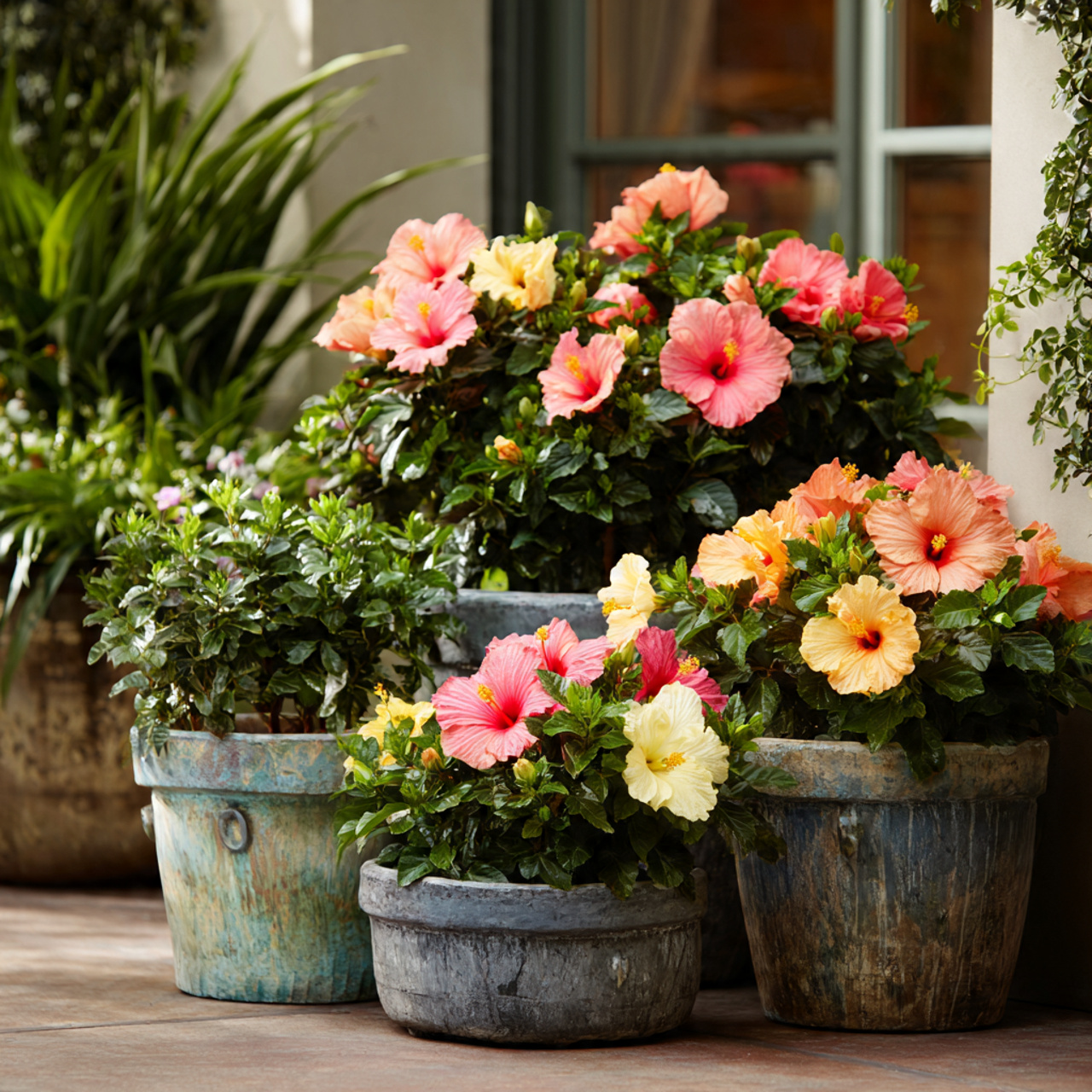
Take the container cluster concept further by intentionally selecting different hibiscus varieties, pot styles, and heights to create a curated collection. Think of this as your personal hibiscus exhibition.
Collection building tips:
- Feature one variety per container for clear identification
- Label containers with variety names for educational appeal
- Rotate containers to feature peak bloomers prominently
- Mix standard, dwarf, and tree-form hibiscus for variety
- Use consistent pot style with different sizes, or vice versa
- Create a color progression from one end to the other
- Document bloom times to plan future additions
Enhance Water Features with Reflection
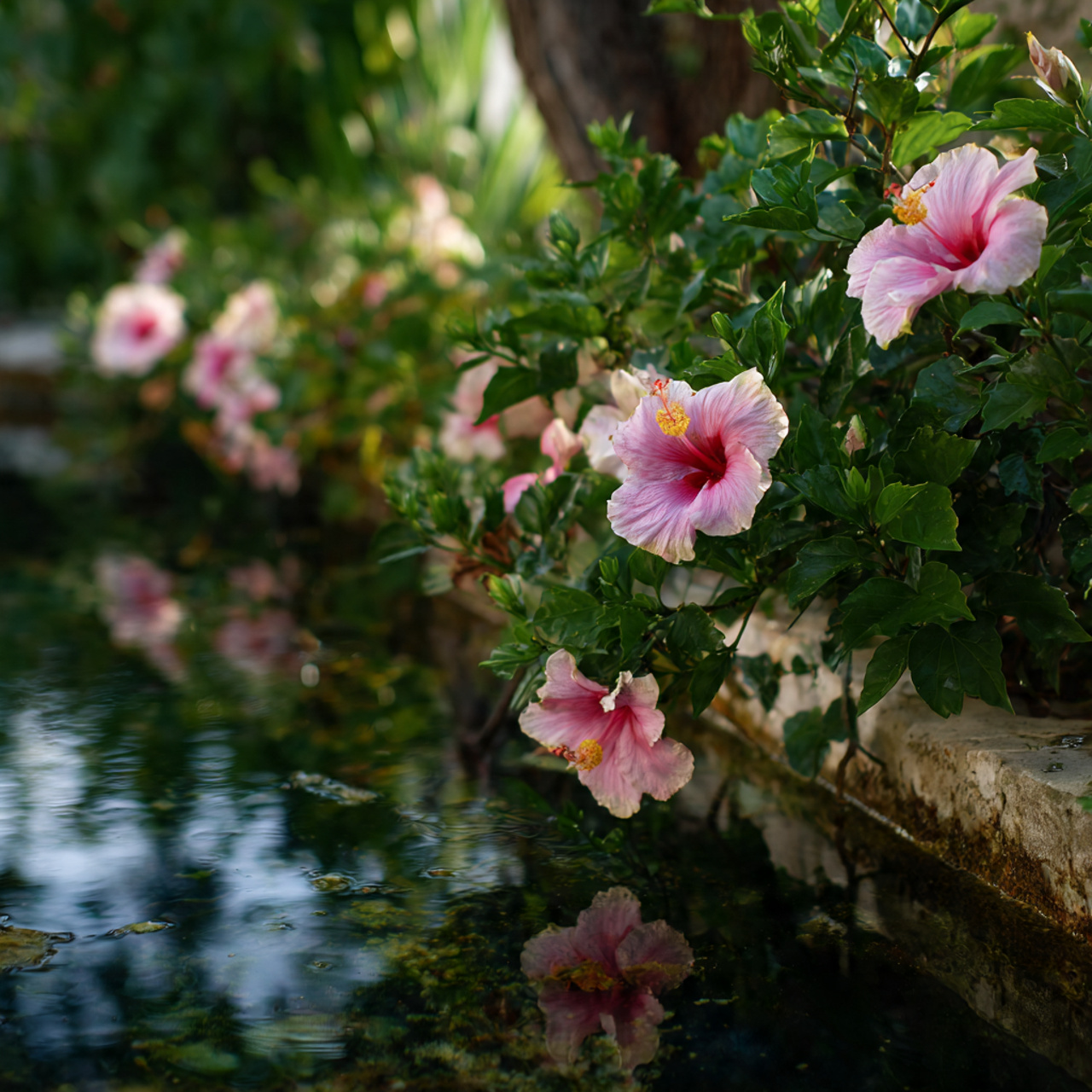
Position hibiscus near ponds, water gardens, or even large water bowls to take advantage of their reflective qualities. The doubled image of colorful blooms on calm water surfaces creates a romantic, almost meditative effect.
Waterside placement tips:
- Plant 2-3 feet back from water edges to prevent root issues
- Choose colors that photograph well with water reflections
- Ensure adequate drainage despite proximity to moisture
- Use rocks or borders to prevent soil erosion into water
- Select varieties that tolerate higher humidity levels
- Position for morning light to catch the best reflections
- Combine with water-loving companion plants like irises or cannas
Jumpstart Spring with Instant Color
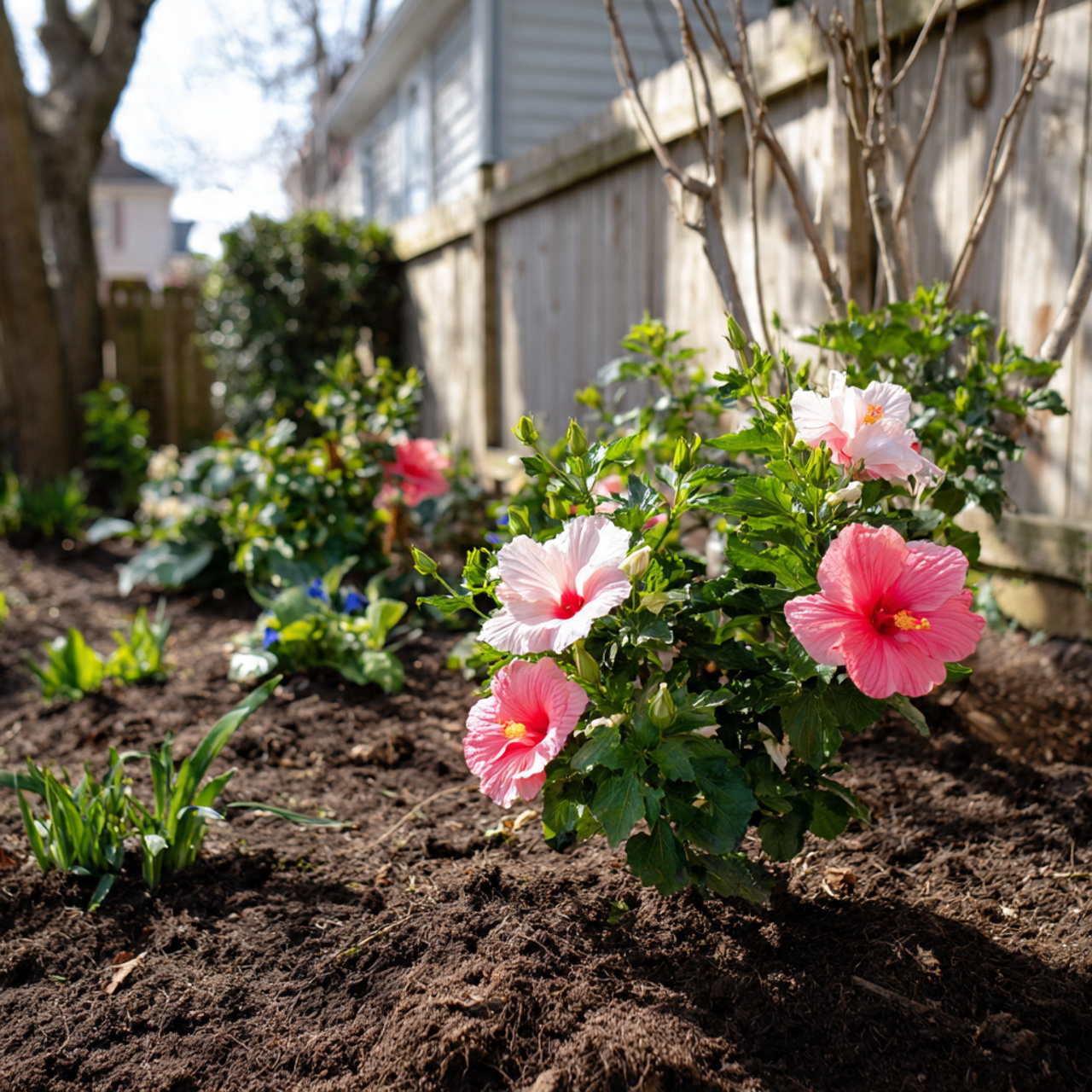
After a long winter, gardens can look tired and washed out. Planting new hibiscus varieties in early spring provides an immediate color injection that revitalizes the entire landscape.
Spring refresh strategies:
- Plant new varieties as soon as soil temperatures reach 60°F
- Replace winter-damaged or underperforming plants
- Add new colors to expand your existing palette
- Amend soil with fresh compost before planting
- Choose fast-growing varieties for quickest impact
- Mulch heavily to retain spring moisture
- Feed with balanced fertilizer at planting time for strong establishment
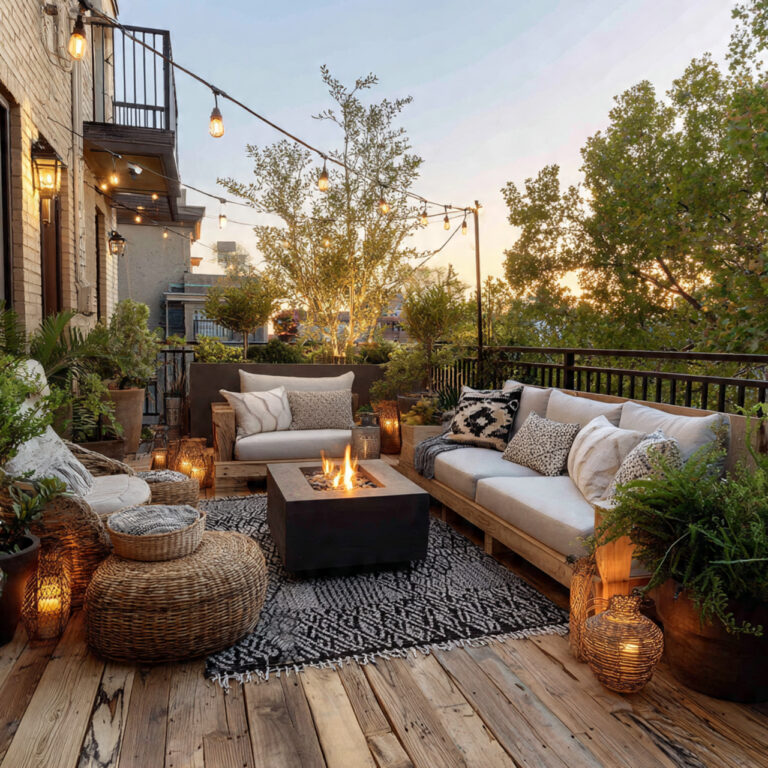
Create Outdoor Rooms with Living Accents
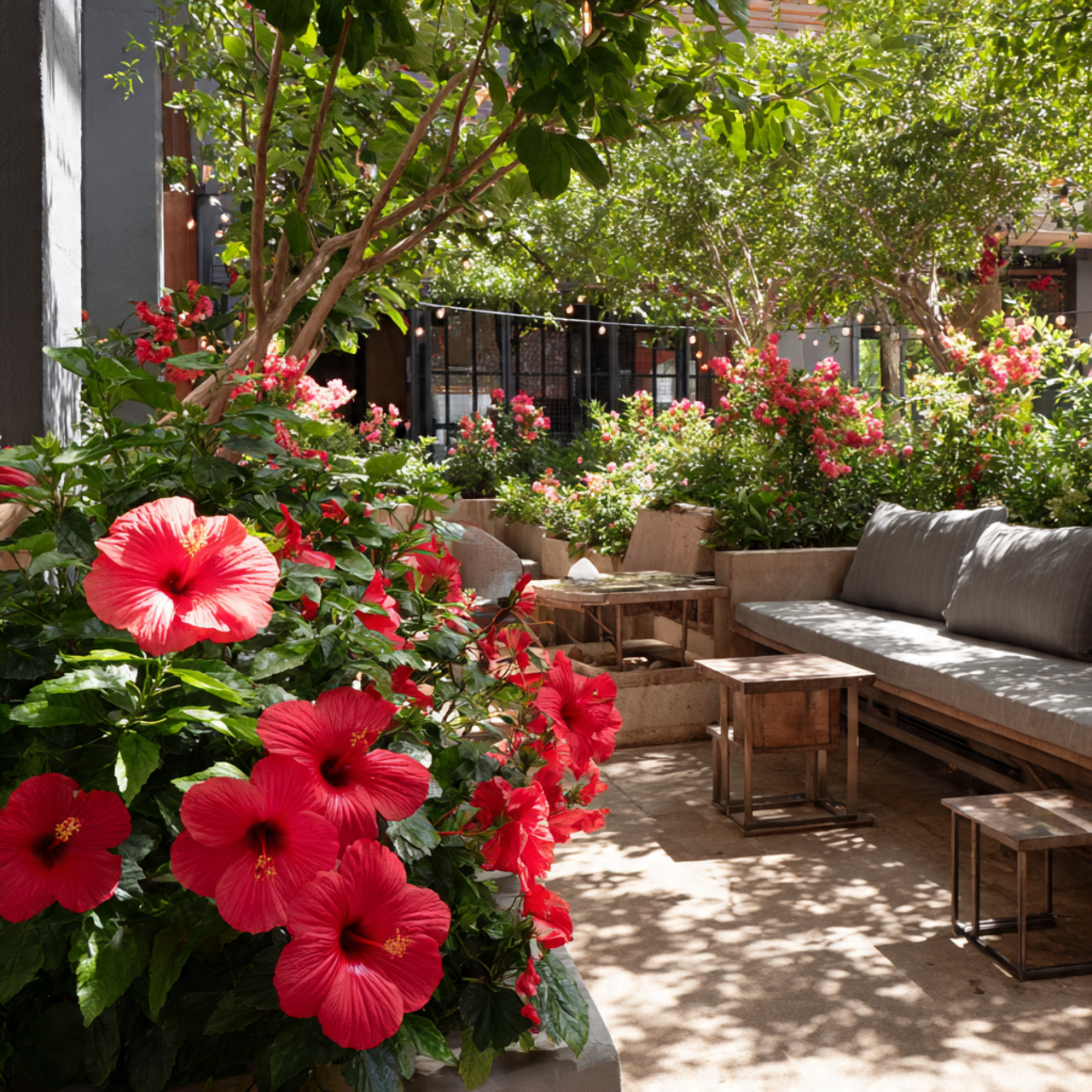
The area around your outdoor furniture deserves the same design attention as indoor spaces. Position hibiscus containers near seating arrangements to soften hard edges and create a more inviting atmosphere.
Living room enhancements:
- Place containers at conversation area corners to define the space
- Position blooms at eye level when seated for maximum enjoyment
- Use hibiscus to create visual barriers between different outdoor zones
- Coordinate bloom colors with outdoor cushions and décor
- Add fragrant companion plants for multi-sensory appeal
- Ensure containers won’t obstruct foot traffic
- Use wheeled plant caddies for easy rearrangement during gatherings
Embrace Minimalist Elegance
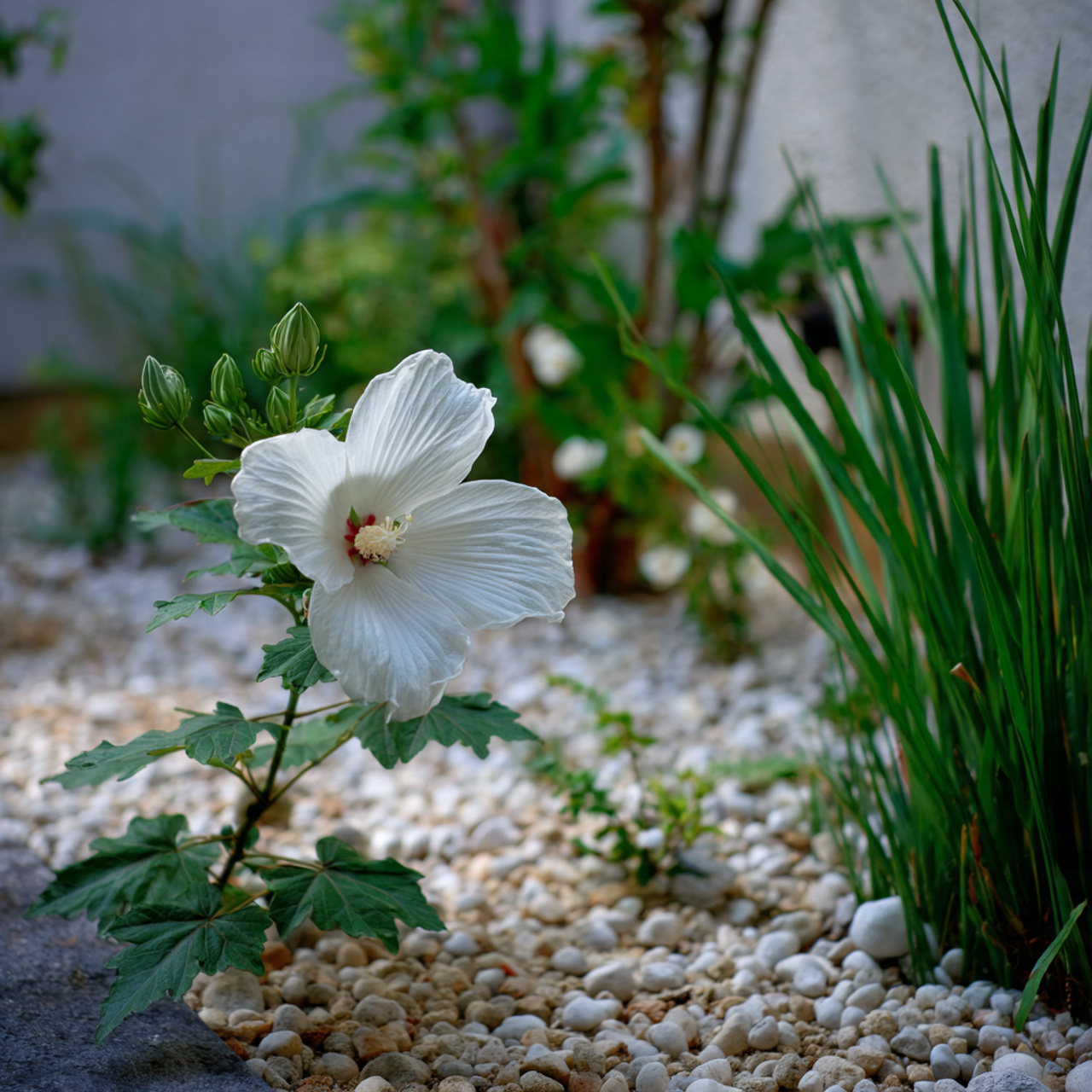
Minimalist gardens thrive on restraint and intentional choices. A single color of hibiscus, planted with generous spacing and surrounded by clean mulch or gravel, creates sophisticated simplicity.
Minimalist principles:
- Select pure white blooms for maximum minimalism
- Choose one bold color that contrasts sharply with hardscaping
- Space plants generously with intentional negative space
- Use single variety throughout for consistency
- Limit companion plants to one or two complementary species
- Keep mulch or ground cover monochromatic
- Prune regularly to maintain clean, architectural shapes
Design a Hummingbird
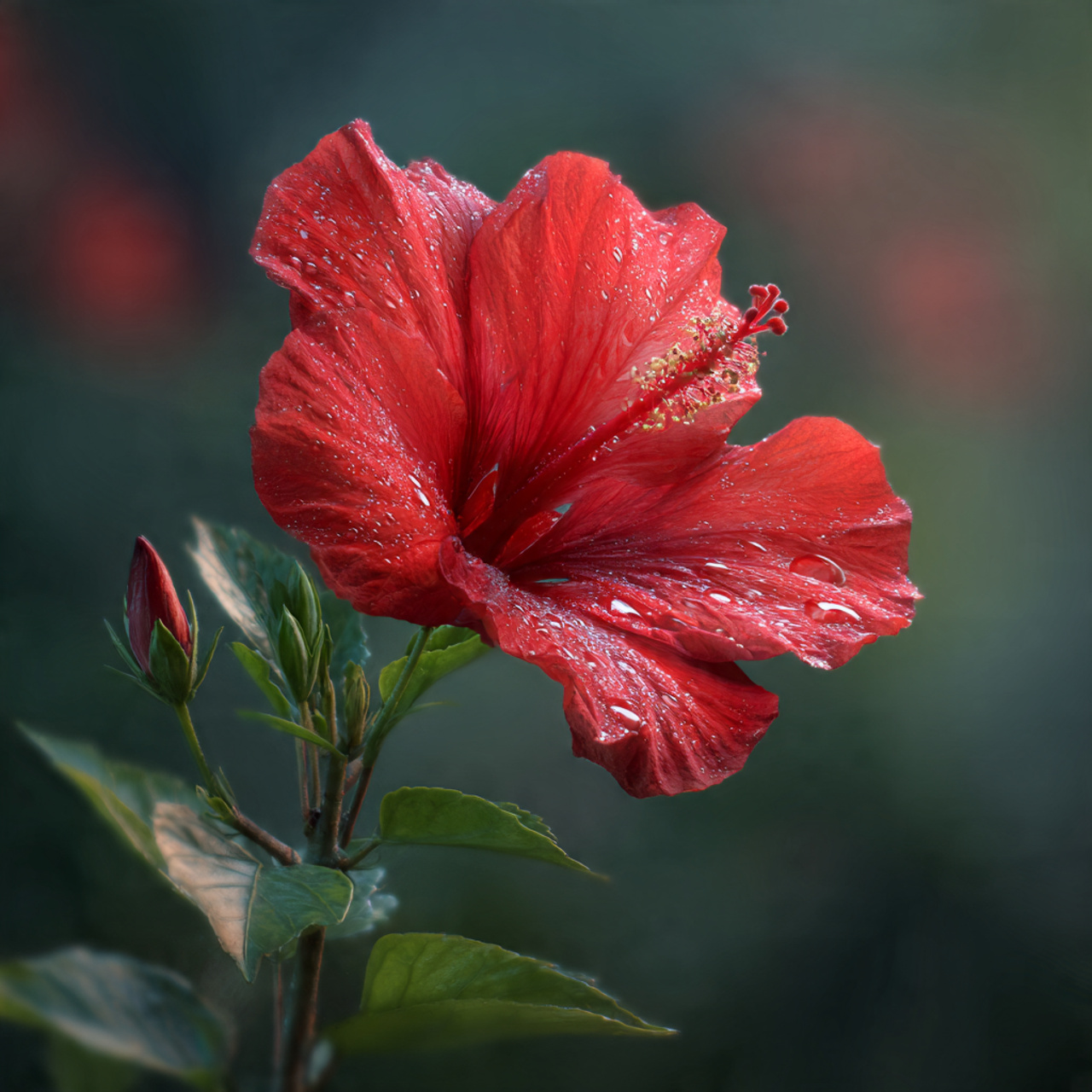
If attracting hummingbirds ranks high on your garden wish list, red and orange hibiscus varieties should be your first choice. These colors trigger the strongest feeding response in these tiny birds.
Hummingbird attraction secrets:
- Plant red and orange varieties as primary attractors
- Position near windows or seating for easy observation
- Add a small water feature for bathing opportunities
- Avoid pesticides that could harm visiting birds
- Plant in sunny spots where hummingbirds prefer to feed
- Create continuous bloom by planting multiple varieties with staggered bloom times
- Include perching spots like small branches nearby
Maximize Raised Bed Performance
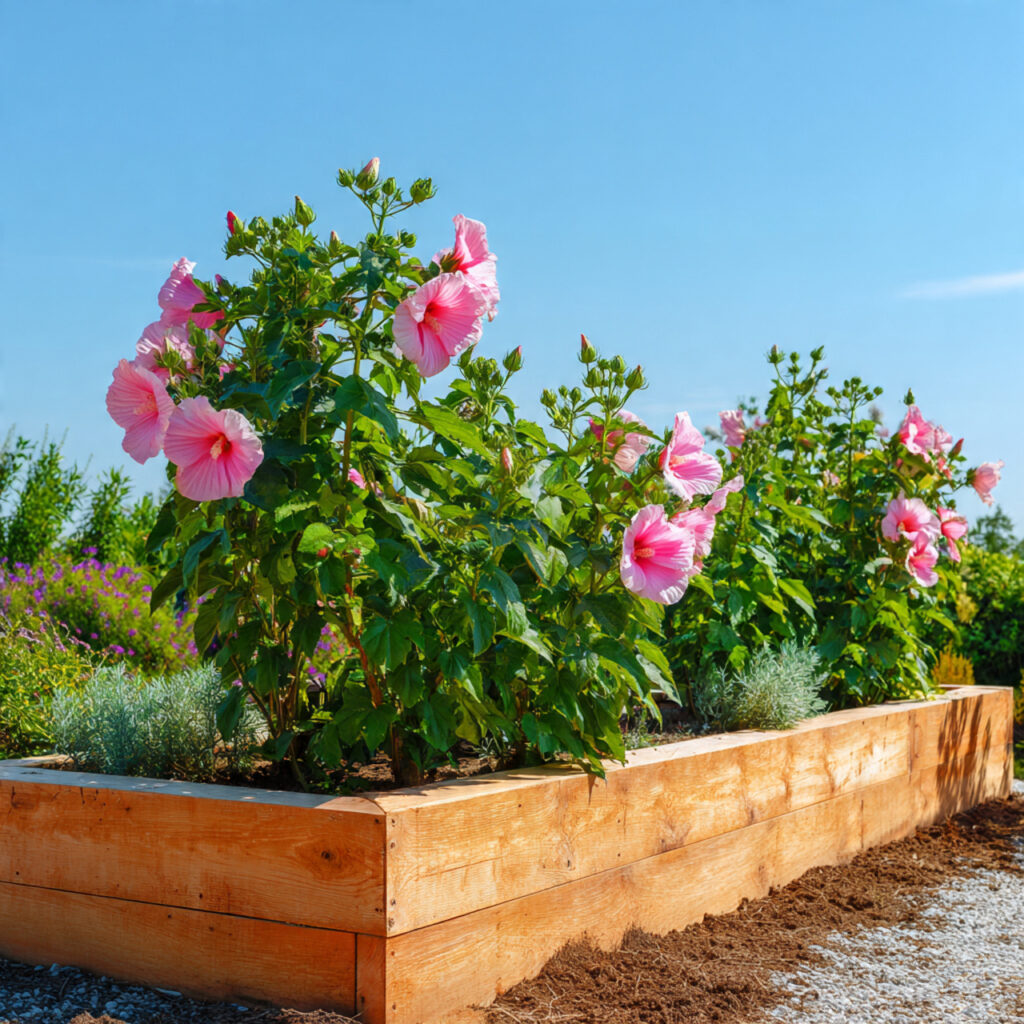
Raised garden beds offer superior drainage and soil control, which hibiscus plants appreciate. The improved growing conditions often translate to larger blooms and more vigorous growth.
Raised bed advantages:
- Fill with quality potting mix amended with compost
- Ensure beds are at least 12 inches deep for adequate root space
- Position where plants receive 6-8 hours of full sun
- Install drip irrigation for consistent moisture
- Benefit from warmer soil temperatures for earlier blooms
- Enjoy easier maintenance without bending or kneeling
- Create distinct garden zones with different bed designs
Bring Life to Enclosed Courtyards
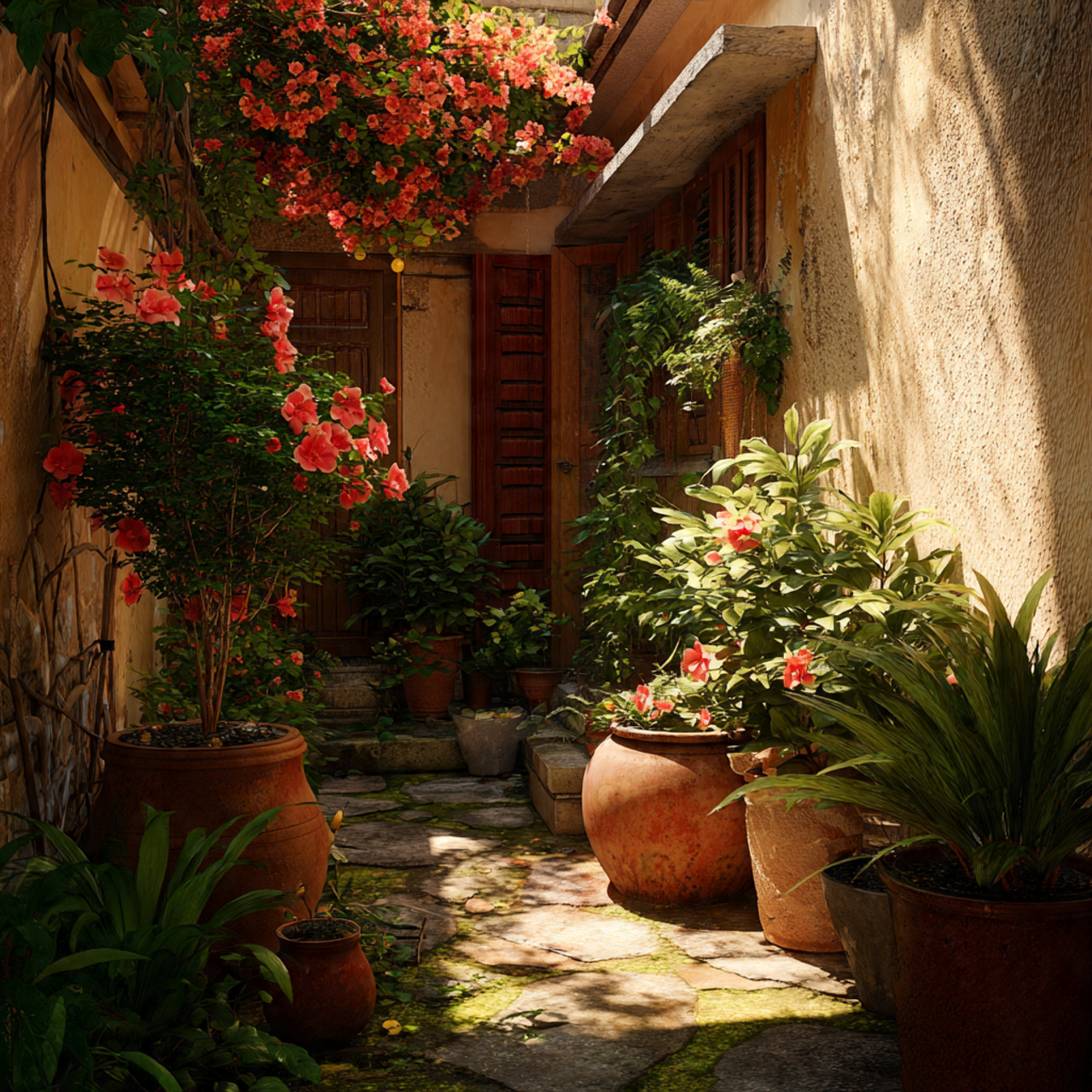
Courtyards often struggle with limited light and confined dimensions. Choose hibiscus varieties suited to partial shade, and use containers to add flexibility in tight spaces.
Courtyard success tips:
- Select shade-tolerant varieties like ‘Blue Bird’ or ‘White Chiffon’
- Use containers for flexibility in confined spaces
- Position plants to catch morning sun if possible
- Utilize vertical wall space with trellised varieties
- Choose lighter bloom colors that show well in shade
- Improve air circulation to prevent disease in enclosed spaces
- Create focal points with strategically placed containers
Elevate Small-Space Gardening
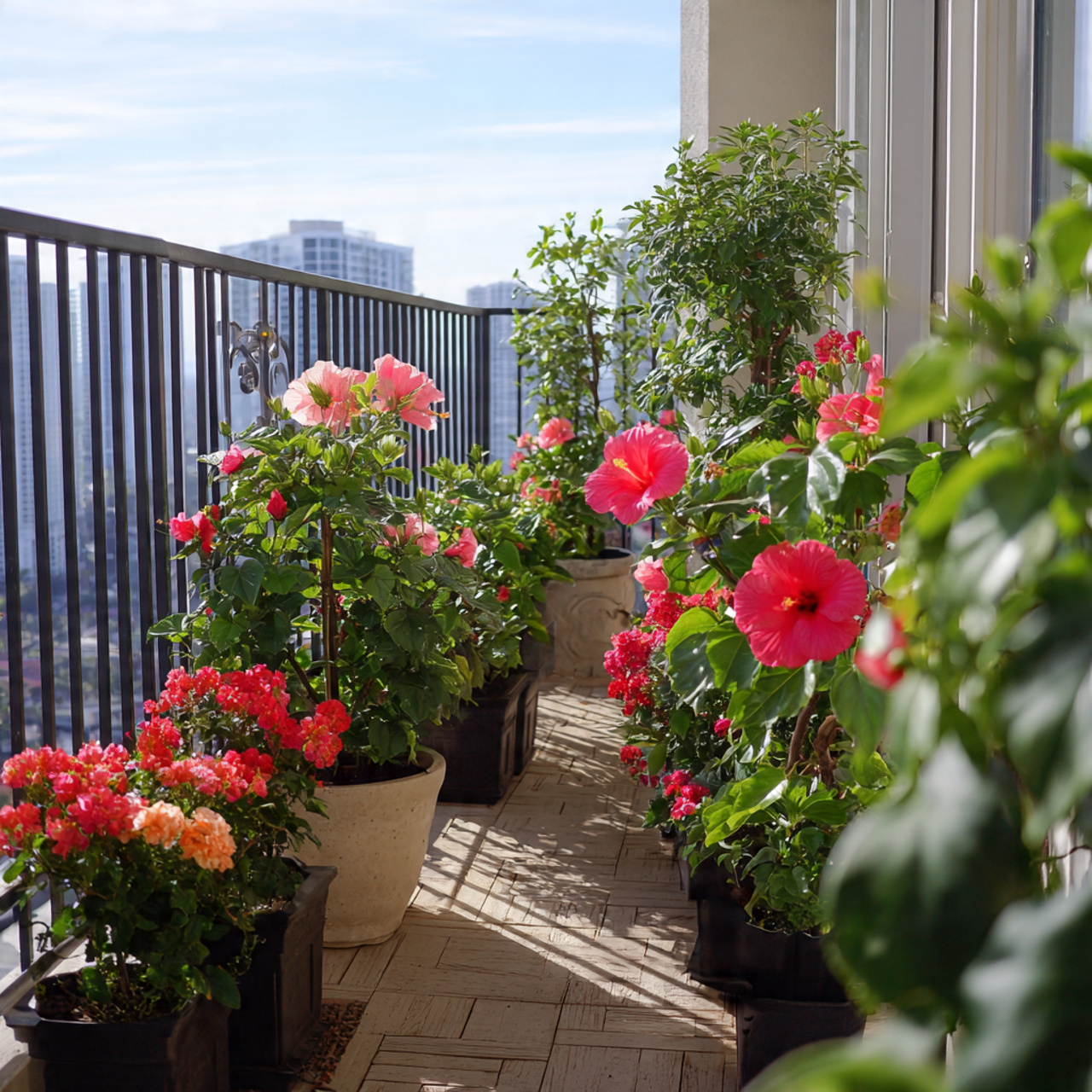
Apartment dwellers and those with limited square footage can still enjoy hibiscus through balcony container gardening. Select compact varieties bred specifically for container culture.
Balcony gardening essentials:
- Choose dwarf or compact varieties like ‘Mahogany Splendor’ or ‘Snow Queen’
- Ensure balcony receives at least six hours of sunlight daily
- Use lightweight containers if weight restrictions apply
- Consider self-watering pots for reduced maintenance
- Secure containers against wind with stable bases
- Check building regulations before adding permanent installations
- Use vertical space with hanging varieties if permitted
Replace Generic Table Centerpieces
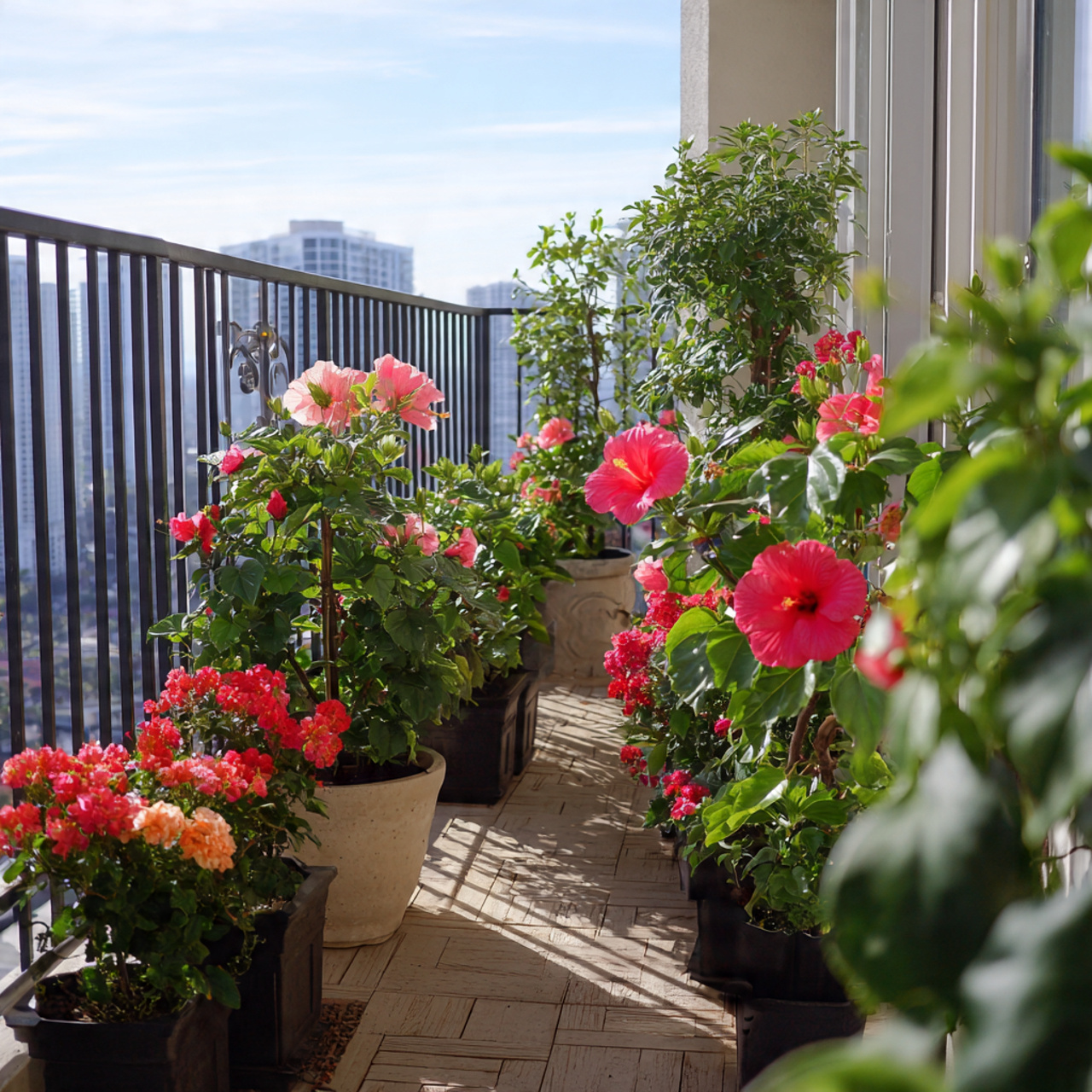
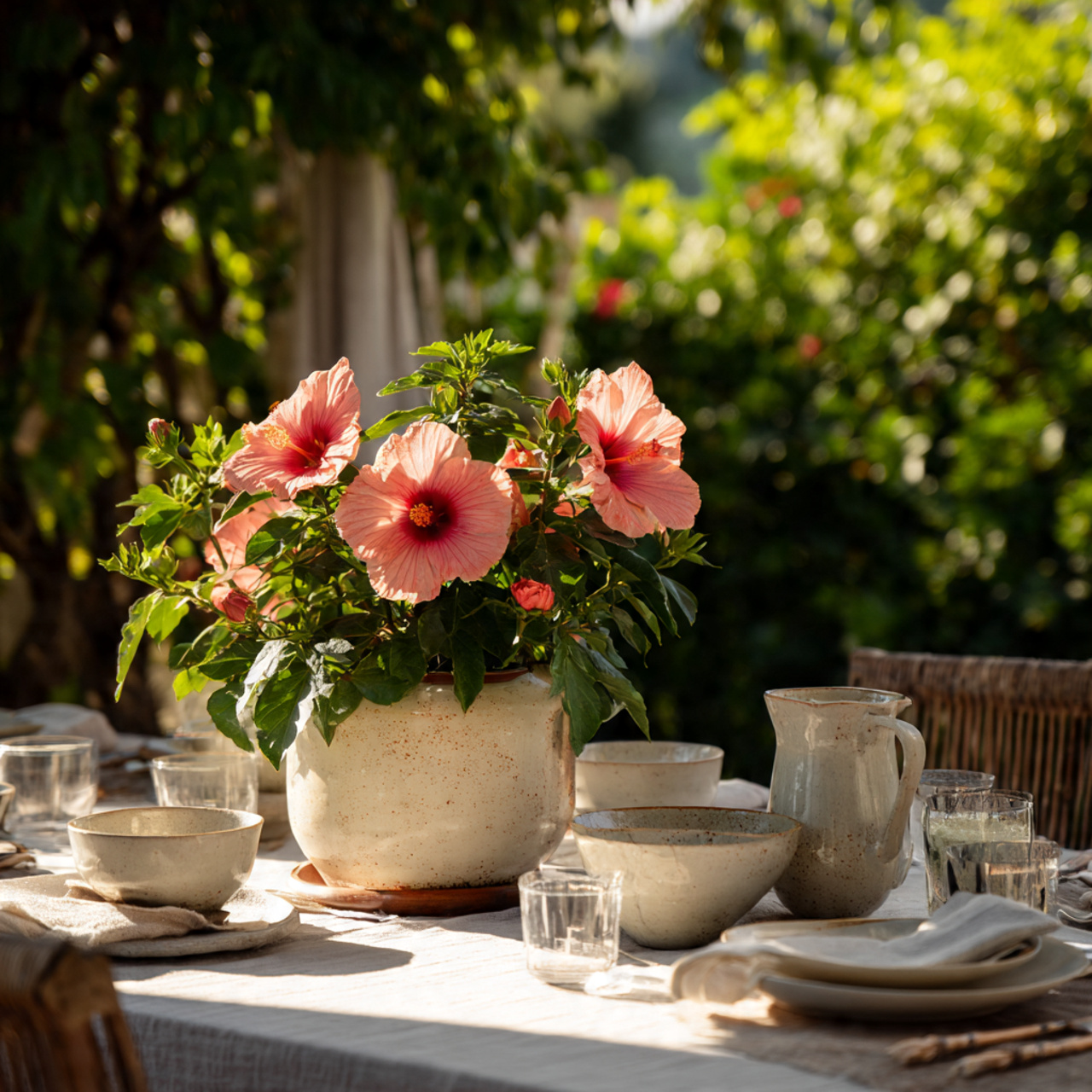
Why use artificial decorations when a potted hibiscus provides living beauty? A small to medium container placed at the center of your outdoor dining table creates an organic focal point.
Table décor ideas:
- Choose 8-10 inch diameter containers that don’t obstruct sightlines
- Select continuous bloomers for reliable color during gatherings
- Coordinate pot style with your outdoor dining aesthetic
- Use colors that complement your table settings
- Position slightly off-center for casual appeal
- Combine with votives or candles for evening ambiance
- Rotate fresh containers from your collection as blooms fade
Layer in Sensory Experiences
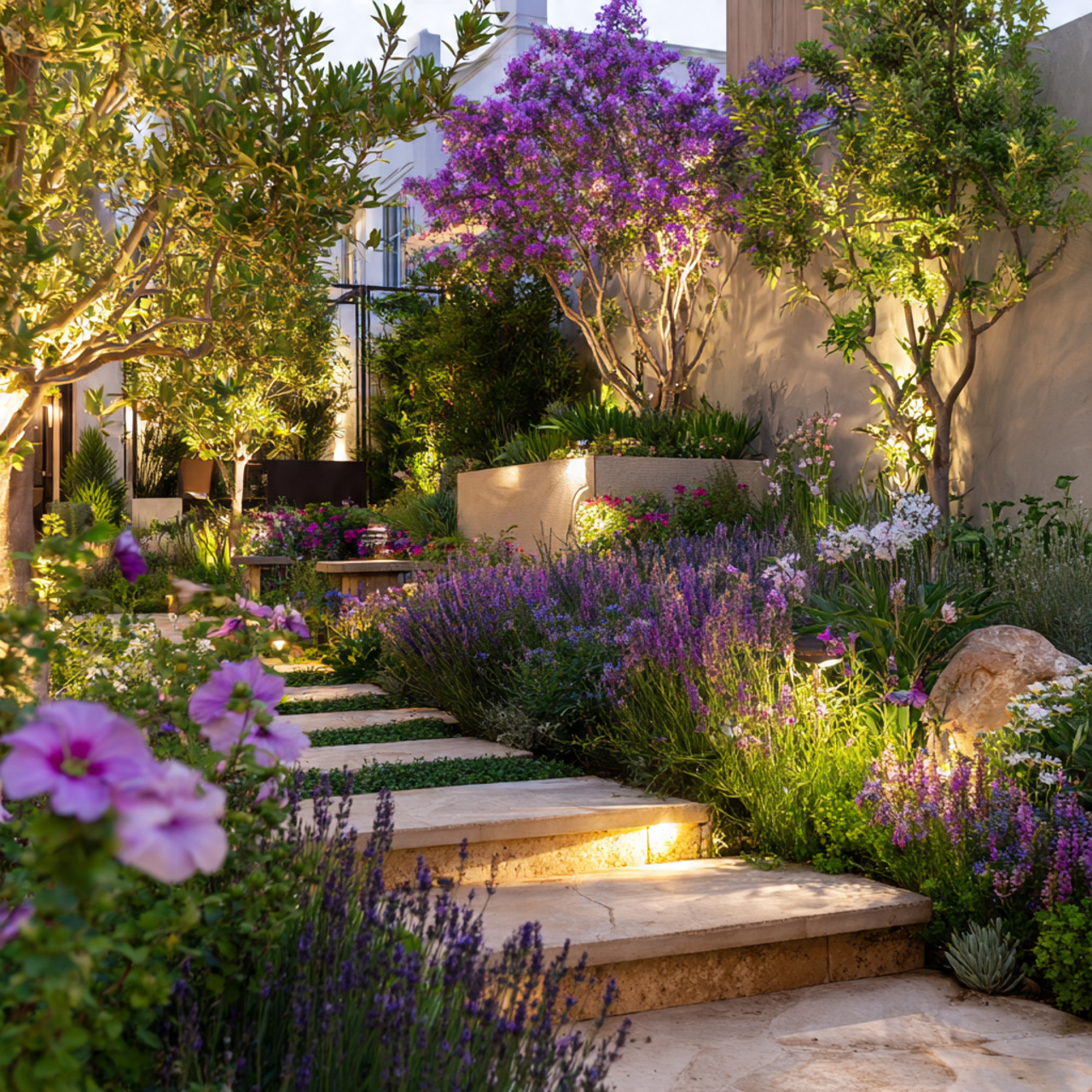
While most hibiscus varieties don’t produce strong fragrance, strategic placement near aromatic herbs or fragrant flowers creates a multi-sensory garden experience.
Sensory combination ideas:
- Position hibiscus alongside lavender for contrasting color and scent
- Pair with rosemary for culinary and aromatic benefits
- Combine with scented geraniums for varied fragrances
- Add texture contrast with soft lamb’s ear or ornamental grasses
- Include herbs like mint or lemon balm for touchable foliage
- Create sound with nearby wind chimes or water features
- Plant near seating areas to enjoy all sensory elements
Embrace Heat-Loving Reliability
Gardeners in consistently warm climates sometimes struggle to find plants that truly thrive rather than merely survive. Hibiscus loves heat and responds with enthusiastic growth and prolific blooming.
Warm-climate advantages:
- Enjoy near year-round blooming in frost-free zones
- Minimal winter protection needed in subtropical regions
- Plants grow larger and more vigorous in consistent warmth
- Longer growing seasons mean more design possibilities
- Less seasonal maintenance compared to cold-climate gardening
- Tropical varieties perform at their absolute best
- Heat stress is minimal when plants receive adequate water
Energize Mixed Shrub Plantings
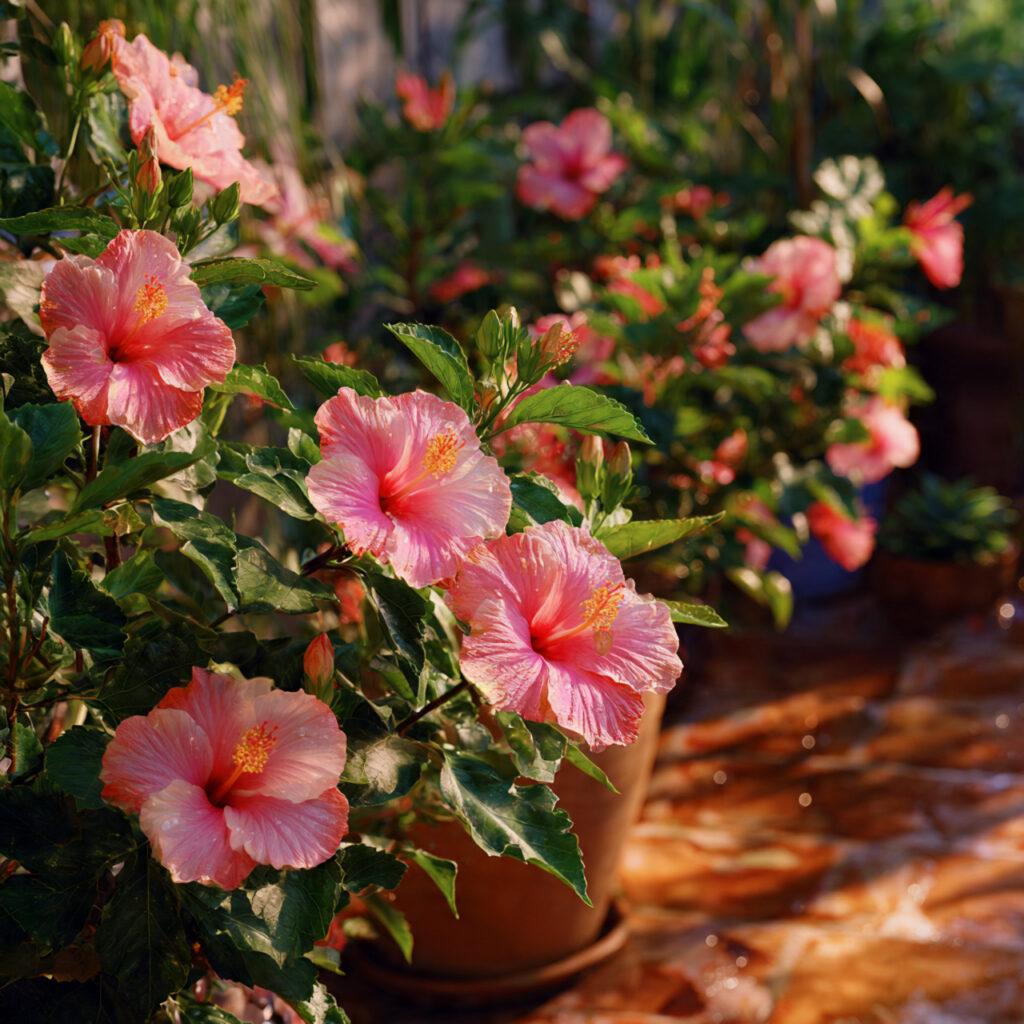
Traditional shrub borders can read as monotonous walls of green. Interspersing hibiscus among evergreen or deciduous shrubs breaks up the visual monotony with seasonal color.
Mixed border strategies:
- Plant hibiscus at regular intervals along shrub borders
- Contrast colorful blooms against dark evergreen foliage
- Use as seasonal interest plants among year-round structure
- Vary heights by combining with both tall and low shrubs
- Create color echoes by repeating hibiscus every 8-10 feet
- Choose colors that complement surrounding foliage tones
- Prune shrubs to allow hibiscus adequate light and air
Rescue Tired Garden Beds
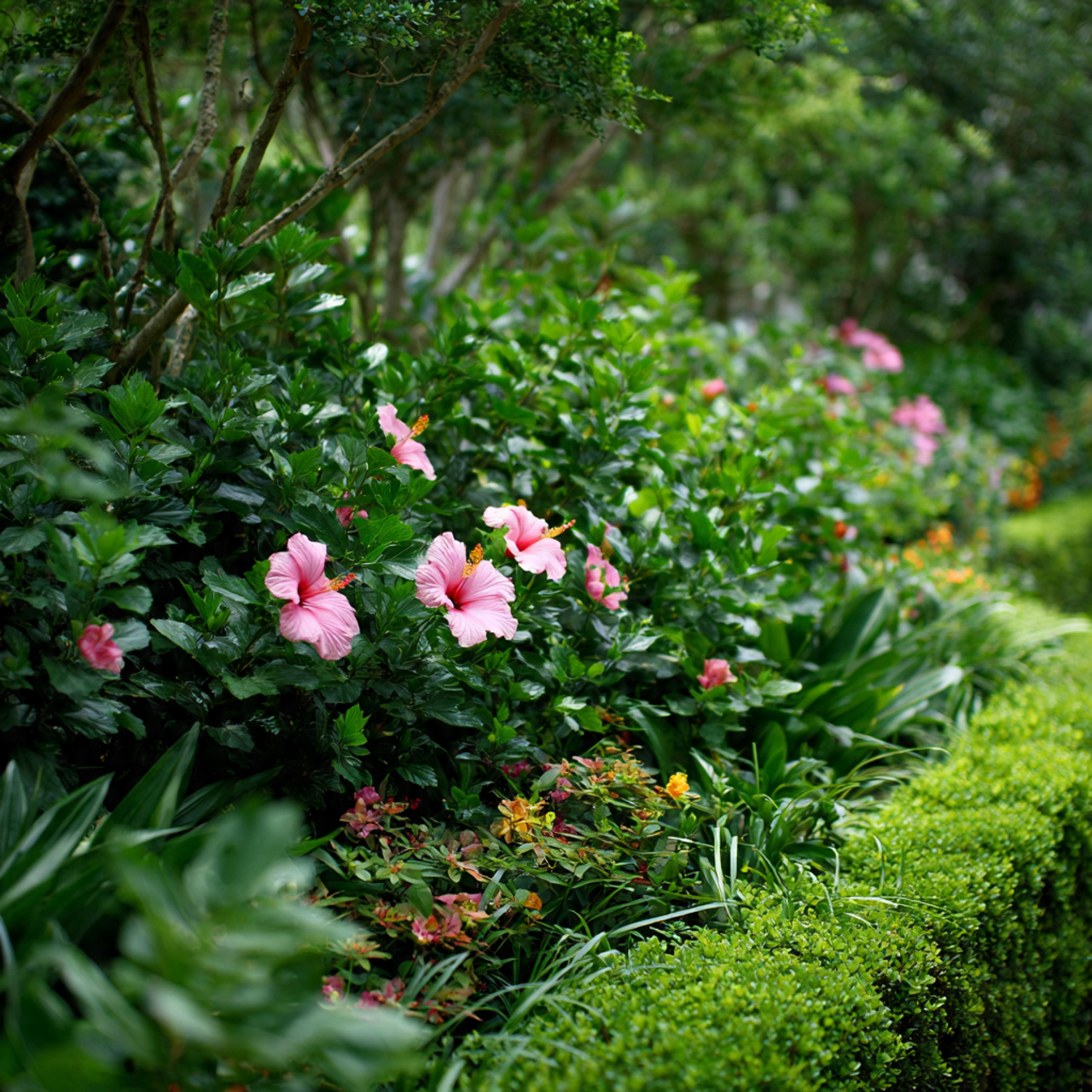
Older garden beds that have lost their appeal can be completely transformed by removing struggling plants and installing fresh hibiscus. The immediate impact of large, colorful blooms disguises years of neglect.
Bed renovation steps:
- Remove dead or dying plants and clear debris
- Amend soil generously with fresh compost and aged manure
- Test soil pH and adjust to 6.0-6.5 for optimal hibiscus growth
- Install new hibiscus with proper spacing for mature size
- Add fresh mulch layer to suppress weeds and retain moisture
- Create defined bed edges for a polished appearance
- Incorporate complementary plants that won’t compete with hibiscus
FAQs (5 Reality-Based)
Q1: How often should I water a hibiscus flower?
Hibiscus plants prefer consistently moist soil. Water them when the top inch of soil feels dry. During hot seasons, daily watering may be needed.
Q2: Can the hibiscus flower grow indoors?
Yes, the hibiscus flower can grow indoors as long as it receives bright light. South-facing windows work best for indoor hibiscus plants.
Q3: Why is my hibiscus flower not blooming?
Lack of light, low temperatures, or insufficient nutrients may prevent blooming. Ensure the plant receives at least 6 hours of sunlight daily.
Q4: What is the best fertilizer for the hibiscus flower?
A balanced, slow-release fertilizer high in potassium supports strong bloom production. Avoid high-nitrogen formulas that encourage leaves over flowers.
Q5: Does the hibiscus flower attract pests?
Yes, hibiscus plants may attract aphids, whiteflies, and spider mites. Regular inspection and neem oil treatments help prevent damage.
Final Thoughts
Hibiscus flowers offer something increasingly rare in gardening: dramatic results with reasonable effort. Their generous blooms create focal points that anchor entire landscapes, while their adaptability means both beginners and experienced gardeners can succeed with them.
The 25 ideas presented here merely scratch the surface of what’s possible with these versatile plants. Your specific climate, available space, and personal style will guide which approaches work best for your situation. Start with one or two ideas that resonate most, then expand as you gain confidence and see results.
Whether you’re drawn to hibiscus for their wildlife benefits, their tropical aesthetics, or simply their reliable performance, these plants rarely disappoint. They transform ordinary gardens into destinations worth lingering in, proving that sometimes the simplest solution—planting something beautiful—remains the most effective.