Fiddle Leaf Tree Care: 27 Expert Tips to Grow a Stunning Indoor Tree
You’ve probably noticed Fiddle Leaf Figs popping up in every stylish home photo you see online. Their tall stems and statement-making leaves have made them a must-have plant. The reality? They’re not nearly as difficult as their bougie image suggests.
This guide gives you some practical ways to keep your Fiddle Leaf Fig in great shape. First plant or fiftieth—these tips work for anyone looking to master this popular houseplant.
Why Your Home Needs a Fiddle Leaf Fig
Let’s be honest—we all want our homes to feel like those picture-perfect spaces we see on Pinterest. The Fiddle Leaf Fig delivers that effortlessly. But beyond the aesthetic appeal, there are some genuinely compelling reasons to bring one home.
What makes the Fiddle Leaf Fig special:
- Natural air purification – Those broad, gorgeous leaves work overtime filtering toxins from your indoor air
- Mood-boosting greenery – Studies show that indoor plants reduce stress and increase feelings of well-being
- Longevity – With proper care, your Fiddle Leaf Fig can live for decades, growing alongside your family
- Versatile styling – Works beautifully in minimalist, modern, bohemian, or traditional interiors
- Statement-making presence – Instantly transforms empty corners into focal points
Think of your Fiddle Leaf Fig as both a living piece of art and a long-term investment in your home’s atmosphere. It softens hard architectural lines, adds life to sterile spaces, and creates that coveted “brought the outdoors in” vibe.
Finding the Perfect Spot: Light is Everything
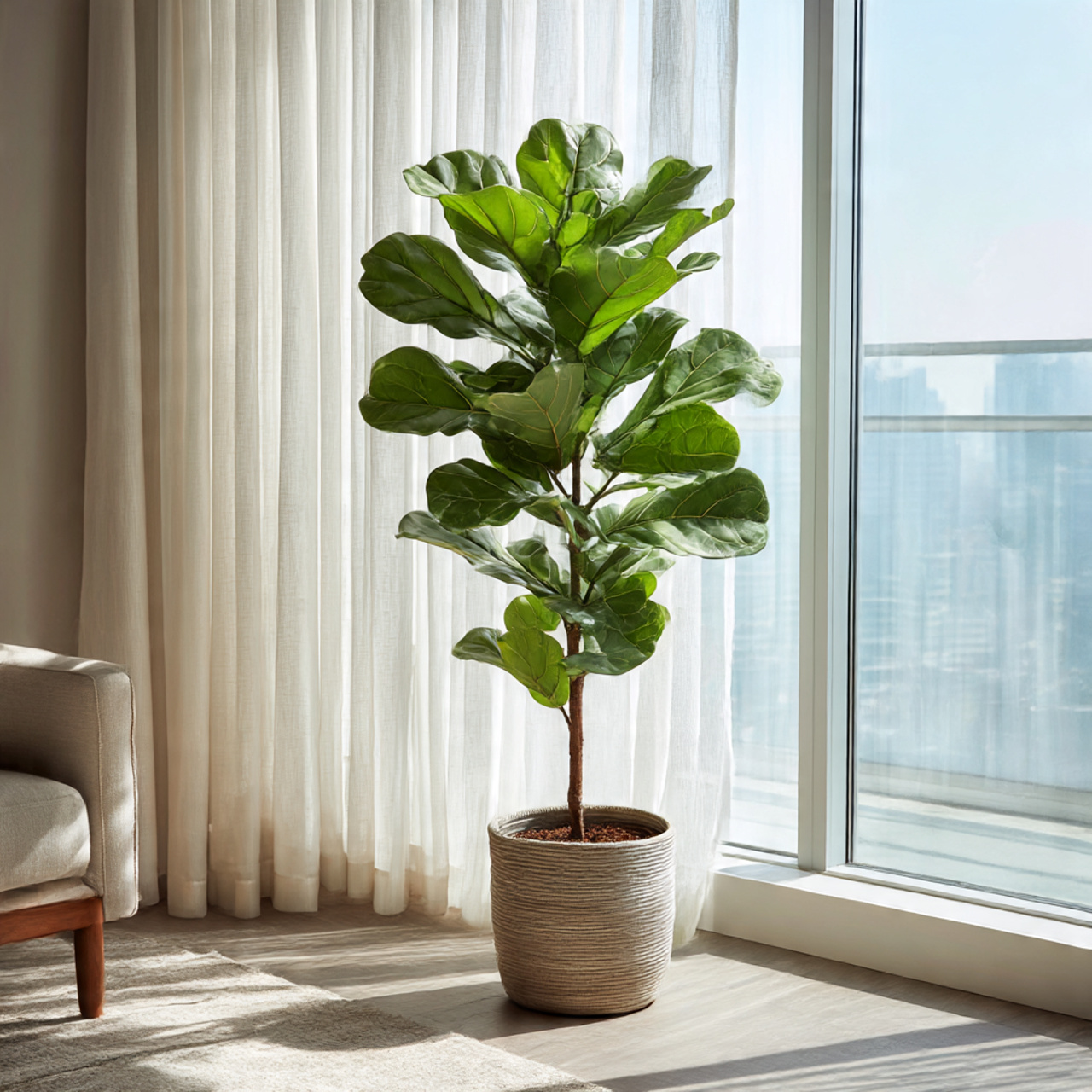
Location, location, location—it matters just as much for your plant as it does for real estate. Your Fiddle Leaf Fig is pretty particular about light, and getting this right from the start will save you a lot of headaches.
Here’s what you need to know:
- Bright, indirect sunlight is the sweet spot – Think of the kind of light you’d read a book in comfortably
- East-facing windows are ideal – Gentle morning sun is perfect and won’t scorch those beautiful leaves
- South-facing windows work with protection – Use sheer curtains to diffuse intense afternoon light
- Avoid direct sun – Those direct rays through glass can burn leaves faster than you’d think
- Rotate regularly – Turn your tree a quarter turn every week or two to ensure even growth on all sides
Tip: Pay attention to how the light changes throughout the day. What seems like perfect light at 9 AM might turn into a scorching spotlight by 3 PM. If you notice your tree leaning dramatically toward the light, that’s your cue to rotate it more frequently.
Pot and Soil Setup: The Foundation of Health
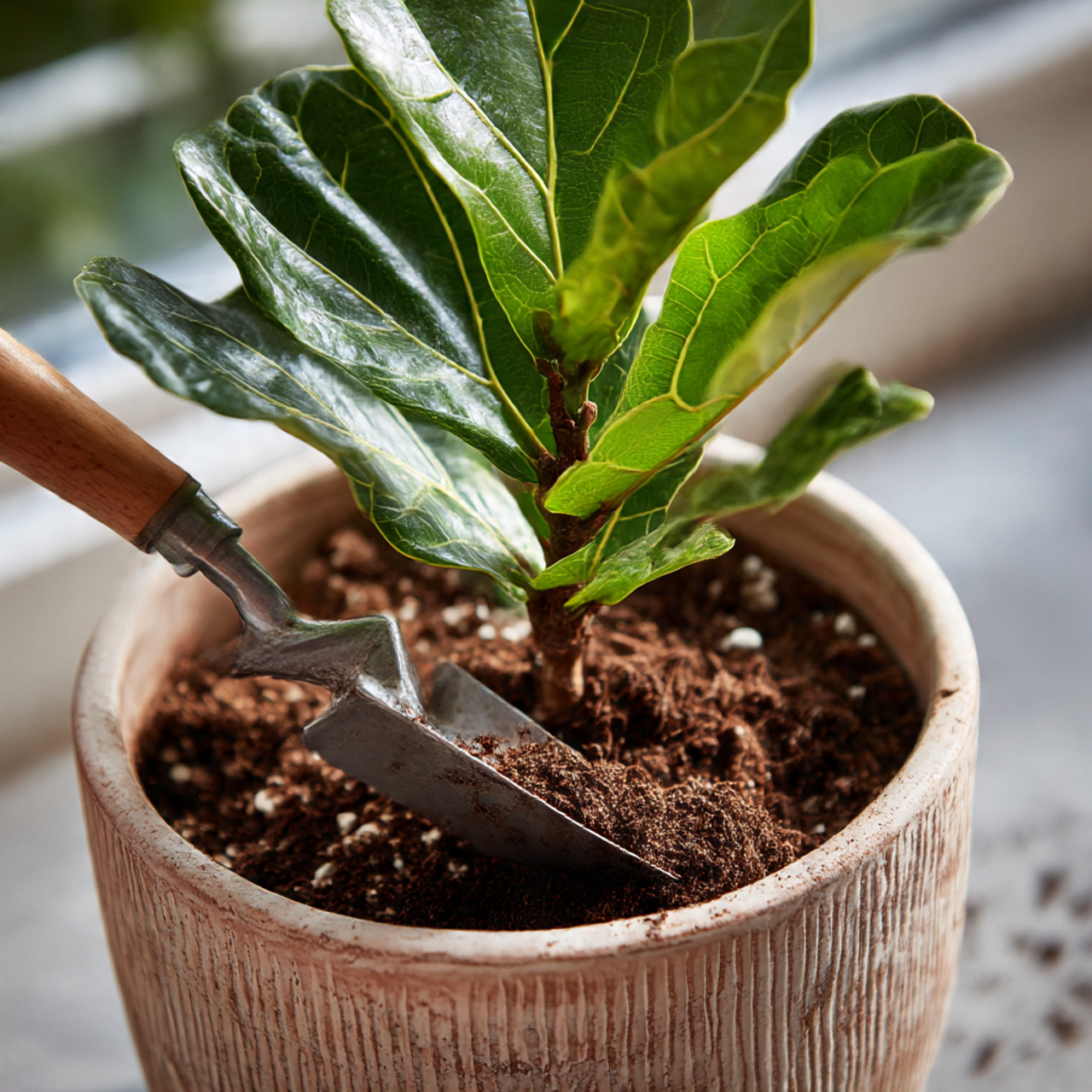
You wouldn’t build a house on a shaky foundation, right? Same principle applies here. The right pot and soil combination sets your Fiddle Leaf Fig up for success from day one.
Essential potting guidelines:
- Drainage is non-negotiable – Pots must have drainage holes; no exceptions
- Well-draining soil mix – Combine standard potting soil with perlite or coarse sand (about 70% soil, 30% drainage material)
- Size matters – Choose a pot that’s 2-3 inches larger in diameter than the root ball
- Add a drainage layer – Place small stones or broken pottery pieces at the bottom for extra insurance against waterlogging
- Terracotta is your friend – These porous pots allow soil to dry out more evenly, reducing overwatering risks
Warning signs of poor drainage:
- Water sits on top of the soil for more than a few minutes
- Soil feels soggy days after watering
- Funky smell coming from the soil
- Lower leaves yellowing rapidly
Watering Your Fiddle Leaf Tree Correctly
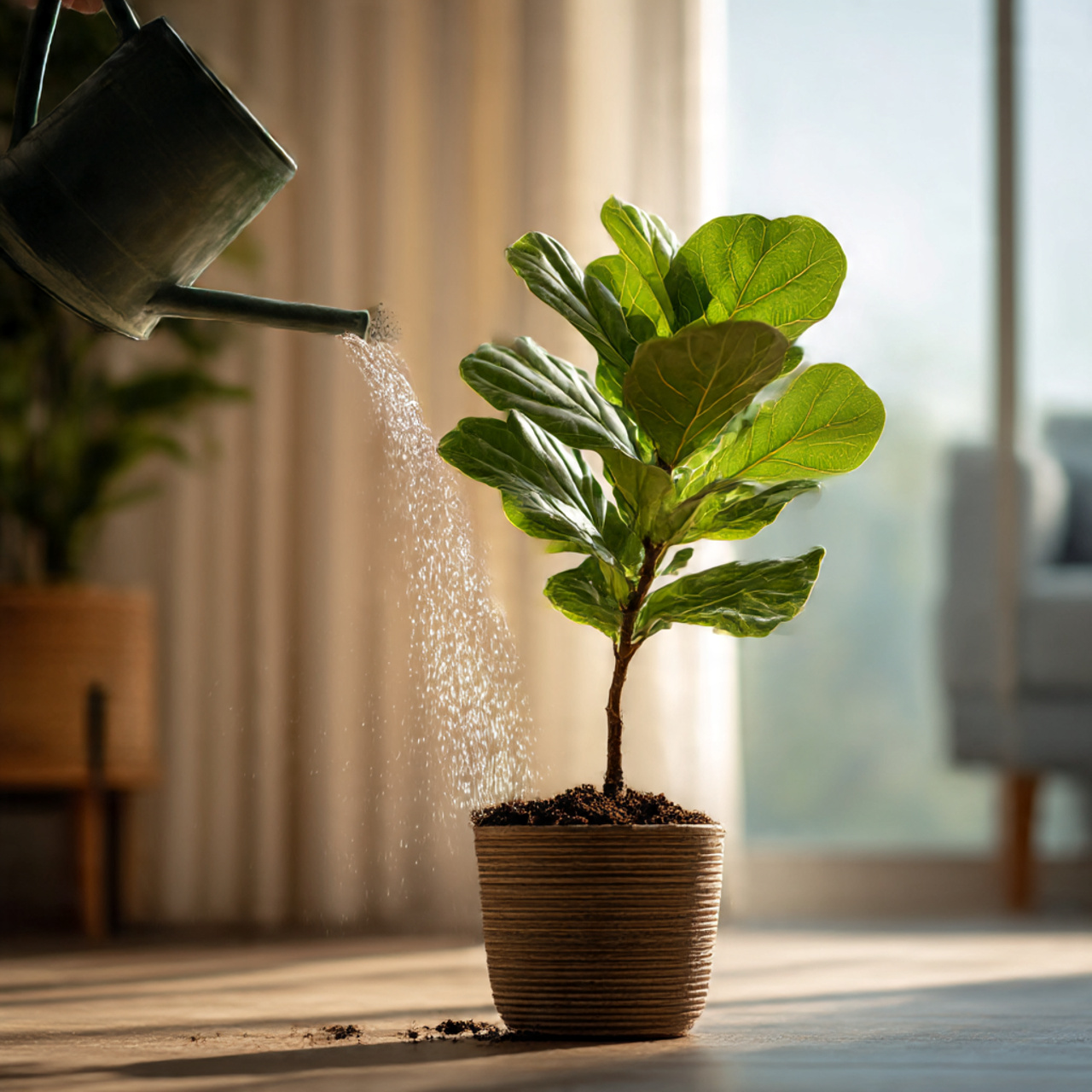
Here’s where most people run into trouble. Overwatering kills more Fiddle Leaf Figs than anything else, but underwatering isn’t great either. Let’s find that Goldilocks zone.
The watering routine that works:
- Check before you water – Stick your finger 1-2 inches into the soil; only water if it feels dry
- Water thoroughly – When you do water, water until it drains from the bottom
- Empty the saucer – Never let your plant sit in standing water
- Adjust seasonally – Water more frequently in spring/summer, less in fall/winter
- Use room temperature water – Cold water can shock the roots
Investment tip: A moisture meter takes the guesswork out of watering. They’re inexpensive and can save you from both overwatering and underwatering disasters. In winter, your tree might only need water every 2-3 weeks; in summer, it could be weekly.
Humidity: Creating a Tropical Vibe
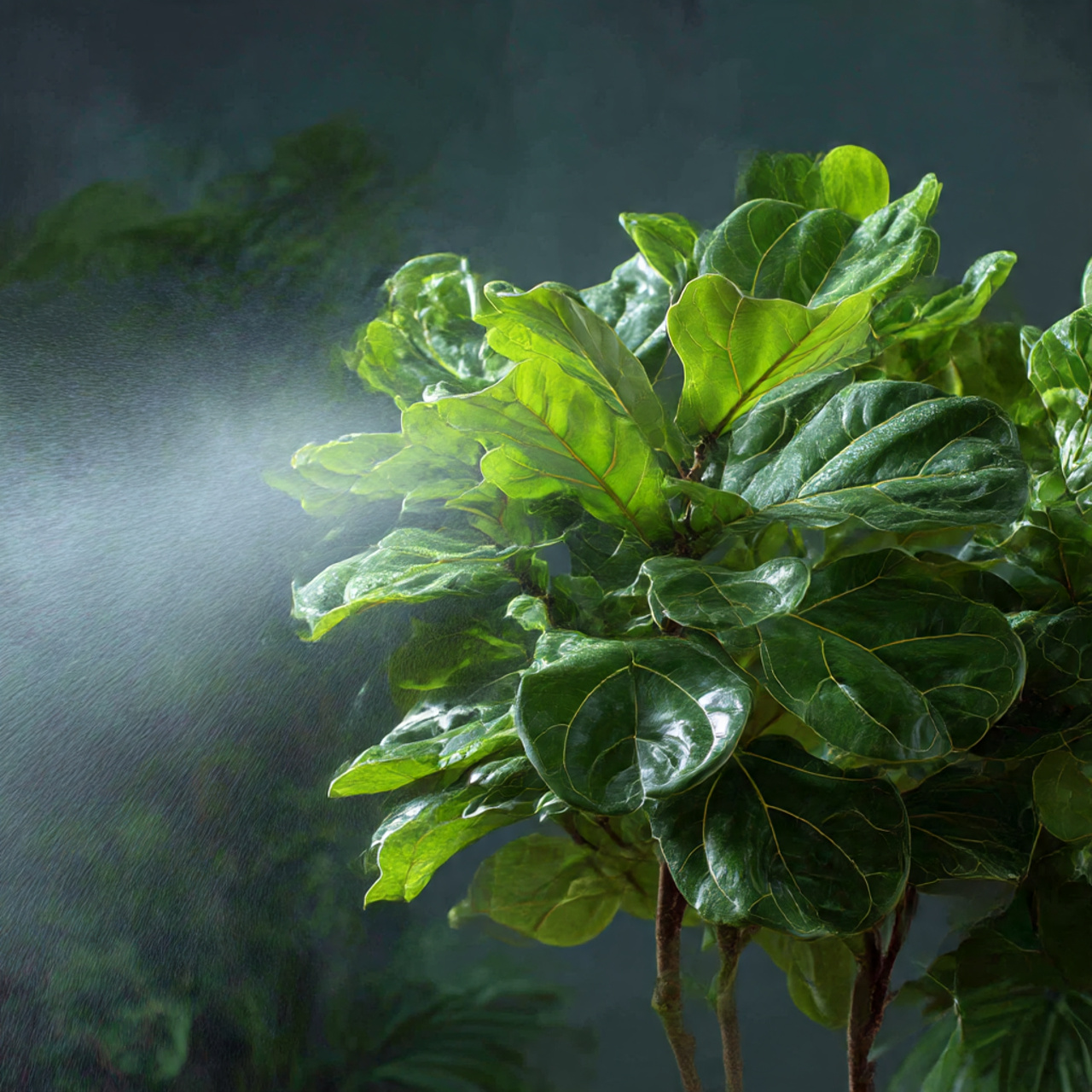
Your Fiddle Leaf Fig comes from the warm, humid regions of West Africa. While it’s adapted to indoor life, it still appreciates some humidity love, especially during dry winter months when heating systems suck moisture from the air.
Boost humidity the right way:
- Use a pebble tray – Place your pot on a tray filled with pebbles and water (pot sits on pebbles, not in water)
- Invest in a humidifier – Run it near your plant, aiming for 40-60% humidity
- Mist sparingly – Light misting once or twice a week helps, but don’t overdo it
- Group plants together – Create a mini microclimate where plants naturally increase humidity for each other
- Keep away from vents – Heating and AC vents create dry, turbulent air
Signs your humidity is too low:
- Brown, crispy leaf edges
- Leaf tips curling inward
- Leaves losing their glossy sheen
Pruning for Shape and Health
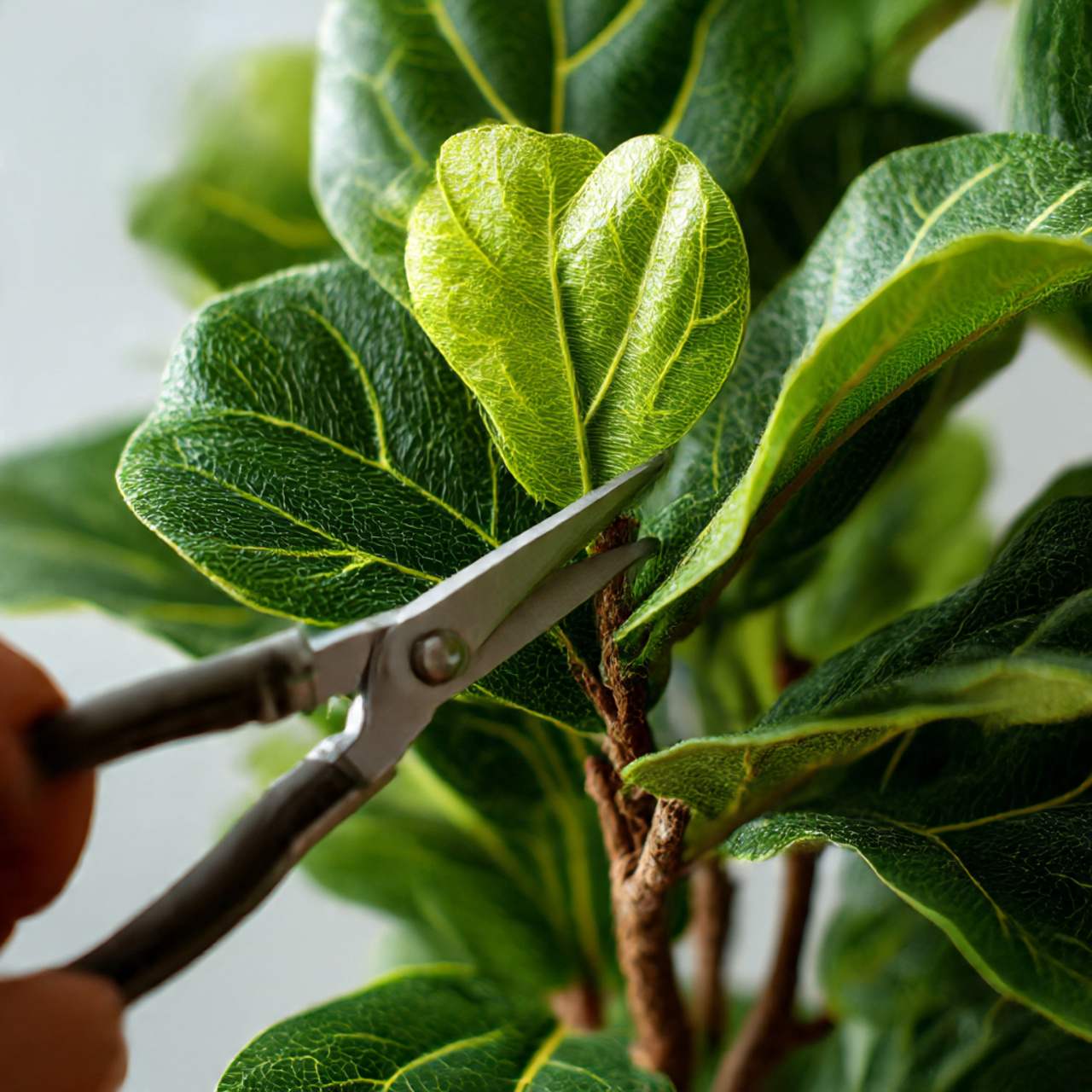
Think of pruning as giving your tree a haircut—it keeps things tidy, encourages new growth, and helps maintain that gorgeous sculptural shape you’re going for.
Smart pruning practices:
- Timing matters – Prune in spring or early summer when growth is most active
- Use clean, sharp scissors or pruners – Sterilize with rubbing alcohol between cuts
- Cut just above a node – This is where new growth will emerge
- Remove damaged leaves first – Yellow, brown, or spotted leaves should go
- Control height – Cut the top to encourage bushier, more lateral growth
Tip: If your tree is getting leggy (long stems with few leaves), pruning will encourage it to branch out and become fuller. Don’t be afraid to make strategic cuts—your tree will thank you with more balanced growth.
Fertilizing: The Right Nutrients at the Right Time
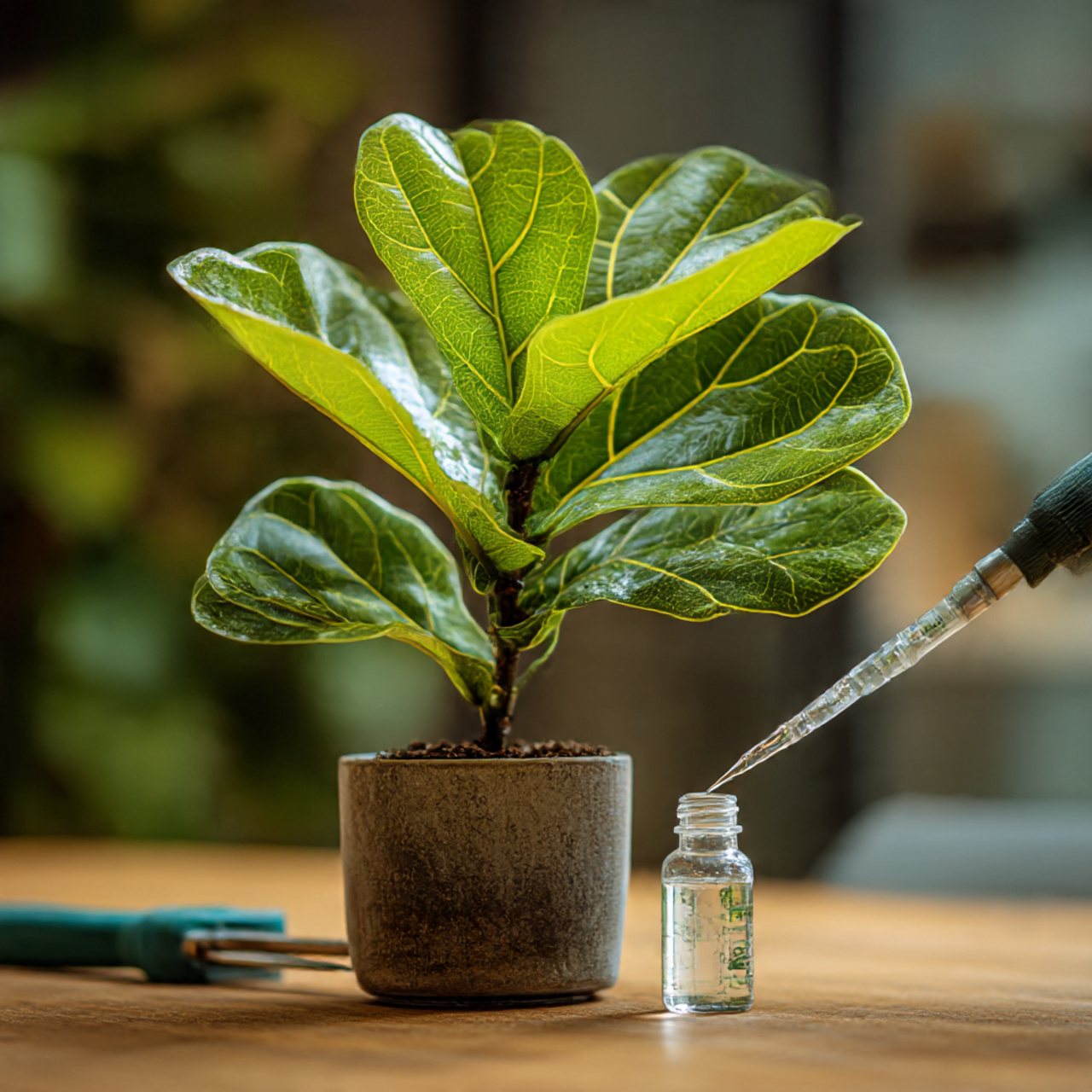
Your Fiddle Leaf Fig is a hungry plant when it’s actively growing. Feed it well, and you’ll see robust, vibrant leaves and steady growth.
Fertilization strategy:
- Use a balanced liquid fertilizer – Look for NPK ratios like 3-1-2 or something similar for foliage plants
- Feed monthly in spring and summer – This is when your tree is actively growing
- Skip winter feeding – Growth naturally slows; fertilizing can lead to salt buildup
- Dilute to half strength – This prevents fertilizer burn and nutrient overload
- Consider organic options – Fish emulsion, seaweed extract, or compost tea are gentler alternatives
Watch for over-fertilization:
- White crust on soil surface
- Leaf tips turning brown
- Stunted growth despite regular feeding
Pest Prevention and Control
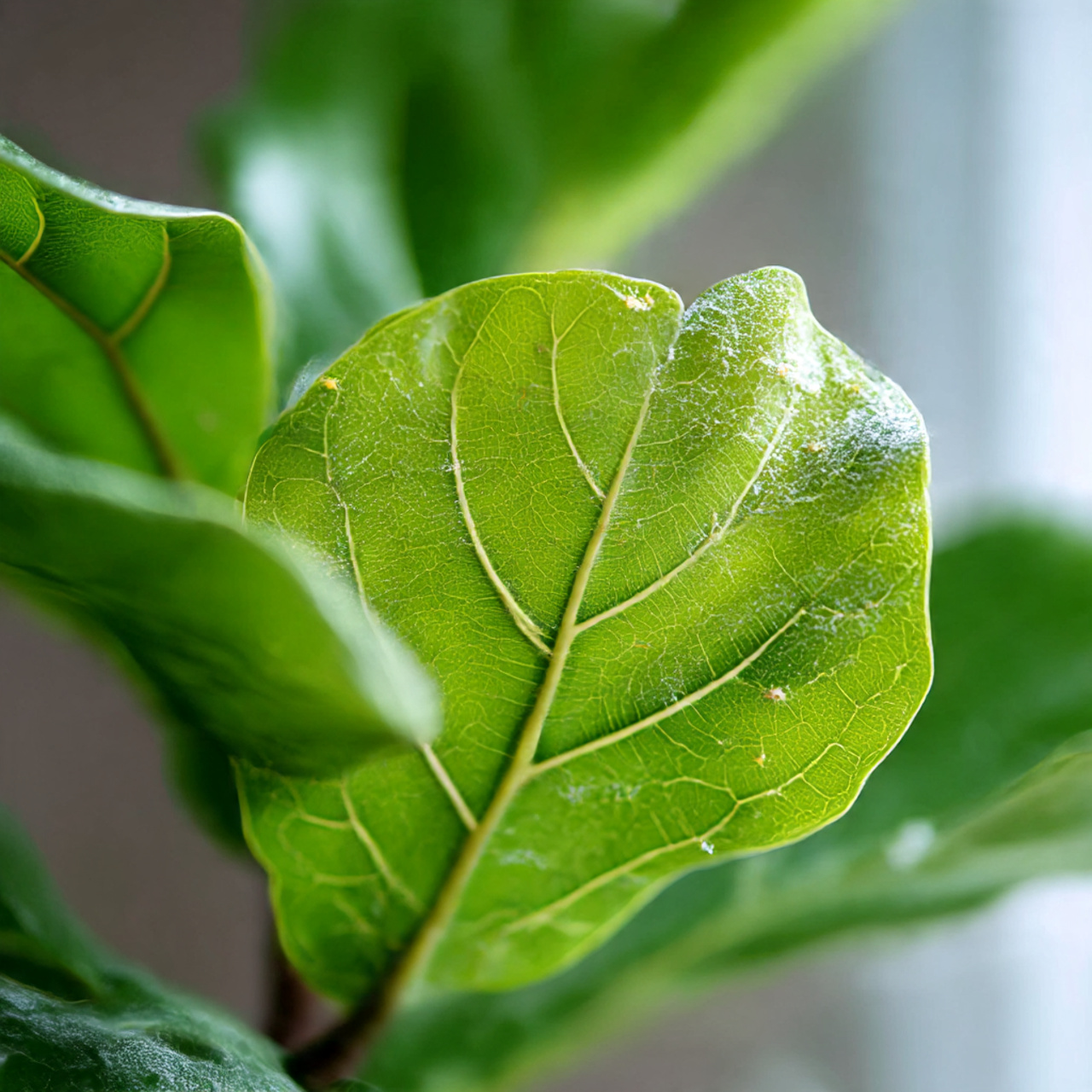
Nobody wants unwanted guests, especially the six-legged kind. While Fiddle Leaf Figs aren’t particularly pest-prone, regular monitoring keeps problems from escalating.
Common culprits and solutions:
- Spider mites – Tiny pests that create fine webbing; treat with neem oil spray
- Scale insects – Brown bumps on stems and leaves; remove manually and treat with insecticidal soap
- Mealybugs – White, cotton-like clusters; dab with rubbing alcohol on a cotton swab
- Fungus gnats – Annoying but mostly harmless; let soil dry more between waterings
Prevention is easier than treatment:
- Inspect new plants before bringing them near your Fiddle Leaf Fig
- Wipe leaves regularly with a damp cloth
- Maintain proper watering practices (overwatering attracts pests)
- Quarantine any infested plants immediately
- Keep your plant healthy—stressed plants are pest magnets
Leaf Cleaning: More Than Just Aesthetics
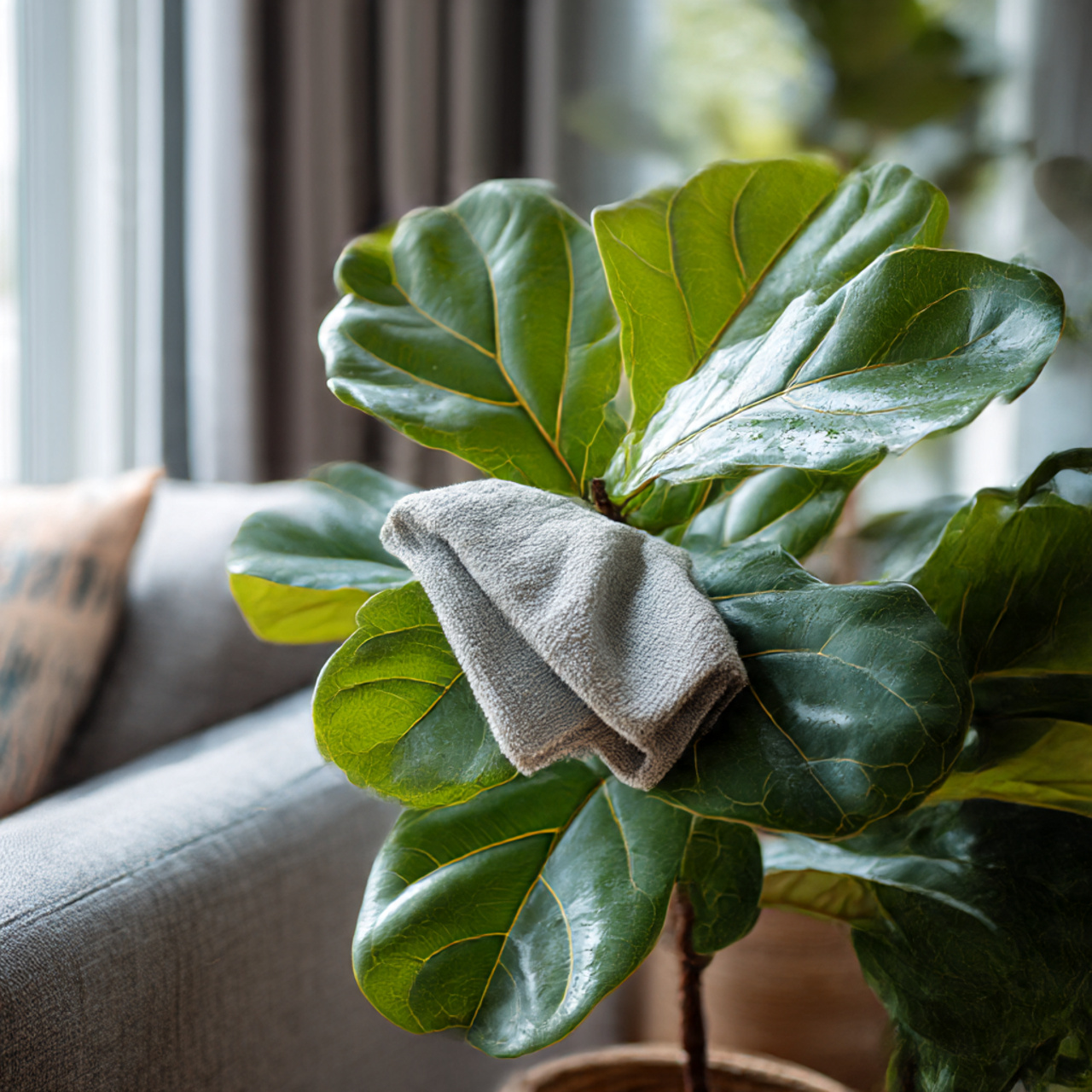
Those big, beautiful leaves are dust magnets. Regular cleaning isn’t just about looks—it’s about keeping your plant healthy and photosynthesizing efficiently.
The right way to clean leaves:
- Use a soft, damp microfiber cloth – Wipe both top and bottom surfaces gently
- Do it monthly – Or more often if you live in a dusty environment
- Add mild soap for stubborn grime – A drop of dish soap in water works wonders
- Support leaves while cleaning – Hold them from underneath to avoid tearing
- Skip leaf shine products – These can clog pores; natural is better
Clean leaves absorb light better, which means more energy for growth. Plus, regular cleaning gives you a chance to inspect for pests or disease early.
Supporting Tall Growth
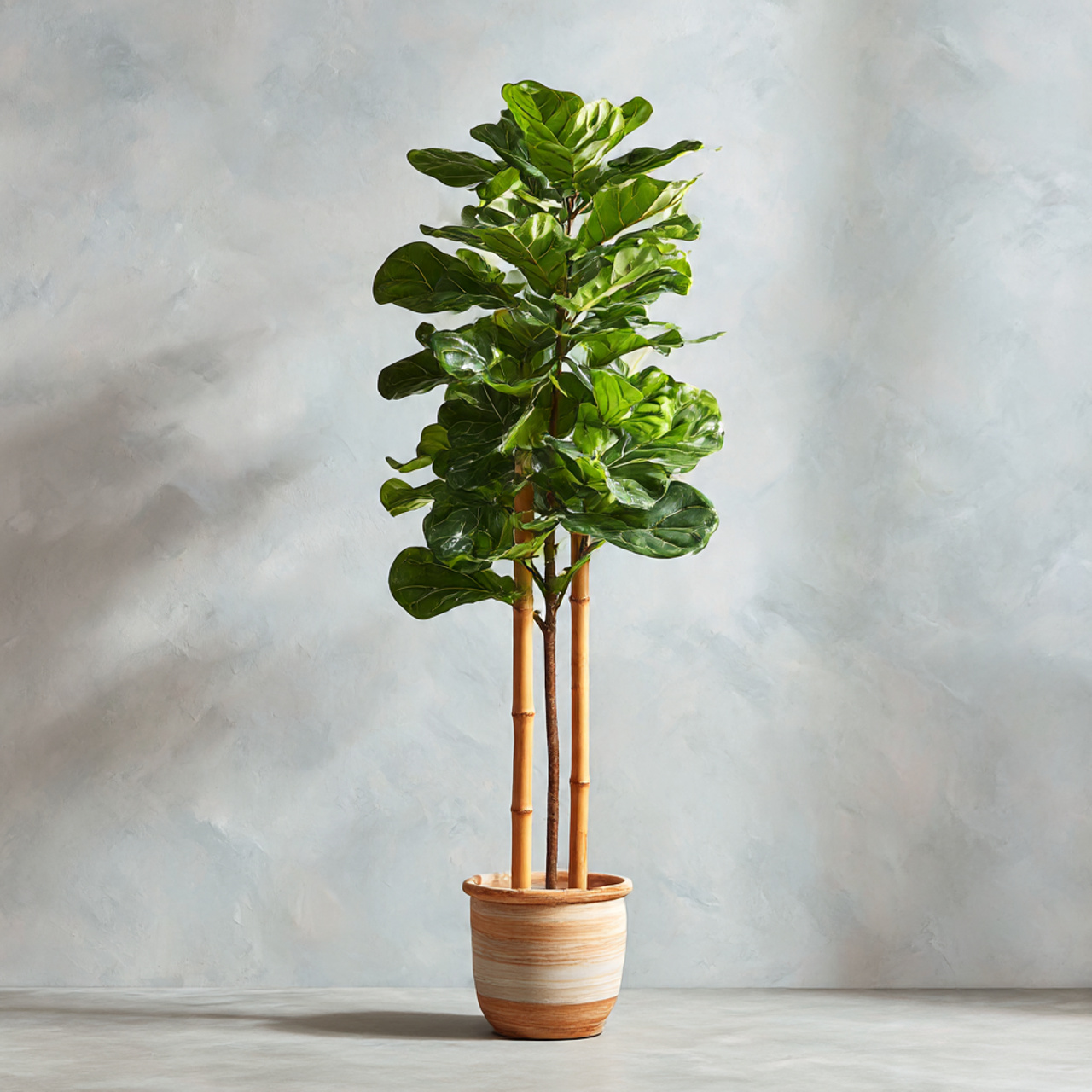
As your Fiddle Leaf Fig reaches for the sky, it might need a little help staying upright, especially if light comes primarily from one direction.
Proper support techniques:
- Use bamboo stakes – Natural-looking and sturdy
- Try a moss pole – Provides support while adding moisture to the air
- Tie loosely with soft material – Garden velcro or soft twine won’t damage the stem
- Position stakes discreetly – Place them toward the back or center
- Check ties regularly – Adjust as the tree grows to prevent constriction
Support isn’t just about aesthetics—it prevents branches from breaking under their own weight and helps maintain the tree’s natural upright form.
Propagation: Multiply Your Plant Family
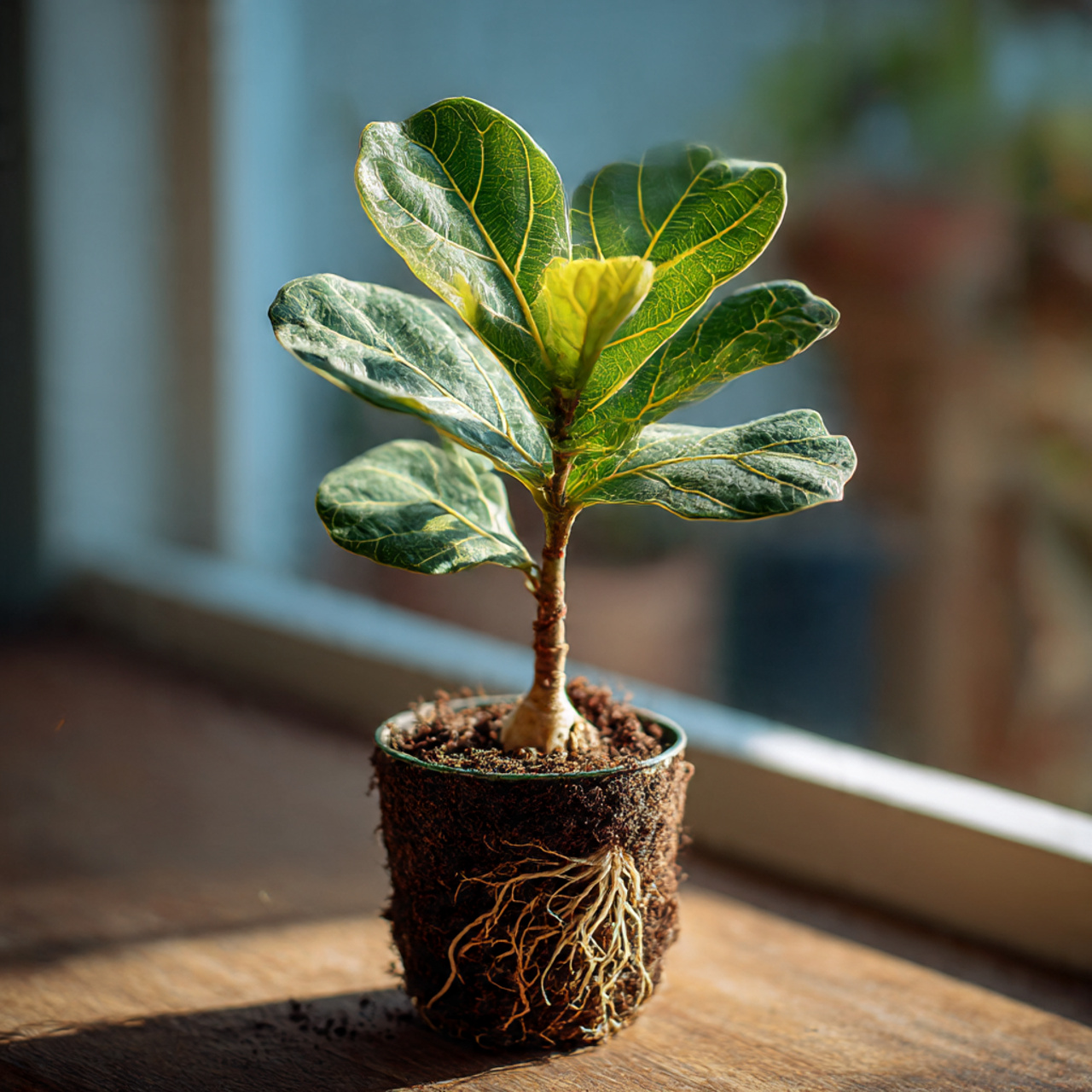
Want more Fiddle Leaf Figs without buying new plants? Propagation is surprisingly straightforward and incredibly satisfying.
Step-by-step propagation:
- Take cuttings in spring – Use healthy stems with 2-3 leaves
- Make clean cuts – Use sharp, sterilized scissors at a 45-degree angle
- Let cuttings callus – Leave them out for 24 hours to prevent rot
- Root in water or soil – Both methods work; water lets you watch root development
- Provide warmth and humidity – Cover with a plastic bag to create a mini greenhouse
- Be patient – Rooting takes 4-6 weeks; new growth appears after that
Success tip: A rooting hormone powder or gel significantly increases your success rate and speeds up root development.
Dealing with Leaf Drop: Don’t Panic
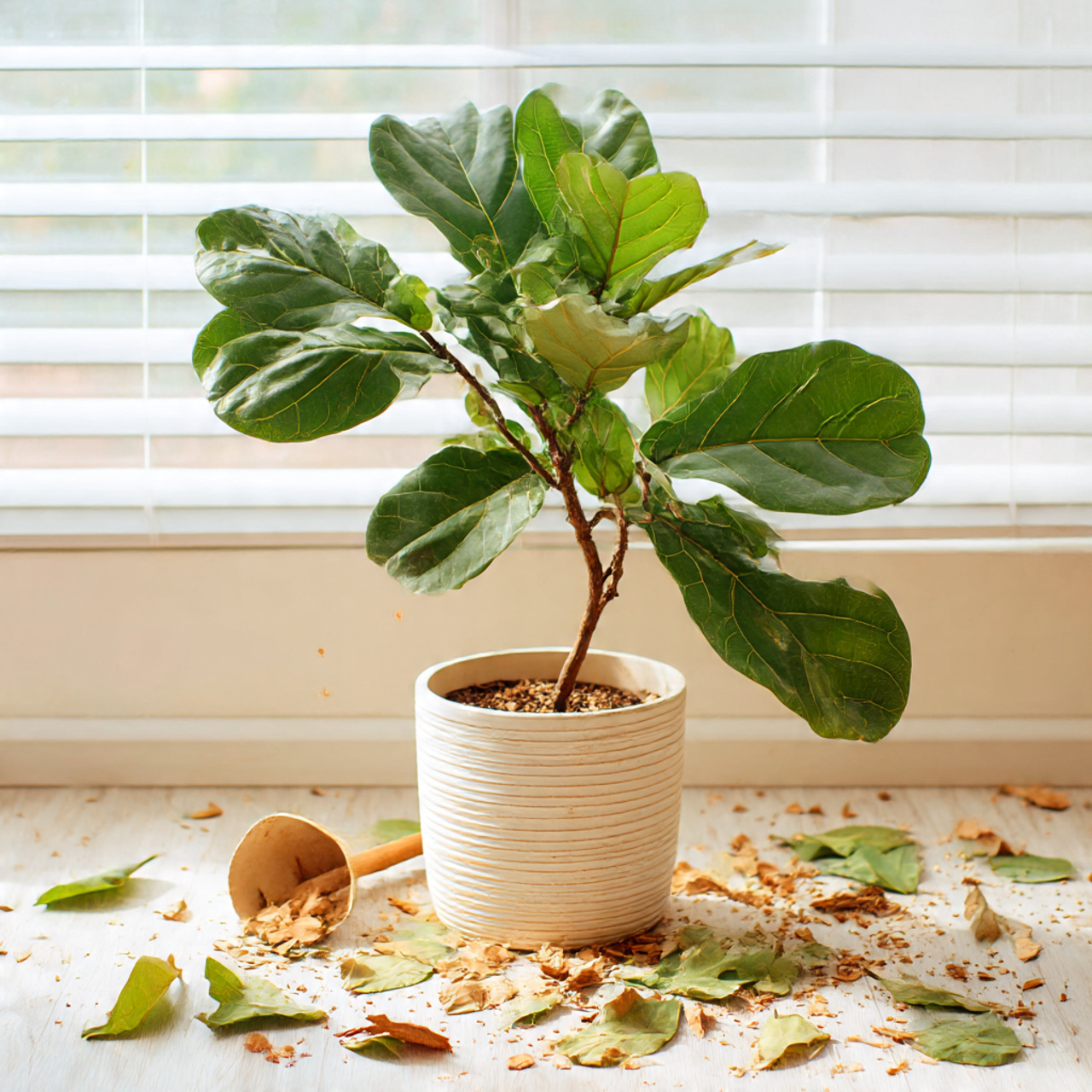
Seeing leaves fall can be alarming, but leaf drop is often your tree’s way of communicating that something needs adjusting.
Common causes and fixes:
- Inconsistent watering – Establish a regular check-in routine
- Environmental shock – Move plants gradually when relocating
- Temperature fluctuations – Keep away from drafty doors and windows
- Overwatering – The number one culprit; let soil dry between waterings
- Underwatering – Less common but possible; check soil moisture regularly
Remember: A few lower leaves dropping occasionally is normal, especially older leaves. It’s sudden or excessive leaf drop that signals a problem needing attention.
Preventing Brown Leaf Tips
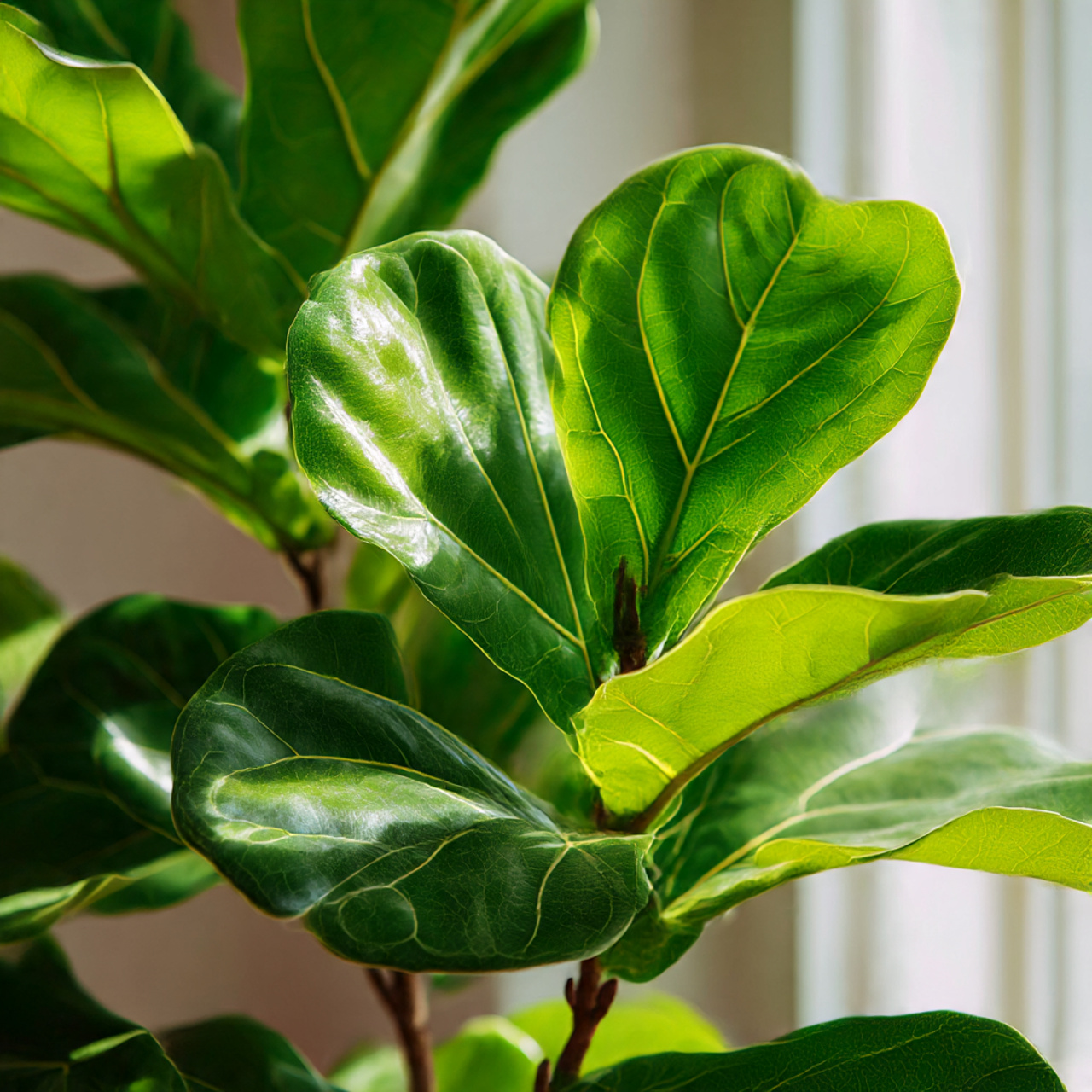
Those crispy brown tips aren’t just unsightly—they’re telling you something about your care routine needs tweaking.
Root causes and solutions:
- Low humidity – Increase ambient moisture through humidifiers or pebble trays
- Inconsistent watering – Establish a reliable routine
- Fertilizer salt buildup – Flush soil with water occasionally; reduce feeding frequency
- Chlorine in tap water – Let water sit out overnight before using, or use filtered water
- Trim brown tips – Use clean scissors to cut just above healthy tissue at an angle
Brown tips won’t repair themselves, but they won’t spread either once you address the underlying issue.
Light Adjustment Strategies for Balanced Growth

A lopsided tree isn’t just an aesthetic issue—it indicates uneven light distribution that can affect overall health.
Achieving symmetrical growth:
- Rotate weekly – Turn a quarter turn in the same direction each time
- Use grow lights in dim months – Supplement natural light from October through March
- Position strategically – Keep several feet back from windows for more even light distribution
- Watch for lean – If your tree tilts, it’s not getting enough light from all sides
- Adjust seasonally – Move closer to windows in winter, slightly back in intense summer sun
Consistent light from all angles creates that full, balanced silhouette that makes Fiddle Leaf Figs so stunning.
Using Your Fiddle Leaf Fig in Home Decor

Beyond basic care, let’s talk about making your tree look absolutely incredible in your space.
Styling strategies:
- Create a focal point – Position in entryways or empty corners that need visual weight
- Choose complementary pots – Modern ceramics, textured baskets, or sleek metallics work beautifully
- Play with height – Use plant stands to add drama and improve light exposure
- Pair with neutral palettes – The green pops against whites, grays, and earth tones
- Consider scale – A 6-foot tree in a small room overwhelms; a 3-footer might get lost in a large space
Your Fiddle Leaf Fig is living sculpture. Treat it as you would any significant piece of furniture, giving it room to breathe and be admired.
Seasonal Care for Fiddle Leaf Tree
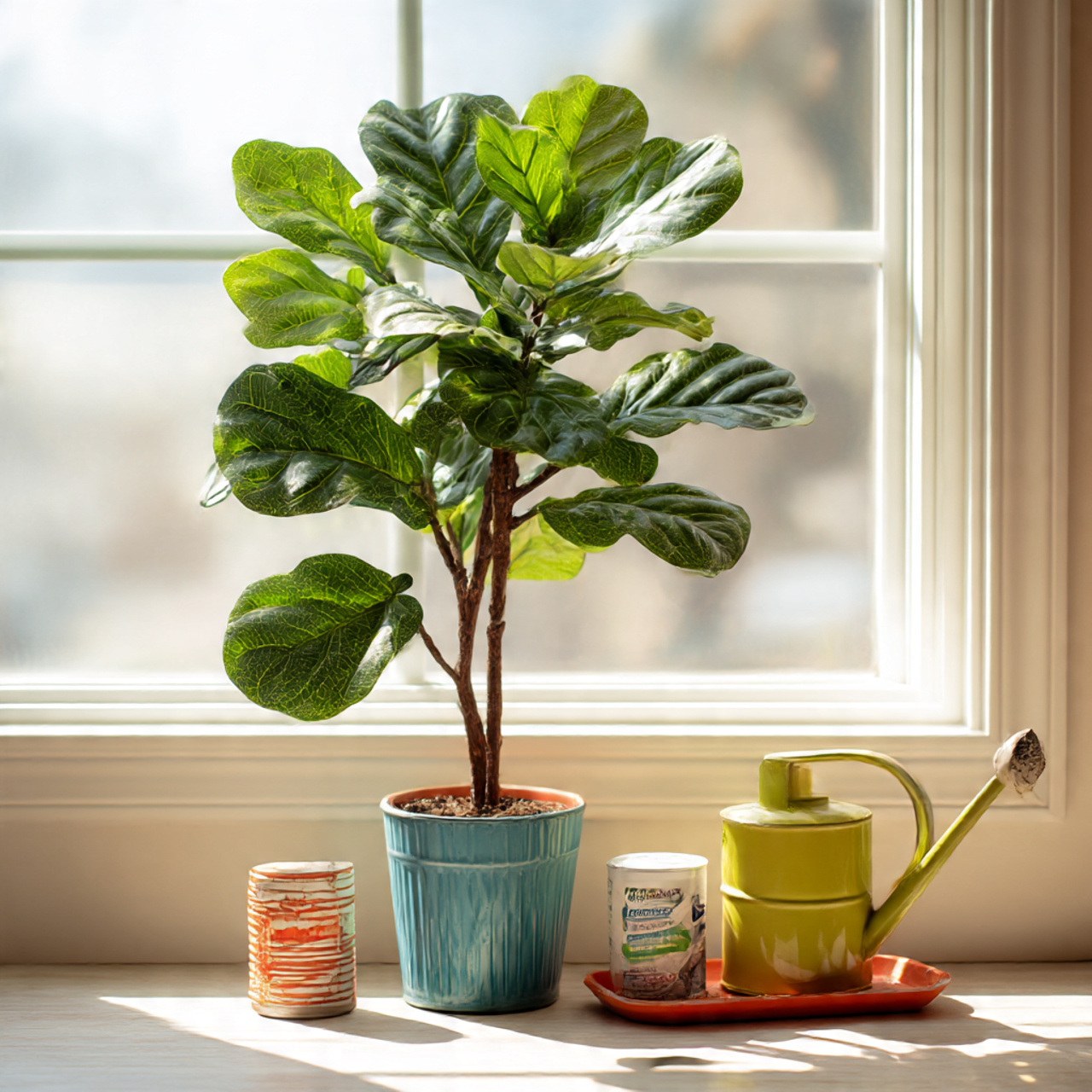
Your tree’s needs change with the seasons. Adapting your care routine keeps it happy year-round.
Spring and summer (active growth):
- Water more frequently as soil dries faster
- Feed monthly with balanced fertilizer
- Prune to shape and encourage new growth
- Increase humidity if air conditioning runs constantly
Fall and winter (dormant period):
- Reduce watering frequency significantly
- Stop fertilizing until spring
- Focus on maintenance—cleaning leaves and checking for pests
- Monitor for drafts from windows and doors
- Watch humidity levels as heating systems dry the air
This seasonal rhythm mimics natural growth cycles and keeps your tree from becoming stressed.
Root Rot Prevention and Treatment
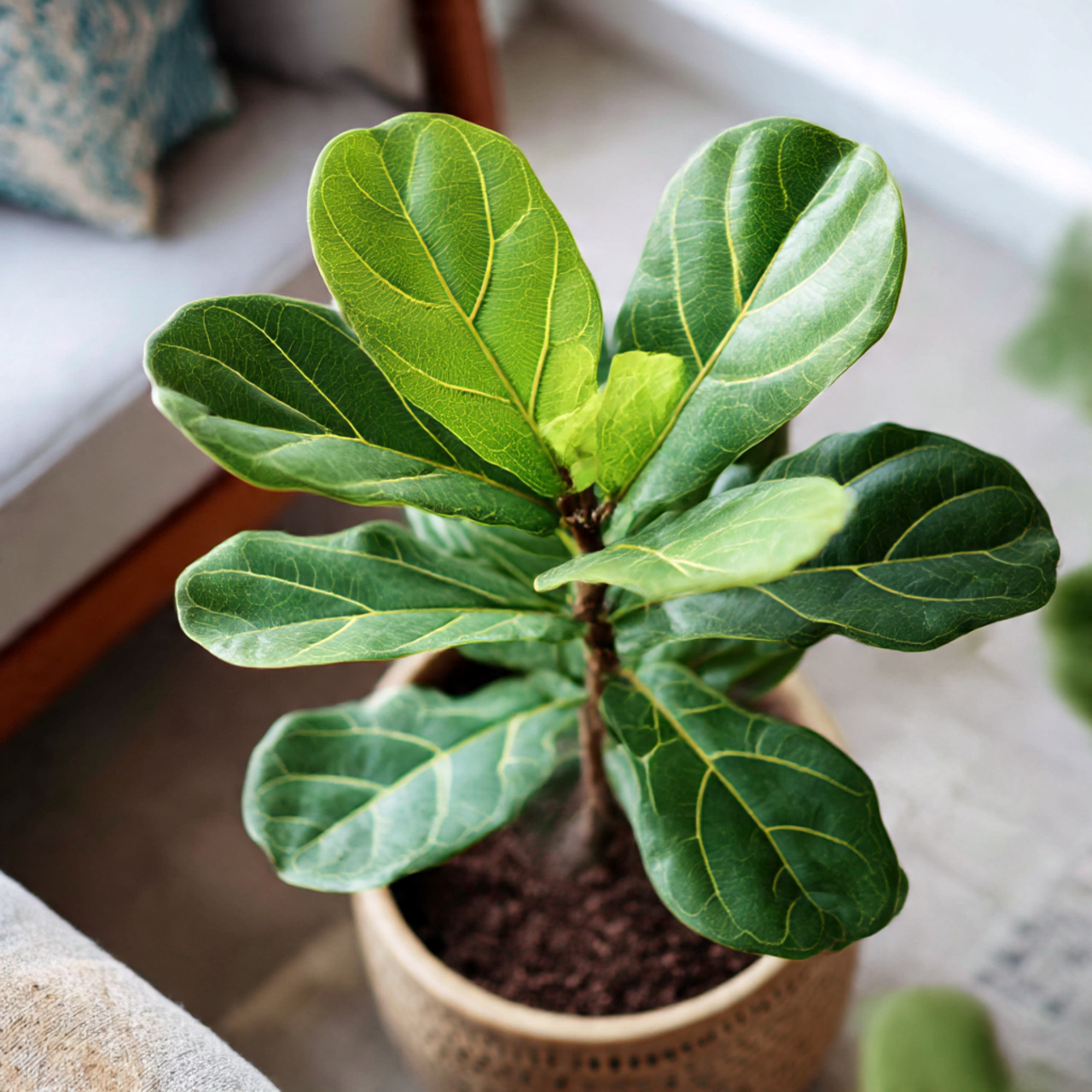
Root rot is the silent killer of Fiddle Leaf Figs. Prevention is infinitely easier than cure.
Preventing root rot:
- Never let soil stay soggy – Well-draining soil and proper pots are essential
- Check drainage holes – Make sure they’re not blocked
- Aerate soil occasionally – Gently loosen top inch with a chopstick to improve oxygen flow
- Water deeply but infrequently – This encourages healthy, deep root growth
If root rot occurs:
- Remove plant from pot immediately
- Trim away black, mushy roots with sterilized scissors
- Repot in fresh, dry soil
- Hold off watering for a week to let roots recover
- Cross your fingers—catching it early gives you the best shot at recovery
Repotting: Giving Your Tree Room to Grow
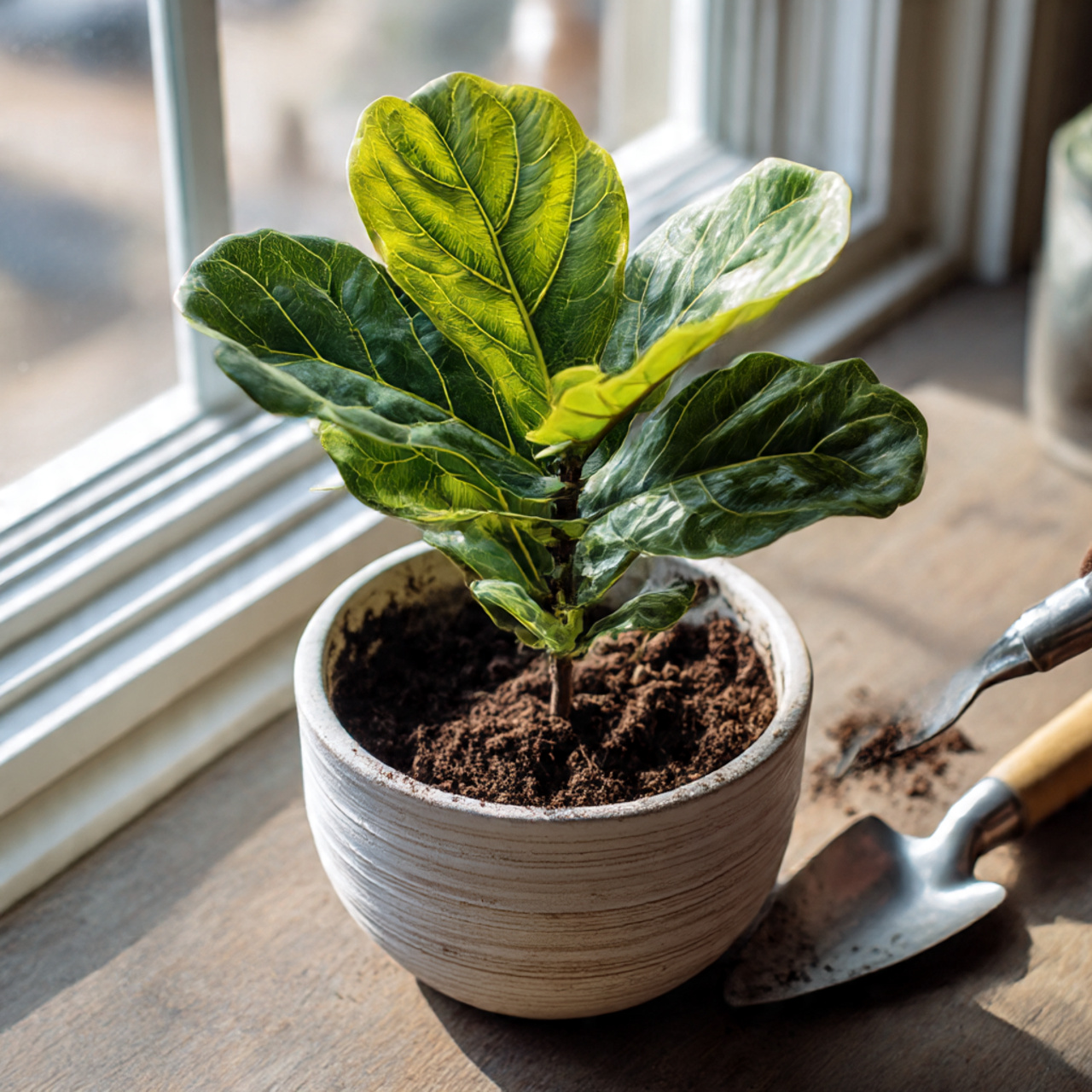
Eventually, your Fiddle Leaf Fig will outgrow its pot. Knowing when and how to repot prevents your tree from becoming rootbound.
When to repot:
- Roots growing out of drainage holes
- Water runs straight through without absorbing
- Growth has significantly slowed
- Every 1-2 years as a general rule
Repotting steps:
- Choose a pot 2-4 inches larger in diameter
- Prepare fresh, well-draining soil mix
- Gently remove tree and loosen roots
- Trim any damaged or circling roots
- Position at same soil level as before
- Water lightly and hold off fertilizing for a month
Best timing: Spring is ideal—your tree has the whole growing season ahead to establish in its new home.
Air Quality Benefits: More Than Just Pretty

Let’s talk about something that makes your Fiddle Leaf Fig even more valuable—its air-purifying superpowers.
What your tree does for you:
- Removes toxins – Filters formaldehyde, benzene, and other VOCs from indoor air
- Increases oxygen – Like all plants, it releases oxygen during photosynthesis
- Traps dust and particles – Those large leaves capture airborne debris
- Improves breathing – Higher oxygen levels can mean better sleep and concentration
- Reduces air dryness – Through transpiration, plants release moisture into the air
Maximize benefits:
- Place in high-traffic areas like living rooms or home offices
- Keep leaves clean for optimal air filtering
- Group with other plants for compounding effects
- Maintain plant health—stressed plants don’t purify as effectively
Choosing the Right Size for Your Space
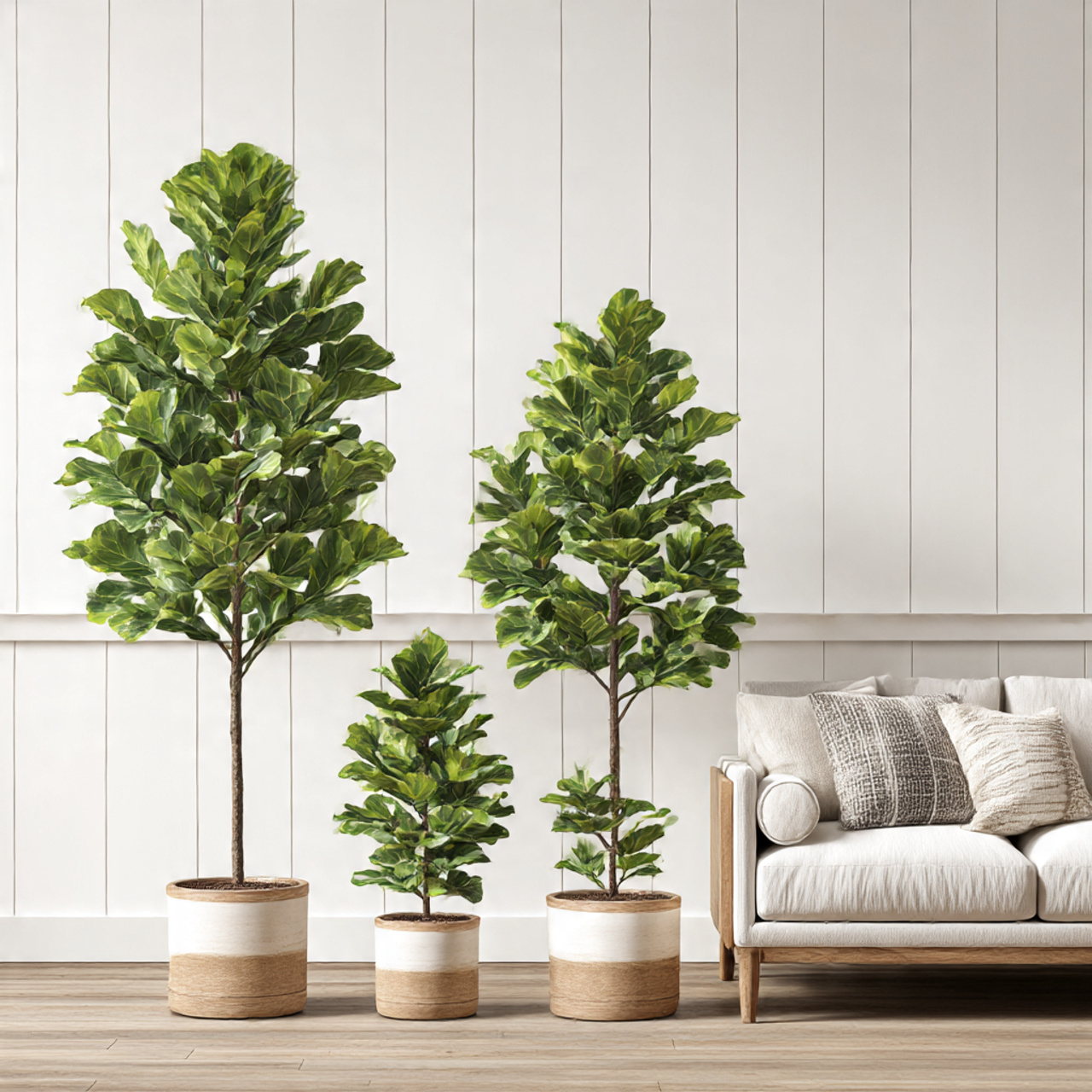
Walking into a nursery can be overwhelming with all the size options. Here’s how to choose wisely.
Size considerations:
- Tabletop (1-2 feet) – Perfect for desks, side tables, and small spaces
- Floor plant (3-4 feet) – Versatile size that works in most rooms
- Statement tree (5-7 feet) – Makes dramatic impact but needs ceiling height
- Mature giant (8+ feet) – For high-ceiling spaces and making bold statements
Decision factors:
- Ceiling height in your space
- Available floor area (remember leaves spread wide)
- Light availability (larger trees need more light)
- Your experience level (smaller trees are more forgiving)
- Budget (larger trees cost significantly more)
Starting with a younger plant lets you learn together, and watching it grow over years is incredibly rewarding.
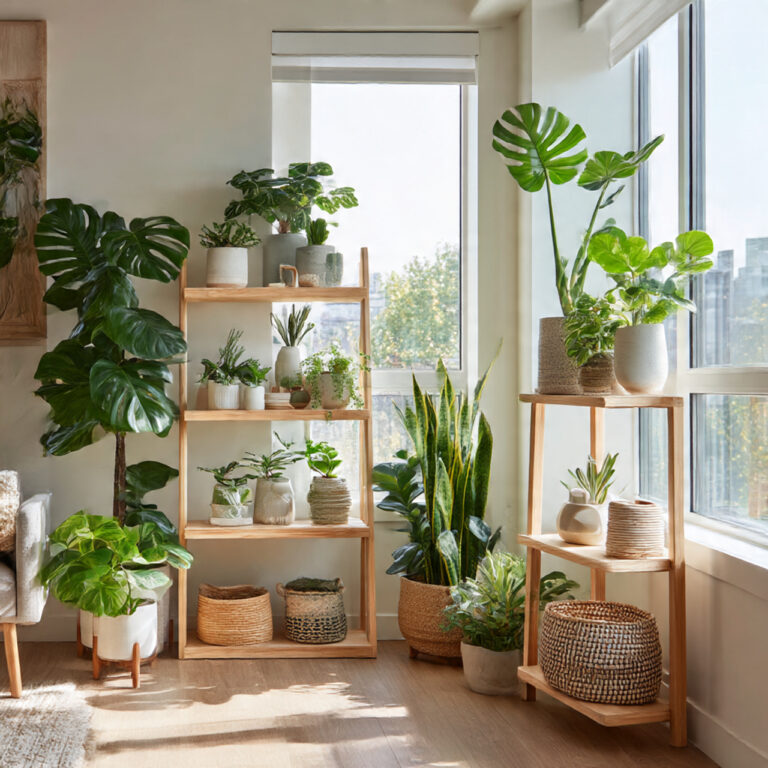
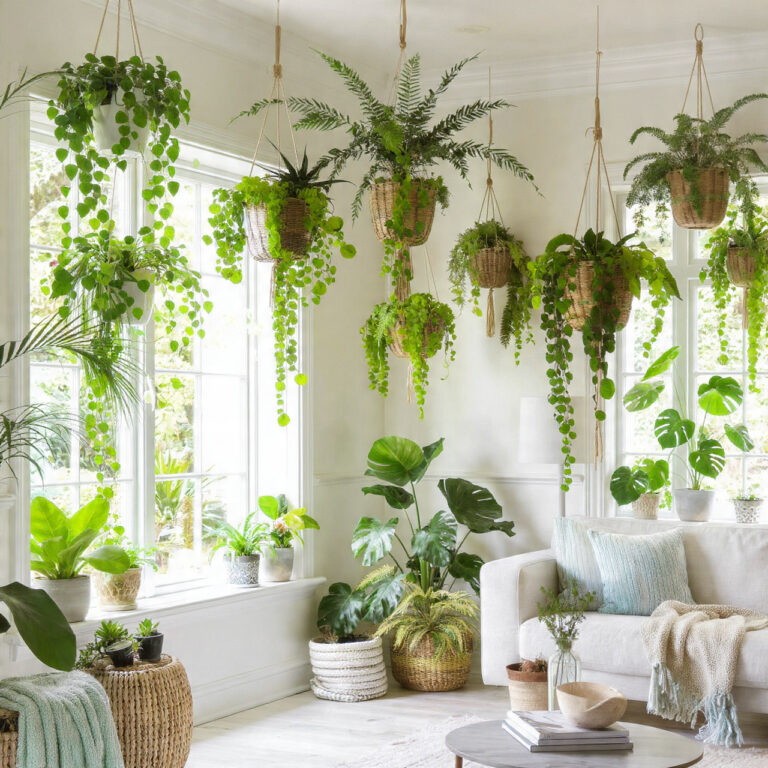
Creating Visual Impact with Companion Plants
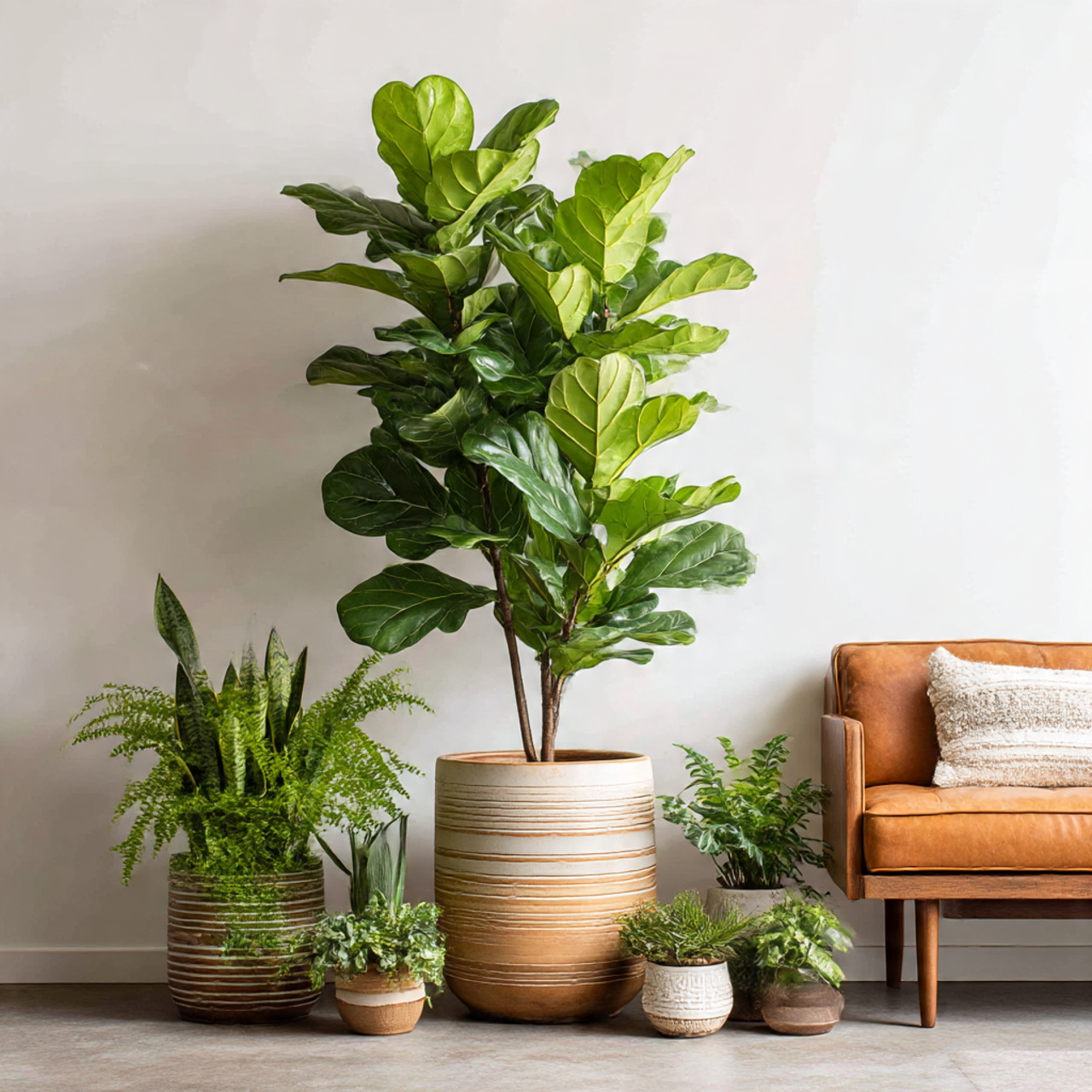
Your Fiddle Leaf Fig doesn’t have to stand alone. Companion planting creates depth and visual interest.
Great companion choices:
- Pothos – Trailing vines add movement and contrast
- Snake plants – Vertical, architectural interest complements broad fiddle leaves
- Ferns – Soft, delicate fronds contrast beautifully with bold foliage
- Monstera – Similar tropical vibe with different leaf shapes
- ZZ plants – Glossy leaves in a different growth pattern
Styling tips:
- Vary pot heights using plant stands
- Mix leaf shapes and textures
- Keep color palette cohesive
- Ensure all plants have compatible light needs
- Group plants to create higher humidity for everyone
This layered approach mimics nature and creates that lush, jungle-inspired aesthetic.
Troubleshooting Common Problems
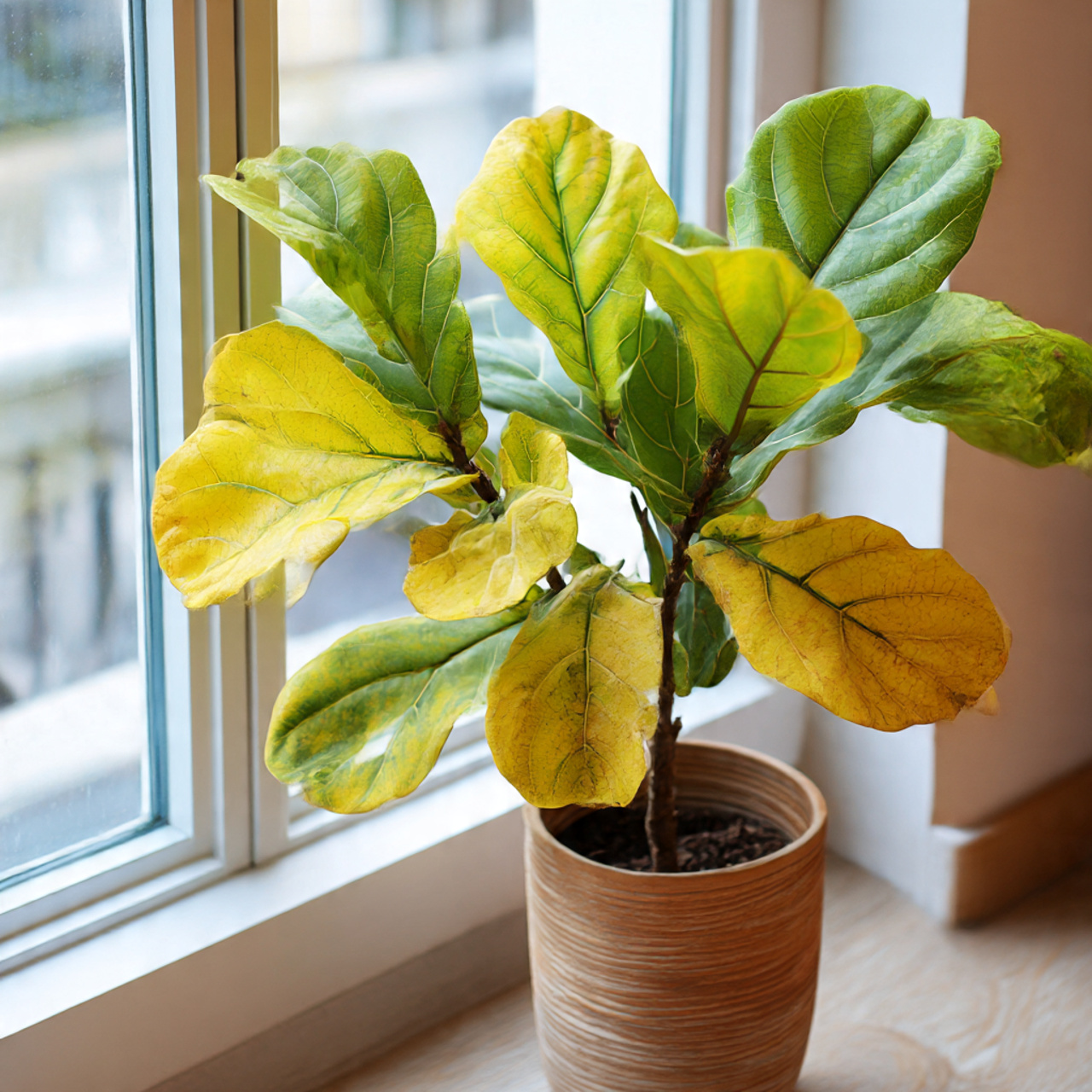
Even with the best care, issues pop up. Here’s your quick-reference troubleshooting guide.
Yellow leaves:
- Overwatering (most common)
- Natural shedding of old lower leaves
- Nutrient deficiency
Brown spots:
- Bacterial or fungal infection
- Overwatering combined with poor air circulation
- Physical damage
Leaf curl:
- Underwatering
- Low humidity
- Root damage
Stunted growth:
- Insufficient light
- Rootbound plant needing repotting
- Nutrient deficiency
Drooping leaves:
- Underwatering
- Shock from temperature changes
- Root issues
Action step: Keep a simple plant journal noting watering dates, observations, and changes. Patterns emerge that help you prevent recurring problems.
Water Filtration Tips
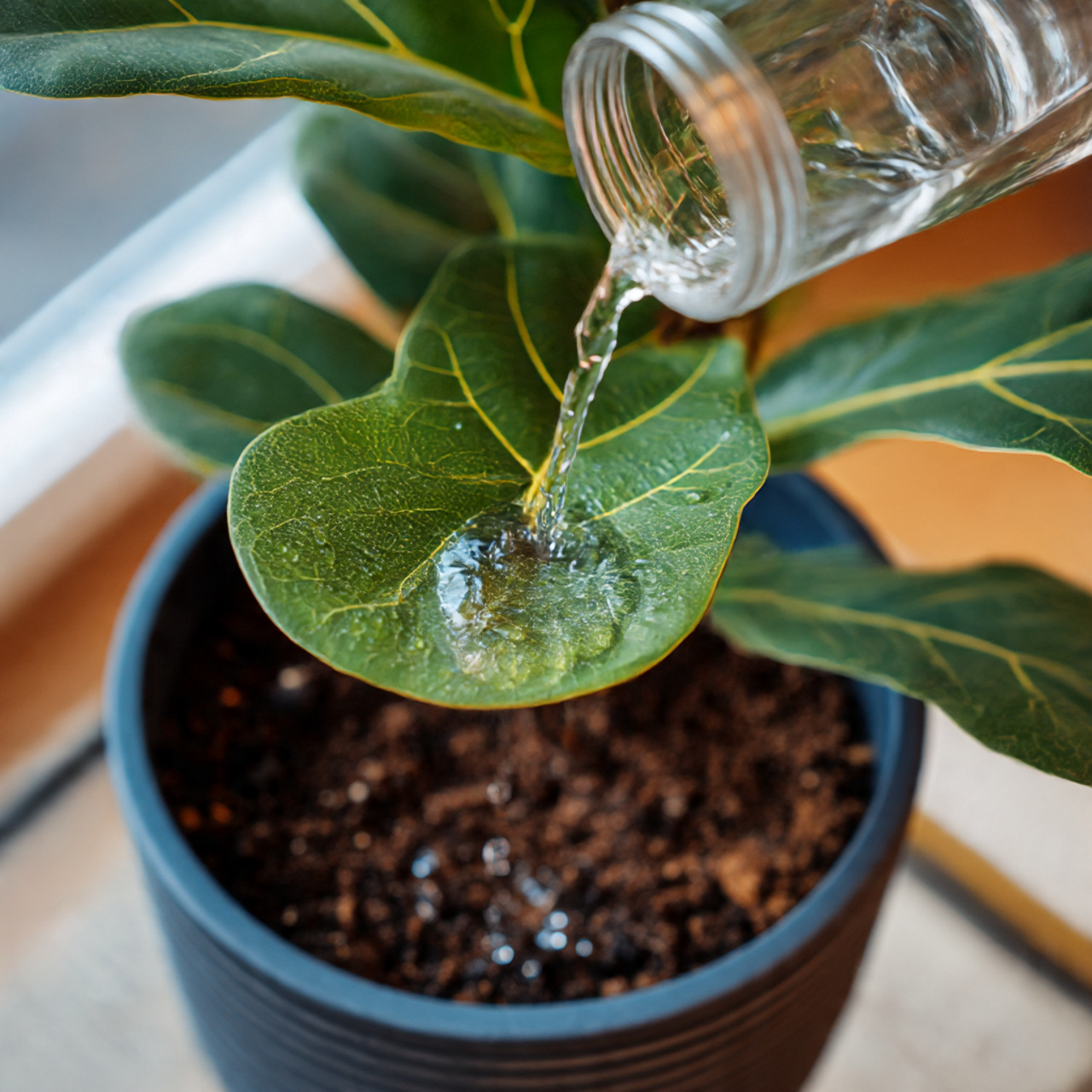
Not all water is created equal, and your Fiddle Leaf Fig can definitely tell the difference.
Best water practices:
- Filtered water is ideal – Removes chlorine, fluoride, and heavy minerals
- Let tap water sit overnight – Allows chlorine to dissipate naturally
- Collect rainwater – Plants love it; it’s soft and slightly acidic
- Room temperature only – Cold water shocks roots
- Watch for mineral buildup – White crust on soil or leaves indicates hard water issues
Signs of poor water quality:
- Brown leaf edges and tips
- White residue on leaves
- Salt buildup on soil surface
- Slow growth despite good care
If you have very hard water, switching to filtered or distilled water can make a noticeable difference in your tree’s appearance.
Strategic Seasonal Fertilization
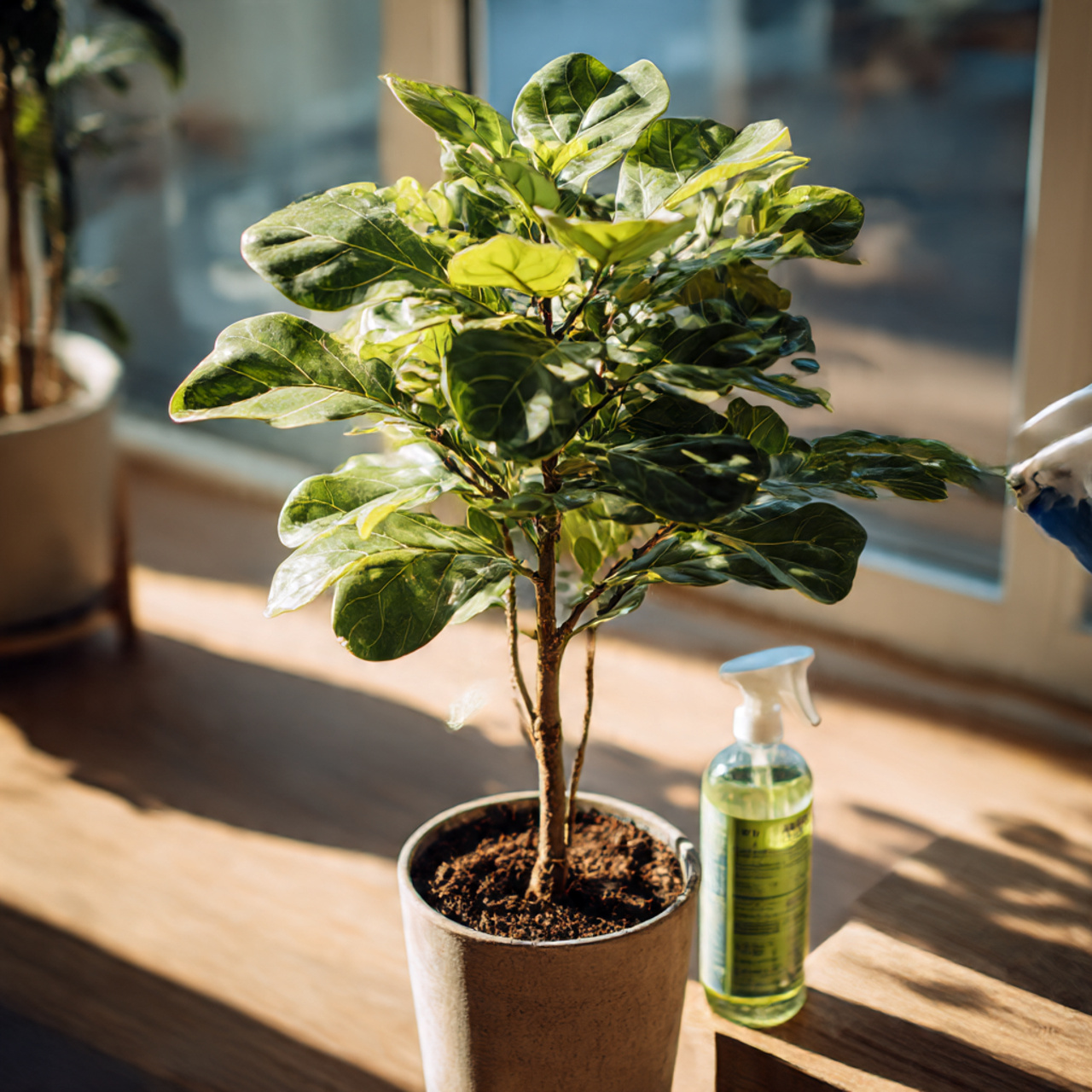
Fine-tuning your fertilization schedule seasonally gives your tree exactly what it needs when it needs it.
Seasonal fertilization guide:
- Spring – High-nitrogen fertilizer promotes new leaf growth; feed every 2-3 weeks
- Summer – Switch to balanced fertilizer; continue monthly feeding
- Fall – Reduce feeding to once every 6-8 weeks as growth slows
- Winter – Stop fertilizing completely; plant is dormant
Additional tips:
- Dilute fertilizer to half the recommended strength
- Water before fertilizing to prevent root burn
- Organic fertilizers release nutrients slowly and gently
- Watch for signs of over-fertilization (leaf burn, excessive salt buildup)
This rhythm aligns with your tree’s natural growth cycle, supporting vigorous growth without overwhelming it.
Recovery from Stress
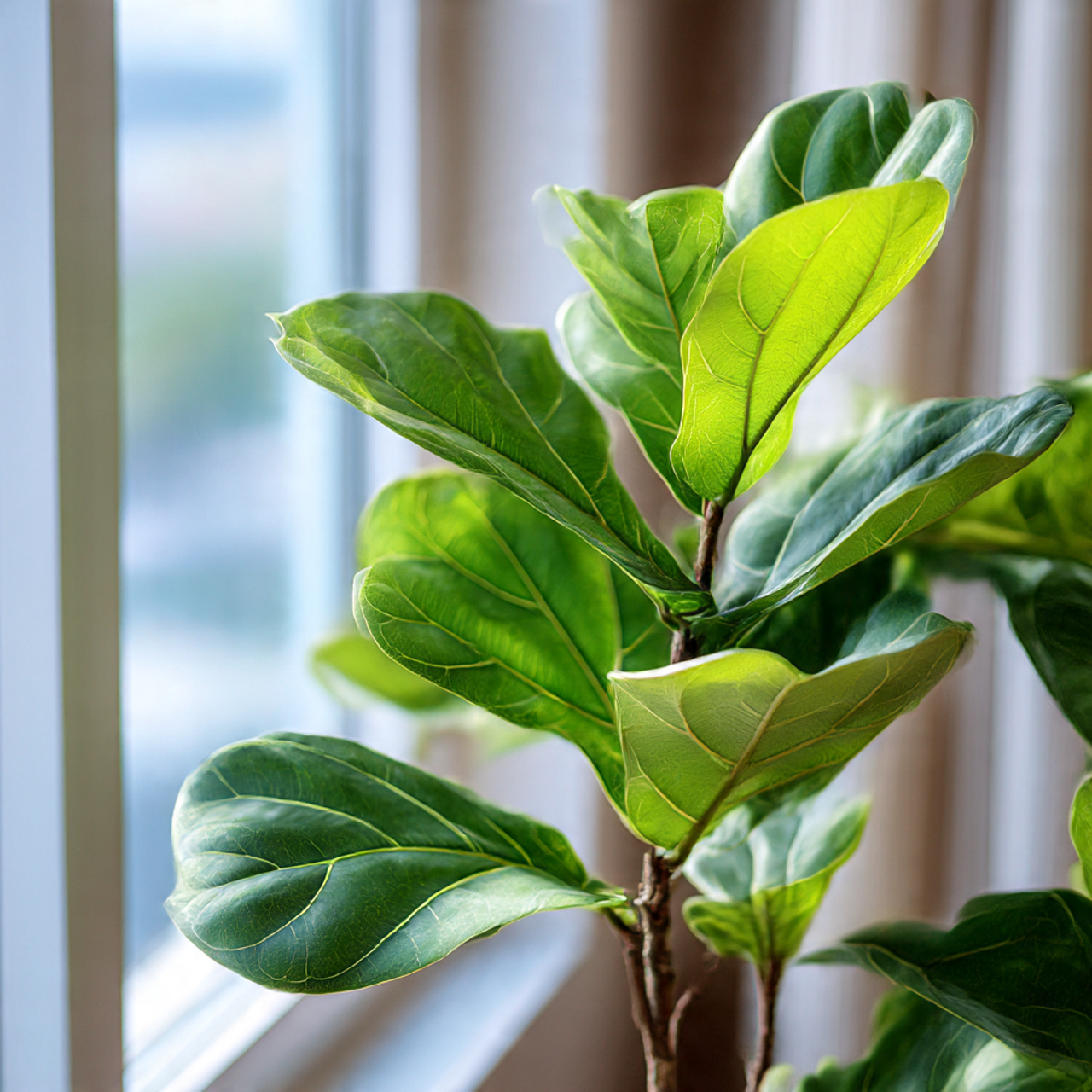
Sometimes despite our best efforts, our plants go through tough times. Here’s how to help your Fiddle Leaf Fig bounce back.
Common stress triggers:
- Moving to a new location
- Aggressive pruning
- Repotting
- Pest infestation
- Extreme temperature changes
Recovery protocol:
- Maintain consistency – Keep watering and light stable
- Don’t overcompensate – Resist the urge to fertilize or water more
- Give it time – Recovery can take weeks or months
- Monitor closely – Watch for signs of improvement or decline
- Reduce handling – Let your tree rest and recover without constant moving
Patience is key: A stressed Fiddle Leaf Fig might drop leaves or pause growth, but with stable care, it typically recovers fully.
Maximizing Growth Potential
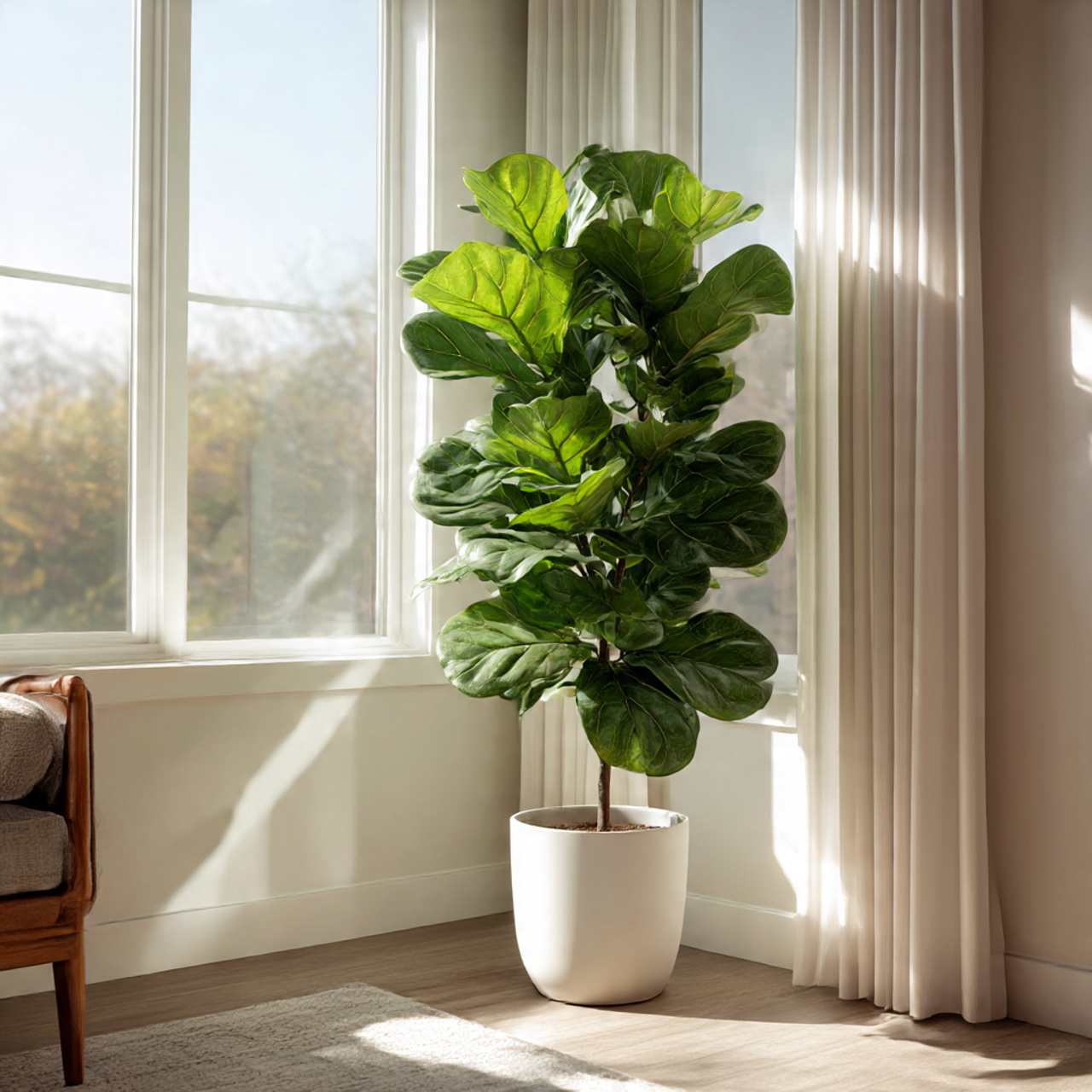
Want to see your Fiddle Leaf Fig really take off? Growth isn’t just about one thing—it’s the perfect combination of all the fundamentals working together harmoniously.
The growth equation:
- Light is fuel – 6-8 hours of bright, indirect light daily powers photosynthesis and vigorous growth
- Water is the engine – Consistent moisture (not soggy, not bone-dry) keeps cells expanding
- Pruning is the catalyst – Strategic cuts redirect energy into new growth rather than maintaining struggling leaves
- Nutrients matter – Monthly feeding during growing season provides building blocks for new tissue
- Healthy roots = healthy shoots – Root health directly translates to what you see above soil
Growth-boosting strategies:
- Remove any yellowing or damaged leaves immediately—they drain energy
- Watch for new shoots emerging from pruning points (this means you’re doing it right)
- Adjust care seasonally; your tree grows fastest from March through August
- Track height monthly to confirm you’re seeing steady progress
- Celebrate new leaves—each one means your care routine is working
Think of maximizing growth like training for a marathon: consistency beats intensity every time. Small, regular care beats sporadic grand gestures.
Adding Natural Support for Vertical Growth
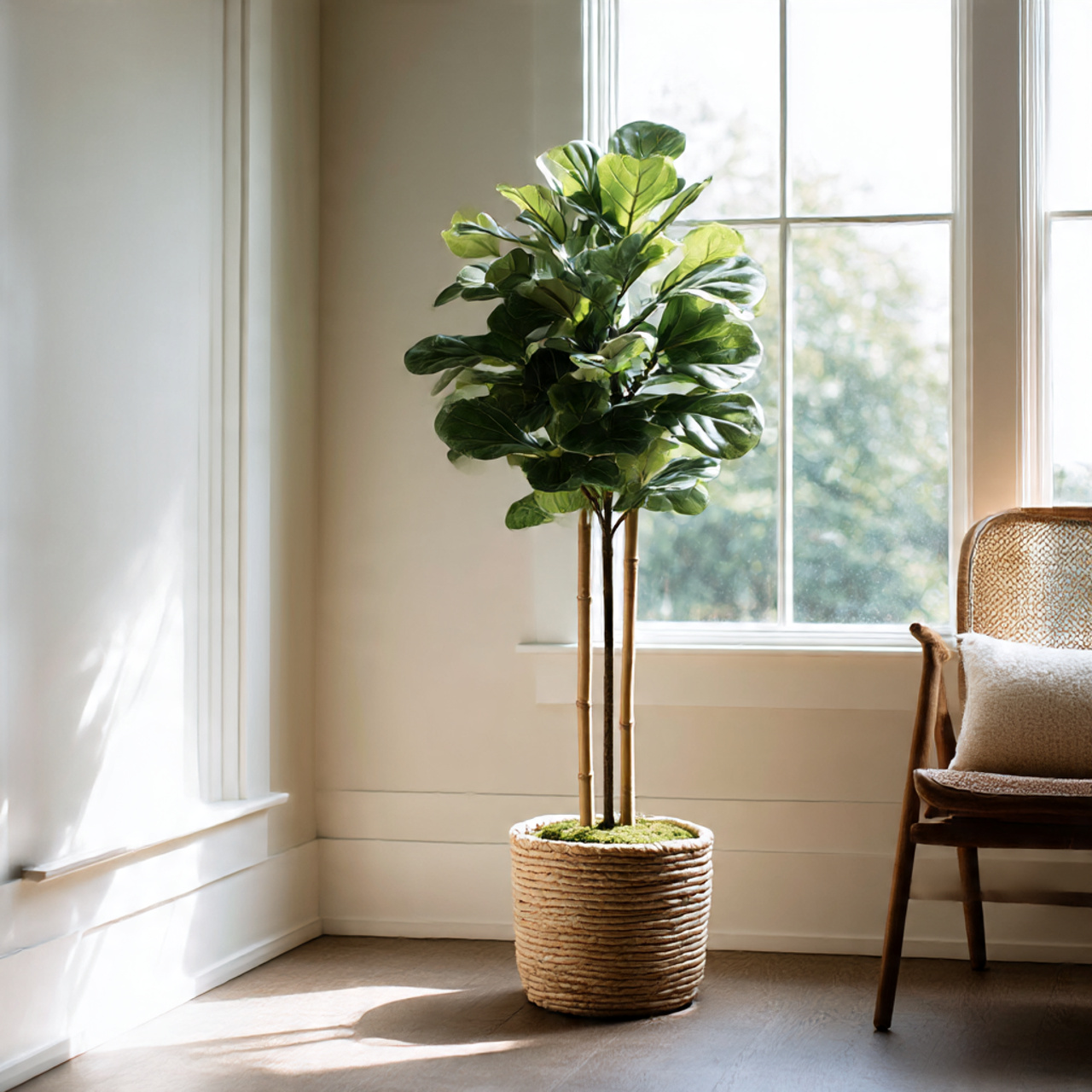
As your Fiddle Leaf Fig shoots upward, it might need a helping hand—literally. Proper support prevents disaster and encourages that beautiful upright form that makes these trees so architectural.
When support becomes necessary:
- Tree exceeds 5 feet in height
- Main trunk shows signs of bending or leaning
- Top-heavy growth after aggressive leaf development
- Uneven light causing directional lean
- After repotting when roots need time to re-establish
Support options that actually work:
- Bamboo stakes – Natural appearance, various heights available, blend beautifully with the plant
- Moss poles – Dual purpose: support plus humidity boost as moss releases moisture
- Decorative stakes – Metal or wooden designs that double as artistic elements
- Multiple stake system – For very tall or heavy trees, use 2-3 stakes for stability
Installation tips:
- Insert stakes when repotting to avoid root damage
- Position stakes discreetly behind the trunk or in the pot center
- Use soft ties (velcro plant tape or cloth strips) that won’t cut into bark
- Leave slight slack—you want support, not rigidity
- Check and adjust ties every few months as the trunk thickens
- Angle stakes outward slightly for better stability
Insight: Support structures aren’t just practical—they can actually train your tree to grow straighter by providing consistent directional guidance as new wood hardens.
Long-Term Maintenance: The Investment That Keeps Giving
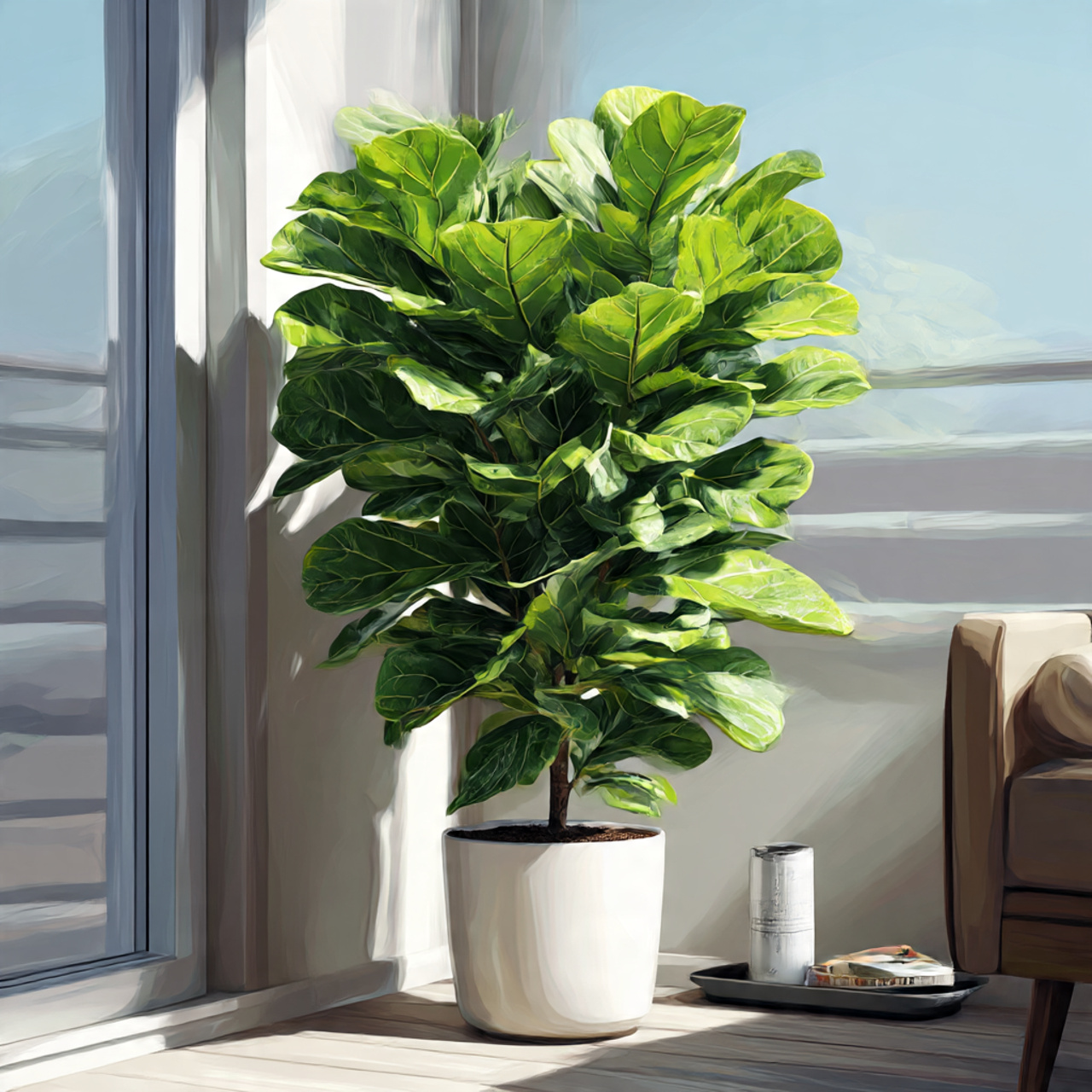
Here’s the beautiful truth: a Fiddle Leaf Fig can outlive most furniture in your home. With proper long-term maintenance, you’re not just keeping a plant alive—you’re cultivating a legacy piece.
The long game mindset:
- Year 1 – Focus on establishing routines and understanding your tree’s needs
- Years 2-3 – Watch dramatic growth and personality emerge; fine-tune care
- Years 4-5 – Your tree becomes a mature, commanding presence
- Years 6+ – A true statement piece that visitors ask about immediately
Essential long-term maintenance checklist:
- Soil health monitoring – Repot every 18-24 months to refresh nutrients and prevent compaction
- Humidity tracking – Invest in a hygrometer to maintain optimal 40-60% range
- Light adjustment – Reposition as seasons change and surrounding decor evolves
- Pest vigilance – Monthly inspections catch problems before they become infestations
- Growth documentation – Photos every 3-6 months show progress you might not notice daily
Building maintenance into your life:
- Schedule a recurring “Plant Day” on your calendar monthly
- Create a simple checklist you can follow without thinking
- Notice patterns: “I always need to water after X days in summer”
- Keep supplies organized and accessible (pruners, neem oil, fertilizer)
- Embrace the ritual—plant care can be genuinely meditative
The transformation factor: Over years, something magical happens. Your Fiddle Leaf Fig stops being “that plant in the corner” and becomes “the tree we brought home when we first moved in” or “the plant that’s grown with our family.” It marks time, seasons, and memories. It witnesses your life.
That’s not just maintenance—that’s relationship building. And the best relationships are built on consistency, attention, and care. Your Fiddle Leaf Fig will give back tenfold what you invest in it, growing more stunning, more resilient, and more integral to your home’s character with each passing year.
FAQs About Fiddle Leaf Tree
Q1: How often should I water my Fiddle Leaf Tree?
A: Water when the top 1–2 inches of soil are dry, usually every 1–2 weeks depending on indoor conditions.
Q2: Can a Fiddle Leaf Tree survive in low light?
A: It can tolerate moderate light but grows best in bright, indirect sunlight. Low light may result in slower growth and smaller leaves.
Q3: How big can a Fiddle Leaf Tree grow indoors?
A: Indoor trees can reach 6–10 feet tall, depending on pot size, pruning, and care.
Q4: Why are my Fiddle Leaf Tree leaves turning brown?
A: Brown tips often result from low humidity, inconsistent watering, or over-fertilization. Adjust care to restore healthy foliage.
Q5: How do I propagate a Fiddle Leaf Tree?
A: Take healthy stem cuttings, allow them to callus for a day, then plant in moist soil. Roots typically develop in several weeks.
Final Thoughts: Your Journey with the Fiddle Leaf Fig
Growing a Fiddle Leaf Fig is more than just a hobby—it’s creating a living relationship with a plant that will grow and change alongside you. Yes, they have a reputation for being finicky, but here’s the truth: once you understand their basic needs, they’re remarkably forgiving and resilient.
The key takeaways? Consistent light, proper watering, decent humidity, and regular observation. Master these fundamentals, and your Fiddle Leaf Fig will reward you with years of stunning growth and visual impact.
Every brown leaf teaches you something. Every new shoot that emerges is a small victory. Over time, you’ll develop an intuition for what your specific tree needs in your specific space. You’ll notice the subtle signs before they become problems. You’ll watch your tree transform from a hopeful cutting or small plant into a magnificent, room-defining statement piece.
Whether you’re starting with a tabletop plant or investing in a mature tree, you’re bringing home more than just a decorative element. You’re bringing home cleaner air, a mood-boosting companion, and a living piece of art that will evolve with your home and your life.
So take a deep breath, trust the process, and enjoy the journey. Your Fiddle Leaf Fig is waiting to thrive under your care. With the 25 tips in this guide, you have everything you need to become the confident, successful plant parent you’ve always wanted to be.